Spring Sale: Get 1 Year, Save 58%

Kevin McCarthy’s strange real estate saga: A luxury condo in D.C. and a tract house in California

House Minority Leader Kevin McCarthy has evidently been living the high life when he’s at work in Washington. But back in his home district in Bakersfield, California, McCarthy leads a far less glamorous existence, posing the question of how he affords his luxurious digs in the nation’s capital. 

McCarthy’s home in Bakersfield home is a modest, middle-class residence, a 1,571-square-foot tract house built in 1987, with three bedrooms and two bathrooms, that the congressman and his wife purchased in 1996. According to Zillow, the home has an estimated market value around $300,000, and according to McCarthy’s 2019 financial disclosure he has a mortgage on the home of between $50,001 and $100,000. Salon is not publishing the precise address but has independently verified the location through public records. 

An extensive search of media records suggests that McCarthy rarely or never conducts interviews or poses for photographs at his Bakersfield home. In 2014, when The Brody File sat down for an “at home” interview with McCarthy and his wife in Bakersfield, the conversation was actually filmed at McCarthy’s mother’s home a few miles away.

Photos that McCarthy has posted on social media, mostly focused on his dogs, suggest that his Bakersfield property is not in optimal condition, depicting chipped tilesscuffed walls, dirty glass and matted or stained carpeting — the condition of many American homes, no doubt, but a world away from the luxury penthouse where McCarthy has been living in Washington. 

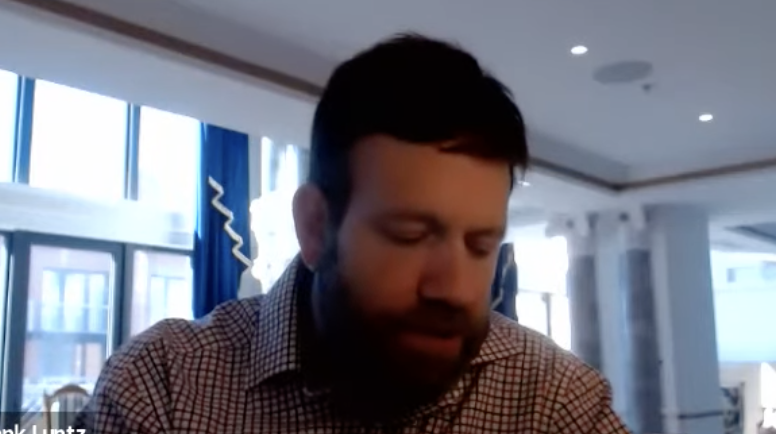
For at least the past two months, McCarthy has stayed in Republican pollster Frank Luntz’s 7,000-square-foot condo in the Clara Barton at Penn Quarter development in downtown Washington, an immaculate, gilded showplace with soaring marble columns and a sweeping staircase.

As the Washington Post reported last week, “Besides the ‘room’ he rented, McCarthy would have had access to a 24/7 concierge, a rooftop pool, a fitness center, a media room, a business center, and a party room with a bar and pool table. The homeownership association fees alone on the units are $4,976 per month, according to Redfin.com.” 

A McCarthy spokesperson said the lawmaker paid “a fair market price” for a room in Luntz’s condo, but that claim has come under scrutiny, since the minority leader is not a wealthy individual. The Los Angeles Times notes that McCarthy reported a negative net worth in 2015, but by the following year, “he’d gotten rid of a $100,000 mortgage, and his net worth was up to at least $80,000. Along with a mortgage of at least $50,000, McCarthy owed at least $50,000 on a student loan he took for his children.”

The Campaign for Accountability, a nonpartisan watchdog organization, wants to know more and is asking the Office of Congressional Ethics to look into whether McCarthy really paid Luntz for his “room” while staying at his luxury apartment, since such an arrangement would likely have violated the Clara Barton condo complex’s rules. 

“A top GOP political insider would have violated his building’s bylaws by renting a room in his luxury condo to Rep. McCarthy, so we wonder if McCarthy even paid,” said Campaign for Accountability executive director Michelle Kuppersmith, in a press release obtained by Salon. “It’s time for the Office of Congressional Ethics to take a hard look at this arrangement.”

Neither McCarthy’s Washington nor California offices returned Salon’s request for comment on this story. 

McCarthy told CNN in a 2011 interview, “You know what? I came from the wrong side of the tracks. … I needed to have a different family.” Perhaps McCarthy now has that new family, as his kids reportedly refer to Luntz as “an uncle.” In any event, a multimillionaire pollster who also owns luxury properties in California, Nevada and Virginia — and who has distanced himself from the current Republican Party — has been providing housing under mysterious circumstances for the top Republican in the House.

In February, McCarthy told the audience at the Conservative Political Action Conference (CPAC) that he’d bet his home on the prospect that the GOP would win a congressional majority in 2022. “I would bet my house. My personal house. Don’t tell my wife, but I will bet it,” he said during his speech to the pro-Trump crowd.

On Friday, longtime Trump campaign adviser Steve Cortes hinted at ousting McCarthy as House Republican leader, following the purge of Rep. Liz Cheney of Wyoming for speaking out against the 2020 election fraud claims pushed by Trump. “Great news that Cheney is no longer in GOP leadership. Next up? Frank Luntz’s roomie,” Cortes tweeted. 

Questions about McCarthy’s living arrangements in Washington first surfaced after Fox News host Tucker Carlson reported that the minority leader had been living in Luntz’s luxury condo. 

“Over the weekend, we got a call from a source who said that, in fact, Frank Luntz and Kevin McCarthy are not simply friends; they’re roommates,” Carlson said in a monologue at the beginning of May. “Kevin McCarthy lives in Luntz’s apartment in downtown Washington. That’s what we were told, and honestly, we did not believe it. The top Republican in the House lives with a Google lobbyist? Come on. Even by the sleazy and corrupt standards of politics in Washington, that didn’t seem possible. In fact, it sounded like a joke.”

As it turns out, Carlson’s report was correct. After the news broke, McCarthy said he would leave Luntz’s apartment and head back to the couch in his Capitol Hill office. Defending his decision to rent a room from Luntz, McCarthy said this during a May 4 Fox News segment: “I met him [Luntz] with Newt Gingrich back when they were working on the ‘Contract for America.’ As the Democrats took over, they started changing the House around, so, yeah, I rented a room from Frank for a couple of months, but I’m going back to my couch in my office.” 

Big Pharma plotting to derail Biden’s COVID vaccine waiver: report

While global health advocates applauded the Biden administration’s recent decision to support waiving intellectual property protections for COVID-19 vaccines as “critical,” “transformative” and “unquestionably the right thing to do,” Big Pharma took a decidedly less optimistic view of the move and has been hard at work behind the scenes in a bid to thwart the policy, a report published Friday by The Intercept revealed. 

In a bid to stymie U.S. support for a proposal by India and South Africa to enact a Trade-Related Aspects of Intellectual Property Rights (TRIPS) waiver at the World Trade Organization (WTO), the pharmaceutical industry is “distributing talking points, organizing opposition, and even collecting congressional signatures in an attempt to reverse President Joe Biden’s support for worldwide access to generic Covid-19 vaccines,” according to The Intercept’s Lee Fang. 

Fang obtained an email from Jared Michaud, a lobbyist with the Pharmaceutical Research and Manufacturers of America (PhRMA) — a trade group whose clients include vaccine developers AstraZeneca, Johnson & Johnson and Pfizer — describing how Big Pharma and sympathetic U.S. legislators are pushing lawmakers to oppose a TRIPS waiver. 

The email explains that Reps. Buddy Carter, R-Ga., and Vern Buchanan, R-Fla., are leading an unreleased letter to Biden — which currently has 29 co-signers — “expressing concerns with the administration’s support for waiving IP protections related to Covid-19 vaccines under the WTO TRIPS waiver.”

“We urge you to contact offices and ask them to sign onto this letter,” said Michaud’s email. 

The letter additionally claims that the TRIPS waiver would cost U.S. jobs and be a boon for China, which would “profit from our innovation.” 

Michaud’s email contains talking points that paint the IP waiver as a national security threat that would “irreversibly damage American innovators” and the U.S. government’s “strategic engagement,” while a separate document marked “confidential” claims that “waiving intellectual property will undermine the global response to the pandemic and compromise vaccine safety.”

According to Fang, “The metadata for the document shows that the PDF document was created by Megan Van Etten, an international public affairs specialist for PhRMA.”

Fang notes that PhRMA spent $24 million on lobbying at the federal level last year “and is one of the biggest corporate players in election spending.” 

According to OpenSecrets, PhRMA has spent $8.7 million on lobbying so far this year. This, as client Pfizer has raked in $3.5 billion in profits from the sale of its COVID-19 vaccine in just the first three months of 2021. 

“The group has long shaped drug policy not only domestically but also in the international arena,” writes Fang. “PhRMA led the push in the late 1990s to pressure South African President Nelson Mandela to drop efforts to break patent laws and allow for the importation and manufacture of generic HIV/AIDS medications, which at the time cost an annual $10,000-$15,000 per patient.” 

Progressive U.S. lawmakers have taken Big Pharma and its lobbyists to task for their opposition to COVID-19 vaccine patent waivers.

“Amid a global pandemic, major pharmaceutical companies are lobbying to protect billions in profits,” Sen. Bernie Sanders, I-Vt., said in March following the U.S. Chamber of Commerce’s dismissal of the proposed TRIPS waiver as “misguided.”

Liz Cheney rips Kevin McCarthy for withholding ‘important information’ about Capitol riot

Rep. Liz Cheney (R-WY) on Sunday suggested that House Minority Leader Kevin McCarthy (R-CA) is withholding “important information” about the Jan. 6 attack on the U.S. Capitol.

During an interview on Fox News, Cheney told host Chris Wallace that she was ousted from Republican leadership because she refused to be “complicit” in spreading former President Donald Trump’s so-called “Big Lie” about the 2020 election being stolen.

Wallace noted that Cheney has argued that Trump is “dangerous” for the Republican Party and for the country.

“I ask this about both McCarthy and Elise Stefanik (R-NY),” Wallace said. “Are they being complicit in what you consider the Trump lies?”

“They are,” Cheney agreed. “And I’m not willing to do that. There are some things that have to be bigger than party, that have to be bigger than partisanship. Our oath to the Constitution is one of those.”

Wallace went on to ask Cheney about her recent suggestion that McCarthy should testify before a bipartisan commission about his knowledge of the Jan. 6 attack.

“I think it’s very important,” Cheney explained. “He clearly has facts about that day that an investigation into what happened, into the president’s actions ought to get to the bottom of. And I think that he has important information that needs to be part of any investigation, whether it’s the FBI, the Department of Justice or this commission that I hope will be set up.”

Watch the video below from Fox News.

Trump and Rudy Giuliani’s ties to opioid crisis revealed

According to documentary filmmaker Alex Gibney, America’s opioid crisis — as bad as it continues to be — was on the precipice of becoming much worse under the administration of former president Donald Trump.

Appearing on the Daily Beast’s “The New Abnormal” podcast with host Molly Jong-Fast, the man behind the “Going Clear” expose of Scientology described what he discovered when looking into how Big Pharma helped create a massive addiction problem.

Talking about his “The Crime of the Century ” documentary for HBO, Gibbs brought up both Trump’s involvement and also linked former New York City Mayor Rudy Giuliani to the crisis.

Regarding Trump, he told the host about Trump’s initial choice of Rep. Tom Marino (R-PA) to head up the effort.

“His [Trump’s] go-to guy [for drug czar] happened to be the guy who did more than anybody to eviscerate the DEA and his ability to go after these companies that were flooding America, the opioids, of course,” he explained before noting that Marino withdrew his name after damaging reports that legislation he sponsored had hindered the DEA.

According to Gibney, the ultimate blame is with the drug companies — with Giuliani having a hand in the problem.

“Purdue gets its hand slapped, but doesn’t have to endure any real punishment in 2006 because of a deal cut mysteriously. And nobody knows exactly who cut that deal at the Department of justice,” he reported. “But Rudy Giuliani was, was a part of it. And then it happens again in 2020 with this deal cut again at the Department of Justice where fines are paid, key facts are buried.”

You can listen to the podcast here (subscription required).

Fans name most disappointing TV finales ever in new survey

This month marks 10 years since “Game of Thrones” premiered on HBO, and the network is going all out to celebrate. But the festivities have also brought back up some of the ill feeling among fans following the series finale, which was famously divisive. To that end, OnBuy.com has conducted a survey of over 1,500 people to determine the most disappointing TV finales of all time, per NME.

What were the results? Speaking as someone who loves “Game of Thrones,” I was surprised that the series finale, “The Iron Throne,” wasn’t at the top of the list. Instead, the series finale of “Lost,” “The End,” came out on top with 27.3% of the vote. “The Iron Throne” came in second with 25%.

The series finale of “How I Met Your Mother,” “Last Forever,” came in third with 17% of the vote. The final episodes of “Sherlock,” “Prison Break” and “Dexter” were also on the list.

Opinions softening on the Game of Thrones series finale?

There’s one other interesting wrinkle: OnBuy conducted a very similar survey in 2020, and in that survey, “The Iron Throne” was voted as the most disappointing series finale, with a whopping 87% of respondents singling it out. But in this new survey, that number drops by over 50 points. That’s quite the change!

The difference may be due to how OnBuy conducted the survey — based on the numbers involved, I’m guessing respondents could vote on multiple shows in 2020 but only pick one “most disappointing” selection in 2021 — but if we want to take an optimistic tack, maybe opinions towards the “Game of Thrones” series finale are softening as more time passes?

We’ll see what happens at the 20-year anniversary.

Paw and order: Dormie, the dog who went on trial for cat murder

The defendant was said to have arrived to court in good spirits on the morning of December 21, 1921. He had exercised, eaten a full breakfast of sausages, and had received well-wishes from the children in his neighborhood, who gave him comforting pats on the head before he was carted off.

The charges were serious. He was up on 14 counts of murder, with numerous witnesses prepared to testify they had seen him commit the violent acts on their own property. One witness, Marjorie Ingalls, recalled seeing the corpse of her close friend laying in a vacant lot next to her home. The victim, Sunbeam, was just 8 years old. The defendant was alleged to have accosted her without provocation before turning his wrath to her three young offspring.

If convicted by the jury, he would face the death penalty. Already, The Buffalo Times had published a photo of the death chamber, his would-be executioner posing next to it.

It’s rarely advisable for the accused to speak in their own defense, and so the subject of the trial insisted on remaining silent. His name was Dormie, and he was an Airedale Terrier whose life rested in the hands of 12 human jurors. His crime? Killing neighborhood cats. It was the first time in modern history a dog had been put on trial, and San Francisco area cat lovers made no bones about it: They wanted to see Dormie go down.

* * *

Through the 19th century, it was not uncommon for European courts to hold animals up to the same moral standards—and deliver the same punishments—as their human counterparts. In 1379, herds of pigs were brought to justice after killing a man named Perrinot Muet in France. The porcine onlookers were pardoned; the three pigs responsible for the attack were executed. In 1587, the town of St. Julien, France, put weevils on trial for destroying crops. The judge’s decision, which somehow took eight months to render, remains unknown as the final page of the court record did not survive the passage of time. Ironically, it’s believed that insects ate it.

In more enlightened times, there should have been no venue to put a dog on trial. But Dormie had the misfortune of living in San Francisco, California, which had an ordinance on its books that made both the owner and dog liable for aggressive behavior. The human would be charged with a misdemeanor and issued a fine; the dog would be put down.

This didn’t sit well with Eaton McMillan, an automobile dealer of some financial means, who was Dormie’s owner. He protested when his neighbors accused Dormie of rampaging through their yards then confronting and murdering their cats. Dormie, McMillan argued, had a license that afforded him the freedom to roam around the area. Because he had not instructed Dormie to attack any pets, he insisted he was not liable. Rather than acquiesce to the fine and have Dormie euthanized, he hired a defense attorney, James Brennan, who insisted on a jury trial.

“The ordinance under which this case is brought is ridiculous and we expect, not only to save Dormie, but to attack this law,” Brennan told The Stockton Daily Evening Record. “[And] we will protest against women on the jury, as they are notorious cat fanciers.”

The idea of a dog being brought up on charges and having a jury decide its fate was irresistible to the media, which made frequent and exhaustive reference Dormie’s case. That the dog’s trial was covered with any degree of attention is probably attributable to the fact that the media had recently been deluged with the (first) trial of Roscoe “Fatty” Arbuckle, a famous actor who had been charged with raping and killing Virginia Rappe during a salacious party in San Francisco in September 1921, just three months prior to Dormie making headlines. Newspapers covered the Dormie case almost as a satire of the Arbuckle story. (Arbuckle had two mistrials and was found not guilty in his third, though the allegations effectively ended his career.)

It helped that both Brennan and prosecuting attorney John Orcutt seemed to embrace the case as a kind of performance art. Orcutt told members of the press that two of the deceased cats’ bodies were to be “exhumed” to present as evidence; neighborhood children who adored Dormie took up a collection for his defense, shoving pennies into a jar; dog lovers and cat enthusiasts sparred in newspapers.

“We deny that Airedales, individually or as a breed, have an intent to injure cats,” wrote A. X. Decourtieux, president of the Pacific Coast Dog Fanciers’ Association. “Their history is brimful of chivalrous acts toward weaker animals, cats in particular.” Most notably, Decourtieux said, was Rowdy, the brother of President Warren G. Harding’s dog Laddie Boy, who befriended the cat of United States District Attorney John T. Williams.

“Sunbeam was cut off in her prime of cathood,” wrote Mrs. Frank R. De Castro, president of the San Francisco Cat Club. “She was but eight years old. The ordinary cat dies between 8 and 12 years, but Persians live to be about 19. A Persian cat at the age of 8 is peaceable and dignified. She keeps her thoughts to herself, and is happy when not interfered with.” Dormie, De Castro speculated, may have pounced on the hapless Sunbeam when she was roaming the vacant lot to eat grass.

 * * *

Dormie’s day in court came relatively quickly. It was set for December 21, 1921, just weeks after the December 2 discovery of the late Sunbeam. Judge Lile T. Jacks presided over an atmosphere that was thick with tension. Among the spectators were worried children who considered Dormie a friend, as well as area cat lovers looking to see justice served.

Speaking to the jury — nine men and three women — Brennan insisted his client was not guilty. To cover his bases, Brennan introduced the idea of “irresistible impulse.” If Dormie had done it, it was because he was instinctively driven to attack a cat. As for McMillan, who was being charged with a misdemeanor, Brennan argued that it was pointless.

“How could McMillan be guilty of intent, unless he could look into his dog’s mind and see the future?” Brennan said.

The prosecution’s key witness, Marjorie Ingalls, insisted it was Dormie who had terminated Sunbeam. Brennan was prepared: He ushered in several dogs of various breeds, including Airedales, and then asked Ingalls if she could identify which one was Dormie in what amounted to a canine lineup. Ingalls couldn’t. Brennan had successfully raised reasonable doubt. Perhaps it had not been Dormie, but another Airedale who had snuffed out Sunbeam.

Cross-examining other witnesses, Brennan was relentless. When sparring with cat owner F.L. Stone, who insisted Dormie had killed one of his cats and was prepared to knock off another, Brennan interrupted.

“I object,” Brennan said. “You don’t know what was in that dog’s mind.”

“Well, Dormie chased the cat into the woodpile,” Stone said.

A Mrs. L. Norris was fierce in her condemnation of the defendant. “Dormie was a public nuisance,” she said. “He ran out and snapped at automobiles that passed. We tried to run over him and sorry we didn’t.”

Brennan summed up his case by making a direct appeal to pet stereotypes. Dogs were loyal to humans, he said; cats were possessed of ingratitude.

The jury was out just 20 minutes. When they returned, they said they were undecided. Seven voted for acquittal; five wanted to convict him. Brennan made a motion for dismissal, which Jacks granted. Dormie was released and allowed to go home.

Dormie’s case ended up setting a kind of canine legal precedent, establishing that while a dog could have a trial by jury it was also up to the prosecution to leave no room for reasonable doubt. That if a dog was to be charged with a crime, it would also need to be proven that it was indeed that specific dog who committed the crime. It also seemed to declare an unlicensed cat had few or no rights.

No reporters followed up with Dormie in the ensuing years, and it’s not known whether McMillan decided to restrict Dormie’s movements or if the neighborhood endured any other cat losses. Dormie appears to be the only dog put on actual trial with his life at stake, but not the only one who flirted with the judicial system. In 1924, Pep, a black Labrador, earned notoriety after it was reported he had been “sentenced” to Philadelphia’s Eastern State Penitentiary by Pennsylvania governor Gifford Pinchot for killing his wife’s cat.

In fact, Pep was a gift from the Pinchots to the prison to help boost prisoner morale. The “sentencing” was propagated by journalists who resented Pinchot’s political stance on the government controlling the state’s natural resources.

Unlike Dormie, Pep got a mugshot.

Do octopuses have souls? “My Octopus Teacher” and the question of octopus consciousness

Though their appearance is downright alien, octopuses are far more like humans than meets the eye. The octopus and its cephalopod brethren have been known to exhibit play-like behaviors, to use tools, and to be relatively social creatures. Their behavior is so familiar that, despite their differences from us, they sometimes seem to be as conscious as humans.

That may not be the precise question formulated in “My Octopus Teacher,” which won Best Documentary at the 93rd Academy Awards last month, but it is one that I couldn’t stop thinking as I watched the film. The Netflix documentary tells the story of a South African man named Craig Foster who befriends a wild octopus while free-diving in a kelp forest. Because octopuses have short life expectancies (ranging from a few months to five years depending on the species), Foster was able to record much of the octopus’ biography, from its hunting strategies and terrifying encounters with sharks to moments of playfulness and its inevitable death after laying eggs.

Yet as I watched the film, I kept wondering what was going in the octopus’ head. For all intents and purposes, she seems to have a personality and a genuine feeling of acquaintanceship with Foster. Was I anthropomorphizing her — that is, incorrectly assuming that a non-human entity has human traits? Or could an octopus actually have a “soul,” to use the non-scientific term for a sense of consciousness?

“One of the first things that really helped me to understand how an octopus might think is that their whole lives are about the tension between fear and curiosity,” Pippa Ehrlich, who co-directed the film with James Reed, told Salon. She pointed out that scientists agree octopuses are extremely intelligent. They have advanced problem solving abilities, display a capacity for curiosity and are fast learners. This may make them seem human, but they aren’t social animals like human beings (for the most part), so their intelligence isn’t as oriented toward forging relationships. Their minds are also distributed in their bodies in a distinctly alien way, with each of their tentacles containing so many neurons that they can smell and taste as well as touch. As the film shows, an octopus seems to “think” with its tentacles as well as its head.


Want more health and science stories in your inbox? Subscribe to Salon’s weekly newsletter The Vulgar Scientist.


“With such a highly intelligent creature, it’s likely to get bored,” Ehrlich explained, speculatively deconstructing the titular octopus teacher as one might expect a screenwriter to get into the mind of a human character. “It wants to explore. It wants to be entertained. But it’s also completely liquid and soft. It has no physical protection against anything, apart from being able to hide in small spaces, because its liquid adds this incredible creativity that these animals have developed over time in order to receive predators and catch prey.”

Compounding this internal character tension, Ehrlich said that she thought about how “an octopus has to live out its whole life in a year to two years, with common octopuses [the species featured in the film]. What does that mean? It means that these animals have to learn incredibly quickly.”

This is evident in “My Octopus Teacher.” Our protagonist covers herself with various items on the sea floor to escape detection at a moment’s notice, uses Foster’s own body to capture prey and comes up with a particularly savvy strategy for surviving a shark attack. Nor is this type of behavior limited to Foster’s friend: A Roman historian in the third century AD wrote about the octopus’s “mischief and craft,” and scientists ever since have observed that these creatures can recognize individual human beings, store long-term memories and often behave quite differently from one another in similar situations.

In other words: They seem to have individual personalities.

“I was astonished coming to it,” Reed recalled to Salon. “I had no idea that the octopus was capable of this level of behavior and obvious strategizing and learning and clear recognition. I just had assumed that this was too alien of a creature to actually have those sorts of connections.”

He emphasized that, because the film is anecdotal, we should be cautious about assuming that what happened with Foster and his octopus would be universal to all octopuses. Scientists simply do not know enough about wild octopuses to know how they would behave in similar circumstances.

Then again, Reed noted, that’s part of what makes this subject so interesting.

“What was quite clear to us was that there was an individual character here,” Reed said, referring to the octopus. And while on some level that made the octopus relatable, it also made it more mysterious because — as with other humans — you can never be entirely sure what it’s thinking.

“That’s sort of the fun of any relationship, I suppose, is you’re constantly trying to imagine what perspective is from that other,” Reed mused. “We do that in human relationships. We can never be 100 percent certain of what somebody is thinking. We can try and read their behavior, and we can listen to what they’re saying, but you never quite know because you’re not actually in that person’s head. It felt like it was a similar sort of game with the octopus that we were playing a little bit ourselves.” As a filmmaker, he felt that “that’s where the entry is in the story is. It is the gray areas, the things that are suggestive but not conclusive, all the sorts of higher levels of thinking and individual personality and an intelligence we can recognize.”

Ehrlich perhaps summed it up best by describing how human beings and octopuses managed, very early in our mutual history, to become very different while remaining in important ways the same.

“At some point we split,” Ehrlich said. “We became one of the most neurologically complex creatures in the vertebrate world. And they became one of the most neurologically complex in the invertebrate world. In our own way, we’re both highly evolved in opposite ends of the evolutionary tree, as far as the animal kingdom is concerned.”

This flower arrangement is actually a cheese plate

I’ve built a community around sharing new and exciting ways to arrange cheese plates. Today, we’re taking it beyond the plate with this cheesy bouquet, perfect for Mother’s Day (but let’s be honest, any day will work). You may be thinking, “Marissa, why? Wasn’t cheese already good enough on a plate?” Sure, but I’m here to give you permission to more fully express your creativity when it comes to snacks: Have fun (dare I say, even play) with your food!

This idea was inspired by Edible Arrangements — you know, the bouquets of flower-shaped pineapple chunks and melon cubes. I say it’s time to level up with real flowers, and throw in a few cheese hearts, salami roses, and cracker leaves! The pairings here are thoughtful, not just random fruit that doesn’t really go together: Each skewer includes the ingredients for a perfect bite. Plus, this bouquet makes for a stunning centerpiece for your celebration. Let’s dive in.

The Vase

Select a vase with a wide mouth, and that isn’t too deep, to fit the skewers comfortably. Make sure the top halves of the skewers stick out with enough space for everyone at the table to be able to easily grab one. Though you could use any pitcher or vase you have, for this bouquet, I went with a glass pitcher, roughly 8 inches tall and 5 inches wide. I filled its base with wine corks for an added visual detail (plus it provides some height for the skewers).

The Greenery

After you set your base, add the greenery. I actually started with one of nature’s most beautiful leafy vegetables, rainbow Swiss chard. I also used a bundle of yellow roses and pink carnations, which are non-toxic to humans. Although you won’t be eating the greenery, you want to avoid any cross-contamination. I also rinsed my Swiss chard (which, of course, you could save and eat later) and flowers with water before placing them in the vase. I didn’t plan this, but the yellow and pink in the Swiss chard matched the flowers perfectly — sometimes things just work out.

The Skewers

Now it’s time for the cheese and accompaniments. I used 12-inch bamboo skewers to secure the items in place.

The Cheese

I used a small heart-shaped cookie cutter to cut a young cheddar and sliced a cow’s-milk tomme into long triangles to achieve some height. I’d suggest using younger cheeses for this arrangement: aged cheeses, like Parmesan, lose moisture, so they may crumble when pierced with a skewer. Also, blue cheese tends to be a bit crumbly, and Brie is creamy, so they won’t stay secured on the skewer. Some great cheese options to use are: mozzarella balls, fontina, Havarti, young Gouda, Emmentaler, or even grilled Halloumi.

The Meat

I made salami roses out of sliced Genoa salami. To achieve this, fold four slices of salami in half and overlap them in a straight line (each slice should overlap the one before it by about one-third). Then roll lengthwise to create a rose shape. Pierce the skewer through the folded ends of the salami to hold the rolled meat in place.

https://www.instagram.com/p/CJd2hCmHJwf/

The Produce

I love pairing fresh fruit with cheese. Strawberries add a nice refreshing tang while blackberries offer a juicy, earthy sweetness. I also added dried apricots, an excellent pairing for the sharp cheddar and rich, grassy tomme.

In addition to the fruit, you can also add a variety of vegetable options to your bouquet, like cucumbers, cornichons, olives, and grape tomatoes.


Photo by Marissa Mullen

The Finishing Touches

Behind the skewers, I added flatbread crackers. I suggest serving some crackers on the side also, for extra crunch. Lastly, I tucked sprigs of rosemary in the front of the vase and out of the sides for a bit more texture and detail, not to mention a subtle woody aroma.

This cheese bouquet will serve two to three people as a small appetizer; for a larger group, use a wider vase and add more skewers.

Looking For More Cheese Plates?

Springy Mozzarella and Chickpea Salad

Cambozola with Roasted Fennel and Olives

Marinated Mushrooms with Garlic and Herbs

Herby Whipped Ricotta with Pea and Walnut Pesto

Tortilla española, mi cariño: An ode to the simple, perfect Spanish omelet

Sometimes when I walk down certain Chicago streets in the morning after it rains, I’m transported to early-morning Madrid, after the power washers have come through to hose off the remains of last night’s ir de tapas, before the hot sun singes away that glorious aroma of wet old stone. That’s the hour I’m wandering around in search of a café con leche, a crust of pan smeared with tomato flesh and olive oil and a slab of tortilla española — the glorious all-day egg-and-potato omelet that comprises the country’s unofficial national dish. 

Spain looms large and visceral in my mind’s eye, its food and places fusing together. Sipping dry, figgy tempranillo exudes the sunny, vine-capped hills of Logroño in La Rioja. The gently nutty funk of ribbons of aged jamón taste like snuffling, black Iberian pigs roaming Extremadura to feast on acorns. The blueish cobblestone streets of vieja San Sebastian recall the glittering Mediterranean sea, and the vinegary white anchovies I wolf down on sliced baguette with glasses of fizzy sidra. In every city I visit, I lounge in the porticoed Plaza Mayor and crane for snippets of idle chatter — at once furiously translating and intoxicated by the beautiful cadence. Spain is a place I ache for. 

RELATED: My 10-year carbonara journey

Tortilla española owns a piece of all of that — not just because it’s a ubiquitous Spanish dish, but because it’s all-day food. You’ll attack a skinny triangle of it with a plastic fork awaiting an early-morning flight connection at Madrid Barajas airport or on the ground floor at your little hotel in Leon or Barcelona while you peruse a spiderwebby city map. You’ll elbow your way to the bar in a crowded San Sebastian pintxos joint for custardy slabs of tortilla de patatas doled out with an offset spatula, alongside lightly boiled percebes (barnacles) and sautéed mushrooms on toast. 

I don’t stake any claims on the simple, perfect Spanish omelet. My only essential takeaways from years of obsessive tinkering are to confit the potatoes first in olive oil, then let them sit in the whisked eggs for several minutes before baking to jumpstart the ingredient meld. I know adding cebollas and ajo are sacrilege in certain circles — maybe paprika, too — but I like the sweetness they add. I also like my tortilla a little runny in the middle. You may prefer solid clean through; simply up your bake time — and keep checking it. 

As at any good tapas bar, make tortilla first thing, then let it hang around and slowly disappear throughout the day, slice by slice as it comes to room temp, beads with oil and gets even more delicious. Or cut it into cubes, and take it on a picnic; it’s ideal on-blanket food. 

Then, before long, tortilla española will ooze magically into all hours of your eating life. And you’ll ache for it, too. 

***

Recipe: Tortilla Española

Fills one 8-inch skillet

Ingredients:

  • 2 medium yukon gold potatoes, cut into ½-inch cubes
  • 3 fat garlic cloves, smashed
  • Kosher salt, as needed
  • 1 tablespoon + 1 teaspoon paprika
  • 1/4 teaspoon red pepper flakes (optional)
  • About 1 cup good-ass extra virgin olive oil
  • 8 large eggs
  • 1 shallot, minced
  • Fresh parsley, for garnish (optional)

Method:

In a medium saucepan, add the potatoes, garlic, a generous pinch of salt, 1 tablespoon paprika and the red pepper flakes. Just cover the potatoes with olive oil, place the lid on, and bring to a simmer over medium heat.

When the oil starts bubbling, cut the heat to medium-low (small, steady bubble), and cook until the potatoes are soft all the way through when pierced with a fork, about 10 minutes. Drain, reserving the oil* in a separate container, and add the potatoes to a medium bowl to cool for at least 15 minutes.

In a separate bowl, whisk the bejesus out of 8 large eggs. Pour the eggs over the cooled potatoes. Sprinkle lightly with salt, and stir to disperse the potatoes evenly among the beaten egg. Let the mixture sit on the counter for at least 10 minutes.

Preheat the oven to 375 degrees. In an 8-inch nonstick skillet over medium, add a few teaspoons of the reserved oil, 1 minced shallot, the remaining 1/2 teaspoon paprika and a tiny pinch of salt. Sauté until soft and translucent, about 6 minutes.

Pour in the egg mixture, and turn heat to low. Cook just to set the bottom, running a spatula around the edge a few times to coax raw egg into the edges. Remove from heat, and slide into the oven. Bake for 16 to 20 minutes, until the eggs are just set and top puffs up (if it is still jiggly in the middle, that’s OK — well, if you like that sort of thing!). Remove with an oven mitt, and let cool for at least 20 minutes. Then cut into wedges, sprinkle with chopped parsley, if desired, and serve warm. Or wait a while because it’s even dreamier at room temperature. Store the leftovers in an airtight container in the fridge for up to 3 days. PSA: It likely won’t last that long.

*Chef’s Note: Reserved potato oil is wonderful for cooking eggs or searing meat, sautéeing veggies, making hash, tossing with pasta, griddling sandwiches — sky’s the limit! Don’t throw it out.


More by this author:

CBS host confronts Israel’s Netanyahu: Is violence in Gaza a plot “to stay in power”?

CBS host John Dickerson on Sunday pressed Israel Prime Minister Benjamin Netanyahu about his motivations for using disproportional force to kill Palestinian people, including civilians and children.

“You are under investigation for bribery, fraud, breach of trust,” Dickerson noted. “You’ve also had some difficult — four failed attempts to put together a government in the last 23 months. This leads to the criticism that your current actions are basically an effort to stay in power.”

“That’s preposterous,” Netanyahu insisted before telling a story about a soldier who “died in my arms.”

“A few years later, my brother died while leading a rescue mission to release Israeli hostages,” he continued. “I’ve seen comrades fall, I’ve seen my brother fall. And I think anybody who knows me knows that I’ve never, ever subordinated security concerns, the life of our soldiers, the life of our citizens for political interests.”

“That’s just hogwash,” Netanyahu added.

“But this is a persistent criticism, Mr. Prime Minister,” Dickerson explained.

“It persists because I’ve been reelected five times,” Netanyahu remarked. “It persists because I beat every other candidate.”

Watch the video below via CBS:

Far right pundits celebrate Israeli bombing of AP, BBC, Al Jazeera offices in Gaza

Far right pundits cheered the Israeli airstrike that leveled a building in Gaza Saturday housing several international news outlets, including The Associated Press, Al Jazeera and the BBC.

The Israel Defense Forces later said the militant group Hamas had “military intelligence assets” in the building — though as of Sunday afternoon no evidence supporting the claims had been made public. 

The bombing, broadcast live television by several journalists who had just escaped the blast, quickly gained widespread media attention Saturday due to the nature of the attack, which drew condemnation from many press freedom advocates around the globe.

Yet, right-wing pundits on Twitter had a different view on it all — they celebrated and jeered at the destruction. 

Senior columnist at the right-wing site Townhall, Kurt Schlichter, called those who carried out the bombing “heroes,” while seemingly finding pleasure in the attack. “Let’s stop pretending that the media is not a participant and that it is somehow entitled to not be treated like every other active enemy,” he declared. 

Popular conservative Twitter pundit, Stephen L. Miller, who is currently a contributor at the conservative opinion site The Spectator, reacted by mocking the bombing with a meme of a lady smiling. 

Former Newsmax TV host John Cardillo wrote on Twitter: “Looks like the IDF took out Hamas’s PR team,” while fellow right-wing Twitter pal David Reaboi called the bombing “based,” a term coined by the rapper Lil B to signal that one agrees or approves of a statement. 

“Just warms your heart to see,” a contributing editor for right-wing commentator Ben Shapiro’s Daily Wire, Harry Khachatrian, responded to the attack. 

Many online also tried to draw spurious connections between the destruction and last summer’s Black Lives Matter protests.

GOP operative Arthur Schwartz, who is known for losing his cool after a waiter spilled steak sauce on him while dining with Trump, tweeted, “Black Lives Matter, Inc. thugs burned and looted American cities, we’re now told that property damage is a big deal? What’s different here?” 

No journalists were reported injured as a result of the airstrike. According to several firsthand reports from inside the building, residents and workers were warned ahead of time that the bombing would occur, sparking a mad scramble to evacuate the premises. 

“I have been covering lots of events from this building. We have lots of good memories with our colleagues,” Safwat al-Kahlout, a reporter for Al Jazeera, said. “Now everything, in two seconds, just vanished.”

The AP reports at least 188 Palestinians were killed this week in the most recent round of fighting between Israel and Hamas militants in the Gaza Strip. That number includes 55 children and 33 women, with more than a thousand wounded. Eight people in Israel have died from rocket attacks launched from Gaza.

“The Nevers” is proof that cancel culture isn’t really canceling the right people

On Sunday HBO’s Victorian fantasy series “The Nevers” airs its sixth episode before taking a break, owing to the mid-production departure of its creator Joss Whedon back in November 2020. Whedon left after Ray Fisher and Gal Gadot accused him of abusive behavior on the set of “Justice League” back in 2017, a story that began with a tweet from Fisher and still refuses fade into background noise.

If ever there were evidence that “cancel culture” is a boogeyman made from straw, there it is.

The “Justice League” behind-the-scenes drama is common knowledge by now. Earlier this month, in fact, Gal Gadot gave her most detailed allegations yet of Whedon’s aggression toward her, telling Israeli news outlet N12, “He kind of threatened my career and said if I did something, he would make my career miserable,” adding, “I just took care of it instead.”

If you are wondering what this has to do with Whedon’s current corseted super-lady mess, let’s look at the timeline. Whisperings about Whedon’s behind-the-scenes behavior failing to square with his feminist cred have circulated since his ex-wife Kai Cole published a blistering trade column chronicling his gaslighting and infidelity throughout their 16-year marriage.

That came out in 2017, the same year Whedon took over “Justice League” from Zack Snyder. Whedon’s changes made the story worse, as the public now knows, and the movie flopped. By that point Warner Bros. was fully aware of what happened to Fisher and Gadot on the set, and that in each of their cases, the tension began over each actor’s problems with his rewrites.

HBO, which is owned by Warner Media, picked up “The Nevers” straight to series anyway in the summer of 2018. You may recall that as the season when women’s rage over society’s continued excusal of sexual harassment, sexual assault and sexism, generally, boiled over.  

Somehow HBO failed to put two and two together back then, but now we’ve seen the result of that decision – a show centered around a woman who has a tendency to fall out of her clothing while she’s punching people. Basic cable drivel taking up space on a premium cable channel.

And its very existence is a rebuttal to Donald Glover’s recently tweeted assertion that a fear of “getting cancelled” is to blame for boring TV and movies. Childish Gambino, we love you. But cancel culture isn’t to blame for TV’s middling-to-dull sameness or an overall lowering of creative standards.

Endless franchising of culture and the pursuit of same, now that’s what’s knifing originality to death. Whedon and “The Nevers” are Exhibit A of why that’s a problem.

Glover is one of entertainment’s most beloved multi-hypenates – an extraordinary hip-hop artist, comedian, and writer and actor. Creating FX’s “Atlanta,” one of the best shows on TV, cemented his reputation as an innovator, which is why the musings he tweeted last Monday hit like a needle scratch.

In his view, shared in several tweets, “we’re getting boring stuff and not even experimental mistakes(?) because people are afraid of getting cancelled.” Glover followed this with, “so they feel like they can only experiment w/ aesthetic. (also because some of em [sic] know theyre [sic] not that good).”

At least he wasn’t whining about cancel culture neutralizing a toy’s non-existent gender or destroying the Muppets, or moaning about it ruining comedy, as the New York Post walked Billy Crystal into doing a few days before this.

But his blaming cancel culture for the overall mediocrity of TV and movie was quite honestly flabbergasting – he’s worked behind the camera and in front of it, and he knows how this industry works. Even if he’s repeating fears that have been whispered in his ear by other frightened creatives, Glover should know better than to feed that lazy old scapegoat.

Everybody knows networks and studios are rushing to score the next “Game of Thrones” – even HBO, which has a prequel in the works. One killer piece of intellectual property feeds an entertainment corporation’s coffers for decades, generating potential billions of dollars’ worth of merchandising.

But individual creators are franchises too, and HBO knows this. The channel contributed to making names like David Chase (“The Sopranos”), David Simon (“The Wire”), David Milch (“Deadwood”) and Larry David (“Curb Your Enthusiasm”) synonymous with originality and excellence. HBO gave David Benioff and his partner D.B. Weiss free rein to steer “Game of Thrones” into the ground.

Davids have generally excelled at HBO, is what we’re saying. But their shared appellation isn’t the reason. Chase, Simon, Milch and David display a uniqueness of vision realized in their work, but that matters less than their names being associated with content that sells.

Whedon’s brand has a track record of selling well, too. Marvel fans may have been let down by what he did with “Avengers: Age of Ultron,” but it’s still the fourth highest-grossing film in the MCU with a worldwide box office gross exceeding $1.4 billion.

“Justice League” lost money for Warner, but “Buffy the Vampire Slayer” was still beloved and marketable until it got out that Whedon, the man who built his career on creating superhuman women, disempowered Cyborg and threatened Wonder Woman. The studio could have canceled him in 2018. It still hasn’t, and it’s unlikely it will.

“The Nevers” isn’t even “an experimental mistake.” It’s a straight redux of his previous shows’ themes and beats with the addition of toplessness and sex scenes. It also logged the best-ever HBO Max debut for an original series, with the premiere attracting more than 1.4 million across linear channels and broadcast. Its season-to-date audience numbers have more or less held steady. Critics may call it muddled drivel, but this drivel is selling.

Besides, although people like Whedon aren’t really getting canceled, neither is actual creativity. Glover knows this since the next season of “Atlanta” is in production right now. Other evidence of massive originally abounds across serialized entertainment.

HBO’s also the home of “I May Destroy You,” one of the freshest visions the medium has yielded in recent years, while HBO Max has the Jean Smart comedy “Hacks” and “Made For Love.” Move over to Peacock and you can enjoy some real excellence in “Girls5Eva” and “Rutherford Falls,” while Hulu is bringing us “PEN15” and “Shrill,” and HBO’s Warner sibling TBS is serving up Nasim Pedrad’s “Chad.”

All of these shows are made by or at least co-created by women and star women, and all of them are telling women’s stories with genuine thoughtfulness. Nearly all of them are hilarious, and even the thematically dark “Made For Love” is loaded with bright humor.

Philippa Goslett has taken over as showrunner for “The Nevers,” and we’ll see what she’ll does with the six as yet unaired episodes remaining in its first season. She’s working with a decent overall concept – even the dumbest episodes contain sparkles of hope Goslett may experiment with, possibly transforming this retread of a fantasy story into something legitimately epic.

HBO might end “The Nevers” anyway, regardless of what she does. But if that happens, don’t blame cancel culture. Instead, hope that studios become brave enough to ask her and others striving to become known names to pitch stories we haven’t seen before, and nurture their originality. Give us a break from sameness instead of giving the Whedons of the world more of them.

“The Nevers” airs 9 p.m. Sundays on HBO, with previous episodes streaming on HBO Max.

For the EPA, a moment of reckoning

In 2017, during an especially dark moment in the history of environmental regulation, Jill Lindsey Harrison embarked on a bold project: She began writing a book critical of the EPA. Is it fair to criticize the good guys when there’s no shortage of villains to expose? Absolutely, argues Harrison. Noble institutions aren’t impervious to faults. Uncovering the nature and extent of their dysfunction shouldn’t be seen as condemnation, but rather as a demonstration of support for their principles and an insistence they live up to them.

Drawing on more than 160 interviews, including dozens of conversations with current or former agency staff members and environmental justice activists, and more than 50 hours of participant observation of agency meetings (both open- and closed-door), “From the Inside Out” offers a unique account of how bureaucrats resist, undermine, and disparage environmental justice reform — and how environmental justice reformers within the agencies fight back by trying to change regulatory practice and culture from the inside out.

The Trump administration, whose attacks on environmental protections and other civil rights were devastating in scope and consequence, may be history, but Harrison reminds readers that even under the best of circumstances at the federal level — during the Obama administration, whose top leadership actively endorsed environmental justice (EJ), appointed high-level EJ staff, and assigned EJ training to all employees — EJ-supportive staff felt that their efforts were stymied by the ways some of their own colleagues responded to proposed reforms and treated EJ staff.

Criticism is not always well received and bureaucracies are not known for swift reforms. However, our conversation below reveals the power of candor and good faith when addressing difficult issues and trying to make real change.

* * *

Beth Clevenger: Some of your colleagues and allies expressed varying levels of surprise, admiration, and even trepidation when told you were writing a book critical of the EPA at a time when the agency was being dismantled and undermined by the Trump administration. Your frank response was that a crisis is not an excuse to abandon our principles, especially our commitments to equity and justice. What’s not revealed is the book’s origin story. How did you catch wind of the tension between Environmental Justice and the broader staff within the EPA, and at what point did you realize the scale and impact of the dysfunction?

Jill Lindsey Harrison: While other scholars have provided crucial insights into factors that undermine agencies’ EJ reforms, they give us very little insight into the experiences of those leading EJ reform efforts within the agencies. What do they feel are the primary constraints they face? I therefore designed this project to shine a light on what it’s like to work in support of environmental justice within these agencies that are such notoriously closed institutions. This requires talking to agencies’ EJ staff and observing them at work.

Because the work is so controversial, getting staff to be frank with me about conflicts they experience at work required that I assure them that I would not reveal their identities. In some of my earliest interviews with agency staff for this project, EJ staff made very clear that one of the primary barriers they face is pushback against EJ reforms by their own colleagues who see EJ principles as conflicting with their ideas of what it means to do good environmental regulatory work. That is, agency staff — who by all accounts largely identify as public servants and environmental stewards and could make much more money working in the private sector — reject EJ reforms as conflicting with their ideas of “who we are” and “what we do” as a government agency. That is troubling.

The diversity of thought about EJ within these agencies didn’t necessarily surprise me — I had observed and documented diversity of perspective among environmental regulatory agency staff in my first book, “Pesticide Drift and the Pursuit of Environmental Justice.” But what did surprise me was the pervasiveness and stridency of staff members’ resistance to EJ reforms, the fact that such resistance stems in part from popular and problematic colorblind ideas about what it means to be a fair or neutral public servant, and my growing understanding that agency staff could be doing much more to support EJ than they currently do, even with existing (and limited) resources, regulatory authority, and analytical tools. I knew I needed to document the forms and roots of that resistance to EJ reforms.

BC: As noted in the preface, “From the Inside Out” was written during a dark moment in the history of environmental regulation under the Trump administration. The preface also points out that regardless of who sits in the Oval Office, environmental justice has a history of being relegated to the shadows. On January 27th, the Biden-Harris Administration announced executive action that formalizes President Biden’s commitment to make EJ a part of the mission of every agency, not only the EPA. What do you think — will this time be different?

JLH: I certainly hope so. The Biden-Harris Administration’s investment into environmental justice is indisputably unprecedented, from executive orders, resources for EJ grants and programming, the new White House Environmental Justice Advisory Committee, political appointees with strong EJ track records, and more. But “From the Inside Out” shows that, ultimately, environmental justice will also require frank conversations within agencies about what it means to do good work and the need to center EJ principles in how we measure and assess the fairness and effectiveness of these agencies.

Movements for racial justice — and the massive protests in summer 2020 — have helped catalyze this work and brought considerable new attention to public institutions’ impacts on racial inequality and injustice. More and more agency staff are seeing the importance of EJ reforms and asking how they can help. This is so important. The question is: What will agencies do with all of this momentum of racial reckoning? Will agencies enact concrete reforms that will systematically improve material conditions in our nation’s most environmentally burdened and vulnerable communities, foster greater environmental equity across communities, and enable members of those communities to actually shape the regulatory decisions that so deeply affect their lives? Those are the key benchmarks of environmental justice — those are the metrics to which we need to hold agencies accountable.

BC: The executive order establishes a White House Environmental Justice Interagency Council and a White House Environmental Justice Advisory Council. “From the Inside Out” claims that “to protect our most overburdened and vulnerable communities, we cannot restore our environmental regulatory system to its previous form.” So, the U.S. federal government is going to re-envision its agencies’ commitments and priorities. Now’s our chance. What recommendations would you lend the council members at this crucial moment of reform?

JLH: This council has a valuable opportunity to shape the ways this administration understands environmental justice. The council should elevate that environmental justice needs to be measured not only in terms of increasing public engagement but also in terms of substantially improved conditions in our nation’s most vulnerable and environmentally overburdened communities. The council should also emphasize that environmental justice requires cultural change within federal agencies — changing hearts and minds about the agency’s commitments – which agency leadership and management must foster through strongly endorsing environmental justice principles, requiring EJ trainings for all staff, and fostering dialogue about racial injustice and other elements of EJ. The council should also press the administration to institute concrete, structural changes to the ways nearly every member of federal environment-related agencies does their work.

These structural changes include conducting EJ analyses for all major permit reviews and reject permits that would worsen environmental conditions in the most overburdened communities; conducting EJ analyses for all major new rules and rule revisions and ensure that they improve environmental conditions in the most overburdened communities; focusing environmental enforcement resources on the most overburdened communities; prosecuting violators to the greatest extent possible under law; integrating EJ into all job description; devoting staff time to EJ reforms; holding all staff accountable for instituting EJ reforms; and publicly reporting on accomplishments and on areas needing improvement. That’s a lot. But it’s all within reach and so important. To facilitate this, agencies’ legal counsel should further clarify agencies’ regulatory authority to do these practices, and to further establish that authority, the council should emphasize the importance of legislation that would further authorize these practices (such as the Environmental Justice for All Act).

BC: How has the book been received by state and federal environmental staff? Any difficult or encouraging stories to relay?

JLH: The book is getting a lot of attention by state and federal agency staff. I am grateful for this, as I very much want them to read and discuss it. Many staff from different agencies have reached out to me about it, all saying that the book resonates with their experience, they are encouraging their colleagues to read it, and they are hopeful that things are changing given all of the racial reckoning their organizations are engaging in. It is gratifying to hear that I got the story right for so many folks, and also that more and more agency staff are expressing support for EJ. At the same time, it is difficult to hear about continuing ways that agency staff push back against proposed EJ reforms. In addition to these individual connections, I have been invited to give presentations to top agency leadership at numerous state and federal regulatory agencies in the past six months. I am heartened by their willingness to engage with these difficult findings, and to collectively think through what is needed to support environmental justice.

BC: Was anything — a quote from an interview, an observation, a radical proposition, personal commentary, anything large or small — left out of the book that you wish had been kept in? If so, do tell.

JLH: I had to omit a lot of detail about my research participants — their gender, race, ethnicity, Indigenous status, class, and more — so that they could not be identified by readers. Without doing so, most would not have been so frank and candid with me. But, as a result, some important nuance disappeared from view. One illustrative example that I kept in the book was a comment from Jim, a white, male, EJ-supportive staff person who said that he is taken more seriously than his Black colleague even when advocating for the same EJ reforms. This type of bias needs to be illuminated and grappled with, as does the importance of those with gender, racial, and other forms of privilege fighting for racial justice reforms. I would like to find a way to elucidate in more detail the ways that race, gender, class, and other forms of social status shape negotiations about social justice within these organizations.

BC: Since the book was published, anti-racism and environmental youth movements have gained momentum and their principles have become prominent in the public discourse, sparking self-reflection and calls for systemic change. Central to these movements is the tenet that racism and environmental issues are not isolated issues; they manifest in all aspects of life. The isolation of EJ by environmental agencies staff is the root problem interviewees identified in the book. Might the messages and newfound prevalence of these social movements vindicate and empower the EJ staff and provide the much-needed push for cultural change within the agencies? 

JLH: Absolutely. These social movements have indisputably forced government agencies, like so many other organizations, to confront and grapple with the ways they unwittingly contribute to racial injustice and environmental harm. Agencies’ EJ staff have never been busier or in higher demand. And yet the empirical question remains: What will come of all of this attention? To make good on their professed commitments to environmental and social justice, government agencies will need to change the ways all staff do their work – so that these agencies meaningfully improve environmental conditions in the communities of color, Indigenous communities, and working class communities that have been harmed the most. The reckoning is important – and it must lead to systematic, material change.

BC: 2020 was a momentous year. The COVID-19 pandemic, racist violence, and political upheaval left no one unaffected and the experiences have changed many people’s worldviews. What about yours — if you were to write a Coda to the book, what might it include?

JLH: I would want to honor the movements for social justice that have flourished in the past year and how much they have catalyzed. This moment of racial reckoning presents an incredible opportunity to create a world that is not only more sustainable but also more just. There is so much momentum and possibility right now. Let’s not squander it.

* * *

Beth Clevenger is an acquiring editor for the MIT Press.

Jill Lindsey Harrison is an associate professor of sociology at the University of Colorado at Boulder. She is the author of “From the Inside Out: The Fight for Environmental Justice within Government Agencies.”

The quest for “perfect parenting” is screwing us all

Jordi Miller Pollock’s son is 14 weeks old, and she’s already failing at motherhood. At least, that’s what her inner voice tells her. He’s underweight, and she can’t seem to get his eat-play-sleep cycle to line up. She holds him with her right arm, and only depressed moms do that, according to a parenting newsletter (well, Pollock’s reading of it anyway). Pollock desperately wanted to have a child, and she pored over gobs of books to prepare; now that he’s here, she can’t muster the expected bliss — or do anything else right.

Pollock, it seems, is far from alone.

For at least a century, women in the U.S. have been bombarded with messaging about the “one best way” to raise their children, explained journalist Danielle Dreilinger in her book “The Secret History of Home Economics.” In the 1920s and 30s, mainstream child-rearing advice was largely confined to the logistics of running a home and children’s physical welfare: the best chores to have them do, the best meals to feed them, and so on. Fast forward three decades, and Dr. Spock and other experts instructed mothers and girls, in particular, to optimize their family members’ emotional wellness too.

Today, “U.S. mothers’ roles are highly idealized [with] restrictive expectations regarding how new mothers should think, feel, and act,” wrote the Ohio State University’s Sarah Schoppe-Sullivan, Ph.D. and her co-authors in a 2017 paper describing the “impossibly high standards” of intensive parenting.

And yet, there isn’t one instruction manual for perfect parenting. Is being perpetually available to meet your child’s needs perfect or is stepping back so they can develop autonomy perfect? Is feeding on demand perfect or is setting a schedule perfect? When you can find some experts swearing by one option and some by the other, their conflicting opinions cancel each other out, leaving a void. And there is no finish line when optimized interpersonal relationships are the goal.

Lofty yet amorphous expectations are like warm, moist air with an updraft: a perfect storm for what psychologists have dubbed “self-oriented perfectionism.” And that is the short story of how societal norms have triggered many modern moms to (1) demand flawlessness of themselves as parents, trying to maximize everything from breakfast fare to bedtime prayer, and (2) self-flagellate when they inevitably fall short.

A second form of perfectionism, called “socially prescribed perfectionism,” has to do with living up to others’ expectations, not your own. People who score high in this variety believe deep down that others are in charge of determining their worth and belonging. Pretty much everyone wants to be liked, but this need for reassurance that you matter is different, accompanied as it is by shame and fear of losing others’ regard. And it’s exacerbated considerably by social media. As Gordon Flett, Ph.D., a psychology professor and researcher at York University in Canada, told me: “Now it’s a comparison not just with grades or accomplishments, but ‘how is your life going?'”

Pollock scrolls through her social media feeds and sees image after image of moms looking put together and calm. She said, “I know I’m a mess. And looking at them all so balanced and upbeat, it’s just so far from how I feel, that I know I must be doing it wrong.”

The socially prescribed perfectionist’s response to intensive parenting norms is simple: Be Pinterest-perfect and Insta-ready at every turn — or feel like shit for not being able to swing it.

Many of us are doubly damned, clutching separate shots of these related poisons as society chants, chug! chug! chug! Both kinds of perfectionism have been associated with a slew of deleterious effects for parents. Researchers have also documented how much our perfectionism sucks for our kids. Yet multiple experts assured me that the parental perfectionism double bind is not your fault, and there are ways out of it.

Where parental perfectionism comes from

As she pushed her still-sparkling light gray stroller down a warm San Francisco street, Pollock was as forthcoming as she was distressed. Her mother died of ovarian cancer almost two decades ago. Her “lovingly neurotic” father badgered her about med school long after she’d decided not to become a doctor. Pollock’s work ethic was her saving grace while getting a masters in neuroscience and later teaching middle school. Now the owner of a virtual tutoring company, she had yet to meet a hurdle she couldn’t study her way over — until having a baby. “For a perfectionist,” she said, gesturing at her child and his paraphernalia, “this is painful.”

The origins of perfectionism are so complicated you could write a book about it. In fact, Dr. Flett and Paul Hewitt, Ph.D. did just that, alongside Samuel F. Mikail, Ph.D. (Well, a chapter of a book anyway.) In “Perfectionism: A Relational Approach to Conceptualization, Assessment, and Treatment,” they explained that there isn’t just one route to perfectionism but many. As Dr. Flett put it, “If we had a whole room full of people who said, ‘Oh, I’m a perfectionist,’ we’d talk to them and find that there’s very different roots to their perfectionism.”

Inherited traits and temperament play a role. So too can interactions early in life. When there’s a mismatch between an infant’s or toddler’s needs and the responses they receive (i.e. attachment difficulties) the child can begin to perceive others as indifferent, unavailable, critical, incapable, or unreliable. Then there’s how they can come to see themselves: as flawed and lacking in independent value. Being or appearing perfect can become the only way to feel worthy. Dr. Hewitt explained the thought process: “I’ll become the perfect child, or I’ll try to do things perfectly, and then I’ll be lovable, then I’ll be good enough, then I’ll be okay.”

(If it’s starting to sound like your issues are all your parents’ fault or like you’ve already irreparably scarred your kids, hold on a minute. The short answers there are “no” and “no,” but we’ll circle back.)

Another pathway to perfectionism lies in later experiences in youth, such as being subjected to parenting that induces shame, levies character criticisms, sets unrealistic expectations, is over-concerned about mistakes, and otherwise exerts psychological control. Kids can come away with a sense of being judged, that nothing is ever good enough, that making a mistake is the end of the world, or that they’re a disappointment.

On the flip side, a lack of parental involvement and engagement imply a child doesn’t matter. Attempts to win validation with great accomplishments can follow. That may have been the ticket for Ylonda Gault, who’s raising three kids in New Jersey. When she was growing up in Buffalo, she said, “My mom kept us all in check” with an approach of children should be seen not heard, and preferably not seen either. “I wanted to be heard and seen,” she said. So she looked at someone like Oprah and thought, “That’s who I’m going to be.”

If too much negative attention breeds perfectionism and not enough attention breeds perfectionism, a ton of positive focus should hit the Goldilocks spot, right? Not quite. Being idolized as the perfect child is yet another pathway. So is helicopter parenting. Dr. Flett said hovering parents’ words and actions communicate, “You better not make a mistake out there, otherwise this is going to happen to you.”

Three other roads to perfectionism include kids being rewarded when they strive to be perfect, a parent modeling perfectionism, and a family or community focused on public image, achievement, or perfection (e.g., Mormonism). Perfectionistic tendencies can also develop as a way to exert control in the face of traumatic experiences. Grief, in particular, can result in the sense of disconnection and anxiety that are at the core of many perfectionists’ inner world.

Each of these pathways can lead to both self-oriented and socially prescribed perfectionism. Making things even more confusing, there’s a lot of theoretical and practical overlap between the two.

Socially prescribed perfectionists think, “I am okay if people like me,” said Chang Chen, a doctoral candidate who does research in Dr. Hewitt’s lab, “whereas self-oriented perfectionism is more about trying to meet your own expectations.” But your own standards are, to some extent, just an internalization of others’ definitions of flawlessness. And those who suffer from one kind of perfectionism tend to score higher than average in the other, with a combination of “I’m only okay if I’m perfect and people like me” as the most pernicious manifestation.

All that is to say that going into parenting, some people’s genetics and experiences render them more vulnerable to perfectionistic thinking than others.

But a significant chunk of the problem lies in the job description. “There’s no way to be a perfect parent,” said Emily Bilek, Ph.D., a mother and clinical assistant professor in the University of Michigan’s department of psychiatry. But we do have fairly clear ideas about “bad” parenting. “We know what probably isn’t perfect parenting, and that’s just a recipe for us to feel bad about ourselves, because we are all absolutely, 100 percent going to fall into some, if not many, of the categories of not being a perfect parent.”

Lack of feedback is also an issue. Nicole Coomber, Ph.D., an assistant dean at the University of Maryland’s Smith School of Business, studies goal-setting and motivation, among other things. “In terms of parenting, what kind of job has less clarity on deliverables and goals and less feedback, right?” she asks. “When you put people in a job that is completely amorphous, and they don’t know if they’re doing a good job or a bad job that is a recipe for perfectionistic tendencies.”

“There is no model for it,” Bilek agreed, “and yet, so many of us are striving for it in unhelpful ways, in ways that get in our own way.” And it’s worse when being a parent is a big piece of your identity. “If I think being a good mom is essential to who I am, then I’m going to be much more vulnerable to perfectionism in that context,” Bilek continued.

It doesn’t help that “often, you’re comparing yourself to an idealized image of another mother’s life,” wrote Alexandra Sacks, M.D. and Catherine Birndorf, M.D. in “What No One Tells You: A Guide to Your Emotions from Pregnancy to Motherhood.” “Trust us, most new mothers imagine that others are ‘doing it better.'”

For many, the pandemic has exacerbated these pressures to be, and appear to be, perfect. Parents have had to spend more time alone with their children and be more focused on their parental role, with, on the one hand, lack of clarity around what good distance learning and quarantining look like; and on the other, a deluge of photographic evidence of others’ success: other people’s kids tracing dinosaur shadows, spending hours on sidewalk chalk mandalas, and standing on tiny stools as they cook multi-course meals. As a result, Dr. Flett concluded, “The fear of making a mistake among perfectionistic parents and the consequences of making a mistake must be considerably heightened right now.”

The effect of perfectionism on parents

Self-oriented perfectionism has been tied to considerable distress, including intrusive thoughts, self-criticism, anxiety, self-esteem issues, eating disorders, depression, early mortality, trouble with relationships, and more. This type of perfectionism often manifests in establishing a system of rigid rules — anything from “full bottles go in the left hand pocket of the diaper bag while empties go on the right” to “interactions with children must be unfailingly soothing” — and then experiencing stress when they aren’t followed.

Gault, who wrote the book “Child, Please,” described how intensive mothering turned her into “the sum of my to-do list.” Her own mother trusted herself, but Gault drank the intensive parenting Kool-Aid, thinking she needed to research her way to perfect parenting. “Surely some white guy in the middle of nowhere could tell me how to raise my Black child in Brooklyn,” she said looking back, “He’s got doctor behind his name, and he said he did some studies, so I’m going to take his word for it.” For example, she read that kids with musical training do better at math so she found herself shouting, “We got to go, we got to go,” every Wednesday for piano lessons. She wasn’t happy.

But there’s some question around whether trying to be a perfect parent is all bad. Research has tied the pursuit of perfection in mothers to greater interest in parenting, more engagement with information about child-rearing, and a deeper consideration of parenting style.

In a related study, Dr. Schoppe-Sullivan and colleagues looked at adjustment to the parental role, using three indicators: confidence in parenting, stress around parenting, and parenting satisfaction. Both mothers and fathers who expressed self-oriented perfectionistic viewpoints around parenting just before their child was born experienced greater parenting satisfaction three months postpartum. Dads who fit that description got the trifecta, with higher parenting confidence and lower stress around parenting too.

So, does that mean “perfectionistic” parenting is good parenting? Not so fast.

When I recently chatted with Schoppe-Sullivan, we realized some things. She and her colleagues had to pare down the perfectionism questionnaire items. The ones they kept included: “I set very high standards for myself as a parent” and “I must always be a successful parent.” But as Dr. Flett explained, “If somebody’s pursuing excellence rather than perfection, that’s not really perfectionism.”

The other two questionnaire items they used do qualify in some psychologists’ book: “One of my goals is to be a ‘perfect’ parent” and “I always pressure myself to be the best parent in the world.” But we don’t know about that second piece of perfectionism: how these parents reacted to falling short. If they practiced self-compassion rather than castigating themselves, many psychologists would consider them “adaptive strivers” as well.

The study’s timeframe also limits its results. In some sense, the findings are a little tautological: Expecting parents who were most motivated to be good parents were then more excited about having a three-month-old. Duh.

“Those parents need to be followed over the long term,” Dr. Flett said. “If a perfectionist has a life where things are going to plan, not really experiencing significant failures, then it’s not going to be all that problematic. But when something goes wrong, let’s say the child develops a learning problem, the self-oriented perfectionist is not going to respond well to that. They can become very, very self-critical and consumed with negative thoughts.”

That’s why Schoppe-Sullivan, agreeing with this analysis, told me the most important finding in her paper is the gender discrepancy. “Fathers who say, ‘Yeah, I have high standards,’ that means something different for dads than it does for moms.”

Konrad Piotrowski, Ph.D. has a theory. The assistant professor of psychology at SWPS University in Poland thinks the difference could be a function of agency: fathers who decide to be perfectionists about parenting have made a choice, while mothers are conscripted through societal expectations.

The bottom line? Though there are benefits to trying to do a good job parenting, self-oriented perfectionism in this context is not likely to be a winning strategy in the long run. Dr. Hewitt was blunt: “It’s not good for you at all.”

When it comes to the impact of socially prescribed perfectionism on parents, there’s no need to parse study results. Dr. Schoppe-Sullivan said, “Worrying about what other people thought or feeling that other people hold you to excessively high standards was associated with lower confidence in parenting for mothers and greater stress for fathers.” Dr. Piotrowski’s research has since confirmed that socially prescribed perfectionist parents of all genders suffer greater difficulties forming a stable sense of parental identity and adjusting to the parental role.

Research outside the parenting context has linked this brand of perfectionism to depression, reduced self-esteem, and anxiety disorders, as well as rumination. Higher levels of socially prescribed perfectionism in mothers have also been tied to greater Facebook activity, greater reactivity to Facebook commentary, greater stress, and depressive symptoms.

But it’s not just mothers who get tripped up by intensive parenting norms. My friend Charlie Smith, a filmmaker who’s now in school to become a therapist, got a gingerbread cottage assignment from his daughter’s preschool. Gay men were prohibited from adopting and otherwise told they couldn’t be parents for so long that he feels the need to prove he can be a perfect one. “So I decided to do a gingerbread pet shop,” he said, “baking individual bricks and using icing mortar.” Individual. Bricks.

“You ultimately can’t control how other people perceive you,” explained Natalie Dattilo, Ph.D., the director of psychology and the department of psychiatry at the Brigham and Women’s Hospital in Boston. “If you are constantly trying to do that or manage that or regulate that on your end, that’s gonna be exhausting and anxiety provoking and, frankly, impossible.”

It should come as no surprise then that socially prescribed perfectionism in parents has been tied to parental burnout. That phenomenon is characterized by overwhelming exhaustion, feeling fed up with parenting, losing a sense of accomplishment in one’s parental role, and even distancing from one’s children emotionally. A Finnish study published in 2019 found that “the higher the level of socially prescribed perfectionism the parents reported, the higher the level of their burnout.”

In a sad twist, outside the parenting context socially prescribed perfectionism has been shown to backfire, even at achieving its intended goal. Presumably because the Insta-perfect come off as arrogant, unapproachable, or fake, Chen said, their attempts to feel more connected and praiseworthy can produce “even greater disconnection and isolation.”

Sadder still, those who are driven by a desire for perfection often double down in the areas where they receive accolades, Dr. Hewitt told me. “It’s like, ‘Oh yeah, I’m good at this. I must do this.'” Society tells mothers to prioritize parenting and prioritizing parenting (i.e., logging more hours managing kids) can make us more competent at parenting than our partners. How many women then lean out from careers they once found stimulating and affirming? How many are left with disproportionate amounts of emotional labor and mental load because they’ve become comparatively perfect at that too?

Additional ways kids take a hit

After sticking with me through the causes of parental perfectionism and how it affects parents, you’ve likely spotted the feedback loop — XYZ things cause perfectionism, and perfectionism causes XYZ things — and you’ve guessed that kids whose parents are perfectionists when it comes to parenting often end up struggling with perfectionism themselves. That’s true, but there’s more.

While self-oriented perfectionists like Pollock and Gault tend to adopt the optimal “responsive yet demanding” parenting style, likely because of all that research, unrealistic expectations cause us to focus on where our family is falling short rather than what’s working. We end up feeling dissatisfied, and that can make our loved ones feel unappreciated. Anxiety around how we’re doing or how we’re perceived can leave little room for moments of connection and mutual enjoyment. If I’m standing in the pumpkin patch thinking about how my pictures are going to stack up, if I’m thinking about lighting and angles and “Does it look like we’re having a blast?” there’s a breach in presence that means everyone has less fun.

“It’s going to show up,” Dr. Flett said. “Perfectionism is a world of stress, and kids don’t want to be raised in a world of stress.”

Then there’s the impact of burnout and parental regret: a harsher, more rejecting attitude toward our kids. Dr. Bilek thought she knew why, “If I’m a perfectionist parent who realizes I’ve been imperfect, then I’m going to feel shame about myself and that interaction with my kid, and we respond to shame by shutting down and avoiding.” Sure enough, mothers who think others expect them to be perfect tend to raise less securely attached children.

One 2020 meta-analysis found “a small, significant, and positive average association between parental perfectionistic concerns and child distress.” That study’s authors had another theory as to why perfectionist parents, on average, would produce more distressed kids: They’re more prone to over-parent, with all the harm that entails to children’s confidence, resilience, and competence.

“If you can’t work on your perfectionism for yourself,” Dr. Bilek said, “do it for your kid.”

Springing the parental perfectionism trap

All the standard perfectionism coping strategies are available to you, with some parenting-specific twists.

“If you were perfect and your child got used to that, he would never be able to hack it in the real world,” Drs. Sacks and Birndorf wrote. “An imperfect mother helps her child gain the skills to tolerate frustration, become self-sufficient, and learn to soothe himself.”

Along these same lines, Bilek said if you raise your voice and later apologize, think, “How rich is that for kids? To see parents make mistakes and also parents try and repair that? That is going to be so much more valuable to them than if their parent hadn’t yelled in that one moment.”

The most significant mindset shift, however, is the idea of “good enough” parenting, first described in the late 1940s by Donald Winnicott, a British pediatrician and psychoanalyst. “It sounds like settling,” reported Sacks and Birndorf of their patients’ initial reaction, yet “the idea is less about aiming for a low bar and more about accepting this fact: You can only do your best.” They suggest, “Rather than trying to achieve the goal of being a flawless mother, aim for compassion and authenticity when you’re with your baby.”

Gault eventually got there, reclaiming a bit of her mom’s “mother wit.” Remember those piano lessons? She said she’d also read that you can’t let kids quit activities, because if you do they won’t develop persistence and resilience and so on and so on. She got to a place where she said, “You know what? Fuck that. You don’t want to do it anymore? I don’t either.” If her youngest turned out to be a virtuoso, she figured, he’d gravitate to music, and she’d know to sign up.

“I’d love to be able to say, ‘Oh, I just sat back, reflected,’ but it’s not true.” In reality, her third child, “just put me over the edge,” Gault said, “I could not do it. So I began to give up little things just slowly.”

But a funny thing happened when she embraced good enough. “Not only did it not have a bad effect, it was making my older kids better.” She’d avoided aftercare for years, thinking her kids needed to be with her after a long day of school. But then she got divorced, and she needed it. “When I tell you, I would come pick my son up, he would say to me at least four times a week, ‘Can I stay? Can I stay a while longer?'” Without the “constant engaging, all the books, all the growing their brain power,” she said, “I was a happier parent. And I will go to my death and swear that when you are happy, your kids feel it. And when you’re miserable, your kids feel it. I don’t care how many things you do that are ‘right,’ if you’re miserable, or even just not content, your kids pick that up more than anything.”

If you’re still nervous about whether good enough is good enough, there’s another line of research. Remember “attachment difficulty” being one of the major pathways to perfectionism? Well, a study of 83 mothers and infants published in 2019 found that caregivers only need to respond appropriately to a baby’s cues about half the time for them to wind up securely attached. Chen, the doctoral candidate, said this is important because the take-home message from the perfectionism research can’t be “that in order for your kids not to be perfectionists you have to respond to every emotional need. That’s an unrealistic and really harmful kind of expectation for parents to have. The goal is to be responsive enough and consistent enough.”

Dr. Hewitt also cautioned me about the tendency to parent-blame in this context. For one thing, children’s needs differ. “We all need to feel loved and safe and secure, but there’s also idiosyncratic things that we need, and insecure attachment can just result from a mismatch between what a child needs and what a parent can offer.” What’s more, “there are other influences in childhood like siblings, the environment, school.” There’s a bigger picture to keep in mind.

Case in point: After about a year of therapy, one of Dr. Hewitt’s patients traced her struggles with perfectionism back to a tragedy that compelled her mother and father to leave her with loving relatives for about a month. “What she learned at five years old was ‘I can be tossed away, I can’t trust that people will be there for me,'” he said. But she likely would have been more scarred emotionally had she tagged along for the trauma. “I would have done the exact same thing in their circumstances,” he said. It’s not about fault. It’s an unfortunate mismatch. As a father of four, he too believes “good enough” is the better goal for everyone involved.

“This is good enough, I am good enough,” Dr. Bilek wants you to say when you think you’ve fallen short of perfection. Do it out loud in front of your kids: “Oh, that feels bad. I didn’t do that the way I wanted to, but I know it’s okay, because everyone makes mistakes.” Modeling this more healthy outlook, she said, forces us to adopt it. “Sort of a fake it ’til you make it.”

There’s a mindset shift for socially prescribed perfectionism, too. Drs. Sacks and Birndorf said one of their patients ultimately realized, “Out in the world, no one is thinking about you or judging you as much as you are thinking about and judging yourself. Strangers on the street know how to ignore a crying baby.” And if someone actually is critical, know that it’s a choice to internalize their opinion: “It’s in his head; it doesn’t have to be in yours.”

On that note, they wrote, “The more you can keep your gaze on the relationship between the two of you and avoid looking at others for validation, the better a parent you will be, and the more secure your child will eventually become.”

If none of that works — and it might not — there are a couple more tangible steps you can take. First, Schoppe-Sullivan and colleagues offered a simple fix: Encourage your partner to take the lead on managing the family’s public image. Holiday cards. Instagram posts. Just hand it over. Single parents who struggle with socially prescribed perfectionism can enlist a friend or family member to serve the role of family historian and PR lead.

Behind that suggestion lies a bigger ask: To accept help.

Jennifer Petriglieri, an associate professor at INSEAD, works with couples. She said, “People have described this to me like they are watching a slow train crash. They are watching their partner struggle with perfectionism, and it puts them in a really difficult position. I want to say something but if I say something it will be rebuffed, so maybe I’ll keep quiet.” If you’re watching your co-parent grapple with unrealistic standards around parenting, say something. If you are struggling with unrealistic standards around parenting, say something.

“Perfectionists are very reluctant to seek help,” Dr. Flett said, “but there are things that can be done, and they need to know it’s okay.”

I asked Dr. Hewitt to level with me. All of this sounds so foundational, so deeply ingrained. Can perfectionist parents really change? “Absolutely,” he said, “I wouldn’t do this work if that wasn’t the case.”

He’s talking about psychodynamic and interpersonal psychotherapy, but your work can start with trying to let yourself off the hook. For all of it. Pollock doesn’t feel like a bad parent because she’s messing up or because her parents messed up. She feels like a bad mom because societal messaging encourages a doubly perfectionistic mindset, one further compounded by what Sacks and Birndorf call “the bliss myth,” that “anything less than pure contentment means you must be doing something wrong.”

Her husband Sam said, “It’s a losing battle. I can tell her over and over that she’s a great mom, but she’s set up to feel like she’s failing.” He watches her get the message from everyone—her lactation consultant, medical providers—that she’s not doing it quite right, while he receives compliments “for doing anything.” A single diaper change. Walking with the baby strapped to his chest. “The bar is so low,” he said, “and I’m rarely criticized for anything, while Jordi’s just submerged in criticism.”

Gault, who used to work in magazine publishing, said it’s not surprising that this happens to women in the parenting context; in fact, it would be surprising if it didn’t. “You had to look outside yourself to have a beach body, right? Your body surely can’t be okay the way it is. And there’s got to be something you’re not doing in your marriage, because if there’s a problem, surely it’s you. All the women’s magazines, I think, were telling us, ‘Fix yourself, fix yourself, fix yourself.’ So having a kid was just an extension of that. Fix it, fix it, fix it. Work at it, work at it, work at it.” She described it as “a vicious, vicious trap,” saying, “Every which way we turned, the message was, ‘It’s not enough. Try harder. Nope, not there yet.'”

So while there are ways for individual parents to alleviate the pressure of perfectionism on themselves, this is not an individual problem. And it’s not an easy one to wrap our heads around. In the process of writing this piece, I read books and studies and talked to people like Gault, and I thought I’d nailed down where it all comes from. Then I remembered “Love, Money, and Parenting: How Economics Explains the Way We Raise Our Kids,” a book I read last year that suggests parents’ perceived need for both perfection and intensive parenting have increased over recent decades because of increasing scarcity of opportunity.

These are big, societal problems, and they require big, societal solutions.

So where do we start? Awareness is the first step to individual recovery from maladaptive striving, the experts told me, and the authors of the Finnish burnout paper concluded, “It could be useful to promote public discussion on the expectations that are placed on mothers in today’s society.” So share that article. Or share this one. Let’s start there.

Correction: An earlier version of this article cited an incorrect title for Danielle Dreilinger’s book “The Secret History of Home Economics.” This has been corrected. 

10 vegetables that thrive in pots — no garden required

This past year has seen a surge of moves to the suburbs, time spent on balconies and in yards, and home cooking, which inevitably also led to people thinking about growing their own food. Growing herbs and vegetables doesn’t have to take up an entire yard or require a farmer’s touch, either. Everyday people (you!) can successfully feed themselves fresh homegrown produce, no matter how big or small the outdoor space.

I checked in with two plant experts, Nadia Hassani, plant author and Penn State Master Gardener, and Tim McSweeney, Food52 design director and backyard farmer extraordinaire, to find out the best starter produce for growing in containers. But first, a couple things to keep in mind:

Both Nadia and Tim reminded me that growing in containers means much more frequent watering (as opposed to planting in the ground) to prevent the roots from drying out, as well as frequent fertilizing (Tim says a good liquid seaweed or comfrey tea will do), so be prepared to carefully tend to your individual salad ingredients as they reach maturity. Pots can also overheat (especially the black plastic ones), so doubling down on each container is a smart idea to provide the plants with insulation.

If you’ve never grown vegetables, something else you may not know is that they need pollination, and in order for this to occur, you’ll need to lure some pollinators (bees, butterflies, and hummingbirds) into your garden to do the dirty work for you. The best way to do this is to pepper (ha) in some pollinator plants, like goldenrod, purple coneflower, or sunflowers, along with your vegetables.

Lastly, it’s probably best to plant a variety of plants, so if one doesn’t work out, you’ll have other successes to fall back on. Now, onto all the edible things you can grow:

Vegetables all grown on a fire escape by our Senior Merchandiser, Aja Aktay. * * *

1 Gallon Containers

1. Lettuce

Nadia suggests a whole window planter box for lettuces, as you won’t be able to fit more than one in a gallon container, but imagine reaching out of your window to pluck some fresh romaine for a Caesar salad? Incomparable.

2. Herbs, of course

Basil, parsley, cilantro, dill, chives, you name it — herbs are a great choice for first-time edible gardeners. If you don’t cut all the herbs and let them go to bloom, you create attraction for pollinators and also end up with fragrant, edible flowers (chive blossoms, for example, are delicious).

3. Edible flowers

Adorable for plating and quite delicious in a number of applications, edible flowers provide both a source of sustenance and a gorgeous, aromatic environment for you and the rest of your plant children.

4. Spinach

Similar to lettuce, spinach (and many leafy greens, Nadia adds, for that matter) will do well in containers. Spinach and feta omelets all summer, y’all.

* * *

3 to 5 Gallon Containers

5. Tomatoes

The poster child for balcony plants, tomatoes are a perfect addition to any small-space vegetable garden.

6. Mini Eggplant

While full-sized eggplants would be a bit of a pain to grow in containers, Nadia recommends a mini version, like fairy-tale eggplants, which are specially grown for small-container gardening. You’ll be nailing a fresh-from-the-garden baba ghanoush in no time.

7. Kale

Hardy, chewy, leafy, crunchy kale — not only does it make any dish feel complete, it’s also relatively easy to grow yourself; you’ll just need 3-to-5-gallon containers. Another option Nadia suggested is kalette, a delightful little crossbreed between kale and Brussels sprouts.

8. Hot Peppers

Good news for small-space gardeners: “Hot peppers actually like their roots constrained,” Tim says, “so they don’t get quite as bushy. But to compensate for their restriction, they kick out more fruit, i.e., peppers.” More peppers, please!

9. Swiss Chard

Hey again, leafy green! With lettuces, spinach, and kale already, your table and smoothies are going to be full of fibrous, iron-rich goodness.

10. Cucamelons

A viral little wonder, cucamelons (which also go by the names Mexican sour gherkins or mouse melons) aren’t actually melons at all: They’re in the cucumber family, but with a tangier, more citrusy flavor. Nadia advises that they can be finicky from seed, though, so it’s best to look for a seedling at a nursery and provide them a trellis to grow up onto.

“Meet the Press” gets heated as Chuck Todd spars with Dan Crenshaw over GOP’s slide into Trumpism

It was an unusually contentious Sunday morning on NBC’s “Meet the Press” as host Chuck Todd sparred with Rep. Dan Crenshaw, R-Texas, over reporting on the continued falsehoods being pushed by former President Donald Trump about the 2020 election.

“Why should anybody believe a word you say if the Republican Party itself doesn’t have credibility?” Todd asked at one point.

The action really heated up when Todd pointed out that the actions of certain Republicans, like Crenshaw’s support for a failed lawsuit that would effectively have tossed out legitimate election results in several swing states, are then weaponized by Trump and spun into a false narrative of unsecure elections.

Just yesterday, the former president released several diatribes lashing out against fellow GOP leaders, including Mitch McConnell and Mike Pence, for not doing more to help him stay in power and overturn last November’s election results. “As our Country is being destroyed, both inside and out, the Presidential Election of 2020 will go down as THE CRIME OF THE CENTURY!” he wrote. 

Crenshaw, who earlier in the show said that questions over the legitimacy of the 2020 election should be dropped, countered Todd by saying, “You guys in the press love doing this. And I get it, the press is largely liberal.”

Todd interjected: “Don’t start that. There’s nothing lazier than that excuse.”

“I’m not going to take the bait,” Crenshaw said.

“I’m not trying to bait you” Todd replied. 

Behind the saga of Biden and Trump lies the fight for democracy around the world

As the Jan. 6 insurrection recedes in time, media attention is beginning to focus on potential 2024 Republican presidential candidates, including “new faces” like Kristi Noem and Josh Hawley, old also-ran Ted Cruz and others and, of course, Donald Trump. In a representative democracy, it’s only natural that elected leaders — or credible potential ones — should be a significant focus of attention. 

But there’s an air of unreality hovering over all such portrait-mode coverage when a broader landscape view shows that the very survival of democracy is up for grabs — not just in the U.S., where GOP House members are in deep denial about the Jan. 6 insurrection while Republican legislators have introduced voter suppression bills in 47 states, but around the world. The Swedish-based V-Dem Institute’s 2021 annual report notes that “the global decline in liberal democracy has been steep during the past 10 years and continues in 2020” and concludes that the “level of democracy enjoyed by the average global citizen in 2020” has fallen “to levels last found around 1990.” At that time there was a jubilant buzz about the “End of History.” Now there’s an undertone of dread that we could “meanly lose, the last best hope of earth,” as Abraham Lincoln warned.

Talk of as many as 24 potential GOP candidates in the next cycle recalls pre-2016 talk about the GOP’s “deep bench,” which, as I noted at the time, was a media-hyped myth. Those candidates fell into three groups: governors with horrible to mediocre job-creation records plus some ex-governors who hadn’t run in a while, first-term senators with paper-thin résumés in a particularly dysfunctional Congress, and assorted wild cards, including Ben Carson and Carly Fiorina, as well as a certain New York real estate developer turned reality-TV star. I focused primarily on the shared failure of GOP economics, the party’s purported strong suit. “The degree to which key articles of GOP economic faith clash with overwhelming expert judgment is staggering — and there’s nary a hint of it in most of the media,” I wrote. “It’s a disconnect reminiscent of global warming, but much less widely recognized.” 

The problem goes much deeper now, to the shared failure of Republican patriotism, as their party has turned against democracy. While media awareness may be better, without grounding coverage in a “landscape view” of the problem journalists are fumbling the biggest story of our time — the global threat to democracy, and the enormous potential for a renewal that could finally realize democracy’s full promise for all.

America’s place in a landscape of democratic decay

What’s known as the “third wave of autocratization” — characterized by creeping democratic erosion rather than violent coups — continues to spread: V-Dem’s report notes that “25 countries, home to 34% of the world’s population (2.6 billion people), are in democratic decline by 2020.” One especially disturbing highlight “is that India — formerly the world’s largest democracy with 1.37 billion inhabitants — turned into an electoral autocracy,” meaning a system in which elections continue to be held but the chance of power changing hands is virtually nil. Prior to Jan. 6, the U.S. seemed far from being in a similar situation, but that is effectively what the new wave of GOP voter suppression laws could accomplish, especially with added provisions that jeopardize the post-election process

America is still a long way from becoming India — but things can change quickly. The U.S. score on V-Dems “Liberal Democracy Index” or LDI is 0.73 (out of a possible 1) while India is less than half that, at 0.34, a precipitous decline since 2010 that places it among the planet’s top 10 major “autocratizers.” While the U.S. doesn’t make that ignominious list, it’s marked in red to “signify cases of significant and substantial autocratization.” In 2010, the U.S. was among the highest-ranked nations, and is now no longer in the top 30, falling below Chile and Greece, countries with recent histories of military rule. 

“The U.S. is somewhat unusual among the decliners,” a trio of V-Dem researchers — Anna Lührmann, Dan Pemstein and Juraj Medzihorsky — told Salon via email. “Most of the decliners are reasonably young democracies,” they wrote, adding that the U.S. has had a high and stable LDI in their rankings since the civil rights era. “The U.S. is a very different case than India or Brazil and also the various Eastern European countries [which] have much shorter democratic histories, despite being at similar levels in 2010.”

The American case, they note, “shows that it is possible for this illiberal playbook, which we’re seeing play out in diverse places ranging from Brazil to India, Hungary and Poland, to gain traction even in consolidated liberal democracies.”

The party landscape: Even starker

Things look even more perilous from two other landscape views: the landscape of parties across the world, and the landscape of state-level government. A V-Dem briefing paper and its followup, entitled “Walking the Talk: How to Identify Anti-Pluralist Parties,” found that the Republican Party has shifted dramatically in recent decades, from being in the same ideological territory as the British Conservative Party in 2000 to the neighborhood of India’s Hindu nationalist BJP now, while the Democratic Party has barely moved at all.

“In 2000 the GOP was a party that was clearly committed to democratic standards as listed in the paper,” the V-Dem scholars wrote. “In 2018 (the last point of measurement), this commitment was not clearly visible.” They continued: 

The data shows that the Republican Party in 2018 was far more illiberal (that is anti-pluralist) than almost all other governing parties in democracies. Only very few governing parties in democracies in this millennium (15%) were considered more illiberal than the Republican Party in the U.S. Conversely, the Democratic Party was rated slightly less illiberal than the typical party in democracies. In 2018, the Republican Party scores much higher than almost all parties in democracies on almost all of these indicators.

The shifts they observed were especially dramatic in two of four areas: “demonizes opponents” and “encourages violence.”

Given the asymmetric change between the two major American parties, I asked if there were other countries that could shed light on what might happen next, or whether we were in uncharted territory?

“We did not see any sufficiently similar examples that we could bring up,” Medzihorsky responded. “Given the information that we have, we refrained from speculation.”

The red-state landscape of democratic decay

Another landscape perspective that can shed some light is that of state-level government, explored by University of Washington political scientist Jacob M. Grumbach in a paper called “Laboratories of Democratic Backsliding.” Inspired by the V-Dem model, Grumbach developed a measure of subnational democratic performance called the State Democracy Index. He tested a range of different theories about what might contribute to democratic erosion over the period from 2000 to 2018, “based in party competition, polarization, demographic change, and the group interests of national party coalitions.” Strikingly, he found “a minimal role for all factors except Republican control of state government, which dramatically reduces states’ democratic performance during this period.” 

I reached out to Grumbach to ask about his findings and their significance. He began by discussing certain consequences of the American federal system:

Even compared to other countries with federalism, American federalism is especially decentralized, giving more control over political institutions to the lower subnational units. This means that the U.S. can experience extreme regional differences in democratic performance, as it did during the slavery and Jim Crow periods. Current regional differences in U.S. democracy aren’t as big as they were in Jim Crow, but they’re substantial and growing.

Grumbach’s data only goes through 2018, but we’re now seeing a vast wave of Republican efforts to suppress democracy and crack down on dissent and education, as I discussed in a recent Salon story on conservative “cancel culture.” I asked Grumbach where he thought we might be headed. 

We’ve seen 300-something new voter suppression bills out of Republican state legislatures since the 2020 election, as well as anti-protest bills and bills to outlaw particular forms of educational content that challenge nationalistic interpretations of U.S. history. We’ve also heard continued claims that the 2020 presidential election was stolen. All of these are threats to key tenets of democracy, including free and fair elections and civil rights and liberties. Although the politics and policy moves have been distinct, we’ve seen similar threats to democracy in Hungary and Brazil in recent years, which makes me concerned about the global trends.

The V-Dem 2021 report outlines a typical pattern to the process of “autocratization”: “Ruling governments first attack the media and civil society and polarize societies by disrespecting opponents and spreading false information, then undermine elections.” That seems like a strikingly accurate description of what happened during Trump’s four years in the White House. But Grumbach’s work points to a lengthy prehistory as well. I asked how we should understand the whole story, from the state-level story he describes through Trump’s time in office to the fall-out today. He responded:

This is such an important question. I argue that Trump — and the [Jan. 6] insurrection — were just the latest and most visible manifestations of a longer term antidemocratic trend in the GOP. We’ve heard about “Stop the Steal” since 2020, but the GOP has for decades been selling conspiracies about mass voter fraud and suggesting that Democratic governance is illegitimate. The GOP currently is a coalition of two groups, an elite coalition of the very wealthy and an electoral base motivated by white identity politics. Both of these groups have an interest in pursuing minority rule through voter suppression, norm erosion, gerrymandering and other tactics. 

Finally, Grumbach noted another dimension where partisan differences were minimal: 

It’s important to note that my main State Democracy Index focuses on electoral democracy, and there you see the GOP leading democratic backsliding. However, when I focus the measure on civil liberties and freedom from state authoritarianism, this kind of illiberalism has been bipartisan. American federalism puts policing and incarceration authority at the state level, and Democratic, divided and Republican state governments have all pursued “tough on crime” policy that has led the U.S. to become the most heavily incarcerated country on earth (more than dictatorships with larger populations).

How that came about is one of three interconnected social policy strands described by Cornell historian Julilly Kohler-Hausmann in her 2017 book, “Getting Tough: Welfare and Imprisonment in 1970s America.” (I’ll be interviewing her for a  forthcoming Salon feature.) Last year’s Black Lives Matter demonstrations signaled a long-overdue challenge to that wretched bipartisan consensus, forged in the aftermath of the civil rights movement. Because national Democrats have shown at least some willingness to respond to this challenge, Trump and the Republicans have sought to demonize them for it, so this may become another party-polarized dimension — or, more optimistically, part of a new consensus, as suggested by various public opinion polls, as well as the almost 2-to-1 passage of Florida’s Amendment 4, which restored ex-felons’ voting rights (although that was later gutted by the Republican legislature and governor, an issue now in litigation).

Discerning the differences between the two realms — electoral democracy and civil liberties — is precisely what a landscape view of politics makes possible: differences of history, agency, motivation and possible futures. Making sense of these different landscapes and their relationships is crucial to navigating them — and perhaps making meaningful democratic governance possible.

Denialism vs. democratic decay

Perhaps inevitably, there’s a nascent right-wing denialist response that tries to reject any such analysis of democratic decay. At the Free Beacon, Aaron Sibarium wrote a story criticizing Grumbach’s scoring system, and more broadly all such systems, called “The Myth of Measuring Democracy.” But simply claiming bias and crafting a self-comforting narrative doesn’t exactly prove a counter-argument.  

Bias could emerge, Sibarium argued, through “the choice of variables used as proxies for democracy and the process by which those proxies are assessed.” He attacked Grumbach for the first, and V-Dem for the second:

At least three of the factors that decrease a state’s democracy score — voter ID laws, high incarceration rates, and denying felons the right to vote — are things that large majorities of Americans support. According to Grumbach, maximizing democracy means defying the popular will.

Sibarium called V-Dem’s framework, “the most balanced,” then went on to say that “it too reflects the liberal consensus — because the indicators are all scored by liberal academics.”

Both Grumbach and V-Dem offered detailed responses. In essence, Grumbach said, Sibarium assumes that democratic support would make slavery democratic — one answer to what’s known as “Wollheim’s paradox.” Grumbach also said his index includes measures that capture both sides of the paradox, meaning “policy responsiveness to majority opinion and procedural indicators of how costly it is to vote, how gerrymandered districts are, etc.” 

“Because people might have different opinions on how to measure democracy, I simulate 100,000 different measures that weight indicators differently,” Grumbach explained. “Across the 100,000 measures, it is clear that GOP control of state government reduces democratic performance. This finding isn’t an artifact of some particular way that I measured democracy.”

The V-Dem trio called Sibarium’s criticism “part incorrect and part banal.” It was incorrect in labeling the expert scorers “liberal academics,” they said: Many are outside the academy and they come from all over the world. “Ascribing all of these experts from different countries and backgrounds the same ideology — ‘liberal’ or otherwise — is simply silly,” they said. 

The criticism is banal, they said, “because of course the values are a mathematical representation of expert opinion. … The purpose of the project is to measure concepts that are incredibly important but inherently difficult to observe.”

“Scholars have subjected the V-Dem data to a multitude of validity tests, and it has generally held up well,” they said. “We also emphasize that our measures exhibit uncertainty — experts disagree! — and provide public estimates of the scale of that uncertainty.”

In short, the measures used by V-Dem, Grumbach and others are meant to inform our understanding of how well or poorly democracies are functioning, not to dictate judgments. They don’t pretend to tell us everything. The unique status of the U.S. as the highest-ranked democracy to undergo “significant and substantial autocratization,” its two-party system with only one party radicalizing, its decentralized federalism and its distinctive, highly contested racial history, among other factors, mean that it’s imperative to seek out other approaches as well.  

Leaders, norms and violence: A different landscape view

One of the most helpful of those is to look back at our own history, as in Nathan Kalmoe’s book “With Ballots and Bullets: Partisanship and Violence in the American Civil War” (Salon interview here). Kalmoe has a lot to say about how political leaders and partisan media affect the potential for violence — another example of a “landscape mode” effect, as opposed to a “portrait mode” direct-causation account. 

“Whether looking at U.S. history or cross-nationally at politics around the world,” Kalmoe said in a more recent exchange, “party leaders, including media figures, play a key role in how ordinary partisans think and act. That extends to extremes like violence.”

Leaders both embody and influence group thinking in multiple ways, he said: 

Leaders are experts whose judgment their followers trust, and leaders are seen as definitional group members whose words and deeds set the norms for the group. Party leaders are especially influential when they simultaneously represent multiple political and social identities (e.g., race, religion), and those group alignments make violence more likely.

Leaders mobilize violence in many ways, not just direct calls for violence, though those may be most powerful. They also encourage violence with their failure to condemn violence by their own group, by violent metaphors and coy remarks implicitly supporting that violence, and by using vilifying and dehumanizing language that makes it easier for group members to rationalize harming their opponents.

Leaders set norms for the group and those norms can shift overnight. In conventional politics, for example, we see instant 10 or 15 point swings in policy views among partisans when top leaders endorse a policy, even when it goes against the party’s ideology. In the historical context of Civil War violence, northern Democrats followed their party in initially supporting and then violently rejecting the war to uphold Lincoln’s election, including a change in their willingness to kill and die in that war.

Once a new group norm is established, Kalmoe continued, “leaders and group members then police the new bounds, silencing and expelling dissidents within the group. We’re seeing that now with Republicans rallying around defense of Trump’s multifaceted attempts to reject his loss in a free and fair election.”

In short, despite the unique situation we find ourselves in, there’s nothing exceptional, or even especially unusual, about the partisan leadership dynamics involved. 

Profound change? Landscape of a possible future

But in a broader sense our situation may be historically unique, as suggested by Ian Hughes, author of “Disordered Minds: How Dangerous Personalities Are Destroying Democracy” (Salon interview here.) Hughes combines studies of key 20th-century pathocracies (Hitler’s Germany, Stalin’s Soviet Union, Mao’s China, etc.) through the lens of the “the toxic triangle” — destructive leaders, susceptible followers and conducive environments — with an argument that democracy can be understood as a multi-layer defense system against such disordered leaders and the pathocracies they create.

“This system of defenses comprises the rule of law, electoral democracy, the principle of liberal individualism that underpins the separation of church and state, social democracy and legal protection for human rights,” Hughes explains. Those principles have all come under relentless attack during the Trump era, in ways for which we were woefully unprepared. But now there’s a chance to recover, and rebuild. 

Now that he’s stripped of official power, “Trump is not the real issue anymore,” Hughes told me via email. He sees “an opportunity to step back, understand the big picture” and “move the U.S. and the world onto a better path,” not just a slightly improved one.

“We are at a historic moment of profound change,” Hughes said, going on to explain: 

Most of the social institutions that have been holding society together, however brutally and inequitably, are failing. They are failing in two senses. First, they have contributed to what Biden referred to in his Inaugural Address as the cascading crises of our time — climate change, species extinction, levels of inequality within and between nations that are undermining social cohesion and international order, the erosion of democracy and the persistence of authoritarianism, and the emergence of cultures of animosity, polarization and blame. The list goes on. These cascading crises are the fruit of failing systems of economics, politics, technology, gender, religion and education.

These social institutions are also failing in a second sense. Not only have they helped create the multiple crises we face, they are also (as Einstein might have said) incapable of resolving these crisis, given the level of thinking they are trapped within.

Hughes sees much more than a landscape of failures. “There is also hope, enormous hope,” he said. “For each of the social institutions I listed above there is a global movement aimed at building something new, of making that radical rupture with existing paradigms.” He continued:   

In economics, for example, there is a whole variety of movements exploring “beyond growth” economics, circular economies, economies where care is recognized and rewarded, an economics that can rein in the parasitic and destructive system of contemporary financial capitalism, and so on. The same is true for gender and race with the #MeToo movement and Black Lives Matter movement being part of a much broader reimagining of societies where participation and diversity lead to radical system transformations. Well-being and spiritual movements are questioning the valorization of material wealth as the epitome of human development and are reclaiming values of empathy, cooperation and love from their monopolization by organized religion. In the area of technology, movements demanding the responsible development of new technologies and the taming of the destructive uses of existing technologies now have global reach.  

Conventional, portrait-mode analysts look at Joe Biden’s agenda in terms of distinct issue categories — pandemic relief, infrastructure, voting rights and so on, and consider the major political actors in each realm. But Hughes’ description of democracy as a multi-layer defense system suggests a more expansive landscape viewpoint, with a powerful central theme.

From that perspective, Hughes said, “Biden’s agenda can be assessed by the degree to which it can successfully join up all the ‘rivers of progressive change’ and empowers them further as a means of dismantling the structures that continue to shore up Trump and the pathological incarnation of the GOP,” Hughes said. The central question, then, is “to what extent can Biden not bring the U.S. back to normal, but help bring about something new.”

The portrait-mode approach to politics naturally favors the “return to normal” orientation. Familiar figures doing familiar things, to familiar praise, regardless of the medium- or long-term results. But a landscape view more readily accommodates change: We can at least potentially see different pathways, different destinations and even imagine different landscapes that might become visible if we stood on different, distant peaks. 

“The degree to which Biden is able to empower these forces for building something new is also the degree to which he will have successfully constrained the former guy and his yesterday’s men in the GOP,” Hughes said. “In a sense, Trump and the GOP are a perfect fit for our dysfunctional times. Biden’s challenge — and the challenge of any democratic leader at this historic moment — is to change our times so that Trump and his fellow authoritarian narcissists stand out as the misfits they truly are.” 

No masking Americans’ confusion over new CDC guidance in “SNL” cold open

There was no masking Americans’ confusion this week over new face covering guidance from public health agencies, as was evidenced by this week’s “Saturday Night Live” cold open.

SNL’s Kate McKinnon played Dr. Tony Fauci, the White House chief medical adviser and longtime head of the U.S. National Institute of Allergy and Infectious Diseases, who in the sketch enlists the help of several doctors who “minored in theater” to help act out situations in which Americans might soon find themselves. 

The first, appropriately titled, “man walks into a bar,” finds a man confused over whether he must wear a mask inside. The answer is no — “Well, as long as you’re vaccinated,” a woman replies.

“Well, I”m entering a bar at 11 am, do you really think I’m vaxxed?” the man asked. “Cause that’s on you.”

“You’re right, I deserve COVID,” the woman said.

Another scene takes on the fraught topic of masking on airplanes — with one businessman asking if he’s okay to drink a scotch sans mask. The following skit includes a reference to the Jan. 6 Capitol riot — “Make America Great Again” hat and all.

Over the course of the sketch McKinnon, as Fauci, grows frustrated by the irresponsible behavior of the participants, but ends the cold open on an optimistic note.

“So, in summary, everyone get the vaccine and enjoy life with no masks.”

Watch the scene below via NBC:

From political protest to perceived slights, 7 reasons why actors have rejected their awards

The past several weeks have seen actors, Hollywood deal-makers and advocates for equity in film intensify their criticism of the Hollywood Foreign Press Association (HFPA), the voting body behind the increasingly out-of-touch Golden Globe awards, due to allegations of racism, sexism and flawed “pay to play” system. 

The HFPA has been under increased scrutiny when it was revealed in February, thanks to a bombshell LA Times piece, that the group of journalists includes no Black members. Since then, the organization’s former president was ousted after calling Black Lives Matter a “hate movement” in an email and the Diversity and Inclusion advisor, Dr. Shaun Harper, quit. 

In his resignation letter, Harper wrote: “Having now learned more about the Association’s deep systemic and reputational challenges, I no longer have confidence in our ability to collaboratively deliver the transformational change that the industry and the people in it whom I deeply respect are demanding of you.” 

Recently, actress Scarlett Johanson revealed that she faced years of sexist remarks that “border on sexual harassment” during HFPA press conferences, which is why she has refused to participate in said conferences for the past several years. 

“The HFPA is an organization that was legitimized by the likes of Harvey Weinstein to amass momentum for Academy recognition, and the industry followed suit,” she said. “Unless there is necessary fundamental reform within the organization, I believe it is time that we take a step back from the HFPA and focus on the importance and strength of unity within our unions and the industry as a whole.”

Swirling around these more serious allegations are accusations that Golden Globe nominations were often based on how well the respective studios treated HFPA members. For instance, the entire membership body was flown to Paris to visit the set of Netflix’s fluffy yet problematic “Emily in Paris,” where they were treated to luxury hotels and gourmet dinners. While the series was a critical flop, it garnered two nominations. 

As a result of all this, big names are disassociating with the HFPA and their awards. Last week, Netflix co-CEO Ted Sarandos announced the streaming service would not participate in any HFPA events until meaningful changes were made. Amazon and Warner Bros. made similar statements and NBC announced it would not air the Golden Globes in 2022. 

And now actors — led by Tom Cruise — are starting to return their past Golden Globes awards as a sign of protest. But that’s not the only reason actors have refused awards or even the very concept of vying for an award. Here are some of the most notable rejections:

Tom Cruise, 2021
Award:
Returned Golden Globe
Why and how they refused: On May 10, Deadline reported that the actor returned three Golden Globe trophies to the Hollywood Foreign Press Association “over the slow crawl the organization is making to reform its lack of diversity.” 

The awards include his best actor statuette for the 1996 film “Jerry Maguire,” the best actor award for the 1989 film “Born on the Fourth of July” and his best supporting actor award for 1999’s “Magnolia.” 

Robert Downey Jr., 2019
Award:
Declined to campaign for Oscar
Why and how they refused: As The Hollywood Reporter wrote in 2019, Downey told Howard Stern during an interview that he politely declined to campaign for an Oscar for his role as Tony Stark, specifically in the movie “Avengers: Endgame.” 

“There was some talk about [putting my name forth for an acting Oscar] and I said, ‘Let’s not,'” Downey said. 

Downey’s comments came after Stern had mentioned that director Martin Scorsese had been quoted in “Empire” magazine as saying that Marvel movies are “not cinema.” Downey gamely replied that Scorsese was, of course, entitled to his opinion before revealing that he had asked that his name not be put forth. 

Downey has already been nominated for two Oscars for his performances in “Chaplin” and “Tropic Thunder.” 

Katherine Heigl, 2008
Award:
Declined Emmy consideration 
Why and how they refused: Heigl played Dr. Izzie Stevens on “Grey’s Anatomy,” a role that earned her a supporting actress Emmy in 2007. However, in 2008, she withdrew her name from Emmy consideration. 

She released a controversial statement that said, in part, “I did not feel that I was given the material this season to warrant an Emmy nomination.” Heigl said that “in an effort to maintain the integrity of the academy organization,” she had decided against competing. 

“In addition, I did not want to potentially take away an opportunity from an actress who was given such material,” she said. 

Julie Andrews, 1996
Award:
Refused Tony Award nomination 
Why and how they refused: In 1996, Andrews starred in the titular role(s) of the Broadway musical “Victor/Victoria.” The Tony was hers for the taking, but she announced during a May 8 matinee that she was withdrawing her name from consideration because the rest of the cast and production team had been snubbed. 

As Playbill reported at the time, Andrews said that she would “prefer instead to stand with the egregiously overlooked.” She then named named co-stars Tony Roberts, Michael Nouri, Rachel York, Greg Jbara — and members of the creative staff, including her husband Blake Edwards, director and librettist of the show — as her “fellow nominees.” 

Marlon Brando, 1973
Award:
Refused an Oscar for “The Godfather” 
Why and how they refused: After it was announced that Brando had won a much-anticipated best actor award for his role in “The Godfather,” Apache actress Sacheen Littlefeather, who was the president of the National Native American Affirmative Image Committee, took the stage to reject the award on his behalf. 

“[Brando] very regretfully cannot accept this very generous award,” she said. “And the reasons for this being are the treatment of American Indians today by the film industry.” 

She also pointed to how the federal government was, at the time, waging armed conflict against Native activists in Wounded Knee, South Dakota. 

George C. Scott, 1971
Award:
Refused several Oscar awards
Why and how they refused: Scott long held that he disagreed with the Academy’s practice for pitting actors against each other for profit and even referred to the ceremony as a “a two-hour meat parade, a public display with contrived suspense for economic reasons.”

Scott had refused nominations for the films “Anatomy of a Murder” and “The Hustler,” but his performance for the 1971 film “Patton” was so lauded that the Academy decided to award him a trophy for best actor. Scott later said he would send the Oscar back if it was sent to him.

William Daniels, 1969
Award:
Refused a Tony nomination 
Why and how they refused: Daniels played John Adams in the Broadway musical “1776” (and would later go on to reprise the role in the 1972 film adaptation). It’s undeniably a leading role, but due to the bill’s ensemble billing, he was nominated for a supporting role. Daniels asked that he be able to change categories and when his request was refused, he pulled out of the awards. 

As Daniels told The New York Times, “I said to Alex [frequent Tony Awards producer Alexander Cohen], ‘Who am I supporting?’ And he had no answer for that. So I said, ‘Therefore, I withdraw.'”

“It’s a leading role — there’s no arguing that,” he continued. “But I wasn’t heartbroken. My wife was angry, but I didn’t give a damn.” 


Liz Cheney says Republican colleagues voted her out because of ‘threats on their lives’

Rep. Liz Cheney (R-WY) revealed on Sunday that some Republicans did not come to her defense while she was being ousted from leadership because of “threats on their lives.”

“There was really nobody that came to your defense,” ABC host Jonathan Karl noted during an interview with Cheney that aired on Sunday. “You were pretty much alone on this.”

“It is very important to stand up for what’s right,” Cheney replied. “I know that there are many members who have expressed concern about their own security.”

“And I think that’s an important point,” she continued. “We now live in a country where members’ votes are are affected because they’re worried about their security, they’re worried about threats on their lives. So I think that’s part of it.”

Watch the video below via ABC:

Everything you wanted to know about food poisoning but were too busy puking to ask

It started with an ominous rumble. I had earlier in the day made a simple salad for lunch with odds and ends from the fridge — nothing that smelled or tasted off, nothing that said, “Prepare, for I am going to wreak unholy havoc on your insides.” A few hours later, however, I was curled up in bed, feverish, shivering and whimpering in pain. Have you ever had the kind of food poisoning where you throw up until you can’t throw up any more, and then you brush your teeth and you throw up again? The kind where you wonder if you should go to the hospital, but also the thought of going to the hospital seems completely impossible? The kind where it’s two days later and your abs are still sore? That.

I’ve had blessedly few experiences with food-related illnesses in my life and my travels. I also know the differences between the throat-tightening, face-flushing terror of an allergic reaction, the queasy aftermath of a debauched night of youthful partying and the “Bridesmaids”-worthy intestinal wreckage from consuming something contaminated. I can recognize those rare occasions when I’m hit with genuine food poisoning. But the phrase itself feels like a vague catchall for any number of symptoms, an imperfect descriptor for a complex experience. How is it different from a stomach flu? Do antibiotics help, or hurt? And what, exactly, had just happened to me?

Dr. Peter Bailey, a family practice physician and contributor for Test Prep Insight explains, “Food poisoning generally occurs when someone eats food that has been contaminated with infectious microorganisms, including mold, bacteria, viruses and other parasites.” Contamination can occur for a variety of reasons. “When food is exposed to such infectious organisms in the preparation process or left to sit out too long,” he says, “it can become extremely dangerous.” This is why it’s necessary to cook foods to their recommended temperatures, to keep hands, surfaces and implements clean, and to discard food that’s past its prime. But that doesn’t have to mean being excessively anxious.

I am admittedly pretty relaxed in my approach to what I eat, with a frat boy’s tolerance for the takeout of unknown origin in the back of my fridge. I hate food waste, a massive and expensive problem, and I know that freshness dates are often just a generous suggestion. Trusting my nose and taste over a stamp on a product has usually served me just fine, even when an item is a little limp or less vibrant. And while most people would’t choose to eat obviously off-putting things, The Spruce Eats reminds us that “Spoiled food isn’t necessarily dangerous food.” The risk, instead, is that sometimes food that appears perfectly safe is anything but. I’ve eaten plenty of funky cheeses and raw fish without incident, and I’ve felt like dying after episodes involving a restaurant fruit salad and a bottled kombucha.


Want more health and science stories in your inbox? Subscribe to Salon’s weekly newsletter The Vulgar Scientist.


In my mind, there’s a clear line from my Sunday afternoon salad to my evening bout of worship at the porcelain throne. But it’s not so open and shut. While I’d like to blame lettuce for all my problems, food poisoning can kick in anywhere from several hours to several days after exposure. It could have been the apple in my morning oatmeal, or even the chicken I’d eaten the night before. All of those foods, after all, are common culprits for different kinds of food poisoning. There are plenty of varieties to choose from. Salmonella often shows up in animal products like dairy, eggs and meat. E. coli, meanwhile, is found in raw produce and unfiltered water, while botulism can be found lurking in poorly canned and fermented foods. Then there’s listeria, which can appear in things like smoked fish, melons and soft cheese.

“Listeria monocytogenes is one of the deadliest food-borne pathogens,” says Dr. Bryan Quoc Le, a food scientist and author of “150 Food Science Questions Answered.” “The bacteria actually invades host cells and survives inside them. As a psychotropic bacteria, Listeria can survive at nearly 0° Celsius [32° Fahrenheit] and so poses a threat even at refrigeration temperatures. Listeria can cause the condition listeriosis, which results in meningitis in newborn babies and gastroenteritis in others.” It is one of the worst kinds of foodborne illnesses, especially for children, the elderly, immunocompromised and pregnant, with a hospitalization rate of 94% and a fatality rate of 20%.

Of the many known culprits for food based sickness, there is at least one which no longer applies. When I was a kid, “ptomaine” was synonymous with gastrointestinal distress, a shorthand for the after effects of a potato salad left out too long at the picnic. Taking its etymological roots from the Greek for “dead body,” the word refers to amine compounds found in decaying organic matter. “Amines have a distinct odor that’s reminiscent of cadavers,” says Le, “and there was a belief in the scientific community that these amines were responsible for food poisoning. The theory was later debunked when it was clear that bacteria had a direct action on food poisoning, and amines were rarely involved.” In other words, whatever else I may have picked up from my childhood school cafeteria, it was never ptomaine.

Food poisoning isn’t even always officially food poisoning. “The common stomach flu, otherwise known as viral gastroenteritis, is an infection of your intestines. This virus is usually contracted through ingesting food or drink that has been contaminated with a virus, usually the norovirus, rotavirus, and adenovirus, or coming into contact with another person who has the virus,” says Dr. Bailey. “The symptoms of both food poisoning and the stomach flu can be nearly identical. Both often result in stomach pain or cramping, vomiting, diarrhea, fever, nausea, muscle aches and headaches. While food poisoning generally only lasts several hours, the stomach bug can last two to three days.” Another crucial difference is that the flu is contagious. For the sake of others, it’s important not to initially presume your own bout of stomach trouble won’t affect the people you’re in close contact with, and to take precautions to avoid infection.

The severity of food poisoning varies based on how much a person has eaten, how tainted the food is and their own individual tolerance, but the worst of it usually abates in a day or so with simple home remedies of rest, fluids and simple, bland food. In some cases, antibiotics may be needed, but as Dr. Le warns, “Only food poisoning caused by bacteria can be treated by antibiotics, Sometimes, antibiotics can worsen the condition of food poisoning because they’re nonselective and can kill beneficial bacteria living in the gastrointestinal system.”

While rarely fatal, foodborne illness is nevertheless incredibly pervasive — and miserably disruptive. There’s nothing like bravely trying to keep down a sip of Gatorade to put a literal cramp in your Zoom game. The CDC estimates that “48 million people get sick, 128,000 are hospitalized, and 3,000 die from foodborne diseases each year” in the US. So how do you know when a gross but endurable situation requires medical intervention? “Get medical attention if you show signs of dehydration such as dark urine, low blood pressure, dizziness, confusion and extreme thirst,” says Dr. Chris Airey, a practicing physician in the UK. “Any serious symptoms such as diarrhea for more than 3 days, extreme stomach pains, blood in your poop or vomit, high fever or throwing up liquids is worth a visit to the doctor.”

After one of my own most unpleasant 48 hours in recent memory, I bounced quickly back to normal. I’m humbled, though, by how quickly and entirely without warning food poisoning can attack. I know a little more about why it happened to me, and how to prevent it in the future. And after the things I’ve endured, it’s going to be a long time before I want to get anywhere near a salad again.

For physically disabled parents, COVID’s trials are amplified

In February 2020, Chris Wylie went bowling with his daughter, Hope. At the time, Wylie — who has cerebral palsy and asthma and uses a wheelchair — split custody of Hope with her mother. That evening, the two ate pizza with family and played games at the local event center in Lewiston, New York, near Niagara Falls.

It was the last time Wylie and Hope would see each other in person for a year. As Covid-19 cases rose in New York, Wylie began to speak with friends working in health care. Knowing he was at high risk for complications from Covid-19 because of his disabilities, Wylie stopped leaving the house in early March. During the same month, Wylie and his daughter’s mother decided it would be best for Hope to stay with her mother full time, instead of going back and forth between their houses.

The separation stretched through the summer and fall, and into 2021. Instead of attending his daughter’s 14th birthday party in early February, he could only FaceTime her.

“Do I risk seeing her in person and risk my life, or am I trying to be around for the long haul to see her finish growing up, to see her get married?” said Wylie. “We know the numbers of people who have died. And that’s really scary.”

Across the United States, parents have dealt with school closures, lack of work, isolation from community support, and other obstacles during the Covid-19 pandemic. And for the millions of parents with disabilities in the U.S., those challenges are often compounded. Some of those parents, especially those with physical disabilities, face an elevated risk of suffering severe complications from Covid-19. Some disabled parents have barely left their homes in more than a year, afraid of what would happen to them or their families if they get Covid-19. Others, like Wylie, have felt unable to safely see their children in person at all.

The pandemic experiences of parents with disabilities have been diverse. And they have, at times, highlighted the fragile support available to many disabled parents.

Those experiences have also sometimes seemed invisible, parents and advocates said, receiving little attention from policymakers and the broader public — part of a long-running pattern of oversight. “I think people don’t really envision or picture people with disabilities as parents,” Wylie said. “But I’m doing the same things as any other parent would do.”

* * *

In 2012, there were 4.1 million disabled parents living in the U.S., about 6.2 percent of all parents with children who were under the age of 18, according to a study published by the National Council on Disability. It’s the most recent statistic available. Robyn Powell, one of the study’s authors and a co-investigator with the National Research Center for Parents with Disabilities at Brandeis University, believes there are even more U.S. parents with disabilities today. Precise estimates are difficult to find, she said, due to the lack of data about disabled parents.

While researchers have found links between some disabilities, like Down syndrome, and higher rates of hospitalization or death from Covid-19, research on how the virus indirectly and directly affects people with physical disabilities remains sparse, according to a recent study in Disability and Health Journal. “Studies with the main goal of investigating the impacts on this population should therefore be conducted,” the researchers concluded, “if we want to better respond to their specific and unique needs.”

The scarceness of reliable information has left many disabled parents on high alert. At the same time, the pandemic has removed some of their support structures — which, Powell said, were already lacking before the pandemic. “Disability services are really set up in such a way that they’re only supposed to help the actual person with a disability live this independent life,” Powell said. “And that hasn’t really ever been seen as also, perhaps, helping them in their role as parents.”

Such obstacles and oversights, Powell said, are more pronounced for members of marginalized communities. For example, disabled people of color are reported to child welfare systems at a higher rate, she said, because they are experiencing both racism and ableism.

Therí Pickens, an English professor at Bates College and author of “Black Madness :: Mad Blackness,” an academic study of the relationship between Blackness and disability, said that the Black community may be cautious to identify themselves as disabled because “Blackness in its inception in the U.S. has often been linked with disability as deficiency, so Blackness as disability.”

She also noted that disabled parents, along with Black and Brown communities at-large, haven’t been prioritized for vaccines because of a cultural narrative surrounding the expectation of disability. For “people like us who have a disability but are below the ages of 65 or 70,” she said, “Disability is not expected of us. It is assumed the elderly take precedence because we expect the elderly to be disabled, and that’s a narrative that we understand.”

In interviews with Undark, several disabled parents said they had taken Covid-19 seriously starting early in the pandemic, concerned about the potential health risks and, in some cases, about the pandemic response under then-President Donald Trump.

Heather Watkins, a disability advocate in Boston born with a form of muscular dystrophy that impacts mobility and respiratory muscles, said that when she first heard about the pandemic, she worried it would last for years due to the poor response of the government. “We were seeing denials,” said Watkins, who is the parent of an adult daughter. “That’s why I was like, ‘This is gonna be a wild ride.'”

In March 2020, the World Health Organization warned that “people with disability may be at greater risk of contracting Covid-19” and that they “may be at greater risk of developing more severe cases of Covid-19 if they become infected.” That month, as lockdowns began in parts of the U.S., the National Research Center for Parents with Disabilities hosted an online forum for disabled parents to discuss their experiences of the pandemic. “It’s a scary time for everyone,” one participant reported, “but most nondisabled parents who aren’t high risk don’t have to grapple with the potential that they could very likely die if infected.”

One of those parents at high-risk is Crystal Evans. Evans, a single parent who has a neuromuscular disease, uses a wheelchair, and needs a ventilator to breathe. Before the pandemic began, Evans and her 10-year-old daughter would go for rides on the subway system in Boston, where they live. Her daughter is autistic, and has a special interest in the Massachusetts Bay Transportation Authority. She wanted to visit all the dots on the map. They completed the red, orange, blue, and silver lines and were about halfway through the green when the pandemic stopped them in their tracks.

While she has been able to work from home and her daughter has attended remote school, Evans said it has been harder to receive other accessibility measures she needs to balance safety and childcare during a pandemic. Evans’ health conditions require her to follow a specialized diet, and her kitchen is currently inaccessible due to her wheelchair, making it impossible for her to roll up to the counters and cook there. In the past, she has depended on personal care assistants for help, but since the pandemic began, she said, finding assistants has been difficult, and having people in the house places her family at a higher risk to get Covid-19.

But, during the pandemic, Evans’ insurance company has repeatedly denied her requests for accessibility upgrades, saying instead she needs to continue relying on personal care assistants. “Most of my denials are either around what I need to survive a pandemic as a vent user, just because of Covid, or things that I need for independent living,” she said. “The other factor they don’t see in this, when they’re forcing people to do everything for me: I’m a parent. My daughter needs my attention, too.”

The risks associated with the pandemic have also made it difficult for some parents, like Wylie, to spend time with their kids while managing their high Covid-19 risk. For instance, Keith Jones hasn’t seen his children since January 2020. Jones, who has cerebral palsy, is co-founder of Krip-Hop Nation, working at the intersection of community and public policy through music. Jones has been working on new music in the New Jersey apartment he’s been holed up in during the pandemic. He talks often to his 26-year-old son, 12-year old daughter, and twin 6-year-old daughters, even though he isn’t able to travel to see them. “We do what we can, the best we can,” he said.

Several disabled parents said their life experiences have made certain aspects of the pandemic easier to navigate. “From the disabled parent perspective, I’ve found virtual school so much easier than a brick and mortar school,” said Evans. “And I’m encountering a lot less barriers as a parent with a disability dealing with a virtual school than I did with the regular school system.” Many said they have also benefited from more flexibility around remote work — an accommodation disability advocates have sought for years, with limited success.

Watkins has also found that her distinctive experiences of parenting and disability have helped her adapt to the constraints of pandemic life. She and her daughter have spoken on the phone every day, having conversations about everything from politics to music to global and local events. “We really always had that close bond,” Watkins said. “And I think it’s particularly because I wasn’t that physical parent, the one that could run and jump and be out on some field.” As a result, Watkins said she “always concentrated on more of the emotional bond,” which she said has been helpful during the pandemic.

* * *

Even amid the national vaccine rollout, disabled parents have not always found it easy to access shots. Before vaccine eligibility opened up to all people age 16 and older, Centers for Disease Control and Prevention vaccination guidelines only granted priority to a handful of underlying conditions, and it was up to individual states to decide which particular conditions qualified their residents for the vaccine.

In the absence of clear data showing a link between certain conditions and Covid-19 risk, many states did not give people with disabilities high priority. Some advocates have criticized policymakers for doing too little to vaccinate younger disabled people.

Watkins said that vaccine prioritization could have done more to account for the experience of disabled parents — especially those navigating multi-generational homes.

“Conversation always needs to include disabled parents who are sort of sandwiched in between taking care of their children and elderly relatives, or parents who typically live in the home,” she said. The impact this has on families can be exhausting, in particular for communities of color who often take care of each other in multigenerational households, she said. “You’re juggling all these balls, and you end up thinking, ‘How am I going to get the help that I need without falling apart?’ There’s not enough hours in the day, or enough hands.”

Still, more than a year into lockdowns, some parents are finding hope in vaccinations and lower Covid-19 rates. In upstate New York, Wylie and his wife were able to get vaccinated, and his daughter moved back into their house on March 1. He couldn’t be happier. “The whole feel of the house is different,” he said. “And that’s an amazing feeling.”

* * *

Izz Scott LaMagdeleine is a freelance journalist and fact checker living in Charleston, South Carolina. They are an inaugural ElectionSOS fellow and have written for The Objective.

This article was originally published on Undark. Read the original article.

When the line between life and death is “a little bit fuzzy”

Until Sept. 17, 2020, Sharon Frederick was an ostensibly healthy 63-year-old woman who spent her days caring for her disabled sister and going to church. That evening, she was praying the rosary over the telephone with a friend when she began slurring her words. By the time an ambulance delivered her to St. Elizabeth Medical Center in Utica, New York, Frederick was comatose after suffering a massive stroke.

Four days later, a physician declared her to be brain dead, and a death certificate was filed. Before she fell ill, however, Frederick had appointed two friends to act on her behalf if she were ever unable to make her own health care decisions. Her friends protested the diagnosis by filing a lawsuit that sought to void the death certificate and require the hospital to continue providing treatment. For nearly six weeks, a ventilator and feeding tube kept Frederick’s body functioning while state and federal judges sorted out a crucial question: Was she dead or alive?

Resistance to the diagnosis of brain death is increasing, said Thaddeus Pope, a bioethicist and professor at the Mitchell Hamline School of Law in Minnesota who tracks brain death litigation. Over the past few years, highly publicized lawsuits have stirred skepticism among advocates and family members of those who have been declared brain dead. Some reject brain death on religious grounds, while others hold out hope that their loved one might somehow recover. Even among physicians, there is disagreement about exactly what constitutes brain death, and hospitals across the country have different protocols in place for making a diagnosis.

These conflicts threaten to undermine the entire concept of brain death and limit physicians’ authority to determine who is dead, said Ariane Lewis, a neurocritical care physician at New York University Langone Medical Center. She and others pushed for a formal review — now in its preliminary stages — of the Uniform Determination of Death Act, the standard for brain-death determination in the U.S. since the early 1980s. Lewis acknowledges the concept of brain death is not just a medical issue, but also a legal, religious, and societal one.

“That being said, for the sake of society, there does need to be common ground as to how death is defined,” she said.

The current standard defines brain death as “the irreversible cessation of all functions of the entire brain, including the brainstem,” which connects the brain to the spinal cord and plays a critical role in regulating heartbeat and sleeping. Brain death is different from a coma, where the loss of brain function is temporary. Brain death also differs from a persistent vegetative state, where a patient is permanently unconscious but able to breathe without assistance.

The public has trouble distinguishing between these diagnoses, in part because of misinformation from news media, television shows, and movies, says Lewis. For example, a character on a show might be described as being brain dead yet still on life support, implying they are still alive. “That is obviously confusing,” Lewis said. “Or there’s misleading information like the phrase ‘recovery from brain death.'”

Before the 1950s, such confusion did not exist because there was only one way to die: cardiopulmonary death, which occurs when the heart stops beating. The introduction of mechanical ventilators allowed patients to keep breathing even when the brain was too impaired to sustain it. That created, for the first time, the problem of what to do about patients who would never regain consciousness and were unable to breathe on their own. Should they remain in intensive care units, attached to ventilators until their hearts stop beating?

About the same time, organ transplantation was emerging, creating a need for organ donors that soon started pushing up against ethical boundaries. In response to these concerns, an ad hoc committee at Harvard Medical School published a report in 1968 saying a patient should be declared dead if, over a 24-hour period, the person displayed no response to stimuli, no spontaneous movement or breathing, no reflexes, and no brain function, as confirmed by a test that measures activity in the brain. That meant a patient who met these “Harvard criteria,” as they became known, could be declared dead before their heart stopped beating, allowing organs and tissues to be removed before being damaged by the lack of blood flow.

The Harvard report carried no legal weight but, as the concept of brain death gained traction, states started codifying it into their laws. There was no consistency among the states, however, and by the late 1970s, policymakers recognized that the nation needed a uniform definition of death. In 1981, a presidential commission proposed the Uniform Determination of Death Act, which says a person is considered legally dead when their breathing and circulation have irreversibly stopped or when their entire brain has irreversibly stopped functioning.

The Uniform Determination of Death Act is not a federal law but rather a model statute recommended for each state to adopt. Today, every state recognizes brain death, yet the issue is far from settled. For one thing, only about two-thirds of states adopted the complete language of the act. Beyond that, state-level court decisions and legislation have created a patchwork of rules, so that brain-death examinations are handled differently in different states. The result is that the fundamental concept of death depends upon where a person is located. Some states allow family members to opt out of having a brain-death examination performed on a loved one, regardless of the person’s neurological status. Moreover, in New Jersey — but only New Jersey — a person who has been determined to be brain dead cannot be declared legally dead without the family’s consent.

“The line between life and death needs to be bright and clear and sharp, and unfortunately, it’s now a little bit gray and a little bit fuzzy,” Pope said. “We need, as some might say, to build a wall between life and death.”

* * *

In their lawsuit, Sharon Frederick’s friends — Carol Thomas and Gina Antonelli — cited Frederick’s living will, which expressed her devout Roman Catholic faith and her belief in life support. The friends also expressed deep mistrust of the hospital, accusing the facility of failing to provide basic nutrition to Frederick for the five days following her admission.

“The hospital is planning to remove Sharon’s ventilator this afternoon at 4:00 p.m. over the objections of her health care proxies,” Antonelli wrote to the judge on Oct. 30. “Sharon is stable and she doesn’t require special medications,” the letter read. “She tears up when her sister and friends pray the Rosary with her. We believe that Sharon deserves at least the chance to heal from her injury.”

Judges in state and federal courts in New York ultimately rejected the request for a temporary restraining order and the hospital was allowed to disconnect Frederick from the ventilator.

Reports of alleged recovery from brain death are easy to find, but that doesn’t mean they are true. “There has never been a patient who has been correctly diagnosed as dead by neurological criteria who has ever definitively regained consciousness,” said Robert Truog a professor at Harvard Medical School and director of its Center for Bioethics.

Some experts consider Jahi McMath to be a possible exception. In 2013, McMath, a 13-year-old girl in Oakland, California, experienced complications following a tonsillectomy and was eventually pronounced brain dead. The teenager’s mother fought the diagnosis in court, citing her Christian faith, and received permission to move her daughter from California to New Jersey, which allows a religious exemption to a brain death declaration. For nearly five years, McMath’s body was supported by mechanical means until her heart stopped beating in 2018.

Death certificates are on file in both states, and there is no consensus about whether the girl was alive or dead during her years in New Jersey. Some experts, having viewed videotapes made by her family, agree that McMath sometimes responded to simple motor commands; others say no indisputable evidence of life was ever presented. Truog considers the evidence inconclusive. What is clear, he says, is that publicity about the girl’s long, sad saga spawned “the McMath effect,” an increasing incidence of family members refusing permission for the removal of machines that sustain other organs after a brain death diagnosis.

In some states, families are legally allowed to refuse consent for the examinations necessary to make a determination. In 2016, physicians at Saint Vincent Healthcare in Billings, Montana wanted to conduct an examination on 6-year-old Allen Calloway, who was pulled from a lake after being submerged for at least five minutes. His mother refused consent, and a court sided with her.

“They eventually transferred Allen home with mechanical ventilation, and as far as I know, he’s still there today,” Pope told an audience of physicians at Children’s Hospital and Medical Center in Omaha, Nebraska last fall.

The most serious point of conflict, in Pope’s view, is that the way brain death is determined in hospitals does not meet the requirements of the legal definition of the diagnosis. “We’re supposed to be measuring total brain failure, but we’re basically only measuring what you might call massive brain failure,” he said.

Under the Uniform Determination of Death Act, brain death occurs with the irreversible stoppage of all brain function. But many hospitals use a set of guidelines developed by the American Academy of Neurology for brain-death determinations in adults; three other medical societies developed the guidelines used for children. Neither requires physicians to assess functioning of the hypothalamus, a part of the brain that helps regulate body temperature, blood pressure, and many other functions associated with life. That includes stimulating the pituitary gland, located just below the brain, which controls reproductive functions. Indeed, Jahi McMath went through puberty after being declared brain dead, and studies have shown that up to 91 percent of patients determined to be brain dead have hormonal function as long as their bodies have artificial support for breathing and nutrition.

Lewis believes the Uniform Determination of Death Act should be updated to align with American Academy of Neurology guidelines. This, she said, would provide clarity in cases like that of Aden Hailu, a student at the University of Nevada, Reno whom doctors determined to be brain dead in May 2015. Her father sued Reno’s St. Mary’s Regional Medical Center to prevent removal of the ventilator and feeding tube that maintained her biological functions. The case eventually worked its way to the Nevada Supreme Court, which ruled in November 2015 that it was “not convinced that St. Mary’s had properly determined death.”

The court offered several reasons for its ruling, including the fact that the hospital did not measure “all functions of the person’s entire brain.” The case was sent back to a lower court to be re-argued. Before it could, Hailu died of cardiopulmonary failure, leaving the legal question in limbo. (The Nevada legislature amended the state’s law to match the American Academy of Neurology guidelines, but it is the only state that has done so.)

* * *

The significant publicity around the McMath, Hailu, and other cases threatens to limit doctors’ authority to determine death, encourage more families to seek court orders to continue organ support after a patient has been declared brain dead, and compel hospitals to use ventilators, beds, and other resources on the dead rather than the living, Lewis and Pope wrote in a 2017 article. Two years later, they took their concerns to the Uniform Law Commission, a non-partisan commission funded by the states to help them determine which areas of law could benefit from being made uniform across the country. Since last summer, a study committee created by the Commission has been considering whether the Uniform Determination of Death Act should be updated.

Nita Farahany, a professor of law and philosophy at Duke University School of Law, is serving as the study committee’s reporter, responsible for supporting the committee members as they seek to understand how the current law works and explore ideas for improving it. At the end of this process, which will likely come this summer, the commission will vote on whether to draft an updated law, a process that would take another year or more to complete.

A particular challenge with legislation is that it can only provide a legal definition of death, while individuals have their own spiritual versions. “These are deep and difficult philosophical questions,” Farahany said. “Technological advances that mechanically enable some of our biological functions to continue challenge us to ask: What is life? What is death?”

Sharon Frederick’s friends had one answer to those questions. Neurologists, hospital administrators, and judges in three courts had another. She was buried in Utica’s Calvary Cemetery on Nov. 13, eight days after a federal court judge authorized the hospital to withdraw feeding and breathing support. The first line of her obituary threads the needle: “Miss Sharon Frederick, 63, of Utica entered into rest September 21, 2020.”

This article was originally published on Undark. Read the original article.

Harry Truman, antisemitism and Israel: On the Jewish state and the Jewish vote

God works in mysterious ways — and so do Jewish voters. To see a perfect illustration of this, look no further than the Jewish community's complex relationship with Harry S. Truman, the antisemitic president who helped Israel come into existence.

If you know anything about Israel, you almost certainly know that the Jewish nation relies on the United States for economic and military support. This is in no small part because the U.S. has the largest Jewish population of any nation outside Israel and because American politicians of both parties hope to win over Jewish voters (and Jewish political donors) by taking Israel's side. When Israel is accused of human rights violations, it can usually rely on American presidents and other major political leaders to have its back. (In that respect, even Donald Trump and Joe Biden are united.) This reality has long frustrated advocates for the Palestinian cause, especially at a moment like this, when the Israeli government is effectively waging war against Palestinians in Gaza.

Let's consider Truman, the first president to have Israel's back. Growing up as an American Jew in the 1990s, I was taught to view Truman as an icon, a hero for the Jewish people, the brave president who opposed his own State Department and became the first world leader to recognize Israel after it declared itself to be a new nation. In religious school I was regaled with the story of how the Chief Rabbi of Israel later told the president, "God put you in your mother's womb so you would be the instrument to bring the rebirth of Israel." Truman was said to have wept with joy.

Maybe that's how Truman is viewed by Jews in retrospect. When he ran for president in 1948, however, he had the worst showing among Jewish voters of any Democratic candidate in 20 years.

Jews have voted predominantly Democratic in national elections since the 1920s, but even by that standard Franklin D. Roosevelt was beloved by Jewish voters. FDR never got less than 82% of the Jewish vote, and topped 90% in his last two campaigns, in 1940 and 1944 (elections that happened while Adolf Hitler was actively trying to wipe out the Jewish population of Europe). But in 1948, Jewish support for Truman fell by one-sixth, to 75% — although it wasn't Republican nominee Thomas Dewey who benefited.

Truman's Jewish support, in fact, was siphoned off by former Vice President Henry Wallace, running on the left as the Progressive Party candidate. Wallace only received 2% of the national popular vote, but won 15% of the Jewish vote — running in the year Israel was created and against the president given credit for helping to make that happen. Despite the antisemitic stereotype that Jewish voters only care about Israel, quite a few of them were so dissatisfied with Truman that they went for an actual left-wing alternative. You could almost hear the Wallace voters saying, "Israel Shmisrael!"

That was no anomaly. Jews have tended to support leftist and progressive causes throughout their history, whether that meant the labor movement, the civil rights movement, anti-war movements, feminism, LGBTQ rights and many more. It is difficult to state decisively why this is true, but the large number of prominent Jewish people involved with left-wing movements and American Jews' century-long voting patterns make it undeniable.

And despite what antisemites may believe, relatively few Jews are "Israel first" voters. Polls old and new alike consistently find that the percentage of Jewish voters who consider Israel a paramount issue is usually in the single digits. A number of polls find that a majority of American Jews are critical of Israel's policies, with only one-third in a recent survey saying they believe Israel sincerely wants peace with the Palestinians. And that's true in spite of the fact that a growing number of Jewish Americans are increasingly concerned about antisemitism, a strong indication that they view the two issues independent of each other. 

In other words, ever since the first time an American president stuck his neck out for Israel, American Jews have repeatedly proved that they are not a monolith. They do not have dual loyalties, as Donald Trump implied during his presidency, and they cannot be won over by bribing them with support for Israel. 

There is another lesson in Harry Truman's story, namely that people who do good things for Israel are not necessarily true friends of Jews. Indeed, if American Jews in 1948 had known more about how President Truman perceived them, he might have received an even lower share of the Jewish vote.

"Truman had an uglier side to his personality and sometimes that side that was prejudiced," Randy Sowell, an archivist at the Harry S. Truman Presidential Library & Museum, told Salon. "I don't deny that at all."

As Sowell recounted, Truman private bigotry was complicated, as is so often true at the individual level. He used familiar ethnic slurs to refer to Jews in general, even though one of his closest friends, Eddie Jacobson, was Jewish. (Truman apparently believed that Jacobson's success in business stemmed from his ethnic background.) Reportedly at his wife's request, Truman didn't allow Jewish people in his home. He described Jews as "very, very selfish" and claimed that "neither Hitler nor Stalin has anything on them for cruelty or mistreatment to the underdog." (Truman also made racist or bigoted comments about other marginalized groups, including Black people and Asians.)

At the same time, as Sowell explained, Truman's public actions are difficult to square with his prejudices. As a senator from Missouri, he wrote letters to his wife that brimmed with contempt for Jews, while also using his platform to advocate helping save Jewish people from Hitler and the Nazis. Even before the Holocaust was over, Truman became persuaded that the Jews' Biblical homeland would be a fitting place for the survivors to build a new nation. When Secretary of State George C. Marshall, whom Truman deeply admired, urged the president not to recognize Israel because he feared the political tension of blowback from Arab nations, Truman did so anyway. 

Yet even in this story of humanitarian impulses overcoming antisemitic prejudice, there are some sour notes. Truman helped legitimized the new Jewish state by being the first world leader to recognize it, but did very little to help the native Palestinians who were being persecuted or driven into exile. When Truman at one point refused to meet with a Zionist activist to discuss Israel, his longtime friend Eddie Jacobson stunned him as he burst into tears, ultimately changing his mind. During this conversation, Jacobson compared the Zionist activist to one of Truman's personal heroes, Andrew Jackson. Neither man, it seems, realized the cruel irony in linking the issue of Israel's existence to a president widely reviled today for his racist and genocidal policies.

The moral here is that just as Jewish voters work in mysterious ways, so do the politicians they depend upon to protect their interests. Harry Truman was a bigot who wouldn't let Jews enter his home yet felt compassion for the millions terrorized and murdered by a fascist dictator. We've seen a more recent president, Donald Trump, tell Israel it may do whatever it wants while still indulging his supporters' overt antisemitism. Politicians on the Christian right may support Israel, but largely because of a half-baked prophecy holding that once Israel is a Jewish nation again, the messiah will return and Jews will either convert or go to hell.

Similarly, while leftist or progressive politicians may make some Jews uncomfortable when they criticize Israel, it is important to listen closely to what they say. Of course it's contemptible to traffic in stereotypes about Jews being greedy or secretly controlling the world — the kinds of stereotypes Harry Truman quite likely believed — and anyone who exploits those beliefs in criticizing Israel deserves to be condemned. But criticism of Israel, or any other nation, that is rooted in facts and evidence is quite another matter. The lesson we can draw from the antisemitic president who helped create Israel is perhaps a lesson about challenging our assumptions and looking past them, and about learning to live with complexity and contradiction.