Spring Sale: Get 1 Year, Save 58%

Joe Biden promises young Americans a future — and an expanded social democracy

At 100-plus days into his presidency, Joe Biden is committed to being a champion, not just a caretaker or placeholder.

His first speech to Congress last week outlined a bold and transformative plan to improve American society. The genius of Biden’s proposal is that the policies he proposes are very much a function of common sense and not easily dismissed by fair-minded and reasonable Americans as being “too radical.”

It should be no surprise then that a new CBS News poll shows that 85 percent of people who watched Biden’s speech to Congress approved of it. The same polls reports that 78 percent of people who watched Biden’s speech now felt more optimistic about the country. Biden’s approach is shrewd: He is not dreaming an impossible dream. Instead, the president is presenting ideas many thought to be impossible as being readily achievable and necessary — if the American people want them enough.

The president of the United States has formal responsibilities. He or she is the commander in chief as well as the chief executive, chief legislator and chief enforcer of the country’s laws. The president is also the country’s chief diplomat and has many informal responsibilities as well. One of the most important is serving as a role model and moral leader for the country.

As I watched Biden’s speech to Congress, read the transcript and then watched the speech again with fresh eyes the next day, for all the talk about public policy it is that latter role — as role model for a nation — that most resonated with me.

At its core, Biden’s remarkable and humane speech to Congress offered an outline for expanding America’s social democracy. He spoke specifically about improving the life chances for future generations by expanding access to health care and education, as well as enacting policies to address income and wealth inequality.

Biden’s proposed tax plan is also an example of shared social responsibility, in which the richest individuals and most successful corporations will be required to pay their fair share to support the society that enabled them to accrue such fabulous amounts of wealth and income.

Biden’s comments on white supremacy and other forms of hate offered a powerful and simple intervention: America cannot have a healthy democracy and society if it does not address racial injustice and other forms of bigotry and inequality along the color line and beyond.

Biden did not flinch from calling out the lethal and treasonous attack on America’s multiracial democracy that occurred when Trump’s followers overran the Capitol on Jan. 6. He also memorialized the hundreds of thousands of dead from the coronavirus pandemic.

Biden’s example of what it means to be a president who shows real care and concern for the American people is made even more profound compared to the behavior of his predecessor. Among his many character flaws and overall malice, Donald Trump was most notably a role model for sadism, cruelty, selfishness and malignant narcissism. The fact that Trump remains so popular among his followers is as much an indictment of their individual and collective character defects as of the pathocracy that produced such people.

During these first 100 days as president — and throughout his life more generally — Joe Biden has shown himself to be the anti-Trump. The president as national role model offers an example for young people. Biden’s role in that capacity should terrify Republicans and other members of the white right and the Trumpian neofascist movement.

Why? Because they are at great risk of losing the future.

Political values are heavily influenced by early life experiences. These include interactions with family, friends, peers, teachers and other important people in our lives. Societal institutions like schools and churches also play a key role in shaping our political values, as do landmark generational events such as war, economic crisis, natural calamities, great technological shifts and other disruptions, both positive and negative. Presidents and other leaders can also have a profound influence on our political development. Popular culture is also integral to political socialization.

An individual’s voting behavior can certainly shift later in life. But for the most part, core political values are formed much earlier and continue to influence a person throughout adulthood.

Young people coming of age today were born into a world where it felt normal for them to see a Black man as president. They were teenagers during the Age of Trump and ascendant American neofascism, with all the trauma, destruction and chaos of those years. Many of these young people will have cast their first votes for Joe Biden and Kamala Harris, and have arrived into political adulthood during a plague and the resulting economic and social misery.

Joe Biden has an opportunity to show this new generation of voters that responsible government can be a positive force in their life, enhancing their freedom and opportunities instead of diminishing them.

Writing at Vanity Fair, Jeff Sharlet highlights this aspect of Biden’s speech, putting it in the larger context of the Democratic Party’s approach to governance:

But in Biden’s speech ambition and aggression weren’t a one-or-the-other proposition. Ambitious? Obviously. Aggressive? That too. “We are all created equal,” he nearly shouted. He sounded mad. How could he not? It’s an ideal we’ve never embodied, but under Trump, we stopped even pretending to try. The center did not hold. Biden said “build back” but in the most bracing moments of his speech he proposed, with grief and anger as much as hope, to build what has not been before, to attempt to build not only what we can but something resembling, at least, that which is needed. Such is the ambitious, aggressive Democratic Party that Donald Trump unwittingly summoned into being. 

It’s a party that at long last seems to be aiming not merely to echo in milder terms Reagan’s mindless banal, his mockery of what he dubbed in 1986 the “nine most terrifying words”: “I’m from the government, and I’m here to help.” I’m from the government, Biden declared, clearly and with force. “It’s time we remembered,” he said, “that ‘We, the people”’ — a phrase MAGAnauts attempted to make over as a mantra for insurrection — “are the government.” And then, tenderly — his real rhetorical strength — “you and I.”

Whatever this will actually mean in practice, Joe Biden’s rejection of the Reagan-era capitalist myth that wealth and income will “trickle down” from the plutocrats and mega-corporations to the public at large has the potential to be transformative for American society as a whole. This is especially true for young people, a group that knows through personal experience just how broken and unjust the American economy really is.

If successful, Biden’s efforts to create a more just American society and democracy has the potential to win over an entire generation (or more) of younger voters. In combination with the country’s demographic shifts along the color line, an aging population of exurban white conservatives and a declining rural economy, the Democratic Party should be able to bulldoze the Republican Party.

Of course that is not guaranteed, and today’s Republican Party is doing everything it can to prevent such an outcome. Its plan is effectively to overthrow multiracial democracy and replace it with a white-dominated new American apartheid.

The Republican Party knows it cannot win free and fair elections. Its leaders have admitted as much publicly. Demographic trends are against the Republicans, and their policies are widely unpopular. This is why their party and its propaganda machine have enthusiastically embraced white supremacist lies claiming that white people are being “replaced” by nonwhite foreign “invaders.”

As David Rothkopf explained to me in a recent conversation for Salon:  

The Republicans are afraid of democracy. They’re afraid that if every American had an equal right to vote, the Republican Party would not exist. As demographic trends continue in the United States over the next few decades, we are going to be a minority-majority country. The United States will be a country where people of color are the majority. The Republican Party’s message of racism and clinging to the cultural models of the 19th century will not be able to survive.

The only way the Republican Party can survive is if they gut our democracy and essentially create a kind of two-tiered system in U.S. politics, where if you are white and conservative you get more votes than if you are Black or brown and progressive.

It is not as simple a story, of course, as the tired trope that the young people will save us. For example, public opinion and other research shows that younger white people do not magically abandon the racist or white supremacist values of previous generations. They simply learn new ways of hiding and performing them. The ranks of the American neofascist movement and the global right are replenished by younger people, who as always are repositories for the bad habits and bad values of the previous generation.

By being a humane president, and pushing an ambitious agenda that supports those values, Joe Biden has an opportunity to create something good for America out of a dire crisis. Such moments are rare. The Republican Party and its followers and allies understand this, and will use any means necessary to stop this new America from being born.

The Jim Crow Republicans and the neofascists are obsolescent. They see the future as their enemy — and they are correct.
Biden White House releases Trump’s secret rules on use of lethal force overseas

President Joe Biden faced a fresh call to fully end “forever wars” after his administration released former President Donald Trump’s secret rules regarding the use of lethal strikes outside designated war zones.

The Biden administration released the partly-redacted 11-page document, “Principles, Standards, and Procedures for U.S. Direct Action Against Terrorist Targets,” late Friday to the ACLU and New York Times, which had both filed transparency lawsuits to see the guidelines.

Biden suspended the rules once he took office, the Times reported, and began a review of them in March. That move prompted Hina Shamsi, director of the ACLU’s national security project, to urge not a “review” but an end to the program. “Tinkering with the bureaucracy of this extrajudicial killing program will only entrench American abuses,” she said at the time.

According to the Times: “The review, officials said, discovered that Trump-era principles to govern strikes in certain countries often made an exception to the requirement of ‘near certainty’ that there would be no civilian casualties. While it kept that rule for women and children, it permitted a lower standard of merely ‘reasonable certainty’ when it came to civilian adult men.”

Author and director of the Center on National Security at Fordham Law Karen J. Greenberg summed up the background recently, writing:

In his second term, [former President Barack] Obama did try to put some limits and restrictions on lethal strikes by [remotely piloted aircraft], establishing procedures and criteria for them and limiting the grounds for their use. President Trump promptly watered down those stricter guidelines, while expanding the number of drone strikes launched from Afghanistan to Somalia, soon dwarfing Obama’s numbers.  According to the British-based Bureau for Investigative Journalism, Obama carried out a total of 1,878 drone strikes in his eight years in office. In his first two years as president, Trump launched 2,243 drone strikes. 

The document’s release follows a fall court order saying the Trump administration could no longer keep the rules secret or deny their existence.

“The United States will continue to take extraordinary measures to ensure with near certainty that noncombatants will not be injured or killed in the course of operations, using all reasonably available information and means of verification,” the Trump-era document states. However, it adds, “Variations to the provision … may be made where necessary.”

Brett Max Kaufman, senior staff attorney for the ACLU, said in a statement, “We appreciate this release, which confirms our fear that President Trump stripped down even the minimal safeguards President Obama established in his rules for lethal strikes outside recognized conflicts.”

“Over four administrations,” Kaufman continued, “the U.S. government’s unlawful lethal strikes program has exacted an appalling toll on Muslim, Brown, and Black civilians in multiple parts of the world. Secretive and unaccountable use of lethal force is unacceptable in a rights-respecting democracy, and this program is a cornerstone of the ‘forever wars’ President Biden has pledged to end. He needs to do so.”

Letta Tayler, associate director and counterterrorism lead with Human Rights Watch’s Crisis and Conflict Division, shared the Times reporting on Saturday with a tweet saying the deadly force rules document was “Not surprising but no less repugnant: Trump stripped down already minimal safeguards from U.S. targeted killings.”

Saturday also marked the 18th anniversary of former President George W. Bush’s “Mission Accomplished” speech — a date noted by Rep. Barbara Lee, D-Calif., who cast the sole vote against the 2001 Authorization for the Use of Military Force (AUMF) in the wake of the 9/11 attacks.

“Eighteen years ago, George W. Bush stood in front of a ‘mission accomplished’ banner backdrop and told the nation that ‘major combat operations in Iraq have ended,'” Lee tweeted. “After the loss of thousands of lives and trillions of dollars, it’s time to finally put an end to our forever wars.”

America was not founded as ‘a Christian country’ based on ‘Judeo-Christian’ values

A common rallying cry of the right in America, to justify regressive morality laws, is often to say that “America was founded as a Christian country” with “Judeo-Christian values” while the common response from the left is to declare that the United States was founded as an explicitly secular country with a separation of church and state.

Would it surprise you to learn both are wrong?

First of all, “Judeo-Christian values” is a dog whistle that erases Jewish values by subsuming Judaism into Christianity. It also excludes other religions, particularly Islam. When politicians claim “Judeo-Christian values” they’re almost always describing Christian values but want to pretend they are being inclusive of Jews.

Initially, in the 19th century the phrase referred to Jewish people who converted to Christianity. It wasn’t intended to be inclusive of Jews at all. The current meaning of the term was an invention of American politics in the 1930s, as a phrase to show opposition to Hitler and communism. “Judeo-Christian values” is often used by politicians to proclaim common opposition to atheism, abortion and LGBT issues.

Basically, there’s no such thing as a “Judeo-Christian values.”

Except Judaism and Christianity don’t have a common value system on those issues. While it is hard to declare a universal Jewish value—there are many sects of Judaism and one of our core tenets is argument—most Jewish rabbis acknowledge that abortion should be allowed at least in certain circumstances. Jewish law dictates that life begins at first breath, not conception. Additionally, many Jews consider themselves atheists and consider Jewish practice to be through behavior and attitude, not belief. Unfortunately the acceptance of LGBT people in Judaism is more complicated, depending on the sect, but Reform and Conservative Judaism are publicly accepting of LGBT people. Basically, there’s no such thing as a “Judeo-Christian values.”

The United States was founded with an attempt at secularism as well as freedom of religion. As opposed to monarchies, democracies in general are less Christian-based, as rulers are not justified on the “divine right of kings.” Practically, “freedom of religion” often meant the freedom to practice whichever sect of Christianity, or sometimes even Protestantism, a person chose. Considering a number of colonies were founded based on disagreements over which Protestant sect was “correct,” even this level of legally inscribed religious freedom was progressive for the late 18th century.

However, when considering religious freedom in early America, we must look beyond federal law and beyond the Bill of Rights. The Bill of Rights was not applied to the states, except to declare the citizenship of formerly enslaved people, until the Incorporation Doctrine was applied to incorporate the Bill of Rights to the states through the Due Process Clause of the 14th Amendment. This doctrine has been traced to Gitlow v. New York in 1925, when the Supreme Court held that states were required to protect freedom of speech, partially incorporating the First Amendment.

The relevant text of the First Amendment states that, “Congress shall make no law respecting an establishment of religion, or prohibiting the free exercise thereof.” This text is meant to prevent an established state religion but also to protect religious practice from government interference. While protection from a theocracy is important, it is hard to argue that this text is meant to enforce secularism. Additionally, the phrase “separation of church and state” is actually paraphrased from a letter written by Thomas Jefferson in 1802. It was not interpreted as part of the intent of the First Amendment until Reynolds v. United States in 1878.

It’s tempting to push back by declaring the United States was founded as a secular country. Unfortunately, that claim would ignore a long history of the privileging of Christianity.

Most early colonies supported religious action with taxes. Many established state religions. While some disestablished with early state constitutions, Connecticut, New Hampshire, Massachusetts, Maryland, Rhode Island and North Carolina didn’t. The Massachusetts Constitution limited office to Protestants until 1821. Non-Protestants couldn’t hold office in New Hampshire until 1876.1 Maryland, Rhode Island, North Carolina and New Hampshire did not allow non-Christian voting until well into the 19th century when the franchise expanded in 1826, 1842, 1868, and 1877, respectively.2

At the federal level, religion became relevant to citizenship when coupled with questions of “whiteness.” Naturalization required an immigrant be “white” or of African descent after the Civil War until 1952. This requirement led to a number of cases, dubbed “prerequisite cases,” brought by immigrants to prove their “whiteness.” One consideration for the courts was the “racial performance” of immigrants to determine how successfully they would assimilate. Courts often used an immigrant’s lack of Christianity as a detriment to assimilation and therefore to whiteness.

There were also forms of state-sponsored discrimination against non-Christians that did not require explicit privileging of Christianity over other religions. Consider the ubiquity of “Sunday Laws,” which prohibited people from working Sundays. Jews had to work on the sabbath (Saturday), lose two days of work over the weekend or risk prosecution. These laws resurged in 1880s New York with the arrival of more Jews.3

Non-Christians, particularly Jews, faced discrimination in court. Courts often required people to appear on Saturdays and would forbid a “religious exemption” for Jews.4 Many also considered a belief in Jesus Christ as a requisite for swearability on the witness stand. Not until 1857 did a New York court ruled a Jewish witness must be sworn to testify according to the “peculiar ceremonies of his religion,” specifically a Hebrew Bible and with his head covered.5 Jewish witnesses got legal protections in 1871. A Jewish plaintiff was questioned about his belief in Jesus Christ to impeach his honor under oath in a property dispute. When appealed, a Georgia court said a “want of belief in Jesus Christ as the Saviour” was not grounds for exclusion of a witness, and that while some courts have used a belief in Jesus as necessary to render a witness competent, the court clearly ruled that “a Jew is competent at common law.”6

It’s tempting to push back against politicians justifying their regressive morality laws by way of the “Judeo-Christian values” of the founding. It’s tempting to push back by simply pointing to the First Amendment and declaring the United States was always founded as a secular country. Unfortunately, that claim would ignore a long history of discrimination against minority religions and the privileging of Christianity.

In order to fight for a truly religiously inclusive society, we must acknowledge the ways in which Christianity is embedded in the laws and culture of our society. Luckily the founders provided the First Amendment, an important tool in this fight.

ABC anchor busts GOP lawmaker for lying on-air about Biden infrastructure plan

ABC “This Week” host Martha Raddatz pulled Sen. John Barrasso (R-WY) up short on Sunday morning when he lied about President Joe Biden’s infrastructure plan and where the money is going.

During a discussion about the massive bill that will help put Americans back to work as the coronavirus pandemic winds down, the Wyoming senator ranted, “Only six percent of the money goes to bridges and things,” with the balance of the $2 trillion spending plan aimed at projects like “electric cars.”

That led Raddatz to cut in with, “Senator, I’ve got to stop you there.”

“The six percent for roads and bridges figures you and other GOP leaders have cited has been fact-checked multiple times. The total amount for what you have called traditional infrastructure, roads, bridges, rails, waterways, public transit is more than 25 percent of the Biden plan. Do you want more?” she informed her Republican guest who did not object to her correction.

Watch the video below via Twitter:

22 dubious pieces of advice for pet owners in the Middle Ages

Like other dos and don’ts from the Middle Ages, medieval pet advice hasn’t exactly withstood the test of time. A diet of dirty, soggy bread, for example, isn’t a good way to keep your dog puppy-sized forever. And applying a mixture of salt, honey, and onion to a monkey bite sounds more like an invitation for a second monkey bite than a cure for the first one.

On this episode of “The List Show,” Mental Floss editor-in-chief Erin McCarthy is delving into dozens of strange recommendations from purported pet experts of the era. While most of the tips are dubious at best, there are at least a few that you might want to co-opt for yourself—like calling your dog brother or friend, nicknames that some hunters used for their hunting dogs. Or staying out of your cat’s way if it’s stalking prey; according to one medieval Irish advisory document about cats, anyone who got injured by a cat on the prowl really “had no business being there” and couldn’t fault the feline.

Hear other entertaining tidbits below, and subscribe to the Mental Floss YouTube channel for more fascinating videos.

The reason dresses and jeans have fake pockets

Clip-on ties. Fake button holes. Clothing can sometimes be a source of optical illusions. None may be more peculiar than the faux pocket. It’s there when you try on a dress or pair of jeans, try to dig your hand into the pocket, and realize there’s no depth to it. The pocket isn’t there.

You’ll see it in women’s clothing, men’s suits, and more. Why do apparel companies do this? Why do some pieces of clothing sport fake pockets when the real thing is so practical?

For the garment industry, the reason for a fake pocket is simple. For clothes that sport a specific kind of cut or form, pockets might alter the shape either in the warehouse or on the retail rack. By eliminating pockets in key areas, the apparel is able to maintain its aesthetic profile.

The practice dates back to the 17th century, when pockets were actually removable bags in dresses that women would carry from one ensemble to the next. (This was a wonderful thing for pickpockets, who could simply run off with the entire pocket.) As more streamlined clothing appeared, slim pockets began being sewn into apparel, making a person’s silhouette more aesthetically pleasing for designers.

But after the French Revolution of the 1790s, slim skirts were in, and pockets were out. Bereft of their pocket bags, women turned to handbags instead.

Then designers decided the cut of certain clothing was being disrupted—not only on the rack, but in wearing it. Designers didn’t like the idea of people shoving their hands into their pockets, bunching up the fabric. To discourage any kind of pocket-related distortion, they simply offered pockets that appeared practical but weren’t.

So why have pockets at all? For many articles of clothing, especially jeans, people have grown accustomed to seeing pockets as part of the design. It would be odd to see a pair of Levi’s without hand-sized pockets on the hips.

The problem exists primarily with women’s apparel, though men’s suits often fall victim to the practice. You can also blame the fashion industry, which touts dynamic designs emulated by manufacturers. A dress on a runway doesn’t need pockets; by the time a variation of it reaches store shelves, it still doesn’t have any.

If you’re flummoxed by the lack of pockets in your clothing, there are workarounds. Labels like Pivotte Studio specialize in women’s clothing with functional pockets. And some apparel manufacturers use real pockets instead of fakes—they just sew them shut to maintain the clothing’s profile during transport or when people try them on to see if they fit. You can simply snip the threads sewing the pocket shut to make use of them again.

[h/t Insider]

Why scientists still don’t know how long humans can live

Humans are living longer.

In the late 1890s, the average lifespan was 41 years. In the 1920s, more people lived into their 50s and 60s. In 2021, the average U.S. life expectancy is now a staggering 78.9 years— but it’s not uncommon for someone to live well into their 90s, even to 100, an age that seemed impossible a century ago. Indeed, as time goes on and humans continue to live longer, scientists are wondering: is there a threshold on how long a human can live — or will life expectancy for humans continue to gradually increase over time?

It’s a fascinating question, but a tough one to answer. The current record for the longest human life span was set when Jeanne Calment died in France at the age of 122. As far as scientists know, no one has grown older since. The challenges stem from a lack of data and deeper knowledge of the human biological aging process, despite monumental progress being made in understanding the molecular mechanisms of aging over the years.

“In most biological measures of processes, the maximum follows the average,” said Dr. Siegfried Hekimi, a professor in the department of biology at McGill University. “I don’t see why this could not also apply to those who live the longest.”

Hekimi said he suspects that we will see some people live until they’re 130 in the not so distant future, in part because humans are living healthier lives compared to our ancestors. Vaccines are saving more lives, people are eating fresher produce, air conditioning is becoming more common and people are exercising more — a relatively new concept to modern-day humans. These environmental factors, Hekimi suspects, are contributing to the increase in life expectancy. But could there be a biological factor that could place a limit on human life span?

“We don’t know that much of the aging process to say,”  Hekimi said.

Scientists who study aging often point to the species Hydra magnipapillata, small family members of jellyfish and corals who are believed to live for 1,400 years. Unlike humans, Hydra experiences a rise and fall in fertility throughout its lifetime, which might be part of its more gradual approach to mortality. The average lifespan of Galapagos tortoises is estimated to be at least 100 years old — but it’s possible that they can live up to 200 years.

But not all scientists believe that humans have reached a threshold. A heated debate in the scientific community has arisen over the question, which is difficult to answer with any certainty due to the lack of data from the small number of people who have lived past 120.

In 2016, a study published in Nature suggested there was, in fact, a limit to the human lifespan, causing a stir in science circles. Researchers looked at demographic data that started in the 1960s, and quickly noticed an increase in age in various countries between the 1970s and the 1990s.

“We saw that in 1990 that progress seemed to stop, we saw a plateau,” said Jan Vijg, Ph.D.,  a professor of genetics at the Albert Einstein College of Medicine, who co-authored the study. “We noticed that we don’t really progress anymore, it sort of stays the same and we used some statistical progress for that and said, well that’s evidence that human lifespan is really limited — you can occasionally have a person who lives to 120 or so, although we haven’t seen it for a long time, but overall there’s no longer an increase.”

Two years later, the journal Science published a study that completely contradicted the Nature study. A group of international demographers concluded that their analysis of the survival trajectories for nearly 4,000 Italians stated that the average human lifespan is still increasing.

“If there’s a fixed biological limit, we are not close to it,” said Elisabetta Barbi, a demographer at the University of Rome and co-author of the paper, told the New York Times in 2018.

Scientists often say that the real question is, “Why do organisms die in the first place?”

“We need to find out first what the exact causes are of aging— we do know that a human ages much slower than a mouse,” Vijg said. “But why is that, what are the basic mechanisms that make somebody eventually get old and weak and die?”

Vijg said if an answer is eventually revealed, it could lead to drugs that can intervene in the aging process— which could have massive implications on the human experience.

“We are used to being children, reaching adulthood, and slowly beginning to age,” Vijg said. “What’s going to happen when somebody comes with pills and says, suddenly yeah you can live forever—would you do? You would think OK great, but then what would you do? The whole society would change and we need to look into these issues.”

Faith of a mustard seed: My almost spiritual journey towards making the perfect homemade mustard

In 14th century France, Pope John XXII created a new, official Vatican position: grand moutardier du pape, the official mustard-maker for then pope. It was a decision guided by both the pope’s personal passion for the condiment and nepotism, as the position was immediately filled by his nephew. 

Not much is known about the unnamed nephew. A number of sources describe him as idle and wayward — though some of the more critical accounts claim that he was a perpetual do-nothing — and seemed to insinuate that the position he was given was nothing more than an especially frivolous display of papal power. 

However, I guess I prefer to think that there was some greater sacred design, even if unintentional, behind the placement. Some food tasks have undeniably spiritual qualities. For instance, my late grandmother likened snapping the ends off green beans to praying the rosary; she’d sit with a basket and a bowl and silently mouth prayers while her fingers nimbly flew over the fresh beans. 

I’m convinced that the transformation that takes place while making spaghetti carbonara — the way that, with just a little heat and motion, raw egg yolks and pasta water become a velvety, gold sauce — is something between alchemy and a miracle akin to transubstantiation. And to many, a well-made roux is close enough to godliness that you can buy a “perfect roux” prayer candle.

For me, making mustard became one of those spiritual tasks. 

I didn’t use to be a person who made homemade mustard. I mean, it’s one of those condiments that honestly seems like it just emerges on supermarket shelves and hot dog stands, fully-packaged in twee little jars and yellow squirt bottles.

There wasn’t a precipitating event that led me down the road of making mustard; I’m not an actress in some knock-off Nancy Meyers movie in which I turned to craft condiments to spice up my life after the dissolution of a lukewarm marriage. It was more like I wandered into a Cincinnati spice shop, saw some mustard seeds and thought, “Huh, why not?” 

Fast-forward to the completion of my first batch — a stingingly potent grainy mustard in which I somehow accidentally doubled the amount of vinegar — and the question was replaced with, “Why?” 

It was the same question that I got from friends when I informed them that I was going through a mustard phase — and that I wasn’t very good at it at all. No one asks why when you inform them that you’ve taken up baking cookies or that you’re trying to braid a more beautiful challah, even if they’ll never be as good as what your local baker puts out every morning. Instead, there’s a certain recognition that there’s something inherently beneficial or therapeutic about the process itself. Stress baking is a thing for a reason, after all. 

“Just buy it at the store,” one friend helpfully texted me when I informed her of another subpar batch (not enough brown mustard seeds for bite). “There are so many perfect varieties already on the shelves.” 

I didn’t know how to tell her that at a certain point, I’d stopped striving for store-bought, mass-produced perfection. I just wanted my hands to be able to create an end product that matched what I envisioned in my head: slightly vinegary, with a hefty dose of spice and a touch of sweetness. 

“This American Life” host Ira Glass has this quote that gets thrown around a bunch in writing and audio circles. 

“All of us who do creative work, we get into it because we have good taste,” he said. “But there is this gap. For the first couple years you make stuff, it’s just not that good. It’s trying to be good, it has potential, but it’s not. But your taste, the thing that got you into the game, is still killer. And your taste is why your work disappoints you.” 

Replace “creative work” with “mustard,” and that’s the world I was living in for eight months. Any cookbook or website I consulted indicated that making mustard at home was so immediately satisfying that I’d never go back to store-bought. But weekend after weekend, I’d haul out all my ingredients — I now had multiple types of mustard seeds, a few different vinegars, salt, sugars and honeys —and start logging different combinations. 

In retrospect, that time spent plugging away at something at which I wasn’t naturally talented was really important, because I’d basically grown up in the kitchen and most dishes seemed to come easy after a certain point. 

While perhaps not as tidy a spiritual metaphor as, say, praying the rosary while snapping green beans, patience is one of the Fruits of the Spirit (the one with which, it should be noted, I’ve historically most struggled). As trite as it sounds, learning to make mustard challenged me to not abandon something when it wasn’t immediately coming together. 

And while I wouldn’t necessarily describe myself as wayward like Pope John XXII’s nephew, once I finally compiled a mustard recipe that was, admittedly, very good — incredibly grainy, with a touch of honey and flakes of sea salt — it really did feel like I’d finally been blessed for my efforts. 

***

Recipe: Grainy Mustard with Sea Salt and Honey

Yields: 2 cups 

  • 3/4 cup apple cider vinegar
  • 1/2 cup cold water
  • 1/4 cup yellow mustard seeds
  • 1/2 cup brown mustard seeds
  • 2 tablespoons honey
  • 1 1/2 teaspoons flaky sea salt 
  • Special equipment: Two half-pint jars and lids

1. In a large bowl, combine the vinegar, water, yellow mustard seeds and brown mustard seeds. Cover with plastic wrap, and let stand at room temperature overnight

2. Take your vinegar and mustard seeds mixture, measure out 1/2 cup and reserve.

3. Using a small food processor or an immersion blender, pulse the remaining vinegar and mustard seed mixture, honey and salt until thickened and coarsely ground. 

4. Stir in the reserved vinegar and mustard seed mixture. Portion the mustard into the half-pint jars. Cover, and let them stand at room temperature for 1 to 2 days. The longer the mustard rests, the spicier it gets. If needed, add more sea salt and honey for flavor

5. Once the desired spiciness has been reached, refrigerate and serve. The mustard can be refrigerated for up to 6 months. 

Read more Saucy:

Salon Food writes about stuff we think you’ll like. Salon has affiliate partnerships, so we may get a share of the revenue from your purchase.

Does the U.S. have a hostage exchange deal with Iran? It’s not entirely clear

Rumors swirled over an alleged hostage exchange deal between the U.S., U.K. and Iran Sunday, though the details of the situation remained murky with denials and tight-lipped statements on all sides as the countries continue to jockey for leverage during ongoing nuclear talks being conducted in Vienna.  

Reports of the pact were first aired on Iranian state TV, which cited inside sources within the country’s government who confirmed a deal for the U.S. to release $7 billion in frozen oil funds in exchange for four Americans — Baquer and Siamak Namazi,  Morad Tahbaz and Emad Shargi, all of whom have been accused of spying for the American regime. The state-run news channel also announced a separate agreement to free one British woman, Nazanin Zaghari-Ratcliffe, for $400 million. 

It was not immediately clear how many Iranians jailed in the U.S. were a part of the alleged deal.

Shortly after the report aired, State Department spokesperson Ned Price issued a denial, saying simply, “Reports that a prisoner swap deal has been reached are not true.”

President Joe Biden’s Chief of Staff Ron Klain also denied the deal Sunday morning while being interviewed by anchor John Dickerson on CBS News’ “Face the Nation.”

“Unfortunately, that report is untrue. There is no agreement to release these four Americans,” Klain said. “We raise this with Iran and our interlocutors all the time, but so far there’s no agreement.”

Despite the denials, the Associated Press reports that many in Washington see the “specificity of the reports from Iran” as proof “that working-level consideration of a deal is at least underway.”

For weeks, both America and Iran have signaled that a prisoner swap may be on the table as the two nations meet to discuss terms for rejoining a nuclear pact first abandoned by the U.S. under President Donald Trump. The two countries made a similar exchange in 2015 when that deal was signed.

Last week, Iran said it was seeking the release of all its prisoners who remain on U.S. soil — while U.S. officials also indicated that the country appeared to voice “readiness” for such a prisoner exchange, according to the Associated Press.

Since then, much remains unclear about the status of any agreements. A cryptic statement from the U.K. Foreign Office Sunday did not deny that an agreement had been struck, saying only that the country continues to “explore options” related to an agreement. Iran is also seeking to recoup a more than 40-year-old, 400-million pound debt (around $550 million) from Britain that predates the country’s Islamic Revolution, Reuters reported.

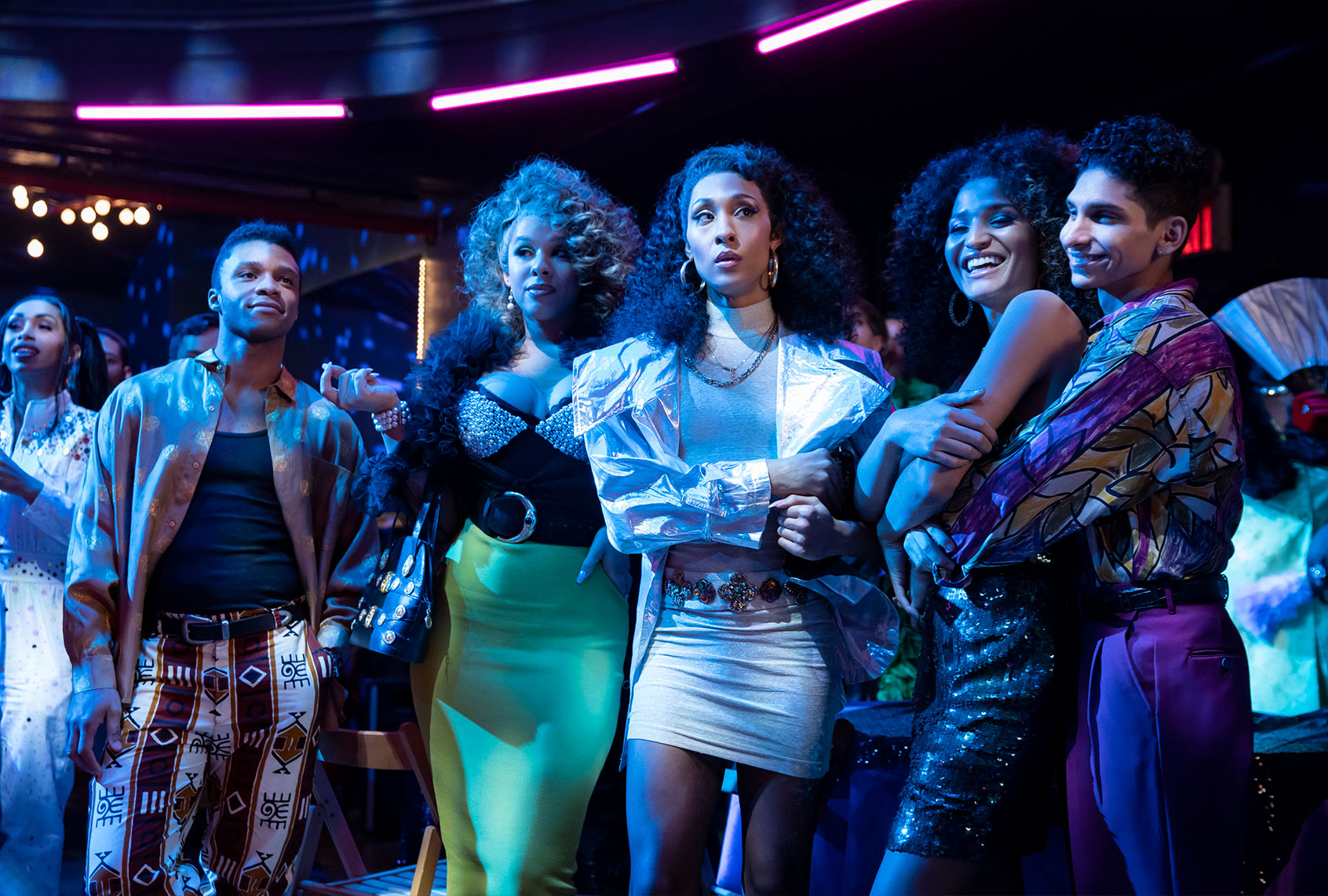
“Pose” kicks off its final fabulous walk by ratcheting up the nonsense as well as its optimism

Going back to its debut, “Pose” tells us precisely what it is in the pilot’s cold open, when Elektra and her House of Abundance strip a museum exhibit of its royal costumes and bash a plate glass window to make their hasty exit. From there they run straight to the ballroom, change into their pilfered gowns and crowns, and walk the Royalty category, sweeping it with a perfect score.

On cue the cops show up, the ladies elegantly offer up their wrists to be cuffed, and they sashay away as the crowd cheers. Do we see them plead out in court? Deal with any legal repercussions whatsoever for burglarizing a museum? Nope. A few lines of dialogue explain why nobody’s going to jail, and while there is no plane of existence in which that explanation makes sense the story moves on.

Loving “Pose” means accepting such nonsense, if not all of it, as the trade-off for basking in the sublime. We make this bargain with all kinds of TV shows including others executive produced by Ryan Murphy and Brad Falchuk. One that the writers name-check is synonymous with New York, glamour and fashion, and if you can believe a journalist at a weekly publication can afford a closet full of haute couture – as so many did in the 1990s –  you should be ready to buy just about anything.

Remember that as “Pose” embarks upon its final seven episodes. We may be swept away by its portrayal of ballroom’s outrageous creativity and appreciate its role as an escapist balm. The women in House of Abundance and House of Evangelista see ballroom as their means of defying the cruelty of the AIDS crisis in the 1980s and 1990s. But their grand ambitions are the heart of it, starting with House mothers Elektra (Dominique Jackson) and her daughter Blanca (Mj Rodriguez), whose rivalry defined the drama’s first two seasons along with a torrid romance between Indya Moore’s gorgeous Angel and a Wall Street exec played by Evan Peters.

He and the other wealthy white characters disappeared in Season 2 – a distinct improvement – placing the AIDS epidemic in a more central position. Never is there a point at which HIV/AIDS isn’t pressing down on this community. Blanca got her positive diagnosis minutes after that initial Royalty walk, but it doesn’t define her road in the series. It becomes her catalyst to live.

Celebrating their resilience is the primary directive of those opening “Pose” seasons, a shining arrow that became the candle in the second season’s tunneling into the height of the epidemic when no treatments were in sight.

The final episodes continues that thread, making the ballroom become less central in the lives of its four protagonists Blanca, Angel, Elektra and Billy Porter’s Pray Tell, the soul of this show . In 1994, however, there are treatments. There is hope.

“Pose” does not go out quietly, establishing its commitment to leaving on an emotional high straightaway with a full-fledged “stomp the children” extravaganza in its May 2 premiere – courtesy of Elektra, who else? Ratcheting up several cliches to maximum warp is its runway strategy. You want a wedding? “Pose” has sewn up an event this season guaranteed to make a bridezilla’s head explode. Guest stars? A Pray Tell-centered episode, directed by Janet Mock from a script co-written by her, series creator Steven Canals and Falchuk, showcases the divas of NBC’s 1990s comedy lineup including Anna Maria Horsford (of “Amen”), Jackée Harry (“227”) and Janet Hubert (the original Aunt Viv on “The Fresh Prince of Bel-Air”).

The other side of this coin reminds us that in the new season’s initial timeframe the AIDS epidemic isn’t over. No show in which death is a returning guest star leaves without shattering our hearts . . . which it does before reassuring us that all is love and community reigns supreme, that at the moment when you think all is lost, maybe it isn’t. Most of the time.

Pose season 3

It’s tough to begrudge Canals’ choice to design his exit season as a wish fulfillment parade given how dire and unpredictable the second season was. Week to week, you could never entirely tell what was going to happen on “Pose.” Sometimes the shocks were luridly comical, like the adventure that ended with Elektra entombing a dead man in the closet. Others, like Candy’s awful murder, were gutting. Blanca gained ground as the mother of the House of Evangelista, then stood by as her children left her and her health deteriorated.

So if Canals wants to show us what life would look like for his characters if they got everything they want, desires previously realized only in that ballroom, maybe that’s not the worst outcome given everything they’ve endured.

More ordinary shows would imply a Faustian element to that notion since getting what you want is never what it’s cracked up to be and tends to cost dearly. Not this one. While no one sails through these last chapters without a hitch, “Pose” leaves them and us on a soft-but-firm bed of optimism at the end of a slide lubricated with tears, gasps and a whole lot of entirely implausible turns.

If you thought the scot-free museum heist beggared belief, then you underestimate Elektra and her imagination. Jackson’s flamboyant performance always matches her character’s outsized ambition, but this run makes sure we’ll never forget her.

Anyway, the charm of “Pose” remains in its performances. Moore’s vulnerability lends dimensions to Angel, and their chemistry with Angel Bismark Curiel’s Lil Papi elevates a subplot that otherwise feels tacked on to the rest of the stories. This fresh arc inspires Rodriguez to endow Blanca with an added heft appropriate to her new work as a hospice aide.

The writers wisely train their focus on these characters and Elektra, aware that seven episodes means picking a few battles. That said, Hailie Shahar’s light-hearted Lulu is one that receives a welcome bit of expansion.

In the main these final “Pose” episodes double as a long goodnight kiss to Porter’s Pray Tell who, along with Blanca, travels this series in the shadow of an HIV diagnosis, watching his life partner and too many friends fade away in the hospital. (Sandra Bernhard’s Nurse Judy, another figure given more screen time this season, is a gift in these scenes as she rails against the injustice of a healthcare system stacked against Black and brown patients.)

As the new season opens, Pray’s despair drags him into alcoholism, and Porter channels a rage and sadness into his portrayal that transforms some truly hacky dialogue into if not gold then something passable. Only he can deliver, “I drink because I hate myself, and I hate myself because I drink!” with enough purposeful thunder to make it sail. But this has always been the case; the lines are less important than the vibrancy Porter lights them with.

That energy affirms the story’s emphasis on a realness that ensures the most heightened moments find their way back to solid ground regardless of circumstance. When you’ve followed characters through funerals, into hospital wards and watched them make banquets out of SpaghettiOs and palaces out of hovels because the world wants to break them, it’s tough to begrudge them a happy ending.

Enough about their harsh realities feels genuine enough for such grandiose fantasies to come off as a necessary indulgence. Enough of what we know about life for transgender men and women transforms whatever the victories they score into fuel. Enough of the truly insane, “I can’t believe they did that” excursions balance out the sorrow that it’s better to slap ’em on the hind ham and let them fly on by than complain. In the end, who are these fabulous unrealities hurting?

“Pose” premieres Sunday, May 2 at 10 p.m. on FX.

Post-COVID, many patients try smell therapy. But does it work?

In a recent episode of the popular New York Times podcast The Daily, restaurant critic Tejal Rao described her experience losing her sense of smell after having Covid-19. “Any kind of meat made me feel a little bit queasy,” she said, noting the close connection between smell and taste. For Rao, popcorn felt “like foam, but with sharp bits in it.” Like many others who have lost their sense of smell to the disease, Rao set off on a journey to recover her ability to detect scent, ultimately landing on an approach known as smell therapy. In Rao’s case, it entailed repeatedly sniffing from jars of four spices — cardamom, cloves, cinnamon, and cumin. When it comes to treating olfactory dysfunction, according to the podcast notes, smell therapy is “the only therapy proven to work.”

The episode is part of a growing landscape of press coverage reporting on a very real problem: Approximately 5 percent of the global population lives with a significantly reduced ability to smell, and an estimated 13.3 million Americans report living with some type of smell dysfunction. These numbers are growing as a small percentage of otherwise recovered Covid-19 patients report ongoing loss of smell. In response, some researchers are revisiting the concept of physical therapy for the nose in order to help restore what Covid-19 and other ailments have taken away. The only problem: nasal physiology is incredibly difficult to study, and the experimental therapy — while helpful to some — doesn’t provide the kind of evidence doctors normally need to adopt a new treatment widely.

“Smell training is somewhat questionable, frankly,” says Richard Doty, director of the University of Pennsylvania’s Smell and Taste Center. While the therapy has “caught the imagination of laypeople as well as scientists,” he says, the evidence is “pretty weak that it has any effect.” Doty, a physician who has published widely on olfactory dysfunction, suggests that smell training “doesn’t work if you compare to spontaneous resolution” of smell in the absence of training. In other words, any improvements may have occurred naturally over time. And other researchers note that it isn’t yet clear which, if any, patients might benefit from the intervention. 

People with smell loss — or anosmia — are twice as likely to experience a smell-related hazardous event when compared to those with a normal sense of smell, according to a 2014 study published in the Journal of the American Medical Association Otolaryngology. And smell is not only a survival tool that helps detect fire and spoiled food, it also influences quality of life. Despite this, most people didn’t care much about olfaction prior to the pandemic, says Shima Moein, a neuroscientist at the Institute for Research in Fundamental Sciences in Tehran, Iran. “Covid started to show people that it really matters,” she says. 

Of course, people did experience long-term smell loss from a variety of causes prior to the current pandemic: other viral infections, nasal polyps that obstruct odors from reaching smell receptors, neurodegenerative diseases, physical injury to the brain or face — all can wreak havoc on the olfactory system. Aside from a controversial steroid nasal spray, this leaves people just one treatment option with any supporting studies: smell training. 

Thomas Hummel, an ear, nose, and throat doctor and a researcher at the Smell and Taste Clinic in Dresden, Germany, was the first person to test the intervention on patients in a clinic. Based on what was already known about perfumers and sommeliers, who undergo rigorous training to hone their craft, Hummel hypothesized that regular exposure to discrete scents could help patients regain their olfactory abilities. 

To select the study’s scents, Hummel turned to the odor prism. Developed by a German psychologist in 1916, each of the prism’s six corners represent a category of scent: flowery, fruity, spicy, resinous, putrid, and burnt. Much like a color wheel, every odor should fit somewhere on the prism. It’s a simplistic model, admits Hummel, and in reality some odors are quite difficult to classify. Nevertheless, he found it a useful starting point for his study. The goal was to stimulate different types of smell receptors, so he selected scents from four different corners. Over a 12-week period, study participants sniffed rose, eucalyptus, lemon, and cloves for ten seconds each, twice a day, morning and evening. 

In the study published by Hummel and his colleagues in 2009, about 30 percent of those who underwent smell training reported an improvement in their smell, compared to only six percent — just one person — in the control group. By the end of the study, those who experienced improvement were able to perceive scents at lower concentrations, though even they did not get any better at discriminating one scent from another.    

Since that initial trial, more than 20 studies have demonstrated some improvement with smell training. In an interview — parts of which were published last month by the digital magazine Neo.Life — London, Ontario-based ear, nose, and throat surgeon Brian Rotenberg characterized the evidence as compelling. “There is fairly strong evidence behind smell training as an effective means of improving sense of smell,” he said.

But Leigh Sowerby, also an ear, nose, and throat specialist in Ontario and Rotenberg’s research colleague, noted that the degree of recovery in studies that compare to a placebo was modest. “The improvement was clinically significant, but it was just barely,” Sowerby says. Both Sowerby and Rotenberg added that incremental benefits can still have an impact on a patient’s quality of life.

Sowerby says he has seen smell therapy take patients from having no sense of smell to having a little. For example, one patient who initially described pizza as tasting like cardboard eventually came to detect hints of pepperoni and tomato. The pizza still doesn’t taste like it used to, explains Sowerby, but the patient is at least “getting something.”

The original smell training technique includes only four odors, but according to Sowerby, adding additional scents can improve the approach’s effectiveness — as can training over a longer period of time. “The longer you do it, the better your outcome,” he says. “That is the most frustrating thing for patients.” In 2015, Hummel proposed a modified smell training regimen with a wider range of odors including menthol, thyme, tangerine, jasmine, green tea, rosemary, bergamot, and gardenia. The modified regimen was shown to be more effective than the original technique.

* * *

But even these modest claims of benefits related to smell training have detractors. Doty of the University of Pennsylvania says it’s possible that smell therapy could have some “minute” effect for patients, but “the studies have been so poor” that they have failed to show to what degree smell therapy helps patients improve over and above the passage of time. For example, while Hummel’s 2009 study employed a validated test of olfactory function, other studies have relied on patients’ subjective assessments of their ability to smell. This can lead to inaccurate results, says Doty, because smell loss is often underreported and without objective testing, people are likely to underestimate the degree of their smell loss.

According to Moein, the Institute for Research in Fundamental Sciences neuroscientist, an additional limitation is that in many smell studies, patients and researchers know at the outset which patients are and are not receiving the treatment — a study design that can bias the results. “This has been problematic for many of the papers about smell loss,” she says.

Moein notes that smell training “might have some effect for some people” but it likely depends upon the reason why the smell loss has occurred. Some of the studies have lumped together people whose smell loss is due to various causes, making it difficult to identify why some improved and some didn’t after the training. For example, a person who has lost their smell from dementia may struggle to recall an odor’s name or memories associated with the odor; in this case, olfactory training may improve their memory of the odor. On the other hand, if there is something wrong with the cells lining the inside of a person’s nose, Moein is not sure how smell training would help. (This is why comparisons to perfumers don’t always apply to patients, says Moein — these workers use smell training to refine an ability that they already have.) 

Doty also points out that other sensory systems can’t be trained. “The cochlea has some regenerative properties” he explains, “but whether bombarding the cochlea with sounds or bombarding the olfactory system with smells actually improves the system is debatable.”

Moein, too, notes that when you have vision problems, doctors tell you to wear glasses. “They never tell you to look at different lines, vertical or horizontal, several times a day to recover your eyesight.” 

For his part, Hummel acknowledges that most people with post-viral anosmia will recover without training, and that smell therapy might not be appropriate for everyone. For example, when patients have had loss of smell for a very long time, “it’s a little bit problematic to recommend it.” By this point, he says, people have often adapted to life with olfactory dysfunction and smell training may have a negative psychological effect by reminding them that they can’t smell. Hummel is more likely to recommend the intervention to patients who are suffering from post-viral or post-traumatic anosmia. For these groups, Hummel maintains, the research shows that “when people do smell training, then they recover faster,” and probably more completely by amplifying the natural recovery process.

Plus, said Hummel, many patients struggling with smell loss welcome the opportunity to try an intervention, particularly one without side effects or major drawbacks. “Most patients like it because they feel that they’re in charge,” he says. “They can do something.” 

* * *

Maeve Gamble is a physician specializing in rheumatology and a current fellow in the Dalla Lana Global Journalism program.

This article was originally published on Undark. Read the original article.

Chris Wallace to GOP senator: Why oppose childcare if one-quarter of kids in state endure poverty?

Fox News host Chris Wallace on Sunday challenged Sen. Bill Cassidy (R) of Louisiana over his opposition to government child care services despite the high rate of child poverty in his state.

During an interview on Fox News Sunday, Wallace noted that President Joe Biden has proposed $225 billion in spending for child care programs.

“Which of those programs do you think people in your state don’t need?” Wallace asked.

“It’s not infrastructure,” Cassidy complained. “When people say, ‘Wait a second, I like this because we need a new bridge across the Calcasieu River in Lake Charles,’ I’m saying this plan will not give it to you. The amount of spending for roads and bridges is so low and split between 50 states over 5 years, you’re not going to get your bridge.”

“Now we may need this,” he added. “But that is not going to give you a road and bridge. And that’s what people in my state would really like to see.”

Wallace pressed: “There are a lot of programs that aren’t infrastructure and the question I’m asking you is would you support the government paying for them?”

“I looked into it,” the Fox News host continued. “In your state of Louisiana, the rate of child poverty is 25% — one in four of the children in Louisiana are in poverty. And according to the White House, 42% of residents in Louisiana do not have access to child care. So wouldn’t they benefit — forget whether it’s infrastructure or not — wouldn’t they benefit from these government programs?”

“I don’t know if they would,” Cassidy insisted. “If you think about the main driver of elevating out of poverty, it’s good education.”

The Lousisana senator went on to blast teachers and teachers unions for canceling in-person learning during the COVID-19 pandemic.

“What we saw during the pandemic was teachers unions keeping schools shut even when the Centers for Disease Control said it was safe to go back,” Cassidy complained. “The president wants to give universal pre-K run by the same teachers unions.”

“There’s more money going to the school systems and the unions and yet they still won’t open?” he added. “Not because the CDC says it’s not safe, but because they don’t want to? Your kids are not going to have a better education. They’re just not. So whether or not these programs benefit those who need it, we don’t know.”

Watch the video below via Fox News:

Meet the “caribou of the Cretaceous”: How ancient hadrosaurs spread across Earth

You may not know the term “hadrosaur,” but you can probably visualize the dinosaur it refers to. Also known as the “duck-billed dinosaur” because the bones in their snouts look like the beaks on ducks, hadrosaurs had long bodies; in some cases, they possessed protuberances on their faces or backs that gave them a distinctive look. Unlike the terrifying T. Rex, hadrosaurs were herbivores, meaning they only ate plants. They were also quite numerous during their heyday, so much so that they are the most commonly discovered of all dinosaurs.

That said, the new one uncovered by a team of researchers is still quite special.

In an article recently published in Scientific Reports, a group of Japanese and American scientists revealed that they had discovered a new type of hadrosaur that significantly changes what we know about the ancient beasts. The hadrosaur, which was found on one of Japan’s southern islands and has been named Yamatosaurus izanagii, provides scientists with new insights into a type of dinosaur that one scholar told Salon was so abundant during the Late Cretaceous period “that they are sometimes referred to as ‘the cows of the Cretaceous.'”

“In the far north where I normally work we call them the caribou of the Cretaceous,” Anthony R. Fiorillo, a co-author of the paper, told Salon by email.

Hadrosaurs have been found on most continents, but the new discovery could help explain how they became so geographically diverse. Paleontologists already know that dinosaurs during the Cretaceous period traveled between North America and Asia using the Bering Land Bridge, a now-submerged land area that once connected eastern Russia with western Alaska.

“What Yamatosaurus tells us is that the larger group, the hadrosaurs, likely evolved in the Eurasian continent during the Cretaceous and used the Bering Land Bridge to populate western North America,” Fiorillo observed. “In other words, Yamatosaurus informs us of the direction of the dispersal of this important group of animals.”

Fiorillo also said that the Yamatosaurus was a “primitive” type of hadrosaur, one that links earlier versions of the animal that were mainly bipedal (that is, walking on two legs) to those that evolved to be mainly quadrupedal (that is, walking on four legs).

“To go a little further, there is a perception that as organisms evolve, the more primitive forms die out,” Fiorillo told Salon. “And while that is often the case, it is not always the case. Yamatosaurus as a primitive form of hadrosaur lived at the same time as a more advanced hadrosaur, Kamuysaurus (a duck-billed dinosaur from Japan which we named in 2019 — and it is closely related to our Arctic duck-billed dinosaur, Edmontosaurus).”

The fact that these two animals lived near each other, geographically and chronologically, suggests that this region of Japan was a “refugium,” or an area where animals can survive in times when conditions are unfavorable.

The new dinosaur’s name comes from Yamato, the ancient name for Japan, and Izanagi, a Japanese mythological god who supposedly created the Japanese islands including Awaji Island, where the Yamatosaurus was discovered. According to the scientists, it was found at a cement industry quarry after fossils were revealed in “blocks of dark grey mudstones.” It was discovered in an area where a number of other vertebrate, invertebrate and plant fossils have also been found.


Want more health and science stories in your inbox? Subscribe to Salon’s weekly newsletter The Vulgar Scientist.


Got a wall? Turn it into a vertical garden

I fell into a vertical garden wormhole for the first time after seeing a Pinterest photo of a “living wall” at someone’s wedding. This was several years ago, and I’ve since learned that lush, green, plant-filled walls fall into a larger category of eye-candy, called “vertical gardens” — and boy, oh, boy, is it a magical corner of content. Just search #verticalgarden on Instagram for a preview (good luck not scrolling through all 208,000 posts).

While I’m looking forward to having a living wall at my hypothetical future wedding (it’s the perfect photo backdrop!), creating any sort of vertical garden — even a tiny one! — can be easy and affordable. Here are our best ideas for putting your green thumb to work.

* * *

1. Repurpose a ladder

You most likely don’t have a spare ladder lying around, but look to Craigslist or local antique stores to find one affordably. You can turn the rungs into shelves, or use them as racks for hanging potted plants. For an urban space, consider a vertical herb garden — they’re equal parts practical and pretty.

2. Frame your greenery

Instead of hanging another poster, turn succulents into wall art. You can freestyle this by planting your succulents in a shadow box lined with hardware cloth and a staple gun, or use a kit and follow its instructions. The most important things to keep in mind are letting your succulents take root for a few weeks before hanging, and remembering to water those little guys once a month (take it down from the wall and lay it flat before you do this!).

3. Pick up a pallet

A wooden pallet is the idea vessel for a vertical garden in an outdoor space. Think: a wall of greenery that looks lush and a lot more complicated than it really is. It doesn’t have to be huge, either — grab whatever size pallet fits your space, from mini to large. Use landscape fabric to cover the back, bottom, and sides of the pallet (to keep the soil in!), and staple it into place. Leafy greens and herbs work especially well in pallet gardens.

4. Hang a pipe

For a simple, small-scale indoor option, look no further than a rod or pipe, which you can hang with wall-mounts or brackets. Use twine or colorful cords to string it with small planter pots.

5. Stack some crates

If you’ve got the outdoor space, this installation really only requires a few crates stacked and staggered into a wall, creating a decorative sanctuary for any number of your favorite plants. What better time than this summer to both try your hand at a new DIY and tend to some plants?

6. Wall Mount Shelves For Plants

Similar to the bookcases and leaning shelves lots of plant people have in their homes, a series of wall-mounted shelves in or outside create a landing pad for pots, planters, and propagation cuttings to thrive while on display.

7. Create  grid saystem

This genius rack mounts to the wall and cradles multiple terracotta pots, which, when filled with succulents and trailing vines, creates the ultimate living wall in no time.

8. Display your propagation station

If you’re a serious plant parent, it’s likely that you’re already in the process of propagating a number of your most prized varieties. Instead of just lining them up on a windowsill or scattering them throughout the house, take a page from Hilton Carter’s book, and display the cuttings as they grow to be fully-formed plants.

9. String up some shelves

This plant wall is actually much easier than it looks to accomplish — all you’ll need to do is cut places for pots and drill holes in each corner of a few wooden boards, then tie them together with a strong cord.

Keep your extra Scoby from going to waste with these recipes and ideas

For lovers of the effervescent, sweet-tart flavor of kombucha, brewing a batch at home is an easy hobby that saves money; is a great way to reduce food waste and use extra tea, herbs and fruit for flavoring; and lets you avoid the packaging and plastics involved in purchasing premade kombuchas. Using a simple fermentation process, the traditional Manchurian drink is made with sugar, tea and a kombucha Scoby. An abbreviation for “Symbiotic Colony of Bacteria and Yeast,” the Scoby is also called a kombucha mother, starter or mushroom, looks like a slimy, thin pancake-like blob, and is used to “start” the fermentation process for kombucha. As long as it has sugar and yeast to feed on, the starter will continue to grow, adding new layers for every batch of kombucha brewed.

Like other foods that rely on a growing starter (such as sourdough), a kombucha-making hobby means you’ll need to figure out what to do with the extra Scoby. There is a wide community devoted to the art of brewing kombucha, and just as many enthusiasts are looking for ways to keep the practice waste-free, using the starter to make everything from jerky and candy to garden fertilizer and vegan leather. It’s even said to have healing properties, with microbial enzymes that help the skin repair itself when you cut, scrape or burn yourself. There are multiple cookbooks on making kombucha, including “The Big Book of Kombucha,” which feature detailed information for making the drink from scratch and offer suggestions for kombucha Scoby uses.

Kombucha and a waste-free kitchen 

Making the fizzy, fermented drink is a great addition to a waste-free kitchen. One of the main ingredients in the drink is tea, which, in both loose leaf and bagged forms, has a shelf life of between six to 12 months. Tea lovers stock their homes with many types of dried tea, and making kombucha is a great way to use it before the tea degrades in quality. In the later stages of the kombucha brewing process, you can add herbs, fruit, spices and other aromatics to flavor the kombucha further. This is another great way to use surplus food; frozen or dehydrated fruit and spices prepared during a heavy harvest can be great additions to the kombucha jar. To keep the process completely waste-free, use the suggestions below to make use of the extra Scoby as well.

What is a Scoby?

When looking at the slimy, alien-looking kombucha starter, you might wonder, “Can you actually eat a kombucha Scoby?” It might look strange, but yes, the kombucha starter is absolutely edible. The starter is a cellulose mat that houses bacteria and yeast cultures, the same bacteria and yeast that give kombucha much of its health benefits. The cellulose mat is a source of insoluble fiber, which studies have linked to gut health and improved digestion. It’s also been suggested that the Scoby can help normalize blood sugar and cholesterol levels.

How to make a Scoby

To start brewing kombucha, you’ll need to acquire a starter. There are three options: get a piece of Scoby from a friend, purchase one online or make it yourself. To make a kombucha starter, you’ll need sugar, tea, water and some pre-made, unflavored kombucha, either a homemade batch from a friend or store bought. While kombucha can be made with a variety of teas, black tea is ideal for making the Scoby. You’ll be fostering bacterial growth in this process, so it’s very important to keep all utensils and equipment clean.

To make a Scoby, combine the tea and sugar with hot water to make a sweet tea, then cool to room temperature. Pour into a clean glass jar with premade kombucha, stirring to combine. Cover the top of the jar with tightly woven cloth (such as clean napkins or tea towels), coffee filters, or paper towels, securing it with a rubber band. Place at room temperature, out of direct sunlight, in an area where the jar won’t get jostled or moved around. After a few days, bubbles will gather on the surface; these will collect into a film after a few more days, eventually forming a solid, opaque layer. Kept around 70°F, it will take about two weeks to grow a Scoby from scratch. While the liquid used to grow the kombucha starter will be too vinegary to drink on its own, you can use it to start your first batch of kombucha, or as a household cleaner.

How to use extra Scoby

Once you start brewing kombucha regularly, your Scoby will grow quickly. You can give some away to friends, and also create what’s known as a Scoby hotel, longer-term storage for keeping extra starter for future use or for a break in your brewing schedule. If you still have too much, don’t toss it in the trash. Instead, turn to these ideas to make the most of your Scoby.

Scoby jerky

One of the most popular ways to use extra kombucha starter is by making “jerky.” Cut the Scoby into strips and toss in your favorite spices and flavorings. Use a dehydrator or place the Scoby strips on a parchment paper-lined sheet tray, cover with a cloth, and leave in an oven overnight with the pilot light on. Eat as jerky, or add to salads, trail mix or snack mix.

Scoby smoothie

Another widely suggested use for the kombucha starter is incorporating it into smoothies. Add it to one of your favorite smoothie recipes to help thicken it, or blend it with fruit to create Scoby ice pops.

Scoby fruit leather

Blending the kombucha starter opens up a number of ways to use it. Make fruit leather by combining the puree with fruit and herbs or spices, then spreading it out on parchment paper or dehydrator sheets and drying it out until no longer sticky.

Scoby energy balls

Turn the extra starter into a snack by combining the Scoby puree with oats, nuts, dried fruit and nut butter, then scooping into balls. You can make many different iterations: date balls; “cookie dough;” or chocolate. These will keep in the fridge for several weeks, if you don’t eat them all first. 

Scoby candy

If sweets are your jam, the kombucha starter can also be used to make chewy, probiotic gummies. There are several methods for making Scoby candy using sugar, honey or maple syrup.

Scoby sushi

For a savory application, use the Scoby in homemade sushi or ceviche. The kombucha starter has a similar texture to raw squid and can be used for sushi rolls or other seafood recipes. For sushi, omit the vinegar from the rice, as the Scoby is already quite tangy, and add crisp, fresh flavors such as cucumber and mint.

Scoby pet treats

Kombucha enthusiasts also suggest using the Scoby as a dog treat, either fresh or following a similar process as the jerky to make a dried pet snack. This dog lover suggests using a chicken bouillon cube to season the Scoby before drying it out.

Scoby in the garden

Thanks to the kombucha starter’s concentration of probiotics, it is also a great addition to the garden, helping add nutrients and acidity to the soil. You can add it directly, whole or pureed, to your garden, placing it near the base of your plants, or add to the compost pile. Make sure to cover the Scoby completely with dirt, as it will attract animals and bugs.

How to cook like Pepper Teigen (and eat like Chrissy)

Pepper Teigen’s new release, “The Pepper Thai Cookbook: Family Recipes from Everyone’s Favorite Thai Mom,” is exactly what our cookbook libraries need right now. Penned with Los Angeles food writer and cookbook author Garrett Snyder, the Instagram-famous mom of Chrissy Teigen shares her most beloved recipes from her childhood in Isaan, Thailand, dishes she crafted specially for husband Ron’s bar in Washington, and family favorites from the Teigen-Legend home in Los Angeles. This is definitely one book to cook your way entirely through.

The stories behind each plate, bowl, and skewer will entice you to pull the fish sauce, tamarind paste, and coconut milk from your pantry and use each one to its fullest potential. We emailed with Pepper, and she answered every question we had until we were satisfied (although she’s so entertaining and such a talented cook that we may never truly be satisfied).

What advice do you have for parents and grandparents to help young kids enjoy a wide range of flavors and textures? Can you share an anecdote from your kitchen? Luna and Miles are great eaters, and I like to think that is thanks to me! First, I think it’s important to have kids try as many different kinds of foods and flavors as possible. I also think it’s important, especially with vegetables, to just make sure they taste good. My pad thai Brussels sprouts recipe is a hit with kids because I think it’s a more exciting and flavorful way for them to eat their vegetables. The more they get used to eating foods with bold flavors, the more they will grow to love them. Now, I’m even getting Luna and Miles to like spicy foods, because it’s how I love to cook.

What were the dishes that sold your husband on Thai food when you started cooking for him?Ron is from the Midwest, so when I first met him and moved to the U.S. with him, he was definitely a meat and potatoes guy! I would slowly start introducing him to more Thai flavors by just trying to make dishes that were recognizable to him, but by adding my own flavor. For example, when we were living in Idaho and eating sooo many potatoes, I looked up a recipe for scalloped potatoes, and thought “I can make this better.” That’s how my version of scalloped potatoes was born. Also, I think my Thai chicken wings and spring rolls could make anyone love Thai food.

What might you find on the menu at Luna’s famous tea parties? Tea sandwiches, of course! You can use just about anything to make tea sandwiches, but in the book, I share a recipe for chile jam tea sandwiches, which Luna loves. I think tea sandwiches are best when they involve something salty, something creamy, and something crisp and fresh. For my chile jam tea sandwiches, I pair whipped cream cheese, sliced cucumber, and cilantro with sweet chile jam.

What was your most popular dish at Ron’s bar in Washington? Definitely spring rolls. They were so popular that in the book I refer to them as my “famous spring rolls.” They got so popular that when our regulars would have parties, they would order 300 spring rolls at a time to serve!

Can I really make Isaan sour sausage at home? Okay, I will admit this recipe is definitely more of a project, but you can definitely make it at home. My suggestion is to make it an event and invite a few friends or family over for a sausage-making party. Since the sausages need at least three days to ferment, you won’t be able to eat the sausages on the day you make them, so you should plan something else for your meal (maybe some pad korat, if you want to make it a real Isaan food day). You’ll still have a lot of fun though, and in a few days you’ll have another excuse to throw a party when you’re ready to eat the sausages. Or you can always eat them all yourself, I won’t tell.

I love that your chapter on salads is entitled “Salads, But Not Boring.” What can American salad-eaters learn from Thai salad recipes? Everyone should stop eating boring salads! For my salads, I like to balance sweet with a little bit of salty. If there’s one takeaway for American salad-eaters, it’s don’t be afraid of mixing sweet and salty.

Do Chrissy and John each have a favorite recipe from the book? I’d like to think both John and Chrissy love so many of my recipes that it would be hard for them to pick just one! Some favorites for Chrissy are my scalloped potatoes (she claims it’ll be her last meal on earth) and nam prik sloppy joes. John loves the garlic-stuffed whole fish, chicken wings, and my Thai glazed ribs.

Approximately how many people have DMed you for a pad thai recipe? Too many to count! It was one of the first recipes I made for my book.

Can the Food52 editorial team please join your lovely family? Please! Come over for dinner soon! 🙂

Cook The Book: Fried Chicken Larb From Pepper Teigen

Sen. Tim Scott: I’ve been stopped 18 times for “driving while Black” — but see “beauty” in cops

Sen. Tim Scott (R-SC) on Sunday suggested that systemic racism in policing is offset by the “beauty” of officers handing out Christmas gifts to their community.

During an interview on Face the Nation, Scott revealed that he had been pulled over 18 times for “driving while Black.”

“One of the reasons I have asked to lead this police reform conversation on my side of the aisle is because I personally understand the pain of being stopped 18 times driving while Black,” Scott explained to host John Dickerson. “I have also seen the beauty of when officers go door to door with me on Christmas morning delivering presents to kids in the most underserved communities.”

“So I think I bring an equilibrium to the conversation,” he said. “That gives me reason to be hopeful.”

Watch the video below via CBS:

America on the knife’s edge: Will the next year determine the fate of democracy?

It’s a debased truism of our decaying two-party system: Every moment of political conflict is an apocalypse waiting to happen. Since at least the beginning of this century, Republicans have depicted every presidential election as the last chance to “save America” from socialism, mandatory gay marriage, emasculating electric cars and re-education camps for white suburbanites. Democrats, of course, have made a structurally similar argument framed in wistful, Springsteenian terms: It’s our last chance to fend off the mean-spirited racists and would-be fascists and redeem the American narrative of upward progress inherited from Woody Guthrie, FDR and Martin Luther King Jr.

It’s always complete hogwash. Except when it’s accidentally true, like a stopped historical clock. Such as right now. 

I don’t actually mean that the looming 2022 midterm elections, or even — Goddess help us — the 2024 presidential election, will decide the future of America by themselves. (Those will be truly dire campaigns; I know that much.) I’m inclined to believe that by the time we reach those elections the die will be cast and the decision will have been made, and those elections will simply confirm what we already know. To be truthful, I suspect that when we look back at this moment from the future — assuming the existence of a future, and people to look back from it — we will conclude that America’s destiny had been written in the stars some time earlier, and that at this point in the trajectory there was no way to change it.

But we’re not in the future, are we? We’re right here, at a moment of tremendous dynamism and danger, when the greatest military and economic power in world history, facing a precipitous decline in its global status and plagued by unmanageable internal divisions, stands at the edge of the abyss. May we live in interesting times, right? That curse has descended upon us with a vengeance.

A new president most of us thought would be an ineffective middle-road caretaker is trying to seize the moment and transform the political narrative with a series of bold initiatives, while a defeated ex-president — refusing to acknowledge that he was defeated or is now the ex-president — leads a faction or cult or movement explicitly determined to uprooting America’s compromised and problematic democracy by the foundations and replacing it with an authoritarian sham. 

What happens over the course of the next year is critical, and not just because it will determine whether Democrats can somehow cling to power in Washington after 2022. That’s a much more significant question than usual, and I say that as someone deeply skeptical of both political parties and the entire creaky architecture that holds them up. But the only way Democrats can change the conventional script on midterm elections — in which the president’s party nearly always loses seats — is by persuading a critical mass of Americans, across all the boundaries of race and class and geography and culture that we talk about endlessly, that effective government can play a positive role in ordinary people’s lives, and that there’s more to the social contract than lower taxes for the rich and ever-cheaper online shopping.  

To put this another way, Joe Biden — or whoever you conclude is driving his agenda behind the scenes — is trying to redeem the promise and possibility of liberal democracy, and trying to do so virtually overnight, and with little political capital. It’s an impossible task, perhaps literally so. But at least the Democratic Party appears to have grasped, at long last, that the entire liberal-democratic project is in desperate need of reform. 

On one hand, it’s heartening to see so many people who previously would not have known or cared about Joe Manchin’s position on the filibuster, let alone the details of Biden’s ginormous “infrastructure bill,” pay attention to the nitty-gritty of politics. We were all taught in high school that democracy is impossible without an engaged citizenry. One of the greatest crimes of the Clinton-Obama Democratic Party was its mode of bland, professional competence and the anesthetizing message that government was something disengaged from daily life that ran smoothly in the background, like an operating system, and was best left to the nerds.

On the other hand, while the Biden administration’s FDR-style self-reinvention is undeniably impressive, it’s hard to imagine America extricating itself from our current national dilemma without some reckoning with how we got here. That’s not the sort of thing that happens within a year or two, and for a nation as clouded by narcissistic mythology, self-serving lies and massive ignorance as ours, it might not be possible at all.

Of course Donald Trump lost the 2020 election, and by a significant margin. But in a sense, it’s not mysterious that his supporters cling so tenaciously to the fiction or delusion that the election was rigged. They are correct to perceive an invisible pattern behind recent American history that includes the disempowerment of ordinary people, even if their preferred explanation of that pattern is dangerous nonsense. They also perceive correctly that the United States in 2020 failed to deliver a clear message — about Trump and Biden and their respective parties, about the pandemic that killed more than a half-million Americans, about the summer of protests that followed the police killings of George Floyd and Breonna Taylor or about much of anything else. 

Yes, Biden defeated Trump. But Trump received far more votes than he had in winning the 2016 election, more than any incumbent president or any Republican nominee in history — which, given the massive incompetence and blatant criminality of his entire administration, is nothing short of astonishing. Democrats blithely assumed they would expand their House majority by 10 to 15 seats, and very nearly lost it. After losing several Senate seats they expected to win (in Iowa, Maine and North Carolina, most notably), they appeared doomed in the upper chamber too, but managed a miraculous 50-50 pseudo-majority entirely because Trump’s bumbling interference in Georgia poisoned the inept Republican incumbents and drove massive Democratic turnout in the runoff election. (Which occurred, lest we forget, on Jan. 5, a day before something else happened, although it’s difficult to say exactly what.)

There are so many paradoxes to America’s current state of political dysfunction that no one could possibly list them all. The party that has embraced the task of trying to save democracy at the last moment, however awkwardly and incompletely — and however poisoned by its own internal contradictions — won, but very nearly lost. The party that has gone about 94 percent of the way into white nationalism and primitive fascism lost, primarily because of its contaminated figurehead — but could not possibly have come so close to winning without him. 

As for the massive question of whether liberal democracy can be saved, let’s put a pin in that one, as we say these days. As Pankaj Mishra points out repeatedly in his recent collection of essays, “Bland Fanatics,” Western-style liberalism had a perhaps-fatal flaw built into it from the beginning: Its expansion of human rights and representative democracy and the “free market” and whatever other noble and purportedly universal principles were always dependent on exploiting less powerful nations elsewhere in the world, first to extract raw materials and human capital, and then to serve as captive export markets. 

At least the British Empire in its heyday made no bones about that fact. We condemn the “white man’s burden” rhetoric of that era as irredeemably racist, but it was arguably more honest than the American pretense that our increasingly clumsy and destructive overseas adventures were somehow in service to noble, abstract principles of “human rights” and “freedom,” rather than an attempt to create a one-world market by force. 

That fiction became increasingly untenable after the Vietnam War and the social discord of the 1960s and ’70s, but that wasn’t enough to prevent both political parties — yes, liberals! Both sides! — from buying into the same toxic bullshit all over again and going all-in on the unmitigated disaster of the Iraq and Afghanistan invasions, the Patriot Act and the massive expansion of the national-security state after 9/11. Biden has signaled some willingness to tiptoe away from that dreadful history, but not nearly fast enough or forcefully enough. Which might not matter much, in historical terms: If it turns out that the entire liberal-democratic project is doomed, that was the moment when it happened.

NYT, Washington Post, NBC News issue corrections to Giuliani stories

A trio of national news outlets issued major corrections Saturday evening to previous stories alleging the FBI had warned Rudy Giuliani that he was the target of Russian agents looking to spread disinformation — with all noting that such a meeting had apparently never taken place.

Critically, all three outlets stood by the veracity of their reports that the FBI believed Giuliani was the target of a Russian operation, noting simply that the briefing in which the agency planned to warn him of the campaign never happened.

The corrections, made by The New York Times, The Washington Post and NBC News, came in the wake of reports that Giuliani’s home and office were raided by federal agents last Wednesday, the culmination of a long-running investigation into his dealings in Ukraine. Giuliani, also a personal attorney for President Donald Trump, spent the last election cycle dealing with a wide cast of characters in the country while searching for dirt on the Biden family.

The Gray Lady appended its correction to an April 29 story about the role Giuliani played in the firing of then-U.S. ambassador to Ukraine Marie Yovanovitch, writing, “An earlier version of this article misstated whether Rudolph W. Giuliani received a formal warning from the F.B.I. about Russian disinformation. Mr. Giuliani did not receive such a so-called defensive briefing.”

The Washington Post, which first reported the news, also published a similar statement at the beginning of a story it published Saturday, titled, “FBI was aware prominent Americans, including Giuliani, were targeted by Russian influence operation.”

“An earlier version of this story, published Thursday, incorrectly reported that One America News was warned by the FBI that it was the target of a Russian influence operation. That version also said the FBI had provided a similar warning to Rudolph W. Giuliani, which he has since disputed. This version has been corrected to remove assertions that OAN and Giuliani received the warnings,” the paper wrote.

In its statement NBC News opened the hood on its reporting process, writing that they had relied on a single anonymous source for the information, which was later disputed by a second anonymous source. 

“An earlier version of this article included an incorrect report that Rudolph Giuliani had received a defensive briefing from the FBI in 2019 warning him that he was being targeted by a Russian influence operation. The report was based on a source familiar with the matter, but a second source now says the briefing was only prepared for Giuliani and not delivered to him, in part over concerns it might complicate the criminal investigation of Giuliani. As a result, the premise and headline of the article below have been changed to reflect the corrected information.”

The longtime GOP firebrand blasted the news outlets on Twitter following the news, writing, “Where did the original false information come from? @MSNBC@CNN@nytimes I couldn’t quite hear your apology?”

“The Washington Post and NYTNYT must reveal their sources who lied and targeted an American Citizen. #msnbc , #cnn forgot to mention the corrections today. #fakenews #badpeople,” Giuliani added.

How “Generation Hustle,” a show about con artists, almost got conned by one of its subjects

In a world where we’re told to fake it until we make it, where does the hustle stop and the con begin? That’s one of the main questions interrogated in HBO Max’s “Generation Hustle,” a new, 10-episode series about the con artists, scammers and schemers who walk among us. 

Some of the stories will be familiar to viewers, like the rise and fall of the coworking concept WeWork, which just got its own Hulu documentary earlier this month. However, many of the stories are fresh and truly surprising; they take place everywhere from a University of Georgia frat house, to a Jakarta photoshoot, to an EDM nightclub. 

Co-creator Yon Motskin and showrunner Angie Day spoke with Salon about getting scammed by one of their own subjects, what they think all con artists have in common and the possibility of continuing the series for more seasons. 

Some of these stories I was somewhat familiar with — like the WeWork and Anna Delvey scandals, for instance — but most of the episodes contained cons with which I was totally unfamiliar. How did you go about finding and choosing the stories you featured? 

Yon Motskin: That was partly by design. Our filter was con artists who are pulling off big scams. We wanted to focus on young people and on things that happened in the last five to 10 years. So, very recent — and we wanted a mix of some well-known stories that would excite people that we could tell in a different, fresh way. We also wanted new stories or lesser-known stories that we thought were really interesting, hoping that people would watch them and be like, “Wow, I’ve never heard of this, but it’s incredible.” So that mix of both buzzy and lesser-known was exciting to us. 

Angie Day:  I think we also wanted episodes that represented specific “worlds.” So, the world of EDM, the world of college, the world of travel. That was one of the things, too, so that we could make each episode distinct musically and visually. There was definitely a lot of research that went into it and then a little bit of word-of-mouth. I think Ian Bick [from the episode “The Party’s Over”] we found out about from Syed Arbab [from the episode “Frat Boy Ponzi”] because they actually knew each other. 

Motskin:  We also wanted diversity — diversity of people, of gender and ideally, a diversity of consequences, right? Like, some stories were about big money. Some stories were about an emotional toll, like a love fraud or relationship fraud. Some were psychological or even sexaul and we wanted to really represent all that. 

Well, this leads into something that I was really curious about. I think when it comes to stories about scam artists, sometimes we want the scammer to succeed, right? Kind of like “Catch Me If You Can.” Other times, though, you want them to get their comeuppance. This series navigates that really well. How did you figure out the tone to strike in this series? 

Day:  I think from the very beginning, it’s about making sure that both the victim and the con artist or master of deception is being represented. That was something that we continued to speak about editorially. Is it balanced enough? We had a line producer named Laura McCune and she always had her own take like, “He got off too easy,” or “He should have gotten more time.” And it was interesting to see how people responded along the way. 

We talk a lot about how hustling can be good, but then hustling can lead to bad, right? This shows both sides. It also shows that everyone wants to think that they’re too smart to be conned, but actually, anyone could be conned. And I think more people can cross over into this area of con than you’d think. Once there’s enough desperation, people can make some really bad choices. 

Motskin: I think, too, if we just tell the story truthfully, and we just follow the money and follow the con, and follow the narrative, then the audience will react in whatever way they feel. Some people will hate the con artist, and other people will just be in complete awe and admiration.

I was especially taken by the second episode, “The Party’s Over,” which tells the story of teenage party promoter Ian Bick, who ended up on top of a $500,000 Ponzi scheme. And he was one of several much younger people involved in really elaborate scams. Did their youth make you think about them any differently than some of the more experienced con artists profiled?

Day: I guess it gave me a little bit of hope that people could change their ways? It’s funny, people say, “Do you think that he did it on purpose? Do you think that he really just got in over his head?” And, to me, that’s a great debate that will continue and will show in Ian’s own life. What’s funny is that Ian is pretty forthcoming about his story, and it didn’t feel like a situation in which he was super naive — though he certainly now has the perspective of having spent time in prison. 

But I think, across the board, you can think about someone changing course when they are that young a little more easily than someone who’s been running the same con for 20 years. 

Motskin: I mean, I think for the most part, all of our con artists are relatively young. They have grown up in a different generation, right? It’s this “fake it ’til you make it” generation people now. We live online, we post half-truths all the time, all day without ever thinking twice about the morals of it. So I think all these cons were an extension of that. 

Day: The “fake it ’til you make it” thing we talk about a lot. I look at the Anna Delvey story, where even her lawyer said that under some different circumstances — if a few things had gone differently — we’d be celebrating her as a genius. There’s a lot of that in American culture. 

Well, and with the Anna Delvey/Anna Sorokin story [in which she faked being an heiress and defrauded others], you had the challenge of not actually being able to speak with her because she sold the rights to her life story to Netflix. How did you strike up the relationship where she sent you all drawings from prison in lieu of interviews? 

Day:  Well, that episode was directed by Martha Shane, who’s really amazing. She also directed “The Alabama Exit” episode. That was some of the fun of this, seeing what each director brings to a particular episode or to a story we’ve seen before. One of the reasons we brought on Martha is because she always approaches things in a slightly different way. She started corresponding with Anna in prison, and it was her idea to try to license drawings from her. It was a lot of letter-writing and she really took it upon herself to reach out to Anna and explain what she wanted to do. 

You know, the day those pictures came from her, we were just blown away because they all had these insightful captions. It was amazing, but it was one of the last things to come in. 

Motskin:  I think it’s a good example of a liability becoming an asset. You know, I think Martha was pretty upset or disappointed at first when she realized that she couldn’t get an Anna on camera. But then quickly, this new thing presented itself and it became as interesting, if not more. 

Yon, in the three episodes you directed, did you come across any challenges like that which you had to work around? 


James McCallum as William Baekeland in “Generation Hustle” (HBO Max)

Motskin: You want that list in order of importance or alphabetical order? But seriously, one big example is I directed the episode about William Baekeland who is basically this guy who comes off as a British aristocrat, the heir to a billion dollar plastics fortune, and he ends up scamming about a million dollars from a very elite, exclusive group of world travelers. 

It’s a very sort of Wes Anderson, 19th century, Victorian snow globe kind of world. I was in touch with him for about a year, writing to him almost every week. We wrote back and forth a lot. I went to England and I met him and a friend for dinner, but for a long, long time, I didn’t know whether or not the letters we were getting were from him. I’d write his sister, his best friend — other people who knew him — and it was unclear whether we were hearing from them or if he was assuming all these different personalities and he would change his voice. 

In his emails, he would tell us these fabulous stories which turned out to not be true — that he’s got family in Africa and Europe, that he’s started a cryptocurrency, all these ridiculous things. We thought, though, that he would participate. When we asked him to, he asked for three things: a million dollars, to shoot at the location of his choosing, and he wanted to sit on the chair of his choice. 

We said no to the money, and we said yes to the chair. Ultimately, he didn’t show up, and I think we realized that we’ve probably just been conned, in some way, by him the whole time. He’s spent the entire year trying to get information from us and trying to feed his ego and appetite for attention. 

I’m sorry, but I’ve got to ask — what kind of chair did he specifically request? 

Motskin: I’m actually hitting myself now that we’re talking about it for not putting that at the end of the episode, because it’s such a weird thing to ask. I should have been like, “Do you want a simple chair?” like the carpenter’s cup from “Indiana Jones,” or “Do you want a throne?” I do think that it’s a good example of how extremely idiosyncratic he is. He lives in an analog world. He writes all his letters on a typewriter, he watches film as opposed to a video. He hand-presses all of his clothes. So, that’s part of the fabric of this imagined world that he’s created for himself, and we tried to convey that in the episode. 

As you were compiling this series, did you notice whether there were certain types of people who were more inclined to become involved in conning people? 

Motskin: I think it’s easy to say what traits they exhibited, right? They all sort of exhibited borderline sociopathic tendencies. I think it’s too simple to say they came from troubled homes. They’re all missing something. William Baekeland, for instance, came from a lower class community in England and he wanted to be upper class, so his con wasn’t really about money, it was about class. Someone like Adam Neumann of WeWork, he was enmeshed in that Silicon Valley culture and cult of personality, so his was partially about fame and power. 

Day: My mind went the other way to charm and charisma. I’m reminded of the book, “The Confidence Game,” when they’re talking about con artists — and this isn’t a direct quote, obviously — but they say that they don’t steal, you give. They’re able to elicit things from people and make people believe. Like, Jeremy Wilson from the series, incredibly charming. The Saudi Prince — people loved him. Adam Neumann, to a point, had this kind of magnetism. 

Would you guys consider a Season 2? 

Day: We would love a Season 2. 

Motskin: We actually have two more seasons’ worth of stories ready to go. So, I think if there’s an audience for that people like the show and the HBO Max likes it, then we would love to do more.

“Generation Hustle” is currently streaming on HBO Max.

“You can boo all you like”: Mitt Romney heckled as “traitor” at Utah GOP convention

Sen. Mitt Romney (R-UT) received a cold welcome from Utah Republicans at the party’s state convention on Saturday.

“Sen. Mitt Romney was lustily booed by the more than 2,100 Republican delegates who packed into the Maverik Center on Saturday for the party’s state convention,” The Salt Lake Tribune reported Saturday. “Accusations that Romney was a ‘traitor’ or ‘communist’ flew from the crowd like so many poison darts.”

Supporters of Donald Trump have been angry with Romney since he voted to convict Trump of inciting the January 6th insurrection during the former president’s second impeachment trial.

“President Trump attempted to corrupt the election by pressuring the Secretary of State of Georgia to falsify the election results in his state. President Trump incited the insurrection against Congress by using the power of his office to summon his supporters to Washington on January 6th and urging them to march on the Capitol during the counting of electoral votes. He did this despite the obvious and well known threats of violence that day,” Romney said in February. “President Trump also violated his oath of office by failing to protect the Capitol, the Vice President, and others in the Capitol. Each and every one of these conclusions compels me to support conviction.”

“You can boo all you like,” said Romney. “I’ve been a Republican all of my life. My dad was the governor of Michigan and I was the Republican nominee for president in 2012.”

The newspaper noted that “Sen. Mike Lee drew a standing ovation as he took the podium.”

Watch below via YouTube:

A complex new phase of the pandemic is here. What should we expect to happen next?

When the COVID-19 era is chronicled in the history books, the first phase will be marked as beginning with the outbreak itself and ending with the development of successful vaccines. The last phase, of course, will be the one in which we have contained the pandemic and can resume the normal rhythms of life as they had been pre-2020 (although early research suggests some who were infected may experience long-term health problems).

Yet what about the middle phase, the one we’re in right now? We know what the beginning looked like, and what the end will (hopefully) resemble. What should expect as we transition from one to the other?

“We’re really just moving between phases,” Dr. Sarah Cobey, an associate professor in the department of ecology and evolution at the University of Chicago, told Salon. “It’s not going to be some sort of binary switch back to normal. I might describe the phase that we’re in now as not just being one where obviously there’s a lot of immunity that’s being gained through vaccination, but also we have, of course, they’re accumulating immunity, especially when we take a step back and look globally.”

She noted that we are entering a “complex period” defined by the fact that the SARS-CoV-2 virus (which causes COVID-19) is adapting.

“I think many of us who previously studied viruses like influenza, we were waiting for this,” Cobey explained. “We’re seeing this fast evolution of the virus, and this evolution is of course relevant to vaccination policy.”

Dr. Bernard Lo, professor of medicine at the University of California, San Francisco, expressed a similar view.

“I think our concern is that some of these variants might be less effectively blocked by the current vaccine,” Lo explained. “The question is, will further variants emerge that are even more resistant to the antibodies that the vaccine stimulates?”

Lo added that this concern is exacerbated by the large number of people who remain unvaccinated — either by choice or because they are unable to access a vaccine — and are thus at risk of getting infected in a way that helps mutant strains.

“It’s a worldwide issue as well,” Lo pointed out, referring to how many poorer countries do not have access to the vaccines that wealthier nations do. “There are a lot of countries that really don’t have access to vaccines, and variants could emerge there.”

He predicted that there is a “very good chance” we will need regular booster shots to combat emerging strains, similar to what already exists with influenza.

Cobey echoed that view.

“I really think that worst case scenario here is that a variant does arise that really does escape a lot of the vaccine-induced protection and we’re slow to recognize it, and slow to distribute vaccines to the populations that need either to get the first dose or a booster,” Cobey told Salon.

Another aspect of the vaccine management phase is the growing awareness that vaccine passports — some kind of official proof that recipients have either been vaccinated or tested negatively for the disease — could become prevalent.

“Vaccine passports will probably be very important and useful as a transition,” Lawrence Gostin, a professor at Georgetown Law who specializes in public health law, told Salon. “Once everybody is fully vaccinated and we have herd immunity, there’ll be no need for a vaccine passport, but what vaccine passports do is get us back to a state of more normal quicker because it means that you have to show proof that you’re vaccinated in order to get into high risk environments.”

Gostin pointed to Israel as “probably the best example” of a country which has succeeded with its “green pass” policy. (Israel has aroused controversy for not prioritizing Palestinians in its vaccination process, however.) “Basically life is normal in Israel already,” Gostin said.

Although some conservatives have claimed that vaccine passports would violate individual rights, Gostin does not share that view. His position is that from an ethics point of view, vaccine passports are on solid ground.

“They’re inherently a good thing because they maximize our health and safety, and I don’t think they violate any privacy or autonomy,” Gostin explained. “A person doesn’t have to show proof of vaccination. It’s their choice. But if they don’t, they can’t get into certain places. Everyone has a right to make decisions about their own health, but they don’t have an ethical right to expose other people to a potentially dangerous infectious disease.”

His only caveat was the same as Lo’s: Vaccines are not being equitably distributed and, therefore, vaccine passports could give the wealthy unfair privileges. As such, vaccine passports are only unethical until “everyone who wants a vaccine can get a vaccine, because we don’t want to give privilege to the already privileged, and we don’t want to leave the disadvantaged behind.” 

Misinformation, disinformation and hoaxes: What’s the difference?

Sorting through the vast amount of information created and shared online is challenging, even for the experts.

Just talking about this ever-shifting landscape is confusing, with terms like “misinformation,” “disinformation” and “hoax” getting mixed up with buzzwords like “fake news.”

Misinformation is perhaps the most innocent of the terms – it’s misleading information created or shared without the intent to manipulate people. An example would be sharing a rumor that a celebrity died, before finding out it’s false.

Disinformation, by contrast, refers to deliberate attempts to confuse or manipulate people with dishonest information. These campaigns, at times orchestrated by groups outside the U.S., such as the Internet Research Agency, a well-known Russian troll factory, can be coordinated across multiple social media accounts and may also use automated systems, called bots, to post and share information online. Disinformation can turn into misinformation when spread by unwitting readers who believe the material.

Hoaxes, similar to disinformation, are created to persuade people that things that are unsupported by facts are true. For example, the person responsible for the celebrity-death story has created a hoax.

Though many people are just paying attention to these problems now, they are not new – and they even date back to ancient Rome. Around 31 B.C., Octavian, a Roman military official, launched a smear campaign against his political enemy, Mark Antony. This effort used, as one writer put it, “short, sharp slogans written on coins in the style of archaic Tweets.” His campaign was built around the point that Antony was a soldier gone awry: a philanderer, a womanizer and a drunk not fit to hold office. It worked. Octavian, not Antony, became the first Roman emperor, taking the name Augustus Caesar.

A chart showing various categories of misinformation and disinformation

There are several subcategories of misinformation and disinformation. Groundviews, CC BY-ND

The University of Missouri example

In the 21st century, new technology makes manipulation and fabrication of information simple. Social networks make it easy for uncritical readers to dramatically amplify falsehoods peddled by governments, populist politicians and dishonest businesses.

Our research focuses specifically on how certain types of disinformation can turn what might otherwise be normal developments in society into major disruptions.

One sobering example we’ve reviewed in detail is a situation you might remember: racial tensions at the University of Missouri in 2015, in the wake of Michael Brown’s death in Ferguson, Missouri. One of us, Michael O’Brien, was dean of the university’s College of Arts and Science at the time and saw firsthand the protests and their aftermath.

Black students at the university, just over 100 miles to the west of Ferguson, raised concerns about their safety, civil rights and racial equity in society and on campus. Unhappy with the university’s responses, they began to protest.

The incident that got the most national attention involved a white professor in the communication department pushing student journalists away from an area where Black students had congregated in the center of campus, yelling, “I need some muscle over here!” in an effort to keep reporters at bay.

Other events didn’t get as much national coverage, including a hunger strike by a Black student and the resignations of university leaders. But there was enough publicity about racial tensions for Russian information warriors to take notice.

Soon, the hashtag #PrayforMizzou, created by Russian hackers using the university’s nickname, began trending on Twitter, warning residents that the Ku Klux Klan was in town and had joined the local police to hunt down Black students. A photo surfaced on Facebook purporting to show a large white cross burning on the lawn of the university’s library.

A Twitter user claimed the police were marching with the KKK, tweeting: “They beat up my little brother! Watch out!” and a picture of a black child with a severely bruised face. This user was later found to be a Russian troll who went on to spread rumors about Syrian refugees.

These were a rich mix of different types of false information. The photos of the burning cross and the bruised child were hoaxes – the photos were legitimate, but their context was fabricated. A Google search for “bruised black child,” for example, revealed that it was a year-old picture from a disturbance in Ohio.

The rumor about the KKK on campus started as disinformation by Russian hackers and then spread as misinformation, even ensnaring the student-body president, a young Black man who posted a warning on Facebook. When it became clear the information was false, he deleted the post.

The fallout

Undoubtedly, not all of the fallout from the Mizzou protests was the direct result of disinformation and hoaxes. But the disruptions were factors in big changes in student numbers.

In the two years following the protests, the university saw a 35% drop in freshman enrollment and an overall enrollment drop of 14%. That caused campus university officials to cut about 12% – or US$55 million – from the university’s budget, including significant layoffs of faculty and staff. Even today, the campus is not yet back to what it was before the protests, financially, socially or politically.

The take-home message is clear: the world is a dangerous place, made all the more so by malevolent intent, especially in the online age. Learning to recognize misinformation, disinformation and hoaxes helps people stay better informed about what’s really happening.

Michael J. O’Brien, Vice President for Academic Affairs and Provost, Texas A&M-San Antonio and Izzat Alsmadi, Associate Professor of Computing and Cybersecurity, Texas A&M-San Antonio

This article is republished from The Conversation under a Creative Commons license.

The US is hoarding the COVID-19 vaccine. The rest of the world is suffering for it

As a physician and infectious disease epidemiologist, it is not lost on me how extraordinary it is that one year since the start of the COVID-19 pandemic, we are now vaccinating approximately three million people in the US each day against this virus.

The hope I am feeling after an unfathomable year is tempered by the realities of the global rollout of these vaccines. Some of my colleagues and frontline workers at Doctors Without Borders/Médecins Sans Frontières (MSF) in places like YemenPapua New Guinea, and countries in Southern Africa are still unprotected from COVID-19, even as they face new waves of infection and struggle to keep up with the influx of people seeking care in overwhelmed hospitals.

Viruses don’t respect borders. Vaccinating people in the US alone won’t end this pandemic and the longer it takes to vaccinate people across the globe, the greater the risk to us all as new variants take hold. That’s why we are calling on the Biden Administration to take urgent and bold action and begin sharing surplus vaccine doses with countries that are woefully behind us in securing COVID-19 vaccines.

The US’s recent decision to donate AstraZeneca COVID-19 vaccines is an important and welcome first step towards increasing equitable access worldwide. A plan to share surplus doses is not only scientifically smart, it would show the world that the US is again a leader in global health.

The US has fully vaccinated more than a quarter of its population and has secured 1.2 billion doses of vaccines. This means that if every person in the US received two doses — and double dosing is only required for two of the three currently approved vaccines — the US could vaccinate its entire population of 330 million and still have more than half a billion surplus vaccines. Without urgent action it is estimated that people in low- and middle-income countries will not receive adequate supplies of vaccines until at least 2023.


Want more health and science stories in your inbox? Subscribe to Salon’s weekly newsletter The Vulgar Scientist.


My colleague in Baghdad, which is currently facing another wave of infections, echoed the hopelessness many MSF staff are feeling: “Without vaccination, the end of COVID-19 [in Iraq] is hard to see. Many of the doctors we work with do not know when their turn for vaccination will come. In the meantime, our colleagues continue to fall sick.”

If we continue to move so slowly in fixing these massive inequities in access to vaccines everywhere, we risk squandering the promise of these medical breakthroughs, and this virus and its many variants will remain a threat to us all.

The good news is that the US government has a historic opportunity to help end this pandemic everywhere by transferring its surplus doses to countries that urgently need them. The US should do this through COVAX, the global initiative that aims to deliver COVID-19 vaccines based on public health needs. The US facilitated a COVAX meeting on April 15 to raise money for the initiative, but what COVAX urgently needs is more doses.

People in places like Lebanon, where MSF is helping the Ministry of Health administer vaccines, just recently received their first batch of vaccines through COVAX. But they’re the lucky ones; frontline health workers and vulnerable groups in some countries haven’t received a single dose.

Transferring doses to COVAX now — and encouraging other countries to follow suit — is our best chance to vaccinate people quickly and end this pandemic for everyone, including health workers and other groups at high risk of contracting COVID-19 who should be prioritized for vaccination according to the WHO framework for allocation of these vaccines.

Transferring doses to COVAX is the fastest step the US can take during this emergency, but the Biden Administration shouldn’t stop there. It should also push US companies to share the technology that was developed with US taxpayer money to other manufacturers around the world and fund those efforts to accelerate global vaccine manufacturing.

Hoarding these vaccines is dangerous. It means people outside the US — including frontline health workers who risk their lives each and every day to save others — will die or be left unprotected from this virus simply because of where they happen to live.

If the US remains committed to its longstanding mission of international health and humanitarian assistance, it will realize that we’re only as safe as our neighbors around the world.

The current US vaccination campaign is an incredible feat, but for it to truly be called a success, it can’t end at our borders.