Spring Sale: Get 1 Year, Save 58%

We’re about to hit an “inflection point” in COVID-19 cases — here’s why

Even though nearly 40 percent of American adults have received the COVID-19 vaccine, COVID-19 cases across the country have been skyrocketing in the past month. The surge in cases has cast a dark pallor over the positive news on vaccinations, suggesting that a great number of Americans have prematurely cast caution to the wind. 

Yet it seems that the vaccinations may finally be catching up to the virus. Newly updated data from this week shows that coronavirus cases are not increasing linearly or exponentially, as they have in previous surges. Experts believe the COVID-19 case load in the country is following the downward curvature that signifies we’ve hit an inflection point — giving public health officials and experts alike hope that the worst of the pandemic is truly over.

In a Tuesday briefing, the Director of the Centers for Disease Control and Prevention (CDC), Dr. Rochelle Walenski noted that over the past seven days, new cases, hospitalizations and daily deaths all went down. Specifically, new infections fell by 21 percent over the past week, prompting Walensky to call the trend “a really hopeful decline.” Even cases in states like Michigan, Florida, Pennsylvania, and Minnesota— which were leading the surge in the U.S. last week — are down.

“I hope this message is encouraging for you,” Walensky said. “It shows just how powerful these vaccines are in our efforts to end this pandemic and why we are asking everyone to roll up their sleeves and get vaccinated.”

Walensky’s tone was starkly different from a separate press briefing a few weeks ago, in which she warned of “impending doom.”

The sudden downward trend has many wondering if the U.S. has reached a turning point where enough of the population is vaccinated to slow down the rate of transmission. If that’s the case, that means that as more people get vaccinated, the decline may be slow and steady.

“I keep on thinking of this picture on getting to herd immunity,” Monica Gandhi, an infectious disease doctor and professor of medicine at the University of California–San Francisco, told Salon. “These sheep turn pink every time they’re vaccinated, and there are fewer and fewer white sheep that are unvaccinated next to each other, and then the virus can’t spread because it can’t spread among the pink sheep.”


Want more health and science stories in your inbox? Subscribe to Salon’s weekly newsletter The Vulgar Scientist.


Gandhi said she suspects this is what happened in Israel, which she looks to as an example of how mass vaccination can end the pandemic. Indeed, last week, Israel recorded zero new daily COVID-19 deaths for the first time in 10 months. About 54% of the Israeli population is now fully vaccinated, and the rate of positive virus tests has dropped to 0.2%, according to the Times of Israel; meanwhile, the virus regeneration number, which indicates how many more people are infected for each infected person, has dropped to 0.75 — meaning the virus will eventually go extinct if trends continue. 

Yet it wasn’t easy to reach this point. In January, COVID-19 cases in Israel surged, despite one-fifth of the country’s population being vaccinated. That prompted a renewed lockdown. Amid the surge, the country opened vaccination eligibility to everyone over 16 at the beginning of February. Over the next month, cases fell low enough for the country to reopen on March 7. To date, people in Israel continue to gather freely, and for the first time cases aren’t rising despite an ease in restrictions. Israel’s example reveals that vaccinating the majority of the population is key to ending the pandemic.

Gandhi hopes that Israel’s experience foreshadows what will come in the United States. She noted that cases in Israel started to fall when 40 percent of the population received at least the first dose of the vaccine, and says that the same trend is occurring in the United States. However, she cautioned there are some caveats — like a population’s herd immunity — that could affect at what percentage of vaccinations does a country reach its inflection point.

“The nuance is that every place has a different level of natural immunity based on their surges,” Gandhi said. “And so if you have natural immunity in your population, then you likely reach that inflection point sooner.”

According to the CDC vaccine tracker, at least 42.7% of the U.S. population has now received the first dose of a vaccine; 29.1 percent of the population is fully vaccinated.

“And then what’s the next number that makes it so you almost get rid of it?” Gandhi asked. “I don’t know what that is, but my estimation is somewhere between 65 and 70 percent.”

Over the last year, cases have risen and fallen; the United States has struggled to reach a point of steady decline. Gandhi said this time is different because the fall in COVID-19 cases runs parallel to the increase in vaccinations; credit is also owed to the effectiveness of the vaccines.

“The only way to get through a pandemic is to have immunity to the pathogen in the population, period,” Gandhi said. “The pathogen cannot get to you when you have immunity, it can get to you when you don’t have it so it is the laying down of vaccines that will prevent us from having another surge.”

Did Donald Trump Jr. make false statements during testimony over alleged misuse of inaugural funds?

A sworn deposition given by Donald Trump Jr. on February 11 contained some inaccuracies, according to a new report from Mother Jones.

Trump Jr. was testifying in regards to a lawsuit that was filed last year against Donald Trump’s inauguration committee and the Trump Organization by Karl Racine, the attorney general of Washington, D.C., claiming that the inauguration committee used charitable funds to enrich the Trump family.

Racine alleged that “the Inaugural Committee, a nonprofit corporation, coordinated with the Trump family to grossly overpay for event space in the Trump International Hotel. Although the Inaugural Committee was aware that it was paying far above market rates, it never considered less expensive alternatives, and even paid for space on days when it did not hold events. The Committee also improperly used non-profit funds to throw a private party [at the Trump Hotel] for the Trump family costing several hundred thousand dollars.”

As Mother Jones points out, Trump Jr. frequently replied, “I don’t recall” during the deposition and in several exchanges made statements that are contradicted by documents or the recollections of others.

Trump Jr. was asked about Winston Wolkoff, who had raised concerns with then-president-elect Donald Trump, Ivanka Trump, and former Inaugural Committee Chair Rick Gates about the prices the Trump Hotel was charging the inauguration committee for events to be held there.

“Do you know her?” Trump Jr. was asked.

“I know of her,” he replied. “I think I’ve met her, but I don’t know her. If she was in this room I’m not sure I would recognize her.” He added, “I had no involvement with her.”

“. . . documents obtained by Mother Jones show there’s evidence that Trump Jr.’s claim of having ‘no involvement’ with Winston Wolkoff was false,” writes Mother Jones’ David Corn. “On January 17, 2017, an assistant for Ivanka Trump texted Winston Wolkoff and said that Trump Jr. wanted to speak to her, providing Winston Wolkoff with his cell number.”

Read the full report over at Mother Jones.

New York Post reporter says she resigned after being “ordered to write” debunked Kamala Harris story

Rupert Murdoch’s tabloid, The New York Post, published a ridiculously false smear of Kamala Harris.

“The New York Post temporarily deleted, and then edited and republished, a debunked article that falsely claimed that copies of Vice President Kamala Harris’ book were being included in ‘welcome kits’ given to migrant children at a shelter in Long Beach, California,” CNN fact-check Daniel Dale reported Tuesday. “The Post’s major revisions to the article came after the inaccuracies had already spread widely in conservative circles — and prompted baseless accusations that Harris, whom President Joe Biden has assigned to lead the effort to stem the flow of migrants to the southern border, was personally profiting from the immigration situation.”

“The Post’s Tuesday changes to the article, which was originally published on Friday, followed a Washington Post fact check in which a Long Beach spokesman explained that a community member had donated a single copy of the Harris children’s book, ‘Superheroes Are Everywhere,’ as part of a book drive — and that the book would not be handed out in welcome kits,” CNN explained.

Yashar Ali of New York Magazine noted that the author of the story has resigned.

“An announcement: Today I handed in my resignation to my editors at the New York Post. The Kamala Harris story — an incorrect story I was ordered to write and which I failed to push back hard enough against — was my breaking point,” she explained.

As Ali noted, Italiano did not “say who ordered her to write the story nor does she apologize.”

Right-wing media pushes bogus story about Kamala Harris’ book being given to immigrant kids

The New York Post, a conservative tabloid owned by Rupert Murdoch, published an entirely bogus story — which eventually made its way into the White House briefing room — claiming that Vice President Kamala Harris’ children’s book “Superheroes Are Everywhere” was being passed out to migrant children who had recently arrived in the U.S. On Tuesday, the Post deleted the two stories making the false claim from its site, only to publish corrected versions hours later to place the articles back online with a brief editor’s note. 

On Tuesday evening, Post reporter Laura Italiano, who said she was “ordered to write” the original story — based entirely on a single Reuters photograph — announced her resignation from the paper.

Italiano’s original front-page story reported: “Unaccompanied migrant kids brought from the U.S.-Mexico border to a new shelter in Long Beach, Calif., will be given a copy of [Harris’] 2019 children’s book, ‘Superheroes are Everywhere,’ in their welcome kits.” 

But after the Washington Post and CNN began fact-checking the claim, it fell apart. One copy of Harris’ book was donated to a migrant shelter in Long Beach, California, along with numerous other items, as the Washington Post reported: “Long Beach city officials told The Washington Post that Harris’s book is not being handed out in welcome kits. A single copy of the book was donated during a citywide donation drive; officials said.”

City of Long Beach spokesman Kevin Lee told the Washington Post the single volume was collected as part of “a citywide book and toy drive that is ongoing to support the migrant children who are temporarily staying in Long Beach at the U.S. Department of Health and Human Services shelter,” adding that Harris’ book “was not purchased by HHS or the City.”

A New York Post representative informed Salon that an outside spokesperson could comment on the matter, but the communications firm Rubinstein & Associates did not return Salon’s request for comment. 

Late on Tuesday afternoon, an editor’s note was added to the revised version of the original story: “The original version of this article said migrant kids were getting Harris’ book in a welcome kit, but has been updated to note that only one known copy of the book was donated to a child.” 

By that time, this completely false narrative had run its course in the right-wing media ecosystem. “After learning officials are handing out Kamala Harris’ book to migrants in facilities at the border, it’s worth asking… Was Harris paid for these books? Is she profiting from Biden’s border crisis?” RNC Chairwoman Ronna McDaniel tweeted on Monday. Sen. Tom Cotton, R-Ark., tweeted, “Now they’re forcing taxpayers to buy Kamala Harris’s book to give to those illegal immigrants?” 

Fox News host Tucker Carlson also amplified the bogus story during his Monday primetime show, wrapping the mini-segment on the story by asking viewers, “How many copies exactly?” 

The now-debunked story even made it into a White House press conference, by way of Fox News reporter Peter Doocy, who asked press secretary Jen Psaki on Monday about the alleged books being passed out, citing the New York Post story.

The Post also deleted and then corrected a second story on Tuesday, based on the Doocy-Psaki exchange during the Monday press conference. An editor’s note was attached to the story featuring the same correction appended to the paper’s first bogus article. 

This is hardly the first time the New York Post, always eager for salacious scoops, has found itself with a reportorial black eye. To cite one recent example, in January the Murdoch-owned Manhattan tabloid was duped by a random Twitter user who claimed they had taken out a second mortgage on their parents’ home to buy GameStop stocks. That also turned out to be false.

20 surprising facts about “Bridesmaids”

“These are smart, funny women,” read one of the poster quotes for “Bridesmaids,” as if such a concept had previously been unfathomable to Hollywood’s critical elite. Not only did the Kristen Wiig comedy silence any chauvinists who believed that men had the monopoly on laughs, its box office haul also spearheaded a wave of female-fronted comedies ranging from “Bachelorette” to “Booksmart” and turned Melissa McCarthy into a bankable leading lady (it also earned her an Oscar nomination for Best Supporting Actress). A full decade on from its release, here’s a look at 20 facts you might not have known about the street-defecating, flight-disrupting, Wilson Phillips-reviving hit.

1. “Knocked Up” was responsible for “Bridesmaids”‘ conception.

Chances are you’ve forgotten that Kristen Wiig was even in “Knocked Up.” But director Judd Apatow was so bowled over by her improvisational skills playing Katherine Heigl’s petulant boss Jill that he made her the offer of a lifetime. Not only did the comedy maestro want to put Wiig center stage in a movie, he wanted her to pen it, too. After she and co-writer Annie Mumolo pitched the idea of Bridesmaids, Apatow agreed to produce and the rest is Hollywood history (although, as Wiig told The Wall Street Journal, it took five years to make the dream a reality).

2. Kristen Wiig hated “Bridesmaids”‘ most memorable scene.

The scene where all but one of the bridal party succumb to violent vomiting and diarrhea is unarguably “Bridesmaids”‘ most memorable. But writer Wiig, who also starred as Annie, absolutely detested it. In an interview with The Hollywood Reporter’s Awards Chatter podcast, the actress admitted that all the gross-out humor had been added into the script by Apatow — much to her dismay. “When people say, ‘Oh, we’re gonna give more female-cenetred movies a chance,’ you’re not reading the fine print, which is, ‘Oh, but, they have to be like this.’ They want to see women acting like guys.”

3. “Bridesmaids” was intended to be a lot weirder.

The addition of some puking and pooping wasn’t the only compromise that Wiig and Mumolo had to make. Their original script also contained several more absurdist sequences, as the former told IndieWire in 2021. “When we were running around to find Lillian, we were going to find a woman lying on the ground. We’re like, ‘It’s Lillian — she’s dead!’ And then we were like, ‘Oh wait—it’s not Lillian.’ And then we just keep running.” But this darkly comic setup was deemed just a little too weird and was omitted from the final edit.

4. Jon Hamm was Ellie Kemper’s high school drama teacher.

Long before “Unbreakable Kimmy Schmidt,” Jon Hamm and Ellie Kemper also both bagged roles in “Bridesmaids,” with the former playing Annie’s sleazy booty call Ted and the latter a painfully naive newlywed Becca. But their working relationship goes back even further. Incredibly, Hamm used to teach Kemper drama during his pre-fame years working at a St. Louis high school. In a 2010 interview with The A.V. Club, the former star of “The Office” revealed that Hamm was quite the popular teacher among her classmates. “He was definitely just as handsome back then,” Kemper said, “and having this grown, tall man teach you theater, it was like having a hunk in the class.”

5. Paul Rudd was cut from “Bridesmaids.”

Poor Paul Rudd spent an entire day falling over on an ice rink, only to see all his efforts end up on the cutting room floor. Rudd was cast in the minor “Bridesmaids” role of Annie’s crazed blind date, but director Paul Feig believed their disastrous encounter needlessly complicated the narrative and consigned it to the DVD’s deleted scenes feature. “It just didn’t ring true that in addition to Jon [Hamm] and Chris [O’Dowd], she’d be also going out on other dates to try and find more love,” Feig told Entertainment Weekly in 2017. However, Feig left it to Apatow to break the bad news to Rudd.

6. “Bridesmaids”‘ sex scenes were symbolic.

So it turns out there’s a reason why Annie keeps her bra on during those awkward sex scenes with friend with benefits Ted — and it’s not for modesty. On the audio commentary for “Bridesmaids”‘ DVD release, it’s revealed that Wiig and Feig wanted this to represent the character’s inability to truly open up to Hamm’s sleazeball. Of course, Annie does go fully topless when she later gets into bed with second love interest Nathan (O’Dowd), which apparently signifies how she’s far more at ease, both physically and emotionally, with the charming police officer.

7. Rebel Wilson auditioned for Melissa McCarthy’s role in “Bridesmaids.”

Rebel Wilson was a virtual unknown when she auditioned to play “Bridesmaids”‘ scene-stealer Megan, so it was perhaps little surprise when the role went to the more established Melissa McCarthy instead. (The Aussie wasn’t the only notable name to try out for the part: Busy Phillips, who’d worked on “Freaks and Geeks” with Feig and Apatow, threw her hat into the ring, too.) But at least Wilson received a consolation prize: producers were so impressed by her comedic talents that they wrote the part of Annie’s irritating roommate Brynn specially for her instead.

8. “Bridesmaids'” co-writer played the nervous flyer.

Remember the nervous flyer who sits next to Annie on her disastrous economy flight to Las Vegas? Well, she was played by the film’s co-writer, Annie Mumolo. Mumolo was actually supposed to have a much more significant role as a bridesmaid but had to settle for a brief cameo when she learned she was pregnant several months before the film was due to start shooting. Luckily, Mumolo doesn’t regret missing out on more screen time. “I had my son a week and a half after we wrapped,” she told IndieWire in 2021. “Now I have my amazing 10-year-old son that I would just never trade for it.”

In 2012, Wiig and Mumolo were nominated for a Best Original Screenplay Oscar for their work on “Bridesmaids.”

9. “Bridesmaids” roommates Rebel Wilson and Matt Lucas became real-life flatmates.

Rebel Wilson didn’t just find a breakthrough role when she bagged the part of Brynn in “Bridesmaids” — she also found a new BFF. The Pitch Perfect star got on so well with Matt Lucas, a.k.a. her character’s equally annoying brother and roommate Gil, during filming that they decided to move in together for real. Just a year after sharing the screen in “Bridesmaids,” the pair began sharing a swanky apartment in West Hollywood. During a 2012 interview with Conan O’Brien, Wilson admitted that “instead of annoying Kristen Wiig, we’re now annoying all the neighbors nearby.”

10. Melissa McCarthy took inspiration for her “Bridesmaids” character from an unlikely source.

Melissa McCarthy bagged an unexpected Best Supporting Actress Oscar nomination for her hilarious turn as no-nonsense bridesmaid — and sister of the groom — Megan. And it turns out that an exuberant celebrity chef played a part in her performance. While appearing on “Conan” in 2011, McCarthy revealed that she based her memorable character on none other than Guy Fieri. And not just his fiery personality, either: The actress even wanted to sport the Food Network star’s signature Kangol hat, spiky white hair, and backwards sunglasses. Ultimately, the producers decided she might be going a little too Method.

11. “Bridesmaids” nearly featured Matt Damon.

Paul Rudd wasn’t the only impossible-to-dislike A-lister who was robbed of an appearance in one of the funniest films of the ’00s. Speaking at the National Association of Broadcasters trade show two years after “Bridesmaids” was released, Feig revealed that Matt Damon was featured in the original script. The “Good Will Hunting” star would have played himself — he was supposed to bump into Annie during a forest-based fantasy sequence. But in the end, Damon’s cameo was yet another moment that was considered a little too surreal, so the scene was cut before it got to the filming stage.

12. Chris O’Dowd was supposed to be American.

Chris O’Dowd has proven he can pull off an American accent in “Girls” and “Love After Love,” but the funnyman prefers to perform in his own Irish brogue. In 2019, “The I.T. Crowd” graduate told GQ that he wants to represent his homeland whenever possible, while cheekily admitting that it also make things easier on him. Luckily, “Bridesmaids”‘ producers soon realized its appeal, too. Officer Rhodes was supposed to be a U.S. native, but after hearing O’Dowd audition in all his charming Irishness, Apatow told him to stick to what he knows best.

13. Another movie derailed “Bridesmaids”‘ Vegas plans.

The bachelorette party never makes it to Las Vegas after an inebriated Annie causes their flight to be rerouted to Wyoming. In the original script, however, the girls did get to experience the joys of Sin City. But Apatow believed that this plotline would be unfavorably compared with “The Hangover”‘s similar premise — which beat “Bridesmaids” to the punch by two years — and demanded a rewrite. It’s fair to say that Mumolo didn’t appreciate hearing about this significant change, recalling to Mercury News, “I was like: ‘I’m going to throw up. Something’s going on inside my body.'”

14. “Bridesmaids”‘ bridal shower was staged at Wayne Manor.

Helen’s (Rose Byrne) house, and the venue for the Parisian-themed bridal shower where Annie famously causes a scene, has quite the history. The Pasadena estate at also doubled as a Chinese Consulate in Jackie Chan actioner “Rush Hour,” Kenneth Branagh’s home in “Dead Again,” and Eddie Murphy’s mansion in Hollywood satire “Bowfinger.” But it’s best known for its place in superhero folklore: The property was used as Wayne Manor in the Adam West “Batman” series and its 1966 big screen adaptation. Less impressively, it also featured in “Scary Movie 2.”

15. “Bridesmaids” wasn’t supposed to feature a wedding.

It’s hard to imagine “Bridesmaids” without all the cast members singing along to Wilson Phillips’s karaoke favorite at the wedding reception. But despite revolving entirely around the lead-up to Lillian’s (Maya Rudolph) nuptials, writers Wiig and Mumolo initially intended to rob audiences of seeing the event itself. “I feel like when we started writing it, we never saw it as a wedding movie,” Wiig told Blast magazine in 2011. “In the earlier drafts for the first three years, there wasn’t even a wedding in it at the end.”

16. Wilson Phillips once reenacted their famous “Bridesmaids” cameo.

“Bridesmaids” delivered a jolt to the career of ’90s pop trio Wilson Phillips thanks to their joyous performance of “Hold On,” which closed out the movie. The band was more than happy to reenact their big-screen moment in 2015 when asked by a maid of honor fan. Jaclyn Reutens told ABC Newsthat she wanted to organize something “really outrageous” for her pal Liz’s reception to make up for the lack of a bachelorette party, so she persuaded the chart-toppers to fly all the way from California to Bali to become real-life wedding singers for a day.

17. Several dirty jokes were removed from “Bridesmaids” as a sign of respect.

Two-time Oscar nominee Jill Clayburgh, who played Annie’s mother, passed away from leukemia in November 2010, several months before “Bridesmaids”‘ premiere. As a sign of respect, producer Apatow decided to remove several dirty jokes that Clayburgh had uttered in her scenes with Wiig. He later explained to Collider, “I just thought, ‘That can’t be the last thing she ever says in a film.’ We did debate it. We were like, ‘That’s funny, but that would be questionable.’ She was the nicest woman.”

18. “Bridesmaids” is Judd Apatow’s all-time highest-grossing production.

Judd Apatow has more than two dozen film credits to his name as producer, so it’s quite the feat that “Bridesmaids” remains the highest-grossing film with his involvement. The comedy took in more than $288 million at the worldwide box office — $60 million more than its closest competitor, “Knocked Up,” and a colossal $200 million more than the likes of “Year One,” “Funny People,” and “Anchorman.” Remarkably, “Bridesmaids” didn’t make the top spot when it opened in the U.S.; it was pushed into second place during its opening weekend by the Marvel juggernaut “Thor.”

19. There will never be a “Bridesmaids” sequel.

Unsurprisingly, considering “Bridesmaids”‘ monster success, talk of a sequel has continued to follow the team around since 2011. Although several key players, including director Feig, have admitted they’re open to the idea, Wiig has explicitly stated on several occasions that she has no interest in revisiting her former glories. During a 2021 appearance on Andy Cohen’s Sirius XM show, the star explained, “I just don’t want it to be translated as a negative thing, because we obviously love the movie . . . We feel like we told that story and we were just so excited to do other things.”

20. “Bridesmaids” inspired “Barb & Star Go to Visit Del Mar.”

There might never be another “Bridesmaids” film, but Wiig and Mumolo offered the next best thing in 2021 with “Barb & Star Go to Vista Del Mar.” Co-written by and starring the pair, the unashamedly silly comedy was actually inspired by several outtakes from their first venture. “We would go off on tangents when writing scenes between Lillian and her mom,” Wiig told People. “None of those scenes made it in the movie because they had nothing to do with anything!” Still, the duo were so enamored with these non sequiturs that they decided to flesh them out into another modern comedy classic (which also features a lot of the surreal humor that they originally wanted to include in “Bridesmaids”).

Yes, Native American culture exists, and “Rutherford Falls” digs into our collective “blind spots”

Rutherford Falls” co-creator Sierra Teller Ornelas never intended for her Peacock comedy to feel like a Native American culture class. She’s seen those types of TV shows and movies before. We all have. 

“And it’s just a bummer, especially when it’s subject matter that you’re so excited to see.” Ornelas told Salon, adding, “I won’t name any actual titles. But I’ve looked at a movie title and gotten so excited to see a Native story this way, and you get there and it feels like homework.”

Ornelas’ sweet 10-episode comedy is nothing of the sort — it’s gently funny and populated with easy-to-root for characters you want to spend more time with, even when they behave badly. Fulfilling that part is Ed Helms‘ Nathan Rutherford, the last descendant of the town’s founder to live within its limits and the lifelong friend of Reagan Wells (Jana Schmieding). 

They’re the sort of lovable platonic pair that executive producer Michael Schur specializes in, cut from the same cloth as “Parks and Recreation” best friends Leslie Knope and Ron Swanson. But though they have much in common, Nathan and Reagan don’t share a common view of their region’s history.

Reagan is Minishonka, part of a fictional tribal community with a reservation nearby Rutherford Falls, and in Nathan’s view of the town’s founding it was the white settlers who built the area

Terry Thomas, a Minishonka community leader who runs the tribal casino (played by Michael Greyeyes), knows differently, and shares as much during an emergency board meeting of Running Thunder for a new mysterious venture: Running Lightning. 

“A thousand years ago this place was a metropolis of longhouses. Indigenous people had complete autonomy along the Eastern seaboard. All of this was ours,” Thomas tells the Board adding, “I know you all know this.”

They do, but most Americans don’t. That’s why this moment in the series premiere and the scenes dealing with Rutherford Falls history are significant. That’s also why Ornelas’ participation along with that of the other Native writers working on “Rutherford Falls” makes the central story of how people reconcile with versions of history feel warm, easily understandable and funny.

The Minishonka are a fictional tribe, but that doesn’t change the truth in Terry’s point, particularly in the wake of a real-life politician’s racist and flat-out incorrect assertion that white people “birthed a nation from nothing” and that “there isn’t much Native American culture in American culture.”

Nathan Rutherford isn’t that awful, but in a comically stupid rant he does declare Rutherford Falls to be situated on land that belonged to his forebears. Terry’s speech speaks to this while also putting faces and voices to a historical record too many Americans would rather erase or dilute.


Ed Helms in “Rutherford Falls” (Peacock)

In the Rutherford Falls Heritage Museum, which Nathan manages, the Minishonka are bit players in a “historically accurate” diorama, while a statue of Nathan’s ancestor Lawrence Rutherford sit in the center of town. Nathan enthusiastically helps Reagan in her quest to open a Minishonka cultural center on the reservation but in early episodes doesn’t voice a need to revisit his own interpretation of the town’s story.

Helm and Schur developed the concept for the show over several years before bringing in Ornelas, a Mexican-American and Navajo writer who worked with Schur on “Brooklyn Nine-Nine” as well as on “Superstore.” This project gave her an opportunity to incorporate Indigenous characters, lives and perspectives into the sitcom’s main plot, something still too rare in TV comedies and the entertainment industry in general.

 “One of the big conversations we really had and where we kind of started from is, what is American history, and what are the narratives that mainstream America clings to?” Ornelas said. “And, what are the narratives that are erased from history in order to continue to cling to those?”

“Rutherford Falls” uses those points to build a narrative about two people sorting out their own identity and how their personal histories fit within those of their discrete but related communities. By doing that, Ornelas said, the show finds its humor and crucial lessons in the blind spots where people are unable to reconcile the truth with popular ideas about Americana.  

“As opposed to trying to say like, ‘This is our message about blank,’ we really wanted to kind of talk about blind spots that we all have collectively, and how that impacts each other in different ways,” she explained.

Let’s take a moment to appreciate how rare it is for a comedy to feature fully realized Indigenous characters and showing them simply living their lives, which we see in every episode of “Rutherford Falls,” but also the existence of a room with varied perspective on Native American culture. 

Out of all writing staffs on TV series only 1.1% is Native American, according to the 2020 Writers Guild of America West’s Inclusion Report. 

As for starring roles in TV shows and movies, the number is even smaller — around 0.3% of all top film roles in 2018 and 0.5% in 2019, according to the findings in 2020 edition of University of California Los Angeles Hollywood Diversity Report.

Plenty of analysis has explored the ramifications of all or mostly white writers’ rooms on cop dramas or medical shows, but in many network shows there has at least been some representation of Black and brown people in main casts on a regular basis. Merely casting non-white actors isn’t enough to guarantee a series won’t trade in problematic storylines or portrayals. Doing that requires an inclusive writers’ room whose variety of viewpoints is considered and incorporated into the narrative.

Committing to this is how “Rutherford Falls” can be unambiguously entertaining while bringing up points about history or assumptions about the relationships between tribal culture and commerce, or confront stereotypes.

“What I love so much about the show is that we can have different perspectives on things that I think most non-Native people think Native people are a monolith about. We’re not a monolith about anything,” Ornelas explained. “So casinos and capitalism, even within the room. . . we had different opinions on a lot of these issues and invited the whole room to talk about it.”

When Terry makes that speech to the Board members, he asks them if they’ve taken a moment to think about what it would feel like to see a metropolis full of people who looked like them living, working and building. 

When he points out, “Many of us live in a country and a state and a town named after three old dead white people,” that could be true of any number of American towns. 

Writing those discussions into “Rutherford Falls” offers the audience a few things to talk about too — not as homework, but an invitation.

“In many marginalized groups right now, there is the sentiment of ‘no stories about us without us,'” Ornelas said. “I’ve sort of always banged the drum of this idea of diversity should never just stem from altruism; it’s good business. The more like diverse perspectives you can have in any situation, the better your story will be.”

All episodes of “Rutherford Falls” are streaming on Peacock.

Trump’s final act of “sabotage”: Likely “systemic undercount” of Latinos in new census data

Democratic lawmakers and election experts expressed concerns that Monday’s release of the Census Bureau’s congressional apportionment data reflected a systematic undercount of Latino residents that may be linked to former President Donald Trump’s efforts to change census rules.

The Census Bureau announced that Texas would gain two House seats after the latest population count, while Florida, Colorado, North Carolina, Oregon and Montana would each gain one. California, New York, Pennsylvania, Illinois, Michigan, Ohio and West Virginia will each lose a seat. But those numbers were well short of the projected changes, particularly in states with fast-growing Latino populations like Texas, Florida and Arizona. All three of those states were projected to gain one additional seat apiece, sparking concerns that Latino residents were undercounted, which could have important effects on political power and the distribution of federal funds.

“There is a serious issue with undercounting of Hispanics in this Census,” warned Sam Wang, a professor who runs the Princeton Election Consortium and Princeton Gerrymandering Project. “The states that underperformed relative to July 2020 population estimates included Texas, Florida, Colorado, Arizona and Nevada — all Hispanic-rich states. A real risk of poor representation.”

Dave Wasserman, an election data expert at the nonpartisan Cook Political Report, agreed that lower-than-expected counts in Arizona, Florida, Texas and California may suggest a “larger-than-expected, systemic undercount in heavily Hispanic areas.”

It will be months before the Census Bureau releases more detailed data in August, and only after that can the congressional redistricting process begin.

“The initial results are surprising enough that once more details are released, we will be able to better determine to what extent the Latino population was fairly and accurately counted,” Arturo Vargas, president of the National Association of Latino Elected and Appointed Officials, told The Los Angeles Times.

Myriad factors undoubtedly affected the census count, not all of which are political. “The census numbers as a whole have been shaped by a lot of negative and positive forces,” Thomas Wolf, senior counsel at Brennan Center for Justice, told Mother Jones. “We had wildfires, COVID, displacement, hurricanes.”

But many were quick to blame Trump’s failed attempt to add a citizenship question to the census for a potential undercount of Latino voters after accusing the administration of trying to “sabotage” an accurate count. The Supreme Court ultimately rejected the attempt and advocacy groups spent months on outreach to traditionally undercounted communities, but some fear damage may already have been done.

“It caused people to not respond to the census,” Kimball Brace, president of the redistricting consulting firm Election Data Services, told the Arizona Daily Star. “And, as a result, they were all lower than what they were anticipating. … If you got all of those press reports and commentary and everything else talking about how much Trump doesn’t want people to respond if they’re Hispanic, you don’t necessarily have to have a question on the survey.”

The reapportionment data stunned political observers in Arizona, which saw its population grow by 11% over the last decade but failed to gain a House seat. Some lawmakers faulted Republican Gov. Doug Ducey, who invested nearly $2 million to boost response rates, for not doing enough to counter Trump’s impact on the count.

Arizona state Sen. Martín Quezada, a Democrat from Phoenix, faulted Trump’s census efforts for costing the state an additional seat but said Ducey deserves blame too after Quezada’s bill to fund census efforts in areas heavily impacted by COVID-19 was rejected by the Republican-led legislature.

Rep. Greg Stanton, D-Ariz., said in a statement that “Ducey refused to stand up for Arizona and instead followed former President Trump’s strategy to intimidate Latinos and discourage their participation.”

Rep. Ruben Gallego, D-Ariz., said on Twitter that he had helped lead the effort to extend the census deadline “because we *knew* Latinos, Native Americans, and Arizonans in rural & hard-to-reach areas weren’t being counted. This undercount is an intentional part of Trump’s legacy.”

A spokesperson for Ducey pushed back on the claims, telling KPNX-TV that the state’s rates were similar to other states and that response rate from tribal communities was high.

Census Bureau officials also told NPR they are confident in the accuracy of the population number.

But the missed projections were evident in other states with large and growing Latino populations, including California, which lost a House seat for the first time in history. Democrats widely blamed Trump.

“The Trump administration did everything it could to prevent an accurate count in the #2020Census, and now Californians are paying the price,” tweeted Rep. Norma Torres, D-Calif. “The culture of fear he instilled within our communities jeopardizes billions in funding that our state deserves.”

Though Texas emerged as the big winner with two additional seats, state Democrats slammed Republican officials for failing to counter Trump’s efforts to “manipulate” the census.

“Knowing we were at risk of a considerable undercount, Gov. Greg Abbott and our Republican leaders did nothing,” Rep. Chris Turner, chairman of the state House Democratic Caucus, said in a statement. “Last session, House and Senate Democrats filed bills and attempted to amend the budget to ensure Texas invested in counting every resident. All these efforts were blocked by the Republican majority,” he added.

Monday’s release was largely touted as a win for Republicans, with states carried by Trump seeing a net gain of three seats while states won by President Biden lost three. While red states will see a slight boost in their Electoral College power, it’s not entirely clear how the data will affect redistricting.

“Reapportionment itself means little compared to the redistricting fights to come. The bigger shift in House seats are likely to come from how districts are drawn, not how many districts each state gets,” Wasserman, of the Cook Political Report, told Axios. “On balance, I think this reapportionment offers a small boost for Republicans, but the bigger boost is likely to come from how Republicans draw these seats in Florida, Texas, North Carolina and Georgia.”

California is expected to lose a Democratic seat while West Virginia will lose a Republican seat, presumably canceling each other out. Illinois and Ohio already have heavily partisan maps so Illinois’ Democratic majority and Ohio’s Republican majority are each expected to lose a seat, also canceling each other out, according to Wang, the Princeton University professor. Pennsylvania is expected to lose a Democratic seat, but since Democrats control the map-drawing process in New York, they are likely to cancel that out by eliminating a seat that favors Republicans, Wang predicted. New “fair map” laws and independent redistricting commissions in Ohio and Pennsylvania may lessen the partisan impact.

Michigan’s new independent redistricting commission is expected to reverse the state’s heavily partisan Republican gerrymander, but it’s not clear how that state’s map will shake out. Colorado also has an independent commission that will likely add a Democratic seat, according to Wang, but Oregon’s bipartisan process is expected to cancel that out with an additional Republican seat. Montana’s new seat (doubling the state’s House delegation from one to two) will almost certainly favor Republicans, and North Carolina’s Republican-led legislature is also likely to add a favorable seat, although the state’s districting maps have faced numerous legal challenges in recent years.

That means few changes to the makeup of Congress across those states, leaving Republican-led Texas and Florida as the major question marks.

Texas’s all-Republican state government will almost certainly try to draw two new favorable seats, but Wang warned that may prove challenging. The Lone Star State’s map is already heavily tilted toward the GOP, while rapid demographic changes increasingly threaten to unseat Republicans in previously favorable districts.

Florida’s Republican government is expected to try to add a favorable seat but that effort could be challenged under Florida’s new “Fair Districts” requirement approved by voters. Since the state’s Supreme Court is all Republican, however, advocates have been skeptical that law will actually be enforced.

“Republicans seem likely to get a net advantage from redistricting. But it’s mainly because of single-party redistricting in states like Florida and North Carolina,” Wang wrote on Twitter.

The Cook Political Report projects that Republicans will gain three to four additional House seats from the next round of redistricting.

“The most predictable effect of redistricting is that red states’ delegations are likely to get redder and blue states bluer,” Wasserman wrote on Twitter, “meaning the nation’s political conditions are likely to continue to deteriorate.”

Amy Coney Barrett refuses to recuse herself from dark money case of Koch-funded group

On Monday, Justice Amy Coney Barrett refused to recuse herself from a Supreme Court case involving a dark money group that supported her, despite demands from top Democrats to do so because of her apparent conflict of interest. 

The case, Americans for Prosperity Foundation v. Bonta, was brought by the conservative political advocacy group Americans for Prosperity Foundation, which is arguing against the constitutionality of California law that would compel the group to produce a list of its donors for state officials, according to Forbes. Last year, the Koch-backed Americans for Prosperity Foundation launched a seven-figure ad campaign urging the Senate to quickly confirm Barrett following the death of the late Justice Ruth Bader Ginsburg.

Barrett’s refusal comes in spite of calls from top Democrats to remove herself from the case over fears that her personal connection to Americans for Prosperity Foundation would sway her judgment. Sen. Sheldon Whitehouse, D-R.I., Sen. Richard Blumenthal, D-Conn., and Rep. Hank Johnson, D-Ga., recently penned a personal missive to Barrett urging the justice to extricate herself from the case – or at the very least, make public her reasons for refusing to do so. 

“Statute, constitutional case law, and common sense all would seem to require your recusal from [the case],” the Senators wrote last week. “At a minimum, there should be a public explanation as to why you think recusal is not required under federal law, since your participation in the case on these facts would appear to both conflict with 28 U.S.C. § 455 and effectively overturn [relevant case law]. Understanding this determination will also aid Congress in its ongoing consideration of judicial ethics and transparency rules.”

“The American people are alarmed about the seemingly dominant influence of special interests on our politics and government,” the trio added.

According to Forbes, Barrett did not respond to the letter. 

“Justice Barrett is ignoring important ethical standards to rule on a case that could open our democracy to further infiltration by dark-money influence, perhaps permanently,” Whitehouse told Forbes. “Her choice to press forward in spite of recusal laws also creates a troubling new precedent, and undermines public confidence in the integrity of the Court.”  

At the heart of the case is whether mandatory disclosure laws for dark money groups – which are allowed to raise unlimited amounts of money from undisclosed sources – would violate the First Amendment. Opponents of mandatory disclosure laws have argued that such requirements would make donors vulnerable to harassment and coercion from outside forces.

“Americans shouldn’t have to choose between staying safe or speaking up,” said Americans for Prosperity Foundation CEO Emily Seidel. “History shows us the ability to maintain privacy makes it possible for people to join together on causes and in movements. That was the case for the Civil Rights movement, marriage equality, and is still the case today. Especially in a polarized climate, the work of addressing injustice and advocating for change is hard enough without people facing fear of harassment and retaliation from the government and from potentially violent opposition.”

On Monday, Chief Justice John Roberts expressed concern for mandatory disclosure laws surrounding controversial charities, according to Slate. “People have said they will make life miserable for anybody who supports that charity,” he argued. “They’ll picket outside their house. They will boycott anybody doing business with them.” 

It should be noted, however, that boycotts and pickets are examples of constitutionally protected speech under the First Amendment. As Mark Joseph Stern put in Slate: “[Conservative justices] are favoring the ostensible free speech rights to big donors to give money in secret over the free speech rights of the public to criticize those donations.”

More than this, the case merely concerns disclosure laws that would turn donation records over to state officials; they would not make such records public, significantly lessening the chances of public threat.   

The 6-3 conservative majority in the judiciary is likely to spell a win for Americans for Prosperity Foundation, as multiple conservative justices on Monday pushed back against California attorneys arguing for mandatory disclosure laws. A win would maintain the status quo around dark money, which has seen hundreds of millions of dollars influence the makeup of every branch of the federal government.

Biden likely to pump billions into IRS to fund crackdown on rich tax evaders

President Biden is expected to propose pumping an added $80 billion into the Internal Revenue Service over the next 10 years to enhance the agency’s audits of high-earning individuals, a move designed to crack down on tax evasion and fraud by the wealthiest Americans. 

According to a New York Times report published Tuesday, the proposal will apply new disclosure laws to high net-worth individuals who own businesses, as well as to large organizations that are not technically registered as corporations. Biden administration officials estimate that the extra funding to the IRS could yield a whopping $780 billion or more in new tax revenue over the next decade, although the Congressional Budget Office has cast doubt on that number. 

An $80 billion increase in funds to the IRS would amount to “an increase of two-thirds over the agency’s entire funding levels for the past decade,” the Times reports. The proposal would come just after the president’s announcement of the IRS’s $1.2 billion annual budget, a 10 percent increase over last year. 

The IRS proposal is part of Biden’s larger plan to finance his American Families Plan, which Biden will reportedly unveil in his speech before a joint session of Congress on Wednesday. The bill, a legislative companion to his American Jobs Plan, is expected to deliver relief for child care-givers, $500 billion in tax credits, free community college education, paid family and medical leave and an extension of the subsidies doled out by the Affordable Care Act. Officials have yet to release concrete details, however. 

According to CNN, additional funding for the American Families Plan will come from tax hike that raises the top marginal income tax rate from 37 percent to 39.6 percent, a return to the top tax rate prior to the Trump administration’s cuts in 2017. The capital gains tax rate will also be raised for Americans making over $1 million a year, from 20 percent to 39.6 percent, which after accounting for the Affordable Care Act surtax, amounts to about 43 percent. Finally, the corporate tax rate is expected to be increased from 21 percent to 28 percent, still significantly below the pre-2017 level, when the rate was around 35 percent. 

The American Families Plan is expected to come with a price tag of $1.5 trillion, the Times reports, and has garnered support from many economists and tax law experts. 

“The plan is good news for honest filers and businesses, the budget, and the rule of law,” Chye-Ching Huang, executive director of the Tax Law Center at NYU Law, told the Times. “Stopping tax cheats from having an unfair advantage helps honest businesses to compete and thrive.”

“The plan is excellent in that it’s comprehensive both on the funding side and on the information reporting side,” Chuck Marr, senior director for federal tax policy at the Center on Budget and Policy Priorities, told the Wall Street Journal.

According to the Journal, experts have praised the American Families Plan for its effort to narrow the tax gap, which reflects the difference between the amount of taxes owed to the government and the amount of taxes actually paid by the American people. Thanks to dwindling IRS resources over the past decade after cuts to the agency’s budget, the tax gap has precipitously widened all while, the Journal reports, audit rates have hit a 40-year low point. The IRS reported recently that it dedicates 30 percent less funds to enforcement and staff than it did over a decade ago. Earlier this month, IRS Commissioner Charles Rettig estimated that the tax gap may be close to $1 trillion.

On Monday, former Obama economic adviser Larry Summers, whose advice about the size of the second COVID relief package was rebuffed earlier this year, praised the President’s expected plan. “This is the broadly right approach,” he said in an email to the Times. “Deterioration in I.R.S. enforcement effort and information gathering is scandalous. The Biden plan would make the American tax system fairer, more efficient and, I’m confident, raise more revenue than official scorekeepers now forecast — likely a trillion over 10 years.”

Biden announces CDC’s new mask guidance. Can it stop the right-wing outrage cycle?

President Joe Biden announced on Tuesday the Centers for Disease Control and Prevention (CDC) updated guidelines for activities that vaccinated people can now enjoy, including attending small outdoor gatherings without having to wear a mask, hours after Tucker Carlson instructed his Fox News audience to confront people wearing masks in public. 

The amended guidelines come as more than nearly 29% of people in the U.S. have been fully vaccinated and more than 42% have received at least one dose. CDC Director Rochelle Walensky spoke during a briefing by the Biden administration. “Today is another day we can take a step back to the normalcy of before,” she said. “Over the past year, we have spent a lot of time telling Americans what they cannot do, what they should not do. Today, I’m going to tell you some of the things you can do if you are fully vaccinated.”

As the new guidelines state, fully vaccinated people can:

  • Visit with other fully vaccinated people indoors without wearing masks or physical distancing
  • Visit with unvaccinated people (including children) from a single household who are at low risk for severe COVID-19 disease indoors without wearing masks or physical distancing
  • Participate in outdoor activities and recreation without a mask, except in certain crowded settings and venues
  • Resume domestic travel and refrain from testing before or after travel or self-quarantine after travel.
  • Refrain from testing before leaving the United States for international travel (unless required by the destination) and refrain from self-quarantine after arriving back in the United States.
  • Refrain from testing following a known exposure, if asymptomatic, with some exceptions for specific settings
  • Refrain from quarantine following a known exposure if asymptomatic
  • Refrain from routine screening testing if asymptomatic and feasible

The guidelines state that fully vaccinated people can attend outdoor events, like live music, sporting events, or parades, as long as they wear well-fitting masks.

Being that there are still roughly 50,000 new COVID-19 cases per day, Walensky urged fully vaccinated people to continue to wear masks while indoors to prevent the spread. She said fully vaccinated individuals should wear masks in public spaces, when gathering indoors with unvaccinated people, when with unvaccinated high-risk individuals, or in an outdoor setting where masks are required.

“Generally, for vaccinated people, outdoor activities without a mask are safe. However, we continue to recommend masking in crowded outdoor settings and venues, such as packed stadiums and concerts where there is decreased ability to maintain physical distance and where many unvaccinated people may also be present,” Walensky said. “We will continue to recommend this until widespread vaccination is achieved.”

President Joe Biden continues to wear a mask inside in order to send a message to stay vigilant while indoors. Meanwhile, Fox News remains hostile to the personal protective equipment, with the network’s top-rated host telling his viewers on Monday night to “call the police immediately” and “contact child protective services” if they come in contact with a child wearing a mask. 


Six powerful ways “Sesame Street” shaped our culture, as seen in poignant new “Sunny Days” special

Come and play, everything’s a-okay. You only have to hum a bar or two of the “Sesame Street” theme song to become instantly nostalgic for watching some of your favorite characters — Bert and Ernie, Big Bird, Oscar the Grouch, Elmo, Grover, Rosita — spend time learning the “letter of the day” and other lessons alongside guest stars and celebrities. 

But since “Sesame Street” first aired in 1969, it hasn’t solely existed as a weekly children’s show. For over five decades, the series has both uniquely reflected and impacted culture in ways that are unprecedented for any piece of media, whether its for children or adults. 

ABC’s new 90-minute documentary, “Sesame Street: 50 Years of Sunny Days,” (now on Hulu) explores some of the strides the series has made, behind-the-scenes decisions, and the show’s plans for the future. 

With the help of celebrity guests including Gloria Estafan, Whoopi Goldberg, John Oliver, Angelina Jolie, Lucy Liu and Dr. Jill Biden, the special dives into some of the challenging topics that “Sesame Street” has tackled, including racism, health issues, divorce, houselessness and death, as well as the ways its consistently strived to make all its viewers feel included. 

Here are six of the biggest ways “Sesame Street” has impacted culture through its programming: 

“Sesame Street” has long prioritized inclusion — and is now focusing on fighting racism

Since its inception, “Sesame Street” has been rooted in African American culture, more specifically the historically Black community of Harlem. This was apparent from the set design, to much of the show’s music, to the diversity of its human cast — which was especially uncommon on children’s television when “Sesame Street” first debuted in 1969. 

“‘Sesame Street’ sees all the holes and just fills them,” Whoopi Goldberg said while being interviewed about the impact of the series. 

Throughout the show’s run, there have always been lessons about diversity, but the series’ current writers determined that, in light of our current reality, they needed to more clearly educate children about racism. As author Jelani Memory said, presenting a plot point about blue and red monsters disliking each other based on fur color — and hoping that kids, in turn, would extrapolate from that that racism is bad — was no longer sufficient. 

In recent years, “Sesame Street” has included stories about discrimination, like when Rosita, a fuzzy blue puppet, was playing “Veo, veo” (or “I spy”) at the grocery store with her mother when a customer told them to stop speakinrg Spanish. This made Rosita feel ashamed until one of the cast members informed her that speaking multiple languages is a beautiful superpower. She later provided an update that her mother called the store to discuss the incident and the manager had placed a sign in the window that said: “All people and languages welcome.” 

There was an episode that aired during last summer’s nationwide Black Lives Matter protests in which Elmo’s dad, Louie, teaches Elmo about protest and racism, explaining that “not all streets are like Sesame Street.”

And this year, “Sesame Street” debuted two new Black puppets. There’s 5-year-old Wes, who loves reading and architecture, and his father, Elijah, who is a 35-year-old meteorologist who enjoys movies and cooking for his family. The puppet for Elijah’s wife, Naomi, is still in development, but in “50 Years of Sunny Days,” it was revealed that she is originally from the Carribean, went to Howard University to become a social worker and loves living room dance parties. 

It was the first show that said “it was okay to make kids sad” when discussing tough topics

“If you don’t trust ‘Sesame Street’ to handle something difficult, I don’t think you can trust anyone to do it,” John Oliver said in an interview for “50 Years of Sunny Days.” 

The series has consistently given a space for children to process some of the hard, real-life topics that they are dealing with on a day-to-day basis. One of the most memorable segments is when Will Lee, the actor who played the beloved Mr. Hooper, died in 1982. The show decided to dedicate an episode segment to commemorating his death. It opens with Big Bird handing out drawings that he made of each adult cast member, but Mr. Hooper isn’t with the group. They remind Big Bird that Mr. Hooper has died. 

“I’ll give it to him when he comes back,” Big Bird responds, but becomes emotional when he is told that when people die, they don’t come back. “Give me one good reason why this had to happen,” Big Bird asks angrily. 

He was ultimately told that “it had to be this way . . . because.” 

It was a big moment in television because it taught children watching that sometimes bad or painful things happen for no reason, but there are people around you who can and will help you feel better. “Sesame Street” realized, Memory said, that “it was okay to make kids feel sad” when discussing these tough topics. 

Since then, the series has introduced viewers to puppets like Lily, whose family is experiencing houselessness after losing their apartment. They have aired episodes with Karli, who is living with foster parents because her mother struggles with opioid addiction. They’ve introduced topics of illness and parental incarceration, as well. 

“Sunny Days” also shares previously unseen footage from an unaired 1992 episode in which Snuffleupagus’ parents get divorced. The producers worked meticulously on the episode, which was reviewed and approved by the Children’s Television Workshop Advisory Council, but children in a test group had negative reactions to it. They were scared their own parents would get divorced and were unclear if Snuffy’s parents still loved him. 

They ultimately pulled the episode despite the cost, which is now cited as an example of the series “listening to the voices of children and by putting their needs first.” 

It consistently showed characters breaking gender stereotypes 

While people have long speculated about whether Bert and Ernie are a couple — for what it’s worth, Sherrie Rollins Westin, the president of Sesame Street Workshop, said in the documentary that she regrets denying that they are — the show hasn’t delved into sexuality, but it has long shown its characters challenging gender roles. 

Maria, who was played by Sonia Manzano, worked a construction job and told a dismissive male puppet on the job, “I’m tired of you calling me ‘little lady,’ I have a name and it’s Maria.” 

The song “It’s All Right to Cry” communicates that it’s okay for everyone, including boys, to express their emotions. 

At a time when parents are starting to understand better that they cannot determine a child’s gender, “Sesame Street” will no doubt continue to depict more inclusive storylines for children to see themselves.

“Sesame Street” broke ground by creating Kami, a puppet who was diagnosed with HIV

In 2002, “Takalani Sesame” — the South African version of “Sesame Street” — introduced viewers to a puppet named Kami, who was a 5-year-old girl with HIV. The puppet’s inclusion in the program was intended to help reduce discrimination towards those who were diagnosed with the virus. 

This was done in very simple ways. Kami shows a fellow puppet a memory box that her mother, who died of AIDS, left her. She explains that she was born with HIV, just like she was born with golden fur. “We know that we cannot catch HIV just by being your friends,” one of the puppets responds. 

In South Africa, the reception to Kami was great, however in the United States, far-right pundits, including Bill O’Reilly, said that the introduction of Kami’s story was inappropriate for children. 

It also introduced the world to Julia, a character with autism

In 2017, “Sesame Street” debuted Julia, a puppet who is depicted as having autism. As Westin told Salon’s Matt Rosza in a 2018 interview, the character was part of the series’ “See Amazing in All Children.” 

“That was one of the key hopes, that children who were on the spectrum would feel less alone by seeing a character they could identify with, but most important is also to show other children what makes Julia special, not just to focus on her differences,” Westin told Rosza. 

She added, “So the opportunity for us to raise awareness around autism, to destigmatize if you will, and to increase empathy and understanding, is something we believe Julia and ‘Sesame Street’ have a unique opportunity to do.”

In “Sesame Street: 50 Years of Sunny Days,” viewers get a behind-the-scenes look at how Julia was made. 

“Sesame Street” creators and fans believe that the show was made for moments like the pandemic

“‘Sesame Street’ was made exactly for a moment like this,” Jill Biden said of the series’ pandemic-specific episodes. 

From Elmo providing tips to kids about how to stay healthy and care for others by wearing masks and washing their hands, to Dr. Anthony Fauci fielding questions from the puppets about how the virus spreads, “Sesame Street” has met children’s fears and curiosity about “the new normal.” 

It also is an apparent continuation of the series’ initial mission to educate children in accessible ways, which was especially necessary as many children transitioned to non-traditional or virtual schooling environments. 

“Sesame Street: 50 Years of Sunny Days” is now streaming on Hulu. 

https://youtu.be/zEUMrYgnE0U

Millions of Americans are only getting one shot of two-shot vaccines

As most of the public knows by now, the two mRNA vaccines produced by Pfizer and Moderna to protect against COVID-19 require two shots to function. Sure, one shot is helpful, to be sure; but like a puzzle with two pieces, the vaccination isn’t technically “done” until both inoculations are complete.

That is why experts are concerned about a recent report by the Centers for Disease Control and Prevention (CDC) that reveals that millions of Americans never returned for that second jab. (The beleaguered Johnson & Johnson vaccine only requires a single shot.) The CDC’s data reveals that almost eight percent of the people who received one Moderna or Pfizer shot — roughly five million people and counting — did not get a second dose. 

The reasons for second-shot absenteeism vary: some facilities that give out the shots simply ran out of supplies. Others had the wrong vaccines on hand. In some cases, patients mistakenly believed one shot would keep them safe. In other cases, some were wary after experiencing side effects from their initial jab, according to interviews conducted by The New York Times.

Dr. Grace Charles works as a senior research scientist at a privately funded action tank called Surgo Ventures, which has released surveys on possible issues persuading people to get vaccinated. Charles said that Surgo’s research suggests three possible reasons for the non-completion rate. Some are logistical: Charles points out that their survey found 30 percent of patients could not find an appointment, 13 percent said phone lines or websites crashed, 12 percent did not know how to schedule their appointment, eight percent said they did not live near a clinic, five percent said they did not have time and four percent were struggling to travel to get a vaccine. 

Dr. Charles added that there also may be issues with the quality of the data on second vaccinations, since some people may receive their second dose at a different location than the first one. That has the unintentional side effect of inflating the numbers of those who only get one shot.

Then there are the psychological reasons, revealed by Surgo Ventures’ survey from early January.

“From that survey, our psychobehavioral data enabled us to come up with five distinct segments of Americans based on their intention to get the vaccine—The Enthusiasts, the Watchful, the Cost-Anxious, The System Distrusters, and the Conspiracy Believers,” Charles explained. “People in each segment share similar beliefs and concerns about COVID-19 vaccination, rather than being similar primarily in their demographics.” (The numbers within each group shifted between January and March.)

Charles noted that at least 70 percent of the American population needs to be vaccinated for herd immunity to be possible. Yet Surgo’s March survey found that 33 percent of the population will hold out on getting a vaccine until at least July. This means that vaccine hesitancy is, in itself, a big problem and provides a larger context for the issue of people who get inadequately vaccinated.


Want more health and science stories in your inbox? Subscribe to Salon’s weekly newsletter The Vulgar Scientist.


While the Enthusiasts are on board with vaccination and it will be extremely difficult to sway the Conspiracy Believers, the other three groups are known as the “Persuadable.” These include people who are “watchful” and simply want to see what happens to other people they know who get vaccinated before receiving vaccines themselves; the “cost-anxious,” who are concerned about how much time and money they’ll need to invest in getting vaccinated; and the “system distrusters” are predominantly (but not entirely) people from communities of color who believe the health system does not treat them fairly.

“In general, conspiracy beliefs are quite prevalent,” Charles explained, adding that 42 percent of Americans believe at least one COVID-19 conspiracy. “For those that have already received at least one dose of the COVID-19 vaccine, we find that the prevalence of these beliefs is much lower, but not zero percent: Twenty-two percent of people who had received at least one dose of the COVID vaccine believed COVID-19 is being exploited to control people, 14 percent believed it was made by people to manipulate world events, and three percent believed a tracking chip may be implanted through the vaccine.”

Dr. Irwin Redlener, leader of Columbia University’s Pandemic Response Initiative, offered another explanation for why people may be vaccine hesitant.

“There are many reasons why there has been a measurable slow-down in people getting the ‘second shot’ of a two-shot series,” Redlener told Salon by email. “People have heard a great deal about potentially very good immune response to the first shot alone — even without evidence establishing long-term durability of a single dose. And we’ve heard about the U.K’s good success in tamping down coronavirus spread even with a very long delay in administering the second mRNA dose.”

He added, “Then there are the more mundane realities. It’s often difficult to schedule the second dose, take off from work, get child care and so on. So if you’re reading on social media that one dose may be just fine, that’s enough to allow many people to feel fine just getting the first dose only.” He added that recent reports about blood clots caused in rare cases by the Johnson & Johnson vaccine likely exacerbated reluctance.

Make no mistake about it: There is a real threat to public health posed by people who only get one of their two vaccine shots.

“It may result in an under-vaccinated population making it difficult to achieve herd immunity,” Dr. Georges Benjamin, executive director of the American Public Health Association, told Salon by email. “However, we still have a lot to learn about how protective one shot really is.”

Dr. Paul Offit, Director of the Vaccine Education Center and an attending physician in the Division of Infectious Diseases at Children’s Hospital of Philadelphia, emphasized to Salon that “people really need to understand that this is a two-dose vaccine and that by choosing not to get the second dose, what they are doing is selecting for shorter term immunity and poor immunity against these variants.”

He advocated “education for those who are making this choice. If you are skeptical and concerned, then presenting information should help. Reason and logic should help. I think that what we should do is create educational materials to try and influence people to receive the second dose.”

Benjamin expressed a similar view, explaining that “we need better patient education about the need for two shots and find out what the barriers are. Once we have a better idea of the barriers we should be able to address them for many people.” He added that one benefit of the Johnson & Johnson vaccine is that it is “one and done.”

Dr. Monica Gandhi, infectious disease doctor and professor of medicine at the University of California — San Francisco, struck a note of cautious optimism.

“Luckily a whopping 92 percent of Americans returned for their second dose so I doubt this will become much of a problem,” Gandhi wrote to Salon. “We are already seeing the turn-around happening in cases in the country due to vaccines and so cases will keep on getting lower and lower with time, making your risk of infection even lower even with one dose.”

She added, though, that “people between the first and second shots can definitely get infected, especially in places with high case rates, so we should encourage everyone to get their second shot.”

Drenched in caramel and a heroic pour of rum, this pineapple dessert is an express ride to paradise

There are certain words that immediately communicate the desirability of a dish. If you put “salty” or “brown butter” in front of almost anything edible, I’m a convert before even tasting it. But the one word that unfailingly gets my attention the most is . . . sticky. Sticky wingsSticky rice. Sticky buns. Sticky food is the most delicious food, and sticky burnt food is the most delicious kind of delicious.

So even though chef Eric Ripert’s beautiful new book, “Vegetable Simple,” is full of inspiring, easy ideas for transforming your broccoli and butternut into showstopping main dishes, what reeled me in was the desserts section. There, Ripert really goes to sticky town with caramelized apples and sticky toffee pudding — and a special dish that takes pineapple to the dark side.

Though American tastes are evolving, we’re still an aggressively meat-eating people, for whom vegetables are often regarded as a form of punishment or “plant-forward” virtue performance. Ripert, however, sees their refined, romantic side.

“This book was in me for a long time,” he says, “because when I was a kid, we were not eating meat and fish every day. If you were eating meat and fish, it was in very tiny quantities. It was not even significant. The French, when they eat meat for instance, it can be a few slices of dry sausage or something like that, but it’s not a meal. We were eating a lot of vegetables, especially when I was eating with my grandmothers and my aunts. Because they were cooking food from their region, and they were very humble people.” 

From that foundation and a love of food that’s meant to be shared, Ripert has created a collection of luxurious gratins, spicy chips and a summery, stress-free “real ratatoullie” — dishes that are low-maintenance and family-friendly. For the James Beard award winner, who says he’s spent the past year cooking as “basically the private chef in the family,” that’s not an abstract concept. On rushed days, he says he might make a simple soup or his spaghetti pomodoro. “It takes, seriously,” he says, “five minutes” to do the heavy lifting.

But while Ripert says,”I try to avoid too much sweet,” I judge a cookbook by its desserts — and his are all classics. Just because something has the word “vegetable” in the title doesn’t mean it shouldn’t contain a chocolate mousse recipe — and this one does. But it was those pineapples that called to me the most urgently when I first read the book. Pineapples, with their memory and promise of distant journeys, their immediate connotations of warm nights and laughter with friends. I miss those things. And while I can’t yet have those experiences, I can have this absolute killer of a dessert.

To end the evening with a tropical mini-vacation, you can prep the caramel while making the rest of dinner, then stick the dish in the oven while you eat. Caramelizing sugar might seem intimidating at first — there’s usually a lot of bubbling and boiling and people telling you to get a candy thermometer. But Ripert’s elegant caramelized pineapple is all but effortless. You essentially just heat up some sugar, add a heroic amount of rum and let the whole works bubble up over your fruit in the oven for half an hour.

I use dark rum, because I like dark rum, but use your own favorite type. If you’re a nondrinker, you can use pineapple juice, and it’ll be just as good. (Trust me, I’ve made it both ways. I’d wager orange juice or apple cider would work equally well here, too.) And if you’re not a pineapple person, Ripert’s recipe adapts itself beautifully to whatever you’re into.

“You can do it with apples. You can do it with pears. You can do that with mangoes if you are in an area that has tropical fruits,” he says. “Mangoes are really delicious when you caramelize them like that. You can do that in the summer. You can even do that with apricots or peaches — and it’s really good.”

Whatever fruit you pick, this is a dish that’s perfect with ice cream, of course, but would also be superb with crumbly cookies . . . or a thick slice of buttery cake.

***

Recipe: Sticky Pineapple Sticks

Inspired by Eric Ripert’s “Vegetable Simple”

Serves: 4

Ingredients:

  • 3/4 cup of sugar
  • 1 cup of rum (or pineapple juice)
  • 1 Tbsp. of vanilla extract 
  • 1 pineapple, peeled, cored, and quartered (You can do this yourself or buy it precut. You can also use a can of drained sliced or diced pineapple. Just get the kind that comes in juice — not syrup.)
  • Generous pinch of flaky salt
  • Optional: Splash of balsamic vinegar

Directions:

  1. Preheat the oven to 375 degrees, and line a baking sheet with parchment paper.
  2. In a heavy saucepan, caramelize the sugar over medium heat, stirring regularly. This will take 5 to 10 minutes.
  3. Remove the caramel from heat, and gently pour in the rum (or juice) and vanilla. Add the vinegar (if using), being careful not to splatter it.
  4. Return to heat, and bring to a boil until thick and syrupy, about another 5 minutes or so.
  5. Arrange pineapple slices on your pan, and pour caramel over. 
  6. Bake roughly 30 minutes, checking every 10 minutes to baste the fruit and turn the pan. If it looks or smells like the mixture is burning, remove from the oven sooner.
  7. Let sit 10 minutes or so to cool, then sprinkle with flaky salt.
  8. Serve with ice cream or whipped cream. Enjoy!

Chef’s Note: If you have any leftovers, dice up your remaining pineapple and refrigerate. I’d eat them cold the next day or blend to make low-fuss pineapple daquiris


More Quick & Dirty: 

Salon Food writes about stuff we think you’ll like. Salon has affiliate partnerships, so we may get a share of the revenue from your purchase.

LeVar Burton schools Meghan McCain on “The View”: It’s “consequence culture” not cancel culture

LeVar Burton, the legendary children’s television host from “Reading Rainbow” joined the co-hosts of “The View” on Monday and epically pushed back against Meghan McCain’s argument that so-called cancel culture is bad for society.

McCain inserted Dr. Seuss into the conversation for the umpteenth time this year and asked Burton about whether the Dr. Seuss Foundation’s decision to cease publication of certain books due to racially insensitive material was necessary.

“What do you think of that decision and about the cancel-culture surrounding works of art or artists that are controversial?” McCain asked. 

Burton responded by first acknowledging the good parts of Seuss: “Dr. Seuss is more than a company that decided to put a couple of books on the shelf,” he started. “That man, Theodor Geisel, is responsible for generations of wholesome, healthy, wonderful and imaginative, creative content for children of all ages,” he continued. “And so, I think we need to put things in perspective.”

Burton said that he thinks the term “cancel-culture” is misnamed. “I think we have a consequence culture. And that consequences are finally encompassing everybody in the society, whereas they haven’t been ever in this country.”

He argued that cancel culture is actually good because it helps hold people accountable, which helps shift and progress culture forward. 

“And I think it has everything to do with a new awareness by people who were simply unaware of the real nature of life in this country for people who have been othered since this nation began,” he told McCain.

Watch the clip below: 

Fake burger bans and other people’s masks: Republicans crawl deeper into their imaginary victimhood

In the real world, there are real problems that serious people are worried about: global pandemic, climate change, economic inequality, systematic racism, mass shootings, and gendered violence, just to name a few. The problem for Republicans, of course, is that they are, quite literally, on the wrong side of pretty much each of those issues, and spend their time either actively making problems worse or getting in the way of people who want to fix things. Outside of sociopaths, Fox News hosts, and people with “Pepe” memes in their Twitter profiles, however, few people want to look in the mirror and see a villain gazing back at them. So right-wing media, which has always been addicted to selling its audiences on imaginary threats and preposterous fairy tales of conservative victimhood, has only been escalating such nonsense in recent months as the Republican policy agenda has been increasingly exposed to be nonexistent.

If your “team” is on the side of the Capitol insurrectionists and Derek Chauvin, it’s hard to suppress the haunting fear that you’re the baddies. So Fox News is on hand to spoon out alluring fantasies that recast liberals as the bad guys and conservatives as the long-suffering heroes. Tucker Carlson — a Fox News host who clearly relishes being a cartoon villain (think: “Dan White Society“) — coughed up an almost too-perfect sample of the form Monday night, when he encouraged his audience of millions to harass ordinary people minding their own business under the guise of “helping.” 


Want more Amanda Marcotte on politics? Subscribe to her newsletter Standing Room Only.


Using as cover the recent reports that much of outdoor masking is unnecessary to prevent the transmission of COVID-19, Carlson told his audience that people wearing masks outside are “the aggressors” and that “the next time you see someone in a mask on the sidewalk or on the bike path, do not hesitate” to get in their face and demand they remove the mask. Carlson claimed this can be done “politely but firmly,” but of course, it’s categorically impossible to “politely” boss other people around about choices that simply do not affect you. And no, his story about how masks “prevent intimacy and human contact” is not enough. Strangers on the street do not owe you “intimacy,” despite what creeps who follow women around and demand smiles might wish to believe. 

Carlson then escalated by asking his viewers to call the police when they see children wearing masks because it “should be illegal.” Of course, Carlson also knows full well how dangerous such nuisance calls (which are actually illegal) can be if the target is a person of color — and likely, he’s counting on it, Derek Chauvin defender that he is

Skipping a mask outside does, indeed, seem to be mostly harmless, which means that the common-sense response is to simply leave other people alone while you also do what you want. But conservatives want revenge because they’ve been made to wear masks where it is necessary. Carlson is only too happy to feed them a narrative that allows them to pretend to be heroes while continuing to be jerks for no good reason whatsoever. 

Over the weekend, we saw another comically over-the-top example of right-wing fake victimhood narratives when a totally fake — and obviously fake — conspiracy theory about President Joe Biden imposing severe beef rations tore through the right-wing media and exploded on social media. 

Jon Skolnik explained here at Salon how right-wing media distorted a study about reducing meat consumption to impact climate change, pretended it somehow was part of Biden’s infrastructure plan and ran wild with it. But what was truly remarkable wasn’t just that the folks at Fox News and other outlets deliberately misled the public with false claims that Biden planned to “limit” beef consumption to four pounds a year. It was how this lie managed to spread rapidly, infecting every corner of the country, in record time.

“It’s tempting to dismiss this attack as too absurd to be believed,” Dan Pfeiffer wrote in his Message Box newsletter, but warned that, “But too often, Democrats focus on the absurdity of the specifics and ignore the believability of the general impression.”

Indeed, watching the “Biden’s banning beef” lie spread out over social media, boosted by supposedly “apolitical” Instagram influencers and other such conduits, it was easy to see how this worked. Many people — possibly most — had wholly emotional reactions when they heard or read the lie, and were too focused on lashing out angrily to think critically about the story. So many reactions online were variations of “how dare you criticize me” and “fake meat tastes bad,” instead of the more helpful “is this even true?” 


Want more Amanda Marcotte on politics? Subscribe to her newsletter Standing Room Only.


The best right-wing B.S. works in this way, by activating people’s pre-existing guilt and making them feel defensive. A lot of Americans, even on the right, already feel bad about how much beef they eat. It’s not just because it’s bad for the environment, but because they know it’s bad for their health, and American discourse around food and health tends to be highly moralistic. The Biden beef lie works first by activating that sense of shame and then giving people a story that makes them feel better about themselves, about how they’re actually the good guys here. They get so focused on trying to make their defensive feelings go away that they don’t stop to search Snopes or Politifact and find out if it’s even true. 

Carlson is playing the same game with his mask nonsense.

Conservatives obviously have a lot of sublimated guilt over refusing to take the pandemic seriously and are therefore on a hair-trigger for defensive reactions. So they’re ready to hear how someone else wearing a mask is a judgment on them, about how they’re the “real” victims, and mask-wearers are the “real” bad guys. Truth and common sense are crowded out by these over-the-top emotional reactions, driven by their own — in many cases, completely earned — sense of shame. 

As Pfeiffer notes, the only way to push back on nonsense like this is for ordinary people to confront those who are spreading it on social media. The problem is that these right-wing freakouts are fueled by conservatives feeling angry, ashamed, and judged — frankly often because they deserve to feel bad about their behavior. Unfortunately, that means that the smarter reactions are ones that turn the temperature down, not up. It can help a lot for interlocutors to focus on facts, instead of moral judgments about things like mask-wearing or beef-eating, and save the moral discussion for another time, when folks are in a less defensive mindset. 

Either way, the amount of culture war debris that the right-wing media will be churning out is going to be immense over the next few years. Conservatives have a lot of guilt for their terrible behavior and beliefs, and therefore will be easy marks for any and every story that lets them believe they’re the victims and not the victimizers. Right-wing media, as these examples show, is incredibly good at kicking up fake controversies that feed off those defensive feelings. Conservatives are addicted to these lies, and like most addicts, they need increasingly stronger stuff to get their fix. Be prepared. 

This Ina Garten special is just what we need right now

Imagine this: A beloved celebrity chef who makes you feel wistful for home-cooked meals on sun-soaked patios gets together with an actress who has an uncanny ability to make you laugh. Together, they make cocktails, tell stories, regale each other with tales of their trades, and have fun doing so. Now imagine you get to watch said conversation.

Such is the premise of “Cocktails and Tall Tales,” a special on Discovery+ that brings together Ina Garten and Melissa McCarthy. The two connect via video chat to stir drinks, share recipes, talk, and generally have a great time. And lucky for us, we get to be a part of it.

The special follows Garten out of her Hamptons house (duh, where else?) and McCarthy, who is currently based in Sydney, Australia, where she’s working on a project. As it turns out, the two have a mutual admiration, both having followed the career of the other from a distance for years. And though they might seem an unlikely pairing, their chemistry is immediately apparent.

The premise is delightfully simple. To start, the two mix some whiskey sours (Garten arrives with glassware you have to see to believe) and get to chatting. As a fly on the wall for the course of their conversation, the viewer learns about their respective careers, triumphs, lessons learned, and romantic journeys, among other topics.

Without giving away too much, there’s talk of McCarthy’s goth phase, and Garten’s experience working in fashion, as well as her early days running the Barefoot Contessa shop. The pair brings genuine curiosity and ease to the conversation, and it’s quite relaxing to watch two people enjoying each other’s company so much, even if it is over Zoom.

Though it’s short—the special clocks in at just under 30 minutes — it’s a pleasant respite well worth the watch. Why not pull up a chair, tune into their convo, and enjoy a whiskey sour in the process?

Michigan’s outbreak worries scientists. Will conservative outposts keep pandemic rolling?

When Kathryn Watkins goes shopping these days, she doesn’t bring her three young children. There are just too many people not wearing masks in her southern Michigan town of Hillsdale.

At some stores, “not even the employees are wearing them anymore,” said Watkins, who estimates about 30% of shoppers wear masks, down from around 70% earlier in the pandemic. “There’s a complete disregard for the very real fact that they could wind up infecting someone.”

Her state tops the nation by far in the rate of new covid cases, a sharp upward trajectory that has more than two dozen hospitals in the state nearing 90% capacity.

The nation is watching.

Michigan’s outbreak could be an anomaly or a preview of what will happen in the nation as it emerges from the pandemic. Will pockets of covid denialism and vaccine resistance like that in Hillsdale — where the local college newspaper ran an opinion piece against the shots — serve as reservoirs for a wily virus, which will resurface to cause outbreaks in nearby cities and states?

“That’s a million-dollar question right now,” said Adriane Casalotti, chief of government and public affairs for the National Association of County and City Health Officials. “Whatever is going on there could happen in other places, especially as things start to reopen.”

Some public health experts are alarmed: “In more rural or conservative communities where covid denialism and the behavior that comes with that is coupled with vaccine hesitancy, you’re less likely to get vaccinated and more likely to do things that spread the virus,” said Dr. Abdul El-Sayed, the former executive director of the Detroit Health Department and now a senior fellow at Harvard’s T.H. Chan School of Public Health.

Multiple factors contributed to Michigan’s outbreak — El-Sayed calls it “a cauldron of bad dynamics.” But its magnitude is unparalleled, even as other states are also seeing increases, attributed in part to challenges like pandemic fatigue and political and economic pressure to fully reopen.

Deaths from covid in Michigan are up 219% since March 9, weekly state data shows. Hospital admissions are increasing, affecting a growing number of young people. Positive test rates are at their highest levels since last April. Dozens of outbreaks, including clusters related to youth sports, K-12 schools and colleges, are ongoing. If there is any good news, it’s that the proportion of deaths among those 60 and older is declining, which is attributed to a high vaccination rate among that age group.

Fueling the trajectory in Michigan, experts say, are a highly contagious variant, first identified in the United Kingdom, known as B 1.1.7; public mobility returning to pre-pandemic levels; and optimism about vaccine rollout, leading people to drop their guard. The state, like some others, also loosened restrictions in March, allowing more people inside restaurants, gyms and entertainment venues.

Paradoxically, some experts say another factor may be the success that earlier stay-at-home orders from last year had, helping tamp down previous surges — meaning Michigan’s spike may simply signal the state’s catching up to other regions.

“We locked things down and had fewer cases than neighboring states,” said Josh Petrie, a research assistant professor at the University of Michigan’s School of Public Health. “More recently, since March, we see that steep increase again.”

But those emergency orders, while tamping things down, also fueled a backlash, including a plot by extremists to kidnap Gretchen Whitmer, the Democratic governor who ordered them.

Lawsuits brought by Republican lawmakers last year diluted her power to issue emergency orders. Nationally, dozens of mainly Republican-controlled state legislatures are seeking to limit the emergency powers of governors, public health officials or both.

The resistance stretches beyond the capital, Lansing.

About 70 miles south, in Hillsdale County, where Watkins lives, the sharp divisions are complicating the effort to fight the virus.

The semi-rural region, population 45,000, has seen 3,980 cases and 82 deaths since the start of the pandemic. Staunchly conservative, the county voted overwhelmingly for incumbent Donald Trump. Nationally, polls have shown that Republicans are more hesitant to get vaccinated than Democrats or independents.

Statewide, data from the federal Department of Health and Human Services show vaccine hesitancy is high in Michigan, although not the highest in the country.

But in Hillsdale County, an estimated 21% are hesitant, with 8% strongly hesitant, according to the federal data.

There, health officials report that about 33% of Hillsdale County residents have received at least one shot, although more than 70% of those 65-plus have done so. Statewide, the overall average percentage of all adults who have had at least one shot is 45%. In the Democratic stronghold of Ann Arbor, where Washtenaw County reported 54% having had at least one shot, 15% are hesitant to do so, with 5% strongly hesitant.

Vaccination resistance “does play a role,” said Eric Toner, a senior scholar with the Johns Hopkins Center for Health Security. “We know from research that people’s attitudes toward vaccination are largely influenced by what friends, family and neighbors do.”

Statewide, younger residents have the lowest vaccination rate, with just under 20% of 16- to 19-year-olds getting at least one shot and about a quarter of those in their 20s, according to state data.

In an opinion piece in the newspaper of Hillsdale’s local college, the Hillsdale Collegian, a student editor argued vaccines were “not worth the risk.” But that was soon followed by another piece, also written by a student, urging vaccination.

There have been 323 cumulative covid cases among the approximately 1,500 Hillsdale College students and more than 700 staff members since September. Many other universities and colleges in Michigan are also seeing outbreaks, according to state data.

Unfortunately, resistance to vaccination often goes hand in hand with refusing to wear a mask. Darrel Scharp, 75, a self-described “strong Democrat” who lives in nearby Osseo, said some businesses, are still “celebrating noncompliance,” such as not requiring masks or otherwise flouting rules. His doctor has told him that, sadly, he often “had to argue with his patients about masks.”

Hillsdale’s mayor, Adam Stockford, in July wrote on his Facebook page that he was “furious” that the local health department was warning businesses to comply with the state’s emergency mandates to prevent covid spread. And Hillsdale College held an in-person graduation ceremony last summer, defying the state’s law against large gatherings.

With a Michigan outbreak now in full steam, debate about how to handle the upcoming high school prom peppers the Facebook page of the Hillsdale Daily News. Would holding it in person risk even more viral spread, endangering the most vulnerable?

Oh, great, wrote one sarcastically, “spread covid like wildfire for a party.”

But another responded, “Let them have their proms and graduations haven’t you taken enough from them as it is!!!!!”

Politicians nationwide face similar divides. There’s pressure from hard-hit business owners to reopen and growing resentment by a public tired of restrictions.

In recent weeks, Michigan’s governor has tried to thread the needle. She has noted that a mask mandate remains in effect, and there are capacity limits — expanded in March — for indoor dining, retail and entertainment. Yet, while resisting any mandatory retrenchment, she has asked residents to voluntarily forgo dining indoors at restaurants, keep their children out of in-person school and pause youth activities for two weeks.

That’s a hard message. Said Casalotti: People are being told, “We’re not going to shut down as we did in the past, but we still want you to change your behavior. It takes four sentences to explain. It’s hard to put those levels of decision on people’s shoulders.”

KHN (Kaiser Health News) is a national newsroom that produces in-depth journalism about health issues. Together with Policy Analysis and Polling, KHN is one of the three major operating programs at KFF (Kaiser Family Foundation). KFF is an endowed nonprofit organization providing information on health issues to the nation.

4 in 10 Americans breathe polluted air, with people of color hit hardest

A new report from the American Lung Association shows that more than 4 in 10 Americans live with polluted air — 135 million people living in 217 counties. This pollution hits communities of color hardest, as people of color are 61 percent more likely than white people to live with unhealthy levels of air pollution, and three times more likely to live in counties with the most polluted air.  

The lung health organization’s 22nd annual “State of the Air” report analyzed data on two air pollutants — both emitted by the burning of fossil fuels — that are dangerous to human health: fine particulate matter (or PM2.5, also known as soot) and ozone (also known as smog). The analysis covers 2017, 2018, and 2019, which represent the three most recent data sets from the U.S. Environmental Protection Agency, and are also among the six hottest years on record globally. 

Climate change and environmental justice loom large in the report’s findings. While air pollution has declined overall in the last 50 years due to regulations put in place under the Clean Air Act, the impacts of climate change could threaten those gains. Warmer temperatures driven by climate change can make ozone pollution close to the ground more likely to form. Climate change has a similar effect on short-term exposure to PM2.5 — wildfires driven by climate change can lead to dangerous spikes in the pollutant due to the smoke, and this year’s report highlighted an increase of 1 million Americans exposed to short-term spikes in PM2.5. 

Both pollutants have severe impacts on human health for the people exposed to them. Ozone pollution can cause asthma and increased risk of diabetes, while PM2.5 can cause asthma, heart attacks, strokes, and lung cancer. Worldwide, exposure to PM2.5 caused one in five deaths globally in 2018 — and 350,000 deathsin the U.S. alone. PM2.5 exposure is also associated with an increase in COVID-19 cases and mortality. The American Lung Association report doesn’t include data from 2020, and thus doesn’t account for the impacts of the nation’s air on the pandemic, but “we do know that people living in more polluted places are more likely to have bad outcomes from COVID-19,” Katherine Pruitt, national senior director for policy at the American Lung Association, told the Guardian

California stands out as a pollution hot spot in the report — four out of the five top cities for year-round PM2.5 and ozone pollution were in California, despite the state’s reputation as an environmental leader. Los Angeles and Bakersfield, in California’s Kern County, top the charts of the most polluted cities, due in part to emissions from the fossil fuel industry. Fossil fuel extraction and refining produces both ozone and PM2.5 pollution — the harmful effects of which have long been known by the fossil fuel industry — and California currently places no limits on how close extraction sites are allowed to operate to homes, schools, and hospitals. Kern County, which tops the report’s list of counties polluted by PM2.5, produces 80 percent of the state’s oil and gas. “California has, unfortunately, always struggled at the top of all of our lists,” said Pruitt. 

The American Lung Association is calling on the Biden administration to re-evaluate air quality standards for ozone and particle pollution after they were loosened by the Trump administration and has started a petition asking President Joe Biden to clean up pollution in and direct climate investments to historically burdened communities. 

“This report shines a spotlight on the urgent need to curb climate change, clean up air pollution and advance environmental justice,” said American Lung Association president and CEO Harold Wimmer in a press release. “The nation has a real opportunity to address all three at once — and to do that, we must center on health and health equity as we move away from combustion and fossil fuels to clean, renewable energy.”

Tucker Carlson tells his Fox News audience to call the police if they see children wearing masks

Fox News host Tucker Carlson dramatically escalated his incendiary anti-mask message with a Monday night diatribe directing his audience to call the police on people using the proper personal protective equipment while the nation still grapples with a pandemic.

“Call the police immediately,” Carlson instructed his Fox News audience if they see a child wearing a mask outside.

“As for forcing children to wear masks outside, that should be illegal. Your response when you see children wearing masks as they play should be no different from your response to seeing someone beat a kid in Walmart. Call the police immediately, contact child protective services. Keep calling until someone arrives,” Carlson declared. “What you’re looking at is abuse, it’s child abuse, and you are morally obligated to attempt to prevent it.” 

“If it’s your own children being abused, then act accordingly,” Carlson continued on his anti-mask tirade.

“Let’s say your kid’s school emailed you and announced that every day after lunch, your sixth-grader was going to get punched in the face by a teacher. How would you respond to that? That’s precisely how you should respond when they tell you that your kids have to wear masks on the soccer field. That is unacceptable, it is dangerous, and we should act like it because it is. But too few of us have responded like that; we have been shamefully passive in the face of all of this.”

Carlson further compared vaccinated people wearing masks outside, during his opening monologue, to that of “watching a grown man expose himself in public.”

“The only people who wear masks outside are zealots and neurotics,” Carlson began before calling on his older viewers to take up the fight themselves and tell others outside to take off their masks.

But on Carlson’s Monday night program, the remarks on masks didn’t stop there. When right-wing pundit Matt Walsh joined in on the mask bashing, things took a weird turn after Walsh claimed: “people are afraid to breathe air.”

“I was in Austin a few days ago, and I’m walking outside without a mask on, and people are staring at me like I’m the crazy one for not having a mask on. Meanwhile, if you’re walking outside with a mask on, I should be looking at you, and I do look at you like I would look at a grown man hugging a teddy bear and having a pacifier in his mouth while he’s walking down the street. This is your security blanket,” Walsh told Carlson. “There’s no reason for you to have it on. You’re just afraid. You’re afraid of fresh air…People are afraid to breathe air, and we’re making it so that kids are afraid of air too, and that’s insane to me.” 

Carlson then shared that he agreed and added: “I would even actually up that and say a vaccinated person, someone with the antibodies wearing a mask outside is like watching a grown man expose himself in public. ‘That’s disgusting; put it away, please. We don’t do that here.'” 

While many conservative and right-wing firebrands voiced support for Carlson, right-wing radio host Erick Erickson tweeted in response, “Conservatives don’t get in other people’s faces and tell them how to raise their kids.” As for many of the usual conservative firebrand suspects, they jumped at the opportunity to defend Carlson, including Rep. Marjorie Taylor Greene, who equated mask-mandates to that of being “hateful.” 

Is there a light at the end of the COVID tunnel for New York’s restaurants?

As a native New Yorker, doctor, and food writer, it’s been tough to watch the pandemic ravage the restaurant world—the life force of our city’s local businesses. So much of a New Yorker’s everyday life surrounds supporting the local coffee shop, the bagel shop on the way to work, the Midtown lunch cart, the happy hour watering hole, the downtown speakeasy, and nightlife eatery.

Early in the pandemic, I worked 12-hour shifts in a busy New York City hospital, taking the bus through an eerie shell of a city. I had never seen Times Square so quiet and empty in my life — my stomach dropped as I saw shuttered doors of businesses lining every block. New York City’s bright lights seemed ludicrous without its bustling tourists.

The nation’s restaurant capital quickly became a COVID-19 epicenter, with turbulent infection rates and restaurant policies constantly evolving over the last year.

NYC’s dense configuration and exorbitant commercial rent made the initial mandatory three-month lockdown and other COVID-related restrictions particularly painful for restaurants. Thousands of eating and drinking establishments closed permanently, and over 140,000 people lost their jobs. Midtown restaurants in Koreatown, for instance, have rent as high as $60,000 a month. Those restaurants used to turn each table over 10 times on a weekend; now they’re averaging two turns a night.

Meanwhile, as COVID magnified existing disparities and economic displacement, thousands of New Yorkers marched in protest the murder of George Floyd and anti-Asian harassment and violence began to escalate.

Against this turbulent backdrop, NYC reopened outdoor dining in the summer and fall. Indoor dining returned at 25% capacity from September to December, but was banned again after the “holiday spike” in COVID cases at the end of November. Winter proved brutal for NYC restaurants, with storms often disrupting outdoor dining and deliveries. Meanwhile, the percentage of restaurants unable to keep up with rent steadily rose. A survey conducted by the NYC Hospitality Alliance found a staggering 92% of NYC restaurants unable to afford December rent.

Indoor dining resumed at 25% capacity right before Valentine’s Day, and restaurant workers also became eligible to receive the COVID vaccine in February. The city continues to undergo phased expansion of indoor dining, and is currently at 50% indoor capacity. Governor Andrew Cuomo’s three-strikes system for social distancing violations could result in a suspended liquor license or prompt shutdown of the noncompliant bar or restaurant and the city is still under an 11:00 p.m. curfew.

Surviving restaurants were relieved when the Senate passed President Joe Biden’s $1.9 trillion COVID-19 relief package, the American Rescue Plan, which includes a $28.6 billion fund to assist restaurants.

Cuomo also announced that restaurant workers became eligible for vaccines in early February, although the initial rollout was far from smooth. Since early April, every adult New Yorker is now also eligible for the vaccine. But even with a vaccine roll-out underway, recovery is a long way off for many of the city’s restaurants.

Civil Eats spoke to a number of restaurateurs and food-service workers in order to better understand how they’ve endured the past year and what the future looks like. These interviews have been edited for length and clarity.

Kevin Heald, co-owner of Malt & Mold

The city is quieter; a lot of people have left. But the ones who have stayed are supporting [the bar] in full force. Even in 25-degree weather, locals were waiting for an [outdoor] spot [for beer]. We’re unique in that we sell beer, but we’re half a grocery store [selling things like cheeses and charcuterie], so we were able to stay open when most restaurants had to close and sell beers-to-go.

I didn’t feel completely safe [re-opening during COVID], but like so many small businesses, we rely on cash flow. If I closed Malt & Mold’s doors, we’d be out of business. We take every precaution and follow every CDC guideline. We’re a pretty motivated group, so the staff and I all got vaccinated as quickly as we could once we were eligible. Initially, two of our staff left New York, but we were able to hire two more and keep our doors open.

Do people follow the rules? The quick answer is yes. People generally do want to feel safe. There’s a sense that we’re all in this together. It’s stressful when someone doesn’t have a mask. I have to stand there until they put it on. The fines are very serious and one fine [of $15,000] will put us out of business.

Read more Civil Eats: A NYC Reentry Program Offers Formerly Incarcerated People Healing, Dignity Through Meals

Customers don’t realize that when they don’t follow the rules, it’s the bar that gets fined no matter how many signs we have up. I may get some eye-rolls, but for the most part, people understand.

What are the positives? We’re most grateful for the Open Restaurants Initiative for allowing us to build a storefront and outdoor seating. The city came up with a realistic idea of how to use sidewalk space and defined what businesses can do within their square footage. I’m so proud of the way we were able to transform our space and built everything to code. We had it in our lease that we couldn’t have an outdoor space but our landlord quickly obliged once it was clear we’d go out of business otherwise.

Our indoor space can only have two people at a time, six feet apart, but now we can seat up to 35 people outdoors. A PPP loan was also essential in helping us stay afloat and pay the staff. We started delivery, which is new. The city’s going to be a wonderland [once the virus leaves] with all the outdoor dining and changes, and I think [people] will appreciate it.

Simon Kim, owner of COTE Korean Steakhouse

Things are looking much brighter. Nothing can be as bad as when COVID first hit. Immediately, we were in trouble and bled for so long. PPP was our lifeline. Without it, we would have gone out of business. We built an outdoor structure for the first time, which was makeshift during the height of COVID. Now we have more permanent charming outdoor settings, like the rest of New York City. With the incoming second round of PPP, we’re able to return all staff to full salary again, which we’re grateful for.

Valentine’s day was an extreme success and I finally saw numbers that I haven’t seen all year. I’m hoping for [a more efficient] vaccine roll-out; if we can survive, I believe there are great things ahead.

What helped us get this far is being flexible and open to new ideas. There was no idea we said “no” to — we truly tried everything. We adapted a Michelin-starred steakhouse to outdoor dining, indoor dining, mail-in steak delivery, cocktails-to-go. Whatever it was, we did it full force with one vision, one mind, and not half-assed. I’m grateful for my nimble staff, who I call “Dragon Slayers” for pushing through.

We have suffered a lot of restrictions and we needed more industry-specific relief [such as the Restaurant Revitalization Fund, which passed as part of the American Rescue Plan Act ]. We needed policy makers to step in, whether it was creating a restaurant relief program, pushing back the curfew, rent forgiveness, or more efficient vaccine roll-out. New York City is already a fiercely competitive restaurant city, with sky-high commercial rent pre-pandemic. Many restaurants were forced to close and are sinking and the government needs to help those shattered dreams and families.

I find a complete disconnect between people loving our food and the news of hate crimes against Asians. I think about my staff and my wife and two kids and everyone’s safety. Diversity should always be celebrated, and especially through food. At the end of the day, we are restaurateurs and we have to continue bringing people together.

Antwoin “Chef Fresh” Gutierrez, executive pastry chef and owner of Fresh Taste Bakery

As [owner of] a virtual bakery, I was able to keep overhead costs down. We never had a brick-and-mortar store and delivered to all five boroughs successfully for years. Ironically, many other businesses ended up picking up this business model during COVID. Early on, I knew I had to hustle and figure out, where are large groups of people able to congregate legally? Hospitals. So, during the pandemic, I matched donations and delivered over 400 cupcakes to healthcare workers all over the New York City.

I believe if you put positive energy out, you’ll always get positive energy back. Giving back is very important to me. Culinary arts saved my life and I learned how to bake from a work-training program called the Doe Fund. I feel blessed that opportunity elevated me to a point where I want to give back to people who grew up in the same environment as me.

The pandemic brings out the power of the pivot. You can’t be too invested or set in your ways. This is not the time to be fearful. I try different things and figure what works for me, and I’m always looking at what the game is missing. I believe in always being social and not competing with others, just creating and letting your product speak for yourself. People are still here and celebrating, and there’s still opportunity.

Andrew Rigie, executive director of the NYC Hospitality Alliance

We’ve lost more than 140,000 jobs in eating and drinking establishments. [We’ve lost] 65 million tourists that usually come every year to experience our sights and food. In Midtown and Lower Manhattan, office buildings are reporting less than 10% capacity, and that’s a huge loss for those surrounding restaurants.

Hopefully, we’ll have a restaurant renaissance. But right now, we need to focus on saving as many small businesses as possible and rebuilding the restaurant environment. Pre-pandemic inequalities are being exacerbated now amid a rising rent crisis. Smaller family-owned restaurants are likely facing the greatest challenges. But some of the impact is neighborhood-dependent. You could be a prominent restaurant in Midtown Manhattan that was extremely successful — but now with no customers and sky-high rent [you have] lots of investors to answer to.

Read more Civil Eats: Farming Through the Climate Emergency

We’ve been fighting for critical policies, but the crisis is ever-changing, and we’ve had to [constantly] adapt and gain [political] support. The city government has helped tremendously in keeping thousands of restaurants open. Corey Johnson, Speaker of the City Council, helped introduce the June Outdoor Restaurants Program, which was a critical program that around 11,000 restaurants signed up for — but, to put it in perspective, there were around 25,000 restaurants [in NYC] pre-pandemic.

Outdoor dining brought back an important energy and vitality that is going to be made permanent in NYC. Council Member Rivera helped sponsor temporary suspensions of the personal liability provisions of COVID-impacted small businesses. Council Member Keith Powers has also been tremendously helpful. So much support from so many more people was needed to push all these critical policies through. The incoming [federal stimulus] bill will be a huge help.

New York City Council Member Keith Powers, Manhattan, District 4

My dad owned a bar, so I know how much impact a small business has on a family. Many of these small business owners spend all their time and have their entire finances tied up in a restaurant or bar. New York City restaurants and bars have had an incredibly difficult year.

We all know that restaurants and dining are a big part of everyday life in New York City. It’s why so many people live here. That’s why the City Council has been working on policies to protect local businesses. We’ve made a lot of strides such as the outdoor dining program, which was a huge success. Outdoor dining will be a permanent part of the city and really positively change to the city’s landscape.

The fee cap on delivery services like Grubhub and UberEats was also an important policy to prevent third parties from placing exorbitant fees above 20% on local businesses. The moratorium on New York commercial eviction [and mortgage foreclosures] also will likely be extended for small businesses and prevents small businesses undergoing hardship from being evicted. A future policy we’re considering is how to accelerate the process in terms of leases, codes, and paperwork filing for people to start new businesses in the city.

There’s no question that recovery will be long — possibly years. But I’m optimistic, especially with the vaccine, the federal stimulus bill, and the policies we’re working on. Recovery will happen in careful phases to ensure safety. I have no doubt New York City will come out the other end.

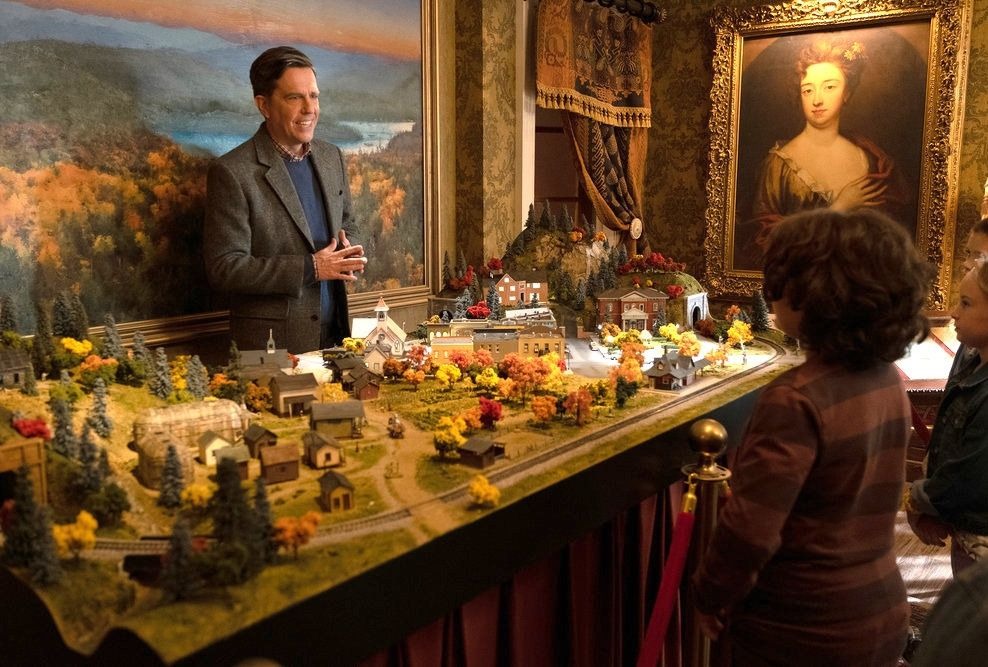
As big corporations strike a pose for racial justice, they keep on funding the police

As protests for racial justice erupted around the globe last summer following the killing of George Floyd at the hands of former Minnesota police officer Derek Chauvin, many activists called upon corporate America to step up and fight for racial equality in the workplace and beyond, bringing to light a long history of discrimination toward workers of color. The push prompted a series of sweeping apologies and broad action plans, shifting the goalposts for what would be expected of corporations in their relatively new status as “corporate citizens.” 

Nearly a year later, many major corporations have assumed a similar posture following Chauvin’s conviction on murder charges, reminding the American public of their purported commitment to diversity, equity and inclusion. Amid mounting evidence that many police departments routinely display both implicit bias and outright racism, reports show that corporate America continues to pour millions of dollars into the police. If “defund the police” was always more an activist slogan than a reality, in effect the opposite seems to be occurring.

One way corporations funnel money into law enforcement is through police foundations. As nonprofits, police foundations allow police departments to raise unregulated slush funds from undisclosed sources, generally meaning corporations or private foundations associated with wealthy families or individuals. Police have historically used this money to expense  weaponry and special equipment that is not covered by their municipal budgets. 

“Police foundations are really good at hiding what they’re actually spending their money on,” Arisha Hatch, vice president of Color of Change, told Salon. “These foundations exist completely off the books.”

According to Nonprofit Quarterly, there are about 251 police foundations across the U.S. A report last year by the government watchdog LittleSis found that a whole host of well-known corporations have been intimately involved with police foundations throughout the nation. 

One notable example is AT&T. Last year, Sludge found that AT&T was “an active donor” to the Seattle Police Foundation, which according to IRS filings amassed more than $1.5 million in contributions and grants in 2019 alone. Gothamist reported in 2019 that AT&T made an appearance as a “deep-pocketed donor” at the New York City Police Foundation, which collected $9.2 million in contributions and grants over the fiscal year ending in June 2019. Because these foundations are not subject to typical IRS disclosure laws, neither of them reported how that money were spent.

AT&T is also a “Platinum Partner” of the National Sheriffs’ Association, a pro-police lobbying group that fights to preserve the 1033 Military Surplus Program, a government-run initiative that distributes surplus military-grade weaponry and supplies to police departments throughout the nation. In order to become a Platinum Partner, a corporation must donate at least $15,000. 

Asked about the company’s relationship with law enforcement, an AT&T spokesperson told Salon that the company supports “many civil rights organizations” and is “working with them to redefine the relationship between law enforcement and those they serve to advance equitable justice for all Americans.”

Kevin Walby, an associate professor in the Department of Criminal Justice at the University of Winnipeg, told Salon that any company that makes strong rhetorical commitments to racial equality should not donate to police foundations at all, saying that in doing so, “they are actually backstopping very racist policing practices.”

Target is another corporate giant with deep ties to the police. On Tuesday, Target CEO Brian Cornell postponed a speaking event in anticipation of Chauvin’s verdict, later telling his employees in an internal memo: “The murder of George Floyd last Memorial Day felt like a turning point for our country. The solidarity and stand against racism since then have been unlike anything I’ve experienced. Like outraged people everywhere, I had an overwhelming hope that today’s verdict would provide real accountability. Anything short of that would have shaken my faith that our country had truly turned a corner.”

One might assume such concern for racial justice would translate to the company’s spending habits. However, according to government watchdog LittleSis and Sludge, the Minnesota-based retail giant has donated to at least nine police foundations since 2015, including those in Atlanta, New York and Los Angeles. Back in 2014, Target quietly donated $200,000 to the Los Angeles Police Foundation so that its affiliate department could gain early access to surveillance software engineered by Palantir, a company accused of whitewashing systemic racism with its supposed data-driven solutions to policing. Target has also supplied thousands of dollars in grant money to various law enforcement agencies throughout the country. The company reported that by 2011, it had given “Public Safety Grants” to over 4,000 law enforcement agencies. In that same year alone, Target said it had distributed more than $3 million in grants to “law enforcement and emergency management organizations.”

A Target spokesperson declined to provide more recent figures on grant money. The company also declined to clarify whether its relationships with police foundations remain active, instead providing the following statement: “We also believe that team members and guests should feel safe in their engagements with law enforcement. We support holistic changes in policing that advance more equitable, community-centric policing that is grounded in innovative law enforcement reform best practices.” 

Numerous tech giants, including Amazon, Google, Facebook and Microsoft, also support the police in ways outlined above. Amazon, for example, which claimed to “stand with [its] Black employees, customers, and partners” following Chauvin’s verdict, has supported the police in a variety of different ways. In 2019, the tech giant reportedly donated up to $9,999 to the Seattle Police Foundation. A company representative told Salon that the company has not donated to the Seattle Police Foundation within the last two years. Salon was unable this, since the foundation reportedly scrubbed all information pertaining to its corporate sponsors shortly after LittleSis released its report.

Additionally, Amazon board member Indra Nooyi serves as a trustee on the board of the New York City Police Foundation, according to digitally archived information on the foundation’s website from last year. 

Meanwhile, AmazonSmile, the company’s charity initiative — which allows Amazon to donate 0.5% of proceeds from a sale to the buyer’s chosen charity — has helped pass along donations from customers to numerous police foundations, including those in Chicago, Los Angeles, Seattle and Cleveland. (This relationship has been publicly advertised via Twitter.) 

A company representative said that Amazon defers to guidance from the U.S. Office of Foreign Assets Control and the Southern Poverty Law Center on what organizations meet AmazonSmile’s eligibility requirements. These requirements state that eligible organizations cannot “engage in, support, encourage, or promote … intolerance, discrimination or discriminatory practices based on race.” Just this year, however, the SPLC published a feature calling racial bias in policing a “national security threat.”

Neither the Seattle Police Foundation nor New York City Police Foundation responded to Salon’s request for comment. 

Coffeehouse giant Starbucks has visibly attempted to go above and beyond in demonstrating its commitment to racial justice. Last year, at the height of the racial unrest following George Floyd’s death, the coffee chain said it would distribute 250,000 shirts bearing the “Black Lives Matter” slogan to employees, flouting its existing ban on any apparel that “advocate for a political, religious or personal issue,” according to the Wall Street Journal. Just this year, Starbucks invested $100 million in “small business growth and community development projects in BIPOC neighborhoods.” 

Following the Chauvin verdict, Starbucks the company released a statement from CEO Kevin Johnson, which read in part:

Today’s jury verdict in the murder trial of ex-police officer Derek Chauvin will not soothe the intense grief, fatigue and frustration so many of our Black and African American partners are feeling. Let me say clearly to you: We see you. We hear you. And you are not alone. Your Starbucks family hurts with you … We will be here for our partners in the Twin Cities and for each and every BIPOC Starbucks partner as we try to understand the systemic wrongs that lead to inequality.

One might argue these “systemic wrongs” have been exhibited by the Seattle Police Department. In a 2019 “Use of Force” report released by the Seattle Police, the department revealed that it used force against Black residents at a disproportionately higher rate than white residents. According to the report, more than 31 percent of cases of police force used against males involved Black males, even though they make up around 7 percent of the city’s population. A subsequent “Disparity Review” that year found that residents of color were frisked at higher rates than white residents, even though white people were statistically more likely to be carrying a weapon, and that Seattle officers drew their guns in encounters with residents of color at a higher rate than with white residents.

In that same year, Starbucks donated two grants totaling $15,000 to promote “implicit bias training” within the Seattle police and help the department host its “2019 banquet gala,” a spokesperson told Salon. The company also “contributed $25,000 to the New York City Police Foundation to help provide protective equipment such as masks, gloves and hand sanitizer, and coordinated the delivery of meals to precincts.” The representative did not say whether there were any accountability mechanisms in place to ensure the money was used appropriately, but did note that the company does “not currently have any funding with the Seattle Police Foundation.”

When corporations like Target and Starbucks give money to police foundations, it not only presents an ideological contradiction; it also presents a conflict of interest within the department itself, noted Walby, of the University of Winnipeg. “We only hear about donations” to police “when corporations want to celebrate them,” he said. “They want that halo effect. However, there are lots of instances in which the transfers and purchases aren’t made public. It’s an even bigger problem if they’re spending it on something that pertains to the corporation.”

In 2014, for instance, the Los Angeles Daily News reported that the Los Angeles Police Foundation received $84,000 in donations from stun-gun maker TASER International (now known as Axon) prior to TASER’s contract with the LAPD. In another case, Motorola, a donor to the New York Police Foundation, was later awarded several NYPD contracts, as reported by Politico in 2017. “There’s a real potential for private influence in public policing through police foundations,” Walby said. “It’s appropriate to call this money dark money. Because we can’t really see this money going in. We can’t really see this money going out.”

As the negative impact of police violence and criminalization becomes increasingly apparent in communities of color, Walby and Hatch argued, continuing to donate to police undermines corporations’ claims to awakened social consciousness. “Police departments across this country have plenty of money,” Hatch said. “They are well-resourced in a way that undermines other programs that could lead to safer and healthier communities.”

“Any money for police reform just enhances the power base of police as an institution,” Walby said. “The institution can’t change conduct that is institutionalized. The funds should be given directly to community and social development groups, groups that actually have a chance of creating something like equality in our world.”

How Donald Trump hopes to take revenge against Arizona’s Republican governor: report

Former President Donald Trump’s political vendettas are not limited to Democrats by any means. There are also some Republicans he despises for acknowledging Joe Biden as president-elect following the 2020 presidential election, including Rep. Liz Cheney of Wyoming, Sen. Mitt Romney of Utah, Rep. Adam Kinzinger of Illinois and Georgia Secretary of State Brad Raffensperger. And according to Daily Beast reporters Sam Brodey and Asawin Suebsaeng, Trump is plotting revenge against Arizona Gov. Doug Ducey, a conservative Republican, for certifying now-President Joe Biden’s Electoral College victory in his state.

In an article published on April 26, Brodey and Suebsaeng explain, “It’s April 2021, and Donald Trump still can’t get past his grudge with Republican Gov. Doug Ducey for refusing to overturn the 2020 election results in Arizona. The ex-president is still so bothered by Ducey’s refusal to try to throw out Democratic votes in Arizona that he’s told associates he would gladly and personally spoil any of Ducey’s future political plans.”

Ducey, the Beast reporters note, was a “stalwart Trump supporter” and endorsed him in the 2020 presidential election. But when Ducey acknowledged that Biden won Arizona fair and square, he committed an unforgivable sin in the minds of Trump and many of his sycophants.

“In other conversations since his post-presidency began,” Brodey and Suebsaeng note, Trump “has repeatedly discussed the importance of hobbling Ducey’s future prospects at every possible turn, hoping to make the Arizona governor a pariah in his own party.”

Under Arizona law, Ducey cannot seek a third term as governor — and there has been talk of him running for the U.S. Senate. Both of Arizona’s U.S. Senate seats are presently occupied by centrist Democrats: Sen. Kyrsten Sinema and Sen. Mark Kelly. Ducey, however, has not committed to a Senate run.

Brodey and Suebsaeng observe, “A former CEO at the ice cream chain Coldstone Creamery, Ducey is considered among the GOP’s best prospects to run against Kelly, who defeated former Sen. Martha McSally (R-AZ) in November to win the seat once held by John McCain. Kelly is at the top of the GOP’s target list for 2022, and flipping his seat is central to their hopes of reclaiming the majority.”

For many years, Arizona was a deep red state closely identified with the Republican conservatism of Sen. Barry Goldwater and later, Sen. John McCain — a self-described “Goldwater Republican” or “Goldwater conservative.” But three Democratic victories in Arizona in recent years underscore the fact that it has evolved into a swing state: Sinema in 2018 and Biden and Kelly in 2020.

According to the Beast’s sources, Trump has even said that he will support a Democrat over Ducey if the Arizona governor runs for the Senate. Of course, Kelly wouldn’t want to be seen anywhere near Trump in 2022.

“In recent weeks, the twice-impeached former president has gone so far as to tell some close associates that if Ducey decided to run for Senate and managed to lock up the Republican nomination in 2022, he would consider traveling to Arizona to campaign for Democratic Sen. Mark Kelly, according to two people familiar with the ex-president’s private rantings,” Brodey and Suebsaeng write. “Neither of the sources believed the former president was being entirely serious, in the sense that Trump and his current political operation aren’t going to be ‘caught dead campaigning to keep the Senate more Democrat,’ as one of them said. But his offhand remarks drove home the point of how much Trump wishes to see the Arizona governor run out of the Republican Party.”

Tucker Carlson, the Chauvin verdict and the burden of “white civilization”

On a near-nightly basis, Fox News primetime host Tucker Carlson conducts master classes in white supremacy and hate for his millions of viewers, nearly all of them white conservatives. His latest lesson involves the paranoid fiction that nonwhite people are coming to America to “replace” the majority white population, and that by implication the existence of the “white race” is imperiled both in the United States and around the world.

In his white supremacy tutelage, Carlson also routinely rages at the enemies of the MAGAverse and “real America,” especially Black and brown people (and their white allies) in the pro-human rights and democracy movement known as Black Lives Matter. Their crime, for Carlson and his viewers? Demanding that the human and civil rights of Black people, and others marginalized in American society, be respected and protected.

Carlson is highly effective: White supremacists have repeatedly praised him for helping to mainstream their vile ideology among the millions of people who watch Fox News. In fact, the “Daily Show” has created a video montage of Tucker Carlson channeling the same language and ideas as white supremacist mass shooters.

Carlson also condones if not outright encourages fascism and other attacks on America’s multiracial democracy. His staff of writers has included at least one overt white supremacist.

White supremacy and racial authoritarianism, like other forms of fascism and more generally, involve an emptiness of the heart and mind. As a high priest in America’s church of white supremacy and racism, Carlson does his best to fill that emptiness for his viewers and followers.

That emptiness leads to a deep moral and ethical rot for those who are sick with white supremacy. A new poll from CBS News/YouGov news show that 46 percent of Republicans believe that Derek Chauvin’s conviction for murdering George Floyd was the wrong verdict.

These Republicans reject the following facts: Before a crowd, in broad daylight and while being video recorded, Chauvin put his knee on George Floyd’s neck for more than nine minutes as Floyd pleaded for his life, calling for his mother while gasping, “I can’t breathe.” Chauvin posed almost like a big game hunter in Africa taking down his prey, who happened to be a defenseless human being. Chauvin’s facial expression was a mix of indifference and mockery as he snuffed out a Black man’s life. The evidence was overwhelming and the prosecution’s presentation of the evidence was flawless. The jurors assessed the totality of the evidence and rapidly came to the only reasonable conclusion.

As others have observed, according to that CBS News/YouGov poll, nearly half of today’s Republicans support the cold-blooded police murder of black people. This is further proof that today’s Republican Party is the largest white supremacist terror organization in the world.

At Fox News and across the right-wing echo chamber, there were cries of “injustice” that the verdict was illegitimate because the jurors somehow had been “intimidated” or “terrorized” by members of the Black Lives Matter movement. Of course, no such thing had occurred.

As I explained in an earlier essay here at Salon, the white right reacted to the Chauvin verdict as though it had suffered a personal and collective narcissistic injury. The very premise that a white police officer could be held accountable for killing a Black person is inconceivable to those who are invested in protecting and maintaining white privilege — especially when that privilege encompasses the “freedom” to kill or injure Black and brown people without fear of consequence.

In response to the Chauvin verdict, Tucker Carlson gave one of his greatest performances of deranged white rage. On last Tuesday’s edition of his primetime show, Carlson interviewed Ed Gavin, an official with the New York City Department of Corrections and former deputy sheriff. Once it became clear that Gavin disagreed with Carlson, suggesting that the verdict in the Chauvin murder trial was reasonable one and that Chauvin had behaved “savagely” in killing George Floyd, Carlson abruptly ended the interview.

During that same show, Carlson said the following:  

But here’s what we can’t debate. No mob has the right to destroy our cities. Not under any circumstances, not for any reason.

Before we consider the details of Tuesday’s verdict, a bigger question, one we should all think about: Can we trust the way this decision was made?

No politician or media figure has the right to intimidate a jury. And no political party has the right to impose a different standard of justice on its own supporters. These things are unacceptable in America. All of them are happening now.

If they continue to happen, decent, productive people will leave. The country as we know it will be over. So we must stop this current insanity. It’s an attack on civilization.

This is all standard white victimology. These comments offer also another example of the way Carlson and other right-wing bloviators and propagandists use the Big Lie, along with other little lies, to create an alternate reality for their followers. Carlson, like other Fox News personalities, was also engaging in stochastic terrorism. But his comments about “civilization” were perhaps the most revealing of his public and private allegiance to white supremacy.

One could almost hear Mahatma Gandhi’s famous rejoinder when asked what he thought about “Western civilization”: “I think it would be a good idea.” 

When Carlson speaks about “civilization,” of course, he means to imply “white” or “Anglo-Saxon” civilization. Such language has been used for centuries in the West to legitimate white supremacy and day-to-day white dominance over nonwhites as something that is normal, or even ideal.

By implication and context, Carlson’s “civilization” is under threat from Black and brown people and others who are using their constitutionally-guaranteed rights to protest and organize against injustice in America.

In reality, there is no Black mob burning down America’s cities. The vast majority of Black Lives Matter and other protests against police thuggery have been peaceful. The most extreme violence has been caused by right-wing infiltrators and agents provocateurs. Police and other law enforcement have on several occasions and in various places instigated their own riots by overreacting to peaceful protests.

What is this civilization that Carlson is pleading for the police to defend? In the logic of cop propaganda and mythology, is it that “thin blue line” between “civilization” and “chaos” that America’s police supposedly maintain? In that version of civilization, Carlson’s police should be allowed to be judge, jury and executioners in their dealings with nonwhite people and others deemed to be members of a “criminal class.”

For Carlson and others who share his beliefs about “civilization,” police like Derek Chauvin are to be elevated as heroes rather than condemned for their criminal and thuggish behavior.

In the MAGAverse and the right-wing echo chamber more broadly, America’s police are viewed as the defenders of civilization, which in practice means that they serve the interests of the rich and powerful against the human rights and dignity of Black and brown people, the poor and other marginalized groups.

Carlson’s spirited defense of “civilization” and his rebooted version of Rudyard Kipling’s “The White Man’s Burden” also leads to many questions. Was it “civilized” when Trump’s followers launched a lethal attack on the U.S. Capitol as part of an attempt to overthrow democracy?

Are Trump’s white supremacist insurrectionists and other terrorists defending “civilization”? Was it “civilized” when the Trump regime and the Republican death cult engaged in acts of democide against the American people by sabotaging relief efforts and refusing to properly respond to the coronavirus pandemic?

What of Tucker Carlson’s “civilization,” in which the Republican Party poses a threat to survival of the world because it refuses to enact legislation that will slow down the global climate disaster?

Are the Republican Party, the Trump movement and its allies and followers being “civilized” when they try to impose a new Jim Crow apartheid regime on Black and brown Americans?

Is it “civilized” to have a society with such extreme social inequality that a very small number of millionaires and billionaires control a “democratic” political system, and indeed our society as a whole?

What of Tucker Carlson’s “civilization,” in which America leads the world in gun violence and mass shootings?

How will Tucker Carlson’s “civilization” thrive when America’s infrastructure is crumbling and its schools, hospitals and other vital services are a global embarrassment?

How great is Tucker Carlson’s “civilization” when America incarcerates more people per capita than any country in the world?

And a final question on Tucker Carlson’s “civilization”: Have he or others of his tribe ever seen an incident in which a police officer has killed or otherwise abused a Black or brown person and deemed that behavior worthy of criminal prosecution? 

The answer, in all likelihood, is no. To borrow from author, historian and social theorist Sven Lindqvist, their definition of “civilization” requires that the brown and Black “brutes” must submit to white authority and white power or be killed.

Ultimately Tucker Carlson’s civilization, like that envisioned by other racial authoritarians, is one in which black and brown people are a problem to be solved.

There is a huge hole, and a painful lie, at the heart of Tucker Carlson and the white right’s vision of “white civilization.” As social theorist Robert Jensen has observed: “The world does not need white people to civilize others. The real White People’s Burden is to civilize ourselves.”  

Derek Chauvin plays the villain for corporate media: Where’s the discussion of systemic racism?

Let’s acknowledge at the outset that corporate liberal media — owned and sponsored by the mightiest economic forces in our society — have increased their talk about race and racism in recent years, especially since the rise of Donald Trump.  

They’ve even learned to throw around the phrase “systemic racism,” while avoiding scrutiny of the corporate systems that propel and reinforce racism.  

The view of the world projected by such coverage is typically that of victims without victimizers. Although it’s acknowledged that Black people and other people of color are consistently at the bottom of the caste system, there’s no examination of the powerful interests that put them there — the profiteers who, for so many generations, have had their knees on the necks of poor people of color. 

Enter killer-in-uniform Derek Chauvin.  

Let me be clear that I’m heartened by the media coverage of George Floyd’s murder, and even more heartened by the mass protests that erupted in the wake of that murder. But Chauvin’s willful, sadistic public execution of a handcuffed Black man ended the beloved life of a single individual.  

At the same time, Chauvin has played a useful role for corporate media — a rare villain who could be identified and named, a symbol of deadly racism in news outlets that are structured to refrain from identifying the economic forces responsible for far more hardship and death in communities of color than Chauvin could ever inflict.  

Even before COVID, for example, we knew that the profit-driven U.S. health care system was causing the premature deaths of people of color, with substandard care leading to 260 premature African-American deaths every day, by one estimate. Mainstream media will occasionally show us the victims of inadequate health care, but they never identify the villains — those powerful corporate interests that have lobbied so hard for so long to ensure that we live in the only “advanced” country on earth without universal health coverage. 

 If you watch the network newscasts on ABC/NBC/CBS and count the commercials, you’ll notice that the all-powerful pharmaceutical industry is the No. 1 sponsor. 

Let’s turn from health care to housing. We have a homeless crisis far worse than any other advanced industrial country. Gentrification in major cities disproportionately causes the evictions of people of color. Our longstanding housing crisis was made worse by the “Great Recession” begun in 2007, which most affected homeowners of color and African Americans in particular — a disaster sparked by a handful of greedy Wall Street firms and their allies in Washington.  

Unlike Chauvin, not one of these Wall Street criminals was given a televised trial. Corporate media sometimes showed us the victims of the housing crisis, but hardly ever their victimizers — and the policymakers behind the Great Recession, like Robert Rubin, are still served up as media experts today.  

Wall Street banks aren’t just major sponsors of news media. They’re also major donors to politicians of both parties, heavily to Democrats. So are big urban real estate interests responsible for gentrification – donating to Democratic officials who might criticize “systemic racism” while consistently enabling it. 

Black, Latinx and Native American communities are the ones hit hardest by pollution, cancer-causing refineries, and extraction. Death and disease have flourished, but the polluting corporations responsible don’t go on trial — and mainstream media rarely name the politically-connected perpetrators. Indeed, oil and gas companies have long been major sponsors of media, including “public broadcasting,” and coverage often reflects that coziness.  

With his knee on George Floyd’s neck, Derek Chauvin became a symbol of racism for mainstream media, but he’s a mere symptom of the deadly problem of systemic racism.  

The main perpetrators and beneficiaries of systemic racism — whether in health care, housing, environmental pollution, employment, education or criminal justice — include powerful corporations that sponsor news outlets that have aimed a bright spotlight at this killer cop.     

It’s no surprise those corporations don’t get the mainstream media spotlight they deserve.