Spring Sale: Get 1 Year, Save 58%

This iconic duo’s new cover of “Blackbird” elevates the song’s Civil Rights origins to great heights

It has been more than 30 years since Marilyn McCoo and Billy Davis, Jr., have released a studio album, but with “Blackbird: Lennon-McCartney Icons,” it was well worth the wait.

Having originally made their names as members of The Fifth Dimension, McCoo and Davis have logged nearly six decades as pop music stalwarts, while also notching their golden wedding anniversary in 2019.

But with “Blackbird,” McCoo and Davis have returned to the charts with a renewed sense of purpose. Produced by Nic Mendoza, the album finds the couple celebrating the music of John Lennon and Paul McCartney with the same sense of innovation that has marked their work across their storied career. Take Wings’ smash 1976 hit “Silly Love Songs,” which is transformed by Davis with a hard-driving funk that imbues the composition with a much-needed vigor.

And then there’s the title track, which Salon is delighted to debut as a world premiere video exclusive on behalf of McCoo and Davis:

Over the years, McCartney has related several different origin stories for “Blackbird,” one of his most universally beloved compositions. At one point, he traced the song’s roots to having heard the sound of a blackbird during the Beatles’ famous sojourn to India with Maharishi Mahesh Yogi. At other times, he’s traced its inspiration to his anguish over the state of Civil Rights in the US during the 1960s. In concert, McCartney has been known to locate the song’s melody to a much earlier period in the 1950s, when he and George Harrison, wanting to show off their guitar skills, tried their hand at playing Bach’s Bourrée in E Minor.

In McCoo’s highly-skilled hands, “Blackbird” takes on even deeper layers of meaning. With her unforgettable voice in top form, she elevates the song’s Civil Rights origins to celestial heights. And as the video demonstrates, McCoo and Davis don’t pull any punches when it comes to the dismal state of affairs in terms of American race relations as we approach the 60th anniversary of Martin Luther King, Jr.’s “I Have a Dream” speech.

For McCoo and Davis, “Blackbird” is “a reflection of the truth we are living today. When a blackbird leaves our mother’s nest, one day, it will not return. In 2021, mothers throughout our country live in the fear that our blackbirds may prematurely not be able to return to the nest of home, because of bigotry and violence.” But true to their hopeful vision, McCoo and Davis offer a song of optimism in spite of everything, dedicating their rendition of “Blackbird” to “the life and humanity of every blackbird, whether living now or lost in battle.”

For more about the latest work from McCoo and Davis, catch their conversation with Kenneth Womack on the next episode of our “Everything Fab Four” podcast, debuting April 20.

Pat Robertson is wrong: Police use of Tasers, like guns, constitutes excessive force

It’s been another awful week of gun violence, including at the hands of police.

Last Sunday, Daunte Wright was pulled over for a minor traffic stop in Brooklyn Center, Minnesota, and was shot and killed by police officer Kim Potter. He was unarmed. We can’t even count the number of times this has happened in our country, undoubtedly many more than have been documented. Until the proliferation of cell phones and police body cams, this incident could easily have been turned into a he-said-she-said that could never be proven one way or another.

This particular shooting does have a special twist to it, however.

When Wright got back into his car without permission, the police at the scene became extremely agitated. Potter warned Wright that she was going to use her Taser on Wright and immediately yelled “Taser! Taser! Taser!” as she shot her weapon. Only the weapon wasn’t a Taser, it was her service pistol. Wright’s foot hit the gas and Potter said “Holy shit, I shot him.” The car rolled down the street a ways before veering off the road, with Wright dead in the front seat.

Many people have asked how anyone could have mistaken the Taser for a Glock pistol. It’s made of yellow plastic, it has led lights on the back and it is carried on the opposite side of the officer’s dominant hand which is reserved for the sidearm. None other than Pat Robertson, of all people, expressed skepticism that anyone could make such a mistake:

It does seem impossible that any experienced police officer could make such an error. Potter was not just any cop either. She was a two-decade veteran who was on that very day training new officers on the job. Her husband, who retired in 2017, had been a police instructor in the use of force, Tasers and crowd control. How could she have failed to reach across her body to grab the Taser instead of reaching down for her gun? Part of the reason is that despite what Pat Robertson says, Tasers are actually designed to have the feel of a gun and mostly because police officers demanded it. 

According to this piece by James D. Walsh in New York Magazine, back when Tasers were first being deployed a couple of decades ago the manufacturers had a number of designs they could have used, such as a flashlight-shaped object with a thumb trigger. But they queried police departments on the subject and police liked the familiarity of the style and look of the gun so that was that. Since then there have been some changes such as the use of yellow plastic, but they are still designed with a grip and a trigger much like a pistol.

Now, it’s not common for police to grab their gun instead of their Taser “by accident.” But there have been a number of incidents in which they claim that’s exactly what happened. The most famous example is the case of Oscar Grant, an unarmed 22-year-old lying face down on the ground who was shot in the back and killed by a San Francisco Bay Area transit officer who also claimed that he meant to grab his Taser but grabbed his gun instead. That officer was convicted of involuntary manslaughter and was sentenced to two years in jail. But there are at least 18 other documented incidents, according to Walsh.

We don’t know enough of what happened last Sunday to truly understand why Potter, who resigned days later, shot Daunte Wright instead of Tasering him. We’ll likely have to wait for her trial to see how she explains it. But I don’t think that’s the only question that needs to be answered. Why did she feel the need to Taser him in the first place? Indeed, why should a routine traffic stop create such mayhem and over-reaction from the police at all?

I’ve been writing about Tasers for a long time, even here on Salon back in the aught years. Yes, they are certainly a better choice than using a gun (if the cops can keep their wits about them enough to tell the difference.) But the truth is that Tasers are often deadly weapons in themselves. There have been at least 500 documented deaths by law enforcement’s use of Tasers in the U.S. since 2003, according to Amnesty International, 90% of which were perpetrated on unarmed people. Two police officers were charged with murder in Oklahoma last year for killing a man by Tasering him over 50 times.

Generally, these deaths are attributed to “underlying conditions” such as the dubious medical diagnosis of “excited delirium,” the unusual condition that mainly afflicts people in police custody. The plain fact is that Tasers are electroshock torture devices designed to force people to comply with the police. When they are used on people with mental health problems, on drugs, or with underlying conditions, they can be debilitating and sometimes deadly, which one would think would cause police to be very cautious about using them on unarmed people at all if they can help it. Just because it doesn’t usually break any bones doesn’t mean it isn’t excessive force. In fact, unless there is no choice other than to actually shoot someone, it is excessive force.

A demand for instant compliance, no questions asked, is at the center of policing in this country and that authoritarian mindset constantly creates confrontations where other methods could be deployed. This incident in which some Atlanta police officers used Tasers on a couple of college kids in their car on the way home from a protest last summer is an example of using an electroshock weapon simply to demonstrate dominance — and it happens all too often.

Daunte Wright was stopped for having expired tags on his car. He cooperated with the police and then moved to get back in the car. He had no weapon and he didn’t threaten them. All they knew was that he had an outstanding misdemeanor warrant and an air freshener hanging from the mirror, which is illegal in Minnesota for some reason. There was no reason for the instant escalation, with the officer who was closest to Wright scuffling with him in the front seat and Potter pulling out her gun screaming “I’ll tase you!” over this traffic violation. That level of agitation was completely out of line and even if she had shot him with the Taser instead of her gun it would have been excessive force.

The newest idea in police reform is to take cops out of the traffic stop business and put it in the hands of people who have no power to arrest, making these kinds of confrontations much rarer. And some jurisdictions are using mental health workers to respond to calls in which citizens are having episodes that the cops are ill-prepared to deal with and which often devolve into violence unnecessarily. Some common-sense gun safety laws to take lethal weapons off the street would no doubt reduce some of the tension as well.

These are strategies well worth trying to end this cycle of young men driving while Black ending up in the morgue and mentally ill people being tortured with Tasers. But until we deal with this militaristic, authoritarian attitude among the police which demands instant compliance or else, this problem isn’t going to go away. Not every interaction has to be a battle of wills with police holding a Taser in one hand and a gun in the other. 

Severe weather this summer could cause another Texas power crisis

Electricity outages in Texas could occur again this summer — just a few months after the devastating winter storm that left millions of Texans without power for days — if the state experiences a severe heat wave or drought combined with high demand for power, according to recent assessments by the state’s grid operator.

Experts and company executives are warning that the power grid that covers most of the state is at risk of another crisis this summer, when demand for electricity typically peaks as homes and businesses crank up air conditioning to ride out the Texas heat. Texas is likely to see a hotter and drier summer than normal this year, according to an April climate outlook from the National Oceanic and Atmospheric Administration, and 2021 is very likely to rank among the 10 warmest years on record globally.

“This summer, I am as worried right now [about the grid] as I was coming into this winter,” said Curt Morgan, CEO of Vistra Corp., an Irving-based power company. “Sounds like I’m the boy that cries wolf, but I’m not. I’ve seen this stuff repeat itself. We can have the same event happen if we don’t fix this.”

As state lawmakers continue debating how to improve the grid after February’s storm nearly caused its collapse, on Tuesday Texans were asked to conserve electricity because the supply of power could barely keep up with demand. A significant chunk of the grid’s power plants were offline due to maintenance this week, some a result of damage from the winter storm.

The warning triggered a torrent of outrage from residents and political leaders across the state who questioned why the Electric Reliability Council of Texas, which manages the grid, allowed it to come so close to emergency conditions on a relatively mild spring day. “I appreciate the increased effort toward transparency, but wow this is nervewracking to see in April,” state Rep. Erin Zwiener, D-Driftwood, tweeted Tuesday.

Heading into the summer, ERCOT included three extreme scenarios in a preliminary assessment of the state’s power resources for the summer — the most extreme calculations ERCOT has ever considered for the seasonal assessment. Each scenario would leave the grid short a significant amount of power, which would trigger outages to residents:

  • In the first scenario, a drought similar to what the state saw in 2011, combined with low winds, several natural gas plants offline and an increase in economic activity as the pandemic eases, would leave the power grid short 3,600 megawatts, or enough to power 720,000 homes.
  • Add low solar power generation to the first projection (say it’s a cloudy day), and the grid would be short 7,500 megawatts, or enough to power 1.5 million homes.
  • In the most extreme scenario ERCOT considered, a severe heat wave across the entire state combined with outages for every major power source would leave the grid short 14,000 megawatts, or enough to power 2.8 million homes.

Power grids must keep supply and demand in balance at all times. When Texas’ grid falls below its safety margin of 2,300 megawatts in excess supply, the grid operator starts taking additional precautions, like what happened on Tuesday, to avoid blackouts.

Pete Warnken, ERCOT’s manager of resource adequacy, told reporters near the end of March that the grid operator included the extreme scenarios to “broaden the debate on how to make the grid more resilient.” Still, he said ERCOT expects sufficient power reserves, “assuming normal conditions” this summer.

While the extreme scenarios have a very low chance of actually occurring, an unlikely and severe event happened in February, when extreme cold knocked out several different sources of power at once just as the cold triggered surging demand for power and natural gas fuel shortages. More than 4.8 million customers lost power and at least 111 people died during the storm.

A final summer assessment will be published May 6.

“A catastrophic event like the winter storm could not be predicted several months in advance,” Warnken said, adding that the preliminary report isn’t intended to forecast unprecedented events.

Rather, Warnken said the scenarios should help inform state leaders and the public of what’s possible — “the idea is the planners and stakeholders are aware that there’s a possibility something like that could happen,” he said. “These have a much lower probability of occurring than the traditional grid scenarios.”

Hot, dry summer 

John Nielsen-Gammon, the Texas State Climatologist and director of the Texas Center for Climate Studies, said that this summer in Texas is shaping up to be hot and dry. While it’s still early, he said temperatures this summer will depend on how much rain the state gets between now and June. Parts of the state — South Texas to far West Texas — have been in drought conditions for more than a year, he said.

“Temperatures during the summer depend a lot on how much rain there has been over the preceding several months,” he said. “It’s been fairly dry this past fall and winter and spring so far.”

When heat waves hit large swaths of the state, that puts stress on the grid.

“In 2011, for example, most of the summer was a heat wave,” Nielsen-Gammon said. That was the driest year on record in Texas, and what ERCOT based its extreme scenarios on this year. That summer, ERCOT took emergency precautions, but widespread outages did not occur.

“We were in an extreme drought with little moisture available [in 2011],” Nielsen-Gammon said. “Usually, if you have a heat wave, it’s going to affect at least half the state if not most of it.”

ERCOT is “carefully looking at” the potential for big heat waves and drought this year, Warnken said.

TKTKTK

A large area of Texas, and much of the Western U.S., will likely have above average temperatures this summer, according to an April analysis by the National Oceanic and Atmospheric Administration. Credit: National Oceanic and Atmospheric Administration

Climate change has made summer droughts hotter and longer than they used to be in the southwest, according to a 2019 study authored by National Oceanic and Atmospheric Administration scientists. The study found that droughts occurring in today’s warmer climate cause hotter temperatures than the same drought decades ago — the low soil moisture combined with higher temperatures produce stronger heat waves.

A large area of Texas will likely have above average temperatures this summer, according to an April 15 NOAA analysis.

Daniel Cohan, an associate professor of civil and environmental engineering at Rice University, is concerned about the power grid’s performance this summer.

“If ERCOT is struggling to keep the lights on this week, that doesn’t bode well for summer,” Cohan said. “Certainly with climate change, it’s possible we’ll hit new records for heat waves.”

And despite state lawmakers’ advances on legislation aimed to address February’s outages, Cohan said there is little the Legislature can do to better prepare the state’s energy infrastructure for this summer. “It’s too late to do a whole lot for this summer,” he said.

Texas’ susceptibility to blackouts has long been a concern for the North American Electric Reliability Corp., which has some authority to regulate power plants and oversee grid operators in the U.S.

“From my perspective, [Texas] doesn’t have as much cushion as even ERCOT’s math says that they should,” said James Robb, its CEO and president.

Still, Michelle Michot Foss, a fellow in energy at Rice University’s Baker Institute, said Texas’ grid is better prepared for summer heat than extreme cold, and it’s not unusual for the grid to creep close to its capacity in the hottest months.

“We deal with [heat] more often,” she said. During the summer, she said, “the energy systems are better prepared.”

Disclosure: Rice University has been a financial supporter of The Texas Tribune, a nonprofit, nonpartisan news organization that is funded in part by donations from members, foundations and corporate sponsors. Financial supporters play no role in the Tribune’s journalism. Find a complete list of them here.

This article originally appeared in The Texas Tribune at https://www.texastribune.org/2021/04/15/texas-ercot-blackouts-summer-climate/.

The Texas Tribune is a member-supported, nonpartisan newsroom informing and engaging Texans on state politics and policy. Learn more at texastribune.org.

Airports step up mental health assistance as passenger anxiety soars

ATLANTA — Robin Hancock gently worked her steel tongue drum with a pair of mallets, producing a set of soothing, mystical tones. They blended with the soft sound of chirping birds and bubbling creeks pouring from a Bluetooth speaker. Her warm voice invited the two visitors in the dimly lit room to slip into a nature setting of their choosing.

The 20-minute guided meditation took place at an unlikely location: Atlanta’s Hartsfield-Jackson International Airport, which until 2020 was the world’s busiest passenger hub. The airport interfaith chapel’s executive director, Blair Walker, introduced the meditation sessions last fall in the midst of the covid-19 pandemic.

People were noticeably more stressed during the past year, Walker said as he stepped out of his office onto the second-floor gallery, which overlooks the airport’s main atrium. Walker is an ordained minister who previously worked in higher education and public health. He said people have been quicker to lose their temper, lose their patience or lose it altogether.

“There was a tightness that I’ve never seen before,” he said.

That’s why he brought on board Hancock, a nature meditation guide, to join his team of 40 volunteer airport chaplains. She said her goal is to provide people with “a piece of calm in whatever storm is going on at that moment” and leave them with a tool to use the next time they’re feeling overwhelmed.

“Traveling is tough,” said Jordan Cattie, a clinical psychologist and assistant professor at Atlanta’s Emory University School of Medicine. Airports, in particular, trigger panic and anxiety because of the frenetic pace, noise and glaring screens, she said, but covid amplifies travel anxiety.

Airport chaplains have become close witnesses to people’s worsening mental condition. “No doubt, the pandemic has accelerated the need for our services to a new level,” said the Rev. Greg McBrayer.

McBrayer, an Anglican priest, is the corporate chaplain for American Airlines and director of the interfaith chapel at Dallas/Fort Worth International Airport, the world’s largest airport chapel. During the pandemic, he said, he has seen depression, anxiety and addiction increase among the travelers and workers served by him and his staff of 20 chaplains.

“We have encountered a tremendous amount of grief and fear,” McBrayer said, especially among airport employees. In the past year, he logged over 300 counseling sessions via Zoom and more in person.

Many struggled not only with economic woes, health concerns and covid deaths, but also with feelings of guilt for being well and employed when some of their former colleagues weren’t. “We’ve seen a lot of workers come up to the chapel because they need a quiet space to sit, chill and maybe cry,” said Walker.

In the early months of the pandemic, Hartsfield-Jackson also became a refuge for up to 300 homeless people per night, many with mental health conditions such as addiction and schizophrenia. They were redirected to hotels rented by the city. But now, with a $400,000 grant from the Transportation Research Board, the airport is working with researchers to study homelessness at airports around the world, including how to stage mental health interventions.

“We will put together best practices of what airports can do to assist these vulnerable populations,” said Steve Mayers, the airport’s director of customer experience.

Chaplains typically encounter people in distress as they walk the concourses in what they call “the ministry of presence.” Walker and McBrayer said they’ve seen more breakdowns and panic attacks during the pandemic. Many of these events are triggered by the contentious issue of wearing masks, said Walker. A few weeks ago, a gate agent called when a passenger furiously refused to wear a face covering and then broke down as the airline took her off the flight.

“It was obvious there was much more going on than just the mask issue,” Walker said.

The guided mediation at Hartsfield-Jackson is designed to “help people breathe, recenter, step away,” said Hancock, who inherited a love of flying from her pilot father and volunteers at the airport once a week. On a busy day, each session has up to five participants to accommodate physical-distancing guidelines.

“I can read people pretty well,” she said. “Many of them carry a lot of vulnerability and angst right now.”

Most people are quiet when they come in, and their bodies are tense. Hancock remembers an older couple who were on their way to Texas for a family emergency. After the meditation, the couple became more talkative. “They were fearful about what to expect. They were fearful about traveling,” Hancock said. “They were fearful just being among people.”

Cattie, the clinical psychologist, said practices such as mindfulness, meditation, yoga and controlled breathing can be very effective at thwarting anxiety triggers that are inherent in air travel.

Mental health and well-being were on the radar of airport administrators long before covid, but some services were paused because of the pandemic. Now, though, they’re making a comeback. Several airports have yoga, stretching and silent meditation areas. Live music and therapy pet programs are also intended to calm stressed-out travelers.

As more people get vaccinated, passenger volumes continue to rise and more trips are for vacations and other joyous occasions. Still, Cattie expects the pandemic’s mental health fallout to last a while longer. “Covid has seeped into every crack and every foundation and created so much loss and change and fear,” she said. “There will be a huge echo.”

In her clinical practice, she’s seen many patients who are anxious about rejoining life, with its crowded places and people on the move. “This past year, many of us have been living in a safety bubble,” she said. For most people, traveling is a social muscle that hasn’t been exercised in a while. “It’s OK to be scared,” she said. “It’s normal to feel uncomfortable.”

MSNBC host calls out Tucker Carlson for “dangerous propaganda” as he tries to undermine vaccines

Fox News and executive chairman and CEO Lachlan Murdoch were blasted on Thursday for the network’s coverage of the coronavirus pandemic.

“Now, there is one place where this dangerous propaganda has come from more than any other, maybe aside from Donald Trump,” MSNBC’s Chris Hayes said. “Throughout the pandemic, right? I am just talking all the way from the beginning and that’s Fox News.”

“I mean, when you take a step back, from the beginning, they have tried every single way of undermining the response to coronavirus,” he explained. “Even before the vaccine came along, they spread lies and railed against every possible solution we had — all the public-health measures that were at our disposal to try to save lives.”

He host played an extended montage of Fox News coverage of COVID-19.

“We can vaccinate our way out of the pandemic and not have to deal with those things. But now, now that we’re at that point, Fox News, especially Tucker Carlson, is now trying to undermine the vaccines,” he explained.

While the pandemic is still gripping America, life is mostly back to normal in Australia, which is where Lachlan Murdoch is now residing.

You can watch the video below via YouTube:

Police crackdown in Minnesota this week — but how different it was on Jan. 6 at the Capitol

America’s police and other law enforcement agents all too frequently use lethal violence. But in fact they are capable of great restraint and self-control when they decide to employ it. The decision to use force against a given person or group is all too often a function of skin color and politics.

On Jan. 6, a mob of Donald Trump’s followers, nearly all of them white, attacked the U.S. Capitol in an effort to nullify the results of the 2020 presidential election. This coup attack was incited not just by Trump himself but by a neofascist movement that includes the Republican Party, white evangelical churches and the conservative “news” media.

Five people would die because of the attack on the Capitol building. At least 140 Capitol Police and other law enforcement officers were injured that day, some of them seriously. Trump’s mob was armed with a variety of weapons including guns, sharpened poles, baseball bats, stun guns, pepper spray and bear mace. Other weapons, including homemade bombs and an assault rifle, were later discovered in a pickup truck parked nearby.

Some of Trump’s followers carried white supremacist flags and wore neo-Nazi and other right-wing terrorist regalia. The attackers also included Christian fascists who carried a cross and shouted Biblical verses as they participated in the insurrection.

After several hours of battle, Trump’s mob successfully breached the Capitol building’s outer layer of defenses. Once inside, they tried to find Vice President Mike Pence, House Speaker Nancy Pelosi and other high-ranking officials whom they deemed to be “traitors.” We cannot know for sure what would have happened had they captured any such people, but a gallows had been constructed in the park across from the Capitol building.

This was all part of a plan — somewhat incoherent, but determined to stop the certification of Joe Biden as the duly elected president of the United States. Trump’s mob also chased Black and brown Capitol Police officers through the building while screaming racist slurs and other hateful invective.

Instead of raining down hellfire on Trump’s insurrectionists, America’s trillion-dollar military machine and national security forces were ordered to stand down or otherwise delayed in their reaction to the crisis. The Capitol Police were also oddly subdued and neutered in their response to this attack on the literal heart of American democracy.

Later investigations have suggested that at least some Capitol Police assisted Trump’s attackers in gaining access to the building or otherwise demonstrated sympathy with their treasonous cause.

It cannot be reasonably disputed that If the attackers had been Muslims, Black or brown people, members of antifa, Black Lives Matter activists or any other variety of “leftists,” such an assault would never have been allowed to take place. Law enforcement would most likely have arrested the leaders during the planning stages. If the attack on the Capitol had somehow still taken place, lethal force would have been used by the Capitol Police and other law enforcement agents without hesitation. In all, the result would have been a massacre.

A new report from the Capitol Police Department’s inspector general on the events of Jan. 6 offers additional insight into how and why their officers were so relatively tame in their response to Trump’s attack force. As the New York Times reports:

The Capitol Police had clearer advance warnings about the Jan. 6 attack than were previously known, including the potential for violence in which “Congress itself is the target.” But officers were instructed by their leaders not to use their most aggressive tactics to hold off the mob, according to a scathing new report by the agency’s internal investigator. …

Mr. Bolton [the inspector general] found that the agency’s leaders failed to adequately prepare despite explicit warnings that pro-Trump extremists posed a threat to law enforcement and civilians and that the police used defective protective equipment. He also found that the leaders ordered their Civil Disturbance Unit to refrain from using its most powerful crowd-control tools — like stun grenades — to put down the onslaught.

The report offers the most devastating account to date of the lapses and miscalculations around the most violent attack on the Capitol in two centuries.

Three days before the siege, a Capitol Police intelligence assessment warned of violence from supporters of President Donald J. Trump who believed his false claims that the election had been stolen. Some had even posted a map of the Capitol complex’s tunnel system on pro-Trump message boards. …

“Unlike previous postelection protests, the targets of the pro-Trump supporters are not necessarily the counterprotesters as they were previously, but rather Congress itself is the target on the 6th,” the threat assessment said, according to the inspector general’s report. “Stop the Steal’s propensity to attract white supremacists, militia members, and others who actively promote violence may lead to a significantly dangerous situation for law enforcement and the general public alike.”

Consider the reaction of law enforcement to recent events in Brooklyn Center, Minnesota, which offer a stark contrast to the events of Jan. 6.

A Black man named Daunte Wright was stopped by Brooklyn Center police on Sunday, supposedly because his car had expired registration tags. During the traffic stop, police determined that Wright had two outstanding misdemeanor warrants. As shown by their body cameras, Brooklyn Center police detained Wright. In a moment of panic, Wright attempted to get back into his car. 

Kim Potter, a 26-year-veteran of the police department, shot Wright with one round from her Glock 17 pistol. As shown by the police body camera, Potter aimed the pistol at Wright for several seconds before shooting him. Potter has claimed that she believed she discharged her Taser, not her firearm. Potter resigned from the police department on Tuesday and was charged with second-degree manslaughter on Wednesday.

Civil rights attorney Benjamin Crump, who is representing Wright’s family, offered this observation to ABC’s “Good Morning America” on the role of racism and racial bias in how America’s police treat nonwhite people:

She was a training officer and so it’s not about training, it’s about implicit bias. It’s about giving the same respect and consideration to people of color that we give to white American citizens. We don’t see these sort of things happening to white young people that we see happening over and over and over again to young, marginalized minorities.

They could have given him a ticket, given him a notice to show up. But just like in George Floyd — they could have given him a ticket — they used the most force when it comes to dealing with marginalized minorities. And we can’t have these two Americas — one where we treat Black Americans different from white Americans in policing.

In response to Wright’s killing and a larger pattern of documented police abuse against the black and brown community in the Minneapolis area (including the high-profile police killings of George Floyd and Philando Castile), this week has seen several days of largely peaceful protests. There have also been minor incidents of looting and other vandalism. During the evening hours, some protesters at the Brooklyn Center Police Department and an FBI satellite office have thrown water bottles and other projectiles at local police and other law enforcement.

As occurred during the George Floyd protests last summer, the governor of Minnesota, the Brooklyn Center mayor and other area leaders have deployed the National Guard, state police and other forces. In response to the evening protests and curfew, law enforcement have used tear gas and stun grenades, and deployed at least one armored vehicle, snipers and tactical teams.

It hardly needs stating that nothing even close to that level of force was used against the Trump followers who attacked the Capitol on Jan. 6.

Militarized police, in Minneapolis and elsewhere around the country, are trained to view Black and brown communities and the people who live there as “insurgents” and “enemies.” Importing the logic and tactics and training from America’s forever wars abroad has resulted in a dangerous escalation of violence against non-whites, the poor, undocumented immigrants and other communities and individuals deemed to be a threat. White communities, especially those which are middle class and affluent, are not subjected to such violence.

Writing at Tom Dispatch, William Astore explains what happens when America’s imperial forces come home in the form of police and other law enforcement:

It’s taken years from Ferguson to this moment, but America’s cops have now officially joined the military as “professional” warriors. In the wake of George Floyd’s murder on May 25th, those warrior-cops have taken to the streets across the country wearing combat gear and with attitudes to match. They see protesters, as well as the reporters covering them, as the enemy and themselves as the “thin blue line” of law and order. 

The police take to bashing heads and thrashing bodies, using weaponry so generously funded by the American taxpayer: rubber bullets, pepper spray (as Congresswoman Joyce Beatty of Ohio experienced at a protest), tear gas (as Episcopal clergy experienced at a demonstration in Washington, D.C.), paint canisters, and similar “non-lethal” munitions, together with flash-bang grenades, standard-issue batons, and Tasers, even as they drive military-surplus equipment like Humvees and MRAPs. (Note that such munitions blinded an eye of one photo-journalist.) A Predator drone even hovered over at least one protest. …

It’s not enough to say that the police are too violent, or racist, or detached from society. Powerful people already know this perfectly well. Indeed, they’re counting on it. They’re counting on cops being violent to protect elite interests; nor is racism the worst thing in the world, they believe, as long as it’s not hurting their financial bottom lines. If it divides people, making them all the more exploitable, so much the better. And who cares if cops are detached from the interests of the working and lower middle classes from which they’ve come? Again, all the better, since that means they can be sicked on protesters and, if things get out of hand, those very protesters can then be blamed. If push comes to shove, a few cops might have to be fired, or prosecuted, or otherwise sacrificed, but that hardly matters as long as the powerful get off scot-free.

What do we know about how America’s police treat Black people, as compared to white Trumpists and other right-wing extremists who attacked the Capitol and continue to menace the country?

Police are more likely to use force against Black people, including lethal force, as compared to white people in comparable scenarios. At every level of encounter with America’s law enforcement and criminal justice system, Black people are treated more harshly and punished more severely than white people charged with identical or comparable crimes.

As part of the failed “war on drugs,” Black and brown people are disproportionately arrested and incarcerated for drug possessions as compared to white people, even though all racial groups use drugs at roughly comparable rates.

Recent research has shown that peaceful participants at Black Lives Matter and other liberal and progressive marches and protests are much more likely to be arrested than are Trumpists and other right-wing extremists. 

Other reporting shows that police appear much more likely to detain and arrest members of antifa and Black Lives Matter (and liberals and progressives more generally) at protests and similar events than they are Trump followers and other right-wing extremists — even when the latter are engaging in violence and other criminality.

Those outcomes corroborates research showing that white supremacists, right-wing militias and other extremist groups have extensively infiltrated police and law enforcement agencies. The FBI has reported that white supremacists and other right-wing extremists now constitute the greatest threat to public safety and security.

The subculture of American law enforcement is conservative and authoritarian. By implication, this means there is an affinity between many of America’s police and Trump’s followers and other right-wing extremists.

The divergent responses of law enforcement and national security forces to the Capitol attack as compared to the protests in the Minneapolis area (and in other parts of the country) against police brutality and thuggery are not examples of “hypocrisy,” a “double standard” or some type of contradiction. In fact, this is the American law enforcement system behaving almost exactly as designed. Ultimately, the police are agents of social control. The question then becomes who they are controlling, and who is most often the target of their lethal force and other violence.

American law enforcement values property over people. It is a tool for enforcing the power and privilege of white people over nonwhites. It protects the interests of the rich and corporations over those of the poor and working class.

America is correctly described as a type of “carceral society” where the working class and the poor, the homeless, nonwhite people, the mentally ill and otherwise disabled, migrants and refugees, and other marginalized groups are surveilled and subjected to arrest, abuse and incarceration to a far greater extent, and in more brutal ways, than rich, white middle- and upper-class people. 

There has been much discussion about a need for an American reckoning to heal the country’s wounds caused by neofascism, white supremacy and the social inequality and injustice that have been exposed and accelerated by the Age of Trump and the coronavirus pandemic. Part of that reckoning must involve acknowledging how America’s police reproduce, enforce and encourage the violence, racism, cruelty and injustice that fuel Trumpism and American neofascism.

Whatever Joe Biden says, the U.S. endless war in Afghanistan will keep going

When I met a seven-year-old girl named Guljumma at a refugee camp in Kabul a dozen years ago, she told me that bombs fell early one morning while she slept at home in southern Afghanistan’s Helmand Valley. With a soft, matter-of-fact voice, Guljumma described what happened. Some people in her family died. She lost an arm.

Troops on the ground didn’t kill Guljumma’s relatives and leave her to live with only one arm. The U.S. air war did.

There’s no good reason to assume the air war in Afghanistan will be over when, according to President Biden’s announcement on Wednesday, all U.S. forces are finally withdrawn from that country.

What Biden didn’t say was as significant as what he did say. He declared that “U.S. troops, as well as forces deployed by our NATO allies and operational partners, will be out of Afghanistan” before Sept. 11. And “we will not stay involved in Afghanistan militarily.”

Biden did not say that the United States will stop bombing Afghanistan. What’s more, he pledged that “we will keep providing assistance to the Afghan National Defense and Security Forces,” a declaration that actually indicates a tacit intention to “stay involved in Afghanistan militarily.” 

While the big-type headlines and prominent themes of media coverage are filled with flat-out statements that the U.S. war in Afghanistan will end come September, the fine print of coverage says otherwise.

The banner headline across the top of the New York Times homepage during much of Wednesday proclaimed: “Withdrawal of U.S. Troops in Afghanistan Will End Longest American War.” But buried in the 32nd paragraph of a story headed “Biden to Withdraw All Combat Troops From Afghanistan by Sept. 11,” the Times reported“Instead of declared troops in Afghanistan, the United States will most likely rely on a shadowy combination of clandestine Special Operations forces, Pentagon contractors and covert intelligence operatives to find and attack the most dangerous Qaeda or Islamic State threats, current and former American officials said.”

Matthew Hoh, a Marine combat veteran who in 2009 became the highest-ranking U.S. official to resign from the State Department in protest of the Afghanistan war, told my colleagues at the Institute for Public Accuracy on Wednesday: “Regardless of whether the 3,500 acknowledged U.S. troops leave Afghanistan, the U.S. military will still be present in the form of thousands of special operations and CIA personnel in and around Afghanistan, through dozens of squadrons of manned attack aircraft and drones stationed on land bases and on aircraft carriers in the region, and by hundreds of cruise missiles on ships and submarines.”

We hardly ever hear about it, but the U.S. air war on Afghanistan has been a major part of Pentagon operations there. For more than a year, the U.S. government hasn’t even gone through the motions of disclosing how much of that bombing has occurred.

We don’t know, because our government doesn’t want us to,” researchers Medea Benjamin and Nicolas Davies wrote last month. “From January 2004 until February 2020, the U.S. military kept track of how many bombs and missiles it dropped on Afghanistan, Iraq and Syria, and published those figures in regular, monthly Airpower Summaries, which were readily available to journalists and the public. But in March 2020, the Trump administration abruptly stopped publishing U.S. Airpower Summaries, and the Biden administration has so far not published any either.”

The U.S. war in Afghanistan won’t end just because Biden and the mainstream news media tell us so. As Guljumma and countless other Afghan people have experienced, troops on the ground aren’t the only measure of horrific warfare.

No matter what the White House and the headlines say, U.S. taxpayers won’t stop subsidizing the killing in Afghanistan until there is an end to the bombing and “special operations” that remain shrouded in secrecy.

“Irregular menstrual cycle” isn’t listed as a COVID-19 vaccine side effect — but many report it

When Dr. Katharine Lee got her COVID-19 vaccine, she noticed her next period was a little “different.”

Lee, a postdoctoral scholar in the public health sciences division at Washington University in St. Louis, was curious if anyone else experienced an irregular period after getting inoculated. She reached out to a few friends and colleagues, some of whom had also noticed something was a little off, too.

It turned out she wasn’t alone: many said they’d had the same experience. So why wasn’t this being reported as a side effect?

Curious, Lee then reached out to Dr. Kate Clancy, an associate professor of anthropology at the University of Illinois. As an anthropologist who studies human reproductive ecology, which includes the study of the effects of environmental stressors on menstrual cycles, Lee wondered if Clancy had heard about irregular menstrual cycles after getting the vaccine; and, if so, if she had any thoughts on why it might be happening.

Together, the two of them launched a survey, which as of April 15 has amassed 22,000 responses — a number that Clancy described as “bananas,” and hints at the importance of the topic to people who menstruate. A popular Twitter thread started by Clancy inspired responses that confirmed that the topic was under-studied.

“So many people felt very alone in this experience because it wasn’t on the list of possible side effects,” Lee said. “They thought something was wrong with them, that something more severe could be wrong, and for a number of folks who did try to report it to somebody they were dismissed.”

While Lee and Clancy have yet to analyze the results, they have noticed a couple of trends.

“People who have historically menstruated, but are not menstruating now because they are, for instance, trans on gender-affirming hormones, on long-acting reversible contraception, or are postmenopausal — we are hearing from all three of those groups that some number of them have experienced bleeding when they had not for a very long period of time,” Clancy said. Clancy added that this wasn’t a universal experience, but that many had reported it. Among “people who expected to menstruate,” Clancy said they received three different common responses: “no change,” “absent or late,” and “heavy and early.” 

The duo has yet to properly analyze the data in order to make any associations, they clarify. 

According to the U.S. Food and Drug Administration documents that listed potential side effects for both the Moderna and Pfizer-BioNTech COVID-19 vaccines, having a potential irregular period isn’t included — suggesting that this data wasn’t either explicitly collected or reported during the clinical trials.

Kathryn Schubert, President and CEO of the Society for Women’s Health Research, told Salon she thinks questions about a woman’s menstrual cycle should “absolutely” be incorporated and an expected standard in clinical trials that include women. 

“Anytime you’re including women in a clinical trial or a study design, it needs to be a part of the thinking,” Schubert said. “Standard questions are more along the lines of, ‘If you’re a person of reproductive age, are you on birth control?’ or ‘Could you be pregnant?'”

“I think a lot of the concern surrounding the reproductive side of things is whether there’s going to be an issue in terms of harm to a fetus or potentially an unintended pregnancy and what that means for you when you’re in a clinical trial,” Schubert added.

Schubert noted that it wasn’t until the 1990s that women were even allowed to be included in clinical trials.

“Which was not that long ago, and so we’re still making up that ground,” Schubert said. The logic at the time was that it was a “risk” to include women of reproductive age, or “difficult” to account for hormonal change in studies. “Well, the reality is women have hormonal changes and we need to incorporate that in from the beginning,” she added.


Want more health and science stories in your inbox? Subscribe to Salon’s weekly newsletter The Vulgar Scientist.


Schubert said she believes the COVID-19 vaccine trials were as “inclusive as they could have been” given the time that they had, and the pressing public health emergency. Still, she hopes inclusivity is included in future COVID-19 vaccine trials for the inevitable iterations of the vaccines that account for variants

Indeed, it’s not just monitoring menstrual cycles that were missed in clinical trials — pregnant people were excluded from the initial clinical vaccine trials, too. Pregnant women have an increased risk of complications and developing severe COVID-19.

Experts said based on previous trials of the mRNA vaccine technology, the vaccine is safe for pregnant people. Since the beginning of this year, clinical trials to observe the safety and how well the COVID-19 vaccines work in pregnant people are either underway or being planned. Yet the issue as a whole speaks to the need for clinical trials that consider categories beyond gender, race and ethnicity.

“The NIH [The National Institutes of Health] now has these rules about inclusion of different types of participants around gender, race, et cetera,” Clancy said. “However, it’s not enough to include them if you don’t consider their particular community needs, or their particular differences that make their inclusion necessary.”

Based on what scientists do know about some vaccines and menstrual cycles, Clancy said reports of irregular periods could be due to a change in platelets coinciding with a normally occurring “bleeding event” like menstruation. Sometimes, Clancy added, a typical immune response is an inflammatory one. The uterus and ovaries are a site where tissue remodeling happens, which requires inflammation to work. It’s a complicated biological process that can be thrown off if too much is happening at the same time — but the lack of research yields a lack of definitive answers for now. And its consequences are impacting everyday life for people who menstruate.

“I’m thinking about anyone who is normally suppressing their menstrual cycle having supplies on hand, anyone who thought they were done menstruating forever having supplies on hand,” Lee said. “There’s this whole host of like basic body management and logistics of this that is anywhere from slightly annoying to generating dysphoria.”

Donald Trump hit with $1 trillion lawsuit over massive COVID-19 death toll in US

Arnett Thomas is a convicted murderer who had spent two decades in prison before being released in 2000. Now 71-years-old and living in government housing, the New Jersey resident is suing Donald Trump over the massive death toll from coronavirus, NewJersey.com reports.

“The former president literally became the very domestic enemy to the Constitution he swore to defend,” Thomas wrote in his lawsuit that now includes more than 75 co-plaintiffs.

“The point of all of this is how Trump dealt with the pandemic. He drove people to dying,” Thomas said, who is seeking $1 trillion from Trump as a punishment for the nearly 570,000 deaths in America. He also suing for the “ancillary economic and psychological problems for many others who lost jobs or fell into a deep depression from too much home confinement,” according to NewJersey.com.

Thomas wrote the lawsuit himself without the help of an attorney, and he’s looking for one to take on his case.

“It’s not exactly the sort of game plan that usually succeeds in the heady atmosphere of a federal courtroom — or, for that matter, even in the more pedestrian setting of a local traffic court,” writes NewJersey.com’s Mike Kelly. “But Thomas’ legal crusade is significant nonetheless. It reflects the deep-seeded anger at Trump’s behavior during the COVID-19 pandemic — especially in Thomas’ African-American community in Orange and Newark.”

One of the lawsuit’s co-plaintiffs, 21-year-old Kyani Robinson, says that everything Trump has done since being president “has been really shady and all backwards and messed up.”

“Trump allowed the disease to spread,” Thomas added. “What he did was politically motivated. If Trump would have handled this pandemic in a proper way he would have been elected [again]. Trump got kicked out because of the way he handled it.”

Read more at NewJersey.com.

Donald Trump hit with $1 trillion lawsuit over massive COVID-19 death toll in US

Arnett Thomas is a convicted murderer who had spent two decades in prison before being released in 2000. Now 71-years-old and living in government housing, the New Jersey resident is suing Donald Trump over the massive death toll from coronavirus, NewJersey.com reports.

“The former president literally became the very domestic enemy to the Constitution he swore to defend,” Thomas wrote in his lawsuit that now includes more than 75 co-plaintiffs.

“The point of all of this is how Trump dealt with the pandemic. He drove people to dying,” Thomas said, who is seeking $1 trillion from Trump as a punishment for the nearly 570,000 deaths in America. He also suing for the “ancillary economic and psychological problems for many others who lost jobs or fell into a deep depression from too much home confinement,” according to NewJersey.com.

Thomas wrote the lawsuit himself without the help of an attorney, and he’s looking for one to take on his case.

“It’s not exactly the sort of game plan that usually succeeds in the heady atmosphere of a federal courtroom — or, for that matter, even in the more pedestrian setting of a local traffic court,” writes NewJersey.com’s Mike Kelly. “But Thomas’ legal crusade is significant nonetheless. It reflects the deep-seeded anger at Trump’s behavior during the COVID-19 pandemic — especially in Thomas’ African-American community in Orange and Newark.”

One of the lawsuit’s co-plaintiffs, 21-year-old Kyani Robinson, says that everything Trump has done since being president “has been really shady and all backwards and messed up.”

“Trump allowed the disease to spread,” Thomas added. “What he did was politically motivated. If Trump would have handled this pandemic in a proper way he would have been elected [again]. Trump got kicked out because of the way he handled it.”

Read more at NewJersey.com.

Maxine Waters tells Jim Jordan to “shut your mouth” and be respectful after he goes off on Dr. Fauci

Loud-talking Rep. Jim Jordan, R-Ohio, went off on Dr. Anthony Fauci claiming that Americans are being censored and having their liberties taken away because social media sites are removing conspiracy theories about COVID-19 and the vaccines.

Private companies like YouTube, Facebook and Twitter have the right to censor whomever they wish. The U.S. as a government can’t, however. It’s unclear if Jordan is aware that social media sites are not run by the U.S. government.

At the same time, cities and businesses put in place mask mandates and capacity adjustments based on safety recommendations from the CDC. The right believes mask mandates are a breach of their American liberties, but they’re akin to businesses that say, “no shirt, no shoes, no service.”

“You’re making this a personal thing, and it isn’t,” said Fauci.

“My recommendations are not a personal recommendation,” explained Fauci. “It is based on the CDC guidance.”

“And I’m asking what measures have to be obtained before Americans get their First Amendment liberties back,” Jordan said, dripping with sarcasm.

“Right now we have about 60,000 infections a day, which is a very large surge. We’re not talking about liberties. We’re talking about a pandemic that has killed 560,000 Americans. That’s what we’re talking about,” said Fauci.

“You need to respect the chair, and shut your mouth!” said Rep. Maxine Waters, D-Calif., to Jim Jordan.

You can watch the video below via Twitter

Watch Sacha Baron Cohen flee a “violent situation” in new “Borat” specials coming to Amazon

Brace yourself, Rudy Giuliani. Fervent fans of the Oscar-nominated “Borat Subsequent Moviefilm” are about to get much more of the Kazakh reporter’s antics.

On Thursday, Amazon released a trailer for the studio’s upcoming “Borat Supplemental Reportings Retrieved From Floor Of Stable Containing Editing Machine.” As the verbose but helpful title indicates, additional bonus footage of Amazon’s hit film will be coming to the streaming platform, packaged as multiple specials. The releases will feature never-before-seen insights into parts of the film that ended up on the cutting room floor.

The sequel “Borat Subsequent Moviefilm” had caught numerous headlines after the scene of Borat’s daughter Tutar (Maria Bakalova) – duping former President Donald Trump’s attorney Rudy Giuliani into sharing time alone with her in a bedroom – went viral. Upon the film’s release, America’s mayor lashed out, alternately insisting that he was just tucking in his pants and calling the entire scene  a “hit job.” Baron Cohen has continued to troll Giuliani on social media and even in various acceptance speeches.

While it’s not clear if there will be more of Giuliani to be had in the specials, according to the studio, the new footage will “reveal some of the danger and high wire acts that went into the creation” of the comedy.

Indeed, Baron Cohen had often spoken about how he had feared for his life during the filming of the sequel. In the trailer released for the “Supplemental Reportings” below, we can hear his real voice and accent as he breaks character fleeing an event.

“Go, go, go. Just keep going because if you stop you’re going to get into a violent situation,” he says.

But not everything will be quite as dramatic. “The specials include new footage from Borat’s lockdown house with Jim and Jerry, the housemates with whom Baron Cohen (as Borat) lived for several days in the peak of the pandemic,” adds the press release.

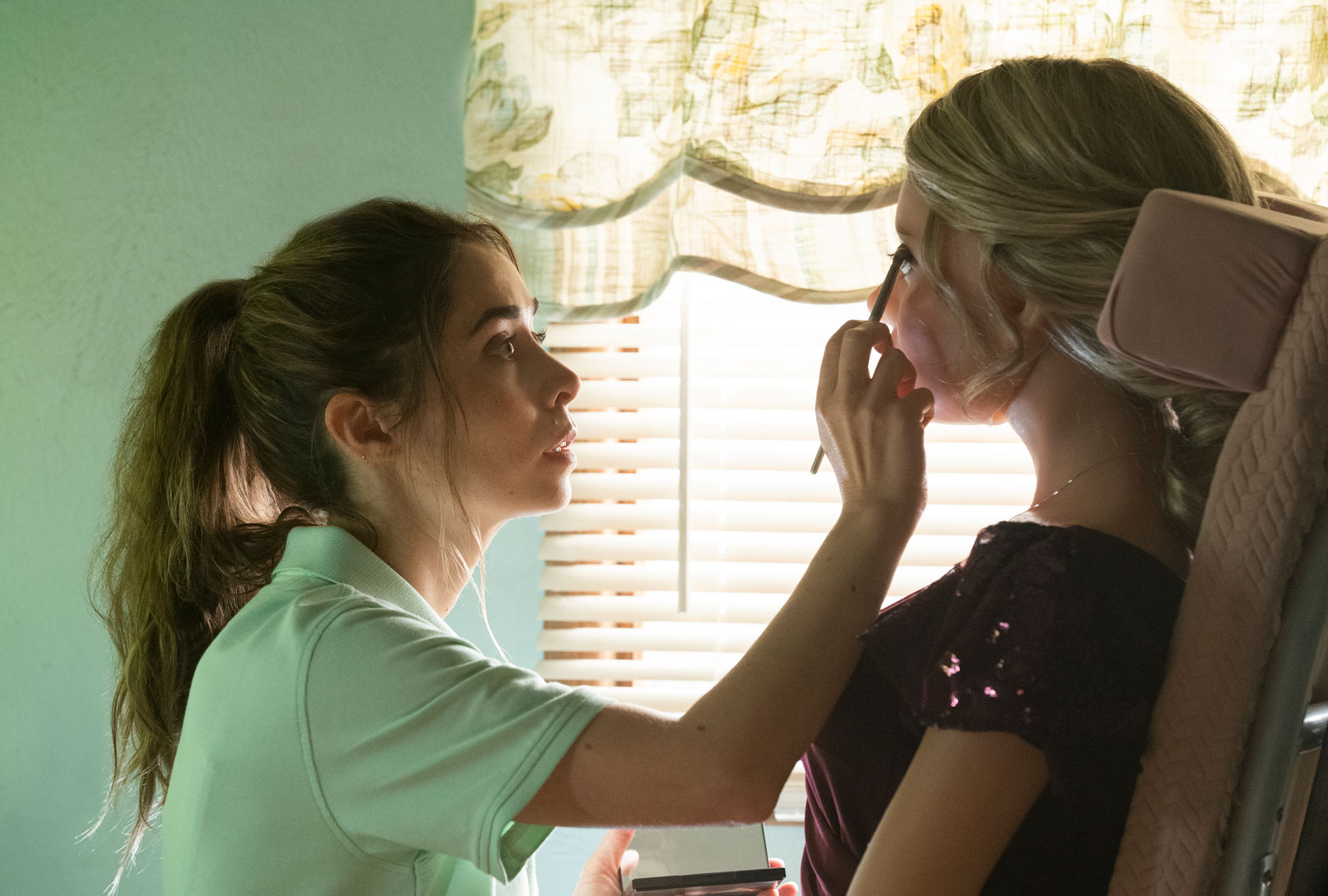
The trailer hints at more of those scenes in their cabin, including when Borat discovers how Amazon’s “Alexa” device works (synergy!). We also catch glimpses of additional scenes with Tutar at a makeup store, and Borat incognito at the March for Our Rights event in Olympia, Washington.

“I am looking out on this diverse crowd with every shade of white, all waving machine guns,” Borat says, addressing the crowd. “I have never felt safer.”

Take a look:

A date has yet to be announced for the specials’ release.

“Borat Subsequent Moviefilm” has earned a slew of awards and is also nominated for two Oscars: best adapted screenplay and best supporting actress for breakout star Maria Bakalova. The Academy Awards will be held on Sunday, April 25.

“Made For Love” and the twist ending that asks what we’ll compromise for technology

Terms and conditions. What other certainties are there in life besides those, death and taxes? 

In the final analysis of HBO Max’s “Made For Love,” that’s what life in a time of ubiquitous surveillance and technological shackling is all about. We are all negotiating what we’re willing to give up in order to gain something else. The luckiest among us get to determine the parameters of their sacrifice and hope that whatever they get in exchange is worth what they lose, which could be wonderful, or some version of a prison sentence, or a bit of both.

So goes the final verse in The Ballad of Hazel Green (Cristin Milioti).

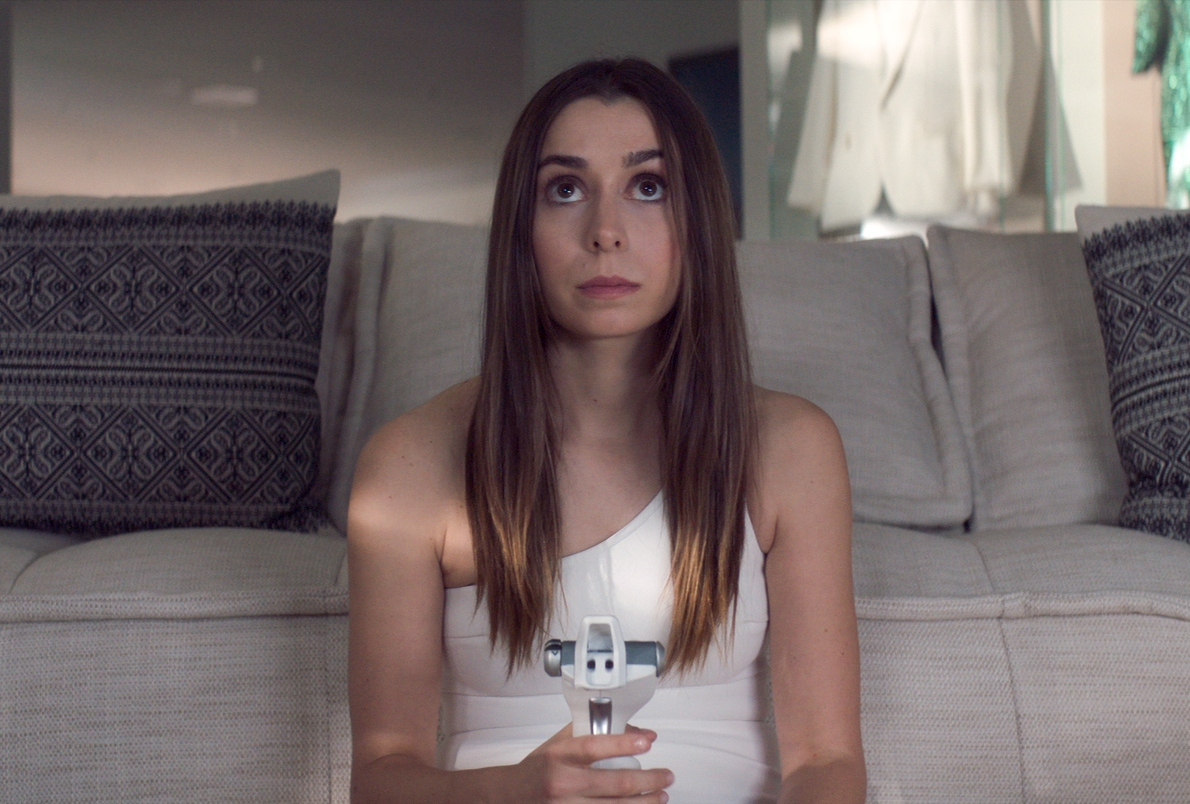
Viewed purely as a dark comedy lit by sunshine and the heat of frustration, “Made For Love” is a serviceable enough tale of a wife desperate for a divorce and a fresh start. The novelty is that Hazel is the fed-up wife of reclusive tech billionaire Byron Gogol (Billy Magnussen) who installs a chip in her brain allowing him to watch and hear everything she does as she attempts to flee his grasp.

“Made For Love” takes on some thought-provoking dimensions in the second half of the season as Hazel and her estranged father, a widower named Herbert (Ray Romano) team up, introducing the element of mortal frailty, error and the dirty, difficult business of getting by into the mix. 

But Hazel spends most of the first season angrily and anxiously eluding capture and return to the marital prison an outsider might picture as as paradise: the virtual reality palace called The Hub she and Byron didn’t leave for a decade entirely by his design. 

Thus the initial question of “Made For Love” is fairly simple: How do you outwit an adversary to whom you’ve exposed everything, for whom you’ve quantified every feeling, and who is actually inside your head?

“Made For Love” is based on Alissa Nutting’s 2017 novel, but with “Search Party” co-executive producer Christina Lee as its showrunner we should have assumed the runaway wife narrative wasn’t the true A-plot. 

Lurking millimeters beneath that skin was a more fascinating parable about the ways the social structure erected by the technological plutocracy is fundamentally inescapable, culminating in an unexpected finale.


Cristin Milioti in “Made for Love” (HBO Max)

The ulterior aim of “Made For Love” is visible from the moment Magnussen’s Byron, a stand-in for Mark Zuckerberg and Elon Musk, strides into view. Byron and his globally dominant company Gogol (ahem) are everything that’s wrong about Big Tech and the patriarchal devil’s bargain the public makes to reap its proposed conveniences.

In the finale Byron leaves The Hub to come to Hazel, meeting her at a diner to sign their divorce papers.

This is less an act of chivalry than a chess move. When he greets her, he declares himself a changed man and brags about having visited a grocery store and walked down city streets, only to confirm that life inside his perfect cube is better. In the normal world, he says, people are prisoners to life’s variables like plumbing issues and other mundane annoyances.

“Do you realize that you’re just listing stuff that poor people have to deal with?” Hazel tells him.

Their conversation reveals other bugs in their marriage, like the fact that their sex life was non-existent in order to fulfill Byron’s desire to adhere to practicing what he called “performance celibacy.” And the fact that Byron Gogol isn’t really his name. He was born Greg Benson, the son of a mailman.

Hazel is livid at hearing this, and listening him admit that he’s more afraid of being alone than anything else, mainly because it would mean he couldn’t watch her. “I had to give you all of my vulnerability and you didn’t give me any of yours?” Hazel says. “That system was built for you.”

None of these confessions makes Byron any more human or humane; in fact, when Hazel seethes that he’s treating her yearning to be free of him as a rough patch, he stops and thinks for a moment before replying, “That’s really, actually a great name. See, I need you here. You’re my muse!”

She should run away. We expect her to run away. Instead Byron presents a new set terms and conditions she can’t refuse. 

Byron agrees to remove the chip from Hazel’s head and grant her request to dissolve their marriage . . .  then dangles the biggest carrot – guaranteeing medical help for a dying father in exchange for her companionship. This would come with equal partnership rights and limited freedom from The Hub. 

She appears to refuse him but, in a turn as classic as “An Occurrence at Owl Creek Bridge,” Hazel accepts. In the season’s final moments we watch Hazel and Herbert enjoy pancakes together, only to find that Herbert’s trailer has been absorbed into The Hub. Hazel forces a destiny upon her father achieved by technological hoodwinking, using the same means by which Byron manipulated her.

Milioti’s impressive, wide-eyed charisma and the hangdog blues Romano employs to paint his portrait of Herbert collaborate beautifully on this point. Milioti roughens Hazel’s edges all the while, but in the eight-episode season’s back half she reasserts who she was before Byron captured her.

And yet her taking sanctuary in Herbert’s run-down trailer as she tries to figure out what to do is more or less a lateral move for her, and a downgrade at that. But it’s also something else, since contrary to Herbert’s efforts to be off the grid he exists in an analog version of the place she ran from. 

Herbert barely leaves the confines of his junkyard property, preferring the company of his anthropomorphized sex doll he’s named Diane to relationships with actual people.

Made For Love
“Made for Love” (HBO Max)

The parallels between Diane’s role in Herbert’s existence and what Hazel is to Byron is obvious, except at times Herbert gives Diane more consideration than he affords his own daughter. He also keeps his terminal cancer a secret from Hazel, which is certainly within his privacy rights. This is also a vulnerability, opening Hazel to Byron’s influence yet again.

Herbert isn’t necessarily above fighting technological incursion in kind, either. He calls in an ex who is an expert in DIY spycraft, also a nun — sure, go with it— and goes by the name Judiff (Kym Whitley). To help Hazel break free of Byron, Judiff litters Herb and Hazel’s place with bugs and listens in on everything Hazel and Byron do. Meaning, Hazel agrees to be watched and eavesdropped upon to escape the spyware in her brain.

But the saddest blow occurs when Hazel takes Herbert to visit her mother’s grave and confesses that he accepted money from the city to move her body to another location to make way for nicer plots. The proceeds funded Diane’s purchase. Death, organic obsolescence, is inevitable. Thanks to inventors of erotic toys and people in power, the city and Herbert each get upgrades.

Magnussen steadily made Byron more pathetic and psychopathic over the course of the season, a tension heightened by his shoddy treatment of his security agent Herringbone (Dan Bakkedahl) and Fiffany (Noma Dumezweni). Of the two, Fiffany’s plight is more acute. She’s a scientist who believed she was developing the Made For Love chip as a means of communicating with animals. Instead Byron took her test subject, a dolphin, and put her in his swimming pool. 

When Fiffany tries to free her aquatic friend, Byron imprisons her and Herringbone in a secret virtual field within The Hub, quite literally putting them out to pasture, except one containing predators to terrorize them. Are those monsters real or digital? Does it matter?

The way “Made For Love” transforms to juxtapose pure emotion with artificiality is stunning, and where it began as a series carried by Milioti and Romano’s portrayals the eventual escalation and payoff is worth sticking around to enjoy, if that is in fact the right term. The show never lost the loopy sweetness augmented by its stars and grew more interesting as Milioti shirked off Hazel’s conditioned taming.

And yet, in the way of so many massively consequential technological breakthroughs such as cell phones, Facebook, PornHub, you name it, she agrees to a bankrupt, highly constricted relationship with a morally barren man to save another who failed as a father on multiple levels.

Our last glimpse of Hazel shows her offering her hand to Byron, and he accepts it as they walk back to their perfect home situated under a sky that’s always a bright, synthetic blue. It’s the grimmest scene of the season and complicated enough to earn appreciation for its humanity. It also makes me wonder which will succeed in the end, a woman’s desire or a man’s thirst for better living through contracts, controls and coding. 

All eight episodes of “Made For Love” are currently streaming on HBO Max.

Lauren Hough on her new book, our underpaid workforce and how “every American” can relate to cults

“If you ask me where I’m from, I’ll lie to you,” Lauren Hough writes in the first line of her debut essay collection. “I’ll tell you my parents were missionaries. I’ll tell you I’m from Boston. I’ll tell you I’m from Texas. Those lies, people believe.” The truth is she was raised all over the world in the infamous Children of God cult, a detail she kept secret for years until, with the help of the internet, she was able to connect with others like her. It turns out, as “Leaving Isn’t the Hardest Thing” (Vintage Books, out now) reveals in prose that crackles with dark wit, sharp observations and stunning revelations, surviving a childhood shaped by an abusive cult with her ambition intact may have uniquely positioned Hough to see not only authoritarian religions, but America itself — its military, its criminal justice system, its bigotries, the precarious edge upon which it positions its working class — through the clearest of eyes. 

Hough’s book has been hotly anticipated since her HuffPost essay, “I Was A Cable Guy. I Saw The Worst Of America,” went viral in 2018. In that essay and 10 others, Hough writes about navigating her way through a multitude of identities, regions, and subcultures, daring to tell the truth about America from the inside and out. 

I spoke with Hough by phone last week, shortly after the delightful news broke that Cate Blanchett would be joining her in narrating the audiobook. Our conversation has been lightly edited for length and clarity. 

One thing that I was really struck by in this book is how deeply it grapples with loneliness, particularly a specific kind of loneliness that occurs when a person is surrounded by others — first in living in group homes with the Children of God, and then with your family, and then with roommates in tiny spaces. It reaches an apex in the scenes when you’re incarcerated in solitary confinement. America is supposedly this obscenely chatty, gregarious country and people, but studies also show that we’re also a really lonely country. What do you think creates this paradox?

It’s funny you said “chatty,” because I figured out a long time ago if I talk a lot, I don’t have to say anything. When you meet people, if you seem earnest — well, not earnest, I avoided that — but if you seem like an open book, and you have plenty of stories to tell, and you drop in, “Yeah, my parents were missionaries, f**king hippies, don’t know what to tell you,” and change the subject, people don’t ask any questions. They think they know everything there is to know about you. I think we just don’t connect. Nobody who’s ever asked, “How are you?” in America has actually meant the question or wanted an answer. And I think that’s becoming really apparent with the pandemic, because now people ask, “How are you?” and you get a world full of tragedy.

People will tell you their answer now. But are we ready to hear it? 

We’re not. We’re just unloading on random strangers. How are you? Well, my dog died last week. Everybody has this tragic thing, and I don’t think we’re capable of pretending anymore and answering, “Fine, how are you?” and moving on from the conversation. We’re all experiencing that loneliness right now. We’re just, deeply, deeply, deeply desperate to connect.

That brings up the question of whether we’re being reshaped as a people by the pandemic. Everyone is going through this big trauma but isolated from each other. As Americans, we still want to buy into this myth that this is a country where you can always start over — fresh start, clean slate, you can be whoever you want to be. Do you think that we will be able to move on for real from this? Will we just clean slate, memory-hole this last year? 

I hope not. Everyone’s talking about going back to normal, and normal wasn’t that f**king good for a lot of us. Normal was awful. I hope we don’t go back to normal. I hope we experience something together and remember it, but we’re really good — as a country, as a culture — of just shoving s**t down and not thinking about it.

The term “essential worker” has become such an irony-laden term over the last year, as we apply it to the folks who stock the shelves and run the checkouts at the supermarket, or work in the warehouses that service our two-day shipping, despite the the humiliating and debilitating demands that are placed on them. And that ties in closely to one of your running threads in the book about how class and labor and gender intersect, how the American workplace’s principle of your time is not your own when you’re on the clock then manifests itself as therefore your body is not your own. What do you think that the mainstream media misses about America’s working class, when they have such a narrow slice of it they want to focus on — namely white, conservative, straight cisgender men without college degrees?

I think the biggest problem there is the working class isn’t sitting in a diner hanging out all morning [talking to journalists]. The working class is sh**ting in a Big Gulp cup in the back of their work van, because there aren’t any bathrooms around. It’s been infuriating to watch. People will gladly cheer for essential workers, but won’t pay them.

Just f**king pay people. Nobody needs to be cheered. It’s like being a veteran, being thanked for your service while they cut VA benefits. Support our troops — but not if you need anything!

America hates talking about class, right?

Yeah, we really do.

Which means hating talking about a lot of things that intersect with that, too.

We just don’t like to be inconvenienced. We’ll gladly support essential workers as long as it doesn’t mean anything about our lives has to change at all. It’s funny talking about it right now, because I just tried to commit career suicide the other night, and it backfired on me — apparently I suck at that. I picked a fight with Amazon, and told people to cancel their [book] orders. I really thought I’d get in trouble. And apparently, it’s not a bad idea to make bookstores love you.

Most people have heard my name because I wrote an essay about needing to pee. When I was trying to figure out how to write it, I was talking to a couple guys I knew and I asked them for stories. Do you guys remember anything that happened? Because I don’t remember 10 years. I said to my friend Andre that really, I just remember needing to pee. He was like, well, there’s the essay.

I don’t know that a lot of people who work in offices understand. It depends on the office, I mean, if you’re working in call center, I’m talking about you. But yeah, I don’t think people understand how you have to ask for a day off and beg and have a really good excuse or you just don’t get one.

And we’re seeing now, with sick leave, how do you stop a pandemic when people have to work sick?

And working through sickness or injury has lasting effects. I have this sentence you wrote on opiate addiction highlighted: “People are in pain, because unless you went to college, the only way you’ll earn a decent living is by breaking your body or risking your life.” It’s so rare, almost like a Bigfoot sighting, to see this point about addiction raised in discussions about class and work in America. There’s often a romanticization of “the trades” out there by people who do work in offices, who seem to want to ignore how physical that labor is, and how a lot of people can’t keep doing it for their whole life. 

Not at the pace that we’re required to work in our Protestant work ethic. A month off in August, like the Europeans have, might have a lot of effect on how our bodies feel. But we don’t have time to heal. We can’t go to a doctor. How do you get better if you don’t get medical care? Even if you have health insurance, you don’t have time off to do it.

There’s constant jokes about rednecks and their opioids. It’s not “rednecks and their opioids,” people are in pain. And the doctor prescribes them opioids because they have to go back to work the next day. Or their buddy gives them a few because they have to go back to work the next day, and it’s really easy to get addicted. I got addicted after I had a sinus surgery. It took maybe a week of intense pain and horrific withdrawals that were real. And I don’t even like opioids, I get nauseated on them, so I don’t take them. But yeah, it’s really easy to get addicted.

Let’s talk about the word “cult.” Your book is not a tell-all cult memoir. But you write about your childhood with the Children of God as the big secret you carried for much of your life. If you start listening for the word “cult” it’s kind of everywhere these days. Donald Trump voters are a cult. QAnon is a cult. CrossFit is a cult. On one hand, maybe we’re diluting this term. But I think your book also makes a strong case that cult-like leadership behavior shapes a lot of our mainstream institutions, too.

Yeah, I think that’s what I wanted to say with that. I spent most of my life just twitching at the word “cult.” But when you start talking about and thinking about what it actually was, it’s not all that different from what most of us experience as Americans, or as employees of a store that want you to be loyal to the store instead of paying you [well]. We throw the word around a lot, but maybe it’s appropriate. And maybe it’s fine that it’s diluted, because it’s apt. Our groupthink, our tribalism, our gather together to follow personalities instead of policy [tendencies] in politics. It’s kind of bizarre, but I thought [being in a cult] was this huge secret, and it turns out pretty much every American can relate to it.

There’s aspects of it in how you write about the military. There’s definitely strong parallels made to mainstream religions, as well, and evangelicalism.

That was the shocking thing, coming out of the cult and realizing none of their beliefs were really that weird.

I really thought it was just a Children of God thing: We thought the Antichrist was coming, there would be a mark of the beast. And now, there are entire Facebook groups dedicated to warning you the vaccine’s going to insert the mark of the beast into you. And it’s still a little baffling to me. I really thought the end of the world would be more exciting and less f**king stupid. I’m supposed to be fighting the Antichrist, and I’m just not putting a bra on and watching Netflix.

Speaking of Netflix. There was that “SNL” musical sketch a few weeks ago about women who like murder shows, and in the end, it takes that little turn when Nick Jonas comes home and is like, baby, let me introduce you to the cult show. There was a violent crime in my extended family, and I get twitchy about the idea of it popping up as a story on one of those murder comedy podcasts. So I wonder what it’s like for you to see cult shows — docuseries like “Wild Wild Country” and the NXIVM exposés — out there in the pop culture discourse? 

It doesn’t make it fun to tell people you were in a cult when people start thinking about NXIVM. That documentary is problematic for me anyway, because you’re asking people who’ve been out of a cult for a week to explain what happened to them. I mean, f**k, it’s been 20 years, I still don’t know what the f**k happened to my family. I wrote a book about it, but it’s not an easy thing to explain. You can’t be the expert on your own life, which is a really weird thing to say for someone who just wrote a book about my own, but — [laughs] I’m f**king selling it here — 

This career suicide you keep trying to commit is not going to work.

I’m going to tank the book, goddamnit! Nobody read it. Please don’t read my book. The more I tell people not to, they’re just going to. We don’t really follow orders really well. I do love that about Americans. [Laughs.]

I used to think we were watching the crime shows, especially as women, as homework. What situations to avoid, and what men to avoid. But we kind of already know not to get into a stranger’s car. Also, now we do it as practice, to get any place you get in a stranger’s Uber and drive around. I used to think we’re doing this as homework, but I don’t think — we’re just feeding off of people’s tragedies for entertainment. I don’t know why we do that, except maybe our home lives are really too hard to look at. It’s easier to look at something shocking and weird in someone else’s life than understand why our lives are f**king miserable.

To go back to what you were saying earlier about companies that demand loyalty from their workers, maybe we’re also looking for recognition in these more extreme cases?

Yeah, it might be. It also seems like more of an easy fix: Don’t join a cult. Cool. Wrote that one down. If he starts branding people, you should probably leave. Those are all pretty easy fixes. But you know, we’re looking at the next 20 years of our lives before we can retire going to work every day for a company that is a cult because they don’t want to pay us or give us time off, in a country where we can’t even get f**king health care or our college paid for. “Walk out when they start branding people,” is pretty easy advice but we can’t really escape our own lives. 

Yeah, maybe it’s supposed to make us feel a little better to think, like, we’re not there yet. 

America is kind of founded on Oh, at least I’m not that guy. That is what we’ve got.

You were joking earlier: Don’t read my book, don’t read my book! For writers who write memoir and essays, people read their work and they feel like they’re very close to the writer. When in truth they only know what you’re allowing them to know. This is a crafted work of art, and they’re the reader, not a confidant. You’ve probably experienced the weird side of that: people feeling like they know you well enough to comment on you as if you’re either a very intimate friend, or even like a character on a show that they watch. I’m curious about how you navigate that public attention now as a writer in light of what you’ve written about having to keep so much of your life private for so long.

Yelling “I’m a private person!” if you’ve just written a memoir is kind of like yelling, “I’m not crazy!” but it doesn’t really jibe with the fact that I just put out a book of really personal essays. But they are kind of a snapshot. And I don’t know that people understand that. We don’t really understand the parasocial relationship as consumers. I understand a little more now that I’m on the other side of it. I whine a lot about not getting a book tour [because of the pandemic] because I feel like I’m getting robbed, but at the same time, I do get to avoid a whole lot of people trying to hug me. I don’t think people wrote reviews of any David Sedaris book talking about how much they wanted to hug him. I don’t think that happened. I don’t think anyone’s ever called Augusten Burroughs “brave” in a review, and I think there is a little bit of a sexist bent to it.

I put the book out. And that’s what you get. We’re all in therapy to figure out walls versus boundaries. And I’m trying to step away from Twitter a little bit. I mean, I’m still compulsively tweeting, God help me. But I’m trying not to put so much personal information out there. I got on there because I wanted to connect to other writers and figure out how to publish a book, but that’s done now. And while I’m still trying to connect to people — we’re all f**king lonely, sitting around in the pandemic, trying to talk to someone — but yeah, I don’t want to be consumed, and it feels a lot like I am being consumed for entertainment.

You are a very funny writer. I think there is this perception out there, perhaps, that comedy is natural, it’s innate, it’s easy, if you’re a funny person anyway. Not that it’s a craft, a skill, that takes conscious work. You use humor very skillfully and adeptly in your essays in a way that feels like an act of writerly generosity, and it’s a craft element that isn’t always highlighted when we talk about essays on difficult subjects.  

It is a skill level. How do you make child abuse hilarious?

How did you develop that muscle? Because you are very purposefully funny about topics which are also horrific. 

Gallows humor has been around for a little while. I didn’t invent it. We joke to process things.

I can get kind of emotional writing something and I want to make a point and I want to drive it home. But you have to add a little bit of levity or give people the tools to read it. Especially in the beginning, we add a few funny things to like, Hey, we’re going to get through this. It’s not going to be that bad. I’m not going to make you need a shower after you read this book. It’s just practice. And Twitter came in handy there a lot. How to tell a joke? Follow a bunch of comics and watch the way they work, watch how they arrange a story so that it’s funny, not tragic. The most tragic things can be the funniest. I just think it’s the way our our emotions work. We like that release.

Who are you reading right now? What books are you excited about?

Speaking of serial murderers and podcasts, Elon Green wrote this book [“Last Call”] about a serial killer in the ’90s who was killing gay men in New York. And he did it a different way, I think, than any of the podcasts. I tweeted about this other day, but really, really the worst thing I think that can happen to you besides being murdered by a serial killer, is to have someone on a podcast giggling about it. He put the victims in it first. He tells their stories. And they’re treated with such tenderness. And he doesn’t make them the perfect victim. It’s this history of gay New York, which of course, I’m fascinated by because I was too scared to go to New York. So I like to read about it.

Your book  gives a really great snapshot of a particular time in gay D.C. too, and also in the South, which is often overlooked in LGBTQ narratives. Like what it’s like to try to find the one gay bar in a 100-mile radius of your rural town. 

You don’t think about it when you’re living it. But any Gen Xer is now really horrified when it occurs to us that people are talking about the ’90s like we used to talk about the ’60s.

Jesus Christ. [Laughs.]

I’m sorry I just ruined your week.

I routinely feel old. But Don’t Ask Don’t Tell was only repealed 10 years ago. And I feel like that’s something that has been memory-holed fast, like, well, that’s over! In the same way that people tried to pretend that because we elected a Black man president, racism is now over! And the progress we have made feels so fragile right now. I think it’s important that books like yours and Elon Green’s are chronicling that time, which was not that long ago. But it is often treated like ancient history to be swept under the rug.

Yeah, we really don’t like to look at our pasts. Which is the f**king problem. Because we’re doing it to trans people now. There’s a [North Carolina state] law that just passed where teachers have to report to parents if a kid doesn’t fit the correct gender performance. And that’s every tomboy. Every boy who’s a little bit into art. And God help us, lesbians like to clearly pretend that trans rights have nothing to do with them. But it does. If someone is being oppressed, it really does affect all of us. And forgetting where we came from doesn’t f**king help. We haven’t won yet. I don’t know that we’re ever going to win. You do actually have to still keep fighting these things. Because yes, gay people are allowed in the military. And now finally trans people are allowed to be in the military. But they’re not allowed to play high school sports?

People like to say about the generation coming up that they’re not going to stand for this bigotry any longer, so its days are numbered. Is this the last gasp of institutional bigotry trying to sink its claws in before it’s replaced? Or are we going to be fighting the same fights for years to come?

I mean, I thought Gen X would get rid of a lot of it because we were always watching MTV and they told us racism was bad. And we watched “The Real World,” and we watched our favorite gay character die of AIDS. I thought we would make some changes. We’ve made a few. I have a lot of hope for the next generation that they’ll make a few more. But that’s a lot of weight to put on an 18-year-old.

“This is what collusion with Russia looks like”: Feds say Manafort pal gave campaign info to spies

A longtime associate of former Trump campaign chief Paul Manafort passed “sensitive” information to Russian intelligence agents during the 2016 campaign, the Treasury Department said Thursday.

Konstantin Kilimnik, who worked closely with Manafort on behalf of Russian-backed oligarchs in Ukraine, was hit with sanctions in the Biden administration’s latest response to Russian election meddling. The Treasury Department said in a news release announcing the sanctions that Kilimnik was a known Russian “agent” and “provided the Russian Intelligence Services with sensitive information on polling and campaign strategy.”

The Treasury Department statement marks the first time that the government directly said that Kilimnik provided the internal data he received to Russian intelligence agencies.

Kilimnik, who also sought to “promote the narrative that Ukraine, not Russia, had interfered” in the 2016 presidential election, according to the release, was sanctioned for also engaging in “foreign interference” in the 2020 election. The FBI is offering a $250,000 reward for information leading to his arrest.

Kilimnik was previously indicted in former special counsel Robert Mueller’s investigation in 2018 for alleged witness tampering after prosecutors said he and Manafort “repeatedly contacted” two individuals “in an effort to secure materially false testimony” in the probe. The Mueller investigation found that Manafort shared polling data from Trump’s campaign with Kilimnik, who “has ties to a Russian intelligence service.” Many of the relevant parts of the report were redacted, though it did say that Rick Gates, Trump’s former deputy campaign manager and a mutual associate of both Kilimnik and Manafort, believed that Kilimnik was a “spy.”

A Senate Intelligence Committee report released last year also found that Manafort had on several occasions passed internal polling data and campaign strategy to Kilimnik, who it said “may have been connected” to Russian intelligence, but these sections were likewise redacted. Kilimnik was mentioned 819 times in the report, including in one section that raised the “possibility of Manafort’s potential connection” to Russia’s “hack and leak operation.”

Kilimnik was a key figure in both investigations. The Mueller report described a meeting between Manafort, Gates and Kilimnik at a Manhattan cigar club where Manafort instructed Gates to bring printouts of campaign polling data and later handed it to Kilimnik.

“They also discussed the status of the Trump Campaign and Manafort’s strategy for winning Democratic votes in Midwestern states,” the Mueller report said. “Months before that meeting, Manafort had caused internal polling data to be shared with Kilimnik, and the sharing continued for some period of time after their August meeting.”

The report said that Gates continued to “periodically” send internal polling data to Kilimnik after the meeting at Manafort’s behest. The report said Manafort expected Kilimnik to share the information with Russian oligarch Oleg Deripaska, a former client of Manafort and a close associate of Russian President Vladimir Putin. Prosecutors said in court documents that Manafort was $10 million in debt to Deripaska when he volunteered to lead the Trump campaign for free.

But the report stopped short of saying that Kilimnik was working with Russian intelligence agencies.

“Because of questions about Manafort’s credibility and our limited ability to gather evidence on what happened to the polling data after it was sent to Kilimnik, the Office could not assess what Kilimnik (or others he may have given it to) did with it,” the report said.

The Senate report went further, identifying Kilimnik as a “Russian intelligence officer.”  

“Manafort’s presence on the campaign and proximity to Trump created opportunities for the Russian intelligence services to exert influence over, and acquire confidential information on, the Trump Campaign,” the report said. “The Committee assesses that Kilimnik likely served as a channel to Manafort for Russian intelligence services, and that those services likely sought to exploit Manafort’s access to gain insight [into] the Campaign.”

It’s unclear whether Trump himself knew that Manafort was sharing internal campaign data with Kilimnik. He told reporters in 2019 that he knew “nothing about it.”

It’s also unclear what Russia may have done with the polling and “strategy” information. Media reports in 2017 showed that Russian-linked Facebook ads specifically targeted voters in Michigan and Wisconsin, two states that proved critical in Trump’s 2016 victory, but there is no evidence that those ads were targeted using internal information from the Trump campaign nor that Russia’s efforts had much of an effect on the outcome of the race.

The Senate report also said that Kilimnik may be connected to the hacks of the Democratic National Committee and Hillary Clinton’s campaign. Documents stolen during that hacking operation were later published by WikiLeaks. Gates testified in 2019 that Trump adviser Roger Stone may have had an inside line to the organization and told Trump in July of 2016 that “more information would be coming” from WikiLeaks, contradicting Trump’s sworn statements in the Mueller investigation. Gates said Stone had relayed this information to Manafort as well, who “thought that would be great.”

Russia’s role in Trump’s 2016 victory has been a controversial subject for years and its effect is difficult to quantify, as with former FBI Director James Comey’s last-minute announcements first reopening and then closing the investigation into Clinton’s email server. Research looking at whether Russia’s online efforts to suppress the Black vote and stoke Democratic divisions suggests they were not very effective. But the Treasury Department sanctions underscore the Mueller investigation and Senate probe’s findings that Russia tried to help Trump win.

“This is what collusion with Russia looks like,” Rep. Ted Lieu, D-Calif., a member of the Judiciary and Foreign Affairs Committees, said on Twitter. “The former President won the 2016 election with the help of Russia. That’s simply a fact.”

Geraldo Rivera calls Dan Bongino a “son of a b*tch” during epic Fox News clash

Conservative cable news pundits who were once pals have now turned into bitter foes. That’s the story of Fox News’ Geraldo Rivera and Dan Bongino.

The two initially faced off on Monday debating policing in America and, more specifically, outrage sparked by the killing of Daunte Wright. On Wednesday night, the duo clashed yet again on Sean Hannity’s Fox News program, where it ended with Rivera calling Bongino a “son of a b*tch.” 

“I have been covering cops for over 50 years. I am perhaps the most deeply experienced reporter in television history,” Rivera began the Wenesday segment while addressing a matter from the clash on Monday night, highlighting his experience in covering policing in America for many years, adding that he has “been to too many cop funerals to even think about.” “I have done hundreds of stories over thousands of hours with cops. Everything from shoot-outs to executing arrest warrants, to roadblocks to drug raids. You name it, I’ve been there. I’ve been to too many cop funerals to even think about. They are horrible!” he added. Rivera would then continue by calling the killing of Daunte Wright “reckless or grossly negligent behavior” while proposing that police officers use a taser as their “first weapon of choice.”

But those rather straightforward remarks didn’t sit well with the former Secret Service agent. Bongino responded to Rivera, stating, “I don’t even know how to respond to that. Give me a second to digest the stupidity of that.”

The two then got into it on air, which only became more intense as the 8-minute segment pushed forward. “You’re nothing but a name-caller!” Rivera declared. “You’re a cheap shot artist!” Bongino, a former police officer before becoming a carpetbagger, then fired back: “You’ve never worn a badge, period. Not interested in your reporting on it because reporters deal with facts, and you brought the race card into it the other night when we had this debate, despite having no facts to back that up.” 

The war of words from there only got more intense, with Rivera noting that “Blacks are twice as likely to be shot by cops as whites,” which Bongino dismissed. “I know more than you! What do you know?” Rivera continued. “What, did you have a ten-minute career as a cop? You’ve been running for office for the last 20 years.”

Bongino, instead of replying with statistics or facts, instead told Rivera to “take a Valium” and “pipe down.” “My gosh, you’re a 70-year-old man!” the thrice-failed GOP congressional candidate added. 

Minutes later, nearing the end of the segment, Bongnio accused Rivera of perpetrating “a race narrative with no data to back it up at all.” To which, Rivera quickly fired back: “You only accept facts that you agree with.”

“He’s injecting race into the argument because he has nothing else!” Bongino continued. The segment would conclude with fireworks Bongino accused Rivera of desiring to “see the country burn.” 

“I want to see the country burn?! You son of a b*tch! I want to see the country burn, you punk?! You’re nothing but a punk!” Rivera shouted as Hannity ended the segment. 

You can watch the entire clip below, via YouTube: 

Republican governors make a big show of banning foster care for migrant children

Amid the Congressional hysteria in Congress surrounding the purported “surge” of migrants at the U.S. southern border, GOP governors throughout the nation are declining to help those most vulnerable: child migrants. Republicans are rushing to reject migrant children in need of foster care in hopes of scoring political points.

 On Tuesday, Nebraska Gov. Pete Ricketts, a Republican, announced that he would not comply with President Joe Biden’s request to temporarily house displaced migrant children in the state, instead suggesting that the surge was a problem of Biden’s own doing, according to the Norfolk Daily News.  

“Nebraska is declining their request because we are reserving our resources for serving our kids,” Ricketts said. “I do not want our kids harmed as the result of President Biden’s bad policies.”

 “The Biden administration should focus on working with Central American governments to reunite the children with their families in their home countries instead of pursuing the risky strategy of scattering them across the United States,” he continued, adding, “President Biden has created an immigration crisis on our border with thousands of unaccompanied migrant children coming to our country without their parents or family.”

According to a New York Times estimate, the U.S. may see over 35,000 unaccompanied migrant children at the border by June. The number of minors currently in custody is approximately 20,000. Although a Washington Post fact-check found that the recent spike in migration at the southern border is consistent with a “predictable seasonal shift,” the hike in migration by unaccompanied minors “appears to be more than just a seasonal pattern.” The Post also found no evidence tying Biden’s immigration policies to the overall surge. 

Attorney Erik Omar, executive director of the Immigrant Legal Center in Omaha, told KETV7 that accommodating migrant children is not likely to deplete state resources for Nebraska-based children already in the foster care system. “The Ricketts administration statement about being a drain on state resources in our opinion was misleading,” Omar explained. “All of these children aren’t going to be released into brand new foster homes or things like that,” he added. “On occasion, that does happen, yes. But, I mean, these children are being released to their families, their family sponsors and in conjunction, other nonprofit resources around town are here to help with the process.”

In Iowa, GOP Gov. Kim Reynolds took on a similar posture to Ricketts.  

“This is not our problem,” Reynolds recently told WHO Radio host Jeff Angelo. “This is the president’s problem. He is the one that opened the borders. He needs to be responsible for this, and he needs to stop it.”

Iowa House Minority Leader Todd Prichard, a Democrat, said this week that “it’s unfortunate that we’re not willing to help and to show that Iowa is a generous and welcoming state.” Iowa’s former Gov. Robert Ray, Pritchard pointed out, welcomed refugees from Southeast Asia in the 1970s. “The crisis at the border is a humanitarian crisis. Like so many things it wants to be played as a political football and […] play the blame game, but I’m disappointed that we as Iowans aren’t standing up to help.”

 South Carolina Gov. Henry McMaster took it even further, issuing an executive order on Monday that prevents undocumented children from being admitted into the state’s foster care system, according to WSPA. The governor issued the following statement:   

“South Carolina’s children must always be given first priority for placement into foster care and the State’s strained resources must be directed to addressing the needs of its children. Allowing the federal government to place an unlimited number of unaccompanied migrant children into our state’s child welfare system for an unspecified length of time is an unacceptable proposition. We’ve been down this road with the federal government before and the state usually ends up ‘on the hook.”

McMaster’s stance reportedly came after an analysis conducted by South Carolina’s Department of Social Services Director Michael Leach, who echoed: “Allowing the federal government to place an unlimited number of unaccompanied migrant children into our state’s child welfare system for an unspecified length of time is an unacceptable proposition. We’ve been down this road with the federal government before and the state usually ends up ‘on the hook.'”

South Dakota’s Republican Gov. Kristi Noem took her threats to Twitter: 

While the Republican governors of Texas and Arizona, Greg Abbott and Doug Ducey, respectively, wrote an op-ed in The Washington Post. 

WarnerMedia admits that 2021 HBO Max streaming plan got off to “bumpy” start

Last year, Warner Bros. shocked the movie industry when it announced that all of its 2021 films — “Godzilla vs. Kong,” “The Suicide Squad,” “Dune,” etc. — would be coming out in theaters and streaming on HBO Max at the same time, the idea being that it would be easier for people to watch them during a pandemic when they didn’t want to go to movie theaters. Immediately, filmmakers panicked. Christopher Nolan, who worked with the studio on movies like “Tenet,” came out swinging. “Some of our industry’s biggest filmmakers and most important movie stars went to bed the night before thinking they were working for the greatest movie studio and woke up to find out they were working for the worst streaming service,” he said. “Dune” director Denis Villeneuve was also most displeased, and pretty dramatic:

Warner Bros. might just have killed the Dune franchise. This one is for the fans. AT&T’s John Stankey said that the streaming horse left the barn. In truth, the horse left the barn for the slaughterhouse.

In retrospect, these reactions are a bit overblown. To start, the strategy seems to have worked; HBO Max subscriptions have gone up, and “Godzilla vs. Kong” made a pretty penny at the box office (for pandemic times, anyway) even though it was also streaming on HBO Max. And WarnerMedia CEO Jason Kilar has confirmed that things will more or less return to normal in 2022 after the pandemic has subsided. “I think it’s very fair to say that a big, you know, let’s say a big DC movie . . .  it’s very fair to say that that would go exclusively to theaters first and then go to somewhere like an HBO Max after it’s in theaters,” he said on a new episode of Recode Media.

Filmmakers upset over WarnerMedia’s streaming plans — Is it too late to mend fences?

And yet, the problem may never have been that the move wasn’t smart — I think the past several months have shown that it was — but rather that it ticked off the studio’s creative partners who now may be wary of working with Warner Bros. again. Warner Bros. didn’t just announce that its 2021 movies would stream on HBO Max alongside their theatrical runs: it did it without talking to many of the filmmakers involved. From where I’m sitting, that seems to be what’s sticking in the filmmakers’ craws.

“There’s no doubt that it was bumpy back in early December of last year,” Kilar said. “If I had the chance to do it over again, I think it’s very fair to say that we would have taken a couple more days to see if we could have had even more conversations than we were able to have.”

There’s still some doubt as to whether “Dune” will stream on HBO Max at the same time it’s released into theaters on Oct. 1 — Legendary is putting up a fight — but I’m hoping it will. The success of “Godzilla vs. Kong” has shown that movies can still clean up at the box office even if they’re also on streaming, and by the time “Dune” comes out more people should be willing to go to the theater.

I think it’s inevitable that movies will make their way more and more onto streaming services. The myth is that this will somehow kill theaters. WarnerMedia’s plan did indeed get off to a bumpy start, but the plane is in the air.

Cleary refused to teach kids how to be good — and generations of readers fell in love with Ramona

There’s nothing like being reasoned with by a 4-year-old girl.

“Stop it,” ordered Beezus. “Stop it this instant! You can’t eat one bite and then throw the rest away.”

“But the first bite tastes best,” explained Ramona reasonably, as she reached into the box again.

Beezus had to admit that Ramona was right. The first bite of an apple always did taste best.

The author of this scene is Beverly Cleary, who died on March 25, 2021, at the age of 104. The book is “Beezus and Ramona.” Most readers appreciate Ramona’s arguments, admiring the innocence, the free-spiritedness, the insight that inspires her to take a whole carton of apples and indulge in one first bite after another, only ever tasting “the reddest part.”

Many fans love Cleary’s work for a lifetime – first as young children, then as adults. As a mother of twin boys, I have been surprised at how her writing continues to resonate. But what is it that makes Cleary’s characters so enduring?

Novels that teach

As a scholar of 18th-century British literature, I recognize the pressure on novelists to teach children through their writing. This expectation was set in the 18th century when it was assumed that the modern novel, newly developed, would teach as well as please. Reading was expected to be, in the words of Horace, both “dulce” (literally sweet, or enjoyable) and “utile” (literally useful, or instructive).

Though readers have, at least since the early 20th century, generally let go of this expectation for authors who write for adults, the expectation persists for those who write for children. With a writing career beginning in the early 1950s, Cleary directly challenged such a notion.

Cleary once told PBS that her fans love Ramona “because she does not learn to be a better girl.” She went on to explain what inspired her to create Ramona’s character: “I was so annoyed with the books in my childhood because children always learned to be better children, and in my experience, they didn’t.”

In fact, Cleary’s Ramona doesn’t just challenge the assumption that readers must learn “from” and “with” fictional characters; one of Ramona’s distinguishing characteristics is rebelliousness.

Take, for example, the time Ramona’s parents are disappointed by her report card:

“Now, Ramona.” Mrs. Quimby’s voice was gentle. “You must try to grow up.”

Ramona raised her voice. “What do you think I’m doing?”

“You don’t have to be so noisy about it,” said Mrs. Quimby.

The scene continues:

Ramona had had enough. … She wanted to do something bad. She wanted to do something terrible that would shock her whole family, something that would make them sit up and take notice. “I’m going to say a bad word!” she shouted with a stamp of her foot.

Then, in the culmination of the scene:

Ramona clenched her fists and took a deep breath. “Guts!” she yelled. “Guts! Guts! Guts!” There. That should show them.

Gendering Ramona

So exactly where does Cleary’s Ramona fit? She doesn’t. She’s an outlier of school standards and gender expectations. Before there were terms like “gender nonbinary,” “gender nonconforming” or “genderqueer,” there was Ramona. Ramona defies categorization. Her friendship with Howie offers one of many examples:

“At my grandmother’s,'”said Howie. “A bulldozer was smashing some old houses so somebody could build a shopping center, and the man told me I could pick up broken bricks.”

“Let’s get started,” said Ramona, running to the garage and returning with two big rocks. . . . Each grasped a rock in both hands and with it pounded a brick into pieces and the pieces into smithereens. The pounding was hard, tiring work. Pow! Pow! Pow! Then they reduced the smithereens to dust. Crunch, crunch, crunch. They were no longer six-year-olds. They were the strongest people in the world. They were giants.

This passage is from “Ramona the Brave,” which both is and isn’t of its time. Published in 1975, the novel may be seen as an expression of second-wave feminism, which sought to recognize gender as a social construct and to challenge how mainstream society kept women from fulfilling their potential. However, it also previews third-wave feminism by insisting that women need not abandon their femininity to claim equity for themselves.

Ramona, though quite boyish, insists on writing her last name, “Quimby,” with the “Q” shaped into a cat “with a little tail,” reminding the reader of her feminine side.

I see in Cleary’s writing a nostalgia for the time in childhood before gender is clearly defined. By looking back to that time, children and adult readers alike may imagine a future in which people are able to think beyond gender.

Cleary now

Most of Cleary’s books are set in the mostly white Grant Park neighborhood of Portland, Oregon, where she grew up. The lack of racial diversity in Cleary’s work is a likely consequence of her having followed the adage adhered to by many writers: “Write what you know.” However, current readers might wish that she had stretched herself and her abilities a bit further to have imagined a more racially or ethnically diverse cast of characters.

Nevertheless, many assert the “universality” of Cleary’s stories. One such reader is young-adult author Renee Watson, who, upon Cleary’s death, commented that Ramona “wasn’t afraid to take up space.”

“I needed a friend like Ramona,” Watson said. “Cleary introduced to me this rambunctious girl, and I love her. … The power of her storytelling is the respect she had for young readers. She had a deep understanding that a girl articulating how she feels is an asset, not a flaw.”

As I’ve read Cleary’s books to my own Gen-Z sons, I have been particularly struck by how her writing has gotten them interested and invested in female as well as male protagonists. They love the books about Henry and Ribsy, but they love the Ramona books too. When it is so common for boys and men to ignore – or merely “glance” at–women’s writing about girls, this is significant. Through Cleary’s work, my sons can see that the big guys don’t always know best or win. Such perspectives can create new normals that are less, well, normative.

Kristin Girten, Assistant Vice Chancellor for Arts and Humanities/Associate Professor of English, University of Nebraska Omaha

This article is republished from The Conversation under a Creative Commons license.

Hawley raises millions after promoting Trump’s Big Lie

Sen. Josh Hawley is $3 million richer since Dec. 2020, gathering monetary supporters by embellishing former President Trump’s Big Lie about election fraud. The Missouri Republican became infamous for proudly pumping his fist in the air during the Jan. 6 insurrection that tried to block the Electoral College votes from being counted.

While liberals called for Hawley’s resignation in the face of giving power to the insurrectionists, loyalists of Trump opened their wallets to his cause. Hawley has acquired upwards of 57,000 donations this quarter, raising nearly $600,000 alone in the two weeks preceding the Jan. 6 attack of the Capitol, as opposed to the $43,000 he raised during the first quarter of 2020. He’s tapped into a pool of grassroots donors that could continue to support him if he pursues a 2024 presidential run. 

Hawley isn’t the only anti-establishment Republican to increase substantial financial gains. Georgia Rep. Marjorie Taylor Greene raised $3.2 million this quarter, even after she stood up for Matt Gaetz amid a sex-trafficking scandal, accused the transgender community of “destroying God’s creation,” and pushed automatic gun rights after the recent Boulder mass-shooting.

Greene’s contributions averaged $32, while Hawley’s averaged $52. Last year Hawley ended the year with $1.2 million raised, as opposed to his $3.1 in the last three months. 

After Hawley’s involvement with the Jan. 6 attack on the Capitol, prominent supporters from Missouri, including state Sen. Jack Danforth and businessman and major donor David Humphreys, cut ties with Hawley and publicly denounced him because of his behavior of inciting lies.

Among the GOP’s conservative base, however, Hawley and Greene appear to be more favorable than ever. 

Hawley, typically on the side of small government, plans to ban “woke companies” from growing in order to combat cancel-culture. On Monday, Hawley introduced legislation in line with Trump’s distrust of big tech corporations. 

“I’m introducing legislation to cut #BigTech and the mega corporations down to size,” he tweeted Monday.

“A small group of woke mega-corporations control the products Americans can buy, the information Americans can receive and the speech Americans can engage in,” Hawley said in a statement Monday. “These monopoly powers control our speech, our economy, our country, and their control has only grown because Washington has aided and abetted their quest for endless power.”

The legislation, which he calls “Trust-Busting For the 21st Century Act,” bans all mergers and acquisitions by companies valued over $100 billion, which would include Amazon, Google, Pfizer, Costco, Nike, and McDonald’s. 


Why Republicans are rejecting the COVID vaccine: GOP wants to drag out lockdowns to hurt Biden

Vaccination rates are improving at a steady clip. As of Wednesday afternoon, almost 124 million Americans have received at least one shot and over 76 million are fully vaccinated. There have been no meaningful bad effects from either the Pfizer or Moderna vaccine and only a handful of extremely rare incidents that have forced the FDA to temporarily pause the administration of Johnson & Johnson vaccine. The vaccines are safe, effective, and well-documented on social media. These are the exact conditions — basically, other people getting it first and proving it’s safe — that many vaccine-hesitant Americans were telling pollsters that they wanted to see in order to convince them to get the vaccine. 

And yet, a new poll released Wednesday by Monmouth University shows the number of Americans — 1 in 5 — who refuse to get vaccinated has barely dropped from where it was in polls conducted in January and March. The only thing that’s really changed is the excuse people are offering for why. In the past, 21% of Americans gave the “let others do it first” answer. Now only 12% of people are even bothering to pretend that condition hasn’t been met yet. 

Instead, what’s becoming ever more clear is the reluctance to get vaccinated is about one thing and one thing only: Owning the libs


Want more Amanda Marcotte on politics? Subscribe to her newsletter Standing Room Only.


“The number of people who have been skittish about the vaccine has dropped as more Americans line up for the shot, but the hardcore group who want to avoid it at all costs has barely budged,” Patrick Murray, director of the Monmouth University Polling Institute, said in the press release, adding that “much of this reluctance is really ingrained in partisan identity.”

In fact, that might be most of it. As the Monmouth poll found, “43% of Republicans versus just 5% of Democrats” are refusing to get the vaccine altogether. Another recent poll conducted by The Economist and YouGov found that while overall vaccine hesitancy has hit an all-time low in the U.S., Republicans, unlike either Democrats or Independents, have for months remained largely unmoved in their unwillingness to get vaccinated.

The reasons for this are not mysterious.

Right-wing media networks like Fox News and various personalities have gone out of their way to signal to conservatives that refusing the vaccine is a way to demonstrate tribal loyalty and, even more importantly, demonstrate contempt for liberals. For instance, after CNN’s Brian Stelter hosted a segment calling on Fox News hosts and other right-wing pundits to encourage vaccination through vaccine selfies, a number of those figures childishly flipped out, as if Stelter was their mommy telling them to eat their broccoli. The Blaze’s Glenn Beck posted a picture mocking vaccine selfies, substituting the bird for the jab. 

Fox News “comedian” Greg Gutfeld whined it’s “none of your f**king business” who gets the shot, even though vaccination quite literally works through herd immunity and cannot be understood as a “personal” choice any more than driving through red lights is a “personal” choice.

The anti-vaccination sentiment is clearly building on a tendency on the American right to define “manhood” as an unwillingness to act like an adult who can handle even basic responsibilities, which is no doubt one reason why women are more likely to get vaccinated than men. Another problem, of course, is that right-wing media has been bombarding their audiences with anti-vaccination conspiracy theories, a problem that has only grown more intense this week, after the pause in the distribution of Johnson & Johnson vaccinations. 

Tucker Carlson, who Media Matters’ Senior Fellow Matt Gertz says “has become perhaps the nation’s most prominent coronavirus vaccine skeptic,” has taken to portraying vaccines as a massive hoax. On Tuesday, for instance, Carlson suggested that the vaccine “doesn’t work and they’re simply not telling you that.” 

It’s a troubling situation, especially as widespread vaccine hesitation could very well prevent the U.S. from achieving herd immunity, and therefore letting COVID-19 spread widely as it continues to mutate. 


Want more Amanda Marcotte on politics? Subscribe to her newsletter Standing Room Only.


That said, there are some things that Joe Biden’s administration can do in order to fight this onslaught of pressure on conservatives from right-wing media to refuse vaccination. 

First, as I’ve argued before, it’s important to deny right-wing pundits their ultimate goal, which is drawing out the lockdown measures as long as possible, to tank the economic recovery and therefore hurt Biden’s presidency. Even though it’s less than ideal, it must be made clear that the time to roll back recommendations against parties and other gatherings is when supply outstrips demand for the vaccine — not when we reach herd immunity. If conservative media realizes that they’re not going to be able to leverage the unvaccinated bodies of their own audiences against Biden, they may give up their anti-vaccination crusade.

Second, the Centers for Disease Control needs to dial back the hyper-caution in its messaging. There are some understandable reasons that the CDC still doesn’t want to tell vaccinated people that eating out, going to church, going to gyms, and other such occasions are low risk. But refusing to do so is, unfortunately, sending an entirely different message, which is that being vaccinated has no personal benefit and thus there’s no reason to bother. Carlson exploited this confusion during his latest anti-vaccination rant, literally asking, “If vaccines work, why are vaccinated people still banned from living normal lives?”

The solution to this problem is, in a large part, to start highlighting the freedoms that full vaccination gives you. Model the messaging on the upbeat ads for HIV prevention drugs that focus on the sexual pleasure and connection people who use the drugs can enjoy. Stop with the dour messaging that makes people feel like the shot changes nothing about their lives. (Masks will likely still have to be worn for many months, but otherwise, vaccinated people really should be able to return to something far closer to normal than the CDC is currently allowing.)

Third, more resources should be focused on getting people’s individual doctors to push them to get the shot. Right now, COVID-19 vaccination has been focused on community health channels. This is totally understandable, as the swiftest way to get shots into arms is to have folks queue up in centralized locations. The problem is that this kind of communal health care repulses conservatives who — for totally grotesque and often racist reasons, to be clear — really hate the very concept of health care as a shared resource, an attitude that only got worse in the decade-plus of anger over Obamacare. But conservatives might take a different view if they could see the COVID-19 vaccine shot as individualized health care being offered to them by their own doctor.

Pro-vaccine GOP pollster Frank Luntz has conducted some research on this front and reported that if conservatives perceive the vaccine as coming from the government, they won’t take it. But “the most compelling message we tested was that more than 90 percent of doctors who have been offered the vaccine have taken it.” The “we’re all in this together” message works on most communities but can injure the easily bruised egos of conservatives, who like to think of themselves as rugged individuals. Reframing the shot as something elite authority figures like doctors get and contextualizing it like a personalized health care recommendation just for them could help get a lot of conservatives to just get the shot already. 

Some of these ideas understandably frustrate liberals.

Why should public health strategies have to change to accommodate stubborn people who are motivated by childishness, conspiracy theories, and racism? Why should we even have to worry about people who willfully listen to liars like Tucker Carlson?

Unfortunately, the reason, in this case, is that we really are all in this together. Conservatives who refuse to get vaccinated are going to spread disease — indeed, that’s what right-wing media is counting on. So anything that can be done to reduce the political salience of vaccination, to make it seem less “liberal” and more like regular health care, can benefit us all. Besides, at least part of the strategy requires leaving conservatives behind if they don’t want to get the shot, which means more freedom sooner for the rest of us. 

Ivanka and Jared are “advisers” to new post-Trump right-wing think tank loaded with cash

On Tuesday, it was reported that a group of former advisers to Donald Trump, with Jared Kushner and Ivanka Trump’s guidance, would launch a new right-wing nonprofit aimed at “perpetuating former President Trump’s populist policies,” according to Axios. The new foundation is just the latest in a long string of recent announcements about Trump-centered think-tank-style organizations popping up in Washington aimed at doing Trump’s bidding, all while the former president attempts to maintain control of the Republican Party from his Mar-a-Lago estate in Florida. 

The new nonprofit America First Policy Institute, which lists Ivanka Trump and Kushner as “informal advisors,” will boast a 35-person crew with an operating budget of $20 million in its first year. In a flashy ad, the group claims it will be “the heart of [an] effort” to save the “soul of this country.”

The group’s noteworthy hires include former Trump economic adviser Larry Kudlow, who will serve as the organization’s vice chair, former Trump Energy Secretary Rick Perry and former Florida Attorney General Pam Bondi. “In the coming months, the group plans to take a large office space near the U.S. Capitol as a symbol that it’ll fight to be a muscular, well-heeled center of the future of conservatism,” Axios further reported. 

Furthermore, the group seemingly seeks to impact conversations in the nation’s capital the very same way the conservative think-tank heavyweight, The Heritage Foundation, has long done in D.C. policy, potentially sparking a rivalry between the two non-profits. Heritage recently hired former Vice President Mike Pence, but it remains to be seen exactly how it will seek to influence policy on Capitol Hill in a post-Trump era.

Asked by Salon about the new pro-Trump group, Heritage vice president of communications Rob​ Bluey said his organization looks forward to working with America First Policy. “The Heritage Foundation congratulates the talented team at America First Policy Institute and we look forward to working with them on a range of policy issues. Heritage already has strong relationships with many of America First Policy Institute’s leaders, including Brooke Rollins, from their service in the Trump administration,” Bluey told Salon via email on Thursday. “Heritage has a long history of cooperating on policy solutions with conservative organizations. The America First Policy Institute and the other new conservative groups in Washington are welcome allies. It’s more important than ever to work together on positive solutions for the American people while also countering the left-wing agenda from the White House and woke corporations.”

While the America First Policy Institute appears to be the largest and most prominent pro-Trump think tank to emerge since the former president left office, there are a series of other groups in D.C. being launched. Pence announced in early April that he would start his own think tank called Advancing American Freedom, alongside such Trump allies as Kudlow and Kellyanne Conway. “Advancing American Freedom plans to build on the success of the last four years by promoting traditional Conservative values and promoting the successful policies of the Trump Administration,” Pence said in a statement upon the group’s launch. 

Another group that looks to shape a post-Trump Washington includes a legal enterprise founded by anti-immigration Trump adviser Stephen Miller, the America First Legal Foundation, which aims to give the Biden administration headaches in the courts. “Those who believe in America First must not shy away from using our legal system to defend our society and our families from any unlawful actions by the left,” Miller said in a statement on the group’s launch. “Those looking to hold the new administration in Washington to account finally have their answer. Our self-imposed policy of legal disarmament is now over.” Miller’s group says it will aim to hamstring the Democratic agenda by creating a coalition of attorneys and state attorney generals dedicated to stalling or stopping Biden’s policies from being implemented. 

The new Trump organizations come on the heels of the apparent collapse of Charlie Kirk and Jerry Falwell Jr.’s Falkirk Center at Liberty University, amid the growing scandal around Falwell that has driven away Kirk and several other pro-Trump figures. “Now, less than two years later, Falkirk’s high-profile founders are gone, and Liberty is rethinking the center’s future in a post-Trump world,” The New York Times reported.

Although The Falkirk Center claimed to be a conservative think tank, it has operated more as a communications firm, fixated on cable news hits on Fox News and having its “Falkirk fellows” promote the center on social media. That said, it often appears that right-wing media is precisely where conservative discussions of policy occur, although often boiled down to the most simplistic and incendiary talking points.

Growing pains: Why COVID’s disruptions take a heavy toll on teens

For 16-year-old Zuri Arreola, life today differs in almost every way since the Covid-19 pandemic began more than a year ago. Last year, she was a gregarious high school sophomore, passionate about acting and dancing. Today, Arreola rarely if ever sees her friends and has no time for hobbies. “I was so social, and now I feel so — I don’t know, introverted, awkward,” she says. Her public school in Los Angeles has been remote since last March. The online classes, which she finds exhausting, sometimes give her throbbing headaches.

Because her father’s income as a carpenter fell during the pandemic and her family is ineligible for stimulus payments — her parents are undocumented — Arreola recently started working at McDonald’s after school and on the weekends to help support them. She works as many as 34 hours a week, with shifts starting as early as 5 a.m. “It’s a blessing, but it’s also another weight on my shoulders,” she says. Sometimes, she adds, customers verbally abuse her, especially when she asks them to put on masks so that she — and they — can stay safe.

When Arreola does have time to herself, she has virtually no energy left to do anything. “I just want to be home laying down,” she says. Occasionally she checks social media, where her heart breaks when she sees pictures of her old friends with new friends they have made when they’ve spent time together outside of school. Arreola knows she is struggling, but when she asked her parents to help her find an online therapist, she says they said they weren’t comfortable with the idea. So Arreola waits for the pandemic to end, hoping that life might one day feel normal again — and hoping that her friends haven’t left her behind for good.

The coronavirus pandemic has been hitting adolescents hard. During the teen years, friendships matter more than almost everything else: The pull that teens feel towards their peers naturally pushes them away from their parents, sparking a period of independence that, according to the well-known German-American psychologist Erik Erikson, is crucial to their development into healthy adults. Adolescence should be a time for teens to cultivate “a better sense of themselves, and how they relate to their friends and the world around them,” says Robin Gurwitch, a psychologist and professor at Duke University Medical Center.

But this year, teens have been forced to stay home and avoid real-world interactions with their friends. They have had to spend their days denied of their deepest needs while, in some cases, taking on more responsibilities — yet without many of the emotional supports they had in the past. Data suggests that the pandemic is putting teens at greater risk of parental abuse, and some have also become targets of discrimination. In a study published last August, researchers from the University of Maryland reported that 77 percent of the Chinese-American young people they surveyed had experienced racism during the pandemic. Native American, Black, and Hispanic teens are also grieving the loss of family members at devastatingly high rates; Arreola’s grandfather in Mexico passed away from Covid-19 on her birthday.

It’s no surprise, then, that teen mental health has been crumbling across the country. From March to October 2020, the proportion of U.S. emergency room visits among 12- to 17-year-olds attributed to mental health problems increased by 31 percent compared to the same period in 2019, according to data from the Centers for Disease Control and Prevention. In a November 2020 survey of just over 1,900 U.S. teens and young adults by Mental Health America, a nonprofit organization that works to address the needs of individuals with mental illness, only 26 percent of youth aged 14 to 18 agreed or strongly agreed with the statement “I feel hopeful about the future.” (An even smaller percentage of LGBTQ teens and teens of color did.)

And in a study posted online in February that has not yet been peer reviewed, researchers analyzed data from a dozen ongoing international long-term studies on youth mental health. They found that depression symptoms in kids aged 9 to 18 increased by 28 percent in the first six months of the pandemic, and that symptoms were most pronounced among multiracial teens and those in lockdown.

For some adolescents, feelings of hopelessness can morph into thoughts of suicide. “Suicide attempts have gone up, and they’ve gone up even among younger kids,” says Robyn Silverman, a North Carolina-based child and teen development specialist. Although data on the impact of the pandemic on suicide rates is still preliminary, a recent study in the journal Pediatrics found that the rate of suicidal ideation and attempts at suicide in one pediatric emergency department did increase last spring and summer. And in Clark County, Nevada, 18 teens took their lives from March to December of 2020, according to reporting from The New York Times — twice as many as over the same period the year before.

At least one additional Clark County student died by suicide at the beginning of 2021, and the deaths compelled the local school district to re-open in the hopes that getting kids back to school would help. Across the nation, many other schools are in the process of reopening, too, and the issue has been contentious, with fierce debates over the balance between Covid-19 safety and teen well-being.

It’s hard to know what the long-term effects of the pandemic will be on American teenagers. For any individual adolescent, it will almost certainly depend upon the particulars of their background and circumstances. But experts say teens’ lives will undoubtedly be shaped by the many months of isolation, fear, and loss, as well as by the difficult predicaments they face at school and at home.

* * *

For teens, one of the hardest things about the pandemic is that even though they are still expected to learn, school has changed in ways that make it very hard to teach them. According to the School Opening tracker run by Burbio, a data company that tracks school data from 35,000 U.S. schools in all 50 states, 49 percent of high school students were attending remotely or on a hybrid schedule as of this week.

Remote school is difficult for many reasons: It’s hard to connect with peers and with teachers over a computer. It’s difficult to stay focused in lessons. Staring at a screen all day is exhausting. “It’s so much of their time, it’s so much of their day — and it’s so hard on them,” says clinical psychologist Lisa Damour, a senior adviser to the Schubert Center for Child Studies at Case Western Reserve University and co-host of a parenting podcast.

One problem is all the distractions. After the pandemic began last year, the California Partners Project, a nonprofit that champions gender equity, and the Child Mind Institute, a nonprofit in New York that supports children with mental health disorders, interviewed and collected detailed diary entries from more than 40 teens aged 14 to 17 living in California. Every teen reported using non-school-related devices and apps like Snapchat and TikTok during their online classes.

“Students can just be on their phones, watching soccer, playing video games all through class, and not learn a single thing,” says Ben Ballman, a high school senior in Potomac, Maryland who in 2019 co-founded DMV Students for Mental Health Reform, a nonprofit organization run by high school students from the Washington, D.C. area. “I could sit through a class and not learn anything, and then have a test online and be able to look up all the answers, and not retain a single ounce of knowledge.”

Even when teens want to focus, many can’t. Gwen Larsen, a high school English teacher in Long Beach, California, says that not all of her students have an environment conducive to listening and learning at home. Sometimes, when she teaches and her students aren’t muted, she says: “I hear five other siblings on Zoom, I hear the TV, sometimes I hear parents fighting.”

Another problem is the physical distance from peers. Michelle Rojas, a high school senior in Arlington, Virginia and a co-founder with Ballman of the D.C.-area student group, says that she feels less motivated in remote school in part because she’s not fueled by the competition she would feel when surrounded by classmates. “The social pressure can motivate you,” she says. “There isn’t really that in a virtual environment.”

Phyllis Fagell, a middle school counselor at the private Sheridan School in Washington, D.C., agrees that the teens she sees aren’t learning as much online. “So many grades are slipping,” she says. “There’s so much going on. It’s easier to fall through the cracks.”

And that’s just the kids who are able to show up to remote classes. Arreola says that many of her classmates stopped attending remote school entirely. Some didn’t have the equipment they needed — an issue that has plagued school districts across the U.S. Last spring, Arreola and her sister, now a high school senior, only had one temperamental laptop in their home to share, and their internet access was spotty. “We requested an internet hotspot from our school, but they had run out completely,” she says. A few weeks later, they were able to get two laptops and a hotspot from InnerCity Struggle, a nonprofit that serves L.A.’s Eastside neighborhoods, but she says that some of her friends have not been so fortunate.

Another problem with remote school is that it cannot offer the mental and emotional supports that are built into the school environment. “So much of how we take care of kids is being in their traffic patterns,” Damour says. “They run into us in the hallway or they see us in a health class or they know where our office is and they sort of swing by casually.” When school is remote, students can usually still meet with school counselors virtually, but only if they request a formal appointment — which students don’t always do, even when they need help.

According to the National Survey on Drug Use and Health, 15.4 percent of American 12- to 17-year-olds received mental health services at schools in 2019 — a 27 percent increase from 2009 — and many of these students have undoubtedly been unable to access these same services during the pandemic. The same survey for 2020 won’t be available until summer, but experts expect a drop.

The social aspects of remote school are difficult for adolescents, too, and not just because they don’t get to hang out with their friends or feel the rush of peer competition and collaboration. In a typical classroom, students all face the same direction, so they can feel connected but not like they’re being scrutinized. Zoom creates an entirely new dynamic, with everyone face to face all at once. According to Damour, some students feel so self-conscious that they turn their cameras off, which often makes them less engaged.

Other students feel the responsibility to keep their cameras on to support their teachers, but because they are among only a handful of students visible, they feel like they’re being stared at and judged. “All of the energy and fun that comes with being in person with one’s peers is absent, and all of the scrutiny and self-consciousness that comes with being with one’s peers in person is amplified,” Damour says.

Remote school can be especially difficult for teens with disabilities and neurodevelopmental differences. Thirteen-year-old Nick Kemmerer, who is on the autism spectrum, thrived when he went to in-person school — so with the pandemic and the “sudden loss of access to his friends, his teachers, his routine — it was really jarring,” his mother Brigid Kemmerer told Undark in an email. “I was taking my kids on walks every day, and I will never forget the moment that Nick burst into tears and started yelling. He was screaming in rage, sobbing, telling me he wanted to kill himself if he had to live like this. It was awful. I can still hear his little voice. It was terrifying and heartbreaking and I didn’t know what to do.” (She called her pediatrician that day and got him help, and Nick returned to school in person in the fall.)

Even when teens do get to attend school in person, they can find navigating the new health safety rules devastatingly hard. In middle school, students are often placed into small learning groups, or pods, and are unable to freely interact with their friends. “I’m hearing all the time, ‘Oh, my best friend’s in another pod,’ or, ‘All the kids I like to hang out with are in another pod,'” Damour says.

Fagell agrees that these forced separations can be traumatic. “You can literally be looking longingly across to the other side of the playground and see your closest friends hanging out without you,” she says. This pod structure also means that students don’t get to interact with all of the people they would usually see in school hallways each day. Many teens interviewed as part of the California Partners Project report said they missed not only spending time with their close friends, but also the serendipitous encounters they used to have at school with students they didn’t know very well, which are virtually nonexistent now even if they have in-person school.

The collective struggles teens face can have devastating consequences. Last fall, Spencer Smith, a 16-year-old sophomore in high school in Brunswick, Maine, began attending school on a hybrid schedule. Most of the time, he took classes online, but he would go in person once a week, where school was nothing like it normally was. He was required to sit in a cubicle alone and work on a laptop. While there, the students “weren’t allowed to communicate with their friends,” his father, Jay Smith, told Undark.

According to Smith, Spencer didn’t feel like he could talk to his friends when he walked to and from school, either, because some parents would chastise students if they saw them walking too close to each other. “He was the type of kid that never got in trouble. So he tried to make sure he was off to the side with nobody around him,” Smith says, adding that Spencer had seemed like a happy kid before the pandemic hit. But because Spencer felt he couldn’t hang out with his friends, Smith says, he also felt as though he had lost them. Spencer was torn between doing what he felt was right and attending to his own social needs; his needs lost out.

The teen years center around many school activities and milestones, too — which due to the pandemic have been cancelled or changed in disappointing ways. Smith says that missing out on football may have been the last straw for Spencer. He had spent all summer training to play, but when school started back up, he was told that only 7-on-7 football — in which only seven players, rather than the normal 11, play on each side in shorter games — was being offered, and he quit. He “started taking naps in the afternoon, and he had nothing to do,” Smith says. Last December, Spencer died by suicide.

No one yet knows how teen suicide rates last year and this year will compare to those from years past; a research letter that recently appeared in the journal JAMA Network Open showed that suicide rates across all age groups in Massachusetts were no higher during the early months of the pandemic than over the same period in previous years. But national data have not yet been published and “youth suicide has been on the rise over the last 10 years,” says Rebecca Leeb, a developmental psychologist and epidemiologist at the CDC. “It may be exacerbated by the pandemic.”

* * *

Outside of school, the isolation spurred by the pandemic is another key driver of teen despair. Social gatherings are few and far between — and even when teens are able to see their friends in person, many feel constrained by the rules of social distancing and mask-wearing.

“They miss touching their friends,” Fagell says. They also miss physical experiences like huddling together over a phone, playing video games together, and roughhousing, as well as the kinds of shared experiences that serve as an important source of connection and conversation. Teens love to talk with each other about what happened during a game, or who made a funny comment in class — and now they don’t have the shared experiences to spark these conversations.

“Keeping in contact with my friends is definitely tough because it’s the little simple parts of life — being connected, talking with a friend that’s sitting next to you — it’s those little things that help us get by, help us put a smile on our face,” says 19-year-old Alondra Lara, a freshman at California State University Fullerton who is living with her parents because classes are remote. “And that’s something that technology can’t really do.”

Although adolescents connect with each other over the phone, Zoom, and social media, these venues are no match for being together in person, and they also create new challenges. “Everyone is having a harder time interpreting social cues, whether they’re doing it from a distance through a screen or through a mask,” Fagell says. Normally, if two teens get in a fight over social media, they have the opportunity to work it out in person at school the next day. But now, if a teen is in virtual school and his best friend blocks him on social media, he has no way to figure out what happened and smooth things over. “All kids right now are feeling like their friendships are more mercurial and more fragile,” Fagell explains.

Research finds that loneliness is a powerful driver of poor mental — and even physical — health. A recent review of studies of adolescent mental health found that the duration of an adolescent’s feelings of loneliness correlates with their risk for depression, even years down the line.

Many teens, such as Arreola, have also taken on new responsibilities, which makes them less available to their friends — and their inaccessibility can be misinterpreted. “My friends, we would go out constantly, just to be around each other. And right now, it feels like I’ve distanced so much from everybody,” Arreola says. “It’s just harder to keep in touch.”

Even when teens do have down time, they don’t always realize how much more intentional and proactive they have to be to maintain their friendships. “You have to make a lot more of an effort,” Ballman says. “I’ve been doing my best to keep up with my friends as much as possible, but it’s a lot harder than I realized.”

Research suggests that relationships between teens and their parents have grown more strained during the pandemic, too. In a study published in December, researchers at the CDC reported that although overall emergency room visits due to child abuse or neglect went down during the pandemic compared with 2019 numbers, the proportion of visits that required hospitalization increased — which suggests that fewer families sought medical care for minor injuries stemming from domestic violence and neglect.

And even when teens and their parents get along, things aren’t always easy. Many teens, including Arreola, feel a deep responsibility to support and protect their parents. Early on in the pandemic, Lara, the California college freshman, took a job to support her parents and then quit because she worried that she might catch Covid-19 at work and bring it home. “I was very concerned for my family — I really wanted to help them with the mortgage and paying for taxes,” she says. But “knowing that the virus impacts older folks way more than it would affect me,” she adds, “I chose to quit.” Lara eventually got another job she could do from home, and she splits her income with her parents, but she says it is exhausting.

Teens also may not be getting the support they need from even the most well-meaning parents — and understandably so, as many adults are also struggling. One problem is that teens often do not know how to ask for help. “They’re feeling all the strain of the pandemic, but for one reason or another, it’s not a conversation they can have with their folks,” Damour says. Larsen, the English teacher, says that students often linger online after class to vent about their home life. One student cried and told her, “I can’t talk to anybody in my house.”

One important question is how teens are coping with all of these added stresses — and whether they might be engaging in more risky or unhealthy behaviors. It’s unclear as yet how the pandemic is shaping overall adolescent substance use, but when researchers surveyed Canadian adolescents in the summer of 2020 as part of a study that has not yet been peer-reviewed, they found rates higher than those reported before the pandemic; more than half said they had used substances — most commonly alcohol, nicotine, or cannabis — over the past 90 days, and nearly one in five said they were using them at least once a week.

* * *

It can be hard to tell the difference between normal feelings of sadness and dissatisfaction related to the pandemic and signs of clinical depression that might require professional help. But one warning sign is that people with depression often lose interest in the activities they used to enjoy. If you have a teen who “is withdrawing more and is not engaged or connected to their friends in any way, that would be a big red flag,” Gurwitch, the Duke psychologist, says. Other signs of clinical depression include eating or sleeping a lot more or less than usual. If you’re worried about a teen, reach out to a pediatrician, school counselor, or a local mental health organization, Gurwitch suggests.

Psychologists also recommend that parents try to connect with their teens and show them empathy. “Don’t stop asking, ‘How are you? How can I be helpful? You seem sad, you seem depressed, you seem frustrated, my door’s always open,'” says Silverman. “Even if it feels like it’s falling on deaf ears.” Importantly, she adds, parents also need to drop what they’re doing and engage with their kids when they do want to talk, even if it’s at an inconvenient time. “When you’re about to get on a work call, or at two o’clock in the morning, that may be exactly when they are ready to open up to you. And I usually say that the inconvenient call comes at the inconvenient time because cries for help don’t wait for a hole in your schedule,” Silverman says.

Damour agrees. “Kids do create openings, but we need to be attentive to those openings,” she says. And in those moments, it’s important to listen — to quietly be there for your teen and to resist trying to solve all their problems. “When kids come to us, they don’t often want us to make suggestions,” she says. “And that’s usually what we do.”

What parents should do with a struggling teen is acknowledge that this is a terrible time and that what is being asked of them is unfair, Damour suggests. Beyond that, it’s often most helpful to listen, or even to sit together in silence. “It can just be two people sitting with each other and feeling that sense of connection and maybe a little bit of normalcy,” Silverman says.

Fagell suggests also helping teens become more flexible and positive in how they interpret their friends’ behavior. An adolescent might assume that her best friend hasn’t texted her back yet because she’s angry, when it may just be that she’s busy. “Ask them to come up with five alternative explanations,” Fagell says. The alternatives don’t have to be realistic, and your child doesn’t have to believe them. “But I just want kids to get in the habit of thinking a bit more flexibly to help them have an easier time assuming positive intent, and to help them sit with the discomfort in those moments.”

Parents might also want to grant their teens more space, independence, and control. “If we can give our teens some sense of control during this pandemic, their outcomes are going to be much, much better than if we try to do everything for them or dictate how it’s going to be done,” Gurwitch says. “I think that’s incredibly important.”

Fagell agrees. “We want to always be helping kids not feel like victims of fate, but to feel like they’re in the driver’s seat, and there’s always something they can do to improve their circumstances,” she says. Help them recognize that even in difficult situations, they can still make choices that would make things easier. Parents might also want to ask if their teen is interested in doing more to support their family or community, Silverman says, because having a sense of purpose can boost their spirits as well. Perhaps they want to cook dinner once a week for the family or look for volunteer opportunities online.

Schools should be doing much more to reach out to students to offer counseling and support, too. “Having more therapists at school — I feel like they’d help so many kids,” Arreola says. Eugene Vang, a freshman at the University of California, San Diego, agrees. “Sometimes we just need our school to tell us that they’re present,” he says. “And they’re going to be here for us.”

The pandemic is going to be a formative experience in adolescents’ lives. It will shape them forever, and many will bear the scars of its stress and pain for years. “There will be crisis, there will be loss, there will be trauma,” says David Schonfeld, a developmental-behavioral pediatrician at Children’s Hospital Los Angeles. But “there will also be many who end up taking this experience and changing in some way — becoming more resilient.” For some, the pain will sow seeds that will grow into greater strength and sense of perspective.

Arreola certainly feels that way. Her days are long and hard, but the pandemic has “made me appreciate everyone in my life,” she says. “Life is so short.”

* * *

If you or someone you know are in crisis, please call the National Suicide Prevention Lifeline at 1-800-273-TALK (8255), or contact the Crisis Text Line by texting HELLO to 741741.

Melinda Wenner Moyer is a science journalist based in New York’s Hudson Valley. She is the author of the forthcoming book “How To Raise Kids Who Aren’t Assholes.”

This article was originally published on Undark. Read the original article.

What’s the cheesy, saucy new pasta trick TikTok is buzzing over?

The newest TikTok food trend storming the internet is, of course, about pasta. This time around, however, there’s no feta, no cherry tomatoes, and no Finnish food bloggers involved. And this time, the pasta is in the shape of a honeycomb.

It all started when TikTok user Anna Rothfuss (@bananalovesyoutoo) posted a video of what’s being deemed “honeycomb pasta” to her page. Her approach is unique: She nestles rigatoni side by side in a springform pan with the tubular openings facing skyward. Arranged all together, they form a visually pleasing honeycomb pattern. She then stuffs each pasta tube with a section of string cheese, and pours tomato sauce over the top so it drips down to the bottom of the pan. On top of all that goes cooked ground beef and a smattering of shredded mozzarella before it’s popped into the oven and baked. What emerges is an ooey-gooey pasta dish that Rothfuss cuts into like a cake as her camera person oohs and aahs.

The honeycomb pasta cake has caused quite a stir during its short but powerful tenure. The original video has more than 11 million views on TikTok alone. It’s also making the rounds on Twitter, where users have a lot to say about her culinary approach. While some claim blasphemy, others are quick to point out that the honeycomb has a lot in common with baked ziti, save for its vertical orientation.

Others have taken to TikTok to try their hands and lend the honeycomb pasta recipe their own spin. User @thehungerdiaries gave her honeycomb a Greek twist and made a version inspired by pastitsio, a kind of Greek lasagna. Her rendition includes layers of béchamel and bolognese. Jamie Milne (@everything_delish) made two versions: one with a vodka sauce and another that used the aforementioned feta pasta sauce for a rare combination of two viral food videos in one appetizing package.

While Italians are known to have strict standards surrounding their pasta preparation, there’s no harm in a little off-roading. This pasta cake proves that though bucking convention might leave some a bit bewildered, there’s always room for a little experimentation.