Spring Sale: Get 1 Year, Save 58%

Tucker Carlson complains Capitol rioters are being treated too harshly

Fox News host Tucker Carlson, in the wake of the three-month anniversary of the January 6th Capitol siege, downplayed the rioting of pro-Trump vigilantes that dark day in Washington, D.C., all while conspicuously turning the blame on liberals and the media, claiming the Trump supporters that showed up there were a mere “mob of older people from unfashionable zip codes.”  

“For those of you who are not good at dates or don’t have calendars, this is the day that we pause to remember the white supremacist QAnon insurrection, that came so very close to toppling our government and ending this democracy forever,” Carlson began on Tuesday night in a rather snarky tone. “You saw what happened. It was carried live on television, every gruesome moment. A mob of older people from unfashionable zip codes somehow made it all the way to Washington, D.C., probably by bus,” he further snarked. “They wandered freely through the Capitol like it was their building or something. They didn’t have guns, but a lot of them had extremely dangerous ideas.”

The Fox host proceeded to really begin spinning and defending the Capitol pro-Trump vigilantes by claiming in a mocking tone that they “committed unspeakable acts of violence.” “They talked about the Constitution and something called their rights. Some of them made openly seditious claims,” Carlson stated. “They insisted, for example, that the last election wasn’t entirely fair. The whole thing was terrifying, and then, as you’ve been told so very often, they committed unspeakable acts of violence.”

In his monologue, the Fox News host went onto defend Eric Munchel, the man famously coined the “zip-tie guy” who was pictured in the Senate gallery, by claiming he and his mother, Lisa Eisenhart, committed no violence and instead, it was the left blowing their actions of trespassing on a federal property out of proportion. 

“That ruling came after the DOJ tried to convince a judge that two defendants — Lisa Eisenhart and her son, Eric Munchel – should face indefinite detention. Neither Lisa Eisenhart nor her son damaged any property at the Capitol or committed any violence. They just walked in to what we used to refer to as the People’s House,” Tucker stated before turning the blame on Biden’s administration. “And yet, somehow, Joe Biden’s DOJ convinced a trial judge that Lisa Eisenhart was a ‘threat to our Republic’ and that her son was a ‘would-be martyr.’ Keep in mind, these are people whose only crime was trespassing in the Capitol. We’re not endorsing that, but some perspective, please.”

This isn’t the first time Carlson has mocked the media’s coverage of the January 6th Capitol riot or sought to direct blame away from Trump supporters. “We may never know the truth here,” Carlson said the night after the riot. “I keep seeing all kinds of accounts of who they were and what their motives might have been,” hinting at the idea it wasn’t Trump supporters that raided the Capitol, but rather a more mysterious force. 

Mississippi GOP election chief worried Biden may register “uninformed” and “woke” students to vote

Mississippi Secretary of State Michael Watson expressed concern that an executive order signed by President Joe Biden will automatically register “woke” college students to vote. The order does not mention colleges or mandate automatic voter registration.

Watson said in a local TV interview last month that he was worried Biden’s executive order to promote “access to voting” would somehow result in automatic voter registration of “uninformed” students and force them to cast ballots whether they want to or not. The order does not, and cannot, do any of those things. The comments went under the radar until they were flagged by the Mississippi Free Press on Tuesday.

Biden’s March 7 executive order instructs federal agencies to find ways to “expand citizens’ opportunities to register to vote” and evaluate ways they can “promote voter registration and voter participation,” such as including information in agency materials and websites. It also instructs agencies to find ways to “provide access to voter registration services and vote-by-mail ballot applications” in their dealings with the public and to assist applicants who need help registering. It makes no mention of colleges or universities, nor automatic voter registration.

Watson falsely described the order as “basically employing all the federal agencies, universities and colleges to register as many folks as they can via this automatic voter registration.”

“So think about all those woke college and university students now who will automatically be registered to vote whether they wanted to or not. Again, if they didn’t know to opt-out, they’re going to be automatically registered to vote and then they receive this mail-in ballot that they probably didn’t know was coming because they didn’t know they were registered to vote,” he said. (None of that will happen under the order.)

“You’ve got an uninformed citizen who may not be prepared and ready to vote,” he added. “Automatically, it’s forced on them: ‘Hey, go make a choice.’ And our country’s going to pay for those choices.”

Former Mississippi Gov. Ray Mabus, a Democrat who served as Obama’s Navy Secretary, said Watson’s “talking points are from the 1950s.”

“Literally tests, anyone?” Mabus tweeted, comparing Watson’s claims to arguments made defending literacy tests intended to prevent Black people from voting during the Jim Crow era.

The comments came as Republicans in Mississippi and dozens of other states push hundreds of new voting restrictions in response to fictitious claims of election fraud by former President Donald Trump and his allies after he lost the 2020 race amid record turnout. Republican state legislators in Mississippi introduced registration that would expand voter-roll purges and limit voter registration opportunities, though those bills failed to pass before the legislative session ended this week.

Arekia Bennett, executive director of the voting advocacy group Mississippi Votes, warned that those efforts could “resurface at any time.”

“It goes to show you that what happened in November when a record number of Mississippians, including Black or indigenous people who have been marginalized for centuries in this country, turned out to vote,” Bennett told the Mississippi Free Press. “When this kind of thing happens, there’s almost always an attempt to turn us back to the Jim Crow era and package it as something else.”

Some states have explicitly targeted college students. New Hampshire Republicans, for example, have introduced bills that would bar students from using their college residence address to register to vote and ban them from using a college ID as a voter ID.

Sen. Cindy Hyde-Smith, R-Miss., has also described colleges as full of “a lot of liberal folks … who maybe we don’t want to vote.”

“Maybe we can make it just a little more difficult,” she said during her 2018 campaign. “And I think that’s a great idea.”

The Free Press noted that Watson, during his 2019 campaign for secretary of state, claimed he wanted to make it “easier” for college students to vote even though he opposed a bipartisan bill that would have made it easier for students to apply for absentee ballots.

Though Republicans around the country have justified their voter restriction push by citing concerns about “election integrity,” which are entirely the result of Republican falsehoods about Trump’s election loss, a growing number of party members have acknowledged their aim is actually to prevent voting by certain people.

Arizona state Rep. John Kavanagh last month declared that “everybody shouldn’t be voting” because some people are “totally uninformed on the issues.”

“Quantity is important, but we have to look at the quality of votes, as well,” he told CNN.

It’s an argument that has increasingly echoed throughout the conservative media world, from Ben Shapiro to the National Review, which on Wednesday questioned whether the “republic would be better served by having fewer — but better — voters.”

Michael Waldman, president of the Brennan Center for Justice at NYU Law School, argued that the “not very subtle context” is that the “quality” remark is code for white voters.

“These remarks have a long, very ugly history in America,” he told the Washington Post. “When you say something like this, it’s about race or class — not quality or election integrity.”

Netflix’s uneven but informative “This Is a Robbery” makes the world’s biggest art heist feel stale

“This Is a Robbery: The World’s Biggest Art Heist” is Netflix’s new four-part limited docuseries that paints a picture of theft after dark. After midnight on St. Patrick’s Day 1990, when two men in police uniforms buzzed the intercom of the Isabella Stewart Gardner Museum, a small Boston art museum that boasted an impressive collection of European art. “Boston Police,” they said. “We got a report of a disturbance on the premises.”

The overnight guard, Rick Abath — a devoted Deadhead with a penchant for pre-shift “reefer” — immediately let them in without question. A fire alarm had mysteriously triggered earlier in the evening and his partner, Randy Hestand, was walking his route through the museum, so he was alone at the front desk. One of the men in uniform studied Abath, looking him up and down, before asking him to radio Hestand and to stand up. 

“Do I know you? Do I know you?” he said. “I think there’s a warrant out for your arrest.” 

Abath, again, immediately complied, placing his hands above his head above the wall. He was handcuffed. Hestand walked in and was handcuffed as well. There was a beat of silence before the other uniformed man said: “Gentlemen, this is a robbery.” 

Over the next 81 minutes, the pair stole a total of 13 works of art and antiquities from the museum, the most notable being “Christ in the Storm on the Sea of Galilee,” Rembrandt’s only known seascape. While Abath and Hestad were handcuffed and duct taped in the museum basement, the thieves cut most of the paintings out of their frames and left in the middle of the night, passing through waves of St. Paddy’s Day revelers in the streets of Boston, completely unnoticed.

It was the largest art heist in the world, totaling about $500 million in stolen works. It also remains unsolved — though, as you can imagine, there are many, many theories. 

“This Is a Robbery” is largely dedicated to establishing who could have done this crime, a tricky endeavor since, as one defense attorney puts it, most investigators believe that “Everybody who did the robbery is whacked or died of natural causes or, some might say, unnatural causes.” 

It’s still a gripping premise, though, right? You have eccentric art world personalities and dry FBI investigators colliding. There’s major money on the line, bungled crime scenes and potential murders. “This Is a Robbery” occasionally delivers on the promise of its engrossing introduction, but is largely held back by the creators’ obvious desire to methodically introduce and dismiss various theories, as well as an unfortunate lack of visual interest (especially for a series centered on art). 

In the series’ first episode, two prime suspects quickly emerge: Abath, who was 23 years old at the time, and Myles J. Connor, a charismatic convicted art thief who split his time between breaking-and-entering and performing acoustic sets at The Beachcomber Bar. Those leads, however, are dead ends. 

It seemed that Abath’s only crime was – as former Boston Globe reporter and author Stephen A. Kurkjian said – being “in a psychedelic fog.” The Connor theory dissipated when investigators realized that, at the time, he was serving 11 years in prison for another art theft. At that point, it became apparent that, instead of starting with who pulled off the heist, they would need to back up and consider why it had been done; establishing motive might lead to the perpetrators. 

In addition to the Rembrandt, there were some unusually esoteric items that were taken as well, like a Chinese gu vessel and a finial off a Napoleonic flag. These weren’t big-ticket items and were highly specific, almost as if the thieves were given a “shopping list” from a wealthy, art-obsessed billionaire or Russian oligarch who wanted the art for his personal collection. 

Former Scotland Yard investigator Dick Ellis quickly dismissed this notion; art can be tricky to move, even on the black market, and there’s always worries of a leak when reward money is on the table. Other theories emerge: the Irish mob sold the work to fund arms for the The Irish Republican Army; the Italian Mafia used the paintings to fund other criminal enterprises or as a “get out of jail free” card for their members; the thieves planned on using the paintings as a kind of “collateral” to purchase kilos of cocaine (this is Connor’s personal theory, interestingly enough). 

Each of these theories is explored pretty thoroughly, and then dismissed, until a favorite eventually emerges midway through the third episode. The series is incredibly informative; director Colin Barnicle stuffs the episodes with history of the FBI’s obsession with organized crime in the 90s, of Boston’s cocaine infiltration during the decade, and even of Isabella Stewart Gardner herself. 

But it also results in some frustratingly stop-start pacing. Don’t get me wrong — I appreciate considerate and subtle true crime, especially after the exploitative disaster that was Netflix’s “Crime Scene: The Vanishing at the Cecil Hotel.” But the narrative’s momentum is interrupted again and again.

This is especially true given the lack of visual interest in “This Is a Robbery.” Between some punchy archival tape and re-enactments, the series relies on a rotating selection of B-roll and drone shots of Boston to fill the space between present-day interviews. You could close your eyes during much of the series and the experience wouldn’t be wildly different. 

It should be noted, however, that the music in “This Is a Robbery” is really spectacular, especially in the true crime sphere where scoring can veer pretty cheesy very quickly. Composer Jason Hill — who has previously scored Netflix’s “Mindhunter” and “The Confession Killer” — created a score for the series that seamlessly blends lo-fi beats with string instruments for a suspenseful, but understated, effect. 

“This Is a Robbery” is yet another Netflix docuseries project that could have benefited from slashing an episode or two. “Stale” shouldn’t be a word used to describe the retelling of the world’s largest art heist — especially when you’ve got a cast of characters composed of mobsters, stoners and ex-art thieves — but the series’ lowest points, it undeniably is. However, there are enough narrative highs to make it worth watching.

“This Is a Robbery: The World’s Biggest Art Heist” is streaming on Netflix.

HBO’s doc “Exterminate All the Brutes” asks: “When was America great — and who was it great for?”

Raoul Peck’s (“I Am Not Your Negro“) extraordinary four-hour documentary, “Exterminate All the Brutes” — airing on HBO April 7 and 8 in two-hour segments — addresses themes of civilization, colonization, and extermination as it traces history and genocides around the world. This is, Peck explains in his forceful narration, a story of greed and power; land, labor, and enslavement; and most notably, white supremacy

The episodes hopscotch across time. The series opens with a white man (Josh Hartnett) taking the Seminole Indian Land in a reenactment scene. As Peck journeys through history, he features images ranging from films (“Apocalypse Now,” “Shoah” among others); news clips that show stories such as the recent rise of racial hate in Sweden; Peck family home movies from Brooklyn, the Belgian Congo, and Haiti. In addition, footage of Hitler, (from Eva Braun’s home movies), is interspersed with scenes of the German-American Bund rally at Madison Square Garden in 1939. 

Moreover, maps illustrate the slave trade and the millions of Africans sent to the Americas where they were exploited. And Peck presents a history lesson about Andrew Jackson, broken treaties with Indian tribes, and the subsequent Trails of Tears. One of the best sequences is at the start of Part 3, which recounts “killing from a distance” and shows the “industrial development of firearms.” “Exterminate All the Brute” addresses imperialism and “the stubborn privilege of superiority.” 

The culminating force of these case studies is to show how white men have had “God-like” power in trying to “civilize” and colonize savages and strike fear into the hearts and minds of the Other. And, because the white men hold the power, they get to write the official (hi)story. 

With “Exterminate All the Brutes” — the title comes from Sven Lindqvist’s book as well as being a quote from Joseph Conrad’s “Heart of Darkness” — Peck rallies against this form of racism and inequality. He tells a compelling story that makes the viewer wish he was their history teacher in school.

Peck recently spoke via Zoom with Salon about his new film. 

Your purpose in this film is to deconstruct the dominant narrative as well as the historical silences — because history is written by the victors. Can you talk about your approach to this series and how you selected the examples you did from history to make your case?

This work is built on the work of many other scholars, and they have been working on those topics for many years. It reflects a totally new and different way to apprehend history, genocide, colonialization, and decolonization. They address it not from the usual central and Eurocentric point of view. This shifts the point of view, and it adapts to my own way of seeing the world. I never felt I was exclusively an immigrant in America, or France, or the Congo. 

It was clearer for me and for others to understand what, in fact, is going on today. It’s a film about today. It’s not looking back at 600 years of history. I thought this should be a very heavy blow to a certain view of history, and American history in particular. In fact, it was not, because the monster has so many different heads, and numerous other heads are popping up every day. The confusion and the cacophony are so great, it’s hard to address just one. It took me a few months to wrap my head around it. I had to dig deeper. I had to go beyond and draw a bigger canvas and go further back to understand where all this began.

The most pregnant racist ideology developed in the 19th century, which is yesterday. It’s not 800 years ago. You go back 600 years ago, and you learn more about those “warriors” defending Christianity and killing vast numbers of Muslims and Jews. You say, “Whoa!” It didn’t start in the last century. It’s part of the bigger story. I had to address the very foundation of the conquering European mind and go to the roots of everything. That was this bold project. The book that summarized what I thought was Sven Lindqvist’s. He had a keen and complex and precise analysis not only of what he saw but also his own life. This language is close to what I do, which is use one’s self and experiences to understand the world around me. He makes it more organic. That way of telling stories is what I do. 

Your talk in your narration about bringing yourself into the story. What made you incorporate your personal story into this larger history? 

There is a phrase in the film, “Neutrality cannot be an option.” We cannot be facing this avalanche of dominating narrative for so many years. As a filmmaker, I hope some critic will see or understand what it means to recreate more than 600 years of history without owning your own images. Having to use a vast majority of images made by the “other side” — if I can say it like this. I have to deconstruct every element. I can’t afford to be neutral and examine every piece in a cold way. We are beyond that. We know how certain approaches have been hidden behind scientific terminologies. It is a very complex way of finding my own path, and every piece is suspect. I have to find a way to tell my story and use whatever material I can get my hands on. I have no choice; I have to engage. Otherwise, there is no film. I can’t wait another multiple 100 years for a Black or Native American archive. We don’t have that, that determined the approach.  

I went through an experiment when I made the documentary “Lumumba: La mort du prophète” in 1991. At the time, I was living in Berlin. As a documentary filmmaker, it was a no-no to speak about yourself. Later everyone is telling their own story. In literature and art, it’s the same, but at the time, specifically in the political sense, we were a generation that believed in collective action and changing of society. To put the personal at the forefront of your work was a risk, but I took the risk because it was not about my own story, but about the bigger story. The personal story was the way to bring you in and show you some sincerity, and build trust, so you believed me. I had to be naked. I took that approach to this project as well. 


Josh Hartnett in “Exterminate All the Brutes” (HBO)

Can you talk about the Josh Hartnett character who plays the “white man” in each episode and is at the heart of various conflicts with Indigenous and Black/African people in the series? 

You see how the story is told from multiple points of view, but I needed a cement that would thread another epic story through the four episodes, and I knew that I had to do that through scripted narrative to have greater control over that. I am trying to get you inside the story. I can’t have you as a spectator, or an observer from above. Otherwise, you can’t follow the thread of my analogies and the dramatic past I am trying to trace. Josh’s character developed during the process. 

There is a real character, who was an officer who was sent by Andrew Jackson to take care of the Seminoles in Florida, and he is known to be an incredible murderer. That’s the same type of murderer we found in the colonization of Africa. And some we recognize as such, and others not as much, like [Henry Morton] Stanley. A lot of those explorers were ruthless. They wrote their own publicity, and their own book. But no one went to see what the price of this was. You see that throughout history. They are one of the tools of imperialism. They have no emotion, and they just do their jobs. They are good soldiers — enforcers. I didn’t want this black-and- white kind of character [with Hartnett]. I needed to give him a dramatic, emotional curve. He realizes he has done too much killing and is starting to see ghosts. There are too many dead bodies. That story is clear enough. We met this character in “Heart of Darkness,” and that same adventurer character is in “Apocalypse Now.” It’s about a person who accepted having to do things, and in the end, has to make a decision about that. It could be any of us. At what point do you take responsibility?

“Exterminate All the Brutes” shows how wealth and power enabled annihilation, and this (plus land and labor) is at the root of white supremacy. You state that knowledge can be profitable for genocide; we knew what was happening, and yet it was allowed to happen. What surprised you in this deep dive into history?

I have to make sure that people understand that they are not observers, they are also actors. Each one of the people whose work I used, says the same thing. We already know enough. That’s a leitmotif. How and when do you act on what you know? Every genocide is documented. They have clear patterns. They happen in ancient and in new times. One of the biggest ones happened in the middle of Europe. What else do you need? The famous phrase, “Never again!” What did we do with it? This is mind-blowing.

That’s the contradiction, and I hope people have the perspective of so many hundred years. The way people see thing now, everything is so quick. Genocide in Rwanda. Next! Genocide in the former Yugoslavia. Ok, Next!  You can use the perspective of the long arm of history. If you don’t have that longer arm you can’t understand who you are or where you are. We live in a civilization where you live by the day or the minute. You see Twitter and one little part of your brain is working. You need the next fix and are watching the phone every second. Only with the distance do you understand where you are. That’s what the film is doing. It’s putting down the matrix, and asking, “How can you not see this?” If you don’t see this, there’s no hope for you. The same way [James] Baldwin said, “You can say whatever you want about the American Dream, but as long as you don’t recognize that it started on genocide, and the second genocide of American slavery, there cannot be a dream — or you are dreaming.” We have such an arrogance of domination.

America was ostensibly founded on freedom, democracy and equality for all, but those ideas are difficult to reconcile with the dominant race committing genocide, settler colonialism, and empire. You ask, “When was American great —and who was it great for?” 

Was it great for every citizen on your soil? That’s the first question. I don’t want to live in a world where it’s just great for a minority — or even a majority. My role as a human being is to make sure everyone has a fair chance and a fair life. That’s our goal when we talk about justice, equality, and happiness for all. For all! The very slogan, “Make America Great Again” is so absurd, and it was used by many other presidents. 

You challenge viewers at the end of one episode to describe the flag, which is a symbol of life, race, and patriotism, something to die for, something to kill for, in two words. What two words would you use?

I’m the last person to ask that question. I’m so unpatriotic. I’ve seen too many things happen because of a flag. It’s a symbol. What does that symbol represent? What comes behind that symbol? What are you prepared to do for that symbol? I could never fight for a flag. I can fight for people, or a just cause. A flag, for me, is like a uniform, to recognize what is around you. It reminds you of people dying for that flag. For me, living in a community, my first thought is not let’s find a flag. It’s let’s find a way to communicate with each other and take care of each other. That’s what is important. That’s my same problem with the church! We put so much energy in it, and it’s all symbolic. It’s meant to keep people in line. I have a personal hesitation to all this. 

Then, of course, America put a flag on the moon . . . 

The very idea of the theory of discovery . . . Arriving at America was an incredible moment. The whole planet shifted. For the first time, you could say, I put my feet here, and it belongs to me. I put a flag down. That never happened before. Everything became upside down.

“Exterminate All the Brutes” premieres Wednesday, April 7 at 9 p.m. with two back-to-back episodes, followed by an additional two episodes Thursday, April 8 at 9 p.m. on HBO. All four installments will be available to stream on HBO Max on April 7 beginning at 9 p.m.

Ancient cave painters may have been stoned, study says

When it comes to an art gallery, a cave is a strange choice of venue. Many ancient cave paintings, which mark the first known examples of artwork by hominids, are so deep under the ground that it would have taken extraordinary effort to view them. So, if you’re an ancient artist, what might inspire you to paint scenes of life — things like horseskangaroos, and a warty pig in the case of the oldest-known cave painting — that few, if any, people would ever see? 

As it turns out, Israeli archaeologists may have figured out the answer. Long story short, the artists were tripping — literally.

According to a new paper in “Time and Mind: The Journal of Archaeology, Consciousness and Culture” by Tel Aviv University archaeologists, the humans who ventured into these subterranean enclosures during the Upper Paleolithic (50,000 to 12,000 years ago) would have needed to light torches in order to see what they were doing. In the process, they would have reduced the amount of oxygen in the caves, inducing hypoxia (oxygen-deprivation) in their brains. That, in turn, would have put them in a state of altered consciousness, experiencing euphoria, out-of-body experiences and perhaps even hallucinations.

Our ancestors would not have understood the science behind all of this, though. That is why the Israeli researchers speculate that they probably would have understood their experience as metaphysical in nature. Indeed, there are many people today who believe they have had spiritual experiences when they take mind-altering substances or enter a “trippy” environment, even with the scientific knowledge we currently possess about why our brains react in certain ways.

The people responsible for these drawings, the researchers speculate, might have believed that there was something special about the caves themselves.

“We discuss the significance of caves in indigenous world views and contend that entering these deep, dark environments was a conscious choice, motivated by an understanding of the transformative nature of an underground, oxygen-depleted space,” the authors write. The humans who used them would have viewed the caves as sacred spaces, locations that deserved awe and reverence.

“It was not the decoration that rendered the caves significant,” the authors write. “Rather, the significance of the chosen caves was the reason for their decoration.”

In a separate article, the authors wrote that “the rock face itself, within the cave or the rockshelter, was conceived as a membrane, a tissue connecting the here-and-now world and the underground world beyond,” according to the Israeli publication Haaretz.


Want more health and science stories in your inbox? Subscribe to Salon’s weekly newsletter The Vulgar Scientist.


Gil Kedar, one of the paper’s co-authors, told Haaretz that it first occurred to her that the cave painters may have been high because she was visiting rock-art sites in Europe and kept thinking about how difficult it was to get to them.

“I wondered why they went into the dark, into such seclusion – why go to the end a kilometer inside?” Kedar asked. “These caves are scary, with narrow passages, and I kept banging my head.”

It is important to note that the new paper’s hypothesis does not account for cave art where the act of lighting a torch would not have induced hypoxia. Likewise, this is not the first occasion in which scholars have speculated ancient cave painters may have less than sober.

That said, the only potential evidence of this prior to the new paper — which tested its theories using data about the effects of hypoxia in high-altitude environments and software that simulated the conditions inside the tiny Paleolithic caves — came from, appropriately enough, California. In November an international research team revealed that chewed-up wads of datura, a plant that acts as a deliriant, had been found jammed in the ceiling cracks of a location known as Pinwheel Cave. Those drawings would likely have been made by a Native American group known as the Chumash.

America’s biggest corporations paid no federal income taxes last year: study

According to a new study, conservative policies look to have helped a handful of large companies mooch off the federal government in 2020.

The Institute on Taxation and Economic Policy, a progressive think tank, revealed in a report last week that no fewer than 55 of America’s biggest businesses did not pay any federal corporate income taxes in the most recent fiscal year. This is in spite of the fact that they netted hefty pretax profits in 2020, a development that the think tank attributes to decades of tax policies that benefit the wealthy. They specifically singled out two policies enacted under President Donald Trump as exacerbating the problem.

“It appears to be the product of long-standing tax breaks preserved or expanded by the 2017 Tax Cuts and Jobs Act (TCJA) as well as the CARES Act tax breaks enacted in the spring of 2020,” report authors Matthew Gardner and Steve Wamhoff noted. They added that the 55 companies profiled in their report earned almost $40.5 billion in the United States in pretax income in 2020, meaning that if they had paid the 21 percent statutory federal tax rate for corporate profits, they would have contributed $8.5 billion to the federal government’s coffers in 2020.

Instead they effectively paid a negative amount in taxes — roughly negative nine% — because they received $3.5 billion in rebates. When you add that amount to the roughly $8.5 billion they avoided paying in taxes, you come to an effective tax break of $12 billion.

As one way of illustrating the unequal tax system, the report highlighted how 26 companies — including household names like Nike and FedEx — received more than $77 billion in profits since 2018, the year after Trump passed his tax cuts, and paid an effective tax rate of negative six percent after receiving almost $5 billion in rebates. Although Nike declined to comment when asked about the matter by The Washington Post, FedEx said in a statement that it “pays all of its taxes owed to local, state, federal, and foreign governments,” and claimed that “through the third quarter of fiscal year 2021, FedEx has paid nearly $2 billion in U.S. federal income tax in the last 10 years.”

After Trump signed the 2017 Tax Cuts and Jobs Act into law, the corporate income tax rate fell from 35 to 21 percent and imposed limits on the tax liabilities that major corporations can face. As a result, while on average wealthy countries raise approximately three percent of their gross domestic product through corporate taxes, big businesses in the United States only contributed roughly one percent following Trump’s tax policies.

The report notes that companies also use other provisions to obtain tax breaks such as credits for research and experimentation, write-offs for renewable energy and capital investments and tax breaks for stock options given to chief executives in their pay packages. Yet these provisions did not always lead to the job-creating and pro-environment behaviors that their supporters claimed they would. After the Trump tax cuts, many companies instead laid off employees and gave money to their shareholders.

There are currently efforts underway to force large companies to pay more in taxes, especially as President Joe Biden attempts to rebuild America’s infrastructure through legislation that would invest in transportation, housing, green energy, child care and prekindergarten. On Monday Biden told reporters that “you have 51 or 52 corporations of the Fortune 500 haven’t paid a single penny in taxes for three years. Come on, man. Let’s get real.” He added that he is going to “push as hard as I can to change the circumstances so we can compete with the rest of the world — compete with the rest of the world. Everybody around the world is investing billions and billions of dollars in infrastructure, and we’re going to do it here.”

Biden is likely to meet with staunch resistance from Republicans and conservative Democrats like Sen. Joe Manchin of West Virginia, as the wealthy individuals and institutions which back their campaigns have long benefited from the status quo. Some of these developments are more recent: For instance, a report in May found that billionaires have become vastly more wealthy during the pandemic, even as the majority of Americans have economically struggled. An analysis last month by economists and researchers at the IRS found that the wealthiest one percent of Americans do not report more than 20 percent of their income to the IRS, sometimes using “sophisticated evasion technologies” and criminal tactics.

Trump was notoriously mysterious about the details of his tax plan in the build up to passing it, even though Republicans like Sen. Lindsey Graham of South Carolina famously claimed that Trump needed to pass his tax cuts (and repeal the Affordable Care Act) in order to win the 2018 midterm elections. In fact, both Biden’s infrastructure bill and raising taxes on the wealthy are broadly popular, prompting Republicans to pivot to culture war issues.

Large corporations are already breaking their promises to not donate to Republicans

Following the violent attack on the Capitol in January, dozens of corporations issued statements vowing to stop or pause political donations to Republicans who voted to overturn the 2020 election or to politicians at all. It seems some of those promises, however, were short lived.

On Monday, Popular Information reported that AT&T, Intel and Cigna appear to have already broken their pledges. In January, AT&T and Intel had vowed to suspend donations to the Republicans who voted against certifying the Electoral College vote, while Cigna said they would stop giving to those who “hindered the peaceful transition of power.” 

New Federal Election Commission (FEC) filings show, Judd Legum of Popular Information reports, that it took roughly a month for the corporations to go back to making political donations to Republicans.

On February 26, Intel sent $15,000 to the National Republican Campaign Committee (NRCC), which Legum writes, is “the main fundraising vehicle” for House Republicans — 139 of whom voted to overturn the results of the election. On the February 22, AT&T donated $5,000 to a leadership PAC called the House Conservatives Fund that’s affiliated with Rep. Mike Johnson (R-Louisiana), who voted against certifying the Electoral College vote. 

And on February 4, merely three weeks after their initial pledge, Cigna donated $15,000 to the National Republican Senatorial Committee (NRSC). The NRSC is run by Sen. Rick Scott (R-Florida) who voted to overturn the results of the election and, as Legum notes, had indeed “hindered the peaceful transition of power” by perpetuating the notion fueled by former President Donald Trump that the election was fraudulent. Then, three weeks later, Cigna donated another $15,000 to the NRCC.

All three corporations told Popular Information that these donations didn’t violate their pledges, despite the fact that they donated to funds that support many of the politicians who advanced false and dangerous election narratives. For instance, Legum notes, Cigna’s NRSC donation will likely go toward helping Republicans like Senators Ted Cruz (R-Texas) and Josh Hawley (R-Missouri), both of whom have continued to perpetuate the lie that President Joe Biden’s election was fraudulent.

In January, corporate PAC donations had plummeted. Roll Call reportfinds that the corporations who vowed to stop or pause donations had donated a total of $2.7 million to politicians and PACs in January of 2019 versus only $50,150 in 2021 at the same point in the election cycle. (Some donations may have been made prior to the pledges following the Capitol attack.) That’s an over 98 percent drop.

Politicians definitely felt the dip in finances. Last month, The Wall Street Journal reported that politicians’ aides were scrambling to get corporations to start donating again — suggesting that lawmakers wouldn’t fight as hard against progressive policies if they were deprived of a corporate cash flow. 

Political fundraisers for both sides of the aisle, including the NRCC and NRSC, are reportedly reaching out to corporations to try to win back their donations. These organizations are likely looking to fill their coffers for the 2022 election, which is shaping up to be contentious.

Still, the corporations’ decisions to renege on their vows isn’t entirely surprising, and more broken pledges may be revealed as more donations are subject to disclosure in 2021. Plus, corporate donations are only a small slice of the pie — individuals like corporate executives and employees often donate much more than the corporation itself does. That money, however, isn’t counted on behalf of the corporation. Corporate lobbyists, too, through dark money loopholes, can give money to influence candidates while avoiding corporate affiliations.

In fact, many of the corporations who vowed to halt political donations in some way also lobbied against the For the People Act, or H.R. 1, which would expose dark money influence in politics — and thus potentially expose other ways that these corporations will support politicians that their pledges renounced. 

Copyright © Truthout. Reprinted with permission.

Trump’s defense of Matt Gaetz is a major problem for the GOP

In the days since it’s been revealed that Rep. Matt Gaetz, R-Fla., is currently under investigation for sex trafficking of a minor, it seemed like most Republicans were throwing him under the bus. As Politico reported, even though Gaetz was among the most loyal and outspoken Donald Trump supporters on Capitol Hill, “neither Trump nor anyone in the ex-president’s orbit is rushing to Gaetz’s defense.” Trump insiders appear to have gone out of their way to humiliate Gaetz further, leaking reports to the New York Times about Gaetz begging Trump for a pre-emptive pardon in Trump’s last days in office. Gaetz’s Republican colleagues were crawling all over each other to tell embarrassing or damning stories about him, from the time he reportedly showed them nude photos of women on the House floor to his fight against efforts to ban “revenge porn” in Florida.  As an analysis from Media Matters shows, Fox News, which used to never get enough of Gaetz, has barely mentioned the congressman in recent days. Even professional troll Jacob Wohl has turned on Gaetz

But then, like a devil rising up to collect his dues from Faustus, Trump decided to go ahead and personally defend Gaetz. In a statement released on Wednesday, Trump denied that Gaetz had asked him for a pardon, adding: “he has totally denied the accusations against him.” 

The entire scandal represents the larger conundrum for Republicans, one that isn’t going away just because Trump is no longer president. Politicians like Gaetz, and like Trump before him, hold the promise of broadening the GOP base to pick up a lot of voters that more traditional conservative politics, especially the kind peddled by the religious right, weren’t appealing to. But while dirtbags like Gaetz and Trump hold a special appeal to previously ungettable voters, their very presence invites scandal. 

As I noted in last week’s newsletter, Trump and his “grab ’em by the pussy” aesthetic clearly had a secularized appeal to creeps and pigs — with the Proud Boys being a shining example — who find the religious right’s approach to politicized sexism too constraining. Trump may have done his time letting evangelical ministers pray over him or holding a Bible like he was afraid it would bite him, but no one was fooled. On the contrary, understanding that Trump didn’t really believe all that crap was a big part of the Trump’s appeal, which brought him an eye-popping 15 million more voters in 2020 than Mitt Romney got in 2012. 

The religious right that was once a backbone of the party’s voting base is shrinking by the day, as older religious conservatives die and fail to be replaced by younger people, who are turning away from religion. By appealing to America’s trolls and creeps — the people who Hillary Clinton famously, and accurately, described as a “basket of deplorables” — Trump held the promise of expanding the base, converting people who were often otherwise uninterested in electoral politics into Republican voters. And, as unpopular as he was among his colleagues, Gaetz held a similar promise of a GOP that was less dependent on a shrinking religious right by shoring up its appeal with dirtbags

Until recently, it was reasonable — savvy, even — to imagine Gaetz had a good shot at making himself into the face of the Republican Party post-Trump. Gaetz seemed like just the man to pick up a specific strain of Trump voters, those who were open to a racist, misogynist message, but had no interest in the traditional showy religiosity of the GOP. Gaetz brought a Rush Limbaugh-esque “triggering the liberals” justification to his antics, replacing the traditional feigned piety of Republicans with a trollish delight in being the worst. And it was working for Gaetz, who was a rising star on Fox News, averaging a whopping 87 minutes a month of airtime on the network. 

The problem with pandering to dirtbags, it turns out, is that they are, well, dirtbags. The qualities that made Gaetz so appealing as a Fox News figurehead are the qualities that also led to this scandal. Misogyny dressed up as religious conviction is a drag, but when misogyny is just men gleefully asserting their right to treat women however they like without consequence, terms like “sex trafficking,” “revenge porn,” and “sex with minors” are rarely far behind. And yes, the religious right has those problems, as well, but the trappings of faith make it easier to ditch the men — like Jerry Falwell Jr. — who get caught up in scandal, while still claiming, however falsely, to have the moral high ground. 

No doubt many of the more traditional Republicans were excited throwing Gaetz out with the trash. There’s a reason the religious right — as smarmy, hypocritcal, and dishonest as they are — survived for so many decades as the backbone of the Republican Party. Claiming to act out of “faith”, no matter how much you’re lying, puts a moralistic veneer on the deeply immoral beliefs that actually drive conservatives. Gaetz — like Trump — threatens to topple the whole enterprise by exposing how sleazy and opportunistic 21st American conservatism actually is.

Unfortunately for them, by coming out to defend Gaetz, Trump just made life way harder for the religious right.

With Trump out of the picture, there was a fighting chance that evangelical leaders could reclaim the GOP, and go right back to selling themselves as a party of “faith” and “family values,” instead of a bunch of power-hungry hypocrites who happily throw in with shamelessly hedonistic unbelievers like Trump clearly is. Getting rid of Gaetz could have been the first step in the restoration of the old power structures of the Republican Party. But Trump is popular with Republican voters and nearly every Republican leader still clearly feels the need to kiss the ring. By defending Gaetz, Trump made it clear that Republicans aren’t going to be able to just walk away and pretend this whole appealing-to-dirtbags thing never happened. Instead, he’s tying the deplorables around their neck like an albatross and making it clear they can’t go forward without them. 

Mike Pence taps Kellyanne Conway for new political group

Mike Pence announced on Wednesday that he is launching a new political advocacy group, signaling plans for a potential presidential bid in 2024 after the former vice president briefly stepped out of the public eye following his evacuation from the U.S. Capitol on Jan. 6 when insurgents seeking to keep Donald Trump illegally in the White House threatened Pence’s life. 

The group, dubbed “Advancing American Freedom,” says it seeks to advance Trump-era policies and oppose the Biden administration’s agenda. “Advancing American Freedom plans to build on the success of the last four years by promoting traditional Conservative values and promoting the successful policies of the Trump Administration,” Pence said in a statement. “Conservatives will not stand idly by as the radical Left and the new administration attempt to threaten America’s standing as the greatest Nation in the world with their destructive policies.”

The group’s board consists of several Trump acolytes whose past policy-making reflects its mission. Among them are Kellyanne Conway, Larry Kudlow, Russ Vought, Seema Verma, Andrew Wheeler, Robert Lighthizer and David Bernhardt. 

At the fore of the group’s focus are three areas of policy: the economy, foreign policy, and so-called “American liberties” (which covers anti-abortion, school choice, and other issues). According to a senior aide, Pence is likely to place emphasis on Biden’s immigration policies as well as the President’s plan to raise corporate taxes in order to fund his proposed $2 trillion infrastructure spending bill.

Pence’s advocacy group is the latest indication of his interest in re-entering the political sphere.

Since leaving office, Pence joined The Heritage Foundation ––  a conservative think tank –– as a visiting fellow. The former vice president also teamed up with former Wisconsin Gov. Scott Walker to serve as a scholar on the Republican’s Young America’s Foundation, a conservative youth organization designed to “ensur[e] that increasing numbers of young Americans understand and are inspired by the ideas of individual freedom, a strong national defense, free enterprise, and traditional values.”

On Wednesday, Trump offered faint praise for the Advancing American Freedom’s mission statement, telling the Washington Examiner: “Nice to see Mike highlighting some of our many achievements!”

The statement reflects a slight departure from the residual acrimony between Pence and Trump following Pence’s unwillingness to challenge the results of the Electoral College at the former President’s behest earlier in the year. As Salon reported in January, the former vice president did not in fact have the Constitutional authority to challenge the Electoral College to begin with.

According to the Washington Examiner, aides dismissed the idea that Pence’s new 501(c)(4) is a vehicle with which to propel his presidential bid for 2024, instead stressing that it merely hopes to build a policy agenda and support Republican candidates in the midterms. Many Pence allies see the former vice president as Trump’s natural heir, according to the Chicago Tribune. Some speculate that his moderate temperament, as well as his support from Trump, might allow him to thread the needle between voters who left the Republican Party and voters who stayed. 

“Obviously Mike Pence has a very different persona, a very different tone. That probably is an understatement,” said former Wisconsin Gov. Scott Walker.. “As long as he can still talk about the things that Trump voters care about, but do so in a way that’s more reflective of kind of a Midwesterner, that I think … would be attractive to those voters.”

TrumpWorld may be abandoning Matt Gaetz, but ex-prez denies report of pardon request

Embattled Rep. Matt Gaetz, R-Fla., faces new reports of TrumpWorld allies distancing themselves from him, another report that he once sought to make “revenge porn” legal and another claiming he sought a blanket pardon from the Trump administration — which both Gaetz and former President Trump have now denied. Gaetz himself has stuck to his guns so far, claiming that the various charges of sexual misconduct against him are all part of an extortion plot that sought to extract $25 million from his family.

Over the past few days, the Gaetz scandal has only gotten more intense, with rumors swirling in both Florida and Washington political circles but little clarity about Gaetz’s alleged sexual relationship with a minor, which the New York Times reported last week. Since that original story dropped, CNN has followed up by reporting that Gaetz showed crude photos of women he had sex with to fellow members of Congress members on the House floor, allegedly “a point of pride” for the pro-Trump congressman. 

Gaetz again responded to the allegations Monday in an opinion piece penned for the conservative-leaning Washington Examiner. The flamboyant pro-Trump legislator wrote: “First, I have never, ever paid for sex. And second, I, as an adult man, have not slept with a 17-year-old.” The pro-Trump congressman continued, “You’ll see more ‘drip, drip, drip’ of leaks into the media from the corrupt Justice Department and others. When you do, ask yourself why. They aren’t coming for me — they are coming for you. I’m just in the way.” 

On Tuesday, a report from the Orlando Sentinel claimed Gaetz, while a Florida state lawmaker, repeatedly attempted to block legislation that would “outlaw nonconsensual porn” because he believed it was people’s right to do what they please with those types of crude pictures. “Matt was absolutely against it,” former Republican state Rep. Tom Goodson, who originally sponsored and pushed for passage of the legislation, told the Sentinel. “He thought that any picture was his to use as he wanted to, as an expression of his rights.” 

Gaetz has also reportedly felt something of a freeze from his once close-knit pro-Trump allies. “Not a lot of people are surprised” by the allegations, a source close to the former president told Politico on Tuesday. Another Trump aide also told the outlet, “Anyone that has ever spent 10 minutes with the guy would realize he’s an unserious person.”

Among the often-boisterous world of MAGA-oriented Twitter, the only full-throated public support offered to Gaetz by notable individuals so far has been from far-right, QAnon-supporting Rep. Marjorie Taylor Greene, R-Ga., along with former Breitbart editor Raheem Kassam. Politico further reported:

Operatives inside Trump World say the silence is owed to a variety of factors. Among them is the fact that Gaetz has always been regarded as a grenade whose pin had already been pulled. The congressman had a reputation for a wild personal lifestyle that, associates say, occasionally bordered on reckless. Some of Gaetz’s own aides would regularly send embarrassing videos of their boss to other GOP operatives, according to two people familiar with the videos.

On Tuesday, The Daily Beast reported on a series of inconsistencies in Gaetz’s story and debunked the claim made by the congressman that his “travel record” would prove his innocence. The Beast pointed out that there isn’t really any unambiguous category called “travel records,” but there are campaign filings. That reporting further brought further questions to the surface, including a parking pass expense suggesting that Gaetz left his car at the airport for about a month while he was supposedly in his home district of northwest Florida. 

The news kept coming, as the New York Times reported on Tuesday that Gaetz had “privately asked the [Trump] White House for blanket pre-emptive pardons for himself and unidentified congressional allies for any crimes they may have committed, according to two people told of the discussions.”

In a statement to The Times, a Gaetz spokesman said, “Entry-level political operatives have conflated a pardon call from Representative Gaetz — where he called for President Trump to pardon ‘everyone from himself, to his administration, to Joe Exotic’ — with these false and increasingly bizarre, partisan allegations against him.”

On Wednesday, Trump responded with a brief official statement, saying, “Congressman Matt Gaetz has never asked me for a pardon,” and adding — in a passive-voice construction that sounds nothing like the former president’s normal prose style — “It must also be remembered that he has totally denied the accusations against him.”

As Gaetz remains under investigation over whether he broke sex-trafficking laws, conservative media appears to be spending the least amount of time possible sharing the news with viewers. Fox News, where Gaetz was a frequent guest before this news broke, has been largely silent on the scandal rocking the core of TrumpWorld. “Since March 30, Fox News has spent only 45 minutes discussing the evolving allegations” about Gaetz, the media watchdog group Media Matters for America reported. “By contrast, the network has focused on various stories involving Rep. Alexandria Ocasio-Cortez … for twice as much time: 1 hour and 30 minutes in total.” While conservative networks have backed away from the scandal, they do not seem eager to hire the beleaguered congressman for a cable news gig, either.

These roasted carrots with herbed yogurt sauce are easy to make and immensely flavorful

This simple, flavorful roasted carrots recipe with herbed yogurt sauce comes from chef Colin Lynch of Bar Mezzana in Boston. It’s also featured in Season 2 of Weekends with Yankee. Learn more in the March/April 2018 Yankee feature “A Taste of What’s to Come.”

For a prettier presentation, you can buy small (1/2-inch-thick) carrots with their tops attached. Trim off all but an inch of the stems, then pick and wash some of the delicate leaves for a garnish. Also, for the dinner at Chatham Bars Inn, Lynch used fennel pollen in the seasoning, but this can be difficult to find. Freshly crushed fennel seeds are a great substitute.

***

Recipe: Roasted Carrots with Herbed Yogurt Sauce

Total Time: 50 minutes
Hands-On Time: 20 minutes
Yield: 4 to 6 servings

Ingredients:

  • 20 small carrots with tops, peeled and left whole
  • 3 tablespoons olive oil, plus more for drizzling
  • 3/4 teaspoon kosher salt
  • 1/4 teaspoon freshly ground black pepper
  • Juice and zest of 1/2 medium lemon
  • 2 tablespoons chopped fresh dill (optional)
  • 1 tablespoon minced fresh chives
  • 1 tablespoon minced fresh mint
  • 1/2 medium garlic clove, minced
  • 1 1/4 cups plain whole milk Greek yogurt
  • 1 tablespoon fleur de sel or Maldon sea salt flakes
  • 1/2 teaspoon finely crushed fennel seeds
  • 5 dates, pits removed, cut into strips
  • Carrot leaves, for garnish

Instructions:

Preheat oven to 375° and set a rack to the middle position. Toss the carrots with the olive oil, kosher salt, and pepper. Arrange on a baking sheet and roast until tender and caramelized, 40 to 50 minutes.

In a small bowl, combine the lemon juice and zest, herbs, and garlic with the yogurt; stir to combine. In another small bowl, stir together the sea salt and crushed fennel seeds.

Once the carrots are roasted, assemble the dish: Smear equal amounts of the yogurt mixture on four to six plates. Arrange carrots on each plate and sprinkle with date strips, carrot leaves, and fennel salt. Finish with a drizzle of olive oil.


More from this author: 

Republican supremacy: Inside the GOP’s plot to hijack American democracy

Let’s be honest, America has a long history of vote suppression going back to the founding of the republic. It tends to come in waves, usually following one of our regular paroxysms of racist hysteria. In the bad old days of Jim Crow, vote suppression was enforced by physical violence. Thankfully that hasn’t happened in recent years. But our current surge of suppressive activity includes various forms of intimidation, from unscrupulous “poll watchers” to armed guards patrolling voting places as well as lots of propaganda and disinformation to confuse voters and try to frighten them out of voting. The most aggressive forms of vote suppression we face today, however, remain the same as they ever were: The law is still used to make it difficult for people of color to vote.

In the wake of Donald Trump’s Big Lie about the 2020 election, Republicans have gone into overdrive, using his pathetic inability to admit he lost as an excuse to enact voting restrictions in the name of “restoring trust” in the electoral system. The Brennan Center reports that as of March 24, Republican legislators have introduced 361 bills with restrictive provisions in 47 states:

Most restrictive bills take aim at absentee voting, while nearly a quarter seek stricter voter ID requirements. State lawmakers also aim to make voter registration harder, expand voter roll purges or adopt flawed practices that would risk improper purges, and cut back on early voting. The states that have seen the largest number of restrictive bills introduced are Texas (49 bills), Georgia (25 bills), and Arizona (23 bills). Bills are actively moving in the Texas and Arizona statehouses, and Georgia enacted an omnibus voter suppression bill last week.

Georgia and Arizona are both states Trump narrowly lost. Texas Republicans sense an ominous shift in power with the formerly GOP-voting white suburbs voting Democratic for the past few cycles. Georgia’s bill has gotten the most national attention, largely because Trump’s crude attempts to strongarm the Republican election officials into cheating on his behalf became big news. Rather than praising the integrity of their state’s election process, the state Republican-controlled legislature reacted by making it harder to vote.

The resulting decision by major Georgia corporations Delta and Coca-Cola to publicly protest these moves and Major League Baseball moving the All-Star game to Denver shows the highly controversial nature of the state’s actions. It’s 2021 not 1921, and a majority of the public does not approve of these actions. If corporations care about their brand and their bottom line they can’t afford to not weigh in. These undemocratic, racist policies are being enacted after 60 years of public awareness of voting rights as a moral issue in the wake of the Civil Rights Movement and a majority of the country is appalled.

This seems to have confused the Republican party. Senate Minority Leader Mitch McConnell, R-Ky., the man who believes so strongly that corporations have a right to spend as much money as they choose to influence politics he took a case all the way to the Supreme Court, said on Monday, “my warning to corporate America is to stay out of politics!” He quickly added, “I’m not talking about political contributions,” which is absurd. Basically, he is saying that corporations may support Republicans but not oppose them.

What this illustrates most vividly is not just the collapse of any ideological consistency in the Republican party — we’ve had plenty of examples of that recently — but also that their shamelessness knows no bounds. The power of that attitude is likely going to empower the GOP in ways that will test our democracy beyond the familiar vote suppression methods like intimidation. 

The New York Times’ Nate Cohn wrote a controversial analysis of the Georgia voting law that seemed to give short shrift to the immorality and total unacceptability of its attack on voting rights because it may have the unintended effect of boosting turnout among Democrats as a backlash ensues. It was a thoughtless take in many ways, suggesting somehow that the opportunity costs of voting rights groups having to expend massive amounts of energy and Black voters having to jump through ridiculous hoops, particularly based upon the lie that they are cheaters who must be restrained, was good for them. Voting should be simple, easy and accessible for every eligible citizen. All of these restrictions are nothing more than undemocratic, racist attempts by Republicans to hold on to power, even in the minority, by any means necessary. So Cohn wrote a follow-up analysis that makes a number of very important observations about the Republican efforts to hold on to power. In it he wonders what would have happened if Donald Trump had been successful in his attempt to get Georgia Secretary of State Brad Raffensperger to “find” the 11,789 voted he “needed”? We don’t know. But we do know that Georgia has moved to make it more likely that someone will succeed in the future:

[T]rying to reverse an election result without credible evidence of widespread fraud is an act of a different magnitude than narrowing access. A successful effort to subvert an election would pose grave and fundamental risks to democracy, risking political violence and secessionism.

Beyond any provisions on voting itself, the new Georgia election law risks making election subversion easier. It creates new avenues for partisan interference in election administration.

Cohn goes into the details of the bill, showing exactly how it might have been used to overturn the 2020 election on Trump’s behalf. It’s chilling. And it’s happening all over the country, not just in Georgia. He recalls that after the November election, “a majority of Republican members of Congress and state attorneys general signed on to efforts that would have invalidated millions of votes and brought about a constitutional crisis.”

As we know, Trump had it in his head on January 6th that the vice president could refuse to certify the election and “send it back” to the state legislatures because someone told him they might overturn the results. That belief didn’t come out of nowhere. The concept that state legislatures have supremacy over the state courts and other officials is one that’s gaining currency on the right since they have managed to gerrymander themselves into majorities in many states. In places like Wisconsin if a Democrat wins the governorship they simply pass veto-proof laws that remove the governor’s powers to do much of anything, In Kentucky last month, Mitch McConnell worked with the Republican-controlled legislature to remove the power of the sitting Democratic governor to name a temporary replacement to the Senate should the seat become vacant. It too was passed over the governor’s veto.

This behavior demonstrates that they would not have any reluctance to use their power to overturn elections either. They are quite clearly setting the table to enact an “Independent State Legislature Doctrine” that would make that much more possible. Election expert Richard Hasen calls this “a ticking time bomb.”

Unfortunately, as Nate Cohn points out, the big voting rights bills in Congress don’t address this problem at all. The “For the People Act” was conceived before the 2020 election debacle and I don’t think anyone anticipated Republicans’ actions would be quite this extreme. The Democrats need to consider how to deal with it or all the provisions to protect voting won’t be worth anything if partisan state legislatures have the power to throw out their votes after they’ve been counted.

Mass shootings leave emotional and mental scars on survivors, first responders & millions of others

The deadly shootings of eight people in Atlanta on March 16 and 10 people in Boulder, Colorado, on March 22 brought heartache and grief to the families and friends of the victims.

These events also take a toll on others, including those who witnessed the shooting, first responders, people who were nearby – and even those who heard about the shooting in the media.

I am a trauma and anxiety researcher and clinician, and I know that the effects of such violence reach millions. While the immediate survivors are most affected, the rest of society suffers, too.

First, the immediate survivors

Like other animals, we humans get stressed or terrified when exposed to a dangerous event. The extent of that stress or fear can vary. Survivors of a shooting may want to avoid the neighborhood where the shooting occurred or the context related to shooting, such as grocery stores, if the shooting happened at one. In the worst case, a survivor may develop post-traumatic stress disorder, or PTSD.

PTSD is a debilitating condition that develops after exposure to serious traumatic experiences such as war, natural disasters, rape, assault, robbery, car accidents – and, of course, gun violence. Nearly 8% of the U.S. population deals with PTSD. Symptoms include high anxiety, avoidance of reminders of the trauma, emotional numbness, hypervigilance, frequent intrusive memories of trauma, nightmares and flashbacks. The brain switches to fight-or-flight mode, or survival mode, and the person is always waiting for something terrible to happen.

When the trauma is caused by people, as in a mass shooting, the impact can be profound. The rate of PTSD in mass shootings may be as high as 36% among survivors. Depression, another debilitating psychiatric condition, occurs in as many as 80% of people with PTSD.

Survivors of shootings may also experience survivor’s guilt, the feeling that they failed others who died or did not do enough to help them, or just guilt at having survived.

PTSD can improve by itself, but many people need treatment. We have effective treatments available in the form of psychotherapy and medications. The more chronic it gets, the more negative the impact on the brain, and the harder to treat.

Children and adolescents, who are developing their worldview and deciding how safe it is to live in this society, may suffer even more. Exposure to such horrific experiences or related news can fundamentally affect the way they perceive the world as a safe or unsafe place, and how much they can rely on the adults and society in general to protect them. They can carry such a worldview for the rest of their lives, and even transfer it to their children.

The effect on those close by, or arriving later

PTSD can develop not only through personal exposure to trauma, but also via exposure to others’ severe trauma. Humans are evolved to be sensitive to social cues and have survived as a species particularly because of the ability to fear as a group. That means humans can learn fear and experience terror through exposure to the trauma and fear of others. Even seeing a frightened face in black and white on a computer will make our amygdala, the fear area of our brain, light up in imaging studies.

People in the vicinity of a mass shooting may see exposed, disfigured, burned or dead bodies. They may also see injured people in agony, hear extremely loud noises and experience chaos and terror in the post-shooting environment. They must also face the unknown, or a sense of lack of control over the situation. The fear of the unknown plays an important role in making people feel insecure, terrified and traumatized.

I, sadly, see this form of trauma often in asylum seekers exposed to torture of their loved ones, refugees exposed to casualties of war, combat veterans who lost their comrades and people who have lost a loved one in car accidents, natural disasters or shootings.

Another group whose trauma is usually overlooked is the first responders. While victims and potential victims try to run away from an active shooter, the police, firefighters and paramedics rush into the danger zone. They frequently face uncertainty; threats to themselves, their colleagues and others; and terrible bloody post-shooting scenes. This exposure happens to them too frequently. PTSD has been reported in up to 20% of first responders to mass violence.

Widespread panic and pain

People who were not directly exposed to a disaster but who were exposed to the news also experience distress, anxiety or even PTSD. This happened after 9/11. Fear, the coming unknown – is there another strike? are other co-conspirators involved? – and reduced faith in perceived safety may all play a role in this.

Every time there is a mass shooting in a new place, people learn that kind of place is now on the not-very-safe list. People worry not only about themselves but also about the safety of their children and other loved ones.

Media: Good, bad and sometimes ugly

I always say American cable news purveyors are “disaster pornographers.” When there is a mass shooting or a terrorist attack, they make sure to add enough dramatic tone to it to get all the attention.

Besides informing the public and logically analyzing the events, one job of the media is to attract viewers and readers, and viewers are better glued to the TV when their positive or negative emotions are stirred, with fear being one. Thus, the media, along with politicians, may also play a role in stirring fear, anger or paranoia about one or another group of people.

When we are scared, we are vulnerable to regress to more tribal and stereotyping attitudes. We can get trapped in fear of perceiving all members of another tribe as a threat if a member of that group acted violently. In general, people may become less open and more cautious around others when they perceive a high risk of exposure to danger.

Is there any good to come of such tragedy?

As we are used to happy endings, I will try to also address potentially positive outcomes: We may consider making our gun laws safer and opening constructive discussions, including informing the public about the risks, and encouraging our lawmakers to take meaningful action. As a group species, we are able to consolidate group dynamics and integrity when pressured and stressed, so we may raise a more positive sense of community. One beautiful outcome of the tragic shooting at the Tree of Life synagogue in October 2018 was the solidarity of the Muslim community with the Jewish. This is especially productive in the current political environment, with fear and division being so common.

The bottom line is that we get angry, we get scared and we get confused. When united, we can do much better. And, do not spend too much time watching cable TV; turn it off when it stresses you too much.

Arash Javanbakht, Associate Professor of Psychiatry, Wayne State University

This article is republished from The Conversation under a Creative Commons license.

Surprising study suggests Indigenous Australians migrated to South America

Humans truly are one big family. 

An upcoming genetic study reveals that a number of Indigenous communities in South America share genetic ties with Indigenous communities from Australia, South Asia and Melanesia. This builds on the surprising discovery of genetic links between the two communities that was first published six years ago and contributes to a recent and ongoing paradigm shift in our understanding of how humans migrated to the Americas.

Perhaps just as significantly, the study allows scientists to peer into the past of the Americas prior to the horrors of European colonization — which, due to genocide, violence and forced resettlement, marred our ability to study human migration. As a pair of scholars who worked on the new study told Live Science, “Much of this history has unfortunately been erased by the colonization process, but genetics is an ally to unravel unrecorded histories and populations.”

In a study that will be published in the issue Tuesday of the journal Proceedings of the National Academy of Sciences, researchers found genetic links between populations in Australia and the surrounding islands and the Karitiana and Suruí communities, which are indigenous to Brazil. More surprisingly, they found Australasian genetic connections in Indigenous groups on the South American Pacific Coast, including communities in the Peruvian region such as the Chotuna, the Sechura and the Narihuala tribes; among a group on the central Brazilian Plateau, the Xavánte community; and among the Guaraní Kaiowá community, a group in central west Brazil.

The study builds on research from 2015 that first hinted that both ancient and modern Indigenous people in the Amazon shared some genetic signatures as populations from Oceania, or the land regions of the southern Pacific Ocean. This news was regarded as significant because the regions are so geographically remote from each other.

So how did Australasian DNA end up in South America thousands of years ago? The genetic revelation might conjure images of an epic oceanic voyage from Polynesian islands to South America, Kon-Tiki style. Yet scientists believe the truth may be less dramatic.

“What likely happened is that some individuals from the extreme southeastern region of Asia, that later originated the Oceanic populations, migrated to northeast Asia, and there had some contact with ancient Siberian and Beringians,” study co-lead Marcos Araújo Castro e Silva, of the University of São Paulo in Brazil, told Live Science.


Want more health and science stories in your inbox? Subscribe to Salon’s weekly newsletter The Vulgar Scientist.


Scientists have a number of theories as to how the first human beings came to the American continents. The evidence strongly suggests that there have been Indigenous populations in the Western Hemisphere for roughly 15,000 years, and perhaps even 20,000 years, although there is some evidence of people living on these continents as far back as 30,000 and 40,000 years ago. One theory that is popular among scientists — even as it is controversial among some Native American activists as simplistic and culturally biased — is that the Bering Strait, a body of water that separates Russia from Alaska, used to be a large land mass called Beringia that connected northern Asia with the tip of North America. These researchers believe that populations crossed Beringia, and may have even settled there for a period of time, before eventually migrating downward to the American continents. This seems to be consistent with the findings of the new study.

Along with his senior researcher and colleague, Professor Tábita Hünemeier, Araújo Castro e Silva explained to Live Science that the earliest inhabitants of the Americans likely “stuck to the Pacific coast due to their subsistence strategies and other cultural aspects adapted to life by the sea. For this reason, they would have at least initially only expanded through and settled the whole American Pacific coast from Alaska until southern Chile. In this context, the expansion to the Amazon, passing through the northern Andes, would have been a secondary movement.”

Some Native Americans argue that the Bering Strait migration theory is based on outdated and offensive stereotypes about Indigenous communities.

“Dominant science believed in a concept of superiority,” Alexander Ewen, a member of the Purepecha Nation and author of the “Encyclopedia of the American Indian in the Twentieth Century,” told Voice of America in 2017. “And that created an idea that either people were genetically inferior or that there were stages of civilization, and Indians were at a lower stage.” He argues that the idea that Native Americans’ ancestors would have had to have crossed by way of what is now the Bering Strait is simplistic.

“In the first place, it’s simplistic,” Ewen explained. “The people in this hemisphere were — and are — extremely diverse, more than any other place in the world.”

How to prep, store and make the most of the season’s pepper crop

It’s the season of overflowing market bags, heavy CSA boxes, and gardens run amok. Alexandra Stafford of Alexandra Cooks is showing us how to store, prep, and make the most of the bounty, without wasting a scrap.

Today: How to store, prep, and make the most of the season’s pepper crop, whether you have just a handful or you picked so many you should be called Peter Piper. Start with Yotam Ottolenghi’s marinated pepper salad.

If only by the end of summer we as cooks and gardeners felt burdened by our pepper crop; found ourselves dumping our bounty on neighbors’ front doors; bemoaned yet another dinner of chiles rellenos.

Imagine if we faced a wealth of glossy — red! — peppers every time we walked out to those raised beds. If only so many of us were not still waiting for our green-fruit laden plants to show any signs of ripening. 

We can dream, but the good news is that Yotam Ottolenghi has come to the rescue. With just two peppers and a few other ingredients—fresh basil, capers, mixed greens, and shaved Pecorino — the master of vegetarian cooking has crafted a late-summer salad filled with texture and flavor. And despite the presence of a few strong characters (capers, Pecorino), the flavor of the peppers permeates every bite. 

The trick is that the roasted peppers marinate for at least an hour in a mix of olive oil, balsamic, garlic, and thyme. During this time, the peppers not only absorb these flavors, but also infuse a smoky sweetness into the marinade, which ultimately becomes the dressing for the salad. 

These roasted peppers can be used in countless ways, most simply with a loaf of crusty bread and a wedge of cheese. But the salad — made with nearly equal parts herbs to greens, and laced with slivers of red, pops of green, and stark white cheese shavings throughout — is stunning. And (with or without a bumper crop of peppers) can be on your table tonight.  

How to store peppers

  • If your kitchen is cool enough, you can store unwashed peppers out of the fridge covered with a kitchen towel.
  • Do not store in plastic bags, which foster moisture development and cause peppers to spoil more quickly.
  • Peppers will keep for at least a week in the fridge, but, as with tomatoes, the cool temperature is not ideal for preserving their flavor. It’s best to store them at room temperature and eat them within a few days.

How to prep peppers:

  • When slicing and seeding peppers, always be sure to wash your hands afterwards and be careful not to rub your eyes while you are working.
  • Peppers are often served raw. Crisp, fresh, colorful peppers, cut into slivers are a favorite on crudité platters. Cut out and discard the stem, seeds, and white membranes before slicing. Finely diced raw peppers add great texture and flavor to salsas (mango, pineapple, peach, etc.); sandwiches; and to pasta, potato, bean, and whole grain salads.

How to cook (and eat!) peppers: 

  • You can simply sauté them. Cut peppers in half, then remove the stem and seeds and discard them. Julienne or cut the flesh into small dice. Sautéed diced peppers pair nicely with onions, tomatoes, corn, eggplant, squash, capers, garlic, and herbs, and can be used as the foundation for soups, stews, and sauces. Add sautéed peppers to tacos and fajitas, sandwiches (vegetarian or sausage-laden), pizzas and pastasfrittatas and quichesbraises and tagines.  

  • There are lots of ways to roast peppers, and depending on how you do it, your resulting peppers will vary in texture. If you char the peppers quickly over an open flame (using a grill, stovetop, or broiler), the flesh of the peeled pepper will be firm and will taste smoky. If you roast the peppers at a more moderate temperature (as described in the Ottolenghi salad recipe below), the flesh of the peeled peppers will be softer, will taste sweeter, and the peppers will release more flavorful juices. You can roast peppers whole and seed them afterwards, or you can cut and seed them before roasting.
  • Peppers can be roasted in the oven at a range of temperatures (375º F to 450º F), and the cooking time will vary depending on the temperature (20 to 40 minutes or so). They can be left whole, or they can be seeded and cut before roasting. Either way, rub them lightly with olive oil, place them in a single layer on a baking sheet, and roast them until they begin to soften and darken in spots. When the peppers are roasted whole, rotate them every so often to make sure they char evenly. Alternately, to char peppers over an open flame, place a whole pepper directly over the flame and cook, rotating every so often with tongs, so that the skin chars evenly. The process should take 10 to 15 minutes. Either way, once roasted, transfer them to a bowl, cover it with plastic wrap, and let them sit for at least 15 minutes. Rub the skins off the peppers and discard them (along with the seeds, if you haven’t seeded them already). Save the juices! Never rinse the peppers to facilitate skin or seed removal — you’ll be washing away much of the flavor.

  • Poblanos or any long green chile (or any chile, really) can be roasted and stuffed with cheese and eggs and fried or baked into chiles rellenos.
  • Bell peppers (stem left intact, halved lengthwise or vertically, both parts briefly boiled) can be stuffed with meat or vegetables and baked with savory sauces or broths until the peppers are tender and the fillings are cooked through.
  • Peppers can be pickled or cooked into jam and confit.

Photos by Alexandra Stafford

Additional recommendations from Food52 editors:

Marinated Pepper Salad With Basil, Capers & Pecorino 

As mentioned earlier, this packed-with-flavor salad from Yotam Ottolenghi’s cookbook Plenty makes for a simple light lunch or bright side dish — but we think it’d be a pretty fantastic meal if you stirred in some pasta.

Smoky Red Pepper Pasta eith Vegetarian Sausage 

Speaking of pasta, Food52 Resident Meryl Feinstein of Pasta Social Club makes roasted red peppers craveable (she’ll show you how to make your own, but if you have a jar on hand, why not use them?) in this creamy, smoky, totally vegetarian dinner.

Shishito-Style Green Peppers from Michele Humes

It can be tough to find shishito peppers at certain grocery stores, and even at the farmers market when out of season — luckily, Michele Humes has a supermarket staple-based solution, in the form of these genius shishito-style green peppers.  “Green bell peppers, snipped off the vine before ripening into red or yellow sweetness, get the least love of all the bell peppers. It’s true that they can be mushy and bitter, but only if cooked too low and slow, writes Humes in her cookbook The Noodle Soup Oracle. “The key is a screaming-hot, well-oiled wok and just enough time in it that the skin blackens and blisters. Prepared this way, green pepper wedges remind me of stemless, seedless shishitos. In this recipe, a flicker of heat from the shichimi togarashi and a shower of flaky salt drive the comparison home.”

Blistered Shishito Peppers 

But if you can find shishitos (and we recommend buying a lot, because they’re as easy to eat as potato chips), here’s how to prep them: Smoking-hot oil in a pan filled (but not overcrowded with) shishito peppers, blistered, salted with abandon (flaky salt, duh!), and finished with a good squeeze of fresh lime juice.

Matbucha 

“This North African vegetable relish cooks tomatoes, bell peppers, and eggplants together to make a jammy, flavorful spread that is perfect served on top of roasted chicken, fish, meat, or veggies,” writes recipe developer Leah Koening. “It tastes equally great served as part of a mezze selection, alongside grilled pita for dipping.”

Salsa Romesco 

“I discovered salsa romesco, a traditional sauce from Catalonia, a region in northeast Spain, when camping in the area — and immediately deemed it a summertime grilling essential,” writes contributor Caitlin Raux. “While I was tending to an assortment of vegetables and a glistening T-bone on a portable charcoal grill, one of my Catalan friends pulled out a container filled with a vibrant red-orange sauce — what I learned was a mixture of peppers, tomatoes, roasted nuts, garlic, and olive oil called romesco. I proceeded to slather it on everything that came off the grill that night.”

Is this raised bed method the “key” to gardening success?

I’m always looking for ways to make gardening more streamlined, so when I stumbled across the concept of a keyhole garden, my interest was officially piqued. These garden beds look like raised beds — and it’s no secret we love a raised bed — but they have an ingenious added feature that makes them even more efficient and easy to care for.

Naturally, I needed to know more about keyhole gardening and whether it’s as game-changing as it seems, so I reached out to a few master gardeners to pick their brains. Here’s what I learned.

* * *

What is a keyhole garden, exactly?

At first glance, keyhole gardens might look like your average raised bed, but there are some key (sorry, I couldn’t resist!) differences — starting with the shape. Keyhole gardens are often circular, and they have a cut-out that leads to the center of the garden — if you looked at it from above, it resembles a keyhole, hence the name.

This path allows you to access all areas of the bed, but it serves another purpose as well: “Unlike regular raised beds, keyhole gardens use the center of the garden bed as the compost area where plant debris from yard waste and vegetable scraps are decomposed right in the garden,” explains Angelo Randaci, Master Gardener and Horticulture Expert at Earth’s Ally. “This provides a central composting and watering area.”

Just like raised beds, keyhole gardens can be built from a variety of materials. “A keyhole garden can be constructed from many different types of inexpensive materials such as bricks, concrete blocks, rocks, and other inexpensive stackable materials,” says Randaci. If you opt to build one using wood, he recommends avoiding treated lumber and adding a plastic liner to prevent the wood from rotting.

As for the composting area in the center, most people simply form a cylinder using chicken wire, vertically placed sticks, or another porous material. (If you use wire, you may need to place support stakes around the edges to ensure the form doesn’t collapse under the pressure of the soil around it.) You also want the composted material to be able to mingle with the bed’s soil: “Make sure your composting container has plenty of holes to allow water, worms, and other beneficial creatures access,” says Randaci. He also recommends putting a lid on the basket to prevent the compost from getting too wet or dry, and putting a layer of rocks at the bottom of the compost chute to promote drainage.

A few other things to note when designing your keyhole garden:

  • Make sure the bed isn’t too big, otherwise the nutrients from the compost basket may not reach the edges when you water. In general, your bed should be six feet or less in diameter so nutrients only have to travel three feet in any direction.
  • Slope the soil down away from the compost cage to help nutrients flow all the way to the outside edges of the bed.
  • Choose a location that’s level and not prone to flooding.

* * *

What are the benefits of keyhole gardening?

Traditional raised beds offer plenty of benefits on their own — fewer weeds, no tilling, and less bending, to name a few—and keyhole gardens offer all these same perks, plus a few extras.

“Since the composting and the growing plants share the same garden space, they create an easy-to-manage garden that uses less water, continually feeding the plants by adding micronutrients,” explains Randaci. This is particularly beneficial if the soil around your home lacks nutrients — plants will love the fertile keyhole garden!

That’s not the only benefit, either. Venelin Dimitrov, Senior Product Manager at Burpee explains that keyhole gardens also make it easier to tend your plants: “A wedge-shaped path is cut through the center of the raised bed to provide easy access to all areas of the garden — no need to bend over when planting, tending, and harvesting.”

* * *

What should you plant in a keyhole garden?

In general, our experts recommend placing your keyhole garden in a full-sun area that receives at least six hours of sunlight a day. If this is the case, you’ll be able to plant any sun-loving flowers or vegetables, but there are a few caveats to keep in mind.

“You’ll want to plant smaller varieties in a keyhole garden, as larger crops may overtake the space and not do as well,” says Dimitrov. “Leafy greens like lettuce and kale, plus small root vegetables like carrots and radishes do well. Tomatoes and strawberries are great options as well!”

* * *

But won’t the compost smell?

In theory the compost basket in the center of your keyhole garden shouldn’t smell, but there’s always a chance it gets a little stinky if it’s out of balance. (Don’t worry, it’s easy to fix!)

“A foul smell is a sign that your compost pile is out of balance,” explains Dimitrov. “There could be a number of things causing this — too much green material, not enough aeration, or too much moisture. You’ll want to make sure to have a proper balance of browns, including dry leaves, newspaper, wood chips or cardboard, and greens, including food scraps, grass clippings or weeds in your pile. A 3-to-1 ratio of browns to greens is recommended.”

It’s also important to get in there and turn the compost pile every three or four weeks to ensure proper aeration. Try to keep the compost level at the same height or slightly above the soil for optimal results.

If you follow these design and maintenance tips, your keyhole garden will thrive with minimal intervention on your part, and I’m betting you’ll never want to go back to traditional raised beds!

Why can’t my son, my 40-year-old caregiver, get vaccinated?

Dear Pandemic Problems,

I am 72 and have recently had major surgeries. My son lives with me to care for me. But he is 40 years old, and can’t get vaccinated. Why can’t he get the vaccine as my caregiver? We were waiting to get it together, but I’m thinking of doing it before him. If I do, and I go alone to get the first Pfizer dose and he does not, is he safe from me? We have both been homebound.

Sincerely,

Homebound & Waiting for a Vaccine

Dear Homebound & Waiting for a Vaccine,

I can’t imagine what it must be like having to get through major surgeries during the pandemic. To go to the doctor, even with proper safety precautions being taken, is stressful enough. Major surgery requires hours under a doctor’s knife, being physically cut open, and then a long recovery afterward. I’m sorry you’re going through this. I’m glad your 40-year-old son is with you to help with your recovery, and I’m thrilled that you can tangibly feel an end to this hardship because you’re eligible for a COVID-19 vaccine.

But is your son? No. In some states he might be eligible based on age, but if he’s a healthy 40-year-old with no underlying or immune-compromising conditions, in many states he still isn’t. Vaccine eligibility varies since it is determined by state and county governments. The Centers for Disease Control and Prevention (CDC) only made recommendations. And unpaid, at-home caregivers (sometimes called “informal caregivers”) haven’t been prioritized.

I can’t stop thinking about the very question you’re asking, Homebound & Waiting for a Vaccine: “Why can’t he get the vaccine as my caregiver?” And the only answer I can think of is that it’s because this country has a long history of undervaluing and taking advantage of caregiving labor in all its forms. The U.S. is the only country in the Organization for Economic Co-operation and Development (OECD) without a national statutory paid parental leave, after all.

Indeed, your son is one of an estimated 43.5 million unpaid family caregivers who provides an estimated $470 billion in care— yet none of these caregivers are paid in statutory time-off, tax breaks, cash . . . or vaccine eligibility. For a myriad of reasons, this is why paid family and medical leaves are such important topics of discussion in politics as of late. I wish all the caregivers taking care of their vulnerable children, spouses, parents and loved ones could get vaccinated with the people they take care of. Wouldn’t that be nice? It would certainly be an effective strategy in getting more people vaccinated in a shorter period of time, which is the goal as new new variants emerge. And yet, that’s not the case. 

Now, I don’t think it’s a hopeless case, and you could still try to get your son vaccinated anyway. In various vaccine hunter Facebook groups, I have heard stories of informal caregivers getting a doctor’s note stating that they’re a caregiver and getting vaccinated. My first bit of advice would be to find a Facebook group in your county/state via VaccineHunter.org, and see how people in your community have been handling this situation. You’re certainly not alone. If that sounds like too much work, another option would be to find a volunteer with VaccineFairy.org and see if they can help you and your family navigate eligibility requirements where you live. Perhaps they can help with the possibility of getting a doctor’s note.

You say that you’re thinking of getting inoculated before your son, and I must admit I think that’s a wise choice. As the CDC explains, the risk for severe illness with COVID-19 increases with age. As a 72-year-old you’re more likely to have a worse outcome with COVID-19 than your 40-year-old son would. That’s why vaccine eligibility has been determined by age. Eight out of 10 deaths in the U.S. have been in adults over the age of 65. I know you want to wait for your son, but I think the best thing for your son is to protect yourself first.

Now, if you get vaccinated, will your son be safe from you? Remember, people aren’t considered to be fully vaccinated until two weeks after their second dose. So technically neither you nor your son will be completely safe until you’re fully vaccinated. Once you’re fully vaccinated, data continues to suggest that transmission from vaccinated people is unlikely meaning that you’re unlikely to get infected and transmit the infection to your son — but that’s not guaranteed. However, it’s important to remember while the vaccines aren’t 100% effective at preventing COVID-19, they are 100% effective at preventing hospitalization and death from COVID-19.

But if I’m being honest, I think it’s a bit of a moot issue. By the time you’re fully vaccinated your son will be eligible. President Joe Biden is recommending that all states expand vaccine eligibility to all adults by April 19.

I know this is hard, Homebound & Waiting for a Vaccine, but I certainly think you have the strength to get through this homestretch. Good luck. 

Sincerely,

Pandemic Problems

“Pandemic Problems” is a weekly advice column devoted to answering readers’ COVID-related questions — often with help from epidemiologists, philosophy professors, therapists or public health data — who weigh in on how to “do the right thing.”  Do you have a pandemic problem? Email Nicole Karlis at nkarlis@salon.com. Peace of mind and collective commiseration awaits.

Josh Hawley’s past support for Iraq War surfaces as he rails against Biden Cabinet on foreign wars

Sen. Josh Hawley, R-Mo., may be critical of the Biden administration nominees’ support of the Iraq War, but a newly-uncovered blog post shows that at one point he too supported the same war he is now opposing.

According to CNN, Hawley is said to have written the remarks prior to becoming a lawmaker. In the 2005 blog post about Iraq, Hawley wrote, “The question should not be, When do we get to leave? But instead, How are we going to win?”

He also wrote, “Henry Kissinger, the former Secretary of State, has an excellent column on Iraq in this morning’s Washington Post. Kissinger understands the importance of linking the security and political situations in the country.”

“That is, we must both train Iraqi troops and use them to suppress the insurgency as well as push forward with the formation of a stable, democratic government,” Hawley continued. “He also understands that military operations in Iraq must be subordinated to and integrated with our broader geo-strategic goals in the region. Read the piece. It’ll make an excellent primer for the President’s Oval Office address tonight.”

Back in November, Hawley tweeted a photo of Biden’s list of Cabinet nominees, writing: “What a group of corporatists and war enthusiasts.”

He added, “Take Tony Blinken. He’s backed every endless war since the Iraq invasion. Now he works for #BigTech and helps companies break into #China. He has no sense of what working Americans want or need.”

Like the former president, Hawley initially expressed support for the Iraq War and then changed his tune while on the campaign trail in 2016. At the time, Hawley slammed his political opponents for their support of the invasion.

Hawley’s spokesperson Phil Letsou released a statement to CNN addressing the Republican senator’s stark change in opinion. “Senator Hawley’s views have definitely changed since his school days,” Letsou said in the email. “If the twenty-year failed experiment in ‘neo-conservative’ globalism in the Middle East doesn’t convince you that nation-building doesn’t work, nothing will.”

Welcome to Republicanistan: The GOP’s Jim Crow pseudo-democracy

The Republican Party and the white right are escalating their war on voting and democracy.

As the Brennan Center for Justice summarizes, Republican state legislators across the country “have introduced 361 bills with restrictive provisions [on voting] in 47 states,” a 43% increase from the 253 “restrictive bills” in process in mid-February:

These measures have begun to be enacted. Five restrictive bills have already been signed into law. In addition, at least 55 restrictive bills in 24 states are moving through legislatures: 29 have passed at least one chamber, while another 26 have had some sort of committee action (e.g., a hearing, an amendment, or a committee vote).

The Jim Crow Republican Party’s attempt to keep Black people in Georgia from voting is a preview of a national plan to turn the United States into a type of authoritarian state. On paper, “Republicanistan” will be a democracy — but one where one party has rigged the elections so it almost always wins, and the “opposition” must meet almost impossible standards to even be on the ballot. Even then, as seen in the aftermath of the 2020 presidential election, with Donald Trump’s coup attempt and the attack on the U.S. Capitol, the Jim Crow Republicans will look for ways to change the rules or nullify the outcome.

In public statements, leading Republicans have basically admitted that their efforts to nullify multiracial democracy are not driven by concerns about “voter fraud” or “voter security” but rather by the desire for power and control.

This has fueled an inevitable counter-narrative from the right wing and its enablers, in which the American people are being told, to borrow from Trump’s command, not to believe their lying eyes.

The mainstream media largely insists on covering the Republican war on democracy as a partisan battle rather than as an attack on democracy itself by one of the country’s two institutional political parties.

There are claims by some stenographers of current events — those who inhabit the “church of the savvy” and take the “view from nowhere” — that the Jim Crow Republican Party’s attempts to stop Black and brown people from voting may be unseemly, but to claim that they are “racist” or “white supremacist” in nature is hysterical and exaggerated.

Such claims are just working in defense of the Jim Crow Republicans. Their anti-democracy attacks are precision-targeted against Black and brown communities. Moreover, these attacks are legitimated by racist insinuations that Black voters are “irresponsible” or that their votes are “low quality” because of alleged fraud or vote theft in “urban areas.” These lies echo earlier falsehoods that the white right used during the Jim Crow reign of terror to keep Black Americans from voting.

Other defenses of the Jim Crow Republican attacks on Black and brown voters include such arguments that the recently-enacted Georgia law does not explicitly mention race or party affiliation and thus cannot be “racist.” In fact, Jim Crow laws of the 19th and 20th centuries rarely, if ever, made explicit references to prohibiting Black people from voting. Contrary to popular belief, there were no flashing neon signs proclaiming that Black people could not vote. Instead, Jim Crow was enforced through apparently race-neutral laws that in practice were explicitly designed to keep Black people from voting: poll taxes, literacy tests, property tests, the “grandfather clause” and all-white primaries in which the Southern Democrats — who held an effective monopoly over the region’s politics at the time — could determine who was allowed to vote. (Poor white people were impacted by some of these laws as well. They were collateral damage in upholding white supremacy.)

In total, Jim Crow was a society-wide system and culture in which violence and other threats of punishment made it clear that Black people were not allowed to participate as equal members of the polity.

Some on the right and elsewhere have tried to defend the Jim Crow Republican Party’s attacks on Black and brown people’s voting rights in Georgia by admitting that these laws may have a disparate impact on communities of color but do not have racist “intent.”

First, that is objectively untrue. Second, such claims are cousin to the familiar deflections and excuse-making tropes such as: “He or she doesn’t have a racist bone in their body.” Unfortunately, no such X-ray machine, MRI scanner or other technology exists to make such a determination. What is left then for the diagnosis? We can only look at actions and outcomes. By those criteria, the Jim Crow Republican Party and the broader white right’s attacks on multiracial democracy are racist and white supremacist.

Here is the most naked and dishonest attempt at deflection by the Jim Crow Republicans and their propaganda machine. They claim that the Georgia “voting security” bill does not in fact forbid giving food and water to people who are in line waiting to vote. The bill explicitly states that very thing. This is a reminder that Joseph Goebbels’ “Big Lie” is sustained in practice by many little and medium-sized lies.

Black conservatives are playing their assigned role — one that can be highly lucrative — as human defense shields for white racism. They are cheerleaders for the Jim Crow Republican Party, and their task now is to argue that to protest, resist or fight back against the Georgia’s anti-democracy laws and others across the country is somehow infantilizing to Black Americans. There is no reasonable way to parse the internal logic — or lack thereof — in these self-tormented claims.

All that is necessary to decipher the behavior of today’s Black conservatives is to understand that these are the same people who argue that the vast majority of Black people who choose to vote for the Democratic Party are stuck on some kind of “plantation” and are incapable of “thinking for themselves” — because they choose not to support a political party that is nearly all-white and has slid into neofascism, racism and overt white supremacy. 

All the smog and poisonous distractions being emitted by the Jim Crow Republicans and their allies to hide and obfuscate their hostile intent towards multiracial democracy are pierced by a single image. When Georgia Gov. Brian Kemp signed the new Republican anti-democracy law into effect on March 25, he did so under a painting of a Southern “plantation,” better described as a slave labor prison camp where Black human property was tortured and worked to death.

On the power of such imagery, commentator Will Bunch writes with great clarity:

The fitting symbolism is somehow both shocking and unsurprising. In using the antebellum image of the notorious Callaway Plantation — in a region where enslaved Black people seeking freedom were hunted with hounds — in Wilkes County, Ga., as the backdrop for signing a bill that would make it a crime to hand water to a thirsty voter waiting on Georgia’s sometimes hours-long voter lines, the GOP governor was sending a clear message about race and human rights in the American South.

The portrait of the plantation was the starkest reminder of Georgia’s history of white racism that spans slavery, Jim Crow segregation, the rebirth of the modern Ku Klux Klan, and today’s voter purges targeting Black and brown voters — but it wasn’t the only one. At the very moment that Kemp was signing the law with his all-white posse, a Black female Georgia lawmaker — Rep. Park Cannon — who’d knocked on the governor’s door in the hopes of watching the bill signing was instead dragged away and arrested by state troopers, in a scene that probably had the Deep South’s racist sheriffs of yesteryear like Bull Connor or Jim Clark smiling in whatever fiery hellhole they now inhabit. …

In 2021, it’s tempting to call Kemp signing the bill in front of the plantation painting “ironic,” when in fact it’s all too fitting. Understanding the symbolism here helps us to understand what’s really important, that the voting law is the latest cruel iron link in an unbroken chain of white supremacy that extends all the way back to 1619, when the first slave ship arrived in North American soil.

While the Jim Crow era may feel like centuries ago to many younger Americans, that regime was only defeated some 60 years ago. Many of the resisters, survivors, enforcers, enablers and beneficiaries of that criminal regime are alive now. Those who were and are part of the activist and protest tradition of the Black Freedom Struggle are warning the public about the peril embodied by the Republican Party and white right’s attack on multiracial democracy in Georgia and across the country. These defenders of democracy know evil when they see it. Their warnings are not hysteria or hyperbole.

Ultimately, America is in a war against itself for the soul of its democracy and future. Republicanistan is much closer to becoming reality than many Americans would like to believe. We cannot allow the allure of organized forgetting or President Biden’s early successes to distract us from vigilance in defense of American democracy.

Hoaxer Jacob Wohl claims to know truth behind Matt Gaetz allegations — but his story falls apart

Right-wing serial hoaxer Jacob Wohl has a few problems on his hands. For starters, the young conservative activist, semi-famous known for holding dubious press conferences in an associate’s driveway, has recently claimed to know the identity of the formerly-underage young woman with whom Rep. Matt Gaetz, R-Fla., allegedly had a sexual relationship, sparking an ongoing and convoluted federal investigation. Adding to the strangeness of the situation, a person close to Wohl who spoke with Salon said the fraudster has yet again bitten off more than he can chew, suggesting that Wohl has a personal animus against Gaetz and saw him as a “pedo” who needed to be taken down. 

Over the past week, Salon has been trying to document the shadowy claims made behind the scenes of the Gaetz scandal. There remains no definite explanation of what’s really going on in this murky affair — in which Gaetz has denied both an illicit relationship with an underage girl and also that he paid women for sex — but Wohl claims to know all the details behind the allegations against Gaetz. When questioned by Salon, however, Wohl’s claims began to break down, even at times contradicted claims he made minutes earlier about the yet-to-be-identified young woman who has become the subject of nationwide rumor and speculation.

Last Tuesday night, Wohl sent out a Telegram message claiming to know the identity of the underage girl referenced in New York Times reporting. “I know who the girl is,” Wohl wrote in response to a Times breaking news alert, adding gratuitously that Gaetz is “bisexual.” Salon contacted Wohl, who claimed that he knew who the girl was and had details. It is worth noting that Wohl is known for a string of often outrageous and unsubstantiated hoaxes, some of which involved smearing major political figures with dubious allegations of sexual misconduct. 

“A lot of people know this gal; she is actually from Florida but spends a lot of time in D.C.,” Wohl claimed before giving a bunch of vague hints and insisting this reporter would recognize the young woman in question. “Matt Gaetz had a relationship with this person; I don’t know the exact dates,” Wohl said, claiming they “broke up” at the Trump International Hotel in Washington. 

“I am basically telling you who this is,” Wohl continued, without in fact doing so. He told Salon that Gaetz had a sexual relationship with this unnamed person, who is “no longer 17, she is 18 now,” lives near Union Station in Washington, and throws lavish parties in her small apartment. Twenty minutes later, in a second conversation, Wohl revised the young woman’s age upward, claiming that “as of right now, she is probably 19.” Asked if he had attempted to extort Gaetz with rumors of this alleged affair, Wohl said, “That’s just a stupid question. I have never attempted to extort anyone.” 

Throughout the conversation, Wohl frequently became derailed by various tangents, from “redefining the definition of sex trafficking” to “in-kind contributions,” after which he would eventually find his way back to the purported central narrative. The unnamed young woman doesn’t work in Washington, Wohl said, but rather is “subsidized by her father,” and everyone in right-wing circles knows who she is. (This appears patently untrue.)

Days later, the press release from Wohl’s operation dropped into media mailboxes. “In a valiant effort to separate fact from fiction surrounding a Federal Investigation into Republican Congressman Matt Gaetz, Jack Burkman and Jacob Wohl are leading an investigation through a non-partisan organization known as Project 1599. A cash reward of $25,000 is being offered in exchange for information that leads to the arrest or exoneration of Congressman Gaetz,” it read. To claim that Burkman and Wohl’s “organization” is “non-partisan” is quite a stretch: The duo have continually tried to smear leading Democrats, including now-Vice President Kamala Harris, Sen. Elizabeth Warren and former 2020 candidate Pete Buttigieg (now secretary of transportation) with preposterous concocted charges. 

Wohl’s associate Jack Burkman, a Washington lobbyist, spoke to Salon on both Monday and Tuesday of this week, but on both occasions hung up on this reporter after extended conversations, when asked whether he or Wohl had planted allegations about Gaetz with the FBI.

On Monday, Burkman expounded on his and “brother Wohl’s” investigative “experience.” He told Salon a press conference was in the works to bring “clarity” to the allegations, comparing their operation to an “investigative body” that simply wants to get to the “truth.” The conversation abruptly concluded after Burkman was asked about contacts with the FBI, and he failed to pick up a return call.  

Called again by Salon on Tuesday, Burkman launched into a seemingly irrelevant riff about seeking “clarity,” observing: “You never know, you have a panorama of people,” The call was once again cut off when Salon asked Burkman about the FBI, and yet again he failed to pick up a return call.

One source close to Wohl told Salon that Wohl has said to them that Gaetz “does like young girls and there is evidence” that the Florida congressman is a “pedo.” The source also told Salon that Wohl appears to be fixated on “taking down” Gaetz, by riding on the coattails of rumors long circling around the young star Republican. When asked why Wohl would seek to damage a fellow Republican and Trump supporter, the source responded, “Attention.” 

When Salon sought additional comment from Wohl, his phone number appeared to be disconnected. However, later into the afternoon hours on Tuesday, Wohl called back, only to hang up quickly. 

On Sunday, Gaetz tried to blame his messy situation on Wohl, retweeting right-wing reporter Patrick Howley‘s claim that mainstream media is basing its reporting on the serial hoaxer’s claims. (That is clearly untrue.)

Burkman and Wohl currently face felony charges in multiple Midwestern states over perpetuating a racist robocall scheme targeting minority voters in the 2020 election. 

Wohl has long traveled in pro-Trump circles in Washington, and has frequently been seen at the Trump International Hotel schmoozing with pro-Trump Capitol Hill staffers and MAGA-world Twitter personalities. Wohl was even once photographed there with Matt Gaetz. So there are only questions here, and no answers: Why would Wohl attempt to “take down” Gaetz by claiming he knows who the young woman linked to this scandal is, and then put out a press release seeking information which he would already have if he actually knew her identity? Conceivably, this could be Wohl’s last-hurrah hoax before he ends up in prison.

Betsy DeVos’ hand-picked candidate for Wisconsin state school superintendent loses

Jill Underly has officially been elected as the new Wisconsin state school superintendent, local news stations reported Tuesday evening.

“State superintendent candidate Deborah Kerr solicited clients and organized branding for her private consulting business through her public school district email address, including several times during work hours, prior to her retirement as Brown Deer School District superintendent last year,” said the report.

The race became somewhat nationalized with the charter school industry fighting Underly, who was backed by teachers’ unions. Ultimately the normally unnoticed state-wide race brought in over $1 million in out-of-state money, TMJ4 reported.

SCOTUS denies Alex Jones attempt to appeal sanctions for threats against Sandy Hook families’ lawyer

The U.S. Supreme Court struck down InfoWars conspiracy theorist Alex Jones’ attempt to appeal sanctions enforced by the Connecticut Supreme Court for his verbal threats toward a lawyer representing the parents of Sandy Hook victims’ families.

According to The Guardian, Jones’ appeal was in reference to sanctions he is facing as a result of the defamation lawsuit filed against him on behalf of Sandy Hook victims’ family members. The latest rejection is yet another on a growing list of losses for Jones. The conspiracy theorist is currently facing unfavorable rulings in multiple jurisdictions that could ultimately lead to numerous legal liabilities.

Eight families of Sandy Hook victims, along with an FBI agent who was dispatched to the scene of the shooting, filed the lawsuit against Jones.

John Koskoff, the attorney representing the families, released a statement applauding the denial of Jones’ appeal as he described the sanctions as “well-deserved.”

“The families are eager to resume their case and to hold Mr. Jones and his financial network accountable for their actions,” Koskoff wrote in a statement. “From the beginning, our goal has been to prevent future victims of mass shootings from being preyed on by opportunists.”

However, Jones’ legal counsel had a completely different reaction to the rejection. In a statement to Law & Crime, Norman A. Pattis, an attorney representing Jones, expressed disappointment over the Supreme Court’s ruling.

“Judge Bellis, and the Connecticut Supreme Court, asserted frightening and standardless power over the extrajudicial statements of litigants,” Pattis told the publication via email. “Mr. Jones never threatened anyone; had he done so, he would have been charged with a crime. We are inching our way case-by-case toward a toothless, politically correct, First Amendment.”

Correction: This story has been updated to remove an incorrect reference to a victim of the shooting. Alternet regrets the error.

The 9 biggest grievances in Ray Fisher’s interview about Joss Whedon’s “Justice League” misconduct

On Tuesday afternoon — after months of competing tweets and statements between actor Ray Fisher and WarnerMedia — The Hollywood Reporter released an in-depth bombshell of a story in which Fisher fully explains the alleged racist and abusive behavior he experienced on the set of 2017’s “Justice League” at the hands of director Joss Whedon, as well as several studio executives, including producers Geoff Johns and Jon Berg. 

Fisher, who plays the character Cyborg in the film, first tweeted about Whedon’s “gross, abusive, unprofessional, and completely unacceptable” behavior last summer (Whedon had taken over directing “Justice League” after the original director, Zack Snyder, exited the project). This eventually laid the groundwork for an investigation into Whedon’s behavior by the studio, which later said that “remedial action has been taken,” though no further details were provided due to legal reasons. 

Whedon has faced increased criticism in recent months as actors are speaking up about the allegedly hostile work environments he perpetuated. In February, “Buffy” star Charisma Carpenter cited his “hostile and toxic” behavior on her sets. 

“Joss Whedon abused his power on numerous occasions while working together on the sets of ‘Buffy the Vampire Slayer’ and ‘Angel,'” Carpenter wrote in a social media post. “While he found his misconduct amusing, it only served to intensify my performance anxiety, disempower me, and alienate me from my peers.”

In a series of interviews with The Hollywood Reporter, Fisher and other witnesses allege that Whedon refused notes about the representation of Cyborg as the film’s only Black superhero, cut Cyborg’s backstory and threatened actress Gal Gadot’s career.

Here are the biggest takeaways from the piece: 

Whedon cut out Cyborg’s backstory, which affected representation in “Justice League” 

Whedon’s new script for the film slashed much of Cyborg’s backstory — including scenes that depicted a loving relationship with his mother, and one that showed the accident that killed her and led to Cyborg’s transformation. According to Fisher, that material represented that “his parents are two genius-level Black people. We don’t see that every day.”

Fisher added that while it was clear initially that Whedon was initially “tiptoeing around the fact that everything was changing” with the script, it became apparent that he wasn’t looking for actual feedback about the alterations. 

Whedon allegedly bristled at “taking notes” from the film’s cast

According to The Hollywood Reporter, Whedon requested via email that the cast look over the script and respond with questions, comments or “fulsome praise.” However, Fisher told the publication that it became clear that, “All he was looking for was the fulsome praise.” 

In a follow-up phone call, Fisher said that he had some suggestions about representation and his character, but Whedon quickly interrupted him, saying: “It feels like I’m taking notes right now, and I don’t like taking notes from anybody — not even Robert Downey Jr.” 

Allegedly, Gal Gadot and Jason Momoa were similarly brushed off when they brought up issues with new lines for their characters, Wonder Woman and Aquaman, respectively. 

Johns told Fisher to play Cyborg as a “kindhearted Quasimodo” and brushed off concerns about representation

Fisher was allegedly told by Johns to “play the character less like Frankenstein and more like the kindhearted Quasimodo.” 

According to Fisher, Johns demonstrated a stance with his shoulder stooped, which he wanted Fisher to imitate, but Fisher said could read as servile. “It was like he was assuming how Black people would respond rather than taking the advice from the only Black person — as far as I know — with any kind of creative impact on the project,” Fisher said. 

Johns allegedly would not compromise and according to his representative: “Geoff gave a note using a fictional character as an example of a sympathetic man who is unhappy and has an inclination to hide from the world, but one whom the audience roots for because he has a courageous heart.”

Johns pushed for Cyborg to say, “booyah”

On Cartoon Network’s series “Teen Titans,” Cyborg uses the catchphrase, “booyah,” which became a signature for the animated character. Allegedly, Johns had approached Synder about including the line — which is not used in the comics or the film’s original script — who said that he didn’t want to include any catchphrases. He did, however, include it on some signage in his version of the film as an Easter egg for fans. 

That seemed to be the end of it, until Fisher was asked to dinner by DC films co-chair John Berg, who told him, “What if the CEO of AT&T has a son or daughter, and that son or daughter wants Cyborg to say ‘booyah’ in the movie and we don’t have a take of that? I could lose my job.” 

AT&T’s $85 billion acquisition of Time Warner, which was announced in October 2016, was still pending at the time. 

Fisher was skeptical that the fate of the movie rested on the character saying, “booyah,” and that “it seemed weird to have the only Black character say that,” given the history of such catchphrases attributed to Black characters on TV. Eventually he filmed the line, after which Whedon mockingly recited a line from Hamlet: “Speak the speech, I pray you, as I pronounced it to you.” 

Whedon allegedly threatened to harm Gal Gadot’s career 

According to a witness on the production who later spoke to the investigators, Gadot had concerns about how her character was written in “Justice League” as she felt like the character was “more aggressive” than she had been in Patty Jenkins’ “Wonder Woman” and she wanted to feel like there was continuity between the representations. 

Gadot clashed with Whedon, who threatened to harm Gadot’s career and criticized Jenkins. Afterwards, the witness said, “Joss was bragging that he’s had it out with Gal. He told her he’s the writer and she’s going to shut up and say the lines and he can make her look incredibly stupid in this movie.”

Asked for comment, Gadot said in a statement to The Hollywood Reporter: “I had my issues with [Whedon] and Warner Bros. handled it in a timely manner.”

Johns put the brakes on increasing diversity in “Krypton” several times

Multiple sources told The Hollywood Reporter that Regé-Jean Page — who scored a starring role in the Netflix series “Bridgerton” — auditioned for the role of Superman’s grandfather in the Syfy series “Krypton,” but Johns, who was overseeing the project, passed him over because he said “Superman could not have a Black grandfather.” 

According to Johns’ rep, Johns believed that fans expected the character to look like a young Henry Cavill. 

Additionally, he vetoed the idea that character Adam Strange, who is currently played by Shaun Sipos, could be gay or bisexual. In an email, Johns’ rep wrote: “Geoff celebrates and supports LGTBQ characters, including Batwoman, who in 2006 was re-introduced as LGBTQ in a comic-book series co-written by Johns.” 

Johns argued with writer Nadria Tucker about how a Black character wore her hair. 

According to The Hollywood Reporter, “Johns objected when a Black female character’s hairstyle was changed in scenes that took place on different days.” 

 “I said, Black women, we tend to change our hair frequently,” Tucker told the publication. “It’s not weird, it’s a Black thing. And he said, ‘No, it’s not.'” 

Johns’ spokesperson told the publication: “What were standard continuity notes for a scene are being spun in a way that are not only personally offensive to Geoff, but to the people that know who he is, know the work he’s done and know the life he lives, as Geoff has personally seen firsthand the painful effects of racial stereotypes concerning hair and other cultural stereotypes, having been married to a Black woman who he was with for a decade and with his second wife, who is Asian American, as well as his son who is mixed race.”

Warners allegedly released a fake “Frosty the Snowman” announcement to distract from Fisher’s tweets 

On July 1, after Fisher had tweeted about Whedon’s behavior, Deadline published an exclusive saying that the studio was making a live-action “Frosty the Snowman” movie in which Jason Momoa would be “voicing the iconic snowman.” 

Momoa classified the announcement as false on Instagram several weeks after, saying, “I just think it’s f**ked up that people released a fake Frosty announcement without my permission to try to distract from Ray Fisher speaking up about the s**tty way we were treated on Justice League reshoots.” 

He continued: “Serious stuff went down. It needs to be investigated and people need to be held accountable.” 

The studio investigation process pointed to misconduct being swept under the rug and cover-ups

After detailing several instances of abusive behavior towards himself and others to Warners HR, Fisher told The Hollywood Reporter that he requested an outside investigator. That request was approved, but Fisher’s became suspicious when a Warners HR executive told him, “We really like [the independent investigator]. We’ve worked with him before.” 

A contact of Fisher who worked at Warners told him not to trust the investigative process if a particular studio executive was overseeing it “because that person had previously helped sweep misconduct under the rug.” 

The investigator initially refused to tell Fisher who was overseeing the inquiry, and then eventually produced the name of the only Black attorney who served in Warners’ general counsel office. It turned out that they actually had nothing to do with the case, which caused Fisher to wonder if naming that attorney was a way to lull him “into a sense of security with the idea that she might be on the same team as me simply by way of her being a Black person.”

Fisher continued to tweet about his experiences, and eventually the studio released a statement saying Fisher had refused “multiple” attempts by the investigator to contact him. This was untrue. 

Several months later, Warners released a statement saying the investigation had been completed and that there would be “remedial action,” but that was not elaborated upon.

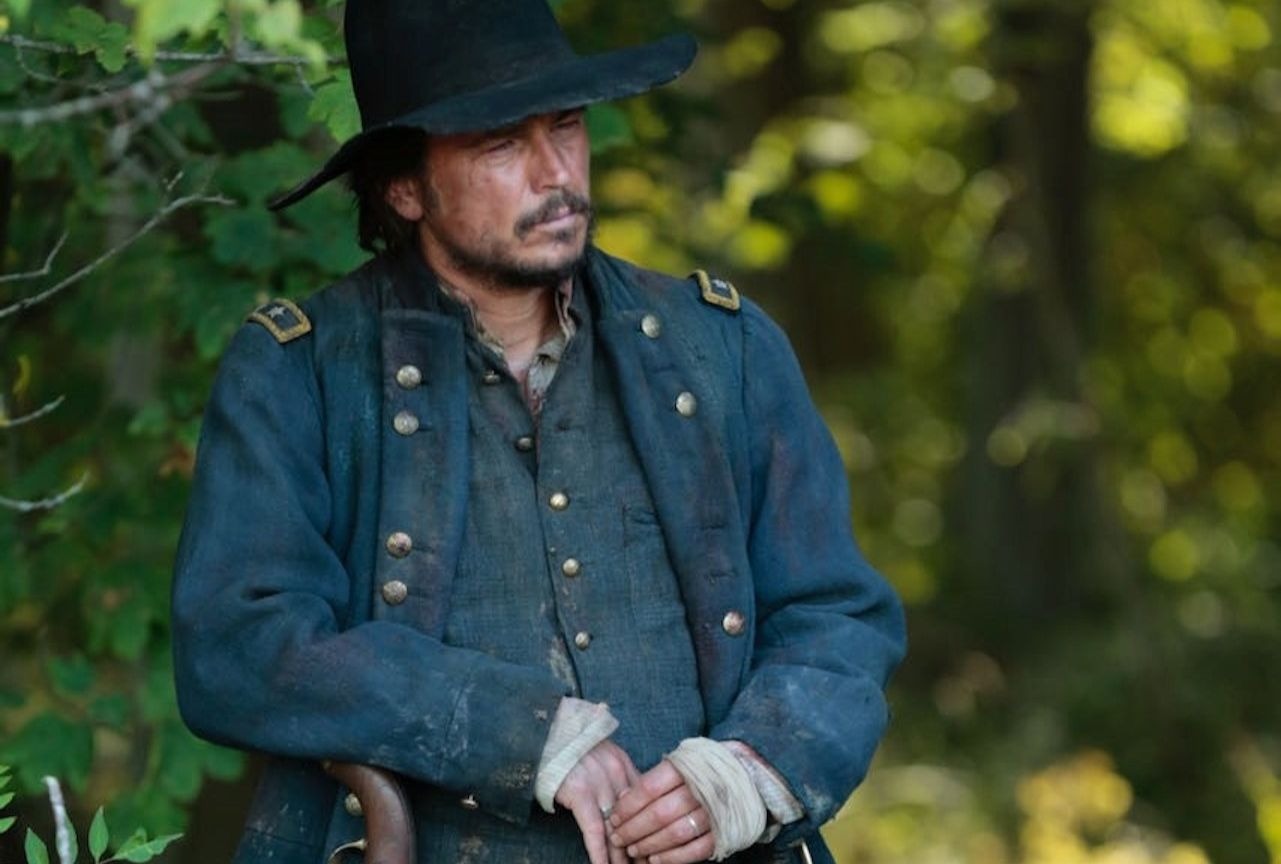
Online sleuths spot a Coca-Cola bottle in Trump’s office mere days after he called for a boycott

Online sleuths closely analyzed a photo of former President Donald Trump on Monday that had been posted on social media by his White House adviser Stephen Miller. And they did so with the intensity of cable crime show characters who scream, “Enhance, enhance!” as they zoom in on an image of a suspect’s license plate. Ultimately, they found what they were looking for: the trademark contoured shape of a Coke bottle, decorated with a flash of red, peeking out from behind the telephone in the Trump’s Mar-a-Lago office. 

Trump released a statement only days prior urging conservatives to boycott Coca-Cola and other major companies — including Delta Airlines, Major League Baseball (MLB), UPS and ViacomCBS — whose leaders had spoken out against Georgia’s restrictive voting law. Among other things, the legislation makes it a crime to bring food and water to voters who are waiting to cast their ballots.

RELATED: Trump’s self-destructive diet: Psychiatrist says unhealthy food choices may affect his mental health

“It is finally time for Republicans and Conservatives to fight back—we have more people than they do—by far!” said the statement, which was distributed by Trump’s former legal advisor Jenna Ellis on Twitter. “Don’t go back to their products until they relent. We can play the game better than them.”

It apparently took less than 72 hours (if that) for Trump to relent, or as the saying goes, old habits die hard. As Salon reported in January, one of President Joe Biden’s first actions in office was removing Trump’s “Diet Coke button,” which the former president used to request cold sodas on-demand.

twitter.com/donmoyn/status/1379175013362860042

“Throughout Trump’s presidency, his obsessive love of the beverage was well-documented,” Salon wrote. “In 2017, the Washington Post published that he reportedly drank a dozen cans of Diet Coke per day and, while the majority of Americans are just finding out about the Diet Coke button, that same year, Demetri Sevastopulo wrote for The Financial Times about how he noticed the red button on Trump’s desk. He jokingly asked if it was the nuclear button, to which Trump replied, ‘No, no, everyone thinks it is. Everyone does get a little nervous when I press that button.'”

Trump would call out for them during tense conversations (like discussing purchasing the rights to a story about an alleged affair he had with ex-Playboy model Karen Mcdougall) and seemed to relish the feeling of being able to summon a servant with a cold drink at the push of a button while consistently bolstering his stump speeches with assertions of being a man of the people. It’s not surprising that his hypocrisy extends to his soda consumption habits. 

Other conservatives, however, seem to be holding the line more tightly. After the MLB announced that it was moving its All-Star Game out of Atlanta, Gov. Brian Kemp, R-Ga., decried the decision as “cancel culture” during a press conference.

“We shouldn’t apologize for making it easier to vote and hard to cheat,” he said. 

Meanwhile, Sen. Minority Leader Mitch McConnell, R-Ky., characterized the situation as corporations allowing themselves to be bullied while “join[ing] in the bullying themselves.” 

“From election law to environmentalism to radical social agendas to the Second Amendment, parts of the private sector keep dabbling in behaving like a woke parallel government,” he said in a statement.

Unlike Trump, neither Kemp nor McConnell have been spotted appearing to stash a secret soda in their office — at least not yet.