France

U.S. was warned that Moussaoui had close ties to al-Qaida, analyst says

French authorities alerted the FBI in August that the "20th hijacker" had trained in al-Qaida camps in Afghanistan, according to an intelligence expert -- but the U.S. did nothing.

  • more
    • All Share Services

Topics: , ,

U.S. was warned that Moussaoui had close ties to al-Qaida, analyst says

Who knew what, and when? Could the FBI have prevented the Sept. 11 attacks?

The New York Times fueled this fiery debate Tuesday by revealing that high-level FBI officials received — but never acted on — a July 2001 intelligence memo from the bureau’s Phoenix field office, in which agents expressed concern about possible al-Qaida contacts who were studying at American aviation schools. Then, “a few days after the Sept. 11 attacks,” the Times revealed, FBI director Robert Mueller III and Attorney General John Ashcroft learned of the memo but never briefed the White House.

But a pair of French authors says that the FBI bungled more than the Phoenix memo. In “Bin Laden: The Forbidden Truth,” Jean-Charles Brisard and Guillaume Dasquie alleged that the Clinton and Bush administrations went easy on al-Qaida before Sept. 11 to maintain good relations with Saudi Arabia and to continue to bargain with the Taliban over a Central Asian oil pipeline. They also assert that the negotiations broke off after the U.S. threatened to attack the Taliban unless it agreed to U.S. demands, perhaps precipitating the 9/11 attacks.

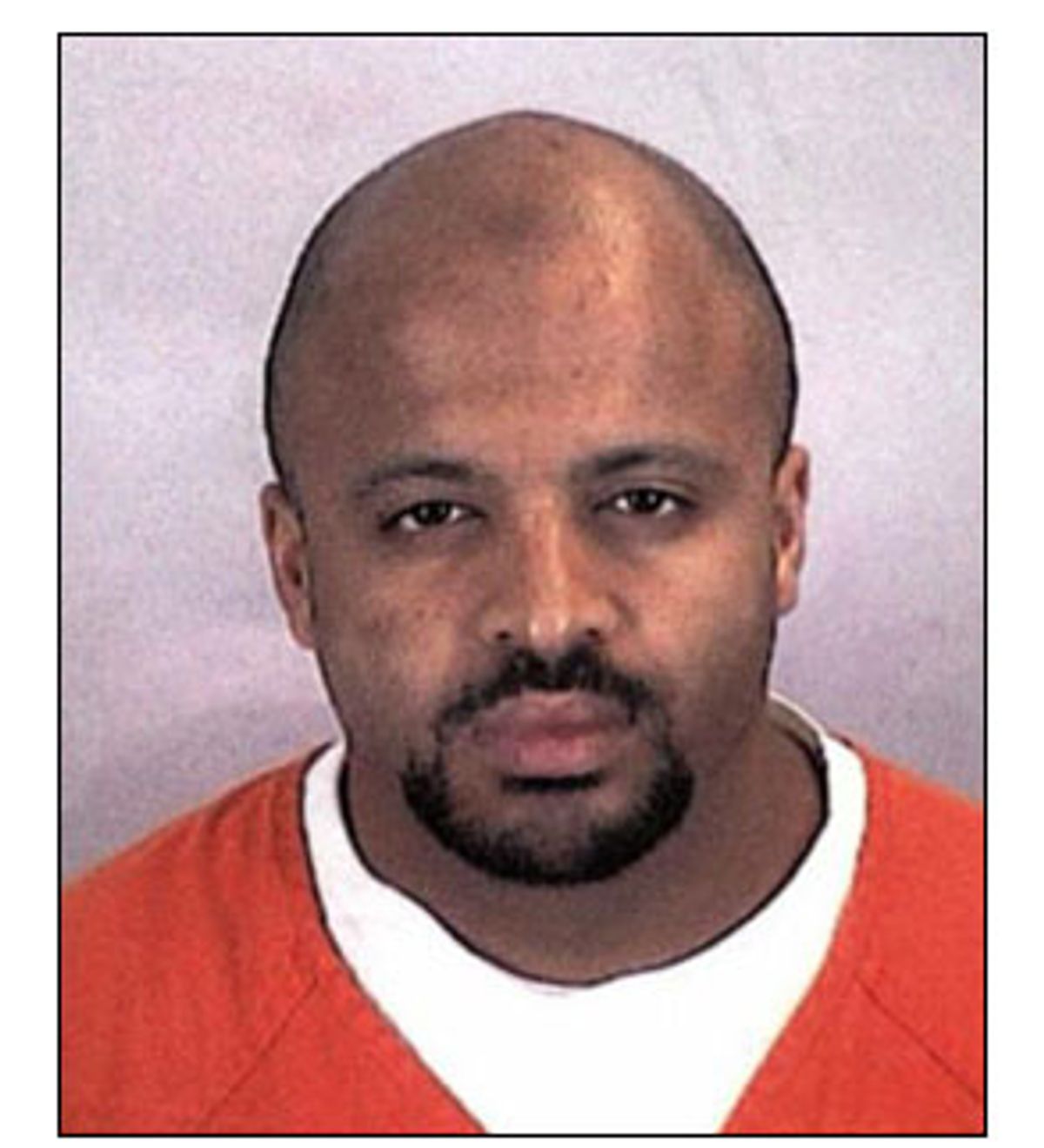
The book was a bestseller in France, but got little play here. Now the U.S. edition is coming out in July, with an explosive new chapter written by Brisard, who is the former deputy director of business intelligence for the French conglomerate Vivendi Universal and the author of the first intelligence report on al-Qaida’s financial networks. In it, Brisard asserts that French intelligence officials warned their U.S. counterparts in considerable detail about al-Qaida’s ties to Zacarias Moussaoui, the alleged 20th hijacker, but the U.S. failed to act on the information.

The U.S. arrested Moussaoui, a French citizen of Moroccan descent, on a visa violation in August, after he raised suspicions at a flight school where he was training. But officials say they were unable to link him to the Sept. 11 plot beforehand, or even confirm that he was tied to al-Qaida. Although some intelligence agents suspected a link with al-Qaida, officials have insisted an aggressive investigation was hampered by guidelines that limit what the agencies can do without clear evidence a suspect is dangerous. But Brisard says top French intelligence sources told him that they provided the U.S. with specific information about Moussaoui’s al-Qaida links, including the fact that he had trained in Afghanistan camps and had ties to the terror network’s members. Despite this, U.S. intelligence did not connect Moussaoui to al-Qaida until after Sept. 11.

The FBI refused to comment on Brisard’s allegations. “We can’t corroborate or verify anything,” says a bureau spokesperson.

In an e-mail interview with Salon, Brisard discussed the French information about Moussaoui and how the FBI missed so many clues about al-Qaida’s plans in the weeks before Sept. 11.

You’ve hinted that politics and oil interests trumped law enforcement when it came to al-Qaida before Sept. 11. There’s also some evidence the U.S. missed intelligence signals. But your Moussaoui revelations are more explosive than what came before. What did you learn?

The case of Zacarias Moussaoui was a typical missed signal. But it also reveals a cultural difference between the way the U.S. and other countries use intelligence. The French citizen was arrested in the United States on Aug. 17, 2001 — less than a month before the attacks — for visa violations, and he turned out to have been enrolled since February 2001 in a flight school in Oklahoma, training to be the 20th hijacker. Officially, however, neither the FBI nor the CIA had sufficient evidence to allow them to interrogate Moussaoui before the attacks, they say. The European intelligence services, notably the French, had already alerted the FBI to the Moussaoui case, at least once in August 2001 — but the information sent, according to the Americans, was insufficient to put him under surveillance.

In a new chapter for the U.S. version of the book, however, I reveal that in late August, French antiterrorism services alerted the Americans to Moussaoui and passed on unambiguous intelligence, leaving, at least in the minds of the French, few doubts as to the suspect’s terrorist links. It was shown to the Americans that Moussaoui had traveled to Afghanistan, that he was trained in 1998 in a camp controlled by al-Qaida and that a strong possibility existed that he had been in contact with members of its network in Europe. Another 20-page document that includes an interrogation of his brother, which confirms this information, was later sent to the American services. So, nearly one month before the Sept. 11 attacks, or at least since the arrest of Moussaoui on Aug. 17, the U.S. authorities had two fundamental pieces of evidence before them: They knew that the suspect apprehended on American soil was linked to the al-Qaida network, which in itself should have been cause enough for prompt serious investigations; and they knew that he had taken part in flying lessons for civil aircraft.

In other words, they’d been informed that a terrorist from al-Qaida was training to fly civil aircraft in the United States. Was the response of the FBI before Sept. 11 appropriate? Could they have acted differently? The fact is Moussaoui was held at an Immigration and Naturalization Service location in Minneapolis and wasn’t transferred to FBI custody until after Sept. 11.

What is at issue is the method of data processing. Intelligence is a business of gathering facts. Some might come to the conclusion that the information provided by the Europeans was “insufficient” to signal an immediate threat, while others would have taken the necessary measures to erase the slightest doubt or at least would have taken the time to analyze and confirm all suspicions. For their part, the French believe that placed in the same situation as their counterparts, they would have registered and investigated this information, however fragmentary. And the fact that the FBI tried to obtain a special surveillance warrant [to examine the hard drive of Moussaoui's computer] as part of an antiterrorist procedure proves that some of their agents were taking seriously the intelligence collected on Moussaoui. To miss a low signal is admissible; to fail to integrate in the law-enforcement system as loud a signal as the Moussaoui one is a major failure.

How much do you know about why the FBI wasn’t allowed to investigate him more? Supposedly FBI agents tried to start an investigation but someone — possibly Ashcroft — denied approval for wiretap. Do you know anything about this?

They wanted to search his laptop. Minneapolis agents tried to do a FISA search [one authorized under the Foreign Intelligence Surveillance Act, which requires a court order] of his laptop, but the FBI’s attorney rejected the request, saying there was “insufficient probable cause” to proceed (quote from FBI director Mueller’s press conference on Dec 11). Yet the French had made it clear that he had close relations with al-Qaida, that he was trained in Afghanistan and that he was considered dangerous. Again, that was confirmed by witnesses and by his brother. There was, in my opinion, a real mistake in the evaluation process of the intelligence passed by the French.

You argue in your book that it was U.S. ties to the Saudis, plus its efforts to maintain links with the Taliban, that prevented the U.S. from getting tougher on al-Qaida before Sept. 11.

The Bush administration decided to engage in commercial negotiations with the Taliban regime as soon as it took office, to ensure a stable political environment in Afghanistan that would fit the oil industry projects. The negotiations, as we reveal in our book, broke off in early August 2001, five weeks before Sept. 11 and about the time of the warning memo received by the White House. And the reason was the U.S. representative to those negotiations, Tom Simmons, threatened the Taliban regime with a military operation if it refused to make concessions to the U.S. The message was, either you accept the carpet of gold, or you’ll have a carpet of bombs.

We know now the Taliban regime was under the influence or the control of Osama bin Laden. It means at the beginning of August the Taliban regime and its terrorist sponsors knew their days were numbered. Was that statement understood as a real signal by them, and did they decide to launch a preemptive strike? We have no clear answer to that, but at least it must be independently investigated, the same way that the investigation needs to focus on to what extent the Bush administration knew and to determine if the Bush administration took the right steps to avoid this tragedy.

But in my opinion, the Bush administration bears major responsibility for making its military threat. History tells us that negotiating with terrorists or their sponsors always fail. As we mention in our book, a pipeline project was underway in Afghanistan years before, and it was one of the main reasons why the Bush administration decided to accelerate negotiations with the Taliban regime. The negotiations failed, but the project just revived some days ago when an Afghan minister stated that the pipeline negotiations would start as soon as possible with several U.S. companies, among them Unocal, which initiated the project in the mid ’90s. The project was also backed at the time by Enron, which was developing gas reserves in the Caspian Sea region, and eyed the Afghan pipeline as a way to reach Pakistan and the Persian Gulf. Both companies viewed the fall of the Afghan capital, Kabul, to the Taliban movement in 1996 as a “positive step.”

You’ve also argued in your book that neither Bush nor Clinton pushed hard for investigations of bin Laden because they wanted to maintain strong ties with Saudi Arabia. Do you think that Bush could have ignored these warnings for the same reason?

I’m referring to past investigations, when it was clear that the U.S. administration wanted to avoid any clash with countries like Saudi Arabia for economic reasons. Basically, you had two strategies underway: a law-enforcement line which was pushing to investigate as far and fast as it was needed to undermine those networks, and on the other hand, a diplomatic and economic point of view that led to accommodating some of the states supporting or hosting those networks.

When it became obvious that the FBI, for instance, was pointing out the role of such states, the two strategies became divergent, and the choice was made to make diplomatic and economic interests prevail. That is the context. Now, after Sept. 11 you might assume that the war against terrorism is now the major priority, and no other interests will prevail. But I’m sorry to say that’s not the exact reality. Several investigations of charities, companies and banks around the world since the attacks have clearly revealed that Saudi businessmen are providing financial support to al-Qaida and other terrorist organizations, but to date these backers are still untouched. We could cite tens of examples. For instance, the U.S. government froze the assets of the Al Aqsa Islamic Bank, charging it with being the financial arm of Hamas. But no measures have been taken against its main shareholder, a wealthy Saudi banker. More recently, offices of several charities were raided in Virginia. These organizations were created by several Saudi families, some of whom have been involved in terrorist networks for years.

Many have said that the warnings were ignored because such things are common in the world of intelligence. False alarms are part of the game. But is this accurate? How much “chatter” was there in the months before Sept. 11? More than usual? How do agents separate reliable from unreliable intelligence, and should the FBI or CIA — or even the White House — have known that something was up, in your opinion?

Intelligence is essentially a human activity, not an exact science. It’s fallible. We know the weeks before Sept. 11 were very “noisy” in terms of alerts and warnings related to al-Qaida activities. Some will say there were missed signals. The exact nature and timing of the attack was certainly hard to determine without any inside knowledge, but we can say that the signals they had were taken into account in some way, simply because U.S. intelligence services and U.S. airline companies were alerted to those threats. Various investigations were under way to check individuals who happened to be involved in that tragedy. That means intelligence services had done their job, at least in identifying the potential risk. We know some of those efforts were blocked by legal obstacles. Others, such as investigations into the Saudi backing of al-Qaida, had been previously blocked by political obstacles. I refer here to former FBI deputy director John O’Neill’s testimony in our book. [O'Neill told the authors he was prevented from aggressively investigating al-Qaida and bin Laden because of sensitivity about Saudi ties to them.]

The FBI’s Phoenix report had no impact because it never made it up the chain of command. Why do you think this is the case? Is it a case of bureaucratic problems or something more political?

Bureaucracy is a major problem within the U.S. intelligence community. But aside from bureaucratic obstacles, political or analytical blindness, the principal factor that explains America’s poor response to the fundamentalist phenomenon is cultural. This was in evidence during a hearing before Congress two months ago, when the CIA director declared that “it would be a mistake to dismiss the possibility of state sponsorship, whether Iranian or Iraqi,” concerning the attacks of Sept. 11. So, the myth of state terrorism, of which al-Qaida is precisely the counterexample, continues to enjoy favor in American government circles. Operationally we know it is on its way out, yet it continues to hold sway as a political argument — as if nothing had changed since the Cold War, as if bin Laden had never breached the narrow frontiers of national states.

It’s as if the United States was incapable of taking into account the considerable mutation of terrorism in the past 20 years, or rather, as if certain people were looking for useful political scapegoats to justify a planetary war against “the axis of evil.” [Unlike] their European counterparts, in particular the French, the U.S. security services only appreciated the dangers of Islamic fundamentalism when it was too late.

To the initial inadequacy of investigative methods add the administrative constraints to which the relevant organizations were subjected. While the French antiterrorist struggle had been born out of a crisis situation, the U.S. effort, by contrast, was merely integrated as another line of inquiry among existing fields of operation. The considerable strides made by the French security services in penetrating these terror networks was dictated by the necessity to act quickly and decisively to combat the threat. Also, the antiterrorist fight was confined to a handful of specialists who, through their experience in the field, had rapidly acquired a unique understanding of the phenomenon. These were men and women who, confronted by an immediate threat, put the antiterrorist fight before all other political, diplomatic or economic interests. And because of their independence, they always enjoyed the attentive ear of government. If you’re in a bureaucratic system, you follow the path of bureaucracy. And as we know, the bureaucratic clock is not the same as the terrorist clock.

Are you still convinced that the 9/11 attacks couldn’t have been avoided?

I maintain that no one can pretend that the attacks of Sept. 11 were foreseeable in a way that it would have been possible to avoid them. That’s because, as far as we know, the intelligence gathered was insufficient to lead to actions that would have prevented the attacks. In some instances, that intelligence was simply not used properly. That’s the case for Moussaoui, where the information existed. And in that regard, a full investigation will have to determine the level of knowledge, the way that knowledge was used and the responsibilities for not using it the proper way.

But at least we can now talk about the bureaucratic and legal obstacles that hampered any forewarning of these plans. It’s not a question of blaming one service or another, or one person or the other, but of doing away with regulatory, legislative or legal red tape and recognizing that, again, intelligence gathering is not an exact science and remains an essentially human activity, which is fallible. The faint signals hinting at the Sept. 11 attacks can never be considered as significant as the events themselves.

What needs to be done? And can any intelligence reform actually work, when those at the top have repeatedly put politics before diligence?

The main reform again is a cultural reform. For years, the United States has been spared a major terrorist attack on its soil, probably because of its intelligence efficiency. But the U.S.’s failure lies in the way al-Qaida and Osama bin Laden were perceived for years. To some extent we may assume that the U.S. persuaded itself that bin Laden was a lesser evil, “under control” in a country that was offering him temporary refuge. His scope of action, it was thought, was politically and geographically limited. Certain countries insisted on this line, countries that had no interest in seeing a vast international investigation launched that could shed light on their own complicity. Even recently, the Saudi interior minister, Prince Nayef, declared that bin Laden was nothing but a “tool” and doubtless not the commander of the attacks on Sept. 11. The United States turned to their allies in the European intelligence community and spun a similar story: that bin Laden was a renegade from the Saudi kingdom, that he was isolated, that he had no relations with his family or that he had little support from them, especially in the heart of the Arab world. The idea that the Arab world would be indifferent to bin Laden’s message was a dangerous one and, as we now know, ultimately fatal.

Continue Reading Close

Damien Cave is an associate editor at Rolling Stone and a contributing writer at Salon.

“The Intouchables”: Racial comedy, French style

"The Intouchables" is the biggest foreign-language film of all time. Some critics say it's also racist

  • more
    • All Share Services

Topics: , ,

A still from "The Intouchables"

Here’s a startling news item: “The Intouchables,” a lively if largely predictable Parisian comedy about a wealthy quadriplegic and his ne’er-do-well immigrant caretaker, has become the biggest international success in the history of French cinema. Indeed, according to some sources — and these things are notoriously difficult to measure on a global and historical scale — “The Intouchables” is now the biggest non-Anglophone film of all time, with a worldwide gross approaching $300 million.

But beyond the business headlines, what’s really fascinating about “The Intouchables” is the way it exposes the gulf in racial attitudes between France and the United States, along with another gulf that’s just as wide, the one that has film critics and cinephiles on one side and popular audiences on the other. Viewers in numerous countries have eagerly devoured this feel-good fable about two men of different races and classes who forge an improbable friendship (dubbed by some wags “Driving Monsieur Daisy”). While the audience for foreign-language film is inherently limited in America, there’s no reason to believe it won’t do well here also. At the same time, heated transatlantic debate has erupted over whether “The Intouchables” traffics in offensive racial stereotypes, with Variety critic Jay Weissberg writing an uncharacteristically angry review that accused the film of “Uncle Tom racism” and compared the Senegalese caretaker character to a “performing monkey.”

When Harvey Weinstein first acquired “The Intouchables” in the wake of its smash success in France, he clearly imagined another dark-horse Oscar contender, in the wake of “The Artist.” The film has racked up audience awards at film festival after film festival, and currently stands at No. 93 on IMDb’s user-generated “Top 250″ list. Omar Sy, the charismatic Afro-French actor who plays Driss, the caretaker, won this year’s César award (the French Oscar equivalent) for best actor, beating out actual Oscar winner Jean Dujardin. But with the looming possibility that “The Intouchables” could spark a divisive, soul-searching racial debate — which was precisely what squelched the Oscar hopes of “The Help” — those expectations have been downplayed. (That isn’t why “The Intouchables” is being released this week, with Weinstein and most of the film-biz aristocracy in Cannes, but the coincidence is oddly useful.)

Let me come clean right now and tell you that I enjoyed “The Intouchables” quite a bit. If you’re looking for a lightweight summer change of pace, with just a smidgen of Continental flair, here it is. Both Sy and co-star François Cluzet (of the hit thriller “Tell No One”) are marvelous, the former playing a guy who’s constantly in motion, both physically and psychologically, and the latter playing a depressed and repressed guy who literally can’t move, but whose real imprisonment has more to do with his spirit than his spinal cord. Don’t go expecting serious French art cinema, please; those who have described this movie as something like a mid-’80s Eddie Murphy comedy dressed up with classy Parisian settings are correct. But here’s the question, and I can’t answer it for you: Is that such a bad thing, in itself?

Once is not enough for a movie that’s made this much money, of course, and Weinstein already has an American remake in the works, possibly to star Colin Firth as stick-up-butt wheelchair dude. The real Eddie Murphy has gotten too old to play the loosey-goosey, pot-smoking sidekick, but there’s no shortage of guys who could do it: Jamie Foxx is the default setting these days, but I’d go for the suddenly hot Kevin Hart from “Think Like a Man.” I’m not claiming it’s aesthetically or sociologically valid to remake a French movie that already feels like a reheated Hollywood throwback, by the way. I’m saying it’s a cruel reality, like Dutch elm disease or Adam Sandler, and there’s no way to stop it.

To get back to the case at hand, I do understand what the haters find so offensive about “The Intouchables.” (The infelicitous English title, by the way, reflects the fact that they couldn’t really get away with calling it “The Untouchables,” could they?) I was pretty taken aback by Weissberg’s vituperative review, and I tend to believe that “Uncle Tom” is one of those expressions that white people should pretty much never use. On the other hand, I can only applaud him for abandoning the balanced, analytical mode of trade-magazine criticism and saying exactly what he damn well thinks. (As for comparing a black man to a monkey — well, I understand what Weissberg was getting at, but it’s an error of rhetoric, the sort of comment that makes nuance and context disappear.) And I know for sure, from hearing friends and acquaintances in and around the movie business complain about this film, that Weissberg is not alone.

I believe that Olivier Nakache and Eric Toledano, the writing-directing duo who made “The Intouchables,” are innocent of any bad intentions. In fact, “innocent” isn’t a bad word overall, for this movie and the worldview it represents. The French may pride themselves on being the most worldly and sophisticated of all people, but the debate in France about race and immigration and multiculturalism — which ramped up sharply after the suburban riots of 2005 — can sometimes sound strikingly naive to American ears. Until very recently, mainstream French opinion has resisted thinking about the nation in anything except homogeneous terms, despite growing Arab and black minorities (both immigrant and native-born) and evident social problems with segregation and discrimination. (The French census, for instance, is prohibited from collecting data on race or religion, so no one really knows how many French people are black or Islamic.)

There can be no question that the characters in “The Intouchables” are stereotypes, in the broad sense. Cluzet’s character, Philippe, is an aristocratic zillionaire who lives in an astonishingly luxurious flat in central Paris. Since being injured in a paragliding accident, he’s lived inside a cocoon of money and privilege, surrounded by antiques and modern art and a bevy of assistants. Sy’s character, Driss, is easygoing, good-hearted, lustful and uncultured, and his passions run toward pretty girls, getting high and vintage American R&B. Philippe hires Driss specifically because Driss doesn’t particularly want the job — he only shows up to get a signature for his benefits card — and feels no pity for Philippe.

Which is actually a pretty good reason. You get where this is going, most likely: Driss is a pretty inept caretaker, at least at first, but is the only person Philippe knows who will relate to him man to man. There’s a bit of borderline-homophobic humor about their enforced intimacy; there are interludes with hookers and fast cars and late-night conversations fueled by booze and marijuana. Driss learns to like Mozart and modern art; Philippe learns to get down with Earth Wind & Fire and gets some valuable tips about chicks. It’s probably fair to summarize this movie as being the story of a paralyzed white man who needs the help of a younger, stronger, more virile black man to reconnect with his own masculinity, and if you want to say that narrative reflects an underlying latticework of racist attitudes, I won’t argue with you. Then there’s the complicating factor that in the real-life story on which “The Intouchables” is based, the caretaker was of Algerian origin, and hence Arab rather than black. (The filmmakers have said they wanted to cast Sy, and built the story around him, but it’s certainly possible to render other interpretations.)

But one can concede all of that while still agreeing with French historian and multicultural activist François Durpaire, who has responded to Weissberg by arguing that the huge success of “The Intouchables” is likely to have positive effects in Europe’s emerging discussion of race and culture, even if the movie relies on crude generalizations. (Durpaire adds that if “The Intouchables” is offensive, so were the “Beverly Hills Cop” movies.) Movies are not meant to be seminars in sociology, after all, and most viewers will receive “The Intouchables” as an upbeat story about two guys from vastly different circumstances who turn out to have a lot in common and help each other, etc., rather than a lesson in racial semiotics.

Perhaps the strongest endorsement for “The Intouchables” has come from aging French ultra-nationalist Jean-Marie Le Pen, who has described it as an allegory about how the future of his nation depends on disenfranchised young immigrants from the suburbs. He thinks that’s a “dreadful” vision, mind you — but, seriously, who knew that guy was so smart?

“The Intouchables” opens this week in New York and Los Angeles, with wider national release to follow.

Continue Reading Close

Europe’s awkward couple

Angela Merkel and Francois Hollande finally meet in person -- and it isn't exactly warm

  • more
    • All Share Services

Topics: , ,

Europe's awkward coupleAngela Merkel and Francois Hollande in Berlin on Tuesday, (Credit: Reuters/Fabrizio Bensch)

BERLIN, Germany – It started with a handshake, not a kiss. When Chancellor Angela Merkel and new French President Francois Hollande finally met in person on Tuesday evening, there was little of the warmth that marked her meetings with Nicolas Sarkozy in recent years.

Aides had downplayed the rendezvous as simply aimed at getting to know one another rather than about hammering out any policy. Yet the future of Europe could hinge on whether these two leaders find a way to work well together.

Rarely have two people met for the first time with so much baggage. Merkel refused to meet with Hollande during his election campaign, and made the highly unusual step of publicly backing his rival, fellow conservative Sarkozy. Hollande for his part seemed to be campaigning as much against Merkel as the incumbent, pledging to renegotiate the fiscal pact that she had championed.

Now the two have finally met face-to-face and the encounter seemed cordial if hardly warm. Following the ceremonial reviewing of the guard of honor – during which Merkel had to gently nudge Hollande in the right direction on the red carpet – the two held an hour -long meeting. They then addressed the throng of international journalists in a joint press conference during which Merkel remained stony-faced during much of Hollande’s comments, interspersed with the odd smile.

The pair did seek to downplay their differences and strike a friendly tone with Merkel even joking that the lightning that had struck Hollande’s plane on his way to Berlin was perhaps a “good omen.”

“I’m not sure whether there is sometimes more divergence perceived in the public realm than there really is,” the chancellor told the press conference. “We are aware of our responsibility, as Germany and France, for a positive development in Europe. Carried by this spirit I believe we will of course find solutions for the different problems.”

Both tried to show a united front on Greece, which risks ejection from the euro zone if it backs anti-austerity parties in the fresh elections likely after the parties failed to form a government. “Just like Frau Merkel,” Hollande said, he wanted Greece to remain in the euro zone while insisting that Athens meet the terms of the bailout agreement.

Yet when it came to the crux of the differences between the two, on austerity versus growth, it was obvious that the only thing that had been agreed so far was that they disagree.

After all, it remains to be seen how Merkel’s strict stance on rapidly reducing budget deficits can be married with Hollande’s plea for some kind of stimulus package to boost growth.

Hollande reiterated his promise to reopen talks about the fiscal pact, the agreement on strict budget discipline which he has said France will not ratify unless a growth element is also adopted.

“I said in the campaign, and I repeat today, that I want to renegotiate what was established at a certain moment,” Hollande told reporters. “Everything that can contribute to growth must be put on the table. I don’t want growth to be just a word, but tangible measures.”

He mentioned boosting competitiveness, as well as Euro bonds – essentially pooling the debt of euro zone members – something Merkel has so far flatly rejected.

He did not, however, mention tinkering with the European Central Bank’s mandate, surely a red line if ever there was one in Berlin.

For all the inauspicious beginnings, observers predict that the two will eventually hit it off. Both play on their modest, down- to-earth style and exude an air of pragmatism rather than charisma. Hollande depicts himself as “Mr Normal” in contrast to the Bling Bling of his predecessor Sarkozy, while the unassuming Merkel is often seen doing her own grocery shopping. And both are said to have a wry sense of humor in private.

Furthermore, Hollande’s gesture of appointing Germanophile Jean-Marc Ayrault as his prime minister will have gone down well in Berlin.

Yet, it is hardly a meeting of equals. Merkel is an old hand in European politics now, in her seventh year in office, while Hollande’s previous executive experience has been confined to serving as mayor of the small town of Tulle.

Furthermore Germany is the EU’s economic powerhouse, with its export-driven economy keeping the rest of the euro zone out of recession, according to figures released on Tuesday. And Berlin has long been calling the political shots in Europe, with the fiscal compact being dreamed up by Merkel, as a way of preventing EU states from getting into deeper debt in the future.

At the same time Merkel is increasingly isolated in Europe, as there is a growing realization that austerity is choking off growth. Hollande knows that other leaders, including conservatives like Italy’s Mario Monti, also want Berlin to budge on its debt reduction fixation.

Hollande came to Berlin straight from his inauguration ceremony in Paris. After beating Sarkozy on May 6 he will feel he has a mandate from the French people to push for a change of direction in Europe. Yet he also faces a tough economic situation back home, with just 0.1 percent growth in the first quarter and growing unemployment, now at a 13-year high of 10 percent. If the economy were to contract even further, it could make it very difficult to fulfill many of his campaign pledges, such as reversing Sarkozy’s pension reforms.

Merkel has her own problems, despite the strong economy. Her party, the conservative CDU, has just suffered a bruising defeat in the state of North Rhine-Westphalia. Her coalition is increasingly fractious, with Bavaria’s CSU leader Horst Seehofer publicly slamming the CDU candidate in North Rhine-Westphalia Norbert Roettgen on TV for his campaign, while the FDP is unpredictable due to an ongoing leadership crisis.

The fact that she needs a two-thirds majority in the Bundestag to ratify the fiscal compact means she is dependent on the opposition SPD. And while the party has broadly backed her euro policy, it has been emboldened by Hollande’s victory and the strong showing in NRW. On Tuesday the party’s leaders said that they would delay the vote on the fiscal pact, originally scheduled for late May, saying it wanted to see concrete growth measures as well as austerity.

That would leave time for Merkel and Hollande to agree to some sort of compromise solution.

The pair said they will seek an agreement ahead of the next big summit of EU leaders in June. “It will be very important that Germany and France present their ideas together at this summit, and we have talked about the preparation,” Merkel said.

They will see each other before that, meeting at an informal dinner of EU leaders on May 23, as well as at the forthcoming NATO and G8 summits.

However, Hollande is unlikely to show much willingness for compromise with Berlin just yet. After all his party is facing legislative elections in mid June and he will want to make sure he is not seen to be backsliding on campaign pledges.

Hollande wants his five-year term to start with his Socialist Party securing control of the National Assembly so that he can push through his agenda. Otherwise he faces a frustrating period of “cohabitation” with a prime minister from the opposing camp, such as occurred when conservative Jacques Chirac’s presidency coincided with the premiership of Socialist Lionel Jospin from 1997 to 2002.

As such Merkel cannot expect Hollande to veer from his insistence on growth measures. And for all his unassuming manner, he could well prove to be a more difficult partner than Sarkozy in the long run.

Nevertheless Merkel is also likely to stand firm on many issues. Asked on Tuesday night if she feared Hollande’s campaign promises she replied coolly: “I am seldom afraid, as fear is not a good counselor in politics.”

Continue Reading Close

Europe’s austerity revolt

The message from France and Greece this weekend was clear. Will President Obama and Republicans listen?

  • more
    • All Share Services

Topics: , ,

Europe's austerity revoltSocialist Party candidate for the presidential election Francois Hollande delivers a speech during a meeting in Lorient, western France, Monday, April 23, 2012. (Credit: AP/David Vincent)
This originally appeared on Robert Reich's blog.

Who’s an economy for? Voters in France and Greece have made it clear it’s not for the bond traders.

Referring to his own electoral woes, Prime Minister David Cameron wrote Monday in an article in the conservative Daily Telegraph: “When people think about the economy they don’t see it through the dry numbers of the deficit figures, trade balances or inflation forecasts — but instead the things that make the difference between a life that’s worth living and a daily grind that drags them down.”

Cameron, whose own economic policies have worsened the daily grind dragging down most Brits, may be sobered by what happened over the weekend in France and Greece – as well as his own poll numbers. Britain’s conservatives have been taking a beating.

In truth, the choice isn’t simply between budget-cutting austerity, on the one hand, and growth and jobs on the other.

It’s really a question of timing. And it’s the same issue on this side of the pond. If government slices spending too early, when unemployment is high and growth is slowing, it makes the debt situation far worse.

That’s because public spending is a critical component of total demand. If demand is already lagging, spending cuts further slow the economy – and thereby increase the size of the public debt relative to the size of the overall economy.

You end up with the worst of both worlds – a growing ratio of debt to the gross domestic product, coupled with high unemployment and a public that’s furious about losing safety nets when they’re most needed.

The proper sequence is for government to keep spending until jobs and growth are restored, and only then to take out the budget axe.

If Hollande’s new government pushes Angela Merkel in this direction, he’ll end up saving the euro and, ironically, the jobs of many conservative leaders throughout Europe – including Merkel and Cameron.

But he also has an important audience in the United States, where Republicans are trying to sell a toxic blend of trickle-down supply-side economics (tax cuts on the rich and on corporations) and austerity for everyone else (government spending cuts). That’s exactly the opposite of what’s needed now.

Yes, America has a long-term budget deficit that’s scary. So does Europe. But the first priority in America and in Europe must be growth and jobs. That means rejecting austerity economics for now, while at the same time demanding that corporations and the rich pay their fair share of the cost of keeping everyone else afloat.

President Obama and the Democrats should set a clear trigger — say, 6 percent unemployment and two quarters of growth greater than 3 percent — before whacking the budget deficit.

And they should set that trigger now, during the election, so the public can give them a mandate on Election Day to delay the “sequestration” cuts (now scheduled to begin next year) until that trigger is met.

Continue Reading Close

Robert Reich, one of the nation’s leading experts on work and the economy, is Chancellor’s Professor of Public Policy at the Goldman School of Public Policy at the University of California at Berkeley. He has served in three national administrations, most recently as secretary of labor under President Bill Clinton. Time Magazine has named him one of the ten most effective cabinet secretaries of the last century. He has written 13 books, including his latest best-seller, “Aftershock: The Next Economy and America’s Future;” “The Work of Nations,” which has been translated into 22 languages; and his newest, an e-book, “Beyond Outrage.” His syndicated columns, television appearances, and public radio commentaries reach millions of people each week. He is also a founding editor of the American Prospect magazine, and Chairman of the citizen’s group Common Cause. His widely-read blog can be found at www.robertreich.org.

Europe’s new “Marshall Plan”?

With Hollande poised to win the French election, the EU is finally moving away from destructive austerity measures

  • more
    • All Share Services

Topics: , ,

Europe's new Socialist Party candidate for the presidential election Francois Hollande(Credit: AP Photo/David Vincent)
This article originally appeared on GlobalPost.

BRUSSELS, Belgium — The ground is shifting in Europe’s debt crisis. The edifice of economic austerity built under the guidance of German Chancellor Angela Merkel is starting to wobble.

Global PostThere’s a new buzz in Brussels about pumping hundreds of billions into a Marshall Plan-inspired fund to get Europeans back to work, devaluing the euro to boost exports or sharing out the euro-zone debt burden.

“This generalized austerity is prolonging the crisis. I can’t accept that. We need growth in Europe,” says Francois Hollande, the Socialist leader tipped to win Sunday’s French presidential election.

“With every day that goes by, I have the feeling that my initiative is more and more understood in Europe,” Hollande said in comments posted on his website Monday.

Hollande is enjoying an eight-point lead over incumbent Nicolas Sarkozy in opinion polls ahead of Sunday’s vote. His expected victory is the main catalyst behind the emerging pro-growth emphasis in Europe, but there are other factors.

Continuing grim economic news — Spain announced Monday that it had sunk into a second recession in just over two years — is fueling doubts that Europe’s three-year dedication to spending cuts and tax hikes may not be the best way to cure the continent’s economic malaise.

“Europe has misdiagnosed its problems in important respects and set the wrong strategic course,” former U.S. Treasury Secretary Lawrence Summers wrote in a column this weekend. “Only if growth is restored can the euro endure and European financial problems be resolved.”

The Spanish newspaper El Pais reported Sunday that the EU was preparing a 200 billion euro “sort of Marshall Plan” to fund infrastructure projects, green energy and advanced technology.

EU spokeswoman Pia Ahrenkilde Hansen said Monday that such figures were “highly speculative.” However, the EU is putting together a plan to boost growth for approval at what is expected to be a highly significant summit of European leaders on June 28-29.

Wary that the new focus risks further spooking markets, Ahrenkilde Hansen told reporters that going for growth did not mean a return to slack finances. “We are not talking about an alternative to fiscal consolidation,” she said. “The issue is not either fiscal correction, or growth. We need both.”

The late June EU summit is likely to be Hollande’s first if he succeeds in unseating Sarkozy.

Much has been made of the Socialist leader’s expected clash with Merkel due to his criticism of the fiscal discipline treaty that is the centerpiece of her response to the treaty.

Both Merkel and Hollande in recent days endorsed two of the key pro-growth ideas expected to be on the summit agenda: fast-tracking the use of remaining money from the EU’s budget for developing its poorest regions, which ran at 360 billion euros from 2007-2013, and boosting the firepower of the EU’s lending arm, the European Investment Bank.

EU Economics Commissioner Olli Rehn has suggested that lifting its capital by just 10 billion euros could enable the EIB to leverage lending of 180 billion euros.

Although they have continued to spar in media comments, Hollande and Merkel have been preparing the ground for non-confrontational relationship. There are signs of a softening of the Frenchman’s demand for a renegotiation of the fiscal discipline treaty.

Defeat for Sarkozy would however be a blow for Merkel, who offered unprecedented support for the incumbent in the early stages of the French campaign.

She also risks losing allies elsewhere.

The Dutch government, one of the strongest supporters of Merkel’s insistence on austerity for southern Europe, fell last week over its own budget-cutting plans and will face a stern challenge from the center left and far right in September elections.

Parties on both political extremes are seen profiting from a wave of discontent in Sunday’s parliamentary elections in Greece to find a successor to the technocratic government which has gone along with the tough conditions set by the EU in return for bailout packages.

Adding to the pressure over the past few days, several key players have joined the chorus calling for a growth initiative, including European Central Bank Governor Mario Draghi; top EU financial services official Michel Barnier; and the UN’s International Labor Organization.

“Austerity has, in fact, resulted in weaker economic growth, increased volatility and a worsening of bank’s balance sheets,” said an ILO report released Monday. “It is high time for a move toward a growth- and job-orientated strategy.

Continue Reading Close

Can this woman save Sarkozy?

France's far-right party leader may help the embattled president win reelection

  • more
    • All Share Services

Topics: ,

Can this woman save Sarkozy?Marine Le Pen reacts after the first round of French presidential elections on Sunday. (Credit: AP/Jacques Brinon)
This originally appeared on GlobalPost.

LONDON, UK — Campaign strategists for both Nicolas Sarkozy and Francois Hollande will be scrambling on Monday to make sense of a first-round presidential vote that left neither with a clear path to victory — and showed a surprise level of support for a far-right candidate.

Global Post

As many analysts expected, Socialist Hollande scored higher than incumbent Sarkozy in Sunday’s election, but thanks to a surge in the popularity of Marine Le Pen of the anti-immigration National Front party, a easy win is no longer the foregone conclusion that many predicted.

Hollande took 28.8 percent of the vote against Sarkozy’s 26.1 percent, meaning they will face each other in a run-off vote on May 6. But what was expected to be a simple referendum on differing plans to rescue France’s struggling economy has been complicated by Le Pen’s showing of 18.5 percent.

As horse-trading begins for the support of those who voted for the eight lower-polling candidates now eliminated from the race, the problem now facing both Hollande and Sarkozy is how they can capitalize on the far-right turnout.

Some analysts said center-right Sarkozy is most likely to benefit from Le Pen’s success, others argued it could derail him. Meanwhile, Jean-Marie Le Pen, who founded the party his daughter now leads, said the result put the National Front on track for big wins in June parliamentary elections.

Le Pen’s success also raises the possibility that French opinion was swayed by a series of shootings in southern France last month involving a 23-year-old terrorist who claimed allegiance to al-Qaeda. At the time, Le Pen said the incident showed that the “Islamic fundamentalist threat has been underestimated in our country.”

That said, Le Pen has doubtlessly attracted considerable support for her protectionist economic policies and for being the only conservative candidate proposing to take France out of the euro.

Continue Reading Close

Page 1 of 42 in France