Following up on her post last week on the medical science behind our salt consumption, Dr. Ayala Laufer-Cahana offers tips on how to easily avoid much of the sodium we unwittingly take in, and on how to boost flavor in your cooking without foregoing salt entirely. A version of this story first appeared on Dr. Ayala.
We consume, to our detriment, two-to-three times our recommended daily upper limit of salt. The bulk of this excess intake comes unnoticed and hidden in processed and restaurant (especially fast-food restaurant) foods.
The best way to deal with our salt overload is to minimize highly processed foods in our diet. (To be honest, if salt were the only issue with these highly processed foods I wouldn’t get so excited. Not everyone becomes hypertensive, and not every hypertensive person is sensitive to salt, but it so happens that salt is just one more reason, among dozens, to move on from processed foods.)
The Dietary Guidelines for Americans recommends we consume “less than 2,300 mg (approximately 1 teaspoon of salt) of sodium per day.” For African Americans, older people or people with hypertension the advice is to consume no more than 1,500 mg of sodium per day.
Now, if you’re cooking at home, the chances are slim you’d be adding salt indiscriminately and in potentially harmful amounts -- after all, you’re not in the business of promoting the sale or prolonging the shelf life of your food -- but I’d like to close off World Salt Awareness Week on a constructive note, and share some tips about the judicious use of salt in cooking. I’d also love to hear yours.
I’m a humble home-cook, mostly book- and self-taught through many years of experimentation in the kitchen. But I read the pros, and any cook worth his salt will testify that learning how to season properly may very well be a cook’s single and most vital skill. Salt is extremely important to proper seasoning because it enhances flavors that are already there; a properly salted dish tastes flavorful. If it tastes salty it’s over-salted.
Learning when and how much salt to use requires not only a good palate but also some chemistry know-how: adding salt to boiling water will make some foods -- such as fresh vegetables -- cook faster, for instance. Salt is what makes or breaks a good bread; salt helps form good, elastic gluten networks that are so important to traditional dough’s structure and texture.
So I am by no means suggesting we need to go low-sodium in home cooking. In moderation, salt isn’t a problem, and it should be no sacrifice of flavor to stay way under the “up to one teaspoon of salt a day” recommendation.
Here are a few tips I’ve learned that help me season well while using salt in moderation:
1. Use great ingredients: There’s a reason I put this tip first--it’s really important! One of the reasons some commercial food manufacturers use so much salt is because their inferior ingredients have no taste on their own. If you use great produce you won’t need much seasoning to make it shine.
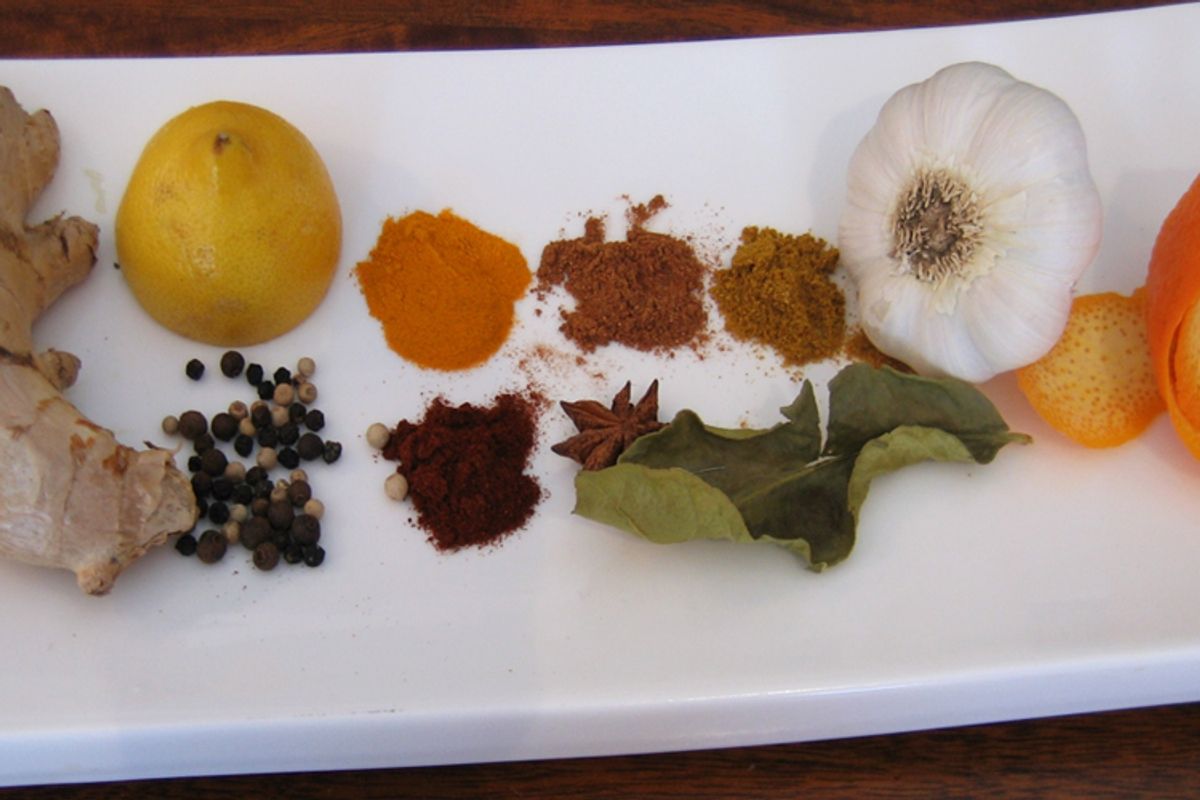
2. Add herbs: Basil, chives, parsley, dill, oregano, sage, mint, thyme, ginger and tarragon are just a few options; there really are too many to mention. Most herbs are best fresh, but some herbs are also good dried and all add flavor, color and health.
3. Try spices: Black pepper, paprika, turmeric, cumin, cinnamon--again, too many to mention. Find your favorites and buy high-quality, fresh spices with an aroma that pleases you. Try toasting them for special effect. Spices add flavor, color and health.
4. Drop in vinegar: A few drops of acidity, in the form of vinegar or lemon juice, can sometimes do wonders to bump up flavor and create a nice tingle in your mouth.
5. Heat it up: Hot peppers, chili powder and hot sauces can create an exciting flavor party.
6. Enjoy garlic: Oh, the wonders of freshly pressed garlic! Add it fresh roasted or sautéed. It’s healthy too.
7. Juice it up: Try adding fruit or vegetable juices (or even better—reduced juices) for complex flavors. Juiced vegetables are a wonderful base for sauces! Don’t overlook the fruit peel; lemon and orange zests are so lovely!
8. Make your own dressings and marinades: Salad dressings are easy to make; the basic proportions are 2/3rds good oil (extra virgin olive oil is my staple), 1/3rd good vinegar or fruit acid, a tiny amount of sweetness (I like honey or agave) and some seasoning. Home-made dressings taste better, cost less, and need little or no salt.
9. Just say no: Some dishes don’t need salt at all. Dishes that contain aged cheeses and salty ingredients, such as capers or miso, usually have more than enough salt already.
10. Take it easy: If you’re used to very salty food, and have been heavy handed with the salt up until now, cut back slowly. Research shows that our taste receptors get accustomed to certain levels of saltiness through repeated exposure. If you ease your salt intake over time, you’ll hardly notice the difference, and within several weeks your taste buds will start perceiving lower levels of salt as salty enough.
There’s a whole world of flavor beyond sweet, salt and fat. Expanding our sources of flavor will make our food tastier, more nutritious and much healthier!
Looking forward to hearing your seasoning tips!
Shares