Great moments in American labor history:
1892: An attempt by Andrew Carnegie and Henry Clay Frick to break a steelworkers union led to a pitched gun battle between strikers and Pinkerton security forces in Homestead, Pennsylvania.
1894: 3000 employees of the Pullman Palace Car Company went on strike to protest a 30 percent wage cut.
1913: Silk mill workers in Paterson, New Jersey led by the Industrial Workers of the World go on strike seeking eight-hour days and better working conditions.
1937: The Great Flint Sit-Down Strike led to the first labor agreement between General Motors and the United Auto Workers.
2009: The employees of the Southeastern Pennsylvania Transportation Authority (SEPTA) end a strike after convincing the bosses to increase Viagra coverage: (Found via Jim Edwards' BNET Pharma blog.)
The Southeastern Pennsylvania Transportation Authority has agreed to cover almost all of its rising health-care costs, and to increase coverage for Pfizer's (PFE) Viagra and other erectile dysfunction treatments, the Philadelphia Daily News reports. Workers are unhappy that their health insurance plan only covers about 10 pills a month.
To be fair, there was far more at issue in the SEPTA strike than merely erectile dysfunction healthcare coverage. Wages, pension fund contributions, and the prospect of changes in healthcare costs after federal legislation passes were all part of the contested deal. But when one considers what the miners, steelworkers, railworkers and seamstresses of decades past fought and died for, the right to more than ten pills of Viagra a month signifies a peculiarly modern form of labor movement progress.
Which is not to say and sex and labor militancy haven't gone together for a long long time. In Aristophanes' "Lysistrata" the women of Athens withheld sex in an effort to stop the Peloponnesian War. In Philadelphia in 2009 transit workers withheld their labor in an effort, in part, to enhance their sex lives.
From across the pond comes news that might make Lucinda Rosenfeld, Double X advice columnist and notorious roofie skeptic, feel a bit vindicated: Researchers from the University of Kent have found that young female students often "mistakenly linked sickness, blackouts and dizziness to poisoning by a stranger -- when it was likely to be caused by excessive alcohol consumption." Their paper, culled from interviews and surveys in both the U.K. and the U.S., suggests that the use of so-called date-rape drugs is little more than an urban legend -- despite the fact that young women "mistakenly think it is a more important factor in sexual assault than being drunk, taking drugs or walking alone at night." The Telegraph quotes Dr. Adam Burgess, of Kent's School of Social Policy, Sociology and Social Research: "Young women appear to be displacing their anxieties about the consequences of consuming what is in the bottle on to rumours of what could be put there by someone else." As for why so many women believe in the myth of "getting roofied," Burgess suggests, "The reason why fear of drink-spiking has become widespread seems to be a mix of it being more convenient to guard against than the effects of alcohol itself and the fact that such stories are exotic -- like a more adult version of 'stranger danger.'"
Nick Ross, chair of the Jill Dando Institute of Crime Science, confirms that many women's fear of being drugged -- or belief that they have been -- is unfounded. "There is no evidence of widespread use of hypnotics in sexual assault, let alone Rohypnol, despite many attempts to prove the contrary," he tells the Telegraph. Researchers worry that the roofie myth is leading to the wrong kind of vigilance: Instead of watching to make sure their friends aren't becoming too intoxicated or walking home alone, a group of women at a bar may focus on keeping an eye on each other's drinks, or taking their own cocktails with them to the bathroom. Hell, we recently learned that one company is even manufacturing lip gloss that features a test kit to help you determine whether your drink has been spiked.
Of course, the University of Kent paper is already sparking some major-league victim blaming. Witness the condescending headline from the always classy folks at the Daily Mail: "Date-rape drug? No dear, you just had too much to drink." The story's intro is even more judgmental: "Date-rape drugs are largely an urban myth used as an excuse by women who booze themselves into a stupor, it has been claimed." I can get on board with the suggestion that women (or, for that matter, men) should be more conscious of their own drunkenness. What bothers me is the implication that, just because most alcohol-related sexual assaults don't involve spiked drinks, victims are somehow implicit in their own rape.
In a blog post, Telegraph religion editor and Anglican priest George Pitcher makes an essential, if self-evident, point: "Rape is caused by rapists -- not by women who are drunk or drugged, or by other risk-factors mentioned by the researchers such as walking alone at night." Pitcher acknowledges that the study is useful but cautions against using it to displace blame. "Young women should of course be warned of the dangers of the world," he writes. "But let’s be clear: Female students, or any woman of any age, should be able to get drunk, even make the mistake of getting too drunk, or walk home alone, or for that matter wear tiny skirts, without fear of sexual assault or rape." This is not to say that binge drinking is a great idea or should carry no consequences. When we drink to excess, we deserve the next morning's stomach-churning, skull-splitting hangover or the scrapes and bruises caused by tripping over our own two feet. But no one deserves to be raped.
In fact, what seems most important about this study is that it raises the question of why young women want so desperately to believe in the prevalence of date-rape drugs. One of the researchers, Dr. Sarah Moore, raises the possibility that "the urban myth of spiking is also the result of parents feeling unable to discuss with their adult daughters how to manage drinking and sex and representing their anxieties about this through discussion of drink spiking risks." For me, this cycles back to the same prejudice that pervades the Daily Mail piece: the idea that women bear partial responsibility for being raped when they're drunk, as opposed to when they're drugged. And perhaps, in a more general way, it's this victim-blaming mentality that's causing women to believe or profess that they've been roofied. In a culture that implicates intoxicated victims in their own rape, they may simply, unconsciously be searching for a way to assuage guilt they shouldn't feel in the first place.
For better or worse, our American Idiocracy has come to rely on athletes as national pedagogues. Michael Jordan educated the country about commitment and just doing it. A.C. Green lectured us about sexual caution. Serena Williams and John McEnroe taught us what sportsmanship is -- and is not. And Charles Barkley outlined how society should define role models.
So when a single week like this one sees both the Justice Department back states' medical marijuana laws, and a Gallup poll shows record-level support for pot legalization, we can look to two superjocks -- Lance Armstrong and Michael Phelps -- for the key lesson about our absurd drug policy.
This Tale of Two Supermen began in February when Phelps, the gold-medal swimmer, was plastered all over national newspapers in a photo that showed him hitting a marijuana bong. Though he was smoking in private, the image ignited a public firestorm. USA Swimming suspended Phelps, Kellogg pulled its endorsement deal and the Associated Press sensationalized the incident as a national decision about whether heroes should "be perfect or flawed."
The alleged imperfection was Phelps’ decision to quietly consume a substance that "poses a much less serious public health problem than is currently posed by alcohol," as a redacted World Health Organization report admits. That's a finding confirmed by almost every objective science-based analysis, including a landmark University of California study in 2006 showing "no association at all" between marijuana use and cancer.
Alcohol, by contrast, causes roughly one in 30 of the world's cancer cases, according to the International Journal of Cancer. And a new report by Cancer Epidemiology journal shows that even beer, seemingly the least potent drink, may increase the odds of developing tumors.
Which brings us to Armstrong. This month, the Tour de France champion who beat cancer inked a contract to hawk Anheuser-Busch’s alcohol. That's right, less than a year after Phelps was crucified for merely smoking weed in private, few noticed or protested the planet's most famous cancer survivor becoming the public face of a possible carcinogen.
"Apparently, it’s perfectly acceptable for a world-class athlete to endorse a substance like alcohol that contributes to thousands of deaths each year, as well as hundreds of thousands of violent crimes and injuries," says Mason Tvert, a co-author of the new book "Marijuana Is Safer." "Yet a world-class athlete like Michael Phelps is ridiculed, punished and forced to apologize for marijuana, the use of which contributes to zero deaths, and has never been linked to violent or reckless behavior. Why the double standard?"
The data prove the answer isn't about health, and our culture proves it isn't about widespread allegiance to "Just Say No" abstinence. After all, whether through liquor commercials, wine magazines, beer-named stadiums or cocktail-drenched office parties, our society is constantly encouraging us to get our liquid high.
No, the double standard is about know-nothing statutes and attitudes promoting the recreational use of alcohol and banning the similar use of marijuana -- all thanks to retrograde mythologies of post-'60s Americana. In our now-dominant backlash folklore, the patriots are the straitlaced Joe and Jane Sixpacks -- and the Armstrongs who encourage their drinking. Meanwhile, the supposed evildoers are the pot-smoking Cheeches, Chongs and Phelpses, whose marijuana use allegedly underscores a dangerous hippie-ness.
Ergo, the moral of this Tale of Two Supermen: To end contradictions in narcotics policy and permit safer recreational drug choices, we have to first reject the outdated Silent Majority-vs.-Counterculture iconography that defines so much of our politics. We must, in other words, replace caricatures with scientific facts and mature into something more than an Idiocracy.
We should all be able to imbibe -- or inhale -- to that.
© 2009 Creators.com
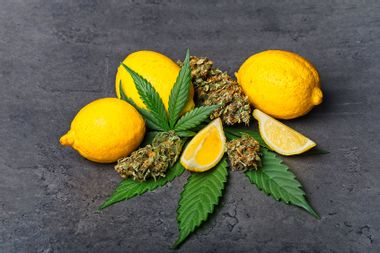
Who do you imagine spoke at September's 38th Annual NORML (National Organization for the Reform of Marijuana Laws) conference in San Francisco? Perhaps some comedians? Some aging hippie drug-policy wonks? A "High Times" staffer or two? Well, yes. All of those people took their turn at the mic. But so did Jessica Corry, who describes herself as a "Republican mom." According to The Washington Post's Kathleen Parker, Corry stepped up to the podium "wearing an American flag lapel pin, a triple strand of pearls and a gold marijuana leaf pin."
That's right: This is a lady who wants to legalize it. The wife of a lawyer who works with medical marijuana users, Corry doesn't just support our government's recent commitment to stop prosecuting medical marijuana patients and suppliers. This mom sees her crusade for full legalization as a way of "protecting her children should they decide to try marijuana someday." As Parker notes, "There's nothing like imagining one's own children as 'criminals' to put irrational laws in perspective." Although she's now a non-toker, Corry admits to having tried the drug in the past. In the same article, for the Colorado Daily, she aligns herself with another pro-legalization voice on the right, Ron Paul, and makes a conservative argument for reform:
If we believe that smaller government is better government, we must trust people to choose what to put into their bodies. If we support legalized access to alcohol, cigarettes, and 700-calorie cheeseburgers, we should legalize marijuana -- a far less harmful substance.
Parker adds that "when jobs and cash are in short supply, legalizing marijuana would seem both prudent and profitable." Reading the column, I had to keep pinching myself to believe that I wasn't dreaming, and this argument, which I totally agree with, was coming from a mainstream conservative pundit.
The real crux of Parker's article, another idea she picks up from Corry, is the prediction that it will be women who lead the charge for legalization. It was the Women's Organization for National Prohibition Reform, both point out, who in 1929 spearheaded the movement to get rid of the ban on alcohol. (Thanks, ladies!) Parker also cites a Marie Claire article on "Stiletto Stoners," high-achieving women who smoke weed, and the recent revelation that Miss New Jersey 2006 uses medical marijuana to calm her asthma. I would add the example of Marie Myung-Ok Lee, a mother who wrote in Double X about feeding her autistic nine-year-old son pot (in cookie form).
But, honestly, Parker and Corry don't entirely sell me on the idea that marijuana is becoming a women's issue. Sure, the connections between responsible parenting and attitudes toward criminalization of the drugs -- in both its recreational and medical capacities -- are growing clearer. Yet, for me, the "toking point" Parker is talking about doesn't seem particularly gender-based. That a self-described "Republican mom" advocates legalization is, more than anything, a sign that the issue is gaining mainstream support. Across the political spectrum, NORML is finally becoming more, well, normal.
(updated below)
This is one of those rare instances of unadulterated good news from Washington:
The Obama administration will not seek to arrest medical marijuana users and suppliers as long as they conform to state laws, under new policy guidelines to be sent to federal prosecutors Monday.
Two Justice Department officials described the new policy to The Associated Press, saying prosecutors will be told it is not a good use of their time to arrest people who use or provide medical marijuana in strict compliance with state laws.
The new policy is a significant departure from the Bush administration, which insisted it would continue to enforce federal anti-pot laws regardless of state codes.
Criminalizing cancer and AIDS patients for using a substance that is (a) prescribed by their doctors and (b) legal under the laws of their state has always been abominable. The Obama administration deserves major credit not only for ceasing this practice, but for memorializing it formally in writing. Just as is true for Jim Webb's brave crusade to radically revise the nation's criminal justice and drug laws, there is little political gain -- and some political risk -- in adopting a policy that can be depicted as "soft on drugs" or even "pro-marijuana." It's a change that has concrete benefits for many people who are sick and for those who provide them with treatments that benefit them. So credit where it's due to the Obama DOJ, for fulfilling a long-standing commitment on this issue.
Beyond the tangible benefits to patients and providers, there is the issue of states' rights. Fourteen states have legalized medical marijuana, many by referendum. The Bush administration's refusal to honor or even recognize those states' decisions -- by arresting people for doing things which are perfectly legal under state law -- was one of many examples giving the lie to the conservative movement's alleged belief in federalism and limited federal power (see here, for instance, how John Ashcroft and GOP Senators tried deceitfully and undemocratically to exploit the aftermath of 9/11 to prevent Oregon from implementing its assisted suicide law). Constitutionally and otherwise, what possible justification is there for federalizing decisions about whether individuals can use marijuana for medical purposes? Ironically (given the "socialism" and "fascism" rhetoric spewed at it by the Fox News faction), the Obama administration's decision is a major advancement for the rights of states to have their laws respected by the federal government.
This action also reflects the clear sea change taking place, both domestically and especially internationally, regarding drug policy. When Mexico decriminalized drugs for "personal use" in August, the silence -- including from Washington -- was deafening:
Quietly and with little ado, Mexico last week enacted a law to decriminalize possession of small amounts of all major narcotics, including marijuana, cocaine, heroin, ecstasy and crystal meth. Anyone caught in Mexico with two or three joints or about four lines of cocaine can no longer be arrested, fined or imprisoned. However, police will give them the address of the nearest rehab clinic and advise them to get clean. . . .
In 2006, Mexico's Congress approved a bill with almost exactly the same provisions. However, the Administration of George W. Bush immediately complained about the measure and then President Vicente Fox refused to sign it into law. In contrast, officials of the Obama Administration have been decidedly guarded in commenting on the new legislation. When asked about it in his visit to Mexico last month, drug czar Gil Kerlikowske said he would "wait and see." Many view such a change as evidence that Washington is finally reconsidering its confrontational war on drugs, four decades after Richard Nixon declared it. "There is a growing opinion that the use of force has simply failed to destroy the drug trade and other measures are needed," says Mexican political analyst José Antonio Crespo. "It appears that the White House may be starting to adjust its approach."
The failure of the drug war and criminalization schemes is so glaring that, despite its previously taboo nature (taboos enforced by the U.S. in various ways), it is being rapidly acknowledged around the world. Even though the paper I wrote for the Cato Institute on Portugal's success with decriminalization was published almost six months ago, I now receive more invitations than ever to present the paper, especially at meetings of government officials and policy makers in Latin America, because almost every country in the region is now actively re-considering its criminalization approach to drug policy. Even a modest willingness on the part of the U.S. government to pursue or even tolerate alternative approaches could play a major role in accelerating that process, as countries in virtually every region of the world have long been coerced by Washington to maintain strict criminalization approaches and to embrace the destructive Drug War model.
The War on Drugs is the pernicious precursor to the War on Terror in so many ways, beginning with the relentless erosion of civil liberties; endless expansions of federal powers of detention, surveillance and militarized involvement in other countries; and a general pretext for remaining in an endless "war" posture. Anything that moves even a little bit towards abandoning the orthodoxies which sustain it should be applauded. And whatever else is true, being free of gun-wielding DEA agents is a real benefit for people with serious illnesses and those who provide them with medical treatments prescribed by their physicians.
UPDATE: A newly released Gallup poll today finds support for full-scale legalization of marijuana (not just for medical use) at an all-time high, with "44% of Americans in favor of making marijuana legal and 54% opposed" (h/t Law Enforcement Against Prohibition). As Gallup put it: "Public mores on legalization of marijuana have been changing this decade, and are now at their most tolerant in at least 40 years."
The Alabama Supreme Court on Friday threw out jury decisions awarding the state more than $274 million from three pharmaceutical companies, ruling they did not defraud the state in pricing Medicaid prescription drugs.
The court overturned jury verdicts against the drug companies AstraZeneca, Novartis and GlaxoSmithKline, accused by the state of fraudulently manipulating prices of drugs for Medicaid recpients.
The court ruled 8-1 that the state did not have to rely on the drug companies' information in deciding what prices to pay pharmacists for prescription drugs for Medicaid recipients. The justices said state officials could have done their own research and determined the correct price.
The court ruled the state is continuing to rely on the same formulas established by the drug companies to set prices.
"The state has never altered its course of conduct since taking issue with the reporting methods," said the majority ruling written by Justice Tom Woodall.
Justice Tom Parker cast the lone dissent.
More than 70 lawsuits were filed in 2005 by the state against drug companies. The state has settled its lawsuits against 16 of the drug manufacturers for more than $124 million.
Alabama Attorney General Troy King filed the lawsuits, charging them with causing the state's Medicaid program to pay too much for prescription drugs for poor and elderly citizens.
The state's case against Wilmington, Del.-based AstraZeneca, the U.S. subsidiary of a British company, was the first to go to trial in February, 2008. The jury initially awarded the state $240 million in damages, but Circuit Judge Charles Price reduced the verdict to $160 million.
Later in 2008, another jury awarded the state $81 million in damages against GlaxoSmithKline PLC, a London-based health care company with U.S. headquarters in Philadelphia and Research Triangle Park, N.C., and $33 million in its lawsuit against Novartis, the U.S. affiliate of a Swiss company with U.S. headquarters in East Hanover, N.J.
In February, a Montgomery jury ordered Sandoz Pharmaceuticals to pay $78.4 million to the state. The Supreme Court has not ruled in that case.
Similar lawsuits have been filed against drug manufacturers by other states. A jury in Kentucky on Thursday ordered AstraZeneca to pay $14.7 million in a case that claimed the company inflated its prescription drug prices for Medicaid reimbursements.