
How the World Works

A cornucopia of beer

One summer evening in the mid-'80s, some friends and I were sweltering around the living room table in an apartment in downtown Taipei, shooting the breeze. Suddenly, the door burst open and my housemate Keenan rushed in, his eyes ablaze. In his arms he cradled a plastic bag of groceries.

"You will not believe what I have," he said, enunciating each word with slow, intense precision. We stared at him in wonder and no small amount of alarm. With a flourish, he pulled a six-pack of Pabst Blue Ribbon out of the bag. My roommate Jack and I gasped, and then lunged for the beer like starved wolves tackling a crippled caribou. But my roommate Jim, who had just arrived from the United States a few weeks earlier, stared at the whole unseemly spectacle with furrowed brow. What strange land had he arrived in where the appearance of PBR could generate such passion? Truly, the Far East was living up to its inscrutable reputation. (This was at least 15 years before PBR inexplicably became a hipster calling card.)

Ah, but taste and quality weren't the point. Far greater matters were afoot. The arrival of PBR signaled the end of Taiwan's "Tobacco & Wine" monopoly system. Until that point, the only beer generally available on the island was Taiwan Beer, a brew that had, shall we say, variable qualities. But the United States had been threatening Taiwan for years with retaliatory "Super 301" trade sanctions if the nation didn't open up its markets to foreign goods, and Taiwan had finally buckled. Foreign beer could now be sold in the Republic of China.

Today, I look back at this event and feel uncomfortable about the way the U.S. muscled Taiwan into opening its markets in an act of classic bullying behavior. But as a beer drinker, it was a profoundly liberating moment. For the next year, discerning beer consumers in Taiwan lived in a cornucopian realm of global beer competition. Your local corner store would be as likely to stock obscure Danish or South African brews as it would PBR or Budweiser or Heineken. It was an early laboratory for observing globalization, long before I had ever heard the word.

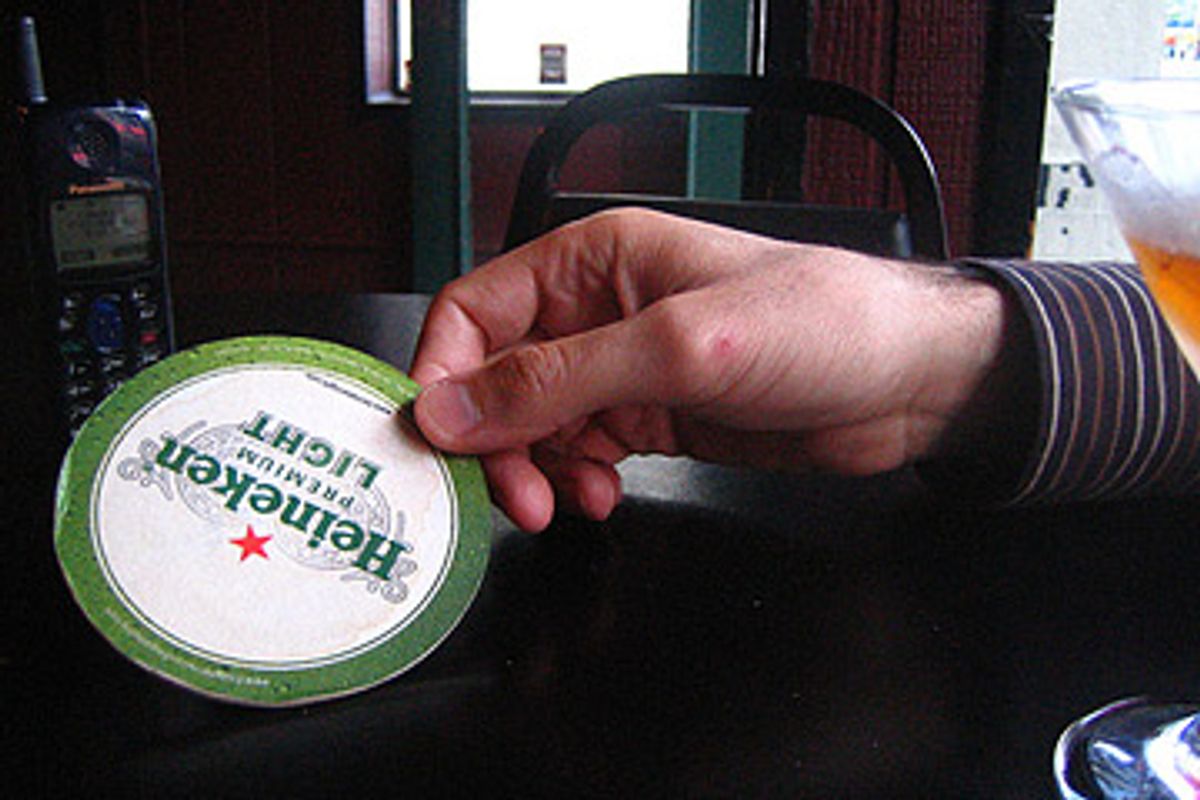
After a year of beer warfare, two brands reigned supreme -- and, satisfyingly, neither was American. The Philippines' San Miguel and the Netherlands' Heineken were the people's choice (or had the most powerful distributors). Budweiser was available at your local 7-Eleven, but few people purchased it. It was considerably more expensive than local beer, and no one I knew bought into the dubious concept that it tasted that much better than Taiwan Beer.

I was reminded of this episode by a Wall Street Journal article today on the rise in consumption of imported beer in America's heartland. Again, this is a story rife with globalization angles. Mexican immigration to the Midwest has risen 81 percent in the last two decades; not coincidentally, sales of Mexican beer have shot up. American beer manufacturers have responded with their usual bag of marketing tricks, an absurd blitzkrieg of Man-Laws and Real Men of Genius. But if you can't beat 'em, join em. Corona becomes a best-selling import, so Anheuser-Busch buys 50 percent of Grupo Modelo SA, the producer of Corona. Foreign, domestic, what's the real difference? Transnational capitalists react to successful competition by buying up their competitors. Film at 11.

But there is one potential explanation for the declining fortunes of Miller and Anheuser-Busch that never made it into the article: that all important question of taste. Could it be possible that imports are making inroads because consumers are finally realizing that mass-market American beer is terrible? Not to be elitist, but beer drinkers on the coasts, perhaps because of their relative proximity to foreign lands, have realized this for years. Again, not coincidentally, imports and microbrews are widely available on the coasts.

So, hurray for foreign imports and free trade in beer. The lowest common denominator of American consumption culture, that dastardly nexus of mass marketing and pablum products, is doomed by real competition. Whether or not you believe Corona is any better than Budweiser, or Heineken can escape the skunkiness of its green bottles, or Sierra Nevada Pale Ale should conquer the earth and make all other beers kowtow before it, I think we can all chug united in the hope that a globalized world will lead to a better selection of beer in our nearest corner store.

Google vs. Microsoft: Haven't we seen this movie?
Shades of 1995: A Web-based upstart threatens to topple Windows from its throne
Is the Obama economic rescue plan a failure?
Swayed by GOP attacks, independent voters are abandoning ship. But the summer of stimulus love has hardly started
Are automaker woes skewing unemployment figures?
In the summer, the Big 3 usually idle factories and lay off workers. But this year, they're ahead of schedule
The Pope's liberal Christian values
Social justice, wealth redistribution, a new morality for Wall Street -- the pontiff throws down on capitalism

About How the World Works

A conversation about globalization.

Recent Posts

Is the Obama economic rescue plan a failure?
Swayed by GOP attacks, independent voters are abandoning ship. But the summer of stimulus love has hardly started
Are automaker woes skewing unemployment figures?
In the summer, the Big 3 usually idle factories and lay off workers. But this year, they're ahead of schedule
The Pope's liberal Christian values
Social justice, wealth redistribution, a new morality for Wall Street -- the pontiff throws down on capitalism

Full Archive

RSS Feed

Posts by date

July 2009
SuMoTuWeThFrSa
1234
567891011
12131415161718
19202122232425
262728293031

Comments?

You can e-mail me directly at aleonard@salon.com. But to join the conversation with your comments, please use our letters to the editor feature at the bottom of each article.