Andy Battaglia

The biggest beat of all

A short introduction to two-step garage, followed by everything you need to know about pop music in the 21st century.

  • more
    • All Share Services

The biggest beat of all

It’s 3 a.m. in the downstairs lounge at Centro-Fly, New York’s mod-mad nightclub, and the walls are dancing. Really. The floor-to-ceiling panels that line the room are spazzing out, taking split-second turns emitting these blinking stripes of bright pink light. The flashes are short and clipped, jumping from panel to panel with quantum-mechanical ease. The dizzying, strobelike effect is nothing new to dance clubs. But there’s something about the vibe down here, in the Pinky Room, that makes it particularly warm and inviting — like a smooth, soothing sip of incandescent visual fizz.

The main room upstairs is throbbing with the ceaseless bass of house music, that four-to-the-floor boom-boom-boom-boom that has been dance music’s go-to sound for ages. The tourists are into it, as are the curiously made-up girls from New Jersey and the few lady-slaying sailors in town for Fleet Week. There’s a big-room purposefulness to the music upstairs, a workhorselike aspect to its time-tested thump. It’s the kind of music people want when they drop $20 every now and then to do the dance-club thing.

The scene downstairs is markedly different. The crowd is a mix of finicky music-obsessives and stylish scene-makers here to check out Drive By, New York’s hottest home for the hottest new sound in dance music. Those in the know are tipping flutes of champagne, the drink of choice for their subcultural compatriots over in beat-loving London. In the middle of the floor, the good dancers are bouncing and flailing, sticking their moves with an angularity those on the edges are still trying to work out. The music is really new and different, the beats snapping in crisply slanted ways that make the house tunes upstairs sound old-fashioned. It’s all precision and shine down here.

The DJ drops some remarkably irony-free remixes of chart-topping hits — “Survivor” by Destiny’s Child, Bell Biv Devoe’s “Poison” (twice!?) — alongside the genre-making tracks that have just started making their way to the States. An MC spits out gritty freestyle on the mike, toasting Jamaican dancehall style. “Hometown NYC … Drive By … . We’re gonna spin you out,” he belts. “Bring your energy, bring your love … Let’s get sexy … It’s time for two-step garrraaaaaaggggeee!!!”

- – - – - – - – - – - -

If you’re really into dance music, you probably know two-step garage. If you’re not — if the difference between house and techno seems like little more than the punchline-ready distinction between country and western — maybe you’ve seen it referenced in a magazine. Maybe it meant something, or maybe you just wrote it off as another example of dance music’s tendency to spit out new genre names as signifiers of readymade revolution. Either way, two-step is a legitimately distinctive new style that owes a lot to drum ‘n’ bass and the futuristic minimalism that dominates American pop and R&B. But its debt extends equally to every other strain of dance music that has cropped up in the past 25 years. Giddy disco, soulful house, mechanistic techno, rhythm-crazed hardcore, bouncy Jamaican dancehall, big-bottomed Miami bass, gin-sipping G-funk, glitchy ambience — they’re all there.

It’s an unfortunate circumstance in electronic music that such terms mean the world to some and nothing to others. If you follow the music closely, the distinctions are both meaningful and necessary. They all connote something specific, even if they often bleed into one another and break down when it comes time for precise definitions. But keeping up with the linguistic free-for-all can wind up amounting to a full-time job. And it unfortunately guarantees that the newest sounds get discussed most interestingly in coded language that only alienates those who don’t have a working knowledge of the vocabulary. This isn’t exclusive to electronica, but the music’s largely wordless and hyperspecialized nature certainly doesn’t help.

With this in mind, two-step offers an interesting way out of the classic postmodern jam. For all its exposed roots and historical ties, the music amounts to much more than the sum of its parts, both in its sound and in its ability to juggle specialized progressivism and audience-courting populism behind a premise that relies on disregarding the conflict altogether.

Two-step really is a new sound, one that was cooked up as both an inevitable offshoot of everything that came before it and a marked departure from the history it tries so hard to revise. But while its big-picture history gives it some serious conceptual underpinning, its most immediately noticeable trait is its delicious accessibility. In England, where it’s been positively huge for a couple of years now, two-step (or U.K. garage, as it’s interchangeably known) appeals equally to both screaming teeny-boppers and underground DJs who disseminate it through pirate-radio stations and specialty record shops. The secretive white-label culture that dance music is famous for - DJs trading unlicensed remixes, trainspotters trying to steal ideas, etc. — is a big part of two-step. However, in England at least, the same tracks that get passed around like Samizdat in the underground can end up sitting pretty atop the singles charts, with no love lost on either side of the cultural divide.

If you’ve ever sat around and wondered what might one day pop up as a new sound that could make waves, however big or small, you’d be right to be intrigued by this. There’s a lot going on in two-step garage, both on the surface and beneath it, that speaks to both the present and the future in illuminating ways. It’s not likely to change the world in any magically profound fashion, but there’s something inspiring and true in the mere existence of a style that offers something to both jaded aesthetes and their 6-year-old nieces. Two-step’s mix of sophisticated stylization and pleasantly Epicurean excess just feels so … so culturally right.

Of course, England has always been a little cooler than America when it comes to recognizing this kind of thing. From the days when English rockers heard something in the blues that had slipped past American ears for years, the Brits have been building what your casual everyday Anglophile could rightfully call impeccable taste. The Beach Boys’ “Pet Sounds,” nowadays the leading vote-getter for best album ever, was a smash in England from Day 1, while it went largely unappreciated back home in the States. Examples like this are a given in rock history. But none of them even comes close to techno, which was invented in Detroit but really blew up only after Europeans recognized the soul that was hiding beneath the music’s posthuman future shock.

There’s a certain degree of overromanticizing going on here — Spice Girls, anyone? — but take a look at the magazine racks and it’s clearly more true than false. For reasons that are tough to pin down, England is home to a whole slew of publications — Mojo, the Wire, Uncut, etc. — that consistently treat music as something weighty and important and telling about our culture. It’s hard to think of an equivalent in the States simply because there isn’t one. (Or at least there isn’t one that can afford not to hide matters of substance in a mix of cheeky charticles and industry-stroking sloganeering.)

And this is to say nothing of the serious theory that has sprung up around electronic music in England. The better writing about techno and drum ‘n’ bass regularly places beat science alongside the most head-crunching social and political thought. Throw down a slamming break-beat and there will be a British writer ready to decorate it with a quote from Gilles Deleuze, Jacques Derrida or Theodor Adorno.

If the British rave theorists’ intellectualizing is occasionally overreaching, it’s still invigorating in a way that seems almost inconceivable on this side of the pond. It’s also enough to make your casual everyday Anglophile imagine New Electronic London as a sort of cultural dreamscape, an updated fantasyland along the lines of the Old Weird America that Greil Marcus invoked around Harry Smith’s “Anthology of American Folk Music.” In a similar way, this New Electronic London is an overly idealized construct that helps the quixotic music fan accept that music isn’t all things to all people. But it’s also an instance of constructive romanticism capturing a certain essence by mixing the real with the imagined. There’s something to be said for swinging hard in case you hit something (or at least miss the point in a tellingly interesting way), and the critical flailing that surrounds London’s teeming dance scene lands a lot of punches in the name of electronic music’s progressive promise.

- – - – - – - – - – - -

It’s probably safe to assume that ‘N Sync’s Justin Timberlake doesn’t care much for the nuances of cultural criticism. When he recently told Entertainment Weekly that two-step garage is “where we think music is going,” he was talking about cool-ass beats. “It’s more futuristic,” he said, referring to the two-step influence of “Pop,” his group’s new single. “It’s like R&B twice as fast.”

Two-step’s debt to chart-dominating pop and R&B is yet another example of British aesthetes recognizing greatness in what their American peers traditionally write off as unlikely sources. The Brits aren’t entirely alone in holding up pop producers like Swizz Beatz, Rodney Jerkins, Kevin “Shek’spere” Briggs, et al., as serious artists. In America, though, the kind of producers who have worked with Destiny’s Child, Ruff Ryders and even Britney Spears are appreciated more exclusively by a cottage industry of critics whose dialogue rarely seems to drift outside the pages of magazines and large cities’ weekly newspapers.

While Spin or the Village Voice might freak out over Timbaland’s production work on Missy Elliot’s new album, it’s hard to imagine many underground American musicians — i.e., the guys in Tortoise — talking earnestly about “Get Ur Freak On,” much less doing something with its sound that would satisfy both indie kids and the people whose market-driving dollar makes records go platinum. It’s a phenomenon that speaks to simple logistical differences between the U.K. and the U.S., from the vastly different makeup of the radio industries to the obvious discrepancy in geographical size. But more than either of those, it’s evidence of the racial divisiveness that seems to dominate music-making in the States.

Unlike London’s two-step community, whose catchall musical recipe could only be the product of free-flowing culture-swirl, the lines that separate race here are bold and unmoving. Even if the monstrous success of hip-hop and R&B on the charts suggests otherwise, when it comes to the creative process, black music is black music and white music is white music. There are exceptions, of course, but the crosscurrent of racially blind musical influence here is more like a gentle breeze that blows only occasionally. And when it does, it’s more often than not on the empty-seeming pop charts, so that while Justin Timberlake speaks with surprising prescience about the culturally diverse two-step scene, it’s still hard to imagine the surly rock grouch at your corner record store doing the same.

Two-step garage was born from the ashes of drum ‘n’ bass, the hard-driving club sound that had all of London screaming “revolution!” in the early ’90s and then wondering what happened when the music hit a stylistic dead end. For all its churning progress, jungle was doomed to pound itself into remission. As it became increasingly popular, drum ‘n’ bass ultimately repelled its audience with the same characteristics that made it big to begin with: grating sonic attacks, speed-fixated break beats and chest-shaking bass lines. Because the purists didn’t allow it to change, it was easy to see why the once-frothing fan felt a little dissatisfied and ended up turning away like a foie gras goose come grain time.

In big-picture terms it might as well be the Edsel of hyped-up musical movements. But regardless of the way the fall of drum ‘n’ bass is caricatured now, there’s no denying that it was a seriously important and influential strain of musical thought. Excepting certain examples from hip-hop, there’s been no sound that better captured the personality-diffusing identity swirl and paranoid teeth-gnashing of turn-of-the-century culture. As a snapshot of the times, drum ‘n’ bass — and by extension, electronic dance music — delivered a relevance that rock ‘n’ roll simply wasn’t capable of invoking in its limping, arthritic state.

Two-step garage doesn’t exactly deliver on this promise either, but that’s largely because it learned from the morality tale that so consumed drum ‘n’ bass. A big part of two-step’s allure is simply that it strives to be alluring. In an effort to restore dance music’s social graces, two-step producers slowed down jungle’s pace and pumped their tracks full of the soulful atmosphere and sing-songy choruses of house music. It was a move that played to dance music’s communal aspirations and also brought back the women, whose noticeable absence had reduced large parts of the drum ‘n’ bass scene to something of a break-beat sausage party.

Besides, who’s really looking for a scorching indictment of the world in pop music these days, anyway? It’s not necessarily a good thing, but that new-century complacency everybody talks about is very much alive and well in the musical realm. Ecstasy, a drug whose long-term ill effects allegedly inspired the dark-core turn of rave music in the early ’90s is now more expressly associated with hip-hop artists who are enamored with their newfound lovey-dovey revelations. Feminism has become little more than a sexy parlor game, with Madonna entertaining her animated pimp fantasies and Destiny’s Child waxing all bootylicious. And so on. There’s Radiohead, of course, but their paranoid psychic crunch is more a meditation on the problems of the world than a reaction against them.

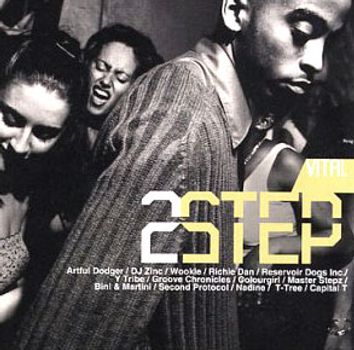
So, for better or worse, garage music’s good-time vibe plays to the culture that surrounds it. Listen to the lone pair of two-step compilations currently available in the U.S. — “Vital 2-Step” (V2) and the Artful Dodger-mixed “Re-Rewind” (London) — and it’s clear that the aim of this stuff is to move serious musical ideas while also paying serious respect to the pleasure principle. “Vital 2-Step,” the more appropriately varied of the two, mixes startling rhythmic inventions with hands-in-the-air diva vehicles, so that balladeering odes like Y Tribe’s “Enough Is Enough” rub up against the seething break beats of DJ Zinc’s “138 Trek” and sound in no way out of place.

It’s even more difficult than usual to describe this music for a couple of reasons, the first one being the almost impossibly wide range of styles that converge within the same movement. There are raw, skittering break-beat artists (Stanton Warriors, Reservoir Dogs), dubby bass enthusiasts (Zed Bias, Wideboys), speedy ragga vocalists (Ms. Dynamite), shiny pop purists (Artful Dodger, Oxide & Neutrino) and tons of others who fit different tendencies within the same two-step framework. What draws them all together is an intricate attention to detail and a working method that dreams up beats as immaculate conceptions. The two-step rhythm, as much as it formally exists, borrows the lurching stutter of drum ‘n’ bass, creating a similar sensation of beats continuously falling forward, close to tripping but always landing on their toes. But at most, the pattern works only as a suggestive foundation.

The second reason — and the one that makes two-step so startlingly new and distinct from drum ‘n’ bass — is the dizzying number of ideas that play out in almost every track. If musical progression could be measured in units of Ideas Per Song, two-step at its best would be completely off the scale. The music’s shiny surface couldn’t be much more inviting, but once you dig down into the mechanics of what’s going on beatwise, the simple pop appeal turns into something gloriously disorienting in its micromanaged obsessiveness. The tracks snap into shards, like crackling ice sculptures, while the beats resist any efforts to isolate the six, seven, eight different rhythmic patterns that create the rollicking whole. A big part of two-step’s M.O. is to do with treble what jungle did with bass, so that its big, body-dominating effects play out on hi-hats rather than a thudding kick drum. The effect is as consciously manipulative as any brain-tearing bass rip, but it’s sneakier and more finessed, with the beats receding in reverse perspective as they invite you in and then laugh as you try to pick out what exactly makes them work.

Take a song like Artful Dodger’s “Re-Rewind,” a mellow track that’s one of the scene’s first monster hits. On one hand, it’s a warm bath of melody and soulful vocals by British R&B star Craig David. Its verses roll comfortably over Mellotron chords and sizzling rim taps that sound like clinking wine glasses. When it gets to the chorus, though, it turns to musique concrète, with a darkened bass figure ripped from gangster dancehall setting a base for endlessly spliced tape-edits and found sounds like skidding cars and shattering windows.

Both the “Vital 2-Step” and “Re-Rewind” compilations offer a good introduction to this stuff, but the time delay that separates British dance music from proper domestic release makes the newer developments available only on imports. At Tower Records in New York at least, there are enough people paying import prices that two-step has earned a listening station display on the main floor, right next to the racks that hold Missy Elliot and Destiny’s Child. It’s on those imports — the four double-disc volumes of “Pure Garage,” the two editions of “Sound of the Pirates,” DJ Dee Kline & Donna Dee’s “Beat Freaks” — that the style coalesces into its crystalline order and offers all its sage advice for ways to reconcile pop and the avant-garde.

Scan the aboveground musical horizon and you’ll turn up no shortage of artists who are similarly pushing their forms while moving serious units: Daft Punk, Radiohead, Missy Elliot, Basement Jaxx, OutKast. What they share with the artists who make two-step a style worth obsessing over is a firmly raised hand to the idea that nothing’s going on in music these days. Spend some time trying to size up two-step garage and the argument reveals itself more than a little bit lazy.

As two-step artist MJ Cole, on the phone in the middle of a current U.S. tour, tells it, “This is pretty much some of the only really fresh music that nobody can put their finger on yet.” He’s right — and it’s not for lack of pointing.

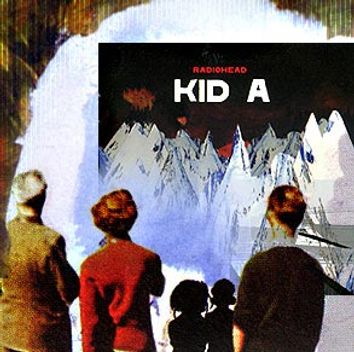
Radiohead’s “Kid A”

Is this really an "important" record? Four critics duke it out.

  • more
    • All Share Services

Radiohead's

Andrew Goodwin: The critic Theodor Adorno, dismayed by the possibilities for classical structures in a broken world, once argued that “art of the highest caliber pushes beyond totality towards a state of fragmentation.” He wasn’t writing about rock music in the 21st century. And he didn’t write the liner notes for “Kid A.” But his words were, as ever, prescient in the extreme.

Alongside Oasis, Elastica, Pulp and Blur, Radiohead were one of five candidates to head up the so-called British Invasion of the 1990s, and if Blur’s Damon Albarn isn’t choking on his press cuttings right now, I for one will be surprised. Like Blur, Radiohead took one look at “success” and decided to rewrite the rule book.

Think about it. Elastica? Six years to follow up their debut album, and they come back with … more of the same. Pulp? The inspiration for a thousand sad bedroom soliloquies have been silent for over two years. Oasis? Their implosion was as ugly as it was predictable. Only Blur and Radiohead have lasted the course; and their tactics, like U2 before them, consisted of following up a brace of smash-hit records with a barrage of dirty, spaced-out noise.

To read the reviews, you might imagine that Thom Yorke has invented a totally new kind of music, rewritten the rules of tonality and taken the tools of multitracking to a new level. He has done no such thing. That Yorke has been listening to Aphex Twin is no secret — the influence of Richard James on this material is transparent. If you are a rock fan looking for new kicks, for something more shocking than the sound of the Gallagher brothers disappearing up their own Beatletudes, then “Kid A” will surprise you.

Otherwise, you will hear an uneven collection of songs weighed down by a paradoxical combination of overambition and underproduction. Some of it is brilliant — expect “Idioteque” and “Optimistic” to feature in Radiohead set lists for years to come. Some of it is mundane: Listen to the faux-jazz screeching of “The National Anthem” next to the inspired honking of Primal Scream’s similar exercise, “Blood Money” (from “Exterminator”), and be embarrassed — be very, very embarrassed.

The first five notes of the first song, “Everything in Its Right Place,” seduce so compellingly that you find yourself listening to the entire album just for the thrill of going back to the beginning. And they also sum up the whole gig. A magical hint of a 1970s Fender Rhodes electric piano lures us in, but with enough synthetic edge to announce something beyond nostalgia. Is it old? Is it new? No, it is something borrowed — the oldest trick in the Book of Rock. This is the Art Move. Radiohead have replaced rollicking power chords and anthemic stadium chants with ambiguities and fragments. This is the pop equivalent of cinema’s Dogme 95 and Brit Lit’s New Barbarians — strip it down, sort it out, detonate the bombast. It is a new thing, and an old thing — the album as its own remix.

The lyrics are a Rorschach test. What do you hear? “I’ve lost my way.” “You can try the best you can/The best you can is good enough.” “I’m here in the studio, suffering for my art/My bandmates are down the pub, drinking beer and playing darts.” These lines quite possibly exist somewhere in the mix, buried beneath backward-masked voices, clapped-out beat-boxes and arrangements that suggest, rather comically at times, that the rump of the band repeatedly abandoned Yorke and his producer Nigel Godrich in the middle of a song.

The Beatles invented the (modernist) Art Move. And indeed, “Kid A” does bear comparison with “Sgt. Pepper” on at least two counts. First, it is the most anticipated release in a decade — albeit for a lost tribe of rock fans whose numbers and confidence in themselves have declined precipitously. Second, “Kid A” is a fine and confused piece of work endangered by the overwrought criticism heaped upon it. We should not blame Yorke for this; we might want to have a word with the Radiohead PR machine, but they, after all, are only doing their jobs. Probably this is nothing more than a hackneyed concept album about cloning — 40-something minutes of music to follow up on 1997′s seven-minute epic, “Paranoid Android.”

Soon enough, no doubt, Radiohead will surprise us one more time, with a grungy, in-your-face, hook-laden Rock Move. Meantime, there’s Poor Thom, fretting on his guitar, strutting at the mike. He’s consumed with anguish about his role as the savior of rock — I must zig when they zag, he thinks, determined not to let stardom undermine his mission to shock. But his fears are unfounded. Radiohead are a good band, but they’re not that important. “Kid A” is a fine album. Rather than losing sleep, Yorke might just realize that until he writes a record as strong as “Definitely Maybe,” “Parklife” or “Different Class,” the anguish is all for naught.

Michelle Goldberg: Until I heard “Kid A,” I thought Radiohead were overrated. Sure, I was enraptured by the supersaturated pathos of “Fake Plastic Trees” from the 1995 album “The Bends,” but except for the rushing triumph of the song “Let Down,” the much-heralded magic of “OK Computer” eluded me. When that record came out there was a lot of hype about it making rock relevant again. Maybe because I’m part of the first generation in decades that’s not defined by rock — since, that is, its death doesn’t presage my own — I’ve always thought that if rock needed to be saved so badly, perhaps it didn’t deserve to be.

“OK Computer” was celebrated in part for articulating a futuristic, dystopian anxiety, but drum ‘n’ bass, hip-hop and trip-hop have been doing that for years. I suspect part of the reason so many rock critics swooned over the album was because it took a contemporary sense of dazed, pained disorientation and expressed it in an old, comfortable idiom.

On “Kid A,” though, Radiohead have reworked their musical language altogether. The record is a panicked, gritty, gurgling mélange of droning rock, electronic effects and jazz freakouts, full of strange, aching beauty. Unlike musicians such as Tori Amos and Madonna, who have simply injected electronic beats into their work to bring it up to date, Radiohead have created something that transcends fashionable pastiche. There are moments where “Kid A” recalls other records — the lullaby synth melodies on the title track are intensely reminiscent of the genius German electronic minimalist B. Fleischmann, while the hypnotic guitar grind and wild horn stabs of “The National Anthem” are pure Death in Vegas. As a whole, though, the album sounds like nothing else out there, at once dazzlingly experimental and intensely lovely, delicate and grandiose.

Yet while “Kid A” is a big stylistic departure for the band, it captures the same sense of vulnerability and paralysis in the face of frenzied, overwhelming change that coursed through “OK Computer.” It’s more powerful, though, because here the terror and yearning in Yorke’s reedy singing is echoed so powerfully by the music’s very structure. On the first song, “Everything in Its Right Place,” his voice seems to be struggling through something viscous and suffocating, while fuzzy echoes, funereal keyboards and warped, choppy vocal samples conjure confused ennui. It embodies the insomniac, brain-whirling feeling that’s one of the worst side effects of living at unprecedented velocity.

The song “Kid A” is similarly both unnerving and stunning. With its beguiling toy-piano melody, diaphanous sound washes, submerged drums and robotically processed vocals, the song combines icy bleakness with tenderness, suggesting a beloved child reluctantly brought into an unforgiving world. Again on “Idioteque,” which begins with a tired break beat but turns ravishing with the addition of Yorke’s slurred, devastated, looped and layered singing, Radiohead render creeping unease and desolation incandescent. I’m reminded of Joy Division, another band that alchemized gloomy, banal alienation into crepuscular beauty. “Kid A” is one of the loneliest records I’ve heard in ages. Perhaps because of that, it’s also one of most comforting.

Joe Heim: The critics are dead wrong when they say Radiohead’s “Kid A” does not quite measure up to its predecessor, “OK Computer.” In more ways than one, it is every bit as mediocre. Ponderous, self-absorbed and ultimately stultifying, it’s a sucker punch that mixes a few brief shards of brilliance with a mostly boring collage of gratuitous electronic noodling and lyrics that range from vague to vacuous. In fact, they are less lyrics than mutterings. “Yesterday I woke up sucking a lemon,” the band’s lead singer and primary architect, Yorke, repeats through a burbling swirl of atmospheric noise on “Everything in Its Right Place,” the album’s first track. On “Optimistic” we get the incantation “You can try the best you can/The best you can is good enough.”

Hmm.

“Kid A” is not about lyrics, of course. It is an imaginative thematic screed against consumerism and the increasing technological manipulation of humanity. Or at least that’s what its apologists insist. The critics and adoring fans point to the album’s hidden sonic nooks and delicate spacey flourishes as proof that there is much here to be discovered. They argue that this is a recording that slowly reveals itself. That to understand it requires patience, flexibility and openness.

But the all too speakable truth is that “Kid A” is imaginative only in the number of ways it discourages repeated listening. It is not particularly inventive or groundbreaking and the only there there is what the listener brings there. That’s not an innovative musical breakthrough; that’s a Rorschach test.

Which isn’t to say the album is without a few breathtakingly good moments. The caterwauling free jazz conclusion to “The National Anthem” is vigorously rebellious. And “Optimistic” provides some sense that Yorke and company have not forgotten how to rock. That’s the tradeoff with Radiohead: The band can occasionally produce transporting music, but listeners must endure excruciating drudgery and torpor to hear it.

It is heresy of course to speak ill of this band. A single doubting word is a call to arms. But there is no question that Radiohead are the most vastly overrated band of the past decade. That is both their fault and the fault of a coterie of critics and their followers who are determined to anoint any band with more than just a flicker of promise as the saviors of rock ‘n’ roll.

Radiohead simultaneously revel in the tag and abhor it. “Kid A,” like “OK Computer” before it, is a “we don’t want to be rock stars” record. It is an anti-record really. But ironically, in its attempts to refute its conferred star/savior status, the band is making unnecessarily grandiose statements. “Kid A” is a damning of categories, a thumb in the eye to expectations and a strong rebuke to the ever-increasing commercial nature of popular music. Choosing those product-unfriendly values may be an admirable decision, but that doesn’t somehow make the band great.

Andy Battaglia: More than any other rock band working nowadays, Radiohead know how to push buttons. Quite literally, they push the buttons that turn studio software into beautiful soundscapes with the skill of haute electronicists. But more than that, they push the buttons of an implacable musical audience for whom the notion of the “important” record is something to scoff at. Chart-topping albums aren’t supposed to matter as much as “Kid A,” and Radiohead seem almost combative for so sheepishly making one that does. Part of this has to do with their love of irony and coy ways with the press, but it also speaks for a musical climate in which a word like “important” can hardly be uttered without scare quotes acting as a safety net.

If “Kid A” is important — and I think it is — it’s because it was artfully constructed by a rock band that has warmly embraced the most determinably obscure movements in electronic music these days. Lots of rock bands, like Stereolab, Broadcast and Pram — not to mention insanely progressive R&B producers like Timbaland — are mining similar ground. But “Kid A” is cartoonishly difficult in ways otherwise exercised only in the most arcane realms of the techno sphere, where militantly elusive figures equate impenetrability with progress. That world is full of intrigue, all catty micro-genric infighting and scandalous ideological defections, like Kid 606 pissing on his peers in the Intelligent Dance Music scene, Photek ditching drum ‘n’ bass on his new album or Aphex Twin giving up on music altogether. But those disputes rarely amount to anything more than scientists arguing over hypothetical contingencies in string theory to people who have things other than music on the brain.

This is where Radiohead comes into play. It goes without saying that it’ll be a long time before some act from the white-hot minimal techno scene in Cologne, Germany, debuts at the top of the Billboard chart. But when “Kid A” did, it brought a lot of ideas out of their willfully hidden corners and blew up microscopic movements into widescreen relief.

None of this would be anything more than novel if the members of Radiohead weren’t almost scarily good electronic musicians — and not just for a rock band. The sounds and textures on “Kid A” are top-of-the-line in every way, taking cues from the electronic underground but also expanding on them and smartly assigning them more immediately affecting, song-based duties. Radiohead borrow from the electronic underground, then outrun it by relegating aesthetics to a secondary science. The album is too haunting and beautiful — not to mention overtly rock-indebted in parts — to be dressed down as binary code.

In fact, it’s even hard to dress it up in wholly appropriate terms. Either because it’s still relatively new or because it has been successful in skirting the language developed around rock ‘n’ roll, electronic music usually gets talked about in fleeting terms. Even staunch loyalists are reduced to using laughably ineffective words — “bleeps,” “bloops,” “clicks,” “cuts,” etc. — to discuss vastly different sounds with vastly different effects. Of course, this is part of electronic music’s allure. But it’s also what leaves critics trying to paint “Kid A” as an important record looking a bit like straw men walking into a barn full of hungry cows. Because their terminology is better developed, it’s easy for naysayers to write off the album as overhyped drivel while supporters struggle to articulate the alien purposes of alien sounds.

That said, Radiohead have helped the cause by contrasting their electronic experiments with complements derived from the pop-song form, and vice-versa. On the album-opening “Everything in Its Right Place,” Yorke sings, “Yesterday I woke up sucking a lemon,” over a womblike field of imploding synth lines that sweeten his sour words. It’s a supremely effective juxtaposition that tugs you by the ear just close enough to pucker along with his sentiment. Similarly, the mind-melting vocal manipulations on the title track drip over sizzling beats before ending with the ambient equivalent of a palette-cleansing sorbet served after an entree of shattered glass.

Flipping the template over, otherwise soothing songs get poked and probed with antagonistic gibes lifted from electronic music’s soul-shunning elements. The wistful acoustic guitar chords that begin “How to Disappear Completely” roll over a seething drone that makes the melody anything but wistful. “The National Anthem,” the closest thing to a rock song on the album, is excruciatingly compressed to the point of madness. The raw bass line barely varies, making its three notes sound like one and the same in spite of their differences. Even the song’s free jazz-like ending is less a crescendo than a tightly wound taunt, hinting at much-needed outward release but instead collapsing in on itself.

From start to finish, it’s like Radiohead are ripping out your brain with one hand and rubbing your thigh with the other. In this way, “Kid A” owes a huge debt to contemporary experimental electronicists like Oval, Aphex Twin, Authecre, Thomas Brinkmann, Vladislav Delay and scores of others. But while even the best electronicists stir up seductive sonic sparks, Radiohead have created something more like a backdraft in “Kid A.” It throbs and pulses, hiding behind a closed door and sucking up all the oxygen in its vicinity. Open that door out of burning curiosity, and nature puts on a doozy of a show. But Radiohead see to it that you’re just as content to watch the eerie spectacle play out by your feet, slowly breathing its lifeless breath.

Continue Reading Close

Sharps & Flats

The problem with Oval's latest is that, like most minimal electronica, it's more fun to talk about than to listen to.

  • more
    • All Share Services

Oval
“Ovalprocess”
(Thrill Jockey)

Electronic music’s soft spot for shoptalk has never been its sexiest attribute. While hardcore devotees get all philosophical about the genre’s relationship with technology, detractors write the whole thing off as a soulless dalliance between programmers and their machines. No matter your allegiance, it’s hard to get too wrapped up in the music’s post-human mystique while flipping through dance magazines made fat by ads for the newest decks and effects.

Still, all forms of electronica owe a good bit of their conceptual subtext to process. In terms of expressed intent, it’s what separates dance-floor techno from mindless disco, and ambient experimentation from the New Age.

Oval’s Markus Popp has built his whole career out of toying with the notion of process. When his landmark “Systemisch” album hit the racks in 1996, its twisted, ambient mix of skipping CD sounds and slow-rolling static exposed the entire techno template by freeing it from its musical duties. Thin, brittle click tracks worked to mark time and meter, but not in a way that had any real rhythmic presence. Similarly, any recognizable features from the traditional ambient soundscape were notable more for their almost narrative shifts than their suggestions of melody. Popp was undoubtedly working in the realm of “music,” but he seemed more concerned with exposing the limitations of the term than acknowledging its accepted role as a medium.

With the new “Ovalprocess,” though, he has gone a bit too far. One of the most addictive features of “Systemisch” is the way that it managed to close the tautological loop seemingly built into its post-musical commentary. The biggest knock against minimal electronica — and for that matter anything that flashes process as a legitimacy badge — is that it’s more interesting to think about it than it is to admire, to be moved by it. At his best, Popp made a mockery of the argument by marrying his otherwise clinical intentions with a shockingly beautiful sense of composition and beguiling sound palette. Past Oval projects have always worked just as well as plain old “music,” even if such a distinction stood at odds with Popp’s steely Germanic sense of purpose.

“Ovalprocess,” however, is about process — and process only. The record gets its name from the proprietary software that Popp plans to take on the road in a forthcoming sound-installation tour. After the program is set up, would-be musicians will be able to manipulate sound files and rhythmic designs, essentially composing their own Oval tracks. It’s a fascinating idea, and one that Popp has toyed with for years. But his recorded attempt to shine the spotlight solely on his methods comes almost completely at the expense of everything that made Oval so confoundingly listenable in the past.

The new album takes the “Systemisch” blueprint and crumples it into a ball of pointy edges and messy folds. What were once distant otherworldly echoes are now shards of doctored guitar feedback and screechy test tones. And instead of arrangements that testify to sound’s ability to make itself musical in the most unlikely conditions, his composition feels like little more than slapdash collage.

“Ovalprocess” certainly works to further Popp’s march against authorship and traditional forms of musicality. The problem is, it’s more interesting to talk about than to listen to. And music, even (or especially) as it once laid dissected on Popp’s examining table, addresses itself in truer terms than wagging tongues ever could.

Continue Reading Close

Sharps & Flats

Forget the schoolgirl skirts and the psychosexual interpretations. Britney Spears sings calculatedly brilliant hits.

  • more
    • All Share Services

Britney Spears
“Oops! … I Did It Again”
Jive

Just in case her thigh-high schoolgirl skirts and navel-on-parade routines are too subtle, Britney Spears asserts that she’s “not that innocent” on her new single, “Oops! … I Did It Again.” As a don’t-go-there anthem from teenie pop’s most forbidden fruit, the song makes for a sweetly sadistic companion piece to the masochism lite lurking beneath her debut, “… Baby One More Time.” “It might seem like a crush, but it doesn’t mean that I’m serious,” sings the cattier Britney 2000.

Yet even as she invites her would-be suitor to talk to the hand — “I’m a goob magnet, man,” she told Cosmo Girl magazine — she rubs up against her words, crossing her tease and batting her eyes with arched-back growls and cool space-kitten purrs. Sung so suggestively, a line like “To lose all my senses/That is just so typically me” comes off less as a lamentable self-realization than as a lip-licking appeal to the sordid powers of imagination. And in spite of its exclamation point, her hardhearted cry of “Oops!” sounds more like a conscienceless dismissal than a conscious apology.

Britney’s back, and so are the overwrought psychosexual readings that get attached to her otherwise throwaway teen-pop drivel. But it’s a safe bet that Spears is less concerned with identity politics than her critics are. “Oops!” then, on its own drivelly terms, is a masterpiece of sorts not for its message but for the way it applies the conventions of the pop-musical medium.

Most of “Oops!” was crafted by Max Martin and Rami, two Swedish superproducers from Stockholm who built recent hits for the Backstreet Boys and ‘N Sync. They are dubiously motivated product pushers, yes, but these guys are also Nobel-worthy scientists of melody. All seven of their songs on “Oops!” are saturated with choruses too well designed to be written off as anything less than calculatedly brilliant. “Stronger” — with Spears belting, “I’m stronger than yesterday/Now it’s nothing but my way/Loneliness is killing me no more” — could crush the entire self-help industry with its melody alone. And it’s just one of many.

Spears and her songwriting teams know their audience, too. Which is to say that “Oops!” is outfitted with a number of pop signifiers and psychological tags for listeners who like — and need — to be reminded that they’re having a good time. “Don’t Go Knockin’ on My Door” unabashedly rips off Destiny’s Child; it’s a funk hymn played on a dot-matrix printer. “What You See (Is What You Get)” lifts a melody line straight from Celine Dion’s “That’s the Way It Is.” “Lucky” reaches back to bite Ben E. King’s “Stand by Me.” And “One Kiss From You” goes ’80s by way of DeBarge’s “Rhythm of the Night.”

Then, in a definitive redefinition, Spears twists the Rolling Stones’ “(I Can’t Get No) Satisfaction” into a cutesy electro-tribute to her own burgeoning girl power. But even if there’s a women’s studies term paper to be written about the way she toys with the Stones’ dick-swinging swagger — the Britney version goes, “When I’m watching my TV/And that girl comes on to tell me/How tight my skirt should be/She can’t tell me who to be” — who cares? It could be some sort of rallying cry for her audience of ‘tween and teen girls, but the smart money says they’re more concerned with whether she sounds great.

And she really, really does.

Continue Reading Close

Uncertain, unfair and bloodthirsty

Mystic and record collector Harry Smith knew life was cruel, yet his folk "Anthology" promised a way to "see America changed by music."

  • more
    • All Share Services

Various Artists, edited by Harry Smith
“Anthology of American Folk Music, Vol. 4″
Revenant

Andy Battaglia: Digging into Harry Smith’s “Anthology of American Folk Music” means grappling with the shadowy realms of alchemy and black magic. If mindful folk music collided with mindless rock ‘n’ roll to form a sort of perfect storm in the ’60s, then Smith was without a doubt the mystic rainmaker. When his original three-volume “Anthology” was released in 1952 it gave the folk scene a swift kick in the jeans by exposing strumming idealists to what Greil Marcus called the “old, weird America.” From the collection of rural shakedowns, murder ballads and possessed hymns of the ’20s and ’30s came Bob Dylan, who tired of folk’s insularity and traveled rockward to move the people, change the world, etc.

Back then, Smith said that there would be forthcoming volumes of the “Anthology.” He never made good on his promise during his lifetime, but thanks to the active Harry Smith Archives and folk hero John Fahey’s Revenant label, we now get to hear the songs he picked for “Volume 4.” The meat of the new volume is similar to the first three — old scratchy recordings pulled from 78s released between 1928 and 1940. But this volume also comes at an interesting time, following the Smithsonian Folkways CD reissue of the original set two years ago. Judging by the ’90s swell of alt-country, or Moby sampling field hollers on “Play,” or indie rockers discussing favorite Appalachian banjo players, the fallout after an explosion that happened 50 years ago has left some hot spots even today.

At the same time, listening to “Memphis Shakedown,” which opens “Volume 4,” it’s hard to figure out why music ever evolved beyond jug bands. The sound of some guy blowing and humming into an empty jug backed by a bunch of guys in a hillbilly-boogie group may say just about all anyone needs to know about music’s ability to move the soul. Of course, music has changed a bit since the song was recorded in 1934. And though I’m (sort of) kidding about the jug band thing, it’s hard to conceive of that history without the songs Smith handpicked to “see America changed by music.”

Rennie Sparks: The thing about the original “Anthology” that stunned ’50s folkies and ’90s alt-hipsters alike was its ability to transport us into a distant and seemingly unobtainable past, and to show us how little things have changed since then. What a comfort it was to listen to morbid songs like “Ommie Wise” by G.B. Grayson or “Fatal Flower Garden” by Nelstone’s Hawaiians and see that life has always been uncertain, unfair and bloodthirsty. The recordings themselves were not all that ancient (most were from the ’20s and ’30s), but many of them were modern American mutations of ancient European hymns and ballads. The “Anthology” revealed a path of music leading back through time and across the world. It was this heartfelt connection to the distant past and the not-so-distant past that caused many people, myself included, to talk about before and after when speaking of the original “Anthology.” Listening to it felt like waking up from a long sleep. It reminded me that music could be so much more than just background for a barn-dance reel or barroom brawl — that music could teach, console and mourn the unchanging tragedy that we are all born to die.

So I don’t think I’m alone in admitting that my hands shook when I heard there was a fourth volume. But sadly, I found no new revelations in this latest release. Of course it’s a fine record. Smith, collector of found paper airplanes and arcane Native American dances, who once asked Sara Carter how her quilt patterns connected to the songs she sang, was always meticulous and visionary to the extreme. But this fourth anthology is far too familiar to my ears. Household names like the Carter Family, Leadbelly and Robert Johnson are here and more than once are represented by songs I’ve already heard elsewhere. Here are Black Jack David, John Henry and that old 9-pound hammer as well. Even the Carter Family’s “No Depression in Heaven,” which, via Uncle Tupelo, gave name to an entire musical movement, is included — certainly no hidden treasure anymore.

Beyond ringers like the Carters, the Monroe Brothers and Blue Sky Boys, there is the quiet rage of Bukka White’s “Parchman Farm Blues” and the nihilistic spiritualism of the Heavenly Gospel Singers’ “Mean Old World.” But ever since the first “Anthology” showed me how Ice Cube and Nick Cave connect to “Stackalee” and “The Butcher Boy,” it takes far more than another jug band to make my heart skip a beat.

Battaglia: I agree that expecting infinite rewards from a finite history is problematic. So did Smith, who told interviewer John Cohen that he didn’t “think people should spend too much time fiddling with old records — it’s better to switch on the radio.” But that said, it’s interesting how these songs bend and fold according to Smith’s designs. Standing on its own, Blue Sky Boys’ “Down on the Banks of the Ohio” is a creepy, cold story about a man murdering a girl because she refused to marry him. “I drew my knife across her throat, and to my breast she gently pressed,” he sings. Then he mocks her response: “Oh please oh please, don’t murder me, for I’m unprepared to die, you see.” His voice sounds completely devoid of emotion. But after listening to the next song, the Arthur Smith Trio’s shattering “Adieu, False Heart,” I heard a distant sense of regret in the Blue Sky Boys that seemed to be missing the first time. The two songs are beautiful in their own right, but the way Smith leaned them against each other makes them resonate all the more. And I think the fact that we continue to be fascinated with all these artists owes a good bit to the endlessly navigable maps Smith drew so purposefully. After all, who was Smith if not a proto-DJ dropping a dope-ass mix collection?

Sparks: I may be the last one on earth who thinks songwriters should be paid more than DJs, but I can’t help wishing there were more “songs” on this record, more material that gleams on its own merits without the help of evocative segues. The most puzzling and fresh song to my ears is “Dog and Gun (An Old English Ballad)” by Bradley Kincaid, in which a lady spying a cute farmer takes merrily after him with her dog and gun. Contrary to standard folk form, she isn’t tossed in the river or buried alive; she happily weds the handsome hunk. Ultimately, though, if you know that a washboard doesn’t have to be used to scrub socks you might pass on this record. A top-shelf folk collection it ain’t, but it is certainly a fine starter set. Smith himself agreed; he told Cohen he felt that “great social changes would result from” the original “Anthology.” But of the fourth and further installments, he said, “The real reason that it didn’t come out was that I didn’t have sufficient interest in it.” Smith’s job was done, with the folk revival in full swing. He moved on to hand-painting greeting cards with occult symbols and collecting Seminole Indian tapestry.

Which brings me to the real reason to have a look at this “Anthology” — the accompanying essays, especially the reminiscences by the Fugs’ Ed Sanders and John Cohen of the New Lost City Ramblers, who both knew Smith personally and who beautifully conjure up Smith the obsessive-compulsive, the beatnik, the necromancer. Read how a fifth-grade Smith attempted to create his own written language to record the dance steps of Swinomish Indians, how he later meditated in a covered bathtub and took peyote within sight of Sara Carter’s driveway, how he obsessively collected hand-painted Ukrainian Easter eggs and spent several hundred hours recording ambient sounds of Manhattan, even how he was surrounded by hacking coughs in a homeless shelter he was forced to briefly call home. Too bad, though, that he never wrote his own liner notes to “Volume 4.” They surely would have been wonderful and wise in ways that only a cabalistic, wino folkie like Smith could muster.

Battaglia: Smith was a real metaphysician, no doubt. And it’s fascinating how all his different obsessions and collecting habits worked together. The quilts, eggs, paper airplanes and records were all just singular words in a hidden language that he translated into elusive but intuitively clear terms. I’m thinking of this after trying in vain to type out the lyrics to Leadbelly’s “Packin’ Trunk.” Most of it is a mess of slobbered words, but I don’t think anybody has to strain too hard to feel what he’s singing about. The same goes for Smith’s own aims. The “Anthology” was created as a near-scientific experiment to exact change through alchemy and Enochian magic. Now, I’m not exactly boned up on obscure 16th century mystical texts, but I still can’t help feeling Smith’s magic fingers at work when I listen to this stuff. There are two great articles about Smith in British music magazine the Wire this month, and I can’t think of a better way to articulate this than a line written by Philip Smith: “It continues to elude empirical study, being above all an experiential science.” He was writing about the cabala, but the same goes for Smith and his “Anthology” — and come to think of it, music too.

Sparks: Yes! Yes! And Smith was probably one of the first people to see folk music as worthy of serious study, to see that folk could be as complicated and chaotic as jazz (kudos again to the Memphis Jug Band!) or as rigid and ritualistic as a Native American rain dance. (Listen to a few murder ballads and you’ll see that in “Banks of the Ohio” the girl must say “I’m unprepared to die” before any throat-slitting can begin.) What frustrates me is that folk, like country, has in recent years become somewhat of a dirty word. Many people still think of folk as a music with a very obvious agenda, i.e., political protest, singalongs for kids, etc. But “Rock-a-Bye Baby” has always been about a baby falling out of a tree — even if somewhere along the way a lot of people stopped listening to the words. Harry Smith never did.

Continue Reading Close

Sharps & Flats

Early electronic composer Raymond Scott dreamed of today's digital future -- in the 1950s.

  • more
    • All Share Services

“Someday, science tells us, we’ll be able to clean our walls electronically. But right now we all depend on … Spic & Span.” This was the kind of ad jingle that came out of Manhattan Research Inc., the wholesale electronic music workshop founded by Raymond Scott in the 1950s. A prototypical midcentury electronic musician, Scott lived in a world of room-size synthesizers and interplanetary test frequencies. He built music machines with things like thyratron tubes and unijunction transmitters, while dreaming of compositions that could stream telepathically from the writer to the listener. But unlike his mostly academic peers, such as John Cage and Karlheinz Stockhausen, Scott saw a viable future for electronic sound outside the research lab and in the marketplace. His music was like aural Tang for a generation geared up to go to the moon.

Beautifully packaged as a two-CD set with a 140-page booklet, “Manhattan Research Inc.” compiles Scott’s work from 1953 to 1969. As an adman, he made “audio logos” for products ranging from Sprite (“Make a melon ball bounce with Sprite!”) to Twinkies (“Smart spacemen always have plenty of good tastin’ Twinkies along, wherever they go”) to Bufferin (“Maybe it’s time to try a painquilizer). Buried beneath the novelty jingles — camp treasures themselves — were the sounds of a future electronic musicians are still working toward. Stripped from their context, Scott’s primitive clicks and cuts could pass now for the most vanguard techno minimalism.

The divebombing sine waves and sizzling circuit breakers sound all the more startling for the fact that Scott was working mostly on instruments of his own invention. He traded notes with Robert Moog, the inventor of the Moog synthesizer, on early-stage sequencers and tooled around with loops on his own Circle Machine, Clavinox and Electronium. His basement studio, which looked like a NASA control center, inspired one touring newspaper reporter in 1959 to write, “We felt a certain sense of security only because we were wearing rubber-soled shoes.”

When not busy building his very own world of sound, Scott found an unlikely collaborator in a pre-Muppets Jim Henson. Instantly recognizable for his already Kermit-like voice, Henson recruited Scott to dribble electronic scraps over his experimental films and commercial work, including a collage spot praising a primitive IBM word processor. Scott’s ear-tickling score — a musique concrhte classic if there ever was one — burbles under the voices of groaning office workers who find salvation in this weapon against “The Paperwork Explosion.” Another piece takes us on an eerie (acid?) trip through Hensons brain, navigating an “out of control!” course through distant memories.

The set’s booklet chronicles all of this with countless photos, interviews, schematic drawings, patent applications and detailed notes on all of Scott’s experiments. And it’s a good thing — as shockingly modern as his work still sounds today, anything less would make it hard to believe Scott lived when he did.

Continue Reading Close

Page 1 of 4 in Andy Battaglia