Angela Blackwell

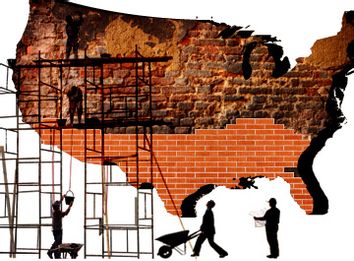
One man can’t fix a broken country

Behind the scenes, Obama has been part of a promising rebuilding project

  • more
    • All Share Services

A year into the Obama era, some progressives are feeling a mixture of sadness, resignation and disillusionment. Not me. 

Instead, I am energized and hopeful that the administration — and millions of regular Americans far from the halls of power — have laid a sturdy foundation for a strong, equitable, opportunity-rich America for the 21st century. 

To see where we’re going, though, we have to remember where we were a year ago. On the day America inaugurated its first black president, this was the fourth paragraph of the New York Times lead story on the swearing-in, headlined “Obama Takes Oath, and Nation in Crisis Embraces the Moment”: 

“But confronted by the worst economic situation in decades, two overseas wars and the continuing threat of Islamic terrorism, Mr. Obama sobered the celebration with a grim assessment of the state of the nation rocked by home foreclosures, shuttered businesses, lost jobs, costly health care, failing schools, energy dependence and the threat of climate change.” 

A year ago, we were in a tragically difficult state. But since then, we have steadied our listing ship.

Through the hard work of politicians and advocates, we have strengthened our national safety net at a time when more Americans than ever need its help; we are on the verge of passing historic, if limited, reforms to our broken health insurance system; we have invested in innovative and promising local policies that lift up all Americans; we have created a policy environment where proven results — not ideology or wishful thinking — drive investments; and, as we have seen in New Orleans and Haiti, we have begun to regain our role as compassionate change-makers at home and across the globe.

But we cannot expect a few hundred people in D.C. to fix our country by themselves. While the movement for change reached its zenith when it swept Obama into office a year ago, you could first sense its power back in February of 2007, when more than 15,000 braved the bitter cold of Springfield, Ill., to watch Obama announce his candidacy. 

During that speech, Obama reflected on his decision to move to Chicago to take a low-paying job organizing communities on the South Side of Chicago. He said he was “motivated then by a single, simple, powerful idea — that I might play a small part in building a better America.” 

That is the most powerful lesson of Obama’s presidency so far. We have seen clearly that he cannot force change through on his own. A better America is built one “small part” at a time. The first year of the Obama era has been bumpy, but promising. We must now take our own “small part” of this nation and make it more fair, more just, more true to our best ideals. Year 2 of the Obama Era is our year. 

 Angela Glover Blackwell is the founder and CEO of PolicyLink, a national research and action institute advancing economic and social equity.


Is the jobs summit just a photo op?

Not if Obama focuses on creating work for the Americans who were left behind even before the recession

  • more
    • All Share Services

Is the jobs summit just a photo op?Job seekers wait in a line that stretches around the block and doubles back on itself to get into the Women For Hire Career Expo in New York, Tuesday, Feb. 24, 2009. Thousands of people showed up for the event where about forty employers were talking to prospective hires. (AP Photo/Seth Wenig)(Credit: Associated Press)

Some of the best minds of this generation are getting together at the White House jobs summit this week to get our economy back to pre-recession levels.

But if they do only that, we will all fail.

President Obama is right to bring together some of the nation’s top business, labor and community leaders to figure out how to bring jobs into the recovery. But just re-creating the past is not enough. We must create a new financial structure — an inclusive, expansive economy that harnesses the skills of all people.

An economic recovery that doesn’t lift up low-income people and communities of color is no recovery at all. President Obama has shown he is committed to a recovery for all, which is why I am honored to be one of several nonprofit and advocacy leaders who will try to bring the voices of struggling Americans to the table at the jobs summit.

Bringing disinvested communities to the forefront is vital for a 21st century economy that serves workers, communities and corporate bottom lines.

We can no longer allow the talents and potential of tens of millions of Americans to be wasted. We can no longer let entire cities simply fade and crumble in a cloud of unemployment and lack of interest.

While the federal stimulus package helped keep the nation from sliding into another Great Depression, the challenges we continue to face are staggering:

• One in six black men is unemployed.

• One in seven Latinos is unemployed.

• The unemployment rate for those without a high school diploma has almost doubled since the recession began, to 15.5 percent.

• Twenty metro areas have unemployment rates above 14 percent.

These problems didn’t appear overnight, of course. Decades of disinvestment in many American communities has left us reeling. We are wasting the most precious resource we have — the ingenuity and hard work of millions. We need all Americans working on all cylinders to keep our economic engine running. A stagnant economy that leaves millions behind cannot compete in the global marketplace.

That is why many of the America’s most forward-thinking business leaders support equity, too. They need employees from every skill range. International investors give strong preference to companies situated in areas with a diverse, well-trained and accessible workforce. They can see the new jobs coming, but rely on smart public policy to provide them with qualified, nearby workers.

Innovative leaders know that we must first invest in the people and communities who need help most. In fact, just this week, Kansas City Power & Light committed $48 million to create a “smart grid” in some of the city’s lowest-income areas — creating jobs for local residents and keeping energy costs down. The grid is the first step in a groundbreaking “Green Impact Zone,” which will transform a long-ignored community into a sustainable model for other distressed urban areas.

Cutting-edge corporations already know where the jobs of tomorrow will be, but it is up to all of us to make sure those jobs go to communities that need them most. In a recent analysis, Google found that we will create 9 million new clean energy jobs by 2030. These jobs aren’t for Ph.D.s in pristine white lab coats, huddled around bubbling beakers. Rather, the bulk of these jobs are in construction and operations — so-called middle-skill jobs that require only a year or two of training beyond high school.

As I often say, “equity is the superior growth model.” For America to reach its economic potential, every American must have the opportunity to participate and prosper.

So, how do we ensure “equity” is the primary driver of our long-term and short-term economic plan? Real, sustainable economic recovery requires that we:

1. Train the next generation of middle-skill workers.

We know a high-school diploma just won’t cut it for the jobs of tomorrow. But a four-year college degree isn’t feasible for every student. One or two years of training after high-school can train a young person (or retrain an older one) for high-wage jobs like lab technicians, machinists and operating engineers. By investing a set percentage of every infrastructure dollar in job training, we would help save the economy of today and build the economy of tomorrow.

2. Stop foreclosures and put people to work keeping foreclosed properties from becoming blighted.

While exurban McMansions are often the public face of the foreclosure crisis, poor communities and urban communities of color have been hit particularly hard. Keeping homeowners in their houses and abandoned houses clean is the key to stopping entire communities from falling apart.

3. Start the “green revolution” in low-income communities.

The fight against climate change can begin at home, quite literally. By retrofitting thousands (or even millions) of homes in poor neighborhoods, we can dramatically cut our energy use and help working families save money on their energy bills. Those cutting-edge construction and technology skills stay with a person even after the retrofits are done, too. But most important, we can put thousands of people to work lifting up their own communities.

4. Invest in the long-term infrastructure of all communities.

We must even out the country’s lopsided and ill-conceived infrastructure spending. While money continues to flow to new suburban highway construction, many low-income communities are left without the adequate public transit they need to access good jobs. Expanding broadband lines to poor communities could also unleash pent-up entrepreneurship. All of the construction and maintenance jobs created by these investments are within reach of middle-skill workers and would serve as a solid foundation for local economic growth. A National Infrastructure Bank, which has already had traction on Capitol Hill, is a perfect way to keep our infrastructure investments focused on the long-term needs of all Americans.

None of these ideas on their own is enough to bring the national economy to full vibrancy. We need a multifaceted, multiyear approach to restarting our jobs engine. Short-term job creation efforts must serve the long-term economic interests of all communities.

The jobs summit is a wonderful step in the right direction. The lessons learned by labor leaders, global CEOs, small-business owners and innovative nonprofits must be joined together to create a 21st century economy that serves everyone.

Our objective Thursday is not to simply re-create the old way of doing business. It’s to imagine a new world of economic possibility. 

Continue Reading Close

Make the stimulus big, smart and fair

Don't build more car-choked highways and bridges to nowhere. Investing in jobs, transit and people will build a prosperous, inclusive America.

  • more
    • All Share Services

Make the stimulus big, smart and fair

The broad outlines of Obama’s recovery package are becoming clear: heavy on the roads and bridges, with a healthy side of tax cuts. But I hope it doesn’t end there. The package should not only boost the economy in the short run, but also set up communities across the country to compete and thrive in the long run. There’s only one way to do that: invest equitably.

So, what kind of recovery package would make sense?

Three words: big, smart and fair. 

The current economic crisis has hit low-income people and communities of color first and worst. We have to rethink how and where we make these investments. By just pushing $700 billion (or more) down the same pipeline we always have, we will end up with many new car-choked suburban highways and plenty of pet projects for the politically connected, but we would miss a truly historic opportunity to improve our economy, our environment and our communities. We need to put a down payment on a prosperous and inclusive America.

We have to invest where people live and where they need the most help. Two-thirds of Americans — and the vast majority of the nation’s poor — live in urban regions. By fixing and expanding existing infrastructure there, we can lay the foundation for long-term growth and get struggling residents back to work. We also must invest in the rural areas that have never benefited from the infrastructure many Americans take for granted.

By being smart about the places, people and projects we invest in, this recovery package could be the greatest poverty-fighting tool we’ve seen in generations.

The No. 1 question we should ask when we look to make these investments is, “Does this support the national good?” Will the project expand the economy, create jobs and strengthen our communities?

To answer that question, we have to think about the kind of America we want. With the help of this stimulus, we could move toward a nation that is more competitive and vibrant and richer with opportunity for all people.

We shouldn’t limit ourselves to the outmoded idea that infrastructure means only roads, bridges and other traditional public works projects. We can expand and improve public-transit systems to connect workers to jobs, cut down on greenhouse gases and create thousands of good-paying construction jobs. We can rehab our schools to make them greener, healthier and more energy-efficient environments for our children.  We can install broadband lines in low-income communities and help connect entrepreneurs and small businesses to the digital revolution.

We can also use the recovery package to encourage new grocery stores to come back to the low-income communities of color they abandoned decades ago. New fresh-food stores could dramatically increase healthy eating, reduce the out-of-control rates of obesity and diabetes in these communities and provide a vibrant, long-term source of retail jobs for local residents.

The stimulus shouldn’t be only about building structures, either. It should be about building up people and communities — our human capital. By ensuring that 1 or 2 percent of the cost of every project is set aside for job training, we can create a pipeline to get low-income young men and woman and youth of color trained and ready to be part of the massive workforce we will need to get all these projects built. Community colleges are a perfect venue to train people for a new generation of blue-, white- and green-collar jobs.

There is a lot of pressure right now to pump this recovery funding into “shovel-ready” projects that are ready to go on Inauguration Day. We should be cautious about that approach. Too many of the “shovel-ready” projects were conceived and planned under the old way of thinking. If we just move ahead with the ready-to-go lists floating around Washington, we will end up with the same misguided infrastructure projects we’ve always had.

Instead, let’s take a moment to figure out which projects make the most short- and long-term sense. Let’s bring low-income and urban residents to the table and listen to their ideas for how to improve their communities for today and tomorrow.

We have one shot to get this right. We need to make sure we’re lifting up Americans as we lift up the American economy.


Continue Reading Close