Ben Van Heuvelen

Help the Gulf Coast: Five ways to volunteer

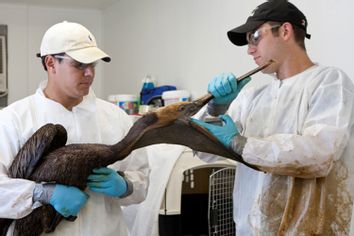
Here are easy ways even a desk jockey can make a difference for the pelicans in the Gulf -- or near you

  • more
    • All Share Services

Help the Gulf Coast: Five ways to volunteer

View the slide show

The headlines from the Gulf Coast are hardly inspirational, and for most of us, they’re also far away. Short of taking your largest straw out to sea and sucking up the oil yourself — which you couldn’t do anyway, since you’re stuck in an office all week — you don’t know how to help. As it turns out, no matter how lazy (or ambitious) you are, there are plenty of ways to volunteer in response to this crisis. Here are five quick ideas for a range of do-gooders, from the slothful to the zealous.

View the slide show

How Rand Paul became the Tea Party’s Obama

His father's libertarian army and Rush Limbaugh's "Dittoheads" aren't natural allies. But Rand Paul has united them

  • more
    • All Share Services

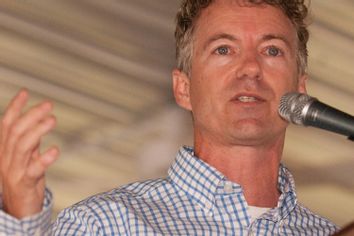
How Rand Paul became the Tea Party's ObamaRand Paul speaking in Fancy Farm, Ky., in 2009.

On the afternoon of Dec. 16, 2009, the 236th anniversary of the Boston Tea Party, Rand Paul left the office of his small ophthalmology practice in Bowling Green and drove 30 miles to Russellville, Ky. In an election year without the Tea Party movement, Rand Paul’s campaign to become Kentucky’s next U.S. senator would be just as quixotic as the bid his father, Ron Paul, made for the Republican presidential nomination in 2008. The younger Paul has never before run for political office, and he shares many of his father’s unorthodox views, including a desire to abolish both the Federal Reserve and the Department of Education. Yet, today he would address Kentucky’s Logan County Republicans as the race’s front-runner.

At the Republican Party headquarters in Russellville, Paul took the podium. Dimpled and handsome, 47 years old, with boyishly tousled salt-and-pepper hair, he surveyed the audience, a crowd of mostly retirement-age GOP stalwarts. Then, in a casual and articulate drawl, Paul committed an act of heresy that would have once doomed any Kentucky Republican: He attacked the state’s senior senator, the minority leader, Mitch McConnell. The oratory opened with a display of subtle rhetorical agility worthy of Mark Antony.

“I got into this initially because there were rumors they were trying to push Jim Bunning out of office,” Paul began. “I said to a reporter, ‘I think that’s wrong.’”

The two-term Sen. Jim Bunning was the slain Caesar of the stump speech. Playing the role of Brutus, of course, was McConnell, whose hand rests on the GOP’s national fundraising taps, and who, with a twist of the wrist, had effectively forced Bunning into retirement. Without directly accusing the honorable Republican leader, Paul decried Bunning’s martyrdom.

“I think he’s done a good job for us,” he said. “He has been conservative, and when the bank bailout came up, Jim Bunning had the courage to vote against it.” Paul didn’t need to tell this group that Bunning had done so in defiance of McConnell — and he was too gentlemanly to belabor the point. The implication was clear: The party boss had taken Bunning down for his principles.

To take Bunning’s place, McConnell had groomed Trey Grayson, a five-generation Kentuckian and fellow graduate of the University of Kentucky Law School — the “leadership academy” of Kentucky politics, as some call it — who is Kentucky’s current secretary of state. Most impressive on Grayson’s political résumé is that he won reelection in 2007, even as the state overwhelmingly elected a Democratic governor. In a state where 60 percent of voters are registered Democrats, Grayson (who is himself a lapsed Democrat) had valuable crossover appeal. When McConnell began assessing Bunning’s electoral prospects in early 2009, Grayson must have seemed especially appealing in contrast. The insubordinate and gaffe-prone Bunning had recently responded to Justice Ruth Bader Ginsburg’s diagnosis of pancreatic cancer by coldly forecasting that she would be dead within a year.

Grayson started the race with party backing, a reputation for competence, an ideal political résumé, and a 6-foot-5 frame that gave him an air of authority that his unspectacular public speaking sometimes lacked. When the first polling was done in September ’09, Grayson had a 34-25 percent lead. Within four months, though, the numbers had reversed, and Paul told the Logan County Republicans why.

“If there’s ever a year for an outsider who has never held office before, this is the year,” Paul said. He recounted tales of Tea Party events. Seven hundred people in his hometown of Bowling Green had rallied on April 15; there were 4,000 in Louisville a few months later. By contrast, Paul said, “The biggest GOP event I’ve been to in the last seven months — 200 people in Louisville. You can see how the Tea Party movement is big and it captures the discontent that’s out there, and sometimes discontent with both sides.”

The political divide between Paul and Grayson broadly represents a larger fault line within the GOP: It’s Republicans who blame the Democrats versus Republicans who blame the government. A day earlier, on Dec. 15, 2009, a coalition of Tea Party groups had held an emergency “Code Red” rally in a park just north of the Capitol. Addressing the crowd was Sen. Jim DeMint of South Carolina, who appears to be making a bid to replace McConnell as the leader of the Senate Republicans.

The crowd was about 1,000 strong and half were wearing bright red jackets and hats, to signify the imminent threat posed by the healthcare bill, which at the time seemed close to passing. Several were waving the yellow Gadsden flags of the American Revolution, which feature the words “Don’t Tread on Me” and the image of a coiled rattlesnake ready to strike. Most of the protesters were middle-aged and white, more men than women — a representative sampling of the Tea Party movement, which (polling has since shown) is slightly older, wealthier, better-educated and angrier than the average American.

“Over a year ago,” DeMint said, “Americans voted for a president who promised to cut taxes, cut spending, cut debt.” His amplified voice drowned in a chanted chorus of “liar, liar.” A woman with short gray hair and rosy cheeks that matched her red sweat shirt held a sign that read “Obama bin Lyin.”

DeMint finished his attack on Obama, then pivoted to Republicans.

“Democrats and Republicans, if they’re not standing up for our Constitution, for a balanced budget and the principles of liberty … then you send us people that believe as you do that this country is about freedom and now is our time to fight for it,” he said, and waved to the applauding crowd.

In the GOP’s soul-searching after its 2008 losses, DeMint has been a conservative hard-liner. The rise of the Tea Party has dovetailed with DeMint’s ambitions to trim the moderate fat, push the party to the right, and ultimately lead it. To that end, DeMint has grown his leadership PAC, the Senate Conservatives Fund, into a powerful alternative to the National Republican Senatorial Committee, which is the fundraising arm of the Senate Republican caucus that McConnell leads. Over $340,000 worth of support from DeMint’s PAC fueled one of the Tea Party’s biggest electoral victories to date, when the right-wing Marco Rubio pulled so far ahead in the Florida polls that the incumbent Republican governor, Charlie Crist, left the party to run as an independent rather than lose in the primary.

DeMint’s endorsement of Paul came only recently, on May 5, the same day McConnell gave his official backing to Grayson.

According to Paul’s campaign manager, David Adams, Paul and McConnell met seven months ago at the Louisville airport, but haven’t met since. Adams confirmed that Paul has not pledged his support for McConnell as leader of the Senate Republicans.

“We haven’t even really seriously talked about the fall election,” Adams said, “and that’s way before something that might happen in the beginning of 2011.”

It seems likely that Paul is waiting to see where the fault line breaks after this election. With his own fundraising machine, he hasn’t needed McConnell’s support. And if Tea Party candidates are widely successful, then DeMint could become the GOP’s new kingmaker. Rand Paul would certainly be a favorite son. In fact, he is already the telegenic, silver-tongued, politically savvy son of the man who won the Conservative Political Action Conference straw poll, which gauged Republican sentiments in anticipation of 2012.

It all started with a bomb

Rand Paul’s success can be understood in the genealogy of the Tea Party movement. Its viral and decentralized traits, the intellectual foundations of its libertarianism, and its fundraising tactics all come from Ron Paul’s presidential campaign.

The first Tea Party event of the Obama era was arguably a Ron Paul “money bomb” fundraiser; and the story of that event is the primal example of how the medium of the Internet and the power of American mythology have combined to unify a movement of militant individualists.

The forefathers of the money bomb are two Paul-ites in their mid-30s, Trevor Lyman and Vijay Boyapati. They met online in the fall of 2007 through their shared enthusiasm for Ron Paul, quit their jobs, and moved to New Hampshire to start Operation Live Free or Die, a PAC with the goal of recruiting 1,000 fellow supporters to knock on every door in the state before the presidential primary. Boyapati, an early Google employee who cashed out at the height of the market, bankrolled much of the operation and coordinated the door-knocking. Lyman built the bombs.

His inspiration was the movie “V for Vendetta,” which had gained a cult following among libertarians. The film depicts a dystopian vision of a modern British government co-opted by corporations and transformed into a totalitarian state, which is violently attacked by a masked insurgent who styles himself after Guy Fawkes, the terrorist who was caught on Nov. 5, 1605, attempting to bomb Parliament while its members and the king were inside.

Lyman designed a time bomb of his own: a website that would, over several weeks, collect pledges to donate to Ron Paul. On scores of Ron Paul websites, MySpace and Facebook groups, and libertarian message boards, users began posting live tickers tied to Lyman’s database, which continuously updated the pledge total. On the 402nd anniversary of the Gunpowder Plot, the money bomb would trigger a multimillion-dollar blast of coordinated individual donations. It was a novel method of small-donor bundling. A campaign contribution feels important and exciting in proportion to its size; with the money bomb, small contributors became co-conspirators in a larger scheme, and every additional donor they recruited gave them a larger stake in the fundraising total. The first money bomb on Nov. 5th raised $4.2 million.

The Ron Paul online message boards are usually chaotic and contentious — libertarians are by disposition even less likely to sublimate their egos than your average Internet commentator — but within a few days a consensus formed that another money bomb should be set for Dec. 16. “The free market of ideas,” as some Paul-ites call their online community, was functioning efficiently.

Meanwhile, in Dartmouth, Mass., a 49-year-old floor installer named Bob Dwyer had been exploring some Internet message boards and clicked a link to a video of Ron Paul. Like many who are drawn to Paul, Dwyer felt he was finally hearing a convincing explanation of the country’s problems. Unlike the traditional left-right debates, Paul’s was a story of freedom versus oppression that paralleled the original American Revolution.

“Traditionally, I used to think the Democrats are for the poor, Republicans are for the rich, and I was always a poor person, so why would I vote for a Republican?” Dwyer said. “But Ron Paul, he was teaching me, maturing me, educating me.”

A registered Democrat for most of his life, Dwyer had never been politically active, beyond simply voting. Yet he found himself discussing Ron Paul with fellow dads on the sidelines of his daughters’ soccer games with such enthusiasm that people began asking if he was volunteering for the campaign. He used Ron Paul’s website to find and join a Boston-area Meetup group. After the first money-bomb success, the group began discussing what they should do for Dec. 16.

The inspiration struck Dwyer in his sleep. On Tuesday morning, Nov. 13, he awoke with the idea to hold an event, in conjunction with the upcoming money bomb, at Boston’s Faneuil Hall –  where many of the Founding Fathers met to plot their responses to the oppressions of the British Parliament, including the original Tea Party.

“I hate to say it, man, but if it’s not spooky to you, I feel like it was divine providence,” Dwyer said, looking back on that morning. “It was like the Founding Fathers came to me in my sleep and stuck the torch of liberty in my hand.”

The 60 regular members of the Meetup group had been just as fractious and strong-willed as the users of the Ron Paul forums. Dwyer had already quit one Meetup in Providence, which convened closer to his home in the south coast of Massachusetts, after his frustrations with the personality politics had boiled over. The Boston group wasn’t much better. Dwyer and a co-organizer clashed frequently; one day, while setting up a checking account for the group’s fundraising, the two even got into a shouting match in the middle of a bank.

Yet the Boston Meetup group was universally electrified by the Faneuil Hall idea. Within three weeks, they had worked together to register a PAC, raise over $10,000, purchase radio ads to promote the event, set up a live Web feed, and negotiate access to the hall, which had already been reserved by members of the 9/11 Truth movement (who could perhaps also lay claim to the first event of the Tea Party movement, having dumped copies of the 9/11 Commission Report into the Charles River a year earlier). Ron Paul would be in Iowa that day, stumping in preparation for the Jan. 3 caucuses, but Dwyer had seen Rand standing in for his father at a straw poll in New Hampshire and knew he could be the headliner. The younger Paul agreed to come to Boston.

What got the Meetup groups through the personality conflicts, Dwyer said, was participants’ shared enthusiasm for a larger goal.

“How do we take the country back, with a herd of cats?” he said, reflecting on the lessons he has learned as a libertarian organizer. “The symbol has to be something so powerful that everybody just feels it, for people to bypass and become more tolerant of each other.”

The son finds his calling

A northeaster had come in the night before, and the snow and ice blew sideways as a crowd of about 200 assembled at noontime on Dec. 16, 2007, in front of the Old State House, where the Declaration of Independence was first proclaimed. Waving Ron Paul signs, they marched the Freedom Trail to Faneuil Hall, “the Cradle of the Revolution,” a three-story brick building with a white bell tower rising above the crest of the roof.

Inside the great hall, a high balcony overlooked the main floor where the crowd gathered. Along the back of an elevated stage were stone and bronze busts of heroes of American history, and above the statues hung George P.A. Healy’s painting, the size of a Times Square billboard, of Daniel Webster’s 1832 reply to Robert Hayne, in which he argued for the supremacy of federal power over states’ rights. Most people were dressed in winter layers; a few were wearing tri-cornered hats and white curly wigs. The crowd embraced the spirit of historical reenactment and, as the program began, the audience responded to the speakers by shouting their own “huzzahs” and outraged words of dissent, as one might imagine the Sons of Liberty had done in their colonial town hall two centuries earlier.

Rand Paul took the stage to hearty cheers. He wore a dark blazer and the same snowman tie he would wear exactly two years later as a U.S. Senate candidate in Logan County. He had stood in for his father on the campaign trail before, and he spoke with the confidence and timing of a preacher addressing the converted, making jokes, anticipating the applause, knowing when to pause for the clapping to die down and when to raise his voice over the crowd to incite yet more noise. The speech was well tuned to the revolutionary enthusiasm in the room.

“They say the British scoffed at the American rabble,” Paul began. “They laughed at the Americans, their imperfect uniforms, their imperfect tactics. They laughed at retreat after retreat of the American army. They laughed right up until Yorktown.”

The crowd laughed and whooped.

“Today, you are that American rabble: the disgruntled, the disillusioned, the cynical, the bereaved — bereaved at the loss of liberty,” he said. “The establishment from their high-rise penthouse views laughs at you, laughs at us.”

As opening gambits go, the red-meat populism played perfectly — and it was also something of a contrast to Ron Paul. The elder Paul is professorial by disposition, and his followers tend to like and trust him precisely because he doesn’t talk like a typical politician. Rand, on the other hand, was rhetorically shrewd. He delivered most of his lines in an almost weary tone, as Southerners sometimes do to emphasize that they’re speaking common sense. He aimed first for emotional appeal, winning the crowd over before trying to teach them anything. His political philosophy, where it emerged, was specific enough to sound intelligent and general enough to seem universally unobjectionable. When he approvingly quoted his father — “achieving power is never the goal in a truly free society; dissipation of power is the objective of those who truly love liberty” — it sounded not like a substantive and radical proposition, but like the height of modesty, since it was coming from a man who had power over the room. The virtue of the man elided with his words.

In light of Rand Paul’s economic analysis, which is largely consistent with his father’s, the Tea Party day event made perfect sense. According to both Pauls, one of the most insidious instruments of government oppression is the Federal Reserve. Untethered from the gold standard and the Bretton Woods system, and insufficiently accountable to Congress, the Fed creates money by fiat. One problem with this, the Pauls believe, is that every time the Fed creates more dollars, the less $1 is worth. If I have several thousand dollars in my savings account, and the value of those savings is suffering because the Fed is printing money to support the profligate spending of the government, then I am paying the price. In other words, I am being taxed — invisibly, by the chairman of the Fed, whom nobody elected.

This invisible taxation without representation, so viewed, is not unlike a modern-day Townshend duty on tea.

Several people that day told Rand Paul that he should run for public office. The experience was formative for him, according to David Adams, his Senate campaign manager, giving him a visceral experience of the energy of the grass roots. The Tea Party money bomb also raised over $6 million, the largest single-day political fundraising event in history.

“It doesn’t take a majority to prevail,” Rand Paul said in his speech that day, quoting Sam Adams. “It takes an irate, tireless minority, keen on setting brush fires of the mind.”

On Tax Day, a candidacy is born

After the financial crisis hit in September 2008, Paul-ite distrust of the Federal Reserve gained mainstream currency: You didn’t need to watch a 40-minute YouTube video of a Ron Paul economics lecture to believe that the U.S. government was in some way enabling Wall Street’s financial benders, at taxpayer expense. As Barack Obama’s incoming administration prepared a massive economic stimulus package, the same political winds that had given the new president his momentum also stoked the brush fires.

The founders of the Southern Kentucky Bowling Green Tea Party, the group in Rand Paul’s hometown, were Wesley J. Leake, a retired senior mechanical and safety inspector for the American Petroleum Institute, and his wife, Mary Jo, a nurse. Wesley doesn’t remember where he heard of the first national protest. It was probably e-mail forwarded from a friend — “one of those e-mails saying ‘do this, send that, call this number and support this, and so forth,’” as Wesley put it. “I remember thinking, ‘That’s a novel idea. If enough people do it, maybe it’ll get people’s attention.’” On Feb. 1, 2009, Wesley was one of many thousands of people to mail a tea bag to the White House.

The idea for the tea-bag protest probably made its way to his in box, indirectly, from a message board attached to the libertarian financial-news blog Market Ticker. It is there that the earliest known documentary record of the first national Tea Party protest exists: a post by a part-time stock trader named Graham Makohoniuk, who suggested that “everyone mail tea bags (used or new, I guess) into CONgress and the Senate.” At the end of his message, he added, “If a picture is worth a thousand words, how many is a symbol worth?”

Neither of the Leakes had been politically active. They were content living on their small farm. But from that single act of protest, in Wesley’s telling, he and Mary Jo soon became Tea Party activists.

“Across the Internet came this thing,” Wesley explained. “Why don’t we, people of a conservative nature — that think that spending and fiscal irresponsibility is out of hand, that there are not companies too big to fail — why don’t we show up, since we’re taxed too much, let’s show up Tax Day somewhere and holler at the government.”

On Tea Party Patriots, a website that functions partly as a national registry of local Tea Party groups, they discovered there was no Bowling Green group, so they started one. They joined weekly conference calls with other local organizers around the country, moderated by a Tea Party Patriot named Jenny Beth Martin. On Glenn Beck’s show, Wesley heard of the related 9/12 movement (and would later travel to Washington, D.C., for the Sept. 12, 2009, protest on the Mall). Taking guidance and inspiration from the national network, the Bowling Green Tea Party began to plan an event for Tax Day, recruiting speakers, making fliers, contacting media outlets.

“People just kinda showed up,” said Wesley, who was surprised at how readily fellow Tea Partiers worked to put on the event. “And so word got around, and the media here gave it a little publicity, and people just showed up — people saying, Well, what can we do about this deal?”

In the early evening of Wednesday, April 15, 2009, about 700 people gathered at the edge of Fountain Square Park before a speaker’s platform equipped with a single microphone and an overmatched P.A. system. Behind them, at the center of the park, was a circular fountain atop which stood a bronze statue of Hebe, the cup bearer of the gods, who plied the Olympians with nectar and ambrosia.

The first speaker of the day was Rand Paul, who by then had said he might run for the Senate if Bunning were to retire. He was greeted with a few homemade “Rand Paul for U.S. Senate” signs, and he seemed to have already plotted his outsider-candidate talking points. Obama had been able to pass the stimulus bill, he said, because Republicans under George W. Bush had lost the moral authority to oppose deficit spending. Rather than deliver a high-minded lecture on the Federal Reserve, as his father might, he painted a visceral picture of inflation, forecasting $12 gallons of milk and telling of workers in the Weimar Republic being paid in wheelbarrows full of worthless currency. The culture of political handouts was to blame for the deficit, Paul argued, and toward the end of his speech he fired a warning shot at McConnell — the ranking member of the Senate Appropriations Committee, who has used his seniority to secure millions of dollars in federal funding for Kentucky, from infrastructure projects to research grants for his alma mater.

“Instead of asking them to bring home the bacon, let’s bring home the politicians,” Paul declared, his biggest applause line of the speech. “Get connected with the Tea … The people here in this group, if you got together and worked, could easily elect a candidate.”

There are 30 Kentucky Tea Party groups registered on Tea Party Patriots alone — Grassroots Patriots, Ignorant Hillbilly Patriots, Kentucky Freedom Coalition, Ohio County Team of Patriots Undivided Standing (OCTOPUS), to name a few — and they held rallies that day all across the state.

Libertarianism in the key of Glenn Beck

Rand Paul formally announced his candidacy on Glenn Beck’s radio show last Aug. 5. A week later, Beck had him back on. After their show the previous week, Beck said, “I shut off my microphone and went, ‘I think I agree with him, and strangely trust him.’ So either my gut has gone all crazy, or maybe you’re the real deal.”

“It’s funny,” Paul responded, “on the way home I was reading a little book called ‘Common Sense’ on the plane and it sounded like something I might have written.”

“Oh, stop it, Rand,” Beck said. (His latest book, styled after Thomas Paine, was titled “Glenn Beck’s Common Sense.”)

Like the best American politicians — and professional provocateurs like Glenn Beck — Paul tells a story of the country’s past greatness, its decline and its possible redemption. He shows his followers where they are in the arc of American history.

In Paul’s narrative, the hero is the Constitution — a totemic symbol representing the Founding Fathers. Its distress began with Franklin Roosevelt, who in 1936 threatened to appoint eight additional justices to the Supreme Court, thereby bullying Chief Justice Evan Hughes into supporting the New Deal. The Founders had guarded against such government expansion by clarifying, in the ninth and 10th amendments, that all powers, unless explicitly granted to the federal government, were reserved for the states and the people. The Supreme Court found a loophole in the commerce clause, which simply states that Congress has the power to regulate commerce among the states. Liberally interpreted, “commerce” is understood to include activity with ramifications beyond a state’s borders — which, in today’s interconnected economy, covers quite a lot.

As Paul once put it on the stump, “That’s the opening that they drive the truck — the huge behemoth of the federal government — goes through the opening of the Commerce Clause.”

The dysfunctional culture of Washington, in Paul’s telling, is a direct result. We send good people to represent us in Washington and they come back dirty because the unrestrained federal government is corrupting them. Blame is spread across the aisle; it’s not just Barack Obama who has indulged in deficit spending, but Ronald Reagan, George W. Bush, Mitch McConnell, and Kentucky’s other elder statesman and pork-barrel champion, Rep. Hal Rodgers. This view jibes well with the Tea Party perspective: According to the recent New York Times/CBS poll, a surprisingly large 40 percent of Tea Partiers approve of their congressional representatives, but only 1 percent approve of Congress. If power is corrupting our elected officials in Washington, then the solution is to reduce Washington’s power.

Against such a narrative, Paul’s Republican primary opponent, Trey Grayson, at first tried to run on his own record. Grayson has a policy wonk’s enthusiasm for the workings of government; he implemented a civic literacy program in the state’s public schools. And he brought a businessman’s efficiency to bear on the secretary of state’s office, cutting staff, office space and spending. He gained some national prominence leading a coalition of secretaries of state, in the wake of Bush v. Gore, to reform elections. In short, he is a technocrat.

Grayson can be forgiven for believing that his best talking point might be his experience, given that his opponent had none. When the first public polling was done late last summer, Paul had already gained name recognition and notoriety through his appearances on cable television and at rallies around the state, but Grayson still generally led in the polls by double digits.

In the current atmosphere of populist heat, however — 53 percent of Tea Partiers classify themselves as “angry” at the way things are going in Washington — the federal government doesn’t need a mechanic, it needs a demolition man. With McConnell’s imprimatur, Grayson was practically an incumbent, which had suddenly become a mark of shame. On the stump, Paul brushed aside Grayson’s proven competence by quoting a favorite passage from Barry Goldwater’s book “The Conscience of a Conservative”:

I have little interest in streamlining government or in making it more efficient, for I mean to reduce its size. I do not undertake to promote welfare, for I propose to extend freedom. My aim is not to pass laws, but to repeal them. It is not to inaugurate new programs, but to cancel old ones that do violence to the Constitution or that have failed their purpose, or that impose on the people an unwarranted financial burden.

Paul has defined himself by what he is against. He hasn’t needed to offer detailed solutions — or an explanation, say, of how one might enjoy freedom without a functioning social contract to ensure the general welfare. So far, it has been enough for him to claim that reducing government will also shrink the problems attached to government.

Untethered from the burden of specifics, he has traveled the state in a classic display of retail politics, speaking at gatherings of mainstream Republicans, dissident militias, and everyone in between. In contrast to most campaigns, which often depend on staff to reserve venues and advertise events, Paul has reached hundreds of voters at a time simply by accepting invitations from Tea Parties to show up and talk. By last December, he led Grayson in the polls, 44 percent to 25. Paul was soon endorsed by Sarah Palin.

Toward the end of March, with the polls still forecasting a Paul victory, Grayson began attacking Paul on national security. (The strategic shift bears the mark of McConnell; the minority leader stepped in as de facto campaign chief for both of Bunning’s Senate runs when Bunning was in trouble.) In a television ad, a skeptical narrator suggested that Rand Paul was hiding some “strange ideas,” including his opposition to the Patriot Act and his observation that the American military presence in the Middle East might have provoked the 9/11 attacks. It was stale Republican boilerplate that could have been written for Bunning in 2004. In a variation on that theme, Grayson’s campaign also produced a lurid Web video that spliced together footage of Paul speaking on foreign policy and Jeremiah Wright screaming, “God damn America!”

The ads didn’t move the polls. For one thing, Paul had the war chest to fight back with ads of his own. His online fundraising has brought in nearly $3 million — $500,000 of it from a diffuse assortment of libertarians and Glenn Beck fans outside Kentucky. (By contrast, Grayson’s quarter-million-dollar out-of-state haul comes largely from the mainstream fundraising centers of New York and D.C.)

With resources equal to Grayson’s, Paul’s campaign aired a well-produced television ad. With a picture of the twin towers smoldering on the screen, Paul speaks of his “outrage at terrorists who killed 3,000 innocents. America was attacked, and fighting back was the right thing to do.” At the end of the 30-second spot, Paul looks into the camera and says, “Trey Grayson, your shameful TV ad is a lie, and it dishonors you.”

For anyone expecting a Ron Paul-like reaction, Rand’s ad represented a surprising level of political savvy, personal restraint and ideological compromise. Substantively, the younger Dr. Paul was breaking from his father by proclaiming support for a foreign war. He was also ignoring Grayson’s bait. He didn’t defend — or draw attention to — his own perfectly reasonable, willfully misinterpreted, and potentially unpopular ideas.

Rand Paul takes far less pride in his iconoclasm than his father does, and where his ideas diverge from the Republican mainstream, his messaging is savvy. On national security, he frames his non-interventionism as both a cry for fiscal sanity — wars are expensive — and a defense of the Constitution. Either way, a discussion of national security leads naturally back to a criticism of big government, which is the real problem.

Across the ideological spectrum, Americans believe the country’s political process is broken — and in an age of online political organizing, just as the left wing’s grassroots discontent found powerful expression in the unifying symbol of Barack Obama, the right wing’s indignation has found the iconography of the Boston Tea Party.

If elections are about competing narratives, then Grayson hasn’t found one to match Paul’s. Lately, Grayson has taken to echoing him. Just as one got the sense that John McCain was finished in 2008 when he started over-using the word “change,” Grayson’s railing against big government hardly seems like his authentic position, if only because Paul started saying it first. In a primary that Paul has turned into a referendum on “believability,” Grayson’s pander — even a pander in the right direction — has seemed like a strike against him.

The political genius of Paul is his ability to cultivate a narrative that speaks to all strains of the Tea Party movement at once. After all, the libertarian purists who loved Ron Paul’s dissident truth-telling are not natural allies of the Limbaugh Dittoheads who dismissed him as an eccentric. He sings his libertarianism in the key of Glenn Beck – and he is writing a Republican playbook for the tea party era, turning grassroots energy into electoral power. Now, less than a week before the primary, polls show Paul’s lead over Grayson approaching 20 points. He also leads both of his potential Democratic challengers in the general election polling.

In an election rife with symbolism, the most telling augur came a month ago, on April 14, when the ousted Bunning announced his endorsement. Bunning had once given Grayson his blessing to form an exploratory committee to run for his seat, and in many he ways owed his political career to McConnell. Yet Bunning is best understood as the Hall of Fame pitcher he was — one man alone on his mound, and a cantankerous competitor to the end. He seemed determined to defy McConnell’s call for a fresh arm, and, in the spirit of militant individualism, handed the ball directly to Paul.

Continue Reading Close

How the Frisbee took flight

It began with two sweethearts tossing a tin lid in 1937 and ended up a testament to the American Dream

  • more
    • All Share Services

How the Frisbee took flight

There’s an old saying among Frisbee enthusiasts: “When a ball dreams, it dreams it’s a Frisbee.”

What other object has been embraced by athletes, dads on the beach, hippies in the quad, wannabe golfers and dogs? With a little practice and the flick of the wrist, we can make a Frisbee sail a hundred feet and curve according to our flight plan. It stirs the same part of our imagination that wishes we could fly, and has inspired games from Ultimate to Disc Golf to freestyle competitions in which contestants spin discs on their fingers, around their backs, and through their legs, while tumbling.

The father of it all was Walter Frederick “Fred” Morrison, the Frisbee’s inventor. News blurbs reported that he died on Feb. 9 at his home in Monroe, Utah, of lung cancer, at the age of 90. Yet the story of his life’s famous achievement is deeper than his obituary epithet – “inventor of popular toy.” I had the chance to interview him three years ago, and he told me how the Frisbee came to be. It was conceived in teenage romance, survived a World War, and was born from an entrepreneurial spirit both quirky and quintessentially American.

In 1937, Fred was having Thanksgiving dinner with the family of his future wife, Lucile “Lu” Nay. After the meal, the two teenagers escaped to the back yard with the tin lid of a popcorn barrel and began tossing it back and forth. With a backhand wrist snap, the spinning lid would loft into the air and slice sideways, and they made a game of trying to outwit its unpredictable flight.

Soon they were experimenting with pie tins, then cake pans. One day at the beach, a sun bather walked up and asked where he could buy such a toy.

“Right here,” Fred said, and he sold the five-cent pan for a quarter.

Fred and Lu made a casual business of flipping tins. They would buy in bulk from a local hardware store, throw the tins around on the beach to attract attention, and sell them at a fivefold profit. Fred used his part of the bounty to buy Lu a $35 diamond engagement ring.

Their entrepreneurial impulse was stalled by the Second World War. Fred enlisted in the Air Force, flying missions over Italy with the 350th Fighter Group’s 347th Squadron, “The Screaming Red Asses.” On his 57th bombing mission of the war, the 24-year-old lieutenant was flying low, strafing enemy tanks and transport trucks with his heavy machine gun and M-8 rockets, when ground fire spattered up into his fuselage. He lost control. He yanked the ejection lever. He was a prisoner of war for nearly two months before the allied forces arrived.

Back in Southern California, 1946, Fred and Lu were reunited. With little money, they moved into a surplus army tent, 16 by 16 feet, on an empty lot outside San Luis Obispo. Lu would support them with her job at Lockheed Aircraft while Fred built a house.

Fred got a part-time job from a fellow Air Force veteran, Warren Franscioni, pouring cement foundations for butane tanks. Fred soon learned that Warren had a scientific mind — and investment capital — so he confided his ambition to make the perfect, commercial flying pan. Warren agreed to front the development expenses, and the two would split the profits. A partnership was forged.

Sitting at a card table in Fred and Lu’s army tent, the two ex-pilots began to make designs. Warren had done some Air Force training in aeronautical engineering, and understood the physics of flight. An upside-down cake pan, he reckoned, floated on the same physical laws that gave an airplane wing its lift. Fred, an adept draftsman, diagrammed the cross-section of a cake pan and then redrew the edge to mimic the slope of an airplane’s wing. They dubbed it the “Whirlo-Way.”

Next they sought the right material — something durable enough to hit the ground without breaking, yet flexible and soft enough to catch comfortably. Polystyrene had only been invented nine years earlier, but the U.S. military had found so many uses for plastics in the Second World War that the industry was growing fast. In the fall of 1947, Warren and Fred drove down the California coast to Glendale, a suburb of Los Angeles. There they met Ed Kennedy, the Vice President of the Southern California Plastic Company. Kennedy had a cutting-edge factory, and he saw commercial potential in the Whirlo-Way design.

Fred and Warren left the factory with eight solid cylinders of a hard plastic called Tennite, each one about the size of a hatbox. The two men would draw eight different designs, have a local machinist carve eight prototypes, and then choose the one that flew best. With that prototype, Kennedy said, he could build a mold and make Whirlo-Ways at a rate of two per minute.

Back home at the card table, Fred and Warren sat down to draw the schematics. Not for another 56 years would scientists conduct experiments and gather empirical data to describe the aerodynamic characteristics of flying discs; Fred and Warren were exploring the realm of applied physics by the limited theoretical light of Newton and Bernoulli, and their own intuition.

The engineering challenge was to create an object that would fly straight. It was a question of stability. Fred and Warren were counting on the gyroscopic dynamics of the Whirlo-Way’s rotation. Just as a toy top steadies on its tip only when turning round and round, a disc can hold its flight angle only when spinning. And just as a wide toy top spins more steadily than a narrow one, they reasoned, the Whirlo-Way’s stability would increase if the weight were distributed out towards the rim. Their Whirlo-Way, then, would have a thin top-plate and a thick edge.

Fred and Warren finished the schematics. Worried that the machinist would steal their design, they labeled the drawings, “Diaphragm for Elephants.”

When the eight models were done, Fred and Warren drove straight from the machinist’s shop to the beach to see which would fly straightest. They chose their prototype, and sent the final specs to Ed Kennedy.

The California Plastic Company would mass-produce the Whirlo-Ways using a process called “injection molding.” This had been a common industrial procedure since 1868, when the inventor John Wesley Hyatt used a high-pressure plunger to inject molten celluloid into the spherical hollow of a two-piece steel mold, thereby making the world’s first billiard balls.

Now, in the spring of 1948, Ed Kennedy would use this old technology, along with an innovative new substance — plastic — to create another pioneering piece of sporting equipment. The first production run, in the spring of 1948, produced 3,000 Whirlo-Ways, available in two colors, black and powder blue.

Over the next several years, flying discs would take on new names and shapes: the Flyin-Saucer, the Pluto Platter. Fred and Warren traveled from town to town, selling their invention at county fairs; their partnership ended when Warren reenlisted in the Air Force, for the Korean War. In 1956, Fred signed a contract with the Wham-O Corp., which had successfully marketed another plastic toy, the hula-hoop. After hearing that students in New Haven had created an Ivy League fad tossing pie tins made by the Frisbie Pie Company, Wham-O seized on the trend and commandeered the name, changing the spelling by one letter.

A few years earlier, before signing with Wham-O, Fred had gotten Lu’s help designing the packaging for what was then called the Pluto Platter. Her instructions, printed on the back of each package, read, “Play catch — Invent Games … Experiment!” Over the last half-century, we have done just that. Today, people around the world compete to see who can keep a Frisbee in the air the longest (Don Cain of Philadelphia: 16.72 seconds) and who can throw it farthest (Christian Sandstrom of Sweden: 250 meters). In a sport called “Guts,” teams of five stand 15 meters apart, hurl Frisbees at 80 mph, and try to catch them one-handed. There is also, of course, “catch.”

Fred Morrison now rests in peace, but millions of Frisbees and the games they inspired live on. 

Continue Reading Close

Why do Republicans hate puppies?

Add another to the list of Republican presidential candidates who have dog problems in their or their families' past.

  • more
    • All Share Services

You know your friend who says he’s moving to Canada if Candidate X gets elected? Well, if a Republican wins in November, it’s your dog who’s going to be fleeing the country. In fact, all three of the current frontrunners for the Republican nomination have at least one incident in their personal and/or family histories that will make Fido more frightened than that time you brought the vacuum cleaner too close to his tail.

The latest revelation of GOP dog abuse came from Newsweek, which recently reported that former Arkansas Gov. Mike Huckabee‘s son, David Huckabee, lost his job as a Boy Scout camp counselor in 1998, when he was 17, for killing a stray dog by hanging it from a tree. Marcal Young, the camp executive who fired Huckabee, told the Arkansas Times-Gazette that the hanging was a violation of the Scout law, “A Scout is kind.” It was also a Class A misdemeanor, punishable by up to $1,000 and 12 months in prison. John Bailey, then-director of the Arkansas State Police, told Newsweek that a local prosecutor asked him to investigate, but that the governor’s chief of staff and personal lawyer both pressured Bailey to keep away. According to Young, David said he was trying to put a sick stray out of its misery. Or, as Mike Huckabee said, “There was a dog that apparently had mange and was absolutely, I guess, emaciated.” (Since 1998, David Huckabee has avoided further dog killings, though he was arrested recently for attempting to bring a loaded .40 caliber Glock through airport security.)

Rudy Giuliani‘s wife, Judith, also has some puppy skeletons in her closet. In 1975, shortly after becoming a registered nurse, she began working for U.S. Surgical Corp., selling medical staplers to doctors. The sales pitch involved demonstrating the staplers on anaesthetized dogs. “A dead dog doesn’t bleed,” said U.S. Surgical CEO Leon Hirsch in a 1988 Time Magazine article, when asked why the demonstrations required live dogs. “You need to have real blood-flow conditions, or you get a false sense of security.” The dogs were euthanized after the demonstrations.

But the dog story that’s now the race’s classic comes from the campaign of former Massachusetts Gov. Mitt Romney, who was actually proud of this story, which his own family apparently gave the Boston Globe as an example of his cool, calm decision making. It seems that back in the early 1980′s, Romney was taking his family on a vacation to Canada. It was a 12-hour drive, and he had his five little sons in the car, so he strapped his Irish Setter’s crate to the roof with the dog inside, then told his kids — one of whom was about three-years-old at the time — that he had planned all the stops they’d be making and there wouldn’t be any additional bathroom stops. There was one unplanned stop, though, when they noticed a brown fluid flowing down the back windshield. Some might take this as a sign that their dog was terrified, but not Romney. He had something of a different reaction, according to the Globe: “Romney coolly pulled off the highway and into a service station. There, he borrowed a hose, washed down Seamus [the dog] and the car, then hopped back onto the highway. It was a tiny preview of a trait he would grow famous for in business: emotion-free crisis management.” It was also probably a violation of Massachusetts animal cruelty laws, according to Time Magazine. “It is common sense that any dog who’s under extreme stress might show that stress by losing control of his bowels,” said Ingrid Newkirk, president of PETA. “That alone should have been sufficient indication the dog was, basically, tortured.”

Continue Reading Close

Rush Limbaugh and the global warming debunking that wasn’t

How a few deniers, including the talk radio host, fell for a hoax that promised a definitive rebuttal to the science on global warming.

  • more
    • All Share Services

What kind of a critical mind does it take to be a Dittohead, a follower of Rush Limbaugh? The man himself, “America’s Truth Detector,” led by example last week, when he broadcast news of a scientific paper titled “Carbon Dioxide Production by Benthic Bacteria: The Death of Manmade Global Warming Theory?” The paper was a hoax. (The Web site for the invented “Journal of Geoclimatic Studies” that “published” the study has been taken down; the paper is cached here, and the New York Times’ environment blog has a good rundown of the whole affair.) To a climate-change denier, though — especially one conditioned to believe that the scientific establishment is out to get him — the paper had a ring of truth. In the article’s abstract, the embattled “authors” complain that a “powerful and hostile” scientific establishment turned a deaf ear to their hard evidence: “When we have challenged prominent climate scientists who subscribe to the climate change ‘consensus,’” the “authors” wrote, “our concerns are met with evasion and in some cases aggression. Discussion of this issue has been all but prohibited by the editors of peer-reviewed scientific journals. This journal is a courageous exception, but it too has come under great pressure not to raise the issue.”

Cue the bloggers.

“I applaud the courage of these researchers to put forth their study which will almost certainly be viciously attacked by the global warming cultists,” said a blog that styles itself “Florida’s premier conservative Weblog.” On his blog at Reason Magazine’s Web site, libertarian Ronald Bailey sounded a slightly milder tone: “This is a rather sweeping conclusion from research published in a minor journal and will likely produce howls of outrage from defenders of the consensus. Only further research and time will tell if these guys are on to something significant or if they have somehow misinterpreted what they believe they have discovered.” Not exactly. Had any of these commentators read beyond the article’s title, they would have quickly happened upon something in the introduction that might have at least prompted some skepticism: “Significant fluctuations in benthic eubacterial populations … cause far greater impacts on atmospheric carbon dioxide concentrations than all other ecosystem effects.” In other words, bacteria at the bottom of the ocean have more effect on the atmospheric carbon dioxide ultimately blamed for warming than everything else in the world. When the hoax was revealed, some of the victims launched counterattacks, decrying left-wing “black P.R. ops,” and warning of more to come. Many of them gave good-natured mea culpas. One act of contrition stood out. Roy Spencer, a prominent climate-change denier, took the blame for the head Dittohead’s embarrassment: “I sent an e-mail to Rush about the issue regarding the hoax, with a copy of the ‘research study,’” Spencer wrote. “Unfortunately, my very brief note to Rush was not very clear, and he thought that I was calling global warming a hoax, rather than the study.”

Update: Limbaugh almost immediately informed his listeners that the study was a hoax. “I”ve got to apologize to you, I’ve been hoaxed,” he said shortly after describing the study on his show last Thursday. Limbaugh said Dittoheads should “disregard” what he’d said about the study. Then, in a rare bit of honesty, he said that he’s usually the hoaxer, not the hoaxee.

Continue Reading Close

The Internet is making us stupid

Legal sage Cass Sunstein says democracy is the first casualty of political discourse in the digital age.

  • more
    • All Share Services

The Internet is making us stupid

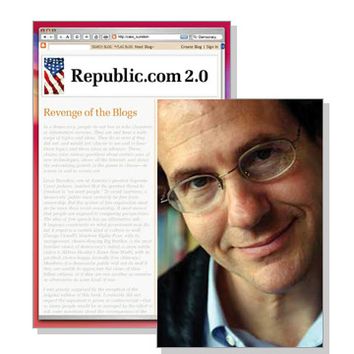
Freedom of choice is not always good for democracy. This observation is at the heart of University of Chicago law professor Cass Sunstein’s book “Republic.com 2.0″ (an update of “Republic.com” in 2001), which argues that our country’s political discourse is fracturing in the information age. Sure, the Internet has been a boon to democracy in all sorts of ways, Sunstein acknowledges — but if new technology gives us unprecedented access to information, it also gives us more ways to avoid information we don’t like. Conservatives are increasingly seeking only conservative views, liberals are seeking only liberal views, and never the twain shall meet.

Sunstein’s career has bridged the political divide. As an attorney in the Justice Department’s Office of the Legal Counsel, he was an advisor to both Jimmy Carter and Ronald Reagan. He once clerked for the liberal Supreme Court Justice Thurgood Marshall and now teaches at the University of Chicago, known for some of its right-leaning faculty. In his free time, Sunstein advises Barack Obama, a former law school colleague.

What gets lost in these polarized times, Sunstein writes, are traditional civic virtues like civility, self-criticism and open-mindedness. He uses experiments and statistical analyses to back that up: One study of hyperlinking patterns on the Web shows that political bloggers rarely highlight opposing opinions — of 1,400 blogs surveyed, 91 percent of links were to like-minded sites. A central problem, Sunstein argues, is that Americans now think of themselves more as consumers than as citizens. When it comes to the Internet, we demand the right to reinforce our own beliefs without embracing the responsibility to challenge them.

Salon spoke with Sunstein recently by telephone.

What inspired you to write this book? What sounded the alarm for you that there was a danger to democratic discourse?

What sounded it was all the excitement about personalization and customization, hearing people saying, “This is unbelievably great that we can just include what we like and exclude what we dislike.” At the same time I was studying jury behavior. The empirical finding was that like-minded jurors, when they talk to one another, tend to get more extreme.

There’s a book, “The Long Tail,” by Chris Anderson, which celebrates the “niche-ification” of the world. I like the book — I should say, I think it’s a very good book — but what’s amazing to me is the extent to which Anderson and the Internet enthusiasts really can’t even see a problem and can’t see the individual and social benefits of being exposed to stuff you didn’t choose.

Where do you see evidence that “niche-ification” is a problem?

I don’t like that Rush Limbaugh listeners call themselves “dittoheads.” It’s funny, but it’s kind of horrible. Fox News is a self-identified conservative outlet. The more extreme elements on the left treat their fellow citizens as if they’re idiots, or as if they’re rich people who don’t care about anybody. So, I look at some of our culture, I see demonization, and I think, where does that come from?

The Clinton impeachment, I think, had an impact on the book. The impeachment was, it seems to me, constitutionally ridiculous. And yet a lot of people, at least publicly, seemed to agree with it, such that President Clinton was actually impeached. Where did that come from? Bush v. Gore had an impact: the fact that all Gore voters pretty much thought [the decision in] Bush v. Gore was wrong and that all Bush voters thought it was right.

The studies that you’re talking about show that self-isolation breeds polarization on both the left and the right. A liberal might argue, though, that liberals are by definition more diversity-minded and more tolerant of the views of others.

Liberals are sometimes defined as people who can’t take their own side in an argument. I actually don’t think there’s a difference, though. I would say that there are many liberals who think that, in the last few elections, to vote for a Republican presidential candidate is just mindless, that there’s no rational reason that people would vote Republican. If liberals are thinking that, there’s probably a problem. I think many liberals think that to vote for Bush, some part of their brain is on fire and the rest of it isn’t functioning, or that they’ve been fooled in some way, or that they’re not paying attention. So I think that a lot of liberals are in an echo chamber where they share a set of views, some of which are probably wrong.

Maybe now liberals think the U.S. should have signed the Kyoto Protocol, and that Bush’s refusal to sign it was a big mistake. I think a lot of liberals believe that, but no Democrats in the Senate supported U.S. ratification of the Kyoto Protocol. A reasonable view is that it was a terrible idea for the United States. I think it’s very plausibly the right view, at least as strong as the alternative view. Liberals tend to think increasing the minimum wage is a good idea. It’s very complicated whether increases in the minimum wage are helpful to poor people.

There’s a lot of echo-chamber-ism on both sides, and I don’t know that it’s worse on one side or the other right now.

In your book you observe that conservatives tend to congregate around an outlet like Fox News, while liberals tend to congregate around an outlet like NPR. Don’t those outlets treat their ideological adversaries differently?

Air America maybe is more like Fox News, while NPR is not. It’s too simple to say that NPR is a liberal outlet — agreed entirely. I mean, Sean Hannity, who seems to me particularly mean and dumb — and I’m happy to be quoted on that — there’s nobody like that on NPR.

I should say, I have a soft spot for O’Reilly, though. I’ve been on his show, and he’s been fair and likable to me. I don’t watch the show very often, so whether that’s generally the case, I don’t know.

To what extent is this polarization a part of human nature, and to what extent does it come from new technologies?

I think it’s a very firm part of human nature that if you surround yourself with like-minded people, you’ll end up thinking more extreme versions of what you thought before. So this group-polarization thing is robust — it’s been found in lots of different countries, and it’s just in the nature of most people to do this.

How do you distinguish between what you’re calling in the book a “general-interest intermediary” and a harmful “information filter”? For example, some people say the New York Times is intolerably liberal; other people say it’s the paper of record.

There probably is a more or less objective standpoint, for example, that al-Qaida’s statements are unreliable, while the Chicago Tribune, to give you an example of a not very partisan paper, is more reliable. And from the same standpoint that justifies greater faith in the Chicago Tribune than al-Qaida, we deserve to have greater faith in the conclusions of those who have read both conservative and liberal positions than those who restrict themselves to just one. Now, what I’ve just said depends on believing that neither conservatives nor liberals have a monopoly on wisdom.

As a law professor I would say, If you think there’s nothing to be learned from Justice [Antonin] Scalia’s opinions, then there’s a real problem. Because some of his opinions are really good. And some of them are even right. And those that are wrong, you improve your thinking a lot if you grapple with what he has to say.

You’re sounding a bit like Barack Obama. He was your colleague for a while, right?

Yes, 10 years. And I’m an informal, occasional advisor to him.

I’ll tell you what I like about Obama, which is connected with the book. He really doesn’t like to surround himself only with like-minded others. He really is someone who has never lived and wouldn’t live in an echo chamber. His great skepticism about the red state, blue state divide is just the thought that no particular party has a monopoly on wisdom. He has an amazing line in the “Audacity of Hope” where he says, roughly, there are feminists in the United States who mourn their own abortions, and there are conservative women who have paid for their friends’ daughters’ abortions. And the reason I think this is so great is that it breaks down a sense that Americans come in two types.

Obama really understands that. I think Hillary Clinton probably does, too. Rudy Giuliani might. But Obama — this is at the heart of his deepest convictions. So, one reason I’m excited about him is that he finds rigid distinctions unhelpful for citizens and public officials alike.

In contrast, in 2000 I had high hopes for President Bush. I thought he could be a very good president. I think he has failed terribly in part because his White House is like our Colorado experiment.

Could you explain to our readers what happened with that experiment?

The way our Colorado experiment worked is, we got people from Boulder, a liberal place, together in small groups to talk about climate change, same-sex civil unions and affirmative action. On the same day, we got people in Colorado Springs, a conservative place, to talk about the same three issues. We asked them to record their views anonymously first, then to deliberate on them in small groups, then to record their views anonymously afterward. What we found was that on these issues, the Boulder people, before they started to talk, were pretty liberal, but there was a distribution of views, a degree of diversity. After they talked, they were significantly more liberal and less diverse. So, deliberation among our liberal citizens of Boulder produced more extremism and less diversity. In Colorado Springs, after they talked to one another, they went far to the right. They started out somewhat open-minded on these issues, somewhat diverse, and after discussion the diversity was squelched and the extremism was increased.

I think this is a clue to what is happening in the political domain all over the United States: People through their own voluntary behavior are replicating our Colorado experiment. Or, savvy political entrepreneurs are creating the conditions of our experiment because they want to decrease internal diversity. Karl Rove could be described as a “polarization entrepreneur.” The left isn’t quite so good at this, but they’re learning.

Where else have you seen this phenomenon?

This is our best real-world example: If you get three Republican appointees together on a three-judge federal court of appeals panel, then their voting patterns are very, very conservative. Much more so than how Republican appointees on the federal bench vote when there’s a Democratic appointee there. And it’s perfectly symmetrical. Democratic appointees show extremely liberal voting patterns when it’s three Democratic appointees. What we observed in Colorado in an experimental setting is exactly what we found on the federal bench.

There’s the same danger if a mayor or a governor or a president surrounds himself with like-minded others. A famous story about this is Kennedy’s decision to invade the Bay of Pigs. People silenced themselves so as not to counteract the emerging consensus to invade. Afterwards, Kennedy said to himself, “How could I have been so stupid to let this go forward?” The answer was, he had an echo chamber there. [Franklin] Roosevelt, by contrast, is at the opposite pole of Bush. Roosevelt deliberately encouraged a lot of diversity of view, in a way that generated a ton of ideas and a lot of experimentalism. And Obama is much more like Roosevelt in that way.

How are your views here different from simple centrism? Does this amount to an aversion to extremes?

No, sometimes extremes are good. I think that every state in the union should recognize same-sex marriage. That’s a pretty extreme position, but [I've heard the opposing views] — I don’t hold it because I haven’t heard the opposing views. In my view, the idea that the Constitution protects commercial advertising is a mistake. And that’s a pretty extreme position, but that’s not because I live in a world in which everyone I know thinks the Constitution doesn’t protect commercial advertising.

So, if extremism is generated after encountering competing arguments, by all means. The problem is when extremism emerges from the logic of social interactions.

The idea is that our system at its best is a deliberative democracy. And a deliberative democracy has preconditions. If we celebrate the capacity to self-sort, we’ll lose sight of the value of deliberation.

What dynamics are at work with Hillary Clinton, the way she’s treated by the right?

I think she has been turned into a cartoon by people who dislike her, and the cartoon really does involve an information cascade. There are things said about her character, her conduct, her plans, which have no basis. Once they start circulating they start being widely believed. Even if the particular fact isn’t believed, there’s a kind of odor that its dissemination produces.

There are legitimate questions that can be raised about anybody. The polarization with respect to her has something to do with her, but has a lot more to do with how information travels. An empirical answer would involve work that I haven’t done. But, offhand, talk radio, Fox News and some parts of the blogosphere are responsible for the cartoonization of Hillary Clinton.

It’s always easier to spread a simple story than a complicated story. With politics and with products, if there’s a simple narrative that can take hold, it’s very powerful. The people who hate Hillary Clinton have a narrative of her that is hateful, and the simplicity of it allows it to travel.

You start the book by arguing that there are constitutional grounds for limiting choice — that the First Amendment is specifically designed to promote democratic deliberation, that it doesn’t give us the right to do whatever we want. As I was reading, I thought you were clearing a legal path for some radical policy prescriptions. But you ultimately don’t advocate for more government regulation of the Internet.

Not at all. I have thought over the years of whether it makes sense for the government to have a regulatory role. But the Internet is too difficult to regulate in a way that would respond to these concerns.

The first book ["Republic.com"] had suggestions that government should consider fairness-doctrine-type mandates on Web sites. It suggested that it’s reasonable for government to think about creating the equivalent of linking obligations and pop-ups, so that you’d be on one site — say, a conservative site — and there’d be a pop-up from a liberal site. I now the believe that the government should not consider that — that it’s a stupid and almost certainly an unconstitutional suggestion.

What changed your thinking?

Hearing counter-arguments and seeing the nature of the Internet as it unfolded over time. “Republic.com” made a mistake of applying to the Internet some ideas that were developed in a world of three or four television networks.

The Internet is regulated heavily, by the way: The equivalent of trespass is forbidden. You can’t libel people on the Internet. You can’t commit fraud over the Internet. So that’s good. But the kinds of regulation that would respond to my concerns [about deliberative democracy], they’re not really feasible and they probably wouldn’t help. Most problems are best solved privately, not through government. There’s a problem of discourtesy in the world, which is best handled through social norms, which are indispensable. But you wouldn’t want the government to be mandating courtesy.

So if you’re not proposing regulation, what were your goals for the book?

The goals for the book were to help promote an appreciation for an aspect of our democratic tradition that emphasizes unanticipated encounters and shared experiences. The problem presented in the book has a cultural solution, not a legal solution.

Someone read my book recently and asked, “Is this a love letter to America?” I wouldn’t put it that way, but it probably is — to aspects of America, its teeming diversity, its receptivity, its heterogeneity, its curiosity, its amazement at itself, its youth. These aspects of the country aren’t adequately captured by those who say, “Oh, now I can create a ‘Daily Me,’” or by those who say, “I can buy the products and read the opinions and focus on the topics I like. I don’t have to be bothered with other stuff.”

The prologue of your book reminded me of Rachel Carson’s “Silent Spring.” Is the idea here to start something like the environmental movement, but for public spaces and civil discourse?

It’s starting to happen. Web 2.0 is really concerned with niches in large part. But part of Web 2.0 — and we can imagine a Web 3.0 — is about public spaces. Wikipedia is a public space, in the sense that it’s collectively produced, it has norms of civility, it is a place that maintains a degree of neutrality. And we’re starting to see more civic spaces on the Internet.

The unacknowledged hero of the book is Jane Jacobs, with her book “The Death and Life of Great American Cities.” Her argument, it’s really a love letter to cities. They have a teeming diversity where you go around the corner and say, “What is that!” The next block, you see something in terms of people, or architecture, or groups — something you could never have imagined and wouldn’t have chosen, but that affects you and sometimes changes you. That is part of America’s distinctive culture.

Continue Reading Close

Page 1 of 2 in Ben Van Heuvelen