Catherine Price

10 places not to see before you die

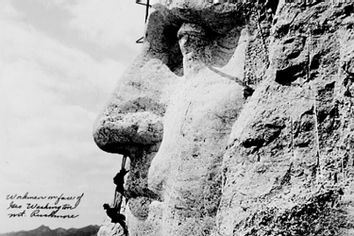
Slide Show: From Euro Disney to Mount Rushmore, the attractions that should never make it on your bucket list

View the slide show

For those of you putting together your bucket list of places you’d like to see before you die (Great Wall of China? Inca Trail? Delaware?) author and Salon contributor Catherine Price has written a book that should help you eliminate a few of your options. “101 Places Not to See Before You Die” takes a fascinating and hilarious look at some of the least appealing places and events on the planet — from Montana’s Testicle Festival to the Amsterdam Sexmuseum — and explains in lucid terms just what you’ll be missing out on (and why that’s a very, very good thing). We’ve extracted 10 of Price’s most memorable un-see-worthy places for a slide show, below. (Keep an eye out for the book’s soon-to-be released iPhone/iPad app, which will allow users to contribute their own entries to Price’s list).

View the slide show

Moonshine returns!

The fabled liquor of outlaws and gangsters is making a comeback with craft distillers. Too bad it's still illegal

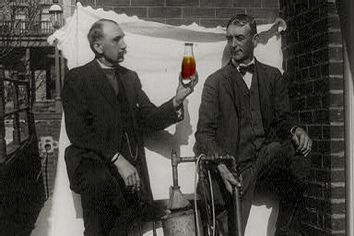
Two men standing outdoors with small still, one of them holding up bottle of liquor.

Standing in the middle of the room at the Sweetwater Distillery in Petaluma, Calif., Bill Owens held a feedbag full of stale donuts high in the air. With a crowd gathered around him, he dumped its contents — chocolate glazed, jelly-filled, iced with sprinkles — into a tank filled with hot water and plunged an industrial mixer into the liquid, splattering warm, sticky bits onto anyone who stood too close. A dog wandered up and began licking the floor.

Owens is the president of the American Distilling Institute, an organization devoted to educating people about the art and science of distilled spirits. His audience was a group of about 25 who’d come from as far away as Maine and Tennessee to spend a week learning the basics of making whiskey, from developing a mash and running a still to bottling the alcohol and testing its proof.

Whiskey, it’s worth noting, is usually made from grain. But Owens, a natural showman, was taking advantage of the fact that you can create alcohol from any ingredient that contains or breaks down into sugar, from meal to fruit to, yes, doughnuts. After adding yeast — which digests the sugar into ethanol and carbon dioxide — you run the fermented mash through a still, which uses heat to separate and collect the ethanol. Owens was confident that the breakfast pastry mash would produce alcohol. The question was: What would it taste like? 

Like unaged whiskey with a hint of doughnut, it turned out. But I hadn’t come to Owens’ workshop for cruller whiskey, per se. I was there to learn more about homemade hooch. As anyone who’s recently attempted to smoke their own bacon or pickle their vegetables can attest, America is in the midst of a do-it-yourself craze, inspired partially by the recession, partially by the local food movement, and partially by the same culinary derring-do that brought us the turducken. So why not homemade spirits? Most commercial distillers focus on the basics, like vodka and whiskey, but there are countless other distillations waiting to be made, from applejack and peach brandy to tangerine schnapps.

I’ll tell you why not: Distilling homemade spirits is a felony. Unlike wine or beer, which you’re allowed to make at home for personal use, making any sort of untaxed spirit on an unlicensed still remains very much illegal, punishable by a federal fine of up to $10,000 and five years in jail for each offense, plus state penalties. Bill Owens was getting away with his jelly doughnut whiskey because he was making it on a registered still. But if I were to do the same thing at home, I’d go from making whiskey to making moonshine.

Moonshine. The word evokes visions of a 1920s gangster with a gun in one pocket and a flask in the other, a hillbilly whose backwoods still is decorated with Confederate flags. Both images have truth, but moonshine itself is not particularly sinister — while it most often refers to whiskey, it’s just a catch-all term for any spirit that’s untaxed and illegally distilled. The word comes from the ideal conditions in which to make it: A moonlit night just bright enough to see what you’re doing but dark enough that it’s easy to hide.

The laws against moonshine might be a vestige of Prohibition, but the most likely explanation for the government’s recalcitrance is taxes: It collects $2.14 per 750 milliliter bottle of 80 proof alcohol, versus only 21 cents for the same size bottle of standard wine and a paltry 5 cents per can of beer. Getting a distilling license can run into the tens of thousands of dollars, and requires so much hassle and paperwork that few individual distillers find it worth the effort — after all, they just want to drink the stuff, not sell it (which would turn them into bootleggers). So instead, they just make ‘shine.

We usually associate moonshine’s heyday with Prohibition — but the biggest moonshine bust in the United States actually occurred in 2001, when an eight-year crackdown called “Operation Lightning Strike” resulted in the arrest of more than two dozen people in a corn liquor operation that stretched from Raleigh, N.C., to Philadelphia; the group had dodged almost $20 million in taxes on 1.5 million gallons of alcohol. (Unaged whiskey frequently ends up in inner-city bars.) Just last month, a man pleaded guilty in a federal court to running a moonshine still on an undeveloped island in the middle of the Pasquotank River in North Carolina. And this July, a Virginia man was sentenced to four years in prison and ordered to pay $217,795 in federal taxes for making about 16,000 gallons of moonshine — enough to fill a 14-by-28-foot swimming pool more than 5 feet deep with booze.

When it comes to small-time home distillers, though, enforcement of this rule is more lax than it used to be. Gone are the days when, as one 86-year-old Kansas farm boy told me, government planes used to search out backwoods stills from the air. “In the 1970s and 1980s, when firearms and explosives became hotter issues, the alcohol work became less and less of a priority,” said Art Resnick, director of public and media affairs for the Alcohol and Tobacco Tax and Trade Bureau. “To this day, it continues to be done primarily by states.” And since states’ own priorities rarely involve busting people for 3-gallon stills of whiskey, most small-time moonshiners don’t get caught.

They also aren’t likely to get poisoned or go blind — that’s a reputation left over from Prohibition, when unscrupulous bootleggers used dangerous contaminants to speed their fermentation process or increase their alcohol’s proof. Sure, it’s best not to buy ‘shine from strangers, and you want to avoid obviously stupid techniques, like stills that use lead-soldered car radiators as condenser coils. You also need to be sure to discard the first part of your run — it’s more likely to contain methanol, the stuff that, when drunk in large enough quantities, can damage your vision. And trust your senses: If it smells or tastes bad, it probably is.

The biggest danger in making moonshine actually comes from the still itself — you are, after all, boiling a highly flammable liquid, often over an open flame. “I once made the mistake of turning on the propane and then digging in my pocket for the lighter,” wrote one moonshiner on a popular site called homedistiller.org, in a discussion thread titled “Tell us about your mistakes.” “Needless to say my beard and eye brows grew back, but at least I didn’t have to worry about nose hairs for a while.”

However, if you follow safety precautions — and keep a fire extinguisher close — you can avoid most hazards. It also helps to have a good still. Some moonshiners make their own (you can find instructions online), but if you don’t already have experience as a metal worker, it’s easier to just call the Colonel.

Col. Vaughn Wilson lives in Arkansas and is one of America’s best-known builders of high-quality copper stills. (A self-proclaimed history buff, he also makes cannons.) His first experience making moonshine involved rigging some of his mother’s cooking equipment into an impromptu kitchen still, an experiment that ended poorly when his parents came home early to find him cooking whiskey over the stove.

Years later, he made his first real still, using his experience at a forge to make a primitive version out of copper from the transformer company where he worked. “It was godawful ugly, but I put it on eBay and sold the thing,” he said. His technique gradually improved, and these days he estimates he’s made between 500 and 1,000 stills — he doesn’t know exactly because, much to the chagrin of the Treasury Department, which is allowed to demand a list of customers’ names and addresses, he doesn’t keep records.

When it comes to his own business, though, the Colonel isn’t shy. His Web site, coppermoonshinestills.com (warning, there’s music), contains not just numerous photos of his handiwork but pictures of the Colonel, two phone numbers, his e-mail address, his real address and several maps in case you get lost. Despite his brazenness, the government still hasn’t successfully gotten a warrant for his arrest — the Colonel has defended himself through an insistence on the gold standard and a creative interpretation of the Constitution that is available, should you wish to learn more, on his Web site’s “Beat the law ‘how to’ guide.”

What the Colonel does remember about his customer base still gives a sense of how widespread moonshining continues to be in the United States. Most of the Colonel’s customers live in Southeastern states long associated with homemade whiskey and a distaste for federal government — areas that still produce large amounts of unaged whiskey known as “likker” or “white dog.” But the Colonel recently sent his first still to Utah and estimates that with the exception of a few in the Northeast, he’s shipped stills to nearly every state in the Union.

That’s because modern moonshiners are more diverse than you might expect. Mostly male, homedistiller.org’s users include everyone from chemists and carpenters to software developers, mechanics, engineers, farmers, lawyers, accountants, chefs, bartenders — even a retired archaeologist. According to Camper English, author of the cocktail and spirit blog Alcademics, these next-generation moonshiners have different motivations than Southern pride or sticking it to the man. “It’s more about culinary experimentation than it is about cheap hooch,” he says. “They’re trying to make something you can’t find on store shelves.”

While in some ways these moonshiners are starting a trend, what they’re doing also has strong historical roots. Home-distilled alcohol in America far predates Prohibition — early colonists loved rum and applejack, and whiskey became popular in the 1700s, especially in remote areas where it was difficult to transport grain to markets. Sure, distilled spirits always had their detractors — in the 19th century, temperance advocates liked to quote medical journals that claimed heavy drinking could cause you to spontaneously burst into flames. But from peach brandy to rye whiskey, a wide variety of high-quality homemade spirits were being made across the country.

And then came Prohibition. Not only did the 14-year, near-total ban on making and selling alcohol fail to prevent many people from buying and drinking it (which, incidentally, Prohibition did not prohibit) — but it gave home-distilled spirits a bad name that they’re still struggling to shake. That’s because once a black market developed for alcohol, the emphasis switched from quality to quantity. Bootleggers souped up their products with everything from methanol and acid to embalming fluid and horse manure, which, besides occasionally being poisonous, also made the alcohol taste bad — in fact, the poor flavor of Prohibition moonshine helped encourage the popularity of mixers and cocktails.

When Prohibition ended in 1933, the quality of America’s spirits improved, but only recently have people begun resurrecting some of the more unusual spirits that died off during Prohibition. That was a surprise to Matthew Rowley, author of the blog Whiskey Forge, who came across a startling array of spirits as he was writing his book “Moonshine!” “The people who are distilling their own spirits at home these days are making some pretty interesting stuff,” says Rowley, who has sampled dozens of homemade creations, from New Orleans absinthe to New Jersey applejack, Oregon grappa and Michigan sour cherry brandy — all in the name of research, of course. “Who would have thought that 30 years ago? It’s an entirely different, additional demographic.”

I found a few of these next-generation moonshiners — some of whom prefer the term “craft distillers” — near my own home in Oakland, Calif. The first was “John Danger,” a bartender in San Francisco who got his start legally distilling botanicals in his kitchen, and then, as he puts it, “started doing stuff a little less legally.” After becoming entranced by a chocolate mint eau de vie he made in a small desktop still, he commissioned a metalworking friend to help him build a larger version. Danger nicknamed the new still “Frankie” (short for Frankenstein) and began running it over an open flame in his backyard in San Francisco’s Haight-Ashbury, a neighborhood better known for its potheads than its pot stills.

After practice and a few well-placed bribes to neighbors, things went well until a gasket blew and spirits started leaking out of his still as he tried to pull whiskey out of an oatmeal mash that had taken four days to make. “It was really stupid,” he said, “knowing that if a different seal had broken or it started really spurting spirit and caught on fire, it would have been a flame thrower directed at my building.” Reluctant to sacrifice his precious mash, Danger attempted to stop the leak with his shirt, but after burning himself and failing to fix the problem, he had to resort to the fire extinguisher. Frankie is now out of commission, still caked in foam and crusted oatmeal. But Danger claims that some of his products were “blindingly good” (interesting choice of adjective) and doesn’t feel regret about breaking the law. “You can actually see, touch, smell and taste spirit being made,” he said. “While what I was doing was illegal, I wasn’t doing it for illegal purposes.”

That’s the general feeling among most home distillers. Instead, as Matthew Rowley explains, “The men and women who are making spirits today are just busting at the seams, proud of what they’ve done.”

That’s certainly true of Stephen and Brian, a chef and a winemaker who share a 10-gallon copper reflux still — made by the Colonel and nicknamed Bessie — in Napa, Calif. (We’ll leave out their last names, just in case the government is reading.) The scene is as far from “Deliverance” as you can imagine — Stephen lives on the grounds of a winery near a Dean & DeLuca, and welcomed me with glasses of white wine and a plate of hand-crafted salumi. But then Brian pulled out several tall, thin bottles labeled with yellow Post-it notes and filled with clear spirits — and immediately transformed himself from a law-abiding winemaker into a felon.

Brian’s easy access to fruit led him to specialize in brandies — apple brandy, grappa (made from the solids left over from pressing grapes) and, in a shout-out to his Slovenian heritage, a type of throat-searing plum brandy known as slivovitz. The distillations were strong, but they were also captivating, each releasing a unique fruity scent that I’d never experienced in a store-bought spirit. The pride on Brian’s face as he poured samples made the law seem that much more absurd — after all, if professionals like Brian were allowed to create and sell their own spirits, they’d be creating an entirely new (and entirely taxable) market. Consider absinthe: Illegal from 1912 till 2007, it is now a mainstay at upscale cocktail bars.

And yet, unfortunately for home distillers, the laws on moonshine seem unlikely to change any time soon . “The distillers don’t band together in public the way home brewers do,” says Rowley. “And until they get organized, you won’t see a change in legislation.” In the meantime there may be an upsurge in legit microdistilleries — and small distillers can sometimes rent time at licensed stills. But home distillers are trapped in a Catch-22: If they want legalization, they have to show their faces; but until home distillation is legalized, even relatively forthcoming distillers like Stephen and Brian will be forced to be secretive about their craft — sometimes to the point where it becomes an inside joke.

“I remember one time when I was running the still on the lawn outside my house,” said Stephen, “and some guy walked by on his way to the winery and asked what I was making.” Stephen wasn’t worried about getting arrested, but he also didn’t want to publicize the fact that he was distilling alcohol, so he resorted to an old fallback: purifying drinking water.

The visitor smiled.

“I live on an apple farm and I like to ‘purify’ my apple juice,” he said.

“After that,” said Stephen, “I knew we could talk.”

Continue Reading Close

If I became a man, would you pay me more?

A new study looks at wage discrimination among transgender people -- and finds that becoming a woman might not be the best thing to do for your career.

OK, OK. We all know that on average, American men make more than American women. We all know the two sides of the debate over why this is: Some say that women pick less competitive, lower-paying careers, and others claim women are victims of discrimination. And I dare say that we all also know something else: Both arguments have some truth.

But Friday’s Time magazine featured an article about a study that took a very creative approach to figuring out how much discrimination might be at play. Researchers from the University of Chicago and New York University looked at the experiences of transgender people in the workforce — that is, people who had either transitioned from male to female or female to male — and analyzed how their gender switch affected their pay. The result, as Time puts it, “suggests that raw discrimination still remains potent in U.S. companies.”

To be more specific, the study’s authors found that even after controlling for factors like education levels, MTFs (male-to-female) made, on average, 32 percent less after they transitioned. FTMs (female-to-male), on the other hand, earned an average of 1.5 percent more than they’d been getting before they made the switch.

Granted, part of me wonders whether some of the difference might be caused by the discrimination faced by transgender people in general — as the article points out, it can be easier for a FTM to pass as “real” because he doesn’t have to deal with the residual large body frame inherited by MTFs. That might partially account for why men who want to change gender wait, on average, 10 years longer than women who want to become men.

But still, anecdotal though they may be, it’s fascinating to hear stories from transgender people about reactions from people who didn’t realize what they’d done. A FTM lawyer remembers how a co-worker had complimented the firm’s boss for firing Susan and hiring “the new guy,” commenting that Susan had been incompetent and that the new guy was “just delightful.” A FTM neurobiology professor told the Wall Street Journal that he overheard a colleague lean over to someone during one of his lectures and say that “Ben Barres’ work is much better than his sister’s.” Cases like that — where the person commenting didn’t even realize that the person had switched genders — makes the argument about discrimination much more compelling.

Continue Reading Close

Could you be a hockey mom?

According to Nielsen, it requires less than you might think.

I’ve already written about how much I dislike how the term “hockey mom” is used to subdivide the female half of the American electorate. Part of my issue was that it isn’t entirely clear how the expression was defined. But now I have my answer. According to Nielsen Media Research’s blog, hockey moms are defined as “women ages 25 to 54 who live in homes with children and who watched at least six minutes of the most recent Stanley Cup Finals on NBC.”

Really? Six minutes? This makes “hockey mom” seem less like a descriptor of an actual person’s life and more like something you could pick up accidentally at a sports bar. (Stop for buffalo wings at the wrong time and, whoops!) I mean, hell, I don’t even have a television and I might still qualify for the hockey half of the term.

Another thing that’s strange: This isn’t even how Palin uses the term. Granted, Palin obviously didn’t come up with the definition for Nielsen, but there’s a big difference between a woman who catches six minutes of the Stanley Cup while channel surfing and a woman who spends three hours a day at the rink and drives around town with a trunk full of sweat-soaked equipment, balancing her life with her kids’ sports schedules.

Nielsen’s hockey mom analysis also makes me question whether those stat people aren’t hurting for news. The same post states that these “hockey moms” were 38.7 percent more likely to watch last week’s debates than “average moms,” which sounds dramatic until you realize that the debate drew 23.8 percent of all mothers, compared to 33 percent of hockey moms. Given that all it takes to be a hockey mom is to have watched six minutes of TV, couldn’t this perhaps have more to do with television-watching habits than devotion to your children’s sports teams? You’re sitting on the couch, you’re flipping through the channels, you can’t find the Stanley Cup on the schedule, but hey, here’s the vice-presidential debate! Kids, clear those pads off the couch — Mom’s got some watching to do.

Still, now that I understand better what it takes to be a hockey mom, I am left with one important question that I’m hoping Nielsen can help me answer: Who, exactly, is Joe Sixpack?

Continue Reading Close

Today in Palin

Think it's wacky to claim that "living next to Canada" qualifies as foreign policy experience? Check out today's roundup.

Please send pix: First up, Politico reports that the inevitable has happened: Craigslist ads seeking Sarah Palin look-alikes for adult films. (Author Ben Smith points out that at least one is likely to be fake — but let’s be honest, it’s only a matter of time.)

Flirting with disaster: Remember how Pakistani President Asif Ali Zardari got all touchy-feely with Palin at the United Nations last week? Turns out his googly eyes may be causing some trouble back home — and not just from Pakistani feminists, who weren’t too psyched about the fact that he basically drooled on a woman who might become America’s second in command. The Christian Science Monitor reports that Zardari’s flirtation earned him a fatwa (a religious order) from a radical Muslim prayer leader who disapproved of Zardari’s “indecent gestures, filthy remarks and repeated praise of a non-Muslim lady wearing a short skirt.”

Do with that what you will — but apparently, Pakistani leaders have a long history of embarrassing themselves when they meet female leaders. When former Pakistani Prime Minister Shaukat Aziz met Condoleezza Rice, he reportedly stared deeply into her eyes and said he could “conquer any woman in two minutes.” Right.

Palin as Pet Rock? Over at AlterNet, Marie Cocco asks whether Sarah Palin could be the political version of a Pet Rock — that is, “one of those artifacts that has little value except as an object that is dissected for its cultural significance.” Maybe so — but depending on your politics, you could argue that electing Palin as vice president would cause a bit more damage than wasting four bucks on a pebble.

Bingo! Last, if Thursday night’s debate becomes too much to bear, we suggest printing out a couple of sets of these Palin bingo cards. Check off a box every time Palin says phrases like “maritime border” and “country first.” Or, if you’re really going for gold, try for a “media blackout” — be the first to fill in all 25 boxes.

As the presidential race becomes stranger by the day, one of Zardari’s comments about Palin is beginning to have particular resonance: “Now I know why the whole of America is crazy about you.”

Continue Reading Close

Biden’s difficult balance

Tonight's vice-presidential debate raises a tricky question for Joe Biden: How to beat Sarah Palin without coming off as a dick.

I must say, I don’t envy Joe Biden. The man already has a reputation of being long-winded and prone to gaffes, and now he’s going up against Sarah Palin — that scrappy, moose-huntin’ hockey mom who might not know many Supreme Court decisions but is likely to know exactly how to make Biden look like an asshole.

Biden claims that reporters are in a “time warp” if they think he’d prepare differently to debate a woman than he would a man — but that doesn’t appear to be entirely true. The Wall Street Journal reports that he has been preparing by sparring against Michigan Gov. Jennifer Granholm, chosen not just because she “ran as an outsider and reformer” in 2002 and 2006 but because she’s a sports mom and, yes, a former beauty queen. I’m going to bet Biden would have prepared a bit differently if McCain had chosen Joe Lieberman as his running mate.

Since Biden beats Palin hands down in matters like “experience” and “knowledge of the issues,” his real challenge Thursday night is how to not come off like a dick (cf. George H.W. Bush debating Geraldine Ferraro in 1984). Biden might have difficulty with that regardless of the gender of his opponent, but the fact that Palin’s a woman does put him in a bit of a double bind: It’s not just that he can’t appear condescending; he also can’t seem like he’s going too easy on her. Either one, the Journal correctly points out, would lead to accusations of sexism.

This brings up the interesting question of why no one seemed too worried about coming off like a jerk in front of Hillary Clinton (Obama’s “you’re likable enough” comment aside). Is that because Clinton, to quote Amy Poehler’s impersonation of her, “has a pair” — and wasn’t actually thought of or treated as “female”? If that’s the case, then could Palin bring an interesting new challenge — a female candidate who emphasizes her femininity?

Maybe, but I think something else is happening here: Palin’s gender is being used as a cover. Biden is going up against someone who, feisty and scrappy though she may be, is simply not as knowledgeable or prepared as he is, and if she were a man, Biden’s task would be relatively easy. But the fact that Palin is a woman gives her a convenient defense: using accusations of sexism as a way to cover up her weaknesses. It’s a tactic that might work in the short term, but in the long run would be damaging both to Palin and to America’s perception of women’s ability to lead.

Continue Reading Close

Page 1 of 68 in Catherine Price

www.salon.com/writer/catherine_price/index.html