Cynthia Durcanin

Eli

As Havana waits for Castro's demise, even his enemies are appalled by the way Miami's Cuban exiles have used the motherless boy for their own political ends.

  • more
    • All Share Services

Eli

On the streets of Havana, the conflict over Elian Gonzalez is as much about golf courses, beach-front condos and luxury hotels as it is the fate of a boy who was rescued on Thanksgiving Day, clinging by one hand to an inner tube, just off the Florida coast.

A family feud of Shakespearean proportions, the custody struggle over Elian has been cloaked in terms of “what’s best for the boy.” But many people on both sides of the Florida straits also see it as a battle over who will control Cuba after Fidel Castro: the Cubans who remained in Cuba, or the Cuban-American community living in exile.

In a perverse twist of fate, Castro has outlasted the Soviet empire and nine U.S. presidents from Dwight Eisenhower to George Bush, but he is now being threatened by a 6-year-old boy. If Elian is allowed to remain in the United States it will be seen as his emasculation.

Like King Lear, an old man whose pride cost him everything, Castro is watching his “disloyal” children in Miami prepare to take over his kingdom. And now they’ve taken his beloved Cordelia, humiliating him on the world stage. The struggle over Elian is less about what is “best for the boy,” but what is best for Castro, his Miami opponents, and the future of his native land.

So Elian is now a symbol: He’s been slapped with a subpoena, become a catalyst for riots, bomb threats and work stoppages. Since fleeing Cuba in a rickety boat for a better life in America, he has lost his mother, the precious innocence of childhood and most poignantly, his name.

To the world he is now simply known as “the Cuban Boy” — or sometimes, in tabloid headlines, just “Cuban Boy,” making him sound like a freak-show attraction. It’s hard to say which side has made more distorted political use of the boy, the power-mad Cuban American community, or Castro’s repressive spin machine.

But on the streets of Havana, and in more moderate corners of Miami, too, it’s clear the Cuban-Americans’ excesses on “behalf” of Elian have alienated potential allies. “They’re grasping for anything to get at [Fidel] Castro and it’s backfired,” said Max Castro, a Cuban-born senior research associate at the University of Miami’s North-South Center. “It’s the worse P.R. they could have done in Cuba and Latin America.”

Apart from specializing in immigration and U.S.-Latin relations, Max Castro has a very strong personal connection with the case of Elian Gonzalez. At the age of 10, he was sent by his parents unaccompanied to live with relatives in the United States.

“I did not want to be separated from my parents,” he recalls. “But it was 1961 and there was this mass hysteria in Cuba. People were saying their children would be sent to Russian camps and that they would lose them.”

For years, Cubans have talked of “when Castro goes,” and some sentimentally looked to the exiles to one day help them rebuild their country. But now these very people are beginning to look worse than Castro.

“This boy is about money,” said Raul, a 22-year-old computer software student in Havana. “He sells newspapers, T-shirts and gives the Cubans in Miami the publicity they crave.”

Raul, like many Cubans both pro and anti-Castro, is appalled by the brute force in which the Cuban American community has manipulated the boy. And the excess makes them fear for the future when the exiles return, as expected, after Castro’s demise.

“I will be more enslaved to my own people than I am now,” says Raul, a sentiment I heard many times in Havana in recent weeks. “These Cubans in Miami have a lot of power and money. Whenever they come back to Havana they are dripping in gold chains and they act like they are better than us.”

“It’s a struggle over Cuba,” explains Max Castro. “The money is part of it, but it’s also about passion, hatred and delusion. It’s about revenge and reclaiming what they’ve lost. They want to show they were right.”

In Havana, Cubans and foreign investors alike speak of Castro today as if he’s already gone. The telltale signs are not in press releases from Washington or Havana, but in the web of scaffolding and construction cranes in the Cuban skies. In the past two years, scores of gleaming skyscrapers and glitzy hotels have been built by foreign capital pouring in from Spanish, Canadian, French and Italian investors.

Like the early days of the Internet, there’s a frenzy to be first, even though no one is making a real profit. Perhaps more revealing, almost all of the new hotels are being built to American fire and safety codes, so they can one day be sold to the Ritz Carltons and Hiltons of the world. “We’re all waiting for the Americans,” conceded a Spanish developer.

Since the Pope’s historic 1998 visit, U.S. officials in Havana concede, the country has become more porous. The sale of food and medicine to non-governmental agencies is now permitted, Clinton has eased travel restrictions and Castro is even flirting with private enterprise by allowing Cubans to open paladares, family-run, home-based restaurants.

Last year 1.65 million tourists visited Cuba, generating $1.8 billion, making tourism Cuba’s number one industry. British Airways will soon begin flights to Cuba and there’s even talk of a Hard Rock Cafe-style restaurant in Havana.

The dollar is already the country’s “real” currency. Images of Che Guevera compete with the face of Ernest Hemingway for tourist T-shirt dollars, but Papa wins, hands down. At the famed El Floridita, one of Hemingway’s many watering holes, tourists pay about a third of the average Cuban’s monthly income to sip one of his beloved daiquiris.

Ordinary Cubans seem happy about the influx of foreigners to their island. Certainly as a journalist reporting from the Eastern Bloc during its final days, I rarely witnessed such warmth. If you asked for a towel in a Moscow hotel, you were met with a scowl. In Havana, I returned to my hotel room each night to find a new “sculpture” by the maid on my bed. Sometimes she arranged my bath towels in the shape of a swan, or a heart or a sailboat.

When Kmart took over the state run department store Maj in Prague, some employees found the notion of customer service so repellent, they quit rather than have to smile at the customers. But the Cubans employed by Havana’s growing tourist economy exude a warmth, and a desire to please that can’t be faked.

While sampling a plate of traditional Cuban hors d’oeuvres, a waiter earnestly approached me to inquire which was the correct description; pork rinds or pork cracklings. I told him both were correct. But which sounds more “elegant” he implored. Not wanting to steer him down the 7-Eleven path, I ventured “cracklings?”

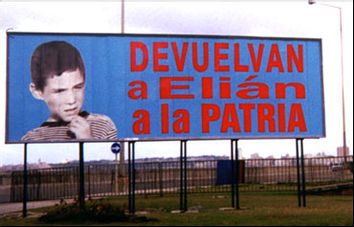
Still, Castro’s disapproval is evident, though it cannot quite spoil the party. While well-dressed foreigners sip cocktails amid photos of Hemingway hob-knobbing with Spencer Tracy at the El Floridita, a prominently displayed poster declares that Cuba “blossoms” in spite of “the menaces and tight circle of the U.S. blockade.” And in a humbling gesture to foreign investors, Castro’s forces have slapped posters demanding “Return Elian to his school desk” on all new hotel construction sites.

Many developers are convinced Clinton has been laying the groundwork to lift the embargo before he leaves office, and might move quickly if not for U.S. politics.

“If he didn’t have to sacrifice Gore, I think he’d do it right now,” says Dick Zebo, a Florida-based tour operator and property developer who has deals with 27,000 hotel rooms in Cuba.

But politics figures front and center in the Clinton administration’s deliberations over Elian’s future, as well as the future of U.S. and Cuban relations. Abandoning their usual family values rhetoric, every Republican candidate has used the case to accuse Clinton of appeasing Castro. Even Al Gore has attempted to distance himself from the INS decision to return Elian to his father.

And U.S. diplomats in Havana are quick to dismiss hopes of lifting the embargo anytime soon. “We took a lot of hits for this embargo, we’re not going to give up something for nothing,” a senior government official said.

What will it take?

“How about free elections?” he said.

But in the case of Elian Gonzalez, the law is clear: Politics aside, the boy legally belongs with his father, Juan Miguel Gonzalez. If he had washed ashore from Haiti, he no doubt would have been put on the next plane home.

Instead, he has taken on mythological proportions. Some members of the Cuban-American community are casting him as a sort of Cuban messiah. In a recent edition of a Cuban exile magazine his photo appears above the caption, “A Cuban Moses.”

The relatives who know what’s best for him, the ones he’s known for just a few weeks, haven’t helped. Instead of shielding him from the media mobs, they trot him out before TV cameras like a circus animal in the most contrived appearances, nudging him to wave the subpoena above his head.

“I believe he’s suffering from the Stockholm syndrome,” Max Castro said. Indeed the boy has moved from one state of shock to another. Early video clips depicted a shy child with a blank, wide-eyed stare. Today his eyes have a giddy intoxication of a child who has OD’d on Elian mania.

Even the average American kid accustomed to material wealth would be overwhelmed by the media attention, meeting sports stars, getting puppies from politicians, going to a wave of parties and parades, and seeing his face on TV, billboards and magazine covers.

Being in Havana, it is hard to see it as the forced labor camp for kids that the Miami Cubans say it is. Granted, Cuba is an extremely poor country. Human rights activists, journalists and labor organizers are still the top government targets for repressive measures ranging from imprisonment to denial of housing and employment. But in spite of the heavy weight of Castro’s totalitarian regime, this is not the grim Iron Curtain dystopia its critics depict.

No, Cuban children don’t have Star Wars or Pokimon, but then, they don’t have guns to shoot their teachers and classmates either. They have parents and grandparents who take them to the park and buy them ice cream cones. They walk hand in hand along the Malecon, Havana’s spectacular sea wall. They play soccer and baseball on weekends.

Recalling the pain of his own separation, Max Castro believes Elian will only be able to grieve and heal from the trauma of losing his mother, Elisabeth Brotons, in a familiar setting, his own culture, speaking his own language amongst his real family — his father and four grandparents.

For despite the many advantages of his upbringing in the United States, almost 40 years later Castro still regrets his sudden departure from Cuba. “I always wondered whether I would ever see my father again?” he recalls. It was two years before his father could join him in the United States.

The material comforts of a new life didn’t ease the pain, he recalls. “It’s where I grew up,” Castro says. “It was my country and I was willing to stick it out for better or worse.”

“Star Wars” widows

As their mates obsess over movies, these women find their relationships crushed under the weight of the Force.

  • more
    • All Share Services

Jennifer Wistock has made the trip to Skywalker Ranch — the Mecca of everything “Star Wars” — more times than she can count. She recalled the first pilgrimage to the site in Marin County, Calif., with her then-husband, Michael, and the kids: “Michael got teary-eyed just trying to get there.”

Upon their arrival, Michael, in a state of euphoria, took a photo of the ranch’s front gate. Then, like an astronaut collecting precious moon rocks, he picked up a few stones from the driveway. “He even placed his business card in George Lucas’ mailbox,” Jennifer said. “Maybe he hoped that George would call and say, ‘Hey, Michael, we saw you on the security camera and you look like a cool guy. Why don’t you come up for some ribs and brewskies?’”

In the afterglow of an amorous evening, Heidi Kobara, 27, first noticed that her then-boyfriend, Drew Campbell, might be taking his love of “Star Wars” just a bit too seriously. “I was naked, and he began to chase me around the apartment with a Tie Fighter replica I had given him for his birthday,” she said. “It was funny, but at the same time, I was thinking, What the hell am I doing?”

Jennifer and Heidi aren’t the only women to suffer the indignities of a mate’s “Star Wars” obsession. From big cities to farm towns, loving relationships have exploded like the Death Star due to one partner’s fanatical devotion to the “Star Wars” trilogy. Since the release of the first “Star Wars” movie more than 20 years ago, Han Solo’s cocky bravery and Luke Skywalker’s quest against evil have inspired boys to raid toy stores for the latest figurines, swap “Star Wars” trivia and camp out in ticket lines. Sixteen years after the release of the third “Star Wars” film, “Return of the Jedi,” men who grew up on the films find themselves engulfed in the same fanatic passion. Their girlfriends and wives have had a mild reprieve, but that ends Wednesday as “The Phantom Menace” opens in movie theaters across America.

Meet the “Star Wars” Widows — women whose marriages and relationships have crumbled under the weight of the Force. As the extent of their obsession emerges, the men these women have adored become as lovable as Darth Vader. Women find themselves cast aside like rusted droids. When a man goes completely over to the dark side, these couples end up in a galaxy far, far away: divorce court.

In varying degrees, everyone loves “Star Wars,” including the SWW. It’s a definitive part of our cultural landscape. But it’s the degree of devotion that separates the person who has seen the films a few times from the guy who’s a prime candidate for “Star Wars” Anonymous. Take, for instance, the guys who traveled to Tunisia just to see props from old sets, or camped outside theaters for the past month or work at Toys R Us just for the discount on “Star Wars” toys.

Every man I interviewed for this piece insisted, “I’m not weird.” That said, most have seen the films so many times that they’re beyond memorizing the plot and dialogue. These men even know the background noises.

“Star Wars” fanatics usually seem like the guys next door. Despite their unusual attachment to Luke and Princess Leia, they consider themselves more socially acceptable than, say, “Star Trek” fans. “We shower. We have good careers. Many of us are in shape and attractive to the opposite sex,” says Campbell, 26. “Most of us do not snort when we laugh or tape our broken glasses together.”

Yet Campbell, a computer technician and author of a book about “Star Wars” droids, admits being appalled that one of his ex-girlfriends has never seen the “Star Wars” films. In Campbell’s eyes, this was an abomination before George Lucas. After he guilt-tripped her into watching them with him, she said they were just “OK.” His current girlfriend is more bemused. Upon hearing how much money he recently spent on toys, she replied, “Cool.”

“I think I’ll marry this one,” Campbell says in jest. Would Campbell ever date a woman who had no interest whatsoever in “Star Wars”? After a lengthy, measured pause, he said, “It would depend on if she could deal with my addiction.” This is a man whose love runs deep. His first vivid memory is of seeing “Star Wars” at age 4. By the time he was 16, Campbell calculated that he had spent the equivalent of three months of his life in theaters watching “Star Wars.”

The madness leading up to the premiere has already put a strain on Michelle McBride’s relationship with her boyfriend of 10 years, Matt Jones, a 27-year-old pharmaceutical sales representative.
Back in November, she accompanied her boyfriend on a 70-mile trip from
their hometown in Michigan City, Ind., to a Chicago suburb to view a
two-minute trailer for the “The Phantom Menace.”

At a recent midnight outing to Toys R Us, Jones prepped her on the fine art of the “Star Wars” toy run. “He told me to just grab one of everything, but to be sure to look for the different markings on the droids. It was crazy. I’m only 5 feet tall and there were all these grown men pushing and shoving. I almost got crushed.”

After he returned from the official “Star Wars” convention in Denver, McBride issued an edict: “We have to have one hour a day where we don’t talk about “Star Wars.”

The insanity of the past few weeks aside, McBride explains why she puts up with it all. “We’ve been together so long and know each other so well, our relationship definitely goes a lot deeper than this ‘Star Wars’ craze.”

Every SWW interviewed said their exes are great guys. It’s just that their love of “Star Wars” is intense. Jones’ middle-of-the-night toy runs are indicative of “Star Wars” fanaticism. Others may spend reckless amounts of money on toys. Like closet drinkers, they buy figurines on the sly to hide their spending from their wives. “Michael used to sneak around purchasing toys,” says Jennifer Wistock, 27. “I’d ask him if he had been to Toys R Us and he’d deny it.”

Whether a man paints his chest green and wears a cheese-head hat at a Green Bay Packers game or plays with a light sabre, the underlying issue is passion, says Rick Brown, executive director of the Institute for Imago Relationship Therapy. “If passion is not happening between the couple, it’s going to happen somewhere else, whether that be work, golf, another person or ‘Star Wars,’” Brown says. “The question one must ask is, Am I watching ‘Star Wars’ or playing golf because I really enjoy that? But if I weren’t, would I enjoy being with my partner just as much?”

While the female fan base continues to grow, “Star Wars” is still pretty much a guy thing. So why does “Star Wars” continue to have such a strong hold over males into their adulthood? There are as many theories as there are interpretations of the films.

One such theory has it that “Star Wars” made its debut in the late ’70s when the American divorce rate was skyrocketing. Many of the films’ hardcore fans are children of divorce. A character such as Obi-Wan Kenobi filled the father-figure void, while Luke Skywalker is presented as a child of a broken home.

Alex Newborn, 29, was 7 when he first saw “Star Wars.” His parents were divorcing around the same time. Newborn recalls how the breakup of their marriage left him confused and troubled. “You question everything.” He didn’t know which parent was right or wrong. “In ‘Star Wars,’ good and bad were clearly defined”; it was “a sort of escape,” he said.

Newborn, who lives in Alabama, said he warned his now ex-wife about his interest in “Star Wars,” but she just didn’t get it. “She thought ‘Star Wars’ was something I might outgrow once she put a ring on my finger,” he said. “She didn’t accept me as I truly was.”

Michael Wistock, 30, was less than 1 year old when his parents divorced. “Watching those movies filled a great void,” he said. “The lessons were basic and simple. About doing what’s right and wrong. It gave me a very positive self-image.”

As a “chunky” kid, Chad Finke, 27, found the films empowering. “They were PC before there was PC,” said the San Francisco attorney. Here was this cool guy, Han Solo, and his best friend was Chewbacca. It made you think that no matter what kind of misfit you were, you could fit in.”

For some guys, the biggest draw is Harrison Ford’s character, Han Solo. “There’s not a ‘Star Wars’ fan who does not want to be Han Solo,” explains Campbell. “He’s the dashing rogue. He gets to fly the cool ship and kiss the princess. He’s not bound by any rules but his own.”

In short, Han Solo is 100 percent man, one who embodies qualities that Campbell says many men feel they have lost as women have made gains toward equality. Campbell says most men fully support these gains, but they’re left feeling anxious. “Guys are so worried today that if they compliment a girl at work on her dress that they’re going to be sued for sexual harassment.”

Finke had the Rebel Alliance insignia tattooed on his stomach and played the “Victory March” after he and his now ex-wife (not a “Star Wars”-related divorce, he insists) exchanged vows. Even he is savvy enough to ease women into his “hobby.” “It’s not something I just bust out on the first date,” he says.

As for Jennifer Wistock, she knew going into the marriage that her husband, Michael, was crazy about “Star Wars.” But she was overwhelmed by the true extent of his fascination after they were married. Michael’s mother was apparently all too happy to unload her son’s vast “Star Wars” collection. When the boxes began to arrive, it seemed they would never stop.

“There was too much to comprehend. You couldn’t even count it. He had cereal boxes, toothbrushes, erasers and thousands of figurines,” she said. While she supported her husband’s passion for “Star Wars” — she agreed to let him name their son Harrison and their dog Indiana — there was a dark side to their 10-year marriage.

The excessive spending on the toys, the road trips to conventions and screenings and coming home to a houseful of men glued to the VCR was too much for Wistock. “I grew to hate it,” she said. “We never did anything together anymore. He always had a ‘Star Wars’ excuse for everything.”

When his fandom consumed them financially, Jennifer hit the breaking point. She estimates her husband spent close to $100,000 during their marriage on trips to conventions, merchandise, videos, T-shirts and materials for his “Star Wars” business, Collector’s Empire.

At the time, Michael says he couldn’t see the impact his “Star Wars” obsession was having on his marriage. He concedes that 1992 to 1995 “were my bad years.” If his wife confronted him, he would get defensive. “It was like an assault on my beliefs … She was convinced that I loved George Lucas more than her, which was not the case. I still love her very much.”

These days Wistock says he’s a changed man. “When I reflected on the reason why our relationship fell apart, it really put things into perspective … All she really wanted was more of my time.”

The Wistocks’ amicable divorce became final a few months ago and Jennifer has relocated to Virginia. While none of the other women interviewed blame their breakups solely on “Star Wars,” Jennifer attributes 75 percent of the divorce to her husband’s obsession with “Star Wars.” The settlement even states that Michael will keep his “Star Wars” collection. But the pain of divorce has put a new sense of perspective on his life. “I have found a balance in my life,” Wistock says. “Yes, I’m planning on seeing the film five times on Wednesday, but I’ll probably be a little tired after the second time.”

Continue Reading Close