Dan McGraw

Sports stars, sex and stalkers

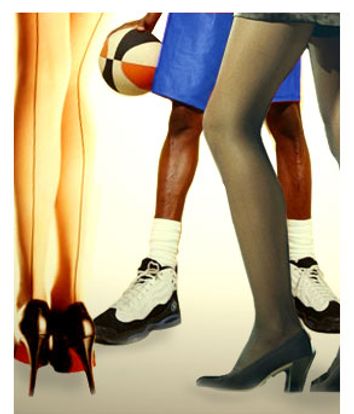
You are young, rich and chiseled, and life offers sexual opportunities that few can imagine. But increasingly, pro-spor insiders say, the risks are harrowing.

  • more
    • All Share Services

Sports stars, sex and stalkers

Midnight at a high-end lodge in Colorado. A young woman who works there as a receptionist gets off work and goes to a guest’s room. The guest is a famous athlete. The woman, just 19, is perhaps starstruck to be in his presence. For the athlete, she appears to be like one of many who throw themselves at him on a daily basis. Some sexual activity takes place. By the time the woman leaves a half-hour later, she contends she was raped. The athlete, married with a young child, says he only committed adultery.

This is all anyone really knows about the Kobe Bryant sexual assault case, save for the Los Angeles Lakers star guard and the 19-year-old college student. And as much as the media pundits and their hired legal experts weigh in with their considered opinions, no one really knows for sure what happened late the night of June 30. But at its core, the case is relatively simple: A man says he has had consensual sex, while a woman claims she was sexually assaulted. Rapture on the one hand, rape on the other.

For now, the case is all about ambiguity and uncertainty; in time, it will be likely be a lurid media frenzy. But for now, with Bryant scheduled to appear in an Eagle, Colo., court Wednesday for a preliminary hearing, the case offers a backstage view into professional sports culture that is almost never revealed in a Sunday afternoon game broadcast or in newspaper coverage the next day. It is a hyper-sexualized world, both a meat market and a minefield. It is a world where even a third-string jock can find a sexual companion almost any time he wants, with a woman of his choosing. It is a world where some women see the athlete as a notch on the belt, a chance to live the celebrity life or to win a fat financial settlement.

Of course the phenomenon is not new. Baseball Hall of Famer Babe Ruth was legendary for his home runs, and also for his womanizing. But times have changed, and the athlete’s world is one that few Monday morning quarterbacks can even imagine. The men are young and chiseled, they have more money than they can spend, and they face a constant barrage of temptation. The women have drop-dead, fashion-model looks, accentuated by tight jeans, a short skirt, a revealing blouse. They stake out hotel lobbies, clubs that jocks frequent, hallways in the arenas. When men do it, it’s called stalking; women are merely groupies.

Sports stars are reluctant to talk about it to outsiders, but hundreds of them undoubtedly are watching the opening acts of the Kobe Bryant case with a certain amount of educated dread. Like us, they don’t know what happened. Unlike us, though, they know the thrill of daily opportunity and casual sex, but also the danger that comes with it — the liaisons that can tear a family apart, the risk of sexually transmitted diseases, the threats of blackmail.

It’s easy to view Kobe Bryant as another spoiled brat jock who believes he can play outside the rules of law and marriage. Especially to those inside the sports culture, it might be easy to see this as just another case of a woman setting up a celebrity. Certainly, though, it is a cautionary tale about power, and the sexual paradox that is sometimes found in the halls — and bedrooms — of power. It’s not unlike the affair of President Clinton with White House intern Monica Lewinsky. Perhaps Clinton was just another powerful, horny man looking to score with a naive young woman who admired him. Perhaps Monica was the conniving young temptress with “presidential knee-pads” looking a little bit of love and a big place in history.

Make no mistake, says Dallas Cowboys star Michael Irvin: Power is how male athletes define themselves, and when a male athlete goes looking to score off the field, power is the name of the game. “Power is head wine for men — any form of power,” the former receiver and current ESPN analyst told the Dallas Observer in an interview last year. “That’s why we make money an issue, nice cars an issue, clothes — all of it’s head wine, all of it’s to draw women. It all comes back to women. If a guy tells you it doesn’t, trust me, he’s lying. Let’s be real here.”

Darryl Dawkins, the former all-star center for the NBA’s Philadelphia 76-ers, has an interesting take on the Bryant case. In a 14-year career that spanned from the mid-1970s to the end of the ’80s, Dawkins learned — learned a lot — about women. For Dawkins, who claimed to have had sex with 1,000 women during his playing days, the problem with women and professional athletes is the stalking factor. “Everywhere we went, there were ladies around,” he told Salon in an interview last week. “Every guy on our teams got hit on, and it didn’t matter if they were married or not, if they were a star on the team, or good-looking. If I didn’t want some woman, she would offer to bring her friend along and double-team me. Sometimes, the biggest problem was getting them to leave.”

Temptation is always around the corner, and a possible lawsuit, extortion attempt or child-support payment comes with every encounter. “No matter how pretty or sweet-smelling your wife or girlfriend back home was, there was always a girl on the road who was prettier, smelled sweeter, had that certain walk that made her ass pop, and knew how to come at you,” Dawkins writes in his new autobiography, “Chocolate Thunder.” “There are all kinds of horror stories. I heard lots of time about a girl supplying a rubber, only she’s already poked holes in it. Or a guy who got a girl pregnant, and when she sued him he discovered that the name he knew her by wasn’t even her real name. There are so many girls coming at pro athletes from so many different angles just looking for a meal ticket.”

Even if Dawkins has no inside knowledge about the details of Kobe’s case, it is instructive to consider his mindset. News reports have suggested that the 19-year-old receptionist suffered bruises on her body during her encounter with Bryant, and the prosecution will use this physical evidence to try to prove the sex was nonconsensual. “My personal opinion is that Kobe didn’t rape her,” Dawkins said last week. “Something was probably promised to her, and then Kobe probably changed his mind. When it was time for her to leave, she probably didn’t want to go. If she has bruises, it was probably from Kobe trying to get her out of the room, not from him beating her up.”

Perhaps that is a coarse analysis; perhaps it comes from a man who has issues with women. But Dawkins is hardly alone in his views about the women who love athletes too much.

Brenda Thomas, who worked as a personal assistant for Phoenix Suns all-star guard Stephon Marbury, has penned a steamy novel — “Threesome: Where Seduction, Power, and Basketball Collide” — based on what she saw from that vantage. She insists that Marbury was not and is not one of the players she’s describing, but generally, she says, the underbelly of professional sports is both amazing and disgusting.

In an interview, Thomas recalled being at a restaurant with some NBA players for a party, and a procession to the bathroom as players were “serviced” by a groupie hanging out at the bar. “This woman was taking guys into the bathroom after they just met,” Thomas says. “After a few minutes of small talk, I heard a player say to her, ‘So, you want to give me some head?’ and off they went. I’ve seen women who will get down on their knees and service the entire entourage — four or five guys or more — just to get to the ball player. And these women are all types: black, Latino, white, professional women, women you would describe as whores.

“These guys can have three or four women every day, that is no exaggeration,” Thomas continues. “These women come at these guys from every angle, at every hour of the day and night. The NBA tries to teach these guys how to avoid trouble like this, but when you’re in your 20s and a women is down on her knees in front of you, the lessons learned are really not at the forefront of your mind.

How far will women go to get close to a player? Jennifer Briggs, a Fort Worth, Texas-based writer and author who has covered sports for 15 years, found that groupies used a curious security dodge at the Dallas Cowboys training in the mid-1990s in Austin. After practice, the Cowboys players would pass by fans pressed against a fence and asking for autographs. The security guards allowed kids in wheelchairs to gain a position just inside the fence.

“I started to notice that the women with the handicapped kids were dressed in short skirts, low cut blouses, heavy-duty makeup,” Briggs recalls. “The security guards referred to these women as the ‘ho express,’ groupies pushing handicapped kids on wheels. These women were borrowing other people’s handicapped kids so they could get close to the players.” Briggs says the Cowboys security detail had to put the brakes on the ‘ho express, allowing only one person to accompany each child in a wheelchair, and making them prove the kid was actually handicapped.

“Being with a woman all night never hurt no professional baseball player,” baseball titan Casey Stengel once said. “It’s staying up all night looking for a woman that does him in.” The issue of sex and the pro athlete has for the most part always been viewed with a certain whimsy, a wink-wink to the fact that boys will be boys and women will chase them around. The notion of the heroic male includes sexual conquests, and male fans at least have tended to give the jocks a pass on sexual exploits. The news media never reported the indiscretions of the players, and a hooking up on the road was just a part of being a male sports hero.

In the movie “Bull Durham,” the relationship between Annie Savoy and the minor league baseball players is played out in a positive way: The older woman beds a young stud pitcher and enhances his career. The other groupie in the movie, Millie, sleeps with multiple players, but ultimately marries one of the more upstanding among them. The relationships in the movie are as wholesome as one can get, and the hint of nastiness and coercion is harmless literary fun.

And for many years, the relationships between athletes and their women has been treated as a running locker-room joke. In Jim Bouton’s 1970 book “Ball Four,” infidelity among baseball players was treated almost cavalierly, with the author and fellow players embarking on “beaver shooting” missions and hiding tape recorders under their beds so teammates could enjoy the sexual soundtrack on the bus the next day. Arizona Diamondbacks first baseman Mark Grace commented a few years ago on Jim Rome’s sports radio show about the concept of the “slump buster.” When a batter is going through a hitting slump, Grace said the player must find an ugly (and preferably fat) woman. Sleep with her, toss her aside and — voilà — the slump is over. It’s called “diving on a live grenade,” Grace joked, or “taking one for the team.”

But in recent years, such apparently innocent sex has turned dangerous.

It started with Magic Johnson announcing he was HIV-positive in 1991, a result, he says, of heterosexual sex with endless partners over a decade. Throughout the 1990s, there has been a parade of court cases based upon athletes’ infidelity. Michael Jordan paid a mistress $250,000 to keep quiet about their affair, but the woman then sued the basketball player for $5 million (the case was eventually thrown out). The New York Mets’ Daryl Boston paid a woman $600,000 to avoid having her charge him with rape. Boston Red Sox third baseman Wade Boggs was sued by his mistress for failure to pay her “salary and expenses.” Boxer Mike Tyson served a prison term for raping a beauty queen. Atlanta Falcons defensive back Eugene Robinson was arrested for trolling for prostitutes the night before the Super Bowl. Irvin, the Cowboys receiver, was caught in a hotel room with “self-employed models,” cocaine and sex toys.

With players fathering “fun babies” at an almost Malthusian rate, the law of mathematical odds made certain that the sexual exploits of star athletes would end up in court. The rising salaries had much to do with it; players found that paying off their mistresses and mothers of their illegitimate children was easier than fighting. The expenses have almost become another line item on their business managers’ ledger.

Boston Celtics great Bill Russell once joked that athletes “are on scholarship from the time they are in the third grade.” Great athletes are doted upon from the time they are kids; they are given special treatment by their families and schools, and then later by fans and the media. They learn to expect special treatment and most of the time they get it.

“I call it ‘spoiled athlete syndrome,’” says Steve Ortiz, a sociologist at Oregon State University. “When a cop stops them for speeding, they get out of a ticket. When a restaurant is crowded, they get the best table. Agents clean up their financial messes. Eventually, some athletes don’t think the rules apply to them. And those rules include sexual behavior and marital fidelity.”

Ortiz studied the marriages of pro athletes by interviewing 47 wives of players in the mid-1990s. He said there were few admitted extramarital affairs in his study group, but he said that most of the players’ wives were dissatisfied with their husbands’ contributions to the marriage. “Most of these men were doted upon by their mothers, and they basically traded in Mom for a younger, new and improved model,” Ortiz says. “They tended to de-sexualize their marriage. Their wife would keep the home base running smoothly, and the player thought as long as he was giving his wife the check, everything was fine. Many of these men feel that because of their careers, because they are gone from home so much, they are off the hook from parenting and other kinds of accountability in their marriage.”

Ortiz acknowledges that many marriages outside of sports have the same dynamic. But he says two problems are different by degrees in the athlete’s marriage. First, the “hyper-masculinized” world of sports encourages and provides opportunity for infidelity much more so than in an average married man’s life. The second point is the financial leverage an athlete has over his wife or partner; make a scene, it is implied, and you get tossed off of the gravy train.

“Most of the wives would get upset with how blatant the groupies were, and how indiscreet the players would be,” says Ortiz. “But most of the wives coped by telling themselves that all of this is temporary. That’s why they stay with their husbands when they cheat. It’s all about survival. They think it will all be over when he retires. But it doesn’t work that way, either.”

This may explain why Kobe Bryant’s 21-year-old wife, with a 6-month-old baby at home, appeared at the press conference last month with her philandering husband, holding his hand and staring deeply into his eyes. When the average guy gets in trouble with his wife, something small like staying out with the boys drinking or not helping with the housework, he might face a punishing weekend of picking out wallpaper at Home Depot or choosing throw pillows at Bed, Bath & Beyond. Kobe gets charged with sexual assault and he fixes things by buying his wife a $4 million ring.

But when the average guy cheats on his wife, he can’t get off the hook by writing a check for $4 million. Athletes are different that way.

“A lifetime of developing one skill doesn’t allow much time to develop others,” Bouton wrote in his 20th anniversary edition of “Ball Four.” “Lots of athletes can’t function in the real world. That’s why they only feel comfortable in each other’s company. They sense that something is missing from their lives, but they’re not sure what. At the same time they feel invincible because of their success on the field.”

“This combination of emotional immaturity and physical ability makes athletes uniquely vulnerable to temptation,” Bouton continues. “They can’t ‘just say no.’ They’re too busy trying to fit in and show how great they are at the same time.”

When Jennifer Briggs was the beat writer for the Texas Rangers, she said some players would go to clubs after the game, and just troll the parking lot for women, not unlike men driving through seedy neighborhoods looking for hookers. “My nephews came to a game with me one night, and they wanted to meet some ballplayers, but we couldn’t get them into the locker room. So I took them to the parking lot of a club near the ballpark. Sure enough, there were players parked there, with women bent over, talking to them through their car windows. All you saw was miniskirts with their asses hanging out, long legs and high heels. At least my nephews got to see some ball players in their natural habitat.”

And like Briggs’ nephews, this is how many view the professional athlete. They make too much money, they are far removed from the norms of conventional society, they seem to live by their own rules. They treat women as disposable objects, and if they get caught breaking the law, they’ll hire a high-priced lawyer to pay their way out of it.

But the life has its perils. Think of what it is like to be away from family for months at a time, to be besieged by autograph seekers every time you go out to eat, to be unable to go to a bar and just have a beer with friends, to be constantly under the media microscope. No pity is warranted — the jocks sign on to this lifestyle as they cash their enormous checks. But the price of celebrity can no doubt wear on anyone, and maybe the consequence of such star power is how it gets played in the realm of sexual conquest.

Dawkins said nothing prepared him for the temptations he faced as a star athlete. Before he joined the NBA as an 18-year-old, fresh out of high school, he says his pastor and a few veteran players warned him of the perils of sleeping around. “You’re a young kid, you’re away from your family for the first time and you’re lonely,” Dawkins says. “You meet someone you think is pretty cool. Before you know it she’s up in your room. Most men would be doing the same thing in that situation.”

But most men will never face that situation. And one of the lessons of the Kobe Bryant sexual assault case is perhaps the extent to which the athletes in professional sports have been pushed so far outside the norms of society. They are held up as heroes, accorded status unrivaled in our society, and they pocket millions of dollars along the way. They are objects of desire and envy, love and hate. But at the end of the day, they are still just grown-up kids who can run faster and shoot a ball better than anyone else. To expect some higher moral code from guys who play ball for a living is probably unrealistic.

Not to excuse Kobe Bryant. He is a married man who cheated on his wife with a teenager. If convicted of sexual assault, he will be spending time in jail (conviction in Colorado carries a sentence of four years to life). But it shouldn’t come as any shock to anyone that athletes misbehave. We have created this aberrant sexualized world in which they live. And in this strange world, it is not wishy-washy to see both sides of the case.

But regardless of which story the jury believes, the Kobe Bryant case is about the curious and grotesque world where sex and sports collide. It is about acting upon impulses without caution, about men and women using each other, of wary eyes being cast on every sexual advance, money and power overriding true love, decency and morality. And although many might fantasize about living in such a world, very few of us would find solace there.

Stop the holy showboating

Listen up, jocks: God doesn't care if you score a touchdown. So do your praying in private, not in the end zone.

  • more
    • All Share Services

Stop the holy showboating

In the second week of the NFL season, Dallas Cowboy quarterback Quincy Carter heaved a 38-yard pass into the end zone. Cowboy receiver Joey Galloway was double-covered, but somehow outfought the defensive players for an amazing touchdown catch. In the middle of the field, in front of 70,000 fans and millions watching on TV, Carter pointed to the heavens in acknowledgment of the Supreme Being’s role as touchdown-maker. And in the post-game interview, commenting on his stellar performance, Carter gave “credit to God for giving me the innate ability to perform.”

It’s kind of funny, but in Week 1 of the NFL season, against the expansion Houston Texans, Carter had the worst performance of his short career. Balls were bouncing at the feet of receivers and there were no touchdown passes, miraculous or not. And in the locker room after the game, God was never mentioned.

In the realm of jock theology, God seems to show himself only to the winners. While many athletes do their own dances or gyrations to gain attention from the fans and TV cameras, many others seek their own spotlight through very public prayer on the field of play. It is a curious trend in the “hey-look-at-me” form of self-promotion that has infected pro sports in recent decades. And it goes beyond making a sign of the cross before taking a few swings at the plate. It’s almost as if these jocks are saying: “God thinks I’m special, so you should too.”

It is impossible to watch a sporting event these days without some spiritual revival meeting breaking out. There are prayers before the game, prayers of thanksgiving for mighty athletic feats, kneeling in a circle after the game. We have prayers after touchdowns, heaven-pointing after home runs, signs of the cross before free throws. It seems most post-game interviews begin with the “thank the Lord” preamble.

Much of this jock Christianity moves from the simple thanking of the Lord to spiritual showboating. There seems to be a feeling that God is consumed with the outcomes of sporting events, and blesses the believers with victories. Jacksonville Jaguar quarterback Mark Brunell said that the reason his team upset the Denver Broncos in the 1997 playoffs was because “God has blessed this team … We have a bunch of guys who love the Lord, and he has been with us.” This year, the Jags are predicted to stink. Is that because the guys have stopped loving the Lord, or because of the team’s salary cap problems?

Athletes often have what might be considered a kindergartner’s mentality about religion, treating God as a good-luck charm. “I think that very often athletes seem to have a very simplistic and self-serving view of what God is and does,” sportscaster Bob Costas said in an interview with the San Diego Union-Tribune. “It makes no sense that a God who, for all human understanding, can appear indifferent to major pain and suffering on a large scale or the illness of a child, would intercede to help get a first down.”

The impression is given that the player’s success is fused with God’s will, and the God of sports games is a micro-managing deity. But even though the God of jocks pays attention to the most minute detail of the game, he doesn’t bother with the losers. “If the player were consistent, he would point to skyward to mark the judgment of God after he got his shot blocked or struck out,” says Robert Benne, director of the Roanoke College Center for Religion and Society. “I haven’t seen that lately.” Or as Philadelphia Daily News writer Jim Nolan succinctly put it in a column: “To fumble is human, to catch the winning TD, divine.”

So let’s do something about this. In the name of metaphysical neutrality, in the quest to stamp out spiritual fakery, I would implore the commissioners of the sports world to ban prayer on the field of play. No kneeling, no heaven-pointing. The sports leagues already ban taunting. What taunt could be worse than saying to your opponent that your God is more powerful than his?

I am not suggesting this on a whim. I know that sports and prayer have been conjoined for thousands of years. The Mayans had a basketball-type of game 4,000 years ago — played in the temple compound and officiated by temple priests — that concluded with the losing captain being ritually sacrificed. (You think those captains weren’t praying for the ball to go through the hoop?) White Sox baseball player and evangelist Billy Sunday would preach about the evils of drink before games in the late 19th century. Notre Dame hitched its football team to the legend of “Touchdown Jesus,” a mosaic built on a campus building in the 1960s that appears as though the Lord is signaling a touchdown. In the ’70s, we started seeing a man on TV in a rainbow wig with his John 3:16 banner.

But now we have athletes that seem to think that prayer might be a good public relations gimmick, done more for the TV cameras than anything else. And it is also almost entirely evangelical Christian in nature, very narrow and exclusive in its focus. Jewish athletes like Shawn Green, the Dodgers’ right fielder, have quietly asked for religious holidays off, just as the team’s Hall of Fame pitcher, Sandy Koufax, did in an era earlier, but we don’t see Jewish athletes draping a tallis over their uniforms. We might see Roman Catholics occasionally making the sign of the cross at the plate, but we don’t see them praying the rosary on the bench to help start a rally. Muslim boxers don’t kneel and face Mecca after they knock the crap out of someone.

Wary of spiritual showboating, the National Collegiate Athletic Association tried to ban prayer from its sports in 1995, but changed its policy after being sued by the Rev. Jerry Falwell’s Liberty University. The new policy is a comical but predictable result of lawyers delving into spiritual matters. “Players may cross themselves without drawing attention to themselves,” the NCAA policy states. “It is also permissible for them to kneel momentarily at the conclusion of play, if, in the judgment of the official, the act is spontaneous and not in the nature of a pose.”

The NFL has its taunting rule, but it is even more subjective. Individual celebrations are permitted as long as there is no taunting, such as spiking the football in the opponent’s face. “Choreographed demonstrations by two or more players” will be reviewed by the league, the rule says. But there is nothing in the rules to prohibit “spiritual spiking.”

I asked NFL spokesman Greg Aiello if the league would consider legislating against end-zone prayer. He laughed and said it is the individual’s right to express himself. I then asked him how tolerant the league would be of other religious demonstrations. For example, would the league permit a Santerian to sacrifice a chicken after a touchdown?

“I think that would be unnecessary roughness,” Aiello joked. “Fifteen-yard penalty.”

“What about snake handlers?” I asked.

“Don’t the Oakland Raiders’ fans already do that?” he answered.

OK, I was being a smartass, and so was Aiello. But in the larger sense, the question of which religion a league endorses is a serious one. Sports is the American idiom. Given our melting-pot culture, sports is the “civil surrogate” for a common American religion, as the late baseball commissioner A. Bartlett Giamatti once observed. After the 9/11 tragedy, Christians and Jews and Hindus and Moslems all moved into our sports cathedrals to sing “God Bless America.”

I realize the American Civil Liberties Union and the Christian Coalition would be joined together on any prayer ban, and would probably win on the grounds of freedom of expression. But couldn’t the teams and leagues put some brakes on all the posturing prayer, maybe moving it to the sideline? Couldn’t the networks quit showing it and dwelling on it? And more importantly, couldn’t some of the leading clerics in this country explain to the athletes that God does not really care whether or not they get a first down?

It is curious that athletes feel the need to pray more so than, say, accountants. I know of no accountants who point to the heavens after they balance their ledgers. I do not kneel after writing a good sentence.

Maybe Brunell and Carter and the other heaven-pointers and end-zone kneelers should get some advice from the same Lord they are aligning themselves with on the field of play. In Matthew 6:5-6, Jesus explains how to pray: “And when you pray, do not imitate the hypocrites; they love to say their prayers standing up in the synagogues and at the street corners for people to see them. In truth, I tell you, they have had their reward. But when you pray, go to your private room, shut yourself in, and pray so to your Father who is in that secret place, and your Father who sees all that is done in secret will reward you.”

So please, all of you jocks who feel the need to pray in front of 70,000 people and millions more on TV, do as the scripture tells you. Pray in private. We all know how God has blessed you and how wonderful you are. But God does not care if you score a touchdown. He does not care if you sack the quarterback. And maybe, just maybe, this God thinks all of us are special, not just our Sunday gladiators.

Continue Reading Close

The fading war on drugs

How Osama bin Laden caused the decline of DARE, the anti-drug program that brought you "Just Say No."

  • more
    • All Share Services

The fading war on drugs

In the aftermath of Sept. 11, the sheriff’s office in Jacksonville, Fla., found itself in a crisis. Bomb threats and anthrax scares were epidemic, and deputies had to respond to each one. At the same time, 80 of the department’s 1,475 employees were military reservists who could be called off the street to active service. Lacking money for new hires, Sheriff Nat Glover decided to cancel some prevention programs and move officers to street patrol. The first such program he cut was Drug Abuse Resistance Education, better known as DARE, which had used 13 cops to teach an anti-drug message to 12,000 Jacksonville-area elementary school students each year.

“We are reluctant to make this move,” Glover said in a news release. “DARE and other crime-prevention programs are important, but our first priority is patrolling the streets and we must fill vacancies created by the military call-up.”

A year earlier, Glover’s move might have been seen as heresy. But as the nation moves closer to the start of a new school year and the anniversary of the attacks, it is becoming apparent that Osama bin Laden may be succeeding where civil libertarians, some parent groups and critical researchers had failed, in pushing DARE out of schools.

The law of unintended consequences usually births some strange offspring, and in this case, DARE’s demise in many schools is clearly, if indirectly, linked to the terrorist attacks. Since 9/11, the feds have had to shift much of their work in white-collar crime, immigration and drug enforcement onto local police agencies. Local agencies at the same time are being squeezed by their first budgetary crises in more than a decade, another condition attributed at least partly to the attacks. And the poor economy is being blamed in part for the first rise in the crime rate since 1991.

During the past year, police departments and school districts in Fort Worth and Arlington, Texas, and Toledo and Canton, Ohio, have cut their DARE programs, based in part on budgetary concerns. Officials have done the same from Greensboro, N.C., to Council Bluffs, Iowa, and on to Mesa, Ariz. and Anaheim, Calif. Several other major cities — and even a few states — are contemplating action that would cut millions more from the program. Oklahoma already has cut its DARE spending from $919,000 in 1997-98 to just $155,000 this year.

In suburban Suffolk County, N.Y., police commissioner John Gallagher has given school districts a year to come up with a new program before his department stops participating in DARE, citing the $3.5 million annual cost of providing 33 officers, as well as questions about DARE’s effectiveness. “We have to face this honestly — the program is not going to work,” Gallagher told county lawmakers last December. “It has not worked.”

The choice for local communities is, in essence, simple. The DARE program in a medium-sized city has 10 police officers, each at roughly $60,000 a year. Is the city better off spending that $600,000 to put officers on the street to chase drug dealers and terrorists, or should it put officers in elementary school telling fifth- or sixth-graders not to smoke pot or drink alcohol?

The decision is not based purely on dollars and cents. Virtually every major study about DARE says it doesn’t work. Since 1995, a number of academic and government studies — by the U.S. surgeon general, the General Accounting Office and the National Academy of Sciences among others — have found that drug use among students who took DARE and those who didn’t showed little difference later in life. Some studies have even suggested that kids who go through the DARE program are more likely to use drugs and alcohol. Earlier this month, researchers from the University of North Carolina – Chapel Hill reported in the journal Health Education Research that DARE is not merely ineffective, but that it is “not a very good use of taxpayer money.”

What the studies don’t say is why, exactly, it doesn’t work. Most researchers agree that fifth- and sixth-graders are too young for the intensive training. Another problem has been the lack of interactive teaching methods by the police officers. The best drug-abuse prevention programs, researchers have found, use discussion groups and Socratic-method question-and-answer sessions instead of lectures. Lastly, researchers think there is a problem with the DARE message itself. The officers don’t make a distinction between alcohol and marijuana and harder drugs like cocaine and heroin. When kids see their friends experimenting with marijuana in eighth grade, and don’t see the full-blown addiction that the DARE officers warned about, they may throw out the entire DARE message.

Still, as long as the war on drugs was the nation’s No. 1 war, DARE was politically untouchable. In such a climate, DARE found its way into 80 percent of the nation’s schools. But two generations removed from the 1960s, American attitudes about drugs — and especially marijuana — have softened. The “Just Say No” teaching of DARE now seems an anachronistic leftover of the Reagan era, a slogan with little substance. Nevada residents in November will vote on an initiative to make marijuana legal and regulate its sale, just as the state does with alcohol and tobacco. States are debating the medical use of marijuana; industrial hemp is being positioned as a cash crop. England has just decriminalized marijuana, and Canada will probably do so soon, which will no doubt rejuvenate the decriminalization debate in this country.

Since Sept. 11, the place of drugs in the nation’s hierarchy of enemies clearly has been diminished. The war on drugs has given way to the war on terrorism. The FBI has moved 400 agents from drug enforcement to anti-terrorism duties. In its searches of freighters on the high seas, the Coast Guard has made plastic explosives a priority where bales of marijuana used to be the chief target. Planes that used to search for drug traffickers are now patrolling the skies for suicide bombers. In many communities, the choice has come down to public safety vs. youth drug-and-alcohol abuse prevention.

“There is a lot of shifting going on right now,” says Tim Lynch, director of the libertarian Cato Institute’s project on criminal justice. “The feds are trying to get the locals to handle more of the burden. Americans are looking at the war on drugs in new ways. Priorities have changed. Maybe that’s why DARE is being looked at more closely. 9/11 is a major factor, because of the necessary shifting of resources.”

Some pundits said in days after 9/11 that irony was dead, but there is a lot of irony here. One of the major criticisms of DARE from civil libertarians was that the program encouraged kids to turn in their dope-smoking parents. President Bush now wants ordinary citizens to fight the war on terror by watching their neighbors through Operation Tips. It is just another example of how the war on terror has trumped the war on drugs.

DARE has long been the favorite P.R. program of police departments, and it has been a considerable risk for local sheriffs and police chiefs to publicly question its value and then cut its budget. Started in 1983 by former Los Angeles Police Chief Daryl Gates, the drug abuse prevention program would take officers off the street and put them into the classroom — usually the fifth or sixth grade. The message was uniform and straightforward, with the underlying assumption that the program could teach kids how to say to no to peer pressure. So well-received was DARE that it now serves 36 million kids in 54 countries.

But the program has long had dubious reputation. It has provided some valuable education and given parents an entry point for important discussions with their children about drugs and related issues. At the same time, though, it has sometimes left children with bizarre misimpressions — for example, that parents who drink wine or a cocktail at home are a cause for concern.

DARE’s success was always tied to being more than merely a drug-prevention program. School districts liked it because it took the burden off them to come up with a federally mandated drug prevention program. Most parents liked the feel-good interaction of cops meeting their kids in the classroom. Politicians loved DARE because it gave them a chance to be anti-drug and pro-family at the same time. For local police, it was a chance to show that they could be sensitive and caring, more than automatons with mirrored sunglasses who wrote speeding tickets and swung billy clubs.

But that rationale has sustained some serious damage in recent months. In Los Angeles, where DARE started, Mayor James K. Hahn proposed earlier this year that all 119 DARE officers be cut from the police force; under a compromise reached in May, 44 officers will remain in the program. “Getting more officers on the street to help address the crime problem is a top priority for the mayor,” Los Angeles Deputy Mayor Matt Middlebrook told the Los Angeles Times.

It is instructive to hear the comments by the police chiefs who are cutting their DARE programs. Elimination of DARE is not strictly a budgetary issue, they say, but in a time of budget crisis, the expense is a hard one to justify.

“If the program was working magic, then maybe we’d consider finding ways to funding it,” says Toledo Police Chief Michael Navarre. “The studies saying DARE doesn’t work made it easier for us. We already have to fund putting police in the schools. I just couldn’t commit to nine additional officers to fully staff the program.

“The principals loved DARE,” Navarre continues. “But when you show them the research, and we look at our budget, it becomes an easy decision. We have received very little grief for this decision. The educators, the school board members, the local politicians, they all back me on this.”

Trying to get a handle on how much money goes into DARE is difficult. Neither Glenn Levant, president of DARE America, nor his staff returned calls for this story. By all accounts, though, the program offered through the private nonprofit organization is extremely expensive. When all the federal, state, local and private contributions are added up, some experts put the price tag at $1 billion a year.

Perhaps Sept. 11 and the related budget problems were the most immediate cause of DARE’s recent troubles, but its credibility had long been weakened by doubts about its effectiveness. That caused the U.S. Department of Education in 1999 to take DARE off its list of approved programs, meaning federal funds could not be used for DARE unless the local school district did its own study showing its effectiveness. Before the current budget crises, the federal guidelines mattered little. School districts would fund their prevention programs through the federal Safe and Drug-Free Schools programs, and add the DARE program for the elementary kids at local law enforcement’s expense. Now, the added expense of DARE is being questioned.

“In the early days, there were all those combinations of funds and if you had to hire some additional officers, you didn’t put a dent in the budget,” says Luanne Rohrbach, a research assistant professor at the University of Southern California who specializes in drug abuse programs. “But a lot of those funds have dried up. The times have changed dramatically in the past year.”

Consider the situation in Arlington, Texas. The school district gets $232,069 in federal funds from the Safe and Drug-Free Schools program. In the past, the city and the school district would split the $613,000 cost of DARE, with the city kicking in $263,000 for 10 officers and the school district picking up the $350,000 tab for materials and training. With the city looking to cut $2.5 million from its budget, and the school district facing similar cuts, the chance to save $613,000 on DARE costs was attractive to both sides. Starting this school year, Arlington officials will use their federal money for an in-house drug prevention program taught in all grades by health-science teachers and counselors.

Bill Modzeleski, director of the Safe and Drug-Free Schools program for the U.S. Department of Education, says the department is officially neutral on DARE. “We are not saying the federal dollars cannot be used for DARE,” says Modzeleski. “But we treat it the same as any other program. If we don’t see any change in behavior, we don’t fund it. We hold their feet to the fire and test these kids. We have to see improvement in the behavior.”

But his boss — President Bush — is a big DARE fan, and Modzeleski hedges a bit when discussing the program. Despite the critical studies, he says, DARE does many good things. When asked to name what DARE does well, he points to one attribute that has little to do with alcohol and drug-use prevention: “Research shows that DARE builds a better relationship between law enforcement and children,” he says. “When they go out on calls, they won’t have kids throwing eggs at them.”

Critics say DARE extracts a high price from police departments — and ultimately, from taxpayers — to achieve that benefit. But putting police in the classroom is crucial to the program, supporters say. Dr. Herbert Kleber, professor of psychiatry and director of the division on substance abuse at Columbia University Medical Center, serves as chairman of DARE’s science advisory board, and when I ask him why police officers are so central, he repeatedly refers to what he calls the “DARE delivery system” and the “consistency” of the police officers who teach the program.

“No matter how good the curricula is, consistency in presentation is crucial,” Kleber says. “The turnovers of teachers are enormous — less than one in nine were there one year to the next. The officers are carefully chosen and well-trained and they consistently deliver, year after year.”

The argument about police officers being the best way to deliver drug-abuse training programs is somewhat specious. It’s like saying that McDonald’s can make a burger that tastes the same whether you are in Paris or New York, and that the ability to achieve such consistency is remarkable. The more important question is whether the burger is any good. Even if the war on terror ended tomorrow and budgets became healthy again, it is not assured that DARE would immediately jump back into the communities as their anti-drug program of choice. DARE has sustained too many hits from researchers, too many hits from budget-conscious police chiefs. There are other programs increasingly seen as more effective.

While DARE officials are reluctant to talk about the program’s quality, they have tacitly acknowledged problems: They have commissioned a $13.7 million study, paid for by the Robert Wood Johnson Foundation, to rework the program by 2006. Already, though, there are significant questions about whether the revised approach will be any better than the current one.

Some think the new DARE may be even more labor intensive. The six-city pilot program, involving 30,000 students, would move the training from elementary school to middle school, be more interactive and have follow-up sessions in high school. And while Kleber says the changes in the new DARE will be based upon the latest research, police officers still will be the instructors.

More labor intensive also means more expensive — and those who want to spend more on DARE appear to be ignoring how the war on terror is draining money and staff from the war on drugs. William Alden, DARE America’s Washington-based consultant, recently told the Columbus Dispatch that as much as $30 million will be needed nationwide to retrain officers and provide new materials for the new program. That brought a pointed response from Sgt. Earl Smith, the Columbus Police Department’s public information officer.

“We can’t afford what we’ve got,” Smith said. “How are we going to do more? I don’t know that anyone is saying they’re against DARE, conceptually. The question is: Is it doing what we need of it, and can we afford it?”

The new the study won’t be finished until 2006, and in cities and states nationwide, police executives are making other plans. Says Michael Navarre, the Toledo police chief: “We don’t want to wait that long.”

Continue Reading Close