Eddie Huang

The utter ridiculousness of hip food trends

A chef describes how suddenly hot ingredients -- like razor clams -- hurt the consumer in the end

  • more
    • All Share Services

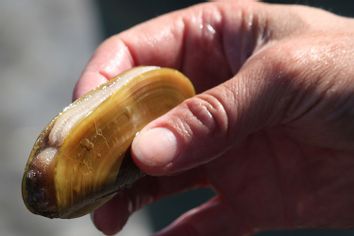
The utter ridiculousness of hip food trendsA razor clam

So here are some tweets from this week, from longtime restaurant critic Gael Greene and NBC’s thefeast.com food editor Matt Duckor:

Gael Greene We had razor clams three nights in a row last week. John Dory, Bar Basque, Dressler. Good but not a match for Esca’s.

mattduckor @GaelGreene Casa Mono’s razor clams predate the trend and are excellent.

And this is what I tweeted in response:

MrEddieHuang @mattduckor cantonese razor clams predate the trend by at least a couple dynasties… #ohamericans…

Gael and Matt know their bidness. Not trying to call them out on anything. It’s their job to report trends and identify them; they do it well. They didn’t determine the way Americans — and to a certain extent postmodern foodies around the world — dine. This is just how they found it. And you may think, “Eddie, why would you care if razor clams are a trend or not? Let ‘em eat razor clams!” But, see, as a chef and a person who cares about food and cares about culture, it’s not that simple.

From skate to pork belly to razor clams, there’s always something that’s priced reasonably, previously ignored, and able to fill a role on a menu. That’s where these things start. Your purveyor comes to you with a new product, say, Mangalitsa pork, and asks you to try it. It was almost extinct in Hungary as a lard animal but now they want you to experiment with it. There’s an introductory rate. The pig really isn’t good for much but lard, yet you can charge a premium for the experience and novelty. Call it “Kobe pork!” While the purveyor is showing it to you, he’s showing it to five other chefs in your neighborhood: Boom. We have a trend.

The Mangalitsa isn’t a bad product. It’s interesting. I’d like to spend some time with it, slowly integrate it, and figure out how to deliver it at a fair, sustainable price so it isn’t here today, gone tomorrow on my menu. Am I selling a trend or selling a good dish? By the time you cycle through those thoughts, Mangalitsa prices go up for a season, then they level out. But by the time it levels out, the eating public is bored. They just paid $30+ for a Mangalitsa pork experience that doesn’t really outdo your average Berkshire, which is known, widely available, quality pork. But the bigger issue is that chefs are coming up with specials and pushing trends before truly understanding the product, because they don’t have to. The novelty sells itself.

It’s a disservice to the product and the eating public. I’m sure Mario Batali knows exactly what to do with cannolicchi (razor clam) and ditto for April Bloomfield with Mangalitsa, but they aren’t the problem. It’s the copycats, it’s the people who are expressly selling the “trend.” They produce cheap knockoff interpretations or, worse yet, drop razor clams on some stupid farm-to-Brooklyn-to-table restaurant that thinks cooking simply involves buying a new locally sourced ingredient and putting some pink sea salt on it. There’s no craft. (“Just taste the simplicity, the essence, the natural flavor!” No, asshole, COOK it.)

You know what happens when you sell trends? You sell crap. I’ve been guilty of this myself. People wanted Cheeto fried chicken from reading my blog, a lot of people were mashing up Asian/Down-Home American, so I got caught up in a trend and introduced some crappy items at [my now-closed restaurant] Xiao Ye. I didn’t intentionally sell garbage; they were just crappy because I didn’t take the time to really understand what I was trying to do. It happens. No one’s perfect. Live and learn.

But razor clams aren’t a “trend.” You’ve been able to find them, for cheap, all around Chinatown or Italian neighborhoods for decades. Just look at the search results for “razor clams” on Yelp, it’s a who’s who of Chinese, Korean, Italian and then Eater Top 38 restaurants. They are on lowly Chinese diner-type menus such as Wo-Hop, but once the PAC (People Above Canal Street) play it out, the price goes up and you may see it disappear from certain menus never to come back. You have to realize, it may only take New Yorkers five months to cycle through a food trend like Mangalitsa or razor clams, but that’s just the beginning. You find it in D.C., Philly, Boston, Miami, Seattle, Portland, Austin … God, and at some point dare I say, it’ll be in my hometown, Orlando. Just like “the man” took the Black Eyed Peas from the underground and sold them back to us auto-tuned with a chick who should have been in the WWF, we are going to be buying back razor clams at $20 a pop in Chinatown soon. Which sucks, because we are the people who won’t dismiss razor clams when they aren’t hot on Yelp. It’s not a trend for us, it’s a staple.

It is better for food culture if we are slower to absorb new ingredients into the canon so that they have staying power. Despite everything you hear, the foodielution in America is still young and not all-powerful. I still somehow end up on dates with birds who only eat chicken (cannibals) and don’t eat meat on the bone. There’s a lot of work to do and we aren’t even close. On the flip side are the line cooks from two- or three-star restaurants hanging out at my shop, Baohaus, cockfighting:

“Oh, dude, pork belly is so played out!”

“Yeah, screw foie gras, Mugatu is so hot right now.”

You guys are a bunch of Zoolanders. People “in the scene” (puke) need to dig their heads out of their asses and understand that the rest of the nation still subsists primarily on ground beef and chicken breasts.

I’m not saying we should serve burgers and chicken breast, but if we look like a bunch of chickens with our heads cut off running from new ingredient to new ingredient and the public can’t follow, well, then this whole exercise is just intellectual masturbation, ’cause there is no lasting effect on national eating habits, on getting people to be open-minded about what they eat. Maybe that isn’t your concern, but everything is everything, and all this “sustainable” talk is for nothing because they’re going to eat McDonald’s ground beef until it kills us. We may go down with Mangalitsa saddle bags, but we’re going down nevertheless. The rate of consumption during these trends is unsustainable for most products. They need to be given time to grow and meet demand slowly. We also have to manage demand so that people don’t dismiss our products with only a surface understanding. I am passionate about this, ’cause I saw it happen to street wear. We thought we were the epicenter in New York, boutiques were busy, and certain brands were selling across the nation, but we were packaged as a “trend.” People didn’t understand what we were trying to say, they just recognized a common aesthetic between certain designers. People bought the “look,” not the message or the actual soul of what was going on. When that happens, you have no longevity. As soon as the recession hit, everyone went down. There was no customer loyalty because they were just buying clothes, they didn’t buy into the culture.

As consumable art, food lends itself to competition, but why are we in such a rush? Does it really matter if you were first in line? As eaters, it makes sense if you are more concerned with understanding the food, experiencing it, and soaking it in. There is no need to run around town eating, dismissing, and checking things off a list. One of my favorite things is to take a train to a neighborhood I don’t know and just collect menus representing a certain style of cuisine, perhaps Eastern European in Brighton Beach or Coney Island. I’ll look at them all and try something new, then I’ll go back in a month and try something else in the same vein. I keep going back trying the same food item at different places until I develop a foundation and frame of reference. I remember my first piroshky in Seattle (Piroshky Piroshky). I told everyone about it, how awesome piroshky was, but I didn’t realize how dope that first hit was until I started eating it more. It’s really damn hard to make a good piroshky. Now, imagine the inverse if all I had were horrible Brooklyn piroshky? I never would have given the one in Seattle a shot. It’s for your own good to eat slowly. There’s only so much you can glean in one sitting. As my mother always said, chew slowly and eat every grain of rice ’cause anything you leave will be a freckle on your baby mama’s face.

In defense of Chinese dads

I owe a lot to the discipline of my own Tiger Mother. But it's my father's relaxed presence that saved my life

  • more
    • All Share Services

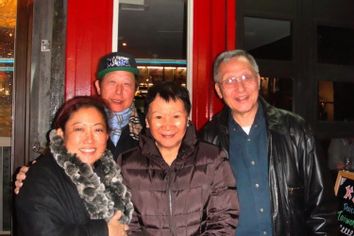
In defense of Chinese dadsThe author's father, second from the left.

When my restaurant got a zero-star review from the New York Times, my mom roasted me in an e-mail according to Chinese Mom Tradition. Everyone loved it. So recently someone sent me Amy Chua’s “Battle Hymn of the Tiger Mother” and they wanted my feedback: Do I think Chinese moms are, indeed, superior?

Well, I like my mom and her shape-ups, but if it weren’t for my dad, I would have been destined to a life of violins and Izod shirts. Chinese moms love buying Izod because it’s cheaper than polo and people laugh at you, but for the record, looking like an ass clown and not having friends definitely doesn’t help your SAT scores.

My dad is the homie in the photo with a snap-back Magic hat. (Like father like son.) He tried to be a Chinese mom and break my spirit, but it never worked. When he decided I needed to learn how to ride a bike, he put me at the top of a hill and told me to pedal fast. For three hours, I looked like a human egg roll falling down the hill. My mom came out and saw me bleeding all over the place so she powdered me with a bottle of yunan baiyao. It was settled that day that my dad couldn’t teach a crackhead to spend money. So teaching became my mom’s domain.

Like a lot of kids, I grew up really not liking my dad. But when I was around 8 years old, my dad left home by himself and set out for Orlando, Fla., to make a living. He worked two jobs at Steak & Ale and L&N Seafood at the same time. After the first month, he opened his own: Atlantic Bay Seafood and Grill. Your dad bootlegged DVDs? Deuces: My dad bootlegged restaurants.

Once Pops left, I really missed him. Even though he was irresponsible, he was hilarious. My mom was always responsible, put food on the table, made sure we weren’t cold, but she had no jokes! I remember when my mom had my dad beat us up for getting “B’s.” She’d stand on the side saying things like, “I was the salutatorian at my high school, and I didn’t even speak English!” My dad would try to school us about the importance of good grades and we’d cry back, “Dad wasn’t a salutatorian!” And of course he would respond with something like, “This f*cking belt was a salutatorian!”

My mom wouldn’t let us watch R-rated movies, so of course when she went on vacation, Pops rented “Coming to America” and put the “Royal Penis is clean” scene on loop. He said, “Boys, in Taiwan, girls don’t give it up. But in America, you have an opportunity. It’s OK to have sports sex. Just for fun, you should practice as much as possible.” I’m not paraphrasing. This was the quintessential Louis Huang breakfast speech. I have to give it to the man, he was a bad teacher, but that one night he had a plan when he rented “Coming to America.”

By the time my mom came back from her vacation, my name was Eddie (or, if you’re the government, Edwyn) and my brothers and I were reenacting scenes from the movie. Of course, my mom got in an argument with my dad about having a united front and being irresponsible, but he’d wink at us and let us know he had it under control. The best part was that he’d prep us for the showdown. He knew she’d go off, so he would have my brother Emery and me stage remorse by telling us that he was going to call us stupid rice buckets (fan tong). Afterward, we’d have to eat vegetables, play piano and practice kumon so that our mom wouldn’t go nuts. But we knew if we did all that, he’d let us watch WWF and practice DDT’s on our youngest brother, Evan, when she wasn’t paying attention.

My dad wasn’t a dad at all. He was our older brother, and it’s exactly what I needed. He encouraged us to be friends with all different kinds of people. He worked with Haitians and Mexicans at the restaurant all day and told us to respect everyone. The head chef he trained and hired was Jamaican. In a lot of ways, he was the most futuristic Chinaman I know. He was charged with the task of doling out punishment on us, but his heart wasn’t behind it. He loved us whether we were A or B students. I mean, C’s, come on, he’s still Chinese … But the point is, he thought we were cool kids and that was enough for him.

I remember in third grade, a kid named Edgar pushed me down in the lunch line at school and said, “Chinks get to the back.” My dad had taught me the meaning of the word when I was young. I knew exactly what that kid was saying to me. So I took his arm and slammed it in the microwave. From that moment on, my life changed. The teacher bugged out and locked me in the principal’s closet. I went to a new school, but some kids had heard what I did and I was stigmatized as a deviant. Everyone treated me like a crazy person when all I did was stick up for myself. I ended up going to six schools in six years, but my parents had my back. They still beat me if I got B’s, but if it was a fight that got me kicked out, they always said, “You’re too good for that school.” They knew that my brothers and I were the only Chinese kids at every school we went to (except one) and they didn’t want me to roll over for anyone.

Life isn’t about A’s, making National Guild or paying back your parents. When I got my first paycheck as an attorney, my mom demanded a Judith Leiber bag. I bought it. To this day, my dad hasn’t asked for anything. I love them both. But my point is this, Chinese moms and the Model Minority Chinese kid get too much play. For every National Merit Scholar (my brother is a National Merit Scholar who failed gym and then won the Fantasy Writers of the Future Award), there’s a kid who beat up your honor student, won the Zora Neale Hurston Award, opened Baohaus, and there’s a Chinese dad who had his back.

None of this would have happened if my dad hadn’t let me live. The day in high school he found out I was doing E, he didn’t bring out the belt. We rowed out on a lake. I thought he was gonna end me like Fredo, but he talked to me like a man. He made it clear: This was my life. I’m not doing this for anyone but myself so if I wanted to be self-destructive and break the Model Minority stereotype by ruining my own life, it didn’t prove anything to anyone.

I was so conflicted. I wasn’t like the white kids, I wasn’t like the Chinese kids, I was just me: a self-destructive teenager who knew he wouldn’t live up to anyone’s expectations. I had posters of other unwilling individuals all over my room: Allen-I, Chuck Barkley, Mark Twain (for real, had that) and Big Sheed. I was a fan of those brothers, but what did they do for me? Charles Barkley was right, he wasn’t a role model. My pops was my role model, and he was my biggest fan.

Amy Chua, you make great points about how kids need to learn a work ethic. They need discipline, they need practice, they need repetition. (Malcolm Gladwell’s “Outliers” has your back there.) Your lack of political correctness is brave, honest and welcome. My mom pretty much had the same approach, and I owe a lot to moms like you. But there needs to be a balance. Booker T. Washington needed W.E.B. Dubois; Hulk Hogan needed Andre the Giant; and sometimes a chink wants his homies to stay over and play “Mortal Kombat.”

Asian American women 15 to 24 lead in the highest suicide rate among all ethnic groups, according to the Department of Health and Human Services. The Model Minority stereotype is a problem and perpetuating it just makes life harder for those of us who don’t want to be gunners and work behind the modern great wall (cubicles). Some of us aren’t cut out for the Ivy League, but it doesn’t mean we can’t be successful in our own ways. A lot of us find our way late. It took going to law school, working at a firm, and hitting rock bottom for me to finally rid myself of Asian Expectations.

But what did I do after leaving the law? I came back to my roots, repped my family, our food, and did what every Chinese mom wants their kids to do: I bought Judith Leiber bags. Did I do that because my mom had me play piano? Did I do that because my dad put the belt to me? No, I did it because I’m proud of who I am, who my family is, and what our people eat. There are a million Amy Chuas pumping out Ivory Tower Lap Dog Asians but there’s one Louis Huang and he had a Money Gettin’ Chinkstronaut Like Me.

Continue Reading Close