Eryn Loeb

The beauty of the geek

Are nerds born or are they made? The author of "American Nerd" discusses the history of the geek, from greasy-haired overachiever to Dungeons & Dragons lover to blogging hipster.

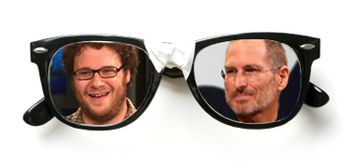
The information age has been good to nerds. No longer are they relegated to getting sand kicked in their faces by that other familiar archetype, the jock. We’ve gotten used to watching Steve Jobs grin awkwardly as he announces the latest hot techie toy, and when it comes to pop culture, nerds like “Superbad” writer/star Seth Rogen are increasingly in control of their own image. But even with the cultural cachet that comes with having your achievements validated by the masses, nerds are still high school losers.

In his absorbing new book, “American Nerd: The Story of My People,” Benjamin Nugent chronicles this underdog class. He considers the etymology of the word “nerd” — possible origins include the name of a creature in Dr. Seuss’ 1950 book “If I Ran the Zoo,” and a bucktoothed ventriloquist dummy dubbed “Mortimer Snerd” — and explores the world of hipsters, “an androgynous paradise where adults of both sexes look like enlarged spelling-bee champions.” He traces popular representations of nerds, from Mary Shelley’s “Frankenstein,” to Gilda Radner and Bill Murray’s sketches on “Saturday Night Live,” to “Napoleon Dynamite.” And he asks what a person’s race has to do with their chances of being a nerd. Are nerds born, or are they made? According to Nugent, it’s both.

Appropriately, the whole thing is a pretty nerdy undertaking. It’s also a personal one. Nugent, a journalist and author of a 2004 critical biography of the late musician Elliott Smith, was himself a nerdy kid, and he laces this wide-ranging cultural investigation with bittersweet bits of his own story. Perhaps most poignantly, he tracks down two of his childhood friends and asks them to reflect on formative years filled with Dungeons & Dragons and self-loathing. His encounters with them reveal that being a nerd is not something everyone experiences the same way.

For Nugent, nerdiness is a complicated state of being that should be challenged at least as much as it’s celebrated. Salon spoke to him about what ham radio fanatics have in common with debate team enthusiasts, and why people with Asperger’s syndrome may just be diagnosed nerds.

You write at the beginning of the book that you “empathize with nerds and antinerds alike,” and even say there are reasons to despise your younger, nerdy self. With that mix of sympathies, what did you set out to find or explain?

I wanted to find out what makes someone nerdy in the eyes of their peers, and also what compels them to keep doing the nerdy activities: what they get out of it, what urges it fulfills, whether it was a voluntary decision for them to be nerds, or whether it was foisted upon them. I wanted to give the reader a window into the heads of nerds, and into the heads of people who hate nerds.

Do you feel like nerds are an especially misunderstood class of people?

I actually think people are pretty good at understanding what makes a nerd a nerd, on a gut level. But they aren’t in touch with why they hate nerds. They haven’t examined their prejudices and their own feelings vis-à-vis nerdiness.

Your examples of nerdy individuals and endeavors are pretty wide-ranging. How did you refine your idea of what a nerd is?

After spending a lot of time with different subcultures that I intuitively knew were nerdy, I figured out what they all had in common: a love of rules, a love of hierarchies that were meritocratic and open to everybody, and in some cases the affectation of rationalism (whether computer programming or math). Ham radio operators kept using Morse code long after they had to, because they saw it as a purely rational form of language. That seems to me to be a common trait of the Society for Creative Anachronism, and kids on debate teams, and computer programmers.

“Nerd” really implies being an outsider, being picked on as a kid, social awkwardness.

What makes people insiders in high school is their ability to intuitively figure out how the hierarchies work. Some nerds can’t follow the hierarchies, don’t know how, and sometimes don’t even perceive them. Other nerds are unwilling to follow them. But in general most of the people we consider nerds are people who are oblivious to or incompetent at following the hierarchies.

Can you explain the connection you draw between the symptoms of Asperger’s syndrome and people who might be thought of as nerds?

People with Asperger’s syndrome tend to be good at what psychologists call systemic thinking. They tend to be bad at what the psychologist Simon Baron-Cohen calls empathic thinking, which is the kind you need to interpret nonverbal social cues, the kind you need to program a computer. I think a lot of people we’ve historically called nerds would have been diagnosed with Asperger’s syndrome, had Asperger’s been around at the time.

One of the slightly frightening things about the explosion of Asperger’s diagnoses is that because Asperger’s syndrome refers to a hard-wired neurological state, kids are essentially being told that they are hard-wired to be nerds. It’s a really fraught diagnosis. I wonder if there are kids who would’ve benefited from just being able to think of themselves as nerdy, and then gone on to become something else, instead of being told when they’re young, “You have Asperger’s syndrome, you’re always going to be a socially awkward systemic thinker.”

You write pretty extensively about how race and ethnicity intersect with nerd identity. How are some of these stereotypes alive today?

The concept of the “greasy grind” once referred largely to immigrant kids who studied really hard in high school, and then got into elite colleges. The connotation of that at the time was “Jewish.” Today the term “nerd” refers to the same idea, stripped of the ethnic associations. People don’t think “Jewish” anymore when they think “nerd,” necessarily. But if you look at the most popular prototypes of how nerds look — “Revenge of the Nerds” — and you look at old anti-Semitic cartoons, it’s surprising how much they look the same: a sort of gangly, bespectacled person who is smart, and is good at figures, but isn’t good at social interaction, and is really unathletic. Like Jews, Asians were thought of as harmless but insidious in the 19th century. It wasn’t until after the 1965 immigration act that the Asian American whiz kid became a stereotype.

What’s the relationship between hipsters and nerds?

A lot of the fashion accessories that we’ve come to associate with hipsters refer nostalgically to old prototypes of what nerds are supposed to look like. I first remember seeing it in the early ’90s, when I was in high school. Kids were starting to wear big, bulky glasses, and it was understood that they weren’t actually nerds; they were affecting nerdiness in quotation marks, so that you knew they were really un-nerdy. By using nerdiness as a fun way to develop part of their personality, they’re doing precisely what nerds are not able to do, which is master social interaction, and master how they present themselves.

Pure, unironic nerdiness has come to seem very authentic.

I’ve talked to lots of people who’ve had the experience of going on a first date and getting the “I was such a nerd in high school” line. It’s come to mean, “I’m not afraid of telling you exactly who I am.” The nerd is thought to have a level of authenticity that no other subculture can have, because the nerd is incapable of presenting himself in a false way.

I was talking to someone recently — a former nerd — who found the movie “Superbad” completely excruciating. To him, the way the jocks berated and beat up the nerdy kids was so accurate it was painful. It’s something he was never going to have enough distance to laugh at.

Yeah, if you’ve actually had the experience of being towel-whipped, then you don’t romanticize it.

The idea of nerds is really cool now; people say they like nerds. I wonder if it might be slightly easier for actual nerds in junior high now, because some TV shows are teaching kids that nerds are people you can empathize with, who can change, who might become attractive. I wonder if the Seth Cohen character on “The OC,” as silly as that character might have been, actually prevented some bleeding in junior high corridors. We’ll never know, in the same way we’ll never know if “Will & Grace” prevented gay bashing. But it’s possible.

Who’s the nerd among the presidential candidates?

If I had to reduce our three presidential candidates to high school types, I would say John McCain is clearly the jock, beloved by the administration of the school. Hillary Clinton is one of the mathlete girls, who you know is going to Wellesley or Harvard or Yale. Barack Obama is the black kid on the debate team who cancels out the racial stereotypes about black kids and the stereotypes about nerds by being both. I think Hillary’s the nerd.

Where do you stand in relation to all this material now, having written this book? As an expert on this topic, you could be said to be the king of the nerds.

When I was selling this book, my editor asked me, “Are you a nerd?” I was like, “I don’t know, I certainly was as a kid, but now…” My agent interrupted me and said, “He’s a nerd.” It’s the funniest question to have to keep answering, because for the first time in my life some advantage adheres to me if I say yes. I’m probably the one person on planet Earth who might have to affect nerdiness as part of their professional life.

Conversations: Sheryl Crow

The outspoken musician discusses her fiercely personal album "Detour," her dust-up with Karl Rove, and why all she wants to do is save the world.

To listen to a podcast of the interview with Sheryl Crow, click here.

To subscribe: Click here to add Conversations to iTunes or cut and paste the URL into your podcasting software:

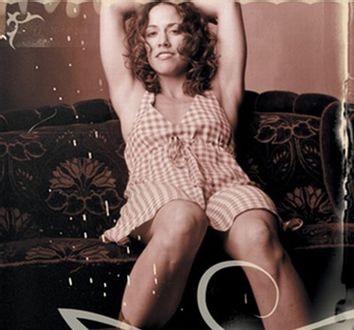
Ever since lodging “All I Wanna Do” in our heads back in 1993, Sheryl Crow has been steadily writing and performing solid, decidedly nonwimpy pop music. Her self-titled 1996 record was bolder and rawer than her debut album, “Tuesday Night Music Club,” and garnered the kind of mixed reviews that so often greet sophomore efforts. But the contemplative balladry of 1998′s “The Globe Sessions” was greeted with raves. She showed she had friends in high places with “Sheryl Crow and Friends: Live From Central Park” (1999), which included guest appearances from Eric Clapton, Chrissie Hynde, Stevie Nicks and Keith Richards. The sunshiny confection “C’mon C’mon” was released in 2002, followed in 2005 by the more pensive “Wildflower.”

A nine-time Grammy winner, Crow has resisted sugarcoating. Back in 1996, a certain big-box retailer refused to sell her music after being named in her song “Love Is a Good Thing”: “Watch our children while they kill each other/ With a gun they bought at Wal-Mart discount stores.” More recently, Crow has been vocal about her opposition to the Iraq war. And after being diagnosed with breast cancer in 2006, she became known as an advocate for that cause, too. (She has since recovered, and calls herself a “poster child for early detection.”)

Apart from her music, these days the 45-year-old singer is perhaps best known as an environmental activist. (She even became something of a punch line after suggesting that people should use less toilet paper.) In the spring of 2007 she and fellow activist Laurie David headlined the Stop Global Warming College Tour, aiming to raise awareness about global warming and put pressure on lawmakers to curb it.

Crow’s new album, “Detour” (slated for release on Feb. 5), is meant to be a rousing call to action. Songs like “Love Is Free” and “Peace Be Upon Us” address the current state of the world, from the mess in New Orleans to the war in Iraq. Others like “Lullaby for Wyatt” (named for her young son) and “Drunk With the Thought of You” are more immediately personal. While people bemoan the shortage of contemporary singer-songwriters building on the protest tradition, Sheryl Crow stands out as that rare commercially successful artist who puts political issues at the heart of her music. She spoke to Salon by phone about tying it all together. (Listen to a podcast of the interview here.)

How did you decide what direction to go in with the new record, and how did the concept evolve?

I worked with Bill Bottrell, who produced the “Tuesday Night Music Club” record. I had not worked with him since 1993. The two of us have gone on many detours in our lives that brought us back to this point. We always knew we had a great creative relationship, so it just felt like it was time to get back together. It was really like a homecoming for the two of us. It was a very creative and emotional and intense process. We recorded 24 songs over the course of about 40 days. Conceptually, I think the two of us agreed that the record had to be very raw, and [I was] committed to writing about what’s going on right now in the world and also what was happening with me personally. I think most people know that the last three years were very informative and intense years for me, so that had a very heavy impact on the content of the record.

I’d just adopted Wyatt — he was 3 weeks old when I started the record. Just having him around rendered me completely fearless and unable to edit myself. He sort of made the whole writing process feel more urgent and intense. The lyrics really just spilled out; it was almost like a writing binge for me.

The first single, “Shine Over Babylon,” certainly seems meant to fit into the tradition of political songs, and you’ve described it as being in the tradition of Bob Dylan. What are your thoughts on the relationship between music and social change?

Well, I would love to think that there is a correlation there. I know that when I was growing up — I was maybe 10 years old when the Vietnam War was coming to an end — there was an intense social movement of kids who were like 10 years older than me, college-age kids [who] were really taking it to the streets. Young people certainly had a voice at that time, and their musicians brought, I think, a real voice to what they were feeling. We’ve seen that sort of wane over the last 20 years. We’ve gotten more geared towards entertainment and away from having artists try to help us [sort out] what was happening socially. I don’t know that there’s a great impact now, but I like to think that there are people out there who are talking about these very things. I know that in my life I’m surrounded by people who are concerned about the environment and upset about what’s happening in the government and extremely disturbed about where we stand in the world theater and where we’re being led as a people.

Has it been challenging in any way to integrate your political activism and your music career?

Not at all. Clearly I’m not one of the young kids out there just getting started. I’m not a flavor of the month. Also, I’m older than [the musicians] getting played on the radio. For me it feels like there’s a lot of freedom in that, a lot of freedom in being able to talk about what I want to talk about. Not to mention that I don’t feel like I have any choice: These are the things that are interesting to me, and that matter to me, and it would be difficult for me to betray myself and not write about them right now.

How did you first get involved in working on environmental issues and global warming?

I started working in the world of the environment when I was out with Don Henley, which was 1991, I guess. He had just basically purchased Walden Woods in an effort to preserve what is considered to be the cradle of the environmental movement. That’s where I became very aware of what direction we were moving in as far as the planet is concerned. Then this past spring Laurie David and I did a college tour where we talked about the state of the environment. At that time, people were still trying to debate and argue and even refute the science that’s out there. I think in the last six months we’ve seen an undeniable movement towards having to acknowledge and accept that the science is there, and that our planet, which is a living organism, is truly suffering because of the way we’re living.

I’d love to hear you tell the story of your confrontation with Karl Rove at the White House Correspondents’ Association dinner back in April.

Well you know, Laurie David and I like to take full credit for him leaving office, but that’s probably not exactly accurate. [Laughs] It was a very innocent encounter. Laurie and I had been feeling like we were leading a grass-roots movement of young college kids who were really concerned about what the planet was becoming, what kind of planet they were being left, and feeling a little cheated by it. They were starting to try to find innovative ways to change their college campuses, to try to incorporate a green lifestyle into future work situations. At that time, and even still, the administration was in denial and dragging its feet about doing anything about emissions or just acknowledging that the IPCC [Intergovernmental Panel on Climate Change] reports were concrete evidence of the demise of our planet.

So Laurie started a conversation with Karl — or Mr. Rove, excuse me, we’re not on such familiar terms — about the science we have and what the administration was doing. And I walked up, being excited of course about what Laurie and I were doing; it was our first opportunity to actually talk to anybody in the administration. And I guess I walked into a beehive that was already swarming. He was exceptionally rude to the two of us, and at one point he told us both to take our seats. I can tell you how it ended: with me saying, “You can’t speak to me like that, you work for me.” He said, “I don’t work for you, I work for the American people.” And I said, “I am the American people.” It was a very short and curt conversation.

And probably about as effective as it could be.

Yeah, it was going nowhere from the beginning.

As you traveled around to college campuses on the Stop Global Warming tour with Laurie David, spreading this global warming gospel, what kind of reception did you get from students?

Kind of broad. I think it was a pretty fair sample of how the people around this country are reacting: with disbelief, with fear and panic, and with a feeling of being defeated. [There were also] those people who were feeling like the movement can make a difference, and that it has to be urgent, it has to be the foremost cause of this generation. The interesting thing about college students is that their ingenuity is so without cynicism, and, as we’ve seen with all social movements that spring from this age group, they have the will and the desire and the belief that they can really change things. The real challenge is trying to incite that kind of momentum instead of feeling that it’s too late.

It can be tricky to figure out how to balance being environmentally conscious with the things you do every day. I imagine that some of those adjustments are especially challenging in some of your situations, like putting on big concerts. Have you taken steps to change your energy use in those situations, or change the way you travel?

We’re definitely trying to go completely carbon neutral on our tour. On our college tour we [used] biodiesel and we bought carbon offsets. I think a lot of tours are trying to figure out a way to really apply these standards. Guster has started an organization that’s trying to go green with tours. My farm [in Nashville] is completely [fueled by] biodiesel, and my cars are all hybrids. One of the things that Laurie and I said throughout this tour is that you don’t have to do everything if you just do something, whether it’s changing light bulbs, driving an eco-friendly car, not running the hot water, trying not to use your dryer at full-blast heat. Just small, simple things that can make a difference if everybody does them.

Continue Reading Close

The abortion doctor

Susan Wicklund has received death threats and worn a bulletproof vest to work. But what really scares her, she writes in "This Common Secret," is the war on reproductive rights.

Thirty-five years after Roe v. Wade made abortion legal, it is the most common minor surgery in the United States, yet 87 percent of U.S. counties are without a provider. Because of the shortage of doctors trained in providing abortions, dedicated physicians often split their time among several locations, in some cases regularly traveling hundreds of miles to perform abortions in clinics that are open only one day every other week.

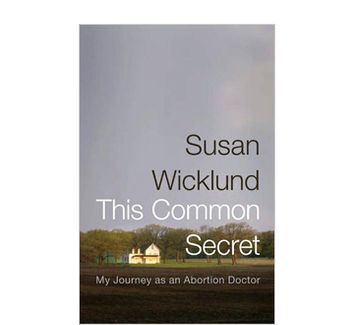
Dr. Susan Wicklund is one of them. She has been providing abortion services for 20 years, first quietly skirting regulations as a general practitioner, then putting in 100-hour weeks as the abortion provider for multiple clinics in the Midwest, and later in her very own clinic in rural Montana. Wicklund’s new book, “This Common Secret: My Journey as an Abortion Doctor,” weaves her personal story with those of many women she has treated over the years. She deftly turns individual stories into indictments of abortion policies she sees as misleading, condescending and unsafe.

Wicklund describes her work as a privilege and an honor. But it’s also a job, often a dangerous one. She has donned disguises to get past the protesters who scream and wave signs outside both her home and her medical office. She’s worn a bulletproof vest and carried a gun. In some states, Wicklund is required to read abortion patients misleading, politician-penned scripts that refer to an embryo as an “unborn baby” and warn that the procedure can be fatal (with no mention of the fact that wisdom tooth removal is far riskier).

While young celebrities like Nicole Richie and Jamie Lynn Spears beam and pose through their unplanned pregnancies and movies like “Juno,” “Waitress” and “Knocked Up” portray childbirth as clearly the best path, plenty of people are making other choices, ones we don’t hear about. Salon spoke with Wicklund recently about the complicated landscape of abortion rights.

How did you come to do this work?

I had been involved in home births, and midwives were being arrested for practicing medicine without a license. It was important to me to learn how to do abortions for my own patients, because as a young woman I’d had an abortion that was not done under very good circumstances. I really felt that care should be much better than the care I’d received. By my own choice, I was trained to do abortions as part of my medical training.

Shortly after that, I got into private practice, and I was told by the practice that I was not allowed to do abortions. I was angry and very frustrated. At the March for Women’s Lives in Washington, D.C., in 1989, I really felt a personal call to action. I went back to the Midwest where I was practicing, made some phone calls, and ended up meeting with directors from a number of different clinics and going to work in the clinics as an abortion provider. Some of them were rather remote and underserved, and they were having a very difficult time finding doctors.

Abortion is a “common secret” in that 40 percent of American women have an abortion during their childbearing years, but it’s rarely spoken about. Why do you think there’s such profound discomfort in talking about this?

In other cultures and other countries — in Europe, for instance — it isn’t such a taboo subject. There’s also a much freer atmosphere around recognizing or talking about people’s individual sexuality. In this country we have sex all around us, on billboards and in advertising. It’s so pervasive, and yet for somebody to have a child out of wedlock, in most communities, is still something that people talk about [negatively]. It’s an outward sign that they’ve had sex. If you’ve had an abortion, obviously it means you’ve also had sex. The religious right has told us over and over again that it is wrong, and we continue to buckle under that. I don’t understand why.

Your book is full of stories about the women you’ve treated and the different circumstances under which they come to have abortions. Are there some that particularly stand out for you?

It seems like not a single day goes by without a patient who has an absolutely horrendous situation at home. We had a woman come into the clinic who was abused by her boyfriend, and she was terrified. She felt that if he found out she was pregnant, he would never let her out of his grips. This is a woman who said to me, “If I can’t have this abortion, I’ll kill myself. But I’m afraid if I do have this abortion, he’ll kill me.” We don’t see situations every day that are so dramatic. But it just drives home how desperate women are. They’ll tell me over and over again that if abortion isn’t legal, they’re still going to end the pregnancy somehow, and if they can’t end the pregnancy, they’ll end their own life.

We also had a woman recently who was 52 years old and hadn’t had a menstrual cycle for over six months. She’d been having peri-menopausal symptoms for two years. Her doctor told her she was in menopause and there was no way she could conceive, and she and her husband hadn’t been using birth control because of that. But she did conceive. And she was devastated. This is a woman who had never thought abortion was a good option for women, but she found herself pregnant and was not in a position to carry a pregnancy full term. She was one of the patients we spent a lot of time with, just talking.

There is no typical patient situation. It isn’t all students who want to stay in school, it isn’t all career women who want to continue with their careers and not have children right now. It isn’t all single women who aren’t married and not ready to have a child on their own. And it isn’t all married women who had kids but now feel financially strapped. It’s all of those women. When people start stereotyping who it is that has an abortion, it drives me crazy.

When you work in the area of women’s reproductive heath, how important is activism?

To me, it’s very important that all the people who are working in the clinics are doing it because of their strong belief that women must have freedom of choice. Anyone who comes to those organizations or clinics simply because it’s a job treats it very differently and treats women very differently. The clinics that were first opened in the mid-’70s, right after Roe v. Wade, were run by people who had very strong feminist backgrounds, and who really knew from experience — possibly their own experience — that women should be treated with care, with dignity, with respect. This was not just [about] coming in for a Pap smear or for contraceptives.

At one of the clinics where I worked, there was a very young woman who was short the amount of money needed for the abortion. She’d come a long distance. It was her second trip to the clinic. The first time she wasn’t really sure of her decision. The second time she came back she was very sure of her decision, but she didn’t have quite enough money to pay for it. So the clinic sent her away. I went out into the parking lot and talked to her and offered to lend her the money — only because I’d been in that kind of situation myself, and I knew how frustrating it was. I ended up lending her some money so that she could have the procedure done. But I was reprimanded by the administration of that clinic for helping the patient with the funds. I didn’t think that was right. It was our job as a clinic to take care of that patient. (There are many facilities — the bulk of clinics — that don’t turn patients away, so I don’t want people to get the idea that this is a common thing.)

I’m challenged frequently to separate myself, and I’m not good at it. I get very involved in the needs of the patients beyond just their needs at that moment. For instance, making sure that somebody who I worry is a battered woman, or is in need of mental health care, has resources in her hands before she leaves the clinic. Sometimes I’ll take their phone numbers home with me and call them a week later to see how they’re doing, or if they’ve gotten the help they need.

Does it take a particular kind of person to do this type of work? There’s the immense stress and crazy hours involved, but it’s also necessary to really love what you do rather than just feeling obligated to do it.

I have, quite frankly, had physicians I was training to do abortions, and I knew they just didn’t have the personality. And I told them that. The majority of physicians who are providing abortions now are my age and older, in our 50s and 60s. Many of them are motivated to do this because they saw women dying from illegal abortions when they were in their residency programs. They’re motivated to provide safe abortions because they know that women don’t stop having abortions just because it’s illegal. They’ll still seek them out, but there will be a lot of women who will become infertile or die.

The problem now is to try to find young physicians who understand that abortion care should be part of their entire practice. It shouldn’t be that they just do deliveries or just do family practice. Physicians in those specialties need to take care of all their patient needs. What if a woman comes in, and you’ve delivered two of her babies, and she has early breast cancer? She needs to have radiation therapy, but she’s also eight weeks pregnant, and she cannot have that treatment unless she has an abortion. If she chooses to have the abortion, that will increase the chances that she’s going to live to take care of her two younger children; then you have to send her to a clinic 200 miles away because you won’t do the abortion in your office.

It’s the most common minor surgery in the United States, but the doctor may not be trained, even though it’s a very simple procedure. Or your practice won’t allow you to do it, maybe because they don’t want the perceived repercussions from the community. So that’s what needs to change: Instead of making it an isolated event in an outlying clinic, which may be hundreds of miles away — which is true in most of the rural United States — a woman should be taken care of by her physician, who has been taking care of her for everything else.

What was the turning point that made you decide to take defensive measures like wearing a bulletproof vest?

When Dr. [David] Gunn was killed [in Florida in 1993], that just changed everything. He was killed the same month that I was getting all these letters from Michael Ross [Ross, an antiabortion extremist, was eventually found guilty of intimidation after sending Wicklund more than 60 threatening letters], telling me he was going to tear me limb from limb and kill me. It was complete tunnel vision. I could not think about anything else outside that part of my life.

When I wear a vest or carry a gun, it often strikes me as I pull up to the clinic that this is absolutely absurd. I, as a physician in the United States of America performing a legal procedure, have to go to these measures to make it possible for me to go to work.

We’re hearing less about clinic violence, but it’s still happening. Last month, a clinic in New Mexico was burned to the ground, and two more were attacked. And we don’t hear about it on the news. In Denver, protesters are going to the homes of construction workers to try to encourage them not to work on building the [new Planned Parenthood] clinic.

I wonder how easy it is to change people’s minds about abortion amid so much rhetoric and so much emotion. How hopeful are you that people can come to understandings on this issue?

I’m actually much more hopeful than I’ve ever been. And that’s because of what I’ve seen happening with this book. There’s a certain number of people who are adamantly antiabortion and will never change their minds. But there’s a huge group of people sitting on the fence who have always thought they’re antiabortion, but they don’t really know why they think that way. Maybe their parents [influenced them], or their church did. But they don’t believe they’ve had a personal experience with it. They don’t believe they’ve ever known anyone who has had an abortion.

I’ve had people contact me and say, “I always believed I was against abortion. And I read your book, and I really had no idea. I did not understand what it’s all about, I did not understand who the women really are, and how personal this is, what the government is doing.” One of them was a very good friend of mine, a woman who has heard me before. But when she read the book front to back she called me up and was just sobbing and said, “I get it now. I finally understand what you’ve been talking about all these years.”

You write about how legal and political distractions take up a huge amount of time in your work. In an election year, is there a way you’d like to see the discussion on abortion and reproductive rights framed?

In my opinion, a candidate should get up and say, “Politics has absolutely no business in reproductive rights.” A politician should say, “This is not even something I’m willing to discuss. It is a woman’s right. It’s not my decision.” Unfortunately, that’s not the way it’s happening.

It has been suggested that debate moderators and the media should ask candidates about their position on birth control as a way of getting them to talk about reproductive rights more broadly. Would that be effective?

If we start engaging in that discussion, it becomes, What birth control is OK and what isn’t? How far in a pregnancy can you go? Does a woman get to have an abortion if she is raped, or if she is not married? All these circumstances should be taken out of politics completely and out of the discussion.

If they’re going to have any discussion in politics, then they need to go right to [saying], “If Roe v. Wade is overturned, how long will a woman spend in jail?” Then people back up and say, “Wait a minute, we’re not talking about putting women in jail.” Well, yes you are. If it’s illegal, and a woman has an abortion, she goes to jail. When you start looking at it in those terms, people get more uncomfortable. It’s ridiculous to just say it should be illegal and then not talk about what the consequences are.

How has the landscape of abortion rights changed over the 20-some years you’ve worked in this area?

I’m very fearful that we’re going to lose Roe v. Wade. It’s becoming more of a polarized issue all the time. We have the Republicans very adamantly saying we should outlaw all abortion, but the Democrats are also so far to the right on this issue, saying things like “abortion should be extremely rare.” It’s not rare. It’s 40 percent of women in this country. And that needs to be acknowledged first.

We have fewer rights now than we did 20 years ago. It’s getting harder and harder for women to get abortions. Even if Roe doesn’t fall, we’re still losing providers, we’re still losing clinics; there are still laws being passed that are making it more difficult for women, and for the clinics themselves.

Do you think the prominence of young, pregnant celebrities and movies like “Knocked Up” and “Juno” have an effect on young women’s decisions?

Is that going to affect the patient from Havre, Mont.? I don’t believe it will. The patients I see are so focused on their own lives: a 17-year-old senior who got a full-ride scholarship to a college she’s been dreaming of, and her parents have no money, and now she’s pregnant. She either stays home and has a baby and probably stays in that town the rest of her life, or she goes off to college and plays basketball. I don’t believe that patient’s going to care if Britney Spears’ younger sister has a baby or not. She’s looking at her own life.

On the opposite end, whenever there’s more talk about abortion in the media or on TV, I do hear patients mentioning that. I don’t hear them mentioning the woman who keeps the pregnancy.

I guess when it’s your own experience, it’s really set apart from whatever cultural influences are out there.

That is so key. People say they would never have an abortion because of their religion or for whatever other reason. Then they’re sitting on that table, we’re ready to start doing the abortion, and they want to tell me about how, when they were 17, they made a promise to be abstinent, and here they are at 21, not married and with an unwanted pregnancy. They just want to talk about it and say, I didn’t realize — I didn’t understand what it would be like when it was me.

Continue Reading Close

Their favorite things

Writers, filmmakers and other notable figures tip us off to the stuff that most excited them this year.

Yesterday we revealed our favorite fiction and nonfiction books of 2007. As part of Salon’s book week, we also asked a selection of our favorite writers, filmmakers, musicians, actors and chefs to tell us what books, music, movies (and other assorted cultural material) got them excited this year.

- – - – - – - – - – - -

Tom Bissell (author, “The Father of All Things: A Marine, His Son and the Legacy of Vietnam”)

Book: I read a number of books this year that impressed me (Joshua Ferris’ “Then We Came to the End”), frustrated me (Robert Draper’s “Dead Certain”), moved me (Dave Eggers’ “What Is the What”) and delighted me (Jack Pendarvis’ “Your Body Is Changing”), but the best book I read this year was Denis Johnson’s “Tree of Smoke.” Publishing a book about Vietnam in the same year as Denis Johnson, as I did, leaves one feeling a little like being crucified next to Jesus: in other words, nice try. Not only does it have the most impossibly beautiful and devastating first two and a half pages I’ve ever read, it creates a world that seems less imagined than opened for entry.

I would also be remiss if I did not mention my rereading of a great book I first read more than a decade ago: “Of a Fire on the Moon,” Norman Mailer’s account of the 1969 moon landing. Whether he is describing the blandly similar attractiveness of male astronauts’ wives, the inner workings of rocketry, or the first thrilling moments human beings walked on what Mailer calls “the pale graveyard of sleep,” the prose is never less than slightly crazy and totally astonishing. A month after I finished the book — which is, ridiculously, out of print — Mailer went unto the white creator. May he sleep well.

Video games: “Bioshock,” an insanely intense shooter that a) imagines an underwater city ruled by an Ayn Randian overlord and b) sets out before the gamer a series of decisions and quandaries that, for maybe the first time in video game history, felt somehow inescapably … moral. While I would hesitate to call “Bioshock” a legitimate work of art, its engrossing and intelligent story line made it the first game to absorb me without also embarrassing me for being so absorbed. Also, it’s awfully hard to dislike a game in which you smoke cigarettes and drink vodka to regenerate your attack energy.

Edwidge Danticat (author of “Brother, I’m Dying”)

Music: I’d recommend Wyclef Jean’s “Carnival Vol. II, Memoirs of an Immigrant,” his follow-up to his 1997 album “The Carnival.” The album opens intimately with Wyclef’s voice speaking over a throbbing rock-inspired beat as his daughter cries in the background. “Come on, Angie,” he says. “Let Daddy finish writing.” What Daddy ends up writing, and singing and rapping, is truly marvelous. With collaborators such as Norah Jones, Mary J. Blige, Paul Simon, Akon and Shakira (glorious once again), this is an album not to be missed.

Amy Bloom (author, “Away”)

Book: The best book I did manage to read this year — every single thing by Philip Pullman, a wonderful writer for adults and young people, heroic atheist and sensible man. What I can’t wait to read: the new book by Ha Jin ["A Free Life"] and the new book by Nathan Englander ["The Ministry of Special Cases"]. Best collections of poetry were “After” by Jane Hirshfield and Mary Jo Bang’s “Elegy.”

Music: “Back to Black” by the completely and amazingly fucked-up Amy Winehouse.

Josh Schwartz (screenwriter and television producer, “Gossip Girl” and “The O.C.”)

Book: “Harry Potter and the Deathly Hallows.” The culmination of a series that simultaneously reminds me of when I was 10, and makes me wish I still was just so I could experience it as a kid. In a time of fracturing cultural touchstones, it’s nice to have one that brought so many people together and was so imaginative, satisfying and fun. Also — “Then We Came to the End” by Joshua Ferris: A really funny, smart book from a really promising first-time author. Can’t wait to read what’s next.

Music: “Boxer” by the National. As you hit 30 it gets harder to find music that feels like it’s speaking to your experience, but this is a really emotional record full of great songs that would speak to any guy in his 20s and 30s trying to figure out growing up. And “Cease to Begin” by Band of Horses. Their first record had some truly great songs, this one is great through and through. Ben Bridwell has one of the great voices out there. A beautiful record.

Movie: “No Country for Old Men” is a return to the “Blood Simple,” “Miller’s Crossing” type of simpler but gripping storytelling. Javier Bardem’s Chigurh is as frightening as Hannibal Lecter was when he first appeared on-screen. And “High School Musical 2.” They were showing it on a plane I was on and everyone on the plane, young and old, were watching. That’s some pop cultural power.

Darcey Steinke (author, “Easter Everywhere”)

Book: “Love Is a Mix Tape” by Rob Sheffield. This book centers on Sheffield’s wife, Renee, who died young and suddenly. It also details Sheffield’s lifelong obsession with music, from the tape he made for his junior high dance to the songs that haunted and sustained him after his wife’s death. Before Sheffield wrote for Rolling Stone he was working on a Ph.D., his thesis on the poet Mina Loy. “Love Is a Mix Tape” is a weird hybrid, an elegy, both poetic and hilarious, that details one man’s faith in the restorative power of music.

Music: “White Chalk” by PJ Harvey. Driving to pick up my daughter at school I’ve been playing this album. It has a hypnotic pull; the songs are both fragile and ragged and remind me of the tunes an 1840s songstress might play as she traveled by wagon from town to town. The are spooky, partly because of the echo effects and the gothic tint to the lyrics but also because Harvey seems to be lamenting her escape from darkness. Besides Harvey, only Johnny Cash has written so well about the melancholy of maturing, that tinge of nostalgia for a darkness that has left.

TV: “My So Called Life,” starring Claire Danes and created by Winnie Holtzman, was released this year on DVD. I missed it the first time around when it ran for one year from 1994 to 1995. Recently I watched all 19 episodes with my daughter, Abbie, who was born the year the show aired and is now 12. Claire Danes’ Angela is a great role model. A spooky-smart high school girl, who questions the need for a definitive personality, thinks Anne Frank was lucky and, most endearingly, is ridiculously in love with Jordan Catalano, a dim but beautiful boy played by Jared Leto.

Alex Ross (author, The Rest Is Noise”)

Music: The year produced a sizable stack of classical CDs that I strongly recommend: the late Lorraine Hunt Lieberson’s heart-rending 1998 recital from Wigmore Hall, the Grand Valley State University New Music Ensemble’s thrilling version of Steve Reich’s “Music for 18 Musicians,” and Paavo Järvi’s punchy interpretations of Beethoven’s Third and Eighth symphonies. But my record of the year came from outside the classical field. Radiohead are filed under rock, but to me they are collectively one of the most interesting composers in contemporary music. The secret weapon on “In Rainbows” is Phil Selway, drumming intricate, tricky, spiky patterns under the surface of what seems to be a lush, almost romantic album. Was there some story about the price? I forget: “Videotape” puts me in another world.

Mary Harron (director, “American Psycho” and “The Notorious Bettie Page”)

Movie: I loved a lot of movies this year: “Control,” “I’m Not There,” “Michael Clayton,” “No Country for Old Men,” “The Savages,” “Superbad.” My greatest film experience happened on a rooftop in the desert in Jordan. I was there taking part in the Sundance Middle Eastern screenwriting lab, and every night they showed us movies under the stars. One night they showed us Yousry Nasrallah’s 1999 film “El Medina.” Set in Cairo, it showed a city that was sexy, turbulent and alive in a way New York was 30 years ago and is no longer. Watching it, I felt a new world opening up.

Malcolm Gladwell (author, “The Tipping Point” and “Blink”)

Book: This past year I got what every fan of thrillers dreams of: a new Joseph Finder ["Power Play"], a new Lee Child ["Bad Luck and Trouble"] (maybe his best yet), a new and brilliant Daniel Silva ["The Secret Servant"] and, best of all, Robert Harris’ “The Ghost” — his finest book since “Fatherland.”

Dean Wareham (musician, “Back Numbers,” and author, “Black Postcards: A Rock & Roll Romance”)

Music: “Sound of Silver” by LCD Soundsystem. This took me back to about 1981, with hints of Arthur Baker, Talking Heads, New Order and Liquid Liquid. Great songs like “Someone Great,” “North American Scum” and “New York, I Love You but You’re Bringing Me Down.”

Movie: “Margot at the Wedding.” I was a music consultant on this film, which perhaps disqualifies me from commenting. Still, I loved it. It is hard-hitting and fast-paced, intelligent, and very, very funny.

Video: Laura Miller discusses two new Vietnam books

Miranda July (author, “No One Belongs Here More Than You”; director/writer, “Me and You and Everyone We Know”)

Book: Israeli writer Etgar Keret’s book of short stories “The Nimrod Flipout.” I read this book in bed beside my boyfriend who was reading a much less interesting book and I kept shouting “Wow” and “No way” and “Oh my god” and my boyfriend would say, “What? what?” and I’d shake my head and say, “You wouldn’t get it. You just have to read it.” After I finished the book I immediately became more deadpan, more ridiculous and more in touch with my own mortality. My boyfriend was impressed with the new me and I told him, “It’s that book, ‘The Nimrod Flipout’ — it’s opened up a whole new world for me.” Now he’s reading it, just so we can stay on the same plane of reality together.

Junot Díaz (author, “The Brief Wondrous Life of Oscar Wao”)

Book: I have to break my own rules and recommend for the 1,000th time Mohsin Hamid’s “The Reluctant Fundamentalist.” Just one of those achingly assured novels that makes you happy to be a reader.

Daniela Sea (actor, “The L Word,” “Itty Bitty Titty Committee”)

Book: Jim Harrison’s “The Beast That God Forgot to Invent.” In this book of three novellas, nature seeps out from every line. It was at the same time painful and inspiring to read such open and frank truths written in the poetic language he is famous for. My heart was elated and broken apart all at once.

Music: La Monte Young’s “The Well Tuned Piano.” These records are amazing and move me so fundamentally. They are like nothing I have ever heard before … truly magical, all on a differently tuned piano.

Movie: “Away From Her,” directed by Sarah Polley. I saw this movie for the first time at the Berlinale Film Festival and was truly amazed. Sarah Polley is my hero for making this her directorial debut. Julie Christie, one of my all-time favorites, plays a woman who is dealing with Alzheimer’s. It’s one goodbye after another, as her mind’s lights slowly go out.

Christine Vachon (producer, “I’m Not There”)

TV: “Aliens in America” is the funniest show I’ve ever seen — awkward and sharp and adolescent. I love all the actors and think the teenage casting is spot-on, but the parents rock too.

Luc Sante (author, “Kill All Your Darlings” and “Low Life”)

Book: “The Long Embrace” by Judith Freeman. This creatively obsessive study of Raymond Chandler’s marriage restores literary biography to what it stopped being long ago: a genuine engagement with the subject’s soul.

Music: “Untrue” by Burial. Shards of dance-hall music stretched and twisted until it sounds like a heap of ruins, but shot through with elegiac shafts of light. I hear jungle in this, of course, as well as, weirdly, a vein of English classical music, from Purcell to Vaughn Williams.

Movie: “Out One,” by Jacques Rivette. Yes, it was shot in 1969 or so, but it wasn’t shown anywhere until recently, and not in the U.S. until this year, and it’s so much deeper and more ambitious than any current commercial release it’s not even funny. It’s a collective portrait of disillusioned revolutionaries, a treatise on the art of acting, a mystery story in which you first have to find what the mystery is, and much, much more.

Eric Roth (screenwriter, “Munich” and the forthcoming “The Curious Case of Benjamin Button”)

Book: I have been a longtime admirer of the author Denis Johnson and there was no finer experience for me than reading his “Tree Of Smoke,” which reminded me again that deception defines every human in every war, and that I could only wish I was half the writer he was. Philip Roth’s “Exit Ghost” is just that, the perfect stage direction for us all. “John Fowles, the Journals, Vol. II,” because you know before he does what his life is to become, and you watch with fascination, affection and horror, as it unfolds. A helluva good read is “Caught Stealing” by Charlie Huston, which just keeps kicking the holy shit out of you.

Movie: In the area that I have worked for far too long, the movies, of what I have seen to date I would name five: “The Assassination of Jesse James by the Coward Robert Ford,” for its stark realization of Ron Hansen’s non-narrative muse on the price of fame. David Fincher’s “Zodiac,” for the movie’s respect for the rule of law … probable cause as a forgotten linchpin of democracy. The Coen brothers for their “No Country for Old Men,” because they understand we are defined by our landscape, for good or for evil. “The Darjeeling Limited,” which made luggage as important as “Sullivan’s Travels” did. And “Knocked Up,” because Judd Apatow knows his dick from a hole in the ground.

Tom Colicchio (restaurateur and head judge, “Top Chef”)

Book: “The Many Lives of Tom Waits” by Patrick Humphries — a glimpse into the life and art of one of my favorite musicians.

Music: Iron & Wine’s “The Shepherd’s Dog” — Sam Beam’s most orchestrated album. Reflective and cool.

Movie: “American Gangster” — New York City in despair and disorder, and two actors at the top of their game.

Van Hunt (musician, “The Popular Machine”)

Book: “Mr. Untouchable.” I enjoyed the read. I could empathize with the anguish of a person who, though because of his own actions, is at the mercy of his failing relationships.

Music: Bach cello suites. This is simply the most complete musical statement that will ever be made with one instrument.

Fenton Bailey (director/producer, “Inside Deep Throat” and “The Eyes of Tammy Faye”)

Book: “The 4-Hour Workweek.” We all know that workaholic America could never embrace European-style idleness. So Timothy Ferriss does it by packaging it as a do less, get-rich, self-help regimen, kind of like eat yourself thin. A fabulous heresy that dares to declare e-mail is pointless, shopping a waste, and modern life rubbish.

Music: “Blackout” by Britney Spears. This is not a perverse choice. “Blackout” is a near-perfect concoction of Disco Noir and is a record you can actually listen to and — if so moved — write a thesis about. With a lurid self-exploitational feel that’s compellingly icky, it explores the Matrix-like layers of Hollywood narcissism. An album I bet that both the Pet Shop Boys and Madonna wish they had made.

Movie: “Julia Attacks!” is a TMZ video in which Julia Roberts chases down and gives a telling off to a paparazzi. Julia — absent from our screens for too long — is completely convincing in this role as an angry mom. The car chase is excellent and the cinematography visceral and immersive. Some moviegoers might be disappointed that this movie is less than a minute long because Julia has her costar turn off the camera before she delivers her speech about children and paparazzi, but most movies are too long anyway.

KT Tunstall (musician, “Drastic Fantastic”)

Book: “A Million Little Pieces” by James Frey. Gave me insight and deeper empathy toward drug addictions. Apparently the book — which was purportedly an autobiography — was slightly fabricated, which caused a big furor, but I don’t think that affects the power of it. It’s harrowing, but worth it!

Music: “Iodene” by Halfcousin. I played in his band a few years ago and he remains a huge source of inspiration. A brilliant mix of punk and folk. This guy definitely puts the mental into experimental.

Movie: “No Country for Old Men” by the Coen brothers. Amazing script, amazing actors, and plenty of time to digest it all with brilliant pauses. I love a bit of dark humor, and these two directors always deliver that with their excellent films. Some of the best one-liners I’ve heard since “Pulp Fiction.”

Daniel Handler (aka Lemony Snicket, author, “A Series of Unfortunate Events,” and musician)

Book: Desperate, spooky and lively, the best book of poetry I read this year was Cate Marvin’s “Fragment of the Head of a Queen.”

Music: A conflict of interest prevents me from touting “In Our Bedroom After the War” by Stars as the best album of the year, so I’ll go with the Dirty Projectors’ glorious “Rise Above,” which grabs the backing choir from Prince’s “Kiss” and makes them the Pips to David Longstreth’s passionate if tipsy Gladys, chops in some guitar from South Africa, muddles around with a little cruise ship percussion and whips the whole thing up into the sort of album Sufjan Stevens would make if he wanted to rock your ass. I listened to it five or six times before learning that it’s a cover of an entire album by Black Flag. I never listened to Black Flag in my life — back in the day there were too many Human League 12-inch singles to buy — and I love this thing to death. Hands down, the dance-around-in-your-underwear album of the year.

Movie: The best film of the year is the two-minute thing on YouTube of Doris Lessing learning she’s won the Nobel Prize. I watch it over and over. It’s an inspiration.

Bobby Flay (restaurateur and “Iron Chef” star)

Movie: “American Gangster.” I love seeing the New York of the ’70s and ’80s that I remember growing up. All the details were perfect, especially the wardrobe. And I love Denzel Washington and Russell Crowe.

Jack McBrayer (actor, “30 Rock”)

Book: “Ant Farm” by Simon Rich. This book is insanely funny. I am such a fan of Simon Rich. Plus it’s broken up into small pieces for easy, short-attention-span reading … that’s what I’m talking about.

Music: “Odessey and Oracle” by the Zombies. My brother-in-law turned me on to this one. It’s from 1968 and has stereo and mono versions of the songs. My only regret is that I wasn’t as familiar with them earlier. They are a phenomenal group.

Movie: “Knocked Up.” This Apatow fella I’ve heard so much about can do no wrong. I loved the story, and all of the performances were so hysterical. I must say, though, that Kristen Wiig could just sit there and still crack me up.

Christopher Noxon (author, “Rejuvenile: Kickball, Cartoons, Cupcakes, and the Reinvention of the American Grown-up”)

Music: My favorite CD this year was Beirut’s “The Flying Club Cup.” In a pretty great year for music, one record I can’t shake is a new one from the maddeningly young New Mexican gypsy-bandleader trumpet god Zach Condon. Shambling, sweet and waltzy, it’s a gorgeous sound. Runners-up: Feist’s “The Reminder” and Radiohead’s “In Rainbows.”

Movie: I’ve had long debates about it since, but hands-down the best time this year at the movies was seeing “Superbad” in a big suburban multiplex opening weekend. A badass combo platter of rude and sweet. I haven’t felt that kind of unhinged hilarity in a movie house in forever. Lingering worry: that a supposedly candid look at how today’s teens actually talk was really just a front for the in jokes of middle-aged Jewish comedy writers, just like “Sex and the City” was less about go-go Manhattan ladies than bitchy urban homosexuals.

Hesta Prynn (musician, Northern State, “Can I Keep This Pen?”)

Book: “No Country for Old Men” by Cormac McCarthy. I heard wonderful things about this book and knew the movie was coming out. I brought it on tour and was captivated every night. It’s a short book, but Cormac McCarthy is a very dense writer as anyone who’s read his work knows, so it took me most of Canada to read. Haven’t seen the movie yet but I will.

Music: “Baby 81″ by Black Rebel Motorcycle Club. Coolest band ever. Awesome album. Listening till my iPod explodes.

David Cronenberg (director, “Eastern Promises”)

Book: I read a Henry James novel published in 1897 called “What Maisie Knew,” about a child of divorce who bounces back and forth between her soon-remarried parents like a tennis ball. The relationship of James’ language to the psychology of his characters and then to their actions is dense and fascinating and pleasurable. It is also a very emotionally charged story, something you almost don’t notice until it flattens you. The experience of reading the book was enhanced by the fact that I was reading an edition published in 1947 that came from my father’s library. I loved it.

John Darnielle (musician, the Mountain Goats, “Get Lonely”)

Music: “Songs for a Dark Horse” by Bowerbirds. I toured with them twice this year and heard their songs every night: never got tired of any of the songs. Seriously. That’s how good the melodies are.

“The Adventures of Ghosthorse & Stillborn” by CocoRosie. “Werewolf” delivers the best wash-that-man-right-outta-my-hair jam since “I Will Survive”; most divisive band around, which ought to and does count for something.

“Phantom Limb” by Pig Destroyer. This is like the new rosetta stone for riffs. There are so many of them. And they’re so good. And the nature of the aggression is kind of tempered differently than it was on “Terrifyer.” Amazing album.

Curtis Sittenfeld (author, “The Man of My Dreams”)

Book: The best book I read this year is the novel “The Cottagers” by Marshall N. Klimasewiski. It’s about two academic-ish couples who rent a house together in the off-season on remote Vancouver Island, and then something goes horrendously wrong. A lot of the reason I loved this book is that you can really sink your teeth into it — it’s the opposite of glib or breezy. Klimasewiski calmly and persuasively goes into many characters’ heads, including the locals, and he’s great at evoking a sense of place. It’s a novel that’s suspenseful, psychologically smart, and extremely well-written.

Gary Ross (director, “Seabiscuit” and the forthcoming “The Free State of Jones”)

Book: “Supreme Discomfort: The Divided Soul of Clarence Thomas” by Kevin Merida and Michael Fletcher. This biography of Thomas should not be confused with his weak rebuttal in the form of an autobiography. Merida and Fletcher set out to answer one of the imponderable questions of our age: How did a poor black kid from “Pin Point,” Ga., raised by a single mom, helped by affirmative action, ever turn into Clarence Thomas? You might have more luck dwelling on the origins of the universe. But these authors tell a vivid and compelling story that grips you and doesn’t let you go. It’s like reading a mystery and watching a train wreck all at the same time.

“Redemption,” by Nicholas Lemann. This chronicle of Adelbert Ames, a “carpetbagger” governor of Mississippi, attempts to set the record straight about one of the most crucial and misunderstood periods of American history: Reconstruction. Almost a hundred years ago, D.W. Griffith lied to us in “Birth of a Nation” and no one has tackled the era in a popular narrative since. Lemann tells the truth: that Reconstruction ended with a genocidal pogrom visited on black people by the Ku Klux Klan, the White League, the Knights of the White Camelia and other white vigilante groups who never stopped fighting the Civil War. Some of this is hard to read, especially for Civil War junkies who would rather indulge the gentlemanly mythologies of Robert E. Lee. That’s all the more reason to pick up a copy.

Movie: “In the Shadow of the Moon.” This surprisingly moving documentary about the 12 men who went to the moon was more about the wisdom of aging and the bravery of youth than it was about the Apollo program. You see this group of men literally gain perspective on the tiny, fragile planet where they live. It was marvelous.

“Persepolis.” A complicated and nuanced portrait of a modern girl fleeing the repression of fundamentalist Iran. Beyond showing us that animation can easily be an adult medium, it paints a rich character study without ever devolving to polemics. She experiences as much turmoil in Paris after her flight as she ever did inside Iran. It’s a beautiful movie, subtly told and richly drawn in black-and-white.

TV: “Kitchen Nightmares.” The Gordon Ramsay “reality show” is one of the few in that genre that is actually “real.” Despite the amped-up drama at commercial breaks, cheesy narration and cloying music, you see people struggling to save their restaurants every week, and this “life and death” drama could never be feigned. Ramsay is a brilliant chef, compassionate mentor and tough SOB who really seems to care about the people he is helping. We never miss an episode with our kids.

“Man vs. Wild.” We were watching this show when they still pretended that the hero, Bear Grills, did all these feats of survival without assistance. Then they had “Man-vs.-wild-gate” and it was revealed that Bear had spent a night or two in a four-star hotel. I don’t really care. I’ve seen this guy start a fire with a rock in the middle of a swamp, climb inside a dead sheep to stay warm, use his wristwatch as a compass and save himself from quicksand. He deserves a night in a hotel. This is a great show.

Continue Reading Close

Trick or treat with Clinton and Obama Girl

Hillary, Amy Winehouse and Britney Spears make for some creepy Halloween costumes.

Hillary Clinton is the clear front-runner in what may be one of the more revealing political polls of late: the presidential candidate who “would make the scariest Halloween costume.” Clinton handily trounced the competition in this Associated Press/Ipsos survey, commanding 37 percent of the vote. Trailing behind her was Rudy Giuliani, with just 14 percent. (No other candidate brought in more than 6 percent.)

We could speculate about the obvious misogyny inherent in this — that Clinton’s power and over-50 visage are what people really find terrifying — but what’s more absurd is the very theme of the poll itself, which lamely tries to extrapolate a political position from a silly question. Wouldn’t it be more relevant to ask respondents to identify the candidate with the scariest policies, or the most frightening agenda, rather than the one offering the scariest costume?

And what, exactly, would that costume look like? If it looks anything like these masks, then, yeah, it’s kind of ghastly. But no more so than any other vinyl caricatures: Their creepiness is pretty interchangeable, no matter who they’re supposed to represent.

If you’re still looking for a Halloween costume idea, how about dressing up as the Obama Girl? Detailed instructions are available online, as is a how-to for a DIY Britney Spears ensemble (the helpful tips accompanying these instructions include “Avoid ‘crazy Britney.’ It’s probably not the best idea to go trick-or-treating with a shaved head and a baseball bat”). If you’d rather go the pre-made route, there are many different versions of Britney available, including “stunning stewardess,” “pop bride” and “flight attendant.”

But the real costume of the year seems to be British soul singer and train wreck Amy Winehouse, whose Cleopatra eyeliner and towering bouffant beg to be parodied. With the addition of some Sharpie pen tattoos and a little fake blood, this get-up can be an edgy comment on current events that also brings some old-school Halloween flavor! Apparently, every last hipster in Brooklyn, N.Y., has taken up the challenge.

Continue Reading Close

Harassment by design

Getting groped on the subway? New toys can help rebuff unwanted advances.

The “Anti-Groping Appli,” by games developer Takahashi, is becoming increasingly popular in Japan. Available as a free download for Web-enabled phones, the application flashes boldface messages on a phone’s screen; the idea is that the user will stick the phone in her harasser’s face as it displays messages like “Excuse me, did you just grope me?” “Groping is a crime,” and “Shall we head to the police?”

How polite! Takahashi says the application is for use by women who “want to scare away perverts with minimum hassle and without attracting attention.” I can see it now: a woman standing in a crowded subway car feels the all-too-familiar sensation of a hand on her butt. She rolls her eyes and pulls out her cellphone, balancing in high heels and juggling a cup of coffee and newspaper as she relays the (text) message without looking up from what she’s reading. All in a day’s work, ladies.

It’s kind of refreshing to see support for the idea that women should react against harassment instead of ignoring it. Unfortunately, the makers of this groping deterrent also think it’s undesirable to draw attention to your situation. The application assumes that harassment is a personal thing, and that it’s best kept between you and the guy whose hand is on your ass.

Another related Japanese design innovation is a skirt that unfolds so that the wearer can disguise herself as a vending machine (it must be seen to be believed) as a way to hide from attackers. Fashion designer Aya Tsukioka has also made a purse that looks like a manhole cover; it can be thrown down on the ground (and thereby camouflaged, keeping its contents safe) in the case of an attempted robbery.

While it might be nice to have chameleon-like capabilities, turning yourself into a vending machine when faced with a threat is not exactly practical. Still, crazy as they are, these designs draw attention to the inconvenient fact that harassment is a real problem. Recent years have seen some more realistic responses — like Holla Back, a project that documents street harassment (and advocates using your cellphone in a more active way than Takahashi does), and New York City’s innovative RightRides, created to offer women free rides home late at night — that confront the problem, rather than designing around it.

Continue Reading Close

Page 1 of 2 in Eryn Loeb

www.salon.com/writer/eryn_loeb/index.html