Joe Strupp

Giuliani’s loyalty to an accused priest

A grand jury accused Alan Placa of molestation and his diocese has suspended him, but the presidential candidate continues to employ his lifelong best friend as a consultant.

  • more
    • All Share Services

Giuliani's loyalty to an accused priest

Anyone who has followed the career of Republican presidential contender Rudy Giuliani knows the value he places on personal loyalty. Loyalty is what inspired the former mayor of New York to make Bernard Kerik, once his personal driver, the commissioner of the New York Police Department, and then a partner in his consulting firm, and then to suggest him to President Bush as a potential head of the Department of Homeland Security.

After revelations about Kerik’s personal history derailed his bid for the federal post, Giuliani demonstrated that there were limits to loyalty. He has distanced himself from Kerik, who resigned from Giuliani’s firm and later pleaded guilty to corruption charges. Giuliani has not, however, sought to distance himself from another, much closer friend whose personal baggage is also inconvenient, and would send most would-be presidents running.

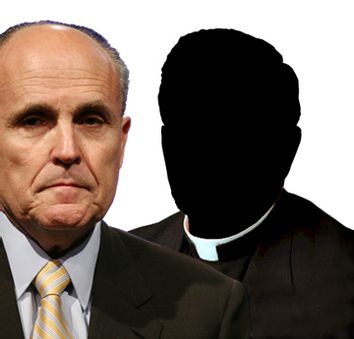
Giuliani employs his childhood friend Monsignor Alan Placa as a consultant at Giuliani Partners despite a 2003 Suffolk County, N.Y., grand jury report that accuses Placa of sexually abusing children, as well as helping cover up the sexual abuse of children by other priests. Placa, who was part of a three-person team that handled allegations of abuse by clergy for the Diocese of Rockville Centre, is referred to as Priest F in the grand jury report. The report summarizes the testimony of multiple alleged victims of Priest F, and then notes, “Ironically, Priest F would later become instrumental in the development of Diocesan policy in response to allegations of sexual abuse of children by priests.”

Five years after he was suspended from his duties because of the abuse allegations, Placa is currently listed as “priest in residence” at St. Aloysius Church in Great Neck, N.Y., where close friend Brendan Riordan serves as pastor, and officially lives at the rectory there with Riordan. In addition, Placa co-owns a penthouse apartment in Manhattan with Riordan, the latest in a half-dozen properties the two men have owned in common at various times since the late 1980s.

Placa has worked for Giuliani Partners since 2002. As of June 2007, he remains on the payroll. “He is currently employed here,” Giuliani spokeswoman Sunny Mindel confirmed to Salon, adding that Giuliani “believes Alan has been unjustly accused.” Mindel declined to discuss what role Placa plays with the consulting firm, or how much he is paid. Says Richard Tollner, who testified before the grand jury that Placa had molested him, “[Giuliani] has to speak up for himself and explain himself. If he doesn’t, people shouldn’t vote for him.” Adds Anne Barrett Doyle, co-director of BishopAccountability.org, which tracks suspected priest abuse, “I think Rudy Giuliani has to account for his friendship with a credibly accused child molester.”

Placa himself did not return several calls from Salon.

Placa, now 62, has been friends with Giuliani since childhood. The boys attended Bishop Loughlin High School in Brooklyn together, where Giuliani, Placa and Peter Powers, later to become chief aide to Giuliani during his first term as mayor of New York City, were in an opera club together. Placa and Giuliani would sometimes double-date. “After we’d drop off the girls,” Placa told the New York Times in 1997, “Rudy and I would spend hours in the car or walking down the sidewalks, debating ideas: religion, the problems of the world, what we wanted to be.” Giuliani, Powers and Placa later attended Manhattan College together and were fraternity brothers at Phi Rho Pi.

After college, Placa attended seminary and became a Catholic priest. Ordained in May 1970, he was first assigned to St. Patrick’s parish in Glen Cove, N.Y., from 1970 to 1974. He then transferred to St. Pius X Preparatory Seminary high school in Uniondale, N.Y., where he taught till 1978. He served as director of research and development for Catholic Charities from 1978 to 1986. He then went to work for the Diocese of Rockville Centre, which covers 134 parishes in the two suburban Long Island counties of Nassau and Suffolk and is the sixth largest diocese in the country. Placa ran healthcare services for the diocese, rising to the position of vice chancellor in 1988.

Though their career paths had diverged, Placa remained close to Giuliani, and was actively involved in many of the most important events of his friend’s life. He was the best man at Giuliani’s first marriage in 1968 to his second cousin, Regina Peruggi, then helped Giuliani get an annulment in 1982 — over Regina’s protests — so he could marry his second wife, Donna Hanover. Placa officiated at the wedding of Hanover and Giuliani in 1984. In September 2002, while suspended by the diocese over the sexual abuse allegations and no longer permitted to perform priestly duties, Placa received special permission to officiate at the funeral of the former mayor’s mother, Helen. He also officiated at the funeral of Giuliani’s father and baptized both of Giuliani’s children.

During Giuliani’s political rise from U.S. attorney to mayor, when reporters wanted quotes from old friends they would often turn to Placa. A 1985 New York Times story noted that Placa stayed over at Giuliani’s apartment as often as once a week, where the two men would “talk poetry, theology and politics deep into the night.” The monsignor also knew Giuliani well enough to describe his relationship with his father, telling the Times, “A major theme with [Giuliani's] father was his hatred for organized crime.”

In 2000, when Mayor Giuliani dropped out of the race for the open U.S. Senate seat now held by Hillary Clinton after finding out he had prostate cancer, a Times reporter went to Placa for insight. He told the paper that “it’s been a dramatically challenging time.”

When Time magazine named Giuliani its Person of the Year for 2001, Placa appeared again in that story, saying he had known Giuliani since he was 13 and that his cancer and Sept. 11 had “made him face his mortality b

But while Giuliani was being celebrated for his performance on Sept. 11, Alan Placa was about to lose his position of power. In addition to being a priest, Placa had received a law degree, and he first came to work for the diocese as its legal consultant. He was legal counsel to Bishop John McGann, and, starting in 1992, also a member of a three-person diocesan team charged with fielding allegations of sexual abuse by priests.

When a molestation scandal erupted in the Catholic Archdiocese of Boston in early 2002, it spilled over into Long Island. The newly installed bishop, William Murphy, had been the No. 2 official in Boston from 1993 to 2001. He had helped arrange early retirement for the most notorious of the abusive priests, Father John Geoghan. After Geoghan was sentenced to prison for molestation in February 2002, the archdiocese revealed that it had settled 100 civil suits on Geoghan’s behalf, and also gave law enforcement the names of 90 priests accused of abuse. Responding to public outcry, officials on Long Island subpoenaed the records of the Rockville Centre Diocese, and Bishop Murphy turned over internal files on accused priests to law enforcement in both Nassau and Suffolk counties in March 2002.

In Nassau County, the district attorney concluded that the statute of limitations had expired on all reported incidents and stopped investigating. Suffolk County convened a special grand jury to investigate specific allegations of abuse and how the diocese had dealt with them. The jury heard from 97 witnesses over nine months, and uncovered “deception and intimidation” by those diocesan officials who were supposed to be fielding sexual abuse complaints from parishioners. “The evidence before the grand jury,” stated the report, “clearly demonstrates that diocesan officials agreed to engage in conduct that resulted in the prevention, hindrance and delay in the discovery of criminal conduct by priests.”

None of the diocesan officials or accused priests are cited in the grand jury’s final report by name; the report instead identifies 23 priests by letter, and identifies diocesan officials by the duties they performed. Ultimately, the grand jury determined that “priests working in the Diocese of Rockville Centre committed criminal acts … These criminal acts included, but were not limited to, Rape, Sodomy, Sexual Abuse, Endangering the Welfare of a Child and Use of a Child in a Sexual Performance.” Because the alleged criminal acts had occurred more than five years ago, however, the statute of limitations meant no charges could be filed against any of the accused.

Suffolk County District Attorney Thomas Spota would not confirm to the Long Island newspaper Newsday at the time of the report’s release in February 2003 that Priest F was Alan Placa. Spota would say, however, that “this is a person who was directly involved in the so-called policy of the church to protect children, when in fact he was one of the abusers.” Multiple media outlets have named Placa as Priest F. Placa implicitly acknowledged as much to the New York Times in a Feb. 20, 2003, story, titled “L.I. Monsignor Scorns Jury, Insisting He Is No ‘Monster’,” in which he denied the specific allegations in the report. One of the victims whose testimony is cited in the report has also confirmed to Salon that Placa is Priest F.

By the time of the report’s release, Placa was no longer an active priest. In April 2002, shortly before the grand jury’s impaneling, Placa stepped down as vice chancellor and went on sabbatical. The diocese announced that he would be assigned to a parish as a priest after the sabbatical. By then, several families had spoken to media outlets and described their interaction with Monsignor Placa and complained about how he had handled their allegations of abuse. (Placa would later tell a reporter that while he was a member of the three-person diocesan team he did not report allegations of abuse to law enforcement.) But the sabbatical also came a week after Newsday contacted Placa and informed him that accusers had come forward to say he had molested them.

Several months later, Placa’s sabbatical turned into a suspension. On June 3, 2002, Newsday published a story on the alleged victims who had accused Placa of abusing them in the 1970s. One of the accusers was Richard Tollner. On June 13, 2002, the day the Nassau County District Attorney’s Office contacted the diocese regarding the accusations against Placa, Bishop Murphy stripped Placa of his right to perform priestly duties like giving communion and officiating at weddings and funerals, and placed him on administrative leave.

The Suffolk County grand jury report, released eight months after Placa’s suspension, includes evidence from three alleged victims. It states that in Priest F’s first assignment, “he appears to have made feeble attempts at abusing a boy who was an alter [sic] server. … He pulled up a chair next to the boy and put his right hand on his thigh. Slowly his hand began to creep up towards the boy’s genital area. Alarmed, the boy covered his crotch. b

“After his first assignment,” the report continues, “Priest F was transferred within the Diocese to … a school. Priest F was cautious, but relentless in his pursuit of victims. He fondled boys over their clothes, usually in his office. Always, his actions were hidden by a poster, newspaper or a book. … Everyone in the school knew to stay away from Priest F.”

The report describes two alleged victims complaining to the school’s rector about Priest F, and their “suspicions, later confirmed to be correct,” that the priest was abusing a fourth boy. Eventually, one of the alleged victims told Priest F, in an encounter witnessed by another boy, “Don’t ever fucking touch me again or I’ll kill you.”

When one of the victims attempted to report the alleged abuse, “the response I had gotten from my family, from my parents specifically was, that’s impossible … Priests just don’t do these things. You must be mistaken.”

The report also included memos apparently written by Placa in his capacity as sex abuse investigator for the diocese. In a document from June 1993, he asked colleagues, “Please do not identify me as an attorney [to complainants.]” Another spoke of how Rockville Centre’s handling of abuse claims had resulted in the “lowest ratio of losses to assets of any diocese. … Our system is in place and working well.” In a letter, Placa spoke of “[giving] some of my time to helping other bishops and religious congregations with delicate legal problems involving the misconduct of priests. … In the past 10 years, I have been involved in more than two hundred such cases in various parts of the country.” While investigating sexual abuse claims against priests for the Diocese of Rockville Centre, he also served as counsel to the House of Affirmation, a mental-health facility for priests in Worcester, Mass. Patients included priests accused of sexual abuse.

In an interview with Salon, former St. Pius X student Richard Tollner, now 48, confirms that he is one of the alleged victims who testified before the grand jury — the one who allegedly told Priest F “Don’t ever fucking touch me again.” He also confirms that Placa is Priest F. Tollner claims Placa molested him and at least two others, but when he told school authorities at the time, he says nothing happened. “No one contacted my family or me,” Tollner, now 48, recalls. “I told another priest while I was on a retreat and he said he would explore it and he never did.” So far none of the alleged victims besides Tollner has come forward publicly. Placa has denied Tollner’s allegations and has referred to the former St. Pius X student as “troubled.”

More than four years after the release of the report, Placa remains on administrative leave, as confirmed by Sean Dolan, a spokesman for the diocese. Dolan said he believed there was still an investigative process under way but that he didn’t know its status. “You probably have to try to contact [Placa]. I’m not in a position to know that.” He added that he didn’t think there was a limit to administrative leave. “It can go on indefinitely. I believe that’s at the discretion of the bishop.”

The church has instituted guidelines for handling allegations of sexual abuse since the Boston scandal, directing that a review board made up mostly of laypeople investigate claims. According to Jim Dwyer, former director of media relations for the Archdiocese of Chicago and current director of public information for the Diocese of Phoenix, if a diocese investigates a priest for sexual abuse and determines that there is “reasonable cause to suspect” that the charges are true, the priest would be “permanently removed from ministry.” “It’s a lower threshold than in criminal cases,” stated Dwyer.

The status of priests who are still under investigation, however, is up to the individual diocese. Dwyer said it was possible for administrative leave to go on for a long period — “weeks, months, more than a year” — but that he was “unaware” of any administrative leave that had lasted five years. “But I can imagine a situation where it might.” Susan Gibbs, spokeswoman for the Archdiocese of Washington, also thought the duration of Placa’s leave was out of the ordinary. “If someone’s on leave for five years, it’s a little unusual. Normally, if someone goes on leave it’s for a short period, about six months, which is renewable.”

While Placa is on leave, he is employed elsewhere. In August 2002, after his suspension but prior to the release of the grand jury report, he took a job with Giuliani Partners. There is no public record, however, of what that job entails.

Since the first accusations against Placa surfaced, Giuliani has defended his childhood friend. In June 2002, he insisted that “Alan Placa is one of the finest people I know.” In addition to the statement from Mindel to Salon reiterating the ex-mayor’s support for Placa, Mindel offered two former St. Pius X students to speak in Placa’s defense. Kevin McCormack, who attended St. Pius X while Placa was teaching there and graduated in 1978, dismisses talk of abuse. He claims he never heard of any molestation complaints and adds that the student body was so small that word would have gotten around. “I find the allegations very difficult to believe,” says McCormack, now a principal at Xaverian High School in Brooklyn, N.Y. “There was never anything like that that was rumored.”

Kevin Way, also a 1978 grad, agreed. “I can’t imagine it,” says Way, now an attorney. “I find it utterly incredible.”

Placa still officially lives at the rectory at St. Aloysius Church in Great Neck, where he continues to be listed as priest in residence. The victims’ advocacy group Voice of the Faithful of Long Island held protests outside of St. Aloysius in 2005 and distributed leaflets to show its objection to Placa’s involvement there. Says Phil Megna, co-chair of Voice of the Faithful, “His claim to fame is that he bragged of his ability to get things pushed under the rug.”

Sister Mary Ann Walsh, director of media relations for the U.S. Conference of Catholic Bishops, said the issue of whether a priest on administrative leave could live on church property was a diocesan decision. Dwyer of the Diocese of Phoenix said that in his experience it was possible for a priest on administrative leave for sexual abuse allegations to be a “priest in residence” at a church as well, as long as there was no contact with children. In the Archdiocese of Los Angeles, however, spokesman Todd Tamberg said that archdiocesan policy would prevent a priest on administrative leave for allegations of sexual abuse from being a “priest in residence. “If you’ve been put on administrative leave you not only are restricted from functioning as a priest or dressing as a priest but also from living on church property.”

It is unclear, however, how much Placa is “in residence.” In late 2005, a few months after the Voice of the Faithful’s protests, he purchased a penthouse apartment in the Regatta, a condominium building on South End Avenue in Manhattan. According to documents filed with the City of New York, Placa co-owns the 650-square-foot, $550,000 apartment with Brendan Riordan, the pastor of St. Aloysius. They are cited as “joint tenants with right of survivorship” in a condominium unit assignment agreement signed on Dec. 5, 2005. Giuliani spokeswoman Mindel confirmed that Riordan and Placa co-own the apartment and said that Placa stays there “on occasion,” but that it is an investment property and he lives primarily at the rectory. She said that Riordan “never stays there.”

Placa and Riordan — who also attended Helen Giuliani’s funeral — have known each other for more than 30 years. Both taught at St. Pius X in the late 1970s, and both worked within the Diocese of Rockville Centre for most of their careers. Together they wrote a book called “Desert Silence: A Way of Prayer for an Unquiet Age” in 1977.

Since the late 1980s, the two men have owned six different properties in New York and Florida in common. From 1991 to 1998, while Riordan was pastor of Saints Cyril and Methodius in Deer Park, N.Y., and Placa was vice chancellor of the diocese, Placa was also priest in residence at Saints Cyril and Methodius. Both men are listed as living at the church rectory in public documents. According to the Official Catholic Directory, Riordan had moved to St. Aloysius in Great Neck as pastor by Jan. 1, 1999; Placa has been listed as priest in residence at St. Aloysius since 1999.

Cracks in the fortress?

New York Times execs say the paper and its staff stand firmly behind jailed Judy Miller. But off the record, some are telling reporters a different story.

  • more
    • All Share Services

Cracks in the fortress?

When George Freeman, assistant general counsel for the New York Times, makes his way to his office at the Times’ Manhattan headquarters, his colleagues usually raise the same topic of conversation: Judy Miller. As one of the attorneys working on Miller’s behalf, Freeman says his co-workers are never-ending in their curiosity about the case. “People ask me about it every day, on the elevator, everywhere,” Freeman told Salon. “How’s Judy? How’s she doing? Not a day goes by that I am not asked by someone.”

With Miller now incarcerated for 43 days and counting, interviews with nearly a dozen Times staffers reveal widespread concern for Miller’s welfare and support for the principle for which she is being jailed. “It is extremely upsetting to see a colleague in jail,” says Adam Nagourney, a Washington correspondent. Adds Eric Schmitt, another D.C. colleague, “Everyone remains quite concerned about what happened to her.” “I think most people have nothing but sympathy for Judy’s situation,” noted Craig Whitney, an assistant managing editor and 40-year Times veteran. “And outrage that she has to go to jail for a principle that we all believe in.” Indeed, both inside the Times and elsewhere in journalism, the paper is being praised for standing by its reporter as she defends a journalistic tenet most in the industry find sacred.

But numerous staffers also have told Salon that Miller’s legal saga has become a burden, and not just for the paper’s 12-person in-house legal team, which has been swamped by her case. Troubling many staffers is the dark cloud of unanswered questions about Miller’s reporting and role in the Plame affair. Some at the Times contend that Miller has drawn unwanted attention to the paper at a time when it is still healing after the Jayson Blair fiasco dealt a body blow to its credibility. “It is a big bet for the paper,” one reporter who requested anonymity said of the Times’ unyielding support for Miller. “The paper chose to make this into something to fight to the death. It may have possible negative consequences for the paper’s image when people are spending an enormous amount of time and energy on the credibility of the paper.” Although several Times staffers were willing to offer criticism of the paper, none would do so on the record for fear of retaliation.

The grumblings inside the Times have grown louder as more questions have been raised about the scope and nature of Miller’s role in “Plamegate.” Many of Miller’s colleagues are unclear about exactly whom or what Miller is protecting. In the face of limited information, some speculation has surfaced that Miller is only pretending to protect a source to divert attention from her past problems. No proof exists that the theory is true.

More prominently, a recent report that Miller met with I. Lewis “Scooter” Libby, Vice President Dick Cheney’s chief of staff, less than a week before Robert Novak outed former CIA agent Valerie Plame in a 2003 column, has added to the speculation over what role Miller may have played in the leak of Plame’s identity. The theory being peddled on the Huffington Post and elsewhere in the lefty blogosphere has Miller not on the receiving end of information from an administration leaker about Plame’s identity, but as the one disseminating information about Plame to administration officials. This is just a theory, of course, with no known evidence supporting it. But it’s fair to say that many Times staffers want Miller’s role in the Plame affair clarified, and some of her Times colleagues are downright angry about what is known, and unknown, about her involvement.

Although Miller never wrote a story about Plame, she is one of several journalists targeted by special prosecutor Patrick Fitzgerald in his investigation of who leaked the agent’s identity more than two years ago. Although Fitzgerald has subpoenaed and interviewed several reporters, Miller is the only one who has so far refused to disclose her sources, prompting a federal judge to sentence her to jail until either she gives up the source or the grand jury ends its work, likely sometime in October.

Some insiders claim the Miller case has sparked new questions from Times critics — and employees — about the paper’s credibility given Miller’s controversial past. Other staffers say the paper has not been very forthright with employees about exactly what Miller knows, what she had been working on when she learned of Plame’s identity, and how much editors know about her sources.

“The most common denominator is that there are a lot of unknowns about it,” says one Times reporter, who did not want to be identified. “Both what happened, what’s going to happen, and how the case will proceed. There are different levels of knowledge.” Another reporter adds, “There are a lot of unanswered questions about what the editors really know and the public should know.”

Some staffers say Miller’s reputation as a hard-driving news person who “has stepped on a lot of toes” makes it difficult for them to back her completely. Others point to her questionable reporting in recent years related to the buildup to the Iraq war, in which she wrongly reported the likelihood of weapons of mass destruction in Iraq. Such reporting prompted the Times to publish an unusual editor’s note last year admitting it had failed to adequately question such claims.

“She is obviously a very contentious person,” one co-worker, who requested anonymity, said. “There are people who have a question about the integrity of [her] reporting.” Another colleague called her WMD reporting “a dark chapter.” “I’m not sure there is a lot of sympathy or support,” a third fellow reporter said about Miller. Her baggage even prompted one journalism group, the American Society of Journalists and Authors, to rethink giving her an award in early August for her efforts. After an ASJA committee approved the award, an outcry from some ASJA members sparked a reversal at the board level.

But reports from within the Times about growing discontent about the Miller case and the paper’s handling of it are in sharp contrast to how executive editor Bill Keller sees the situation. Responding via e-mail to submitted questions from Salon, Keller disputed reports that the case had drawn a lot of internal dissent. “A lot of things that are ‘reportedly’ true about this case and the newsroom reaction are either flat wrong or grossly inflated,” he stated. “I think the prevailing sense in the newsroom — regardless of what feelings individual reporters have about Judy and her past work — is that they are glad the paper is standing up for her and defending the principle of reporters’ need to protect their sources.”

Other editors also contend that they have not heard internal discord. “If any member of the staff dissatisfied about our internal communication approached me, I would try to get some answers, within the limits of our necessary protection of sources, of course,” assistant managing editor Allan Siegal said in a statement. “But no staff member has expressed that frustration to me.” Whitney offered a similar view, saying, “I am unaware of any undercurrent of discontent.”

Keller said he understood the staff concerns, but remains somewhat limited in what he can tell them due to the investigation and the involvement of a confidential source. “Believe me, I would like nothing better than to tell our staff whatever I know about this case. But we have a colleague who has been in jail for more than a month, and I’d need an awfully compelling reason to divulge information that could in any way complicate her situation further,” Keller wrote. “I’ve talked about this case a lot — in public, in interviews with various news organizations, and more privately with members of the staff — but I have a responsibility to be cautious.”

As for the paper’s image, Keller remains unconcerned, saying the journalistic principle involved is more important. “It’s of course secondary to the question of whether we are doing something we believe in,” he said about the paper’s image. “We’ve heard from noisy critics (mostly on the left) who are angry at Judy for earlier coverage, or angry because they suspect her source is someone they don’t approve of. But this is not, at bottom, about any one reporter or any one source. It’s about a principle. We’ve heard from others (mostly on the right) who disapprove of anything The Times does. But there’s also been a significant outpouring of support for her courage and our steadfastness.”

Keller also spoke to the questions surrounding what Miller’s assignment was at the time she learned Plame’s identity, but declined to spell it out. “While the questions of what Judy knew, and what she was working on, may be matters of general curiosity, the answers don’t touch the heart of the case,” he claims. “The question of what is going on with the case — meaning what the special prosecutor is up to, and why he seems to regard Judy as important to the case — is a mystery to me. It’s something I’d like to have answered — not just for our staff, but for our readers.”

The Times has been steadfast in its public support of Miller and persistent in calling for her release. Unlike Time magazine, which handed over the notes and e-mails of its reporter, Matthew Cooper, after he was subpoenaed in the same case, the Times stood behind Miller’s defiance of such an order. The Times editorial page on Aug. 8 even took to linking increased harassment of the press in other countries, like Nepal and Burundi, to Miller’s incarceration. An Aug. 15 editorial followed with a clear demand that Miller be freed, stating, “If she is not willing to testify after 41 days, then she is not willing to testify.”

Miller remains in jail at the Alexandria [Va.] Detention Center. Reports from visitors indicate she is holding up well, but has had some stomach problems related to jail food, misses the Internet and outside contact, and has had to withstand a constant stream of hip-hop videos on the communal television sets. She’s had no shortage of visitors, ranging from Keller to Tom Brokaw to Lucy Dalglish of the Reporters Committee for Freedom of the Press to one report of embattled United Nations ambassador-designate John Bolton getting face time with her behind bars.

Observes Times columnist Thomas Friedman, “People really support Judy and this principle.” Adds Nagourney, “I hope it works out for her.”

Continue Reading Close

The press vs. Scientology

After years of conflict, the church and the media seem to have reached a truce. Is it because Scientology has become less confrontational -- or because the press is scared?

  • more
    • All Share Services

The press vs. Scientology

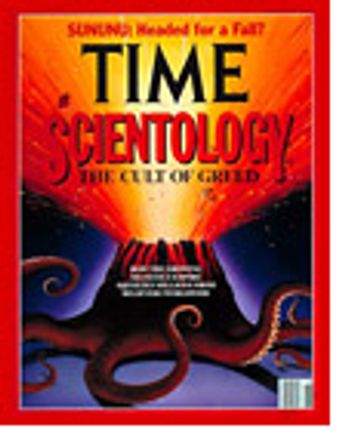
For anyone interested in the Church of Scientology, the May 6, 1991, issue of Time magazine remains a milestone in news coverage. For those who back the church, it ran an outrageously biased account that eventually led to a libel suit by the church — later dismissed — and prompted Scientology leaders to launch a counterspin that continues today.

But for many who have long questioned the church, founded by the late L. Ron Hubbard and embraced by a string of Hollywood stars, that article represents one of the genuinely aggressive reports on the organization. And their concern is that what subsequently happened to Time — and to other publications that tried to peek behind the church’s cheerful exterior — explains why few investigative reports on the church have followed.

The Time cover story, written by Richard Behar and headlined “The Thriving Cult of Greed and Power,” called the church “a hugely profitable global racket” and described its intimidation methods as “Mafia-like.” The story was one of several by major news operations who took on the church with in-depth reports in the late 1980s and early 1990s. The Los Angeles Times launched a series that focused on Hubbard’s rise to power and the myths and distortions about his life — including bogus military claims and a dysfunctional relationship with his son. The series also looked at church marketing techniques and high-pressure tactics against members; accounts of former Scientologists about life in the church, which included the micromanagement of everything from careers to the preparation of baby food; and its counterattacks against critics, including the press and the IRS.

But several of the news outlets paid for their curiosity, either (like Time) through costly lawsuits or, according to reporters, personal harassment. In the intervening decade, there’s been a détente of sorts. What’s less clear is why. Has the church simply been more open to journalists — and less quick to take critical reporters to court? Or has the press simply shied away from potential court fights, especially at a time when many news outlets are cutting back on budgets and facing stronger competition in a growing media market?

It’s tough to dispute how aggressive the church has been in the past. Behar has said he had 10 lawyers and half a dozen private detectives following him as he researched the story, asking friends about his health and tax history. Joel Sappell, who co-wrote the June 1990 multipart series in the Los Angeles Times, recalled similar counterattacks. “They had private detectives follow us and they were rummaging through my past,” he recalls. “They have a real history of hardball and litigation.”

In addition to the libel suit, the church countered the Time story with a 12-week ad campaign in USA Today that summer. “This consisted of daily full-page advertisements and two full-color supplements,” says Ed Parkin, vice president of cultural affairs for the Church of Scientology. “It was so effective that we have heard from journalism professors that they have used it as a model in their university journalism classes.”

And while the Los Angeles Times was never sued for the series, the church bought up many billboards and bus ads in the L.A. area to counter the paper’s charges. “They even put a billboard at the end of my street, where I lived,” Sappell says. Other news organizations examined the church on everything from its tax-exempt status — which was granted in 1993 after a long fight with the IRS — to allegations of pilfering the savings of unsuspecting members and to cases of suicide by followers. Allegations by former Scientologists of being held captive were common, along with coverage of the church’s battles for recognition with government leaders in Germany and France.

Reporters have said the church fought back in other ways. In 1988, a St. Petersburg Times reporter accused the church of illegally obtaining his credit report, making obscene phone calls to his wife, and sending a private investigator after him. And in 1998, the Boston Herald reported that one of its writers had been pursued by a private detective after writing a five-part series on the church.

“There was a lot of negative coverage, and they had a policy that if you write something about the church that is incorrect or libelous, they will take you to court,” says J. Gordon Melton, director of the Institute for the Study of American Religion, who has observed the church for years. “They are very persistent.”

Scientology leaders also went after individuals and other groups seeking to expose their questionable doings, such as the Cult Awareness Network, which had targeted the church with public warnings for years and went bankrupt in 1996. It had been the subject of many suits from the church. (The CAN site was promptly snapped up by a Scientologist, and it now links to pieces sympathetic to the church — and disparaging to its critics.) The church maintains that reporters who truly made efforts to learn about Scientology have never been a problem. “Where reporters have taken the time to understand the Church and really get their questions answered, the public have been presented with an accurate view of Scientology,” Parkin said in a statement to Salon about press coverage. “Where reporters have not taken the trouble to understand who we are and what we are about, the public has been presented with an inaccurate view of Scientology. When this happens, it does the public a disservice.”

In recent years, however, the type of coverage the church has faced is decidedly different from the investigative reports of the early 1990s. Stories still refer skeptically to Scientology, but most of the coverage focuses primarily on celebrity members such as Tom Cruise and John Travolta. Any negative stories are usually limited to a specific church program under mild scrutiny, or to fans’ concerns that a celebrity, such as Cruise fiancée Katie Holmes, has unwittingly joined the flock. “My sense in general is that America increasingly blends entertainment with news, to the neglect of important news items involving Scientology, ” says Stephen Kent, a professor at the University of Alberta, who has written extensively on Scientology. But what caused this shift to more lightweight coverage? “The church has changed the way it conducts business,” Sappell says. “They are trying to be much more mainstream.”

Kent agrees, adding, “It may not want to continue its aggressive court action, [in order] to maintain its image as a [mainstream] religion.” Parkin maintains the church was no less open to the press in the past. “We have always been willing to work with the press to help them understand us,” Parkin responded when asked if the church had taken a different tone with reporters. “As the Church expands in the United States and around the globe, there is an increased interest in finding out about us. And we are responding to that interest.” But, he adds, “We have always tried to resolve disputes short of litigation. That was not always possible in earlier years when we were forced to go to court to defend our rights and the rights of our parishioners to freely practice their religion. But as we have won more and more victories, we have had to resort to the courts much less. Nowadays it is a very rare occurrence.”

For many reporters who have written recently about Scientology, cooperation couldn’t be better. “They are very media friendly and there is nothing you can’t ask them,” says Ken Baker, West Coast executive editor for US Weekly. Benjamin Svetkey, who recently interviewed Tom Cruise for Entertainment Weekly and who has interviewed Travolta in the past about Scientology, agreed. “I have never had a problem,” he said, adding that both men have been glad to speak about the church. “Nobody [from Scientology] has told me not to ask them about it. Nobody has been anything but friendly about it.” He goes on to say, “It’s kind of bizarre in some ways how they have been villainized.”

And Nanette Asimov of the San Francisco Chronicle found similar cooperation when she did report critically on the church’s Narconon program, a drug treatment effort that drew scrutiny when it was incorporated into San Francisco’s public schools. Because of the attention brought by Asimov’s series, the city banned the Scientology program from its schools; several other school districts in the state, including Los Angeles, followed. Nonetheless, Asimov says, “I found that they were always accessible and polite for the most part,” adding, “and eager to answer questions. Hostility wasn’t part of it.”

At the same time, she described church officials as “unlike anyone else I have ever interviewed” while reporting her stories. “I got more phone calls from them prior to publication than I have from anyone. ‘Nervous’ doesn’t begin to describe how they were.” (In preparing this series, Salon writers and editors have fielded frequent calls — and one office visit — from church officials.)

Though the church says otherwise, its kinder and gentler press image seems to be deliberate, according to observers. Having settled its last major lawsuit in 2002 — in which it had to pay former Scientologist Lawrence Wollersheim $8.6 million for mental abuse — the church appears to be focused more on improving its publicity and less on defensive retaliation.

In addition to seemingly open access to inquiring reporters, the church has even invited journalists on tours of facilities that give an inside view nearly unthinkable for probing reporters five or 10 years ago. “I think they have been able to make the case that lots of the stuff against them is reduced to a matter of opinion,” Melton said about the Scientology press coverage. Kent says the church’s use of its celebrity members as ambassadors also softens its image. “They increasingly use their celebrities in a newsmaking fashion,” he says. “They are public relations officers for Scientology, and part of their mission is to represent Scientology to the outside world and to other governments.” But are news outlets simply afraid of unleashing their investigative attack dogs in case legal action and harassment will follow?

Alice Chasan, senior editor at BeliefNet.com, which monitors religious issues and coverage, said Scientology spokespeople seem to be in greater supply, and a greater number of comments from the church. At the same time, the in-depth coverage is minimal. “There is less of that kind of investigative reporting going on. Clearly, the spate of lawsuits has had a chilling effect,” she says.

One recent example of aggressive reporting, however, comes from the Buffalo News, which ran a four-part series in late January and early February of this year.

The paper reported that the local Scientology church pressures some members to cut off contact from relatives critical of Scientology, uses “deceptive tactics” to recruit members, actively seeks acceptance by linking to local government leaders, and practices intimidation and harassment. The series also profiled former Scientologist Jeremy Perkins, a 28-year-old who stabbed his mother to death in a violent attack after he had — at the church’s urging — stopped taking psychiatric medication.

Staff writer Mark Sommer knew going in about the church’s litigious history. “I was aware of their past enough to be reluctant to delve in to that world, how intimidating they could be and anticipated the likelihood of being sued,” he said. “But I was not going to let that get in the way.” He said he received “veiled threats” from local Scientology leaders, but would not comment on them further.

He did say that he found few former Scientologists willing to speak on the record for fear of retaliation. He also noted several instances of church officials misleading him — then later admitting their false statements when presented with evidence. In one case, officials initially said Perkins, the man who killed his mother, had not been a member, Sommer said. He also said church officials denied writing a speech for the mayor of Buffalo that was read when he declared “Church of Scientology Day” in the city in 2003. The mayor confirmed they had.

“They have a storyline,” Sommer said. “They get frustrated if you don’t go along with it.” The reporter also noted that while the Scientologists were willing to provide him with all of the information for the stories he sought — and gave him a tour of the local church and facilities — they also tried to micromanage the reporting as much as possible. “They were in daily contact with the paper days before the series ran, with great concern over what would appear,” Sommer recalled. “We met with them, but we wouldn’t back off on the stories.”

This story has been corrected since it was originally published.

Continue Reading Close