Jonathan Kiefer

Films of the decade: “Me and You and Everyone We Know”

A debut feature from a little-known conceptual artist became one of the decade's Amerindie surprises

Writer-director Miranda July’s 2004 debut feature isn’t without flaws, but it is astonishing — with such a disarming, sweetly ingenious presence of mind that it seems like a miracle. The array of July’s thematic concerns — our gropes for connectedness, sexual and technological curiosity, fine-art pretense, identity as a function of sought approval — is vast, yet she shows great restraint in subordinating her satirical impulses to more humane ones.

Most prominent among the movie’s luminous narrative vignettes is the halting romance between a conceptual artist (played by the director, who is herself a conceptual artist) and a shoe salesman (John Hawkes). July’s dramatization is full of surprises, and her fertile imagination is tempered with rare poetic intelligence. Rather than doling out artful ideas with reckless abandon, she takes the trouble to build them into characters. The result, for all its affinity with the rough-hewn and shapeless, is a kind of lapidary perfection, ennobling its material and renewing the prospects of American moviemaking. 

Film Salon has invited a group of special guests to write about their favorite film(s) of the 2000s. To read the entire series, go here.

Old men take longer

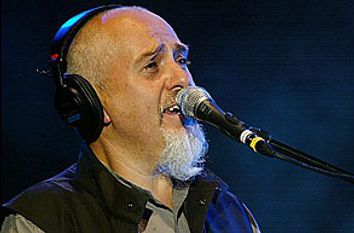
At long last, Peter Gabriel releases a new record. Is it worth the wait? If you have to ask you're missing the point.

While Peter Gabriel works on his songs, the people most likely to listen to them graduate from high school and college, get married, change homes and careers and sometimes politics, lose parents, let old friends slip away and make new ones, have children, get divorced, remarry or not and otherwise do away with large chunks of their lifespans.

They wait for his next album to be released. Maybe once in a while they check the Internet to see how it’s coming. If the chance arises, they ask him. Gabriel hedges. Apropos of his time-tested creative method, he experiments with various excuses: “Deadlines are things that we pass through on the way to finishing”; “We’re intending to release in September … you see I never specify the year”; “Speed is not my strength, diversions are.” He tweaks and mixes and masters until finally he has achieved a polished, succinct quip: “Old men take a little longer to get Up.”

“Up” is Gabriel’s latest “song-based” studio album, which has been a work in progress for the past decade. It is fair to call that a long time — long enough, actually, to wonder if it is also fair for him to take so long. It’s not that Gabriel has been drunk or depressed (well, who knows, maybe he has) or uninspired or lazy. He has been preoccupied. Gabriel is a distractible perfectionist, which amounts to a kind of purgatory for anyone who lives a public life, let alone a creative one. On one hand, his plate is filled with ambitious undertakings: the Real World record label, the interactive multimedia projects, the Womad (World of Music, Arts and Dance) festivals, the film scores, the family, the elusiveness. And on the other hand, the songs just weren’t bloody ready until now, damn it.

With his cerebral, hyperfussy attention to detail, his protracted creative gestation periods (“I always get pregnant when I make records,” he says) and his tendency to hole up in the English countryside, Gabriel seems bent on becoming the Stanley Kubrick of popular music. Maybe that’s not fair — it’s not that Gabriel has come to resent his audience. He just doesn’t have qualms about jerking them around. What should be an unacceptable risk in today’s pop world has become an essential part of Gabriel’s weirdly arty integrity.

Each new album is like a comeback; for his fans, it’s like a loyalty oath. Some are willing to wait the mean times out, tiding themselves over on the “expanded packaging” of remastered early work, plus the occasional live album, hits compilation, film soundtrack or audiovisual millennium event. Others try not to indulge him, because they figure he gets plenty of indulgence from himself. Yet wherever and whenever Gabriel resurfaces, there they’ll be. Just how did the masked, stage-frightened lunatic from Genesis, Holy Mother of all prog-rock, become an auteur of pop-fan anticipation?

Well, gradually. Gabriel has always been a successful patience-tester. In 1975, just as Genesis, founded by Gabriel with a few high school friends, started gathering mainstream credibility (which is not to say accessibility), the band’s fickle frontman abandoned it. He got right to work on a solo album, but took two years to make it available.

People liked it anyway.

As the downtime between Gabriel’s subsequent albums grew — a year, two, four, six and now, 10 — so did his stature, and yes, the quality of the work. Time has allowed Gabriel to assimilate his interests and influences by trying them on and flapping around in them, like the wacko costumes he used to wear onstage with Genesis. You must understand: It takes a while to reconcile ’60s R&B, rock, gospel, synthy British new-wave, avant-garde digi-pop, cyberpunk and the sprawling and gorgeous musical traditions of Africa, South America and the Indian subcontinent, with dignity and without compromise.

He has vented menacing and paranoid personal nightmares like “I Don’t Remember” and “Shock the Monkey,” sung the range of his politics, from the raw simplicity of “Biko” to the bemused, cheekily demented Kindergartenpolitik of “Games Without Frontiers” to the elegant, utterly convincing empathy for working-class doubt and defeat in “Don’t Give Up.” The audacious R&B throwback “Sledgehammer” and the quintessential mix-tape valentine “In Your Eyes” helped send “So” to triple-platinum in 1986, and earned Gabriel a huge, international fan base — to be kept waiting, again, for the tender, fierce and musky confessionals of 1992′s “Us.”

Somewhere along the line, a protective precedent was established for the reception of a new Peter Gabriel album: If you’re disappointed, you’re missing the point. Elapsed time having mooted the standards of previous work, new entities should be judged primarily for the happy surprise of their newness, and the avoidance of repetition. Success means you’ll actually want to know, “Where’s he going with this?”

Most of the songs on “Up” are in the six-to-seven-minute range, and they luxuriate in that extra time, shirking the confines of radio friendliness, methodically unfurling their hooks and hang-ups, false starts and stops, shifting grooves and shimmering open spaces. The music describes something weary and wounded, but in a committed, energetic way. Wearing Gabriel’s accumulated experience and confidence well, the album moves very comfortably in a low gear.

It has its share of familiar pleasures, sure: the pristine production, the fine orchestration, the great hooks and greater dynamic range. The adventure of the liner notes, with all that percussion, programming, additional percussion, additional programming, guest artists and exotic instruments. Here, in addition to his usual array of conventional instruments, Gabriel himself takes on the “Wonky Nord” and “Mutator,” perhaps because only he knows how to play them. But he knows his limitations too, and leaves the “Supercollider Drum Programming” and “Middle Section Backwards Piano” to others (Chris Hughes and Mitchell Froome, respectively). Mainstays like guitarist David Rhodes, who creates entire atmospheres from single notes; prowling, primal bassist Tony Levin; and the fleet soul-clockwork drummer Manu Katche perform their duties with the usual panache.

“Up” opens into a song called “Darkness,” which sets the album’s tone and is perfectly dreamlike, slipping easily between what feels first like the churning bowels of some fitful, sinister machine and then the aural expanse of moonless midnight in an exotic garden. It echoes some of Gabriel’s earlier work, and to make matters more eerie, some of its chord changes and melodic turns seem to channel John Lennon (this happens again, amazingly and to good effect, in “My Head Sounds Like That”).

The loping, lashing commentary of “The Barry Williams Show,” told through a put-upon and endearingly contemptible tabloid TV sleaze-monger, is bitterly funny and certainly on target: “Before the show we calm them/ We sympathize, we care/ And the hostile folks we keep apart/ Till the red light says ‘On Air.’” Luckily for Gabriel, it doesn’t matter how late these observations are because they’re still true — and, for that matter, because the song’s deep-digging groove is timeless.

Gabriel’s greatest achievement is that his technical sophistication actually encourages a fully organic and man-made sound. For all of the album’s well-tempered machinery, you can still hear fingers on a fretboard or drumskins, feet on piano pedals, drawn breath and, of course, voices. If you want to read the lyrics, you’ll need a Web browser. But you can always just listen.

The penultimate track, “Signal to Noise,” comes closest to making a mission statement, and you don’t have to be a tech-geek to get it: “All the while the world is turning to noise/ Oh, the more that it’s surrounding us/ The more that it destroys/ Turn up the signal/ Wipe out the noise.”

Beyond reiterating his cultural critique in broader strokes, this seems to confirm that Gabriel’s impassioned embrace of the information age has taken a toll on his attention span. Yet he somehow maintains his curiosity and stamina. There’s a note of hard-won hope in this song (begun, perhaps, in the lovely and poignant outward reach of the previous track, “More Than This”), and then a crescendo to a perfectly planned collision and synthesis of Western and non-Western music. The result is everything you’d expect from Gabriel, even though you’re not supposed to be expecting anything, and maybe the uppest thing about “Up.”

He quickly recovers. The album’s coda, a rending modernist piano ballad called “The Drop,” has lines like this: “One by one/ You watch them fall/ No idea where they’re going/ But down.”

Observers have noted that Peter Gabriel often weighs his words with great and quiet care before speaking them. In conversation it seems like a sign of respect, and maybe that’s the idea with the music too. An album every year — even were he able to do it — might be too much.

For those of us who work under regular deadline pressure (and when you think about it, don’t we all?), Gabriel’s modus operandi is infuriating and enviable. He routinely tells interviewers how easy it is for him to start things and how hard it is to finish them. Plenty of us have been there, but of course we haven’t had interviewers or fans to explain it to.

While waiting to find out what was up with “Up,” inquisitors resorted to cornering and demanding answers from Gabriel’s colleagues, like bassist Tony Levin, online. Levin could only shrug; their guess was as good as his. He said that he distinctly remembered laying down a good hundred-plus tracks, thinking they sounded great, and leaving without knowing when he’d ever hear them again, waiting for the call to let him know when the tour would start.

Daniel Lanois, the co-producer, arranger and fellow detailer of the supremely nuanced “So,” has observed that Gabriel would be better off recording his albums in the middle of the desert, where distractions could be minimized.

Could they? Gabriel — the designer of “interactive experiences,” bona fide conceptual art fabulist, farmer of high technology and, when he gets around to it, songwriter — still nurses his dream projects, like, for instance, the ultimate 21st-century theme park, full of “the handmade, the high-tech, and the natural as much as the digital.”

Musically, Gabriel has indeed taken to behaving like an experimental architect — mulling over the basic problems of form, function, civic usefulness, spectacle, the balance of tradition and innovation — but one who still appreciates comfortable living, thank God. The feng shui in his songs has only improved over the years. Which is why his most dedicated fans feel rewarded for following him anywhere.

If at first “Up” doesn’t seem entirely worth the wait, take its maker’s example and give it time. You may have to. Who knows when we can expect the next one.

Continue Reading Close

Kieslowski’s “Three Colors”

Just when it seemed that European cinema had become fossilized, the great Polish director created the slickest -- and loveliest -- concept album in art-film history.

In 1995, the Los Angeles Times asked Krzysztof Kieslowski how movies should participate in culture, and this was his reply: “Film is often just business — I understand that and it’s not something I concern myself with. But if film aspires to be part of culture, it should do the things great literature, music and art do: elevate the spirit, help us understand ourselves and the world around us and give people the feeling they are not alone.”

Now those are words to make movies by, and Kieslowski certainly did. Nearing the end of the millennium, when even the best works of those other European giants, Federico Fellini and Ingmar Bergman, had started to seem fossilized, Kieslowski, their contemporary, found his stride. The great Polish filmmaker, who was raised in an economically impotent, foreign-dominated runt country and came of creative age in a climate of political censorship, had finally accumulated the resources he so clearly deserved: a literate and deep-feeling world audience, complete artistic freedom and plenty of Western money to fund his work.

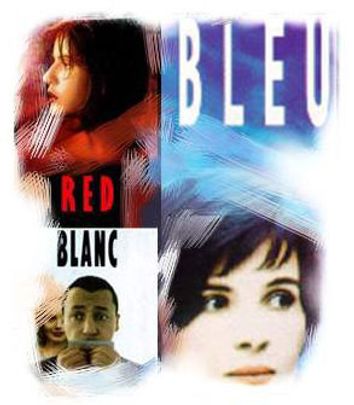
He invested wisely. Kieslowski’s “Three Colors” trilogy was more than just the slickest concept album in the history of European cinema. It was a quantum leap for the medium, a reminder not only of what was possible, but what was necessary. As “Blue,” “White” and “Red” hit theaters, one at a time, moviegoers everywhere began feeling giddy. They knew something very special, and vital, was afoot. For those who’d seen Kieslowski’s “Decalogue” (a serialized tone poem on the Ten Commandments, and also an astonishing masterpiece), the prospect of another segmented, philosophical parable was all too tantalizing. For those who hadn’t, “Three Colors” was like nothing they’d ever experienced. Film didn’t seem like such a youngster among the arts anymore.

The richly textured trilogy capped Kieslowski’s extraordinary career, taking on the deepest and most complex moral subjects with grace and panache, but always at ground level. Ostensibly it was derived from the French Revolution themes of liberty, equality and fraternity, and their corresponding colors in the French flag. But the films are deeply personal and in many ways Polish; they restore those lofty concepts, without diminishing them, to humble human proportions.

In temperament they differ significantly but are thematically unified by Kieslowski’s inquisitive, haunted and wryly humane sensibility. His genius is evident not only in the fluency with such varied tones — the inward, meditative drama of “Blue,” the oblique social comedy of “White” and the nimble, all-knowing mystery-romance of “Red” — but the elegant orchestration by which he unites them. Each involves an enormous narrative arc: The characters endure debilitating betrayals and literal or figurative deaths, then respond to the prospect of renewal so generously provided for them by the director. Yet each is lean and swift, clocking in at around an hour and a half. Not bad for so intense a sensual, emotional and spiritual workout.

In “Blue,” Julie (Juliette Binoche) is rather brutally “liberated” by the death of her daughter and husband, a famous composer, in a car accident. To defeat grief, she discards her former life. “I don’t want any belongings, any memories,” she says. “No friends, no love. Those are all traps.” But her husband’s music, which, Kieslowski suggests, was really created by her in the first place, is irrepressible. As is true throughout the trilogy, Zbigniew Preisner’s score, here a funereal concerto gradually realized through Julie’s reclaimed inspiration, reinforces the tone and theme of the work from within. It’s a functional part of the narrative. What’s more, even in such a visually sumptuous work, Kieslowski is brave enough to tell us — through blackouts, blurred focus and commanding stillness — not to look, but simply to listen.

Binoche has done plenty of good work, but this remains her best, and I’m not just saying that because I think the Academy blew its chance, with “Blue,” to start an award for best haircut. Julie is almost impossibly chic, partly for being viewed through the director’s Eastern European eye, and partly, rightly, for the exquisite care with which Binoche measures her performance; she taps right into a cool, beguiling, divine feminine energy rarely seen on-screen, and slowly pours it into Julie’s life.

“White,” a playful riposte to the earnestness of “Blue,” is a sort of ironic Polish Horatio Alger story, well stocked with lumpen misfits and great Slavic faces. Here, “equality” is a matter of comeuppance. Karol (Zbigniew Zamachowski) is an oafish and adorable Polish hairdresser whose porcelain-skinned Parisian wife (Julie Delpy) divorces him for failing to consummate their marriage. The mere fact of being in France renders Karol impotent. He loses everything, but meets a fellow Pole who agrees to smuggle him back to Warsaw. There, Karol shrewdly bullshits his way through his country’s newly opened markets, amasses a dubious fortune, wills it to his wife, fakes his own death and frames her for his murder.

Kieslowski, who so keenly satirized the crippling excesses of communism in his earlier work, unflinchingly has a go at training-wheels capitalism, but not without affection for the thawing tundra of his beleaguered mother country. Having been stuffed in a suitcase, flown in cargo from France to Poland, stolen by bandits, robbed and beaten up, Karol finally looks out across the speckled white vista of a frozen landfill, and says, “Home at last!” Shortly thereafter Preisner’s tongue-in-cheek tango begins, which will carry Karol through the dance of his revenge and into equality.

The fraternity in “Red” also begins ironically, through a tangled knot of missed or blocked connections. A young model, appropriately named Valentine (Irène Jacob), patiently endures the remote jealousy of a geographically and emotionally unavailable boyfriend, while coming close to crossing paths with another young man who lives right on her block. By chance — or not — Valentine runs over a German shepherd and must track down its owner, a retired judge (Jean-Louis Trintignant) who lives alone and eavesdrops on his neighbors’ phone calls.

The judge has not recovered from a long-ago romantic betrayal, ostensibly because fate never allowed him to meet the right woman, namely Valentine. Their lives enlace, and we learn with the usual help from Preisner — this time in a swirling bolero, which modulates into a minor key to raise the neck hairs just as certain scenes take on a supernatural charge — that the young man on Valentine’s block is precisely reprising the judge’s early life.

Not arbitrarily (nothing in Kieslowski’s work is arbitrary), “Red” takes place in Geneva, splitting the geographic and cultural difference between the first two films and honing the scope of the entire work only to broaden it, finally, beyond all borders. As succinctly described by Kieslowski’s longtime co-writer, Krzysztof Piesiewicz, “Red” is “a film against indifference.” It is Kieslowski’s “Tempest”; the judge, a formidable magician and authorial stand-in, is his Prospero. Like Shakespeare’s play, the film is aware of its own theater, and of its place as the summation of an oeuvre.

Undaunted by the tremendous emotional and moral valence he has by now invited us to expect, Kieslowski controls the film magnificently, putting to use the shapely formal precision he took an entire career to work out. After sustaining the increasing complexity and momentum of the whole trilogy by riffing and rhyming and ducking and dodging through it, he builds a celestial climax, beautifully braiding the three installments into a moving and deeply satisfying conclusion.

For this final magic act, Kieslowski unleashes his tempest on a ferry full of more than a thousand people, rescuing only a handful — who happen to be the trilogy’s main characters. By sparing his darlings, and bringing them safely together, he claims a small but potent victory for the director’s prerogative, not to mention the last of the revolutionary concepts, fraternity.

Kieslowski never subscribed to the pompous idea of filmmaker as an engineer of human souls. He began as a documentarian but eventually found it disingenuous and gave it up, choosing only to intrude on lives that he’d invented (most often in collaboration with Piesiewicz). But the documentary work served him well. He became an illusionist with no illusions, a conjurer of relativity but not a relativist. For all his empathy, the truth about people could not help but make him an ironist.

What made Kieslowski a master, though, was that he remained capable of awe, and made a conscious effort to transcend pessimism, to manage the unmanageable proportions of life — while bowing to its beauties and mysteries — through his own creative process. “Three Colors” is a supreme example.

It’s almost funny how everything in these films, even ugliness, is beautiful. That’s not the gloss of French money, it’s a declaration from the director. Watched in order of their release, the films progress through a literal warming, a triumphal emergence from isolation into community, from the numb, bloodless chill of “Blue” through the pale fire of “White” to the blushing, blossoming heat of “Red.” And it happens largely without the detachment and abstraction of lens filters; instead, mostly, through objects within the environment: food wrappers, clothes, upholstery, vehicles, furniture, walls. What fun (or madness) it must have been to work in Kieslowski’s art department! Like the chapters of the “Decalogue,” the “Three Colors” films were photographed by various cinematographers but governed by a single vision.

In each case, the title color is vibrant and portent, variously associative: Blue can be water or ink or memory, white can be pigeon shit or a wedding dress or Warsaw ice and possibility, red can be blood or bubble gum or enchantment. The synthesis of the three, inevitably, is a perfectly balanced composition. As Matisse said, anybody can throw two colors together, but it takes a master to add the right third one.

Of course, the visual arrangement of the French flag was old news by the time Kieslowski came around. But the notion of colors as concepts was a deceptively simple way of making explicit the filmmaker’s career-long crusade for a deeper perception of everything that remains beyond our perception.

This wasn’t just art-house hogwash. Kieslowski invented a cinematic vocabulary for these films so he could speak more clearly to his audience. When he winks, it’s a magician’s wink, or a favorite uncle’s — or a favorite uncle who is a magician, not the dime-store kind but a quiet and sublime old wizard — telling you: “Pay attention now, here comes something special, just for you.” When he allows a perplexing gesture, it’s to remind you to stay engaged, to wonder about the perplexing gestures that surround you, and to get some life out of them.

After “Three Colors,” Kieslowski retired; he’d become impatient with every part of making movies that wasn’t casting or editing (not surprising, given the doting just-rightness of his casts and cuts), and he was exhausted from the trilogy’s merciless production schedule. He said he simply wanted to read and smoke in peace. It had a whiff of “OK, I can die now,” and so he did, too soon thereafter, at the too-young age of 54. In some ways it seemed all right for him to go. He’d covered everything.

OK, maybe not. We still have our moral agonies and spiritual quandaries, our confounding and unknowable possibilities. And, although we might not have realized it until he showed us, we have the elastic and resilient heart to deal with them. In truth, Kieslowski hadn’t really stopped working. He and Piesiewicz had a new trilogy in mind, about Hell, Purgatory and Heaven. The audacity! Again, the tantalizing promise! Were they serious? Kieslowski suggested that he was, reportedly telling Miramax head Harvey Weinstein that Hell clearly had to be set in Los Angeles.

After her fashion show in “Red,” Valentine meets the judge in the now-empty theater; they’re alone together, nestled gorgeously in a swath of plush-red seats, with the tempest just outside batting at the doors. Valentine says she feels like something important is happening around her and she’s scared. The judge takes her hand and says, “Is that better?” It is. And it is to Kieslowski’s credit that even with all the magic and maneuvering that has brought him, his characters and us to this point, nothing can match the power of this simple gesture. It will always be the pinnacle of a work of art that’s out of this world, but so close to home.

Continue Reading Close
www.salon.com/writer/jonathan_kiefer/index.html