Loren Fox

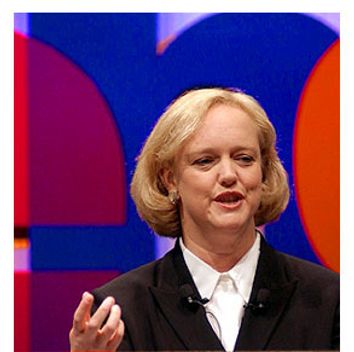
Meg Whitman

The CEO of eBay presides over a company worth more than four times as much as Kmart. Maybe there's something to this e-commerce thing after all.

  • more
    • All Share Services

Meg Whitman

When Meg Whitman took over as chief executive of eBay some three years ago, she set about her work with her usual mixture of know-how and curiosity. She knew she had to build the eBay brand. But she also listened to the auction site’s founders and conferred closely with them. Her style — collaborative yet decisive, serious but loose — set the tone for the company.

Sure, Amazon.com founder Jeff Bezos was Time magazine’s man of the year, and Tim Koogle was the new-media savant who made Yahoo the top Web portal, but Whitman was the old-fashioned, low-key manager. And the tortoise has beaten the hares. Yahoo has slipped from profitable to unprofitable, and Wall Street wonders if the never-profitable Amazon.com will survive. But eBay is doing fine; Wall Street complains that its stock is too expensive, but the company is worth more than four times as much as Kmart, and Whitman is leading it into its sixth very profitable year in a row.

Now, the down-to-earth Whitman is starting to get her due. Worth magazine named her No. 5 on its list of “best” CEOs. Fortune magazine ranked her the second most powerful woman in business, behind Hewlett-Packard chief Carly Fiorina and right ahead of Oprah Winfrey. All this, without the star-quality charisma of Fiorina or the electric energy of Amazon.com founder Jeff Bezos. Instead, Whitman still works in what amounts to a large cubicle, dresses casually and sometimes responds personally to customer e-mails. That’s despite owning more than $600 million worth of eBay stock.

While dot-com bubbles are bursting all over, Whitman runs an international e-commerce giant whose customers used eBay’s person-to-person auctions to sell $2.36 billion worth of Beanie Babies, baseball cards and other merchandise in the three months ended Sept. 30 (which means the eBay economy is larger than that of Iceland). Meg Whitman stands as the most successful Internet executive of all.

Although Whitman didn’t invent eBay, she did usher it from a start-up to a powerhouse. Since taking over as CEO in May 1998, she kept eBay focused on its core competencies. Any expansion was gradual and auction-related, from acquiring similar online-auction companies overseas to buying Half.com, a marketplace for selling used goods at set prices. She kept the company concentrated on what users would want, either as a permanent enhancement or a one-day special offering. From the start, she understood what makes the company tick. “What is really interesting about eBay,” she told one interviewer, “is that we provide the marketplace, but it is the users who build the company. They bring the product to the site, they merchandise the product and they distribute it once sold.”

Indeed, Wall Street observers claim that eBay runs so smoothly, it’s difficult to point to what management has done. Whitman’s contribution is, to some extent, taken for granted. Her lack of dot-com flamboyance shouldn’t obscure the fact that she’s always been driven — even in college she had the Wall Street Journal delivered to her Princeton dorm room. Her low-voltage but efficient style is precisely what makes Whitman a business executive worth praising.

Margaret C. Whitman took an offline route to her online triumph. Born in 1957, the Long Island native graduated from Princeton University in 1977, then got her MBA at Harvard in 1979. She started her career in brand management at Procter & Gamble, a sort of school for brands and a great breeding ground for future Internet executives, including America Online co-founder Steve Case. Whitman then worked for eight years at consulting firm Bain & Co. From 1989 to 1992, she was an executive at Walt Disney, where she opened the first Disney stores in Japan and learned the basics of how to make a business run smoothly. She then moved to shoemaker Stride Rite, where, among other accomplishments, she helped revive the Keds brand.

Whitman got her first real taste of the spotlight in 1995, when she joined Florists’ Transworld Delivery (FTD), initially as president and then as CEO. Whitman oversaw FTD’s conversion from a money-losing, florist-owned cooperative to a profitable private company, and she rejuvenated the FTD brand. But infighting at FTD frustrated her, and she left to head Hasbro’s Playskool division. About a year later, a headhunter approached her about a top job at eBay.

In an origin that’s worthy of its Web lore, eBay started in 1995 as a vehicle for founder Pierre Omidyar to help his then-girlfriend collect Pez dispensers. Omidyar’s site grew quickly. Its listings now include automobiles, antiques, real estate and computers, and some users even make their living selling on eBay. But in early 1998, the company was known as Auction Web and had about 20 employees.

And Whitman didn’t need the job. She was overseeing 600 Playskool employees, she had two sons and her husband, Griffith Harsh, was head of neurosurgery at Massachusetts General Hospital. As she told Business Week, she wasn’t interested — “I’m not thinking about living 3,000 miles across the country, uprooting my neurosurgeon husband, and taking my two boys out of school, to go to the West Coast for this no-name Internet company.”

The headhunter persisted, however, and Whitman agreed to meet Omidyar. Whitman is all about brands, and as she got to know the company, she realized that it had the makings of a great brand. And Whitman knew she was interested in the Internet — Amazon.com was already a well-known phenomenon, for example. So she joined and helped eBay go public four months later.

Whitman also set about making eBay more corporate. She created the company’s first national advertising strategy. She recruited executives from places such as PepsiCo. She pushed for stores and companies to sell on eBay, so now corporations such as Sun Microsystems sell millions of dollars worth of products a year via the site. She encouraged eBay to offer various specialty sites under the eBay umbrella — much the way FTD’s global Web site, under her watch, included individual florists’ shops under the FTD banner. Whitman also installed a trust and safety program, which offered insurance for buyers. In making the place more corporate, she made it more professional.

It’s true that much of the credit for eBay’s success must go to its business model. It’s an ingenious blend of yard sale, classified ad and auction. Have an old sailboat you want to get rid of? List it on eBay, accept bids for three or maybe five days, then sell it to the high bidder. eBay gets a small fee for listing the boat, then a tiny commission from the sale. The appeal extends beyond the guy down the street. None other than Warner Brothers used eBay to auction off an old sailboat, only in this case it was the boat featured in the film “The Perfect Storm,” and the price was $145,000.

The beauty of eBay’s model is that the company just facilitates the listings and the sales; it doesn’t have to make or transport any goods or carry any inventory. The users build the company, as Whitman said. As a result, eBay may collect as little as 6 percent on each sale, but most of that is profit. It’s truly the sort of business that couldn’t exist offline.

As wonderful as eBay’s business model may be, that didn’t guarantee a viable business. Whitman made the model work. She paid attention to that eBay community, allowing it to help guide the site and develop innovations like customized online storefronts. As Web traffic soared, eBay suffered several outages, including one that lasted more than 20 hours; Whitman’s staff responded by e-mailing and calling customers and refunding millions in fees. The eBay brand kept customers loyal.

That loyalty is crucial — the site’s newsletter boasts of how eBay brought people together and saved small businesses. “eBay is an outstanding example of loyalty,” said Bain & Co. consultant Frederick Reichheld, author of “Loyalty Rules!” He notes, for example, that eBay built a costly system to respond to customer e-mails within 24 hours. And thanks to this attention to building loyalty, more than half of eBay’s customers come by referrals from other customers. Whitman managed to expand the company without destroying its community, maintaining what she calls “the small-town feel on a global scale.”

Whitman’s moves haven’t always pleased all customers; she drew some flak, for instance, when she scaled back opportunities for users to post complaints on the site and when eBay held a charity auction that some called self-serving following the World Trade Center attacks. But Whitman kept most users in the fold as she moved the company forward. That allowed her to go after more big-ticket items. For example, in 1999, eBay acquired Butterfield & Butterfield, a traditional auction house that ranked a distant third behind Sotheby’s and Christies. The purchase threatened to turn off the little guys who had built eBay. However, it helped eBay later develop online auctions of fine art and rare collectibles.

Among Whitman’s key achievements was fending off the competition. As authors David Yoffie and Mary Kwak point out in their book “Judo Strategy,” Whitman was mindful of America Online, Amazon.com and Yahoo, because any one of these might have plunged into online auctions and crushed eBay early on. So when Whitman’s team deepened the company’s relationship with AOL to eventually make eBay AOL’s exclusive auction provider, it wasn’t just a great way to connect to AOL users — it also forestalled AOL from becoming a rival.

That bought eBay time, which was crucial because the site was building critical mass. The large customer base meant eBay was the place to sell; more sellers attracted more buyers; that attracted more sellers; and so on. eBay achieved what business pundits call “The Network Effect”: the network becomes more valuable to its users simply by adding more users. The Internet is the perfect example of this, but eBay may be a close second.

Yahoo threatened the company in late 1998 by offering free auctions. But eBay didn’t drop its costs. Whitman and her team discovered that eBay’s small fees discouraged people from listing any old junk, so it provided a measure of quality control that Yahoo didn’t have. By the time Amazon.com tried auctions in 1999, eBay already had a solid lead. To Whitman, Amazon.com’s only advantage was its prodigious credit-card processing capabilities. So later that year, Whitman decided to buy Billpoint, an online system that allows payments by e-mail.

Although eBay has been under the gun for years, Whitman remains a steady presence. Colleagues describe her as consistently upbeat. It seems she draws strength from her other passion, her family. Fortunately, her husband now works at nearby Stanford University Medical Center. She likes to escape to his family farm in Sweetwater, Tenn. She goes fly-fishing a few times a year — and yes, she’s bought fly-fishing equipment on eBay. That’s in addition to the Beanie Babies, Pokemon cards and even a car that she purchased there.

Whitman may be calm, but she’s ambitious. So even as she moves quickly to defend her company’s turf, she’s also looking to broaden it. For example, she wants to expand eBay overseas; just this year she bought iBazar (which has online auction sites in eight European countries) and made moves in New Zealand, Korea and other countries.

Still, she eschews top-down command tactics that assume she knows everything. Instead, she remains open to opportunities. For example, customers gravitated toward the fixed-price sales of Half.com, as opposed to auction sales. So Whitman championed fixed-price sales on the site, and those may one day put eBay on top of Amazon as the Web’s biggest retailer.

Even eBay isn’t immune to hubris. Whitman says eBay aims to more than triple its annual revenue to $3 billion by 2005, and Wall Street considers that implausible. Yet in her professional hands, that claim isn’t so much a dot-com boast but a CEO setting the bar high for her team. So let others try to revolutionize media or make bookstores obsolete, while Whitman keeps her eye on the bottom line. Because in the long run, Meg Whitman’s success reminds people that this e-commerce thing may just work after all.

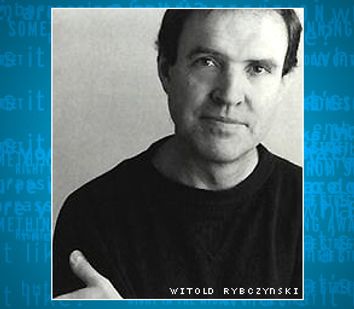
A conversation with Witold Rybczynski

The author of "A Clearing in the Distance" talks about Central Park, mechanical genius and the beauty of the screw.

  • more
    • All Share Services

A conversation with Witold Rybczynski

Working with your hands is fast becoming a lost art, unless you count the clickety-clack choreography of mouse and keyboard. Among those who understand this is Witold Rybczynski, the author, essayist and expert in architecture, design and urbanism. As recently as the 18th century, he’s observed, aristocrats with time on their hands relaxed by working with lathes — cutting and shaping machines that rotated the piece to be shaped. Nowadays, of course, we have hot tubs and video games.

Rybczynski, a professor at the University of Pennsylvania, has varied yet inherently related interests that have encompassed books on building a house by hand, the design of cities, the urge to control new technology and “Home,” his exposition on the notion of home. His best-known book is 1999′s “A Clearing in the Distance,” an acclaimed biography of Frederick Law Olmsted, the pioneering landscape architect who created Central Park. Running through all of Rybczynski’s books is the nearly alchemical meeting of idea and tangible form.

Which brings us to his new book, “One Good Turn: A Natural History of the Screwdriver and the Screw,” a slim volume that grew out of an assignment to write an essay about the best tool of the millennium for the New York Times Magazine. As the book recounts, Rybczynski tackles the project only to discover that the handsaw, the brace and most other tools were developed long before the year 1000. Finally, on a suggestion from his wife (“I’ve always had a screwdriver in the kitchen drawer”), he settles on the screwdriver; he traces its origins to the 1400s, when “high tech” meant a new kind of armor. The narrative gathers momentum when he focuses on the screw, which he hails as a true marvel of invention, dating from classical Greece. As the book makes clear, Rybczynski is no nostalgia nut or Luddite, just someone who lives in the present but appreciates the past.

It seems you were more intrigued by the screw than the screwdriver.

The screwdriver turns out to be not that interesting. The first screwdriver could very well have been a penny or a bit on a carpenter’s brace. There’s nothing really difficult about the screwdriver compared to the screw, which is actually extremely complicated and sophisticated. I would say, once you’ve got the screw, the screwdriver is one of those things that are almost automatic.

The first screws most likely had square heads and were just tightened with wrenches. Once you want to countersink a screw, a notch is the simplest way: Just file a notch into the top of the screw. Then the screwdriver is obvious.

Why turn this into a book?

Most people think of “Home” as my first book, whereas I had written two books before that, both of which deal with the subject of technology. So in a way I was returning to something that started me writing, which was technology.

What’s the larger theme of this book, beyond screws?

I prefer to discover a theme while writing, rather than to write a book to make a point. In this book, I think there are several themes, because I knew that it had to go somewhere else than simply be about screws and everything you ever wanted to know about screws. It turned partly into a book about writing. It isn’t so much the writing that I like, but I really enjoy going to libraries and looking for things. That’s just fun. Rooting around stacks of a library and searching for things — even finding the right book for me is a pleasure. But it’s not something I’ve ever written about. So in this book, I made that whole phase of research part of the story. As I was writing, I realized that there were two types of discovery: There was the discovery I was writing about, which was people improving various devices and solving problems; but there was also the process of discovery of my own.

The process and the type of people who make these kinds of discoveries seem to me interesting, and that became a part of the book. That is as close as it comes to a message, because I think the process of mechanical discovery isn’t appreciated. We think of artistic genius and we have no trouble imagining an artistic genius. But we don’t really think of mechanical genius, and I think, particularly today, mechanical genius in a way has almost disappeared.

Your book dwells on this idea of “mechanical genius,” especially in the development of the regulating screw, the refined screw used in sextants, microscopes and other precision instruments. Of Henry Maudslay, who revolutionized regulating screws and lathes in the early 1800s, you write: “Just as some people have a natural aptitude for chess or playing violin, Maudslay could shape metal with a dexterity and precision that amazed his contemporaries.”

Today, we sort of assume that if you have an idea, making it is almost automatic. We’re very cerebral, and I think a lot of that has to do with designing software, which at one level is kind of dumb — it’s all digital, it’s zeroes and ones. So it’s a highly cerebral process in that you don’t actually make anything. As I understand it you basically solder things together. I think somebody, somewhere, must make something, but since everything is made by machine, this idea that you need skill to make it or that making it is actually a huge achievement is probably less important today than it was. In the past, to actually make the screw was a huge achievement, because you had to make it by hand. That sort of mechanical genius, which arguably is less important today, became part of the book because it’s an aspect of genius that isn’t appreciated or understood.

How has the idea of “tool” changed?

Literally, mechanical things aren’t that important anymore. Most of them are made by other machines, which achieve enormous levels of accuracy and precision. And so the idea that you need this skill to make something doesn’t really apply much anymore in most devices. It’s the idea that’s important rather than the mechanical aptitude needed to realize the idea — that’s almost taken for granted.

When did machines start to make machines?

It’s very particular, this moment in the Industrial Revolution when people start making machines, particularly lathes with regulating screws. Because once you’ve got these lathes, then they can make other lathes, and you’re off and running. But it’s a chicken-and-egg thing at first: How do you make a machine that’s as good as a lathe when you don’t have a lathe to begin with? That’s the great achievement of people like Maudslay. And once you’ve gotten over that hurdle, you can make machines that can then make better machines. It really is a biological process. And from then on, anybody can make accurate machines. Where the screw really plays a central role is probably a unique moment — by definition it doesn’t reoccur.

You started “One Good Turn” while taking a break from writing your biography of Frederick Law Olmsted. What was the most compelling aspect of Olmsted’s life?

Perhaps his fearlessness, the way in which he would undertake things without enormous training. And this is not unique to Olmsted. I think it was a common characteristic of the 19th century, which wasn’t an age of specialists. You can see this at a number of points in his life, even when he’s offered a job as a reporter and he’s never really done any journalism at all. But he accepts it and immediately goes south and spends months traveling around and writing. He could plunge into things, and he generally succeeded.

Olmsted went from being a writer to being an architect, while you went from being an architect to being a writer. Did that create a personal connection?

It did when I was writing the book. I think any biographer identifies with the subject because there has to be some reason you chose this person to write about. In this case, Olmsted did come to his calling late. And I certainly identify with that because I didn’t start writing seriously until I was about the same age — early 40s.

And I think his curiosity is something I identify with. Let me put it this way: People often write about Olmsted and look at his early life and see that as somehow being odd or unconnected from his great achievements. Whereas I think I could sympathize with his curiosity and the various things he was trying. It didn’t seem to me so odd that he had all these interests. Also, it seemed to me that they were a part of his later success.

Well, anyone would consider Central Park a success, even though it was the first park he designed.

The other thing that’s impressive about Olmsted, specifically in things like Central Park, is his foresight and the accuracy of his predictions. He’s building these very large parks, which are out of scale with the needs of the time, but he’s looking ahead and seeing that the city’s going to grow around them and they’re really going to be necessary. When we enjoy and use these places that he designed a hundred years before, we don’t think of them as antiques. We think of them as quite contemporary. And more or less, they affect us in the ways they were designed to.

Olmsted already belongs to an age where the ideas are more important than their execution. Is it possible to say whether this primacy of ideas is good or bad?

I don’t think so. The only extent to which it’s a bad thing is when we’ve come to take for granted all these things, and then we’re shocked if something mechanically doesn’t work, because most of the time it does work. So it removes us a little bit from the reality of things. It’s probably why people take up things like woodworking and gardening — it gives you an opportunity to work with your hands and use skills you probably don’t need in everyday life. So you can make up for it artificially.

But it’s maybe slightly a bad thing in that it distances us from our environment. Although that’s been going on so long, since the Industrial Revolution. The average worker had no idea how those lathes worked. So it was pretty early that machines became so complex that the craftsman didn’t exercise personal control anymore.

Is this exacerbated in what has come to be called the “Information Age”?

Well, sometimes I think the media overemphasizes the importance of information. I suspect it’s not quite as important as we think. The people who make the tires, for example, turn out to be very important, and they’re still actually a much bigger part of the economy than the information economy. And, for that matter, so are people who build the computers. The nuts-and-bolts aspect of things gets pushed too much into the background.

Continue Reading Close