Matt Singer

What would Superman wear

At a charity benefit, fashion designers dress and create their own superheroes

  • more
    • All Share Services

What would Superman wear SEMIPRECIOUS by Renata Morales(Credit: George Fok)
This article originally appeared on Imprint.

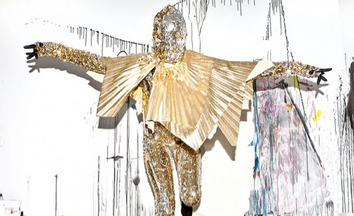
ImprintThe Brooklyn Superhero Supply Co. presented its Spring 2012 Collection on Monday, Oct. 24 at the Ace Hotel.

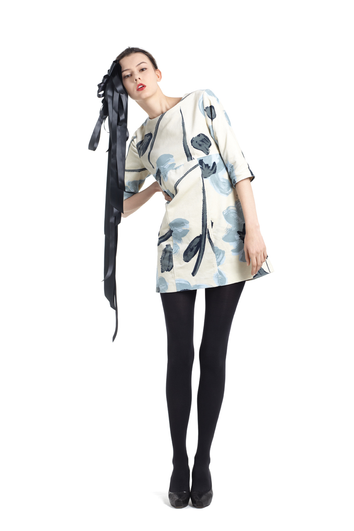
The evening was a benefit for 826NYC and featured a collection of original and one-of-a-kind crime-fighting attire for superheroes created by various designers — Opening Ceremony, Christian Joy, Renata Morales, Chromat Garments, Matt Singer, Complex Geometries, United Bamboo and others.

All proceeds from the evening went to benefit 826NYC, allowing them to continue to help students complete their homework, get into college, improve their writing skills, rediscover themselves as artists/authors/filmmakers/musicians, and collaborate with a community of volunteers who care about their success.

826NYC asked the designers to provide their superheroes with names and a brief description of their superpowers and abilities. 826NYC also had some of the children who frequent the writing center provide their thoughts on these new superhero creations; the descriptions were read aloud as the costumes were auctioned off.

SEMIPRECIOUS by Renata Morales
“What the cow? What the — What’s this? It looks like a ghost zombie. ” (Ivan, 7 years old)

KRYPTONIAN CASUAL from Complex Geometries
“Maybe this is a superhero that would control the snow and lightning. She would wear this dress with silver gloves. She was born in the snow as a normal baby. And then she was bitten by a piranha, which gave her water powers. The thunder powers she got from getting struck by lightning when she was just a day old.” (Tarryn, 8 years old)

MAGNITITA! by Christian Joy
“It’s a magnet guy or girl. It looks like a girl, and she has magnet hands and a suitcase. If there’s metal, she can stick it on her face with the magnet. And then she would go throw it on people. I don’t know how she takes things off her face. Maybe her face is only a magnet, but her hands can be magnets and regular hands. Because if she was all magnets, she would have nothing to take it off with.” (Heerang, 6 years old)

CAT SAMURAI by United Bamboo
“With a samurai, people would get stuck with the pointy end, and then they would get hurt. It should be like a knight with the horse and those sticks. They could put the shield in front of the sun, and then it would bounce off it and will go on the person, and the person would blink their eyes like crazy.” (Heerang, 6 years old)

826NYC is a free writing center for students ages 6-18 in Brooklyn, N.Y., and is located behind a swinging bookshelf at the back of a superhero supply store. For more information on them visit 372 Fifth Avenue, or online at www.826nyc.org.

KRYPTONIAN CASUAL by Complex Geometries

MAGNITITA! by Christian Joy

AGNITITA! by Christian Joy

SAMURAI CAT by United Bamboo

SEMIPRECIOUS by Renata Morales

SEMIPRECIOUS by Renata Morales

Copyright F+W Media Inc. 2011.


Salon is proud to feature content from Imprint, the fastest-growing design community on the web. Brought to you by Print magazine, America’s oldest and most trusted design voice, Imprint features some of the biggest names in the industry covering visual culture from every angle. Imprint advances and expands the design conversation, providing fresh daily content to the community (and now to salon.com!), sparking conversation, competition, criticism, and passion among its members.

How a print becomes a dress

An artist talks about collaborating with fashion designers and how growing up in Mexico shaped her color palette

  • more
    • All Share Services

How a print becomes a dress

The artist Paulina Reyes has completed a series of striking prints that have been interpreted by the designers Whitney Pozgay for her winter and spring collections and Harvey Faircloth for its spring collection.

Reyes’ work contains a playfulness that allows her designs to achieve an intimacy with her audience that helps transcend the object. George Bellows once said, “The artist is the person who makes life more interesting or beautiful, more understandable or mysterious, or probably, in the best sense, more wonderful.” I think Reyes’ designs do just that, they take packaging designs or graphic solutions and make the world around them a bit more interesting and beautiful.

I met with Paulina and asked her about her creative process.

Can you describe the process of working with a fashion designer versus working on beauty packaging? Do you think there is more or less creative freedom involved?

The packaging projects I’ve worked on have been intended for very large audiences, so there are a lot of limitations that have to be kept in mind, such as dimension, the projection on shelf, the cost of goods, making the design resonate with the target market, etc. I enjoy these large-scale projects, as I get to work with a lot of people with different points of views and it’s always exciting to see how far you can push a brand. You also tend to have larger budgets to work with and the opportunity to tool new components in different materials. I like working on large-scale projects where one vision can be translated to different elements, from the shape of a perfume bottle to the shape of the outer packaging, the graphic design, and in some cases illustration as well as advertising.

The textile design projects I’ve worked on tend to be smaller in nature, so they feel more like intimate collaborations. I have been lucky to get to work with close friends whose work I really admire and who in turn are familiar with my personal work. The process is very intuitive and collaborative, and the restrictions are usually just the inspiration/ideas they have for the season.

Ideally I like mixing up the types of projects I work on, as they are satisfying in different ways.

(See designer Rose Apodaca discussing working on her own and the exchange that comes from discussing the process with others here.)

Are you provided with inspiration imagery for the season’s collection, then left to interpret the designer’s direction into a print?

I always like to get as much material as possible before starting any project. I will invite the designer to my studio to chat, look at my work, and to bring any inspiration they might have for the season. It can be swipe[d] (the inspiration images of Hans Silvester also lends itself to the work of tattoo artist Tomas Tomas) — color swatches as well as other prints and shapes they are developing. I like to make sure the print I work on will relate to the collection at large as well as contrast with the other pieces.

I will then paint a few (or a lot) of options and send them over to get feedback. I treat all my sketches as final art as I’m working on them and cleaning up the files (I like artwork that feels loose and raw, but at the same time carefully executed). Most of the time we’ll go through various rounds before we hit a spot that we are all happy with. The process is a discovery. You can have something in mind that will not be as great when you execute it, so it’s important for me to treat my work as an open dialogue. Not to be so certain where the conversation will go.

When creating artwork that will eventually become a dress or a blouse, is the process different for you? Are there technical considerations that come into play with textiles?

My prints tend to be used for different pieces. I initially get the intended use from the designer and go from there, but in general I try to stay loose. As far as technical considerations, I have conversations about whether the designer is looking for a very flat execution (like WHIT’s spring prints) or a more painterly one like the print I did for Harvey Faircloth. The way I would execute them is fairly different, so it helps me to get started. Sometimes I will plan for a print to be in color and in the process realize it looks better in black and white. I am very open to this type of accident.

I really loved the banner illustration you did for the AIGA outdoor exhibition in Times Square. It had such a positive energy about it, do you think growing up in Mexico affects how you see design?

I think growing up in Mexico has definitely prevented me from having any fear of color and instead develop quite a passionate love for it. I also think my love for craft has a lot to do with being from a culture with such a rich artisanal background, with multiple crafts (textiles, ceramics, jewelry, weaving, etc.) executed with exceptional techniques and designed with true intuition.

Credits for the above images, from top to bottom:

1. AIGA Urban Forest banner. 2. Sketch for WHIT print, Spring 2011. 3. Final WHIT print, Spring 2011. 4. Inspiration for WHIT print, Spring 2011. 5. Inspiration for WHIT print, Spring 2011. 6. Harvey Faircloth Spring 2010 original print. 7. Harvey Faircloth Spring 2010 print. 8. Harvey Faircloth Spring 2010 print. 9. Sketch for WHIT print, Spring 2011. 10. WHIT print, Spring 2011. 11. Sketch for WHIT print, Winter 2010. 12. WHIT print, Winter 2010.

Copyright F+W Media Inc. 2011.

Salon is proud to feature content from Imprint, the fastest-growing design community on the Web. Brought to you by Print magazine, America’s oldest and most trusted design voice, Imprint features some of the biggest names in the industry covering visual culture from every angle. Imprint advances and expands the design conversation, providing fresh daily content to the community (and now to Salon.com!), sparking conversation, competition, criticism, and passion among its members.

Continue Reading Close

Can candy bars be pop art?

A creative couple finds inspiration for chocolate designs in skate decks, ice cream and fine art

  • more
    • All Share Services

Can candy bars be pop art?

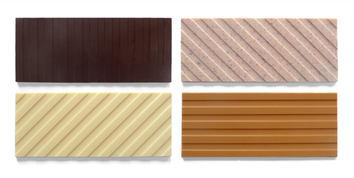
Mary Matson and Matt Even are the creative duo behind Chocolate Editions, the sweets and chocolate company the two formed in 2009. Chocolate Editions began as a celebration of the candy bar as a perfect pop object. Launched from their home kitchen as gifts for friends and family, it quickly grew into a full line that draws its inspiration from a surprisingly eclectic array of sources — from Tony Alva skate decks and Neapolitan ice cream to works by Kermit Oliver, Chermayeff & Geismar, and Sol LeWitt.


Image courtesy of Mary & Matt


Image courtesy of Mary & Matt


Wall Painting by Sol LeWitt. Photo by Kevin Kennefick for massmoca.com


Image courtesy of Mary & Matt


Image courtesy of Mary & Matt


David Hockney, Art Car, 1995, BMW 850. Image courtesy of wallpaper.com

.

Image courtesy of Mary & Matt


Under the banner Mary & Matt, the two also publish a blog (maryandmatt.net) that chronicles their design influences, inspirations, obsessions, collections and good humor. The blog is the perfect accompaniment to their business, providing an engaging window into the music, culture and designs that shape their wonderfully artful candies.

Copyright F+W Media Inc., 2011.

Salon is proud to feature content from Imprint, the fastest-growing design community on the web. Brought to you by Print magazine, America’s oldest and most trusted design voice, Imprint features some of the biggest names in the industry covering visual culture from every angle. Imprint advances and expands the design conversation, providing fresh daily content to the community (and now to Salon.com!), sparking conversation, competition, criticism and passion among its members.

Continue Reading Close