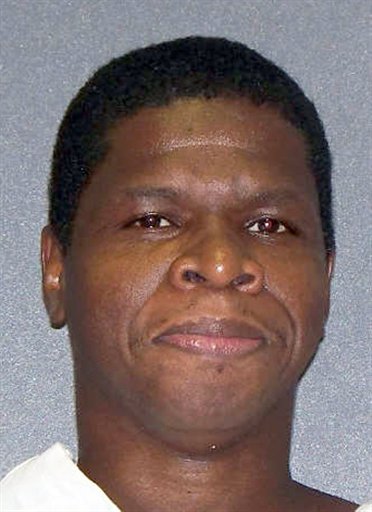
Michael Graczyk

Houston lawyer on quest to find missing moon rocks

  • more
    • All Share Services

Houston lawyer on quest to find missing moon rocksThis April 23, 2012, photo shows a piece of rock that Rafael Navarro, a former Colombian toy manufacturer, contends came from the moon, in Buffalo, Texas. Navarro has placed rock fragments in the accompanying small plastic box for sale on eBay and is seeking $300,000 for them. Joe Gutheinz, a former investigator for NASA who practices law outside Houston, is investigating this claim as he hunts for moon rocks, now-missing samples collected by the dozen American astronauts who walked on the lunar surface between 1969 and 1972. (AP Photo/Michael Graczyk)(Credit: AP)

BUFFALO, Texas (AP) — The dark suit and tie that Joe Gutheinz wore set him apart from other customers inside an eatery between Houston and Texas where the usual attire is jeans and cowboy hats.

An appetite for down-home cooking wasn’t what brought the former NASA investigator to the Pitt Grill recently. He was on a quest to identify and maybe recover some of the rarest treasure brought to Earth and then lost: moon rocks.

“We’re educating the states and countries of the world about how much they’re worth on the black market and we need to increase the security in museums and need to put them back on display,” Gutheinz said.

The rock samples were collected by the dozen American astronauts who walked on the lunar surface between 1969 and 1972. U.S. states, territories, the United Nations and foreign governments received them as gifts. The samples, which also were loaned to museums and given to scientists for research, range from dust particles to tiny pebbles.

“A lot of them are in storage. And we need to put them in an inventory control system. And that’s what’s really lacking,” said Gutheinz, a Houston lawyer who also teaches college classes in investigative techniques.

At the Pit Grill in Buffalo, Texas, Gutheinz was meeting a former toy manufacturer from Colombia who contends his piece of the moon is from the more than 48 pounds of material collected in 1969 by Apollo 11 astronauts Neil Armstrong and Buzz Aldrin on the first manned lunar landing mission.

Rafael Navarro’s asking price on eBay for dust scraped from his rock is $300,000. The dust weighs 0.03 grams, roughly the same as a grain of rice.

“Bottom line is, from a common sense perspective, this is a train wreck waiting to happen for him and he’s inviting it,” Gutheinz said. “He’s opening the jail cell door and walking through it. I wish him well but he’s really defying everybody by doing this.”

Navarro, 67, said he didn’t fear possible fallout from illegally possessing what could be federal government property or risking fraud charges for selling something as a moon rock when it may not be.

“NASA can’t prove they ever had this moon rock,” he said.

That part may be true.

The fact that something purporting to be a moon rock even shows up on eBay illustrates the greater problem of no one keeping proper track of the gifted and loaned rocks and the fate of many being unknown.

NASA, which keeps its collection of rocks at Johnson Space Center in Houston and a facility in New Mexico, has confirmed the lack of oversight and promised to tighten controls, concurring with a critical audit report last December from its own Office of Inspector General, where Gutheinz worked as a senior agent. He left NASA in 2000 after 10 years.

“From time to time, I get a call from somebody that has a moon rock and his father or her father died and was a scientist,” Gutheinz said. “And they ask, ‘What do I do with it?’ I tell them, ‘Give it back to NASA.’ That’s a real problem.”

In the days of the Apollo space program, the idea of not returning to the moon again and again wasn’t a concern. So it was believed that more and more rock samples would come, too.

But it’s been 40 years since astronaut-geologist Harrison Schmitt and Apollo 17 mission commander Gene Cernan in 1972 became the last men to walk on the moon. The total amount of collected lunar materials has amounted to 842 pounds, including 2,196 individual rock, soil and core samples. Those subsequently have been split into about 140,000 subsamples, according to NASA.

Gutheinz was responsible for the 1998 “Operation Lunar Eclipse” sting at NASA and intercepted a $5 million sale of a moon rock President Richard Nixon gave to the government of Honduras after the last Apollo mission.

Of the 270 moon rocks given to nations around the world as gifts, Gutheinz said 160 are unaccounted for, stolen or lost. Another 18 moon rocks from Apollo 11 and six from Apollo 17, gifted to U.S. states, also are unaccounted for or missing.

Gutheinz and students from his classes are responsible for directly or indirectly recovering 79 moon rocks since 2002, including lunar rocks presented to several governors.

A retired dentist had the West Virginia rock, which Sandy Shelton, one of Gutheinz’s former students, tracked down. “I am very pleased that I was able to give back to West Virginia what was rightfully theirs, and to know that the young generation will have a piece of history to look at from the moon,” said Shelton, who lives in Minneapolis.

Bill Clinton’s gubernatorial items yielded the Arkansas moon rock. The Alaska rock is now part of a court battle. The Missouri rock was found among boxes of things when former Gov. Kit Bond retired from the U.S. Senate.

The late Libyan dictator Moammar Gadhafi’s U.S. moon rock remains lost. But there’s evidence a grandson of the late Spanish dictator Francisco Franco has tried to sell his grandfather’s U.S. gift in Switzerland.

A few lunch customers at the Pitt Grill looked up curiously from their chicken fried steaks as Navarro set up a microscope for Gutheinz to inspect his prized possession: a pointy, black metallic pebble an inch or so tall and its crumbs.

The scrapings are from the rock that Navarro carries in his pants pocket, wrapped like a tamale in plastic food wrap and aluminum foil. He said he got the rock from a maid, now elderly and in failing health, who worked for a Venezuelan diplomat who told people it was a moon rock.

“No way NASA can say the rock is not,” he said, showing letters from NASA experts who told him a few years ago it wasn’t from the moon.

Gutheinz said Navarro reminded him of others who claim to possess a moon rock.

“But the difference is they hide it,” Gutheinz said. “They squirrel it away and they don’t want anybody to know they have it.”

Nurse in Afghanistan dies in Skype chat with wife

  • more
    • All Share Services

Nurse in Afghanistan dies in Skype chat with wifeThis undated photo provided by the U.S. Army shows Capt. Bruce Kevin Clark. The family Clark, a Texas-based Army medic serving in Afghanistan, says Clark's wife witnessed the officer's death, which happened Monday, April 30, 2012 as the two were video chatting via Skype. (AP Photo/U.S. Army)(Credit: AP)

HOUSTON (AP) — The wife of an Army officer serving in Afghanistan witnessed her husband’s death as the two video chatted via Skype, his family said Friday.

The circumstances of Capt. Bruce Kevin Clark’s death were not immediately available. The Pentagon said it was under investigation, and his brother-in-law said he didn’t have details.

“We are entrusting the military with investigating and with finding out what happened to Capt. Clark,” Bradley Taber-Thomas told The Associated Press.

Clark, a 43-year-old Army chief nurse, grew up in Michigan and lived previously in Spencerport, N.Y., a suburb of Rochester and his wife’s hometown. He joined the Army in 2006 and was stationed in Hawaii before he was assigned to the William Beaumont Army Medical Center in El Paso. He deployed to Afghanistan in March.

A statement from the family released by Taber-Thomas said Clark died Monday while talking to his wife during one of their regular Skype sessions.

“At the time of the incident, the family was hoping for a rescue and miracle, but later learned that it was not to be,” the statement said. “Although the circumstances were unimaginable, Bruce’s wife and extended family will be forever thankful that he and his wife were together in his last moments.”

Clark’s body was returned Thursday to Dover Air Force Base.

A funeral is planned in Spencerport, but details were not immediately available. Clark and his wife, Susan Orellana-Clark, moved there in 2000. While living there, he worked for about four years at Highland Hospital in Rochester, N.Y., first as an operating room assistant then operating room technician.

“He was a friendly guy, always joking, always picking on me because of my (British) accent,” said Ellie Villanueva, a nurse who worked with Clark at the hospital and kept in touch with him after he left. They spoke a few days before his death, and he talked about coming for a visit. “After work, we would all go out. It was like a family. He was my son.”

Clark was an EMT before he worked at the hospital. He went on to earn his nursing degree and planned to become a certified registered nurse anesthetist, Villanueva said.

“He was always willing and always wanting to better himself,” she said.

Military records show Clark finished his nursing degree before joining the military in 2006.

He received a number of awards and decorations for his service.

“When you were in Bruce’s presence it was apparent he served a higher purpose,” the family’s statement said. “He was deeply honored to serve his country, and he paid the ultimate sacrifice to serve people, his children, family, community, and church.”

A memorial service also was planned in Addison, Mich., where Clark graduated from high school.

Villanueva said the delay in releasing the cause of Clark’s death was difficult on those who knew him.

“Why is it taking so long? It’s odd,” she said. “It’s a real shame.”

Clark is survived by his wife and two daughters, age 3 and 9, he said.

___

AP writers Chris Carola in Albany, N.Y., and Carolyn Thompson in Buffalo, N.Y., contributed to this report.

Continue Reading Close

Texas to kill man convicted in chopper-theft death

  • more
    • All Share Services

HUNTSVILLE, Texas (AP) — A Texas man convicted of murdering a neighbor while on parole for rape is hoping for a last-minute reprieve.

Anthony Bartee is slated to die by lethal injection Wednesday evening for the 1996 killing of David Cook.

Prosecutors say Bartee stabbed and shot Cook at Cook’s home because he wanted the man’s cherry red Harley Davidson motorcycle.

The 55-year-old Bartee has an appeal pending with the U.S. Supreme Court in which his lawyers say he’s innocent and ask for further DNA testing of crime scene evidence. His lawyers also filed a federal civil rights lawsuit in San Antonio on Wednesday over the same issues.

Texas man executed for role in robbery-shooting

  • more
    • All Share Services

HUNTSVILLE, Texas (AP) — A Texas man was executed Thursday for his role in a 2002 robbery in which three people were shot, one fatally.

The lethal injection of Beunka Adams, 29, was carried out less than three hours after the U.S. Supreme Court rejected a last-day appeal to postpone the punishment, the fifth this year in Texas.

Adams expressed love to his family and apologized to witnesses, including one of the women who survived the attack and relatives of the man who was killed.

He said he was a stupid kid in a man’s body at the time of the crime.

“I’m very sorry. Everything that happened that night was wrong,” Adams said. “If I could take it back, I would. Not a day goes by I wish I could take it back. … I messed up and can’t take that back.”

He asked those gathered to not let any hate they had for him “eat you up.”

“Find a way to get past … I really hate things turned out the way they did. For everybody involved, I don’t think any good came out of it.”

Adams took about a dozen breaths, then began wheezing and snoring. Eventually, he became still. He was pronounced dead at 6:25 p.m. CDT, nine minutes after the lethal drugs began to flow into his body.

His attorneys had asked the nation’s highest court to halt the execution, review his case and let him pursue appeals claiming he had deficient legal help at his trial and during earlier stages of his appeals.

He won a reprieve from a federal district judge earlier this week, but the Texas attorney general’s office appealed the ruling, and the 5th U.S. Circuit Court of Appeals reinstated the death warrant Wednesday.

Adams was one of two East Texas men sent to death row for the slaying of Kenneth Vandever, 37. He was in a convenience store on Sept. 2, 2002, in Rusk, about 115 miles southeast of Dallas, when two men wearing masks and carrying a shotgun walked in and announced a holdup.

After robbing the store, Adams and Richard Cobb drove off with the two female clerks and Vandever in a car belonging to one of the women.

Testimony at Adams’ trial showed he gave the orders during the holdup and initiated the abductions. They drove to a remote area about 10 miles away in Cherokee County, where Adams demanded Vandever and one woman get into the trunk of the car and then raped the other woman. Testimony also showed he forced all three to kneel as they were shot.

Vandever was fatally wounded. The women were kicked and shot again before Cobb and Adams, believing they were dead, fled. Both were alive, however, and one was able to run to a house to summon help.

Adams and Cobb were arrested several hours later in Jacksonville, about 25 miles to the north. Adams was identifiable because he had slipped off his mask after one of the women said she thought she knew him.

Continue Reading Close

Texas A&M Cadets to be led by 1st black commander

  • more
    • All Share Services

Texas A&M Cadets to be led by 1st black commanderTexas A&M junior Marquis Alexander poses for a photograph by the Corps Arches, the entry point to the Corps of Cadets residence halls, on the A&M campus, Wednesday, April 11, 2012, in College Station, Texas. Alexander has been appointed to Corps Commander, the top leadership position for the A&M Corps of Cadets, for the next year. (AP Photo/Dave Einsel)(Credit: AP)

COLLEGE STATION, Texas (AP) — Nearly a half-century after African-Americans were admitted to predominantly white Texas A&M University, a black student has finally reached the pinnacle of one of its signature organizations.

Marquis Alexander next school year will become commander of A&M’s Corps of Cadets, a high-profile post that involves establishing the cadets’ dress codes for their military-style uniforms and setting their daily schedule, including physical training that can begin before dawn.

“I’m not going to lie. There is a sense of pride that’s there,” Alexander, 22, said Wednesday, standing in front of the “Corps Arches,” an arched brick wall that marks the entrance to the dormitory area for the 2,100 members of the Aggie Corps of Cadets. “I look at it as encouragement to other people to get out and do whatever they want no matter what their background is.”

Texas A&M is about 100 miles northwest of Houston where Alexander, the oldest of 10 children in his family and the first to go to college, grew up and attended high school. Despite recruiting efforts by the school, Houston’s inner-city areas typically don’t produce future Aggies, and black students represent less than 4 percent of the 40,000 undergraduate students at the College Station campus.

“A lot of people from that part of town don’t come here,” said Alexander, who already spent a year and a half in the Marine reserves before enrolling at Texas A&M in 2009. “Everyone has their views and I knew what I was coming into when I came here, but it’s been very positive.”

The corps’ racial makeup largely reflects the university, but Alexander suspects that will eventually change.

“We’re working on that,” he said. “We’re growing steadily. I can serve as a testament.”

His first exposure to A&M was during a high school visit. The Corps of Cadets was his group’s first stop and where he got his first “Howdy,” a greeting so synonymous with the school that people who enter an elevator at A&M’s Rudder Tower get an automated “Howdy” over a speaker.

When his acceptance letter from A&M, the only school to which he applied, didn’t arrive promptly, he signed up for the Marine reserves. The acceptance note eventually came but too late to renege on his Marine commitment. A year and a half later, he enrolled.

His continuing duty as a reservist, where he’s a corporal, also makes him the first person with actual military experience to head the corps, whose graduates are outnumbered only by the nation’s military academies in the amount of men and women who head from college to the armed forces. In A&M’s case, however, membership in the corps doesn’t require graduates to join the military, although nearly half do.

He acknowledges becoming the “face of the university” and he hopes to participate in efforts to encourage people from areas like his at home to make something positive of their lives.

“Coming out of that area, you don’t see a lot of success stories,” Alexander said. “There’s not a lot of role models for that particular area. What you see is this guy living on the street or this guy selling drugs or this guy going to go to prison. Things like that. I hope to serve as a beacon of hope that: Hey, you can do this too.”

A number of cadets applied for the commander position for the 2012-13 school year, then underwent scrutiny that included a five-minute presentation before an 11-member panel that included school officials, the reigning corps leadership and the Corps commandant, retired Brig. Gen. Joe Martinez.

“This is a young man who has all the right qualities,” Martinez said. “You can see has a level of maturity that’s probably not common among the cadets of that same age. He brings a command presence, leadership ability. He’s comfortable speaking. … He looks the part of a leader.”

Texas A&M opened its doors in 1876. Blacks and women weren’t allowed until 87 years later. The first African-Americans joined the corps in 1964. The first women cadets came a decade later. By contrast, rival University of Texas was racially integrated in 1950.

In A&M’s centennial year, Fred McClure won election as body president, making him the first black student to assume the post that’s considered a campus equal to corps commander and Aggie yell leader, a position once held by Gov. Rick Perry. McClure estimated that in 1976, only about 250 black students were at the school.

“I think he and I share the same passion for Texas A&M,” McClure said, referring to Alexander. “It just so happens that we happen to share the same skin color. That’s pretty cool too.”

Albert Broussard, an African-American history professor, said Alexander’s achievement was “an important event but largely symbolic.”

“I don’t want to minimize the importance of this event, but I would not refer to this as a turning point,” he said. “Turning a new page in the long history of this university … would be more appropriate.”

Alexander, who hopes for a career as a military lawyer or intelligence work, said he wasn’t even aware he was the first black cadet commander until someone told him.

“I don’t know why it’s taken so long,” he said. “But I know the corps’ process is that they will always put the best people in the spot. I can honestly say my race didn’t play a factor. I hope it’s because I was legitimately the best person for the job.”

Continue Reading Close

Ex-nurse convicted of bleach killings awaits fate

  • more
    • All Share Services

Ex-nurse convicted of bleach killings awaits fateFILE - In this March 30, 2012 file photo, convicted murderer Kimberly Saenz, right, is escorted from the Angelina County Courthouse in Lufkin, Texas. Jurors who convicted 38-year-old East Texas nurse began hearing evidence Monday, April 2, 2012, to decide whether she receives life in prison without the chance of parole or lethal injection. (AP Photo/The Lufkin Daily News, Joel Andrews, File) MANDATORY CREDIT. TV OUT(Credit: AP)

LUFKIN, Texas (AP) — A jury has started deliberating whether a former Texas nurse should go on death row or serve a life sentence for fatally injecting five kidney dialysis patients with bleach.

Angelina County District Attorney Clyde Herrington told jurors Monday the people killed and hurt by 38-year-old Kimberly Saenz (synz) were innocent victims.

Saenz’s lawyer urged jurors to choose a life sentence because that meant she’d never get out of prison.

Saenz was convicted Friday of killing the patients and deliberately injuring five others at a clinic in Lufkin, about 125 miles northeast of Houston.

Page 1 of 4 in Michael Graczyk