Sarah Coleman

Why “Mother and Child” insults parents like me

As an adoptive mom, I found Rodrigo Garcia's film beautifully acted -- and totally one-sided

  • more
    • All Share Services

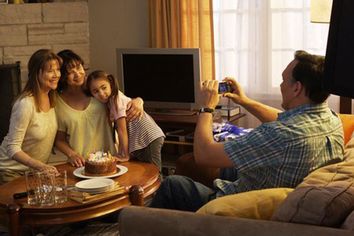
Why A still from "Mother and Child."

It’s been a bad few months for adoptive parents, publicity-wise. First, there was the Tennessee woman who put her 7-year-old adoptive son back on a plane to Russia, saying she no longer wanted to parent him. Then, there was Sandra Bullock’s decision to adopt a black baby from New Orleans, a move that brought forth sneering comments about the Oscar winner’s “white liberal guilt.” The two cases have wildly different outcomes but both betray a certain cultural ambivalence toward adoption in general and adoptive mothers in particular. Whether they’re portrayed as misguided bleeding hearts or evil stepmother equivalents, adoptive moms can’t seem to catch a break.

Now comes Rodrigo García’s new film, “Mother and Child,” an ensemble movie that uses adoption as its overarching theme. “Mother and Child” is getting rave reviews, with critics praising it as “timely,” “extraordinary” and “a masterpiece.” As an adoptive mother, I found it insultingly one-sided. 

Writer-director García has said that he wanted to make a film about “people who live haunted by the absence of a loved one — through death, distance, prison, exile, divorce.” After cycling through the possibilities, he decided that adoption yielded the richest dramatic possibilities for exploring loss. In other words, Garcia chose loss first, adoption second. Clearly, loss compels him more; it’s the gray-tinted lens through which every adoption scenario in the movie is seen.

He does have the advantage of three extremely gifted actresses, who parse his melodramatic script for every conceivable nuance. At times, they briefly elevate it. Annette Bening plays Karen, a Los Angeles physical therapist in her 50s who gave a child up for adoption when she was 14. The grown child is Elizabeth (Naomi Watts), a brittle lawyer who doesn’t seem able to connect to anyone on a human level. Elsewhere in town there’s Lucy (Kerry Washington), an infertile woman who longs, more than anything, for a baby.

For Karen, this decades-ago loss is the defining point of her existence: Thirty-seven years after surrendering the baby, she’s so damaged that she walks around in a constant state of coiled rage, occasionally spewing bile like a human Eyjafjallajokull. Equally damaged, Elizabeth channels her grief into professional and sexual ambition, shredding the competition in order to get to the top. Both women seem frozen, unable to move beyond identities that were fixed for them 37 years before. The message here seems to be that if you give a child up for adoption, or if you’re an adoptee, it will ruin the rest of your life.

I wouldn’t want to underestimate the feelings of birth mothers, or of grown-up adoptees. From talking to adult adoptee friends, and reading memoirs like Sarah Saffian’s “Ithaka” and A.M. Homes’ “The Mistress’s Daughter,” I know there are some who struggle as painfully as Karen and Elizabeth do. But there’s a third side of the adoption triangle — the adoptive parents — and in this movie, Elizabeth’s adoptive parents are erased. “My adoptive father died when I was 10. I’m not close to my adoptive mother,” she tells her boss. We never hear of these people — so important to her development — again.

Instead, the third side of the triangle is represented by Washington’s character, Lucy, the infertile woman who longs for a baby. In a role very similar to the one Jennifer Garner played in “Juno,” Washington is deeply sympathetic, yet García doesn’t cut her much slack. This movie is all about loss and suffering, after all. That’s why Lucy, after one disappointment, weeps inconsolably and says, “Adoption is so unnatural. Why doesn’t anyone ever say that?” Not content with making her suffer, García has her beat herself up verbally, too.

When you adopt a baby in the United States, you’re strongly advised to attend something called an adoption triad panel. It consists of a birth mother, an adult adoptee and an adoptive parent telling their stories, and in that way, it aims to shed light on the three different perspectives, in much the same way García’s movie does.

Four years ago, when my husband and I were considering adopting a second child (we had a 4-year-old biological son), we sat in a room with some 40 other adults, listening to stories of adoption. We were lucky. In addition to the birth mother and adoptive mother, our panel had three adult adoptee speakers. Though they’d had different experiences (one had searched for her birth parents and found they were dead, one had decided not to search for his birth parents, one had developed a good relationship with his birth mother), all three adoptees were certain of one thing: “Mom” and “Dad” were the people who brought them up, the ones who’d been there to push swings, read bedtime stories, bandage scraped knees.

Adoption isn’t for the faint of heart. Becoming an adoptive parent means accepting a certain loss of control. Most babies put up for adoption aren’t well cared for prenatally, and there’s little or nothing you can do about that. In an “open” adoption that’s arranged before the birth — the “Juno” scenario — the birth mother can change her mind and decide to parent. If the adoption does go forward, you have to face the fact that, at some point in the future — usually during the already turbulent period of adolescence — your child will grapple with the facts of adoption and identity. It’s impossible to predict how complicated that will be.

But although it’s no walk in the park, neither is adoption all about loss. A few months after the triad, we were matched up with a birth mother. Kay (not her real name) was three months pregnant, and I liked her from the first time we spoke. Open and thoughtful, she seemed to have considered her options carefully. Having kept a baby she’d had at 16, Kay knew what it was like to be a mom — and being single, she knew she couldn’t support another child. Putting her baby up for adoption wasn’t easy, but it buoyed her to know that she was making another family happy and getting the best possible life for her unborn child.

In the movie, Lucy eventually adopts a baby whose birth mother has died in childbirth. With the birth mother out of the picture there’ll be no messy aftermath, and García implies that this is the best kind of adoption. But Lucy’s is also a Pyrrhic victory: In exchange for her baby she loses her husband (he wants a blood connection with his child) and she’s overwhelmed by the stress of single motherhood. It’s interesting that in both “Juno” and “Mother and Child,” the price paid for an adopted baby is the loss of a mate, therefore loss of emotional and practical support, as well as sexual love.

My daughter is now 3. Bonding with her was not instantaneous. She is strong-willed, fearless, athletic — qualities that rather stand out in our quiet, bookish family. Where she rushes out to meet the world, running at full tilt, my son is slow, cautious, dependent. My daughter asks to see the scary parts of movies again; my son won’t enter a darkened movie theater. He needs me to help him engage with the world, step by step; she needs me to be there to catch her when she falls off a high climbing frame. Later, she’ll need me to tell her about periods and bras, to model for her that a woman can dream big, and go as far as those dreams take her.

In the movie, Elizabeth says, “The truth is, I don’t know anything about [my mother], except she gave me up when she was 14.” Here, Garcia recycles an outdated trope: The “real” mother is the birth mother. The adoptive mom is irrelevant, an interloper in the primal story of the genetic mother-child bond.

As my daughter runs around, eager to assert her independence, I can observe her split heritage. She has her birth mother’s wide, Cheshire Cat smile — but when she purses her lips in mischief, she looks uncannily like a photo I have of me at that age. Her bottomless curiosity reminds me of her father, my husband. And when I walk through the door in the evening and she vaults into my arms, shouting, “Mamma!” I feel the intensity of our mutual love and need.

I hope she’ll also need me if she decides, in time, to search for her birth mother. Honestly, I’d be surprised if she decided not to search. Research shows that girls are more likely to search than boys, and my daughter has a curious, people-oriented nature.

If that time comes, I hope she’ll feel comfortable discussing her doubts and hopes with me. I hope she’ll find her birth mother quickly, build a meaningful relationship with her, and realize that she wasn’t given up out of a lack of love. And I hope that, unlike in García’s movie, I won’t get written out of the story.

Sarah Coleman writes about film, photography, books and pop culture. Her work has appeared in New York Newsday, the San Francisco Chronicle, the Independent Film & Video Monthly, and the Boston Phoenix.

London underground

Today's most eclectic director, Stephen Frears, talks about his hot new thriller "Dirty Pretty Things," Britain's new immigrant reality and the strange case of Tony Blair.

  • more
    • All Share Services

London underground

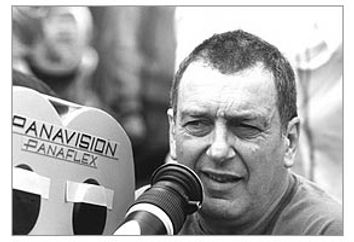
Stephen Frears is on a roll. His new movie, “Dirty Pretty Things,” a romantic thriller about illegal immigrants in London, opened last week to strong reviews in New York and Los Angeles, six months after opening in Britain and receiving wide acclaim there as the movie of the year. Now the director has just finished shooting “The Deal,” a television movie about the complicated relationship between Prime Minister Tony Blair and the man widely perceived to be Britain’s second most powerful, Chancellor of the Exchequer Gordon Brown (roughly equivalent to the Secretary of the Treasury in the American cabinet). The two films — one about the machinations of powerful men, the other about how their decisions affect the most powerless members of society — could almost be taught back-to-back as a seminar on modern Britain.

Certainly, “Dirty Pretty Things” could hardly be more timely. A month before the film opened in London, the British government announced a sweeping new immigration policy that included closing the Red Cross-operated Sangatte refugee center near Calais in France. Sangatte’s position near the Channel Tunnel had made it a notorious magnet for refugees trying to get across to Britain, and for the human traffickers who helped them. But its closure — along with other reforms designed to deter refugees — has ignited fierce debate about immigration policy in Britain.

Frears’ film tells the story of Okwe (Chiwetel Ejiofor), an illegal Nigerian immigrant who works by day as a minicab driver and by night as a desk clerk at a posh London hotel. After befriending one of the hotel’s chambermaids, a Turkish asylum seeker named Senay (Audrey Tautou of “Amélie”), Okwe discovers that the hotel manager (Sergi López) is conducting some secret and distinctly unsavory activities in the hotel, preying on the desperation of illegal immigrants.

From there, Frears’ film pitches audiences into a grim underworld of London’s hidden sweatshops, minicab offices and mortuaries, as Okwe and Senay struggle against a system bent on crushing them. The film is an unholy mixture of genres — thriller, social drama and love story — but somehow Frears pulls it off. A taut script by newcomer Steve Knight (who, bizarrely, is one of the creators of the television quiz show “Who Wants to Be a Millionaire”) helps make “Dirty Pretty Things” as entertaining as it is eye-opening, and there are fine performances by a truly international ensemble cast — especially from Ejiofor, a British theater actor who, on the basis of this performance, will be able to write his own ticket in Hollywood.

It’s worth noting that “Dirty Pretty Things” takes viewers beyond such recent lily-white depictions of Britain as 2001′s “Bridget Jones’s Diary” and 1999′s “Notting Hill” (which was set in a London neighborhood that is, in real life, predominantly black). For Frears, who jokes about “Dirty Pretty Things” that he “went to great lengths to ethnically cleanse my movie of white characters,” the movie is a return to some of the themes he explored in his 1985 breakout hit about immigrants in London, “My Beautiful Laundrette.”

In between the two films, Frears has assembled arguably the most diverse portfolio of any director working today. He’s never met a genre he didn’t like, or so it would seem from his dips into romantic comedy (“High Fidelity”), period drama (“Dangerous Liaisons”), contemporary noir (“The Grifters”) and the western (“The Hi-Lo Country”). He has portrayed gay relationships memorably in “My Beautiful Laundrette” and “Prick Up Your Ears,” and has adapted for the screen two of Roddy Doyle’s Barrytown trilogy novels, “The Snapper” and “The Van.” While not everything he touches turns to gold (“Mary Reilly” was a low point for both him and star Julia Roberts), Frears has an impressive track record. Unlike some of his fellow British directors, he has stayed close to his roots, and for every Hollywood project he takes on, there’s a riskier, low-budget British movie he seems to undertake out of love, like “Liam,” his 2000 film about Liverpool during the Depression.

Given the political climate in Britain at the moment, “The Deal” might be his riskiest project to date. In April, Britain’s ITV television channel dropped the film, fearing it wouldn’t get government approval for a merger if it depicted Tony Blair unflatteringly (the channel also expressed concern that Blair might be forced out of office by the time the film screened in September). The movie’s title is based on an infamous 1994 dinner at which Blair and Brown, both rising stars in the Labour Party, purportedly struck a deal that allowed Blair to assume the leadership of the party and become the next prime minister. (What Blair might have offered Brown in return isn’t known). As the hunt for Iraq’s weapons of mass destruction continues and Britons increasingly wonder if they can trust Blair, “The Deal” could provide a valuable window onto the troubled P.M.’s soul.

Salon recently reached Frears by telephone at his country home outside London.

“Dirty Pretty Things” is an unusual movie in that it’s a blend of social-political drama and exciting thriller. What was your reaction when you first read it?

That was the quality I liked about it, that mix of things. Also it was clearly very modern and described modern Britain in a way that hadn’t really been seen before.

Did you want the movie to have an impact on the public debate that’s going on in Britain right now about immigration and asylum seekers?

Actually, I don’t think this is a very political film. Really the only thing it’s arguing for is a bit more kindness toward people. It goes without saying that if you treat people brutally, they’ll treat each other badly and a criminal hierarchy will spring up whereby the poorest people get exploited.

Perhaps the film isn’t overtly political, but you do take the audience on a visceral tour of this underclass in London, and the effect is eye-opening. Would you be happy if audiences were politicized by the movie?

Well, on the whole I guess it’s better that you know there is this underclass in England, and that it’s treated like this.

But if, say, people were inspired to go out and campaign for Amnesty International…

Of course. How could anyone object to that?

How would you explain what’s happening in Britain at the moment around the issue of immigration and asylum seekers?

I can see that people are very frightened of changes in society. I have a house in the English countryside, where I’m sitting now, and I’d be surprised if there was a black man within 10 miles. It’s like the 1940s down here, it’s so old-fashioned. In London, though, I live in a multicultural part of the city, and it seems obvious to me that we’ve benefited from immigration. Certainly the British economy has benefited, and I’d argue that the changes in society are valuable. But people get frightened — of losing their jobs, or of some terrible smell coming from the house next door. That’s just fear of the unknown. America’s an entirely immigrant society and it doesn’t seem to have done so badly.

It’s bizarre that the person who wrote this movie, Steve Knight, also created the quiz show “Who Wants to Be a Millionaire?”

Yes, it’s incredible, isn’t it?

Do you know how he got from there to here?

Well, he made a lot of money from the show, and it turned out that what he really wanted to do was to write feature movies. One of the main characters in “Dirty Pretty Things,” the Turkish girl [played by Tautou], was based on a friend of his. I know that he’s a very observant and curious fellow, and very open. All the story’s freshness and originality came through him.

You made some interesting casting choices for this movie. Had you seen Audrey Tautou in “Am&eaute;lie”? If so, did you wonder if she’d be able to go from that character to a downtrodden Turkish asylum seeker?

Not really, because when I saw the movie, I was just open-mouthed in admiration of her talent. Audrey did come up to me at the premiere [of "Amélie"] and say, “I don’t want you to see this movie.” And I said, “Well, I’m going to.” She was saying, Don’t imagine this is all I can do.

Chiwetel Ejiofor is pretty much unknown in the U.S., but his performance here really anchors the movie. Did you have any idea how good he’d be?

No. He was clearly a good actor. But the gap between that and taking the whole thing on your shoulders is huge. You ask an awful lot of people and you obviously try to help them and give them confidence — but he was fantastic.

You just finished shooting “The Deal” for British television, about the relationship between Tony Blair and Gordon Brown.

[Laughs.] Yes — a portrait of a marriage. Another of my gay films!

What inspired you to take it on?

I was sent the script, and again, it just seemed rather interesting. Indeed, it has been very interesting to deal with the most recent part of British history, the stuff that’s in every newspaper in the country.

Does the film answer the big question about what Blair promised Brown in return for the leadership of the party?

No, because I wasn’t there. Only two people know the answer to that question.

But the film is a work of fiction…

It’s fictional because I wasn’t there, so by definition it’s fiction.

So you could offer an answer.

I imagine the answer has to do with the fact that Blair is a lawyer, so he’s capable of saying things in a way that other people can interpret how they want. It’s all to do with the gaps between words. Clearly he said something Brown wanted to hear and could interpret in a certain way.

What’s your personal opinion of Blair’s behavior over the last few months?

It’s been a rather melancholy story over these last few months. I don’t think anyone in the country trusts him, basically. He’s clearly an extremely clever, capable man, and the tack he’s taking is rather mysterious. It’s like watching someone almost incapable of speaking the truth.

That’s interesting, because on this side of the Atlantic he’s perceived as the great statesman, a kind of unofficial secretary of state for the Bush administration. And he does have vision — he gave that fantastic speech to the Labour Party conference in Brighton just after Sept. 11, where he talked about African development and the Middle East peace process.

That was a wonderful speech.

So what happened between then and now?

[Laughs.] Well, we invaded Iraq, for one. I don’t know. I could see that what happened to the Twin Towers was so dramatic that it could explain anything, and obviously, anyone would hold out the hand of sympathy. But this evasiveness is quite noticeable. I think Blair thinks he’s been acting as a restraining force on Bush — but I’m not sure that we in Britain think he has.

Do you think that the whole issue of the missing WMD will bring Blair down?

I don’t know that it will bring him down. I certainly think it’s made people very wary about trusting him.

Did making the film give you any insight into his motivation?

Not really. He’s very hard to read.

You’re known for getting great performances from actors, and you’ve launched a few careers — Daniel Day-Lewis’ breakout movie was “My Beautiful Laundrette,” and Uma Thurman’s was “Dangerous Liaisons.” What have you learned over the years about how to get the best out of people?

It’s like bringing up children, isn’t it? If you love them, they’ll blossom. Firstly, I’m overwhelmed by my admiration for actors. I think their talent is phenomenal, and their wit and inventiveness. So I try to create conditions in which they can work, and I encourage them to be inventive and muck about. I love what they do. But I can see that a lot of people find them frightening.

“My Beautiful Laundrette” was the film that opened the doors for you to work in Hollywood, and since then you’ve flipped back and forth from blockbusters to low-budget projects. Apart from all the money, is there anything working in Hollywood gives you that independent movies don’t?

Oh, yes. It’s terrifically interesting. It’s full of very clever people that set new problems that have to be solved. I can see the work I’ve done in America playing into “Dirty Pretty Things” — the whole business of entertaining people and getting them into cinemas. The film deals with that in a way that I haven’t always dealt with in the past. I started my career making films for television, where there was a captive audience, so we never had to think about getting people hooked. But American films are, after all, what most people watch most of the time, so it makes sense to look at what they’re doing well.

You say that, but it seems to me that not very many films coming out of Hollywood these days have the qualities that make “Dirty Pretty Things” stand out: It has a satisfying narrative arc, compelling characters, and a script that doesn’t talk down to the audience.

Well, I suppose I don’t like the films as much as I used to. But there are incredibly intelligent people working there.

If that’s the case, why are we getting so many sloppy movies?

It helps not spending a huge amount of money. If you don’t spend very much, people are more likely to leave you alone and let you get on with it. Once you spend more, they obviously get nervous and try to hedge their bets.

You have one of the most eclectic bodies of work of any director.

I’d say so.

What do you look for in a script?

I don’t think about it. I just read something and think, “Great.” I’m completely indiscriminate — I just make the ones I love. Afterwards I sometimes look at the film and think, “Ah yes, that was why I wanted to make it.”

You’ve passed on a few big movies. You had an opportunity to direct “Thelma and Louise,” for example.

I never actually read it. I was offered it, but I was up to my eyes making “The Grifters.” But it was careless of me. I got a message that the script wasn’t as good as all that. Then, when I saw the film, I thought that the message hadn’t been a very good one. But I thought Ridley Scott made it really well, though; I don’t think I would have made it as well as he did.

Are there any genres you haven’t worked in yet that you’d like to try?

I don’t really think in terms of genres. I just read scripts and react to them.

So it’s possible in the future that we could see a Jerry Bruckheimer-Stephen Frears movie?

Well, it sounds unlikely. But, you know, he did ask me to do a film a couple of years ago.

Really? An action movie?

Yes, absolutely. I mean, I like them as much as anyone else. Whether I’d be any good at directing one or not, I wouldn’t know.

There’s only one way to find out.

[Laughs]. Yes. Or you could go to the grave without knowing.

Continue Reading Close

The 9/11 movie Hollywood won’t let you see

The "stridently anti-American" anthology film "11'09"01" is sometimes arty, sometimes preachy and sometimes brilliant. In Bush's America, it's also commercially untouchable.

  • more
    • All Share Services

The 9/11 movie Hollywood won't let you see

As movie premieres go, it was a low-key event. There was no red carpet, no one arrived in a limo and the press was noticeably absent. Instead, picture a crowd of graduate students with rain-dampened hair shuffling into the Roone Arledge Auditorium at Columbia University in New York on a blustery Sunday evening. It was the kind of premiere you’d expect for a Japanese art-house flick or a four-hour documentary on rural electrification in Rajasthan. Instead, though, the film being screened was the first major feature to deal with the events of Sept. 11, 2001, on the big screen.

Two months after it was ready for release, and after it screened at high-profile international film festivals in Venice and Toronto, “11’09″01,” the French-produced movie about the international repercussions of Sept. 11, can’t get no respect in the U.S. Dubbed “stridently anti-American” by Variety, the movie is in distribution limbo despite the participation of hot international directors such as Mira Nair (“Monsoon Wedding”), Alejandro González Iñárritu (“Amores Perros”) and Danis Tanovic (“No Man’s Land”).

The controversy is easy to understand, especially in light of the current political climate in the U.S. After all, if Susan Sontag can get dragged across the coals for drawing a link between American foreign policy and 9/11, and if Bill Maher can lose his “Politically Incorrect” gig for questioning the description of the hijackers as “cowards,” then it goes without saying that a film that looks kindly upon the family of a Palestinian suicide bomber and calls attention to U.S. complicity in murderous South American regimes might stick in the craws of executives at Sony and Universal.

French television producer Alain Brigand, who conceived the idea for “11’09″01,” says that he wanted to make a more permanent statement about the attacks than his own medium would allow. “It seemed that the rest of the planet had to be able to react, not just Americans and Europeans,” Brigand told the French paper Le Monde. The concept he came up with is pleasingly simple, if a little self-consciously arty: 11 short films, made by 11 directors from 11 different countries, each lasting 11 minutes and nine seconds, plus a single frame. (The title refers to that duration, as well as to the date of the attacks as it would appear on a European calendar.)

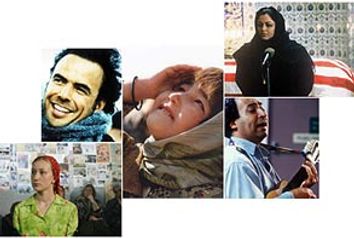
The filmmakers Brigand chose vary in terms of age, style and agenda, but all can be described as political. They include champions of the working class such as Britain’s Ken Loach (“Bread and Roses”) and Israel’s Amos Gitai (“Kadosh”), indie directors with mainstream appeal like the Indian-born Nair and America’s own Sean Penn (“The Pledge”), and rising stars like González Iñárritu and the 22-year-old female Iranian director Samira Makhmalbaf (“The Apple” and the forthcoming “Blackboards”).

Nair, who introduced the film at Columbia, said that directors “don’t often get a chance to make a film that is so contemporary and immediate … in a context of complete artistic freedom.” Under Brigand’s fairly straightforward conditions, the filmmakers were each given a budget of $400,000, the same standards for format and sound, and the same completion date. In return, they each had to promise not to produce anything that incited hatred or bigotry, or to share notes with any of the project’s other directors during production.

What emerged was “a very brave and interesting film,” said Nair (whose strong links with the film division at Columbia had led to the screening there), adding, “which is perhaps why it will never be sold in America.” The audience, mostly drawn from current and former students in Columbia’s graduate film division, chuckled knowingly at this.

In fact, though, it was appropriate that “11’09″01″ screened at Columbia, since what it resembles most is a program of thesis films by a supremely gifted group of graduate students. That is to say, it is patchy, sometimes brilliant, occasionally laughable and much too long.

The two segments of the film that have generated the most controversy are by Egyptian director Youssef Chahine and British director Loach. To be honest, neither is a transcendent piece of filmmaking: Both bog down under the kind of heavy-handed polemicism that can make a work of art wither on the vine. (Don’t get me wrong, I’m not against films having a political message — I just think that the story should drive the politics, and not vice versa.)

Loach’s film revolves around the fact that Gen. Augusto Pinochet’s bloody coup in Chile also took place on a Sept. 11 — in 1973. In the film, Pablo, a Chilean exile in London, writes a letter of sympathy to the families of 9/11 victims in New York, but the letter is a thin cover for a lesson about the atrocities perpetrated by Pinochet and the covert support he received from the U.S. “Your dollars brought violence to the streets,” Pablo writes to the New Yorkers, and concludes: “We will remember you. We hope you will remember us.”

Loach has always been an unapologetic leftist, and there’s something bracing about his refusal to buckle under to received opinion. (I can’t think of another director who’d have had the guts to interrupt the narrative of a war movie with a 20-minute political debate, as he did in “Land and Freedom.”) But here, although his history lesson is thought-provoking, its tone is grating. It’s simply too difficult to believe that a former torture victim would think it useful or sensitive to tell bereaved family members in New York about Chilean torture camps where “men trained in the USA … put rats in women’s vaginas.”

At least Loach’s film is lucid, unlike Chahine’s rambling, postmodernist fable, in which a filmmaker called Youssef Chahine meets the ghost of a U.S. Marine killed in a 1983 terrorist attack in Beirut. When Chahine takes the Marine to visit the family of the fundamentalist who assassinated him, the bomber’s parents explain how “the Israelis fool everyone” and give a litany of America’s foreign policy sins, from Hiroshima to Vietnam to Iraq. (“America says it defends its own values, but it destroys other civilizations,” the filmmaker concludes.)

Given that “11’09″01″ has positioned itself partly as a memorial to the events of Sept. 11, Chahine’s use of his segment as a critique of American imperialism could certainly be called tasteless. Actually, though, it doesn’t seem altogether inappropriate for an Arab filmmaker to address the rage and frustrations of the Arab street — it’s just a shame that he chose to wrap important issues in a veil of postmodern flim-flammery.

Mira Nair’s politically charged contribution succeeds better because it has a lighter touch. It tells the true story of Salman Hamdani, an American-born Muslim who disappeared on Sept. 11, 2001, and was at first accused of involvement in the attacks by the FBI. (Six months later, his body was discovered in the rubble of the World Trade Center, where he had rushed to help victims escape.) “First they called you a terrorist, then they called you a hero,” says his mother in the film. Nair manages to remind her audience how easy it is to fall back on racial stereotypes, but also offers a searing portrayal of one mother’s grief in the face of an incomprehensible loss.

Other segments in the film offer fascinating windows into how other countries absorbed the events of Sept. 11. Bosnian Danis Tanovic, whose “No Man’s Land” won last year’s Academy Award for Best Foreign Film, offers a finely tuned piece about rural Bosnian women who gather on the 11th of every month, as it happens, to remember the horrors of Srebenica. In another segment, by Israeli Amos Gitai, an arrogant reporter stumbles onto the chaotic scene of a car bombing in Tel Aviv and becomes obsessed with filing her story. (When her editor tells her news is coming through of a big event in New York, she responds, “Who gives a shit?”) As with Loach’s, these pieces suggest that news is above all local, but also that violence and tragedy have the potential to unite people across borders.

A few directors focus on the personal rather than the political: There are two 9/11-related love stories, by French director Claude Lelouch and U.S. actor-director Sean Penn, as well as a strange entry by Japanese director Shohei Imamura, in which a Hiroshima war veteran deals with his psychological trauma by pretending to be a snake, and concludes that “there is no such thing as a Holy War.”

Children feature in engaging segments by Iran’s Samira Makhmalbaf and Burkina Faso’s Idrissa Ouedraogo, their innocence providing a stark contrast to the hatred and cynicism that were displayed so effectively on Sept. 11. (In Makhmalbaf’s piece, a teacher in an Afghan refugee camp in Iran tries to instruct her young pupils about the events in New York, only to find that “a very important global event” to them means, “somebody dug a well, and two people fell in and died.”)

The most powerful entry, and also the most experimental, is by González Iñárritu, who contrasts an almost entirely dark screen — interrupted by brief flashes of bodies falling from the twin towers — with a cacophonous soundtrack in which Mexican prayers for the dead mingle with radio reports and cellphone messages from Sept. 11. A sensory flashback to the confusion, incomprehension and agony of the day itself, the film is almost unbearable to watch, and impossible to forget.

Conceptually, “11’09″01″ isn’t revolutionary: It revives a 1960s genre, the international omnibus movie. In 1967, a director’s collective that included Jean-Luc Godard, William Klein, Agnès Varda and Joris Ivens put together “Far From Vietnam,” a movie in seven segments that aimed to expose conditions in wartime Vietnam (other examples include 1962′s “Boccaccio ’70″ and 1969′s “Spirits of the Dead”). But anthology movies rarely spell commercial success, and times being what they are, “11’09″01″ is unusual in terms of its conception, production and creative license.

In the end, though, the most provocative thing about this film might be that it wrests the narrative of Sept. 11 away from Americans and puts it in the hands of other, far-flung observers — the implication being that the historical event belongs, in some senses, to everyone.

Though this doesn’t seem like a radical assumption, one only has to scratch the surface of American open-mindedness to see that it touches a nerve. Take, for example, the only other currently completed movie that deals with the attacks on the World Trade Center: Jim Simpson’s “The Guys,” which is scheduled to be released in the U.S. on Dec. 13.

“The Guys,” which was adapted from Anne Nelson’s hugely successful stage play of the same name, stars Sigourney Weaver as a New York journalist who helps a fire chief (Anthony LaPaglia) write eulogies after eight of his men die in the World Trade Center attacks. Both play and film show the way in which New Yorkers, with their feelings rubbed raw, formed unusual alliances in the weeks after the attacks.

Nelson’s script is poignant, humorous and evocative, but not even the most generous viewer could accuse her of having an international agenda. At one point in the play, the journalist (a supposedly liberal former war reporter who worked in Latin America during the 1980s) decries the way that people all over the world are appropriating the tragedy as their own. “It’s about us!” she cries.

“Americans don’t want anyone to speak of their tragedies except their own,” said Amos Gitai at a director’s panel that took place after the screening of “11’09″01″ at the Toronto Film Festival. (He added, “As an Israeli, I understand the Americans’ attachment to their narrative.”) There does seem to be an attitude in this country that our grief is special, our fear more justified, our right to dictate to the rest of the world more valid than anyone else’s.

“11’09″01″ is far from a masterpiece, but it’s a film Americans should see. It’s true that Sept. 11 was an event of unprecedented trauma for most Americans, and that we have stories about it no one else can tell. But by not listening to what the rest of the world has to say about it — by ignoring the international community’s criticisms of American foreign policy since 9/11, say, or shutting out the voices in a film like “11’09″01″ — Americans run the risk of isolating themselves in a cocoon of self-righteousness and arrogance. The consequences could be devastating. As Gitai put it: “I say to them, if they do this, they will fulfill the desire of their enemies, which is to create one exclusive version of everything.”

Continue Reading Close

Jews for Java

In Israel, ultra-Orthodox rabbis have banned their followers from cruising the Web, but that's not stopping the observant from hacking code.

  • more
    • All Share Services

Jews for Java

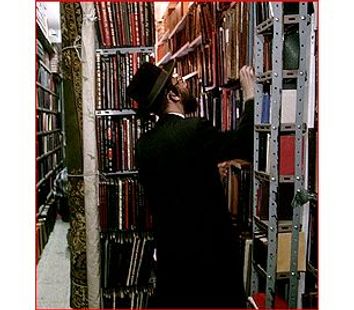
Every day, Ephraim Mett works a mouseclick away from damnation. Mett, a programmer at Jerusalem’s MALAM Systems Ltd., spends his day writing code and developing Web sites for clients like the Israeli post office. But, as a member of Israel’s ultra-Orthodox Jewish community, he is forbidden to browse the Web or shop online; this would be frowned on by his rabbis, who have branded the Net a “danger thousands of times more serious” than television, one that could bring “destruction and ruin.” In January, prominent ultra-Orthodox rabbis banned their followers from using the Net for purposes other than work.

When Mett comes home to his young family, he steps back into a traditional world that has more to do with “Yentl” than Yahoo. Mett says he wouldn’t put a connection in his home or use his Web browser at work for shopping, even if it was to buy something as innocuous as a sofa. “Obviously, it would be very useful to use the Internet for such a thing,” he says. “The problem is that the Internet has a lot of power to draw a person in, which is why I understand the ban fully and respect it.”

Like other ultra-Orthodox programmers, Mett (who did six years of advanced religious study before joining MALAM) straddles a strange divide: With one foot firmly planted in the ancient and insular world of Talmud study, he is stepping into the fast-paced, globally oriented world of programming. Curiously, his religious background might be his greatest asset as a programmer. “The analytical approach used in Talmud is very useful for programming,” he says. “You have to work out plausible explanations, which are quite a lot like programming algorithms.”

Until recently, it would have been almost impossible for Mett and his ultra-Orthodox, or haredi, peers to work in a high-tech company. Prejudices on both sides and a lack of technical education barred their entry to “Silicon Wadi” — the collective name for the industrial parks and incubators springing up all over Israel’s desert landscape. Now, with increased educational options, the ultra-Orthodox are entering Israel’s high-tech world in significant numbers — and finding that their skills are in high demand.

“I’d be happy to employ more haredi programmers,” says David Schindler, a vice president at MALAM. “They’re older and more mature, and they have a tremendous drive to succeed.” Besides, adds Schindler, who was a religious scholar in his youth, Talmud study is excellent preparation for programming. “It gives you an intuitive mind; you know how to break problems down into the smallest particles.”

In fact, the Talmud — first compiled in the year 200 B.C. — was ahead of its time both aesthetically and intellectually. Looking at it might explain why “the people of the book” are natural converts to hypertext: In many ways, the Talmud looks like a blueprint for Web design.

Consider the Babylonian Talmud, the work of many generations of rabbis. When this transcription of oral law was started, Roman occupiers were attempting to wipe out all traces of Judaism: life was a little stressful, and the original text, the Mishnah, came out disjointed and nonlinear (imagine Moses communing with James Joyce). Succeeding generations of rabbis saw the Mishnah as a good start, but decided to add their own interpretations to it. On a typical Talmud page, these writings (“Gemara”) are placed in discrete blocks in a tree-ring formation around the Mishnah — with cross-references, links to other sections and arcane symbols and abbreviations. The effect is of a virtual discussion forum between rabbis from different centuries. “It’s actually the world’s first hypertext,” says former Israeli Minister of Energy Yossi Vardi.

Talmud pages are “busy, non-linear, filled with different typefaces, graphical symbols, parallel and intersecting frames, and even multiple languages,” writes Edmond H. Weiss, an associate professor at Fordham University’s Graduate School of Business Administration, in “From Talmud Folios to Web Sites: Hot Pages, Cool Pages and the Information Plenum.” Each generation of Talmud scholars is encouraged to produce its own interpretations, the very best of which might be incorporated into future editions of the text. To read the Talmud, Weiss posits, “you join the conversation. Just like the Net.”

Of course, with so many voices, there are bound to be disagreements. The Talmud contains notorious arguments between rabbis. In studying the text, part of the scholar’s task is to decode and reconcile these differences, discovering an underlying system by which the different points of view can coexist.

Imagine, for example, that an updated Talmud was to deal with malfunctioning Web browsers (this is not so far-fetched, since it deals with such minutiae as the direction a person should face while defecating). Replace rabbinical authorities with programmers and a section might read as follows:

Adam believes that his Web browser is crashing because he hasn’t upgraded to the newest release. Bill says that Adam is using too recent a version of the software. Both are experienced programmers. How can this disagreement be? Carla, another programmer, says that if the problem is file-system corruption, Adam’s theory would apply, but if there are problems with certain embedded Web objects, Bill would be right. Danya had problems with embedded objects, and found that the solution was to disable certain audio plug-ins. So it seems likely that Bill is referring to problems with portable document formats, whereas Danya’s issues concerned streaming audio. Did Erin manage to fix her system by removing plug-ins? Doubtless she had encountered the streaming audio bug, too.

“I must give credit to the years of studying Talmud, which opens their minds,” says Rabbi Yehezkel Fogel. In 1996, Fogel founded the Haredi Center for Technological Studies, the community’s first technical college. Since the ultra-Orthodox can’t attend secular schools (they’re prohibited from studying in co-ed classrooms) the center acts as a necessary bridge between the worlds of Talmud and high tech. Having opened in 1996 with 35 students, it now boasts an enrollment of 1,200 in five locations across Israel.

In setting up the school, one of the major issues Fogel hoped to address was poverty in the community. Traditionally, haredi men study in a yeshiva full time into their 30s and beyond, while their wives support the family, often by working menial jobs. Add to this the stress of dealing with a large family (often up to nine children) and it’s easy to see why 51 percent of ultra-Orthodox Jews in Israel live below the poverty line, as opposed to 15 percent of new immigrants to Israel and 24 percent of Arab Israelis.

Fogel, who is a staunch advocate for technological training, was one of the first people in the haredi community to recognize its potential to bring economic and social change. Even so, “it wasn’t easy to come and introduce this idea,” he says. “At first, we were very worried about upsetting mores in the community.”

Yet prominent haredi rabbis — of the Hasidic, Ashkenazic and Sephardic sects — proved surprisingly amenable when asked to give the school their blessing. “They live among their people; they understand the needs of the community,” says Fogel, who sighs and adds, “Normally, it’s unusual that they’d agree on anything.”

Then again, says professor Daniel Hershkowitz, “the idea is not to be disengaged from the world of the Talmud.” Hershkowitz, chairman of mathematics at the Technion/Israel Institute of Technology, was instrumental in setting up courses at the Haredi Center for Technological Studies. “At first, they were hesitant about such a connection, because universities are known to be associated with unbelief,” he says. Being an ordained rabbi helped Hershkowitz convince haredi authorities to accept a collaboration with the renowned university.

In setting up the school, Fogel and Hershkowitz had to cater to an unusual student body. While 70 percent of ultra-Orthodox men have spent 20 years or more in advanced religious study, they lack basic secular education. To bring them up to speed, students take general courses during their first three months at the center, then move on to specialized computer courses. When they graduate, they get a diploma from the respected Technion, which Fogel says is “very meaningful to employers.

“We tell employers that our graduates are not quite the same as college graduates, but they’re well prepared and can prove themselves on the job,” he says. If the proof is in the paycheck, Fogel’s right: many of the school’s graduates report that they’ve doubled or tripled their salaries within a year of employment.

One student who’s banking on that kind of success is Anat Rafaelo, a mother of five from Jerusalem. Rafaelo sports a sheitel, the wig ultra-Orthodox women wear to shield their hair from men other than their husbands. She says she’s wanted to program for a long time. “I was working for a company before, and I wanted to program, but they saw I didn’t know much so they put me to work in quality assurance.”

At MALAM Systems, where Mett works, there are now 30 other ultra-Orthodox employees; they constitute 3 percent of the company’s staff. Schindler, the MALAM vice president, says they represent an ideal work force. “They’re used to sitting for many hours without taking a break, or getting up to chat and drink coffee,” he says. “They’re very focused.”

Schindler admits that it took a while for the company’s secular employees to get used to “the black hatters,” as the haredim are often called. Once the first hurdle was over, however, the rapport was “fantastic. We all agreed that the public perception of these people was hogwash.”

In a country where religious and secular groups have become increasingly polarized and hostile, the social and political ramifications of this are enormous. On both sides, fear of the “other” is decreased by daily contact at the office. On a lighter note, there’s another interesting side effect of the haredi entry into high tech: It might be bringing a newfound modesty into the Israeli workplace.

“It has affected the way people dress,” says Schindler. “When they’re working with someone dressed in beard and peyot and a long jacket, it’s not appropriate for a woman to wear a short miniskirt.”

The haredim’s modesty code also places limits on the kind of work they can do. “Designing a Web site for a swimwear company wouldn’t be a problem,” says Shlomo Kalish, CEO of the venture capital firm Jerusalem Global. Kalish, who belongs to the ultra-Orthodox Hasidic sect, reads the Kabbala and the Talmud in his spare time. “Developing Playboy’s Web site would be problematic,” he says.

Despite such fine distinctions, some haredim have made the bold step of starting their own companies. Shlomo Unger, a teacher at the Haredi Center, was so impressed by its students that he created a start-up with four of them. Wizapp, whose 40-strong work force includes 10 ultra-Orthodox employees, is beta-testing an Internet database software package that Unger expects to launch this month or next.

Wizapp also got a huge boost when Yossi Vardi joined its ranks as a seed investor and consultant. Vardi, who divides his time between half a dozen Internet companies, is seen by many Israelis as a kind of technological Midas. (The touch extends to his son, Arik, who created the globally successful messaging software ICQ, which was acquired by America Online in 1998.) Vardi says he joined Wizapp because he felt that the company’s software was marketable, but also because its owners were “very productive, very motivated and very sharp-minded” from years of studying the Talmud.

A secular Jew, Vardi says he sees Fogel’s center as a model by which the less advantaged can be incorporated into the information economy. “Until the Internet came along, the Israeli high-tech scene was enjoyed solely by people who had a computer background, and there was a high correlation with socio-economic background. Now, people with creative talents in art and humanistic study can also become important players in the field. I was elated to have an opportunity to provide haredi youth with a path that would turn them into productive members of the economic life of the country.”

And perhaps, into political moderates. Known for its extreme positions on issues like the peace process and the nation-souring “Who is a Jew?” debate, the ultra-Orthodox community is often characterized by its fanatical edge. The unspoken hope in Vardi’s statement, echoed by many Israelis, is that technology will act as a mainstreaming force in the community.

And that, clearly, is what has haredi rabbis scared. In the past, insularity and poverty have been integral to the haredim’s spiritual and political paths. Whether they can successfully negotiate a spiritual path through cyberspace remains to be seen — and the rabbis, in issuing a ban against the Internet, are taking no chances.

Ultimately, though, ultra-Orthodox rabbis may have more to fear than the lure of X-rated Web sites and material goods. On a root level, working in high tech may be changing the way their followers relate to the world. “Haredim are not used to improvising,” says Unger. “They’re used to listening to rabbis and doing exactly what they’re told.” In the past six months of setting up his start-up, he says, “one of the things I’ve been doing is teaching them to use their imaginations, be original. They’re very humble and this is strange for them, but I’ve seen very much success.”

Unger cites the case of one ultra-Orthodox worker at Wizapp, a woman who is supporting eight children and a husband who studies full time in a yeshiva. “She’s a wonderful programmer. But when she started, she was very shy — she looked at the ground and didn’t speak to anyone. After a few months, she started to speak a little differently. She’s clearer and more direct. She’s become more open.”

The woman, says Unger, is “bringing money back to the family, and the whole family is enjoying a new way of life. She can afford better clothes. Her kids see the new options that the Internet and the computer industry is bringing them, and I don’t think that they will go back to closed communities. No,” he pauses, then adds thoughtfully, “now that this path has opened to them, I really don’t see a way back.”

Continue Reading Close

“Shadows, Fire, Snow: The Life of Tina Modotti”

A biographer uncovers new material on the Italian-born photographer, actress, revolutionary and spy.

  • more
    • All Share Services

In Edward Weston’s photographs of the Italian beauty Tina Modotti, the subject assumes various identities. An early series, circa 1921, is all soft-focus, shadowy romanticism, emphasizing the model’s heavy eyelids and full mouth, with her slender fingers often reaching out to rest on her chin or shoulder. In sharp contrast is a mid-’20s series of nudes shot in bright daylight, with dark shadows slicing across Modotti’s slim form while she suns herself on a patio. At around the same time, Weston made intense close-ups of Modotti’s face that reveal both her sadness and her strength, endowing her with a kind of monumental grace.

These shifts show how Weston evolved as a photographer, but they also demonstrate Modotti’s endless ability to reinvent herself. As Patricia Albers writes in her new biography, “Shadows, Fire, Snow,” Modotti was a “shape-shifter,” a woman who was, at different times, an actress, a photographer, a revolutionary and an international undercover agent. By the time she died, in 1942 at the age of 45, Modotti had packed several lifetimes into one short span. She once jokingly remarked that her profession was men, and given the number and intensity of her romances, perhaps it’s not so surprising that she expired early.

At this point, writing a new biography of Modotti represents a tough brief. “Tina Modotti: Photographer and Revolutionary” by Margaret Hooks was called “definitive” in the New York Times Book Review in 1993, and the same year saw the publication of Mildred Constantine’s “Tina Modotti: A Fragile Life.” Albers herself is in competition with a 1991 Italian biography just published in its first English translation, Pino Cacucci’s more modestly titled “Tina Modotti: A Life.” Granted, she’s a fascinating subject, but does the world need any more biographies of Modotti?

Albers thinks so, and she has a reason: a cache of previously hidden letters and photographs handed over to her by a cousin of Modotti’s first lover, the extravagantly named Roubaix de l’Abrie Richey (Robo to his friends). Following a trail from these letters, Albers does uncover some new information — for example, that Robo and Modotti faked their marriage. While this isn’t exactly stop-the-presses stuff, it does throw light on the ways Modotti stage-managed her image. The book also features some of the lost photographs from the cache, including some early snapshots that make revealing counterpoints to Weston’s beautiful but stagy images.

“I put too much art in my life,” Modotti once wrote to Weston. “Consequently I have not much left to give to art.” Her affair with him and her growth as a photographer make for fascinating reading, but the most dramatic phase of her life began when, in the spring of 1929, she fell in love with the charismatic Cuban revolutionary Julio Antonio Mella. She was at his side later that year when he was brutally assassinated, and shortly thereafter she was plunged into a Kafkaesque nightmare when she was framed for his murder. She never fully recovered, and her later stint as a Communist apparatchik in Moscow led to conspiracy theories about her own death 13 years later.

Albers writes sensitively of Modotti’s grief and of the years in Moscow, where her “temperament and strength of purpose” made her “manifestly gifted for covert work.” Unfortunately, though, a determination to trump all previous accounts of her subject’s life sometimes leads Albers to become bogged down in details. Most readers, for example, will probably feel that they didn’t need to know the name of every single Communist sympathizer who passed through Modotti’s Mexico City apartment in 1927. They might have been better served by more analysis of Modotti’s photographs — her delicate, abstract studies of wilting roses, her portrayals of Mexican peasants and her didactic still lifes of hammers, sickles and bullets.

Still, Albers has provided an authoritative portrait of a complex individual — a portrait that, like a Weston photograph, gives equal weight to shadows and highlights. Her extensive study does justice both to Weston’s images and to the Modotti of Pablo Neruda’s elegy, which tells of a woman for whom “bees, shadows, fire,/snow, silence and foam combining/with steel and wire and/pollen … make up your firm/and delicate being.”

Continue Reading Close