
Kitchen Cabinet

Chef’s night in

Some people spend their holidays more relieved than relaxed

  • more
    • All Share Services

Chef's night in

We asked members of our Kitchen Cabinet to briefly share some of their holiday memories with us, and we’re sharing them with you all this week. Today, two chefs spend the holidays pretty much alone, and that’s alright by them.


From Michael Laiskonis, executive pastry chef, Le Bernardin:

It was a turning point in some way, 15 years ago, when I separated the holidays of youth with the ones I experience now. It was my first Christmas season as a young cook, deep, as we call it, in the shit.

There are busy days in the hospitality industry that are like hard sprints, Valentine’s Day or Mother’s Day, but the weeks that fall between Thanksgiving and New Year’s Eve comprise one long, grueling marathon. As waiters and cooks we subconsciously plan for the “season” all year long, but it’s always still a little shocking when it hits.

I was a baker at a small outfit in the outlying suburbs of Detroit. We were producing around the clock for over two weeks. By Christmas Eve, it was all flying out of the shop as fast as we could fill the cases. I was feeling that deep, to-the-bone kind of tired, surviving only on what little adrenaline I could summon until we finally locked the doors at 4 p.m.

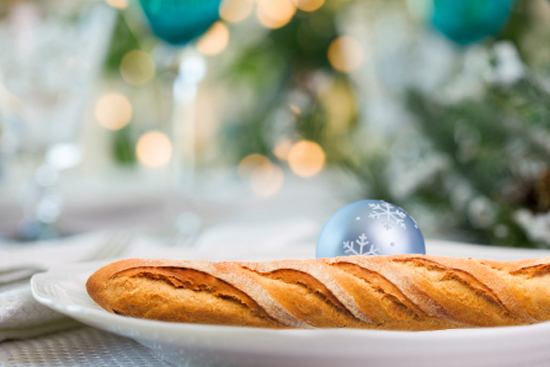
I managed to grab one of the last unsold baguettes and left, exhausted and hungry. On the long drive back to my rented flat in the city, I began to realize that most of the markets had closed as well. I got home, finding just enough to scrape together a simple pasta. Along with the bread I had made with my own hands, it was a solitary dinner, a quiet reward for a lot of hard work. It was an early lesson, though, on just how good food could taste in context; it satisfied a deeper hunger. And then I slept, well into the next day.

. . . . . . . . . . . . . .

From Amanda Cohen, chef-owner, Dirt Candy:

I never do Chanukah dinner, and the fact is that I’ve been a working chef for the past 11 years. Usually, on Christmas and New Year’s Eve, I’m working. The restaurants where I used to cook were always dead on those days because they never did special menus for the holidays. Trust me, nothing is more demoralizing than working Christmas Eve and doing five covers.

But when I do get to leave after Christmas Eve, I see my family and they cook for me since I’m not about to lift a finger, and I’m always back in town to work on New Year’s.

So basically my holiday story consists of sitting in airports for three or four days, eating food other people make, eating airport food, and then going back to work. Sorry it’s not more exciting, but at least I get to sleep.


Amanda Cohen is a chef and consultant, who opened the award-winning New York restaurant, Dirt Candy

Michael Laiskonis is the award-winning executive pastry chef at New York's Le Bernardin restaurant

Best bangs for your bubbly buck

You'll love these wines Thursday night, and you won't resent your credit card Friday

  • more
    • All Share Services

Best bangs for your bubbly buck

We’re thrilled to bring you the wine wisdom of Steven Kolpan, the chair of wine studies at the Culinary Institute of America, who will be stopping by regularly with words on what to drink. Today, he’ll help you get ready to party on New Year’s. What you’ll wear is still up to you. (To hear Steven taste and discuss these and other affordable sparklers, go here.)

It’s been a year of thrilling highs and long lows, so let’s begin 2010 celebrating in classic style. I propose a toast to better days ahead, remembering the words of Napoleon: “In victory, you deserve Champagne, in defeat you need it.”

Ah, Champagne! Twenty million bubbles in that bottle, each one contributing to the pleasure of each sip. It’s the perfect talisman of celebration, an amulet of joy. Times are harder than usual, but that absolutely doesn’t mean we have to give up the bubbly. Affordable alternatives to Champagne abound, and they’re great values.

The original Champagne, as in the wine made in Champagne, France, is by law made from only three grapes — Pinot Noir, Pinot Meunier, and Chardonnay — and usually from a blend of wines of different vintages, transformed by a near-magical second fermentation in the very bottle that you purchase and pop.

But even without leaving France, we can find fine, affordable sparklers — either Crémant d’Alsace (look for Lucien Albrecht and Willm, both widely available) or Crémant de Loire (Langlois is the easiest to find). Crémant, available in the dry brut or rosé styles, is an affordable gem at about $15 a bottle and, by law, must be made by the classic méthode champenoise — the second fermentation, which creates all the bubbles, occurs in the bottle. If you’re looking for with a little more sweetness, try Clairette de Die from the Rhône Valley (Jaillance and Raspail are good producers), made primarily from Muscat grapes, and available for less than $20.

Perhaps the world’s greatest values in sparkling wines can be found in Spain, and summed up in one word: Cava. These are tasty méthode champenoise sparklers — mostly brut or rosé — that start at less than $10. If you want to splurge, you can find artisanal and vintage-dated Cava starting at less than $20. These wines, traditionally made from Macabeo, Parellada, and Xarel-lo grapes, range in style from light and fruity to complex. Just about all of the many Cava producers represented in the American market provide high quality at a great price. Personal favorites: Freixenet Elyssia Gran Cuvée or Brut Nature 2005; Codorníu Selección Raventós; Segura Viudas Reserva Heredad; Gramona Gran Reserva Imperial 2005; Parés Baltà; Aria Estate; Paul Cheneau; Sumarocca; Cristalino Rosé.

If you enjoy your bubbles fresh, bright, light and fruity, with a dry to off-dry finish on the palate, then you will love true Prosecco from Veneto, Italy. (There’s a lot of pretend Prosecco out there, like Paris Hilton’s Rich “Prosecco,” sold in cans and made by an Austrian company whose ads feature the naked, gold-painted heiress. Look for the real thing, which will be labeled “Prosecco di Valdobiaddene.”) Prosecco is so much fun in its seductive simplicity, it’s almost too drinkable. Right now I’m in love with the Bortolomiol “Prior” Brut, but can also recommend the ubiquitous Mionetto, Bellenda, Bellussi, Nino Franco, Maschio, Zardetto, and Zefiro, among many others. Plan to part with $10 to $17 per bottle for Prosecco; it’s money well spent in the pursuit of pleasure.

When it comes to wine, Americans are patriotic – we drink about 70 percent American wine, the overwhelming portion of that from California (about 90 percent). But these statistics don’t hold true for bubbly. We tend to like our sparklers to be French, or at least Old World, but we make great sparklers from our home soils, especially those produced by the méthode champenoise. I would happily sip a flute of the following, while toasting better days to come: Iron Horse (always vintage dated, always estate bottled, always a little more expensive — about $25 to $30 — and worth it), and bargains from the great Roederer Estate, as well as Scharffenberger, Gloria Ferrer, Domaine Carneros, and Domaine Chandon, all from California, and all $15 to $20. From Washington state: Domaine Ste. Michelle Blanc de Blancs (under $15); from Oregon: Argyle Brut 2006 (about $25); from New York: Chateau Frank Blanc de Blancs 2002 (about $30); and my perennial favorite from New Mexico: Gruet Blanc de Noirs (about $16).

Whether we opt for true Champagne or great sparkling wine from any other part of the world, may we all have a wonderful and peaceful New Year. And remember, affordable sparklers are not just for holidays. An inexpensive bottle of bubbly can turn the simplest meal into a celebration. Perhaps Lily Bollinger, of the eponymous Champagne house, said it best when speaking about her favorite sparkling wine:

“I only drink Champagne when I’m happy, and when I’m sad. Sometimes I drink it when I’m alone. When I have company, I consider it obligatory. I trifle with it if I am not hungry and drink it when I am. Otherwise I never touch it — unless I’m thirsty.”

Continue Reading Close

Steven Kolpan is Professor and Chair of Wine Studies at The Culinary Institute of America (CIA) in Hyde Park, NY. He is the author of "WineWise," a consumer-friendly guide to the wines of the world

Sausage balls and old turkey for Christmas

It's who's there with you that matters

  • more
    • All Share Services

Sausage balls and old turkey for Christmas

We asked members of our Kitchen Cabinet to briefly share some of their holiday memories with us, and we’re sharing them with you all this week. Tonight or tomorrow, perhaps, many of you will be rushing around your kitchens, stressed about the food you’re going to serve. So take a moment with our Cabinet members to remind you that, regardless of what’s on the plate, the table and who’s around it are what matters.

From John T. Edge, director, Southern Foodways Alliance:

Sausage balls, made with Bisquick, rat trap cheddar, Jim Dandy country sausage, a little cayenne, and a little more sage: That’s what the holiday season tastes like here, in Oxford, Miss. On my birthday, Dec. 22, Blair, my wife, makes a gross of the little orbs, shovels them in brown paper bags, and transports them to City Grocery, my buddy John Currence’s bar.

Over the course of an extended happy hour debauch, I work the floor, offering sausage balls to all comers, while my friends alternate between pulls of whiskey, bites of balls, and inhalations of hot dogs, capped with Blair’s chocolate-and-red wine-goosed chili. As the night goes on, the pot of chili disappears, the grease-splotched bags threaten collapse, and so do I.

. . . . . . . . . . . . . .

From Jessica Harris, professor of English, Queens College:

Almost 30 years ago, I began giving a New Year’s Day party where I introduced my friends to my parents. Gradually the party grew from dessert and drinks into a full-blown African-American New Year’s spread, complete with collard greens, black-eyed peas and rice (aka Hoppin’ John), and roast pork with cracklins. The collard greens symbolize money, black-eyed peas are considered lucky in some parts of Africa, and the pork is traditional, probably as a desire to live higher on the hog in the upcoming year. The feast celebrated my ancestors.

As I learned more about Kwanzaa, I added elements of that celebration — a centerpiece, kinara, and more. After I moved to Brooklyn, N.Y., the New Year’s Kwanzaa party grew and at its peak there were more than 80 guests, some from as far away as West Africa and Brazil. I stopped giving the party in 2000. It had become too much work. But later that year, my mother died, following my father who passed 15 years earlier.

Since then, feeling a need for tradition, I’ve given other holiday parties, some even on New Year’s Day. They’ve been wonderful. But none of them ever equal the joy of those early parties filled with ritual and feasting and family.

. . . . . . . . . . . . . .

From Tom Mylan, butcher-owner, the Meat Hook:

I was trying to think of the perfect holiday story to tell. Was it the 30-pound turkey that broke my oven shelves? My first Christmas in NYC, where I found myself completely alone watching “The Deer Hunter” with three 40s of Balantine’s Ale? Perhaps it was the crew from Murray’s Cheese’s theoretical “White Christmas” where we planned on just doing coke and drinking Old Crow in response to pre-Christmas strife.

No. This is the tale of a stale turkey sandwich bought at a gas station, the only place open on Thanksgiving day, 1995 in a depressed coastal town in central Oregon. It was the fall of my first year in college. I had driven eight hours from Spokane, Wash., to meet my three best friends from high school, who had traveled the length of California to spend the holiday getting high and watching “Die Hard” in a tiny motel room in an ex-logging town by the sea.

Sometimes, I lose sight of the lesson learned in that dank room, smoking pot and eating sulfured turkey sandwiches: All the misguided energy spent trying to construct the perfect meal from the holiest of ingredients can’t make up for cooking or eating with people you don’t love and trust. You can have your baby greens and artisan salumi, but I’ll take that nasty sandwich, and a few of my good friends, every time. 

Continue Reading Close

John T. Edge is the director of the Southern Foodways Alliance

Jessica is the author of 10 critically acclaimed cookbooks documenting the foods and foodways of the African Diaspora including: “Iron Pots & Wooden Spoons: Africa’s Gifts to New World Cooking,” “Sky Juice and Flying Fish: Traditional Caribbean Cooking,” “The Welcome Table: African American Heritage Cooking,” “Beyond Gumbo: Creole Fusion Food From the Atlantic Rim” and “The Martha’s Vineyard Table.” Jessica is working on “High on the Hog,” a narrative history of African American cuisine, to be published in 2010 as will her book on the rum culture of the Caribbean. Jessica has lectured on African-American foodways throughout the United States and abroad and has written extensively about the culture of Africa in the Americas. Jessica holds degrees from Bryn Mawr College, Queens College, Université de Nancy, France, and New York University. She is the inaugural scholar in residence in the Ray Charles Chair in African-American Material Culture at Dillard University in New Orleans, where she has established an Institute for the Study of Culinary Cultures. Jessica is also professor of English at Queens College, C.U.N.Y.

A rapscallion’s holiday

Two holiday parties: One dirty, the other covered in dirt

  • more
    • All Share Services

A rapscallion's holiday

We asked members of our Kitchen Cabinet to briefly share some of their holiday memories with us, and we’re sharing them with you all this week. Today we’re celebrating with fabulous foods, be they wholesomely found or more ill-gotten.

From Clark Wolf, food and restaurant consultant:

It was the indulgent start to an excessive decade: 1980, and who knew that wild arugula and padded shoulders were just round the corner? So nice that only one of those endured.

We were working to open a new outpost of the legendary Oakville Grocery, and a small group of us gathered in a Napa Valley farmhouse to rob the very larder we were stocking.

I’d arranged for geese to be raised for us nearby, secured major quantities of Italian white truffles, and gathered quail eggs and a slab of illegally imported foie gras large enough to clog international arteries.

We rendered the duck, gathering and straining the fat so we could pan fry sourdough crostini, scramble the quail eggs (kept overnight in a jar with the truffles to absorb their aroma) to go on top, then gilded that lily with a slash of foie gras and generous scrapings of more white truffle.

We were well into our third or fourth or fifth bottle of Champagne when Rick slipped and dropped the pan, sending the goose flying across Joe’s pristine show kitchen, only to be returned to the oven, forgotten in the haze and profoundly overcooked. We abandoned it. It was all of course far too much, but it felt just right.

I do remember a salad and a delicious, pedestrian poached egg the next noon, but that’s another story.

. . . . . . . . . . . . . .

From Greg Higgins, Chef-owner, Higgins Restaurant and Bar:

No offense to the founder of Festivus or any other feast days, but the winter solstice is primordial, predating all organized religion. It’s also the normal peak of truffle season along the 45th parallel.

There are many food memories brought on by the abbreviated days around the winter solstice, but I’m most moved by the scent of dank earth, the kind coming from a freshly dug Oregon black truffle. These things are precious, and the hunt for them is shrouded in a mystery that feels appropriate for the misty, dreary days of the Northwest winter.

There are secrets and pacts, and my band of rogue foragers never talks about the whereabouts of our forays. We take our experience and intuition and a bit of luck with us into these eternal forests, and we dig under thick moss and broad ferns. Occasionally, we get a waft of their unmistakable perfume, hovering elusively in the wet air. We gently rake back the duff of conifers and leaves, finding black nuggets encrusted in forest clay. The hunt continues until we’re content to return, chilled to the bone but charged by the aroma in our gunny sacks — spices, rich earth and exotic fruits.

Back in the kitchen, we spray away the tenacious clay to reveal the velvety black trophies. Preparing a simple risotto, it’s easy to forget the numbing cold and our sore knees and backs from the day’s adventure. Some fresh chevre, a leek or two pulled from the kitchen garden, a bit of patient stirring and all that remains is the celebration at the table with fellow foragers and an ample supply of dark and pungent pinot noir nurtured in that same red clay.

We, like many other mycophages, celebrate this auspicious day rather than some of the more religious or spiritual holidays, celebrating the return of the light. 

Continue Reading Close

Clark Wolf is founder and president of Clark Wolf Company, a New York-based food and restaurant consulting firm.

Higgins turns out fine cuisine in support of his premise that food is community - an idea that creates respect, commitment and responsibility from farmer to chef to diner. “We're interested in nourishing and sustaining not only our customer's appetites but also the land and the quality of life we all enjoy,” says Higgins. With an agricultural region that provides unparalleled abundance and diversity - from wild salmon, mushrooms, and huckleberries to some of the finest wines in the country, Higgins is defining a cuisine that is truly rooted in the northwest.

Latke scandals and papaya salad battles

Two stories of the miracles of holiday cooking

  • more
    • All Share Services

Latke scandals and papaya salad battles

We asked members of our Kitchen Cabinet to briefly share some of their strongest holiday memories with us, and we’ll share them with you all this week. Today, our resident wine experts talk about looking into their holiday kitchens and staring into the abyss.

From Steven Kolpan, professor and chairman of wine studies at the Culinary Institute of America:

Twenty-five years ago, when I was not yet a JewBu (a Jew listing toward Buddhism, a bubbaleh for Buddha), I celebrated Hanukkah with a latke party fraught with scandal and miracle.

Getting the Champagne was easy, but making the latkes was hard. I wanted them to be thin, almost crepe-like, but a thin potato batter fried in a very hot Griswold is a recipe for burning. I added more potato, more matzo meal, more onions and more eggs to bind it together, and soon the latke batter just laid there in a lump.

In a subdued panic, I called my mother, who told me the secret to making the lightest latkes was to use seltzer in the batter. The bubbles, according to my mother, would “open the pores of the dough, unlike flat water, which just makes things wet.” I had no seltzer, but a couple of bottles of Gerolsteiner fizzy mineral water in the fridge. My mother was dubious, even scornful: German mineral water for Jewish latkes was her idea of a shandah — a scandal.

I added the Gerolsteiner, and suddenly the batter was perfect; the pancakes were transformed into potato pillows. Idaho spuds, Italian extra virgin olive oil, Hudson Valley eggs, apple sauce and sour cream, and that German mineral water conspired to produce hot, crunchy, oily, rich, light, sweet, savory delights all to be enjoyed with French Champagne. My friends enjoyed themselves immensely — all smiles and shiny, oily lips.

The symbolism of latkes is really about the oil they’re fried in: During the revolt of the Maccabees, the story goes that there was only enough oil in the temple to provide light for one night, but by some miracle it lasted eight. On that Hanukkah 25 years ago, in a small way, I discovered more than I realized I had, too. And now I always have seltzer in the house; it reminds me of my mother. 

. . . . . . . . . . . . . .

From Tara Q. Thomas, senior editor at Wine and Spirits magazine:

My sister married a Thai guy. Super sweet, with a mom who’s even sweeter. That first Christmas when she joined our family for the holidays, we wanted to do whatever it would take to make her feel welcome.

In our house, that means we cook.

My husband and I had just returned from a month in Laos; the flavors still fresh in our memories, we figured we could whip up an Isaan feast, where the Laotian and Thai cuisines come together. We planned to make piles of larb and find thumbnail-size crabs to pound into our papaya salad. We conferred with her son, who consulted with his mom.

The verdict was immediate: No Thai. “I want eggplant parmesan! I eat Thai all the time!”

Christmas came. The 96 courses we’d planned were already in process by early morning, when we sat around opening presents. So what was Tia doing in the kitchen?

Preparing dinner. Thai dinner.

We panicked. How could we tell her we’d already planned every bite of the evening? That we had so much food there was no way we’d have room for more? That we weren’t really sure how sour soup would play against eggplant parmesan?

She dished up noodles for lunch and we murmured something about maybe saving the eggplant parmesan for tomorrow … “Noooooo! I want eggplant parmesan,” Tia insisted. So we made it — while she prepared sticky rice to go with a papaya salad and deveined shrimp for summer rolls. Somehow, we even all got along in the kitchen. Tia tried to teach us how to whack the bamboo steamer against the side of the pot just right to flip the sticky rice over; we let her sneak slices of eggplant after they were fried.

By dinnertime, we realized that there was nothing to do but set everything out together; courses made no sense. It wasn’t what we imagined, but we figured we could do it our way next year.

But it was amazing. The Thai food was, of course, far better than anything we could have prepared; the eggplant parmesan made Tia positively giddy. And the mix of dishes actually read like so many Laotian meals we’d eaten with large groups: an impossible number of dishes, all set out to dip into as often or as little as one wished, the little bites teasing the palate, keeping it entertained.

Now, it’s how we do it every year. 

Continue Reading Close

Steven Kolpan is Professor and Chair of Wine Studies at The Culinary Institute of America (CIA) in Hyde Park, NY. He is the author of "WineWise," a consumer-friendly guide to the wines of the world

Tara Q. Thomas is a former professional cook who now concentrates primarily on booze as Senior Editor at Wine & Spirits Magazine. She also writes for Culture, Gastronomica, Real Food, the Denver Post and other publications.

Cash and gumption: Food nonprofits to support

Here are organizations from all over the country worth donating to

  • more
    • All Share Services

Cash and gumption: Food nonprofits to supportAlissa J. Novoselick and her class at Camp Verde High School

Alissa Novoselick’s story of how $40 and some gumption planted a school garden that created a community made me think about food-related nonprofits in general, spread across the country, working on an enormous range of issues. Hunger is the most obvious one, but how about helping immigrant women to build small businesses out of their home cooking? Or helping abused kids find love and hope by teaching them to grow food and care for animals? Or telling the stories of American food traditions that may not last another generation?

We asked our Kitchen Cabinet and other friends in the field to suggest their favorite organizations, and just some of the most compelling, most effective ones are below. Browse the list for groups working in your area, or for groups tackling issues that matter to you, though of course many of these organizations’ work bridges our categories.

Please consider supporting them this holiday season (and beyond) and please let us know about your favorite organizations in the comments.

(As always, it makes sense to do your own research on the organizations you’re supporting. Guidestar.org is a great resource, giving you access to nonprofits’ financial documents and other information.) 

LIFE, JOB, AND CULINARY SKILLS

Forget Me Not Farm (Sonoma County, Calif.)
Recommended by Clark Wolf, Kitchen Cabinet
Clark says, “Tucked behind the local Humane Society building, rescued animals are part of a program to help care for rescued kids. Those abused or neglected kids learn to grow food for cancer patients and help take care of the animals, so all hearts are moved towards healing. Much good is done on small plots.”

Take Back the Kitchen at Haley House Cafe (Boston)
Recommended by Bryant Terry, Kitchen Cabinet
The Café focuses on what cooking can do for a community by offering both health-oriented cooking classes and professional skills training for youths and adults, and even hosting school chemistry food science classes.

Liberty’s Kitchen (New Orleans)
Recommended by Lolis Eric Elie, journalist and documentary filmmaker
This working bakery, restaurant and caterer is staffed by at-risk teens receiving culinary skills training.

Careers Through Culinary Arts Program (national)
Recommended by Francis Lam
C-CAP works with underserved high school students, providing culinary training, internships, and scholarships to culinary school. 

SUPPORTING FARMERS / PRODUCERS / SMALL BUSINESSES

La Cocina (San Francisco)
Recommended by John T. Edge, Kitchen Cabinet
Focusing on immigrant women, La Cocina is a resource and incubator for informal food entrepreneurs, providing commercial kitchen space, training, and technical support for aspiring small business owners.

Coalition of Immokalee Workers (Immokalee, Fla.)
Recommended by Bryant Terry
Organizing tomato pickers in Florida to combat literal slave-labor conditions. For an extraordinary story on their work, click here.

Federation of Southern Cooperatives (Rural South)
Recommended by John T. Edge
John T. says, “The Federation came out of the Civil Rights movement to abate black land loss. Working in some of the poorest counties in the country, they have training centers to teach farmers to get value out of their crops.” The Federation also has other assistance programs including a credit union that’s made over $200 million in loans.

American Farmland Trust (national)
Recommended by Molly O’Neill, Pulitzer-nominated journalist
Through advocacy, research, and outreach, AFT works to protect our most valuable farmlands from overdevelopment.

Penobscot East Resource Center (Eastern Maine)
Recommended by Molly O’Neill
Molly says, “They are working tirelessly to demonstrate that local management of individual fisheries is the key to healthy U.S. fisheries.” 

SCHOOL GARDENS

Camp Verde Community Garden (Camp Verde, Ariz.)
Recommended by Francis Lam
If you haven’t already, read the phenomenal story on this school. If you’d like to give, the contact information is in the comments section below.

Similar efforts:

Garden School Foundation (Los Angeles)
Recommended by Marisa Gierlich, General Manager, Street restaurant

Guerneville School Garden (Guerneville, Calif.)
Recommended by Clark Wolf

California School Garden Network (California)
Recommended by Clark Wolf
A network and information resource for new and existing school gardens in California.

Similar efforts:

Maine School Garden Network (Maine)
Recommended by Clark Wolf 

CHILDHOOD OBESITY / SCHOOL NUTRITION

Louie’s Kids (Charleston, S.C., and national)
Recommended by Christine Gaspar, Executive Director, Center for Urban Pedagogy
This group creates individual plans for obese children to lose weight and create healthy habits and helps them stick to them, sometimes by simply taking them outside to play.

Wellness in the Schools (New York City)
Recommended by Bill Telepan, Chef-Owner, Telepan
Working with volunteers, including professional chefs, this group works in public schools to prepare appetizing and healthful meals within schools’ budgets.

New York Coalition for Healthy School Food (New York City)
Recommended by Bill Telepan
Working with chefs, the coalition offers healthful recipes within school purchasing guidelines for use in cafeterias, and conducts education programs and dinners for students and their parents.

Chez Panisse Foundation (projects in California, New Orleans, and Greensboro, N.C.)
Recommended by Molly O’Neill
Home of the Edible Schoolyard, this is Alice Waters’s project to help reform school lunches by making a working garden both a part of a school’s curriculum and cafeteria. 

CONNECTING FARMS TO CITIES (AND FARMS IN CITIES)

Wholesome Wave Foundation (Connecticut and national)
Recommended by Ashley Hall, Atlanta-based wine sales director and Gina Hopkins, owner, Restaurant Eugene
The foundation doubles the value of food stamps when they’re used to buy local produce at farmers’ markets across the country.

Georgia Organics (Georgia)
Recommended by Ashley Hall and Gina Hopkins
Georgia Organics is a support system for Georgia sustainable farms, giving them technical assistance and connecting them to new markets in underserved neighborhoods and schools

Just Food (New York City)
Recommended by Anna Lappe, Kitchen Cabinet
Links struggling local small farms to new markets in nutritionally underserved neighborhoods.

Jones Valley Urban Farm (Birmingham, Ala.)
Recommended by John T. Edge and Ashley Hall
In the center of the city of Birmingham, Jones Valley works with volunteers to turn abandoned lots into a working farm, using the proceeds from produce and flower sales to fund health education programs. For a wonderful documentary on their work, go here.

Similar efforts:

Growing Power (Milwaukee and Chicago)
Recommended by Bryant Terry and Anna Lappe

The Food Project (Boston)
Recommended by Bryant Terry and Anna Lappe

East New York Farms (Brooklyn, N.Y.)
Recommended by Bryant Terry and Anna Lappe

The People’s Grocery (Oakland, Calif.)
Recommended by Bryant Terry and Anna Lappe

Growing Hope (Ypsilanti, Mich.)
Recommended by Shelby Kibler, Kitchen Cabinet 

FOOD BANKS / HUNGER

Feeding America (formerly America’s Second Harvest) (national and local)
Recommended by Molly O’Neill
Food banks are some of the most immediate, direct ways to address hunger, and Feeding America collects and distributes food and funds to local food banks across the country. Their website allows you to search for the food bank nearest you.

Similar efforts:

Magic City Harvest (Birmingham, Ala.)
Recommended by Ashley Hall

Atlanta Community Food Bank (Atlanta)
Recommended by Ashley Hall

Food Gatherers (Washtenaw County, Mich.)
Recommended by Shelby Kibler

Share our Strength (national)
Recommended by Molly O’Neill, Lolis Eric Elie, and Susan Feniger, Chef/Owner, Street restaurant
SOS is a national grantmaker and network of local organizations partnering with restaurants to feed hungry children, with a particular focus on post-Katrina Louisiana.

World Hunger Year (national)
Recommended by Anna Lappe
Founded by Bill Ayres (no, not Bill Ayers) and the late singer Harry Chapin, WHY raises funds for new and existing hunger and poverty organizations, and helps them replicate their most successful programs in other communities.

Heifer International (international)
Recommended by Anna Lappe
Donates farm animals to families in developing countries to produce dairy, eggs, and wool for food and income. 

ENVIRONMENTAL SUSTAINABILITY

Ecotrust (West Coast)
Recommended by Greg Higgins, Kitchen Cabinet
Ecotrust creates public and private partnerships to invest hundreds of millions in sustainable businesses and conservation initiatives.

Chefs’ Collaborative (national)
Recommended by Greg Higgins
The Collaborative educates chefs on sustainably-produced ingredients, and connects them to local producers.

American Livestock Breed Conservancy (national)
Recommended by Molly O’Neill
Working to ensure bio-diversity in an increasingly specialized agricultural industry, ALBC researches breed characteristics and keeps a gene bank for endangered breeds.

The Land Institute (Kansas and national)
Recommended by Molly O’Neill
Inspired by prairie ecology, the Land Institute develops plant breeds and farming methods that are more productive and resource efficient than conventional agriculture.

Small Planet Fund (international)
Recommended by Anna Lappe
A fund committed to supporting eight organizations (two of which have been awarded Nobel Peace Prizes) tackling issues from deforestation in Kenya to preventing farmer suicides in India.

Seed Savers Exchange (Iowa and national)
Recommended by Susan Feniger
SSE is a member-driven bank and market of disappearing and heirloom fruit and vegetable seeds, preserving over 25,000 varieties of plants. 

FOOD CULTURE

Southern Food and Beverage Museum (New Orleans)
Recommended by Jessica Harris, Kitchen Cabinet
Where else in our country but New Orleans would you find a place so proud of its cuisine as to build a museum to it? But beyond New Orleans food, SOFAB celebrates and teaches — through programs, events, parties, and collections — us all about the diverse foods of the entire South.

Southern Foodways Alliance (South and national)
Recommended by Jessica Harris and Francis Lam
The SFA documents and celebrates the traditional and new food cultures of the South, through films, oral histories, eating, and just plain talking. 

FOOD SYSTEM ADVOCATES

The Food Security Partners of Middle Tennessee (Tenn.)
Recommended by Robin Riddell, Slow Food Nashville
Bringing together and coordinating collaboration among individuals, nonprofits, and businesses working towards a safe, affordable, healthy food system in central TN.

Similar efforts:

Roots of Change (Calif.)
Recommended by Peter Jacobsen, Kitchen Cabinet

New Orleans Food and Farm Network (New Orleans)
Recommended by Lolis Eric Elie 

Continue Reading Close

Francis Lam is Features Editor at Gilt Taste, provides color commentary for the Cooking Channel show Food(ography), and tweets at @francis_lam.

Page 1 of 2 in Kitchen Cabinet