
Nutrition
News flash: Organic food can still make you fat
A new study suggests people think organics have fewer calories. Here's what organics can and can't do for you
A version of this story originally appeared on Dr. Ayala’s Open Salon blog.
We like to eat. We especially like indulgent foods: desserts, snacks and tasty treats. We’d love to believe it’s OK to heap our plates with foods we perceive as “healthy.” Studies have shown time and again that foods perceived as healthy or foods with a health aura drive us — if only subconsciously — to eat more. Foods with “low fat” or “low calorie” claims lead to overconsumption of snacks. A study using hidden cameras at Italian restaurants showed that people dipping their bread in olive oil will eat more fat and calories than if they instead spread some butter.
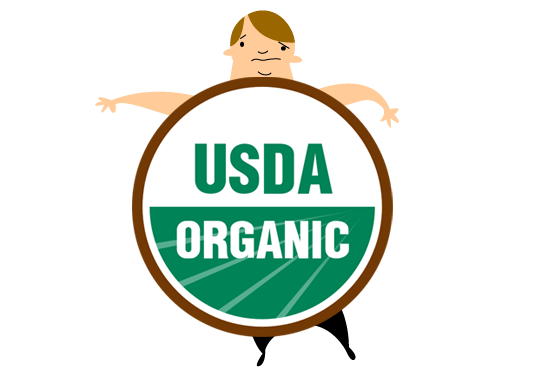
But organic food labels can lead to overeating, too. In presenting findings from their new study, Jenny Wan-Chen Lee and Brian Wansink of the Cornell Food and Brand Lab showed that the organic seal appears to make people believe their organic snacks have a lot fewer calories than they do. For example, people who ate cookies labeled as “organic” believed that their snack contained 40 percent fewer calories than the same cookies that had no label.
Now, I’m a huge proponent and an early adopter of organic produce, but the organic seal, of course, has absolutely nothing to do with calories.
The benefits of organic food
The organic seal promises that the food and its ingredients have been farmed according to the organic standards, which are about sustainability, how we grow food, and how we treat our environment. These practices also tie to our personal health, given that the multitude of chemical fertilizers, pesticides and herbicides used to produce conventional food actually remain in the food. While it’s hard to prove that any single one of them, in small amounts, causes disease, it’s impossible to prove that they don’t; personally I’d rather minimize exposure to what’s clearly not meant for human consumption (read more about why organic matters in my post here).
The jury’s still out on whether organic produce has more measurable nutrients than conventionally grown produce.
What organic food isn’t
Organic produce isn’t necessarily clean. All too often I see people skipping the washing of organic produce, forgetting that it comes from a field, and has been handled by many hands. Organic produce does need to be washed — thoroughly. While organic food isn’t sprayed with chemicals, microbial life is teeming on and between the leaves. Wildlife visits the fields and can contaminate produce in any number of ways we don’t like to consider when we think of food. There’s also the bacterial mixture from a multitude of human hands that have touched your produce before it gets to your table.
Organic food isn’t automatically healthy, or something we should necessarily consume in large quantities. Organic candy, organic soda or organic French fries — while a tiny bit better for us because they’re free of pesticides — are still junk food, and should be eaten infrequently.
Bottom line
The temptation to believe what we want to be true — especially when it comes to diet and lifestyle choices — sometimes overcomes the prudency of healthy skepticism. It would indeed be nice if there were a way to give an overarching seal of approval to foods — especially to those foods we’d like to eat lots of. But the truth is that most foods are neither “good” nor “bad,” and to make better decisions relating to nutrition and health we have to accept that nutrition and health issues are rather complex, but well worth digging a little deeper into.
If you want to have a clearer idea of what you’re eating, read the ingredient list and nutrition facts, regardless of the atmosphere created — or the claims to health — on the front of the package.
Read the labels on organic foods as carefully as you’d read any other food label. If the food is full of sugars, fats, salt or calories, it should be viewed as a dessert, and should be eaten in moderation.
What corporations don’t want you to know
Disclosure regulations don't ban products, they just inform consumers. So why do companies fight them so hard?
(Credit: AP/M. Spencer Green) Last month, Gallup reported that despite economic crises brought on by financial deregulation, far more Americans still worry that there will be too much regulation rather than not enough. No doubt, the survey results reflect the triumph of conservative “free-market” rhetoric in equating regulation with job loss in the American psyche. That’s a victory of ideology over economic reality, because, as Businessweek recently noted, regulations are hardly job killers. Instead, the magazine points out, they typically “wind up creating about as many jobs as they kill.” In the process, they also mitigate major social problems, as Coca-Cola and Pepsi just proved.
Continue Reading Close
David Sirota is a best-selling author of the new book "Back to Our Future: How the 1980s Explain the World We Live In Now." He hosts the morning show on AM760 in Colorado. E-mail him at ds@davidsirota.com, follow him on Twitter @davidsirota or visit his website at www.davidsirota.com. More David Sirota.
The triumph of Jamie Oliver’s “nemesis”
The culinary crusader barged into West Virginia for a reality show. Now his on-screen rival is making her own magic
Alice Gue (center) and Jamie Oliver (right) It was all I could do not to scarf the entire stromboli, neatly packaged for me in a Styrofoam clamshell, while in the car. The dough was soft. The balance of ham and mozzarella, just right. And so, only about half was left when I parked on Third Avenue, the main drag in Huntington, West Virginia, and offered a bite to some friends.
“Wow. That’s great,” said one.
“Yeah, where’d you get that?” asked another.
“You’ll never believe it,” I told them. “This is school lunch.”
Continue Reading CloseThe right’s weird Michelle Obama problem
They hate her because she ate a hamburger even though she wants children to be healthy
Two separate Drudge Report headlines, from July 11 and July 12 It was just stupid when the Washington Post’s 44 blog (“Politics and Policy”) “reported” that Michelle Obama ate a hamburger. (Or, as Ta-Nehisi Coates said, it was “the dumbest story ever written in all of human history.” He’s not wrong!) After the right-wing blogs all picked it up, as they were always going to because of their seething, inexplicable hatred for the first lady, though, it became something darker than stupid.
Continue Reading Close
Alex Pareene writes about politics for Salon and is the author of "The Rude Guide to Mitt." Email him at apareene@salon.com and follow him on Twitter @pareene More Alex Pareene.
Beck site: Huckabee does literally want the government to take candy from babies
Another round in the fight over the former governor's supposed "progressive" tendencies
Glenn Beck and Mike Huckabee Outgoing Fox host Glenn Beck recently attacked ongoing Fox host Mike Huckabee for supporting first lady Michelle Obama’s anti-childhood obesity campaign (fighting childhood obesity is an attack on our fundamental right to feed children garbage). Huckabee, Beck argued, is a “progressive,” and progressives, in Beck’s world, are the intellectual descendants of the Nazis themselves.
Huck struck back with an entertaining, unedited blog post calling Beck a conspiracy theorist looking for “boogey men” that “he and only he can see.” “The First Lady’s approach is about personal responsibility,” Huckabee wrote, “not the government literally taking candy from a baby’s mouth.”
Continue Reading Close
Alex Pareene writes about politics for Salon and is the author of "The Rude Guide to Mitt." Email him at apareene@salon.com and follow him on Twitter @pareene More Alex Pareene.
Is the rise of food prices all bad?
Outrage abounds over a report that companies are shrinking portions but not prices, but it might be good for us
(Credit: Willie B.thomas) Slayers of elitists and other warriors of the downtrodden: Look! I bare my throat to you, fleshy and fat and ripe for the kill. But before you draw your blade, let’s talk about this for a minute. Is the increasing cost of food in America an entirely bad thing?
A recent report in the New York Times announced that American grocery store “shoppers are paying the same amount, but getting less,” and proceeded to quote a woman whose three-box pasta dinner for her large family didn’t quite satisfy. She only later realized it was because those boxes now contain 13.5 ounces of noodles, not 16.
Continue Reading CloseFrancis Lam is Features Editor at Gilt Taste, provides color commentary for the Cooking Channel show Food(ography), and tweets at @francis_lam. More Francis Lam.
Page 1 of 8 in Nutrition
