Steven Slater

JetBlue: Passenger accounts differ from Slater’s

As the fed-up flight attendant becomes a populist hero, the airline says no one on board has corroborated his story

  • more
    • All Share Services

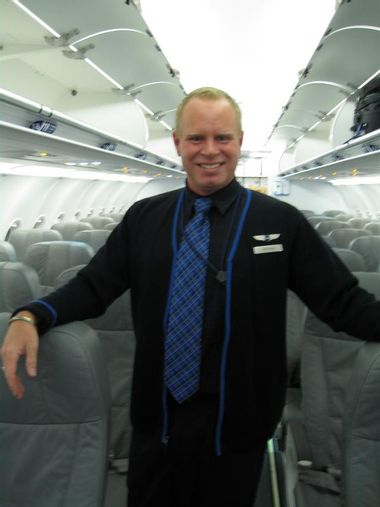
An internal memo from JetBlue condemns flight attendant Steven Slater’s deploying of a plane’s emergency slide and says the airline still doesn’t know what prompted his now-famous exit.

In a memo obtained by The Associated Press, JetBlue’s chief operating officer says the airline is still investigating the incident, but that no one has yet corroborated Slater’s version of events.

Slater’s attorney says an uncooperative passenger prompted his behavior. In the memo, JetBlue, based in Forest Hills, N.Y., says several passengers on the Monday flight “have given interviews that tell a different story.”

Slater has been hailed as a hero on social networking sites for what seems to be the ultimate “take this job and shove it” moment.

The occasional Steven Slater shouldn’t surprise us

Airline workers feel battered and cheated, passengers are scared and uncomfortable. It's an explosive brew

  • more
    • All Share Services

The occasional Steven Slater shouldn't surprise usSteven Slater

The story of Steven Slater, the renegade JetBlue flight attendant who slid his way into infamy, is a strange sort of commentary on the stresses of air travel — stresses that affect frazzled fliers and airline personnel both. (Ironically, this is something I touched on just a couple of weeks ago in my own story — the one about Angry Dude and Lulu the Loafing Stewardess. The Slater incident, though, with its blogosphere-perfect theatrics, has millions of people talking.)

Let’s take the airline worker first. Over the past decade crew members have seen wages fall by as much as 40 percent. Benefits have been slashed, pensions gutted. A certain occupational disillusionment has crept in, leaving many employees feeling battered, cheated and worried about the future. As for flight attendants specifically, I cannot speak personally for the job’s many challenges, protected as I am, so to speak, by the flight deck door. But consider for a minute what it is that flight attendants do for a living: Their primary responsibility, as we all know, is one of safety. In practice, however, the bulk of what they do revolves around managing and supervising a very large number of suspicious, agitated, uncomfortable people — some of whom are any combination of intoxicated, belligerent and scared out of their minds. The occasional Steven Slater should hardly surprise us.

When it comes to passengers, I asked the other day, rhetorically, why it is that so many people tend to lose their minds in and around airplanes. What is it about flying that brings out the worst in us (something David Sedaris explores in a recent issue of the New Yorker)? The answer, I think, is straightforward enough — a blend of uncertainty, physical discomfort and distrust: Flying is something that almost everybody takes part in, yet very few people truly understand. It is mysterious and, to hundreds of thousands of passengers, downright frightening. Myths and fallacies dominate; truthful information (for those who don’t read this column) is extremely hard to come by. On top of this, carriers are terrible communicators and have a self-defeating habit of stoking rather than alleviating people’s fears and suspicions. Last but not least are the crowds, noise and security lines of the typical American airport, not to mention the lack of creature comforts found in the average economy-class seat. Taken together, it’s a rather explosive brew.

I can argue, as I have in this space many times, that fliers are spoiled and unreasonably demanding. They want and expect dirt cheap fares, with planes going everywhere, all the time. This has created a system that in one way is ridiculously convenient, yet logistically and financially stressed to a breaking point. You shouldn’t expect flying to be anything more than it is.

But they do, and maybe that’s human nature. It’s hard not to empathize. I’m as romantic as it gets when it comes to flying, an advocate for sure, but I too often find myself stressed and angry. With respect to so-called air rage, when passengers become disruptive or even violent, I submit these incidents are more noteworthy in their absence than in their relatively limited presence. In a country where 2 million people fly every day, each of them enduring their share of hassles and indignities, it’s something of a small miracle that more of them aren’t making headlines.

Not that such behavior is excused or justified, regardless of whether you’re passenger or crew. It’s curious that in the wake of the JetBlue story, virtually all of the focus has been on Steven Slater. How about the gentleman who incited this whole affair by refusing to sit down, then swearing at a crew member?

As for Slater’s role, what can we say? He’s only human, and what he pulled off was, on some level, everybody’s fantasy. Just the same time, it was shameless and undignified.

And whether because or in spite of that, it got Slater his 15 minutes of limelight. This is a story that made headlines in Sweden. Sweden! I asked why it is that so many people tend to lose their minds in and around airplanes? I could ask the same question of the media. I know that the spin cycles are brief, but is this really such a compelling story? And I expect that JetBlue’s competitors can only look on in a state of bemused jealousy. Once again the carrier demonstrates its uncanny knack for turning what should be an embarrassment into positive publicity.

We’re reminded of the strange saga of JetBlue Flight 292, the Airbus A320 that made an emergency landing in Los Angeles in 2005 because of a tire problem. Moments after liftoff from Burbank, Calif., cockpit indications revealed Flight 292′s forward landing gear had not properly retracted. A low-level fly-by of the control tower would confirm the front tire assembly was cocked at 90 degrees. Unable to realign the twisted gear, the crew would be forced to make an emergency landing with the tires stuck sideways.

The pilots and JetBlue’s dispatch team agreed to a diversion to Los Angeles, primarily to take advantage of LAX’s long runways. But first came the matter of the plane’s gross weight, which was several thousand pounds above its maximum allowable heft for touchdown. The A320, like other small, limited-capacity jetliners, does not have fuel dump capability. This meant about three hours of leisure flying over the Pacific until the poundage was down to the appropriate amount.

Those three hours are what allowed this relative nonevent to be catapulted into a full-on network spectacle. The California news outlets, out and about in search of the usual car chases and traffic accidents, had only to tip their cameras upward to catch the hapless Airbus as it circled. On board, 146 souls readied for what, at least according to the commentators, could very well be a devastating crash. Grown men in the passenger cabin began weeping. Others scribbled goodbye notes to loved ones. Words like “terrifying” and “harrowing” would later show up in interviews with those who “survived.” Those of us who knew better weren’t as alarmed. We saw a jetliner with a mildly threatening problem preparing for what would surely be a telegenic but perfectly manageable landing. The chances of such a maneuver resulting in fatalities were at worst extremely slim.

As it happened, the plane touched down smoothly on its main tires, the nose gently falling as speed bled away until the wayward forward gear, unable to defy gravity any longer, scraped sideways into the pavement, decelerating the jet in a brief rooster tail of sparks. Once it came to a stop, the doors were opened and crew and passengers were escorted uneventfully away. There were no injuries.

As if the live-action saga hadn’t been enough, the media spent the next three days choking on its own hype and melodrama, showing slow-motion replays, interviewing passengers, and generally giving JetBlue all the free advertising it could possibly hope for. The New York Post called Capt. Scott Burke “America’s newest hero.” The Daily News led with “Nerves of Steel,” and went on to detail Burke’s “heroic flying feat” complete with a photograph of the 46-year-old sitting with his wife and dog.

We should all be so unlucky.

- – - – - – - – - – - -

Do you have questions for Salon’s aviation expert? Contact Patrick Smith through his website and look for answers in a future column.

Continue Reading Close

Before flying was bad: My glory days as a flight attendant

My job in the '70s was fun and glamorous, but Steven Slater's exit reminds us just how miserable travel has become

  • more
    • All Share Services

Before flying was bad: My glory days as a flight attendant

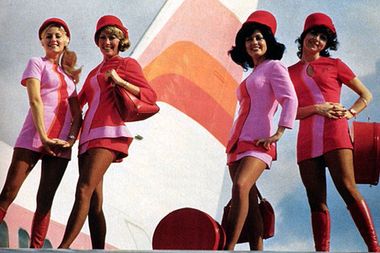
The men came in dark suits, striped ties, white shirts. The women wore suits too — with floppy ties and high-collared blouses, or wide-legged pants and tunic tops. Even the children dressed up. Little girls in party clothes, boys in sherbet-colored Polo shirts and khaki pants. This was 1978, when flying was still an occasion, a special grand event that took planning and care. I worked as a TWA flight attendant then. I stood in my Ralph Lauren uniform at the boarding door and smiled at the passengers through lips coated with lipstick that perfectly matched the stripe on my jacket. Mostly, the passengers smiled back.

For eight years I walked the aisles of 747s and 707s and L1011s in my high heels, handing out menus and magazines, playing cards and stationery. Back then, cocktails came with a red stir rod shaped like a propeller and there were three choices of entrees on flights over four hours — in coach. We served after-dinner drinks on a cart topped with dry ice we’d sprinkled with water to create fog and passed pale green mints on a silver tray. In first class, we laid the linen napkins on tray tables, making certain the TWA logo was in the bottom right corner, mixed martinis and dressed lamb chops in gold foil stockings.

What we did not do, or even consider doing, was jump out the evacuation slide after a fight with a passenger, as Steven Slater, the JetBlue flight attendant, did. It wasn’t that the passengers back when I was asking them to stay seated until the plane came to a complete stop and the captain turned off the fasten seat belt sign were more compliant or better behaved than they are now. Nor was it that we flight attendants were more patient or tolerant. Passengers got up when they weren’t supposed to and yelled when we ran out of manicotti; flight attendants stood in the galley and rolled their eyes at the guy in 47F or got on the P.A. and demanded people obey the rules. But somehow, over the past three decades, all of us have grown tense and miserable — passengers and employees alike. It seems that every time I fly, I hear someone say out loud: Flying just isn’t fun anymore.

When I began my career as a flight attendant, I was a 21-year-old with a B.A. in English and stars in her eyes. I wanted to see every city in the world. I wanted to have adventures that, I hoped, would fuel a writing career some day. Flying was glamorous then, and as I wheeled my suitcase through airports from Chicago to Cairo, kids still pointed and adults still smiled at me. Deregulation had just passed, and I watched as fares began to drop and flying became more accessible to everyone. Yet that did not change our level of service or the passengers’ attitude. A mutual respect existed, and despite the occasional grumpy businessman or harried mother or someone who was just a jerk, I went to work eagerly and left happy. I think it’s fair for me to say the passengers felt the same way.

By the time I hung up my wings in 1986, change had begun. Corporate raiders were buying up airlines, slashing salaries and fares, and cutting amenities. Carl Icahn, who took over TWA, announced he was going to “de-cunt” and “re-cunt” the airline. His plan was to get rid of the flight attendants whom he saw as too old and overpaid and replace them with young, pretty ones who would work for half the amount and double the hours. Even the airlines that avoided the raiders followed them in changing compensation and workloads. I cannot deny that a job that combines physical labor, standing up for long hours, dealing with people, and jet lag is tiring. But the changes in work rules turned tired into exhausted, and the changes in pay turned comfortable into barely able to make mortgage and car payments. Smiling became harder.

But passengers still expected the service they’d grown used to. Simple pleasures like cream for their coffee and pillows on their seats disappeared. Before long, they were paying for food and to check their luggage. They sat in seats with less leg room and had fewer choices of flights, and those flights had more connections than ever before. Flight attendants stopped smiling and passengers started grumbling.

After 9/11, new security measures not only added longer lines and earlier check-ins, but took away our privilege of carrying knitting needles or our favorite moisturizer on board with us. Although we want to be safe when we fly, in some ways it all just adds to the misery of our experience.

Last summer, I used my hard-earned frequent flier miles to upgrade on a United Airlines flight from Honolulu to Chicago. For several years I’d endured long flights with no food, cramped seats, and some of the crabbiest flight attendants around just to keep adding up those United miles. When I sunk into Seat 4A, I expected that for the first time in many years I was actually going to have a great flying experience. Even when the flight attendant announced that the movie system was broken, I didn’t mind. Even when they ran out of pre-takeoff champagne at Row 3, I only minded a little. But by the time they ran out of first-class food, and brought me instead a coach meal still wrapped in that familiar foil, I minded a lot. I minded the way the flight attendants scowled, constantly. I minded that they didn’t respond to the call button. I minded that my seat got stuck and no one knew how to fix it.

I looked at my seat with its fabric worn in spots and I looked at the miserable flight attendants shuffling through the cabin. They were as unhappy as I was — unhappy with all of it, the bad food, the broken equipment, the unhappy passengers, their own crappy jobs. I remembered how, when I began my job at TWA, my cousin called me a glorified waitress. She had offended me with that description. Sure, I served meals, but to me that job was so much more. It was glamorous and fun and sophisticated. I learned about fine wine and gourmet food; I learned how to get around foreign cities alone, how to talk to strangers, how to get along in the world. Today’s flight attendants, selling pre-packaged food and explaining about ever increasing fees and cutbacks, are not even glorified waitresses.

So Steven Slater, a flight attendant for 20 years, the son of a flight attendant and a pilot, finally had enough. His dramatic exit from the airline business made a point that he probably didn’t intend. If we had the choice, we’d probably all evacuate these crowded no-frills planes. Those evacuation slides are meant to be used in emergency situations. When is the industry going to realize that we are all — flight attendants and passengers alike — in an emergency situation?

I understand that we can’t return to a time when flying was an unforgettable experience — for positive reasons. When girls like me imagined putting on a uniform and a mega-watt smile and striding down the aisles of a jet with pride and purpose. When the passengers on that plane felt coddled and safe and cared for, if even for just a few hours. On Dec. 17, 1903, the Wright brothers made their first flight, an amazing and celebratory achievement. Over a hundred years later, that sense of wonder and celebration is almost completely gone. Maybe Slater will remind us of that. Maybe he’ll remind us of a time not so long ago when the sky really did seem limitless, and those of us up there together still felt we were a part of something extraordinary.

Continue Reading Close

Ann Hood's most recent novel, "The Red Thread," is just out in paperback. She is also the author of "Comfort: A Journey Through Grief" and "The Knitting Circle."

Traveler: Jet Blue flight attendant’s curses drew laughs

Passenger Kati Doebler noticed a gash over Steve Slater's eye during flight, says she giggled after his tirade

  • more
    • All Share Services

Passengers on a plane on which a flight attendant infamously had a meltdown gasped and then giggled after he dropped the F-bomb repeatedly over the loudspeakers, a traveler aboard the flight says.

The seatbelt light had gone off for the JetBlue flight from Pittsburgh to New York, and most passengers were scrambling for their carry-on bags when the announcement came over the intercom. Using three obscenities, the flight attendant told a passenger who he said had cursed him out exactly where she could go, Kati Doebler said.

“Everyone kind of gasped,” Doebler told The Associated Press on Wednesday. “The passengers all started to giggle a little bit.”

Doebler, a Pittsburgh website developer, didn’t see who was speaking on the intercom at the end of JetBlue Flight 1052 on Monday. She and most others now know it was Steven Slater, a 38-year-old airline veteran who prosecutors say followed up his comments with a quick exit down the plane’s emergency slide.

Slater’s, uh, unusual departure from his job has made him a cult hero to some, for leaving in a way that many only dream of. It also brought him legal trouble, as he was charged with criminal mischief, reckless endangerment and trespassing.

A defense attorney says Slater didn’t put anyone in danger. Slater posted bail Tuesday night and was seen at a Manhattan apartment building early Wednesday.

Doebler said when she first saw Slater while boarding the flight, he was walking the aisles with a gash over his eye showing fresh blood.

“He said, ‘Oh, they’re always trying to kill me around here,’” in response to a passenger’s question, she said.

Authorities have said Slater hit his head after being drawn into a fight over luggage space in the overhead bins as the flight was awaiting takeoff.

Doebler said she noticed that Slater never put a bandage on his forehead throughout the 90-minute flight.

“I thought, ‘You are handing people glasses. You are handing people ice. You should cover up the bloody wound,’” she said.

Doebler said she never witnessed the fight between Slater and the female passenger at John F. Kennedy International Airport that authorities said sparked Slater’s meltdown. But she heard Slater rail at the passenger who had offended him on the public address system.

“To the m———– who just told me to f— myself, go f— yourself,” Slater said, according to Doebler.

Authorities said Slater then took a beer and deployed the airliner’s emergency slide to leave the plane. By the time Doebler got to the front of the plane, Slater was gone and the door to the exit hatch was closed.

Federal and local aviation officials are investigating the security procedures at the airport that allowed Slater to make it home to his apartment in the Rockaway section of Queens before police arrested him.

A neighbor, Howard Sirota, who lives across the street, said hundreds of city, state and federal officers, a helicopter and a SWAT team descended on Slater’s house Monday before he was arrested.

“They acted like they were capturing Osama bin Laden,” Sirota said. “First they knocked on the door so it shook, and next they took it off its hinges.”

The Port Authority of New York and New Jersey, which operates the airport, the Federal Aviation Administration and the Transportation Safety Administration are reviewing Slater’s exit from the airport, PA Executive Director Chris Ward said.

Slater’s situation was unlike other airport incidents in which passengers had gone into restricted areas, Ward said.

“This is not the way anybody expected an air attendant to be leaving the airport and then moving into the transport system,” Ward said.

Slater is a “credentialed aviation employee, so his capacity to move through security gates is very different than the incidents where we had before with traveling public,” Ward said. “We think we run the best airports in terms of security.”

Slater and his actions continued to be topics of water cooler conversation Wednesday. Slater’s airline even stepped into the blogosphere, poking fun at the attention.

“Perhaps you heard a little story about one of our flight attendants?” the blog joked.

JetBlue Airways Corp., based in Queens, didn’t comment on specifics of the case but acknowledged that Slater’s meltdown has resonated beyond airline employees, saying the event “may feed your inner Office Space,” a reference to the 1999 comedy about disgruntled technology workers.

——

Associated Press writers Sara Kugler Frazier and Verena Dobnik, AP Business Writer Samantha Bomkamp and AP researcher Lynn Dombek contributed to this report.

Continue Reading Close

JetBlue attendant could get prison for grand exit

Steven Slater is unable to post $2,500 bail after court appearance, but public sentiment is strongly in his court

  • more
    • All Share Services

No fed-up worker has ever said “I’ve had it” quite like Steven Slater.

Prosecutors say the JetBlue flight attendant flipped out over a fight with an agitated traveler Monday, cursing at the passengers before grabbing some beer from the plane’s galley and making a grand exit down the emergency slide at Kennedy Airport. He has been charged with felonies and elevated to folk-hero status by thousands who shrugged off allegations that Slater endangered others and praised him for his take-this-job-and-shove-it moment.

Slater, whose father was an airline pilot, wore a slight smile Tuesday as he was led into a Queens courtroom to be arraigned on charges of criminal mischief, reckless endangerment and trespassing, counts that carry a maximum penalty of seven years in prison. The judge set his bail at $2,500, which remained unpaid late Tuesday afternoon.

The 38-year-old airline veteran, who lives steps from the beach in Queens a few miles from the airport, had been flying long enough to see much of the gleam of the air travel experience tarnished by frayed nerves, rising fees, plummeting airline profits and packed cabins.

“One by one all of these niceties have been removed from the customer experience. I think subconsciously, it’s causing passengers to be very angry,” said Pauline Frommer, creator of the Pauline Frommer Guides and daughter of Arthur Frommer. “There’s an us-versus-them mentality.”

Sentiment online appeared to fall in Slater’s court. By early Tuesday afternoon, more than 20,000 people had declared themselves supporters of Slater on Facebook, and the number was growing by thousands every hour. At least one fan set up a legal fund on his behalf.

“Overwhelmingly people said it should have been the passenger who was ejected from the plane,” said George Hobica, founder of AirfareWatchdog.com, speaking about response to his site’s blog on the incident. “I’ve never seen such an outpouring of support for a flight attendant.”

Slater’s attorney, Howard Turman, said his client had been drawn into a fight between two female passengers over space in the overhead bins as the Pittsburgh-to-New York flight was awaiting takeoff. Somehow, Slater was hit in the head, Turman said.

After JetBlue Flight 1052 landed in New York, one of the women who had been asked to gate-check her bag was enraged that it wasn’t immediately available, Turman said.

“The woman was outraged and cursed him out a great deal,” Turman said. “At some point, I think he just wanted to avoid conflict with her.”

That’s when he deployed the slide, Turman said. A spokesman for the Port Authority of New York and New Jersey, which controls the airport, said Slater took at least one beer from the plane galley on his way out.

“Those of you who have shown dignity and respect these last 20 years, thanks for a great ride,” Slater said, according to prosecutors.

Prosecutors said Slater’s actions could have been deadly if ground crew workers had been hit by the emergency slide, which deploys with a force of 3,000 pounds per square inch. Turman said Slater had opened the hatch and made sure no one was in the slide’s path before deploying it.

Passenger Phil Catelinet said he heard Slater’s profanity-laced announcement over the public address system before he left the plane. He said Slater ended by saying, “I’ve had it.” He described the announcement as “the most interesting part of the day to that point” but didn’t see Slater use the exit slide or grab the beer.

It wasn’t until he saw Slater on an airport train and overheard him talking about the escapade that he put it together.

“He was smiling. He was happy he’d done this,” Catelinet told NBC’s “Today.”

Initially, authorities blamed Slater’s blowup on a passenger refusing to sit down as the plane taxied to the gate. But after interviewing more witnesses, investigators confirmed the dispute had begun in Pittsburgh and resumed at the end of the flight, a law enforcement official told The Associated Press, speaking on condition of anonymity because the investigation was ongoing.

JetBlue spokesman Mateo Lleras said Slater had been removed from duty pending an investigation. Prosecutors said no criminal allegations had been made against the passenger.

Turman said Slater was under stress because his mother, Diane Slater of Thousand Oaks, Calif., has lung cancer. His father, a pilot for American Airlines, died more than a decade ago. Reached at home by phone, his mother declined to comment.

“He’s not this type of individual at all,” said Slater’s former grandfather-in-law, Harry Niethamer. “He’s always been a gentleman and he loves that job. He had opportunities to do other things but he always went back to that type of work and apparently was always good at it.”

Niethamer, 82, of Downey, Calif., said his granddaughter was previously married to Slater and they have a son who is now in his mid-teens. He said Slater was a flight attendant for different airlines over many years.

With airlines responding to waning passenger demand by cutting flights and packing remaining ones to the gills, it’s no surprise many people can see Slater’s side of the story, said Thom McDaniel, a union president and flight attendant at Southwest Airlines for 18 years.

“The response has been amazing and that’s probably in part because those people have been stuck on a lot of full, hot planes in the last three months,” he said.

——

Contributing to this report were Associated Press writers David B. Caruso, Colleen Long and Tom Hays, AP Business writer Samantha Bomkamp, AP Travel Editor Beth J. Harpaz, and video journalist David Martin in New York; and Sue Manning in Los Angeles.

——

Online:

Live Air Traffic: http://www.liveatc.net

Continue Reading Close

Steve Slater: Working-class angst goes viral

Steven Slater's dramatic exit earns the Internet's love -- and the envy of disgruntled workers everywhere

  • more
    • All Share Services

Steve Slater: Working-class angst goes viralSteve Slater

Steven Slater is the Susan Boyle of fed-up employees. On Monday morning, he was just a regular underappreciated working stiff. By evening, he was a viral sensation, the man who stepped up to a microphone and did what so many of us have dreamed of doing — only bigger, better and more dramatically than we’d probably ever imagined. Oh, he dreamed a dream, all right.

But as you’ve no doubt read via the news story forwarded round the world, Mr. Slater is no shy British lady with musical aspirations. He was, until very recently, a JetBlue flight attendant. While a flight from Pittsburgh to New York was taxiing on the runway around noon yesterday, as is the custom on planes everywhere, a passenger jumped up to get her belongings from the overhead before the captain had turned off the seat belt sign. Slater asked her to sit down. The passenger refused, and her luggage hit Slater in the head. And when Slater’s demand for an apology was allegedly met with a “Fuck you,” he didn’t respond with a tight-slipped smile and a “Buh bye.”

Instead, he got on the plane’s public address system, and as the plane pulled up to the gate, said something to the effect of, “To the fucking asshole that told me to fuck off, it’s been a good 28 years!” He then grabbed some beer off the beverage cart, activated the inflatable evacuation slide, slid off the plane, ran to the parking lot and drove home. When officials caught up with him to arrest him for his shenanigans, he was allegedly having sex with his boyfriend. He’s charged with criminal mischief, reckless endangerment and trespassing.

This is what we on the Internet like to call EPIC.

Until yesterday, you probably didn’t know that this was exactly what the perfect kiss-off would look like. But once you read about it, didn’t you think, why yes, come to think of it, it would involve cursing, beer, sex and jumping out of a plane? Of course you did. That’s why you posted the story on your Facebook page. That’s why within hours, Slater had become a star – a reminder that with one noteworthy action, a person can gain fame faster than it takes JetBlue to get from Pittsburgh to New York. He now has a Facebook fan page with over 10,000 members, a Wikipedia entry and of course, an outcropping of “FREE STEVE SLATER” T-shirts.  As ready as the Internet community always is to tear you down, when we love somebody ballsy enough to take that freak flag and wave the living daylights out of it, we really, really love him. Just ask the Trololo guy.

Slater’s actions were assuredly grand and possibly a tad overzealous. As New York Police Commissioner Ray Kelly understatedly told CNN, “It’s a strange way to quit, let’s put it that way. I don’t think he’ll be able to come back.” Yet his hall of fame-worthy exit cut right to the heart of a sentiment felt by anyone who’s ever had to take crap from customers for a living, toiled in quiet desperation for an impersonal corporation, or looked at a paycheck and thought, “Are you kidding me?” Or as Drew Carey once said, “You hate your job? There’s a support group for that. It’s called everybody, and they meet at the bar.” If you have never had a job that you fantasized elaborately about storming out on, you just haven’t been working long enough. Suffice to say the news of Slater’s exit made me wish I could get in a time machine and go back to the last day of my year in nonprofit. And that the museum I worked for had an emergency chute.

The economy sucks. The unemployment rate hovers at nearly 10 percent. We’re losing our health insurance, and our homes are being repossessed. That Slater has also, according to reports, been caring for his dying mother gives his desperate act a deeper resonance. Who quits his job at a moment like this? A guy we love, apparently. Nutty as his action may have been, it was a “We’re not gonna take it” win for working stiffs everywhere, a reminder that we actually do have a choice in life, somewhere in between sucking it up and opening fire in a post office. What he did was crazy, but half the people you know are kvetching about how they “can’t quit” their terrible, soul-sucking jobs — and what’s sane about that?

When the sword of Damocles is hanging over your head, it is a bad time to be reckless. That’s exactly what Steve Slater was. He threw it all away. He jumped. Few would have the moxie to leap after him, but look how many there turned out to be on the ground, waiting to cheer for his landing. For everyone who’s ever been abused in the line of duty, for everyone who’s ever been a cog in the machine, score one against helplessness.

Continue Reading Close
Mary Elizabeth Williams

Mary Elizabeth Williams is a staff writer for Salon and the author of "Gimme Shelter: My Three Years Searching for the American Dream." Follow her on Twitter: @embeedub.

Page 1 of 2 in Steven Slater