Alex Mar

The right-wing agenda of the exorcism movie

"The Rite" is the latest film in a genre with a surprisingly conservative message about power and faith

  • more
    • All Share Services

The right-wing agenda of the exorcism movieClockwise from left: "The Exorcist," "The Rite" and "The Last Exorcism"

The aged priest, sweating in his elaborate vestments, leans over the pregnant woman kneeling on the floor, shouting scripture in Latin and dousing her with holy water. As she begins to hiss and writhe violently on the floor, the priest calls to his assistant to restrain her — “And no matter what, do not listen to what the demon tells you!” After an incredible struggle, the girl has been subdued, and her eyes have rolled back into their sockets. She politely smoothes out her skirt and says, sweetly, “Grazie, padre.”

In the wake of last summer’s “The Last Exorcism,” which grossed 30 times its budget, and the announcement that the Discovery Channel will soon be launching an exorcism reality show, comes another addition to the heroic catalog of American exorcism films, “The Rite.” It tells the story of a young American seminary student who is sent to Rome to study at the new Vatican school of exorcism. A skeptic, he soon becomes the pupil of a seasoned exorcist renowned for his unorthodox methods (and played by a flamboyant Anthony Hopkins). As its press campaign breathlessly tells us, there are more exorcisms being performed today than ever before. Indeed, the exorcism genre has become ingrained in our pop culture over the last few decades, and is currently experiencing a real resurgence.

The exorcism movie is the most all-American of “spiritual” films, reducing complex religious beliefs to something more palatable: a take-charge action adventure with clear, targeted results. Much like the Roman Catholic Church, this brand of Hollywood horror frames evil as a diagnosable disease to be cured through extreme treatment, and its spiritual discussion rarely goes beyond the black-and-white “Is there a devil, or isn’t there?” It’s a clear, explicit test of faith in which there’s finally no room for doubt — unlike in everyday experience of spirituality. The genre has a familiar cast of characters, conflicts and a specific message about the nature of evil. Is also a genre with a remarkably conservative slant — a tradition that dates back across the last 70 years.

1943′s “I Walked With a Zombie, ” by one of the great early voices of American horror, Jacques Tourneur, laid the groundwork for the subgenre. While by strict definition a zombie film, it plays out as a story of possession: no flesh-eating murderers here, simply a beautiful white woman who’s been cursed by voodoo. (Warning: Good-looking young women are apparently more susceptible to possession than the rest of the population.) Betsy, a young Canadian nurse, moves to a Caribbean island to work for the Holland family at their plantation estate, only to discover that the mistress of the house, Jessica, is in a catatonic state and can do little more than wander the halls at night in attractive, white silk nightgowns.

While the family doctor dismisses Jessica’s condition as a reaction to tropical fever, the native housemaid tells Betsy to take her to a voodoo priest — for one of cinema’s first attempts at exorcism. While the voodoo priest proves to be a fraud, here “Zombie” introduces another signature element of the exorcism film, the search for hard, physical proof of possession: The natives test Jessica by cutting her arm, and find that she does not bleed. Ultimately, as she witnesses Jessica’s tragic end, Betsy loses her faith in medicine and is forced to accept the existence of inexplicable powers in the universe. The skeptic is transformed into a believer — a trajectory to be repeated in almost every exorcism movie since.

1973′s “The Exorcist” brought voodoo home to the United States, straight to our capital. The film included a number of familiar figures: the Possessed, a good layperson in the grip of evil (Regan, our innocent girl in need of an exorcism); the skeptic who must become a believer (also a layperson, Regan’s mother); the believer, a senior priest who can no longer go it alone (Father Merrin); and finally the hero, often a junior priest (Father Damien Karras), who must convert his wavering belief into full-fledged faith by the film’s end. The priest never interprets, never explains — he saves. In most exorcism films, the victim’s house comes under the religious equivalent of martial law — but who cares, as long as there are results. This often comes at great sacrifice (in this case, Karras invites the demon into his own body and then takes his life), but in the end, faith has been legitimated for the audience. In this sense, the exorcism film is profoundly conservative, and terrific propaganda for the church. The message is clear: when evil comes knocking, you’d better have a priest on speed-dial.

2005′s “The Exorcism of Emily Rose” managed to rope science into an argument in support of faith. This is a particularly twist, given it was based on the true story of Anneliese Michel, a young German woman, possibly epileptic, who died from repeated exorcisms shortly after the success of “The Exorcist.” In a pivotal courtroom scene, a witness claims that the anti-psychotic drug Emily was prescribed worked against the brain activity “the exorcism experience” (as it’s here more palatably referred to) actually triggers. “Emily Rose” enlists science just enough to make the skeptics in the audience feel a bit more comfortable, while ultimately giving us the result the genre dictates. The ruling (guilty but time served) is on the side of faith. The accused exorcist walks free. Even 2010′s “The Last Exorcism” with its initially humorous, faux-documentary approach inevitably brings its reluctant Southern evangelical preacher, Reverend Cotton Marcus, closer and closer to a true test of faith. As he says early in the film, before the communion wafer hits the fan, “If you believe in God, you have to believe in the devil.” Ultimately, the preacher, having seen evidence of evil, is truly compelled to fight it, leading him, in the film’s ambiguous, grim ending, to walk towards an inferno, crucifix raised, likely never to be seen again.

“The Rite,” meanwhile, is a return to the genre’s conservative heart. Unlike Marcus, the young clergy of “The Rite” are champing at the bit to join the Vatican’s new exorcism school. With the training camp at its center, the film frames possession as a terrorist threat: The demons can strike at any time, and you’d better be prepared. The movie itself, based on the experiences of an American priest who studied the craft at Rome’s Regina Apostolorum Seminary, brings a whole new level of methodology to the genre: The hero Michael, a skeptical American seminary student, is given lessons (complete with gory, crime-scene slide shows) in how to diagnose the symptoms.

There is footage of a possessed woman who survived for eight weeks without food or water, and a man whose jaw “spontaneously dislocated while being read the Lord’s Prayer.” But our young priest, who’s not so sure he believes in the devil, is sent for some one-on-one tutoring with Father Lucas, a scenery-chewing Anthony Hopkins as a Jesuit who’s performed over 1,000 exorcisms. Lucas is at first charmingly irreverent: He actually takes a cell phone call during the exorcism of a teenage woman, and admonishes a hard-to-impress Michael with “What’d you expect? Spinning heads? Pea soup?” The viewer may sympathize with his frustration: Even after witnessing the woman spit up three crucifixion-size steel nails, Michael is just not convinced. But Lucas argues: “Choosing not to believe in the devil won’t protect you from him.

The inverse is true in the exorcism film: Perversely enough, to believe in the devil is the key to salvation. When the senior priest himself becomes possessed (the only interesting move in “The Rite”), Michael calls out to him, “I believe in the devil, and so I believe in God!” This recalls the words of Marcus, and of Emily Rose as well, who writes in a letter to her priest shortly before her death, “People say that God is dead. But how can they think that if I show them the devil?” Hollywood is best equipped to deal with spirituality through its darker side — that’s the marketable stuff of horror. It’s also the stuff of conservative America: All we need is for the hero to embrace his faith, and we have won. Although evil cannot ever be eradicated from the world, without it, Good cannot exist. And neither can the church.

Alex Mar is a freelance writer whose work has appeared in Salon, Slate and New York Magazine. Her first film, “American Mystic,” will be released this year.

Going straight

Dennis Cooper's new book leaves behind the sex, violence and gore that made his reputation. Has the cult writer lost his edge?

  • more
    • All Share Services

Going straight

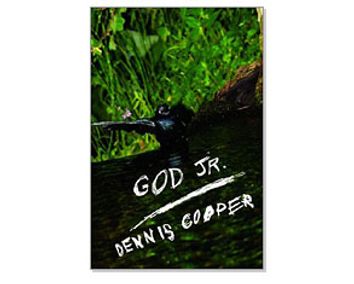
Dennis Cooper, possibly America’s most subversive writer, is known for his fixation with violent gay sex, pedophilia and the dismemberment of lanky young boys by older men. This year marks a creative turning point for the literary renegade: While “The Sluts,” published this past spring, showed us Cooper at his most graphic yet, his latest novel, “God Jr.,” ushers in a PG-rated era for the writer. But can a cult hero put aside his sensational subject matter and find mainstream success?

Cooper’s classics are 1991′s “Frisk” and 1997′s “Guide,” both installments of the five-part George Miles Cycle, completed in 2000. Cooper has described the structure of the ambitious Cycle, inspired by and named for his mentally unstable high school love (Miles killed himself), as “a novel being gradually dismembered to nothing,” with each book more abstract and episodic than the one before. The Cycle made Cooper’s reputation as an incendiary writer, drawing comparisons to Burroughs, de Sade and Bataille — and attracting a frightening number of lean, very young male followers who sit at Cooper’s readings holding hands and occasionally mail him nude photos of themselves. Both “Frisk” and “Guide” feature painfully explicit scenes of sexual torture and murder: In “Frisk,” a young hustler is beaten, raped, hung from attic rafters and cut wide open; in “Guide,” a dwarf porn actor eviscerates and sodomizes a 14-year-old. Cooper’s hipster status and droll deadpan humor aside — set mainly in Los Angeles, his books take digs at trendy indie rock bands, stoners and artists — his writing packs a shock that a number of “edgy” university symposiums devoted to the author has yet to dull.

At their best, Cooper’s novels transcend the gore to become surprising, moving works of literature. This is because Cooper’s art resides not only in the extremes but, incongruously, in a kind of hopeless romanticism — as if the ghost of Miles, his frail and ultimately unknowable love, were hovering over him still. At the heart of both “Frisk” and “Guide” is a message that’s twofold, and tragic: We have to live with the fact that some of our most deeply rooted fantasies can never be fulfilled in reality, and that those fantasies may represent the worst part of us. Cooper’s scenes of brutalization — sometimes carried out by dark characters, but more often with smoke and mirrors, the vivid rendering of the protagonist’s inner life — are ultimately about the desire to know another human being, to own him so completely that you can hold his insides in your hands, and hunt for meaning in that person’s most private parts.

The bleeding of fiction and fact is signature Cooper, a master of metafiction. In “Frisk,” for instance, the narrator “D.” recounts, in vivid letters to a former boyfriend, his sex-fueled murders of a number of local prostitutes — only for the reader to learn that the whole alarming exchange was a put-on. In “Guide,” the narrator is a writer with a cult following who harbors dreams of mutilating young boys — and, incidentally, his name is Dennis. Cooper has said, both as the protagonist Dennis and in interviews, that he blurs the line between his life and his fiction for impact, and he recognizes these distressing fantasies as deriving from his childhood fascination with a group of boys who were found raped and murdered in the woods near his home in the San Fernando Valley. This merging of Cooper and his characters has created a warped mythology around not only the work, but also the author himself. The man has a reputation. This author knows a handful of hip, urban-sophisticate types — writers, editors, painters — who, in spite of their respect for Cooper’s work, steer clear of him for fear of being drugged and lured into a scene out of “Caligula.”

Considering his fierce brand of underground celebrity, it was fairly monumental when Cooper announced this past spring that “The Sluts” would be his final foray into sex and gore — a sort of last, black hurrah. The book, headed to paperback this October, would make fans of “The 120 Days of Sodom” blush.

Written as a long string of review postings on an L.A. male-escort Web site, “The Sluts” maps out a new genre of fiction: the preteen hustler mystery novel. The postings from the johns, known only by their Web I.D.s, paint a portrait of “Brad,” an elusive and deeply troubled 14-year-old (of course) prostitute who becomes the toast of the Web as “the hottest, sweetest little ass,” an “A+++++.” As older men begin to compete for time with the disturbingly submissive Brad, it becomes increasingly unclear who this boy is — and how dangerous he may be. But while this structure lends a terrific suspense to the first third of the book, it devolves into self-indulgent slasher porn in the pages that follow. When Brad’s self-styled guardian Brian announces online that Brad has decided to allow clients to indulge in radical torture sessions, set to culminate in his death at the hands of the most hardcore client, things get really, really ugly. Ugly enough to make “American Psycho” read like E.M. Forster. For instance: At one point, a john describes, with relish, the process of castrating Brad and force-feeding him his own testicles.

This is Cooper at his most repulsive yet. And whereas the characters in “Guide” were searching for beauty — albeit through heroin, child porn and a homicidal dream life — the johns in “The Sluts” are merely searching for the best fuck ever. This leaves the center of the novel hollow and cruel, just so much Grand Guignol literary theatrics. The perceived bravery of committing such horrifying stuff to print does not guarantee a challenging, literary work of art — a remarkable feat Cooper managed to pull off with “Frisk” and “Guide.” By the conclusion of “The Sluts,” Brad’s horrible, weeks-long torture and murder is proven to be a hoax, a conceptual twist — but by then, the graphic content has already taken its toll on the book, reducing it to a couple hundred pages of truly twisted porn.

Just months after “The Sluts” comes “God Jr.,” in which Cooper, as promised, abandons what he calls the “sex and violence axis.” It’s a PG-rated affair, with zero sex and lots of straight suburbanites. No more screwing and slicing up of waifish preteens — in fact, there are few kids present at all. In “God Jr.,” a middle-aged suburban couple, Jim and Bette, deal with the sudden death of their teenage son Tommy by smoking pot, avoiding physical contact, and playing lots of Nintendo. Jim devotes himself to building a monument to their son in the yard: a re-creation of a strange tower Tommy drew repeatedly in his notebook. As Jim learns, Tommy actually copied the building from a Nintendo video game, and he begins to play obsessively, trying to learn something about his son beyond his love of pro skater Tony Hawk and getting high.

The premise of the book feels forced — Jim’s predicament in particular: Out of guilt from having been the driver in the car accident that killed Tommy, Jim has unnecessarily committed himself to a wheelchair and works at a custom tailoring shop that only employs the physically and mentally disabled. This subplot featuring Jim’s co-workers’ high jinks is strained, with an absurdist humor that rings false: The shop is called, with ironic cuteness, Little Evening Out, and was founded by a one-legged Vietnam War veteran. Days at the shop are punctuated by learning-disabled Marianne’s calls to the local radio station to request songs by the Eagles. This self-conscious cleverness pops up throughout “God Jr.”: Nintendo sends a representative to determine whether Jim’s monument is an act of artistic appropriation (and therefore legal) or a form of copyright infringement; Dateline NBC wants to run a segment on the Tommy tower, after a local-color piece in the Times describes it as “a giant piece of inedible candy.” Like the lawn monument, these moments are patched together, and not entirely original.

The absent Tommy fulfills Cooper’s central role of the unknowable teen, a kind of stoned stand-in for the mysteries of youth, a boy whose interior life is inaccessible to adults. But this device succeeds when we’re given a protagonist whom we do get to know — as with “Guide’s” Dennis, defined both through the company he keeps and his vivid, shocking fantasy life. Unfortunately, in this already too-slim book (163 pages of large typeface), we learn very little about Tommy’s parents. What did Jim do with himself before he became “disabled”? What was Jim’s relationship with his wife before their son’s death left them estranged and perpetually exhausted? Jim describes the daily routine: “Bette pushes my errant wheelchair to the couch. She holds me by the belt loops, then slides my ass from the cushions into its more unstable seat. It’s hard for her because I used to be a horny, jogging, gym-addicted jock.” It’s a harsh, efficient description of their grim domestic scene. But the world of “God Jr.” has a void where all that sex and violence used to be: That high-stakes tension is gone, and the clock-punching and gaming of a middle-aged Everyman are no substitute.

Yet, there is innovation in “God Jr.” Take the fragmented, stoner-logic passage in which Jim imagines himself transformed into a pixelated bear within the world of Tommy’s video game. Suddenly, as the bear player, he can speak to the animated ferrets and magical talking plants and discover secret levels and treasures buried deep within the game. While much of the novel lacks the slur and pop of his typically teenage cast, Cooper finds in the game’s innermost dimensions a surreal, quasi-mystical new voice — as when one of the animals first speaks to Jim: “‘You’re Jim,’ says the ferret. ‘Father of Tommy. Uncertain bear. Liar. You want to know what I recall about you when you were your son. And maybe something else.’” Cooper finds a lyricism in the bizzarro video landscape: “We land squarely on a corrugated terrace. It’s smeared with buttery moss and some tiny stained-glass lamps that the bear recognizes as flowers. Two stylized paw prints, evidence of some larger bear or passing Yeti, face a gargantuan tropical plant that someone or something dressed in thrift-store castoffs like a scarecrow.”

Jim interrogates the animals about his son, eager to find significance in Tommy’s fixation with the game — he wasn’t just another high school burnout with a Nintendo habit, was he? The plant says that Tommy used to leave the game on “pause” for long stretches of time, more interested in staring at the screen than playing, and this induced in the fantastical creatures a sort of crisis:

“First, you need to understand something,” says the plant. “The bear is the bear. Your eyes are one degree livelier than the pattern on a teacup. You walk, you trot. You kill, you solve puzzles. There’s just not a lot to you … That said, I’ll tell you this. Tommy spent weeks and weeks right down there doing nothing … We began to speculate. Why is the bear still here? He had no answers to give us, so we thought about ourselves. Why are we still here? Theories abounded … [T]he questions got mystical … [T]he consensus here is that Tommy bear was God.”

Much like Jim’s bleak hope for a message hidden within his son’s average-teen behavior, the virtual animals see “God” in Tommy’s bored gaming breaks. Here “God Jr.” becomes recognizable as Cooper: An existential puzzle, the book is ultimately about surfaces, and the futile search for something meaningful underneath.

If this novel is not Cooper at his best, it’s an unavoidable step toward breaking out of the sensational corner he’s painted himself into. After all, how many great novels can someone write about raping and dismembering boys? As the cold and two-dimensional “The Sluts” proves, Cooper can find little more to mine from this terrain — he’s run that obsession into the ground. “God Jr.,” while slight, should be recognized as a bold move: One of our most fearless authors is struggling to see what’s left of his voice once the flash and gore have been peeled away. Unfortunately, he still has a long way to go.

Continue Reading Close

The rebel in winter

The leader of the Zapatistas turns to pulp fiction to spread his message. But what power does fiction have to further a political cause?

  • more
    • All Share Services

The rebel in winter

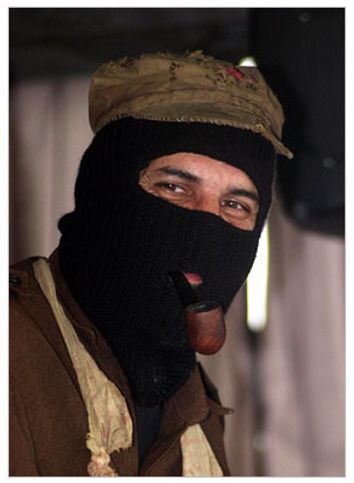
Subcomandante Insurgente Marcos, the charismatic, masked leader of the Zapatista movement for indigenous rights in Mexico, is hard at work on his most unorthodox manifesto yet: a crime novel. With the help of one of the genre’s most popular authors, Pablo Ignacio Taibo II, “Muertos Incomodos” (“Awkward Deaths”) is being serialized in Mexico City’s brazenly leftist daily La Jornada and will soon be published, in book form, in eight countries. But does Marcos truly believe this novela policiaca will further his cause, or is this the pulp hobby of a revolutionary in twilight? What’s the relevance of political fiction, anyway?

More than a decade ago, the former philosophy professor dropped out of bourgeois society to take up the cause of Mexico’s indigenous peoples, appearing in public only in full fatigues and a black ski mask, a macho pipe dangling from his mouth. Not Indian himself, he’s transformed himself into “el enmascarado,” the Lone Ranger of the jungles of Chiapas, an almost mythic intellectual fighter for social and economic reform. The romantic prince of anticapitalismo, his communiqués often take the form of grandiloquent poems: He calls the Zapatista rebels “the voice that arms itself to be heard/ the face that hides itself to be seen.”

Lyricism and dramatic flair aside, Marcos has managed to get things done: He organized, motivated and garnered much-needed media attention (and public sympathy) for the plight of the millions of wildly exploited Indian farmers in the southeast. But with the passing of an Indian-rights law by Mexico’s Congress in 2001 — based on the Zapatistas’ demands but eviscerated by a government friendly to big business — the movement lost its steam. That same year, President Vicente Fox decreased the number of federal troops stationed in Chiapas, and the worst abuses against the Zapatista communities, including torture and arson, seemed to have subsided. The revolution had lost its sense of urgency.

At which point it appears Marcos worried, wondering, What next? How to make the movement seem vital again?

This brings us to the Subcomandante’s foray into the literary world. In early December, he sent a note to Taibo, whose clever detective novels are big sellers in Latin America and Europe (think Grisham meets García Márquez), asking him to collaborate on a novel. A plan was hatched: The two agreed to alternate chapters, with Marcos mailing his pages from his mountain hideaway to the author’s Mexico City pad. Within no time, La Jornada was printing the installments in its Sunday edition.

With little in common in lifestyle — one organizes lit festivals while the other organizes guerrillas — the odd couple do share the bond of flagrantly left-wing politics. Each has spoken out against government corruption and the vast socioeconomic inequalities in Mexico, and La Jornada has published most of Marcos’ numerous communiqués and Taibo’s political essays. “The publication of a novel in chapters revives an old tradition,” remarks La Jornada editorial page editor Luis Hernández, who printed the first chapter of “Muertos Incomodos” on Dec. 5. “The newspaper was interested from the first moment. And we will publish as many chapters as the writers choose to write.” The novel tells the intertwining stories of Marcos’ protagonist, Zapatista operative Elías Contreras, who takes his orders from the pipe-smoking Zapatista leader known (of course) as Subcomandante Insurgente Marcos, and Héctor Belascoarán Shayne, the private detective at the heart of Taibo’s previous series. Contreras is sent on assignment to Mexico City to meet with Belascoarán, who is investigating cryptic answering-machine messages being left by a leftist assassinated years ago.

“I asked myself, when I received this invitation, Have you ever in your life said no to a challenge?” explains Taibo, who put down years of work on a Pancho Villa biography to take up the novel. “I think Marcos is a wise guy, so I said, ‘Let’s jump.’”

But what’s in it for Marcos?

Imagine the elusive revolutionary, the faceless rebel who once marched into Mexico City to speak to a crowd of 100,000, now finding himself with hardly an audience at all. Cloistered away in the jungle, he’s growing restless. The phrase “cultural irrelevance” darts through his mind. No grand initiatives on the calendar, he thumbs through his duffle bags stuffed with Marx, Durkheim … and several dog-eared Taibo paperbacks. The self-styled soldier turns from writing propaganda to penning genre lit, his collaboration with Taibo his version of the Iowa Writers’ Workshop. (We are, after all, talking about a man who’s led seminars in aesthetics.)

Amusing as the image is, it touches on something: What does it mean for a revolutionary to turn to literature? Beyond his “poetic” communiqués, Marcos has anthologized short stories, publishing “Our Word Is Our Weapon” at the height of the movement, when the Zapatistas awaited their hearing with Congress in 2001. And “el Sup,” of course, is not the first radical leader to do so: take Saddam Hussein’s allegorical novels that pit glorious Iraq against the corrupt Western powers (not to mention his more recent poetry from a maximum-security cell). Can such scribblings amount to more than ego fodder? Or are they the ultimate symptom of a revolutionary in winter, nostalgic for the good old days, spinning a fantasy to make up for his lame-duck reality?

But let’s, for a moment, give Marcos the benefit of the doubt and assume that he is a true believer in the suggestive powers of fiction, in the possibility that a crime novel may be the most effective means of insinuating propaganda into the popular imagination. Can fiction still pull off such a feat? Marcos is one of the great propagandists of our time, and, according to Hernández, La Jornada quickly garnered a 25 percent rise in its Sunday readership with the inception of “Muertos Incomodos.” The New York Times and the Guardian reported on the literary project as international news.

But while packed with venomous references to neoliberalismo, globalization, and those who “disappeared” during the anti-leftist “dirty war” of the ’70s, the wrench in the book is literary: It’s dismal. Its chapter-by-chapter production leaves the story without clear structure and intent, and it’s as uneven as the talents of its authors, with Taibo’s installments miles ahead. Despite his painfully clear aspirations, Marcos — who has at this point written chapters 1, 3, 5, 7 and 9 (out this coming Sunday) — is no fiction writer. Rather than flesh out his hero, Marcos tends to prefer introducing new characters just for the hell of it, as with the brief appearance of a sassy transvestite mechanic. Generally speaking, his prose reads as if it has been written by a philosophy professor turned resistance leader, which is to say it begs for an editor. To put it kindly.

Taibo, in contrast, understands his genre inside out. He alternates concision with Chandler-esque detective-speak. Most important, he understands noir humor — hence the low-level government official with a limping, cigarette-swallowing dog. With relish, Taibo’s P.I. describes himself as “left-wing, but without having read Marx at 16, without having been to enough demonstrations, and without having a poster of Che Guevara in my house.” Ironically, Taibo’s descriptions of the political landscape are also more evocative than Marcos’, and his political farce is that much more outrageous — as when he writes in a subplot suggesting that “bin Laden” is actually a taco maker turned porn actor named Juancho set up in a studio in Burbank, Calif. For Taibo, political content goes hand in hand with crime writing: “When you write mystery and crime, it’s always political,” he remarks, “because crime deals with abuse of power in this country. So if [the Zapatistas] want to send a special message through the novel, then let it come — I am sending messages through the novel, too.”

It must be said that with the publication of each successive chapter, Marcos seems to be learning from the seasoned veteran Taibo. His structure has become sharper, his tone more playful. “It’s a game, a friendly game,” says Taibo with a laugh. “It’s like, ‘Let’s make it more difficult, please. Now you have to jump from the third-floor window instead of the second.’ We don’t know where it will go, and in this case there’s no way to go back and revise.”

Perhaps most interesting about the Marcos-Taibo partnership is how much it has in common with the bestselling pairing of Tim LaHaye and Jerry B. Jenkins, coauthors of the blockbuster “Left Behind” series of apocalyptic Christian novels. If Marcos’ intention in co-writing “Muertos Incomodos” is to revitalize the Zapatista movement, then it couldn’t hurt for him to take a tip from these American evangelicals. The two divide their duties between LaHaye’s bombastic interpretation of the Book of Revelation and Jenkins’ innate understanding of pop fiction. They’re an equally odd couple — LaHaye the 70-something radical theologian and founder of the Moral Majority, and Jenkins the 50-ish sports and mystery writer whose favorite author is Stephen King — but they have their faith in common.

When LaHaye decided to write a novel imagining the Second Coming in contemporary times, his agent introduced him to Jenkins, and the two came up with a work method: For each book, LaHaye sends Jenkins an explicit outline of plot based on scripture, which Jenkins then weaves into the fictional story of edgy journalist Buck Williams and pilot Rayford Steele, left on earth to somehow survive the rule of the Antichrist. (LaHaye’s far-right views are also worked in neatly: anti-abortion, anti-Catholic, anti-United Nations.) Since 1995, their brand of collaboration has produced a total of 12 novels, with yet another due in March. The formula has sold a staggering 62 million books to date, outselling titans like Grisham and King.

On one hand, writing a novel is the most benign pursuit a person can undertake — paling in comparison, certainly, with facing down some 70,000 federal troops in a cornfield with black-market machine guns, as the Zapatistas have done. But when you consider that LaHaye and Jenkins have managed to sell their tracts to tens of millions of people, the endeavor becomes a little less innocent. Of course, a Marxist movement originating in the mountains of Mexico may never have the same potential audience as fundamentalist Christianity does in the States, but there are signs of an appeal beyond Chiapas. Proceeds from the sales of international rights to “Muertos Incomodos” are already in the six figures, with the profits going to Enlace Civil, a Zapatista-affiliated group, to promote the health and education of the people of Chiapas. Perhaps it’s time for Marcos to give up playing the auteur and consider playing LaHaye to Taibo’s Jenkins — for the sake of the millions of indigenous Mexicans he claims to represent.

Continue Reading Close

Politics as crack cocaine

Novelist Stephen Elliott talks about John Kerry the guitar strummer and avid reader, George W. Bush the magnetic caveman, and his own loopy new book about the 2004 campaign.

  • more
    • All Share Services

Politics as crack cocaine

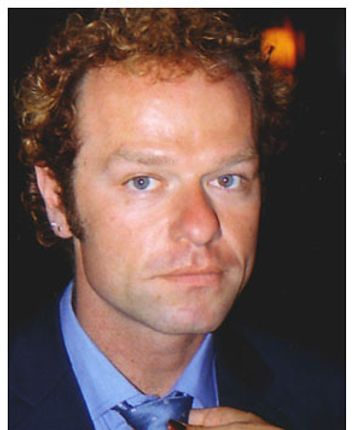
Stephen Elliott is the author of “Happy Baby,” a dark, lyrical novel about juvenile institutions, drugs, abuse and S/M, inspired in part by his childhood as a ward of the state of Illinois. (Salon’s review called it “a most impressive little novel … heartbreakingly and bewilderingly alive.”) In the summer of 2003, having garnered attention for his essay on Howard Dean in the Believer, Elliott improbably turned political commentator, dropping everything to follow the candidates and bring together two great American traditions: the presidential election and the cross-country road trip. His deeply unconventional and heartfelt book on the campaign, “Looking Forward to It: Or How I Learned to Stop Worrying and Love the American Political Process,” was released this month by Picador, and the result is a gonzo, do-it-yourself look at the winding road to Election Day.

When you wrote the piece about Dean last September, were you thinking of it as a one-off, or the beginning of something bigger?

Ever since 2000, when I followed [Ralph] Nader, I wanted to get back on the trail, to write a book about it. I was ready to walk away from everything I had to go follow this campaign on my own dime. I thought, I’ve got $20,000 in the bank, and I could just go blow it! Fortunately, when the article came out, I was able to get an actual book advance.

How much was that?

Fifty thousand dollars — which surprisingly doesn’t go that far when you’re trying to keep up with the candidates. Alex Pelosi [director of the documentary film "Journeys With George"] told me that her travel cost half a million dollars, which I could never afford. I would be the only guy on the campaign bus who wasn’t getting on the plane. I’ve read “Fear and Loathing: On the Campaign Trail” six or seven times — it’s a kind of gold standard — but Hunter Thompson had total access, and all I had was my advance.

What was it about the 2000 campaign that made you think, OK, next time around I’ve got to do this?

It was my first time writing nonfiction. I was traveling through the deep South, and I’d send these e-mails from the Nader trail, just dispatches to my friends. And the editor from the Sun literary magazine [in North Carolina] got in touch and said he wanted to run my e-mails. It was the first moment of, “Oh, I can write nonfiction like that?” Because I didn’t think that that was a publishable thing that I was doing — just off-the-cuff, full of lies and creativity. For instance, I wrote one dispatch about how I was at a press conference with George Bush, and he had just come from executing somebody in Texas. And he’d pulled the switch on the guy, but the switch didn’t work. So he had taken out a pocket knife and stabbed the guy instead — and he’d shown up at the press conference covered in blood. And Gore responded to this by promising to clean up pornography on the Internet. So I’d send out dispatches like that: partly what I was doing, and partly this made-up thing.

At any point did you think, OK, now I’m a journalist?

Selling the book, probably. But then I had to actually write it, and I totally didn’t know what I was doing at all. The first week on the campaign I thought, I don’t see how this can possibly work. And even if I can do this, how can I do this for a year?

Was this the same moment at which you realized the other journalists weren’t really going to let you crash on their hotel room floor?

Right! They had no respect for me — I was definitely way down at the bottom of the totem pole. Nobody gave a shit — “Oh, you write novels? Isn’t that interesting. I’m going to be the next Adam Nagourney.” I’d done nothing in my life that would have impressed them. I’m thinking, “What am I doing here? Everyone hates me, I’m alone, it’s fucking cold, and the people in New Hampshire suck.”

You do come across in the book as the scrappy outsider.

These guys, they travel with all these bags! I never brought more than two changes of clothes even if I was on the road for a month. I gave up my apartment. You get so lonely. And let me tell you, you start to freak out. So I called my girlfriend, and she broke up with me.

Is this the person you call “demon woman”?

Yeah. She broke up with me on Super Tuesday — on the day Dean finally won his first state. Can you believe it? She was always trying to undermine the book.

You wrote that “politics is about getting outside of yourself and your own problems for a little while and fully immersing yourself in the lies and deceit of others.” Is that the appeal of following a presidential campaign?

People who don’t want to deal with their own issues get into politics. It’s completely consuming, like compulsively washing your hands. Once I was hooked on presidential politics, I was totally fucked forever. It’s like crack.

Seriously, how did you end up becoming politically active?

Being a ward of the court, I had an intimate relationship with the state — I’ve seen firsthand what effect the state has on the people that are in its charge. So when the state is low on money, I know what budget cuts mean: When you’re a ward of the court, it means worse food, less staff, unhygienic facilities and home closures. I know the direct impact of all these things. So that may be what drove me to politics.

You’ve mentioned as a personal turning point California’s Proposition 21, which made it easier to try young offenders in adult court.

Prop. 21 was started to help [former California Gov.] Pete Wilson in his 2000 presidential run. And once he wasn’t running anymore — nobody wanted him — it stayed out there like a weed. It came up for a vote and passed, and tens of thousands of children went to jail as adults and the judges couldn’t even stop it from happening. So you have all these kids now who don’t belong in adult institutions — which is actually much more expensive than putting them in the children’s facilities — and the children are coming out damaged, more likely to be repeat offenders. Outrageous. And I just realized that if I had worked full-time, I could have stopped that bill. But I didn’t have anything to do with it. It was my wakeup call: If you’re not political, and you don’t pay attention, bad things happen, there are consequences. And if you participate, you can have an effect.

What was your situation like growing up?

I left home when I was 13, after my mother died, and slept on a rooftop for a year. I got arrested, and since I didn’t know my father’s new address, the state took custody of me. The first place they put me in had 30 kids to a room. Everyone thinks it’s about inspiration and volunteers — it’s not! It’s about money, and getting more funding, which we won’t under this administration.

Is this book meant to be consciousness-raising, or your own personal journey, going on this road trip for yourself in a way?

I was doing this to figure out where I stood. I was trying to understand what my feelings were about the American electoral process and about this campaign and about the last campaign. Could I live with what happened in 2000, and could I live with what would happen in 2004 without participating in it? Could I vote for these guys — for Kerry or Dean or any of these people who seem so far removed from my ideals, which are, you know, slightly left of the Haymarket riots? And what makes the campaign so much fun is that you’re learning at such a pace, immersed in information all the time. So I went out to figure out who I am, to have a great time, and somebody’s given me the money to do what I want. But I was aware that I would also be educating readers.

From the start, you were much more excited about Dean than Kerry.

I think a lot of liberals were so disappointed with Bush, with our actions in 2000 — we didn’t pay attention, didn’t think there was a difference between Bush and Gore, and we were proven drastically wrong — that we pinned our hopes on Dean. We made him out to be more than he was. He was never the hero of the story. He was the antiwar candidate, but he never had to vote against the war, never had to take a stand. If he had been in Kerry’s position, would he really have voted against it?

But you seemed so skeptical of Kerry, at least initially.

A politician to the core. He’s such a boring person to listen to, and I was like, if he wins, I’m going to have to spend a lot more time with him, and that’s going to really suck. And he ran such a dirty campaign in Iowa against Howard Dean. But then you get involved in the general election, and you see that however Kerry was fighting Dean, it’s nothing compared to how dirty a fighter Bush is. To paraphrase Hunter Thompson, the worst thing that Kerry has ever done Bush does every day of his life as a matter of policy. [Laughs.] Plus, when I had a chance to talk to Kerry on the bus one-on-one, I did like him. He’d play guitar for us on the road. And he’s a voracious reader: He’s always got six books going at a time.

What was he reading when you last saw him?

Actually, “Fear and Loathing: On the Campaign Trail.”

You were there for the demise of the Dean campaign in Iowa.

To bring all these people from out of state to knock on everybody’s doors — 4,000 kids in orange hats — nobody ever told these kids to shave, nobody trained them. I mean, clean them up! Now I think Kerry was truly the best pick to go up against Bush.

But how do you feel about this business of voting for the candidate who seems most likely to win?

It’s totally screwed up. That was one of the ideas I wrestled with on the trail: If we vote for someone because they’re electable and then they don’t win, then we’ve fucked ourselves, we totally threw away our vote. Everyone who voted for Gore over Bill Bradley because they didn’t think Bradley could win, well, they got screwed.

I have to admit that I’ve always bought into the idea of the campaign being seamless, this polished political machine that you see glamorous glimpses of on the nightly news. But there are truly unsexy scenes in your book, where you go to see Kerry give a stump speech in some dingy venue, and there’s nobody there …

There were moments when less than 10 people showed up, and you’re on the outskirts of some tiny town. Like at the College Convention, all these kids were there for Kerry, waving signs and shouting, “Go, Kerry, go!” And he comes running down from the green room, and he’s supposed to turn right and head to the stage — but instead he runs left and bails through these students and heads straight to the bathroom and closes the door. And he’s in there for, like, 20 minutes, and these kids are shouting, “Go, Kerry, go!” cheering on the candidate in the bathroom. These are not moments you see on television.

You told me that at one point you were sleeping in your car.

Oh, I did a lot of that. But when I was on the bus I would stay at a hotel with the candidates because that’s where the press were staying, and if I was going to get any good information it was going to be over awful garlic chicken wings with Jodi Wilgoren at the hotel bar in Cleveland while Al Gore’s upstairs giving John Kerry $6 million. But when I wasn’t on the bus, I’d be in my car, trying to keep up, hitting 100 when I know the president’s going 90 just to stay ahead.

What did you think of Bush in person?

I kept thinking how strong he is — like, if we were cavemen, I would want him to guard my cave. In the audience at Bush events, there’s a lot of anger, but with Bush himself there’s this calm, this animal magnetism.

Actually, the chapter about trailing Bush is structured in this very conscious, literary way, with shifts in perspective: Second, then first, then third person …

I liked the idea of pretending that the reader’s getting three different points of view when they’re all really coming from the same voice, the same person. You can have so much fun with the narrative in these things — and still, I felt that what I was doing was more honest than most journalism.

So you do think that.

I’ve decided! Because these people feel like they have to give equal time to the people who are telling the truth and the people who are telling lies. So you open up USA Today, and here’s the press release I got this morning from one of the campaigns, and here’s a quote from the spokesperson for the Bush campaign — these are people who are paid to lie, so calling them for a quote is ridiculous. At least with my book, if I think somebody’s lying I say that I think they’re lying.

But that’s partly due to the fact that you’re writing this one long project, and you don’t have to maintain any of these relationships.

That totally freed me up — I didn’t have to make friends, I wasn’t constrained in that way with these sources.

How do you see the divide between your nonfiction and your fiction?

The nonfiction is happy-go-lucky, and the fiction is really dark — and I don’t know which is truer to who I am. My fear is that the fiction is me, and the nonfiction is who I pretend to be.

The tone of your fiction is so personal, and much of it deals with S/M  “Happy Baby,” in particular. Do you consider yourself a submissive?

What? It’s complicated. Maybe? Yes? I’m blushing!

Is there a link between S/M and politics?

Oh, completely! People who have that incredible need for power are often the ones searching for, you know, the punishing mother figure. With Republicans especially, there’s all this guilt associated with sex, and S/M feeds on that. And hypocrisy.

You told me that your next book may be a novel told from the perspective of a human shield in Iraq. You even thought for a brief time that you would go over and join them.

I felt this was masochism in the political process: This is the way masochists protest, lying spread-eagled on top of a building while waiting for a bomb to fall on them. You just go to this place where you sit and you wait — a month, two months, maybe the bomb comes. And there’s something weird and beautiful about that, I think. I just thought, Wow, I can understand that. I was a hair away. But it was too great a sacrifice. I wanted to protest — but you have to have a life to come back to.

Continue Reading Close