Annie Auguste

Married man

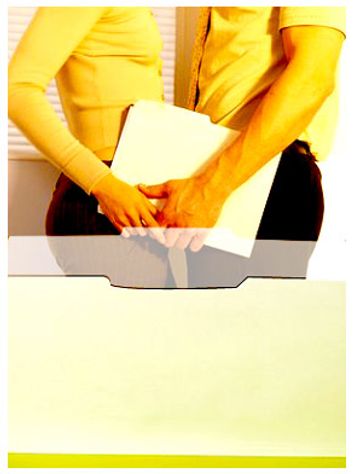
I was essentially a good girl, a serious girl. When I left my apartment that morning, I certainly didn't think I'd return that night with my boss on my arm.

  • more
    • All Share Services

Married man

I think about him often these days, sometimes with an overwhelming intensity. When he enters my mind in a flash I’m sure that he’s sitting somewhere in Finland thinking, momentarily, of me. For how else to explain the sudden presence of someone I haven’t seen in nearly 20 years? Why, for no apparent reason, does this memory unmoor itself from layers of lived experience?

It was a cliché, of course. Sex with a married man. Why not? I thought. I was in my 20s. One crushing love had walked into my life, wreaked emotional havoc for a few years, and walked out. I’d had my share of fleeting adventures and shaggy-dog boyfriends. Still, I’d never felt true physical passion. I was essentially a good girl, a serious girl, unaware of the weight of marriage; unaware that it was precisely the confines of the box itself, on some level, that made our relationship work.

He made the first move. Which was ballsy, considering we worked for the same company and he was my superior. It was the 1980s and a putative politically correct culture was blooming in companies all over America. He could have easily gotten fired or sued. But he wasn’t American. He wasn’t hostage to the rules of a Puritanical culture so foreign to his own.

It started this way: We were working late at the office one night. Leaning over a stack of files I said, I’ll be in big trouble if I don’t finish this project on time. And he said, Not if you’re my lover. How impertinent of him, I thought in the moment. But later that night when he invited me to dinner, I accepted despite a flare that had just ignited in a quiet, cautionary burst.

He was the CEO, wore dark suits with impeccable ties, and came from Finland, where men swam in polar seas and held their liquor. There was a remote, appealing otherness about him that was vastly different from the world of jocular good old boys who worked at the office. Until that moment everything separated us — language (his English was quaint, stilted, continental), age (he was at least 15 years older than me) and a corporate hierarchy that kept him in a world of upper management and me in a world of weary junior executives and aspiring university recruits. Until that moment I was unaware of any sexual interest on his part, though perhaps I was simply too young to interpret the subtle innuendos of a man who’d lived and loved a lot longer than myself.

A slow-brewing seduction played itself out at the dinner table. Here now was a potential new life unfolding for us both, a surprising and private vista of sensual possibility to mitigate the relentless tedium of the corporate grind, a reminder that behind the stage set of management props unexplored personal lives were waiting to be mined. When he escorted me to my car and said, I want to kiss you, a silent battle ensued between brain and body. Do it, body implored. Don’t do it, brain reasoned. Yes. No. You only live once. Stop while you’re ahead. Feel. Think.

Body won. His mouth, soft and full of promise, was like warm bread.

These things are usually simple. He followed me to my apartment. It was a tiny place near the sea. When I left that morning I didn’t think I’d return that night with my boss on my arm. The bed was unmade; there were dishes in the sink. My mind pored over these mundane details as we walked up the stairs and not over the essential facts: that here I was, getting ready to have sex with my boss. Sex with a married man.

At the time wedding bells weren’t high on my personal agenda and being married was an abstraction, something a little bit hokey that other people did. Married with kids. Somebody even made a sitcom out of it and a whole nation laughed at the queasy predicaments of marriage and family life. Engulfed by the centrifugal force of our working world — an all-encompassing universe that dwarfed everything around it — it was easy for me to forget that somewhere, wearing a nightgown perhaps and reading in bed, his wife was waiting for him; his kids, two blond toddlers who’d occasionally come by the office, were sleeping.

What a body. I reveled. For underneath the ungainly padding of the three-piece suit the man was all raw muscle and animal. He was Harvey Keitel in “The Piano,” Charles Atlas without the camp; unfazed and at home in his own nakedness. He was also the first uncircumcised man I’d seen, and his genitals hung there like an exotic fruit, with the startling full-bodied dangle of a horse dick. I was absolutely not ready for this.

It was passion that I’d never known before. It was overwhelming, too. For he was drunk with pleasure in a way that defied the act itself, as if in making love he might siphon something off me: youth, a salve against the imminent waning of his faculties, some sort of deliverance to a place he once knew long ago. It didn’t dawn on me until that moment that sex could be more than just carnal pleasure, that it could be laced with longing, steeped in a desire to hold on to lush freedoms that inevitably dissipate with the passing of time.

We did it as often as we could. He got a little reckless. He’d pull me into his office, kick the door shut. His secretary kept her eyes on her keyboard but her eyebrows were raised. She knows. I know she knows. He didn’t seem to care. Or at least he denied the possibility. No, she doesn’t. She’s clueless. He threw me on the table where a pile of annual reports were stacked. They went flying. It was a perfect metaphor for the pressures of the go-go ’80s and our manic shareholders: Fuck you. Quite literally.

Familiarity breeds contempt, or so they say. But must it always? We’d been having an affair for several months when I began to wonder: Why the adultery? Had he given up on his wife? Did they still have sex? “Sometimes,” he replied, a bit warily. Which meant? I didn’t press on. That night he did something that I’ve never seen since: In a paroxysm of desire he brought himself to pleasure in front of me. I sat there, leaning against a tower of pillows, taken by his total lack of self-consciousness. What was this source of rapacious sexual appetite? Plying the depths of his own capacity for pleasure, how deep was the well? How many women had accompanied him on this carnal journey? I put the questions aside, however, and our relationship continued to sate me in thick, abundant ways.

A year into our relationship I finally met her. His wife. We were at a corporate retreat. Spouses welcome. She was tall and pleasant. With lederhosen and braids she would have been a buxom Heidi. I said hello, shook her hand. For a moment I imagined them both in bed, intertwined. I didn’t feel jealousy; instead, I felt a discomforting intimacy as if, in making love to her husband I had, by extension, made love with her.

And in some ways I had. We were sharing the same man and the same body, never mind that there are multiple versions of the self that we parade in public or reveal in privacy: Husband. Lover. CEO. Father. It wasn’t until I had seen him in his own domestic habitat for the first time — an immaculate place filled with big windows, matching furniture, photos of wistful family moments — that I felt the pull of marriage. While I couldn’t articulate it at the moment, I realized that in anchoring him to its comforts and constraints, his domestic life gave him the very energy he needed to defy it.

Without the sex, what were we? We were lovers but not in love. We were intimate friends and co-conspirators in an illicit life that could not exist in the full light of day. When I walked into his house for the first time, my love for him was annulled by the family love inhabiting his place — an enduring love jumbled with kids, shopping lists, vacation plans, the stuff of life. And so when he led me outside to a lounge chair in his backyard and unbuckled his belt, I felt bereft. Of what? Years later I understood that I felt bereft of the very hearth and sense of home he seemed to have here; of this place he disappeared to on weekends while I wandered in my apartment, trying to have a life without him. He stood there, looking dismayed. What’s wrong? I made something up. We spent the afternoon drinking iced tea in tall glasses and didn’t say much.

Was this the beginning of the end? We had been together more than two years, but all things come in cycles like weather. And so, bundled in the atmosphere now, were the first intimations of change; the slow realization that no matter how much one can surrender oneself in the act of merging sexually with another person, inevitably we all return here: two people, divided by domestic lives and personal circumstance.

Shortly after visiting his home I grew tired of living the life of an impostor; months later in a tempestuous moment of restlessness, I left the job. We kept in touch by phone while I established myself as a freelancer. More rapidly than I would have imagined, the corporate world faded away. When we met at a bar weeks later I saw him for the first time in a new light: An older married man, trapped in a life with his corporate baggage, his big libido, his wife and kids. There was a sadness in the man that I hadn’t sensed before. Had it always been there, eclipsed by our sexual encounters, masked by the longing to transcend the constraints of domestic life and corporate pressures?

He wanted to resume our relationship, to pick up where we’d left off. After all, we were lovers but we were also close friends, confidants. Nothing had changed for him. But I’d set my wheels in motion and even as he sat there, leaning over a cocktail and straining for a sense of connection, a part of me had already departed for good. I felt both heartless and heartsick and said goodbye, not knowing if I’d ever see him again. And then a strange thing happened: In the blink of an eye, 20 years passed.

- – - – - – - – - – - -

Our relationship lived, quite literally, in another century. I’m married now with two kids of my own — two luscious creatures who are, in some respects, the glue that keeps our marriage together. My husband and I are no longer green with youth, and our relationship, like most other marriages of 10-plus years, is underscored by both love and compromise. My libido is largely subservient to this enterprise called marriage, with all its far-reaching tentacles. I want to want it — sex with strangers, the thrill of new encounters — and yet do I have the sang-froid to handle the emotional havoc it might create? Is there something wrong with me? Should I be pining away for renewed lusts and extreme sensations? After all, an entire industry is dedicated to helping an aging nation keep it up. In all these questions, the simple, basic fear prevails: that my marriage and family life might fall apart like a house of cards if I let the floodgates of passion break open with another man. That there would be nothing left but a rickety foundation on which to rebuild any semblance of what was before.

It’s been two decades since I was what some might call a mistress (though the very word evokes a grown-up sophistication that belies my youth at the time), and yet the seamless way he navigated between the world of marriage and adultery will always stay with me — a reminder that things are often not what they appear to be and that in our quests for new passions we’re willing to take extraordinary risks with familiar and steadfast relations. There’s also, on the fringes of memory, the sobering thought that perhaps I will never experience that same level of passion we shared so long ago, in a world that seems almost picturesque in retrospect.

These days I sometimes yearn for the delicious freedoms of youth and am struck with the poignancy of how fleeting everything is, despite how family life pins one to the wheel of life. Is it any surprise, then, that the memory of him should hit me now? He must be pushing 60; his kids are all grown up. What is he like? Does he still have affairs? Is he feeling the same poignancy of time passing swiftly, of passions reassembled as age asserts itself, with or without grace? I wonder if this very second he’s looking out a window at a frozen Finnish lake thinking momentarily of me, as I wheel down a sun-scorched canyon in California with a wagon-full of kids thinking, momentarily, of him.

This toy is not a toy

With help from the Internet, new medical thinking and a maturing sex consciousness, the huge sex-toy industry is getting huger.

  • more
    • All Share Services

This toy is not a toy

There was a time, not so long ago, when a dildo was just a dildo. No longer. The boom in silicone, human industriousness and the eternal quest to push the envelope on what our genitals can take has brought us an array of sex toys with more bells and whistles than your personal computer. That, plus the Internet and the re-lionization of the orgasm (following a couple of decades of closet time), has helped an already-growing business bloom into new, protean forms.

The entire adult industry, which includes the sex-toy market, brings in between $8 billion and $12 billion each year in the U.S. — more than ever before. The Internet has cleared a portal through which the uninitiated, timid or simply curious can enter the priapic playground of sex toys, once accessible only via traditional mail order and retail.

“The Net has opened up a whole new customer base for us,” says Katy Zvolerin of Adam & Eve, a North Carolina adult product company with over 4 million customers. “Women, who generally prefer more anonymity when ordering adult items, feel more comfortable ordering online. The online competition is fierce … but our Web site has become a huge part of the picture for us.”

We could all use a good lexicon here: Open any of the more upscale sensual products catalogs (i.e., the ones you’ll find in, say, Harper’s Magazine that promise “personal pleasures dedicated to communication and sexual well-being” and not the bottom-feeding, T&A catalogs in low-end porn magazines) and you’ll find rabbit fur thudders, jelly climax knobs, Jack-the-grippers, turbo tongues, probettes, fun plugs, cyberskin extensions, honey dippers, jelly anal bloop sticks, nibblers, tuffies and so on. What’s behind these appellations is an array of polymorphic adult products that are a testimony to the human desire for bigger and better orgasms.

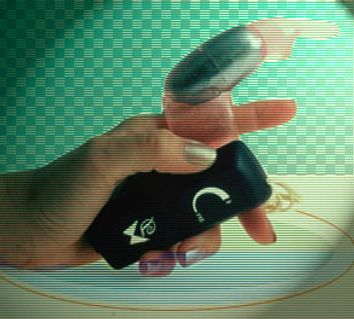
Here are vibrators with graduated orbs, corkscrew ripples, ridges, swirls and vibrating eggs; dual-play cyberskin dildos with midsections festooned with tiny fluttering rabbit ears, dolphins, silicon hubs, octopus heads, bird beaks, beaver muzzles and undulating fronds for simultaneous clitoral stimulation; latex dildos that strap on the chin for vaginal penetration during cunnilingus; buzz clamps and tweezer nipple clips; harnesses with attachable dildos and clip-on “shag rugs” (nubbed gel pads for extra clitoral stimulation) and second holes for dual penetration; donut-hole clitoral stimulators that slip on the penis; discreet strap-on pouches with vibrating muffs worn over the vulva and under the clothes; battery-operated G-spot navigators with add-on clitoris stimulators; Adonis pouches (latex cock ring, sheath and vibrator in one); jelly vibrotubes with vibrating bullets for extra scrotal stimulation; tiny waterproof genital stimulators that fit on a key ring; and a generous choice of fluorescent vibrating anal toys that look like they came from under the hood of a UFO.

As if these choices weren’t enough, intrepid explorers can trek through the wilderness of extreme sensations with electrical toys originally used as muscle stimulation devices. Some of them seem frightfully complex: The Blowfish catalog offers a “violet wand” that comes with an industrial-strength Tesla coil power supply, hand-blown glass bulbs, 6-inch discharge tube, low-frequency voltage isolator, 30-inch electric whip and body contact pad. Despite images of electrified flesh, I’m assured that the violet wand doesn’t send current through the body. Says Christophe at Blowfish: “You are far more likely to be hurt by a badly grounded washing machine.”

For most sex-toy distributors, the Web has become the fastest growing segment of their market — a market that is predominantly white, upper-middle class and, surprisingly, religious. “I think that couples with a more religious background may be inclined to try harder to stay married/together,” says Zvolerin. “If adding a vibrator or sexy lingerie or an erotic movie helps them maintain intimacy and communicate, they’ll be more likely to stay together. This one may be a stretch, but people do say that orgasm is as close to God as they get!”

Fallout from the post-’60s’ “Our Bodies, Ourselves” culture of self-empowerment has been partially responsible for bringing sex toys out of the velvety shadows of porn shops and into a new arena of sexual health and pleasure. Perhaps one of the most influential people responsible for outing the orgasm is sex therapist and author Betty Dodson. In the early ’70s Dodson was the first to lead workshops on female masturbation. (Imagine groups of “pre-orgasmic” women exploring their vaginas together with mirrors and vibrators and you get the picture.) Hailed as an extraordinary woman in Eve Ensler’s “The Vagina Monologues” (Ensler devoted an entire piece to her), Dodson fostered an almost ecclesiastical reverence for the orgasm and brought a quintessentially female orientation to the sex-toy business.

Two of today’s most successful upscale sex toy catalogs were founded by women: The Xandria Collection (“Better Living through Orgasm”) was founded by Judy Lawrence, a physical therapist who started a sensual-products catalog for people with disabilities (Dodson currently serves on Xandria’s advisory board), and Good Vibrations was founded by sex therapist/educator Joani Blank. Blank also worked in pre-orgasmic women’s groups in the ’70s and pioneered the first “sex-positive, clean, well-lighted place” to buy sex toys.

“When women talk about sex, it changes the culture,” says Carol Queen of Good Vibrations. “Our perspectives have been hidden or misrepresented; any degree of change in that situation registers on a cultural level. Women have been fostered through feminism and our fervid conversations about sex into activism. Additionally, we women are creating our own sex businesses … based on our understandings about what women want. This is bound to affect the adult industry, because it brings a more sophisticated understanding of female sexuality to bear.”

A sophisticated understanding of female sexuality involves more than what turns a woman on; health issues have entered the discourse as well. “Orgasms are not only pleasurable, but healthy,” says Felice Dunas, author of “Passion Play.” “The sexual organs must be fully used to maintain optimal reproductive health. Just as aerobic exercise enhances heart function and weight-bearing exercises keep the bones strong, sexual climax helps human bodies regulate blood flow and hormone production.”

Dr. Sandor Gardos, a sex therapist and director of the advisory board of the Xandria Collection, confirms the medical benefits of orgasm: “Sex aids are considered by all reputable sex therapists and medical authorities to be the treatment of choice for female anorgasmia (inability to reach orgasm), a medical diagnosis delineated in the Diagnostic and Statistical Manual of the American Psychiatric Association. Research clearly shows that when such medical conditions are left untreated, relationships suffer and frequently dissolve.”

The medical conditions referred to by Gardos have in fact been treated with vibrators for over a century. The first vibrators were developed 130 years ago to treat “female hysteria” — an “illness” which involved anxiety, irritability, sexual fantasies, “pelvic heaviness” and “excessive” vaginal lubrication (i.e., sexual arousal). During the Victorian era, physicians treated hysteria by massaging their patients’ clitorises until they experienced relief through “paroxysm” (orgasm). In the late 19th century the first electric vibrators came on the market, still camouflaged as therapy for hysteria and available only to doctors. Slowly over the years, however, magazine ads began offering vibrators to women for self-treatment of hysteria at home, though it wasn’t until early pornography films (or “blue” movies) showed vibrators openly used for sexual pleasure that the devices were liberated from the shroud of medical pretense.

The health-positive aspects of sex toys and orgasm are nonetheless ignored by a number of hot-and-bothered legislators who have taken legal action against the sex-toy industry — an uphill battle that has been fought vigorously by many, including Adam & Eve founder Phil Harvey. Adam & Eve began as the nation’s first mail-order contraceptive business, selling condoms before it got into the sex toy arena. In 1990 Harvey and five others in his company were charged by a federal grand jury in Utah with multiple counts of mailing obscene materials to customers in Utah (Adam & Eve no longer has a distribution facility in Utah) and informed that they each faced penalties of 55 years in prison and $2.75 million in fines. After spending millions in legal fees (and putting up with regular raids, police interrogations and general harassment) Harvey filed a federal civil suit against the U.S. Department of Justice.

“What is considered abhorrent about the depiction of adult sexual activity?” Harvey asked in a 1987 editorial in North Carolina’s News & Observer. “Every society in history has had a way to reflect human sexuality. As long as the human race exists, depictions of human sexuality will exist.” Harvey cited the Meese Commission on Pornography and President Nixon’s Commission on Obscenity, both of which concluded that the depiction of nonviolent adult sexual activity was harmless.

“We condone without question almost any form of violence in the media,” Harvey wrote, “even the most dreadful depictions of people being hurt, degraded, dismembered and tortured. Nowhere are such depictions illegal. Let those who argue that sexually explicit materials are harmful prove their case … Without such proof, a determined, vocal, politically powerful minority has been trying desperately to establish a causal relationship between sexually explicit material and violent crime. After decades of effort, they just have not been able to do so.”

In 1990 Harvey was acquitted by a jury of all charges — a judgment that Harvey called a “major First Amendment victory.” Not that the battle is over for sex-toy marketers. Last year legislators in Alabama tried to prohibit the distribution, sale or purchase of “devices designed to stimulate the human genital organs.” (Never mind that you can pick up a semiautomatic rifle at the corner pawn shop with no problem.) In an effort to avert what they considered a “national disaster,” Good Vibrations called on producers of sex toys to airlift emergency relief vibrators into Alabama while taking the case to the Supreme Court if the ban was upheld.

It was not. Last month, a federal court overturned the law. Still, many in the sex-toy business remain vigilant. Queen, a board member of the Free Speech Coalition (the adult industry’s trade organization), is concerned about future threats to our constitutional right to a “pursuit of happiness.”

Indeed, the pursuit of happiness is right up there with the right to bear arms, and in this context sex toys are rooted in a venerable American tradition: the right to unlimited choice in the service of do-it-yourself personal pleasure 24 hours a day, seven days a week or your money back.

In the interest of my own happiness, the good people at Good Vibrations (whose vigorous commitment to civic activity involved the launch of the first National Masturbation Month) sent me several freebies, including a crystal jelly G-spot vibrator with ridges for extra clitoral stimulation. The crystal jelly looks so aggressively large and sentient that I’m unsure whether to insert it into my love canal or set it out to sea. My first experience, however, with the far less intimidating mini massager was a quick trip to instant orgasm. But somehow the fairly loud electric shaver purr of the massager, the insistent, unyielding vibrations of its little gold nibs and the lack of fleshy warmth made me yearn for silence and good, old-fashioned digital dexterity.

That said, my range of experience with sex toys does little justice to the sensual opportunities available. One regular Good Vibrations customer, Kristin Herrera, seems to speak for millions: “Lots of avenues are opened up that lead away from boring, vanilla sex. Sometimes they’re naughty, sometimes they’re necessary, sometimes they get in the way. My sex life would be diminished without them.”

Continue Reading Close

A wiggy shrink in yellow bell-bottoms

Once I stopped expecting my father to be ordinary it got easier to accept his polymorphously perverse personality.

  • more
    • All Share Services

At 78 my father is staring over the sheer precipice of 80, a place with rocky outcroppings, bad winds and an unforgiving view. Most of his life now is spent engaging in small gestures to ward off the inevitable. Recently he’s taken to dyeing his hair jet black, though patches of insistent gray — fuzzy tufts with the intractable curl of pubic hair — still dot his head where he missed with the dye. (There is nothing sadder, I thought the first time I noticed this, than an old man who succumbs to the vanities of a woman.) Even when I was a teenager my father’s attempts to remain young were painful. The loud yellow bell-bottom leisure suits. The big hair. The creepy sway of his hips moving to Motown or the Beatles.

My father doesn’t dance much these days, but he’s still a busy man. He’s a sculptor, a painter, a pianist, a lecturer and a professional magician. To keep the cash coming in he’s also a psychiatrist with a dwindling practice of mostly borderline schizophrenics and other seriously unraveled basket cases who stumble into his office from the psycho-pharmaceutical wastelands of the city.

When he’s done shepherding his patients through emotional war zones my father walks along his deck — a big wood job with a 180-degree view of the hills — and ponders the inevitable. “God punishes people who stay too long on the planet,” he says. My father’s biggest punishment will be living to the ripe old age of 110.

My father has some details to work out before he dies. One of them is to figure out who gets his estate: the house, the artwork, the big Steinway. That it should go to his children is not self-evident. (We grew up with the enemy — my mother — and thus will remain forever suspect.) The other detail is to figure out how to be a father.

My father doesn’t tell me this but it’s apparent in the slightly terrified look he gives me every time I leave his home. It’s a look that combines the fear that this goodbye might be his last goodbye with the deep regret that comes from knowing that he has fucked up as a father and has precious little time or know-how to make up for it.

Usually he’ll just stand there with his mouth slightly open like a dresser drawer, saying nothing. Other times he avoids the whole mess entirely. “You want to see my new ventriloquism act?” he asks suddenly, pulling a scary 4-foot marionette out of his magic closet.

My father’s magic closet: By age 10 he’d taught himself every trick in the book. We grew up with rabbits in top hats, birds fluttering out of silk handkerchiefs, disappearing coins. My father was part Uri Geller, part Groucho Marx. A life of denigration and abandon — seven brothers raised in a ghetto, World War I immigrant parents, a daily diet of physical and emotional abuse — gave him an insatiable appetite for the limelight, a serious interest in the otherworldly and an intractably bad temper. He is the Great Entertainer and the burdened intellectual, all Jewish schmaltz and rage.

Before the divorce — before my mother left him under police escort with the three of us in tow; before the unpaid child support, the lawyer’s bill and the bruises on my mother’s body — my parents lived in a Bauhaus-inspired desert-chic house in the city.

My father was a general practitioner back then: fractures, flus, the general stuff. Our house was filled with stethoscopes, tongue depressors, hypodermic needles, vials of chloroform, rolls of gauze. The only thing more unsettling than the morbid, vaguely sepulchral medical paraphernalia scattered around our house was my father’s growing interest in the occult. He had “unexplained experiences.” Dead patients would appear in his doorway; they had missives for other patients, for family members. Others, clinically dead for hours, would mysteriously return to life and describe exactly what had transpired in the operating room while they were deceased. Strange angels visited him in his dreams. My father took notes, paid attention.

Around this time my father dropped his medical practice to pursue psychiatry. He participated on a panel of doctors who were administered LSD and studied in clinical tests — a period my mother described as the only peaceful time in their marriage. Later my father went on public radio to espouse the virtues of hallucinogens in the treatment of certain forms of psychosis.

When he wasn’t on LSD or experimenting with other drugs in the hopes of breaking new ground in psychedelic psychiatry, things were tough. My mother would rush over to my aunt’s house — a ranch house under an airport flight corridor that we later called the damage-control house. We’d sit in the kitchen eating greasy hot dogs while my mother and aunt shut themselves up in a back room and talked in urgent whispers. Every once in a while the sky would crack open with the sound of sonic booms.

Oddly, despite their irreconcilable differences, my parents shared a spiritual path. They both quested after the metaphysical; they longed to be enlightened. We, on the other hand, longed to be just plain vanilla. Like untended houseplants we grew unruly and chaotic, with the slight air of well-intended neglect. We had too much freedom, too little restraint. We were cobbler’s children; latchkey kids raised by bootstrap parents. We ran around naked with wild hair, got lost in crowds. My father’s growing eccentricities, his Fellini-esque parties and, later, my mother’s black boyfriend — all this decidedly freaked out the neighbors.

Everything about my father intimidated me back then so I learned the art of being coy, of avoiding his wrath. I never got hit, but I never got his real attention, either. My older sister got both. She rebelled, went haywire, got the brunt of everything she shouldn’t have. My younger brother was a dramatically sensitive creature who needed lots of hand-holding. Like a good middle child I tried to hinge the two sides together. It was an impossible task.

In perhaps the biggest irony in our family, my brother joined a cult while my father, as part of his burgeoning psychiatric practice in the ’70s, was busy deprogramming children abducted into cults. In the paternal theology of cult life my brother finally found the father he never had. My father’s response was to disown him.

Twenty years have passed and still my father can’t talk about my brother without blowing a circuit. We have brunch; I avoid certain subjects. My father is feeble (slightly stooped; button popped off where his belly has begun to swell) but still looks formidable; the veins in his hands are the size of No. 2 pencils. “Here, read this,” he says one day when we’re in the park. “It’s my oeuvre.” He hands me a large unbound manuscript — 250 pages of his occult experiences with patients while he was a general practitioner. “Go ahead and read it,” he prods. “I’ll just sit here and wait.”

My father never finished his “oeuvre.” These days he lives with various houseboys — usually obsequious Asian grad students with degrees in nuclear science who sweep the floors and take general abuse before eventually fleeing to more neutral ground. Sometimes they pilfer things before they go; one of them gouged a hole in my father’s water bed and made off with a new shaving kit — a particularly nasty way to go, in my father’s eyes.

Girlfriends come and go, too. Barbiturate queens with cocktail smiles. Academics. Hippies. Ex-patients. Fragile women with blond hair who try too hard. “It’s so fucking impossible to have a loving, caring relationship these days,” he says. He tells me things I’d rather not know: that he prefers women with small breasts (“like ballerina breasts”); that he once had an “adventure” with a man in his bathtub. Still, intimacy was never his strong point.

Once I stopped expecting my father to be ordinary, it got easier to accept his polymorphously perverse (to steal from Woody Allen) personality. I married a man who is the diametric opposite of my father, perhaps out of self-preservation, perhaps out of common sense. Today, I visit my father like one would visit an amusement park: not my idea of fun but something that, as a parent, I’ll make an effort to enjoy.

I would have preferred to have had my father as a friend, but we don’t choose our parents (though some would claim we do). Only age and our own forays into parenthood allow us to see our parents in a greater perspective: We finally see the busy, complicated firmament of their personal histories and get our own glimpse of the scary, incomprehensible Unknown where we’re all heading.

The imminence of this final journey presses on my father; he’s clearly not ready to go. There’s so much shit to figure out beforehand, like the nature of evil. For my birthday he gives me a book on genocide, the machinery of destruction, and morality in the 20th century. “Happy birthday,” he says. “This is a fabulous book. You’ll love it.”

He talks about making a “voluntary exit,” holding up a bottle of pharmaceuticals. “These will put me to sleep for the rest of eternity.” This is his backup plan in the event that old age makes his life unbearable, makes him infirm: the fragile body, the brittle bones, the collapsed knees. Already his heart beats to the rhythm of a silent pacemaker. His other backup plan is to sell his house and move to an upscale retirement community. He’s not sure which plan is more disturbing.

The last time I saw him he invited my son and me to a soiree. “There’ll be an excellent Golda Meir impersonator at the soiree,” he says. “Your son will love it.” Does it matter that my son is 4 years old and that Golda Meir has been dead for over 20 years? Parenting skills were not a commodity back in his young adult years. I accept the offer, hoping in the back of my mind that Golda will change her mind and not turn up. Chances are, however, that the show will go on for quite some time.

Continue Reading Close

“The History of Fellatio”

Annie Auguste talks to author Thierry Leguay and finds out that humans may be the only animals that give blow jobs.

  • more
    • All Share Services

According to recent press reports, Americans are having oral sex at alarmingly younger ages — and with increasing nonchalance. (Note: Oral sex here refers exclusively to fellatio.) Oral sex precedes and often replaces sexual intercourse because it’s perceived to be noncommittal, quick and safe. For some kids it’s a cool thing to do; for others it’s a cheap thrill. Raised in a culture in which speed is valued, kids, not surprisingly, seek instant gratification through oral sex (the girl by instantly pleasing the boy, the boy by sitting back and enjoying the ride). A seemingly facile command over the sexual landscape of one’s partner is achieved without the encumbrances of clothes, coitus and the rest of the messy business. The blow job is, in essence, the new joystick of teen sexuality.

In short, if we are to believe today’s sociologists and culture mavens, oral sex has become ordinary. But the increased banality of the blow job is perplexing. When I was a teenager, in the bad-taste, disco-fangled ’70s, fellatio was something you graduated into. Rooted in the great American sport of baseball, the sexual metaphors of my generation put fellatio somewhere after home base, way off in the distant plains of the outfield. In fact, skipping all the bases and going directly to fellatio was the sort of home run reserved only for racy, borderline delinquents, who enjoyed a host of licentious and forbidden activities that made them stars in the firmament of teen recklessness.

The first blow job I ever gave (after methodically groping my way past all the bases) was an act of faith. After finally figuring out how to manually manage my boyfriend’s strange vestigial organ — how to brandish, manipulate and handle his distended, tumescent pink love shaft — I now had the daunting task of having to figure out how to manage it orally. Lick? Suck? Use your hands? If only the how-to books that exist today existed back then.

“Put both hands into the L position around the base of the shaft,” says “Sex Tips for Straight Women From a Gay Man.” “Lick the whole tip and then use your tongue to lick up and down the sides. Covering your teeth with your lips, and keeping your mouth taut, glide the head inside and lick the sensitive spot underneath with both the tip and flat part of your tongue … proceed down the shaft as far as you can go in one fell swoop.” And on it goes. It includes tips on curiosities like dick whipping, hummers and tinglers, plus advice on how to breathe. (Men may fear the cavernous tunnel that leads to the primordial soup of the womb, but women risk death by gagging.)

Clearly even the most rigorous bout of coitus pales in comparison with the intimacy of fellatio, at least for the one giving it: nesting one’s face in the musty, doughy pelt of your partner’s loins; bringing the full force of your tongue, lips, teeth (indeed, your entire face) to bear on the swollen, supplicant shaft; coaxing the salty swell of seed-bearing spermatozoa burgeoning from deep within the vulnerable, fuzz-laced scrotum; and, finally, partaking in the ultimate exchange of bodily fluids. (For what could be more carnal and, well, in your face than swallowing sperm?) All this is far more complex than the simple act of coitus, where the key fits in the ignition and things more or less just happen. Fellatio is hard labor, in every sense of the word.

Perhaps it’s true that attitudes toward fellatio have changed. The infamous stain left on Monica Lewinsky’s dress — as coveted and totemic as it has become in the context of America’s most famous blow job — suggests a sterile, trite expediency that may reflect a general trend in America. In a recent article in the New York Times about teen sex, a source reported that kids “‘had oral sex 50 or 60 times … It’s like a goodnight kiss to them.’ Dr. Levy-Warren refers to the recent shift in teen fellatio as ‘body-part sex.’”

But generational blips — like empires and economic upheavals — come and go. As French writer/professor Thierry Leguay notes in his (not yet translated into English) “History of Fellatio,” as long as the penis has the power to please, fellatio is not likely to be bumped off the bestseller list of all-time favorite male joys anytime in the next millennium or two.

What are the earliest traces of fellatio?

A well-known French paleontologist by the name of Yves Coppens suggested that the famous Lucy (the first prehistoric woman) practiced a sort of “paleo-fellatio.” But the first clear real traces of fellatio are from ancient Egypt. Many of the more stellar examples are in the British Museum, where we find the famous myth of Osiris and Iris: Osiris was killed by his brother and cut into pieces. His sister Iris put the pieces together but, by chance, the penis was missing. An artificial penis was made out of clay, and Iris “blew” life back into Osiris by sucking it. There are explicit images of this myth.

As an aside, Egyptian women were particularly well known for their sexual prowess. Egyptian women are also purported to be the first women to use makeup.

What about other ancient cultures like China, or India, where you have the Kama Sutra?

Indeed, these are two other ancient cultures that ritualized fellatio. Ancient China was similar to India insofar as there were practically no sexual censures or taboos whatsoever. But it was in India where we find the Kama Sutra. Today the Kama Sutra has been reduced to a sort of caricature of a sex manual, but in fact it’s a tome dedicated to the art of loving. An entire chapter in the Kama Sutra is devoted to an act called “auparishtaka,” otherwise known as “oral congress.” Oral congress involved eight highly descriptive and semicodified ways of performing fellatio. There are also detailed chapters on bites, scratches and other aspects of the aesthetic of the body.

You also cover a lot of Roman ground in your book.

Ancient Rome was a society of soldiers, of machos and rapists, and their perception of fellatio was interesting. The practice of fellatio in ancient Rome was perceived in terms of active and passive: The active one was in fact the person getting fellatio. In this case we’re talking about the soldier, the virile male. The passive one — usually a woman or a slave — was the one giving fellatio or, to understand it more clearly, the one receiving the penis.

Today, of course, it’s the other way around. We perceive the one who’s giving fellatio as the active one and the one receiving it as the passive one. But in Rome to give fellatio was a passive act, a submissive act. For example — and this is very clear in Roman texts — to punish a person who stole potatoes from his field, a Roman might oblige the person to give him fellatio. He might stand up, drop his pants and say, “Now you’re going to kneel down and take it in your mouth.” The one who was required to give fellatio was the passive one, the one who went against the valor of virility. The Roman perception is interesting.

We [again] find some aspects of the Roman idea in certain cultures that are slowing disappearing, for example, in New Guinea. There are initiation rituals for young people that involve practicing fellatio on adults and ingesting the sperm — sperm considered, of course, a vital, precious resource. These are not homosexual communities. On the contrary, the fellatio ritual is performed to make men acquire strong, active, macho values in a society where women are totally submissive and dominated.

The Incas were the same. There are traces on their pottery that suggest that, like New Guinea, fellatio was a practice modeled on domination and power.

Western European culture didn’t necessarily ritualize fellatio, but there was a time when it was much more openly libertine than today.

Yes, even in Western culture going back to the 18th century. In 18th century France the upper clergy lived according to principles that were similar to Roman times. You had your chapel, your chateau, your wife and then all your mistresses. The bishops lived this way as well. The population of 18th century Paris was 600,000, with 30,000 recorded prostitutes. That’s enormous. Enormous. In the Palais Royal 50,000 little booklets from the 18th century were found; they were mini-directories of prostitutes and their specialties. One can assume that fellatio was a basic staple here.

Obviously the church has played a significant role in condemning fellatio.

As recently as the 19th century, sexual pleasure and any relation that didn’t lead directly to procreation — even within the structure of a traditional marriage — were mortal sins. So fellatio was, and remains to some extent, a taboo. The only sexual activity sanctioned by the Catholic Church is coitus for the strict purpose of procreation. In the 19th century there was also a relationship between religion and medicine that came together under the general aegis of onanism. In fact everything fell under the aegis of onanism: fellatio, petting, lesbianism, masturbation. There were priests who were also doctors, and many of them wrote lengthy descriptions of apocalyptic things that could happen to anyone who practiced any form of onanism.

That’s similar to notions about circumcision back in the Victorian era in America. Doctors and religious officials associated the foreskin with masturbation, which was in turn associated with horrific physical and mental aberrations. That’s where we find the roots of systematic circumcision in America. There’s not much difference here between the two cultures.

What about countries where women have few — or less — social liberties than contemporary Western women do? Islamic countries, for example.

Islam shares a common ground with Judeo-Christian societies in that fellatio is condemned in part because it is not directly linked to the act of procreation. In traditional Islamic cultures — as in black African cultures — there’s a taboo associated with the mouth. The mouth is a “pure organ”; it’s an organ of the spoken word, of the truth. Fellatio, in this light, sullies the mouth.

You suggest in your book that this is why the Islamic veil covers the mouth.

Of course. There’s an immediate analogy right there in the word “lips” between the vagina and the mouth. That analogy has obviously been overexploited today. Fellatio sexualizes the mouth, makes the mouth a sexual organ in and of itself. There are, after all, few things more suggestive than a highly made-up mouth. The Islamic veil can be criticized, but there’s a logic behind it. What’s being hidden is, in part, all that which is intimate.

There are also cultures that don’t practice fellatio at all.

Yes, the Inuit culture, for example. Fellatio is something that takes away their strength, that can potentially weaken them. They have more important things to do, like hunting seal. In a culture where the mouth is not a sexual object — we shouldn’t forget that Eskimos kiss with their noses — fellatio is a taboo. Interestingly, according to French anthropologist Jean Malaurie, Eskimos have extremely quiet sex. An Eskimo orgasm is barely audible. In a communal igloo lovemaking is rarely perceived [by others].

When did fellatio become an act unto itself?

It’s hard to say, but it’s safe to assume that as a contemporary phenomenon fellatio took center stage as an act unto itself when it began to figure prominently in X-rated films. “Deep Throat” and Linda Lovelace had a lot to do with making fellatio almost a cultural cliché.

You touch only lightly on Freud and his views about fellatio.

There’s such an enormous amount of literature written by and about Freud — and it is so easy to fall prey to certain platitudes — that I’ve been careful here. Freud obviously spent a great deal of energy describing our oral, anal and genital stages, but it would be a gross simplification to say that people who smoke a lot or are heavily into oral sex are stuck in the oral stage. Freud doesn’t speak directly much about it. He evokes it, but he passes quickly over the subject. Of course he heard about fellatio in the course of treating patients, but he never drew a specific theory as it relates to the oral stage in our development. It’s somewhat of a paradox. I’m not a psychoanalyst, so I don’t want to make any sweeping commentary here.

There has been some talk about teens in America having oral sex at increasingly younger ages and with increasing casualness. This seems very much the opposite of how it’s perceived in France, where fellatio is considered more intimate than lovemaking. To what do you attribute these particular cultural differences?

We have to be careful not to generalize and stereotype here. But on some level Monica Lewinsky has become a symbol for us. She performed fellatio, talked about it, made money off of it. In her milieu, people engage in superficial sex; they don’t commit or engage themselves. It’s not about lovemaking. In France we’re more Mediterranean; we don’t take these things lightly. You’ll never find a French Monica Lewinsky. She performed the most lucrative blow job in the history of humanity.

It’s unlikely that Lewinsky was thinking about the historical or financial ramifications of fellating the president when she was doing it.

Maybe not, but she clearly profited from it later. If Lewinsky is a symbol of anything, she’s a symbol of America’s relationship to money and sex.

You cite a few polls in your book. One of them suggests that only 32 percent of women give fellatio out of pleasure; the remaining roughly two-thirds do it as an obligation.

What’s clear is that a certain number of women find fellatio violent. Some refuse completely to do it. They find it degrading, particularly the posture involved in performing oral sex. Certain women, on the other hand, consider it as an intimate exchange, a gift.

This reminds me of another study you cite in your book. A 1993 French report called the “Rapport Spira-Bajos” indicated that the majority of women who perform fellatio are educated women with a certain level of social status. It seemed to reveal a sort of social hierarchy around fellatio.

Yes, I think that’s uncontestable. Women who have participated in certain social movements — women’s liberation, the right to abortion, the pill, etc. — are the most inclined to explore their sexuality and hence have an impact on sexual practices on some level. And these women are usually more educated, are more aware, have a certain level of accomplishment in their lives. The idea of the lustful, country farm-girl-type bumpkin is really more a fantasy than a reality.

There’s also a big perception/reality difference between what figures in a poll tell us and what images tell us. Images in, for example, pornography. There are around 15 states in America that have criminalized fellatio, and yet America is by far the biggest producer of pornography on earth. Curious for a so-called Puritan country.

Indeed. Pornographic cinema is an American business. There’s very little of it going on in Europe. America produces an astronomical quantity of pornographic material, and almost all of it invariably features fellatio.

Are human beings the only mammals who practice fellatio?

There are certain male chimpanzees who lick their female mates, but that of course is called cunnilingus, and it seems as much an act of hygiene and play as it does an expression of innate sexual pleasure. It’s certainly not an act in and of itself. While animals have an incredibly rich and complex sexual life, we humans are unique. As far as fellatio is concerned, at least as a sexual act unto itself, we human beings are all alone in the animal kingdom.

Continue Reading Close