Claire Bidwell Smith

Finding my mother again

Years after she died, I came to understand the complicated woman I long mythologized, by becoming a mom, too

  • more
    • All Share Services

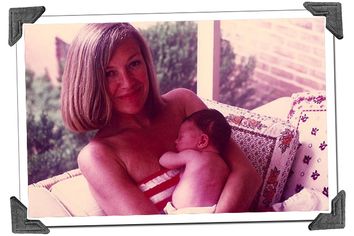
Finding my mother againA photo of the author, as a baby, with her mother (Credit: Melissa King via Shutterstock)

In the 15 years since my mother has been gone, she has become a mythical figure in my life. She was a woman to be revered, but also one so complicated and so different from me that I fear I’ll never stop struggling to make sense of her and to accept myself within the context of her shadow.

My mother was 37 years old, twice divorced and childless when she met my father. She had been living in Manhattan for 17 years, having grown up in Connecticut and gone to the Rhode Island School of Design to study painting. She had dozens of friends, went to parties and attended art openings. She smoked pot in the Village and spent Tuesday nights in smoky jazz clubs, sipping martinis and recrossing her legs.

My parents had been set up on a blind date by mutual friends, but the night they were supposed to go out, my mother stood my father up. She’d gone to Long Island that day with a friend to pick strawberries, and by the time she came home, the last thing she felt like doing was going on a blind date with some older businessman from Atlanta.

My mother was funny and quick-witted, and she was almost always up for an adventure. She was also uncommonly pretty, with green eyes, blond hair, a symmetrical face and an easy smile. When she went to sleep that night in June of 1975 in her little one-bedroom apartment on 28th Street, she had no idea that her life was about to change.

My father, at 55 years old, was just entering his prime. In spite of (or perhaps because of) two divorces and three grown children, he was happier than he’d ever been.

He flew first-class wherever he went. He stayed at the Watergate Hotel when he was in D.C. and the Plaza when he was in New York. He winked at stewardesses and drank tumblers of scotch on the rocks. He wore hats and suits and left big tips at fancy restaurants.

He wasn’t used to being stood up, so the next morning he rang my mother’s buzzer at 9 a.m. “Who dares call on anyone before noon on a Sunday in New York?” my mother later wrote about that first encounter in a letter to my father, detailing their courtship. “It had to be you, as they say, and I opened the door with wet hair asking if you wanted a Bloody Mary, which you did, thank God.”

I always try to imagine this moment between them. My mother in the doorway with her wet hair, my father on the threshold in his blue leisure suit, the moment of them not knowing each other and then knowing each other eclipsed in one short breath.

They went to dinner and later flew to my father’s place in Atlanta, making daiquiris with the strawberries my mother had picked on Long Island the day before. They swam in the pool and smoked Camels and talked into the night, their legs dangling into the water, lit from below by the pool light.

They were married three months later on Cape Cod. My father whisked my mother away from New York and set her up in a big house in a nice neighborhood in Atlanta. He paid off all her debts, bought her a cream-colored convertible and opened a credit card in her name in every department store. I was born two years after that.

For the next decade — before my father unexpectedly went bankrupt following the stock market crash of 1987, and before my parents were both diagnosed with cancer within months of each other — we lived a blissful and privileged existence. My mother had quickly charmed her way into Atlanta’s upper social echelon, and it wasn’t uncommon for our dining room table to be inhabited by local political figures and foreign dignitaries.

I remained her only child, but motherhood only seemed to enhance my mother’s glamour and sophistication. It added a dimension to her personality and worldview that had, perhaps, been the only thing missing all along. But I wonder what the other carpool moms thought of my mother when she zoomed into the after-school pickup line in her Alfa Romeo, with her blond hair pulled back in a Chanel scarf.

I was 18 when she died of cancer, and I had become the very opposite of my graceful, glowing mother. My teenage years had been rocked by a roller coaster of parental illness, hospitals and private despair. In response, I had become an angst-ridden poet. I wore combat boots, dyed my hair crimson and sported a nose ring. My mother had always embraced these tiny, public displays of rebellion, but the moment she was gone I felt foolish.

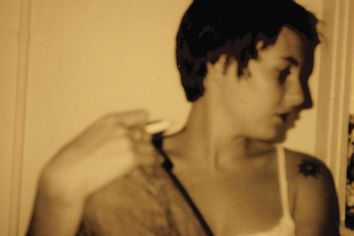
I’ll never forget walking down the aisle of a church on the day of her funeral with a shaved head and my first, barely dry tattoo concealed under my shoulder, feeling as though I had utterly failed my beautiful mother in every way possible.

Since she died, I have struggled to forge my own identity in her absence. At times, I have wanted nothing more than to emulate everything about who she was — something I know I could never really achieve. While I may be outgoing and capable of hosting a memorable dinner party, I have inherited my father’s looks and practicalities, not to mention having retained a deep-seated and dark sense of self-reflection following so much loss.

For many years, I was unsure if I wanted children at all. When I finally decided that I did (within days of meeting my husband), I knew that I wanted to be a younger mother than mine was. My daughter was born a few weeks after my 31st birthday — almost a decade before my mother herself bore me — and now, as I approach my 34th birthday, I am due with my second.

Every inch of motherhood, for me, has been stitched with the essence of her. Throughout my 20s, I made valiant and sometimes senseless attempts to bring my mother into my life again. I lived in the places where she once lived. I learned how to cook and throw dinner parties. And more often, I simply took myself to the very brink of life in hopes that if I tottered just enough, she might appear to pull me back from the edge.

But it was truly in motherhood that I found her again, even though our experiences couldn’t be more different. My husband and I live in a tiny rental house in Los Angeles and both work as writers, struggling to pay our child’s preschool dues. I can often be found at the playground, even if I am one of the few mothers actually wearing mascara and earrings. As I write this, my body is swollen with another child, something she never ventured to do.

Despite those differences, motherhood has brought her back into my life, and it has given me an opportunity to embrace my own path as a woman and mother. I hear her in my voice when I comfort my daughter by crawling into bed with her at 3 a.m. when she has woken from a nightmare, when I stop to marvel at a snail traveling through the grass, and especially during dinner parties when I catch myself offering my 3-year-old bits of brie or Marcona almonds.

In adulthood, it has occurred to me that all of us are living reactions to our parents. Whether they loved us or not, whether they were present or absent, whether they kept us safe or recklessly abandoned us to harm’s way, we move forward into life walking paths they etched out decades earlier. It also often occurs to me how grateful I am to the woman who loved me fiercely enough to remain true to who she was, even in the complicated throes of motherhood.

The abortion I wish she’d been there for

When I was 18, my mother died. But it wasn't until I got pregnant that I realized she was never coming back

  • more
    • All Share Services

The abortion I wish she'd been there forA detail from the cover of "The Rules of Inheritance"
This article was adapted from the new memoir "The Rules of Inheritance,", from Hudson Street Press.

In the bathroom I pee on the little plastic stick and then place it care­fully on the back of the toilet. I button my jeans and walk back into my bedroom, where I pick up the phone.

Colin is on the other end of the line.

Did you take it?

Yeah.

Well?

You have to wait, like, five minutes, I say.

Oh.

It is January, late at night, and the deep banks of snow outside the windows glow in the dark. Colin is in Atlanta and I am in Vermont. My mother has been dead for exactly one year.

I am back at Marlboro College, picking up after a one-year hiatus following my mother’s death. I’m living off campus, in a subsidized two-story condo in town, with a classmate named Tricia.

Like me, she is a poetry major.

I have been back at Marlboro less than a week when I realize that my period is late. I count the dates backward and then forward again, give it a few more days, and finally buy a test kit at Walmart.

I call Colin that night. We had been seeing each other for less than six months when I left Atlanta to return to school. I had taken a year off from school after my mother’s death, but my father and I both decided that it was time for me to get back in the swing of things.

I think that’s the actual phrase he used. The swing of things.

It was around New Year’s Eve when Colin and I realized that we were in love. The confessions came drunkenly, both of us left unsure the next day, not of how we felt, but of whether we had really said the words aloud.

We’d talked for a while before I mentioned it offhandedly.

I bought a pregnancy test today.

What?

A pregnancy test.

I heard you. Why?

My period is late.

Do you really think you’re pregnant?

No.

Did you take the test yet?

Not yet.

Well, maybe you should take it now.

While we’re on the phone?

Sure.

Fine. Hold on.

And that’s when I went in the bathroom to take the test.

Don’t worry, I tell him, when I get back on the phone. I’m sure it’s fine. I took a few of these in high school and they always turned out negative.

During my senior year of high school it seemed like every week one of us was taking a pregnancy test. We usually went to Lucy’s house to do it. Her parents were divorced and her mom worked late. We had the house to ourselves for several hours after school let out.

Me, Lucy, Laura, Holly, and Sabrina.

None of us ever emerged from Lucy’s bathroom with a positive test.

I tell Colin all of this and then I set down the phone and walk into the bathroom alone. The little plastic stick is exactly where I left it five minutes ago, and I peer into the plastic display window at the plus sign that’s wait­ing there for me.

I am pregnant.

—–

I can’t remember if it was during my high school pregnancy scare or at another, later, time that my mother told me she had had an abortion.

She was thirty and living in New York. She’d just ended a brief relationship with some slick Wall Street guy, when she realized that he had left her preg­nant. Calls to his home went unanswered and messages left at his office were not returned.

Finally, with a fury and impatience typical of my mother, she left a message for his secretary, requesting a check for the abortion she was about to have.

He shelled out immediately, and she went through with it. I don’t remem­ber any other details, though. If she’d felt conflicted over the decision or if the experience was a traumatic one, I’ll never know. Either she didn’t tell me or the details left no impression.

I think about all of this as I watch the laundry tumble around and around.

Is it wrong that the idea of having an abortion makes me feel closer to my mother?

I write her a letter on the one-year anniversary of her death.

Dear Mom,

I don’t know how to be without you. Please come back.

Colin doesn’t protest when I tell him my plan. In fact I’ll later wonder if he would have been so passive had it been the other way around. He tells me he’ll fly up and be there for it.

The next call I place is to my father.

The same week that I moved back to Vermont my father moved to Califor­nia. He sighs into the phone, three thousand miles away, when I tell him.

Just as the only time he will ever walk me down an aisle in a church was at my mother’s funeral, the only time I’ll ever tell my father that I am pregnant is this one.

Well, kiddo.

He sighs again.

I’m standing in the kitchen of the apartment in Vermont, twirling the phone cord around my wrist, as though I am in high school and talking to a boy I have a crush on instead of telling my elderly father about the abor­tion I am about to have.

——

Two days later I drive in my old red Saab to the Planned Parenthood clinic. It is deep, deep cold outside. The sky is a hard blue and slick; black ice coats the road. I smoke cigarettes as I drive, listen to Portishead.

How can it feel this wrong? From this moment? How can it feel so wrong?

After a while I am led upstairs, where a kindhearted and very butch old nurse examines me, confirming what I and the nurse-practitioner at school have already determined to be true.

I am pregnant.

Afterward we sit in the nurse’s office. Instead of there being a desk between us, we sit in chairs pulled close so we can face each other. Although I’ve never been, this is what I imagine therapy would be like.

So, what do you want to do?

I want to have an abortion.

Have you considered any other options?

No. I want to have an abortion.

An alternative might be adoption. Also, there are more resources than you might think if you decide to keep it.

I want to have an abortion.

Okay, she says. Her eyes crinkle into a look of sympathy, and I suddenly envy her. I wish I was her. Wise, buoyant, practical. Sitting opposite some girl like me. Not me.

You’re sure, she says, with one more look into my eyes.

Yes.

I don’t know why I’m so firm about the abortion. In some ways it seems like the next logical step in the narrative of my life.

Mother dies at eighteen.

Abortion at nineteen.

It’s as though I don’t have a choice.

But we always have choices.

It won’t be until over a decade later, when I am well into the actual world of parenthood, frazzled and overwhelmed with love and impatience for the tiny creature I have created, that I will realize that if I had actually had a baby at age nineteen it might have been the very thing that would have kept me from the years and years of misery and destruction ahead of me.

It won’t be until I am finally a mother myself, and not until my cheek rests against my child’s soft downy head, that I will realize the bleakness of what I did all those years before.

——

The nurse is right. The procedure doesn’t take very long. I grit my teeth and close my eyes as the doctor pushes and tugs about inside me with his instruments.

I cannot open my eyes. I squeeze them shut as hard as I can, trying to imag­ine that it is my mother’s hand in mine, not Colin’s.

And it’s here, right here, on this exam table in an abortion clinic in Ver­mont, that I realize my mother is never coming back. Although I will have to realize this many times over the course of my life, nothing will ever be as strong a reminder as this.

Nothing is going to bring her back.

Some part of me, no matter how magical, believed right up until this very moment that she would make her way back to me before this happened. I realized that I had been ticking off the seconds all morning.

On the bright, cold drive up the highway.

In the warm, wood-paneled waiting room.

Mom, I’m here. Right here. Can you see me?

There’s still time, Mom. Find me.

Please find me.

Don’t let this happen.

But she is not here. She didn’t make it in time. Or at all.

The doctor finishes and the cramps come. Thick and hard, they make me curl onto my side, the plastic sheet crinkling over me, perspiration dampen­ing my sweater, tears running down the side of my face and soaking the exam-table paper beneath me.

I am nineteen and I have just had an abortion.

Reprinted by arrangement with Hudson Street Press, a member of Penguin Group USA, from “The Rules of Inheritance: A Memoir” by Claire Bidwell Smith 2012.

Continue Reading Close