Dan Strumpf

Toyota to roll out 2 new Prius cars

The automaker will begin selling a hybrid station wagon starting next summer as either a 2011 or 2012 model

  • more
    • All Share Services

Toyota plans to roll out two new cars under the Prius name by next year, according to a dealer briefed on the plans, as the automaker seeks to turn its popular hybrid into a family of vehicles.

The Japanese automaker will begin selling a Prius station wagon starting next summer as either a 2011 or 2012 model, said Adam Lee, president of the Lee Auto Malls chain of dealerships in Maine. It will sell a plug-in version of the Prius that can get 30 miles on a charge starting later in the year, he said.

Toyota unveiled the new vehicles at its annual dealer meeting in Los Vegas this week. Lee was briefed on the new models by the manager of his Toyota dealership, who was in attendance.

Toyota spokesman Sam Butto declined to comment on any specific product plans,

“We will be coming out with some additional Prius products, but that’s really all I can say at this time,” Butto said.

Toyota has said in the past it hopes to expand the Prius name to a family of vehicles. The Prius is the best-selling hybrid in the U.S., but sales have been flat this year as the automaker continues to suffer from the fallout from huge recalls.

The automaker has recalled more than 10 million cars and trucks worldwide over the last year for a variety of problems, including a problem with the antilock braking system in its Prius hybrid and a Lexus hybrid. Toyota said this week it had fixed 86 percent of the hybrids recalled over the braking problem.

Also at the dealer meeting this week, Toyota President Akio Toyoda sought to reassure the company’s 1,200 U.S. dealers that the company is on track for sales growth in the U.S., Toyota said in a statement on Thursday. The company also told dealers of plans to make standard a free maintenance program that it first rolled out earlier this year.

U.S. auto sales rise thanks to credit and promotions

Auto loan approvals up for every level of consumer, despite sluggish economy

  • more
    • All Share Services

Most automakers posted higher U.S. sales last month, a sign that Americans are still willing to buy big-ticket items even though concerns linger about the economy and hiring.

After a sluggish June, sales rose slightly at Detroit automakers General Motors Co. and Chrysler. Foreign-based companies like Kia and Subaru posted bigger gains. Ford, meanwhile, had flat sales.

Sales were boosted by easier credit and new versions of cars and trucks ranging from Jeeps to large family wagons. Summer promotions also helped.

“Consumers have been conditioned to think that the summer is a great time to pick up a deal on a new car,” Edmunds.com senior analyst Jessica Caldwell said.

Credit is thawing, with auto loan approvals up for buyers in every tier. GM announced last month that it would buy AmeriCredit Corp. in an effort to expand loans to customers with poor credit and offer more leases.

But the market is still vulnerable. Auto sales have been recovering from a 30-year low in 2009, but the pace has been fitful, with month-to-month sales falling as often as they rose in the first six months of this year.

Most automakers saw sales fall from May to June as shoppers avoided showrooms due to economic worries.

But when final sales figures are tallied late Tuesday, July could be one of the strongest sales months this year, and better than last July, when the government’s Cash for Clunkers rebate program only helped a few days of sales.

Sales at General Motors Co. rose 2.6 percent over June, helped by promotions to make room for 2011 models. Newly launched models such as the Chevrolet Camaro muscle car, Chevrolet Equinox crossover, Buick LaCrosse sedan and Cadillac SRX crossover showed strong increases. Crossover vehicles are roomy inside like a truck, but are usually built on a more nimble car platforms.

Ford Motor Co., which has enjoyed a strong 2010 so far, said its sales were flat from June. They rose 3 percent compared with July last year, lifted by stronger sales of its Ford-brand cars and trucks.

Ford’s overall sales were weighed down by a drop in Mercury sales. Production of that brand stops at the end of this year. Sales at the Lincoln luxury brand slid 16 percent, largely because of falling demand for the Town Car sedan, which ends production next year.

Japan’s Honda Motor Co. said sales rose 5 percent from June, but fell slightly from a year ago amid weaker demand for small cars that benefited from last year’s Cash for Clunkers program.

Any second-half recovery in auto sales depends on consumer spending now that government stimulus and businesses inventory building have run their course, said Ted Chu, GM’s chief economist. As long as employment continues to slowly improve and gas prices stay below $3 per gallon, sales should rise gradually.

“I think pent-up demand is going to continue to be the driver,” he said.

Automakers are continuing to limit deals, which have hurt profits in the past. TrueCar.com estimated that incentive spending, at an average of $2,831 per vehicle, was down 1 percent industrywide from June.

Jeff Schuster, director of global forecasting at J.D. Power and Associates, said the sales pace dropped off in the last half of July, likely because of the lack of big incentives.

Other automakers are reporting sales throughout the day:

– Hyundai sales rose 6 percent from June. Sales climbed 19 percent from July 2009, lifted by brisk sales of midsize and smaller sedans such as the Sonata and Elantra. .

– Kia sales rose 11 percent from June. Sales jumped 21 percent from July 2009, helped by new automobiles such as the Sorento crossover and the Soul hatchback.

– Subaru sales rose 11 percent compared with June. Sales rose 10 percent from July 2009, with the Outback crossover leading the pack.

– Daimler AG sales slipped 5 percent from June. Compared with July 2009, sales rose 7 percent, as strong sales of its Mercedes-Benz luxury cars offset plunging interest in its smart brand.

Continue Reading Close

Tesla Motors outstrips expectations in first day of trading

The Palo Alto, Calif., company is the first car manufacturer to go public since Ford in 1956

  • more
    • All Share Services

Shares of Tesla Motors Inc. climbed in their trading debut after the electric car maker’s expanded initial public offering raised more money than expected.

Tesla’s performance was a feat in a sour market that has forced many companies looking to raise funds through IPOs to accept lower prices to get deals done.

The offering appealed to investors, raising $226.1 million after selling 13.3 million shares for $17 apiece. It had earlier expected to price 11.1 million shares at $14 to $16 per share.

Tesla’s IPO came on a day when U.S. stocks fell more than 2 percent — following Asian and European markets lower — on worries that the economy is slowing. Tesla’s shares initially traded as high as $19, but quickly pared that gain and fell as low as $17.55 before rebounding. The company’s shares rose $1.37, or 8.1 percent, to $18.37 in afternoon trading.

The electric car maker, based in Palo Alto, Calif., is the first automaker to go public since Ford Motor Co. held its initial public offering in 1956.

Tesla CEO Elon Musk appeared Tuesday morning at the Nasdaq stock exchange at Times Square to mark the start of trading. At least five Tesla vehicles, including the $109,000 Roadster, were lined up outside, where spectators and tourists gathered to gawk at the cars.

“The response from investors has been tremendous,” said Musk. “We increased the size of the offering and the demand was still enormous, so we increased the price to a dollar above the top of the range and we still had massive, overwhelming demand.”

Tesla is a bet on the future of the electric car industry, which isn’t currently a big draw for U.S. consumers. The IPO also comes at a time when volatile broader markets have dampened investors’ taste for risk, particularly for companies with a history of losses or high debt levels.

The company hasn’t had a profitable quarter since it was founded in 2003. It has sold only 1,000 of its high-end Roadster sports cars.

Investors are hoping that a planned lower-priced car will have a broader appeal. Tesla expects that a $50,000 four-door electric sedan, the Model S, which isn’t slated to go on sale until 2012, will attract more buyers. Its goal is to build 20,000 of them a year.

The company has a prominent backer in Toyota Motor Corp., which last month agreed to sell Tesla a shuttered plant in Fremont, Calif., and invest $50 million in the company. Tesla plans to use the plant to build the Model S. Tesla expects annual net losses until mass production of the Model S.

The company also has a high-profile CEO. Musk was a co-founder of Internet payment service PayPal. He currently runs rocket manufacturer Space Exploration Technologies.

But Tesla may face competition in the electric car market by the time the Model S is ready for consumers. Nissan Motor Co. is already taking orders on its electric car, the Leaf, which gets 100 miles per charge and is priced at about $25,000 after tax credits. The Chevrolet Volt, an electric car with a gasoline range-extender, goes on sale by the end of this year with a $35,000 price tag.

While Tesla is the first automaker to go public in decades, it likely won’t be the last. General Motors Co., which makes the Volt, is widely expected to sell stock to the public again, maybe as early as this year.

Tesla shares are trading on the Nasdaq under the symbol “TSLA.”

——

AP Business Writer Tali Arbel contributed to this report.

Continue Reading Close

Toyota to temporarily halt sales of Lexus GX 460

Consumer Reports issued a rare "Don't Buy" warning

  • more
    • All Share Services

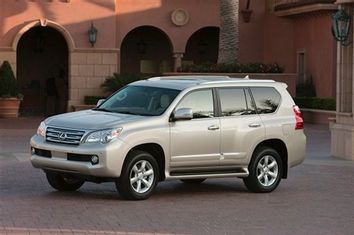
Toyota to temporarily halt sales of Lexus GX 460In this undated product image from Toyota Motors Corp., the 2010 Lexus GX460 is shown. Consumer Reports said Tuesday, April 13, 2010, it has given the Lexus GX460 a rare "Don't Buy" warning, saying a problem that occurred during routine handling tests could lead the SUV to roll over in real-world driving.(AP Photo/Toyota Motors Corp.) ** NO SALES **(Credit: AP)

Toyota Motor Corp. is temporarily halting sales of the 2010 Lexus GX 460 after Consumer Reports issued a rare “Don’t Buy” warning amid concerns the large SUV has handling problems that could cause it to roll over during sharp turns.

The Japanese automaker said Tuesday it had asked dealers to temporarily suspend sales of the SUV while it conducts its own tests on the GX 460.

“We are taking the situation with the GX 460 very seriously and are determined to identify and correct the issue Consumer Reports identified,” said Mark Templin, Lexus vice president and general manager.

The decision to stop selling the SUV is the latest blow to Toyota’s tarnished safety reputation after the recall of millions of cars and trucks over gas pedals that are too slow to retract or that can become stuck under floor mats. The GX 460 is not covered by the pedal recalls.

Toyota said about 6,000 have been sold since the vehicle went on sale in late December.

Consumer Reports is closely read by many car buyers before choosing a new car or truck. In January, it pulled its “recommended” rating on eight vehicles recalled by the automaker due to faulty gas pedals.

The magazine said the Lexus problem occurred during tests on its track. In a standard test, the driver approached a turn unusually fast, then released the accelerator pedal to simulate the response of an alarmed driver. This caused the rear of the vehicle to slide outward.

In normal cases, the electronic stability control should quickly correct the loss of control and keep the SUV on its intended path. But with the GX 460, the stability control took too long to adjust, which could cause a rollover accident if one of the sliding wheels were to strike the curb or another obstacle, said Gabriel Shenhar, Consumer Reports’ senior auto test engineer who was one of four testers who experienced the problem.

The magazine said it is not aware of any reports of the GX 460 rolling over. It tested two separate vehicles, both of which experienced the problem, but neither rolled over.

The warning label on the model will remain until Toyota addresses the handling issue with the seven-seat SUV.

Templin said in a statement he was “confident that the GX meets our high safety standards” and said Toyota’s engineering teams were testing the GX using Consumer Reports’ specific parameters. Lexus will provide a loaner car for any customer who bought a 2010 GX 460 and is concerned about driving the vehicle, Templin said.

Customers who have questions or concerns about the GX 460 can call Lexus at (800) 255-3987.

The “Don’t Buy” label is unlikely to hurt Toyota’s broader sales since the GX 460 accounts for a fraction of its total, said Erich Merkle, president of the consulting company Autoconomy.com in Grand Rapids, Mich. However, it comes at an unfortunate time as the automaker tries to move beyond the recalls.

“I think it will have a bigger impact from a negative-PR perspective than from an actual sales perspective,” Merkle said.

The GX 460, which starts at about $52,000, is built on the same platform as the Toyota 4Runner. However, Consumer Reports said the problem did not occur during similar tests on the 4Runner. According to Toyota’s Web site, both vehicles are about six feet tall but the GX 460 is about 3 inches taller.

Consumer Reports said the last vehicle to receive such a safety warning was the 2001 Mitsubishi Montero Limited, a large SUV. In that case, testers said the wheels lifted off the road during standard avoidance-maneuver tests, which also posed a rollover risk.

At the time, Mitsubishi disputed the magazine’s findings and did not make any modifications to the vehicle, Mitsubishi spokesman Dan Irvin said. The designation appeared to have little effect on the Montero’s sales, which increased overall during the second half of 2001.

The Montero remained on sale in the U.S. until 2007 and continues to be sold overseas as the Mitsubishi Pajero.

Toyota shares traded in the U.S. fell 52 cents to $79.03.

——

AP Auto Writer Dan Strumpf reported from New York.

Continue Reading Close

Consumer Reports calls Lexus GX 460 unsafe

Another blow for Toyota as the magazine gives the SUV a "Don't Buy" warning

  • more
    • All Share Services

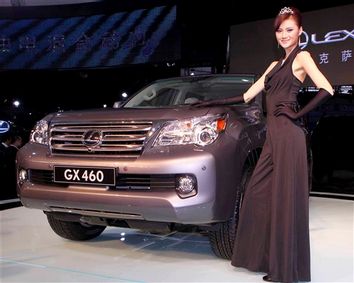
Consumer Reports calls Lexus GX 460 unsafeFILE -- In a Nov. 23, 2009 file photo released by the Xinhua news agency, a model presents a Lexus GX460 car during the 7th China International Automobile Exhibition in Guangzhou, Guangdong province, China. Consumer Reports has given the Lexus GX460 a rare "Don't Buy" warning, saying a problem that occurred during routine handling tests could lead the SUV to roll over in real-world driving. (AP Photo/Xinhua, Chen Jianli/file) ** NO SALES **(Credit: AP)

Consumer Reports has given the Lexus GX 460 SUV a rare “Don’t Buy” warning, saying a problem that occurred during routine handling tests could lead to a rollover accident in real-world driving.

In the latest blow to Toyota’s reputation, the magazine said that during a test of the vehicle’s performance during unusual turns, the rear of the vehicle slid until it was nearly sideways before the electronic stability control system kicked in.

Consumer Reports said in real-world driving, such a scenario could cause a rollover accident. As a result, the magazine has given the seven-seat SUV a “Don’t Buy: Safety Risk” label until the problem is fixed.

“In a real world situation, by that time, the car can hit the curb or the side of the road and that’s the situation where, in a vehicle like that, it could cause it to roll over,” said Gabriel Shenhar, senior auto test engineer at Consumer Reports, who was one of four testers to experience the problem.

Consumer Reports said the last vehicle to receive such a warning was the 2001 Mitsubishi Montero Limited. It said among the 95 SUVs in its current ratings, no other slid as far as the GX 460.

In a statement Toyota said it is concerned with Consumer Reports’ findings, adding that its engineers will try to duplicate the magazine’s tests to determine its next steps.

“Please keep in mind that the 2010 GX 460 meets or exceeds all federal government testing requirements,” the automaker said. “We take the Consumer Reports’ test results seriously.”

Starting at about $52,000, the GX 460 is a small-volume vehicle for Lexus, Toyota Motor Corp.’s luxury brand. It went on sale in November and only about 5,000 have been sold since then. But the warning represents yet another blow for Toyota’s tarnished reputation for safety following recalls of millions of vehicles for faulty gas pedals. The GX 460 is not covered by the pedal recalls.

Consumer Reports said the problem occurred during a handling test on its test track. During the test, the driver approaches a turn unusually fast, then releases the accelerator pedal to simulate a typical driver’s response. This causes the rear of the vehicle to slide.

In normal cases, the vehicle’s electronic stability control should quickly correct the loss of control. But Shenhar said in the case of the GX 460, the stability control took too long to adjust, causing a risk of rolling over.

However, Consumer Reports said it is not aware of any reports of the vehicle rolling over. The magazine said it tested two separate vehicles, both of which experienced the problem, but neither rolled over.

Continue Reading Close

Feb. US auto sales plow ahead despite snow, Toyota

American car makers are selling more in the last month

  • more
    • All Share Services

Automakers plowed through a snowy February to better-than-expected sales, and new incentives led by beleaguered Toyota will keep the momentum going into spring.

Despite some analysts’ predictions of single-digit gains, sales rose 13 percent over last February and all major automakers but Toyota Motor Corp. reported higher U.S. sales. Most took customers from the Japanese automaker, which has been struggling with a series of massive safety recalls. Toyota’s U.S. market share fell to 12.8 percent, its lowest level since July 2005, according to Ward’s AutoInfoBank.

To win back sales, Toyota said it will offer zero-percent financing on most models this month plus two years of free maintenance to returning customers. General Motors Co. and Chrysler LLC matched the financing deals.

Toyota’s U.S. sales fell 9 percent last month, besting some analysts’ predictions that its sales would fall by double digits. Meanwhile Ford, GM, Nissan, Honda, Hyundai and BMW all reported double-digit growth compared with February 2009, at the depth of the recession. The gains might have been even higher without the blizzards that paralyzed the East Coast.

Ford’s sales shot up 43 percent and the automaker outsold GM for the first time since August 1998, when GM was in the midst of a strike. Ford’s gains were led by cars, which rose 54 percent, with sales of the midsize Fusion, a Toyota Camry rival, more the doubling. Those results included Volvo, which Ford is preparing to sell.

Other winners included Kia Motors Corp. and Subaru. Even struggling Chrysler saw a slight increase in sales.

February was the first full month since Toyota suspended sales of eight popular models on Jan. 26. Toyota Vice President Bob Carter said Tuesday that almost all of those vehicle have been repaired and are now on sale. Toyota also has announced temporary production cuts at two U.S. plants.

Carter estimated the sales suspension cost the automaker 18,000 sales in February. Media coverage of the safety lapses also has taken a toll. Toyota officials and federal regulators appeared before House lawmakers last week and were testifying before the Senate Commerce Committee Tuesday.

Carter said Toyota saw very few of its customers defecting to other brands in February, but it did see a drop in new buyers. Meanwhile other automakers said they were seeing increased business because of Toyota’s pain.

“We feel we’re getting our fair share of the Toyota business,” said Susan Docherty, who was head of sales and marketing at GM until Tuesday afternoon, when she was moved into solely a marketing role. GM’s sales rose nearly 12 percent.

Honda Motor Co. said sales of the Accord sedan, which competes directly with the Camry, rose 41 percent. Honda’s sales climbed 13 percent overall. Hyundai Motor Co. said its sales rose 11 percent, partly because of a 58 percent increase in sales of the Sonata, another Camry competitor.

Most carmakers offered deals to Toyota customers in February. According to the automotive Web site Edmunds.com, incentive spending rose 11 percent from January to $2,588 per vehicle. Toyota’s incentive spending rose 26 percent, to $1,833 per vehicle. That was the fourth-highest monthly incentive total for Toyota since Edmunds began tracking data in 2002. While a boon for consumers, incentives eat into automakers’ profits and companies have been trying to cut back on them.

Toyota must be worried because it has generally avoided big incentives in the past, said Paul Ballew, vice president of analytics at Nationwide Mutual Insurance and a former GM economist.

“They’re jumping into the deep end of the incentive pool,” he said.

According to a USA Today/Gallup poll published Tuesday, 31 percent of Americans think it is unsafe to be in a Toyota or Lexus and 55 percent say Toyota didn’t respond promptly to safety problems. The poll questioned 2,021 people and had a margin of error of three percentage points.

Even though Toyota’s sales dropped, the company did better than many analysts predicted, said Jesse Toprak, vice president of industry trends and analysis at TrueCar.com, an auto pricing site. He suspects incentives aren’t the only reason, because they weren’t high enough to attract customers worried about safety.

“This tells me that Toyota’s brand strength and loyalty was far stronger than most of us thought,” he said.

Automakers were expecting to see gains over February 2009, which was one of the weakest months in a very depressed year. Still, winter storms at the beginning and end of the month hurt sales. GM said its sales dropped 22 percent in the Northeast region.

“It’s hard to get enthusiastic about going out and looking for a new car when you have to shovel out,” said Raymond Ciccolo, president of Village Auto Group, which owns seven franchises in the Boston area.

GM sales analyst Mike DiGiovanni said sales probably would have been 5 percent higher had it not been for snowstorms. That means the gradual economic recovery is continuing despite setbacks in home sales, new home construction and unemployment, he said.

GM’s sales of its Buick, Chevrolet, Cadillac and GMC brands climbed 32 percent. GM plans to keep those four brands and is phasing out Pontiac, Saturn and Hummer. It has sold Saab.

Much of GM’s sales increase was due to demand for large new wagons such as the Chevrolet Equinox, which jumped 133 percent.

Chrysler, meanwhile, said its February sales rose half a percent, its first year-over-year monthly increase since December of 2007. Chrysler’s minivan sales rose, as did sales of its sedans.

Sales to rental car companies and other fleet buyers also were strong. Fleet sales began ratcheting up in January and continued the trend last month, as companies began buying again after cutbacks last year.

Fleet sales generally mean lower profits to automakers than retail sales to individuals, but Toprak said a few months of high fleet sales are needed to make up for last year’s slump. Ford said 40 percent of its sales were to fleets, while GM sold 32 percent of its vehicles to fleets. Thirteen percent of Toyota’s sales were to fleets.

South Korea’s Kia saw U.S. sales rise 9 percent on brisk demand for its Sorento and Soul, a boxy vehicle aimed at city dwellers. Nissan Motor Co. said sales surged 29 percent as Versa subcompact sales doubled. Subaru reported a 38 percent jump.

Automakers are hoping it all adds up to the end of a long winter for the industry. Ford says it plans to increase North American production by 32 percent in the second quarter to 595,000 vehicles. GM didn’t reveal its production plans.

“The industry is very much on track for a continued slow but modest recovery,” Toyota’s Carter said.

——

AP Auto Writer Tom Krisher in Detroit contributed to this report. Strumpf reported from New York.

Continue Reading Close