G. Pascal Zachary

The invisible AIDS cure

Western do-gooders may want to help Africa stop the AIDS epidemic. But Helen Epstein's new book shows the most effective solutions are often the continent's own.

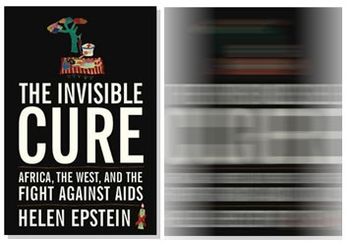
Helen Epstein is one of a rare species: the scientist turned storyteller, the specialist turned generalist. As she recounts in her illuminating new book, “The Invisible Cure: Africa, the West, and the Fight Against AIDS.” Epstein went to the east African country of Uganda in 1993 as an idealistic young Ph.D. after hearing a presentation on research problems raised by the spread of HIV/AIDS in Africa. She decided to abandon her research in San Francisco on obscure aspects of an obscure aphidlike bug and place her formidable skills in the service of the largest public health emergency in the world.

At some cost to her academic career, Epstein joined the race to discover a vaccine that immunizes people against HIV/AIDS. In the early 1990s, the virus was still spreading, especially in sub-Saharan Africa, and the disease was then considered a death sentence. Having volunteered to work on a vaccine, Epstein traveled to a cancer institute in Uganda, best known for the bloody rule of Idi Amin but also viewed as a Mecca for AIDS researchers because of the virulence of the virus there and the vigor with which Ugandans were fighting back.

Within a few months of arriving, Epstein was smitten with the extraordinary resolve displayed by Ugandans in the face of a roaring epidemic. Alone among African countries, Ugandans drove down the rate of infection in the 1990s through means that remain both controversial and misunderstood. Epstein was only dimly aware of Uganda’s achievement as it was unfolding around her, and years later, when she returned to the country, she wrote, “I felt like a pilgrim exploring a place where a miracle was said to have occurred long ago. Everyone had a different story about it and half the evidence was missing.”

Piecing together an explanation for how (and to what extent) Uganda rolled back AIDS is one engine of Epstein’s narrative. The other is the repeated folly of foreign-aid donors and the very experts who intervene with scant effectiveness. Her blunt, informed critique of the attempt by Westerners to save Africa from AIDS begins with herself: Epstein’s own vaccine project is a failure. Analyzing strains of HIV/AIDS among Ugandans, she finds many types: not the answer her American sponsor — the drug company Chiron — wants to hear for the simple reason that the more varied the virus, the more difficult to craft a vaccine. Chiron asks Epstein to study her disease samples more closely, but the samples get lost in transit — and with them Chiron’s funding for further vaccine research.

Epstein’s pursuit of an AIDS vaccine didn’t last long, but her African expedition changed her life. She has worked extensively in Africa (where HIV/AIDS remains the biggest killer) ever since. And her engagement with the epidemic never ended.

- – - – - – - – - – - – - – - – -

Epstein first came to notice as a writer of trenchant essays on HIV/AIDS for the New York Review of Books. Her background as a molecular biologist gave her the scientific chops to “decode” the mumbo jumbo surrounding the medical aspects of the disease. But she also had a flair for describing the social context surrounding the illness — and the courage and honesty to critically scrutinize the way aid donors, such as the Bill and Melinda Gates Foundation, the U.S. government and the United Nations, as well as global pharmaceutical companies, dominated the public health response to AIDS, both technically and financially. Because of Epstein’s incisiveness, “The Invisible Cure” has been eagerly awaited. And the book does not disappoint.

As Epstein’s title suggests, she is a skeptic about the entire international response to HIV/AIDS. “Much of this book is concerned with donor-funded AIDS programs that failed in some way, beginning with my own vaccine project,” she says early on. “I tell these stories not with a sense of satisfaction. I could not have done better myself at the time. But in science, failures are often as important as successes, because they tell us where the limits are. Only by looking honestly at our mistakes can we hope to overcome them.”

In many ways, Epstein is telling an insider’s story of technocracy, how a closed community of experts try to deliver a “silver bullet,” a one-size-fits-all cure for a many-headed, diverse menace. Her writing is indeed a form of therapy for misguided experts who either ignored or dismissed or merely failed to comprehend Africans and the context of their lives. These experts, Epstein shows, were not selfless interveners, either, but part of an international business — a kind of AIDS Inc. — that avows to serve ordinary Africans and too often benefits chiefly foreigners. In a telling meeting with a Ugandan doctor, she recounts the common view among Africans that there are only two types of AIDS: the “slim AIDS” that afflicts (and ultimately kills) them and the “fat AIDS” that “afflicts doctors, bureaucrats, and foreign consultants with enormous grants and salaries.”

Epstein — virtually alone among popular writers on the subject — treats people with “fat AIDS” with cynicism and outrage. For them, “AIDS is a career move, an adventure, an experiment,” she writes.

Fighting AIDS in Africa is messy, confusing and often irrational, which makes Epstein’s reliable tour so valuable. With great discipline, humility and verve, she eschews both sob stories (of dying Africans) and praise songs (of devoted foreigners, contemporary Schweitzers) and instead carefully dissects the tactics used in the many battles she witnessed in the African AIDS war.

War stories of this sort can often have the feel of a special pleading, as if the author were out trying to settle old scores whose import (or even existence) few can remember. Epstein avoids this common pitfall, adopting a clear, honest voice that is as unsparing toward herself as toward others. Drawing partly on the techniques of travel writing, and mustering some of the zeal of a muckraker, Epstein fashions a unique account of one of the most hashed-over stories of our generation. In her hands, the subject is fresh, surprising and, perhaps most important, understandable in plain English.

Epstein is especially good on the two questions that have bedeviled others who have grappled with the topic. Why did AIDS begin in Africa? And why has the disease hit eastern and southern Africa so much harder than virtually everywhere else in the world?

Her answer to the first question is succinct: HIV/AIDS jumped from chimpanzees to hunters in central and eastern Africa, as the latest research proves. Why, Epstein asks, if “Africans have been killing and eating monkeys for at least 50,000 years,” did doctors not spot anything like AIDS there until the 1960s? Much like the great historian of Africa, John Iliffe, in his excellent 2006 book, “The African AIDS Epidemic: A History,” Epstein convincingly presents “the possibility that new medical technologies introduced into Africa in the early 20th century [notably the widespread use and reuse of needles to deliver vaccinations in inoculation campaigns] sparked the global AIDS pandemic.”

Epstein’s discussion of why AIDS is so severe in eastern and southern Africa is also illuminating. She cites strong evidence that Africans are “not more promiscuous than heterosexual people in other world regions.” Instead, Africans in these two subregions tend to have “concurrent” relations with a small number of people. The pattern gave rise, Epstein writes, “to a stable interlocking sexual network that served as a ‘superhighway’ for HIV.” In Uganda, widespread encouragement of “zero grazing” (no sex outside a single partner) proved crucial in rolling back the disease, providing evidence for one of Epstein’s central propositions: “When it comes to fighting AIDS, our greatest mistake may have been to overlook the fact that, in spite of everything, African people often know best how to solve their own problems.”

As method or rhetoric, zero grazing never gained favor with international AIDS experts — who instead put their weight behind campaigns for condom use, abstinence and frequent testing — and the failure of this African concept to carry the day illustrates a wider failure to understand AIDS in African terms.

In the end, Epstein’s subject is not just a scary disease but sexual and social relations between men and women in Africa. And her final indictment remains troubling and still all too accurate: Outside experts fail to grasp the social web in which the disease lives and thus continue to fail in their efforts to roll back AIDS.

The closest Epstein comes to identifying a single solution is in her section on the growing awareness that circumcised men are much less likely to contract HIV than are uncircumcised men. The popularity of circumcision among west African men may explain the relatively low rate of HIV in this subregion. In asking whether male circumcision is “a magic bullet after all,” Epstein underscores another paradox: that a low-tech social tradition provides more protection against AIDS than high-tech, high-cost and imported medicine.

Epstein offers scant other solutions beyond urging outsiders to make more space for responses crafted by Africans themselves. Her advice is worth noting, especially since spending on AIDS in Africa, as Laurie Garrett recently highlighted in an article in Foreign Affairs, is soaring. Increased funding for AIDS will only compound past mistakes, Garrett argues. Epstein is similarly concerned that in the coming explosion of international funding to fight HIV/AIDS in Africa, past errors will replicated as foreign donors mistake the size of the checks they write for their potential to help ordinary Africans.

Ultimately, “The Invisible Cure” concludes that success in the war on AIDS in Africa “depends critically on a sense of commitment and will” on the part of Africans. Epstein is right, once again. Yet her conclusion is sobering for those rooting for a quick end to suffering in sub-Saharan Africa. In a timely warning to foreign do-gooders with fat checkbooks, Epstein suggests that an African commitment to fight AIDS effectively “cannot be bought.” Instead, victory must flow out of a rebirth of African self-reliance. Yet if outsiders cannot supply a quick fix to what ails Africa, and Africans themselves must shoulder the heaviest burden, the spectacle of AIDS devastation is likely to persist for years to come.

Blame the natives

Former World Bank official Robert Calderisi throws p.c. rhetoric to the wind in his new book "The Trouble With Africa."

On my most recent trip to an African country, I avoided the far north because of a vicious and persistent civil war. In the ultra-safe capital, I was plagued by electricity outages, which usually lasted the entire day. I needed a massive Toyota Land Cruiser to survive the treacherous dirt roads required to reach the farming villages I’m currently studying. A national election had just been held, extending the rule of the countrys unpopular president — in power since 1986 — for another five years. Dissenters talked openly about mounting a violent uprising against him, should the results of the election stand. Britain, fed up with official corruption in the country, suspended its aid and was urging other donors to do the same. At the same time, the government arrested an American evangelical preacher for promoting an end to the violent conflict in the north.

This was the mess I found in one of Africa’s best-run countries, Uganda — long a darling of aid donors, blessed with fertile farms, excellent weather and talented, well-educated people. When Uganda is a success story, there is indeed trouble in Africa.

Africa’s woes — from interminable civil wars, poverty and economic stagnation to the persistence of AIDS, famines and the worst kinds of oppression against women — have spawned a small army of saviors. They are a diverse bunch. Philanthropists — Bill Gates is only the best known — have plowed billions of dollars into the region. Rock stars Bono and Bob Geldof have put the fate of Africa on the media’s front burner. Bible-thumpers have invaded, hoping to save the region by saving souls. Many individual governments, along with the United Nations and other international agencies, provide steady aid. Even the Bush administration, which won’t win any humanitarian awards based on its Iraq misadventure, has sharply raised the official amount the U.S. gives to Africa.

Yet, however different their perspectives, the saviors of Africa do have a few things in common. For one, they all see sub-Saharan Africa — black Africa — as a patient in need of treatment. Yet diagnoses of Africa’s “illness” differ. Some argue that the poverty plaguing the region can be cured by more money alone. Others bemoan the corruption of African elites, and promote ethics and old-fashioned patriotism as a remedy for the disorder and disappointment in Africa. The battle for control of Africa’s ample natural resources — also known as the “curse of oil” — is another favorite malady. Or maybe what ails Africa is a lack of freedom and democracy, and an expansion of both will do more to end Africa’s troubles than any manner of handouts. Some promote a single big idea, such as U.N. advisor Jeffrey Sachs, who is trying to rehabilitate 15 African villages as proof of the power of aid. Others, notably economist William Easterly, think that lots of small ideas will help Africa more, so long as they can be spread across the region.

But these are trying times. Africans are proving to be nettlesome patients for these would-be healers. They are not taking their medicine or following the doctor’s orders. Perhaps worst of all, Africans are not grateful. The saviors are frustrated; they are neither appreciated nor effective. Talk to any of them about the task of saving Africans, and they quickly start complaining. Sooner or later, their complaints are directed at Africans themselves.

Most of the rough talk about the personal failings of Africans occurs in private, never traveling beyond the clubby expat bars and posh private offices that are ubiquitous in African capital cities. That’s why Robert Calderisi deserves to be congratulated for his new book, “The Trouble With Africa.” Calderisi, a former World Bank official and a veteran of many years of working on African issues, exposes the dirty little secret harbored by so many saviors of Africa. Indeed, Calderisi has written a book that is positively boiling over with resentment toward Africans. They are dishonest and unfeeling. They are greedy and materialistic. They lack the values, training and even the motives necessary to govern themselves. They are religious, superstitious and prone to brutality. Were it not for Africans themselves, the saviors might actually notch some successes.

Calderisi excoriates Africans for “looking for excuses,” the title of his opening chapter, and hiding behind those they find. These excuses are, in his mind, predictable: colonialism and racism. Calderisi dismisses those who cite the history of European colonialism and the legacy of transatlantic slavery to defend Africans. Slavery wasn’t so bad, he says; at least the peculiar institution delivered some Africans from living in Africa itself. And colonialism had a silver lining. Without contact with Europeans, Africans would be even worse off, he insists.

To be sure, Calderisi does not express himself quite like this. In fact, he is even more blunt and more simplistic in his ideas about the failings of Africans. He has identified an “African character” and claims, “There is a darker side to the African character.”

Darker? Calderisi is deaf to the sound of his unintended pun.

Not to mention that he doesn’t say just how dark he finds the African character, perhaps because he’s impatient to make other sweeping generalizations. He finds, for instance, that “Africans are not savers.” “They are also superstitious.” “Most uneducated Africans are fatalistic,” he adds. “They accept and submit.” But they are not so accepting or submissive. Rather, “Africans can be brutal to each other, especially in groups.”

Such generalizations might seem refreshing because, as Calderisi himself notes, “political correctness” has made any critical evaluations of African behavior off-limits. Indeed, Calderisi presents himself as a brave truth-teller, willing to break taboos and speak openly about what he thinks is said all too often in hushed tones about Africans, but rarely in public. And the essence of what is said in those secret conversations about Africans is that — full stop — they are what’s wrong with Africa.

Different societies have different strengths and weakness, so it is not necessarily unfair to make generalizations about different groups. It is certainly true, for instance, that most Africans are intensely religious and that non-rational explanations of events and behaviors are common in Africa. Africans generally respect their elders, want children to be seen but not heard and have relatively strict norms on relations between the sexes. But Africans are not like Germans or Mexicans or even Indians or Chinese. Africans don’t live in a single country, but populate an enormous area and possess a vast array of different religions, ethnicities and ways of life. A single region of Sudan — troubled Darfur — is about the same size as France. The entire U.S. can easily fit inside the continent of Africa — and leave room to grow.

Different regions of Africa differ dramatically in their geography. Even the colonial experience differed greatly across the sub-Saharan. One of Calderisi’s challenges is to make distinctions about Africans that show an awareness of the diversity that coexists with any presumed unity. But he fails to exhibit this necessary awareness. Instead, he is sloppy in his characterizations of “the African character” he claims to know. Moreover, he seems unaware that past generalizations about “the African character” were part of a systematic attempt to denigrate black people generally and Africans in particular. Any generalizations today must be made with great care.

Over and over, Calderisi shows his carelessness. He also contradicts himself, arguing at times that Africans aren’t hard-wired to behave as they do but are creatures of their circumstances. At one point he admits, for instance, that “very few Westerners would behave differently from Africans in the same circumstances.” This is pretty close to my own view of why Africans don’t always do the right thing. They are responding, I think, to bad incentives. Presented with bad choices, they make bad decisions, but not because they are “bad” themselves. The fault does not lie with Africans, but with their circumstances. By ignoring this fundamental truth, Calderisi comes close to reviving the core canard of racism: that Africans are inherently inferior.

Of course, Calderisi does not write anything explicit about African inferiority, but he repeatedly downplays the effects of racist imagery and mass assumptions on the way African behavior is portrayed and evaluated. He defends racist attitudes from the colonial period, when Africans were relegated to subordinate roles. He exonerates iconic colonial figures, such as Albert Schweitzer, the French missionary doctor, who called Africans “my junior brothers.” Schweitzer clearly meant that Africans were not the equal of white Europeans, though they nevertheless deserved compassion and equal opportunity. Calderisi claims that Schweitzer was merely “condescending” toward Africans, but was not guilty of racism. However, to most Africans — and most denizens of the planet — Calderisi is drawing a distinction without a difference.

To be sure, Africans and apologists for African failures have often invoked racism and colonialism as an excuse. In presenting a useful corrective to what Tom Wolfe, in another context, called “mau-mauing,” Calderisi goes too far, laying nearly the full blame on Africans for the sorry conditions of their countries. He says that Africans seek to deflect responsibility by citing the histories of colonialism and the legacy of racism. Yet these factors are very much alive in contemporary experience. The largest single economy within sub-Saharan Africa, that of South Africa, remained dominated until 1994 — only a dozen years ago — by a relentless apartheid system. Colonial influences on Africans, far from ending suddenly with formal decolonization in the late 1950s and early 1960s, persisted for many years. More recently, colonial attitudes have violently reasserted themselves as Africans have sought refuge in the familiar and stable bosom of British-ness or French-ness as a respite from the instability of their own societies.

I am critical of much of the aid given to Africa, so I came to “The Trouble With Africa” expecting to find much to agree with. And to be sure, despite his mishandling of large questions, Calderisi does manage to offer some valuable insight into why foreign aid fails Africa. Too much of this aid gets stolen by corrupt officials. Aid reinforces the position of elites. It creates dependence. It fails to promote private economic and social activities, which are the foundation of successful countries elsewhere in the world. Finally, aid is bad for African self-esteem. “If aid is largely ineffective,” he writes, “it is also demeaning.”

Surprisingly, given his hostility to aid, Calderisi stops short of calling for an end to it, or even a reduction of it. He would prefer to see roughly the same amount of aid flow into Africa, but have it spent differently. The world, he writes, “must now radically change” how it aids Africans.

His call to arms sounds promising — until Calderisi gets specific. Belying his radical rhetoric, he offers tepid — even vapid — proposals for reform. His “ten ways of changing Africa,” bunched together in a final, brief chapter, are neither innovative nor compelling. Mostly, his prescriptions have been tried before with little effect and don’t get to the heart of Africa’s problems anyway. His first recommendation, for instance, is to help law-abiding Africans recover the public monies stolen by African dictators, bureaucrats and other corrupt elites. He also wants all African government officials to make their bank accounts open to public scrutiny. These are sensible recommendations, but they pack little punch. The real trouble with Africa is economic stagnation, unbalanced demographics (too many youth who lack both jobs and services) and frightfully low levels of private investment. Africans would certainly benefit from a reduction in official corruption, but even zero corruption would not be a panacea.

Probably the most daring of Calderisi’s recommendations is his most wrongheaded. He wants foreigners to run Africa’s elections, schools and public health programs. How this would happen, he does not say. He also is unpersuasive in making the case for why Africans would receive better services at the hands of foreigners than those of their own people. Running elections is extremely difficult, even in places like the United States, which has witnessed two disputed presidential elections in a row. But Calderisi is enamored of the notion of recolonizing Africa, the idea that through their own persistent incompetence, Africans have abdicated their rights to self-governance. He does concede, however, that it is politically impossible for outsiders to take over the running of African governments. So he is left instead with the less appealing option of invoking offbeat mechanisms such as sanctions against African governments that jail even a single journalist. Why he is partial to journalists yet does not threaten a similar cutoff for, say, jailing protesting farmers, he does not say.

I suspect part of Calderisi’s lack of imagination stems from years of serving as part of Africa’s aid elite. Having spent his entire adult life dispensing plums to Africans — first for the Canadian government, then for the World Bank and now as a private advisor — he has a vested interest in defending aid programs. He repeatedly describes them as well-designed, failing only because of sabotage by or stupidity of Africans themselves. He sees aid officials as personally talented, well-intended and highly motivated. He fails to recognize that fat-cat aid officials are as much (and probably more) to blame for aid failures than the character-flawed Africans he repeatedly encounters.

It is a testimony to the strength of the African character that, despite awful governments and ill-conceived and wasteful foreign aid programs, African societies, in every part of the sub-Saharan region, are experiencing notable gains. Calderisi ignores completely the positive role of technology in improving the quality of African life. Cellphones are revolutionizing Africa, giving vast numbers of people an easy and relatively inexpensive way of reaching relatives and gaining essential information. An explosion in radio stations has given voice to voiceless Africans in virtually every African country, changing the balance of political power and providing new sources of hope for even the poor. Finally, the spread of electronic money transfer services has meant that even those living in remote villages can receive remittances from their lucky relatives living in the U.S., Europe or the Middle East. These remittances, unlike aid, are transfers within extended African families and possess an authenticity that mere charity lacks.

Africans remain burdened by awful problems. That many of these problems are at least partly of their own making cannot be denied. African leaders must take more responsibility for solving their own problems, and ordinary Africans must invest in their own societies in a way they have not done for a very long time. But to urge Africans to stand on their own feet, and to stop blaming others for their problems, does not require us to pin most of the blame for Africas problems on Africans themselves. Those of us who are rooting for Africans to succeed in their own lands — and I include myself and Calderisi among these people — surely do not need to construct a phantom African character on which to project our brittle notions of what constitutes authentic African values, personalities, aspirations and even delusions. Images and assumptions about African talents and capabilities have been proved wrong in the past. History has mocked those who once saw limits and shortcomings in Africans that Africans did not see in themselves. Nothing about the current crisis in African affairs, however frustrating, should force us to revive old notions of African inferiority. Those who do surely will once more be mocked by future historians.

Continue Reading Close

A problem from hell

Does applying the generic label of "genocide" to violence in Darfur make it even harder to stop the killing?

In the minds of America’s opinion leaders, Africa is always in crisis, and the crisis — whether over disease, hunger, war or natural disaster — is invariably placed in a frame that Americans, and the wider world, can easily understand. When it comes to wars between people in Africa, the frame of preference is genocide, the systematic slaughter of one group by another.

Genocide is killing on a vast scale — killing so large and terrible as to seemingly render explanations irrelevant. Genocide appears to stand outside of history, of place, of rationality. The term simplifies the complicated problem of African communal violence into a story of one “tribe’s” relentless drive to erase the presence of another.

Yet by imposing the frame of genocide on African conflicts, do we obscure more than we explain? To do more than mourn Africa’s dead, shouldn’t we understand the actual sources of African conflict? Explanations of civil war are crucial, not only to settling African wars, but for imagining a better future for the world’s poorest and most troubled region.

The wider importance of “deconstructing” African genocide is well illustrated by the continent’s most vexing civil war, which is taking place in the Darfur region of western Sudan (an area roughly the size of France). Human-rights experts have declared that a new African genocide is underway there; and on the surface, the case for genocide is strong. The conflict pits light-skinned Muslim “Arabs” against black-skinned Muslim “Africans.” Arab attackers, so-called janjiweed militias, murder black Africans with impunity and, evidence has shown, at the direction of the government, with the aim of eradicating Darfur’s substantial black population. So persuasive is this evidence that the United Nations in June of 2004 agreed that Darfur’s Africans indeed qualified as victims of genocide. No matter what language is applied, the bare facts are depressing enough: as many as 300,000 dead and perhaps 2 million people displaced. Even those living in refugee camps remain subject to the violent whims of the janjiweed.

Given American fascination with genocides past, present and future, the next 10 years will likely bring a steady stream of literary and analytical works about the killing fields of Darfur, which Nicholas Kristof, from his influential perch as a New York Times columnist, has called “the first genocide of the 21st century.”

But does the conflict in Darfur, however bloody, qualify as genocide? Or does the application of the word “genocide” to Darfur make it harder to understand this conflict in its awful peculiarity? Is it possible that applying a generic label to Darfurian violence makes the task of stopping it harder? Or is questioning the label simply insensitive, implying that whatever has happened in Darfur isn’t horrible enough to justify a claim on the world’s conscience, and thus invite inaction or even the dismissal of Darfur altogether?

These questions — and the paradoxical nature of the G-word — lie at the heart of a much-needed new book by Gerard Prunier, a scholar of African affairs. In “Darfur: The Ambiguous Genocide,” Prunier, a professor at the University of Paris, casts aside labels and lays bare the anatomy of the Darfur crisis, drawing on a mixture of history and journalism to produce the most important book of the year on any African subject. Clearly and concisely, he describes a complex civil war, where “Arabs” and “Africans” are often indistinguishable from one another to outsiders. Members of both groups can be dark-skinned, Muslim, poor and neglected. Indeed, this last characteristic of Darfurians, the extent of their neglect by Sudan’s central government, may be the most significant for understanding the roots of today’s conflict. (Although racism cannot be discounted; racial bias exists in Sudan with some people demonizing blacks and holding them as slaves.) Prunier emphasizes the legacy of Darfur’s isolation, which began under Britain, colonial ruler of Sudan until its independence in 1955. In 1916, the British incorporated Darfur, which had been an independent country for centuries, into colonial Sudan and then pathetically left it to crumble (as late as the 1930s there was not a single high school student in Darfur, and only four primary schools for younger kids).

Rule by an independent Sudanese government changed little. In the 1960s, and through the decades following, Darfur remained woefully ignored, a poor stepchild to the clique of Arabized Africans who ran Sudan. Yet, according to Prunier, while Darfur’s marginalization was systematic and relentless, it did not prefigure genocide. “The social and economic marginalization of Darfur was regional, not racial or cultural,” Prunier writes.

In 1984, a terrible famine struck Darfur, breaking the delicate balance between nomadic herders and pastoral peoples. Ever since, Darfurians have lived, Prunier observes with his characteristic pith and understatement, in “a state of endemic insecurity.” The ambitions of Muammar Gaddafi in the 1980s to create a mini-empire in the northern part of sub-Saharan Africa led Libya to invade, occupy and “Islamicize” Darfur for many years, with the quiet complicity of Sudan’s central government. Neighboring Chad also used Darfur’s “barren” territory to play out some of its own strange internal conflicts. When a motley collection of pastoral peoples (the “Africans”) staged a quixotic armed uprising in 2003 and 2004, the government mounted a brutal counterattack, training its rage on unarmed civilians and making the situation in Darfur, in Prunier’s blunt words, “much closer to a genuine civil war.”

This Article

“Darfur: The Ambiguous Geocide”

By Gerard Prunier
Cornell University Press
312 pages
Nonfiction

Buy this book

“Darfur: A Short History of a Long War”

By Julie Flint and Alex de Waal
Zed Books
176 pages
Nonfiction

Buy this book

While Prunier is critical of using the word “genocide” too loosely, he is careful to document the Sudanese government’s efforts to target specific population groups for decimation. Sudan’s government has organized the worst forms of violence against unarmed civilians: rapes of women, murders of children, the killings of husbands and fathers in front of their own families. These actions cannot be excused. However, they are not explained either by ignoring the precarious hold that Sudan’s government has over some of its territory and the extent to which Darfur’s “African” groups are militarized. Indeed, the surge in violence against blacks in Darfur occurred after an armed movement began mounting attacks against the government. Given the weakness of the Sudanese state, Prunier writes, “any armed movement initiated by the non-Arab tribes of Darfur was like a red rag waved before the eyes of an excited bull.”

He explains: “the parallel with Rwanda [where in 1994 the Hutu ethnic group organized the mass slaughter of minority Tutsis in 1994] is striking. When Tutsi rebels entered Rwanda in October 1990 they probably did not realize the degree of danger they were creating for the other Tutsi living inside the country. In an atmosphere charged with racism an armed rebellion by the ‘inferior’ group is fraught with enormous danger for the civilians of that group. Counter-insurgency in Darfur could perhaps only have gone wrong. This was not ‘counter-insurgency’ organized by a government trying to restore law and order; it was the answer with arms by a racially and culturally dominant group to the insurrection of a racially and culturally subject group. The hope that repression could be limited to combatants was completely unrealistic.”

In laying bare the roots of Darfur’s crisis, Prunier provides a fresh way of thinking not only about a remote patch of Africa but about the most vexing African problem of our times: What can effectively be done to halt government-sponsored violence, whether it carries the genocide label or not. As Prunier rightly concludes, “There are no big political, economic or security stakes for the developed world” in African conflicts. This means that calls for intervention — or even aid — are usually based on international law or basic moral and humanitarian grounds, not the sorts of realistic, pragmatic concerns that motivated, say, U.S. intervention in Haiti, Afghanistan and Iraq. Absent finding a self-interested reason (even a false one) for American military intervention in another country’s affairs, the surest way to pry open a closed killing field to concerned outsiders is to utter the G-word. But Prunier bravely complains that making legalistic distinctions about the murder of African innocents often undercuts both effective responses and sympathetic understanding.

“Unfortunately, whether the ‘big-G word’ is used or not seems to make such a difference,” Prunier writes. “It is in fact a measure of the jaded cynicism of our times that we seem to think that the killing of 250,000 people in a genocide is more serious, a greater tragedy and more deserving of our attention than that of 250,000 people in non-genocidal massacres. The reason seems to be the overriding role of the media coupled with the mass-consumption need for brands and labels. Things are not seen in their reality but in their capacity to create brand images, to warrant a ‘big story’, to mobilize TV time high in rhetoric. ‘Genocide’ is big because it carries the Nazi label, which sells well. ‘Ethnic cleansing’ is next best (though far behind) because it goes with Bosnia, which is the last big-story European massacre. But simple killing is boring, especially in Africa.”

Prunier’s formulation is daring in its critique of the orthodox view of how to draw attention to — and make sense of — African conflicts. He offers a pragmatic way of understanding them, not as iconic — even mythic in their connection with universal horrors such as the Jewish Holocaust — but as singular horrors that must be parsed and analyzed on their own terms. To be sure, understanding the peculiarities of an African conflict does not guarantee that the conflict can be ended.

Prunier is himself rather circumspect about how to fix the many failures of Sudan’s 50-year period of independence. The two British authors of “Darfur: A Short History of a Long War” are less restrained. Julie Flint, a journalist and documentary-film producer, has reported on Sudan since 1992. Alex De Waal, a fellow at Harvard University’s Global Equity Initiative and director of London-based Justice Africa, visited Darfur often in the 1980s for a book on the 1984 famine in the region, “Famine That Kills.” He remains a trenchant observer of Sudan’s ethnic politics, regionalism and fragmentation. Flint and De Waal label the leaders of Sudan’s government “war criminals” and they imply (though don’t explicitly state) that the goal of concerned outsiders should be the removal of these leaders, starting with Sudan’s President Omar al-Beshir. “For Beshir,” they write, “peace is subjugation.” That’s not a healthy starting point for people in power to begin a process of reconciliation with aggrieved minorities.

Indeed, there can be no durable peace in Sudan under the current political leadership, argue De Waal and Flint. Sudan’s leaders are too implicated in atrocities against civilians, not only in Darfur, but in southern Sudan, where black Christians, notably members of the Nubian group, suffered grossly in government terror campaigns during the 1990s. Southerners, as part of their peace deal struck earlier this year with Sudan’s government, won the right to get a vote on splitting from Sudan, as early as 2011. The Beshir government has pledged to abide by the vote, and allow its oil-rich southern provinces to depart, but many worry the government won’t allow this to happen without another war. Even now in Darfur, the inability of two different rebel groups to forge a common cause has provided Beshir with another excuse to make only “cosmetic” changes in the government’s behavior.

De Waal and Flint detail the failures of international intervention to halt the war in Darfur. The U.S. placed great hopes on the ability of the African Union, an association of African countries, to establish order there, but De Waal and Flint demolish this idea, and argue that the African Union lacks the resources, expertise and political will to impose a solution. The African Union might redeem itself, if the U.S. Congress agrees to fund a large military operation by the African Union in Sudan. But with Congress dithering on approving money, despite personal appeals by Condoleezza Rice, the African Union is likely to live up to De Waal and Flint’s dour assessment. What’s necessary, the authors insist, is “regime change” in Sudan — the Beshir government is simply irredeemable. While they don’t try to tie an evil ideology to Beshir, they argue that he is wedded to committing “atrocity by force of habit.” Once an advocate of an Islamic state, Beshir and his gang now “seek power for its own sake,” and “people they perceive to be challenging that power count for nothing,” De Waal and Flint write. “They can be subjugated, shot or starved without compunction … Mass killing has become so routine that it no longer needs conspiracy or deliberation. It is simply how the security elite does business.”

No wonder that Human Rights Watch, in a report released last month, allege that Beshir and 12 other top Sudanese government officials are responsible for much of the violence in Darfur. While merely pretending to negotiate a settlement to the Darfur conflict, “the Sudanese leadership continues to implement policies that permit continuing attacks on civilians, and perpetuate a climate of fear and intimidation through structural and institutional abuse,” Human Rights Watch said.

The renewed killing in Darfur, and the failure of the outside world to impose a peace, has raised fresh calls for the U.S., the United Nations or both to send armed forces into Sudan in order to “save” Darfurians and end the “genocide.” Calls for humanitarian intervention persist because, as Samantha Power wrote recently in the New Yorker, Darfur remains overrun with violence and banditry. Power, a professor at Harvard University’s Carr Center for Human Rights Policy, predicts that the African Union will ultimately withdraw from Sudan, leaving the U.S., Europe and the U.N. no choice but to send in their own troops. Both of these books, however, should give pause to Power and other advocates of such intervention.

This Article

“Darfur: The Ambiguous Geocide”

By Gerard Prunier
Cornell University Press
312 pages
Nonfiction

Buy this book

“Darfur: A Short History of a Long War”

By Julie Flint and Alex de Waal
Zed Books
176 pages
Nonfiction

Buy this book

To be sure, regime change is needed in Sudan and foreign military intervention may stop killing for a short time. But at what price? As we have seen in Iraq, military intervention will not end a conflict whose underlying causes go unaddressed. Those causes spring from a history of inequity between regions and peoples in Sudan. American, European and U.N. troops are unlikely to remain in Sudan for the five to 10 years required to bring about a radical reworking of power relations between these regions and peoples.

Yet only a radical power shift — perhaps one that actually splits Sudan into two or more countries, or, at a minimum, results in an authentic federal system where political power is widely dispersed — is likely to ensure lasting peace in Sudan. Proponents of military intervention clearly have good intentions — and who would not wish to stop the violence in Darfur? — but they must be honest about the consequences of what would inevitably become a foreign occupation of Sudan. Overthrowing the Beshir regime, however justified, will unleash a bloody civil war and a long post-conflict period in which foreign troops will be needed to maintain order. Sudan would become another Muslim country occupied by Westerners, and perhaps even a breeding ground for terrorists (this is a country, after all, that once harbored bin Laden himself). Given the cost of such an intervention and its risks, a more sensible approach to Darfur would draw on the lessons of history and highlight the crucial importance of a negotiated settlement that the Sudanese themselves could carry out.

Continue Reading Close

Triumph of the telcos

Internet telephony advocates are predicting that free long distance means the downfall of Big Telecom. But it won't be so easy to topple the king.

Technology pundits would have us believe that Internet telephony, which enables “free” phone calls for those with broadband and the proper equipment, is going to topple the established phone companies. But the future may not turn out to be so one-sided. Instead, Internet telephony (commonly referred to as VOIP, for “voice over Internet protocol”) may represent just another battleground for the usual fights between the Baby Bells, the long-distance telephone companies and the cable companies.

While the outcome is uncertain, Internet telephony, despite its insurgent, revolutionary credentials, stands a good chance of being co-opted by the oligarchy that rules over telecommunications in America.

That the oligarchs of telecom have the power to control free telephony flows from the following:

Telcos will be able to offer their own Internet telephony services and use their resources to take the price hit while they wait out their competitors, much as they appear to have done in the DSL market.

Internet telephony will create even more demand for bandwidth, which will be sold by — who else? — telecom and cable companies.

Therefore, the looming battle over Internet telephony won’t be between David and Goliath, but between giant cable and telecom companies.

How does this scenario square with frequent claims that Internet telephony will, in the words of new-media analyst Clay Shirky, “bankrupt” the nation’s four chief providers of local telephone service — Bell South, Verizon, Qwest and SBC? The question animates most predictions on the future of Internet telephony. In typical fashion, Shirky asks, “Will these four companies make the transition to Internet telephony, or will the new technology destroy them?”

The specter of annihilation at the hands of a revolutionary technology is a frequent claim. Yet there is a familiar pattern in the history of technology: existing players find ways of co-opting, even killing, menacing innovations. The odds are that the nation’s four local telephone providers aren’t doomed. They may take a hit as they move into less profitable businesses, or they may not, if their costs decrease significantly because of new technologies. One thing is pretty certain: They won’t be wiped out. They will end up more durable and dangerous than the proponents of (free) Internet telephony presume.

Because of an accident of history, existing telephone companies must embrace the very technology that threatens them with extinction. They can do so because Internet telephony allows them to cheaply enter into a new business: long-distance phone service. Under the rules of the Federal Communications Commission, which still tightly regulates the telephone arena, local telephone companies have only recently gained the freedom to offer service across the U.S. and internationally. Internet telephony permits a Verizon or an SBC to undercut the prices charged by an AT&T or an MCI. Since the local telephone companies have no existing long-distance business to protect, they need not worry about the chief threat of Internet telephony, cannibalization. In short, they have no long-distance business to lose, so Internet telephony is attractive.

In relying on Internet telephony, however, the Verizons of the world are legitimizing an insurgent technology that until recently was hounded by complaints of poor quality. Newer versions of Internet telephony, however, have largely licked the quality problem, and they work more easily with computer systems. As with music downloading, there now exist a variety of do-it-yourself calling programs — the most notorious being Skype — that turn a networked computer into a powerful telephone that can make both local and long-distance calls.

The catch, however, is that free telephone service requires a broadband, or high-speed, connection to the Internet. Local telephone companies turn out to be the chief providers of broadband, which means that they can profit from a consumer’s switch to Internet telephony. The calls may be free, but the bandwidth isn’t.

By manipulating bandwidth prices, Big Telecom can make Internet telephony seem attractive — or a prime source of profits. That’s because fans of Internet telephony still won’t be able to cancel their local service; they’ll still need it for the bandwidth.

In managing the pace of adoption of Internet telephony, telcos can expect assistance from regulatory bodies. To be sure, Michael Powell, the FCC’s chairman, has been campaigning for Internet telephony to receive an exemption from taxes and other incentives for it to gain ground. But states rely on telcos for a nice chunk of tax revenue and some are eager to impose on providers of Internet telephony the same “responsibilities” that traditional telcos carry. Among these are contributions to a fund for the 911 emergency calling system; emergency service in the event of an electricity blackout; and subsidies to low-income telephone customers.

In February, California announced its intention to open an investigation of Internet telephony providers, raising expectations that the state will begin regulating and taxing the service, which would blunt some of its appeal and set a trend for the rest of America. To undercut the impression that state regulators are coming to their rescue, the Baby Bells are scrambling to welcome Internet telephony.

“The answer isn’t to wish that Internet technology will go away,” says a senior executive at Verizon. “We must embrace the new technology and deliver a winning value proposition that encourages them to use our service.”

But Verizon won’t identify the “winning formula” for exploiting Internet telephony, perhaps because it involves taming the insurgent technology. Innovators in the field fear that the Verizons are bent on crushing them. Consider the plight of Vonage, which has gotten a good deal of attention for offering unlimited nationwide calling for a flat fee. At first blush, Vonage seems like death to the Verizons, which have inherently higher costs. But the triumph of Vonage isn’t certain.

“We have a two-year lead technologically, and if we stay ahead we can beat them,” says Louis Holder, chief of new products at Vonage. But Holder allows that “the telcos have a lot of capital to throw at this. They can lose a lot of money pursuing this” and, in the process, make proponents of free telephony miserable.

For these proponents, of course, the battle with Big Telecom is one front in a wider war on the oligarchies that dominate the world economy. But to the oligarchs themselves that war is a mere sideshow. The real fight is between Big Telecom and Big Cable, with both sides using Internet telephony as a weapon.

Today only about one in five U.S. households has a broadband connection (or about 20 million). But the number is expected to double in the next two or three years, driven by the need for both Big Cable and Big Telecom to move beyond their stagnant core businesses. Cable giants such as Comcast and Time Warner are embracing Internet telephony, rolling out cheap calling plans, not because they favor cheap phone calls but because the technology exists that allows them to batter their telecom competitors.

“What you have is the making of another Internet land race, where everyone is trying to stake out a territory,” says Daniel Berninger, an independent analyst in Washington who has been involved in several Internet telephony companies. “The same kind of thing is happening with VOIP.” Under the cover of bringing “free” telephony to Americans, “two big industries get an opportunity to battle each other in a new way.”

Continue Reading Close