Gary Krist

“On Writing” by Stephen King

Thankfully, if inexplicably, his how-to guide contains the harrowing true story of his nearly fatal car accident. But did we really need the best horror writer alive to explain his position on adverbs?

  • more
    • All Share Services

Let’s start at the very end: The postscript of Stephen King’s “On Writing” contains some of the most harrowing pages he has ever written. It’s here that King describes the traffic accident that nearly killed him in June 1999. Writing with understated simplicity, he takes us through the awful sequence of events, from the moment he was struck by a van near his home in Maine, through his emergency medical treatment and long rehabilitation, to the moment he sat down at a typewriter and, in agonizing pain, began writing again. The result is like a reality-based version of his novel “Misery,” distilled to short-story length, with an angel (King’s wife, Tabitha) rather than a devil (the novel’s psychotic Annie Wilkes) playing the part of nurse.

“On Living: A Postscript” is an extraordinary document. What it’s doing at the end of this otherwise dullish primer on the craft of writing is anybody’s guess. Maybe after spending 150 pages on the dry mechanical rules of good prose (“The adverb is not your friend,” etc.), King wanted to give us an example of the straightforward but powerful brand of storytelling we should be aiming for. As the novelist explains, good writers don’t tell; they show. And while that old saw is as rusty as they come, it still slices to the bone, as King demonstrates to great effect in his postscript.

But, alas, there’s all that telling to slog through beforehand. King’s advice to writers is generally sound, and he delivers it with refreshing irreverence, but nothing can disguise the fact that nearly all of it is stuff we’ve heard a thousand times before. His harangue against the passive voice, for instance, is hardly news that will stop the presses. Likewise his recommendation that writers avoid overly elaborate vocabulary. And do we really need the best horror novelist in our language to remind us that “nouns and verbs are the two indispensable parts of writing”? At times I felt as if I were reading the literary equivalent of a home fix-it guide by Frank Lloyd Wright.

What I (and probably a lot of other King fans) hoped to find in “On Writing” was something a little meatier. For me, King’s most remarkable talent is his ability to magnify and dramatize the ordinary fears that lie at the root of everyday life. As a writer and as a reader, I wanted to know how he gains access to all of those dark, cobwebby places in human nature. Granted, such things are notoriously difficult to talk about — most writers hate to be asked where they get their ideas — but I would have welcomed more insight into how a writer like King translates his own obsessions and neuroses into compelling fiction.

We get hints of that juicier information in the book’s first section, “C.V.,” where King tells us a little about his life as a writer. Literary gossipmongers can look here for details of King’s past alcohol and drug addictions: “At the end of my adventures I was drinking a case of sixteen-ounce tallboys a night, and there’s one novel, ‘Cujo,’ that I barely remember writing at all.” But novice writers would do better to study the kinds of life experiences that shaped King as a horror chronicler (like his childhood visits to the ear doctor, who would — eew! — puncture the boy’s eardrum with a long needle to drain away the blood-tinged pus).

“I was built with a love of the night and the unquiet coffin,” King explains at one point in the book. This is a revealing statement, and one that goes to the heart of what makes him a unique presence in contemporary American fiction. But in this “memoir of the craft,” he doesn’t really explore those deeper connections between self and story. “On Writing” would have been a far more memorable book if it had focused on King’s love of the night rather than his love of the deleted adverb.

“Becoming Madame Mao” by Anchee Min

A novel with a larger-than-life subject: the ruthless political climber who wreaked vengeance on every enemy who'd ever snubbed her.

  • more
    • All Share Services

The grand pageant of Chinese history has featured its share of notorious women — most notably the empress dowager Tz’u Hsi, who used to dispatch eunuchs to assassinate her enemies — but few have been as widely despised as Jiang Ching, the dreaded Madame Mao. Known to detractors as the “White-Boned Demon,” she was responsible for some of the worst ideological excesses of the early Communist years, using her position as the chairman’s wife to wreak vengeance upon anyone who had ever slighted her during her early career as actress, gold digger and political climber. For many people both inside and outside China, she epitomizes the arbitrariness and vindictiveness that have plagued the Chinese Communist Party throughout its history. That’s why few mourned when, shortly after Mao Tse-tung’s death in 1976, she was tried as a member of the hated Gang of Four and imprisoned for the rest of her life.

But now we have “Becoming Madame Mao,” Anchee Min’s fictionalized version of Jiang’s life, and while it is not exactly an effort to rehabilitate the old Demon’s reputation, it does try to give it some nuance and dimension. Without straying too far from the historical record, Min imagines herself into Madame Mao’s head, putting her political actions into the context of a difficult personal life marked by abandonment, loneliness and almost constant professional frustration. Call it an attempt to humanize a monster — without the facile psychological “explanations” that mar so many such attempts. True, Madame Mao is depicted here as a victim of the obligatory early parental abuse, but not much is made of this background. Instead, the portrait of Jiang that emerges is satisfyingly complex — that of a consummate actress who spent her entire life looking for the role that would define her, all the while being tossed about on the conflicting tides of politics and her own ambition, insecurity and romantic yearnings.

Having said all of that, however, I have to report that the novel is in most other ways a disappointment. Min’s kaleidoscopic narrative method — alternating between subjective first-person and more objective third-person sections — may help to deepen the psychological portrait of Madame Mao, but it makes for a choppy and remote reading experience. The prose, moreover, is almost always just a little off, resembling an awkward and unidiomatic translation. (A minor but typical example: “She becomes a superstar to every household.”) And although Min conjures up some scenes of undeniable lyrical power, too much of the dialogue is just plain awful, as in this exchange between Mao and Jiang outside the Great Hall of the People:

What’s up? he asks.

I worry about your health. Why don’t you take a break?

How can I when my enemies are walking around my bed?

Same here. I am frustrated.

What’s wrong?

I’m having a hard time getting the films off the ground. The opposition is strong.

Well, it’s not our style to accept defeat.

This is all a shame, since I admire Min’s intentions here and truly wanted to like her book. Maybe I’ve just been spoiled by the abundance of powerful, richly textured memoirs that have appeared in recent years covering similar territory. Books like Nien Cheng’s “Life and Death in Shanghai” and Jung Chang’s masterful “Wild Swans,” though obviously different in their ambitions — since they focus on the party’s victims rather than its leaders — nonetheless do a far better job of refracting the turbulent public events of the era through a personal prism. In “Becoming Madame Mao,” too many of those events — the struggle against the Kuomintang, Mao’s Great Leap Forward, even the Cultural Revolution — remain shadowy and underexplored. They come off like two-dimensional backdrops, propped up behind Madame Mao’s more vivid but not entirely convincing personal drama.

Continue Reading Close

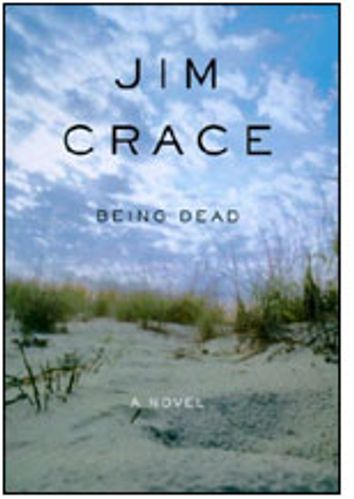
“Being Dead” by Jim Crace

A haunting novel about a couple caught and killed in flagrante delicto -- how they got there, and what happens before they're found.

  • more
    • All Share Services

Jim Crace’s new novel starts off like a genre mystery, with the savage murder of two middle-aged lovers on a remote and windswept beach. But anyone looking for the traditional mystery plot line — that old reassuring journey from crime to detection to punishment — is reading the wrong book. Instead, “Being Dead” takes off on a more eccentric course, swerving backward and forward in time in order to put these two deaths in context. The result is an odd, gorgeously written but curiously abstract novel that’s easier to respect than to love.

Joseph and Celice, the unprepossessing zoologists who find themselves in the condition described by the book’s title, are not the kind of married couple you’d expect to see on the beach doing anything other than collecting sea-cricket specimens. But on an impromptu visit to Baritone Bay, where they met 30 years before, they take a short, nostalgic detour: “They had made love for the first time in these same dunes. And they might have made love there again if, as the newspapers were to say, ‘Death, armed with a piece of granite, had not stumbled on their kisses.’” Discovered in flagrante delicto by a mentally deficient miscreant, the two are heartlessly bludgeoned and left to die — “traduced, spread-eagled and absurd” — in the sand.


Crace takes this violent ending as a beginning. Using as his model a funeral ritual he calls a “quivering” (during which neighbors and relatives reminisce about the dead, starting with the most recent memories), he proceeds to “upend the hourglass of Celice and Joseph’s life together.” Working backward from the murder, he relates in reverse order the mundane events of the day that led up to their final moments on Baritone Bay. At the same time, he reconstructs their lives in the other direction, from the time of their first meeting. These two thematic lines, along with a third involving their daughter’s reactions during the six days between their disappearance and their discovery by police, intertwine in a kind of narrative fugue, spun out in chantlike prose that often takes on the measured rhythms of blank verse.

But there is a fourth line to this fugue — an ostinato played by nature itself. As Joseph liked to say to his students, “Whatever philosophical claims we might make for ourselves, humankind is only marginal. We hardly count in the natural orders of zoology.” With this thought in mind, Crace also describes the purely physical changes that Joseph and Celice undergo during their six days in the dunes, as the forces of nature have their say: “Again the crabs and rodents went to work, while there was light, flippantly browsing Joseph and Celice, frisking them for moisture and for food, delving in their pits and caverns for their treats, and paying them as scant regard as cows might pay a turnip head.”

Readers prone to queasiness might want to skip a few sections here (as when “the flies lined up like fishermen along the banks of the bodies’ open wounds”). But it’s this last element of Crace’s strange eulogy that ends up being the most interesting aspect of the novel. As characters, Joseph and Celice are a little difficult to take — prickly, small-spirited, almost willfully unsympathetic. But by placing their lives and obscene deaths in the context of the larger natural processes of decay and regeneration, Crace allows the couple a measure of redemptive grace, something that might have proved impossible in a more conventional narrative. And so in “Being Dead” he pulls off a remarkable bit of legerdemain, combining various unappealing parts into a whole that somehow — despite those descriptions of oozing, gull-pecked, maggot-infested wounds — achieves a rough, uncompromising beauty.

Continue Reading Close

Taking stock of politics

The market may be surging, but stay away from Reform Party Over-the-Counter Penny Stocks.

  • more
    • All Share Services

Overcoming early weakness sparked by fluctuating interest rates, political futures rallied to a mixed close last week in heavy trading. The Democrat 2000 Index eked out a small gain while the Republican New Millennium Index, hurt by a steep decline in shares of McCain Technologies, edged lower. Meanwhile, the Reform Party Over-the-Counter Penny-Stock Index sank to a 52-week low, amid continuing skepticism over the viability of some of its leading issues.

It was a particularly good week for the large-capitalization stocks. GWB Pharmaceuticals and Entertainment reversed some of its recent losses, helped by a growing perception that the company’s commanding market share might enable it to withstand the challenge of less well-positioned competitors. Analysts, however, were not universally optimistic about the stock. Pointing to the recent debacle in shares of Forbes Aerospace, they speculated that large caps like GWB may be relying too heavily on current cash flow at the expense of innovative R&D initiatives, leading some to suggest that the stock may be overvalued at current levels.

The big loser of the day was McCain Technologies, whose imaging software Maverick 2000 had until recently seemed a potentially strong seller. Recent statements by McCain’s CEO, however, have led some to question the program’s compatibility with certain major operating systems. Several high-profile power brokerages downgraded shares of McCain from strong buy to hold, citing lingering questions about irregularities in past earnings reports as well as the lack of a detailed business plan for future growth.

Meanwhile, over on the Democratic exchange, stock performance was just as mixed. Bradley.net sank 5 1/4 points to a new low, dashing the company’s hopes that sports-celebrity endorsements in its advertisements might rekindle waning interest in its experimental health care subsidiary. Gore Dynamics, on the other hand, rose smartly. Analysts speculated that the performance of Gore’s new leadership technology might exceed Street expectations, allowing the stock to overcome persistent market negativity over its all-too-recent spinoff from Bubba Enterprises Inc.

But the news was all bad over on the Reform exchange floor. Recent defections from the exchange of high-visibility stocks like Trump Gas and Ventura Novelties have damaged the credibility of the entire market. Even Buchanan Jackboots and Uniform Supply, which might be expected to gain from the weakness in competing issues, fell sharply, though in very light trading.

Commenting on recent activity in the political marketplace, one analyst seemed anything but bullish. “The political futures market, like any market, is cyclical. Until now, stocks have been moving in a relatively narrow trading range, as individual issues tested their various support levels. But next week, when matters become desperate, there’s going to be a lot more negative publicity coming out about many of these stocks.” And what does that mean for the future? “Basically, anything can happen,” the analyst concluded. “But take my advice. If shares of Perot Bread and Circuses start climbing again, you’ll know it’s time to sell — everything.”

Continue Reading Close

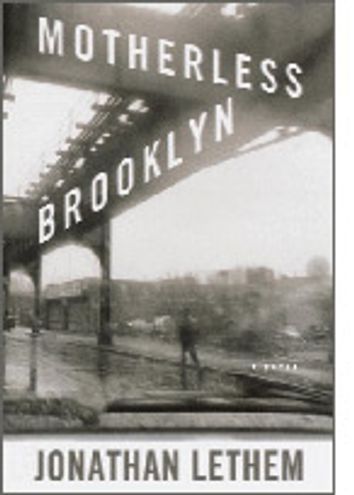
“Motherless Brooklyn”

An author comes up with a new (and brilliant) twist for the detective novel: A narrator with Tourette's syndrome.

  • more
    • All Share Services

A detective with Tourette’s syndrome narrates a hard-boiled crime novel. Sounds like a gimmick, right? Another in the endless line of diversity dicks — sleuths in wheelchairs, lesbian lieutenants, investigators who also happen to be heroin addicts or restaurant critics or codgers as old as Angela Lansbury. But Lionel Essrog, the twitching, barking, gabbling narrator of Jonathan Lethem’s new novel, “Motherless Brooklyn,” is no movie-of-the-week novelty grafted onto a noir mystery. Maybe his Tourette’s is a gimmick, but it’s a gimmick with depth, with soul. Lethem, after all, walks the serious-fiction beat, and in his hands the compulsions of Tourette’s become a kind of kaleidoscopic metaphor, ultimately (and somewhat paradoxically) reflecting the fundamental ethos of the mystery genre itself: the compulsion to restore order and rightness to a world thrown temporarily out of joint.

The world of “Motherless Brooklyn” is, of course, the borough of the title, and what disrupts its sense of order is the stabbing death of a small-time neighborhood operator named Frank Minna. Lionel is Frank’s factotum, one of four misfits from a local orphanage Frank has commandeered to work in his seedy and makeshift detective agency. Calling themselves Minna Men, the four have become vassals in Frank’s scruffy little fiefdom, and like the members of any feudal hierarchy, each has found his particular niche: Tony is the implicit second-in-command, the lesser noble to Frank’s lord of the manor; Danny is the enigmatic knight-errant, distant and of uncertain loyalty; Gilbert is the earthy, none too intelligent serf; and Lionel, nicknamed Freakshow because of his constant verbal tics and physical twitches, is the fool, the court jester, whose antics the others tolerate with the indulgence that forced proximity dictates.

With Frank’s murder, this miniature fiefdom loses its suzerain, and in the scramble to find the killer, long-submerged tensions begin to pull the Minna Men apart. (Think Yugoslavia after Tito, or the Bowery Boys without Leo Gorcey to keep them all in line.) As Frank’s deputy, Tony tries to control the investigation, but Lionel has his own reasons — some of them Tourette’s-related — for getting to the bottom of Frank’s murder: “My words begin plucking at the threads nervously, seeking purchase, a weak point …” In a sense, this is detective work as medical condition, stemming from a pathological need to poke at experience, to process its patterns, “putting hairs in place, putting ducks in rows, replacing divots.”

What follows is a fairly standard noir quest: a long, convoluted road to discovery, littered with the usual detritus of fractured conspiracies, and complete with corpses, cutthroats and big, ugly men with big, ugly guns. But as in his earlier novels (“As She Climbed Across the Table,” “Girl in Landscape”), Lethem harnesses the engine of a familiar genre to transport us to a territory uniquely his own. It comes as no surprise that he uses Tourette’s as an excuse for some heady verbal pyrotechnics. (My favorite Essrog riff: “He’s just a big mouse, Daddy, a vigorous louse, big as a house, a couch, a man, a plan, a canal, apocalypse.”) More unexpected is the sympathetic warmth he brings to the characterization of Lionel. “Motherless Brooklyn” has a few problems — including some cartoonlike stock characters and one scene near the end that flirts with maudlin sentimentality — but it works far better than the average hip postmodern novel in terms of sheer emotional impact. Because Lethem never lets the metaphorical and linguistic possibilities of his narrator’s illness overshadow his immensely appealing humanity, we really care about Lionel and his search for his mentor’s killer.

In the end, the mystery at the heart of “Motherless Brooklyn” turns out to be surprisingly modest. Readers looking for one of Don DeLillo’s or Thomas Pynchon’s grand metaphysical conspiracies may be disappointed. But really, Lethem is too inventive a writer to produce just another literature-of-paranoia knockoff, with Tourette’s as its central trope (“The Barking of Lot 49″?). Instead, he’s given us something that is at once less derivative and more traditional: a detective story that transcends its pulp roots not by adopting high-art pretensions but by bringing to the genre an originality and an idiosyncratic sympathy that few other writers could muster.

“Devil Take the Hindmost”

A history of financial speculation from the Roman Empire to the present brims with bad tidings.

  • more
    • All Share Services

“I daily hear such reports of advantages to be gaind by one project or other in the Stocks, that my Spirit is Up with double Zeal, in the desire of our trying to enrich ourselves.”

Sound familiar? It should, given the zealous high spirits of those enriched by “the Stocks” of Wall Street over the past few years. But the author of the above sentiment was Alexander Pope, the British poet, and he was writing about a different bull market — that of South Sea Company stock in 1720. As Edward Chancellor points out in his fascinating and frightening new book, “Devil Take the Hindmost,” all of London was caught up in the mania for South Sea stock, which was appreciating at a rate even early holders of Amazon.com would envy. Pope’s contemporary Jonathan Swift probably described the era best: “I have enquired of some that have come from London, what is the religion there? they tell me it is South Sea stock.”

Widespread market obsession, though, is only one of many ominous parallels Chancellor finds between the current boom and those of the past. After first tracing the history of financial speculation back as far as ancient Rome (unsavory operators sold shares on the Forum, near the Temple of Castor), he outlines the stunningly similar progress of various “speculative bubbles” throughout history — the Tulip Mania of 1637, the South-Sea Bubble of 1720, the Railway Mania of 1845, the bull markets of the 1920s and the 1980s, and the Japanese Bubble Economy of the late 1980s. In each case, the signs of excess and imminent disaster should have been obvious to all but were lost in the euphoria of the quick and easy buck (or pound or yen). Why? Because each time the public allowed itself to believe what, according to Sir John Templeton, are the four most expensive words in the English language: This Time It’s Different.

Arguing that speculative manias partake of a good bit of irrationality, Chancellor rebuts proponents of the so-called Efficient Market Hypothesis, who believe that stock prices by their very nature reflect intrinsic value (in other words, that stock in DutchTulip.com really is worth 4,000 times current earnings, because DutchTulip.com is the future). This faith in the surpassing wisdom of the markets, he contends, is what allows speculative bubbles to develop, aided by the ever more arcane and dangerous financial instruments that thrive in an era of laissez-faire economics.

Casting a critical eye on the current environment (where even George Soros complains that he doesn’t understand how certain derivatives function), Chancellor implies that those who believe the current market to be rationally priced may be living in a dream world. “As an anarchic force, speculation invites government restrictions,” he concludes, “yet it is only a matter of time before it slips its chains and runs amok.”

One warning: “Devil Take the Hindmost,” while timely and enlightening, is not an easy read. Without an MBA and experience on Wall Street, you may find much of Chancellor’s analysis heavy sledding. (If you do, try John Kenneth Galbraith’s briefer, more accessible — and delightfully condescending — “A Short History of Financial Euphoria.”) But you don’t have to know the difference between a hedge and a hedge fund to understand Chancellor’s basic premise. And if you’re like me, you’ll have two overwhelming reactions: first, to marvel that the more things change, the more they stay the same; and second, to conclude that it may be time to redeem those mutual funds and stick the proceeds under a nice, safe mattress.

Continue Reading Close

Page 1 of 2 in Gary Krist