Geraldine Sealey

Why I hate the pill

The birth control revolution brought freedom to countless women. It brought misery to me

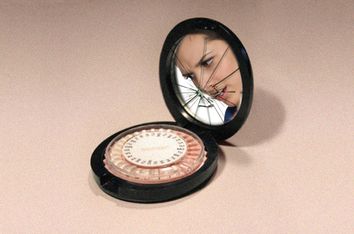
Contraceptive, birth control, oestrogen, estrogen, dispenser The background colour of this image modified using a work path. CAMERA INFO: Canon EOS 300D DIGITAL Tv( Shutter Speed ) 1/60 Av( Aperture Value ) 5.6 Metering Mode Evaluative Exposure Compensation +1.3 ISO Speed 100

This month marks the 50th anniversary of the pill’s introduction in the United States, a milestone that has inspired a raft of retrospective, largely celebratory media coverage. A Time cover story credited the pill with “rearranging the furniture of human relations.” A New York Times Op-Ed by historian Elaine Tyler May hailed the oral contraceptive as “a tool for women’s emancipation.” All true. For millions of women who use the pill daily without intolerable side effects, who enjoy lighter, less painful and more regular periods, spontaneous sex, lowered risk of endometrial and ovarian cancers and zit-free skin, the birth control revolution has been fulfilled.

Then there’s me.

I hate the pill. Hormonal contraception, which covers birth control pills and nearly every other highly effective method on the market, murders my libido. I say that with as much certainty as I can, given the murky, multi-variate thing that is the human sex drive. I’ve experimented with several pills, hoping that any slight variation in hormonal ingredients would yield a contraceptive that worked without neutering me. Each doused my interest in sex as completely as the other. Although a libido-destroying pill does wonders to lower your pregnancy risk, it’s also done a number on my relationships, self-esteem and emotional well-being.

About a year into using the pill in my mid-20s, I first noticed a ratcheting down in sexual thoughts and daydreams. My interest in sex was cooling, even as I started a new, exciting relationship. I felt flat, with no detectable mid-cycle hormonal surge. Eventually, my libido dissipated so that just the thought of sex repulsed me, which left me confused, depressed and cut off from myself and my partner. Yes, there were other problems in our relationship that may have contributed, as well as stress about work and bills. So many physical, emotional and life factors can affect libido. But what I figured out was this: On the pill, I felt as turned off as a burned-out bulb, and off the pill, I did not.

Doctors who treat sexual disorders have long recognized the pill’s potential for dampening sex drive in some women. And researchers have a good grasp on why it happens: Oral contraceptives lower levels of available testosterone, a key to libido. “If you play around with sex steroid hormones, you play around with sexual function,” says Irwin Goldstein, M.D., director of San Diego Sexual Medicine at Alvarado Hospital, who has been involved with sexual dysfunction research for decades. But exactly how many pill users suffer negative sexual consequences needs further study.

 ——

There is a widely held misconception that in 2010 women enjoy a plethora of contraceptive choices. Or as a recent Wall Street Journal article pegged to the pill anniversary said, “Nowadays, women can choose from a bevy of birth-control options, including pills, patches and rings … implants and intrauterine devices (IUDs).” This does not a bevy make. There are essentially two categories of contraceptives: the hormonal kind, which includes nearly every pill and device available. And then the non-hormonal kind, including the copper IUD and less reliable barrier methods such as the diaphragm, cervical cap, sponge and male and female condoms. I discovered this when searching for birth control that wouldn’t wreck my libido.

After my nightmare with the pill, I tried the NuvaRing, a hormone-diffusing jelly bracelet you stick in your vagina. Perhaps a more localized administration of estrogen and progestin wouldn’t have the same libido-zapping effect as the pill, my OB-GYN theorized. While I did appreciate not needing to take a pill every day, keeping the rubbery ring inside of me didn’t seem ideal, either. During my period, I’d slide a tampon up there, too, marveling that I had more belongings in my vagina than I did in my purse. (Perhaps I could stick my lip gloss up there and just leave the handbag at home!) I could have handled the traffic jam in my nethers if only the damn ring didn’t kill my sex drive, but it did.

The failed NuvaRing experiment was my last attempt to use hormonal birth control — I’d spent years living with an impaired libido and wasn’t willing to do it anymore. When I was younger, when an unplanned pregnancy would have had a much higher cost, a sputtering sex drive may have been worth the years I gained in education, opportunity and growth unfettered by a baby I hadn’t expected or the difficult choice of having an abortion. And a significant part of me is, of course, relieved to have escaped those things. But I’m also pretty pissed about what I lost, and that I had to figure all of this out on my own.

After ruling out hormonal birth control, my first stop was the copper IUD. (Newsweek recently reported that since 2005, when the FDA first approved it for women who had never given birth, IUD usage has jumped 161 percent and climbing, perhaps driven in part by women like me.) When lodged in the uterus, the copper device creates a hostile environment for sperm. Akin to sterilization in effectiveness, good for up to 10 years and minus the hormonal side effects of the pill, the copper IUD can be the answer to many women’s prayers. The most commonly cited downside is heavier bleeding and more painful periods, but if it works for you, hallelujah.

Unfortunately, it didn’t work for me. Within 24 hours, the 1 3/8-inch long device started poking out of my cervix, which my boyfriend discovered to his horror during sex. (Cue the vagina dentata jokes.) Despite my gynecologist’s attempt to shove the IUD back in, my uterus was deemed too petite to house the device (by .5 freaking cm), a complication that can occur in as many as one in 10 women who’ve never given birth.

With all hormonal contraception and the copper IUD now out of the question, I was “stuck between a rock and a hard place,” as Dr. Cindy Basinski, an obstetrician-gynecologist in Evansville, Ind., describes it. “For women in your position, it’s barrier methods until you’re ready for permanent birth control or until they come along with a male contraceptive. You don’t have a lot of options left.”

A few days after my OB-GYN removed the IUD, I was fitted for a diaphragm. Picking one up from his desk, the doctor twirled it around his pointer finger, saying, “Birth control activists went to jail for bringing this to the United States. It’s the same technology.” It didn’t make me feel better to know that perhaps my only contraceptive hope was this archaic device straight out of the era of suffragettes.

I wasn’t looking forward to using the diaphragm — it felt like a hula hoop pressed against my vaginal walls — but I needn’t have worried. Two years later, my diaphragm prescription sits in a file at the pharmacy down the block from my apartment, unfilled. So few women use diaphragms, I was told, my size has been back-ordered (and back-ordered, apparently). Frankly, I am so unmotivated to use the thing that I’m happy to believe the pharmacy gods decided this one for me.

Moving on to my ever-dwindling options, I briefly used the sponge, but that temporarily disappeared in 2008 as it had in the “Seinfeld” era (inspiring the “spongeworthy” episode, for which the spermicidal foam is best known). Upon hearing the sponge was going off the market again, I was a one-woman stampede down to the Times Square Duane Reade. I bought up a bulging bag-ful, leaving a box for the poor pill refugee I imagined coming close behind. The sponge is back now, but at about $15 for a box of three, not exactly budget-friendly if you’re sexually active. And even in New York, it’s still hard to find on drugstore shelves.

I may be paying the cervical cap a visit one of these days and also would like to try the Fertility Awareness Method, which involves monitoring morning body temperature and changes in cervical position and mucus to figure out when ovulation is taking place, if only to learn more about my body and cycle. But for now, I rely on condoms. Not infrequently, I have felt a little freakish and a lot bewildered about my predicament. Those happy women in the gauzy, ubiquitous Yaz ads make birth control look so darn easy — what is wrong with me? How is it possible that 50 years after the advent of the birth control pill, I am still dependent on a concept that may date back to 1000 B.C. when Egyptian men wrapped their units in linen sheaths? (Ow.)

It turns out that I am not, after all, so freakish.

Millions of women go without birth control at any given time, often because they can’t or don’t want to use the methods available to them. When the Alan Guttmacher Institute recently asked women how they felt about contraception, four in 10 said they were dissatisfied with their current method, citing bad physical side effects, diminished sex drive and difficulty of use, among other complaints. Almost two-fifths chose their current method mostly because they didn’t like any other available option. And those who weren’t happy with their method were  about three times more likely to have unprotected sex for at least one month of the year.

In my own life, female friends and acquaintances have abandoned hormonal birth control for a variety of reasons. It made them nauseous, moody or depressed, caused unacceptable weight gain, paralyzing migraines or breakthrough bleeding, put them at risk of blood clots, or drove their blood pressure to dangerous heights. Or they were just damned sick of taking pills every day. “I was a crazy woman on birth control,” says Dr. Basinski, who’s had her own personal battles with the pill over the years. “Out of control emotional. I used it on and off for 13 years and really struggled with it.” In her practice, Basinski sees patient after patient who want off their pills. “Many women just don’t feel good on them,” she says.

Of course, many women do — millions of them. There’s no denying that the pill and its hormonal siblings, such as the ring, patch, injectibles and the like, work brilliantly for so many women. That point is underscored for me when I talk to women who’ve used the pill without incident for years. One close girlfriend was mystified to hear my pill-libido saga; she’d never even heard of such a side effect. And why would she have? To not give birth control another thought is a luxury the pill affords. Now we just need more alternatives for the rest of us. While many pill-defectors can take refuge in the copper IUD, condoms plus a barrier method or FAM, together, those methods are clearly not enough to meet the vast demand.

Our lack of options isn’t just annoying or inconvenient. It’s a serious public health matter, and one that prevents millions of women from truly being in control of their reproductive lives. There are still nearly as many unplanned pregnancies in the United States every year as planned ones. Of the 3 million unplanned pregnancies, slightly more than half involve women who were not using any birth control.

For many women around the world, the lack of access to affordable, effective contraception is a matter of life and death. According to the Global Health Council, there were 700,000 maternal deaths between 1995 and 2000, mostly related to unintended pregnancies. With greater birth control options, those lives may have been saved. Such lack of power over our bodies and, ultimately, our destinies is exactly what the birth control revolution was supposed to prevent. The development of new methods, including non-hormonal ones, “would make a huge improvement in the lives of women in many developing countries who don’t have access to contraception,” says Michael J.K. Harper, a longtime researcher at CONRAD, a contraceptive R&D program at Eastern Virginia Medical School. And ideally, the birth control of the future would provide protection from HIV, unlike most current methods.

If you’re like me, you assume that someone, somewhere is figuring all of this out — that there will be a new kind birth control discovered or invented at some point because that’s just how human progress rolls on. I mean, they’re already working on another iPad. Surely, some lab rat is putting the finishing touches on the next breakthrough in contraception.

Yeah, no. The truth is that the development of innovative birth control methods has virtually come to a standstill. According to a 2008 report by Harper and several colleagues, public and private funds for contraceptive research have dried up in recent years. Most pharmaceutical companies have withdrawn from investing in contraceptive R&D, perhaps due to fears of costly personal injury litigation. And those fears aren’t necessarily unfounded. A reported 1,100 lawsuits have been filed in the United States against Bayer HealthCare alone, mostly by women claiming health problems such as blood clots, strokes, heart attacks and gall bladder disease after taking the popular pills Yaz and Yasmin.

Harper might have been the one to lead successful development of better, safer and more acceptable contraceptive technologies. In 1995, he became director of the Consortium for Industrial Collaboration in Contraceptive Research, a project CONRAD established to breathe life into Big Pharma’s commitment to developing new contraceptives. The plan was to reduce investment risk by cost sharing: CICCR would float a research project until a certain stage in clinical trials, when industry would take over. For about 10 years, the program hummed along, flush with funds and interest from the public and private sectors. “Unfortunately, over the years, donor fatigue set in,” Harper says. Getting a new contraceptive to clinical trials can take up to 15 to 20 years and cost $100 million or more. “That’s not a great sales pitch,” Harper says. With his program basically broke, Harper, co-discoverer of the breast cancer drug tamoxifen, plans to retire this summer. Still, he hasn’t completely given up on contraceptive development, pointing to the Gates Foundation, with its deep pockets and solid commitment to global health, as a promising benefactor. “Hope springs eternal,” he said.

Indeed. The birth control pill didn’t just magically appear in women’s medicine chests one day. Its creation was a hard-won victory for women, by women, specifically, Margaret Sanger and Katharine McCormick, the activist duo most responsible for its development. As Elaine Tyler May describes in her new book “America and the Pill,” these heroines began their fight in the early 20th century against the same sexist forces that once prevented women from voting, as well as conventional wisdom that equated birth control with vice and immorality, but ultimately managed to get the pill introduced here decades later.

The pill has enabled tremendous progress in the last 50 years, allowing many women to pursue education and job opportunities without the burden of unexpected or unwanted childbearing. But we can’t stop there. Until there’s overwhelming public demand for a new contraceptive that can serve as an alternative to the pill for the millions of women around the world who need it, we may never see the next generation of birth control options. To achieve true reproductive choice and freedom for all women, we need to start having a more realistic discussion about the pill, acknowledging its shortcomings as well as its achievements, what’s left to accomplish as well as how far we’ve come. The birth control revolution isn’t over yet — for so many of us, there’s a ways to go.

Geraldine Sealey, former news and opinion editor at Salon, is an articles editor at Glamour. 

An epidemic failure

President Bush claims he is leading the world in the fight against global AIDS. But he has been inexplicably stingy and slow to act -- and by placing religion over science, he's responsible for the loss of untold numbers of lives.

When President Bush introduced his global AIDS initiative in January 2003 — “a work of mercy beyond all current international efforts,” he called it — the plan certainly sounded promising. Bush pledged to spend $15 billion over five years to provide life-saving drugs to at least 2 million people with HIV, prevent 7 million new infections, and care for the sick and orphaned in 15 countries. Most of the money would go to sub-Saharan Africa, home to the majority of the world’s nearly 40 million people living with HIV and AIDS. “I believe God has called us into action,” Bush declared during a trip to Uganda in 2003. “We are a great nation. We’re a wealthy nation. We have a responsibility to help a neighbor in need, a brother and sister in crisis.”

Dubbed the President’s Emergency Plan for AIDS Relief, or PEPFAR, the agenda provided the administration with much-needed P.R. at the very moment it was preparing to defy international will by invading Iraq. But from the start, Bush has been inexplicably stingy and mind-bogglingly slow to act.

Despite rhetoric about our moral duty to fight AIDS — Bush has likened PEPFAR to the Marshall Plan, the Berlin airlift, and the Peace Corps — the president has not committed the funds necessary to meaningfully tackle the crisis and even opposed attempts in Congress to fully fund his initiative. And much of the money Bush has provided is being derailed into moralistic and unproven programs that make abstinence the centerpiece of HIV prevention. Few Americans realize that the money flowing into disease-ravaged locales is being diverted to serve a right-wing political agenda — at the cost of untold numbers of lives.

Bush requested only $2 billion for PEPFAR in its first year, at least a billion less than one might have expected, given his pledge. Then, when Congress decided to approve $400 million more than the president asked for, Bush unsuccessfully fought to block the increase. By the time the plan was fully implemented, nearly a year and a half had passed since the president had announced it — a costly delay in fighting an epidemic that claims 8,500 lives every day.

As of this month, PEPFAR is expected to provide anti-retroviral treatment for an estimated 200,000 people, mainly in sub-Saharan Africa. “I think those numbers are cause for encouragement and optimism,” Bush’s global AIDS czar, Ambassador Randall Tobias, told me recently. “I think there’s reason to believe this can be done.” But in a region where 25.4 million people living with HIV are desperate for treatment, it’s difficult to feel elated about our progress — or our commitment.

Tobias, a former CEO of Eli Lilly and Co., has found himself under international fire as Bush’s AIDS emissary. Last year, Tobias was booed at the International AIDS Conference in Bangkok by protesters carrying signs that read: “He’s lying.” And as a former pharmaceutical executive, he’s taken heat for the administration’s insistence on relying on brand-name AIDS drugs instead of generics that are two to four times cheaper. “There comes a moment in time,” says Stephen Lewis, the U.N. secretary-general’s special envoy for HIV/AIDS in Africa, “when you stop bowing to Big Pharma and recognize that the human imperative at stake of keeping people alive requires that we embrace low-cost generics because we can treat so many more people.” Lewis rejects the administration’s argument that generics are less safe and effective than brand-name drugs. “Everyone understands that the position which is taken [by the U.S. government] significantly supports major pharmaceutical companies,” he said.

As it stands, what we’re doing barely factors into the disease’s devastating arithmetic. Twelve million people died of AIDS in Bush’s first term. “Bush’s initiative is going slow,” says Dr. Paul Zeitz, executive director of Global AIDS Alliance. “We’re not coming near meeting the need or what is possible. If I were Ambassador Tobias, I wouldn’t be defending this current framework. I’d be going back to the president and saying: I know we have a role to play. Why not ramp this up so we can stop the dying?”

The truth is, we are doing something, but not nearly what we could be doing. Although other priorities dwarf Bush’s AIDS program — $136 billion in new corporate tax breaks, for example — the United States is the largest single donor to the global AIDS fight. But it would be a tremendous embarrassment if we weren’t: The United States accounts for one-third of the global GDP.

The administration insists it will meet its goals by 2008, saying it planned all along to gradually “ramp up” the program. This year, the United States is spending $2.8 billion on PEPFAR, and Bush has asked for $3.2 billion in 2006. But public-health experts say it looks increasingly unlikely that Bush will fulfill his promise of $15 billion over five years — and that even if he does, the money will fall far short of what is needed.

According to UNAIDS, a partnership involving the World Bank and nine other international aid groups, the world needs to spend $20 billion a year by 2007 to wage an effective war against AIDS. What Bush proposes to spend annually, if funding remains constant, is less than half the $6.6 billion that America would be expected to contribute based on the size of its economy. “The fact that the United States can spend $300 billion on the wars in Iraq and Afghanistan but cannot find a relative pittance to rescue the human condition in Africa — there is something profoundly out of whack about that,” Lewis says.

The president’s AIDS initiative, like his invasion of Iraq, is a go-it-alone affair that ignores the clear global consensus on how to fight AIDS. In launching his own initiative, Bush has shifted the bulk of U.S. money away from the Global Fund to Fight AIDS, Tuberculosis and Malaria, an international financing mechanism established before PEPFAR and widely recognized as the best way to distribute AIDS funds. “Bush is starving the fund,” Zeitz says. “It’s despicable, frankly.”

Unlike PEPFAR, which focuses on 15 countries — inexplicably excluding the AIDS-ravaged nations of Swaziland and Lesotho among others — the Global Fund has committed funds to 128 countries. Economist Jeffrey Sachs, special advisor to U.N. Secretary-General Kofi Annan, recognizes the Bush administration’s modus operandi. “This group is so convinced they have to do everything by themselves even though they often know the least about the issue,” he said. “They reinvent everything — reinvent it wrong at the beginning, learn along the way, explain that it takes time, and here we are.” Where we are, unfortunately, is much like where we were two and half years ago.

But the failures of Bush’s global AIDS policy go beyond how much money is being spent. Perhaps even more disturbing is how it’s being spent. Overlooking the grim realities on the ground, Bush is using AIDS funds to place religion over science, promoting abstinence and monogamy over comprehensive sex education that includes information about and access to condoms. This should be no surprise, given the administration’s track record. Yet it is still shocking to observe an administration that claims to be acting in the name of morality consigning tens of thousands, perhaps millions, of people to death because of its policies.

In 2002, America joined Libya, Sudan, Iran, Iraq and Syria — a veritable axis of the unenlightened — to scuttle an endorsement of sex education from a global declaration on children’s health. Before overseas groups can receive U.S. funding, the Bush administration requires them to take a “loyalty oath” to condemn prostitution — a provision that AIDS workers say further stigmatizes a population in need of HIV education and treatment. Brazil recently became the first country to rebel against the oath, announcing in May that it was rejecting $40 million in AIDS grants from the administration. “What we’re doing is imposing a really misguided and ill-informed ideology on top of a public health crisis,” says Jodi Jacobson, executive director of the Center for Health and Gender Equity in Takoma Park, Md.

Just as U.S. abstinence-only programs that push partial or false information on teens have doubled under Bush, so are such morality-driven programs cropping up under U.S. auspices in places like Africa — where the stakes are much higher and a lack of vital information can kill. PEPFAR is fast becoming equated with a notorious emphasis on abstinence education — nearly $1 billion of Bush’s global AIDS pledge is earmarked for abstinence promotion. Bush’s plan calls for an ABC approach to HIV prevention — which stands for “Abstinence, Being faithful, Condom use,” but the administration is stressing the “A.” In its first year, PEPFAR spent more than half of the $92 million earmarked to prevent sexual transmission on promoting abstinence programs. “It’s only a matter of time before the impact of abstinence-only programs can be measured in needless new HIV infections,” says Jonathan Cohen, an HIV/AIDS researcher with Human Rights Watch.

Administration officials deny inappropriately stressing abstinence over all else, and point out that the epidemic worsened in Africa and other nations even with condom promotion. “If there is a sense of focus on abstinence until marriage now, it’s because we’ve never been focused on these important things,” said Dr. Mark Dybul, assistant U.S. global AIDS coordinator. But there is a good reason global AIDS experts haven’t focused on abstinence: Scientific evidence shows no indication that trying to persuade young people to abstain from sex at the expense of condom education reduces the spread of HIV. Studies show that such programs actually increase risk by discouraging contraceptive use.

What’s more, focusing on abstinence and monogamy ignores the reality facing young women and girls in Africa and other impoverished regions, who are often infected by wandering husbands or forced to have sex in exchange for food or shelter. Among 15- to 24-year-olds in sub-Saharan Africa, studies show, more than three times as many young women are infected with HIV as young men. Preaching about abstinence and faithfulness to girls and women in risky situations “can’t be made sense of on any level,” Jacobson says. “It’s not only contrary to public-health best practices, it’s contrary to common sense and contrary to human rights principles.”

The emphasis on morality is being driven by social conservatives who have made spreading the gospel of abstinence and monogamy to Africans their primary mission. “Condoms promote promiscuity,” says Derek Gordon of the evangelical Christian group Focus on the Family. “When you give a teen a condom, it gives them a license to go out and have sex.” At a congressional hearing in April, Rep. Henry Hyde, R-Ill., threatened to cut funding for organizations that promote condoms. “The best defense for preventing HIV transmission is practicing abstinence and being mutually faithful to a non-infected partner,” Hyde declared. And under a proposal being pushed by Hyde and his Republican colleagues on Capitol Hill, Tobias would be given the power to divert even more money toward promoting abstinence. “All [conservatives] can think about is making Africans abstinent and monogamous,” says a Democratic staffer. “It’s the crassest form of international social engineering you could imagine.”

Nowhere is the effort by conservative Republicans to turn back the clock on sex education more pronounced than in Uganda. By aggressively promoting condom use and sex education, Uganda has managed to cut its HIV rate from 15 percent of the population to barely 6 percent during the past decade, making it Africa’s biggest success story. Social conservatives argue that an emphasis on abstinence and monogamy drove down Uganda’s HIV prevalence — and if only other African nations could adopt such rigid moral standards, they would see similar success. While it’s true that partner reduction may well have helped lower Uganda’s HIV rates, the role of abstinence has been distorted and overblown by evangelicals seeking to control U.S. AIDS funds.

Under pressure from the Bush administration, Uganda has taken a dangerous turn toward an abstinence-only approach. In April, the country’s Ministry of Education banned the promotion and distribution of condoms in public schools. To make matters worse, the government has even engineered a nationwide shortage of condoms, issuing a recall of all state-supplied condoms and impounding boxes of condoms imported from other countries at the airport, claiming they need to be tested for quality control. As of this year, a top health official announced, the government will “be less involved in condom importation but more involved in awareness campaigns: abstinence and behavior change.”

The Bush administration is supporting the shift by pumping $10 million into abstinence-only programs in Uganda. “One can put a dollar figure on the political pressure,” says Cohen, who has closely studied the initiatives in Uganda. “Groups know the more they talk about abstinence, the more they’ll get U.S. funding. And they fear that if they talk about condoms they’ll lose funding — or, worse, get kicked out of the country.”

Tobias issued written guidelines to PEPFAR partners in January that spell out the administration’s agenda. Groups that receive U.S. funding, Tobias warned, should not target youth with messages that present abstinence and condoms as “equally viable, alternative choices.” Zeitz of Global AIDS Alliance has dubbed the document “Vomitus Maximus.” He says, “I get physically ill when I read it. It has the biggest influence over how people are acting in the field.”

The anti-condom order issued by Tobias is already having a chilling effect among the groups most effective at combating AIDS. Population Services International, a major U.S. contractor with years of experience in HIV prevention, says it can no longer promote condoms to youth in Uganda, Zambia and Namibia because of PEPFAR rules. “That’s worrisome,” says PSI spokesman David Olson. “The evidence shows they’re having sex. You can disapprove of that, but you can’t deny it’s happening.” What’s more, conservatives are attacking PSI for promoting condoms — a campaign that prevented an estimated 800,000 cases of HIV last year. Focus on the Family recently denounced PSI as a “shady” and “sordid” organization that is leading Africans into immorality.

And in April, conservative Republicans in the House invited Martin Ssempa, a Ugandan minister, to Capitol Hill, to berate PSI for “promoting promiscuity and condoms” in his country. “Today, we face a new enemy in the fight against HIV/AIDS, not only in Uganda but in all the other African countries,” Ssempa told the House International Relations Committee. “That enemy is the Western belief that condoms can end the HIV/AIDS epidemic.” The attacks on PSI have become so extreme and ideological that even some Republicans think they’ve gone too far: Utah Sen. Orrin Hatch sent a letter to USAID last month expressing dismay over “inaccurate information” being spread about PSI. Still, this year, U.S. funding for PSI has been reduced for the first time.

Religious conservatives intent on hijacking global AIDS prevention funds are putting heavy pressure on legislators and the Bush administration to strip funding from established public-health organizations like PSI in favor of faith-based groups that promote a moralistic agenda. Some faith-based organizations have long, admirable histories of working in Africa. But soon, even these groups could face a litmus test — if they don’t strictly adhere to abstinence promotion, they could lose funding to smaller, more ideological groups. “Throw out the window any public-health test,” Jacobson said.

Groups that support the president’s religious agenda, meanwhile, are beginning to receive money that has traditionally been devoted to more experienced organizations. The Children’s AIDS Fund, a well-connected conservative organization, received roughly $10 million last fall to promote abstinence-only programs overseas — even though the group was deemed “not suitable for funding” by an expert review panel. Fresh Ministries, a Florida organization with little experience in tackling AIDS, also received $10 million. “Bush has enacted policies that will redirect millions of dollars away from groups that have experience fighting HIV and AIDS and toward groups that don’t but are members of his religious constituency,” Cohen says.

In the end, say public-health experts, the administration’s diversion of funds from tried-and-true HIV-prevention methods is more than a misguided experiment — it’s a deadly game of Russian roulette that could mark a calamitous turn in Africa’s attempts to get a handle on the AIDS epidemic.

It’s hard to imagine how the health crisis could get worse in sub-Saharan Africa, where life expectancies have plummeted below 40 in some nations and more than 12 million children have been orphaned by AIDS. HIV prevalence has been somewhat stable in recent years, but experts are worried that could be disguising the worst phases of the epidemic, with roughly the same number of people getting newly infected with HIV and dying of AIDS. Africa’s fight against AIDS is a tragedy that, with all of the resources at our disposal, we could be doing something about — but so far, we’re not. “People will look back and say, Why didn’t they stop the dying?” Zeitz says. “Why don’t we show our compassionate selves? What kind of country are we?”

Continue Reading Close

From the Pentagon to the World Bank

The international community, especially countries that opposed the Iraq invasion, must wonder what it means that the top Bush administration neocon has been named to head the world's largest development agency.

He was in, then he was out. But now Paul Wolfowitz, top Bush administration neo-con and deputy defense secretary, has been named President Bush’s choice to head the World Bank, the biggest and most influential development institution in the world. (Perhaps it was that fawning David Brooks column that put Wolfowitz over the top!)

With fighting global poverty leading the agenda for the rest of the world this year, the World Bank job will be a critical one. And Bush’s choice of Wolfowitz will likely be controversial. The global development community has to wonder exactly what it says about American plans for the World Bank that Bush has named a leading war planner to head the world’s leading development agency. Will countries opposed to the Iraq war, including European nations that have to approve his appointment, ever get over Wolfowitz’ key role in planning the invasion? Will Wolfowitz’ appointment cement even more the impression that the Bank is but a tool of the U.S. government, and not in fact a multi-lateral agency? Do we imagine George W. Bush even cares about any of that, given his most recent appointment of U.N. hater John Bolton to the post of U.S. ambassador to the U.N.?

Wolfowitz doesn’t have development experience, but you can see how, as World Bank president, he would fit in to the broader Bush administration goal of “spreading democracy” throughout the world. The World Bank already, rather notoriously, attaches many strings to its loans to struggling, developing nations, and it’s reasonable to expect that with Wolfowitz leading the Bank, there will be more emphasis on doling out loans to nations that satisfy certain U.S. requirements for taking steps toward democratization. But in this endeavor, Wolfowitz and the Bank would face the same dilemma the Bush administration faces in general — it’s a slippery business, trying to take a hard line with some dictatorial regimes while continuing good relations with others.

The last person to make the transition from the Pentagon to the World Bank was another architect of a controversial war, Robert McNamara, who ran the Bank from 1968 to 1981. McNamara’s tenure was seen by many as a way of making up for the carnage of Vietnam. Wolfowitz, of course, is not remorseful about Iraq. But Europeans fear his tenure at the Bank could prove similar to McNamara’s in another way — that he would funnel aid to nations based more on their support of U.S. policy than their neediness.

Continue Reading Close

Don’t forget Poland!

George W. Bush doesn’t have the luxury of forgetting Poland right now — Polish officials have made noise about pulling their troops out of Iraq by year’s end. So Dick Cheney is trying to seduce the Poles into staying longer, even though popular support for the Iraq mission in Poland has fallen dramatically. (He is also in Poland for the Auschwitz commemmoration). From the IHT:

“Vice President Dick Cheney tried to shore up Polish support for the war in Iraq in meetings Wednesday with President Aleksander Kwasniewski … While some European nations have refrained from committing troops, Poland has been a trustworthy partner in the war in Iraq. But the Polish defense minister, Jerzy Szmajdzinski, has said that he thinks Polish troops should stay in Iraq only until the end of this year.”

“‘Cheney will express support for everything Poland has done as one of the most stalwart partners in this coalition in Iraq,’ said Janusz Bugajski, an expert on East European affairs at the Washington-based Center for Strategic and International Studies. Poland will ‘be looking for an explanation of how long the mission is likely to continue. Support for the mission has dropped precipitously in Poland.’”

“Cheney needs to nurture this American ally, says Radek Sikorski, a former deputy minister of defense in Poland and fellow at the American Enterprise Institute in Washington.”

Dick Cheney? Nurture? Are we talking about the same Dick Cheney? We don’t think we have ever seen the words “Cheney” and “nurture” in a sentence before. Who knows, maybe the vice president will convince the Polish government to stick it out in Iraq, despite the costs and escalating danger. And then maybe Cheney can try his nurturing moves on allies the Bush administration has alienated these last four years. On to France and Germany!

Continue Reading Close

Maybe they should hold a telethon

From the AP:

GOP Seeks Donations to Get Bush Plans ‘Past the Liberal Media’

“(AP) The Republican Party is following up record fund raising for President Bush’s re-election effort by asking donors to finance its efforts to get Bush’s message ‘past the liberal media filter’ to the public.

Republican National Committee Chairman Ken Mehlman sent a fund-raising e-mail today telling supporters donations are needed to help Bush advance his second-term agenda.

‘The president has great goals for our country: a growing economy, strong homeland and national defense, tort and Social Security reform and affordable health care. But we need your help to get the president’s message past the liberal media filter and directly to the American people,’ wrote Mehlman, Bush’s 2004 campaign manager. Mehlman asked donors to give $25 or more.”

But wait, isn’t that what Armstrong Williams and Maggie Gallagher are for?

Continue Reading Close

Farewell, Doug Feith

Donald Rumsfeld may be staying put for now at the Pentagon, but another architect of the Iraq war has announced he’s leaving. Undersecretary of Defense Doug Feith told his boss Rumsfeld he wanted to return to the private sector and spend more time with his family. Rumsfeld’s reaction: “Doug Feith has contributed to the security of the country. He is creative, well organized, and energetic, and he has earned the respect of civilian and military leaders across the government. Regrettably, he has decided to depart, and he will be missed.”

The DoD Web site lists the following Feith accomplishments: defense policy advice in the global war on terror; development of a new U.S. global defense posture; global peace operations; policy guidance to the 21st century defense strategy; Defense Department aspects of the Moscow Treaty on strategic offensive nuclear weapons and the 2002 Nuclear Posture Review; and Defense Department work on the enlargement and reform of NATO.

We remember other things about Feith’s tenure at the Pentagon. A few Feith flashbacks:

  • From Carl Levin’s report on Feith’s faulty intelligence assessments: “This report (.pdf file) shows that in the case of Iraq’s relationship with al Qaeda, intelligence was exaggerated to support Administration policy aims primarily by the Feith policy office, which was determined to find a strong connection between Iraq and al Qaeda, rather than by the [intelligence community], which was consistently dubious of such a connection. In order to present a public case that heightened the sense of threat from Iraq, Administration officials reflected more closely the analysis of Under Secretary Feith’s policy office rather than the more cautious analysis of the [intelligence community].”

  • Not one, not two, but three government investigations into the goings on at Feith’s office. Borrowing from a Progress Report summary: The FBI probe involves charges that a Pentagon Iran analyst, Larry Franklin, passed secret government documents concerning the administration’s Iran policy to an Israeli lobbying group, AIPAC. The Senate Select Intelligence Committee is looking into “back channel” meetings between officials from Feith’s office and the former Iran contra arms dealer Manucher Ghorbanifar and other Iranian exiles, dissidents and government officials. And the House Judiciary committee probe also focuses on the Ghorbanifar/Iran back channel meetings, with the key players attempting to destabilize the government of Syria.

  • Remember the propaganda office? (Sorry, the “Office of Strategic Influence.”) That was Feith’s baby, and he was forced to shut it down.

  • And who can forget Tommy Franks’ observation of Mr. Feith? According to Bob Woodward, Franks called Feith “the fucking stupidest guy on the face of the earth.” Rummy would disagree.

  • Continue Reading Close

    Page 1 of 175 in Geraldine Sealey

    www.salon.com/writer/geraldine_sealey/index.html