Ian Rothkerch
Off to see the Izzard
Cross-dressing comedian Eddie Izzard on big breaks, serious roles and talking crap.
With his taste for raccoon eye shadow, blinding lamé suits and platform pumps, Eddie Izzard commands the stage with erratic style and hyperactive verve. His keen mind is a wonder, allowing him to go off on mental tangents that brilliantly (and often nonsensically) segue among disparate topics like world history, pop culture and “The Star-Spangled Banner.” A name attraction in his native Britain since the early ’90s, it wasn’t until his 1998 HBO special, “Dress to Kill,” that Izzard finally became a commodity in the States. The Emmy-winning one-man show was recently released on DVD for the first time. On it, Izzard is at his irreverent best, offering ruminations on the strategic use of flag-planting in British colonialism, the failed marriages of Henry VIII, the building of Stonehenge and the genesis of Engelbert Humperdinck’s name
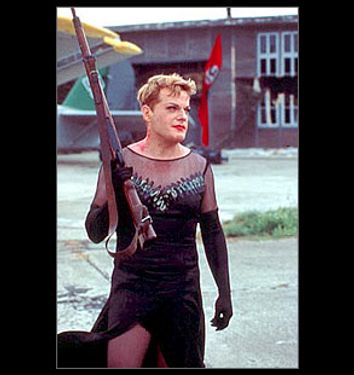
In recent years, Eddie Izzard has parlayed his popularity into a thriving film career, opting for dramatic roles in independent films like “Shadow of the Vampire,” “Velvet Goldmine” and “The Cat’s Meow” (in which he played Charlie Chaplin). His latest big-screen effort is “All the Queen’s Men,” a World War II comedy about a bumbling group of soldiers (led by “Friends” star Matt LeBlanc) who disguise themselves as women in order to infiltrate a female-run factory housing the Nazis’ Enigma code machines. In the film, Izzard playfully exploits his drag persona as a combat-shy cabaret diva who gives his squad a crash course in the fine art of cross-dressing. An actor of surprising naturalness and versatility, Izzard frequently takes on theater projects, and his portrayal of Lenny Bruce in the London production of “Lenny” earned critical raves.
How do you explain the allure of dressing up in women’s clothes?
It’s not an allure, it’s just a sexuality. It’s the only way I can express the feminine side of myself as a member of the transgender community. If you have an outwardly biological bloke’s body, then that’s the only way you can move toward where you feel more comfortable. I mean, women can already do it — they can be tomboys and that’s no problem.
When did you first decide to incorporate transvestitism into your act?
I came out when I was 23, and I got into stand-up when I was about 26 and that started taking off when I was about 29. In 1991, I told the press because I thought, Well, my stand-up’s taking off in Britain so I better tell them so they can’t reveal it. Then I just started talking about it onstage for about a year and the press thought that it was some sort of gag. Then I thought I better wear some makeup so I’m not scared of being able to do that. The people started saying it was a whole gimmick. It was very bizarre. I was hugely fearful of the impact it [coming out] would have on my career. I videotaped the first-ever gig and it was 60-40 that I could’ve lost the career at that point.
How did initial audiences react to your onstage persona?
Well, they were sort of OK. The first five minutes, they all went, “Wow, what the hell’s going on?” Then after five minutes they just got on with it; I could’ve been wearing an elephant suit. It didn’t really matter. The comedy was still the same. I talk surreal crap and that never changes.
Your role in “All the Queen’s Men” plays up your transgender image. Was that a selling point for you or just incidental?
Yeah, I think that was a selling point. They wanted me to play this part, which was initially a gay transvestite, and I said, “Well, I’m a straight transvestite, so why don’t we bring the character more toward my end?” In the end, we ended up making him a bisexual transvestite, and I thought, OK, because he was supposed to be something of an action transvestite who had been in the military and then kicked out when they found him wearing his wife’s clothing. When the director [Stefan Ruzowitzky] agreed to go with that, I thought I’ll go do it because when I first came out, I never thought I’d be able to play an action transvestite in a film and get paid for it. Plus, I’m also kind of fascinated with that period and I wanted to be in the army when I was a kid.
As someone who’s fiendishly in tune with American pop culture, what was it like acting alongside one of the “Friends”?
It was great. I haven’t done comedy in my films. I’ve generally chosen dramas in my films and theater work because I always wanted to be a dramatic actor. I had a great time working with Matt [LeBlanc] and it was also quite weird working with someone who had such good comic timing since I’m used to working on my own.
From “Velvet Goldmine” to “Shadow of the Vampire,” you’ve made some pretty unorthodox film choices. How do you usually pick your projects?
Well, initially, and even still, I don’t really have a choice of everything in the world. Quite often when something comes around it tends to be like, “Do you wanna do this film or not?” And if I say no, then I just have to wait around another few months for something else to come up. I take money out of it. Money is not the driving thing; that’s where you lose it.
Is it frustrating not having your pick of projects or are you happy with the roles you get offered?
In the sense that you always like to have the choice for every single film, I’d love to be in “The Lord of the Rings,” but I was probably touring at the time and didn’t even know it was being made. [Laughs] You have to deal with it.
What do you see as the major differences between American and British audiences?
There’s no difference.
Did you feel any pressure to refigure your material in order to adapt to the sensibilities of American audiences?
No, the audiences I play for can all string a sentence together. In fact, American audiences prefer it if you just keep it entirely British and they can work out the slang and everything. The trick is, don’t change a thing.
Why do you feel the need to keep returning to the stage?
Well, it does teach you a hell of a lot because you do it night after night. But if you land really good theater roles, you get better film roles. Film is my first love. I’m not a theater person, really. I do a hell of a lot of time onstage just performing my stand-up. Because I’m coming from comedy, if you do deliver a good theater role, then hopefully producers and/or directors will go, “Hey, I heard you did good in that.” And therefore it could put you on a more believable dramatic track.
Your most mainstream films like “Mystery Men” and “The Avengers” have tanked at the box office. Do you aspire to star in a blockbuster or is that not really a priority for you?
That’s not a main priority, but I do. I am a very mainstream, popcorn-eating watcher of films. That’s not necessarily a problem because I wasn’t the controller of either of those two films. But even if I was in control, it might have happened the same way. [Laughs] It’s better for me to come this way [from comedy] because people say, “Plug him into a comedy and try to make that $100 million straight off.” I needed to prove that I could hold something dramatic and that’s what I’ve been trying to do. I have to pay my dues and earn my spurs, but I’ll get there cause I’m a relentless bastard.
You’re obviously very proud that “Dress to Kill” is finally coming out on DVD. Does this particular show hold any more importance for you compared to the other one-man productions you’ve done?
It does in the fact that in America it won a couple of Emmys. That was very nice, because in Britain I don’t get any awards for the stand-up shows. We don’t have such an idea of having comedy specials, or any specials for that matter. It was a breakthrough show for me.
While you were performing this show, did you have any idea it would garner so much attention?
Not particularly. Having played in a number of different countries and found that at certain points things break through, it tends not to be a particular show. Rather, it’s more like how much time you spent and at which point everyone decides to buy into it; a number of factors come into play. The show I did in New York was somewhat different from the one I did on the West Coast where Robin Williams came in and helped produce the show. Then HBO put it on and opened it wide.
Describe the process of preparing for your one-man shows. Do you start out with a specific theme in mind or do you just go where the jokes take you?
The second one. I have no process. I start a new tour with the old tour. I never write a show; it’s always improvised from whatever comes into me that night. Any show is a constant work in progress. I’m constantly chucking out old stuff which is boring me and improvising new stuff. Then I’ll develop that and a week later I’ll think, Oh, there’s another bit I can add to that. It’s a constantly moving process. About five to 10 minutes of my show is improvised, but only five to 10 minutes.
This seems very little, but interestingly, when I was playing Lenny Bruce, I managed to get hold of many tapes left to his estate and he said he did the same thing. It’s good to know that I’m in the same ballpark.
In the case of “Lenny,” was it very daunting to play someone of such iconic proportions?
Lenny was very daunting, but it was a good challenge because it was dramatic and comedic — one of those crossover roles. No stand-up has ever played Lenny, as far as I know, so that was a great challenge. It was a very arduous experience. It really was draining because you do have to die eight times a week for three months.
How did you prepare to inhabit the role?
Well, with any character, I sort of pull them to me. Knowing a lot about Lenny beforehand, and then just going further on in my research, he started from a more mainstream position than I did. His early television stuff was so broad, it was kind of reminiscent of Jerry Lewis and the childlike characters he used to play. “Lenny” went beyond comedy and into reading out the transcripts of the trial. So, I just put myself in that position. If I had lived that life, how would it be for me? It’s actually very difficult to do stand-up in someone else’s style. I could do a facsimile of Lenny doing his stuff, but I also found that I had to refine some of his other comedy — especially his early comedy. It was quite a weird experience. I could never be exactly Lenny, but I had to give the essence of Lenny, like when I was playing Chaplin.
You spent a lot of your early childhood years moving from country to country. What impact do you think that had on the content of your comedy routines?
Being from Yemen, you can’t help but be interested in everything that’s going on now — otherwise I’m just getting rid of my birthplace. It does give you a global perspective, but I still just talk about crap.
Religion and politics are two recurring themes in your act. Do you have any thoughts on how President Bush is handling international relations post-9/11?
In a short one-line answer, I don’t know quite where he’s going. America is the Roman Empire, so I think the Bush administration could do whatever the hell they want and no one can really stop them. So keep your fingers crossed.
How did you develop this voracious love of history?
I’ve always been fascinated by history. It’s a family thing, really. My brother and my father are both history buffs. It could be that we have a history genetic thing going on. [Laughs] Also, I realized that nobody was using it in stand-up, and there was just tons of stuff lying around. It makes you look really intellectual, even though I’m just talking crap.
Genius? Hack? Genius?
Brian De Palma comes clean on his tawdry new film, the old "Scarface" controversy and the reason "Bonfire of the Vanities" flopped.
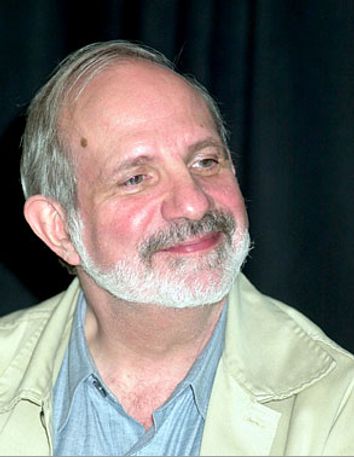
Genius or hack? Innovator or rip-off artist? Master craftsman or manipulative shockmeister? Since making his feature debut three decades ago with the madcap comedy “The Wedding Party,” Brian De Palma has been a constant source of contention. His movies, often rife with over-the-top violence, gratuitous nudity and flamboyant visual pyrotechnics, polarize audiences and critics alike.
His latest film, “Femme Fatale,” starring Rebecca Romijn-Stamos as a jewel thief and Antonio Banderas as the freelance photographer who busts her cover, is already splitting critics down the middle. On one side are those who say the film is trashy, kinky fun. On the other are those who say it’s just sleazy. De Palma is used to as much.
Continue Reading CloseWill the future really look like “Minority Report”?
Jet packs? Mag-lev cars? Two of Spielberg's experts explain how they invented 2054.
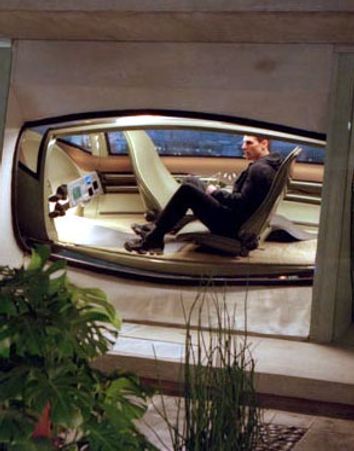
Eye-scanning spider robots, vomit-inducing “sick sticks,” holographic home video cameras, vertical highways: Welcome to the United States circa 2054. Steven Spielberg’s “Minority Report” is essentially a neo noir in which Tom Cruise runs around trying to prove his own innocence. But what distinguishes the film — besides its ominous political warning — is its dense, ingenious conception of what life will look like 50 years from now. Not since the neon-soaked “Blade Runner” (like “Minority Report,” also based on a Philip K. Dick story) has such a conceivable, self-contained and ultimately disconcerting vision of the future been captured on-screen.
Continue Reading Close“What drugs have not destroyed, the war on them has”
David Simon, creator of the searing new HBO series "The Wire," on why even the best cop shows are phony and our anti-drug mania amounts to a permanent war against the underclass.
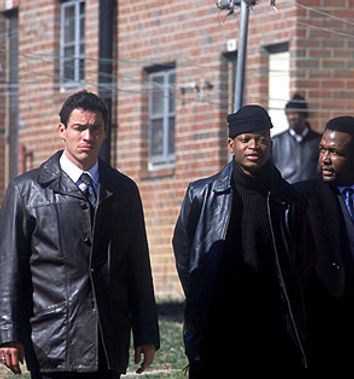
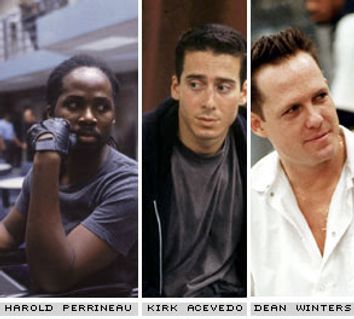
HBO’s new series “The Wire” is as much a polemic against the drug war as it is an indictment against traditional cop-show conventions. Over the course of a season, “The Wire” follows the frustrated attempts of federal agents and Baltimore police to topple an elaborate drug organization run by an elusive crime lord named Avon Barksdale (Wood Harris) and his conscience-stricken nephew D’Angelo (Larry Gilliard Jr.). When first we meet D’Angelo, he’s on trial for murder — a rap he beats after one of the star witnesses is coerced into changing her story by Uncle Avon’s crew. In attendance for this bogus verdict is Detective James McNulty (played with charismatic intensity by Dominic West), a pit bull homicide cop who takes D’Angelo’s victory as an insult to his professional ego. McNulty is subsequently brought in by the presiding judge to do a postmortem on the case, revealing that this was only one in a slew of uncharged homicides attributed to the Barksdale clan.
Continue Reading CloseHolding out for a hero
Ben Affleck? Matt Damon? Johnny Depp? Those guys aren't action stars -- they're pussies! Next up: Moby does Dirty Harry and James Bond goes gay.
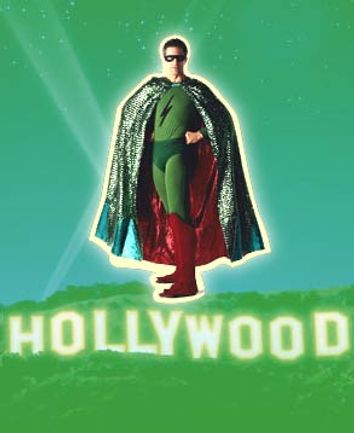
Never mind those whooshing sounds you hear. They’re just the sighs greeting another summer movie season fraught with rancid remakes (“Mr. Deeds”), sorry sequels (“Halloween: Resurrection”), tawdry teen comedies (“The New Guy”) and the obligatory Freddie Prinze Jr. flopperoo (“Scooby-Doo”). Even the presence of literate, prestige pictures like Sam Mendes’ “Road to Perdition” and Christopher Nolan’s “Insomnia” redo isn’t enough to redeem 2002′s stale slate of studio-driven muck.
Continue Reading CloseLet’s talk about “Sexaholix”
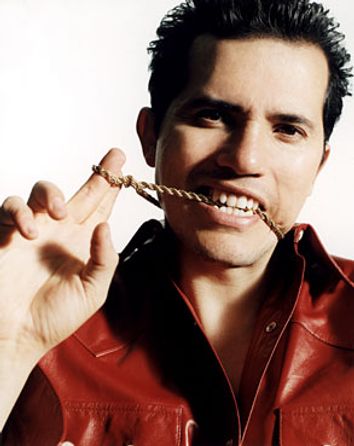
Actor John Leguizamo on his best roles, his worst film and another HBO special about his personal life.
John Leguizamo may be best known to audiences for his roles in big Hollywood movies like “Spawn,” “Executive Decision” and “Moulin Rouge.” But the multitalented and multihyphenated comedian is a stage performer more than anything else. After honing his acting chops at the Lee Strasberg Institute, Leguizamo hit the New York theater scene in 1990 and snagged an OBIE award for “Mambo Mouth,” his satire of racial and ethnic stereotypes in American culture. Eleven years and two Broadway shows later, he returned to the boards with the quasi-autobiographical “Sexaholix … A Love Story,” the basis for his latest (and fourth) solo special for HBO. Raucously funny, yet surprisingly poignant, “Sexaholix” is an exercise in catharsis for Lequizamo, who reconstructs the history of his life, beginning with his Dickensesque childhood in Queens, N.Y., and ending with the birth of his second child. Laying himself bare, the native Colombian attacks myriad subjects that alternately elicit belly laughs and empathy. Family grievances, abortion, fatherhood, the joys of nonmarriage, cunnilingus — everything is grist for his comedy.
Continue Reading ClosePage 1 of 3 in Ian Rothkerch