Tuesday, May 2, 2000 4:00 PM UTC
Are reparations the best way to address slavery, genocide and other past evils?
By Jonathan Groner
As damning information emerges about the conduct of Swiss banks and other “neutrals” during the Holocaust, aging survivors now find themselves about to receive a new round of reparations. Native Americans claim, quite rightly, that the U.S. government systematically violated its treaties with tribes and that, more recently, the Smithsonian and other major museums have stockpiled thousands of Indian skeletons, which hold an obvious religious significance, in the name of anthropology. Native Hawaiians seek restitution for the U.S.-backed overthrow of the original Hawaiian kingdom in 1893. Maoris in New Zealand, aborigines in Australia, even Sudeten Germans (an ethnic minority expelled from Czechoslovakia in the wake of World War II) — all have made their claims on the world’s morality and its money.
The first modern example of reparations for the evil that men do was, of course, the West German decision, following negotiations with Israel, to voluntarily pay billions of dollars to Holocaust survivors in the early 1950s, a step that sparked tremendous controversy among Jews at the time but has since become accepted as appropriate and even necessary. Yet where does the process end? African slavery was a centuries-long atrocity of its own kind, everyone now agrees, and although the Founding Fathers were ambivalent about “the peculiar institution” and it certainly didn’t start on our shores, the U.S. government had plenty of complicity in its continuation. Some African-Americans have recently called for reparations for the descendants of slaves, and in view of the lasting effects of slavery and of President Clinton’s 1998 official semi-apology, the problem is not at all a trivial one.
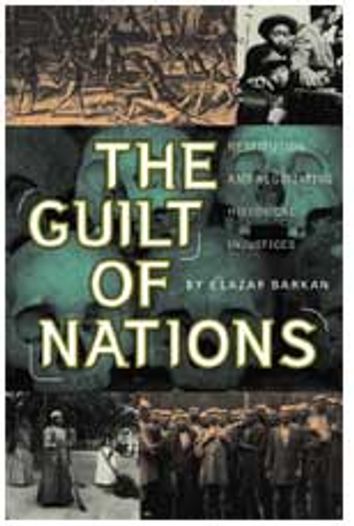
All these circumstances form the extremely timely background against which political theorist Elazar Barkan, chairman of the cultural studies department at Claremont Graduate University in California, wrote “The Guilt of Nations: Restitution and Negotiating Historical Injustices.” Both an invaluably detailed catalog of various groups’ past and present claims for restitution and a theoretical consideration of the idea’s practicality and morality, this book will no doubt take its place as the starting point for a full understanding of these highly complex issues.
Barkan is a supporter of restoration — under the right circumstances. He’s no knee-jerk advocate of any and all Third World claims against the West, but at the same time he is disinclined to dismiss any oppressed ethnic group’s claim as too absurd for consideration. Taking a far more nuanced position, he places the whole restitution controversy in what he repeatedly refers to as a “neo-Enlightenment” context — a theory that essentially grants national and ethnic groups many of the rights that Locke and Rousseau accorded to individuals, including the right to determine their destiny and the right to make their own choices. Barkan rejects the conventional theory that realpolitik should rule international relations, that the strong are simply entitled to dictate to the weak.
But he also argues that restitution is not — and cannot be viewed as — an attempt to reverse history. Much as we might wish to, we can’t return to a world before the Nazis, before slavery, before the betrayal of the American Indian. Barkan thus rejects “imagined utopias [that] stand for moral judgments,” because they can “become counterproductive from the claimants’ perspective” — that is, they can undermine the possibility of a group’s actually getting something. “Even given a more limited approach,” he argues, “would possible restitution in particular cases be in the millions? Billions? Trillions? … An expansive attitude that legitimizes a fantasy of rights to be restituted is likely to aggravate or to stalemate conflict resolution.”
Since money (and occasionally the return of property) is the only restitution feasible, Barkan views the process not as the righting of all old wrongs, but as a less than ideal but still highly desirable process of negotiation between a formerly oppressed group and its erstwhile oppressors. The process provides a way for a people like the aborigines to gain status and legitimacy.
One thing that Barkan explicitly declines to do is set out guidelines as to when reparations are appropriate and when they aren’t. Restitution, he argues, isn’t just about morality; it’s also about practicality. One doesn’t compare Nazi atrocities with the rapes and enslavements committed by the Japanese in World War II, or Hawaiian grievances with those of the Maori. One simply asks: Where are the oppressors and where are the oppressed today, and what can be done? If politics is truly the art of the possible, then Barkan, as this incisive book demonstrates, is its most devoted acolyte.
Thursday, Apr 6, 2000 4:00 PM UTC
A veteran journalist relates the full horror -- brutality, oppression of women and genocide -- of the new Afghanistan.
By Jonathan Groner
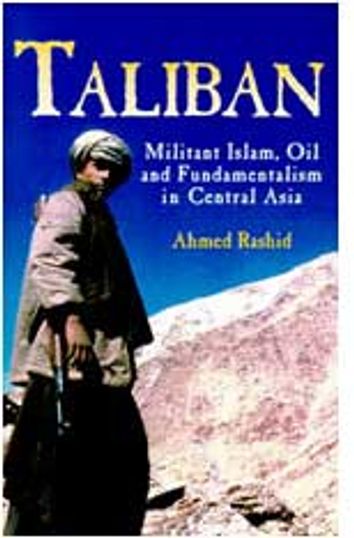
Sometime in 1994, as Afghanistan tumbled into disarray in the wake of the civil war that followed the 1989 Soviet withdrawal, there emerged a highly secretive and heavily armed group known as the Taliban. Its declared purposes were to restore peace, to enforce traditional law and to defend the Islamic character of Afghanistan. The world now knows the rest of the story. After the cleric-led movement captured Kabul, the nation’s capital, in September 1996, it became clear to all observers that the Taliban represented a very troubling development in Islamic radicalism.
The Taliban, which springs from the Sunni branch of Islam, began a genocidal campaign designed to wipe out Shiite Muslims from much of Afghanistan. It openly countenanced international terrorism, harboring the criminal mastermind Osama bin Laden and giving him virtually free rein to plan bombings and assassinations. And it imposed a disturbing and deeply fundamentalist form of Muslim culture on the nation. Under the Taliban regime, girls’ schools were closed and women were forced to quit their jobs (at one time, 40 percent of Afghan doctors were female) and to wear a head-to-toe garment known as the burkha. Movies, television, videos, music and dance — all were banned.
|
|
This is a story that needs telling to a wide audience, and journalist Ahmed Rashid, who has covered the Afghan wars for more than 20 years as a correspondent for the Far Eastern Economic Review and the Daily Telegraph, is well equipped to do that. Getting it was not an easy task: The Taliban is about as impenetrable a political organization as exists anywhere in the world. Its acknowledged leader, Mullah Mohammed Omar, has never met with Western reporters or diplomats and has never even been photographed.
The tale is even more complicated, though. There’s also the matter of oil — specifically the desire of international oil companies to build a pipeline from the Caspian oil-producing region (home to Kazakhstan, Turkmenistan and several other small nations) to serve potentially massive markets in South Asia. The route goes directly through Afghanistan, and the result has been what Rashid refers to as “romancing the Taliban”: For years, he reports, U.S. economic interests, driven by oil, took precedence over human-rights concerns; only very recently did pressure from American women concerned about the repression of Afghan women finally lead to a reversal in policy. Rashid was on the scene all along, covering what he calls the new “Great Game” in Central Asia, a late 20th century version of the late 19th century colonial struggle for hegemony. “Policy was not being driven by politicians and diplomats,” he writes, “but by the secretive oil companies and intelligence services of the regional states.”
The chief virtue of Rashid’s account is his ability to delve beneath the surface of events without falling prey to a one-sided Marxist-style economic analysis. Oil is important — but so is geopolitics, including the American desire to play off Afghanistan against Iran; and so are the obvious issues surrounding the oppression of women by the Taliban. As Rashid places the Taliban in its historical and social context, he accomplishes the difficult task of maintaining a degree of empathy while still excoriating the organization as cruel, barbaric and repressive. Its members aren’t even good Muslims by anyone’s standard except their own:
The Taliban are poorly tutored in Islamic and Afghan history, knowledge of the Sharia [Islamic law] and the Koran and the political and theoretical developments in the Muslim world during the twentieth century. While Islamic radicalism in the twentieth century has a long history of scholarly writing and debate, the Taliban have no such historical perspective or tradition … Their exposure to the radical Islamic debate around the world is minimal, their sense of their own history is even less.In Rashid’s view, the members of the Taliban “divest Islam of all its legacies except theology — Islamic philosophy, science, arts, aesthetics and mysticism are ignored.” Even the theology is ignored when it’s politically expedient: The organization has permitted opium, prohibited under Muslim law, to thrive as one of the disintegrating nation’s few cash crops. The Taliban also seems unconcerned with the day-to-day issues of governing, Rashid points out. Although Taliban leaders live simply and do not fatten their checkbooks on government revenues, their inefficiency is staggering; they seem to have no concept of economic policy beyond “Allah will provide.” The result is an Afghanistan that is rapidly falling back into the Middle Ages, a country where life expectancy is only about 44 years and 1.7 of every 100 mothers die in childbirth.
Unlike some opponents of the Taliban, Rashid does not dismiss the group as a mere puppet of the neighboring state of Pakistan; he emphasizes that it is primarily an indigenous Afghan movement that, in fact, poses an imminent threat to Pakistan. All in all, Rashid marshals the vast amount of information he has accumulated over decades of covering the area into a long, sad story and tells it with finesse. His book is a gripping account of one of the horror stories of post-Cold War politics.
Continue Reading
Close
Wednesday, Nov 10, 1999 5:00 PM UTC
A smart, fun history considers the influence of those indispensable containers on the culture of the nation.
By Jonathan Groner
In 1942, a New Hampshire inventor named Earl Silas Tupper produced a bell-shaped, flexible, injection-molded polyethylene container that would quickly prove ideal for a multitude of kitchen uses. Tupperware had made its first appearance, and as soon as World War II ended and an era of American consumption could begin, the rest would be history. But what kind of history?
That’s not at all a frivolous question. In “Tupperware: The Promise of Plastic in 1950s America,” an entertaining study of the sociological and psychological significance of the phenomenon, Alison J. Clarke, a tutor in design history and material culture at the Royal College of Art in London, breaks new ground in our understanding of 1950s culture. She takes pains to debunk two commonly held scholarly interpretations of those ubiquitous plastic bowls and presents her own quite convincing neofeminist alternative. Tupperware, it turns out, makes an effective prism through which to view aspects of the cultural development of the nation in the latter portion of this century.
As Clarke points out, Tupperware couldn’t possibly have achieved its place in American life without the Tupperware party, that oft-ridiculed but wildly successful suburban mainstay. The plastic containers, however attractive and functional they may have been, were languishing on the shelves until 1951, when Earl Tupper, in an act that, Clarke says, showed either “inspired entrepreneurial vision or a reflection of his desperation,” handed over his entire sales effort to a neophyte named Brownie Wise.
Wise, an impoverished single mother from Detroit with little but a dream in her heart, was a true American original. She soon built a vast nationwide network of women dedicated to selling Tupper’s products out of their homes. Her flamboyant style and the cult of personality she encouraged came into conflict with Tupper’s austere New England ways. The clash ultimately got her fired; the “party plan” lives on to this day as Tupperware goes international.
Clarke rejects two academic views of the Tupperware phenomenon, one favorable and one critical. The positive one is that Tupperware became an American icon entirely because it was “a simple, uncluttered functional design, born of the modernist ethos ‘Form Follows Function.’” Not so, Clarke argues: The Museum of Modern Art may have put Tupperware on exhibit in 1956, but American women wanted it in their refrigerators because it conveyed middle-class status, because it appealed simultaneously to frugality and ostentation and because their friends and neighbors were selling it and buying it.
The negative view is that the Tupperware party was a vapid, stifling, oppressive institution imposed upon passive American women by the forces of mass culture and advertising. Clarke strongly dissents: Actually, she says, Tupperware culture “offered an alternative to the patriarchal structures of conventional sales structures, which many women, completely alienated from the conventional workplace, wholeheartedly embraced.” And Tupperware events permitted many women of the 1950s to gain their voices by speaking in public, thus developing the self-esteem they had lacked. Fostered by Brownie Wise’s elaborate circles of reward for sales achievements, Tupperware’s “self-help ethos countered alienation and fostered self-determination.”
The 1950s are undergoing a reappraisal, with some scholars concluding that the drab black-and-white tones in which the movie “Pleasantville” conveyed the decade don’t do it justice and that a good deal more was happening in those suburban developments than we had believed. Clarke’s work is a significant addition to the reconsideration of that misunderstood decade.
Continue Reading
Close
Tuesday, Oct 5, 1999 4:00 PM UTC
Writing at the top of his game in a thriller about the corruption of the courts, the author delves deeper into character than he ever has before.
By Jonathan Groner
Lawyer-turned-writer Scott Turow caught the elusive bubble of fame in 1987 with
the publication of “Presumed Innocent,” an intense, taut mystery narrated by a first-person, morally ambiguous attorney. Set in fictional Kindle County, clearly a stand-in for Cook County (where Turow still practices law), that novel practically invented the late 20th century genre of the legal thriller. (John Grisham gets some credit as well, but Grisham — an earnest, plodding moralist with an acute feel for the American hatred of large law firms and corporations — has inspired fewer imitators.) After two middling follow-ups, “The Burden of Proof” (1990) and “Pleading Guilty” (1993), Turow again fulfilled his potential with “The Laws of Our Fathers” (1996), a thriller that evoked the streets and straits of the urban ghetto with a darkness that few novelists from outside the ghetto would even attempt.
Now, with “Personal Injuries,” again set in his favorite county of the imagination, Turow turns to a new topic: the casual corruption that can infect a big city’s court system. The novel marks a watershed for Turow: All the legal twists and turns are still there, but this time the author focuses his fullest attention on character, scene and subplot. His Kindle County is an urban milange of venal court clerks, self-righteous prosecutors, corrupt cops and judges who sit on the bench only because they once knew the right politician. It’s an almost Dickensian fictional world — and indeed, on his Web site Turow calls Dickens a “profound influence” who “created robust characters without giving up his principal mission as a storyteller.” (His other major influence, he says, is fellow urban chronicler and Chicagoan Saul Bellow.)
Into this morally compromised environment Turow drops Robbie Feaver, a personal-injury lawyer who has been bribing judges for years. The name is pronounced as in “Do me a favor,” Feaver quickly tells us, and that phrase just about sums up his legal career. Cornered at last by prosecutors and the FBI, who persuade him that his only way of avoiding prison is to wear a wire, Feaver makes his tortuous way through a labyrinth of corruption as he and the feds try to trap the elusive leader of the bribery ring. An inveterate womanizer, a nonstop wisecracker and a man with plenty in his past to hide, Feaver still retains his unshakable sense of loyalty and his own style of fidelity to his wife, Lorraine, who is slowly dying of Lou Gehrig’s disease.
The novel intertwines three tales: of Robbie’s adventures as an undercover agent in an extremely elaborate sting; of FBI agent Evon Miller’s transformation after she is assigned to keep an eye on him; and of Lorraine’s slow, sad deterioration. As the three strands come together toward the end, each character deepens and grows in humanity.
The book doesn’t pack much mystery, though. Once the main action is under way and Feaver, wired for sight and sound, has set out among the judges and the courtroom lackeys, there are few surprises. But “Personal Injuries” succeeds as a long look at a world where greed, sloth and lust hold sway despite the efforts of some good men and women.
Continue Reading
Close
Friday, Aug 13, 1999 4:00 PM UTC
Denouncing a miscarriage of justice, a historian compares Italy's courts to the Inquisition's.
By Jonathan Groner
Judges and historians, Carlo Ginzburg argues, have a good deal in common. Both have the weighty responsibility of examining the written record and drawing from it conclusions about what happened in the past. Yet judges bear the greater burden. Historians’ mistakes can be corrected by later historians building on their predecessors’ work; but when judges err by falling prey to logical fallacies and thus reconstruct the past incorrectly, innocent people go to prison, and the very concept of justice is corrupted.
Ginzburg, himself a historian who has specialized in the Inquisition and who teaches at UCLA, wrote “The Judge and the Historian” to call the world’s attention to what he sees as precisely such a gross miscarriage of justice in his native Italy. In 1988, a full 16 years after a Milan police superintendent was mowed down in broad daylight by two shots from a revolver, an informer came forward, confessed to a role in the crime and implicated three leaders of the far-left group Lotta Continua. The men he fingered were convicted, and after seven rounds of trials and appeals over nine years (a convoluted sequence not unusual in contemporary Italy), the convictions were upheld; the men remain in prison.
This was no ordinary murder. From the late 1960s through the early 1980s, Italy was a nation in chaos, torn by the terrorism of the Red Brigades, haunted by assorted conspiracies and conspiracy theories and plagued by a plethora of anarchist, neo-fascist and other noisy fringe movements. And Luigi Calabresi, the murdered officer, was no ordinary policeman. He was widely believed on the left to have murdered, under official auspices, Giuseppe Pinelli, an anarchist wrongly suspected by the police of detonating a terrorist bomb in 1969. (Pinelli’s death became the topic of Dario Fo’s satirical drama “Accidental Death of an Anarchist.”)
Ginzburg regards the convictions in the Calabresi case as the 20th century equivalent of the witchcraft and heresy convictions under the Inquisition. The contemporary Italian courts, he says, cared just as little for the evidence as the 16th and 17th century Catholic ones: Suspects could affirm their crimes, deny all or remain silent, and all these possible responses were regarded as evidence of their guilt. The Calabresi judges ended up believing the informer, Leonardo Marino, despite the dozens of problems Ginzburg cites with his story, any one of which, he says, should have created more than the shadow of a doubt and led to acquittal.
Ginzburg confesses his own bias up front: He has been a close friend of Adriano Sofri, one of the convicted Lotta Continua activists, for more than 30 years and “is certain that this accusation is groundless.” He scores several solid points against Marino, asking why the informer came forward when he did and strongly hinting that the authorities egged Marino on to help put a notorious murder to rest after a 16-year impasse.
But for a polemic intended as a Zola-like “J’accuse,” much of the argumentation is curiously bloodless. “The Judge and the Historian” reads not at all like a true-crime tale and not much like a work of history. It’s closer to a literary deconstruction of the trial record, probing for inconsistencies of tone and language as much as for errors of fact. “Anyone who is accustomed by profession to read and interpret texts can hardly fail to think that these phrases reek of pretentious diction,” Ginzburg scoffs at the explanation Marino gives for having spoken to the police. “Pretentious diction”? That’s not a crime. And in a criminal case it isn’t even good evidence.
Continue Reading
Close
Tuesday, Jul 13, 1999 4:00 PM UTC
Does the First Amendment protect a how-to manual for hit men?
By Jonathan Groner
On March 3, 1993, in Silver Spring, Md., James Perry, a contract killer from Detroit, cold-bloodedly murdered three people: a quadriplegic 8-year-old boy, the boy’s nurse and the boy’s mother. Perry was acting on instructions from the boy’s father, Lawrence Horn, who had long been estranged from his family. Horn, a former Motown Records producer deeply in debt, hoped to inherit the lucrative settlement that his son had received in medical-malpractice litigation.
Deft police work soon brought both Perry, the hit man, and Horn, the mastermind, to justice. Perry is currently on Maryland’s death row; Horn received a life sentence. But the case wasn’t over. It became chillingly clear that Perry had followed a very specific plan in carrying out his assignment. For nearly all of its aspects, he had relied on “Hit Man,” a mail-order book from a Colorado outfit called Paladin Press. The book’s subtitle: “A Technical Manual for Independent Contractors.”
In an unusual turn of events, members of both the mother’s and the nurse’s families sued Paladin in federal court, essentially claiming that the publisher was an accessory to murder and should be held financially liable for Perry’s crime. In an equally unusual development, Rod Smolla, a First Amendment scholar and free-speech advocate then teaching at the College of William and Mary’s law school in Virginia, signed on to help the plaintiffs. “Deliberate Intent” is Smolla’s inside story of the litigation, which ended just a few weeks ago with a settlement that amounted to a victory for his side: Paladin — which had conceded before the trial that it “intended and had knowledge” that its publications would be used by criminals in committing murders for hire — agreed to pay a reported $5 million and to stop selling “Hit Man.”
Depending on one’s view of the First Amendment, a case like this can be seen either as the extreme instance that tests one’s true commitment to free speech (comparable to the Nazis marching in Skokie) or as a real-life event that exposes absolutist notions of free speech as absurd. Artfully interweaving law-school discussions about moral values with his own process of soul searching and with the rush of courtroom developments, Smolla shows how and why he adopted the latter view. “We would not be attempting to punish Paladin Press for publishing unpopular or offensive ideas,” he explains. “We would simply be attempting to hold it responsible for aiding and abetting murder by training, counseling, encouraging, and inciting hit men, with deliberate intent.”
The book, however, carries with it an annoying subtext. Although Smolla knows how to tell a story and describes the intricate legal maneuvering skillfully, he seems obsessed with proving he’s a man of the street, not the classroom — that he’s the type of guy who throws back a cold beer rather than sipping chardonnay. “I ain’t no pointy-headed intellectual who’s afraid of a fight,” he says he once told a fellow lawyer. On the cover of Smolla’s excellent 1988 book “Jerry Falwell v. Larry Flynt: The First Amendment on Trial” (yes, it was partly the basis for the Woody Harrelson movie), in which he took the pro-First Amendment side, he called himself Rodney A. Smolla. Now he’s just Rod. I wonder why.
Continue Reading
Close