Jowita Bydlowska

I was a drunk mom

After my son was born, I told myself I was just trying to unwind. But the truth was much darker than that

(Credit: Vladislav Gajic via Shutterstock/iStockphoto)

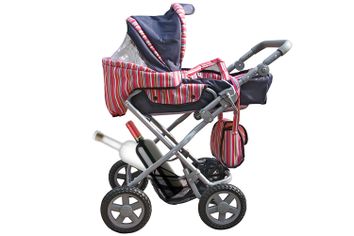
It’s winter 2009. I’m in a liquor store. My 6-month-old son scans the rows of bottles with his big eyes. He says, Tat-tat-tha-tha under his breath. It feels like I’m holding mine, but I let myself relax since I haven’t been in this particular location before, a wonderland of color and crystal. Usually, I make this errand run a quick in-and-out. Maybe I’m being paranoid, but I think people tend to notice the stroller.

Five months ago, I started drinking again after being sober for three years. Since then, I’ve developed so much paranoia. I feel watched all the time, even in the dark. Walking home, I stay behind buildings, in alleyways, like a criminal, pushing the stroller as I take my discreet sips from a bottle of wine I’ve stored on the bottom of the diaper bag. I know I’m the worst of all villains: a mother who drinks. A mother who endangers her child. Part of me drinks to forget this.

We don’t like to think about drunken moms. But the subject came up recently with the tabloid story of 10-month-old baby Lisa, who disappeared in Kansas, Mo. Earlier this month, it came out that her mother, Deborah Bradley, was in a drunken blackout on the night of the baby’s disappearance. Bradley defended her drinking as “having grown-up time” and went on to say, “There’s nothing wrong with me doing what I want to do after dark.” I have no idea if Bradley’s consumption had anything to do with what happened to her daughter — but I know that story gave me chills.

I relapsed a month after giving birth to my son. We were having a party to celebrate his arrival in the world and people brought over alcohol. That night, I picked up a glass of bubbly and gulped it like it was ginger ale. “It’s a special occasion,” I said to my partner, who knew of my past as an alcoholic. One of our friends told him to chill, that all parents drank because babies were hard to deal with. The friend even brought up that joke about unpublishable books for children: Mommy drinks because you cry.

“Exactly. Baby cries, I drink,” I said. “Besides, I’m just going to have one glass.”

I had five or six, in secret. At one point, I tiptoed tipsily up to my son’s nursery to show him off, sleeping, to a happy guest, but I felt embarrassed to touch the baby with my drunken fingers. “Let’s just watch him,” I said, and as we stared and oohed, I marveled at how easily I just annihilated these years of sobriety. Then again, I was just celebrating. It was just that one time.

Except it wasn’t. As a new mother I was thrust into the daily routine of thankless tasks: changing, feeding, bathing, napping, burping, bouncing, dressing, undressing, changing, napping, feeding … It was so repetitive, and though I was so busy, it felt like I had too much time. Time with the baby kept stretching, and it dawned on me that this was for life, that I always had to be there for this tiny person. I became obsessed with the thought that I couldn’t just get up and go, slam the door behind me and come back when I felt like it. So I left the best way I knew how: I started drinking again.

I had to develop a routine. During the day, I would take my son for walks and I would go to different liquor stores close to where I lived and buy a bottle of wine and a mickey of vodka. Outside, I’d look at other moms and we would smile at each other passing with our strollers. I had a bottle of wine in my diaper bag and a mickey of vodka behind the lining of my purse. A plastic bag on the bottom of the stroller with a couple of empties that needed to be thrown out. Did other moms have the same cargo? I mean, how did they deal with the tiresome nature of motherhood? But their smiles looked genuine, and they often walked in pairs. I didn’t. I was lonely, afraid to make mommy friends because I worried that my secret would come out.

I had an inkling I wasn’t the only one. For example, I was aware of the alcohol-friendly parties a distant friend, Tamara, threw where mommies brought their babies for a play date while they shared a bottle of wine or two. “Everybody needs a break from diapers, don’t they?” Tamara wrote in her evites. Mommies and drinking — it was almost a trend. I justified my drinking when I saw media coverage of cool blogs like Vodka Mom, Mommy Needs A Cocktail, where mommies would defiantly share charming stories of boozing up after a day with a baby. I’m just part of a movement, I’d think, and stop to get my baby’s bottle and take a discreet sip out of the mickey as I hid behind the stroller canopy. I chose to ignore the fact that some of these famous drunken mommies got sober too, and the fact that I actually never went over to Tamara’s because I couldn’t possibly share a bottle of wine. Share? What’s that?

I was much more serious about my drinking. After a whole day with my son, after he and my partner would go to sleep, I’d dive deep into my closet, where I’d fish out my liquid treasures and I would begin the best part of my daily routine. My partner was an early sleeper, but if he wasn’t in bed yet, I’d keep my bottle on the deck in the potted plants with wild meaty leaves and clusters of thin trunks in which you could easily hide a 750ml or even 1 L. I’d drink on the deck when (officially) going out for a cigarette. I picked up smoking, too, mostly because the smell masked what was really on my breath.

Usually, I had a two-hour window, from 9 till 11 p.m., when I would feel invincible and interesting and very drunk. I’d watch TV shows on my computer, chat with people online, call old friends to drunkenly give them reports on the wonders of motherhood. I would listen to sad songs on YouTube and feel as if everything related to me. Then I would pass out on the couch. I’d usually come to around 1 or 2 a.m., still half in the bag but well enough to crawl back into bed. When my son would wake up, I’d give him a bottle I’d prepared earlier. I’d change him around 4 or so when I was just arriving at the first throes of hangover. But some nights I wouldn’t wake up. My son would wail and my partner would try to wake me, but I’d stay unconscious. Thankfully, being a crafty drunk mom, I would’ve had stocked up on infant formula and pumped enough ahead of time so he’d be able to feed while mommy slept off the effects of booze.

As a drunk mom, I became knowledgeable about how alcohol could interfere with nursing. My nine-to-11 time slot was very deliberate. I wouldn’t breastfeed my son after drinking, and I became an expert in milking myself and bought three different breast pumps. I regularly checked charts online to figure out how much time I needed off before breastfeeding. I didn’t drink every night either, because I tried to maintain the illusion that I wasn’t that bad. Sober, I’d breastfeed morning till night, exhilarated that I could sustain my son’s life with my own body. I felt pure. Godly. Why do I even drink? I’d think and swear it all. Except that the next day it would be gloomy outside and I’d find myself going for a walk to the liquor store again.

I started going out of my way, because I believed people were onto me. I worried the cops would stop me and ask to see the diaper bag. A panhandler in front of my regular liquor store started greeting me with “How’s it going today?” I avoided that place and, in my head, developed a map that plotted out all the liquor stores within a 10-kilometer distance. As I walked, I imagined the points on the map lighting up in red. I walked so much I developed cramps in my calves.  When I’d get to a store, I’d get two bottles, telling the cashiers I was having a party, telling myself that it was for later so that I wouldn’t have to make this humiliating trip again. I’d never save the bottle for later. Which is why sometimes I wouldn’t breastfeed for two days in a row. My partner and my sister filled in when I was too incapacitated to do my job as a mother, using formula and breast-pumped milk. My sister wrote me a letter begging me to stop, just like in one of those “Intervention” shows, and my partner threatened to kick me out of the house more than once, but nothing was stopping me. I was so angry at them for being mad at me; the only thing I could do was drink more.

What began to stop me were the stairs. Especially the tall, narrow stairs that led to my son’s nursery and down from the nursery. I imagined myself on my way up to the nursery, drunkenly tripping, falling with the baby my arms. Or on the way down, letting him slip out of my arms, tumbling, crashing … splat. Coming out of blackouts in the middle of the night, I’d fall into nightmares about those stairs. I kept telling myself that it was just the question of time before I missed a step. I did my best to never carry my son after I was drinking, but I worried that I’d lose my inhibitions. I’d get some drunken inspiration to parade with him up and down the stairs like a maniac. I drank over those fears too, but as my son started getting older and more mobile, more squirmy, I could no longer ignore the fact that by drinking I was condemning us both for certain injury or death. The nightmares would become reality.

I got sober four days after my son turned 1, after months of secrets, tears, paranoia and a stint in rehab. After my partner temporarily but definitely kicked me out of the house, and after I went back to the 12-step program. The shame has never left me, but I’m slowly getting over it.  The only thing that remains from that period is that I still I look at other moms on my walks now. Healthy-looking yoga ones and the ones like rock stars with tattoos and lipstick, and the sporty ones that wear no makeup, and I wonder how many of them are carrying empties on the bottom of their strollers. Do they think it’s normal to unwind with a glass of wine after a difficult day with a baby and if yes, how many out of those unwind to the point of blacking out? Maybe none. Maybe I was truly alone.

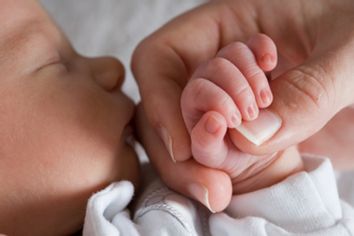
A few nights ago my son was up half of the night. He was chattering and crying and giggling and at one point literally stood on his head in the crib with little, chubby feet above the edge, against the wall. He was shouting about heffalumps, asking if they lived in the closet and demanding to have them put in a heffalumps-destroying machine. I put the heffalumps in the heffalumps-destroying machine while trying to stifle laughter. I felt drunk but from exhaustion. I finally calmed him down by patting him on the back, for what seemed like hours. He fell asleep holding onto my other hand and smiling. And I kept thinking what it would be like if I had been passed out somewhere.

When people ask me why I relapsed after giving birth, I have a hard time pinpointing exactly, but I know I had this illusion that I had a way out from being a mother, that this was my well-deserved grown-up time. In the end, I was lucky my maternal instincts were stronger than the desire to check out and that I don’t need to drink over the fact that it’s so hard sometimes — because I will miss out on all the parts that make it beautiful, too, if I do.

How I stopped numbing out

After I quit drinking, I discovered alcohol wasn't my biggest problem. My desire to abandon reality was

One of my favorite memories is me at 21, wandering some city in Europe, in a blue dress, unwashed, drunk on vodka, hair full of sun and cigarettes, laughing with close friends who at night would turn into accidental lovers. We were going to live forever, of course, and we were always going to be drunk and it was always going to be summer. Then came the deadly winters that no one talked about; when you got too anxious and couldn’t take it anymore, you went to the bar and you’d find a way to make it to the next warm season.

I first came to terms with being an alcoholic at 27. But even when I quit drinking, recklessness beckoned: I still did too much of everything — staying up late, speeding on my bike, being careless with my body and my health. Even my pregnancy didn’t slow down me down. I was the woman with the hugely swollen belly dragging buggies filled with grocery bags and potted plants balanced precariously on top of them. I would not rest; I had a beautiful garden that year. 

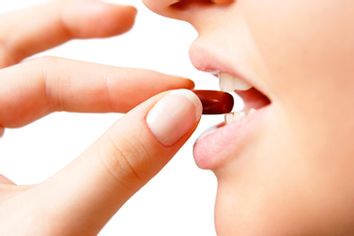
And that, not alcohol, was the real problem: the desire to let abandon take over everything. I’m addicted to the numb feeling I get after I get drunk, or high, or engage in any dangerous activity to escape my anxiety. After I had been sober again, from alcohol, for a year, I found a new way to unplug. For a month and a half, I only visited the planet Earth for brief moments; the rest of the time was spent in a haze I’d achieved from a combination of prescription and over-the-counter medicine.

The final time I indulged in my magical concoction, I almost checked out for good. I awoke in the psychiatric emergency room. My friend and my sister were with me, their faces gentle but serious. The toxicology report showed a lethal combo of chemicals. I hardly knew what was in the innocent pills I had been taking; I just knew it was making me numb, good. My doctor asked later, during our post-emergency visit, why I wanted to kill myself. I insisted I didn’t. I’m all nerves, I told her, I just wanted a little break. That little break almost killed you, she said. 

That’s when I realized it wasn’t the booze or the pills that I needed to quit. I had to quit checking out; I had to quit giving myself over to recklessness. Ultimately, I prefer to live. But life is complicated. Life means waking up every morning with the tight hand of anxiety opening and closing on my esophagus. For a while, I took Prozac to cope with that problem, and although it didn’t give me the abandon that I was seeking, it left me chemically content and disconnected. My fretful thoughts floated in a balloon above me as I went around and marveled at the fact that I was so strong I never cried, or got too mad, or orgasmed, for that matter.

Life after quitting abandon wasn’t easy. I decided to quit everything chemical, including Prozac, to stop numbing myself. I’m not condemning Prozac. It works for some people, and the drug helped keep the angst in check, but I think I need to be a little raw to stay alive. In a twisted way, I now live with the constant urge to lose myself and abandon everything, and that feeling makes me keep the recklessness under control. It makes me put on a bike helmet when I leave my house in the morning, put the headphones away, ride on the correct side of the street, pay attention to signs and cars around me. Pay attention, period. 

Some days my anxiety feels like death and the craving to do something to rid myself of it is very strong. Even lying flat in my bed I can feel it. I think: I could get up, with my eyes still closed, and just start to run. Depending on where I am, I could run into a window, a wall, a mirror. I could fall out this window and break my neck, my head could smack into the wall and cause my skull to cave in and kill me, the mirror could shatter all over and slice right into my arteries. Anything is better than this anxiety. But anxiety serves a purpose and the purpose is to survive. Anxiety is a thin, golden wire always digging into my skin. It’s an instinct that gets me through the day. Because the reality is that even though I’m lying in my bed, thinking of ways to end the discomfort, I’m also painfully aware of everything that is painful. And I also know that all of this will pass but I don’t need to abandon myself to let it.

Continue Reading Close

I choose sanity over sex

I used to be crazy in bed -- and everywhere else. Now that I'm on antidepressants, my wanton abandon is gone

I’m a fan of Sasha Grey. She’s inspired a lot of my photographic work. I also like her because she seems to have a great sense of humor (in one of her movies she has sex with a man in a bear-mascot costume). I must have some, too, to deal with my peculiar dilemma. So I’m a fan. And I’m also a fan of pornography in general, but lately I don’t watch smut that much, period.

I’m on antidepressants. 

I’ve been on them for some time and they’re more effective than the Net Nanny when it comes to limiting the time you spend seeking adult content online. Incidentally, I don’t seek sex all that much either. I mean, I have it and it’s good but if I stopped having it, I’d probably forget about it.

In a recent piece for Salon, Tracy Clark-Flory interviewed people about how antidepressants affected their sex lives. I worry about the 25-year-old photographer who stopped taking his happy pills because, he said, it wasn’t worth the side effects. But I’m envious that he has the balls (pun intended) to forgo his sanity to satisfy the urge to frolic and fornicate.

I’m also envious of Sasha Grey, or rather of women that I imagine her to be like — not necessarily porn stars but women who have high libidos and prefer sex to chocolate, not the other way around. Because when I was younger and so-called crazy, I was full of that abandon. Chocolate could go and fornicate itself in favor of a good lay.

Ever since I can remember I loved sex. I found my parents’ secret copy of Marquis de Sade’s ”Justine” before I’d even kissed a boy. That book horrified me but also confirmed that what I had already glimpsed from the windows of local sex shops, quickly changed TV channels and something I had once seen in a public shower at the pool. There was some wacky sex stuff out there.

I grew up and moved out and was (almost) always lucky enough to find partners who liked to have sex. A lot. Over the years, I had revisited all those formerly taboo places. I was never into watching pornography together but I never had to hide it. I spent a lot of time thinking about sex and having it.

At the same time I was also growing a bit (OK, a lot) depressed. I struggled with anxiety and an eating disorder. So someone eventually suggested antidepressants. And lo and behold, with longer and shorter breaks in between them, I went through the alphabet of happy pills, finally settling on good old Prozac.

One side effect of antidepressants is a lower sex drive. My libido didn’t decrease over night. Not even over 365 nights. It took a while but I can safely say that I’ve arrived at a sort of — for me — sexual inertia. This means that I sleep-sleep at least three nights a week. That may be fine for you but it’s not fine for us, me and my lover.

Theoretically. For me, actually, it’s becoming kind of fine. My lover and I talk about this a lot and I would feel really broken up about it … if I could only feel properly broken up.

But if I could feel properly broken up about it, I’d probably be really, really broken up. I’d be so broken up, I’d possibly be broken for good. And my lover — having been with me for almost a decade now — knows this about me. He’s been there when I wouldn’t leave the house for long stretches of time, when I threw my bicycle into the street in the fit of rage or when I sat in the room for hours and cried for no reason.

Me: “Would you rather more sex, but with a crazy devil?”

Him: “No, I’d rather less sex.”

We had this conversation just the other day. Because I do go through periods when I mourn my high libido and do feel somewhat broken up about it, and guilty, even — perhaps unreasonably — guilty for deceiving my lover into thinking that I was wild and crazy in bed when he met me. Maybe I was — either way, the crazy sort of carried over past the bedroom so he supports curbing it.

I can stop taking my pills and try some alternative methods (hitting head against the wall, board games, nature) to curb the craziness inside me, but why? It’s not like the pills have robbed me of my ability to see or hear. I can still come even though it’s not as intense, and once in a while I even do stupid things like take my pills every other day because I imagine — placebo effect or not — that it brings back that spark that I’m missing. But then this also means sitting with my heart in my throat at the end of the day and who needs that? So I don’t do it often.

I’m reminded of former sexual thrills when I see someone like Sasha Grey (though lately I see her popping up in the mainstream, which is what I’m mostly interested in these days). And, yes, I realize that she’s probably got her demons and who knows, maybe even conquers them with happy pills. And even though I wouldn’t trade the peace of mind for the sexual abandon, I still miss it. 

Continue Reading Close

I’m glad I didn’t get my tubes tied

A doctor told me I was too young for the procedure. It took me time -- and my own child -- to realize he was right

Every week or so, my partner and I sit in a shrink’s office trying to get over our bafflement. We’ve been baffled for some time now. About 17 months. We never planned to have kids and now we have one. And while we love this kid very much, and we can no longer imagine the world without him, and he’s a beautiful golden-haired boy full of personality, his presence stumps us. We never meant to be parents. We’re totally non-parentals. (What is the opposite of “parental”? The word doesn’t even exist, which goes to show how ridiculous the notion must be to the world, no?)

When I grew up, I played with Legos. I never dreamed of baking or tea parties. I had dolls, but I didn’t think they had feelings or needed to have their diapers changed. Then, when I was 9, my mother had my sister and I experienced all the hellish joys of raising an infant. My sister was a great kid, but by the time I was 25, I was quite sure that she was the only child I was ever going to have.

Like Brittany Shoot, the author of “Why I Got My Tubes Tied at 27,” I was sure enough that I researched getting my tubes tied and was open about it with any serious boyfriends I had over the years. With my last ex-boyfriend we had even gone to a doctor to inquire about vasectomy. The doctor told us that at 28 my ex-boyfriend was way too young and no one was going to do anything for me for a long time. Like Shoot, I heard the same lines about being too young and how I would change my mind. It even angered some people when I dared to defend my choices.

Hey, I liked dogs. I always said I’d love to have a dog. I love big dogs, like Alaskan Malamutes. I envisioned myself getting old with an Alaskan Malamute as my companion. Walking outside, my attention didn’t snag when I passed toddlers and strollers. I only saw dogs. It was the dogs that I would ask about. Whenever I’d pass one, I’d get an instant urge to swoop down and cradle whatever big-nosed creature was looking up at me with moist black eyes. I would want to squeeze it. Pet it. Eat it. I wanted to eat its face. In a loving way. I wanted to eat its face in the loving, urgent, instinctive way.

With babies, if they were suddenly and sneakily wheeled in front of me, I just wanted them to go away. I didn’t want to hold them. I wanted to hold puppies. Some people probably thought that made me a bit of a bitch.

Childless and defensive, I made it to my 30s. By then, I was with someone who didn’t want children as much as I didn’t want them. He was in a couple of serious relationships before ours that ended because of the child issue. I knew this when we met and it was one of the things that I liked about him — this solid stance. He also carried a birth-defect gene. Although this wasn’t the main motivator behind our decision to be child-free, it pretty much sealed the deal.

We talked about getting a dog if we ever moved out of the city. We decided on a Newfoundland. We looked at houses in the country. Two bedrooms were our minimal requirement; we would convert one into an office. But country homes were too much work and we loved our freedom, so we ended up putting money down on a downtown condo development instead, one bedroom, on the 13th floor. I started dreaming about a fitting, condo-friendly dog: a whippet.

As our relationship got real-estate-serious, we began to talk more seriously about permanent birth-control options — vasectomy or tubal ligation. This time the ages were more suitable: me over 30, him over 40. I had had a pregnancy scare before so I wanted to ensure it wouldn’t happen again.

And then I got pregnant. And we decided to keep it.

We decided to have this baby because I couldn’t go through the grief of another termination. We decided to have it because my partner’s father died and the sense of mortality transformed from a needle falling on glass to a gong. We decided to have this baby because I went to see the first ultrasound at 12 weeks, and they made me listen to the heartbeat, and they said “baby” as if the primordial blob was one, a baby, indeed. We decided to have this baby because my partner secretly changed his mind after watching a friend of his adopt a daughter.

So we had him. The first three months were awesome. We ate rainbows for breakfast. We kept him in a wicker basket beside our bed. We shivered with love over his impossibly beautiful ears, eyes, everything. His wet diapers, yes. Even his inherited birth defect was so minor that it gave us very little to worry about.

We sold the condo, bought a house with a baby room.

And then it — they — caught up with us: our true child-free selves.

As all parents do, we too had to renegotiate our lifestyles. But because we’re both in artistic fields, our lifestyles also mean our lives, period. After those pink-clouded first three months it suddenly seemed very cruel to have to give up huge chunks of who we were in order to cater to this … blob who was now undeniably 100 percent human. This is what we struggled with most.

As all parents know, nothing is more important than a wet, hungry baby. Nothing. Not even the column you have to file or the photograph you really need to send out. You can’t just leave the house, slam the door behind you. Go to three art openings, stay up till 5, have a lot of drinks.

I had a lot of drinks, eventually. I couldn’t handle it, the change. And my partner got very ill. We made it through both, the drinks and the illness. We ended up going for counseling where every week we work on reconciling our old selves with the new ones. In our sessions we mourn our wild child-free ways. But we’re getting over our shock slowly and our bafflement has started to scab over a little now.

Should child rearing be left to people who want it? Not necessarily. It turns out, I love being a mother. I love everything about it, even the tantrums on the floor, bloody snot and painful pinching of my breasts included. My partner and I will often put the baby to bed and then will spend the next hour or so looking at photographs of him from when he was a newborn. We often neglect to eat our breakfast because we’re staring at our son eating his. We talk about him on our very rare nights out, even though we promise ourselves we won’t behave so pathetically. We both look at kids and babies all the time now; there’s an entire world of these amazing creatures with their giant cartoon eyes and serious frowns and fat feet. Incredible. I know now that, as far as experiences go, this is the one that you absolutely must have before you can know for sure what you want. Of course, by then — it’s too late to change your mind.

Continue Reading Close

I was tricked into eating meat (and I liked it)

I had been a vegetarian for 13 years. But when a new suitor fed me some foie gras, it changed everything

He said, “You should try this,” as a plate of mysterious golden morsels landed on the table.

“But what is it?”

He smirked. “Just try it. You’ll like it.”

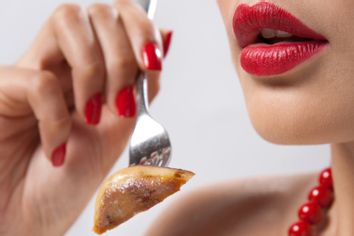
I reached and grabbed the delicate-looking thing and plopped it in my mouth. My taste buds exploded. I hope it’s not meat, I kept thinking, though I said nothing. My mouth was busy having an orgasm. 

 ”It’s foie gras,” he said, and I nodded. I don’t know French, but he knew I was vegetarian.

“Goose liver,” someone at the glossy black table added, helpfully.

“Sorry,” he said, and 13 years of denial crumbled as I shrugged and told myself that I was ready for it anyway. I liked it. I was not uptight. I was having the best sex of my life with this man. I was wearing a new dress.

I became vegetarian after watching a PETA film about pigs going to the slaughter. The soundtrack was “Carmina Burana.” I remember sitting cross-legged in our living room in Warsaw, Poland, in tears, arms and brain going numb from what I was seeing on our dinky black-and-white TV. By the time the film was over, I had made the decision that I was never going to eat meat again. Shortly after that I almost died from a form of anemia. My panicked family members reworked my menu, and I started putting on weight. We moved to a small town in Canada where I developed two ambitions: to be liked and to be skinny. I refused to eat with my family.

I achieved both of my ambitions. I became a thin girl who was a sensitive vegetarian. Certain boys flock to that type, and I carried my tortured self around, clad in black and cigarette smell, and if asked, talked about animals’ furry faces and innocent eyes. My diet was vodka, salads and defiance. I liked being looked at, but not touched. 

I love animals. As a child my chosen future profession was “Queen of Animals.” When I was six, I had a hysterical fit when I realized what chicken was made out of. So the predisposition had always been there. But my vegetarianism was not ideological, it was more like a corset: It kept me thin, and the thinness — in my mind — kept the boys close by, looking.

In my 20s, I moved to Toronto. I was interviewing a woman who worked with troubled teenage girls for a story for the school paper, when she said something along the lines of, “Some of the girls are vegetarian, but that’s just another name for an eating disorder.” The woman was overweight, single; I pitied her. At home I was having OK but infrequent sex with a beautiful elfin vegan who thought high heels were ridiculous. We ate lovely vegetarian meals because he was a good cook, but my body was hungry. 

I started dating an older man on the side. He was 14 years my senior and a man-about-town type. He showed me filthy fun. He picked out clothes for me and took me to nice restaurants and introduced me to smart and famous people. We did some drugs. He thought my vegetarianism was charming; he promised himself he’d never date a girl who was a smoker or a vegetarian, and I was both. But he was corrupting me quickly, and I wanted to be as corrupted as I could get — the corset of my vegetarianism was getting tighter and tighter. Meanwhile, I was wearing real corsets in the bedroom, while we had fantastic sex that involved leather, too. High heels. Sometimes he made food for me and called my plates “Grass ‘n’ Leaves.” 

Then came the day in September when I ate the foie gras. Later that night, I cried in the bathroom — I thought it was appropriate to at least shed a few tears over betraying my diet. I mewed something to my older man about having to go to the hospital to make sure I wouldn’t die from some kind of toxic shock. But the truth is, I wasn’t sad about eating meat, nor was I worried that anything was going to happen. I went home to my vegan and announced my contamination — and my departure.

I’ve always loved meat. As a vegetarian I was the first to try out the new veggie ham or veggie bacon, and I know that lots of vegetarians actively pursue meat-like flavors. I still eat mostly vegetarian and grocery shop like one out of habit, but I love a juicy, filthy steak once in a while and I could probably fill a small-sized body of water with the amount of seafood I’ve consumed since that September years ago.

I know that I used my vegetarianism to cater to my image of what was attractive. I now agree with the woman I interviewed years ago — it can be a form of an eating disorder. It’s what I had used to control my life and my love life. Yes, I know that I let a man control what I ate, that I essentially let him trick me into eating meat again. But damn, I did love that foie gras. Maybe I should have been angry at him, but I can’t be mad for being liberated from my unhealthy motivations. It was bound to happen sooner or later. and although I’m no longer that easily impressed 20-something, I love being good to myself and indulge in what the world has to offer. And that includes high heels, good sex and delicious, fatty foie gras.

Continue Reading Close
www.salon.com/writer/jowita_bydlowska/index.html