Kevin Douglas Grant

America’s global push for LGBT rights

The U.S. announces that foreign aid will be tied to protection of sexual minorities. It could make a big impact

  • more
    • All Share Services

America's global push for LGBT rightsSecretary of State Hillary Rodham Clinton during her speech on human rights issues in Geneva, Switzerland, Tuesday, Dec 6, 2011 (Credit: AP Photo/Anja Niedringhaus)
This article originally appeared on GlobalPost.

The U.S. took a groundbreaking step on global LGBT rights Tuesday, joining the UK in tying foreign aid to governments’ protection of sexual minorities, raising the stakes in the increasingly globalized battle over gay rights.

Global Post
The Obama administration’s sweeping initiative —which will potentially steer billions of dollars in U.S. aid toward countries and programs that protect rights while expanding efforts to protect LGBT refugees — was announced ahead of Human Rights Day. The timing reinforced a now-common refrain that has been spoken, chanted and shouted by rights activists around the world for decades: Gay rights equal human rights.

President Obama issued an official memorandum “directing all agencies engaged abroad to ensure that U.S. diplomacy and foreign assistance promote and protect the human rights of LGBT persons,” while Secretary of State Hillary Clinton made the American position clear to diplomats from around the world gathered at the United Nations in Geneva: “Gay rights are human rights, and human rights are gay rights.”

America overwhelmingly remains the world’s largest provider of official development assistance, and the UK is the fourth-largest. Although the U.S. State Department has worked diligently behind the scenes to promote LGBT rights and cultural awareness via its embassies around the world, the agency has never before made such an overt move. Together the two powers have created a united front in a battle that has rapidly escalated in the past 10 years.

From the Netherlands’ legalization of same-sex marriage in 2001 to India’s decriminalization of homosexuality in 2009, many of the world’s laws have changed even if longstanding cultural practices and religious beliefs have not.

For some LGBT rights supporters, the irony of Obama and Clinton’s message is that the U.S. is not typically considered one of the most progressive countries for legal protections of LGBT rights. Since 1996, the federal Defense of Marriage Act has defined marriage as a heterosexual union, and just six states grant same-sex marriage licenses.

And of course, anti-gay bullying remains a corrosive and sometimes fatal cancer on society, while many communities have saved no place at the table for the gay, the trangendered or the intersex. Political leaders like Rick Santorum have continued to frame gay relationships as threatening to American society.

At the same time, public support for gay rights is on the rise and polls at over 50 percent. The U.S. military ended its Don’t Ask, Don’t Tell policy in September, and even anti-gay activists have conceded that America is moving toward a society that protects its LGBT population.

In October, UK Prime Minister David Cameron told a meeting of Commonwealth leaders that future British aid would be contingent on gay rights protections, drawing livid responses from several African leaders seen as targets of Cameron’s remarks.

“This is an issue where we are pushing for movement,” Cameron said, just weeks after throwing his support behind a new LGBT equality group called The Kaleidoscope Trust. “We are prepared to put some money behind what we believe.”

Leaders of countries including Uganda, Nigeria and Zimbabwe — where homosexuality is widely considered “un-African” and remains illegal — called Cameron out on his proclamation.

Ugandan presidential adviser John Nagenda said that Ugandans, who have gained a global reputation for creating an anti-gay climate since 2009, were “tired of these lectures” and were not to be treated like “children.”

Zimbabwean President Robert Mugabe called Cameron “satanic,” an illustration of the religious undertones of the often hostile international debate. Christian fundamentalist groups from the U.S. have made powerful inroads to Africa in recent years, evangelizing a conservative brand of Christianity with a profoundly anti-gay posture. Meanwhile conservative Muslim and Jewish groups have led campaigns against LGBT rights in countries ranging from the United States to Saudi Arabia.

As Graeme Reid, director of the LGBT rights program at Human Rights Watch, wrote for GlobalPost’s “Rainbow Struggle” series in November, the battle lines are being redrawn on a global scale, tipping societies toward equality in some places while invoking backlash in others.

“Instead of a move towards decriminalization, we see some countries introducing new legislation or tightening up on existing legislation or implementing previously dormant laws,” Reid wrote. “Stricter laws are seen as a way of shoring up ‘traditional culture.’ Of course, the irony that most of the sodomy laws are a vestige of colonialism in the first place is often lost.”

As the U.S. and the UK grapple with their own past and present imperial legacies, the bilateral commitment of foreign aid to more LGBT-tolerant countries is sure to give momentum to the equality movement. But as in the U.S. where LGBT policy is often contradictory and social attitudes vary widely — or in Spain where gay marriage is legal but discrimination persists — official acts are only part of the story.

The global battle for gay rights

The fight between LGBT advocates and their better-funded, religiously motivated foes is coming to a head

  • more
    • All Share Services

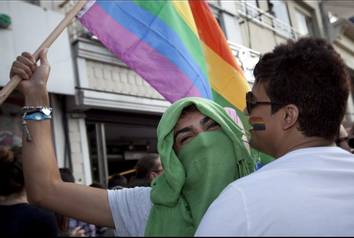
The global battle for gay rightsHolding a rainbow flag and dressed in hijab, an LGBT supporter makes a political statement at the Gay Pride March in Istanbul on June 19, 2011(Credit: Jodi Hilton/GlobalPost)

UNITED NATIONS — This June the United Nation Human Rights Council narrowly passed its first-ever resolution calling for universal gay rights with the support of more than 80 countries. It was an historic milestone, a global recognition that gay rights and human rights were finally synonymous, at least on paper, here in New York at the world body.

Global Post How these rights play out in the real world is a very different story, and it is the subject of this GlobalPost “Special Report” which will examine the rights of people who are gay, lesbian, bisexual and transgender (LGBT) through a series of reports over the next two months from every corner of the world.

In South Africa, for example, the very country that introduced the successful resolution, there is a domestic crisis of rampant gender-based violence. That violence includes a uniquely horrifying brutality known as “corrective rape” which is a targeted sexual attack against lesbians. The full extent of this disturbing phenomenon is not known, but human rights advocates have reported 10 cases per week in Cape Town alone.

And in response to the “Rainbow Nation’s” effort at the U.N., several African nations admonished it for allying with Western countries on homosexuality — often painted as non-native to Africa.

Such is the incongruous nature of what GlobalPost has dubbed “The Rainbow Struggle.” It is an international movement that has achieved enormous social and legal victories in the past 10 years — spanning from the Netherlands’ landmark gay marriage legalization in 2001 to the end of the U.S. military’s “Don’t Ask, Don’t Tell” policy in September. But it is a human rights movement facing a counter-movement for “traditional values” that is better funded and equally fervent, tending to see homosexuality not only as a threat to humanity but also humanity’s relationship with the divine.

The result is a global culture war steeped in religion and politics, and it is a battle that is now at a critical juncture.

One one hand, Christian anti-gay advocacy groups like Abiding Truth Ministries are relatively unknown in the United States but carry great weight in countries like Uganda, Latvia and Russia, where it has established outposts and partnered with local religious leaders.

Abiding Truth president Scott Lively and two American colleagues visited Uganda in March 2009, hosting a three-day event that demonized homosexual behavior as a threat the African family. Six months later, Ugandan parliamentarian David Bahati introduced what has been dubbed the “Kill the Gays Bill,” initially including a death sentence for gay sex acts. The bill is now on hold in Uganda’s parliament after a sustained international outcry against it.

But the message Abiding Truth’s Lively and his allies delivered is unequivocal: “Homosexuality is not a benign, morally neutral social phenomenon,” Lively argues. “It is an insidious and contagious form of sexual perversion condemned by God as an abomination.”

In the global struggle for gay rights, according to these activists, God is the LGBT movement’s greatest opponent. And in Lively’s opinion, gays are winning.

“The homosexual agenda represents an existential threat to Christian civilization and we’re in the final phase of the war, losing badly,” Lively believes.

But men like Jose Mantero, the Roman Catholic priest who was removed from the priesthood in 2002 shortly after becoming the first Spanish priest ever to come out as gay, disagrees wholeheartedly.

“I have seen the anguish that homophobic sermons can cause gay people who are perfectly good Christians,” Mantero says.

The divine opposition

In coming out, he confronted a hulking assembly of political and religious bodies — ranging from the Vatican, which oversees the world’s 1 billion Catholics, to the worldwide Anglican Communion, which presides over the churches of some 100 million Anglican — or Episcopal — followers, to the Organization of the Islamic Conference and various groupings of Orthodox Judaism.

These larger established religious organizations devote literally hundreds of millions of dollars annually to their mission. And from the pulpit in churches, mosques and synagogues, they promote their traditional view of religion which views homosexuality as a grave sin. In addition, there is a number of more active, evangelical American groups like the Exodus Global Alliance, which ministers to what it estimates as “155 million homosexuals who struggle with homosexuality.”

Working in different capacities with foreign leadership and the ground, they seek to influence policy and law in foreign nations by serving as experts on the dangers they associate with homosexuality, such as HIV/AIDS, the breakdown of the family unit and spiritual decay. As mainline Christian denominations argue about how to handle homosexuality, their more extreme brethren hold the banner high in denouncing it.

Key battlegrounds in the “Rainbow Struggle” include much of Africa, the Caribbean, Middle East and Eastern Europe. Although much of Western Europe, Asia, and the Americas have moved away from criminalization of homosexuality toward greater rights, countries like Iran, Uganda, Nigeria, Russia and Saudi Arabia are moving in the opposite direction.

Indeed, 76 countries still criminalize same-sex sexual activity, and it is punishable by death in five. In many of these places, police and military harassment and brutality are commonplace. Gays have few if any public places where they may socialize openly, particularly outside major cities. Government raids on gay venues persist, lengthy prison sentences handed down with regularity. In most countries, LGBT people are the most likely minority to fall victim to hate crimes.

A relatively nascent movement

On the other side of the fight is a formidable LGBT rights movement that has plugged itself into mobile technology at an accelerating rate, connecting demonstrations in Moscow to those in New York City and Buenos Aires, and sending representatives from city to city in a highly flexible operation. Entrenched organizations like Human Rights Watch and Amnesty International have helped globalize the battle, spotlighting cases of abuse against LGBT people and funneling resources toward efforts to change policy.

International activists like Lt. Dan Choi, the face of the successful movement to overturn the U.S. military’s “Don’t Ask, Don’t Tell” policy, Moscow Pride founder Nikolay Alexeyev and Australian gay rights campaigner Peter Tatchell have formed a loose but effective alliance, serving as international foot soldiers. Organizers in Cuba, Montenegro, Russia, China and the Czech Republic have hosted sanctioned gay pride parades for the first time over the past two years.

It is a highly decentralized movement, its leaders say, and its funding base pales in comparison to that of large religious activist groups like the American Family Association and the Family Research Council. Many participants in the global campaign to increase gay rights are self-funded while many participants in the counter-movement against gay rights are able to tap into larger reservoirs of funding from traditional churches and evangelical groups.

“If you take the budgets of the top 20 American LGBT organizations and combine them, it’s still less than Focus on the Family,” said Julie Dorf, senior advisor at the Council for Global Equality. The organization reports an annual budget around $100 million. “The right wing’s budget so far outweighs gay organizations that it’s amazing we make progress at all.”

And yet, she believes, the American gay rights movement is winning. Dorf cited May 2011, the first time that a majority of Americans said they favor legalizing gay marriage in a Gallup poll. And many LGBT rights advocates say the tide is turning even among American conservatives, who have gay friends and family members.

Mark Potok, director of the Intelligence Project at the Southern Poverty Law Center agrees with Dorf.

“Anti-gay ideas are losing currency in the U.S. — no question,” Potok said. “The religious right is losing the battle and the field is shrinking, but there is a huge open field in Africa and elsewhere.”

The larger struggle across Africa, Asia, Latin America and elsewhere is a huge territory for global gay rights’ groups to cover with limited resources. Surveying the international landscape of LGBT groups, Dorf said that the majority are less than 10 years old, composed mostly of volunteers, with budgets under $50,000 annually.

“It’s an extremely nascent movement,” she said, noting that a microscopic fraction of U.S. foreign development money — less than one one-hundredth of one percent — reaches LGBT rights groups around the world.

British Prime Minister David Cameron has emerged as one of several prominent leaders lending support for global gay rights.

In September he heralded the launch of Kaleidoscope Diversity Trust, established to lobby for LGBT rights in Africa and the Middle East.

And in August, ambassadors from 13 countries chastised the administration of Czech President Vaclav Klaus after he publicly criticized what was to be Prague’s first gay pride parade, calling it “a pressure action and a political demonstration of a world with deformed values.”

Since the inauguration of President Barack Obama, Dorf said, the U.S. State Department has become a vital ally to pro-rights interests, diligently working with its embassies to educate overseas populations about gay culture, help bring justice in cases of anti-gay hate crimes and lobby foreign governments to support resolutions like the one before the U.N. Human Rights Council in June.

“The non-headlines are the things I’m most excited about,” Dorf said of the behind-the-scenes diplomacy. “It’s not particularly sexy, but I’d say it’s a damn good use of taxpayer dollars.”

Globalizing the battle

Graeme Reid, LGBT rights director at Human Rights Watch, explains the urgency of the current moment: “Globalization has had paradoxical effects — on one had it has facilitated the gay movement and on the other provoked a backlash. New possibilities for communication and connectivity have given impetus to international solidarity. But globalization has also seen the growth of religious fundamentalisms. Many people feel that their traditional way of life is changing too rapidly, and LGBT people are often the scapegoats.”

Even in countries like Sweden, Spain and Argentina, three of the 10 countries worldwide that have legalized gay marriage, church-affiliated political parties have steeled themselves against recognition of any further LGBT rights. And in overwhelmingly Catholic Spain, where a progressive surge in 2004 swept the Socialist Workers’ Party into power — paving the way for gay marriage — the Church-affiliated Popular Party is poised to retake the majority and has promised to repeal the legislation.

Brazil, which enjoys a reputation as one of the world’s most gay-friendly countries, has itself encountered an evangelical Christian backlash against gay rights.

In schools across the country around the world, millions of young people suffer bullying and abuse for their sexual identities, kept in the closet or barraged with vitriol that would push them back in. The world’s largest religious bodies continue to cite scripture in excluding LGBT people from their communities. Few protections exist in any country for transexuals, and gay adoption is not an option in most of the world. And although six U.S. states offer marriage licenses to same-sex couples, 39 now explicitly prohibit it.

As former Army Lt. Dan Choi said a few weeks before the “Don’t Ask, Don’t Tell” repeal was set to take effect, “There’s still a lot that’s left undone. Our civil rights movement depends on this idea of publicly having integrity. So it’s very effective for the opposition to make it harder and harder for us to come out.”

(GlobalPost will be publishing stories from its Special Report, “The Rainbow Struggle: A global battle over gay rights” weekly in partnership with the Huffington Post between Oct. 3 and Nov. 30. Upcoming stories originate in South Africa, Turkey, Spain, China, Sweden and Argentina among others.)

Continue Reading Close

The making of Dan Choi

How the former army lieutenant went from the closet to the forefront of the gay rights movement

  • more
    • All Share Services

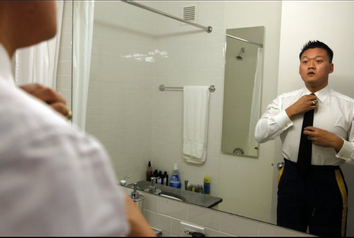
The making of Dan ChoiDan Choi gets dressed into his uniform in his Manhattan apartment

NEW YORK — When The Rachel Maddow Show came calling to discuss his public defiance of “Don’t Ask, Don’t Tell,” Lt. Dan Choi answered the call of duty for what would become an all-consuming public role as the face of change within the U.S. military.

On MSNBC’s Maddow Show, the fresh-faced Choi made his debut on national television with three powerful words which he spoke while staring directly into the camera: “I am gay.”

That sentence, stated publicly, broke Army regulations and immediately put the decorated Iraq war veteran’s job on the line. They were just three words, but they sparked an international media firestorm, leading Choi — living with his parents at the time — to perform 18-hour days filled with interviews, appearances and lobbying. They also galvanized a movement that Tuesday ended with the repeal of “Don’t Ask, Don’t Tell,” which like so many army regulations has its own acronym, DADT.

“I didn’t know if I could say no to anybody so I just did every interview,” Choi said of his first months as an activist.

He was using his father’s phone, who asked the newly minted superstar, “Are you turning my house into gay headquarters?”

Choi’s mission to find himself in California after returning from 18 months serving in Iraq had yielded an answer: activism.

“Everything came together,” he said. “Being a veteran, an Asian minority, an Arab linguist, gay, Christian. I always thought I needed to compartmentalize my life. When I became an activist, there was finally this coalescence of all of these identities. It was like a symphony.”

The Maddow Show was where he first played the first few notes of that symphony for an audience.

It was March 2009 and West Point’s LGBT support organization, Knights Out, had just been founded. Sue Fulton, a former Army captain, a West Point graduate and an openly gay woman, helped prepare him for the interview.

“Dan became a young man in the eye of the storm of ‘Don’t Ask, Don’t Tell,’” recalls Fulton. “From the get-go, he was charming and quick, exceptionally good at getting his message across.”

Knights Out’s very first press release was a declaration by more than 35 members, including Choi, outing themselves. He was booked on Maddow three days later.

A first love

But the journey to this point in fact began many months earlier when he first returned from Iraq and fell in love. He began to realize the could no longer live in the closet. He’d been lying to friends and family for years, constructing elaborate profiles of women he was supposedly dating. His Army buddies had no idea about his sexuality, and he liked that just fine.

“I was closeted the entire time. I never wanted to come out. In fact, I thought the military’s ‘Don’t Ask, Don’t Tell’ policy was a good thing for me because I could hide behind that.”

His new boyfriend introduced him to politics and LGBT activism. In 2008 Choi celebrated his first Valentine’s Day with a partner.

“I didn’t even know about Obama and ‘Don’t Ask, Don’t Tell,’” Choi recalls. “I voted for him because he was black. I wasn’t even that liberal in the military. I didn’t really have political views.”

But his time in Iraq began to turn Choi’s mind against the American war effort there. Corruption and mismanagement of the rebuilding process was rampant, and as a member of the Commanders Emergency Response Team (CERP), Choi himself had the authority to vet and authorize contracts with almost no oversight. He often paid cash.

“Every week I would fly from Green Zone to the ‘Triangle of Death’ area and then pass out money,” Choi explained, his ready smile on display. “I’d have a million dollars in hundred-dollar bills in my backpack. I was like, ‘Wow, I have more than my life is worth.’”

By May, two major forces in Choi’s life were waging war on his psyche. On one hand, he had a military career he was fully dedicated to. On the other hand, he had met the love of his life but most of his inner circle still didn’t know he was gay. So he started telling them.

“That was probably the hardest time,” Choi said. “Being in the military with a boyfriend that I wanted to marry. I thought, ‘How am I going to be able to keep being in the military this way?”

Choi’s life started to unravel. The twenty-something war veteran took to sleeping in his Jeep because his boyfriend — not out to his own parents — didn’t want to live together.

“I gave up my career, I gave up my Arabic use,” Choi said in his gentle, rapid tone, punctuated by hearty laughter. “I’m going through this horrible roller coaster of PTSD, I’m eating bananas and tuna fish every day. My hair is falling out, I’m pissing in a bottle, I’m going poop at the Starbucks.”

Seeking help, Choi scoured YouTube for insight from prominent gay authors like Dan Savage. He educated himself about anti-gay evangelicals like Pastor Rick Warren, who delivered the invocation at President Obama’s inauguration and had inflamed the gay community with condescending remarks about homosexuality. Choi entertained but ultimately declined lucrative offers from the private sector in Iraq. And finally, he broke it off with his boyfriend.

By the end of 2008, Choi was ready to take his biggest leap yet. He would go home to California and come out to his parents.

The early years

Daniel Choi was born in Anaheim, California to traditional, doting Korean parents, his father a Southern Baptist minister and mother a postpartum obstetric nurse.

His mother let him know at an early age that he was expected to marry “a nice Korean girl.” The family moved frequently to accommodate Mr. Choi’s missionary work and Dan dreamed of becoming a leader.

“I thought from an early age that I wanted to be an engaged citizen and show very publicly that I was willing to be a part of society, a sort of patriotic assimilation through the military, but still holding on to my Asian-ness,” Choi said. He ran the gamut of extracurricular activities: community service, Kiwanis, Rotary Club, Key Club.

He was inspired by Steven Spielberg’s World War II film “Saving Private Ryan” and decided he would enlist in the military.

“I was growing up and not having any Asian men on TV or role models in the community,” Choi says, riffing joke after joke about the way his mother tried to push him toward a life oriented around having children. An orphan of the Korean War, she didn’t support his enlistment.

“She didn’t want any of her sons dying in battle,” Choi recalls.

Choi moped around his family home during the last weeks of 2008, unsure about how to come out to his parents. In January, he did it.

“I finally just told my mom one morning. I said, ‘Will you love me? I have something I really want to tell you.’ And she said, ‘Of course I’ll love you,’” Choi recalls, his voice growing soft. “And I just said, ‘I’m gay.’ She said, ‘That’s not real but I love you anyway.’”

But that was not the final word. Choi lived at home for six months, trying to give them time to embrace his identity, to do some soul searching and to reassure them that he was alright.

“I wanted to start all over,” he said. “I was like, ‘Fuck this Army stuff that I had done. I just want to see what my purpose is.’”

Still, he says, his parents couldn’t bring themselves to truly accept that their son was gay.

A personal battle

But Choi’s work — and his strict ideology — has carried steep costs. He has not spoken to his parents for months.

“I told my mom: ‘If you won’t come to my gay wedding then I won’t come to your straight funeral. I’m doing this so you don’t die a homophobe.’” He elaborates: “That’s how you love someone. I can’t forgive someone when I’m not in a position to forgive. They have not acknowledged that they are wrong.”

Choi’s friends and confidants have often challenged him on his hard-line approach to activism, but he is not one to budge. He has also irritated a number of people within the LGBT rights movement with a combination of stubbornness and self-promotion. As a combat veteran considering reenlistment, Choi doesn’t have many friends in the anti-war community either. And both he and his critics agree that he has played the role of “attention whore” to further his cause.

“When people complain about Dan, I have to remind them, for good or for ill, there is no compromise in him,” says Fulton, adding that whatever ideological disagreements she may have with Choi, there is no question in her mind that DADT would not have been repealed without his work.

Given his approach, it is not too surprising when Choi says he plans to cancel his Social Security and remaining disability benefits, leaving himself without a good way to pay for treatment of his battlefield disabilities, which he says may include mild traumatic brain injury. He’s also declined to set up a legal defense fund.

“I want the government to force me to go to jail,” Choi insists. “I’m not going to let them take the easy way.”

Continue Reading Close