Lawrence Osborne
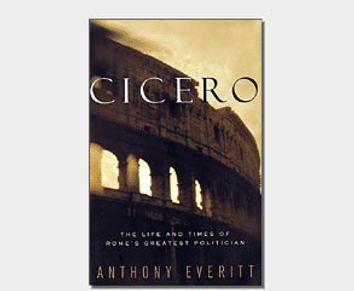
“Cicero” by Anthony Everitt
Ancient Rome's greatest politican and public speaker lived a life of intrigue, betrayal and violence -- and no American leader today can hold a candle to him.
The opening sequence of Ridley Scott’s “Gladiator” shows Rome from the air as if seen from a passing helicopter. The city is made to look like Manhattan, a forest of towers and canyon streets. The subliminal message is clear enough: If Rome was the Manhattan of the ancients, then we naturally enough are the Romans of today. Americans have always modeled themselves on the Romans. And the Romans — pragmatic, ruthless, patriotic, engineering-obsessed — certainly look like the Americans of antiquity, a comparison made only the more alluring by what we perceive to be their pathological violence, their taste for lurid spectacle and their imperial overreach. Moreover, didn’t the Romans face many of the same problems we do? If Rome seems cool to Americans, no wonder.
Obviously, the Romans gave us our most glamorous symbols of democracy and public virtue — our Senate and much of our municipal architecture — a style that is largely derived from the Roman Maison Carree in Nîmes, France, a building beloved by Thomas Jefferson. But whether we choose to admit it or not, what we also like about the Romans is their flashy talent for power, their imperial chutzpah. And, we might add, their ability to run a complex, multiethnic world society with consummate skill. Or perhaps, like the Romans themselves, we simply want to have it both ways, to be republican imperialists or imperialist republicans, and we see the Romans as being mired in much the same dilemma.
Anthony Everitt, in his suave and gripping biography of Cicero, the famed orator of the late republic, reminds us that things were certainly not simple for the Romans themselves. He never makes the Rome-America analogy explicit, but reading his book one cannot help making it anyway. For few Romans were more admired by early Americans than Marcus Tullius Cicero, the defender of the doomed republic. And few ancient careers strike such ominous chords with our own era.
Cicero’s life (he was born in 106 B.C., in Arpinum, and died in 43 B.C.) coincided with the last golden age of the Roman republic before it was dismantled and turned into an empire. A brilliant and sometimes scathing lawyer from a well-to-do provincial family, Cicero found himself unwillingly at the heart of a 100-year civil war that pitted the traditional oligarchy of the Senate — known as the optimates — against a new breed of fiery class-war demagogues known as populares. Like our left and right, Democrats and Republicans, both parties were drawn from much the same social class, attended the same dinner parties and often saw politics as a personal power trip. But they had two radically different visions of the Roman state. The optimates yearned for a moderate republican status quo; the radicals wanted reforms that would eventually lead to a completely different kind of state, one ruled by a purportedly enlightened despot.
Deeply influenced by Greek culture, Cicero was by temperament still firmly wedded to Roman tradition. Socially, he was among the “new men” of the first century B.C. — a host of provincial upstarts making legal and professional careers for themselves in the booming imperial city. This duality haunted him throughout his life, for Cicero could never find a comfortable home for himself in either political camp. To the optimates he was a suspect arriviste; to the populares he was a dangerous reactionary. Like many well-educated Romans, he had a passionate nostalgia for the countryside, for the simple life of the farm, most famously expressed in his “Conversations in Tusculum,” which celebrate his idyllic villa at Tusculum (near today’s Frascati just south of Rome). His attachment to conservatism was also aesthetic: Manners and taste, like decency and morality, were to him products of the Roman past.
But ironically (and fatally for them), Rome’s bungling and stubborn aristocrats could never admit such a provincial outsider into their ranks. He wasn’t a true Roman and he wasn’t a blue blood, though he did have connections by marriage to important families. This meant that the hungry young lawyer and public speaker making his way up the treacherous Roman political ladder had to do some nifty acrobatics. Was he on the “left” or the “right,” with the optimates or the populares? Often nobody could tell. One day he was a client of the conservative dictator Sulla and an enemy of the populist dictator Marius; the next he was enjoying dinner with populares sympathizers like the millionaire Crassus and his cunning protégé the young Julius Caesar. Moreover, Cicero was a vain, voluble, wisecracking sort of guy — in short, he would forgive much for a good joke and a good dinner.
It’s perhaps difficult for modern Americans to grasp that Roman democracy — that remarkable phenomenon of the ancient world, with its intricate system of constitutional checks and balances — was defended by aristocratic conservatives and eventually destroyed by men preaching reformist revolution. One such revolutionary was Catilina, Cicero’s mortal enemy.
Cicero had reached the heights of office when he became consul in 63 B.C. The two consuls were Rome’s supreme wielders of executive power, elected to serve jointly for one year. He was bursting with sometimes boastful pride and boundless energy (he had already proven his mettle as a scrupulously honest grain supply supervisor in Sicily). At this auspicious moment, the radical Catilina — a restless nobleman who had decided to undertake what he once called “the championship of the oppressed” — decided to stage a coup d’état. The assassination of Cicero was among his plans.
The young consul was therefore suddenly faced with a life or death crisis: Should he call on the Final Act (or senatus consultum ultimum), a fierce emergency powers provision, or try to buy Catilina off in some other way? The Final Act was somewhat akin to the U.S.A. PATRIOT Act currently being wielded by John Ashcroft in the war against terrorism; it gave a consul the right to modify and even suspend certain civil liberties. But faced with the Catilinarian Conspiracy, Cicero didn’t hesitate to use it. Roman politics, after all, was not a polite chess game: Losers frequently had their severed heads nailed to the Speaker’s Platform in the Forum, the very place where Cicero conducted his daily business.
At Cicero’s instigation, Catilina was easily crushed by a loyal army and the leading conspirators executed without trial. Cicero emerged as the hero of the hour. His mistake was to boast about it eloquently for the rest of his life, claiming raisons d’état. After his consulship, in fact, his career went through endless vagaries as he continued to make his name as a public speaker and lawyer. He wrote immensely popular compendiums of Greek philosophy that became one of the main transmitters of Greek thought to later centuries. He wrote bad poetry, self-aggrandizing propaganda tracts, nitric speeches against enemies, defenses of the constitution and many affectionately witty letters to his brother Quintus and his old friend Atticus in Athens.
Meanwhile, Cicero fretted. Had he used dictatorial methods to quell a would-be dictator? In fact, Catilina was only one in a long succession of charismatic populares. Another was the mercurial and violent Clodius, a wealthy member of the raffish circle of the poet Catullus. These discontented bohemians loathed and feared Cicero, and Clodius eventually waged a kind of crazy street war against him, hiring gangs to burn down his house on the Palatine Hill. Interestingly, the two sides also espoused opposing schools of rhetoric. Rather surprisingly, Catullus’ group favored the so-called Attic Style, which emphasized simplicity, purity of diction and plainness; Cicero, on the other hand, advocated a style that was florid, emotional and sometimes ridiculously histrionic — but far more demagogically potent, as his numerous successful lawsuits proved.
Rather like Weimar Germany in the 1920s, late republican Rome was a society where the street was an often lawless place. With no standing police force and troops forbidden to enter the city, Rome was frequently prostrate before the whims of political gangs. Cicero himself seems not to have understood how ineffective and self-deluding the republican government had become as it lurched blindly from crisis to crisis. Fundamentally, it had no answer to the intelligent (or even unintelligent) use of violence. The richer Rome became, the greater the temptation to seize power through force. To us, the struggles of this period have a slight Keystone Kops quality, with the warring parties brawling like saloon toughs in the Forum and frequently burning down the Senate House, but the consequences of such commotions were momentous — they affected an empire that ruled 100 million people, or a quarter of the world’s known population at the time.
Clodius was eventually murdered himself in just such an unseemly brawl, but after him came pretenders who were more cunning and better organized. Chief among these was Caesar himself. Caesar is an enigmatic figure, and an appealing one at that. Handsome, wily, charming, intelligent — something of an ancient JFK — Caesar made his name as a successful general in the conquest of Gaul (about which he wrote a much-admired history). He spurned the revolutionary antics of Catilina and Clodius, but clove to their underlying sympathies. His relations with Cicero were curious and cautious. Caesar, says Everitt, liked the easygoing and jocular orator and admired his intellect. They sent each other their books for mutual comment.
Caesar tried ceaselessly to co-opt Cicero to his cause, without success. In some ways, this was the central political relationship of Cicero’s life. (He had been invited to join Caesar’s First Triumvirate, the joint dictatorship set up in 60 B.C., but refused.) When Caesar was assassinated on the Ides of March in the year 44 B.C., the conspirator Marcus Junius Brutus famously cried out Cicero’s name as he proclaimed the reestablishment of the republic. But Cicero quickly fled the scene. His feelings remained ambivalent. Only at the very end of his life did his temperament harden as he realized that the republic was dying and that Caesar had indeed been its executioner. (Caesar had long realized, perhaps fatalistically, that the chaotic government overseen by the Senate could no longer administer a vast empire.)
Paradoxically, then, after a lifetime of political disappointments, Cicero’s greatest hour was also his last. In the final culminating act of the century-long civil war, the old orator finally nailed his colors to the disintegrating republic. Cassius and Brutus, the killers of Caesar, took the eastern half of the empire and faced off against Caesar’s heirs: his drunken henchman, Mark Antony, whom Cicero despised, and Caesar’s 18-year-old adopted son, the blond and icy-nerved Octavian, whom Cicero both rather admired and fully distrusted.
Antony and Octavian were destined to become uneasy allies, for both wanted to avenge Caesar’s death, but in fact they hated each other, and Cicero cleverly played them off against one another. Against Antony he waged a personal and political vendetta, writing 13 famous Philippics against him — a Philippic being a jeremiad modeled on the Athenian orator Demosthenes’ attacks on Philip the Great, whom Demosthenes portrayed as a tyrant. Antony was not amused.
After the republicans were crushed (Brutus and Cassius were later defeated at the Battle of Philippi in Greece and committed suicide), Antony extracted the ultimate revenge on the meddling old firebrand. For, despite all of Cicero’s oratorical conniving, military force — not to mention the force of outsize personalities demented with ambition — had brought 500 years of Roman democracy to an end. The new dictatorship (familiar to us from Shakespeare) was a Second Triumvirate formed by Octavian, Antony and a general of Caesar’s named Lepidus. It immediately declared hundreds of senators to be public enemies and put bounties on their heads. Unsurprisingly, one of them was Cicero himself.
Cicero’s final drama was a favorite subject of ancient historians, who on the whole were rather cool in their assessments. (They were writing under emperors, after all.) Fleeing from one of his country villas in a litter, Cicero was caught by the assassins in a wood and beheaded on the spot. The historians offer us a stirring vignette: the elderly statesman coolly sticking his head out from the litter so that his throat can be slit. As was customary, his head and severed hands were later nailed to the Speaker’s Platform and it is said that a vindictive noblewoman with a grudge named Pomponia pierced his dead tongue with hatpins. It was a grimly ironic end for someone who had made his career as a silver-tongued speaker on the Platform — though after Octavian finally seized total control, Cicero’s son Marcus had the satisfaction of pulling down all of Mark Antony’s statues. Could Cicero have ever predicted that Octavian, the 18-year-old boy he had once considered tutoring, would metamorphose into the Emperor Augustus, first engineer of the Roman Empire?
What is Cicero’s significance to us today? To the Middle Ages and the Renaissance he transmitted the ultimate work: himself. He gave to Europe the ideal of what could be called non-ideological man. Urbane, tolerant, humane, deeply learned and skeptical, Cicero is not only the anti-Catilina, he is also by extension hostile to all fanatics. What Cicero hated and feared was not only revolutionaries who were outright dictators (for the two words are always connected) but also what could be called the degeneration — that is, the personalizing — of political discourse itself.
This might seem strange praise for a man so adept at the ad hominem attack; but Cicero’s attacks were more often than not motivated by a serious moral concern: Whither the state? One wonders what he would make of today’s political TV chat shows, with their idiotically obvious partisan bigotry and their hysterically intolerant tone. One wonders, too, what he would make of our inability to write great speeches, and the fact that our commemoration at ground zero of the anniversary of the Sept. 11 attacks will feature readings of well-known American speeches, but nothing original drafted for this occasion alone. For the Romans, articulateness was a virtue in a politician because it revealed something deep in the latter’s mind; it’s not hard to guess what Cicero would think of a people who have chosen a president who can barely manage a rudimentary public speech. Eloquence was not something suspicious to them, as it often is with Americans. It was an outer sign of inner character. The republic, Cicero argued, rested on the quality of its words — it is in empires that words don’t matter.
Everitt underlines this point by ending his excellent book with a little anecdote. When the aging Emperor Augustus caught one of his grandsons secretly reading one of Cicero’s presumably banned books, the emperor gently took it from the boy, mused for a while and then ruefully commented: “An eloquent man, my child, an eloquent man, and a patriot.”
False goddess
Despite what believers in prehistoric matriarchy proclaim, women never ruled the Earth.
At the beginning of this skeptical investigation of feminist goddess movements, Cynthia Eller describes browsing through the magazine On the Issues. Inside she stumbled across an ad for a T-shirt emblazoned with the slogan “I survived five thousand years of patriarchy.” Eller, an independent scholar affiliated with Princeton University and author of “Living in the Lap of the Goddess: The Feminist Spirituality Movement in America,” was struck not only by the strident confidence of this announcement, but also by how precisely the number of years of male oppression had been counted, and how often she’d encountered this particular number before.
Continue Reading ClosePoison pen
The execution of writer Robert Brasillach for "intellectual crimes" during World War II raises questions we still don't know how to answer.
Robert Brasillach, the brilliant and pugnacious pro-fascist French novelist and critic, was shot by firing squad on Feb. 9, 1945, on the direct orders of Gen. Charles de Gaulle himself. The James Dean of French fascism, as historian Alice Kaplan calls Brasillach in her lucid and gripping new book “The Collaborator,” met a dismal fate that was shared by countless other collaborationists. But Brasillach’s death was different. As a former editor of the pro-German journal Je Suis Partout, the 35-year-old Brasillach was executed for intellectual rather than military or political crimes. The questions posed by Kaplan are still disturbing and poignant today, for Brasillach was essentially executed for what we would now call “hate speech.” “The issues are profound and irresolvable,” Kaplan writes at the end of her book. “Why was a writer punished for what happened in France between 1940 and 1945? Why this writer and not others? When are words as noxious as actions? Did Brasillach deserve to die for his words?”
Continue Reading CloseSkull wars
Native American activists battle scientists for bones that may prove they had white ancestors.
In his 1924 “Studies in Classic American Literature,” D.H. Lawrence noted that the American Indian was a baleful presence in the guilt-ridden American subconscious. “At present,” he wrote, “the demon of the place and the unappeased ghosts of the dead Indians act within the unconscious or under-conscious soul of the white American, causing the great American grouch, the Orestes-like frenzy of restlessness in the Yankee soul, the inner malaise which amounts to madness, sometimes.”
Continue Reading CloseAre you there, God?
The Templeton Foundation invests millions so scientists might prove that faith works. But their answers aren't what Sir John Templeton wants to hear.
Our culture views religion with a capitalist’s skepticism. In October 1983, Ronald Reagan leaned over to Tom Dine, the Israel lobby leader, and said: “You know, I turn back to your ancient prophets in the Old Testament and I find myself wondering if we’re the generation that’s going to see that come about. I don’t know if you’ve noticed any of those prophecies recently, but believe me, they certainly describe the times we’re going through.” The Cold War, in other words, was Gog and Armageddon all over again and as such its outcome could be accurately measured in the prophesies of the Good Book. The Jewish prophets worked like a weather forecast: gnomic but empirically shrewd.
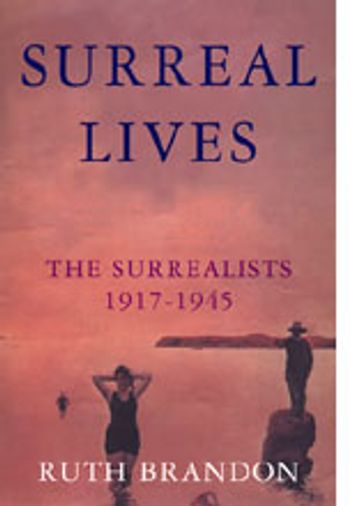
Continue Reading Close“Surreal Lives” by Ruth Brandon
A deliciously gossipy group biography of the surrealists.
Of all the 20th century’s art movements, surrealism has most obviously
percolated through to mass culture. Disney has recently announced that it will
re-use 18 seconds of original animation by Salvador Dalm from the ’40s, a time
when Dalm himself rather rashly hoped Disney films would internationalize his
“paranoiac-critical method.” But even the Disney of today poses little danger of
domesticating surrealism. Dalm himself wanted surrealism to pass into America’s
bloodstream like an “infekzious poizun” (as he spelled it), and indeed, with its
gallows humor and its cynical aggression, surrealism has become an invisibly
dispersed mental habit too ubiquitous to even notice.
Page 1 of 2 in Lawrence Osborne