Michael Mainville

From Russia with lies

Beneath a deepening web of conspiracy theories rests the enigma of poisoned ex-spy Alexander Litvinenko and some dark truths about Putin's regime.

  • more
    • All Share Services

From Russia with lies

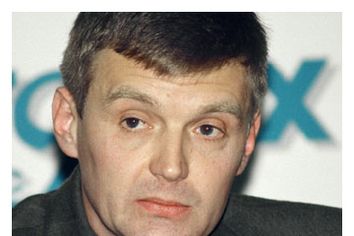
Alexander Litvinenko loved conspiracy theories. In exile in London, where he fled from Russia in 2000, Litvinenko would tell whoever would listen that his former employers at the KGB were involved in all kinds of cloak-and-dagger horrors.

The bombing of four Russian apartment buildings in 1999 that left hundreds dead; the Moscow theater siege that killed 129 people; the 2004 explosion on the Moscow metro that killed dozens of commuters — all the work of one of the KGB’s post-Soviet successors, the Federal Security Service (FSB), according to Litvinenko. He once contended that Osama bin Laden’s right-hand man, Ayman al-Zawahiri, was trained by the FSB in 1998 before mysteriously being released to organize attacks against the United States. Even last year’s controversy over the publication in a Danish newspaper of editorial cartoons depicting the Islamic prophet Mohammed, he claimed, was orchestrated by the FSB to punish Denmark for its refusal to extradite Chechen separatists.

None of it could ever be proved, of course, but Litvinenko knew that the secret to good conspiracy theories is that they feed on the absence of proof. And the more outlandish the claim, the harder it may be to disprove.

So it is with the circumstances of Litvinenko’s own death on Nov. 23 from radiation poisoning. From London to Moscow to Hamburg, Litvinenko’s killing has unleashed a storm of speculation that has grabbed the world’s attention for weeks and prompted talk of a new Cold War between Russia and the West. Political analysts here say that President Vladimir Putin’s increasingly authoritarian rule has undermined his credibility in denying any Kremlin involvement. Human rights activists, meanwhile, are charging that the flurry of Western media coverage has gotten Litvinenko’s profile largely wrong.

Nearly every day brings a new twist in the saga and another strand for the tangled web of conspiracy theories. A key witness in the case, Moscow businessman and former KGB agent Andrei Lugovoi, claimed Wednesday that Litvinenko was poisoned more than two weeks earlier than is widely believed. Lugovoi told the tabloid Moskovsky Komsomolets that he and Litvinenko were contaminated on Oct. 16 during a visit to a London-based security firm, where traces of radiation were later found by British police. The two did not visit the firm again on Nov. 1, the date that Litvinenko is known to have fallen ill, so they could not have been exposed to the radiation on that day, said Lugovoi, who is undergoing radiation tests himself in a Moscow clinic.

Another of Litvinenko’s associates, Dmitry Kovtun, also claimed Wednesday that he was contaminated with radiation during meetings with Litvinenko and Lugovoi in London back in mid-October. German police say they found traces of radiation in various locations visited by Kovtun before he traveled to London on Nov. 1. Both men have been interviewed by British detectives in Moscow and have denied any involvement in Litvinenko’s poisoning.

Litvinenko conveyed that he had no doubt who was behind his poisoning. In a deathbed statement, he claimed his killing had been ordered by Putin, himself a former head of the FSB. “You may succeed in silencing one man, but the howl of protest from around the world, Mr. Putin, will reverberate in your ears for the rest of your life. May God forgive you for what you have done,” the statement read.

Russian officials have scornfully denied any involvement, pointing out that there is not a shred of evidence connecting Litvinenko’s death to the Kremlin. Still, the accusation alone was enough to prompt widespread condemnation of Putin in the West. “The fatal poisoning of Alexander Litvinenko in London, along with all the other suspicious murders and attempted murders of Kremlin critics in recent months, poses fundamental questions about Russia, and how the West should treat it,” began a New York Times editorial on Dec. 4.

“In the past couple of years there’s been a growing sense in the West that Russian democracy is in decline,” said Masha Lipman, a political analyst with the Moscow Carnegie Center. “Russia’s image, which wasn’t great even prior to this, is getting worse.”

Why would Putin want Litvinenko dead? His supporters say Litvinenko was a thorn in the Kremlin’s side — a dissident whistleblower and determined human-rights campaigner.

But in Moscow, human-rights campaigners have been dismayed in recent weeks to see how Litvinenko has been portrayed in many Western media reports. While he was no doubt a critic of Putin, he was a marginal one whose motives and methods were never entirely clear.

“Of course it’s a pity that he has died, but the idea that Litvinenko was a dissident and a human-rights campaigner is ludicrous,” said Lyudmila Alexeyeva, the doyen of human-rights activists in Russia and head of the Moscow Helsinki Group.

Litvinenko’s supporters have also attempted to link his death with the killing of Anna Politkovskaya, a crusading Russian journalist and prominent Putin critic. Politkovskaya was gunned down outside her Moscow apartment in October as she was preparing to publish another in a long series of articles outlining human-rights abuses by pro-Kremlin forces in Chechnya. After his poisoning, Litvinenko claimed he had been investigating her murder and had evidence linking her death to Putin.

But Politkovskaya’s colleagues at the newspaper Novaya Gazeta laughed off those claims as ridiculous. “It’s nonsense that Litvinenko was investigating Anna Politkovskaya’s death before he was poisoned. How could he be doing it in London?” said Roman Shleinov, Novaya Gazeta’s chief investigative reporter. “Litvinenko had nothing to do with Politkovskaya. She herself was very skeptical about his activities.”

Many long-standing critics of Putin doubt he would have personally ordered Litvinenko’s killing. “It just doesn’t make sense. There was no reason to kill him,” said Boris Kagarlitsky, a Soviet-era dissident who is now a political analyst in Moscow. As subsequent events have shown, Litvinenko has been able to inflict far more damage to the Kremlin’s standing in death than he ever did in life.

Still, Kagarlitsky conceded it is possible that rogue elements in Russia’s security services, which have grown increasingly influential under Putin, were behind the poisoning. “Litvinenko was seen as the worst kind of traitor in those circles,” he said. As Putin’s final term approaches its end in 2008, his control over various factions in the Kremlin is wavering, Kagarlitsky said. Under less constraint, forces from the security services — known as the Siloviki, from the Russian word for strength — may be feeling freer to flex their muscle and settle old scores. Or, following the spiral of conspiracy theory even further, perhaps a different faction could have ordered Litvinenko’s killing in order to discredit and weaken the Siloviki.

Beyond the “rogue elements” theories, pro-Kremlin media outlets in Russia have been pushing a slew of alternative theories, most of them connected with the murky world of London’s Russian expatriate community. Much to the Kremlin’s frustration, London has become the preferred home of prominent Russian exiles since Putin’s rise to power. Among them are the business tycoon Boris Berezovksy, a sponsor of Litvinenko’s, and Akhmed Zakayev, a spokesman for Chechnya’s rebel separatists who was Litvinenko’s next-door neighbor.

Many in Moscow have pointed the finger at Berezovsky. Known as the “godfather of the Kremlin” under former President Boris Yeltsin, Berezovsky supported Putin during his first run for the presidency, but later turned against him. Berezovksy’s critics say the oligarch rebelled after Putin refused to be his puppet and that Berezovsky spends much of his vast fortune on scheming against his former ally.

“This is all part of a plot by Berezovsky to damage President Putin and ruin Russia’s reputation internationally,” a former KGB agent in Moscow said in a phone interview this week, speaking on condition of anonymity.

Berezovsky has denied any involvement, and there is no proof linking him to the poisoning.

There are other theories swirling inside Russia, some of them particularly outlandish. Some here have speculated that Litvinenko may have poisoned himself in order to place the blame on Putin. Others say that he was involved in smuggling radioactive materials. Russian television has floated the theory that Litvinenko may have been exposed to deadly radiation while working in an underground laboratory with Chechen rebels in London to develop a nuclear “dirty bomb” — which, of course, plays well for the Kremlin’s own proclaimed war against terrorists.

After initially rushing to condemn Putin for the killing, many in London have adopted a more careful tone in recent days. But regardless of who killed Litvinenko, Putin’s critics in Moscow say he only has himself to blame if many believe he is responsible.

Since coming to power in 2000, Putin has overseen the steady deterioration of democratic rights and civil liberties in Russia. By rewriting laws, his government has canceled direct elections for regional governors and turned the Russian Parliament into a rubber stamp. All of the country’s national television networks and prominent newspapers have come under the control of the Kremlin or of Kremlin-friendly businessmen. Government critics have been persecuted, jailed and, in some cases, killed. The murders of 13 journalists, including Politkovskaya, remain unsolved. A new law, decried in the West, has imposed tight controls on civic groups and other nongovernmental organizations. In Chechnya, activists continue to document widespread cases of torture, kidnappings and murder by pro-Moscow forces.

“The fact that so many people in the West were ready to accept theories [of Kremlin involvement] that are unsubstantiated at this point shows how low Russia’s reputation has fallen,” said Lipman of the Moscow Carnegie Center.

Of course, much of the interest in Litvinenko’s case derives from the dramatic details of his death and life. After being hospitalized with an unidentified illness on Nov. 3, Litvinenko’s health quickly declined, his hair falling out and his body shriveling. Eventually, doctors discovered that he had been contaminated with polonium 210, a rare radioactive isotope, traces of which have since been found at dozens of locations in London, Moscow and Germany. Even his funeral was clouded in mystery, as an imam interrupted the proceedings to perform Islamic rites. Several friends said Litvinenko had converted to Islam shortly before his death, although others denied that any conversion had taken place.

Litvinenko first rose to prominence during a press conference in 1998, when he claimed that he had been ordered to kill Berezovsky, whom he had previously befriended while investigating an attack on the tycoon as a member of the FSB’s organized crime unit. Litvinenko was subsequently arrested and faced a series of criminal trials before fleeing to London with his family in 2000. There he was reunited with Berezovsky, who had been granted political asylum in Britain.

From London, where he lived a comfortable suburban life partly financed by Berezovsky, Litvinenko spoke out often against his former colleagues in the FSB. But the international press largely ignored his accusations. In a profile of Litvinenko written last year, the Times of London said that “his revelations have turned out to be a bit of a damp squib.”

The media’s subsequent obsession with the twists and turns of Litvinenko’s case has discouraged many human-rights activists and dissidents in Moscow. The mystery surrounding his death has not only overshadowed Politkovskaya’s killing, but has also received more coverage than any other story out of Russia this year.

“Not that his death wasn’t serious and shouldn’t be investigated,” said Allison Gill, the director of the Moscow office of Human Rights Watch. “And of course everyone is fascinated because it’s like a spy novel,” she said. “But what about all the human rights abuses in Russia that are being ignored? Why isn’t the international press corps talking about Chechnya, where people are dying and suffering every day?”

The silencing of Anna

Russia's great journalist was gunned down by killers who may have been contracted to snuff out her investigation of government torture.

  • more
    • All Share Services

The silencing of Anna

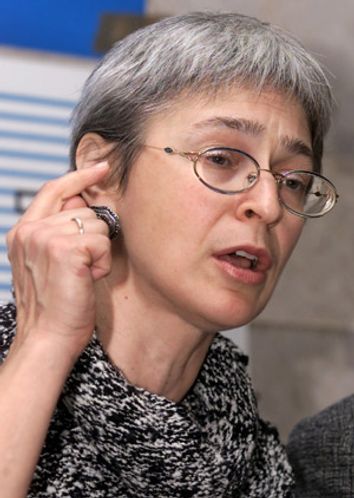
On the cold, grey afternoon of Oct. 7, a modest Lada car loaded with groceries pulled up outside a central Moscow apartment building. An elegant figure with steel-grey hair and large glasses emerged, shopping bags in hand. Anna Politkovskaya, Russia’s most dogged investigative journalist, was facing a deadline and planning to finish her latest story by the next day. On her desk were photographs and notes about civilians who had been abducted by pro-Kremlin forces in Chechnya and tortured into confessing to crimes they had not committed.

Politkovskaya must not have noticed the thin man in dark clothes and the young woman who, according to surveillance tapes, had been following her in the supermarket. Her groceries were too much to carry all at once, so she brought a few bags to her apartment and took the elevator down to fetch the rest. When the elevator doors opened, the man from the supermarket was standing before her, a silencer-equipped IZH pistol in his hand. The first two shots hit Politkovskaya in the chest, the third in the shoulder. By the time her killer fired a final shot into her skull, Politkovskaya, 48, and a mother of two, was already dead. The pistol, its serial number filed off, was dropped next to her body.

Contract-style killings of prominent figures are hardly rare in Russia. Only a few weeks before Politkovskaya’s murder, Andrei Kozlov, a Central Bank official who had spearheaded a crusade against money laundering, was also gunned down in Moscow. According to the Committee to Protect Journalists, Politkovskaya was the 13th reporter to be assassinated since President Vladimir Putin came to power.

Yet Politkovskaya’s killing still came as a shock. She had seemed invincible, facing down repeated threats and surviving an alleged poisoning in 2004 to report on what she called Russia’s “dirty war” in Chechnya. For years, she had courageously exposed human-rights abuses in Russia and particularly in the North Caucasus region that includes Chechnya, making frequent trips to the war-torn area. She wrote, often in harrowing detail, of topics that have become off-limits for nearly all other journalists in Russia and broke the biggest taboo of all by criticizing Putin himself. For her last, unfinished piece she’d been investigating the systematic torture of prisoners in what Russia has termed its own war on terror in Chechnya.

“She was incredibly brave. Much more brave than many, many machos in armored Jeeps surrounded by bodyguards,” her newspaper, the biweekly Novaya Gazeta, wrote in a special issue published after her death. “She took any injustice, regardless of whom it involved, as a personal enemy.”

For many of her colleagues, Politkovskaya’s prior survival had served as inspiration — evidence that despite increasing pressure on independent media by the Putin government, there was still some room in Russia for honest, critical reporting.

“There is almost no investigative journalism left in Russia and I think that a lot of people will be scared,” Alexei Venediktov, the editor in chief of Ekho Moskvy, Russia’s last independent radio station, told reporters outside Politkovskaya’s funeral in Moscow on Tuesday. “Many of my colleagues will be afraid when entering their houses,” he said. “They will constantly be looking over their shoulders.” Venediktov had already overheard reporters in the corridors of his station saying they should steer clear of reporting on Chechnya.

Novaya Gazeta on Thursday printed an unfinished version of the story Politkovskaya had been working on the day she was killed. Like most of her work, it focused on human-rights abuses in Russia’s southern province of Chechnya, where tens of thousands have died during two Kremlin campaigns to crush rebel separatists. The article described the alleged torture of a young Chechen man by security forces loyal to Ramzan Kadyrov, the pro-Kremlin prime minister of Chechnya. Kadyrov was a frequent target of Politkovskaya’s work. She wrote in the piece that brutal torture was being widely used to extract false confessions from innocent civilians so that the pro-Moscow Chechen government could appear to be capturing rebel fighters. Kadyrov’s forces, she said, were responsible for “a conveyor belt of organized confessions” aimed at “baking criminal cases like pancakes.”

The story included written testimony from a Chechen man named Beslan Gadayev who had been extradited from Ukraine and handed over to law enforcement officers in the Chechen capital, Grozny. Asked whether he’d killed two men in Chechnya, Gadayev swore that he had not.

“They said ‘Yes, you did kill them.’ I denied it again and then they started beating me,” Politkovskaya quoted him as saying. He was struck twice in the face, handcuffed and suspended from a pipe between two filing cabinets. “Then they attached wires to my little fingers,” Gadayev continued. “In about two seconds I felt electrical shocks. At the same time, they were beating me all over with rubber truncheons. I couldn’t stand it anymore and I started to scream, calling to God Almighty and begging them to stop. To shut me up they put a black plastic bag over my head.” Despite repeated beatings that day, Gadayev refused to confess.

The following day, a plainclothes officer walked into his cell and said that journalists were waiting for him outside. “He said that I would have to confess to three murders and an armed robbery, otherwise they’d repeat the whole thing again and this time rape me as well. So I agreed,” he said. “After my interview with the journalists they forced me, again threatening torture, to testify that all of my injuries from the beatings had been incurred when I tried to escape.” Gadayev remained in a Chechen prison awaiting trial, Politkovskaya wrote.

Along with fragments of Politkovskaya’s snuffed-out story, Novaya Gazeta published grainy photographs taken from video footage obtained by Politkovskaya that the paper said showed Chechen security forces beating two young men, apparently to death. The photos showed the head and torso of a man lying in a pool of blood, a man’s face covered in blood and a body slumped over with a knife sticking from the side of its head. The pictures were accompanied by a transcript of the audio from the video, in which the men’s torturers taunted their victims about how hard they were to kill.

The newspaper said Politkovskaya was planning a second report to accompany the video but was killed before she could write it. “It’s a shame she wasn’t able to finish everything she was working on. She was so committed to her job. No one will ever be able to replace her,” said Vitaly Yaroshevsky, the paper’s deputy editor.

As part of their investigation into her killing, police seized documents from Politkovskaya’s home and office, as well as her computer, leaving her editors with no way of knowing how much work she’d left unfinished.

Born and raised in New York, where her Ukrainian parents were U.N. diplomats, Politkovskaya was a product of the Soviet elite. After the collapse of the Soviet Union she could have, like many of her generation, used her connections to build a comfortable lifestyle. Instead, she threw herself into independent journalism, ending up at Novaya Gazeta in 1999 — just in time for the second Chechen war. By her own admission, she became obsessed with exposing the killings, torture and beatings of civilians by Russian soldiers in Chechnya. She wrote two books on the conflict, “A Dirty War: A Russian Reporter in Chechnya” and “A Small Corner of Hell: Dispatches From Chechnya.”

She made no secret of her contempt for Kadyrov or for Putin, and critics in Russia frequently accused her of lacking objectivity. In “Putin’s Russia,” a highly critical political biography of the president published in 2004, she accused Putin of failing to shake off his past as a KGB agent in East Germany. “He persists in crushing liberty just as he did earlier in his career,” she wrote in the book.

Politkovskaya won numerous international awards, but as she gained prominence abroad, she was increasingly marginalized at home. There was clearly an appetite for her kind of reporting — in the last three years Novaya Gazeta’s circulation has risen from 130,000 to 170,000 copies, according to staff at the paper. But in a country of 140 million spread across 11 time zones, the paper’s impact was minimal. More than 80 percent of Russians get their news from national television networks — all of which have come under Kremlin control in the past five years. Prominent national newspapers, such as the venerable daily Izvestia, have also been scooped up by state-controlled companies or businessmen with close links to the Kremlin. And in the state-friendly media, Politkovskaya was persona non grata.

“It’s absurd. They’ll only show her on television now that she’s dead and can’t say anything,” said Oleg Panfilov, the head of Russia’s Center for Extreme Journalism, a press-rights watchdog.

There has been no shortage of speculation about who might have wanted her dead. Novaya Gazeta, which is offering a reward of almost a million dollars for information about the shooting, has written that it believes her murder was either revenge by Kadyrov, or an attempt to discredit him. Kadyrov has denied any involvement, saying on state television: “I do not kill women and have never killed women.”

Politkovskaya’s name was also on numerous lists of “enemies of the state” published on the Internet by ultra-nationalists angered by her support of Chechens. The pro-Kremlin media have been pushing a theory that she was killed in an attempt by exiled enemies of Putin to discredit Russia internationally and provoke instability.

While calling Politkovskaya’s killing “a crime of loathsome brutality,” Putin himself has backed that hypothesis. “We have information, and it is reliable, that many people hiding from Russian justice have long been nurturing the idea of sacrificing somebody in order to create a wave of anti-Russian feeling in the world,” Putin said on Tuesday during a trip to Germany.

According to Reuters, Putin had promised on Monday to “take every step to investigate objectively the tragic death” of Politkovskaya. A Kremlin spokesman said Putin made that promise in a telephone conversation with President Bush.

Few expect any of the theories of her death will ever be proven right or wrong, or that Politkovskaya’s killers will be brought to justice. Of all the investigations into high-profile slayings of Russian journalists in recent years, not one has resulted in a conviction.

“The Russian legal system has so far not been capable of dealing with these cases,” said Richard Behar, a New York journalist who leads Project Klebnikov, an alliance of reporters investigating the July 2004 murder in Moscow of Paul Klebnikov, the American-born editor of the Russian edition of Forbes. Two ethnic Chechens accused of carrying out Klebnikov’s murder were acquitted earlier this year and the official investigation into his killing has stalled.

Behar said Western governments, and the Western media, bear some of the blame for failing to highlight the conditions in Russia that allow journalists to be killed with impunity. “I feel like we’re all responsible,” he said. “We haven’t done enough to shine a light on the filth and corruption in Russia that allows journalists to be knocked off, one after another.”

Continue Reading Close