Rahna Reiko Rizzuto
The pain behind my mother’s flawless facade
She was a housewife so perfect I thought I could never live up to her example. Then I realized how she had suffered
You’ve heard it before: “I don’t want to be my mother.” But for most of my life, I refused to have children because I couldn’t live up to the perfection that my mother was to me.
My mother was always there. She was a 1950s housewife, living in the ’60s and ’70s. Whatever my siblings and I needed, she gave: hand-sewn prom dresses; homemade Christmas ornaments; she pulled up a stool and offered step-by-step advice (through the locked bathroom door I refused to open for, oh, an hour) about how to insert my first tampon. When I confessed to her, as a child, that I had stolen candy bars from a local store, she helped me believe life could go on and be righted, and it was that safety, that lying together in my bed, that ensured I would never steal anything again. When I was 15, and broke my arm falling off a runaway horse, careening straight downhill behind my house in the rain, I didn’t cry — it didn’t even hurt — until I laid eyes on my mother.
She was also the mother my friends wanted advice from; many of them didn’t have their own parents handy since they were away at boarding school, but she was more than a convenient replacement. She never judged anyone, no matter what they admitted to her. Despite the fact that I had two siblings and a father, I believed that her life was, entirely and exclusively, devoted to me.
I could not live up to her example. I couldn’t give my life over so completely to the need — the greed — of little children. Children would want peanut butter in the middle of the night and scream until it was either them or me flying out the window. It wouldn’t be their fault — they were children, after all, and they must have been modeled on me, for who else’s childhood did I know so intimately? — but that didn’t mean I could handle it, nor that I should want to. In my early 30s, I had finally created my life with my husband exactly as I wanted it. And even though my mother laughed at me and told me, “Life changes. That’s what living is. It won’t stay the same even if you want it to,” I didn’t believe her.
But my husband wanted children. He convinced me that my fears of being taken over and subsumed by small humans might be just that: only fears. My mother also seemed to be imparting a coded wisdom when she counseled me to have kids: “I would hate to see you miss out,” she often told me. It was unfathomable, this thing she thought I would miss, but also, in the end, intriguing. I knew, since my mother had always been there for me and we still spoke on the phone once a week even though we lived across the country, that she would not leave me to grapple with it alone. But just when I agreed to motherhood and gave my own mother, gratefully, back to herself to play tennis, travel the world or do whatever I believed she might want to do now that I was no longer a child, we began to lose her.
She began a long, slow, early slide into dementia.
My mother was too ill to help me negotiate my own motherhood. She couldn’t warn me when I threw myself into it, losing myself just as I had worried I would, though more happily. Then I went to Japan, living apart from my husband and two children for four months, and when they arrived with their happy, shrieking preschool energy to join me, I found myself living the nightmares I had been afraid of: my little boys standing on their seats in the shinkansen from Tokyo to Hiroshima, bouncing up and down, singing the soundtrack from “Shrek” at the top of their lungs and throwing food as polite Japanese travelers left their assigned seats to get away. I was without words in a foreign country and an uncharted space, but at least I only stared out the window; I did not launch myself out of it.
I missed my mother the most when my marriage to my childhood sweetheart failed and I had to chart my own path as a non-custodial mother. Then, I became her antithesis. I moved down the block, where there are no role models for motherhood. When my sons come home from school, they come to me every other day and we spend hours of quality time together, but I do not tuck them in at night or hound them to brush their teeth in the morning. In that, I am only a part-time mother — not even a poor imitation of what she showed me a mother should be. But I have held onto her gift to me — the rock solid love she protected me with — and that’s what I give, every day, to my children. Navigating with the home cooking, home haircuts and the long, cuddled talks on the sofa that were my inheritance, I am carrying my children through divorce with the same blinders that convinced me, as a child, that I was my mother’s greatest priority. I thought I would have to work twice as hard to make up for half the time, but it turns out that love cannot be divided or multiplied. It either is or it isn’t.
My mother died a few months ago, just before Thanksgiving. After she was gone, she gave me her greatest gift. Or rather, my father did: He told me who my mother was.
She struggled, he told me.
As a young bride and mother, barely 20 when I was born, she wanted to see the world, but instead she found herself suffocating in the roles of mother, wife, sister, daughter. Our nuclear family moved to New England, where it got worse: There were many winter days when she gave up trying to leave the house entirely because as soon as she finally got three toddlers into their snow clothes, one of us would have to pee. She spent her days alone with us, and even ate with us alone because my father had to supervise the dining room at the boarding school where he taught. She tried, and failed, and kept trying to find herself; my father recounted a litany of her attempts: correspondence course, school plays, ceramics, weaving. I remember these: my mother’s hobbies. I remember the floor loom she had when we were older, and the wall hangings woven with driftwood came to hang on every wall. The palm-size milk and sugar bowls she hand-pinched and glazed that I still have in my cupboard did not save her. Nothing helped, until we were finally all in school and she began writing for the local newspaper.
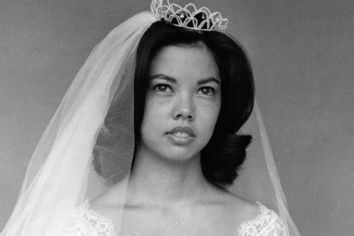
I have never been happier than I was when my father revealed that we depressed my mother and suffocated her. She was not the embodiment of the myth of the perfect mother I failed to be. In photographs new and old, people always comment on how alike my mother and I are and now, more than ever, I can see the resemblance. She did the best she could, and if I could wish for more happiness for her in her early motherhood, she has shown me that you don’t even have to like your children every minute to love them absolutely.
Why I left my children
My husband is the one who wanted kids. But I learned I didn't have to live with them to be a good mother
(Credit: Boylan Imaging) In 2001, 16 days after my youngest son’s third birthday, I walked out the door of my Brooklyn, N.Y., brownstone with one piece of luggage. I was leaving my family. Two sons, age 5 and 3, and my childhood-sweetheart husband, my partner for 20 years.
I had been awarded a grant to live in Japan for six months to interview the survivors of the atomic bomb. It was an honor that my husband had encouraged me to apply for, and we were in complete agreement, in fact he insisted, that I should go. The question was not how he and the kids would manage — he had plenty of help from a loving caretaker who had become part of our family, and from actual blood relations living down the block and flying in from halfway around the world. The wild card was me: How would I do, living in a foreign country where I did not even speak the language, living on my own for the first time ever in my 37-year-old life?
Continue Reading CloseBreaking the silence
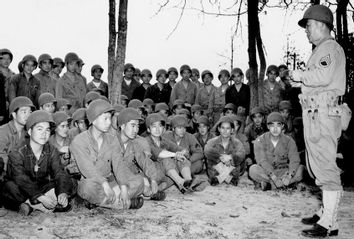
It is time to tell the secrets and share the pain of Japanese internment.
Recently I did a Web search for “the Day of Remembrance” and got 13,000 pages on topics ranging from the Holocaust and poppies in Austria to John Lennon, Larry King and sudden infant death syndrome. And since I believe the Internet is coming to resemble a map of our collective human brain — with its errant thoughts, expired links and resonant convictions — I found it very telling that I couldn’t find what I was looking for. I wanted to know what was being planned for Saturday — which will be only the third time that we, as a nation, have set aside a day to remember the internment of 120,000 Japanese-Americans during World War II.
Continue Reading CloseEric: Hold your breath, 1946
An excerpt from "Why She Left Us."
Eric’s heart is going to burst. His heart is holding all his breath. Except, his cheeks are holding some, and more floats across his eyes. The cars outside keep passing, vague and dizzy through the parlor window. Eric’s head is light now.
He has to let it go.
His breath breaks out, pulling his lungs with it until he can gobble another one. He presses his small hands to his mouth to contain it this time. Last night, when he lay in bed, he chose this spot on the otherwise slumped-over couch; it was the best place to watch the moving picture outside the heavy curtains. Now, his nose near the glass, he is close enough to feel the street sounds zoom through him.
Continue Reading Close