Steve Vineberg

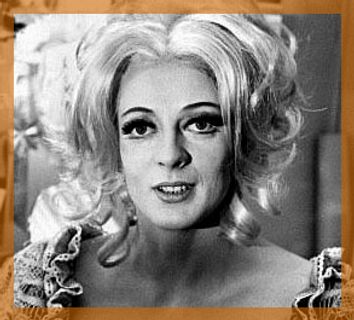
Maggie Smith

One of today's most gifted and venerable actresses, she can turn the tiniest role into the most memorable corner of a movie.

  • more
    • All Share Services

Maggie Smith

The etchings of style in a Maggie Smith performance are unmistakable. First observe the face, with its sharp, art-deco angles, which she tends to stretch into a long rectangle to chart psychic damage, the lines creased as if with a palette knife, the lips pressed taut, elongating the skin between her lips and her nose and lending it a moneyed air. She can alter the shape of her luminous nut-brown eyes to italicize a word or a phrase. Her string-bean figure is Modigliani-like in some settings, meager and scarecrowlike in others. In comic roles, her wire-drawn body becomes a mannequin for wondrous costumes, especially hats. Her arms paint the air in broad waves of expressive color, and as she swivels her frame around, usually in counterpoint to her line readings, she does so many witty things with her rubbery wrists that they’re almost always the first thing you focus on when she walks onstage or appears on-screen. (Pauline Kael once dubbed her “Our Lady of the Wrists.”)

But Smith’s chief glory is her vocal prowess. She turns nasality into a virtue, whipping it up into a kind of mock-aristocratic fog, and her buzzing sibilance leaves a silvery trail through her lines — sometimes suggesting a man in expert drag working a sly parody on femininity. Her voice can be plush or glassy, or break up into little glittering pebbles; she can pull hard on the syllables as if they were taffy or fold her voice into paper-thin layers or fly into a startlingly high, catfight shriek or an abandoned whine. She takes pauses at odd times and then sprints through the punctuation to collapse over the finish line in a kind of neurotic exhaustion. She can convert a line into a trademark stutter without actually changing the words.

To American audiences she is best known for her Oscar-winning performances in the 1969 “The Prime of Miss Jean Brodie” — which made her a star on this side of the Atlantic — and in the 1978 film of Neil Simon’s “California Suite,” as well as for a series of character parts in both British and Hollywood pictures. Your first encounter with Smith may have been in one of the all-star, lushly dressed mysteries she flits through, “Death on the Nile” and “Evil Under the Sun,” where she elevates Agatha Christie to the high-comedy plane. Or it may have been as Charlotte Bartlett, the fussy cousin invited to chaperone Helena Bonham Carter on an Italian vacation in the film of E.M. Forster’s “A Room With a View.” She has appeared in movies as disparate as “Sister Act,” “The First Wives Club,” “Hook” (as Robin Williams’ foster grandmother, providing the only spark of genuine magic in this deflated fairy tale), “Tea With Mussolini” and the Ian McKellen “Richard III.” Within the last half-year she has shown up in two BBC productions on Masterpiece Theatre — as the Queen of England in “All the King’s Men” and as Aunt Betsey Trotwood, a little marvel of a performance, in the most recent “David Copperfield.”

Smith first appeared onstage as Viola in “Twelfth Night” in 1952, but her professional career began with a Broadway revue called “New Faces of 1956,” and she appeared in her first movie, a forgotten noir called “Nowhere to Go,” in 1958. She joined the Young Vic Company the following year and won acclaim for playing in Shakespeare and James Barrie, Eugene Ionesco and Peter Shaffer, but it was the title role in the Jean Kerr comedy “Mary, Mary” that made her a London stage star. In 1963 she was invited to join the National Theatre, where she remained until the early ’70s and where her acting began to acquire legendary status. You’d read about Maggie Smith as Beatrice or Masha or Miss Julie; in Ingmar Bergman’s black-and-scarlet-toned “Hedda Gabler” (“There is a dry bitterness, a kind of ad humor, to her portrayal that … is both sardonic and pathetic,” wrote the New York Times’ anonymous London correspondent); in Henrik Ibsen and Noel Coward; and especially in Restoration comedy, which is where she won her warmest reviews and evolved her magically eccentric style.

Walter Kerr, writing in 1970, tried to particularize her unconventional stage presence: “She looks like a pair of scissors … a closed pair that cuts even when closed. She must be, I think, the narrowest creature ever to come through a stage door … The range comes in part from her hands, which occasionally seem larger and more mobile than she does … The velocity comes in part from her speech, which seems to have been recorded at 3-3/4 and played at 7-1/2 without the least loss of intelligibility.” Harold Clurman wrote of her later (marvelous) performance in Tom Stoppard’s “Night and Day,” “Easy and always on target, she is above all endowed with a capacity to think funny,” and that accurate description glances back at her training in the high comedies of George Farquhar and William Wycherley. And Benedict Nightingale said of her in “The Way of the World” that “everything about her, from her eyebrows to her larynx to her slightly flouncing torso, seems mocking or self-mocking or both.”

None of those Restoration productions was ever committed to film, but Stuart Burge’s unadorned 1965 movie of the famous “Othello” in which John Dexter directed her and Laurence Olivier during her first season provides a glimpse of what it must have been like to watch Smith at the National Theatre. She’s the only Desdemona I’ve ever seen who could possibly hold the stage opposite Olivier’s Othello. She finds the hushed power in Desdemona’s sweetness and eroticism and lifts the role out of the supporting category of other Shakespearean tragic heroines like Ophelia and Cordelia. Here is the English theater critic Kenneth Tynan’s assessment of her Desdemona’s response when Othello publicly slaps her across the face: “Her reaction … is not the usual collapse into sobs; it is one of deep shame and embarrassment, for Othello’s sake as well as her own … After the blow, she holds herself rigidly upright and expressionless, fighting back her tears. ‘I have not deserved this’ is not an appeal for sympathy, but a protest quietly and firmly lodged.”

Most of the movies she acted in during the ’60s gave little indication of the sort of range she was displaying in London’s West End. She had a memorable two-scene role in “The Pumpkin Eater” as Philpott, who tempts a married writer (Peter Finch) into bed while befriending his fragile wife (Anne Bancroft). Sitting on top of a compact fridge, her legs half-folded underneath her, biting her nails and touching her neck sensuously and talking in a cuddly, insinuating Cockney twang, she must be as quirky a seductress as anyone in the history of movies. But though she’s pretty good in films like “The V.I.P.s,” “Young Cassidy” and “The Honey Pot,” the intelligence she brings to bear on these colorless inginue roles seems wasted. Moviegoers seeing her again as Muriel Spark’s nonconformist Edinburgh schoolmistress in “The Prime of Miss Jean Brodie” would have registered her name and not recalled where they knew it from.

Coming at the end of the decade, “Jean Brodie” made Smith as famous as she deserved to be. Looking luminous in slightly absurd, too-colorful ensembles, with glamorously marcelled blond hair and scarves thrown recklessly over her shoulder, Isadora Duncan style, Smith brings all her classical training to bear on Jay Presson Allen’s clever dialogue and turns in a miracle of a performance — both hilariously mannered and somehow heroic. The movie goes out of its way to humiliate Brodie in its final half-hour, bringing all her dreams and schemes crashing to the ground; it moves awkwardly from high comedy to melodrama — rarely a smart direction. But Smith is so vivifying and so funny that the callousness of this woman’s manipulations doesn’t outweigh the value of the show she puts on for her lucky pupils, day after day, and finally we don’t believe in her as a villain, whatever the script may tell us. I doubt audiences ever did. I saw the movie several times when it came out (I was a college student) and remember falling in love with Brodie; returning to it after three decades, I was astonished to find that you’re supposed to walk away thinking she’s bad news and — to quote the student who brings her down — that “children shouldn’t be exposed” to her.

Smith left the famously political National Theatre in 1971 after several disappointments and embarked on a series of projects — leading roles in movies (“Travels With My Aunt,” “Love and Pain and the Whole Damn Thing”), British TV dramas (“The Merchant of Venice,” Shaw’s “The Millionairess”) and a highly successful tour of Coward’s “Private Lives,” directed by John Gielgud, in which she costarred with her husband, Robert Stephens, who had also been her leading man in “Miss Jean Brodie.” But the marriage fell apart during the long run of the show, and Stephens left the cast. Canadian critic Martin Knelman is not alone in his assessment that what remained of Smith’s performance was “a nightclub comic’s Maggie Smith impression — all tics and nervous affectations.”

Knelman, who chronicles the history of the Canadian Stratford Shakespeare Festival in his book “A Stratford Tempest,” sees the beginning of Smith’s collaboration with the festival’s brilliant young artistic director, Robin Phillips, as the salvation of her career. She performed at Stratford in 1976, 1977, 1978 and 1980, often under Phillips’ direction and often opposite Brian Bedford. By this time she was remarried, to playwright Beverley Cross, who was an old, pre-Stephens flame. (He helped to raise her two sons by Stephens, Chris and Toby, both of whom became actors.) I was in my 20s then, teaching high school in Montreal, and I used to make the seven-hour drive to Stratford in a state of joyfully prolonged delirium once or twice a summer to see those productions, conscious that I was watching a pair of theatrical legends and a company in a golden age. I saw her Rosalind and Lady Macbeth and Beatrice, her Queen Elizabeth in “Richard III,” “The Sea Gull” and “The Guardsman,” Edna O’Brien’s “Virginia” and a completely reconceived “Private Lives” — all magical, unforgettable.

She was imperious as Irina Arkadina in “The Sea Gull,” treating her sensitive son with superficial concern and dismissing him with chilly impatience. She survived a fumbling “Macbeth” by providing a portrait of the Scots lady as psychically frail from the outset. These were daring choices. Her Virginia Woolf, in an exquisite production of a major, neglected play, had a knife’s-point lucidity. Knelman’s report that “the audience was caught in a kind of spell” certainly confirms my own experience. Mel Gussow, writing in the New York Times, praised her performance as “an act of intuition and of acting alchemy. She has merged her own vivid personality with that of her charismatic subject.” Her Amanda in “Private Lives,” all tinkling ice cubes and devastating one-liners on the surface, got at the heartbreak beneath, at what Alan Strachan called “the underlying sadness of these glib and over-articulate people who twist their lives into distorted shapes because they cannot help themselves.” There was the moment in “Much Ado About Nothing” when her Beatrice and Bedford’s Benedick discovered for themselves what their friends had known all along — that they were in love. I remember it because it was the first time in my life I’d ever seen two actors on a stage look at each other with true erotic amazement.

Those years with Phillips seemed to put paid to her early-’70s habit — most evident in “Travels With My Aunt” — of caricaturing herself. She hasn’t done it since, not even in stinkers like “The Missionary” or this year’s “The Last September,” in which the precision of her take on the unassailable snobbishness of British aristocrats is the only thing that makes the picture worth seeing. She can sketch wonderful caricatures — check out the New York divorcie chic and the repressed grimace of social disdain in her cameo in “The First Wives Club” and the way she attacks the role of the smeary-lipped blackmailer in the TV dramatization of Muriel Spark’s “Memento Mori” — but they’re the kind that show off her talents rather than eating away at them.

Sometimes she brings a little more to the table than she has been allowed room for: There’s a plaintive note in her last scene in “A Room With a View” — an inkling of Charlotte Bartlett’s lonely spinster’s life — that catches you unawares, and she keeps trying to mix tones, comedy and pathos in the underwritten role of the housekeeper in “The Secret Garden.” It’s not her fault that the experiment fails; it succeeds so well in “David Copperfield,” where she has a part deserving of her talents, that every time she and Ian McNiece (as Aunt Betsey’s kite-flying companion, Mr. Dick) pop up in a scene, you may find yourself laughing and crying. When a Smith performance fails to take wing, it’s generally because of the limitations of the material — she can’t overcome the meanness of her role’s conception in “Tea With Mussolini” or in Agniezska Holland’s clumsily reworked “Washington Square,” and as ingenious as her work is in “California Suite,” the masochism in this Simon script makes you wince.

Smith is notoriously shy; she has given few interviews. (A People magazine interviewer once quipped, “Smith swats at questions like bothersome gnats.”) And she dislikes talking about acting, so there’s little on record to assist us in determining how she gets her effects except the occasional perceptive comment by a colleague. Playwright Alan Bennett, for example, once observed, “The boundary between laughter and tears is … where Maggie is poised always.” In a great performance like the one she gave for Jack Clayton in 1987 in “The Lonely Passion of Judith Hearne,” or the ones she gave on TV in Bennett’s monologue “Bed Among the Lentils” (also 1987) and in Richard Eyre’s superlative mounting of the Tennessee Williams one-act “Suddenly Last Summer” (1993), there’s so much going on that it’s hard to know where to start to analyze. The first two are linked: portrayals of alcoholics for whom drink — and, for Susan the vicar’s wife in “Bed Among the Lentils,” an unlikely romance with an Indian grocer — provides the only bulwark against total sensory deprivation. But that’s their only common ground. Susan is hyperconscious and piercingly ironic, like most of Bennett’s heroes. Judith Hearne (invented by novelist Brian Moore) is an Irish spinster who has always looked to the Roman Catholic Church for the comfort she’s denied in her life, first as a dutiful daughter caring for a cruel, unloving aunt and then as a wilting maiden struggling to make a living off a waning list of piano students. Her emotional commitment to Judith’s collapse as she finds her final romantic hopes dashed, her neighbors mean-spirited and her church unyielding can only be called extreme. She does the kind of acting that first puts you in the character’s shoes and then begins to strip away layers of her skin.

In “Suddenly Last Summer, playing the dilapidated matriarch who fights tooth and nail to protect the myth of her dead poet son’s purity from his truth-shouting cousin (Natasha Richardson), the companion of his final days, Smith lays her Southern accent on a crushed voice. You think you’re listening to a ghost, a desiccated figure smothered in gardenias, and the odor of poison oozes out from behind her white face, waved hair and cool silk. Smith has never looked so diminutive, so the amazing death’s-head power of her Mrs. Venable is all that more remarkable. This is undoubtedly the least known of her great (nontheatrical) performances, and it’s not like anything else she has ever attempted.

Both “Bed Among the Lentils” and “Judith Hearne,” on the other hand, belong to a genre that she has made her own. She specializes in illuminating a kind of besieged gentility — in “Judith Hearne” it’s lace-curtain Irish, in “Lentils” it’s Church of England (and Susan abhors it and rebels against it). It’s the source of the humor in both “Memento Mori” and the uproarious 1985 comedy “A Private Function” (written by Bennett), set in the brutal rationing days after the war, where Smith plays a provincial Lady Macbeth who beats up on her befuddled chiropodist husband (Michael Palin) until he agrees to secure an unlicensed pig. (Smith’s Joyce isn’t hungry so much as status hungry; she wants to eat like a somebody.)

The central joke in Bennett’s latest play, “The Lady in the Van,” which Smith’s enormously entertaining performance has made a West End hit, is the tension between her character’s circumstances — she’s homeless — and her grandiloquence. And you can find elements of this scraping for hauteur in “The Secret Garden,” “Washington Square” and especially “A Room With a View,” one of the most enchanting of her comic performances, where Charlotte’s eyes are wary and wide and, though she’s only a poor cousin, her tone almost always conveys distressed bourgeois taste. Smith gets at this subject matter — the ragged efforts of the disenfranchised to maintain not just dignity but some vestige of style — from both ends of the tonal spectrum, high comic and tragic. It’s rich territory.

We’re fortunate that Smith works so much, turning out at least a picture a year, returning regularly to the West End stage (in productions that often make the voyage to New York) and surfacing on television. Her only serious competition as the most gifted English-speaking actress alive today is Vanessa Redgrave, who shares her knack for turning a tiny role into the most memorable corner of a movie, but who has been less lucky — or less wise — in her choice of starring vehicles. At 65, Smith shows no indication of slowing down, and she still possesses the quality Kerr seized on 30 years ago when he wrote, “Miss Smith is what is meant by an alternating current.”

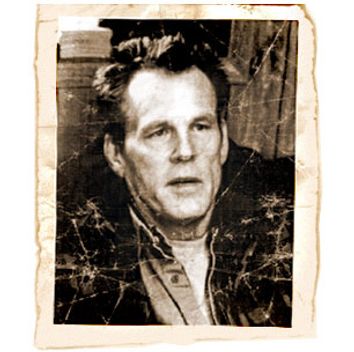
Nick Nolte

An actor of extraordinary range and physical presence, he shines in roles where the tough-guy hero is strung up by the depth of his own feelings.

  • more
    • All Share Services

Nick Nolte

Nick Nolte is like Clark Gable with an anguished soul. Writing about him in 1982, when he’d been playing movie leads for about half a decade, the critic Pauline Kael called him “an ideal screen actor — believable, and with a much larger range than McQueen or Wayne.” Like Steve McQueen and John Wayne in their best roles, it’s his physical actions that often articulate what’s going on under the surface; like Gable and Mitchum, he’s magically relaxed on screen and projects an outsize, sprawling likability. But his real lineage is agonized men’s men like William Holden and Dana Andrews and Robert Ryan, and later Paul Newman — actors whose sensitivity complicates their macho credentials.

“I work from emotion,” he reminds his acting coach, Mel Weiser, who wrote about the process of working with him in “Nick Nolte: Caught in the Act.” “I have to know why I’m feeling what I’m feeling. What’s behind it? How is it expressed? What’s its source?” And when you think back on great moments in Nolte performances, generally what come to mind are the ones where the tough-guy hero is strung up by the depth of his own feelings. You may recall the scene in the Nicaragua-set “Under Fire,” when his character, the prize-winning photojournalist Russel Price, recognizes that the photos he snapped of the Sandinistas, whose revolution he’s fallen in love with, have been used to hunt them down and kill them. Or the moment in “Who’ll Stop the Rain” when he realizes he’s going to sacrifice himself for his best friend, a hapless drug runner, and for the woman he loves.

Or perhaps the image in “Life Lessons” (the Martin Scorsese segment of “New York Stories”) of Lionel Dobie, his face and bare chest smeared with the paint from his latest canvas, sunk in a chair like a Francis Bacon figure, looking up with absurdly grandiose romantic longing at the room where his much younger assistant (Rosanna Arquette), who has rejected him sexually, is making love to someone her own age. And most certainly the climactic scene in “The Prince of Tides” where Tom Wingo’s confession that he was raped at 13 seems to burn out of his eyes — those eyes that have, throughout the movie, been like tunnels sucking down the painful memories the psychiatrist (Barbra Streisand) who’s treating his damaged sister keeps prodding.

Nolte was born in Omaha, Neb., in 1941 and spent 14 years acting in regional theaters, including the Actors Inner Circle in Phoenix, where he got to sink his teeth into Tennessee Williams and Arthur Miller, as well as try his hand at Anouilh, Durrenmatt, Frisch. That’s where he met both Weiser, the company’s co-founder, and Nolte’s first wife, Sheila Page, who co-starred with him in a production of “The Rainmaker.” He’s been married three times in all; his third wife, Rebecca Linger, is the mother of his only son, Brawley, who displayed his legacy in his only movie role — he was terrific as Mel Gibson’s kidnapped boy in “Ransom.” Nolte currently lives with the actress Vicki Lewis, whom he met on the set of “I’ll Do Anything.”

Nolte appeared in a handful of movies and TV shows in the early ’70s, but his breakthrough came in 1976, when he played Tom Jordache in the miniseries “Rich Man, Poor Man.” Nolte was already 35, but he carried off Jordache’s 17 — deftly enough to earn an Emmy nomination and the romantic lead in a moronic Peter Yates adventure called “The Deep,” which came out the following year and initiated a remarkably prolific Hollywood career. (“Simpatico,” due out this Christmas, marks his 35th movie role since “Rich Man, Poor Man” made him a hot property.)

It’s clear he was cast in “The Deep,” opposite Jacqueline Bisset, for his sexy-hip ’70s look: He sports a thick ginger moustache and a mop of gold-dusted hair, and when he’s not diving (the film is set in Bermuda) he wears the neo-Renaissance outfits that were just coming out of fashion — ruffled shirt, white bells. He doesn’t look 17 but he could pass for, say, 25, and he’s certainly handsome enough in this pin-up role to be the hero of a Hollywood action picture. Yates probably cast him without caring whether he could act, and the only thing he’s got going for him is a kind of renegade energy — though at this juncture, for all we know it could be beach-bum vibes we’re picking up, not talent.

But in “Who’ll Stop the Rain,” his next picture, you know you’re watching an actor. I hadn’t seen Nolte on TV and he had barely registered with me in “The Deep,” so I recall being startled when “Who’ll Stop the Rain” came out: Here was this imaginative, fully formed movie actor giving a highly complex performance in a major role, and where the hell had he come from? As Ray Hicks, whose Marine buddy (Michael Moriarty) gives him a stash of heroin to transport, he has a life-scarred look and a soldier of fortune persona — though that’s not the whole story. Ray, who also spent some time on a Southern California commune, has had to struggle to put his personality together, and when Moriarty hands him the dope, we see the terror in Ray’s eyes and his shaky determination to keep himself balanced. He goes through with the escapade out of loyalty to his friend, but he knows it’s bad karma — that it puts him out of touch with who he thinks he is.

In the source novel, “Dog Soldiers,” Robert Stone used the heroin as a metaphor for the way Vietnam had corrupted America, and that may have been what the director, Karel Reisz, intended in his version. But when you watch the movie you get caught up in the details of a drug deal gone sour, and the metaphor pretty much vanishes. Still, the movie clings to you like the scalding memory of an ugly high, and Nolte’s exploration of this character’s efforts to stay grounded in a world that’s lost its moral compass forms its impassioned core.

Nolte had been a ’60s wild man himself, and he looked it. Both “Who’ll Stop the Rain” and (in a less obvious way) “North Dallas Forty,” which came out the following year, 1979, chronicled the moment when the excesses of the ’60s began to occupy a drastically altered moral landscape. Ray Hicks sticks to an ethic that Vietnam has effectively obliterated, and Phil Elliot, the football hero of “North Dallas Forty,” wants to play solely for love of the game, while his bosses operate out of a heartless corporate vision to which the players are inevitably sacrificed. Both these movies are built around the tension between Nolte’s characters and the world they move in; both these men are scrupulously honest, honest in ways that punish them.

And for both of them, the proof of that honesty is physical — it’s the capacity to continue to march toward a rendezvous even after you’ve been badly shot up, or the satisfaction of working through the pain to reach the limit of what your body can achieve. In the memorably funny opening scene of “North Dallas Forty,” Nolte’s Phil pulls himself out of bed, every muscle clearly aching; he staggers across the floor, holding his stomach and his wrist, barely able to move his feet; he washes down a pain killer with stale beer; he sinks into a warm bath, hauling on a joint as if he were inhaling oxygen; and he grins happily as he recalls a heroic play from yesterday’s game. And that’s Phil Elliot in a nutshell: He proves himself to himself by offering up his body, and God, it feels good.

And in a way, that’s how Nolte himself works. “His big, rawboned body suggests an American workingman jock,” Kael writes, “but he uses his solid flesh the way Jean Gabin did: he inhabits his characters. He’s such a damned good actor that he hides inside them. That’s his sport.”

You learn much of what you need to know about the men he plays by reading the body code — the bruised fighter’s stance he takes, as Tom Wingo in “The Prince of Tides,” when he faces off his mother (Kate Nelligan); his restlessness in “I’ll Do Anything,” where he plays an actor striving not to show how desperate he is for a part; the way he plunges at his canvases in “Life Lessons,” a rock-and-rolling action painter who brings a sexual energy to his work, while Bob Dylan and Procol Harum provide his personal soundtrack; the shift in his tempo in “Under Fire” when Russel Price is transformed from a cynical observer to a revolutionary.

In “Weeds,” he plays a convict who finds, in writing and directing plays, a way out of his despair and, eventually, a way out of prison. For this role Nolte adopts an ambling walk, what I’d call a Steinbeck walk — acutely conscious, close to the earth, with a tense swing because he’s accustomed to meeting obstacles but he’s damned if they’re going to stop him from covering ground.

When Lee Umstetter (the role is based loosely on Rick Cluchey, the San Francisco ex-con actor-director) strips down to make love to his girlfriend on his first night of freedom, he reveals a demon tattoo on his chest. It’s the ineradicable mark of what he used to be, but it’s at odds with the wonderment in his eyes — what, in the movie’s view, he’s become.

Later in the film, the troupe he’s assembled from his ex-con buddies runs into financial trouble, so as a last resort he slips off to rob a convenience store. But he can’t do it — sitting in his car with a stocking mask distorting his face, Nolte still manages to convey what this reversion means to him, and how much it means to him to fight against it.

This physical expressiveness is as much a Nolte trademark as the beery husk of a voice, the hushed vocal intensity. He rarely makes the choice to shout a big scene; that would be too obvious and, as he tells Mel Weiser, he hates doing the obvious. Besides, you get so much more color in a quiet, held-perilously-in-check moment than you do in a loud one.

Then there’s that rough-hewn, all-American face, which can look battered and sensitive at the same time (as it does for his cop’s role in “48 Hrs.”), or can take on a slightly dissipated Southerner’s charm (in “The Prince of Tides”) or a conscious Yankee ruggedness (as the crusading private eye in “Everybody Wins”).

In “Affliction,” which won him both the New York Film Critics and National Society of Film Critics awards last year, his face looks distinctly ’50s — it’s the sort of face you might see in an old photograph and be haunted by, the face of a man who fights a losing battle to keep himself from falling off the end of the world. And certain scenes in “Affliction” bring out a boyish sweetness and vulnerability that is also, I’d say, a Nolte characteristic.

His other trademark is professional: his celebrated abhorrence of the mainstream. Yes, he’s made some standard Hollywood crap — like “I Love Trouble” with Julia Roberts, and “Three Fugitives,” not to mention the sequel to “48 Hrs.” — but it takes up only a fraction of his risumi, and he’s well known for turning down projects that promise him lucrative salaries if he doesn’t respect the director or find the material interesting. He’s drawn to writers and directors he believes behave like artists, and his instincts aren’t always sure. He should have stayed away from Oliver Stone; he shouldn’t have played Thomas Jefferson for James Ivory. He shouldn’t have done Scorsese’s feverous remake of “Cape Fear” or tried to play a bespectacled Italian in a grand operatic style in “Lorenzo’s Oil.”

But his instincts have also netted him more sensational roles than most movie stars have had. And even his bad movies tend to be bad in unusual ways — John Milius’ “Farewell to the King,” “Mother Night” (a Kurt Vonnegut adaptation), the new “Simpatico” (based on a Sam Shepard play), even the repugnant “Q & A” aren’t like the lousy projects Tom Hanks or Bruce Willis may choose. There’s a fearless recklessness about an actor who elects to play a champion “equal opportunity hater” like the corrupt police lieutenant Mike Brennan in “Q & A,” who bullies a gay hustler into bending over for him and then garottes him. I hated seeing Nolte in this role, because playing a man with a rotted soul reduces him, and you don’t believe him anyway — he can’t erase the sensitivity in the pockets of his face.

But to get to the heart of Nick Nolte, you have to see that the daring and unconventionality that lead him to a misbegotten project like “Q & A” also land him on a terrific project like “Weeds” or “Under Fire” or Paul Mazursky’s “Down and Out in Beverly Hills,” where Nolte plays a homeless man wandering the streets of Beverly Hills who’s adopted by a wealthy family after he tries to drown himself in their pool.

The quality of Nolte’s performances in two high-profile 1998 Christmas releases, “Affliction” and “The Thin Red Line,” rallied the critics behind him, and he’s probably more highly respected now than he’s ever been. Through the years, however, he hasn’t always been taken seriously by the press. Perhaps that’s because he used to like to appear for interviews in pajamas and spin elaborate tall tales. He told Cosmopolitan, for instance, that his first wife was a trapeze artist, and several publications recorded his claim that he once lived in a Mexican whorehouse. His behavior in interview situations has often betrayed his contempt for the publicity process, as well as a holdover hipster rambunctiousness that used to surface regularly when he drank or took drugs. (He’s made no secret of being a recovering alcoholic.)

On the other hand, you don’t see him on talk shows after a movie of his has fizzled at the box office, groveling to apologize to his fans — obeying the Hollywood reflex to distance yourself from a bomb. Weiser, in an oddly ungenerous reading of Nolte’s defense of the critical and financial fiasco “I’ll Do Anything,” claims that the actor has “a remarkable capacity for self-delusion. It’s as if he’s incapable of admitting an association with failure, as if such an admission diminishes him, personally, not his talent, but his very being.”

Maybe Weiser should take another look at “I’ll Do Anything” — maybe it’s time everybody did. Columbia planned this movie as a 1993 Christmas release, with James Brooks directing and songs by Prince, choreographed by Twyla Tharp. But audiences booed at the studio previews, so the numbers were hacked out, and by the time the movie came out in early 1994, it was blighted by the buzz of failure. It’s a wonderful movie, though — a scrambled, sweet-and-sour view of Hollywood with a loose enough weave to allow the performers (Nolte, Albert Brooks, Julie Kavner, Joely Richardson) to experiment with their roles.

Wearing sublime casuals designed by Marlene Stewart, Nolte plays actor Matt Hobbs, who is so gentle and affable that it takes you a moment to realize that these qualities are wrapped like a cozy blanket around an essential narcissism. When his wife (Tracey Ullman) leaves him, taking their baby girl out of the state, he finds it easier to stay in L.A. and live the life of the eternally hopeful than to make time for visits. Then suddenly Ullman’s character lands in jail and he’s stuck with Jeannie (Whittni Wright) — who’s now 6 years old. The arc of Matt’s development is clear: He has to learn to think beyond his own needs. What makes the movie so original is the juxtaposition of the life he leads with Jeannie with the world of the studio, where narcissism is rampant.

Nolte gives one of the funniest, most subtly nuanced and most accurate portrayals of an actor I’ve ever seen. In the early scenes, he seems to be parodying his own days as a pretty boy; later he parodies the Method. It’s a loving send-up, like Dustin Hoffman’s in “Tootsie.” These are actors whose Method preparation, after all, is famous: Nolte lived among the homeless for a while before shooting “Down and Out in Beverly Hills,” and in the scene where he entices his hosts’ neurotic dog into eating his supper by lapping dog food out of his bowl, that’s really what he’s eating.

“I’ll Do Anything” contains an uproarious sequence in which Matt auditions for a bored director who immediately walks out of the room and lets his producer (Brooks), a tasteless blowhard, supervise. You can see Nolte’s Matt searching around for a hook into this guy, a way to read his hysterical outbursts, to maintain some dignity and sensibility without pissing anyone off. Nolte and Brooks don’t miss a trick.

Along with “Weeds” and Karel Reisz’s 1990 “Everybody Wins,” “I’ll Do Anything” is the neglected jewel among Nolte’s movies. No one went to see “Everybody Wins,” either. It’s a delicately shaped film noir in which Nolte is seduced by the most unexpected of femme fatales — Debra Winger as a Marilyn Monroe type (Arthur Miller wrote the script) with multiple personality disorder. (“I, like, break up,” is the way she explains her puzzling behavior.)

Nolte and Winger had already done one movie together — a deadly adaptation of Steinbeck’s “Cannery Row,” eight years earlier — and they didn’t bring anything out in each other there; in “Everybody Wins,” though, he gets so caught up in her sexual energy that he spends some of the movie looking like he was bopped on the head in the dark.

Nolte’s Tom O’Toole is an investigator known for taking on lost causes — he’s also a Catholic with an aggravated sense of mission — and for his delight in making the public prosecutor look like an idiot. Winger’s Angela Crispini offers him the chance to free an innocent man convicted of murder and dangles the image of corruption in high places, while she’s coming on to him at the same time.

In traditional film noirs, the hero is either a private eye with a smart take on the case or else a dupe who’s manipulated by the femme fatale; Nolte’s Tom O’Toole is a combo — a duped shamus. This (dark) comic setup makes it easy for us to undervalue what Nolte does in the role, but the movie wouldn’t work without his sensitivity and his wit.

Nolte’s acting galvanizes the touching “Weeds,” and he’s the only actor (among at least a dozen gifted ones) who’s able to deliver a performance of any shape and clarity in Terrence Malick’s incoherent “The Thin Red Line” — he cobbles together a persuasive portrait of a bullish colonel whose every move is motivated by his desire for the generalship he feels is owed him.

He carries off some amazing effects in Paul Schrader’s “Affliction,” a project he helped to initiate, though the material finally defeats him. “Affliction” is a thesis picture, set on proving that the small-town cop Nolte plays is doomed to turn into his violent, alcoholic dad (James Coburn). Nolte gets at the terror and despair deep inside this rough hunk of a man, who’s struggling against his impulses; if he could just give up the battle, he’d be less miserable, but as it is he can’t settle himself. As long as Nolte’s Wade resides in the area of this conflict, the performance is superb, and his scenes with Sissy Spacek (who plays his supportive girlfriend), and with Brigid Tierney as his daughter, who means so much to him but whom he can’t talk to without straining every muscle in his face, are plausible in every detail. But when the movie gets where it’s going and Wade explodes, even Nolte’s intensity and conviction can’t save it.

If I had to choose my favorite Nick Nolte performance, it might be “The Prince of Tides,” where he’s almost good enough to make us forget the preposterous plot about the repressed Southerner who’s called upon to tear away the veils of his own past as a way of helping a therapist heal his suicidal sister. (This movie must have had shrinks howling in the aisles.)

Or “Life Lessons,” where Dobie’s sexual obsession with his assistant takes him to hilarious and piteous heights, The performance is like an unbroken series of arias.

Or it might be Roger Spottiswoode’s 1983 movie “Under Fire” — perhaps the most extraordinary project the actor has ever been involved in — where he does his most physically eloquent acting in the role of a man who always responds first with his body — his eye, his instinct for getting the best photo, charges his muscles; he operates his camera seemingly by reflex.

When a young Sandinista who’s made a connection with Russel is killed before his eyes, though, he doesn’t reach for his camera, and that signals a profound change in this man. All of Nolte’s big scenes “Under Fire” rely on the depth and color he brings to tiny phrases or to silences; the idea is that what Russel goes through in the course of this narrative is beyond words.

It’s a clichi that our most beloved stripped-down action heroes — our Gary Coopers and John Waynes and Steve McQueens — are walking illustrations of the Hemingway dictum that action is character. Nolte gives us more — active physicality without spareness. With him, action is character plus feeling.

Continue Reading Close

“The Rainmaker”

Woody Harrelson brings his trademark touch of self-parody to the Broadway stage.

  • more
    • All Share Services

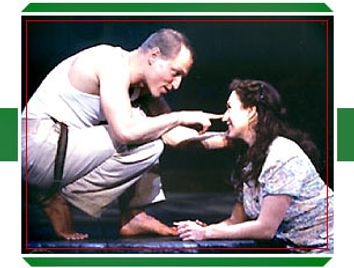
Woody Harrelson is ideally cast as Starbuck, the con man in love with his own
con, in the new Broadway revival of N. Richard Nash’s “The Rainmaker.” He brings
his trademark wised-up bumpkin presence to the role, his mad satyr’s grin, his
unmistakable touch of self-parody. Scott Ellis’ production for the Roundabout
Theatre Company (which premiered in a limited run at the Williamstown Theatre
Festival last year) is beautifully crafted and deeply pleasurable, but it’s
Harrelson who brings it to life.

He needs to, because that’s the way the play –
a 1954 hit now best known for the movie version starring Burt Lancaster and
Katharine Hepburn — is constructed. It’s set in a tiny, mid-Depression
Midwestern town whipped by a long drought; the drought is an emblem for the
female protagonist, Lizzie Curry (Jayne Atkinson), who’s heading for
spinsterhood. Starbuck appears out of the windless night, claiming implausibly
that he can conjure up a storm for a hundred bucks, and puts an end to both dry
spells.

Nash’s play is hokey and homiletic, and there’s no music in the lines.
Starbuck corners Lizzie, pointing out the nervousness that, along with her
pragmatic dismissal of his boastfulness, conceals her sexual terror, and you long
for the poetic intensity that Nash’s contemporary, Tennessee Williams, could imbue
a similar encounter with in a play like “The Eccentricities of a Nightingale.”

Instead you have to settle for the usual brand of Broadway-drama speechmaking as
the characters tell glaringly obvious home truths about each other. They’ve been
drawn mostly to fulfill functions. Lizzie has a wise, loving father (Jerry
Hardin, in a sweet-natured performance) and two brothers who stand at opposite
ends of the spectrum: the elder, Noah (John Bedford Lloyd), the practical one,
who runs the farm and says things like “Drought’s a drought, and a dream’s a
dream,” and the younger, Jim (the immensely likable David Aaron Baker), who’s
driven by his hormones.

Sense-talking Noah continually tries to control Jim — to
take him down a peg, to harness his youthful wildness — but Starbuck champions
the boy, just as he fights for Lizzie when Noah tells her to face up to the fact
that she’s doomed to be an old maid. Lloyd gives a believable performance in a
bummer of a role — a man whose confidence in his own eternal rightness sours
everyone’s milk. And Ellis gets as much cartoon humor as he can out of the early
scenes between the brothers, playing Lloyd’s rangy cowhand looks against Baker’s
toad-hopping energy so they’re like a squabbling Mutt and Jeff.

Ellis and the actors deserve a lot of credit: Nothing exposes the limitations of Nash’s
imagination more than the joshing male exchanges in this play, especially the one
where Lizzie’s father and brothers try to entice the laconic deputy sheriff, File
(Randle Mell), into courting her. Mell is suitably sturdy and he has an amiable
low-key humor, but emotionally repressed File, who can’t admit his wife ran off
on him, is almost as crummy a part as Noah. (The biggest mistake the play gets
by with is matching him up with Lizzie, whom we love.)

Still, Nash is no fool. The play has an inner spring: When Starbuck connects with Lizzie, firecrackers go off. Hepburn played Lizzie with a breathless lyricism, as if she
were hanging off the edge of the world, and she made a touching joke out of the
character’s gawkiness and her rural manners — and of course there was no other
way she could make us accept the most aristocratic of Yankee actresses in the
role of a back-country spinster.

Atkinson doesn’t try to play against
Nash’s language — she grounds the character in it. Big-boned, plainspoken, she
hauls her suitcase wearily across the stage at the top of the play (Lizzie has
just returned from a fruitless trip to visit some eligible young men in a
neighboring town) and you understand exactly who this woman is. When her family
persuades her it’s a good idea to invite File home for supper, she puts on a cool
silk dress (Jess Goldstein designed the letter-perfect costumes), but her legs
give her away — she doesn’t walk like a woman who truly believes she looks good
in that dress. Atkinson gets at Lizzie’s feelings directly and then, without a
fuss, she crawls inside them. It’s a superb piece of acting.

In Act II, Harrelson’s Starbuck leads Lizzie downstage center, takes down her hair and
tells her she’s pretty, making her repeat it over and over until she believes it,
and with Atkinson it’s clear how much she wants it to be true and how scared she is
that it won’t be. Hepburn played this climactic moment by making herself beautiful —
by exposing, suddenly, the swan lurking inside the ugly duckling. In
Atkinson’s reading the scene is about something else entirely — about emerging
sexuality, which carries its own tremulous beauty. When Starbuck kisses her she
sinks to her knees, presses her eyes shut and turns away from him as if she were
holding on to a desperate dream.

Harrelson doesn’t duplicate the free-flung athleticism Lancaster had in the Starbuck role, and
it takes him a scene to warm up after a rather stiff entrance. But his hound-dog
approach to this character is sensationally effective. He’s irresistibly
clownish — you can see why people are happy to be suckered by him. When he
delivers his big monologue about the first time he made rain, he peeks out of the
corner of his eye to see how Lizzie’s taking it — to check whether he’s turning
her on yet. This grinning goof loves his hard sell so much he turns himself on.

Harrelson’s bio doesn’t list any previous stage work, but he’s as charismatic
here as he is on screen, and he and Atkinson work wonderfully together. Nash’s
dramaturgy is as square as they come, but the Sunday-matinee audience at the
Brooks Atkinson Theatre responded joyfully to it, as did the audience at
Williamstown when I saw the earlier version. (Except for Harrelson, who replaces
Christopher Meloni, the cast is the same.) This is a canny mounting of a
crowd-pleasing entertainment — skillfully staged, with a scruffy, rough-hewn
appeal.

“The Rainmaker” is a fable about how faith carves a fairy tale out of the
workaday realities — Starbuck’s vision of Lizzie unmasks her beauty, while her
belief in him transcends his fakery and brings the rain. All three designers –
James Noone did the sets, Peter Kacrowoski the lighting — balance realism and
stylization to carry that theme. Noone’s work is particularly fine: The
unmoving windmill, realist symbol of the long drought, stands below a slightly
fantastical drop with miniature cut-out farmhouses, each one lit up and plunked
down on a broad twist of road like the landscapes in David Hockney’s
English-countryside paintings. And Starbuck’s and Lizzie’s love scene takes
place under a misty white moon that peers out of a huge expanse of sky.

The
characters in “The Rainmaker” discover that they have to live somewhere between
reality and their dreams. Ellis and his collaborators are dreammakers with
their feet on the ground, able to take a banal play such as this
one and release the magic in it.

Continue Reading Close

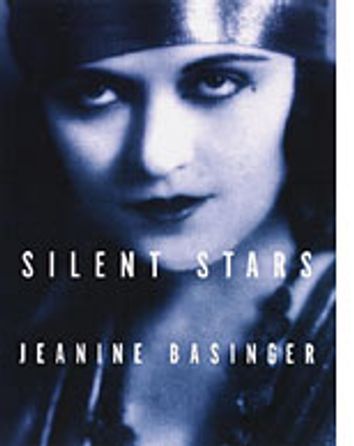
“Silent Stars” by Jeanine Basinger

A massive tome on the silent era's greatest performers fails to come up with much that's fresh.

  • more
    • All Share Services

The heyday of silent movies began in 1915, when D.W. Griffith released “The Birth of a Nation”; not quite a decade and a half later they were shoved into an early grave by the invention of talkies. Watching them now, you enter a coded, embroidered world that feels as remote as the Middle Ages. It’s easy for a novice to get discombobulated — as a college freshman, I wandered into a screening of Griffith’s great “Intolerance” and was so thrown by the rhythms that I fled, dazed, at intermission.

At the outset of her nearly 500-page volume, “Silent Stars,” Jeanine Basinger, a much-published scholar who teaches film at Wesleyan University, attempts to define the world of the silent screen, where

stars look rounder. Their faces aren’t shadowed or hawkish, with razor-sharp cheekbones, but romantic and soft, with apparently no bones at all  The women are often barely five feet tall, and the men are short, compact, and well proportioned  It’s an Ur-world, full of strong emotion, and you seem to be constantly sharing lives in secret ways, looking on at secret moments, watching scenes of deeply felt and hyper-expressive revelation.

This is a promising beginning, but the book — a selective yet varied series of portraits of the silent-movie personalities Basinger believes have been either forgotten or misunderstood — is a major disappointment. Basinger isn’t gifted at describing what actors do: She includes an array of details about performance after performance, but there’s no lyricism to float these details into evocation, and there are surprisingly few ideas to ground what start to feel like interminable summaries. After 20 pages on Gloria Swanson, for example, all you’ve gleaned is that most of her movies were built around her costumes, yet somehow she was more than just a clotheshorse.

A study of the horror-movie chameleon Lon Chaney culminates in these unhelpful sentences: “What, after all, was Chaney’s appeal? The answer is simple: he was unique.” A chapter on Rudolph Valentino, the most parodied (and, to Basinger’s mind, the most underrated) of the era’s male romantic stars, includes this distillation of the 1921 film that made him a star: “So what was it about Valentino in ‘Four Horsemen [of the Apocalypse]‘? The answer is simple: as Julio, he has star power, though not much else.” In a dual examination of the careers of the flapper heroines Colleen Moore and Clara Bow, we’re met with the startling revelation that actors aren’t always the characters they portray on the screen.

Basinger is such a ham-handed writer that somewhere in the middle of the book I began to suspect she might have something valuable to express about these performers but just couldn’t get it out. I kept stumbling over bizarre sentences (“Norma Talmadge is the proof of the basic fact about stardom: clearly in her case, you had to be there”; “[Pola Negri's 'Passion'] combines historical sweep with intimate portraiture, and there is no overestimating what having a good director can do for the historical reevaluation of an actress’s career”) and wondering what she might have been trying to say. Sometimes she contradicts herself — she lists all the customary reasons for the disintegration of John Gilbert’s career as Hollywood’s great lover, refutes each one, then claims the real cause was a combination of them all. At other times she makes comments that are so far off track you can’t believe she meant them — e.g., that Lillian Gish is “somewhat sexless” (has she seen “The Scarlet Letter”?), that John Barrymore was a proto-Method actor (the style of matinee idols like Barrymore was precisely what Method actors were breaking away from).

Some of the anecdotes she tosses into her discussions of the stars are fun. I enjoyed learning that Colleen Moore and not Louise Brooks pioneered the Dutch Boy bob, and that the plot of Warren Beatty’s “Bulworth” has its origins in a 1916 Douglas Fairbanks comedy called “Flirting with Fate.” But only a single chapter in “Silent Stars” is the lark the whole book should have been: the one on the canine star Rin-Tin-Tin and his rivals. Here Basinger locates exactly the right tone, a mix of admiration and humor, and her descriptions of the movies illustrate clearly delineated points.

This is truly original research: No one has written seriously about animal performers, and though Basinger ‘s project throughout is to resurrect the shoddily reported careers of her other subjects, the fact is that other scholars before her have praised Mabel Normand (perhaps more than she deserves), Chaney, Fairbanks, Valentino. It’s been nearly three decades since Pauline Kael, in “The Citizen Kane Book,” set the record straight on the distinction between the talented comedian Marion Davies and the fictional character Orson Welles and Herman Mankiewicz cruelly modeled on her; and there’s nothing in Basinger’s chapter on Mary Pickford that Eileen Whitfield didn’t cover in far greater depth in her brilliant biography, “Pickford: The Woman Who Made Hollywood.” But, silent-movie lover though I am, I didn’t know a damn thing about Rin-Tin-Tin.

Continue Reading Close

“Edward Albee: A Singular Journey”

The first biography of the man who wrote "Who's Afraid of Virginia Woolf?" is politer than it needs to be.

  • more
    • All Share Services

Edward Albee’s first produced play, the canny, eruptive two-character drama “The Zoo Story,” reinvented Off Broadway as the locus of experimental theater at almost the moment the ’50s flickered into the ’60s. Three years later, Albee became the first American playwright nurtured on the work of Samuel Beckett and the other absurdists to open a show on Broadway — and “Who’s Afraid of Virginia Woolf?,” though it shocked and upset some of New York’s more conventional critics, provoked much comparison, just or unjust, to Eugene O’Neill and Tennessee Williams.

But slowly at first, then with increasing speed, Albee lost his foothold. The plays that followed “Virginia Woolf” baffled and alienated audiences and many critics (though two of them won Pulitzer Prizes), and a mere decade after the fireworks over “Virginia Woolf” he was already thought of as a has-been. By the time he wrote what would be his comeback drama, “Three Tall Women,” in 1991, he had disappeared so effectively from the cultural consciousness that it took him three years to get the play produced in Manhattan.

I’m not drawn to the Albee plays between “The Zoo Story” and “Three Tall Women,” despite having enjoyed the theatrics in Mike Nichols’ 1966 movie version of “Virginia Woolf” and the high comedy in Gerald Gutierrez’s 1996 Broadway revival of “A Delicate Balance.” So I approached Mel Gussow’s biography, “Edward Albee: A Singular Journey,” hoping it might bring me closer to the playwright, or at least show me what I’ve missed and why I shouldn’t dismiss the lion’s share of his work as rhetorical rather than dramatic, ostentatious rather than probing.

But I came away from the book without much additional insight. Gussow is a longtime champion of Albee’s work, and he’s known Albee for more than three and a half decades — which makes him the playwright’s logical first biographer but not, perhaps, his most perspicacious one. He rarely offers a negative response to any of the plays, and his attempts to accord the worst duds some value can make your eyes glaze over. Here he is (quoting his own radio review) on 1980′s “The Lady from Dubuque”: “Mr. Albee contemplates the appearance of truth, man’s need for an identity even if assumed. In this game we can choose our own roles to play …” Based on that assessment, would you buy a ticket?

In Gussow’s scheme, Albee’s “singular journey” from initial stardom and promise to the triumph of “Three Tall Women” parallels his growth into self-knowledge (and sobriety). It’s not a terribly original idea, and it’s persuasive only in the most generalized way: Presumably any artist who’s spent his life reflecting on the elements that have shaped him — Albee’s work has always been infused with details from his own life, particularly his unhappy childhood — would attain some degree of self-understanding by the time he reached 63 (his age when he wrote “Three Tall Women”). But the conceit does give the book some shape and some forward drive.

Gussow isn’t a compelling stylist:

[Writing a play] is, one might suggest, something like the birth of a baby, and as Beckett said, it can be “a difficult birth.” The baby — the play — emerges intact. It would not be a reach of the metaphor to add that some “children” are healthier than others, but that Albee, as mother and father, loves them all.

And his puzzlement over how best to assemble the information he’s gathered about the influence of Albee’s personal life on his plays keeps leading him back to the same points.

Moreover, Gussow’s affection for Albee causes him to shy away from a gossipy tone even in his report on Albee’s youth in Greenwich Village, when he became part of a hard-drinking gay crowd presided over by his mentor and first partner, composer William Flanagan. You may respect Gussow’s reluctance to dish, but the humorlessness with which he renders Albee’s relationship with the wealthy, unloving Westchester WASPs who adopted him, Reed and Frances Albee, weighs down the book. Frankie Albee was, by all accounts, a character and a half: elegant, aristocratic, bigoted, self-willed, domineering, perverse — and given, in her later years (when she and Edward, who left home at 21, had effected a fragile reconciliation), to repeating extraordinary stories about her sex life with Reed. A less reverential biographer would have a lot more fun with her.

Gussow supplies a handful of good theatrical tales — Donald Sutherland’s outrageous behavior during rehearsals for Albee’s disastrous dramatization of “Lolita” in 1981; a 1978 dinner party at Gussow’s where a sozzled Albee took on Joseph Papp. And he’s sharp at locating Albee’s dramaturgical sources: not only Strindberg, Pirandello and the absurdists but also “The Iceman Cometh,” “Suddenly, Last Summer” and, surprisingly, James Thurber.

“Edward Albee: A Singular Journey” is worthy — too worthy, finally, to make Albee’s journey seem convincingly singular.

Continue Reading Close