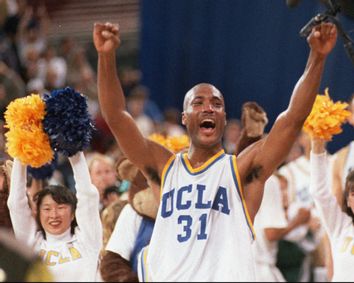
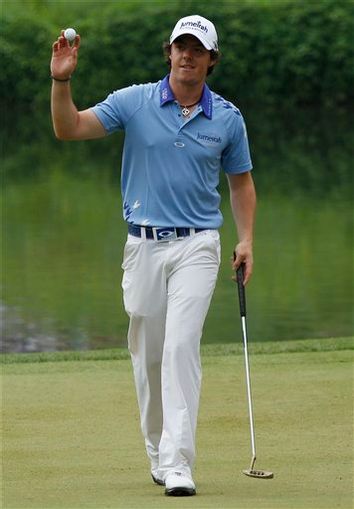
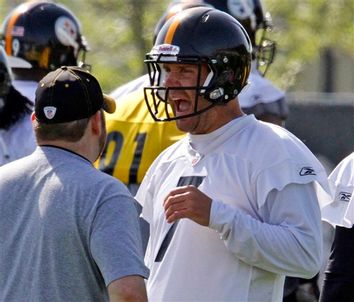
There’s a new face behind the head injury lawsuits against the NFL, a former All-Pro defensive end from the Detroit Lions some may recognize better as the lovable lug of a father from the 1980s sitcom “Webster.”
Before that, Alex Karras played the equally lovable Mongo in “Blazing Saddles,” uttering one of the movie’s best lines when he declared: “Mongo only pawn in game of life.”
He’s 76 now, and suffering from dementia. His wife said this week that a man who used to love to drive his cars can no longer get behind the wheel. She said a man who used to be an amazing cook of Italian and Greek food doesn’t cook anymore because he can’t remember what his recipes were.
He’s among 1,200 former players now suing the NFL, claiming the league misled players about the risks of head injuries and was negligent about their treatment. Many of them are suffering from brain damage, and none of them are getting any better.
For the most part, fans seem to have pretty much discarded them as yesterday’s news. They would rather focus on whether the Cleveland Browns should draft an offensive lineman in the fourth round than whether a former journeyman linebacker or backup safety can tie his shoes or remember what house he lives in.
“It’s the same thing as back in the gladiator days when the gladiators fought to death,” said attorney Craig Mitnick, who represents Karras and hundreds of others in the suit. “Fans care about these guys when they’re playing and they are heroes. But as soon as you’re not a hero and not playing the fan doesn’t really care what happens to them.”
Maybe it’s time we started caring. Debate the merits of the suit all you want — and the NFL will certainly do so — there’s no doubt a lot of former players are paying the price for taking hits to the head during a time when the significance of concussions was either minimized or not entirely known.
Some you may not have ever heard of, or have long forgotten about. Others were once your heroes, taking the field every Sunday for a big paycheck and the chance to bring glory to the franchise.
Jim McMahon was one of those guys. The quarterback who helped bring Chicago a Super Bowl championship was a rebel who clashed with the league, and a fan favorite who prided himself on his toughness and ability to take a hit. Now his girlfriend programs the GPS for their house in case he gets lost, and he gets angry and frustrated at all the things he can’t recall.
“I won’t remember a hell of a lot about this interview in about 10 minutes,” he said in a recent interview on ESPN’s “Outside The Lines.”
Tony Dorsett is a Hall of Famer and one of the greatest running backs in the history of the league. At 57 he’s still relatively young, but the former Dallas Cowboy already forgets people’s names or where he’s heading while driving on the highway. Doctors have told him he’s not getting enough oxygen in the left lobe of his brain, and he fears his memory issues are getting worse.
Yet he and other retirees have no medical insurance from the league, no compensation for their deteriorating health other than the money they earned while they were in the field.
“Yeah, I understand you paid me to do this, but still yet, I put my life on the line for you, I put my health on the line,” Dorsett told The Associated Press just before the Super Bowl. “And yet when the time comes, you turn your back on me? That’s not right. That’s not the American way.”
Other names you might recognize who are plaintiffs include former Lions cornerback Lem Barney, Buffalo offensive lineman Joe DeLamielleure, and Brent Boyd, a former Vikings offensive lineman. Boyd’s lawyers say he is the only living player to be diagnosed with chronic traumatic encephalopathy, a degenerative disease often found in boxers who have taken too many punches to the head.
They’ve come forward for help, and in doing so they’ve put a human face on the lawsuits.
At issue in the lawsuits is whether the NFL either turned the other cheek when it came to blows to the head, or was willfully negligent. As late as 2009, NFL Commissioner Roger Goodell appeared before Congress and would not acknowledge a link between head injuries suffered on the field and brain diseases later in life.
That’s changed for the most part, with the league now actively involved in concussion studies. There’s a 10-year, $100 million program in place now to study ways to limit and respond to concussion-related injuries, and there is now strict protocol in place for players who show signs of concussions. The penalties handed down recently by Goodell in the Saints bounty case went far beyond what many in the league expected, almost surely because he realized the delicacy of the issue in light of the lawsuits over brain damage.
There’s also the “88 plan,” co-funded by the league and the player’s union and named after the late Hall of Fame tight end John Mackey’s number. Mackey died at the age of 69 after a long battle with dementia, but not before he and his wife helped bring about the creation of the plan that provides help to those with dementia.
Forgive most of those left behind, though, if they feel like they’ve been cast off and forgotten. The league didn’t take care of them then, and it’s not taking care of them now.
Some made a lot of money, sure. Many others didn’t, and they’re hurting in a lot of ways from playing a sport where hurt is a given.
Much like Mongo, they were only pawns in the game of the NFL.
____
Tim Dahlberg is a national sports columnist for The Associated Press. Write to him at tdahlberg(at)ap.org or http://twitter.com/timdahlberg
AUGUSTA, Ga. (AP) — The hugs with his family took place on the clubhouse lawn, not the 18th green. That was occupied, and by this time there was nothing Phil Mickelson could do about it.
He had celebrated there before, most famously eight years ago when he won his first green jacket and took his young daughter in his arms, saying, “Daddy won! Can you believe it?”
Now it looked like he couldn’t believe he had lost.
A fourth green jacket would have put him in the company of Tiger Woods and Arnold Palmer at the Masters. A fifth major championship would have moved him among the likes of Byron Nelson and Seve Ballesteros.
But it all fell apart, in large part because once again Phil couldn’t help being Phil.
He aimed where other players wouldn’t dare go on the par-3 fourth hole, certain that his calculations were better than theirs. The target wasn’t even the green, but Mickelson was sure he could escape with par from the bunker or anywhere left of there — even the grandstand.
He thought too much, and disaster ensued. Nothing new there, he’s been doing it his whole career.
Six years ago it cost him the U.S. Open at Winged Foot when he famously pulled out a driver he didn’t need on the 18th tee. The ball went sideways and he made double bogey, prompting him to proclaim “I am such an idiot.”
Those listening then could only nod their heads in agreement. Those listening to his explanation for why he gave this Masters away could only look at him in perplexed silence.
“Tactically I hit that shot where I had to hit it, which is at the bunker,” Mickelson insisted. “Anything left of the pin is fine but the right side is almost a sure bogey.”
Well, almost anything. Mickelson’s shot missed the bunker, careened off a metal railing on the grandstand and ended up in some bushes in a wooded area short and left of the green on the par-3. He could have taken an unplayable, but that would have meant going back to the tee and hitting what would be his third shot, so he tried to improvise.
Lefty turned righty, and it wasn’t pretty. He turned a wedge around and tried to hack the ball out, but it moved only about a yard. He did it again, pulling it behind the left bunker, then compounded his mistake by chunking his next one in the bunker.
When it was all over he had made six, his second triple bogey of the tournament. There was still lots of golf to be played, but the damage had been done.
“If it goes into people and stops right there, no problem,” Mickelson said. “If it goes into the grandstand, no problem. It hit the metal railing and shot in the trees. And not only was it unplayable, but I couldn’t take an unplayable. There was no place to go other than back to the tee. So I took the risk of trying to hit it a few times.”
To be fair, the 240-yard hole was playing tough, second on this day only to No. 1. But 41 of the 63 players in the final round managed to make par by aiming at the green, and only one player beside Mickelson made worse than bogey. His triple bogey on the way to a final-round 72 was the worst score of the day on the hole, not that they give out any awards for that.
What made it even worse was that this Masters was Mickelson’s for the taking. He had the experience of being in the final group, and he was coming off a nifty 66 the day before that left him just a shot behind Peter Hanson. They didn’t even need to find a green jacket to fit him in the wardrobe closet in the clubhouse, because Mickelson had won three already.
He was practically bubbling with excitement the night before, so eager was he to get out and show Bubba Watson and others how the final round is supposed to be done at the Masters.
“I love it here and I love nothing more than being in the last group on Sunday at the Masters,” Mickelson said then. “It’s the greatest thing in professional golf.”
Take away the fourth hole, and it was great. Mickelson made birdies on three par-5s coming in, and still had an outside chance to get in a playoff if he could have made birdies on two of the last three holes. Ifs are not allowed in tournament golf, but if Mickelson had just made par on No. 4 like 41 other players did he would have been celebrating on the 18th green instead of commiserating with his family outside the clubhouse.
He’s spent the better part of his career analyzing — and over analyzing — what should be a simple game. He might have won eight major championships by now instead of four had he not been so sure that he had a better way to do things on the golf course than any of the greats and not-so-greats who came before him.
He’s stubborn in his ways, certain of his beliefs. He’s also immensely gifted, and he’s been right often enough to make himself the second best player of his time as well as a fan favorite who smiles even when things go bad.
Mickelson wasn’t smiling on the clubhouse lawn while Watson and Louis Oosthuizen traded birdie misses on the 18th green a few hundred yards away, then headed down the 10th hole where Watson was crowned the new champion. This one hurt because he knew how close he was, and knew that at the age of 41 he might not have too many chances left.
Still, he wasn’t about to admit he was wrong.
“I can’t feel like I lost it,” he said. “But it just didn’t happen for me.”
Maybe next year he’ll aim for the green.
____
Tim Dahlberg is a national sports columnist for The Associated Press. Write to him at tdahlberg(at)ap.org or twitter.com/timdahlberg
Continue Reading
Close
AUGUSTA, Ga. (AP) — The tee shots in the woods to the right may have been something subconscious, a reflex triggered by a long year of thinking about what might have been had he not hit one tee shot so terribly far left during his last Masters.
Rory McIlroy insisted otherwise, and you have to give him his due because so far in his young career he’s been nothing but honest when it comes to his golf.
He answered every question when his meltdown on No. 10 in the final round last year cost him the green jacket almost everyone thought he would win in a runaway. And he stood his ground Thursday when his first tee shot into the trees on the right led to a double bogey and must have brought back memories of the nightmare.
Nothing more than a technical issue, he said. Just wasn’t releasing the club.
Well, except maybe the tee shot on 10, where the collapse began last year with a tee shot so far left he almost had to play it out of the living room of one of those cottages where the wealthy entertain each other. That one, it turns out, went right for a reason.
Told you the kid was honest.
“I was definitely erring more on the right-hand side,” McIlroy said. “It was nice to walk off there with a four to get that out of the way and move on.”
The player almost everyone believes is the heir apparent to Tiger Woods played a lot like Woods in his opening round, staying patient when things seemed to be going badly almost every other hole before finishing up with a pair of birdies for an improbable 1-under 71. It was the kind of round he needed to grind out a year ago to close out a Masters he led by four shots, when the 80 he ended up signing for left him near tears.
Turns out, the runaway that eluded him at this major was waiting for him at the U.S. Open. And he showed Thursday that the lessons he learned from both remain with him now.
“It comes with experience,” McIlroy said. “I’m not trying to force it knowing it’s only the first round of the tournament. There’s another 54 holes to go and you have to remember that.”
Woods was already on the back nine and a bunch of players were already in red figures when McIlroy teed off in the next-to-last group of the day. He not only hit his drive into the woods on the right, but compounded his mistake by 3-putting for a double bogey 6.
His tee shot on the second hole went even farther right, nestling on some pine needles next to a small tree. This time, though, McIlroy had an opening between two large pine trees and he slashed a 3-wood next to the green for an up-and-down birdie that helped settle him down. The rest of the round was just as erratic, including an iron into Rae’s Creek on No. 13. But when it was over, he had a number in red and a rosy outlook for the rest of the week.
“Everyone starts off this tournament a bit tentative because it’s Augusta and you don’t want to miss it in the wrong places,” he said. “If I had finished over par for the day I wouldn’t be that happy. I definitely feel a lot better about tomorrow.”
He should feel better than Woods, who went in the opposite direction at the end by bogeying his last two holes for a 72. The talk coming into this Masters was all about McIlroy and Woods and the prospect of the rising superstar who briefly was No. 1 in the world after winning the Honda Classic last month battling it out on Sunday afternoon with the greatest player of his time.
There’s 94 other players in the field — including Lee Westwood, who leads after opening with a 67 — but McIlroy versus Woods on the back nine of Augusta National is a showdown golf fans want to see almost as much as boxing fans want to see Manny Pacquiao and Floyd Mayweather Jr.
Both players made plenty of mistakes Thursday to stop that from happening, but neither played themselves out of it. That’s a hallmark of Woods’ game over the years, but it’s something the 22-year-old from Northern Ireland is just beginning to master. Playing patiently doesn’t come easy at that age, especially on a course that demands patience.
A year ago, McIlroy fired an opening-round 65 to sprint out to the lead and become a target for the rest of the field. He held on for three rounds, but in the end it was just too much to ask.
Now he seems comfortable to be in a group of players four shots back. It’s a spot that will allow him to fire at a few flags without worrying about protecting his lead, a spot that will surely make it easier to sleep at night.
“Being in the pack is good,” he said. “I know I can go out and go about my business without thinking about the lead.”
An unusual admission, something you would never hear from Woods.
Refreshing, though, if only because the kid is honest about his golf.
____
Tim Dahlberg is a national sports columnist for The Associated Press. Write to him at tdahlberg(at)ap.org or http://twitter.com/timdahlberg
Continue Reading
Close
AUGUSTA, Ga. (AP) — Gary Player was camped out under the big oak tree behind the clubhouse, signing autographs and posing for pictures as he did 50 years ago. At the many snack stands scattered around Augusta National, pimento cheese sandwiches in green wrappers were selling for 1962 prices — a buck fifty.
A place stuck in a time warp, just like the men in green jackets who run it.
They gathered Wednesday for their annual State of the Masters report and, despite some wilting azaleas that will make this year’s Masters a bit less colorful, it seems that things have never been better in one of the last bastions of exclusivity in sports.
The Cadillacs out front no longer have tail fins the length of belly putters, and the players don’t smoke anymore between shots. But the snacks are still cheap, the old-timers keep coming back, and the green jacket for winning remains the most coveted prize in golf.
One other thing hasn’t changed: Membership in the club is by invitation only, and women, it seems, need not apply.
Why that’s become an issue again this year is largely a matter of circumstance — the recent appointment of a woman executive to head IBM, one of the main sponsors of the Masters. As far as anyone knows, Virginia Rometty hasn’t asked for her own green jacket, but since the last four CEOs at IBM, all male, were members, she goes to the top of the list by default.
Hardly reason to take to the streets, as activist Martha Burk did a decade ago in an ill-fated attempt to open up Augusta National’s membership to women. Even the most ardent feminists would be hard-pressed to march on behalf of a millionaire business executive who lives in the rarified air of the privileged elite.
Lee Westwood found the whole thing amusing.
“What gender issue? I’m a man,” the Englishman said.
Still, two decades after a black man finally was given a green jacket to wear, the basic issue is one of equality. I’m not going to become a member of Augusta National, and odds are you aren’t, either, for reasons that have nothing to do with race or sex. But to automatically exclude half the world’s population because it’s female just seems so 1962.
Not to the men in the green jackets, of course. They bristle when the subject is raised and immediately hide behind the only protective cover they know: It’s their club, and they alone will decide who belongs.
“As has been the case whenever that question is asked, all issues of membership are now and have been historically subject to the private deliberations of the members,” Augusta National chairman Billy Payne said Wednesday. “That statement remains accurate and that remains my statement.”
Fair enough, I guess. Rich people can be picky when it comes to who they share a tee box with, but in the end it is their club and they can do what they wish.
Problem is, when Payne said that he had barely finished talking about Augusta National’s role in golf and its responsibilities for helping grow the number of people who play the game. The club wants to get more people playing, he said, especially the girls and boys who are the future of the game.
As it stands now, those boys can dream of one day wearing green jackets themselves. The girls can’t.
That led to an exchange between reporters and Payne that, while testy, bordered on comical. Pressed several times on what he would tell his granddaughters about their chances of joining the club, Payne finally answered:
“My conversations with my granddaughters are also personal.”
OK. What would Payne tell a reporter’s daughters?
“I don’t know your daughters,” Payne replied.
If IBM’s Rometty wanted to make it an issue she certainly could, but so far she and the company, at least publicly, seem satisfied with being one of the three major sponsors of the Masters and leaving the push for change to others. And, as a pressing social issue, equality at Augusta National doesn’t exactly rank up there with making sure every child in America grows up able to read and write.
Burk herself is watching this one from afar, not about to get burned again. Still, she couldn’t help but tweak IBM and the green jackets who caused her so much grief.
“I think it’s astounding that one of the largest corporations in the world is having their strings pulled by a bunch of old guys in Augusta,” she said.
That’s the way things happen at the Masters. No one dares tell the guardians of Augusta National what to do, or when they should do it. It may be a benevolent dictatorship, but no one doubts it is a dictatorship.
By the time Tiger Woods and Rory McIlroy tee off Thursday, the IBM issue likely won’t matter much. Attention will turn to the golf itself and the issue will be forgotten for at least another year.
Best of all, the pimento cheese sandwiches will still only be a buck fifty.
____
Tim Dahlberg is a national sports columnist for The Associated Press. Write to him at tdahlberg(at)ap.org or follow at http://twitter.com/timdahlberg
Continue Reading
Close
Drew Brees declared himself speechless, so you can only imagine how Sean Payton felt after learning he would be taking a year off without pay.
Imagine, too, those chilly weeks this fall when Mark Sanchez will be overthrowing receivers, and fans at the Meadowlands just might be chanting Tim Tebow’s name — assuming the Jets can clean up this mess of a deal. If Tebow does end up with the Jets that will happen just as surely as Rex Ryan will declare that Tebow is the final piece he needs for the Super Bowl run he always guarantees.
Nothing really stretches the imagination anymore in the NFL. Not bounties, not stiff suspensions. Certainly not some crazy moves from crazy Rex himself.
I mean, raise your hand if you ever thought Peyton Manning would be under center for the Denver Broncos and fans there would happily bid farewell to the last vestiges of Tebowmania.
This used to be the time of year where only the most hard-core NFL fans had anything to talk about. And talk they would, spending hours before their computers debating the merits of drafting some obscure lineman with a sixth-round pick or using it on a running back who might be the next big thing.
The draft is as big as ever, even though everyone already knows this year’s No. 1 pick. But the events of the last few weeks have proven one thing.
We’re a nation consumed by professional football.
Think about it. This weekend we’ll find out which schools will be in the Final Four, and Albert Pujols and his teammates are getting ready for opening day. In the NBA, the playoffs are drawing closer, and teams are scrambling for position even as Linsanity fades away.
And all anyone — even the speechless Brees — wants to talk about is the NFL.
Brees expressed his dismay over the yearlong suspension of his coach in New Orleans via Twitter, which is probably just as well. After declaring Payton “a great man, coach, and mentor” there wasn’t much else for Brees to say.
“I need to hear an explanation for this,” the Saints quarterback said.
Commissioner Roger Goodell would be glad to give Brees one. Or he can read the papers or the Internet, which are full of details about how Payton’s team arranged for thousands of dollars in bounties to go to headhunters if they knocked targets — including Brett Favre and Aaron Rodgers — out of crucial games.
Some of those details should make Brees cringe. Sticking up for your coach is admirable, but before Brees goes too far he ought to think a bit about how he would see things if the bounty hunters were on another team and were coming after him. Probably be a pretty good price on his head, enough maybe to deliver that one late hit that might make his older years very uncomfortable.
Goodell’s sense of timing might be a little off in announcing the suspension of Payton for a year, Saints general manager Mickey Loomis for eight games, and former defensive coordinator Gregg Williams for who knows how long. He could have waited until Tebow left town in Denver or even until Brees got the long term contract he has been agitating for in New Orleans.
But that’s about the only thing wrong with it. As head of a league being sued from all sides for failing to protect the health of his players, Goodell had no choice but to come down hard on the Saints and everyone involved in the deplorable practice. The penalties may be the most severe since Paul Hornung and Alex Karras sat out the 1963 season after being suspended indefinitely by commissioner Pete Rozelle in a gambling probe, but the punishment fits the crime.
The timing was a little better in running Tebow out of Denver. John Elway and company took only a few hours before shipping Tebow away for basically nothing, though a new subplot developed hours after the Jets announced the trade when questions arose over who was responsible for advances paid to the quarterback.
Nothing surprising there. Get the Jets involved and expect the bizarre.
Just how Tebow would fit in on the Jets may be a mystery only solved by Ryan. He’s the one who declared Sanchez his quarterback, and he’s the one who helped reward him with a new $40.5 million contract earlier this month despite a shaky and unproductive season.
Now the Jets try to add Tebow, but why?
To make some noise, for one thing. The other team in New York won the Super Bowl, but New Yorkers now can spend the rest of the offseason talking about how Tebow will fit in or why the Jets went after him. It may have been a move born of desperation but, should Ryan and the front office finally land Tebow, they will have created another act for a city that loves a circus.
There hasn’t been a NFL game played in more than six weeks. There won’t be another played for real for another five months. The lure of the league is such, though, that it no longer matters.
Give us a big free agent chase, and we forget about baseball. Throw in a Tebow controversy and a bounty scandal, and basketball isn’t nearly as interesting.
Tebow Time may have run its course. But it’s now NFL Time, all the time.
____
Tim Dahlberg is a national sports columnist for The Associated Press. Write to him at tdahlberg(at)ap.org
Continue Reading
Close
The images were indelible for Denver fans or anyone watching on TV as Tebowmania swept the nation.
On the sidelines, Tim Tebow was Tebowing after scoring yet another late touchdown. In his box upstairs, John Elway was trying his best to look excited about a quarterback he could barely stand to watch.
It was a shotgun marriage from the beginning, this unlikely pairing of a Hall of Fame passer with a quarterback who never seems comfortable in the pocket. Now they are likely to divorce, because with Peyton Manning coming aboard there’s going to be a different kind of mania sweeping the mile-high city.
For that, Bronco fans can thank the good people running the Indianapolis Colts. Without Manning on the open market, Elway likely would have been forced by popular demand to keep Tebow, just as the Broncos were finally forced to play him last year. Manning gave him an opening, and Elway reacted like the gambling quarterback he once was in landing the kind of quarterback he always wanted.
The move was brilliant, assuming Manning is healthy and remains healthy. That’s a big assumption, but Vegas oddsmakers quickly gave it their stamp of approval, lowering the odds of the Broncos winning the Super Bowl from as high as 50-1 to 10-1.
There are no odds on what happens to Tebow now. That’s too hard to predict, even for the grizzled bookies who thought by now they had seen everything in sports.
Does he remain in Denver as a backup to a quarterback who almost never took a snap off when he was healthy? Hard to imagine, especially because the new offense essentially will be Manning’s offense — no match for Tebow’s skill set. And surely Elway wouldn’t want to be in his box hearing chants of “We want Tebow” once again, should Manning somehow get off to a rocky start in Denver.
But what do you do with a wobbly armed quarterback who never seems to pick it up until the fourth quarter? A quarterback who somehow found ways to win, but whose real attraction is as an attraction who can fill seats?
Nobody’s going to offer a first-round pick for him like the one the Broncos used prior to Elway’s arrival in 2010 to select him in the first place. Nobody’s going to retool their entire offense to take advantage of his running skills when there are still so many questions about his passing skills.
And what owner — other than, maybe, newcomer Shahid Khan in Jacksonville — is going to pay a premium for a Tebowmania craze that might already be over?
None of this, of course, is Tebow’s fault. He did everything asked of him in Denver, taking the Broncos to the playoffs for the first time in six years and even winning a playoff game against a battered Steelers team. He did it with utmost humility and utmost class, deferring credit to his teammates and making them believe they could win.
But the Broncos lost their last three regular-season games — and the case could be made they should have lost their last six. They backed into the playoffs, as defensive coordinators figured out ways to take away Tebow’s legs and keep him contained.
Great guy, yes. Great character, sure. Visits orphanages, hospitals, even consoles death row inmates. A few weeks ago he was in Las Vegas where, instead of hitting the clubs like most players, he took center stage at an evangelical church and thousands of people waited for hours to hear him to speak.
But NFL general managers aren’t looking for players their daughter should marry.
They’re looking for quarterbacks who can take them deep into the playoffs, and Tebow so far hasn’t shown he’s capable of doing that. He’s a running quarterback in a league where running quarterbacks don’t survive long, and an erratic passer in a league where precision passing is about the only way to move the ball on a consistent basis.
Denver fans embraced him because he took a team going nowhere and led it somewhere. With Manning aboard they’re no longer desperate, and, already, Tebowmania seems so yesterday.
They’re moving on with the prettier girl at the dance and so will Tebow’s teammates.
“I wouldn’t say I feel bad for him,” Broncos defensive end Robert Ayers said Monday outside the team’s training complex. “It’s a business. And I’m pretty sure Tim understands that.”
Indeed, the NFL is a business. It’s run by people who are driven to make money and win games. There’s no room for sentimentality about the hired help. The Colts proved that when they sent Manning, the player who revitalized the franchise, packing rather than pay him a $28 million bonus.
As popular as he is, Tebow is just another commodity, another player to fill a position on a depth chart. The Broncos could keep him as a backup because his contract his relatively cheap, but it doesn’t make much sense for a lot of different reasons.
With a four-time NFL MVP aboard, Tebow’s future is elsewhere.
And the future of the Broncos is suddenly a lot brighter.
____
Tim Dahlberg is a national sports columnist for The Associated Press. Write to him at tdahlberg(at)ap.org or http://twitter.com/timdahlberg
Continue Reading
Close