

You might expect that the biggest enemies of progressive Berkeley radio station KPFA-FM would be right-wingers in Congress, who for 50 years have railed against the left-wing Pacifica network of community-based, listener-supported “free-speech” radio stations.
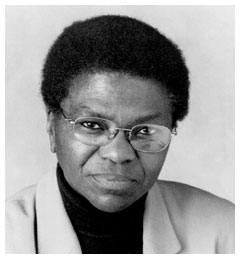
But the radio network that survived McCarthyism, and more recently attempts by Sen. Jesse Helms, R-N.C., to cut its public funding, is facing the greatest threat to its existence yet, at the hands of its own leadership. And its primary antagonist is not a right winger, but Mary Frances Berry, the black scholar and civil rights activist who chairs both the Civil Rights Commission and the Pacifica Foundation.
In the last six months, the management changes pursued by Berry have ignited a civil war within the network. Attempts by the central foundation to reduce local control of the five stations triggered outrage at KPFA, but Berry defended her attempts as an effort to bring diversity to the station, whose programmers and listeners she derided as “white male hippies over 50.”
When a rainbow of KPFA staff and supporters protested the moves, as well as Berry’s racial rationale, months of chaos ensued. Berry and Executive Director Lynn Chadwick fired the station manager, censored its public affairs programmers to keep them from talking about the controversy, had a broadcaster arrested — while he was on the air — for defying the ban, shut down the station and locked KPFA staffers out, had peaceful demonstrators arrested, and paid anti-union lawyers, armed security guards and a tony public relations firm over a half-million dollars to prevail.
Here in the home of the free speech movement, Berry’s moves outraged even people who don’t listen to the station. The result is that in the last two months, she has been socked with complaints before her own Civil Rights Commission, accused of unfair labor practices before the National Labor Relations Board and investigated by a committee of the California Legislature; she has been attacked by a wide political spectrum of local Berkeley politicians, including the police chief, and sued by listeners and staffers challenging her actions in the KPFA struggle.
What’s striking is the fact that the Civil Rights Commission she chairs has also been mired in controversy and management woes in the last decade — but few liberals have bothered to raise their voices about her management practices there. A reluctance to criticize Berry is understandable, because she is revered by civil rights activists.
They cite her heroic fight to defend the Civil Rights Commission against conservatives appointed by President Reagan (and against Reagan himself, who tried to fire her), who were trying to abolish both affirmative action and the commission itself. She took part in the infamous celebrity arrests at the South African Embassy in 1983 along with Rep. Eleanor Holmes Norton, D-D.C., and others.
She was gutsy in opposing Louis Farrakhan’s Million Man March, calling the Nation of Islam leader guilty of “the most despicable, anti-Semitic, racist, sexist and homophobic attitudes imaginable.” About the only time she’s ducked a controversial national issue was when she kept silent on President Clinton’s welfare reform, which many civil rights activists abhor.
Berry’s struggle from a childhood of desperate poverty to a life of accomplishment as an activist, scholar and high government official is a noble one. Besides chairing the boards of the Civil Rights Commission and Pacifica, she has served as an assistant secretary of education and holds an endowed chair in American social thought at the University of Pennsylvania. She is the author of seven books, most focusing on civil rights, feminism and the law.
But Berry’s achievements have come at a cost. Off the record, people who know her well describe her as a vitriolic brawler who doesn’t know when to stop fighting, and who turns on anyone who disagrees with her — even African-Americans with civil rights records equal to or more impressive than her own. More than one African-American politician and journalist have suffered a tongue lashing from Berry and been called an “Uncle Tom” just because they didn’t share her agenda.
Pat Scott, the former Pacifica manager who herself drew furious complaints about her attempts to “professionalize” the grass-rootsy stations, rues the day she recommended Berry for the top Pacifica job. The civil rights leader’s tenure “could be the end not only of KPFA but of the whole Pacifica network,” says Scott, who is also African-American.
But Berry’s use of the race card to silence her critics is especially unfortunate, because the management chaos she has presided over at Pacifica is paralleled by disarray at the Civil Rights Commission she heads.
A 1997 report by the General Accounting Office, the nonpartisan investigative arm of Congress, found the Civil Rights Commission to be “an agency in disarray, with limited awareness how its resources are used … the Commission could not provide key cost information for individual aspects of its operations … significant agency records documenting Commission decision-making were reported lost, misplaced or nonexistent …”
The GAO report questioned why only 10 percent of the CRC’s money went to the anti-discrimination investigations and reports that are the agency’s mission. It found that CRC reports took so long to complete that in many cases they were outdated and irrelevant by the time they were issued. Hearings on the apocryphal Los Angeles uprising in 1992 weren’t held until 1993 and a report, revamped as a blast at the L.A. police, wasn’t even issued until May, 1999.
The GAO also reported that the commission filed few of the reports to Congress and other departments of the government that they were required to by law. At a July, 1997 hearing on the report, GAO investigators told congressmen that many of their questions about the commission couldn’t be answered because commission staff withheld information even after several requests from the GAO. (Berry also refused to open Pacifica’s books or to testify during a recent California lawmakers’ probe of Pacifica until she was threatened with a subpoena).
When criticized, Berry stonewalled. She began her testimony on the GAO report by saying, “I will not respond to some of the comments that were made by the [congressional] members [of the subcommittee] since my years of working in Washington tells me that way lies peril and I will not take the time to do it.” Berry then blamed the former CRC chairman and current staffers for the disarray the GAO found even though she has been in charge for six years.
She blamed cutbacks in the CRC budget, which was slashed 50 percent in 1986 and has inched up only slightly under Clinton. She blamed the White House for not appointing a staff director who should have been in charge of day-to-day operations. But Berry then admitted that when a staff director was hired she offered the woman a two-day-a-week, $30,000-a-year job teaching one of Berry’s courses in Philadelphia. This arrangement was roundly condemned as a conflict of interest by conservatives on the subcommittee.
Berry’s allies on the badly divided subcommittee leapt to her defense, playing the race card as Berry herself often does. Rep. Maxine Waters, D-Calif., dismissed the entire GAO report on the grounds that it had been requested by Republican opponents of affirmative action. The hearing was nothing but an “unrelenting and mean-spirited attempt to dismantle civil rights protections,” Waters fumed.
While there is no doubt that the conservatives in Congress are determined to dismantle affirmative action and abolish the Civil Rights Commission, Berry was finally forced to admit that day that bad management hardly helped her cause. Luckily for Berry, her Congressional opponents seemed to have dropped the ball after the 1997 hearing.
Rep. Asa Hutchinson, R-Ark., said this week he was unaware of whether there had been any reforms at the commission in response to the GAO critique. Berry refused to return Salon News calls. The CRC press office faxed back a letter from its staff director, Ruby Moy, to the GAO saying that an administrative handbook had been rewritten and a new management information system was in place. But the letter did not mention any of the larger, more serious issues of delayed reports and lax investigations.
Committee congressmen were unaware of Berry’s Pacifica job and the conflict of interest it poses. Hutchinson told Salon News he didn’t know about Berry’s job at Pacifica or the legal turmoil there, “but that questions might be asked at our next oversight hearings.”
Concerns about Berry’s management and personal style have a long history. But few of her critics will talk on the record, which has made documenting her troubles difficult. Enough of them were willing to speak off the record to the Washington Monthly magazine that in 1987 it nominated her for a “Powers That Shouldn’t Be” piece, naming public officials who shouldn’t be nominated by the next Democratic president.
The magazine reported that when Berry was assistant secretary of education under President Carter, officials there cut her out of policy decisions because “she’d shatter consensus and jeopardize initiatives … she distrusted people [so] as to not be trustworthy herself …”
“Oh, I remember Mary,” a former Carter aide told Salon News. “She was a real loose cannon. We spent a lot of time smoothing over things after she’d opened her big mouth.”
Berry’s divisive management style is well-documented in the Pacifica debacle. She played the race card early and often, insisting the changes she proposed were necessary to diversify KPFA’s staff and listener base. But she refused to meet with people of color from the station’s staff and leadership, who mostly opposed her high-handed attempts at reform.
“KPFA has been doing everything it could for years and was on the right track,” says Pat Scott, who was once called “the black manager of a white station.” Concludes Scott: “This whole issue is crazy.”
Maybe the most bizarre episode yet is Berry’s appearance at Pacifica station WBAI in New York in late August, where she dropped by unannounced and asked to meet with staff. She lectured the staffers about “diversity,” apparently not noticing that most people in the room were black, Latino or Asian.
“We were amazed how little she knows about radio or what programming we do,” reported Mimi Rosenberg, a labor reporter and local advisory board member at WBAI, who ended up in the unannounced meeting with Berry because she happened to be dropping off a tape at the station when the chairwoman swept through.
Berry then flabbergasted her listeners by suggesting the network sell WBAI and/or KPFA and buy a string of small, black radio stations in the South. “A kind of black NPR,” one staffer described it. “Laudable, but to cannibalize Pacifica with its own 50-year history and listeners? She should go out and build that network on her own and see how hard it is!”
But Berry has always seemed determined to use Pacifica for her own ends. Her detractors point to a statement she made when she took over as chair, in which she said nothing about her vision for the future of the progressive network. Instead, she vowed not to let anything that happens at KPFA destroy her reputation.
And Berry has used her federal connections to further her Pacifica agenda. She used contacts at the Justice Department to get a department official to call Berkeley Police Chief D.E. Butler and ask why KPFA supporters who were peacefully demonstrating outside the station hadn’t been arrested. The Berkeley cops got tough for a day, arresting scores, until outraged citizens and the City Council reversed the get-tough policy.
“Many labor disputes have taken place in Berkeley over 25 years,” Butler wrote in a letter to the East Bay Express. “But the Pacifica Foundation’s decision to turn a labor dispute into a mass arrest situation was a first.” Chadwick then demanded the City of Berkeley pay for the security Pacifica had hired because the police had failed to protect the station. The City Council fired back a bill for $200,000 to Pacifica for police overtime at the round-the-clock demos.
To be sure, wrangles between central Pacifica management and local stations predate Berry. It was Pat Scott, KPFA station manager and later Pacifica Foundation executive, who began an all-out push for “professionalization” of the stations. Scott and her allies believed the amateurish, circa-1960s, anything-goes style of KPFA, WBAI in New York and KPFK in Los Angeles couldn’t wash in the increasingly conservative ’80s.
She and the board took control of finances away from the stations, which she says had either been unable to keep books or, in the case of the Washington station, wasted money on fancy offices for the station manager. Scott inserted the board into programming — traditionally left to the stations — when she fired black nationalists at KPPK in Los Angeles for anti-Semitic remarks on the air, and got rid of longtime programmers at KPFA whose shows she deemed outmoded.
Such changes, condemned by critics as “mainstreaming,” were opposed furiously by many staffers and members of the local advisory boards. The Pacifica executive committee began to view the local advisory boards, the traditional backbone of Pacifica’s listener-supported, “free speech” culture, as the enemy. In 1995, the executive board issued what became known as its infamous “My Way or the Highway” memo urging local board members who disagreed with the vast changes at the stations to resign if they didn’t agree. The board also closed all finance committee meetings and ruled board minutes “confidential,” again over furious objections of listeners, most staffers and local advisory board members.
Not surprisingly, the network’s attempts to go mainstream have met with approval, not suspicion, from federal regulators, and the choice of a board chair who is herself a high federal official has only won the network friends. The Corporation for Public Broadcasting, for instance, which funds Pacifica, has been happy to see it lose some of its radical tinge, since the agency had been savaged by right-wing senators in the early ’90s for funding “a communist network,” as Sen. Jesse Helms called Pacifica.
When some local opponents of the network’s centralization moves filed a formal complaint with the CPB, on the grounds that CPB rules dictate that all public stations keep open books and hold open meetings, the investigation went nowhere. Two investigators lost their jobs over the controversy and when a watered-down but critical report was finally released, it was dismissed by the CPB president, Robert Coonrod, who actually praised Pacifica in the meeting in which the report was presented.
Top CPB officials were also only too willing to help Pacifica in its battle to bring the stations, listeners and their local advisory boards to heel. Before Scott left Pacifica, she discovered an obscure CPB rule that prohibits local advisory board members from serving on the governing board of a public station. It had never been enforced. Scott reported to the CPB that the Pacifica stations were violating the rule.
At first top CBP officials seemed unconcerned, calling it “a technicality” in conversations with one Pacifica board member and several local advisory board members. Documents show, though, that in the weeks before the critical Pacifica board vote over cutting ties with the local boards, Lynn Chadwick was in close contact with Coonrod.
Suddenly, on the eve of the vote, Coonrod sent a letter to Pacifica threatening a cutoff of CPB money if the ties weren’t cut. The board went along with Berry and Chadwick, a decision that is being challenged in California court by a group of local advisory members and listeners from the five stations.
Chadwick, in a recent interview, said, “The CPB tries to give as much autonomy as possible to the stations it funds … the board’s decision was the least disruptive alternative … only a vocal few oppose it.”
The Federal Communications Commission, too, has given Pacifica free rein. When the network shut down KPFA during July, and installed an ISDN line to its transmitter so it could pipe programming from its Houston station — outside its FCC-approved signal area — Pacifica did it before it had even asked the FCC for a waiver. Ten days later, Pacifica got permission. “We don’t intervene in labor-management disputes,” is how FCC spokesman David Fiske characterized the lockout.
Even when Berry caved in to the protests at KPFA and announced she was reopening the station at the end of July, she turned what could have been an opportunity for peacemaking into an ultimatum. If staffers didn’t return the next day at 9 a.m., they’d lose their jobs, even though no job protections or an end to the “gag” on discussing the controversy on the air were guaranteed.
Employees were also threatened with “corrective action” by the board if they didn’t, within six months to a year, increase the number of listeners, the diversity of the audience and its “loyalty.” Berry’s ultimatum required that a commercial ratings service would be used to measure the station’s performance, another gut punch at KPFA’s grass-roots, listener-supported tradition.
Back on the air, the station had lost its general manager, program director, business manager, music director, a second host for the morning show and its manager for the apprenticeship program — which trained young people of color — because of the turmoil and financial uncertainty. Interim general manager Jim Bennett says he’s only been able to replace some of them with temporary hires. “Talented people are reluctant to apply because of how unstable it is in KPFA and Pacifica land,” he says. It is still unclear whether the more than $500,000 Pacifica spent on the lockout will come out of KPFA’s budget.
“She’s setting us up for failure,” says award-winning broadcaster and KPFA talk-show host Larry Bensky. “Berry doesn’t want to improve KPFA. She wants revenge.”
KPFA begins a critical fund-raising marathon Tuesday, and listeners are filling the airwaves with tortured laments that the money they send to KPFA will go to the now-despised central network, Pacifica. The Pacifica board, fraught with resignations by two members and whistle-blowing by another, has postponed its October meeting by a month, leaving the stations operating without budgets for the first time in their 50-year history. Listeners have formed an organization to push for Berry’s resignation and scores of back-channel pleas have been made, so far to no avail.
Mary Berry’s term as chairman of the Pacifica board runs out in nine months. Many hope she will simply step down then and disappear. But that doesn’t sound like Dr. Mary Frances Berry. She told WBAI staffers at her drive-by visit last month, “If you want me to stay I will go. But the minute you ask me to go I am here forever!”
