
Harry Potter

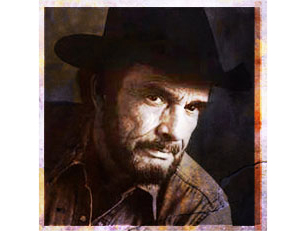
Merle Haggard

For 35 years the country music legend's been kickin' ass and making God laugh -- he don't need no stinkin' sound check.

  • more
    • All Share Services

Topics: ,

Merle Haggard

Merle Haggard has given up on the idea of a sound check. We’re in his tour bus on West 43rd Street in Manhattan, in front of the Town Hall theater, where he will perform in a few hours. President Clinton is in town, and the Merlemobile is being shooed away by New York’s finest to make room for the motorcade. Traffic is moving in slow motion; finding another place to park this hulking vehicle could take all night.

Not that Haggard is concerned. He’s been in this business for 35 years and has 41 No. 1 country songs on his risumi, including the classics “Mama Tried,” “Think I’ll Just Stay Here and Drink” and the notorious “Okie From Muskogee.” He specializes in writing deceptively upbeat songs of longing — for a woman, for the bottle, for the past, for the road — that are inspired by his rough-and-tumble life and the struggles of the rural working class. His singular mahogany voice and synthesis of elements of the work of artists from Bing Crosby to Lefty Frizell continue to thrill listeners and influence musicians of every persuasion. He’s a living legend of country music; he don’t need no stinkin’ sound check.

Dressed in jeans, sweat shirt and pork-pie hat, Haggard sinks back into the bus’s beige leather banquette as he talks about his many projects this fall: HarperCollins published his memoir “My House of Memories” last month; he has a new two-CD set, “For the Record: 43 Legendary Hits” out from BNA; and he’s winding up a cross-country tour. At 62, Haggard shows no signs of slowing down. Of course, his bankruptcy in 1992, due to a combination of reckless living and careless money management, gives him little choice. “It’s not really what I had in mind for this point in my life. But we seem to be getting hotter,” he says over the goofy banter of the members of his entourage who are along for the ride. (“Maybe we should ask Clinton to play with us tonight. He could play the whore-Monica.”)

Recording the CD, a collection of new versions of many of his greatest songs, was a humbling experience. “An analogy might be if Babe Ruth had lived as long as I have and then tried to repeat a great moment at the plate,” he explains. “It’s hard to recapture.” It’s a mixed bag, Haggard admits: “Some of the songs are better, some not as good, some just different.” Tracks such as “Misery and Gin” seem richer coming from an older, wiser man; others, including “Sing a Sad Song,” don’t seem to suit the depths of his mature voice.

There are also duets with Willie Nelson and Brooks & Dunn, and, despite his vocal aversion to most contemporary singers, he teams up with Jewel for “That’s the Way Love Goes.” “I was on tour when she recorded at my studio, so I didn’t even meet her until we performed together at the Country Music Awards” in September, Haggard recalls. “It was a pleasant surprise. She’s a real nice girl. I think we’ll be doing more together.”

Suddenly, Haggard is craning his neck, scanning the lanes of stationary cars. “Is that Kris’ limo up there?” he asks. (Kris Kristofferson is the opening act tonight.) “Let’s go see if he wants to come back here.”

“I already asked the driver,” one of the gang pipes up. “He said he didn’t want to.”

“Not the driver, Kris!” exclaims Abe Manuel, an all-around musician and longtime member of Haggard’s band, the Strangers.

“He didn’t seem to speak English.”

“Who, Kris? He writes in English,” Manuel says of the songwriter, with mock bewilderment.

Haggard is much amused by the exchange. He rocks back slightly as his creased face stretches into a huge grin. Then he turns to me: “You see what it’s like around here?” he deadpans, his eyes a heart-stopping cobalt blue. “The only way we can keep from going crazy is to try to totally confuse one another.”

His wrinkles are not all of the “laugh line” sort, to be sure. A mix of “The Grapes of Wrath” and “Rebel Without a Cause,” with some
Elvis Presley-style brilliance and excess mixed in, Haggard’s life has been a series of dramatic highs and lows. “My House of Memories” more or less picks up in the 1970s, where “Sing Me Back Home,” his first memoir, left off. “I’ve had a monstrous 20 years since that first book, just career-wise,” he marvels.

Haggard grew up in a converted boxcar outside Bakersfield, Calif. His parents were transplants from Oklahoma, like many who moved West during the Depression, but Merle was born in California. (He has lived there almost all of his life, shunning the Nashville scene.) After his father died when he was 9 years old, Haggard was constantly in trouble: running away, hopping trains, skipping school, joyriding and committing other minor crimes. The stories of his many escapes from the authorities might be the best parts of “My House of Memories.” He finally landed in San Quentin for a botched restaurant robbery when he was 20.

Prison shocked him into living on the straight and narrow. “Going to prison has one of a few effects,” he explains. “It can make you worse, or it can make you understand and appreciate freedom. I learned to appreciate freedom when I didn’t have any.”

When he was paroled in 1960, he became a regular on the stages of Bakersfield, where the local oil- and cotton-field workers were enthusiastic country-music listeners. “Sing a Sad Song” hit the charts in 1963, and he signed with Capitol soon after. He had five No. 1 country songs by the end of 1968, including “The Fugitive,” “Sing Me Back Home” and “Branded Man.” Then in 1969 came the controversial song that secured his stardom: “Okie From Muskogee,” an anthem defending traditional values in the age of hippies and free love. “The song confused everybody,” Haggard remembers. People assumed the song reflected his views, but “that was just the way the song went together. It wasn’t necessarily me in that song.”

“Okie” struck a powerful chord with many Americans. The first time Haggard played it was at an Army base. “People came up on the stage, grabbed the mike and said, ‘We don’t want to hear anything else until we hear that song again.’ We thought an Army base wasn’t a fair trial, so the next night we played it in a concert hall. People came over the orchestra pit and onto the stage. It was kind of scary — Beatlemania was going on at the time and we didn’t know how to handle that kind of response.” “Okie” went double platinum in 120 days, and Haggard went on to record more hit songs than any other country performer except Conway Twitty.

The smooth success of his career always contrasted with his rocky personal life. There have been four divorces (including one from Bonnie Owens, once Mrs. Buck Owens, who still performs with Haggard), drug addictions, high-stakes gambling and ill-fated investments. “My House of Memories” describes in detail the hedonistic years Haggard spent living on a houseboat on Lake Shasta during the 1980s. By the early-’90s, he had burned through $100 million. He received his bankruptcy papers at the hospital the day his son Ben, now 6, was born.

Today he is on his way to financial health and says he is finally living at peace. The habits of his wild years are nowhere to be seen on the ranch outside Redding where he lives with his fifth wife, Theresa, and their children, Ben and 9-year-old Jenessa. Instead of chasing women and throwing parties, Haggard spends his free time with his family at one of the nearby creeks, fishing for bass. “After we take care of all our chores, and we have about 200 acres so there’s a lot to do, at about 4 we turn off the phone and go fish until dark. We usually have our supper down there by the creek. It’s our tradition.”

Looking back on the old days wasn’t easy for him. “Writing a memoir is like going to a psychiatrist,” he says. “The emotions are still sensitive. You uncover these memories and the emotions are just lying there, naked.” Indeed, his guilt and regret are clear in the memoir’s passages about his children from previous marriages, who he doesn’t think got enough of his affection; his mother’s memories and fears that were only revealed to him in a handwritten autobiography discovered after her death; and his loss of control over his life due to drugs and drink, which allowed others to take financial advantage of him.

Sound like the screenplay for a movie? Robert Duvall thinks so. He owned the film rights to Haggard’s life story, but they expired recently. Now he’s trying to buy them back. However, “the deal he’s offering isn’t that good, and I’m just not in the market for deals that aren’t that good,” Haggard says. “It’s my life and I don’t particularly care if the story is told.”

Haggard stares out the window for a moment, seeming not to hear my questions about his opinion of contemporary country music. The bus inches forward. Did I say something wrong? I think about his recent encounter with two pushy reporters from the Star tabloid at his ranch — Haggard got fed up with their prying and escorted them off his property, mid photo session — and hope I am not about to be ejected from the bus.

Finally he turns and quips: “Someone said to me today they really like the commercials on the radio –they let you know when one song stopped and another started.” (Phew, I’m safe.) “I hear a lot of blandness, a lot of songs about things with no point. In Redding, I’d rather listen to the rock ‘n’ roll station than the country station. At least on the rock station you get good rock.” The last “spectacular” thing he heard on the radio, he says, is “Unforgettable” by Natalie Cole, one of his favorite singers.

Particularly rankling for Haggard, who is passionate about the history of music, is contemporary country’s lack of roots. “I’m not sure today’s country comes from the same place mine does. It comes from technology, not from the labor camps or cotton fields that I identify with,” he says. “When I got started in this business, you started with the art form. Then they’d say they want you to record. Now they pick you because you look like Hank [Williams], and they add the music. But you can’t take a guy and make him into a Hank.”

Haggard thinks pop-country music — which has produced megastars like Shania Twain and Garth Brooks — is on its way out. “People are being force-fed new country. They haven’t had a choice. Only one type of music is getting played. But I think a change is about to occur. Music fans are bored to death,” he argues. “It’s like Harry Potter. No one expected that to be so successful. But people grabbed on to something different.” Haggard, too, seems ready for something different. “The music and the crowd’s response are what make this fun,” he says as the bus rounds the corner of Sixth Avenue and 44th Street.

Yet of all his songs, he says the one that best describes his current position in life is “Footlights,” a 1978 number about a burned-out musician. He wrote it after he had to play a concert five minutes after hearing that Lefty Frizell, one of his idols, had died.

I’ll try to hide the mood I’m really in
And put on my old Instamatic grin
Tonight I’ll kick the footlights out again.

“I’m getting to the point where it’s time to start thinking about not being able to make a living the way I have for 35 years,” he says as the bus parks in a once-in-a-lifetime empty stretch of curb not far from Virgil’s, the barbecue restaurant where he will have a quick dinner before taking the stage. “I wasn’t investing until recently. Now I have a new family I wasn’t planning on. You know they say if you want to make God laugh, tell him your plans. Well, my plan was to live on a houseboat and drink and party my way out. I quit drinking and smoking not because of pressure from outside but because of the kids and new responsibilities. I’m glad I did it. I think I’m more in charge now.”

He’d like to get into business — the “other side of the camera,” as he calls it. But that’s later. Right now he’s looking forward to getting back to his ranch and his family. “I like to listen to the creek run.”

Continue Reading Close

Elizabeth Bukowski is assistant books editor of the Wall Street Journal.

Majoring in Potterology

Are books like J.K. Rowling's popular series and Stephenie Meyer's "Twilight" fit subjects for serious scholarship?

  • more
    • All Share Services

Topics: , ,

Majoring in Potterology (Credit: Shutterstock/Salon)

Last week in Scotland, 60 scholars gathered over two days for the U.K.’s first scholarly conference on the Harry Potter series. The Guardian newspaper quoted John Mullan, a professor of English at University College London, questioning the wisdom of organizing such an event. Concluding that the host college, the University of St. Andrews, was primarily after “publicity,” Mullan suggested the attendees would be better off forgetting kids’ books and cultivating their gravitas. “They should be reading Milton and ‘Tristram Shandy,’” he told the Guardian. “That’s what they’re paid to do.”

The criticism brought to mind a lengthy discussion on Reddit last year, inspired by an anecdote from a bookstore clerk who sold copies of all four “Twilight” novels to a sheepish professor. The professor’s explanation: “Every time I reference low forms of literature, I always use ‘Twilight’ as the example. Today a student asked if I’ve actually read them, and I had to say no. They demanded that I do.”

What should literary academics study? To judge by the Reddit comments, many people believe that academia’s job is to ordain great literature and pass on its exalted benefits to students. As for bad literature, the more calumny that can be heaped on it and those who love it, the better! Much of the discussion devolved into knee-jerk “Twilight” bashing by users as unfamiliar with the books as that sheepish professor. (Many of them give the impression of cherishing equally bad taste, albeit for forms of pop culture that are much less girly.) Extravagant evocations of steaming piles of bodily waste abounded.

Nevertheless, a few readers agreed with the professor’s students: If you’re going to knock something, then set a good example by knowing what you’re talking about. You don’t want to give students the idea that it’s OK to opine on a book they haven’t read, for crying out loud. And, toward the end, a few informed participants even stepped in to speak out on behalf of the study of not-very-good books — provided those books are a cultural phenomenon, which “Twilight” most certainly is. “Something doesn’t have to be high-brow literature to be a worthwhile material for study,” wrote one. “That’s not to say it’s a ‘great book’, but for academic literature, whether or not something is ‘great’ is sort of beside the point.” “I think a lot of people assume English Ph.D.’s just go around saying ‘This book is good, this book is bad,’ all day,” wrote another. “That is an incredibly misguided understanding of the study of literature.”

It is. However, Mullan’s argument isn’t that the Harry Potter series is bad (he says his kids love the books), only that it isn’t serious enough to reward scholarly attention. “Harry Potter is for children,” he said, “not for grown-ups.” True, the Harry Potter books are technically “for” kids, but by now everybody knows that adults read them, too (including adults without children), and that some people who first read them as kids have since grown up and yet still regard them as important books. Can the Harry Potter novels, as novels, be detached from the momentous role they played culturally, socially and in the world of book publishing? Does it even make sense to try?

“Twilight,” which I suspect will have an even greater impact on America’s book culture because of the fan networks it has inspired, is doubly damned as unserious because it’s not only “for children” (that is, teenagers), but it’s also a romance, surely the most reflexively disdained of all literary genres. Throughout the early 19th century, all novels were seen in more or less this light: as fanciful stories read by silly women seeking escape from sterner truths, women all too prone to absorbing dangerously misguided notions of life and love. (For the record, I tend to agree with the later opinion, but that doesn’t mean I think “Wuthering Heights” beneath scholar interest.) As recently as the 1930s, it was controversial for any novel at all to be assigned to students at Oxford. Novels were regarded as recreational reading, not matter for significant study.

In the late 20th century, however, the field of cultural studies, a discipline springing out of poststructuralist theory, seized upon everything from Madonna to “Buffy, the Vampire Slayer” as fodder for academic work. Often, through some tortuously elaborate theoretical rationale, the fun stuff of pop entertainment could be cast as “subversive” or even revolutionary, tantamount to a form of political activism, which was something of an ivory-tower fetish at the time. That’s not to say that Madonna and Buffy didn’t have their subversive elements, but unlike actual political activity, those elements could be easily ignored by audience members who didn’t care to hear about them. Pop culture is funny that way.

Cultural studies has since fallen out of fashion a bit, and it doesn’t seem to have left much of an impression on the public, who at best dismissed it as fad. (Maybe they were right about that.) Still, there’s much to be said for smart people paying real attention to the stories that captivate huge numbers of people. First, there’s the simple question of why? Why was a boarding school series about wizards in training exactly what every kid wanted to read in the late 1990s? Why do so many girls and women like vampire romances?

Then there’s how. Was it just chance that elevated Stephenie Meyer’s vampire romance above the rest of the genre, or was there something particularly effective in how she executed it? What role has the Internet played in fostering fandoms that not only persuade more people to read a book, but perhaps influence their opinion of it as well? If anything, an obviously “bad” book presents an even more fascinating puzzle to solve. Sometimes the answer is historical. The fictional techniques Dan Brown utilizes in “The Da Vinci Code” are so basic and formulaic they can be found in about a zillion other thrillers, but his bestseller’s tale of power, secrets, conspiracy and religion clearly spoke to a lot of discontented readers in the Bush years.

It’s also worth asking whether critics of the Harry Potter conference would object to a conference on “Alice in Wonderland” or “The Adventures of Tom Sawyer,” both books written explicitly for children. Somehow, the passage of a century or more makes them seem weightier, just as it has turned the ladies’ entertainments of Jane Austen’s time into the literature of today. Who’s to say the same won’t happen to J.K. Rowling’s creation, or even to Meyers? If so, there won’t be any lack of contemporary sources to explain how we saw them, the way we argued over the quality of their prose and the examples they set for young men and women. But as for how they’ll look to those readers, sitting down to study whichever “classics” will survive and be read 100 or more years in the future? That is anybody’s guess, and anybody should be entitled to take a shot at it.

Further reading

The Guardian newspaper on the U.K.’s first academic conference on Harry Potter

A Canadian bookseller sells “Twilight” novels to a sheepish professor

Reddit discusses whether college professors should read “Twilight.”

Continue Reading Close
Laura Miller

Laura Miller is a senior writer for Salon. She is the author of "The Magician's Book: A Skeptic's Adventures in Narnia" and has a Web site, magiciansbook.com.

“Captain America” corners the box office

Has the superhero won the summer by pushing "Harry Potter" from the top spot?

  • more
    • All Share Services

Topics: , ,

A scene from "Captain America: The First Avenger."

If early estimates are to be believed (at Deadline, Nikki Finke had her doubts on Sunday), it looks like “Captain America: The First Avenger” has flown higher and faster than its summertime superhero rivals, “Green Lantern,” “X-Men: First Class” and “Thor.”

According to Box Office Mojo:

Captain America made an estimated $65.8 million on approximately 7,100 screens at 3,715 locations, edging out fellow Avenger Thor’s $65.7 million as well as Green Lantern’s $53.2 million and X-Men: First Class’s $55.1 million to top the summer’s superhero launches.

“Captain America” has also pushed “Harry Potter and the Deathly Hallows: Part 2″ (which made only $48 million this weekend) from the top of the box office charts, overseeing a sharp 72-percent second-weekend fall for Radcliffe, Watson et al. However unfortunate Potter’s ticket dip, however, it’s hard to think of “Deathly Hallows 2″ as anything but a success when it’s already racked up the following records (among others):

  • Biggest midnight opening
  • Biggest opening weekend
  • Biggest opening day
  • Biggest international weekend
  • Biggest IMAX opening weekend
Continue Reading Close

Emma Mustich is a Salon contributor. Follow her on Twitter: @emustich.

Harry Potter: How it couldn’t have ended

Journalist Greg Palast claims J.K. Rowling had a surprising idea for her series' conclusion. We don't buy it

  • more
    • All Share Services

Topics: ,

Harry Potter: How it couldn't have endedIn this film publicity image released by Warner Bros. Pictures, from left, Emma Watson, Rupert Grint and Daniel Radcliffe are shown in a scene from "Harry Potter and the Deathly Hallows: Part 2." (AP Photo/Warner Bros. Pictures, Jaap Buitendijk)(Credit: AP)

According to Greg Palast — an American journalist who says he and J.K. Rowling became “buds” when they “shared the bestseller list” in England “years ago” — J.K. Rowling considered ending the Harry Potter series in what one could reasonably term a highly unlikely fashion. New York magazine was quick to pick up on Palast’s relevant blog post yesterday.

At gregpalast.com, Rowling’s “bud” writes:

Jo knows that I found the conclusion of her series a sorry let-down, a second-rate “Show Down at the OK Corral” for Wizards. In my opinion (and she does not at all agree), Jo was too distracted by a concern for how the ending would play on film. I bugged her about it until she told me the “other” endings. … No, Jo wouldn’t show me typed copies, but she told me a couple of “I could have done this” endings. One of them knocked me over, and I have to share it.

Share it he does (with, unsurprisingly, a couple of caveats, e.g.: “If you want to say that I didn’t get her voice and story details exactly, keep in mind that I’m working from mental notes”).

Excuses aside, there are more than a couple of problems with the narrative Palast presents. In this version, Voldemort doesn’t die; instead, he reverts to childhood, and is joined by ghost-versions of his mother and father who “put their reassuring arms around their son to protect him” from a curse that could obliterate his soul. Instead of being destroyed, all three are then “forever entombed” in a statue that Harry — when, later, he becomes Hogwarts headmaster — keeps on the Hogwarts grounds.

Here’s one fundamental discordance: It’s unlikely that Voldemort’s parents would try to protect him the way they do here (or at least, I don’t think both of them would). First of all, Merope Gaunt and Tom Riddle — the ill-fated couple whose offspring would eventually terrorize the wizarding world — didn’t even have a good relationship themselves; they came together, or so Dumbledore hypothesizes to Harry in Book 6, because of magic performed by Voldemort’s mother (who was, incidentally, far from a “beautiful maid”), and separated when the enchantment wore off.

Second, Voldemort killed his father. To suggest that these two tortured souls would return together to save their son seems slightly ridiculous; to paint a picture of Voldemort as “a little child again with his mother and father at his side” is even more ridiculous, given that Tom Riddle (Jr.) grew up in an orphanage.

Another major problem: In Palast’s version of the “epilogue,” it emerges that “every wizard excepting Harry and the shade of Albus [Dumbledore] were cleansed of all memory of the Dark Lord.” Surely that’s the last thing that would have happened in an alternative ending penned by Rowling herself. Wouldn’t Harry want his contemporaries and their children to remember the past, so as not to become complacent in the tranquility of the present?

These aren’t the only curiosities in Palast’s narratives, as Potter fans can see for themselves here. I don’t know whether Greg Palast ever really spoke with J.K. Rowling on this subject, but I have to imagine — or at least hope — that if he did, she didn’t tell him this.

Continue Reading Close

Emma Mustich is a Salon contributor. Follow her on Twitter: @emustich.

Wizards or Jedis?

Salon's TV critic and his ninth-grader discuss the cross-generational magic of Harry Potter and Luke Skywalker

  • more
    • All Share Services

Topics: ,

Wizards or Jedis?

My daughter Hannah is a ninth-grader, and my favorite person to see movies with. Sometimes we’ll see a film and then instant message each other about it later, or tape ourselves talking and do a transcript, then publish the result at my friend Ed Copeland’s blog, Edward Copeland on Film. This conversation is on the final Harry Potter film, “Harry Potter and the Deathly Hallows, Part 2.” I was really looking forward to seeing this movie with Hannah, not just because it’s the final installment in a franchise that’s been around nearly as long as she has, but also because Hannah has read all the books and I’ve read exactly none, which makes her an ideal explainer.

Matt: So here’s what I was thinking going into “Harry Potter and the Deathly Hallows, Part 2.” I was 8 years old when the original “Star Wars” came out in 1977 — the movie that your generation calls “Episode IV: A New Hope.” The timespan between that film and the conclusion of the original “Star Wars” trilogy, “Return of the Jedi,” was six years. That carried me from fourth grade through freshman year of high school. Those movies dominated my imagination during that six-year period, and were almost as much a part of my life as any person I actually knew.

Do the Harry Potter movies seem like a comparably big deal to you? Has there been anything during your childhood — a movie series or a book series or a combination — that seemed like as big a deal as the whole Harry phenomenon?

Hannah: “The Hunger Games,” Percy Jackson … those are the only two I can think of. And they are nowhere near as big as Harry Potter.

Matt: Do you see these movies as movies first and foremost, or as movies based on books?

Hannah: Movies based on books, definitely. After the first three movies, it’s really hard to follow the plot unless you’ve read the books. Seeing the movies after reading the books is just the icing on top of the cake.

Matt: I have seen all of the Harry Potter films, but I’ve only read the first 40 pages of the first novel. I remember watching the first movie when it came out and not liking it because it felt too much like an illustration of a book rather than a free-standing movie. I thought, “I should get on track with this series of books, otherwise I won’t be able to judge the films as adaptations.” But then the second movie came out a year later, and I didn’t like that one either, and I decided that I wouldn’t read the books after all, because a film has to have a life apart from the book, no matter how good or poor it is as an adaptation.

In the end I feel like their track record as movies is a mixed one. A couple of the films are terrific, a couple are bad, the rest are pretty good. But I should also confess that I have trouble keeping the story straight over the entire saga. I am tempted to give the films the benefit of the doubt and say it’s all my fault. But I follow much more complicated stories on long-form TV series and in movie franchises such as “The Lord of the Rings,” so maybe the filmmakers are at least partly to blame.

Hannah: I agree when you say that a movie has to take a different life apart from the book. But if you really enjoyed the movies and want to truly respect the invention of the insanely imaginative world that is Harry Potter, the books should be read. I think the key thing to have when you’re creating a culturally defining saga/franchise is the ability to create a world unlike our own, and create parallels to what we know in our lives, such as education, career, government, etc. Along with that, I think that it’s also key to place human traits in the characters living there, so that it’s easy to lose yourself in the universe. The books have all that.

Matt: I feel like the movies were only partly successful — for this viewer — at capturing the essence of the books. I only read “The Hobbit” and part of “The Fellowship of the Ring,” yet I was tremendously involved with, and excited by, the “Lord of the Rings” films. And I never read Mario Puzo’s “The Godfather” until right before the third movie came out, yet I didn’t feel I’d been cheated as an audience member. These were substantial experiences that were equal to, but different from, the books they were based on.

The Harry Potter books, though … I don’t know. I always felt there was something missing from the movies, that that there was something incomplete or slightly flat about them. There were only two “Potter” films that I thought were really terrific as cinema, the third and fifth ones. The sixth had its moments. But the rest only grabbed me in fits and starts. A scene here, an action sequence there, a bit of acting that moved me.

For the most part I felt like I was seeing a transcription of something that was absolutely beloved in its original form — and that the incredible intensity of the love that people felt for the source was carrying over into the movies, and sort of filling them out, or giving them an extra kick. There were definitely times when I felt my attention beginning to wander a bit during one of the movies, and then suddenly the crowd would laugh or applaud as one, because they had obviously read the books and were feeling a great rush of emotion, and I felt it, too, although the rush was secondhand, or once removed.

Hannah: I know exactly what you mean. When it comes to adapting a 700-page book into a two- or two-and-a-half hour movie, you needn’t have read the book previously to know that there were parts that were off, or flat, or like something was missing. It’s hard to devote yourself to a book and come to love certain scenes, characters, etc., and see them changed, altered or cut on the big screen. The point of the movies is to bring the book to life, and it always sucks when you can’t see the entire book come to life exactly as it should.

Another thing that makes the Potter movies hard to follow is the constant foreshadowing. There were times in a Potter movie where one character mentioned a person, place, magical object, etc., and another character said, “Gee, I met that guy/went to that place/learned about that object briefly a few years ago! Who knew that information would be helpful now?” It’s easy to constantly foreshadow in books when you’re the person creating the story, but when you’re a filmmaker adapting that story, I can see how you would look at a script and go, “Crap, we should have mentioned this in a previous movie, because now it’s crucial to the plot!”

Matt: Well, I’m glad you mentioned that, because that phenomenon is one of the clunkiest things about the Potter films — their tendency to say, “Here is this really important character who is right at the center of the ongoing narrative and whose fate is of absolutely critical significance,” yet this is the first time you’ve ever heard them mentioned.

There was a moment like that in the final movie, actually — the appearance of Dumbledore’s brother. Harry says something like — and I’m paraphrasing — “You’re Dumbledore’s brother? He never mentioned you to me.” And the brother says something that’s almost like a self-deprecating joke, like, “Yeah, that sounds like him.”

The “Godfather” films and the various seasons of “The Sopranos” did this, too, as you will eventually see when you watch them. “Hey, Tony Soprano, say hello to your beloved cousin who was like a brother to you growing up.” And it’s Season 5, and you never heard a syllable about that guy until now! At least when the movie series or TV show is completely original, the filmmakers have a bit of an excuse. They’re flying by the seats of their pants, just kind of making things up and hoping it all makes sense with hindsight. But the “Potter” films were based on preexisting books, so the clunkiness there seems strange to me.

The “Star Wars” films are an example of that. You really have to stretch to find foreshadowing of Darth Vader being Luke’s father in the original 1977 movie. I think that was because the filmmaker, George Lucas, originally wrote “Star Wars” as an entire series, or a very long film, then had to cut it down and eliminate a lot of the more novelistic flourishes. And then when the 1977 film was a hit and the studio wanted sequels, he had to reintegrate a lot of the things he’d cut, and create a lot of stuff that was never there previously in any form. And that led to some narrative awkwardness.

Hannah: That makes sense. But I’m talking about seven books that are released about a year-and-a-half apart from each other. The makers of the first Harry Potter movie only had the first two or three books to work with, as far as foreshadowing goes. Sometimes in Harry Potter, the foreshadowing is subtle, and the time between when something is foreshadowed and when it happens is short. With the movies being three books behind, it may have gotten hard to take every move into account.

Matt: Fair enough. OK, since you have read all the books and I’ve read only a tiny part of the first one, so I want you to play expert witness for me and explain some things that I found confusing, OK?

Hannah: Yes, sir, fire away. I am prepared with my geeky answers.

Matt: I am confused about the ownership of the wand that Harry uses to kill Voldemort. Can you walk me through that?

Hannah: Do you mean the Elder Wand? Because that’s the one Voldemort used, not Harry.

Matt: I’m talking about the wand that Harry used to kill Voldemort, which I guess was not actually Voldemort’s wand? Voldemort took it from Snape, right? What was the line of succession before that? And what are the rules, exactly, governing the possession of wands and how it affects one’s ability to do magic?

Hannah: The wands in Harry Potter are pretty complicated. Voldemort is a part of Harry. When Harry got his wand in his first year, rather than him picking out a wand, a wand chose him. The wand had a twin who chose Voldemort when he started at Hogwarts. So there were two identical wands, one possessed by Voldemort and one possessed by Harry. When Voldemort tried to kill Harry in his fourth year, it didn’t work because their two wands were the same. So Voldemort set off to find a new wand.

Dumbledore possessed the Elder Wand. The night that Dumbledore died in the sixth year, Draco Malfoy disarmed Dumbledore and took the Elder Wand against Dumbledore’s will. Shortly after, Snape killed Dumbledore. Dumbledore was buried with the Elder Wand. But, little did anyone know, Draco Malfoy was truly the owner of the Elder Wand. Whoever takes the wand from the owner against his will is the new owner. Voldemort takes the Elder Wand from Dumbledore’s tomb. When the wand doesn’t work for him, he assumes it’s because it belongs to Snape, because Snape killed Dumbledore, the previous owner. So Voldemort kills Snape. But Voldemort still is not the master of the Elder Wand.

Meanwhile, in the showdown at Malfoy Manor at the end of “Harry Potter and the Deathly Hallows, Part 1,” Harry disarms Malfoy and takes the wand Draco received when he started Hogwarts (made of hawthorn). But since Harry took a wand from Malfoy against his will, that makes Harry the master of the Elder Wand. Harry uses Malfoy’s wand for a while because his original wand broke. When Harry is fighting Voldemort, he uses Malfoy’s Hawthorn wand to kill Voldemort, who is using the Elder Wand, despite the fact that Harry is the true master.

Matt: That was amazing, and I’m not sure it helped. It kind of reminds me of when a friend asked me to explain the relationship between the Corleone family, the Rosato brothers, Clemenza, Hyman Roth and Frankie Five Angels in “The Godfather, Part II.” When I got to the end, even I was confused.

I’m also not sure what to make of the whole Snape evolution. So he’s a good guy pretending to be a bad guy pretending to be a good guy? Was he ever really working for Voldemort? Or was he always a triple agent working for the forces of good?

Hannah: Snape knew he was a wizard since he was born. He was a half-blood. His mother was a witch and his father was a muggle. He was very poor, and his parents fought a lot. He lived near Lily, Harry’s future mother, and her muggle parents and her muggle sister, Petunia. He recognized that Lily was a witch and filled her in about the wizarding world when they were growing up. He fell in love with her. But when they got to Hogwarts, Lily was sorted into Gryffindor, and Snape was sorted into Slytherin. They remained friends through their earlier school years. Even in his beginning years at Hogwarts, Snape detested Harry’s future father, James, because James used to bully Snape and was rather arrogant, and also because Snape knew James had a crush on Lily. Snape was worried about Lily eventually falling for James.

But Snape and Lily drifted apart as Snape befriended his fellow Slytherins who were interested in the dark arts and becoming Death Eaters. When they left school, Lily got together with James and married him, and Snape went off to become a death eater. And yet Snape was still in love with Lily. When the prophecy was told, Snape knew that Voldemort (at this point, his master) would set off to kill baby Harry and anyone that got in his way, such as James and Lily, Harry’s parents. Snape begged Voldemort to spare Lily, but Voldemort ignored him and killed her anyway.

Dumbledore told Snape that he had been foolish instilling his trust in Voldemort, and that the best way to pledge his love for Lily would be to protect her son. Snape agreed, but begged Dumbledore not to tell. Dumbledore said, “Fine. I will hide the best of you.” When Harry started Hogwarts, despite the fact that Snape was protecting him, he couldn’t stand to be around Harry because he was reminded so much of James, whom he hated.

Snape went on to be a triple agent as Voldemort rose to power. Then in the sixth year, Dumbledore was cursed by a ring that was made into a Horcrux by Voldemort. He only had a year to live. Dumbledore was aware of a plan that Voldemort had to make Draco Malfoy kill him. But Dumbledore knew Draco wouldn’t be able to do it, so he told Snape that when Draco failed, Snape must kill Dumbledore. And he did, at the end of the sixth year. Then he continued to carry out the tasks that Dumbledore asked of him before his death, despite the fact that many of the good characters in the book distrusted him.

That took a long time! I hope you understand now.

Conclusion: Snape is the awesomest character in Harry Potter. (Faints)

Matt: OK, that was truly epic. Now I really regret not having read the books. I missed a lot of the nuances.

But even so, I agree with you about Snape. He’s my favorite character. Nobody else can come close to his complexity. And Alan Rickman is the acting MVP of the whole series, in my opinion. It is really, really hard to play a character like that and not either give the game away early or mislead the audience in a way that seems unfair in retrospect. In degree of difficulty, that performance is at least a 9. The only thing that could’ve kicked it up to a 10 is if he’d given the entire performance in Spanish or French or something.

Hannah: Did I answer your questions with as much enthusiasm and detail as you would if I asked you about a major plot point in the “Star Wars” movies?

Matt: Oh, absolutely. And this is as good a place as any to admit that while the Potter books and films would not exist without the “Star Wars” films paving the way, they are clearly superior to Lucas’ saga in terms of narrative and character. Maybe the only area where Lucas has the edge is visually: the films are more daring in how they are composed and edited. But that’s small consolation considering what a big steaming mess a lot of them are.

And like you said, the movies aren’t at the heart of the phenomenon, the books are. And judged purely as a pop culture event, the books are huge. There’s nothing else like them.

I think if we look at this in terms of a generation’s relationship to a defining piece of popular culture, I think your generation definitely got the better deal.

Hannah: Yes, I think we did.

This piece was cross-posted at Edward Copeland on Film, where you can read earlier installments in the Hannah-Matt conversations on Fantasia and Cinderella.

Continue Reading Close

Harry Potter triumphs at the box office

The final Potter film takes $168.5 million in U.S. ticket sales on its opening weekend, smashing several records

  • more
    • All Share Services

Topics: ,

Harry Potter triumphs at the box office

The final Harry Potter film has broken the box office record for most successful opening weekend in history — besting the previous record-holder, 2008′s “The Dark Knight,” by about $10 million.

“Harry Potter and the Deathly Hallows: Part 2″ took an estimated $168.5 million in domestic ticket sales between Friday and Sunday; “The Dark Knight” took only $158.4 million on its first weekend (although Deadline reminds us to consider that HP 7.2, unlike “The Dark Knight,” was available in 3D — and thus some tickets were more expensive).

According to a Warner Brothers press release, Harry Potter’s last on-screen hurrah broke three records with its $92.1 in opening-day ticket sales, and sold more than $476 million in tickets worldwide. The studio further reports that fans paid $43.5 million for tickets to midnight Friday showings alone — another first.

On its first day in U.S. bookstores, “Harry Potter and the Deathly Hallows” sold around 8.3 million copies (of 12 million that had been printed), CNN Money reported at the time. For every book sold domestically on that day in July, 2007, $11 or so were spent on a Potter ticket Stateside this past Friday.

Unsurprisingly, Potter positively dwarfed the weekend’s other openings, taking 21 times the ticket sales of Disney’s small-voiced but  “utterly charming” Winnie the Pooh revival — and roughly 2,246 times the ticket sales of Sarah Palin documentary “The Undefeated,” which opened in ten U.S. theaters and sold at most $75,000 worth of tickets.

Continue Reading Close

Emma Mustich is a Salon contributor. Follow her on Twitter: @emustich.

Page 1 of 16 in Harry Potter