
Coupling

Torture by dating

When it came to romance, I'd always broken "The Rules" -- then "The Rules" nearly broke me.

  • more
    • All Share Services

Topics:

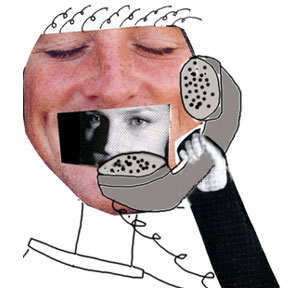
Torture by dating

I‘ve never been given to casual dating, nor have I ever read, opened, purchased, borrowed or stolen a copy of “The Rules.” I have always prided myself on a more organic approach to romance than highly perfumed evenings in clingy black dresses. I’ve always thought love should bloom naturally, rather than being pried open by the cold, hard grip of sports coats, good behavior and restaurants with real table cloths.

People should present themselves as they really are, without the polite fagade of dating to mislead either party. After all — no matter how many coats of politesse one may paint on for the duration of a meal, one still goes home after dinner and slips into a ragged old nightshirt and tattered slippers, right? Why not get right to the point?

Based on this theory, I have jumped feet first into several semi-successful serious relationships with “authentic” men — men who talk to my cats, say things like, “I fully support you in whatever you do,” and like a woman who likes to go Dutch. Love me, love my sweat pants — the sort of relationship that never begins with a date on a Friday night (too intentional), certainly has nothing to do with anything blind (too frightening), and never, ever involves the question “Can I see you again?” (too dumb). Stating the obvious dampens the thrill. If you have to ask, then the answer is no. If the air is thick with hormones, then yes, you can see me again.

Some more traditional types might call this the approach of an over-educated liberal, or even — deep breath — of a feminist. I have always called it romance. So how do I explain giving my number to a man I know casually, a guy to whom I would normally give the shut-down because he’s too “Hollywood,” too much of a player? Curiosity? The inquiring mind’s desire to see how the other, hair-sprayed half lives?

We bump into each other on a Tuesday, at a mutual friend’s house. He flirts, and at first I am startled. He’s never flirted before — he’s a little bit varsity, I’m a little bit liberal arts. It was just never there.

“Why now?” I wonder. He flirts some more, and I am surprised to discover that it doesn’t bother me. I am between relationships, 26 and just frustrated enough by my last romantic endeavor to wonder if maybe I’ve got the formula down all wrong.

Maybe I should try to “date,” rather than “see” or “live with.” Maybe the key to happiness is lipstick and manicures and letting him open the door for me. Maybe I should pay a little more attention to my hair. Maybe those women in heels are actually … happy? And he’s not half bad looking.

“What the hell,” I think. Summoning up all my courage, I flirt back. He likes it. And I like that he likes it. “See,” I tell myself with pride, “you can date just like the rest of them. So you don’t own a push-up bra. Buy one!” He asks for my number. Caught up in the rush of running with the big dogs, I give it to him.

He calls once on Wednesday and leaves a message. Reason and habit have returned. I am wary and unimpressed. He calls again on Thursday, and I am slightly flattered by his effort. By Saturday he has called seven times, and I feel great. “Let him call,” I think with glee as the phone rings again and I let it go to voice mail. OK, so he pursues me, and I like it. What, besides the Rules-reinforcing girliness of it all, is wrong with that? So sue me if I’d like, for once, to go out with a guy who doesn’t say, “Let’s go grab a slice, meet me there,” and then expects me to pay for it.

For once, I want to be treated like the toenail-painting, G-string-wearing, perfume-spritzed woman that I can be. Face it — dorm days are long gone, just like late-night, after-the-library-closes booty calls and even those postgrad sitcom scenes when you lie around his living room on tapestry-covered furniture and watch “The Real World Honolulu” with him and his four roommates.

Yes, I admit it, I was excited by the thought of having dinner with a guy who comes to pick me up, who calls in a reservation from his car phone and who actually has an assistant instead of being one. Call me shallow, or call me bored. Just so long as he calls.

He comes to my house and sits on my couch while I apply the finishing touches to makeup I haven’t worn since my cousin’s wedding. I step into the living room expectantly, as if my mother is going to pop around the corner with the camera to get a snapshot before we head off to the prom. We smile a lot and I make certain to grab a sweater, just in case he’s in the mood for something spontaneous, like driving up the coast to Santa Barbara for the night or hopping the red-eye to Manhattan for dinner at Jean Georges.

He steps over a cat without stooping to pet it, opens the front door and suggests a restaurant by the water. A foreign giggle escapes me and I say that sounds fine. I shut the door firmly behind me. It is a Friday night. I am perfumed, primped and preened. I am ready for anything.

The restaurant is beautiful and the hostess smiles knowingly at us as if we reek of first date. He picks a bottle of wine and encourages me to order an appetizer. He casually mentions his latest trip to Italy. He was, of course, producing a big-budget film there and hardly had time to enjoy the beautiful Tuscan countryside. He did, however, squeeze in the chance to sample some of the regional wines. “He’s good at this,” I think, and find myself wondering how many dozens of first dates he’s been on in his life.

I try to picture him after dinner, alone in his apartment, beer in hand, wearing only a pair of beat-up varsity shorts and a ratty T-shirt. I can’t conjure up the image. He orders a shrimp dish loaded with endive, leeks and capers. He points to the menu and says, “They have a great tiramisu here.” Contrary to years of conditioning, I am impressed.

A second bottle of wine and an order of rum-soaked ladyfingers later, we land in my stairwell, lips locked, hips grooving like bad music. I push him away, and his last words to me are “I’m going to go take a cold shower.”

“Woo,” I think. “That was fun. I bet he calls me tomorrow to say he can’t wait to see me again. I can do this dating thing after all!”

Ah, the arrogance, the casual confidence of the woman who had shaved — everywhere — before donning the panties without holes, even though she knew no one was getting anywhere close to that underwear tonight. (Yes, we women do know who’s in charge of that, at least. We have to hold on to some semblance of control before we slip off down the rocky slope into the Valley of He Never Called, or wade through They’re All the Same River, which runs downstream, both ways.) I watch him pull away and commend myself on a date well done. “This,” I think confidently, “I can get used to.”

Pride fully extended, I wait for him to call. He doesn’t. Days turn into a week, and I become Satan’s child, embodiment of the Anti-Rules, not confident, cool and certain that one day, when he can take it no longer, he will call.

No, no, I am the Rules Unplugged, frustrated and confused and wishing desperately I could regain that precious, fleeting feeling of control I had when I was being pursued. On the seventh day, I accept with horror that I am being blown off by a man who called me seven times.

“What did I say?” I wonder, as if anything I could have said while his tongue was in my throat would have been intelligible, or even heard, let alone considered. “How could I have been so stupid?” I cry. “He knew about the tiramisu — am I that foolish?” He probably practices first dates like some people practice religion: every Friday night. “Fine,” I sniffle. “Then I’m not calling either.”

On the ninth day, I have an epiphany. I stand in front of my closet, and in a moment of clarity, I realize that pride has led me straight down the path to hell, as it always will. I realize, with horror, that I have left my favorite sweater in the back of his car. Now I will have to call. Anguished, defeated, crushed, I stand in my bedroom with my head in my hands. I have lost the game.

For a second I consider sacrificing my sweater to the greater good of femininity, to the cause of all women exhausted from going Dutch all the time. Guilt overrides my social conscience as I remember that my mother gave me the sweater for Christmas, and that on more than one occasion she has mentioned how expensive it was. No, I will throw the game.

I call. I leave a casual, witty message. “Ha, ha, ha, you know, it’s just so cold in Los Angeles in August, I’d really better get that back from you soon.” Ha, ha, ha. I hang up the phone, dreading that he will score extra points in overtime by not calling back.

He calls back. He tells me that he’s out of town on business, but that he’ll check for the sweater when he returns. And, as an extra kindness, he closes his message with “I don’t know the number here at the hotel, but you can call information on the island of Oahu if you want to reach me.”

Yes, I can call information on the island of Oahu — I am college-educated and have often used the services of the phone company without parental guidance — but why, my dear, would I want to? If I did call information and hunted you down over 3,000 miles of ocean and Kalua pig, I’m sure every hardcover and paperback copy of “The Rules” would burst into flames, simultaneously, in bedrooms and libraries and women’s medical group waiting rooms around the nation. I could never be responsible for that kind of mass destruction and terror.

I don’t call again, until 10 more days pass and I know that I will have to. Ah, the sweater, precious grail, keeper of a thousand dashed hopes and dreams and desires. Yes, I call again. As I dial, I draft a witty, lighthearted script. I will leave a message on his machine, because he’s never home. I will make a big joke out of it, I will be buoyant and bubbly and sound hurried, as if I have squeezed this call in between two dates and lots of champagne. One problem: He answers.

Paralyzed by the threat of star-69, I stupidly resist the urge to hang up and call back tomorrow. How greatly modern technology has redefined the world of dating is something we cannot hope to fully grasp in our lifetimes. We make small talk. I make light. I ask him to give my sweater to a mutual friend, who will then return it to me. He says he will have some more time next week and we should plan to get together so he can give it to me. I ask him again to give it to our mutual friend. He says he’ll call me tomorrow to set up a time. He closes with, “It’s great to hear your voice.”

I bite my cheeks and resist the temptation to scream into the earpiece, less out of a desire to appear calm than out of fear that my neighbors will start to refer to me as the Crazy Girl in 3F. For a split nanosecond I am almost swayed by visions of candle-lit dinners, Italian wines and tuna carpaccio, but these brief mirages fly out of my head as quickly as they enter. It’s great to hear my voice?

His words settle in my brain, and I fight the urge to snarl, “That’s funny, because it seems to me that the easiest way to hear my voice is to call my number. My voice can often be found at home.” No, I will remain calm. I will not say something scathing and catty, like “I bought a pair of see-through underwear for you and you say something stupid like that?” Instead I smile at the earpiece, the weight of womanhood heavy on my shoulders. I close with a calm, if skeptical, “I’ll talk to you soon.”

This is it, then. This is where those women in heels find themselves three weeks later. This is how first dates end. This is why I’ve been eating pizza and starting relationships on Sundays for years. This is why all those books have been written, why men think women are crazy and women are certain that men simply “don’t get it.” Haven’t men learned, after all these years, that the most attractive quality a man can have is the ability to dial?

It’s really very simple. After all, we women aren’t high-maintenance until our needs aren’t being met. How complicated can it really be? You say you’ll call. We are flattered. You actually call. We are surprised and smitten. You call again. We are hooked. When spoken words and dialing fingers actually jibe, mountains will move, the ageless battle will cease, Atlantis will be found.

Eleven days later and no phone call. I am restless, agitated. I lie in bed at night remembering the fine woolen nap of my hip-length black sweater, feeling the bitter taste of battle in my mouth. I will not relent. I will retrieve my sweater, somehow. Fourteen days, and I call again. He answers. “Great to hear from you. Yeah, I still have your sweater. Listen, why don’t you come to this party up in the hills with me tonight and I’ll bring it with me.”

Why don’t you ship it via parcel post? Or maybe send a mule? Or perhaps you should tell me where to leave a suitcase filled with $100,000 in unmarked bills, and then we can let this whole thing rest, OK?

Refusing to let him think that I have staged the helpless sweater act in a sophomoric attempt to see him again, I decline the party. “How about tomorrow, then. I’m going to a barbecue right by your house. Why don’t you come with me, have a burger, hang out?”

“No thanks,” I tell him. “Why don’t you call me on the way to the barbecue and you can swing by my house and drop it off?”

“Sure thing,” he responds, not missing a beat. How many first dates has he been on in the last three weeks, I wonder?

Barbecue time comes and goes. No phone call. I leave the house, mapping out elaborate stories I will tell my mother about how the sweater was ripped from my shoulders during a carjacking, or how I lost it while rescuing a small child from the undertow. Perhaps she will be most sympathetic to the truth — that I have fallen prey to the bad-date disease, that I have erred in judgment and sacrificed my clothing so that others may learn from my mistakes.

I return home several hours later to find the sweater hanging from my doorknob. No note. I check my messages. No phone call. It is finished. The siege has ended. My pilgrimage is through.

As I drift off to sleep that night, I see myself through a drowsy haze, dancing in a shiny, black Calvin Klein bra and panty set, a cat in either hand. Next to me, keeping perfect step, is a handsome young creative type, wearing sweat pants beneath his sculpted chest. He holds a phone in one hand, and with the other he hands me a flannel nightgown. He bends to kiss me and whispers in my ear, “Put this on for me — you look so sexy when you wear it.”

I sleep soundly, curled up tight with my sweater clutched in my arms.

Continue Reading Close

Jennifer Li Shotz is a writer living in New York.

But I’m a good Mormon wife

Sean and I had the perfect life. Then his faith started to crumble -- and mine did, too

  • more
    • All Share Services

Topics: , , , ,

But I'm a good Mormon wifeA photo of the author with her husband

“I don’t believe in God,” my husband whispered in the darkness of our bedroom.

My breath caught, and I was afraid to look at him, this boy I met and married eight years ago.

I was only 19 on the day we were sealed for eternity, the wet snow blowing into our faces as we exited the Portland, Ore., temple. I imagined a life of Church service, my husband at my side as we finished our BYU degrees, raised our children, and served missions together in our old age. On the night we got engaged, we struck a deal. “I’ll get you to heaven,” I said. “But you have to keep me here on earth.”

Now his confession hung over our nuptial bed. And though I’d known this was coming — he’d been struggling with his faith for at least two years — I’d never considered what I’d say. Sean had always been the rational one, a brilliant computer scientist who spoke sense when I was in the throes of clinical depression. Now, my thoughts went still as I groped for his hand. Before I could process what I was saying, forbidden words slipped off my tongue. “You are more important to me than the Church,” I said.

I wondered what my pioneer ancestors would say if they could hear me, these grandparents so faithful that they abandoned their East coast relatives for a life here in this Utah desert. Some of their graves stood a few blocks from where I whispered my betrayal, but I didn’t care. I loved Sean, and that had to be enough.

But in the weeks that followed, there was a distance between us. We stepped lightly around conversation, kept talk to the kids, work and the mundane. Our friendly touches in the kitchen disappeared. My acceptance shifted to bitterness and anger.

I spent my morning runs worrying about what was being said around my Mormon neighborhood. We lived 20 minutes south of BYU’s desert campus, and most of my running partners had husbands high up in the Church hierarchy. I waited anxiously for them to mention my heathen family, wondered if they’d heard that my eternity with my husband was now in jeopardy, that in the hereafter I’d likely be pawned off to some other righteous man as a plural wife — probably my ex-boyfriend; hopefully not Brigham Young. And all the while I couldn’t stop thinking. Why, Sean? I didn’t sign up for this. You promised me we’d spend eternity together, and now you might as well be gone.

That sinister word flickered around in my head: divorce. It manifested itself onto my notebook paper as I scribbled out my daily morning pages. I didn’t want it, but sometimes I thought both of us would be happier if we said good-bye.

Sean and I spent our time in the usual way, taking long summer walks along Hobble Creek. While our two eldest sons raced ahead on their bicycles, we followed with the baby (okay, the two-year-old) in the stroller. Sean obsessed about death. “I’m so terrified of losing you and the boys,” he said one day after waving hello to our neighborhood women’s leader. He looked over at me and said, “I couldn’t bear it.”

Confused sadness flickered in my eyes. His fears were utterly foreign to me. We’d both been taught from an early age that death was simply the gateway back to God. How could he not see — as I did — that this was true? I know we’ll be together again, I wanted to say. Instead I said gently, “I hope for your sake that you die first. Then you won’t have to deal with the grief of losing us.”

Sean was as supportive as an atheist could be. He even went with me for the first hour of church to help with the Squirmy Ones. But when he’d leave early, I’d cry in the bathroom, feeling completely alone. I never said that word aloud: Atheist. My heart clenched just thinking it.

We rarely talked about religion, yet it consumed us. When Sean replaced his temple garments — the sacred underwear he’d promised to wear day and night — with boxers, I couldn’t take it anymore. It was too much betrayal. I called up a neighbor with a husband like mine and cried. But instead of empathy, she offered questions that stunned me into silence. Was Sean addicted to pornography? Watching R-rated movies? What sin had brought him to this terrible place?

My tears stopped. Her questions were so off-base that they seemed absurd. She was sincere, and trying to help, but she believed what the Church teaches — that a man would only leave because he’s disobeying the commandments. She couldn’t understand this was a rational inquiry. She saw everything as the result of sin.

This started my brain twitching. I knew Sean was still a good person, that he still maintained the same moral standards he had when he married me. The Church was wrong about him. What else might they be wrong about? I shoved the thought away.

But I wanted to understand him. This was Sean, the man who stood by me during years of clinical depression. The man who pretended to be a dinosaur while he chased our shrieking sons around the room. He wasn’t some heathen. I couldn’t believe that. I wouldn’t believe it. He’d always been a skeptic, and even though I didn’t agree with him, I knew intellectually that he’d never make this decision without careful consideration of the facts.

As summer shifted to fall, I often found him hunched over his iPad reading everything he could find on Mormon origins. I started to join him in his nightly bath, and the information would seep out. He’d pause from our usual safe topics and bite his lip. “I’m sorry, but I just have to tell you. Did you know that …” and then he’d tell me what he’d been reading. About how Joseph Smith mistranslated some Egyptian hieroglyphics that are part of our canonized scripture. About how he translated the Book of Mormon while looking at a stone inside of a hat.

I listened half-heartedly, questioned his sources, though I wasn’t about to go looking at them myself. Our prophets had made it clear that anything written outside church documents was suspect and anti-Mormon, fabricated for the sole purpose of destroying faith. Yet Sean continued, until one night it was about polygamy, my archnemesis.

“Did you know that Joseph Smith married a 14-year-old girl against her will? Did you know that he’d send men on missions and marry their wives in secret when they were gone?” I sat there silent as he kept talking, a horror growing in my gut. I knew that if Sean was right, then Joseph Smith was a fraud. I saw no difference between his acts and the modern-day acts of Warren Jeffs, whom I abhorred. And if Joseph Smith was a fraud — then what did that make the Church?

I left the bath early and went straight to bed, feeling a magmic pressure building inside me. The scholar in me couldn’t let it go. I had to know.

I already did know.

When I finally broke down a few weeks later, Sean was the one to hold me as I wept into my pillow and traipsed down the familiar road to despair, wondering what my life even meant if the Church wasn’t true.

“It’s OK, Maren. It’s OK. I’m here,” he said as he stroked my hair, whispering into the darkness. What felt like an end, though, slowly opened up into something else.

Over the next few days our usual mile walk turned to four as my brain tornadoed through discovery, my conversations stopping mid-sentence with “Whoa, then that means …” Whoa, we suddenly have 10 percent more income. Whoa, our weekend free time just doubled. Whoa, we can try alcohol, coffee and tea — the trifecta of forbidden drinks.

The sad whoas came, too. Whoa, will my father ever talk to me again? Whoa, what will my friends say? Whoa, we are going to die.

My transformation consumed me for the next month, and we stayed up late talking every night. When I shed my garments for slippery Victoria Secret panties, my self-esteem skyrocketed, and our late nights shifted to other things. We were finally adults, taking our firsts together, learning about each other without barriers.

Ironically, the Mormon Church teaches that marriage can only thrive if God is an equal part of it. But when we left God out of it, we were free to love each other completely, to share the burden of our grief as two individuals with no one else.

It’s been seven months now, and I don’t know what the future holds. I have never been more uncertain in my entire life. But one thing is clear to me. Whatever happens, wherever we go, Sean will be at my side, holding my hand as we face it together — and alone — for the first time.

Continue Reading Close

Maren Stephenson is a writer who loves hiking, camping, and mountain biking in the Utah desert. She is currently working on her third book.

Our most dangerous hike

When a casual excursion turned dangerous, I didn't know if it would end my relationship, or define it

  • more
    • All Share Services

Topics: , ,

Our most dangerous hike (Credit: Blazej Lyjak via Shutterstock)

At 6 years old, I reluctantly joined my Brownie troop on an all-day hike into the woods, and two days later, my appendix burst. I blamed the woods. Maybe it was the grit at the bottom of my Thermos, which my troop leader had told me to ignore. Maybe my appendix was allergic to the outdoors. (“Maybe it’s because you suck on your hair,” my mom said, a habit she regularly predicted would lead to my ruin.) Soon after, I quit Brownies and never went hiking again.

Until age 26. I was in a faltering relationship with a man who loved hiking and camping, and who sincerely believed that I would love these activities too, if he could be my guide.

V was the first Indian-American I’d ever met who actually liked to camp. I’d always associated camping with white people, along with sunbathing and being grounded, but here was V at REI — testing compasses, lusting after tents — with a thrilled, drifting look in his eye. I kept thinking about a term that a friend and hiking enthusiast had once taught me — “poop trowel” — two words that returned to me now with great foreboding.

But as I trailed along, I found myself vaguely infected by V’s enthusiasm. It was one of the things I liked best about him, his ready embrace of adventure. He had once done a seven-day solo hike through the Himalayas, sans guide, and slept at a tea house each night. Before I bought a bicycle, V got me to double on his and we rode all around New York City that way, though it took me a while to loosen my clench on his waist.

Ironically, it was that very sense of adventure that seemed to prove us incompatible. We were plagued by the question of where we would live for the next 10 to 20 years, if we were to get married. Prior to meeting me, V had spent a year in rural India and three years in Sierra Leone. He had always envisioned living and working abroad, either in India or Africa; I had never even entertained the possibility. The question of where led to a multitude of what ifs. We tried coming up with timelines and spreadsheets that would fulfill both our geographical needs. Google Docs became a primary form of correspondence.

I think we both believed that we would soon be parting ways, and that this camping trip would be some lovely, pastoral memory we would linger over, long from now, when we were married to other people. I agreed to go hiking, mostly because of his enthusiasm, and how much I would miss it.

Not 15 minutes into our hike, I was faced with a number of immutable truths — that my backpack was the approximate shape and weight of a mini-fridge, that my one prized possession, a king-size Hershey bar, was somewhere in his backpack instead of mine, that we had to first ascend a mountain in order to descend it. V went ahead of me, leaping from stone to stone, chatty and upbeat, immune to my slightly exaggerated mouth-breathing. The first bad sign came early on, when we were met by a hiker descending the mountain. He said that the weather, on his way up, had grown so chilly and cloudy that he’d decided not to go above treeline. We told the hiker where we were planning to go: up the mountain, along the ridge, through a ravine, along another ridge, and into a colony of shelters by sundown.

The hiker took one look at me in my oversize yellow poncho, bowed under the weight of my mini-fridge, and asked for our full names. “Just in case,” he said, leaving off the rest.

This is the point in the TV movie where you curse the foolish hikers and urge them to turn back. In our defense, a park ranger had initially approved our route, had even guessed that a yellow blob like me could tackle the whole journey without a problem. The views, he said, would be worth it.

But at the top of the mountain, the landscape turned lunar, drained of color, bereft of plant life. We stood among the gray rock, surrounded by cloud on all sides, a far cry from the turning leaves we had come to see, the livid orange and garnet that lavished the slopes at this time of year. This was a more desolate beauty, remote and isolating. But we’d been planning this trip for weeks, and after a mere hour of suffering and no sign of those magical, mist-clad mountains, we weren’t about to turn back around.

I decided to adopt a certain philosophy toward the hike, which was something like my approach to life at 26: I don’t know where I am but I’m keeping on. I was living in New York City, working as an assistant editor on a documentary film, writing my first novel in the evenings, and trying to negotiate with the mouse that lived in the bowels of my gas stove. Around that time, I read Rilke’s “Letters to a Young Poet,” in which I’d starred these lines: “Try to love the questions themselves, like locked rooms and like books written in a foreign language. Do not now look for the answers. They cannot now be given to you because you could not live them. It is a question of experiencing everything. At present you need to live the question.”

As the hike went on, I found myself living a lot of questions. I kept waiting for the visual rewards that the White Mountains website had promised us — a sapphire lake, a giant, sleepy moose — but no. The uphill climb flattened out into a hostile field of gray boulders. Buffeted by wind and nearly horizontal rain, I struggled to keep my balance.

And I learned another word — “cairns” — cryptic little piles of stones that marked the trail. Those stone snowmen became for me tiny totems of authority and hope in our increasingly bleak surroundings. After we crossed the boulder field, we checked the map. We weren’t covering enough ground to stick to our original plan. We had no time to sit and eat. Instead we took turns shoveling mixed nuts into our mouths from a sweaty Ziploc bag, and though I hate mixed nuts, I nibbled with a feral intensity.

Cold and wet and miserable, I focused on composing a series of speeches, which I planned to deliver as soon as we found ourselves within reach of a proper toilet. Rhetorical questions included: Why couldn’t we have started with a day hike? Why didn’t we obey the several signposts that read, DO NOT GO PAST THIS SIGN? But the light was fading too quickly to pause and interrogate. The sun had begun to set by the time we reached the ravine, a steep descent among jagged rocks and a rather anemic stream. We had no choice but to strap on our headlights, like miners, and scoot from stone to wet stone on our rears. Propelled by resentment, I led the way.

At some point, I turned and noticed that V had fallen a good bit behind. When he finally reached me, he showed me his hands, which were pale and trembling slightly. His lips were going numb, making it difficult to talk. Hypothermia, he guessed. I could see he was scared. I pressed his wet-gloved hands between mine. It didn’t help.

We went on boulder-scooting, slowly now. Every so often, I called behind and he replied, but if his voice was too distant, I waited until he reached me. Soon, the dark engulfed us completely, and all I could see was the small tunnel of light from my headlamp, brightening the few steps ahead but nothing more. The snowman totems were lost to us. Our map had fallen apart. All we had was the sound of our names in the dark, or I’m here, or Go on.

It was pitch black when we reached the bottom of the ravine, and yet instantly warmer below treeline. We stumbled along what we thought was the trail and finally arrived at a group of rickety lean-to’s in which hikers could pitch their tents. Climbing into a lean-to, I felt an almost deranged euphoria. I didn’t even mind, later that night, when we realized that V’s sleeping bag had been soaked through by the rain. We stuffed ourselves into my lady-size sleeping bag, packed so tight that I couldn’t move my torso or legs, a sort of two-headed sausage. As was his custom, V fell asleep within minutes. Exhausted as I was, I lay awake, listening to him snore, never so content to be partially paralyzed next to another.

As I write this, I’m in New Delhi and V is in Mozambique, but usually we live in Washington, D.C. We got married two years after our White Mountains hike, and while we spend some months out of each year in different countries, I’ve come to believe that the question of where we’ll live 15 years from now is as foggy as who we will be. Ours is a marriage that some of my relatives call “modern,” and by modern, I think they mean inscrutable.

And as married folk do, we’ve recounted That Time We Went Hiking to our friends so often that we can call up the smallest details, like the squirrel scratching all night at the skin of our tent. (Another rodent negotiation.) What I don’t remember as readily is the growing panic, the uncertainty behind every step. The memory of that fear fades a bit with every telling.

In retrospect, the happy ending of our hike seems a fated eventuality, but logic — and a hundred other hiker horror stories — suggest otherwise. There is a multitude of other routes the story could have taken, that our story could still take, twists and boulder-scooting turns that no Google Doc spreadsheet could foresee. Such is the wilderness of marriage. We continue calling across the dark, across continents, and so long as the other answers, I’m here, we are safe; we keep on.

Continue Reading Close

Tania James' new book of stories "Aerogrammes" is now out from Knopf. She is the author of a novel "Atlas of Unknowns," and her writing has appeared in Boston Review, Granta, Kenyon Review, One Story, Orion, and The New York Times. Visit her at www.taniajames.com or on Twitter at @taniajam.

Hit on the head

For five years, I was haunted by a violent crime and a broken relationship. Then came a twist I never expected

  • more
    • All Share Services

Topics: , , ,

Hit on the headThe author in a red dress in a Second Line processional through the French Quarter. (Credit: Laurence Kretchmer)

When I saw the date of Charlotte’s wedding, I felt like I’d been hit on the head. What were the chances? Of all the days to get married – of all the cities to get married in – my friend had chosen the exact date that I met Nick, in the city that I met Nick.

I suspect most couples don’t know the exact date of their first encounter. But then most couples probably don’t have a police report.

It took me a few days to decide to contact Nick. I’d been wrestling with that urge for five years now. My inbox was a shame trail of gushy letters typed after midnight, impulsive notes dashed off in the afternoon. All of them had cutesy subject lines, like the titles of Raymond Carver stories, but they should have been labeled the same thing: “Do you love me again? Have you changed your mind yet?”

But one evening in March, I sent Nick an email. My hands were trembling as I typed. It was subject lined “things you may or may not remember,” and this is what it said:

“My friend Charlotte is getting married in New Orleans on May 13, and I will be going. May 13 also happens to be the day I met you, six years ago on Royal Street with a lump on my head the size of a lime. (Life is WEIRD, right?) I’d like to see you. Is that possible?”

I hadn’t seen Nick since he came to New York City in the spring of 2007. The morning he left, we woke early and watched an episode of “The Wire,” and then he walked me to the subway in my Brooklyn neighborhood. As I descended the steps he remained at the top, peering down and smiling. He did this whenever we parted, a habit that unnerved and delighted me at once. I’d wave him away while I stood in the security line at the airport – you can go now, I’m OK – but he would just stand there. Not going anywhere, he seemed to be saying, although that was clearly a lie. A few weeks after the New York trip, he called one Friday night and ended our relationship.

“You deserve someone who can be there for you,” he said.

I responded in the most articulate way I could muster under the circumstances. “Oh, fuck off.”

—–

The story of how I met Nick is one I have told many times. I have told it at parties, and in essays (even in this publication), and so I might as well tell you now.

It begins six years ago, when I was in New Orleans for a different wedding. I was walking along a quiet stretch of the French Quarter with two friends around 1 a.m. when a kid yanked my purse and, when I didn’t let go, clocked me above the left eyebrow with a pistol. Nick was the detective on the case.

“That’s so romantic,” people sometimes say, although I can assure you it was not. It was violent and horrible, and flirting was the furthest thing from both our minds that night as I rattled off a description of the kid while holding an ice pack to the side of my head. (OK, it was not the furthest thing from my mind. I did look for a wedding ring. He had one.)

It never occurred to me that anything would come of that case. This was a year after Katrina. Bodies were still being found in abandoned attics. But eight months later, I received a photo lineup in the mail, and I was surprised to discover that even after so much time had passed, I knew exactly who the kid was, knew it in my bones. Four months after that I was flown to New Orleans to testify at a pre-motion trial. I mean, life is WEIRD, right?

When I came back to New York, I was seized by a feeling that I should send a present to the recently separated detective who sat with me after the trial while I tried to shake off a grief I could not articulate. (I sent him the first season of “The Wire.”) That gift sparked a correspondence that lasted for six months. A few weeks after the kid pleaded guilty and got 15 years, I returned to New Orleans to see Nick.

“It doesn’t seem fair,” I told him once, sitting on his puffy leather couch in the nondescript one-bedroom where he’d moved after the split from his wife. “That kid gets a prison sentence, and we get each other.”

“That’s cute,” he said, threading his fingers through my hair.

“That I care about that kid?”

“That you think life is fair.”

Around the time we began corresponding, Nick moved to the homicide department. It was grueling, thankless work. Little romance in that, either, though I romanticized it anyway, besotted as I was by true crime and mafioso grandeur and David Simon. At the time, I wrote a blog about pop culture for a sex site. Of course I wanted to hear about guns and blood spatter. Nick, meanwhile, was happy to hear about pop culture and sex. We were the perfect escapes for each other, and we had both been searching for open hatches.

When people write about falling in love, I tend to cringe for them, because love requires a delusion that is deeply personal and impossible to explain to the world. So I’ll just say that I have doubted every relationship I’ve ever had, until that one. I was absolutely certain that Nick and I were meant to be together, and I was right. I just failed to specify how long.

When Nick broke up with me, I was devastated. Stunned. Nothing he said that night made sense to me, because it ran so contrary to the 500 conversations we’d had about how the other one was stitched into our DNA.

“The way I felt about you changed,” he said. “I don’t know why.”

If a duck calls you up one night, and tells you he’s an elephant, what do you say? How do you respond?

I responded the best way I knew how. “Oh, fuck off.”

In the five years that have elapsed since that conversation, we have spoken only a handful of times. We have tried to be friends – he missed me, I knew that – but then our conversations would lead me down the same sorrowful path, crying in my Stella Artois, and I’d grow incensed when he didn’t return an email or call me back.

I dated other men. Kind men, whom I quite liked. But in that eye-rolling way that is native to sensitive types, and writers, and alcoholics, and hoarders of memory and other people’s affection – of which I am batting a thousand – I held on to Nick, to the idea of Nick, to the hope represented by Nick through five years of recession woes, drinking problems and personal catastrophe. I did crazy things, which I can only admit now because I don’t do them anymore: I slept in his police shirt. I got insanely drunk one Sunday afternoon and called a dozen friends, begging them to convince me not to call him. Oh, the drama. Oh, the sturm und drang. Self-pity that could rattle the cupboards.

While I bled openly in public, he remained behind a fortress of stoicism. He is as much a cop as I am a drama queen. I don’t mean to say he is callous, because Nick is a tender person. His favorite movie is “Casablanca.” I have found this to be true of other cops, who manage to wall off some soft patch of sentiment behind the barbed wire fence. One night we were at the bar when I saw him talking with great passion to another detective. I figured they were discussing a case. Turns out, they were talking about their love for “The Notebook.”

But the few conversations Nick and I did have were a tangle of “do not cross” tape. I asked him things like, “How are you?”

He said things like, “Great.”

I said things like, “Great?” with a bit of eager anticipation, hoping he might sketch out a more detailed portrait.

Instead, he would say, “Yup.”

There was one thing Nick told me during the breakup that did make sense, and which I held on to with both fists. He said, “I met you at the wrong time.”

I’d be walking along the Hudson River one Saturday afternoon and those words would float up into my head. Well, what would be the right time? And when I moved from New York back to Dallas, a 90-minute flight between us, those words returned. Could the right time be now?

I scoured the landscape for signs that we were supposed to be together, or that he still thought about me. A New Orleans fleur-de-lys insignia at the restaurant where I was dining: What could that mean? A book about an NOPD murder crossing my desk: Why that, why now?

It was ridiculous, it was pathetic – let’s all agree as a group – but I could not stop clinging to the notion that the universe would bend itself so that our lives would entwine once more.

And then came Charlotte’s wedding.

I sent Nick an email late at night, when I suspected he’d still be at his desk, and by the time I woke the next morning, he had sent his response. Yes, he’d be happy to see me again. Lunch, drinks, whatever. It was exactly the answer I anticipated, which brought tremendous relief. But what came next blindsided me.

“If she’s free, can I invite my wife?”

So much can happen in five years. When I took those long walks along the Hudson, I used to wonder if Nick had remarried. I made up so many stories about him, and that was certainly one of them. What she might look like. Who she might be. I also wondered if he’d gotten back together with his first wife, the on-again, off-again high school sweetheart he married at the age of 22, three years after they had a baby together. Divorces take a year in New Orleans, and our relationship tracked exactly with that time period. He broke up with me the same week his divorce was final.

Even now I don’t know if the email he sent refers to his first wife, or his second wife, or his third wife or his 40th, because I could not muster the nerve to ask. The fact that I find it easier to write an essay on this subject is one of a thousand strange quirks that makes me who I am. The fact that he will not tell me any of that stuff until I ask directly is one of his.

In the days that followed his email, though, something shifted inside me. It calved like a glacier. It burst like the prick of a safety pin held up to the swirly rainbow curve of the world’s largest bubble. I would have told you this was impossible. I swear to God I thought I would spend the rest of my days clinging to that stupid blue police shirt, a modern-day Miss Havisham, but now I felt different about him, much as he had once felt different about me. I did not hate him. In fact, I adored him. But I did not want to see him again. The longing was gone.

I emailed Nick a week later. The subject line read, “on second thought.” I told him I thought it was a bad idea that we see each other. I told him I had been mistaken.

I had been mistaken about so many things. I’m not just talking about Nick now. I’m talking about the stories we tell ourselves about our lives: That it is absolutely going to be this way, or it is absolutely going to be that way. It is fated. It is doomed. It is destined. It is done. I have believed so many lies about myself, for so many years, and closed the lid to lie down inside those coffins. I thought I could never stop drinking, but I did. And I thought I could never be happy in the city where I grew up, but I am. And I thought I would go to my grave crying for the cop in New Orleans who didn’t love me back, but I don’t feel that way anymore. In fact, I feel kind of grateful. I’d be a horrible cop’s wife. Are you kidding me?

We don’t know how our stories end, and the greatest plot twists are the ones we never saw coming. There is a line that I love. “God is a first-rate novelist.” It’s from Richard Price’s introduction to David Simon’s book, “Homicide.”

So I went to New Orleans, six years to the day after I’d been pistol-whipped, but that date has a new significance to me. Charlotte’s wedding was so lovely. It was full of personality, and color, and the peculiar language shared by two people as their lives interweave. After the ceremony, we paraded through the French Quarter behind a brass band in a Second Line procession. As we passed crowds watching us on Chartres, I kept wondering if I might catch a glimpse of Nick. I did not. But somebody did run into Leonardo DiCaprio. (Life is WEIRD, you guys.)

The next afternoon I took one last stroll through the Quarter before heading out of town. I snapped a picture of the sign on Royal Street, the same street where I had been mugged, the street where I first told Nick I was in love with him. That street is a knot of complicated meaning to me.

I couldn’t help laughing at the big ONE WAY sign hanging right below it. I know it doesn’t mean anything. But I took it as a message from the universe that it was time to move on.

Continue Reading Close

Sarah Hepola is an editor at Salon.

Their moms were crazy about me

My boyfriends' mothers just knew I was The One. Too bad their sons didn't agree

  • more
    • All Share Services

Topics: , , ,

Their moms were crazy about me

Judy’s warm brown eyes sucked me right in. Her son David and I had only been dating four months, but that didn’t stop me from falling for her hard. I was 30, and still reeling from my parents’ recent divorce and the fact that my mom had just moved five floors above me on the Upper West Side of Manhattan. I practically went from shaking Judy’s hand to curling up on her lap in a fetal position. I didn’t feel like a grown woman meeting my boyfriend’s mother. I felt like a kid calling shotgun, desperate to claim a seat at her table.

Over the next five years, I got that seat. I spent Hanukkahs, Passovers, even Purims in Judy’s plant- and music-filled home in Amherst, Mass., my picture hanging on her fridge alongside her children and grandchildren. To her, I was a done deal. I was family. To David, not so much.

After thousands of dollars spent on couples therapy, David still couldn’t make up his mind about me. He kept saying he “wanted to want to marry me.”

“What did I do wrong?” Judy asked me one day, in a stolen, private moment, not understanding why David was unable to commit to me.

I wished I understood. I wanted to blame his ambivalence on something specific. Yet the truth was he didn’t love me enough to make me his wife, and her love wasn’t enough to change his mind or heart.

When David and I broke up, Judy sent me a handwritten note in the mail telling me she was so very sorry and that she wished me everything I wanted for myself. And with one last “Love, Judy,” my picture was no longer hanging on her refrigerator. I no longer had a place at her table. I was no longer part of her family.

My mother, who by this time had moved to a house in Connecticut, came to live with me for a week. She yanked David’s nightstand and lamp from the wall and pushed my bed up against the window, so I wouldn’t be reminded of where he used to sleep. We repainted my living room, ordered in sushi, and she held me as I cried. Then my father invited me down to Florida. He took me out to expensive steak dinners and let me sleep late. We spent hours watching “Planet Earth” until I couldn’t think about anything other than stalactites and snow leopards. I was grateful to both of them for being there for me, but it didn’t erase a nagging aloneness I felt deep inside, the pain I still harbored over their divorce, over our broken family. I was 35 and mad at myself for still being hung up on a long gone childhood home. It was time for me to create my own home, start my own family. I just didn’t know how to do it.

All I knew is that I didn’t want to spend another five years with another mixed-message guy, only to get a “Dear John letter” from another almost mother-in-law. But like a crackhead who can’t shake her habit no matter how hard she tries, I was a goner the second I stepped foot into Susan’s kitchen.

Paper turkeys and streamers were strewn everywhere. Her house smelled of chocolate babka and apple cider. I could call this place home, I thought, sitting down, not wanting to get up.

It was only my sixth date with Jason. But it seemed longer since we’d spent four years of high school together and had been Facebook friends for the past year. I knew I shouldn’t get too excited, but the fact that he had invited me home for Thanksgiving and that I was meeting his mom so early on made me feel special, like he was really considering me as someone he could spend his life with. When he invited me back for Hanukkah a few weeks later, and my picture was hanging on the fridge, I knew I was in.

Susan and I spent hours in her kitchen frying latkes, bonding over how we both give too much and have short necks. She even confided in me that she had never seen Jason so happy. This was the real deal.

Jason and I didn’t end up making it past New Year’s.

Instead of a note, Susan picked up the phone. “It’s not you,” she said. “You’re wonderful, perfect, beautiful.” She was a poet, and explained to me that a poem isn’t possible if the writer isn’t open to the words in the ether. “I’m sorry Jason isn’t open to the poem.”

I dropped my head into my hands as soon as we hung up and burst into tears. I couldn’t believe I had let this happen. I had once again mistaken a mother’s love for the love of her son. I clearly had a problem and could not be trusted around mothers.

I should have been happy when Ethan didn’t introduce me to his mother immediately. He told me he wanted me to himself for a while before bringing me home to meet the family. But after six months of dating, I found myself fiending. When would I get to sit at Rena’s table? When would I see myself hanging on her fridge?

Rena, Ethan and I made plans to meet up for breakfast around the corner from me on the Upper West Side. I wore my favorite navy blue sweater and made sure to blow-dry my hair. I wanted to look pretty for her.

As we sat in a booth eating overcooked eggs, Rena told me about the Holocaust museum where she worked. I told her about the eighth grade girls I counseled on Fridays. Ethan made jokes.

Then the subject of our future came up.

Rena looked at me directly, and said,  “I’m waiting to love you.”

I almost choked on my toast.

Judy and Susan flew to mind. There had been no waiting with them. Just full on, “Let’s do this!” Then I thought back to something David had said at the end of our relationship that I never understood. “I feel like we’re more brother-sister than lovers.”

Sitting speechless in this poorly lit diner, something clicked.

David was right. By slipping into daughter role with his mother, I had become one of the kids. And while that felt good, to be part of a cohesive family, to feel like I fit in, I wanted to be a wife, not a daughter-in-law or sister.

Rena somehow knew this, that her love and approval couldn’t influence her son — and that if we had a shot, she should stay out of it.

I wanted to hug her and thank her for doing the thing I couldn’t do all these years: Wait, see and then fall.

Last May, Ethan and I exchanged vows under a brightly colored Chuppah that Rena had spent hours sewing together for us. But it wasn’t her love that got me there. It was Ethan’s.

As I stared into my soon-to-be husband’s warm blue eyes, smiling so wide my cheeks hurt, surrounded by a patchwork of friends and family, I no longer felt like a displaced kid looking for a seat at someone else’s table. I felt like a woman being claimed by a man.

Ethan made me his wife. And now, at almost 40, I am hoping he can make me a mother too. Our fridge is waiting.

Continue Reading Close

Kimberlee Auerbach Berlin’s memoir, "The Devil, The Lovers & Me: My Life in Tarot," was published by Dutton in 2007. She teaches memoir and humor writing for continuing education programs including Mediabistro, UCLA Extension, Gotham Writers’ Workshop and has a growing private client base. For more info: www.kimmiland.com..

Couple seeks other couple

My husband and I were so happy with Greg and Sara. But then, it all fell apart

  • more
    • All Share Services

Topics: ,

Couple seeks other couple (Credit: Everett Collection via Shutterstock)
This post originally appeared on Ann Bauer's blog, The Forever Marriage.

It was a beautiful evening, the room filled with candlelight and buttery smells. Our wine was perfect. But after just two sips, I knew this wasn’t going to work.

Our conversation was boring and needlessly loud. The man had a braying laugh and mentioned his boat repeatedly, calling it “she” each time. I snuck a look at my phone: 8:17 on Saturday. I could be home in my pajamas, watching “Breaking Bad” on Netflix. I imagined standing, turning without a word and walking out.

Instead, I gave my husband a desperate look and he broke in with a question about wind and sails. The man turned, and I relaxed for a second. Next to me, I felt his wife brighten. She’d heard I was a writer and she wanted to talk about books. Specifically “Twilight.” It was her “passion” — the entire series. I nodded and drank steadily as she deconstructed each plot.

After we said goodbye and got into the car, John sighed. “Well, that was a waste of 200 bucks,” he said. Then he reached over and squeezed my hand.

We’d been searching for another couple — people to hang out with and take vacations and trade stories about our three nearly grown children — for more than a year. Ever since our breakup with Sara and Greg.

- – - – - -

Those aren’t their real names. But the story is true: It’s about the wonderful couple we fell for and how we were happy for a while and then how our relationship died.

We met at a mutual friend’s and talked for hours. We were all in our 40s. Greg and I had both married — and divorced — young; we each had an adult son with disabilities. John and Sara were devoted stepparents, walking that awkward line between authority and friend. We were all weekend travelers and motorcycle riders. Our tastes overlapped on every level, from Eritrean food to Robert Downey Jr. films.

Things got intense really fast. Greg and Sara came by with takeout twice a week. We showed up at their place with wine every Saturday night. When we were apart for more than a couple days, the texts between us flew.

I based the sardonic-yet-loyal best friend in my  new novel on Sara and sent her the manuscript the moment I finished a draft. Then I waited a tense week for her to read it. I was ecstatic when she approved.

On our anniversaries, which happened to fall on the same autumn weekend, we rented adjoining cottages at a bed and breakfast. I’d been injured earlier that week, trying to help my autistic son get dressed. So I arrived with three cracked ribs and John, Greg and Sara took care of me, lifting me from the booth where we had our celebratory dinner and — when we got back to our cottage — settling me gently into a chair with pillows to support my aching side.

We stayed up that night drinking port and eating apple slices and sharp cheese by a slow-burning fire. Quite late, Greg began speaking in a broken voice about my injury and our afflicted sons. He wept.

“It never gets easier,” he said. “I wake up at night wondering what’s going to happen after I die. But then I think of you guys, in the same situation …”

Sara nodded, leaned over to kiss her husband and put one thumb to the tear rolling into his silver beard. “Finding you two has been … healing,” she said.

Then they hugged us both and left for their own cottage. John ran a hot bath and eased me into it, holding me carefully so I wouldn’t slip. We climbed into our pedestal bed that night, with Greg and Sara next door. And I felt as safe and cared for as I ever had in my life.

I assumed we would take this friendship to our graves.  But shortly after that weekend, small fissures began.

- – - – - -

Look back at any relationship that’s splintered and you’ll probably see a series of wrong turns leading up to the end.

My first marriage, for instance. There was no defining event: no affair, no beating, no fight so cruel it couldn’t be taken back. There were, instead, a number of bad decisions whose consequences we suffered together until there was simply too much difficulty between us. So it was with Sara and Greg.

We talked about everything, from condo association problems in the building where John and I lived to employee hassles at the cafe Greg and Sara owned to parenting decisions involving our five collective kids. Looking back, it’s clear this was a problem. We definitely overstepped and overshared.

Take the bitter fight that John and I had over a $12,000 plumbing bill. It was a horrible episode — the biggest rift ever in our marriage — that somehow escalated to a point where John stormed out of the house and stayed gone for several days.

While things were still heated, we made the colossal mistake of airing the fight to our friends. Sara immediately took my side; Greg was stoic, but it was clear he skewed toward John’s. Once the episode was over and our marriage repaired, Sara asked me over for dinner, alone, to talk.

“I still love you,” Sara said, “but I’ll never feel the same way about John. So far as I’m concerned, you never should have taken him back.”

Greg was quiet for a moment. Then he said simply: “Sara and I disagree about this. Please give John my best.”

We resumed as best we could, Sara bristling and John on edge. It wasn’t like before, but I was determined to get back that perfect foursome we’d been in the cottage on that dark September night.

- – - – - -

It was as if something invisible had broken. On the surface we looked the same, but now nothing quite worked.

It had long been our habit to meet for dinners where Greg and Sara would cook and John and I would supply the wine. But suddenly, the invitations were waning. So I tried switching it up, inviting them to our place and stirring risottos until my hand went numb. These were awkward events, full of silences; neither of them could hide their disappointment in my lackluster meals.

Also, now that they were coming to our house more frequently one of my teenagers had revolted, saying it was fine to have one stepparent but too much to have three. “Greg and Sara are your friends, not mine,” she said. “I don’t really want their opinions about my life.”

Gradually, our dates grew farther apart and we talked less in between. During a rare walk in spring, Sara told me they were cutting down their social circle. “We’re excising the B list,” she said. Then she paused. I felt an icy sense of dread.

There was one more dinner — a potluck that was weird and strained. Greg and Sara had decided to move down South, help take care of her aging parents, and start life afresh. They were leaving in a couple of months. They said they hoped we’d stay in touch.

But when I sent an email a few weeks later, it went unanswered. I followed with a text message, forgetting I was using a new phone. “Who is this?” Sara texted back. “It’s Ann,” I keyed. “Sorry. Forgot to give you new #.” Silence followed, reproachful and complete.

I thought about begging, calling their voice mail to say: “I miss you. I love you. Can’t we try again?”

I didn’t, for two reasons. The first was my pride — but I could have gotten over that. The second was that John no longer wanted to try; so far as he was concerned, the relationship was dead.

We limped through months of bad dates, with couples we found at John’s workplace and at mine. But some element of the four-way chemistry was always wrong. There was a brief relationship with an editor and her longtime boyfriend. We had hopes for them until the night they showed up for dinner, grim-faced, and told us they’d broken up earlier that day.

Meanwhile, I stalked Sara and Greg online, where they posted news of their going-away party, their older son’s wedding, and their new home. They looked so happy in the photos! Each time, I welled up with affection. But they were gone and our weekend nights were empty. I was sure we’d never find friends like that again.

- – - – - -

Shortly after our dinner with the boat captain, a close friend of mine who’d been widowed announced that she’d reconnected with her high school boyfriend and they were planning to marry within the month.

John and I went in wary. Expectations were very low and, sure enough, our first dinner as a foursome was strained. I don’t know what made us try again. But over the next year, something quiet and comfortable grew. Each of us is equally invested and every permutation works; in other words, no one’s taking sides.

We meet once a month or so to talk about almost everything: Our careers, our plans, the puzzlement and joys of our seven collective adult kids. But we don’t get emotionally tangled in each other’s intimate lives or occupy each other’s homes.

I still miss Greg and Sara, but in the way you do a youthful romance so fierce and consuming it burned itself out. We needed them too much; the power dynamic in our relationship was off. What we have now is less dramatic but more durable — much like the marriage John and I built when we came back together.

As a couple, we finally grew up.

Continue Reading Close

Ann Bauer's novel, "The Forever Marriage," will be published by Overlook Press in June. This article came from her blog, which you can read at www.theforevermarriage.com.

Page 1 of 122 in Coupling