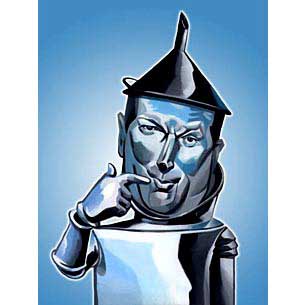

Al Gore

Does Al Gore have a heart?

A new bio suggests that underneath the stiff, zombielike striver we've come to know is a real guy.

  • more
    • All Share Services

Does Al Gore have a heart?

A source once told me, when I was writing an article about a famously nasty man, “It’s true what they say about Bob: Underneath that mean, abusive guy is a pretty nice guy. But underneath that there’s another whole guy who’s really mean and nasty.” So it is with Vice President Al Gore: Beneath the wooden, proper candidate is a funny, amiable guy. But underneath him is an emotionally isolated man of almost total opaqueness.

It’s an intrepid reporter who volunteers to spend three years of his life examining the wild underbelly of a career as dutiful as Gore’s. Newsweek reporter Bill Turque has returned with a thorough, fair and nearly complete biography, but I can’t say that his investment of time and effort has entirely paid off: It’s beige down there, all right. Turque turns in a very professional inventory of Gore’s first 51 years, but only occasionally presents the contents in a light that gives us any new insight into Gore.

“Inventing Al Gore” has all the right pieces of the puzzle in place. The two biggest pieces are, of course, Albert and Pauline Gore, the political parents from Central Casting: he a bombastic, prideful Tennessee senator with a terrible score to settle (his 1970 reelection defeat) through his namesake; she a cooler, more calculating stage mama who is widely seen as the brains of the pair. These parents were always completely frank about the fact that they were grooming their son, from the time he was in short pants, to be president.

As a result, Gore was, from the start, a tiny politician: a pleaser of the kind who was always looking over the shoulders of his peers to the frowns and smiles of an older, sterner audience. There is a real poignancy to the story of Gore’s upbringing, in which much of the warmth apparently came from the mothers of friends and the Tennessee women hired to look after “little Al” while his parents were on the road. (Pauline indignantly dismissed this portrait of Gore’s childhood when the author interviewed her. Never, she told him, had she left her little boy “for more than two weeks at a time.”) As Gore himself has from time to time acknowledged — most completely in his ecological manifesto, “Earth in the Balance” — he was an accomplished, compliant, uncomplaining boy whose chief concern was to reflect well on others.

These are the children who grow up hollow — with a streak of what Turque identifies as grandiosity. It’s the only way to explain why Gore, a man with a palpable conviction that he is usually the smartest person in the room, can’t restrain himself from the weird little acts of self-aggrandizement that cause him so much trouble. It wasn’t enough that Gore played an important role in garnering federal support for the immediate precursors of the World Wide Web; he had to tell an interviewer that he “took the initiative in creating the Internet.” It wasn’t enough that “Love Story” author Erich Segal had borrowed a bit from Gore’s background in devising his hero; Gore had to tell reporters that his romance with Tipper was the model for the entire book.

The most sensational material in Turque’s book is an old friend’s claim that Gore smoked far more pot in his youth than he has previously admitted. The friend, John C. Warnecke, says that as a newspaper reporter in Nashville, Gore smoked three or four times a week, and didn’t give it up until he ran for Congress in 1976. Gore’s account, laid down during his 1988 presidential campaign, is that he tried pot only on “rare and infrequent” occasions and gave it up entirely in 1972.

Turque’s version seems very credible, partly because other old pals who declined to talk to him about the issue did so in a way that tacitly acknowledges that Gore is vulnerable here. Even so, Warnecke’s information is most interesting not for any great shock value but for its further testimony to the reductive persona Gore has accepted all his political life, which is to say all his life. To think of Gore as a young student, soldier and journalist lighting up the bong every time he got a chance is to think of him as a real person, doing what people of his age and station did in that place and time, instead of as the pinched, improbable youthful experimenter he asks us to believe in, who quickly put away all the childish things that were beneath someone of his ambition and probity. Which is sadder: to think of him as so ambitious that he automatically denies and compresses this mildly wicked chapter of his youth or to think of his never having lived such chapters at all?

Turque renders Gore’s life as a series of intermittent, half-hearted efforts to break the baleful chains of his duty and the vice president as “a man who at critical moments had proclaimed independence and then retreated from it.” Hence Gore goes to Harvard and decides to study English instead of government, but after a year or two reverts to the family business. He comes to loathe the Vietnam War, but enlists anyway out of concern for his father’s waning political career. Gore comes home from Vietnam and again swears off politics, taking up journalism instead, but five years later runs for Congress after all. Following his humiliating defeat in the 1988 presidential primaries, Gore writes a passionate environmental manifesto, in which he describes the self-loathing he sometimes feels over his own tendency to “put a finger to the political winds and proceed cautiously,” but then when he is invited to join Bill Clinton’s ticket in 1992, he softens and minimizes what his book presented as the most urgent counsels of his conscience. His life and career, Turque writes, have been “punctuated by separations never quite achieved, and by bold strokes never quite converted into personal or political liberation.” It is a theme mirrored in his political behavior, which holds examples of both genuine principle and the most blatant expediency.

Turque’s thesis makes a lot of sense. Watching the radical difference between the informal Gore who talks to reporters off the record and the formal campaigner so widely derided for his stiffness, one has the impression that the gulf between these two men is a willed accomplishment on Gore’s behalf — a way of holding apart from politics some essential self that he still hopes to try to salvage from the Great Inevitability that has always ruled his life.

“Inventing Al Gore” does a good job of covering Gore’s public life along the way. Its chapters on Gore’s years in Congress are models of fairness and thoroughness, noting Gore’s caution — his “facility for assailing the assailable and fixing the fixable” — but also his genuine farsightedness in the areas that engaged him intellectually.

Turque also turns in the best account to date of the entire Gore family’s tortured relationship with tobacco, which was dragged into relevance by the 1996 Democratic convention speech in which Gore essentially accused the cigarette industry of killing his beloved older sister. Cynics immediately pointed out that the family — including, to a small degree, the vice president — had farmed tobacco for a good seven years after Nancy Gore Hunger’s death in 1984, and that Gore had continued to accept political contributions from the industry. This was not a case of hypocrisy, Gore protested, but of evolution: “People don’t change immediately,” he said in a 1997 interview. “Human beings are more complex than that.”

Turque is inclined to buy the more cynical view. But the simple facts he lays out somewhat support Gore’s point of view, for they show a family wracked by denial and dysfunction. Immediately after Nancy’s death, Turque writes, the family went around assuring friends that although she died of lung cancer, it wasn’t the form of cancer associated with smoking, and might have originated from a tumor elsewhere in her body. (It was adenocarcinoma, which is indeed a rarer form of cancer, but which is often associated with smoking; and Turque’s reporting says flatly that her doctors had no doubts about her cancer’s point of origin.) It’s an astonishing and quite humanizing scene, when you consider that Nancy had been so addicted to tobacco that she kept smoking after her doctors removed one of her lungs. And it seems relevant that the family had plenty of experience at prettying up Nancy’s troubles, for she was also an alcoholic.

In any case, Turque gives Gore some credit for anti-tobacco stands he took in Congress, even as he was accepting industry contributions. And it’s a credit to the author that he sets down all these layers in enough detail to let us form our own conclusions. Political journalism is, for the most part, a Manichaean universe, and I was struck at how rarely one encounters the subtlety and thoroughness that Turque brings to his treatment of Gore’s tobacco history.

But Gore becomes more, not less, of a cipher as “Inventing Al Gore” approaches the present. The material on Gore’s vice presidency is the weakest in the book, serving up the hearty soup of anecdote and clichi, delicately seasoned with anonymous-aide quotes, that is the hallmark of newsweekly White House coverage. This is a world in which a foreign policy mistake “signal[s] weakness and disarray”; in which a good man is one with “a willingness to think outside of the box,” and the vice president is inevitably “the veep.” The closer Turque comes to the present, the less he seems to trust his own thinking and reporting.

Thus he never quite makes up his mind about whether all of Gore’s efforts at becoming his own man have led him anywhere. The vice presidency is always an awkward dance of submission, and serving in Clinton’s White House involved some especially complicated steps. But was this just more of the same for Gore, the story of his whole life, or did the past eight years mask any change? Absurdly, the political press has covered the turnaround of Gore’s campaign — the move from K Street to Nashville, the candidate’s newfound Alpha aggressiveness and independence — as a major drama of personal growth, as opposed to the discrete test of executive leadership and political skill that it actually was. But people do change, over time, and it’s one of Gore’s more appealing qualities that he has tried so hard through the years to understand the forces that have shaped him. (He’s tried it in a characteristically grandiose way, of course, with that annoying tendency to classify and proselytize and generally take himself with utter seriousness; but it still counts.)

Who is the Al Gore who is out there right now, running his pitiless, effective campaign: a man who has finally grown out of the constricting fate that others designed for him at birth or a man who has finally embraced it?

Marjorie Williams writes a weekly opinion column for The Washington Post, and is a Contributing Writor for Talk magazine. Her political profiles have appeared in the Post and in Vanity Fair.

Why President Gore might have gone into Iraq after 9/11, too

Americans don't think the world would be much different if he'd been president on 9/11 -- and they may be right

  • more
    • All Share Services

Why President Gore might have gone into Iraq after 9/11, tooAl Gore concedes the 2000 presidential election

The tenth anniversary of 9/11 is almost upon us and the commemorations are well underway. So it’s probably not surprising that someone would commission a poll asking Americans how different they think world would now be if their country’s response had been guided not by George W. Bush but by Al Gore.

What is surprising is what the poll, conducted by “60 Minutes” and Vanity Fair, found: A clear majority of Americans — 56 percent — don’t really think anything would be different. This includes 62 percent of independents, 57 percent of Republicans and 48 percent of Democrats. Even among Democrats, only 44 percent say they thought the world would be a better place now if Gore had been in the White House back then.

If the numbers seem startling, it’s because the “global war on terror” that Bush chose to launch in the wake of 9/11 has long seemed like an especially vivid affirmation of the truism that elections have consequences. You could argue that virtually any president would have signed off on the invasion of Afghanistan immediately after 9/11, but Iraq was a war of choice, and as Bush was making his case for it in the fall of 2002, Gore’s was perhaps the loudest voice in American politics saying, “No!” The question of whether the world would be much different today has President Gore been in power seems like an open and shut matter. How could it not be?

And yet, there actually is a strong case for the public’s skepticism.

It starts with remembering just how conditioned Americans in 2001 were to view Saddam Hussein as the source of much of the world’s evil and instability — and just how easy and painless they had come to believe war was.

This was a product of the first Gulf War, which had been sold as a noble and necessary effort to check the aggression of a brutal tyrant with dreams of regional hegemony. “We’re dealing with Hitler revisited!” George H.W. Bush famously declared in the fall of 1990. Americans bought in and rejoiced when Operation Desert Storm ended with Hussein’s army evicted from Kuwait, and with surprisingly minimal Americans casualties.

But the ease with which victory was attained also led to hubris, and politicians from both parties, media commentators, and average voters spent the rest of the decade lamenting Bush’s failure to “finish the job” — that is, to pivot when he had the chance from Kuwait to a full-scale invasion of Iraq that would have ended Hussein’s reign. Hussein’s own actions only encouraged this thinking. After the war, he quickly resumed his menacing posture, crushing a Kurdish uprising and taunting U.N. weapons inspectors for years to come. Americans were also told that he’d tried to arrange the assassination of Bush in 1993.

This explains why, during one inspection showdown in 1998, a Gallup poll found that nearly 70 percent of Americans wanted President Clinton to use airstrikes to target Hussein himself (instead of just his supposed weapons installations), and 60 percent wanted American ground forces to launch an invasion. Clinton, like Bush before him, recognized that this was “unfeasible,” but he felt compelled to balance his desire to avoid war and occupation with voters’ intense hatred and fear of the Iraqi madman. Thus, he attacked Hussein as aggressively in his speeches as Bush had, approved some airstrikes, and signed the Iraq Liberation Act of 1998, which put the U.S. government on record supporting regime change.

So while there were no Iraqi nationals on any of the 9/11 flights, it was easy for foreign policy hawks — and, in particular, the neoconservatives who had long seen the forced removal Hussein as the first step in the democratization of the Middle East — to convince the public that at least part of their thirst for vengeance should be directed at Hussein. It was only natural for Americans to assume that a man they saw as “Hitler revisited” must have some way, somehow been involved in the attacks on their homeland. And even if he hadn’t, well, surely he’d be behind the next one — unless we acted now to stop him.

The story of how Bush bought into this is well-known. His instinct after 9/11 was too think big and aggressively, and his inner circle was littered with neocons and other hawks who’d been waiting for just the right opening to push for an invasion of Iraq. This, supposedly, would not have been the case in a Gore White House.

But look a little closer and you’ll realize that President Gore would have been hearing the same pleas. His own vice president would have been Joe Lieberman, perhaps the most hawkish Democrat in Washington on Middle East issues. Marty Peretz, his old friend and confidante, would have had Gore’s ear and filled it with arguments for going into Iraq. Loud, influential, non-conservative media voices — like Tom Friedman and Peter Beinart — would have amplified these calls on the outside. Republicans would have been screaming for an invasion, and the public would have been on their side. Clinton could barely hold them all back in the ‘90s; after 9/11, would Gore have stood a chance?

Here it’s worth remembering Gore’s own history. In the 1980s, he made his name as a senator and presidential candidate by positioning himself as one of his party’s foremost hawks. One of the reasons, in fact, that Clinton put him on the Democratic ticket in 1992 was Gore’s vote for the Gulf War, which most Democrats had opposed. You could argue that Gore was a changed man by 2001 and 2002, and that he saw the world in a fundamentally different way, and maybe that’s true.

But it should be noted that when he announced his opposition to Bush’s war push in the fall of ’02, Gore endorsed the basic goal of removing Hussein and securing his (supposed) WMD stockpiles. What he objected to was more the go-it-alone nature of Bush’s approach. In other words, you could also argue that Gore, still stung by the 2000 election outcome, may have been motivated in some way by his desire to stage a big, principled fight with Bush — and that a different result in ’00 might have produced a different, more hawkish response from Gore, one that would have led to … an invasion of Iraq.

Or we can give Gore the benefit of the doubt and say that he would have delivered the same speech opposing a war with Iraq even if he had been president — and that he would have resisted overwhelming pressure from Republicans, the media, the general public, and even some members of his administration. Would the country’s war fever have eventually died down until Americans gratefully concluded that Gore had been right all along? Sure, it’s possible. But it seems more likely that the same taunts that haunted Bush throughout the ’90s — “He should have finished the job!” — would have then dogged Gore, and that the political consequences would have been profound. Maybe Gore would have pushed through some new type of sanctions, or a few more rounds of weapons inspections. Hussein would have just thumbed his nose at all of this, and every time he did, the chorus in America would have grown louder: Why is President Gore letting this tyrant push us around — especially when it could lead to another 9/11?!

If the 1991 Gulf War is what shook America’s Vietnam syndrome, then the occupation of Iraq is what shook the hubris that followed the Gulf War — and made Gore and Clinton and George H.W. Bush look prophetic. But without the Iraq war, Gore’s wisdom probably would have gone unappreciated for years to come. If anything, it would have been a serious political liability — the sort of thing that his Republican opponent in 2004 (John McCain? Bush again, anointed by a GOP still furious over the “stolen” election of 2000?) would have been well-positioned to exploit.

Obviously, it’s impossible to know what would have happened if Gore had been president on 9/11. But here’s guessing that, one way or another, America would have gotten the invasion of Iraq that it had been itching for since 1991.

Continue Reading Close
Steve Kornacki

Steve Kornacki writes about politics for Salon. Reach him by email at SKornacki@salon.com and follow him on Twitter @SteveKornacki

Al Gore: We need an “American Spring”

The former VP tells Olbermann we need a non-violent Tahrir Square, but he doesn't mean revolution

  • more
    • All Share Services

Al Gore: We need an Al Gore

Former Vice President and Current TV chairman, Al Gore, made an appearance on his own channel Tuesday to decry the state of American politics.

He told “Countdown” host Keith Olbermann that we need an “American Spring” like the Arab Spring, with our own version of Tahrir Square, to reinvigorate political activism in America. However, Gore made clear with a number of qualifications that he was not calling for revolution. Rather than advocating taking to the streets, he seemed to be calling for more Americans to get online to make their political views heard — a far cry from the revolutionary activity in the Arab world.

Gore also emphasized that he does not see the Tea Party as an example of grassroots political activism, largely because the movement has the support of billionaires like the Koch brothers pushing agendas in Washington.

Watch the “Countdown” clip below:

Continue Reading Close

Natasha Lennard covers the Occupy movement for Salon. A British-born, Brooklyn-based journalist, she has been covering Occupy Wall Street since before the first sleeping bag was unrolled in Zuccotti Park. One of the first journalists arrested at an Occupy action, she has managed to enrage Andrew Breitbart, Rush Limbaugh and Glenn Beck. You can follow her on Twitter (@natashalennard), and email her any Occupy updates/videos/ideas to natasha.lennard@gmail.com

Drop the Gore vs. Obama script

The former VP indicts the media, corporate titans and both parties, not just Obama, for inaction on climate change

  • more
    • All Share Services

Drop the Gore vs. Obama scriptFormer Vice President Al Gore introduces Vice President Joe Biden at the annual Tennessee Democratic Party Jackson Day on Friday, July 16, 2010 in Nashville, Tenn. (AP Photo/Mark Humphrey)(Credit: Mark Humphrey)

The sweep and complexity of Al Gore’s 7,000-word climate-change jeremiad in Rolling Stone, making news because he chides President Obama, in itself partly exonerates the president. As Gore indicts the media, corporate leaders, both political parties and by extension voters for their inaction on the deadly challenge, it seems almost churlish to single out one man for blame, even if he is the president: Look at what he’s up against!

The fact is, Gore didn’t single out the president in “Climate of Denial”; most of his piece indicts the media for indulging in “debate” about whether climate change is real and human-made, when the science is unanimous that it is, as well as turning news into entertainment, to the detriment of serious reporting on global threats, in search of bigger audiences. He also calls out Fox News as a 24/7 purveyor of disinformation and Republican propaganda, on the heels of Jon Stewart’s great takedown last night. But Gore’s critique is just, like, too complicated, and kind of a downer, and maybe hits too close to home. So a lot of outlets are just saying: “Hey! Look over there! It’s not us — It’s Obama! Fight!”

What Gore is ultimately saying about Obama, that he “has thus far failed to use the bully pulpit to make the case for bold action on climate change,” has been said by plenty of other advocates on plenty of other issues, particularly about domestic economic issues. It points to an inconvenient truth about politics right now: President Obama came to power with a mandate for “change,” but no one agreed about exactly what that meant, and in these first two-plus years, on divisive issues, he’s tried to split the difference. He and his team assumed that the biggest problem in Washington was dysfunctional partisan gridlock, and if you committed to compromise on the big problems, you could “do big things.”

But with a Republican Party whose strategy consisted of saying no to everything, no matter how reasonable, that approach didn’t work. The Obama team also thought they could make progress by cutting side deals with the powerful interests that block change, promising big healthcare interests, for instance, that the public option was off the table. Healthcare reform ultimately passed, but without a public option or other methods to contain costs, and the side deals contributed to public cynicism about the process and the product. Likewise on the failure to pass a climate change bill, Gore says, “Senate advocates — including one Republican — felt abandoned when the president made concessions to oil and coal companies without asking for anything in return.”

Rolling Stone’s Tim Dickinson’s story, linked from the Gore piece, fleshes out that disappointment. After a strong climate bill passed the House, the Senate took up the issue, and a “tripartite” team of John Kerry, Joe Lieberman and Lindsey Graham made progress. But advocates said “the administration applied the same backroom approach it took to health care reform. Instead of waging a public debate to pit the American people against the corporate polluters, Obama gave the polluters a seat at the negotiating table. In private, big energy firms were offered sweetheart deals to acquiesce to the climate bill, including expanded offshore drilling for oil giants like BP and taxpayer subsidies for coal and nuclear interests that outstripped those for clean energy.” The deal fell apart anyway, and just after Obama unilaterally announced that his administration would extend offshore drilling, without any climate change concessions on the part of industry, came news of the BP oil spill, which ensured that coddling oil companies would be remembered as a bipartisan folly. 

The question for Obama, and for Democrats more broadly, now that compromise and co-optation hasn’t worked is: What next? On one level I react to complaints about the president failing to use his “bully pulpit” with a little weariness: More speeches? Really? We need action. And I sympathize with the president about the lack of backing in Congress for bold change. But at the heart of the many calls for Obama to take the lead in defining the dire problems we face — on climate change, on income inequality, on the troubled economy more broadly — is a deep and widely shared frustration: The president hasn’t seized a moment of profound crisis and opportunity to tell Americans exactly why the status quo isn’t working anymore, except for a tiny sliver of America, and what we’re going to do about it.

Right before I read Gore’s piece I finished an article by Mike Tomasky that made almost the same exact case on the issue of economic inequality. Peter Whoriskey’s terrific Washington Post report, “Breakaway Wealth,” got everyone’s attention: It’s unconscionable that the share of wealth that goes to the richest .01 percent of Americans has shot from 2.5 percent in the mid-1970s to more than 10 percent today. That inequality threatens the foundations of our country. It’s part of why we have an economic crisis in the first place: Unemployment is sky high, wages are stagnant (or falling, for those at the bottom), people are using services that drain tax revenue instead of doing work that produces it. The concentration of economic power leads that elite to have more political power, which they use to protect their economic power. This threatens democracy, even if they don’t talk about it at Tea Party events.

Tomasky concludes: “God forbid also that a Democrat — the president, let’s say — make this argument and draw these connections for the American people … Mr. President, Democrats: it would seem that now is the time.” Paul Krugman has likewise noted, going back to the debate over the inadequate size of the 2009 stimulus: OK, maybe the president is right, and he couldn’t have gotten more money from conservative Democrats and Republicans. Still: If he’d made a stronger case about the broken economy, raging economic inequality, and the imperative to spend government money now to get things moving again, the worst that could have happened is that he’d lose, but Americans would know what Democrats believe we’re up against — and what we believed would work, even if Republicans blocked it. And who knows, a rousing call to bold action might have galvanized Americans to demand more from Washington. We’ll never know.

The frustrating thing about the lack of a bold approach to climate change is that action on this massive threat has the potential to ease several problems at once, not just environmental ones: Massive public and private investment in alternative energy and conservation technologies could spur a renaissance in research, development and manufacturing, and provide jobs at every level, from top scientists to underskilled workers weather-proofing public buildings. And of course, reducing our dependence on gulf oil would enhance national security by making intervention in that region less tempting, giving us more freedom to pursue both human rights and genuine American interests in oil-producing states.

But it would also require that Democrats take on the people who profit from the status quo, and as Gore lays out, that’s not easy. I wish Gore had talked a little about his own role with the Democratic Leadership Council in the 1980s and ’90s, pushing his party to be more friendly to business, which is part of what’s led to the sad reality that both parties compete to serve corporate America. I don’t say that to be insulting; I’m sure Gore has some important insights about what was right, and wrong, about that endeavor. We live with its legacy today. He makes one point I’ll quibble with: that the slow but certain demise of “don’t ask, don’t tell” should inspire climate-change activists, because it shows the power of hard work and activist organizing to do what’s right. With no disrespect to the legions of DADT advocates whose work I admire: Strong advocacy wasn’t the whole story. DADT fell for two primary reasons: Americans are coming to accept gay rights more broadly, and it was a win-win solution. The military gets more soldiers, and gay people get more rights. Maybe most important: It didn’t cost corporate America a dime. It didn’t require higher taxes. It was a tough sell but far easier than what Gore is proposing. We’re winning the social issues, and losing on the economic ones.

I recently ran across a comment Franklin Delano Roosevelt made on the eve of becoming president in 1933, when the Depression shocked the country into reappraising virtually everything about itself .”All our great Presidents were leaders of thought at times when certain historic ideas in the life of the nation had to be clarified … [I]t needs to be reaffirmed at this juncture that the United States is one organic entity, that no interest, no class, no section, is either separate or supreme above the interests of all.” Obama took office in just that sort of time, and sympathetic critics, like Gore, wish he’d seized the sort of moment FDR described. For better or worse, though, it’s not too late: The climate change crisis gets worse every day, and the economic crisis isn’t going away any time soon either. 

I discussed the Gore piece with Rolling Stone’s Eric Bates on Hardball today:

Visit msnbc.com for breaking news, world news, and news about the economy

Continue Reading Close
Joan Walsh

Joan Walsh is Salon's editor at large.

Is Keith Olbermann at Current TV the weirdest idea ever?

Confirming rumors, Keith Olbermann announced a new gig with Al Gore's cable and Internet channel this morning

  • more
    • All Share Services

Is Keith Olbermann at Current TV the weirdest idea ever?This frame grab from MSNBC video, shows Keith Olbermann on "Countdown" on Jan. 21, 2011. Olbermann returned from one last commercial break on "Countdown" to tell viewers it was his last broadcast, and read a James Thurber short story in a three-minute exit statement. Simultaneously, MSNBC e-mailed a statement that "MSNBC and Keith Olbermann have ended their contract." The network thanked him and said, "we wish him well in his future endeavors." Neither MSNBC President Phil Griffin, Olbermann nor his manager responded to requests to explain an exit so abrupt that Olbermann's face was still being featured on an MSNBC promotional ad 30 minutes after he had said goodbye. (AP Photo/MSNBC) NO SALES, MANDATORY CREDIT(Credit: AP)

UPDATE (11:07 a.m.)
Like a new media champ, Keith Olbermann announced his new job on Twitter:

Greetings from Keith Olbermann, Chief News Officer of Current Media! And awayyyyyy we go! #FOK

Olbermann will both host and executive produce — this is key — an hour-long prime-time show five nights a week on Current. In addition to this anchor role, the sometimes tough-to-manage Olbermann will help overhaul Current’s news strategy and hold equity in the company.

Current’s already launched Olbermann’s page on its website.

Nothing is more vital to a free America than a free media, and nothing is more vital to my concept of a free media than news produced independently of corporate interference. In Current Media, Al Gore and Joel Hyatt have created the model truth-seeking entity. The opportunity to partner with Al, Joel and Mark Rosenthal makes this the most exciting venture in my career.

Reactions so far have been positive. David Shuster tweeted almost immediately after the news:

Brilliant business move, excellent journalism effort by currentTV in hiring @keitholbermann. The prime time show sounds terrific.

Also via Twitter, Mother Jones’ Washington editor David Corn remarked:

Right now on Current TV: “Viral Videos,” featuring “Keyboard Cat.” Later, “Kill It, Cook It, Eat It.” KO will be rebuilding a network-again

————-

Keith Olbermann, the former MSNBC host turned tweeter about the weather, will announce his next move today. According to the New York Times’ Media Decoder blog, Olbermann will team up with Al Gore’s Current TV in some sort of Internet-meets-teevee jujitsu. Since the former “Countdown” host is contractually forbidden from working in television, Current seems like an interesting choice.

Started in 2005 by Al Gore and cronies, Current TV originally set out to break the cable mold with a mixture of user-generated content, Internet-friendly short segments called “pods,” and some sort of partnership with Google. These ideas never really worked out, and after massive layoffs during the recession, Current could use some new wind in its sails.

Enter Keith. His harried departure from MSNBC left many viewers, fans and even foes wondering what the polarizing pundit would do next. And let’s not forget the great gossip about who would fill his slot at MSNBC. A new Keith Olbermann show on Current TV would both offer Olbermann the independence he longs for and the flexibility to work on the Internet in the near term.

Of course, we’re still in the gossip arena, and speculation abounds. The Times blog post came after an announcement Monday that Olbermann would announce “the next chapter in his remarkable career” Tuesday at 11 a.m., less than 24 hours before Current TV is set to make a big announcement to advertisers. This is dizzying. It’s entirely possible that Olbermann, who once wrote a column for Salon, will announce something entirely different, that he is doing his own thing. In a way, the crumbs lead in that direction as Olbermann has already set up a new Twitter account (@FOKNewsChannel, or “Friends of Keith News Channel”) and someone registered a pretty obvious domain name (TheOlbermannShow.com).

Keith and Current are not the weirdest pair ever. Since Al Gore invented the Internet — we couldn’t help ourselves from that joke — what better place to experiment than with his channel. The politics make sense, the brands make sense, and everyone’s a little sick of speculating.

We’re on the edge of our seats.

Continue Reading Close

Adam Clark Estes blogs the news for Salon. Email him at ace@salon.com and follow him on Twitter @adamclarkestes

Mark Kirk doesn’t support regulating carbon anymore, because Al Gore got divorced

The new Illinois senator reverses course on cap-and-trade, cites the former vice president's personal life

  • more
    • All Share Services

Mark Kirk doesn't support regulating carbon anymore, because Al Gore got divorcedFormer U.S. Vice President Al Gore (L) and his wife Tipper leave after holding a news conference in Palo Alto, California after winning the Nobel Peace Prize in this October 12, 2007 file photo. Former U.S. Vice President Al Gore and his wife, Tipper, have announced their separation after 40 years of marriage, according to media reports on June 1, 2010. REUTERS/Kimberly White/Files (UNITED STATES - Tags: POLITICS PROFILE)(Credit: © Kimberly White / Reuters)

So, Mark Kirk voted for cap-and-trade in 2009, when he was in the House of Representatives. But then he ran for Senate, and so he had to decide that cap-and-trade was tyrannical and the entire idea of regulating carbon is socialism because there’s no such thing as global warming. Now Kirk wants to block the EPA from regulating emissions themselves.

How to explain the about-face? Well, a lot has happened since 2009. 2010 happened, for example. And while 2010 was the hottest year on record, something even more significant went down last year:

Another Republican blasted from both sides of the spectrum for his record on emissions, Sen. Mark Kirk of Illinois, said he is “not terribly concerned” about taking heat from green groups for his criticism of EPA action on carbon emissions.

“The consensus behind the climate change bill collapsed and then further deteriorated with the personal and political collapse of Vice President [Al] Gore,” Kirk said in a brief interview last week.

I think this means that when Al Gore split with his longtime wife, Tipper, in 2010, there was no longer overwhelming scientific consensus on climate change. It just makes sense.

There is maybe an explanation for this! Mark Kirk divorced his wife in 2009, and the next year it was revealed that he repeatedly lied about his military service and other aspects of his biography. So maybe he just assumes that everyone else is constantly making things up, until they get divorced.

Continue Reading Close
Alex Pareene

Alex Pareene writes about politics for Salon and is the author of "The Rude Guide to Mitt." Email him at apareene@salon.com and follow him on Twitter @pareene

Page 1 of 107 in Al Gore