
Drugs

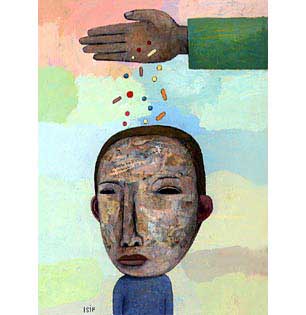
Kids on drugs

A behavioral pediatrician questions the wisdom of medicating our children.

  • more
    • All Share Services

Kids on drugs

I‘ve practiced behavioral pediatrics since 1978 in Walnut Creek, Calif., an affluent suburb of San Francisco. I have evaluated and treated more than 2,000 children who struggle with behavior and performance at home or at school. Last year alone, I wrote more than 400 prescriptions for Ritalin or a similar stimulant. I am not against prescribing psychiatric medication to children.

But I’ve become increasingly uneasy with the role I play and the readiness of families and doctors to medicate children.

I recently obtained some information from the National Disease and Therapeutic Index of IMS Health that adds to my uneasiness about the number of children taking psychiatric drugs in the United States.

IMS Health is to drug companies what the A.C. Nielsen company is to television networks. The pharmaceutical industry relies on it to report on the latest trends in medication usage. The company recently surveyed changes in doctors’ use of psychiatric drugs on children between 1995 and 1999 and found stimulant drug use is up 23 percent; the use of Prozac-like drugs for children under 18 is up 74 percent; in the 7-12 age group it’s up 151 percent; for kids 6 and under it’s up a surprising 580 percent. For children under 18, the use of mood stabilizers other than lithium is up 40-fold, or 4,000 percent and the use of new antipsychotic medications such as Risperdal has grown nearly 300 percent.

Approximately 5 million American children take a psychiatric drug today. Based on production/use quotas maintained by the Drug Enforcement Administration and national physician practice surveys, it’s possible to say with confidence that nearly 4 million children took the stimulant drug Ritalin, or its equivalent, in 1998.

Stimulants such as Ritalin have been used for more than 60 years to treat hyperactivity and inattentiveness in children. Over the past 10 years, however, psychiatric drug use for children has broadened considerably. There are more drugs and they are being used for more purposes. Ritalin is now prescribed for children as young as 2 and 3. A recent Michigan survey of Medicaid children found a few hundred toddlers taking stimulants and other psychiatric drugs. A study released two weeks ago in the Journal of the American Medical Association confirmed this trend in children of privately insured families.

Medicines originally developed and tested to treat depression in adults, such as the well-known Prozac (now in liquid form for easy pediatric administration), Paxil and Zoloft, but also Wellbutrin, Effexor and Serzone, are now being employed for a wide range of children’s behavioral problems. Medications originally developed to treat blood pressure, such as clonidine (Catapress) and its longer-acting relative, Tenex, are also being used for behavioral management.

- – - – - – - – - – - – - – - – - – - – -

Pierre, 8-year-old Bobby’s father, pleaded with me to evaluate his son. Bobby was on three different psychiatric medications. Pierre and Bobby’s mother, Carol, had bitterly divorced and had been fighting since Bobby was 2. Bobby had had problems at school since kindergarten. Teachers described him as distractible, hyperactive, slow to learn and with few friends.

But his behavior at home, especially with his mother, posed the biggest headaches. He defied Carol and flew into violent rages, hitting and trying to bite her. Time outs were ineffective because he would either escape from his room or completely trash it.

Pierre admitted that he had seen this kind of behavior from Bobby only three or four times over the past three years. But at Carol’s, Bobby had major temper tantrums at least weekly. Carol took Bobby to a child therapist when he was 4. The therapist thought Bobby might have “ADD” — attention deficit disorder or, properly, ADHD (H for hyperactivity). She also thought he was depressed because of the divorce. Weekly play-therapy sessions for Bobby continued for three years and Carol sometimes got advice from the therapist on how to handle Bobby.

Pierre only met the therapist once. He acknowledged he’d never been a big fan of therapy and questioned its value. Carol had been a psychiatric patient for much of their 17-year marriage. She suffered from serious bouts of depression and took Prozac, the well-known antidepressant, and Ativan, a medication for anxiety much like Valium.

Bobby’s pediatrician started him at age 5 on Ritalin, the best-known stimulant for ADHD, because the boy kept getting up from circle time and twice ran out of the classroom at school. Later he was switched to a very similar stimulant medication, Dexedrine. Bobby’s acting out and impulsiveness continued, so Carol took him to a child psychiatrist who added the drug Wellbutrin to his regimen, thinking that Bobby’s irritability might be a sign of depression. (Wellbutrin has been used primarily to treat depression in adults, but has also been employed for a variety of other problems from anorexia nervosa to stopping smoking.) The Wellbutrin did not make much of a difference and after two months was stopped.

Bobby’s problem persisted. At Carol’s his bedtime would begin at 8:30 and at 11 Bobby was still up, getting out of bed, pestering his mother for water or food and driving her “crazy.” Another medication, Anafranil, was prescribed to help him fall asleep. (Anafranil was originally used in adult depression and obsessive-compulsive disorder, a condition of unwanted recurrent thoughts and compulsive behaviors like repetitive hand washing. But it often was too sedating for most people to tolerate.) Bobby fell asleep faster when he took this pill. Pierre, who in general had fewer problems with Bobby, only occasionally gave him this medication.

Bobby was 7 when Carol took him to a private psychiatric clinic well known for its controversial use of brain scans for psychiatric diagnosis and its liberal use of psychoactive medications. Bobby, now getting bigger, had stabbed another child with a pencil. No brain scan was done but the psychiatrist said that Bobby suffered from bipolar disorder, the current name for manic depression, and should take yet another drug. This fifth medication, Neurontin, originally approved as an anticonvulsant, more recently had been categorized felicitously as a “mood stabilizer.” The psychiatrist said this medication would help Bobby control his episodes of rage and prevent a further worsening of his symptoms.

When I first met Bobby he took Dexedrine in the morning, Neurontin three times a day and Anafranil at night only before bedtime. He took 12 pills a day when he stayed with his mother. At his father’s, he usually skipped the Dexedrine and Anafranil, especially on weekends. Pierre was afraid to stop the Neurontin because he had been told that Bobby might experience headache and irritability if that medication were abruptly discontinued.

Bobby was a very unhappy, angry boy caught in a web of strained emotions and loyalties between his parents. He was not an easy child to raise, especially for his mother, who had her own problems with depression. Bobby’s story is disturbing not for its uniqueness but for how it represents a growing trend in the U.S. — young children are being given essentially untested and potentially dangerous psychotropic drugs alone and in combination in greater volume than ever before.

- – - – - – - – - – - – - – - – - – - – -

Diagnosing bipolar disorder in children as young as 3 has become the latest rage. It justifies using a host of meds to treat very difficult-to-manage, unhappy children. The old-line drug, lithium, has been replaced by newer, untested (in children) mood stabilizers like Neurontin or Depakote as a first-choice intervention for pediatric “manic depression.” Finally, a new class of anti-psychotic medications — the most popular these days is Risperdal — is heralded as the ultimately effective treatment for a number of diagnoses whose common features are not hallucinations or psychosis, but severe acting-out behaviors.

No one knows precisely how many children are taking these non-stimulant medications. The most recent survey of physicians’ practices had 1.5 million children taking an anti-depressant in 1996. Most were teenagers (girls are the majority), but more than 200,000 children under 12 are also prescribed an antidepressant. Other data tells us that rates of antidepressant use since 1996 continue to rise. For example, 150,000 prescriptions for clonidine were written for children in 1996. More than 100,000 children take “mood-stabilizing” drugs for purported bipolar disorder. Again, most are teens (here boys predominate) but it’s being advised that children as young as 3 take these drugs. More than 200,000 children receive anti-psychotic medications, mostly to control unruly behavior rather than to treat hallucinations or other symptoms of schizophrenia.

The number of children combining two or more psychoactive drugs is unknown. Combined pharmacotherapy (known pejoratively as polypharmacy) has been strongly endorsed by leading research groups as the sensible approach to treating the co-morbid, or multiple occurring, diagnoses common in “high problem resistant behavior” children. Some doctors call it prescribing by “symptom chasing.”

No other society prescribes psychoactive medications to children the way we do. We use 80 percent of the world’s stimulants such as Ritalin. Only Canada comes close to our rates, using half, per capita, the amounts we do. Europe and industrialized Asia use one-10th of what we do. Psychiatrists in those countries are perplexed and worried about trends in America. The use of psychoactive drugs other than Ritalin for preteen children is virtually unheard of outside this country.

In my practice of behavioral pediatrics I regularly meet children under 13 on two psychiatric medications. A 5-year-old girl troubled by fears had tried eight different psychoactive drugs over the year before she saw me. I met the mother of a 29-month-old boy who wanted me to prescribe medication. I didn’t, but later I learned the boy was getting lithium, Zoloft and Risperdal from another doctor.

Is this cutting-edge treatment or an outrage? I’m not sure. But with three or four exceptions, none of these drugs, alone or in combination, has been shown to be effective for a specific psychiatric condition in children. Outside of the stimulants and old-line anti-psychotic group, only two of the most frequently prescribed medications, Luvox and Zoloft, have been studied sufficiently to obtain the Food and Drug Administration’s approval for psychiatric use in children. Only a handful more have been examined systematically to eliminate the placebo effect, which has a particularly powerful influence in psychiatric conditions and in children. None of the newer medications has been studied beyond a few months for efficacy or side effects, and no one has looked at their effects on children’s growth and development.

Until recently the recondite and rarified worlds of academic child psychiatry and psychology have largely supported the increased use of these medications. Joseph Biederman, chief of Harvard’s pediatric psychopharmacology clinic, hails the increased use of psychiatric drugs in children as evidence “that child psychiatry is finally catching up to adult psychiatry” in psychopharmacological practice.

Other leaders in the field of child psychiatry are not as sanguine. Michael Jellinek, who as the head of child psychiatry at Harvard is effectively Biederman’s boss, and Peter Jensen, who recently stepped down as director of child and adolescent research of the National Institutes of Mental Health, have both publicly worried whether physicians’ prescribing practices for children have outstripped their scientific substantiation. They are also concerned that not enough is being done about the world these troubled children live in.

It’s Johnny’s Brain: The Triumph of Biological Psychiatry in America

What makes America so different from the rest of the world in how it views and treats children’s emotional and behavioral problems? Perhaps no other profession fell so completely under the sway of Freudian ideas as American psychiatry and psychology did in the first 60 years of the 20th century. Yet by the late 1960s critics both within and outside of American psychiatry had doubts about psychoanalysis as a science and as an effective treatment. In the 1950s drugs like lithium, Thorazine and Elavil, found to be useful in alleviating psychiatric symptoms, further challenged the Freudian hegemony on psychiatric thinking and practice in this country.

By the 1970s research and academic psychiatrists fomented an internal revolution culminating in 1980 with the publication of the third edition of the Diagnostic and Statistical Manual of Mental Disorders (DSM-III). The DSM III replaced the old Freudian diagnoses, which were based on traumatic childhood experience, with etiologically neutral lists of symptoms collected into supposedly definable syndromes. DSM III was meant only to be descriptive and used primarily for research. Few outside of an inner circle of research psychiatrists knew of a paragraph in the introduction, deleted at the last moment (ostensibly to maintain etiological neutrality), that said the presumptive cause of most of the disorders listed was biological, that is, the result of heredity or a chemical imbalance.

It really didn’t matter what was written, because over the next 10 years American academic psychiatry shifted 180 degrees from blaming Johnny’s mother for all his problems to blaming Johnny’s brain and genes.

The introduction of Prozac in the late 1980s cemented America’s belief in the biological basis for abnormal behavior. Prozac was no more effective than earlier antidepressants but had less severe side effects, which allowed greater numbers of less severely disabled people to continue to take the drug. A logic developed that if a drug improved behavior, the problems must be biologically based. No one speaks of headache as an “aspirin deficiency” even though the drug relieves the symptoms. Nevertheless terms like “chemical imbalance” became increasingly fashionable in explaining problem behavior.

Media exaggeration of scientific findings contributed to the revolution. The acceptance of Prozac made taking a psychotropic drug no longer taboo; it became the topic of dinner-party conversation. Nearly one in 10 Americans has taken Prozac or one of its close drug relatives. With so many adults taking a drug for mood, it didn’t take long for the primary drug for children’s behavior, Ritalin, to zoom in use.

Ritalin production and use for the treatment of ADHD rose by more than 700 percent between 1991 and 1998. Amphetamine production also used for ADHD initially lagged but has tripled in use since 1996. Trade amphetamine (primarily Adderall) surpassed trade Ritalin prescriptions in 1998, a testament primarily to the marketing success of the manufacturers of Adderall.

As Prozac opened the door for Ritalin use in children, Ritalin itself ushered in a new “better children through chemistry” age in our country. At least Ritalin had been the most studied of pediatric drugs, though only a handful of the thousands of studies look at patients other than boys or monitor the children beyond a couple of weeks. Meanwhile research on other psychotropic drugs for use in children has been limited. Until recently, funding for studies of psychiatric medication in children was meager by adult comparisons. Questions about children’s rights and consent to participate in studies raised thorny ethical issues, and the pharmaceutical industry did not believe there was much of a market for these drugs in children and so it did not fund studies.

Ironically, the new belief in a robust market for psychotropics in children has fueled a host of pending studies of different drugs for different child psychiatric conditions.

The community of pediatric psychopharmacology researchers is rather small; Biederman’s Harvard program has been arguably the most productive and influential. His work stands as prototypic of children’s psychiatric research under the DSM (now in its fourth edition) and demonstrates how a drug becomes established in the pediatric psychiatric pharmacopea. His research has won awards and his professional publications are prolific.

Biederman’s group demonstrated in the late 1980s that the tricyclic antidepressants (their chemical structure contains three “rings”) imipramine and desipramine, abandoned as a treatment for childhood depression because studies had shown them to be ineffective, could be used in high doses to successfully treat children with ADHD who had failed to respond to stimulants. In 1996, the Harvard clinic published a paper that said that 23 percent of their ADHD children also “had” bipolar disorder. (Most child psychiatrists believed manic depression to be a rare disorder in children.)

The Harvard group had always found higher rates of co-occurrence or “co-morbidity” of other disorders in their ADHD patients, but this rate of bipolar disease in children astonished the world of academic child psychiatry.

Biederman further claimed he could diagnose manic depression in children as young as 3. Few of these children demonstrated the classic signs of mania, euphoria or grandiosity. They did not have distinct periods of several weeks or months between their highs and lows. These children could cycle on a daily basis. They were very angry, very irritable kids.

Few of these kids were crazy. They could distinguish reality as long as they weren’t enraged. They were very unhappy and very difficult to control. But Biederman felt that children diagnosed as bipolar could be saved from a lifetime of antisocial behavior and substance abuse by aggressively treating them with medication.

The presumed hereditary and biochemical nature of bipolar disorder would justify the use of a new class of drugs known as mood stabilizers: lithium, Depakote, Neurontin — all drugs with far more serious short- and long-term side effects than Ritalin.

The response from other academic researchers was mixed. Debate goes on in the professional journals over the definition and frequency of bipolar disorder in children. One psychiatrist commented cynically that “Ritalin is for irritable and irritating children while lithium is for very irritable and very irritating children.” The practical effect, though, of the announcement of this new interpretation of pediatric bipolar disorder, was that these medications began to be used in very young children without even short-term evidence of their effectiveness and safety.

Of late, the new anti-psychotic drug, Risperdal, has been touted by the Biederman group as more effective than mood stabilizers in controlling the symptoms of bipolar children. Risperdal’s ascendancy as the drug of choice has not been slowed by a different set of more serious disabling side effects.

How should drugs properly be studied for use in children? Only two of the newer psychotropic drugs have been approved by the FDA for the treatment of a psychiatric condition in children. Paxil and Luvox, both variations of Prozac, have proved effective in clinical trials required by the FDA for the treatment of pediatric obsessive compulsive disorder (OCD). No other medication, as yet, has met FDA approval. Several drug trials in children, actively supported by the pharmaceutical industry, are under way.

Once a drug is approved for use by the FDA for the treatment of a specific medical condition, a doctor can legally prescribed it “off label” for any purpose. Virtually every other med used to treat children’s behavior is prescribed this way. Off-label use of medicines in pediatrics is common, but nowhere more so than in psychiatric medications. Physicians are constrained only by their own judgment and ethics. Local hospital and medical boards usually do little to interfere with doctors’ preferences for treatment.

Most of the drugs used to treat children’s emotional problems first became available after they met the FDA’s standards for approval in psychiatric clinical trials in adults. A few were initially approved for use in adults for other medical conditions: Depakote and Neurontin for control of seizures, clonidine for blood pressure.

The typical path to the widespread use of any of these drugs for children begins with a report of a single child’s response to a drug, usually as a letter in one of the professional journals. Journal editors explicitly state their openness to these kinds of “case” reports and more critical peer review scrutiny is omitted. The report will generate other letters until a series of cases are reported in which everyone — the kids, parents and doctors — knows what drug the child is taking.

Such studies are notorious for creating expectations of both positive and unwanted placebo effects. In the only study demonstrating the effectiveness of Prozac in children when the patients and doctors didn’t know which pill was taken, 60 percent of the improvement in depressive symptoms was attributed to the placebo effect.

The Super Bowl of drug testing, which supposedly can distinguish between the actual effects of the active ingredients of a medication and placebo, is called the double-blind randomized control study (DBRCS). In a DBRCS neither the family nor doctor knows whether the child is getting the medication or an identical capsule filled with an inert ingredient. Only the pharmacist who prepares the medication knows which capsule contains the drug to be tested.

Patients are carefully screened for the psychiatric condition to be treated and then are randomly selected to receive either the real drug or the placebo. The children are monitored by their parents and doctors for improvements and side effects; along with benefits coming from placebo, many children complain of unwanted effects like headache and stomachache while taking placebos. After a pre-determined period it is revealed who took the drug and who took the the placebo. Only then does one learn the “real” vs. “believed” effects of the drug.

Such DBRCS are expensive; until recently, pediatric psychopharmacology researchers have been limited by low funds for their studies. Those few DBRCSs that had been run usually included only enough children, usually fewer than 100, to generate the likelihood of a statistically significant difference between drug and placebo required for scientific journal publication, but not enough for FDA approval.

But with only scores of children assessed, drugs like Prozac, imipramine, clonidine and Wellbutrin have come to be prescribed for hundreds of thousands of children. Research with imipramine demonstrated that adult drug studies do not necessarily correspond to effects in children. Nonetheless, adult medication trials are regularly invoked to justify the use of those same agents in children.

Calls for increased funding for pediatric psychopharmacology research are ubiquitous within the child mental-health community. The pharmaceutical industry, which now sees a children’s market large enough to justify the expense, is funding several large studies, hoping to obtain FDA approval for the tested drugs.

On the other hand, studies on psychosocial interventions provide no similar profit-driven initiative for investigation. The much lower funding for this kind of research comes primarily from government. However, with the profit-motive incentive to develop new drugs and the real-life pressures to medicate children these days, there is ever-increasing pressure to medicate.

When all you’ve got is a hammer, everything starts to look like a nail.

Pick of the week: An early-’60s hipster time capsule

Pick of the week: Shirley Clarke's once-banned "The Connection" is a lean, mean saga of jazz, junk and rebellion

  • more
    • All Share Services

Pick of the week: An early-'60s hipster time capsule

A time capsule loaded with smack from the bohemian underbelly of JFK-era America, Shirley Clarke’s 1961 film “The Connection” is an illustration of how much things change, and how much they stay the same. I’d be stretching to call “The Connection” a great film — it’s mannered and edgy, in a way that’s partly deliberate but also distinctive to its period — but it’s an important one in cultural and historic terms, despite being largely unknown. Watching this ensemble drama about a multiracial group of New York jazz musicians and beat philosophers in a run-down apartment, waiting for their drug dealer to show up, is like traveling back 50 years in time, only to encounter the same people you might meet on the street today (at least, in certain neighborhoods of Brooklyn, San Francisco, Austin and so on). At one point, the characters even debate the illusory distinctions between “hipsters” and “squares.”

A Park Avenue society girl turned Greenwich Village beatnik, Clarke was the pioneering female director in the early history of American independent film, good friends with John Cassavetes, Frederick Wiseman, Jonas Mekas and other downtown legends of the period. If her name and her films have virtually disappeared from history, that’s partly due to institutional sexism, no doubt, and partly to bad luck and bad timing. Milestone Films, which is releasing this version of “The Connection” restored by the UCLA Film & Television Archive, will go on to release Clarke’s 1960s documentaries “Robert Frost: A Quarrel With the World” and “Portrait of Jason,” an interview with a black gay street hustler, along with her 1985 comeback film “Ornette: Made in America,” about jazz legend Ornette Coleman. (Clarke died in 1997.)

“The Connection,” Clarke’s first feature, was a high-profile project, the screen adaptation of a 1959 Living Theater play by Jack Gelber that had become a cause célèbre despite scathing reviews, attracting uptown artistic types like Leonard Bernstein, Salvador Dalì and Lillian Hellman to take a walk on the wild side. Clarke and her producer, Lewis Allen, funded the film’s $177,000 budget — not so meager, at the time — through the then-unknown tactic of collecting small sums from a large number of investors, establishing a model that endures in micro-budget and mid-budget filmmaking to this day. (Weirdly enough, as Manohla Dargis has reported in the New York Times, former Republican presidential candidate Rick Santorum’s parents were among the investors, along with Norman Mailer and architect Philip Johnson.)

But once completed, “The Connection” only screened twice at a single theater on Manhattan’s 45th Street before being closed by New York State’s censorship board. I’m not sure which is more amazing: the fact that New York had a censorship board in the early ’60s that could control what movies the public saw, or the reason for the seizure of “The Connection,” which was two or three uses of the word “shit” (as a synonym for drugs). By the time some edits were made and the ban lifted, public interest had faded, largely because of a swath of unrebutted hostile reviews. Bosley Crowther of the Times, a noted get-off-my-lawn crank of the time, wrote an especially peculiar one in which he praised the actors, the live jazz soundtrack and Clarke’s “bold direction,” but described the film overall as “deadly monotonous, in addition to being sordid and disagreeable.”

I won’t pretend not to understand what Crowther was talking about. “The Connection” remains much better known among jazz fans for its soundtrack album featuring pianist Freddie Redd and saxophonist Jackie McLean (who play live in the film, as they did onstage), than it is among movie buffs as, you know, a film. Clarke should certainly get credit for exploring the faux-documentary format decades before it became a film-school gimmick (the story-within-a-story premise was already present in Gelber’s play), but the first 10 minutes or so of “The Connection” are decidedly awkward. Squaresville white filmmaker Jim Dunn (William Redfield) wanders around in his high-waisted chinos, trying to convince the group of crashed-out junkie hipsters to “act natural” and “be themselves,” and assuring them that he’s studied the documentaries of Robert Flaherty and knows what he’s doing. (A dig at the old-school variety of documentary film, before cinéma-vérité, I guess.) It’s clear that the addicts would rather relate to Dunn’s hipper African-American cameraman, J.J. Burden (an early role for future Hollywood character actor Roscoe Lee Browne), who is rarely seen but makes occasional oracular pronouncements.

In the interests of art, Dunn has apparently agreed to finance a major purchase from a smack dealer named Cowboy, but for most of the movie we are obviously encouraged to ponder the similarities between drug culture and Beckett’s “Waiting for Godot,” and to wonder whether Cowboy will ever show up at all. Prowling the dingy, open flat restlessly — it looks disconcertingly like a group household I actually lived in, 20-odd years ago — Clarke’s camera introduces us to the all-male assemblage, in fragmentary interviews. Leach (Warren Finnerty), a wiry, whiny fellow who looks and acts alarmingly like the young Steve Buscemi, is the official tenant. He is troubled by a painful boil on his neck, which may symbolize the fact that the other denizens suspect him of being gay. As his black friend Sam (Jim Anderson) will tell him later, he’d be more relaxed if he could “get with the whole homosexual scene.”

There’s also Ernie (Garry Goodrow), an embittered-genius West Coast white jazzman who has hocked his horn to buy junk, and Solly (Jerome Raphael), an educated, middle-class Jewish guy who has thrown it all away for philosophical reasons, or none at all. McLean, Redd, bass player Michael Mattos and drummer Larry Richie get fewer lines, but every so often pick up their instruments to deliver angled, edgy blasts of early-’60s hard bop. Today these characters would presumably be obsessed by some other cultural form — hip-hop or Scandinavian black metal or YouTube clips or hockey fights or something else I’ve never even heard of — and they’d be able to badger Cowboy with illiterate texts every few minutes. But they’d basically be the same guys; Gelber’s characters are drawn so sharply that many 21st-century viewers will identify people they know or used to know (perhaps even people they used to be).

When Cowboy finally arrives (played by Carl Lee, who would become Clarke’s longtime partner), he turns out to be the archetypal “hip Negro” in Ray-Ban shades, sporting a blazing white outfit and a messianic mien, and bringing with him an old-lady evangelist, as comic relief and cover story. He brings other kinds of blessings too, the kind that allow this cast of semi-lovable, self-destructive losers to get through another day. The central conflict faced by the characters in “The Connection” doesn’t have much to do with heroin, though — that too is a symbol or synecdoche. It goes way back before Clarke’s time, not to mention ours. If this film has something to say to us now — and I emphatically think it does — it’s about the costs and opportunities that come with “dropping out” of mainstream society, in the name of political-cultural-aesthetic rebellion. It asks a question that has no answer, one that every disgruntled young dreamer — every potential Shirley Clarke, of every generation — must face on her own.

“The Connection” is now playing at the IFC Center in New York, with other cities and DVD release to follow.

Continue Reading Close

Drug-personality misconceptions

Alcoholic writers? Coke-head stockbrokers? The links between personality type and addiction are largely overblown

  • more
    • All Share Services

Drug-personality misconceptionsErnest Hemingway (Credit: John F. Kennedy Presidential Library & Museum)
This article originally on The Fix.

Here’s Ernest Hemingway, dead drunk on a stool in Cuba with his face on his hand and his hand on an ever-present mojito. He’s the tormented writer, hard at work at the daily scrubbing of his sins. Like the Hard-Drinking Writer, we’ve come to expect certain personality types to have certain habits: The Morose Musician with Keith Richards’ appetite for heroin; the Insecure Starlet with Marilyn’s taste for pills; the Monomaniacal Money Manager with a nose for cocaine. They are generalizations that have been imprinted by generations of popular culture. But the types don’t necessarily line up.

the fixThe logic of associating personalities with specific drugs seems natural. A German-British psychologist named Hans Eysenck spent the mid-20th century turning the eye of the scientific community from Freud’s behavior-based theories to individualized psychology—pioneering the science of personality. He considered this pursuit of matching personalities with drugs a pet project.

Eynsenck believed the ways people are inclined to think aren’t always the ways that make us feel best. And because drugs are the easiest way to modify temperament, it’s only natural for us to seek out those substances that keep us on an even keel. For instance, he thought that introverts, whose brains are always chewing at problems, should crave depressants to quiet the incessant mental chatter. Extroverts, easily bored, should chase the rush of stimulants.

His theory condensed individualized drug cravings into an easy, logical framework—but he was wrong. Or at least, he vastly oversimplified the concepts of both “personality” and “drugs.” Worse, his theory wasn’t borne out by research. Study after study showed both introverts and extroverts drinking alcohol (a depressant) to excess. And extroverts didn’t limit themselves to uppers; it seemed they would reach for all kinds of substances.

So where does that leave us? Well, scientists kept trying to tie the two nebulous concepts together. Over the years, as new methods of personality screening emerged, researchers continued to distribute questionnaires to groups of drug addicts. One major breakthrough came when four sets of psychologists independently realized in the 1980s and 1990s that a person’s personality traits—tendencies that are partially genetic and tend to last throughout life—can be pretty reliably described using five factors.

Introversion and extroversion weren’t enough, they thought. We should also consider openness to new experiences (think Bear Grylls), conscientiousness (Haruki Marukami), agreeableness (Mother Theresa) and neuroticism (Woody Allen) when trying to understand why people act the way they do. Thus armed, personality psychologists began fitting the various personality traits they had come up with over the years into what came to be called the “Big Five.” And lo, with a more accurate representation of traits, a connection between personality and drug use began to emerge.

People who tested high on neuroticism (indicating that they tend to be impulsive, emotionally unstable and anxious), low on conscientiousness (tending to be disorganized, unambitious and lazy), and low on agreeableness (tending to be uncooperative, unhelpful or misanthropic), were more likely to have problems with alcohol or drugs than people whose scores were closer to the middle, or reversed. Perhaps more interestingly to the question of whether personality traits led their owners to cocaine over alcohol, or marijuana over mushrooms, higher scores for each risky trait were linked to higher likelihood of using “hard” drugs like heroin, amphetamines or crack.

“There is some evidence that the more ‘bad’ traits you have, the harder the drugs you’re going to use,” says Michigan State Department of Psychology professor Chris Hopwood. “So super, super-impulsive, sensation-seeking, neurotic people might be inclined to use something like heroin, for example, whereas if you’re a little bit less impulsive or have more anxiety about things maybe you wouldn’t. Maybe you would use other drugs but you would be too afraid to use heroin.”

Not all the personality factors that appear in people with drug problems are negative, however:

Sensation-seeking—a facet of openness to experience that’s common among extreme sports athletes, explorers, philanderers and roller coaster-enthusiasts—is almost always associated with drug abuse, but doesn’t necessarily scale with using harder drugs. Marijuana users, for instance, have been shown to be high in sensation-seeking, with closer-to-average levels of neuroticism.

Sensation-seeking seems to be about 60 percent heritable—meaning about 60 percent of the trait comes from your genes—and appears to be related to the brain’s dopamine reward system, the same system that makes most drugs of abuse pleasurable. Sensation-seeking may even be related to where you live, through interactions with neighbors—or, in the case of, say, New York City, through self-selection. A study by Jason Rentfrow, Sam Gosling and Jeff Potter that was analyzed by Richard Florida on the Atlantic’s Atlantic Cities blog showed that Openness to Experience scaled with drug use when compared within states. And which states had the highest levels of both illicit drug use and openness? Colorado, Vermont, Oregon, Washington, Nevada, Massachusetts, New York and California.

Given the personality characteristics that seemed to split “hard” versus “soft” drugs, scientists began to wonder if—even if they couldn’t predict who would take uppers over downers—there was a way to predict who would become an alcoholic and who would abuse illegal drugs. The studies showed some remarkable similarities: One study conducted among veterans suggested that all addicts share interpersonal styles that tend toward loner, rebel and pessimist stereotypes, for example, which surprised no one who has ever seen “Leaving Las Vegas.” But there did appear to be a little something extra that could push a person into hard drug addiction.

People who use illicit drugs often have been shown to have higher rates of both extroversion and susceptibility to boredom, which may drive them into more situations where drugs appear, or simply make them more likely to crave new subjective experiences. And those who are particularly susceptible to boredom have been shown to use opiates more often.

But this is where the studies break down. Most research on the topic of how personality relates to drugs of choice is conducted among people who already have drugs of choice—addicts. And as any addict knows, once you’ve taken a shine to a drug, it can be exceedingly difficult to disentangle the personality factors that came before from the ones that came after. By the time the personality questionnaires are administered, who’s to say what caused the drug use and what the drug use caused?

“It could go either way,” says Hopson. “A person who uses heroin might end up having problems in their life. Perhaps he loses his job, perhaps then he starts stealing things. You could easily tell a story that goes, the heroin started first and then the person started doing all kinds of mean antisocial things. Or you could tell a story that says that the person was sort of a ‘bad’ person, if you’ll forgive the language, and one of the bad things they did was use heroin.”

There are also direct effects of drugs that scientists have to consider. Crack and cocaine abusers, for example, have shown personality traits related to the symptom of paranoia in certain studies, as well as depression and impulsivity and a trait terrifyingly called “psychoticism.” Because long-term crack or cocaine use can cause many of these effects, however, it’s unlikely that those traits cause people to take up stimulants. Rather, it appears that long-term crack or cocaine use might be able to alter the expression of certain traits to create a “stimulant user profile.”

Regardless of the qualms of scientists, however, quiz websites and message boards hoping to connect personality to a particular drug have popped up all over the Internet. Many focus on Myers-Briggs personality types (ENFP, ISTJ, etc.), which are commonly used by career counselors to assess how people prefer to perceive and organize information. Others skip the science altogether, selecting a drug you’re likely to use based on the clothes you wear, the events you attend, where you live, and your perceived flaws.

Will science ever reach that degree of accuracy—explaining just what it is that seems to make neurotic writers more likely to drink than use heroin? It’s certainly possible, says Hopson. “One way to think about personality is in terms of traits, which are stable and heritable. But you can also think about personality dynamics, like how do I react if you insult me, for example. That’s sort of my guess is that which drugs you use depend on the more complicated personality dynamics.”

Assuming you’ve got the traits that push you toward drug use in the first place, what else might lead you to one substance over another? Hopson says factors that play a role include what your parents use, what your friends use, and even simply what’s available where you live. Which perhaps explains Hemingway’s situation better than we could have expected: there sure was a lot of rum in Cuba.

Continue Reading Close

Former neuroscientist Jacqueline Detwiler edits a travel magazine by day, but moonlights as a science writer. Her work has appeared in Wired, Men's Health, Fitness and Forbes.

My suburban pot secret

I thought starting my own medical marijuana operation would be easy and safe. Then the DEA crackdown started VIDEO

  • more
    • All Share Services

My suburban pot secret (Credit: Yellowj via Shutterstock)

It was sometime around 2 a.m. when I heard the car doors slam. I live on a very quiet street in Fort Collins, Colo., surrounded by working families who are usually falling asleep under the blue glow of their TVs by 10 p.m., and any noise in the night usually means that something is about to happen. And on that night I was certain it was about to happen to me.

Six marijuana plants were growing in my basement and because of shortsighted planning on my part, their odor had gotten completely out of control. Having never grown pot before, I foolishly overlooked the prominent admonitions printed in every growing guide I relied upon to help me with my harvest, that odor control was of the utmost importance. But equipment designed to mask the smell (ozone generators, activated carbon filters) is expensive. How much stench could six little plants really produce? I remember thinking. Well, a lot.

As I lay there in bed night after night praying that sealed doors and windows would at least contain the eau de cannabis indoors and not alert the neighbors to what I was up to, I inevitably questioned my wisdom. I’m not a drug dealer or suffering from some crippling illness. I don’t even smoke marijuana for fun; if I did, I’d at least have a better excuse for subjecting not only myself but my wife and son to the stress of running a clandestine suburban marijuana farm.

I’m just an author whose idea to research and write about medical marijuana laws and the legalization debate through hands-on experience seemed damned near genius when I concocted it in late 2009, while watching an episode of “Weeds.” That looks subversively fun, I thought. And profitable. And hey, I live in Colorado, one of what was at the time 13 states to approve medical marijuana use. Writing about this law and all of its attendant controversies — is it just a ploy by clever potheads to give legal cover to perfectly healthy stoners, or was there something to the whole medical benefits argument? — through complete immersion was a no-brainer. I’d be the A.J. Jacobs of pot and have far more fun than he had: Would you rather try to abide by the dictates of the Bible for a year or grow some weed and try to abide by your state’s medical marijuana laws?

Diving into the deep end of a subject is nothing new for me, even if it means breaking the law. I once tried to smuggle a diamond out of West Africa while researching diamond smuggling for “Blood Diamonds” (the rough diamond I bought on the black market in Freetown, it turned out, was a fake, but I didn’t know that until I got to the United States). I learned how to pick locks for “Flawless,” a book about a diamond heist, and I even snuck myself into the vault that was robbed so I could see what it was like. Compared to those minor crimes committed in my dedication to research, what was growing a little pot?

A lot more than I’d bargained for, as it turned out. First of all, it’s no minor crime. It’s a federal felony to grow even a single marijuana plant, with a minimum fine of $250,000 and a minimum five-year prison sentence. This is true whether you’re growing to alleviate the symptoms of chemotherapy, to get stoned watching “South Park” or for journalistic research. I knew this going in, of course, and figured that with so many people growing marijuana in Colorado at the time — in late 2009, in the wake of the Ogden memo, which signaled that the feds were going to leave state-sanctioned medical marijuana users and their suppliers alone, you were hard-pressed to find someone who wasn’t at least considering the idea — there would be safety in numbers.

While this turned out to be generally true, there were a number of worrisome developments once my plans were too far along to stop, primarily a steady stream of arrests and DEA raids on people using the medical marijuana law. The most high-profile was the case of Chris Bartkowicz, a suburban grower in nearby Denver, who was raided by the DEA and busted for growing more than 200 plants. He came to the attention of the DEA by going on the nightly news — using his real name and not bothering to obscure his face — to boast about his grow operation, an unfortunate decision compounded by the fact that his house was located within 1,000 feet of an elementary school, an automatic sentence enhancement.

I had no plans to even remotely follow his example. Once I qualified as a medical marijuana patient (with the help of a doctor whose definition of “severe pain” helpfully included my complaints about a sore back) I would only be growing six plants, the maximum allowed under state law for individual patients. My home is half a mile from the nearest school. And I obviously didn’t intend to issue a press release to the TV stations about my little project

But still. Bartkowicz faced 40 years in prison (he took a plea bargain and will serve five). I was fairly certain that the DEA wouldn’t waste its time taking down such a small-timer like me, but once the pot began to bloom in the basement and become fragrant, even I started to wonder if they’d somehow multiplied from six into 600. A Catch-22 of the state medical marijuana law is that the only way you can prove you’re in compliance with it is after you’ve been busted. If it’s the DEA that does the busting, whether you’re toeing the line or not is immaterial — federal law trumps state law.

The slamming doors in the night turned out to be nothing, of course. Just some neighbors coming home from a late dinner. Is this really worth it? I asked myself, crouched in my underwear and peering through the curtains.

The answer was yes, and for a most unexpected reason. Before this experiment, I was perfectly ambiguous about whether marijuana was legal or not. I wasn’t opposed to recreational smoking but because I don’t use it myself, I haven’t felt much enthusiasm to agitate for its legalization. If you’d pressed me, I would agree that the expense of enforcing its total prohibition — an expense borne not just by taxpayers, to the tune of some $13 billion annually, but also by those who are busted and face personal and financial ruin — makes little sense, but also that there are more pressing issues to deal with. And like many who haven’t given the matter much thought, I had some skepticism about its purported medical benefits. Without a pressing medical need prompting me to find out for myself, I was happy to let more interested parties hash it out.

What propelled me into the debate was the outrage medical marijuana laws had generated, not just in Colorado but across the country. The often ill-considered over-reaching by marijuana proponents — for many reasonable people who are undecided about pot, garish dispensaries blazing neon pot leaves from their local strip malls feel like being given the finger — was nothing compared to the militaristic hysteria unleashed by the federal government. Cops were busting into homes and blowing away the family pets looking for reefer and in many cases, turning up next to nothing. Perfectly sober businesses (to speak in relative terms) that followed the letter of their state laws were being pulverized under the heels of DEA agents. Although my personal experiences with marijuana are limited (and well in the past), I knew enough about the effects of pot to realize that the governmental reaction was far out of proportion to the actual threat.

That perception became sharply focused the more I learned about marijuana’s potential as a valid therapeutic tool in treating everything from cancer to nausea. The government’s rabid insistence that medical marijuana is as real as the tooth fairy is simply wrong. The National Institute of Cancer sees promise in its ability to attack tumors. It’s been known for decades to battle chemo-induced nausea better than oral drugs that have the obvious drawback of being vomited up before they can take effect. MS patients have used it to ease the spasticity in their muscles. Cannabinoids — marijuana’s unique ingredients that interact with specific receptors in the brain — have anti-inflammatory effects and can relieve pain. Importantly, cannabinoid receptors aren’t found in the parts of the brain that regulate breathing, which could be one of the reasons no one has ever died of an overdose, making marijuana safer than many foods we eat.

Delving further, I found that one of my own relatives, a cousin who had lost a battle with mesothelioma, had used marijuana to cope with chemotherapy. She lived in New York, where her caring friends and family members had no choice but to deal in the criminal underground to get it, while in nearly a third of the states (most of them in the West) patients could shop with dignity at their choice of dispensaries. That perfectly healthy people who’ve faked their way into the system can do so too is — to me, at least — a small price to pay for those patients to safely obtain the relief they need. It’s certainly not an abomination worthy of the crackdown that has resulted.

Medical marijuana laws are not perfect. They can indeed be easy for healthy people to abuse. Without the involvement of regulators early in the process of developing systems for sale and distribution, which requires a state government more willing to address the issue than simply by plugging its ears and covering its eyes, hoping it will go away, chaos can result. Cops and politicians are going gray overnight with impotence and confusion, usually causing them to overreact and unleash the hounds. Chronically strait-laced citizens who will never believe anyone but the government on this issue see them as evidence of moral meltdown.

But one of the unintended consequences of these laws is that it forces more reasonable folks who might never have given much thought to the issue of medical marijuana — people like me, in other words — to take the effort to sort through the hype. It sounds trite to herald my enlightenment as something newsworthy when so many have figured out long ago what an indefensible failure the war on marijuana has been and that it’s morally repugnant to continue it in the face of mounting evidence of its credibility as a medical substance. But the truth is, without medical marijuana laws and all of their attendant upheaval, I never would have been interested enough to grow my own and embark on my own process of discovery. I may never have seen the light.

In that regard, federal drug cultivation laws were the best ones I’ve ever broken.

Continue Reading Close

Greg Campbell's new book is called "Pot, Inc.: Inside Medical Marijuana, America's Most Outlaw Industry." He is the author of "Flawless: Inside the Largest Diamond Heist in History," "Blood Diamonds: Tracing the Deadly Path of the World's Most Precious Stones" (the source material for the Leonardo DiCaprio movie of the same name) and "The Road to Kosovo: A Balkan Diary." Campbell is also an award-winning journalist whose his writing has appeared in The Wall Street Journal Magazine, The Economist, The San Francisco Times, Paris Match, and The Christian Science Monitor, among others. He lives in Fort Collins, CO.

America’s pill-popping capital

Welcome to Kermit, W.Va. -- ground zero of the prescription drug epidemic

  • more
    • All Share Services

America's pill-popping capital (Credit: iStockphoto/Salon)
We're proud to announce that we've teamed with AlterNet to pursue the most important under-covered stories in the country. This story is the first product of our Salon-AlterNet Investigative Fund.

KERMIT, W.Va. — It takes less than a minute to drive past Kermit, five to tour the place entirely. An old coal mining town with barely 300 residents and one blinking light between the train tracks, Kermit has no supermarket, no clothing store, no main drag. Main Street is really a side street with rows of cottages, its biggest building, the Kermit community center, empty and boarded.

Yet in this tiny town, the Kermit Sav-Rite Pharmacy used to be as busy as a New York deli. Six employees worked the counter, lines at the drive-through window snaked around the square cinder-block building, and the parking lot was full day and night.

Of course, everyone in Kermit — just about everyone in the wooded hollows of Mingo County — knew the Sav-Rite was a pill mill. It handed out Xanax, Lortabs, Vicodin — all manner of the prescription painkillers and anti-anxiety drugs that are crippling Appalachia like a rogue disease — to anyone with an excuse. Kermit, which sits in the poorest, most remote corner of southwest West Virginia at the Kentucky border, was drawing pill addicts from all over the Eastern seaboard. People were throwing pill parties in the parking lot. Trading pills, buying, selling, injecting, snorting, the works.

This went on for years before the law could stop it. In February, more than two years after the DEA and FBI stormed the Sav-Rite, seizing cases of files, its owner, John T. Wooley, pleaded guilty to selling prescription pills by fraudulent means. Wooley, in cahoots with a pill mill “pain management” clinic that existed to sell scripts, was filling prescriptions as if the fate of mankind depended on it.  The Kermit Sav-Rite, along with another one Wooley owned in a tiny hamlet about 10 miles from Kermit, together doled out enough hydrocodone, the main ingredient in Vicodin and Lortabs, for every man, woman and child in West Virginia (population: 1. 8 million). The Sav-Rites moved almost 3.2 million dosage units of hydrocodone in 2006, the year the U.S. attorney used to make a case, compared with the national average of 97,000. Wooley, who sold the Kermit store a few months ago (he lost the other to the feds’ raid), faces four years in prison and a $250,000 fine at his sentencing in May. At 76 years old, he could probably better afford the fine than the time. Agents who raided the Kermit store said cash drawers were so stuffed they couldn’t close.

But shutting down pill mills in these parts is like playing Whac-A-Mole: As soon as a lawless “pain management” clinic or pharmacy is smacked down, others spring up. Investigations take years before prosecutions can be secured.  And pill mills are only part of the problem. Most often, pill addicts get their drugs from friends or on the street. Drug gangs from cities like Detroit, Atlanta and Columbus, Ohio, have also moved in on the action, setting up drug “stores” in residences and other fronts. Almost fondly, people here recall when Oxycontin was jokingly called “hillbilly heroin ”and pill addicts were “pillbillies.” No one is joking now. What is happening in Appalachia, about 10 years into an explosion of prescription drug abuse, is so pervasive a problem that law enforcement officials say they cannot solve it alone.

The West Virginia newspapers offer daily examples of what the Mingo County sheriff, Lonnie Hannah, calls the “spinoffs of drug abuse”: Murders, assaults, robberies, burglaries, domestic violence, child abuse, child neglect, elder abuse, DUIs, overdose deaths. West Virginia, the ninth smallest state, has the highest rate of prescription drug overdose deaths in the nation.

Hannah estimates that two-thirds of the crimes and incidents his department handles are related to pill abuse. Chasing down pill dealing is more than enough work by itself. “It’s all over the county,” Hannah said, at his headquarters in the city of Williamson (nickname: Pill-iamson), the Mingo County seat. Authorities keep busting pill mills and dealers in the city of 3,000 residents, only to see them start up again. “Whenever we move in,” Hannah said, “they move around to someplace else.”

People in these parts have a word for pill abuse: “pilling.”  So much of it goes on that everyone has a story. They know someone who has abused or is abusing pills. They know parents who have lost custody of their children or neighbors who have lost good jobs or friends who have died because of them. They are shocked to hear that in some places in the country, say, San Francisco, pilling is neither a word nor a fact of life.

But that could be changing.  As the Centers for Disease Control and Prevention keeps warning, prescription drug abuse is spreading. Pills, especially Xanax, the anti-anxiety drug manufactured by Pfizer, and Vicodin, Loracet and Lortabs, highly addictive opioid painkillers familiar to anyone who has had a wisdom tooth removed, are being abused more and more, all over. What started out as a situation in poor isolated areas of the country left to their own devices has taken root and spread, across Appalachia and beyond.

You can find pockets of pill abuse from Orange County, Calif., to Staten Island, NY (sometimes now called Pill Island). Nationally, the abuse of prescription pain relievers, as evidenced by treatment submissions, has gone up 430 percent in the last decade, according to a new report by the Substance Abuse and Mental Health Services Administration in Washington, D.C. The report says states with the highest rise in prescription painkiller abuse include Maine, Vermont, Delaware, Kentucky, Maryland, Arkansas, Rhode Island and West Virginia.

Last June, pill addiction on Long Island raged into the headlines when a 33-year-old Army veteran, David Laffer, shot and killed four people in a Medford pharmacy while he robbed the store for hydrocodone. A Vicodin addict, he had been getting the drug through doctor shopping — going from one doctor to another to sidestep the monthly limit for scripts — until he lost his job and his insurance.

“If there is a discussion of doctor shopping and prescription pill abuse,” Laffer said upon his sentencing to life without parole, “then perhaps some good can come from this.”

Laffer’s story lingered for barely more than a news cycle. But the spread of pilling may be the saving grace for Appalachia and the other mostly poor, mostly rural parts of the country where little white pills are leveling entire communities.

They offer the cautionary tale: Political leaders, health professionals and community groups in these parts who have been crying for help can show the rest of the country what can happen when pilling runs rampant.

- – - – - – - – - – - -

Once, maybe just a few years ago, domestic mayhem like the kind described in the March 28 Williamson Daily News would have been the talk of Mingo County for days on end.

A 911 call brought sheriff’s deputies to unincorporated Dingess, a cluster of houses off a gutted path that can only generously be called a road. A couple had been fighting over pills.

Officers found 32-year-old Charles Earnest Chapman bleeding from stab wounds over his left eye and his abdomen, blood all over the house, a small white pill and pill residue by a children’s play area, and two kids, barely toddlers, hanging out of wide-open windows. In the yard lay an empty bottle of Lortabs, 90 mg. April Dawn Vance, 24 years old, had stabbed Chapman and fled the house, she told officers, after Chapman had knocked her to the ground, beat her and choked her. The children became wards of the state, the couple wards of the county jail.

The story did not prompt a single comment in the local news. Nor did this home invasion, reported the same week: In Williamson, Mingo County’s big city, with 3,000 residents, a man arrested for robbing a house admitted to another robbery where he and a cohort stalked an 85-year-old man, busted into his house, beat him to the floor and stole $340 from his wallet. Police said the man admitted he used the money he stole from the elderly man to buy pills. The Williamson police chief advised residents to lock their doors and windows and be vigilant.

Shootings have become news briefs. On April 2, a 33-year-old Mingo County woman, an admitted pill addict, was sentenced to 40 years in prison for shooting her husband to death during an argument.

Too many pill stories have knocked the shock out of the populace. Southwest West Virginia in the age of pilling is like a country that has been living with war for so long, people could barely remember peace.

Ask people how pilling started and most blame coal mining and Oxycontin. Miners spend much of their time in backbreaking positions, crouched, bent and folded over, and men anxious to keep their jobs have long relied on strong painkillers to keep going. Oxycontin began making the rounds here in the late 1990s. Its maker, Purdue Pharma, touted it aggressively to doctors as a safer alternative to hydrocodone-based pills like Percocet or Vicodin because of its time-release formulation.

That proved a boon to Purdue Pharma, which sold over $1 billion worth of Oxycontin a year. It also proved a lie: In 2007, Purdue Pharma pleaded guilty in federal court in Virginia to misleading doctors and patients by making false claims about Oxycontin’s safety. It paid a $600 million fine, the only time that Big Pharma has been publicly implicated in the pill abuse epidemic.

These days, the coal mining industry in West Virginia is rife with pilling.  In March, a lobbyist for the West Virginia Coal Association told state lawmakers that the association suspects that miners from Kentucky and Virginia who were suspended after failing mandatory drug tests are now working in West Virginia. West Virginia is considering mandatory drug testing as well, especially after several incidents. In one recent accident, the lobbyist said, a miner high on prescription drugs crashed a locomotive into a mine car, killing a co-worker.

Oxycontin, public health experts and addicts themselves will tell you, is not the most-abused prescription drug in West Virginia. In 2010, the drug was reformulated to make it harder for addicts to crush, snort and inject it.  But public health experts say that even before then, by the mid-2000s, hydrocodone-based pills like Vicodin and Lortabs, and Xanax (generically, alprazolam), a benzodiazepine used to treat anxiety and panic disorder, were the drugs of choice in the dirt-poor areas of Appalachia, along with methadone and Percocet. Research on why points to “social determinants” such as poverty, lack of education and lack of opportunities, said Robert Pack, a public health expert at the East Tennessee University College of Public Health who has been studying pill abuse since 2002.

Mingo County (population.: 27,000), which became famous for the Hatfield-McCoy feud of the late 19th  century and the Matewan union-busting massacre of 1920, is second only to its neighboring county, McDowell, for the highest rate of overdose deaths from pills in West Virginia.  Both counties are poor, McDowell the poorest in the state.

But the women at Crossroads, a kind of halfway house for recovering addicts in the town of Gilbert, at the southern end of Mingo County, come from very mixed backgrounds. Some come from broken homes and awful childhoods, others from loving parents. Some never finished high school, others are college graduates.

They consider themselves lucky. They landed in jail or committed to mental wards and were forced to go clean.

Crossroads, run by the Mingo County STOP  (the Strong Through Our Plan Coalition, a nonprofit community organization focused on drug prevention and treatment), requires a 90-day commitment. But many of the women end up staying longer, some longer than a year, as they earn high school equivalency diplomas and, often, try to regain custody of children they lost to the state.

Crossroads is a white single-wide trailer with a big sign on it; the whole town knows what it is and why its residents are there. But that has not hurt their job prospects. Every woman at Crossroads has a job. Local employers like hiring them, they say, since they know the women are clean and routinely drug-tested.

On a recent visit, the women were buzzing over the break-in, the night before, of one of Gilbert’s four pharmacies. The thieves had sawed through concrete dividing the building’s cinder blocks, the same break-in technique used at the Kermit Sav-Rite some months ago.

Long discussions with six of the eight women, who ranged in age from 21 to 37, found few patterns. Several had started using pills after doing other drugs. Others were given a pill by a friend. One had become hooked after receiving a legitimate prescription.

Most ended up on the Oxy Express, driving 15 hours with others, every two weeks, to central Florida to obtain scripts from pill mills there. Until recent crackdowns in Florida, it was the go-to place for pill heads from Appalachia to get their drugs. They’d buy cheap prescriptions and come up and sell them for five times what they paid. The general price on the street for pills is $1 per milligram, so that a 30 mg. Lortab costs $30. But in rural southern West Virginia, because of the demand, the pills cost more: 30 milligrams for $40, 90 milligrams for $100.

Now, the women said, more pill users are heading to Georgia and other states.

Several of the women became criminals: thieves, armed robbers.  One of them had just found out that her best friend and pill partner, 21 years old, had been sentenced to 30 years in prison for armed robbery.

Christine, a 35-year-old recovering opioid addict from Charleston — she did heroin, pills, “anything I could shoot up” — works as a bookkeeper at a local company.  She had done drugs all through college and for years on end afterward, supporting her habit by selling pills and manufacturing methamphetamine. She was saved, after two overdoses in a month, when her mother and brother had her committed to a hospital. Now, a year and a half after entering Crossroads, she is a sponsor to other women and to inmates at the county jail.

Gilbert, with 450 residents, is not exactly a haven from pilling. Its nickname is Pillbert. The former executive director of Crossroads was forced to quit when she confessed that she herself was in active addiction.  Her husband, a church pastor, was fired from the church after he was spotted at a methadone clinic, receiving treatment for his pill addiction.

But the women at Crossroads tend to come from other parts of the county, or outside it altogether. For them, Gilbert is safer than returning to their own towns.

Christine said she thinks Gilbert will be a great place to raise her son, now 3 years old. She is hoping to get him back from her sister in Columbus within a year.  “Of course,” she said, “nowhere is completely safe.”

Continue Reading Close

Evelyn Nieves, former staff writer and columnist for the New York Times, is working on a book.

Recovery’s new poster boy

Bill Clegg's first addiction memoir shocked readers. We talk to him about his follow-up -- and his newfound fame

  • more
    • All Share Services

Recovery's new poster boyBill Clegg (Credit: Brigitte Lacombe/Little, Brown & Co.)

Two years ago, Bill Clegg’s first memoir dropped like a bombshell on the New York media world. “Portrait of an Addict as a Young Man” chronicled the handsome and hugely successful book agent’s descent into a harrowing crack addiction that cost him his career, his boyfriend and his savings — and left him broke and in rehab. In one harrowing part of the book (excerpted in New York magazine) Clegg decides to blow off a first-class flight to Berlin after a week without sleep for a crack binge and sex with the cabbie driving him to his airport hotel. Staring at his pile of drugs, he wrote, “I wonder if somewhere in that pile is the crumb that will bring on a heart attack or stroke or seizure. The cardiac event that will deliver all this to an abrupt and welcome halt.”

In the years since the events of the first book, Clegg has rebuilt his career as an agent and become one of the best-known faces of addiction recovery. (He is also the rumored muse for “Left-handed,” a recent book of poetry by Jonathan Galassi, and the supposed inspiration for one of the lead characters in “Keep the Lights On,” Ira Sachs’ well-reviewed new film about a troubled gay relationship).

Now Clegg has written a follow-up, “Ninety Days,” a tumultuous chronicle of his early sobriety. The book begins with Clegg’s release from rehab and follows him as he struggles to keep clean for 90 days, a milestone for those in recovery. Over the following weeks, he tries to rebuild his shattered life — befriending other recovering addicts, searching for a new apartment and shuttling from meeting to meeting — but before long, he is once again drinking, smoking crack and having anonymous drug-fueled sex. Thus begins a dramatic series of relapses.

The book, which is written in straightforward, readable prose, is an often-vivid testament to the difficulties of overcoming addiction and the value of companionship. Despite occasional moments of cattiness (Clegg can be ungenerous in his description of other meeting attendees), Clegg comes across as a deeply troubled but a perceptive and sympathetic man, learning lessons about addiction in some very difficult ways.

Salon spoke to Clegg over the phone from Manhattan about the fallout from his first book, the unique appeal of recovery memoirs and why he won’t be writing another book.

It’s been a long time since the events of this book happened, and now you’re doing interviews and publicity about them. Does it feel strange to be rehashing all this stuff?

I wouldn’t say it’s strange, because one of the ways I’ve stayed sober is to stay very close to the things that happened, both when I was using and also in early recovery. I can’t talk enough about those early days of getting sober, because it’s the things I did and the lessons I learned — and the things suggested to me in those early days — that keep me sober today. The more comfortable I get and the more I forget it, the more vulnerable I am to relapse. And it’s pretty simple. Those experiences in those first 90 days are ones I never want to get away from and never want to forget.

Your first book was about your descent into drug addiction and alcoholism. This book is about your recovery. Why did you write it?

It came from a sense of not being finished when I completed the writing of “Portrait of an Addict.” During the three years it took to write that, I felt tethered to this live thing that needed my care and attention. I had this expectation that when I was done I would feel severed from that and I didn’t. So I just kind of didn’t stop writing. But I don’t feel connected to it, or any writing, at this point. I feel completely done.

In what sense?

Finishing this book, the process definitely stopped. I was reading the audio book a couple weeks ago and I hadn’t seen the text in a while. Reading from beginning to end, I almost couldn’t identify with the person who wrote the book. I identified with the person who lived the experiences, but I couldn’t really identify with somebody who would sit for six hours at a time and see that [book] to completion. I just don’t have it in me right now; it’s beyond my imagination that I’d be able to write anything longer than an email. Which is a relief, let me tell you. These books just sort of bullied their way into existence. I have a pretty busy day job as an agent, so I’m kind of amazed that they exist, these things.

What do you think is the overall message of this book?

I thought that once I got out of rehab that if I just stayed away from drugs and alcohol and followed a few simple suggestions there would be a clean narrative of getting sober, that there’d be a before and after that would be clearly defined. And that process for me was a lot messier than that. So if there’s a message in there, it’s that the only way that, in my experience, I’ve gotten sober and seen other people get sober is by asking for help and getting involved deeply in a community of addicts and alcoholics in recovery.

The first book was such a huge success. How did you deal with the sudden fame that came with it? The book included some pretty shocking scenes.

I guess I dealt with that in the same way I dealt with every difficult or wonderful thing, which is one day at a time. If I step back and regard any aspect of my life, whether that be my relationship with my family, or my job, or that publication, or this one, I will probably get overwhelmed and driven to my knees in exhaustion and despair. I was busy at that time doing my job so I just did everything that I always do but maybe with a little bit more desperation. I didn’t stop and look around and try and make meaning of any of it. I just kind of showed up to what I needed to show up to — whether it was an interview or working on the copy-edited manuscripts or whatever — and then moved on to the things that crowd my life.

Do you think your disclosures from “Portrait of an Addict” have changed the way people interact with you?

Because my collapse and the revelations of my alcoholism and drug addiction were so known to people in the book publishing world, it sort of mediated or affected every interaction I had professionally when I came back to work, whether that was with prospective new clients or colleagues. I think because that history was informing so many of my interactions and relationships, I got used to it as a kind of third person in the room. In terms of people outside the sphere of book publishing, it was challenging. I’m a self-conscious person by nature, and there were certainly uncomfortable moments.

Is there one big moment is “Ninety Days” that stands out to you as being particularly meaningful?

When I look back and try and locate some moment where a great shift occurred, it was the feeling [at one point during the recovery period covered in the book] when I was walking toward a place where I did drugs all the time. I was walking towards the door and thought of Polly (this woman I got sober with who is still very close to me) who was not sober at the time. She was, at that point in her recovery, pretty dire — like life or death. I felt like if I went in and got high and went down that rabbit hole, she might show up to a meeting and find out that I had relapsed and that that would keep her out of there.

My involvement in her recovery and connection to her was the thing that stopped me from walking through that door. Somehow the pull of my feeling of usefulness and responsibility to Polly was greater than my desire to use. That was the first time anything stood between me and a drink or a drug. And I turned around and walked away. Very soon after that, the obsession to use and to drink lifted, which was something that hadn’t happened in all of the time that I had tried to get sober.

To me that reminds me how important it is to stay connected to other people in recovery. To me recovery is sort of moving from the first-person singular to the first-person plural. For me as an addict, I can get very consumed with my own anxieties and worries and struggles and ambitions. And if I get too wrapped up in those thing and lift away from my usefulness to other addicts, I’m most vulnerable to relapsing.

In the book, you enter a lot of spaces in which people are meant to be anonymous. There must have been tension between describing the people and wanting to preserve their privacy.

I felt very comfortable talking about my experience getting sober without naming the program of recovery that I’m involved in. And in the instances where there are people in the program that I got sober with and who are still in my life, I spoke to them about the fact that I was going to describe our experience and went to lengths to protect their anonymity and their privacy and followed their lead in terms of what they were comfortable with and what they weren’t. The main point is to transcribe my struggle to get a toehold in sobriety and maintain it. I didn’t feel that the focus of the book is on anyone else’s recovery necessarily, outside a handful of relationships that I had and still have.

One person in the book about whom this question arises is the character of Asa, whom you describe extensively as he helps you during your early sobriety. I’m assuming you weren’t able to get his permission to write about him.

I didn’t think so. He was, he made it clear at a certain point that he didn’t want to have any contact with me because he was no longer sober. But I’m very happy to report that he’s come back into recovery and is sober. He knows that he is in the book, and that he is well masked. I went to great lengths to protect his privacy.

You’ve been the rumored “muse” of a few projects that have gotten coverage in the media in the last few months. How does it feel to be the subject of that kind of attention?

I don’t really have anything to say about that.

One of those projects, the film “Keep the Lights On,” recently got a distribution deal. Did you have any participation in that?

I guess I can’t really speak to any books or films that any other people wrote that I may or may not be connected to by speculation in magazines and elsewhere. It’s not my place.

Fair enough. Going back to your book, the most famous recovery memoir in recent years is the controversial “A Million Little Pieces,” by James Frey, which you allude to in the book. Did other recovery memoirs affect your way of thinking about this book?

You know I haven’t read, probably very consciously, other books of addicts and recovery — but particularly in the last seven years, when I’ve been involved in working on these two books. People I got sober with would use this phrase, “compare and despair.” I probably internalized that while getting sober and set out not to read other books about addiction and recovery when I was writing these. I would probably think they were better writers than me, or be affected by it so I just felt like in the writing of these books, I just had to follow my own instincts.

What do you think is the appeal of the addiction and recovery memoir for readers?

I think there are a lot of alcoholics and addicts in this world. And they touch a lot of people. It’s a disease that cuts through all class and age and race, and affects many, many people. I certainly myself felt very lost when I was first trying to get sober, and other people in my life felt incredibly lost. Both experiences are very isolating, so when reading an account of somebody getting sober — or in the case of David Sheff’s book “Beautiful Boy,” reading an account of a parent whose kid is an addict — I think identification is a powerful thing. It makes the struggle feel less singular, and it shows at least one particular path which one may choose to take or not take in any of those circumstances, whether you’re an addict yourself, or the father of an addict, or the daughter or son. I think people look to books to find answers, separate from addiction and alcoholism, they look to stories to illuminate their lives more clearly, to more clearly find their way.

I think there’s also the appeal of witnessing someone’s downfall and redemption.

Perhaps. People tend to make mistakes, and the reading of how someone may prevail against those mistakes may be encouraging to some people. If it is, that’s one use of those books.

Continue Reading Close
Thomas Rogers

Thomas Rogers is Salon's Arts Editor.

Page 1 of 70 in Drugs