
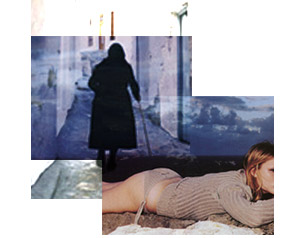

No single incident in my life has been so strange, so hard to grasp, so totally lacking in feasible explanation. It’s the weirdest thing that has ever happened to me and it happened on a Greek island. I came to Naxos by mistake, but maybe there are no mistakes. Maybe sometimes we’re meant to be led here and there, to certain places at certain times for reasons beyond our understanding, beyond our will or the spell of the moon or the arrangement of the stars in the sky. Maybe all the dark and eternal nameless things lurking around us have their own purpose and vision for us. Who knows?
When I was 23, I was traveling alone through Europe. Traveling alone seemed to come naturally to me, and that solitary trip was just the beginning of what would become a habit in the years to come. I’d been in the rain for two months in Britain and discovered I didn’t like being wet. I wanted to dry out. And perhaps I wanted more than that — an inner light, a deeper understanding of life’s complexities, a friend. With all those rainy days traveling alone, a fire had been extinguished within me and I needed rekindling. One morning I woke up soggy. I was on a beach in Scotland at the time, so soggy was to be expected, but I was also shivering and miserable. I decided to escape to Greece as fast as possible.
Three days later I was on a midnight flight to Athens. At 6 in the morning, dragging my sleepless, jet-lagged body around the port of Piraeus, I came to a clapboard sign with a ferry schedule for various Greek islands. I was still dripping wet — although that was probably psychological — and dead tired, but I wanted things: a beach, the sun, a warm, dry place to sleep, a Greek salad. I bought a ticket for the island of Paros because the ferry was leaving in 10 minutes. Arbitrary, yes, but I was 23 and still arranged my life that way.
Six hours later we pulled into the Paros harbor. From the wooden bench on the boat where I’d been napping, I looked up to see a large crowd of passengers jamming the exit doors. Since I was groggy and exhausted, I decided to stay on the bench a few more minutes and let the crowd disappear. When I looked up again, in what seemed just a few minutes, I was appalled to see the boat pulling away from the harbor, the passengers all gone and me left alone on the boat. For the next two hours I worried we were sailing back to Athens, but I was too embarrassed to ask the men who worked on the ferry about it.
Fortunately, in two hours we arrived at another island. I got off the boat on Naxos and walked with my backpack along the dock, where I was immediately swarmed by a sea of short, round, middle-aged women in polyester black dresses and black socks who wanted me to stay at their guesthouses or sleep on their roofs. Assuming the roles of eccentric aunts, they took my arms and patted my hands, trying to pull me into their lives, their doughy bodies.
I didn’t go to the houses of any of those women. In the recesses of my drowsy mind I remembered I needed a simple combination of a beach and sleep. Leaving the busy little port town, also called Naxos, behind me, I headed south along the beach, walking for a long time through scatterings of bodies lying on the white sand, topless French women playing frisbee, nut-brown boys throwing balls, incoming waves at my feet and tavernas off to the side. A pure Aegean light fell on my head like a bleached curtain draping from the sky. It was a lean and haunting landscape, savagely dry, yet the light was uncannily clear, with a blue sky big enough to crack open the world, had the world been a giant egg. The crowds thinned as I walked farther along the beach, and music from the tavernas faded in the distance. Finally, I spotted something under the shade of an olive grove — a small bamboo wind shelter that someone must have constructed and recently abandoned. Perfect. I’d found the place to drop down and sleep. And although I didn’t know it at the time, I’d found the place that would become my home for over a month.
I slept the rest of that day in the shelter under the olive grove, and when I woke up it was dark and all the people were gone. A night wind danced across my face and shooting stars crashed across the sky. I ran along the beach, delirious, exalted and finally dry.
My days on the beach took on their own rhythm. In the morning, rose-colored rays of sunrise from behind a dark mountain would wake me, and if they didn’t, the island’s omnipresent roosters would. The sea would be calm at dawn and I’d go for a swim before the day’s beach crowd arrived. Walking back to my bamboo shelter, I’d say hello and chat with the smiling waiter, Nikos, at the nearby taverna as he set out chairs for the day’s customers. Nikos was handsome in the way many Greek men are handsome, which has more to do with the way they look at you than with how they themselves look. Nikos was good at looking rather than good-looking, which was almost the same thing in the end. When the sun got too high, I’d escape its burning rays and read books in the shade of my olive grove. I’m a redhead — an absolute curse in a desert climate like Greece’s.
The waves would gather momentum as the day passed and at some point every afternoon they would be at their fullest. That’s when the old men would appear. From seemingly out of nowhere, a gathering of weathered, mahogany Greek men with sunken chests and black bathing shorts would converge to stand on the shore and survey the sea. The Aegean in dark-blue spasms would reach its zenith there in the afternoon light and, from my olive grove, I’d watch it also. The old men would enter the sea together, simultaneously turn to face the shore and hunch over with their knees slightly bent, skinny arms outstretched, waiting. They’d look over their shoulders at the ocean beyond, ready to jump up and join it at precisely the right moment. They always knew when that was. I would join them and always laughed when riding the waves, but I never saw those men crack a smile. I decided that when I was 80, I would take waves that seriously also. After that many years of life on earth, what could be more important than playing in the waves?
Sometimes I’d walk into town to explore, buy fruit and bottled water and watch old men argue politics over their Turkish coffee served in tiny cups. The coffee was sweet and strong and one-third full of gooey sediment. At sunset the men would turn their chairs to face the sun as it melted the day into the sea. They’d sigh and drink their ouzo or citron or kitro — a lemon liqueur that is a Naxos specialty — and stop talking until the sky was drained of color. Parish priests with stovepipe hats, long robes and beards would stroll the narrow alleys with their hands behind their backs, looking exactly like movie extras. Old women in black would watch me as I passed and occasionally stop me to ask about snow. I’d wander through the maze of whitewashed houses, the stark lines of white and blue, and stumble back home over the rocky land of dry absolutes in a heady daze.
Nothing is murky on a Greek island like Naxos, nor hazy, nor humid, nor dewy. Lush doesn’t live there. This part of Greece is a rock garden of shrubs and laurel, juniper and cypress, thyme and oregano. Wildflowers spin colors that surge out of a pure clarity, and in this clarity the forms of things are finer. Greece shimmers from afar, is hardy in the distance and chill beneath your bones. In the dry heat of this arid place, donkeys sound off at all hours, as if agitated. They’d wake me even in the dead of night.
One evening at sunset a man on a moped zipped by as I was walking along the beach. He came to a stop in the sand ahead and turned to ask my name. I’d seen him before at the taverna, throwing his head back to laugh when Nikos the waiter told jokes. The man on the moped offered me a ride down the beach and I took it. Naxos has one entire uninterrupted beach and in 20 minutes or so we came to his village, a cluster of houses and an outdoor restaurant overlooking the sea. The man let me off, smiled without speaking and disappeared. I went to the restaurant for dinner and chatted with some tourists. We didn’t say anything significant. Mostly we watched the sky, which by then was blood-red, cracked apart with amber shots of whiskey. Shortly after, I found a bus that took me back to the town of Naxos.
By the time I finally arrived at the olive grove, it was dark except for the light of the moon heaving itself full over the mountain. I came to my bamboo shelter and found it creaking in the wind, desolate, as it was the day I arrived, abandoned by its inhabitant. My backpack and the little home I’d made with my sleeping bag and pillows were gone, taken.
For approximately three seconds I felt a panic spread through me. This didn’t seem healthy, so I looked at the moon. Seeing that dependable milky rock hovering up there like the planet’s eccentric uncle made me smile, and I remembered that in the great scheme of the universe, this kind of thing didn’t matter. I had my money, traveler’s checks and passport with me and could buy the few things I needed. My backpack had been too heavy anyway and traveling light would be a relief, a new challenge, something to write home about in postcards. Sitting on the sand I thought of the stolen things I would miss: my journal, my camera, some foreign change, a pair of Levi’s, my toothbrush, my shoes. My shoes!
I fell asleep surprisingly quickly under the full moon that night. Luckily the thieves hadn’t stolen the floor of the wind shelter — the bamboo mats — and I was comfortable and warm, but an hour or so later a group of hysterical German women came and woke me. They’d been staying at a campground down the beach and they too had been victims of an annoying petty crime. Standing with them was a quiet, tall Dutchman with a blond beard and thick glasses. His belongings had been stolen also, even an expensive camera, but I noticed that, unlike the women, he wasn’t the least bit perturbed by it. In fact he was calm, even amused, and I felt an instant affinity for this unusual man. In the midst of the German panic, three Scottish backpackers came along and asked if this was a safe place to camp. I laughed, which seemed to irritate the German women, while Martin, the Dutchman, said it was safe except for the occasional theft, but really quite peaceful during the day. The German women went off to search for clues down the beach. Martin and I lay back on the sand and watched the stars swirl over the wine-dark sea as we discussed the lapses and betrayals of the modern world.
We should have been helping in the search, but what was the point? Our possessions gone, we felt free in a funny way. We didn’t care. We were two whimsical souls colliding in the land of Homer. Half an hour later, the German women came running back, exhilarated and out of breath. “We found everything! Our things! Come!” It was true. Over a sand dune not far away, most of our belongings, including my backpack, were piled together like a happy heap of children hiding in the dark. My backpack had been slashed with a knife and anything of value, like my camera, was gone, but my journal was there and so were most of my clothes, even my toothbrush. It felt like Christmas. I found my sleeping bag and tent in another sand dune, and since I hadn’t used the tent since Britain anyway, I gave it to Martin because his had been taken. Somehow losing everything and so unexpectedly finding it again had given us a new perspective on what we valued. One of the German women gave me a book. A festive night! The best part of the thievery was that in the semicrisis of getting our stuff ripped off, I’d met the strange, fair-haired Dutchman and he made me laugh.
Martin and I spent the next two days together talking continuously. Just being with him filled me with an excitement and a calm, deep knowledge. There are people with whom you feel mute and around them you forget you have a head and a heart full of ideas and wonder, poetry and longing, and there are those who can reach straight into your chest and pull songs and stars out of your heart. Martin wasn’t quite like that — I didn’t sing around him — but he was close, and he was the best friend I’d made in months of traveling. Traveling is so temporary, so peculiar to the nature of the human psyche, that you forget you need friends. When you find one, you remember the miracle of another person and you remember yourself. Talking to Martin made me feel I was availing myself of whatever was extraordinary in the world. He had a special interest in the spirit world, and in plants and modern history. He was a storyteller, too, with stories of his long journey through India and Tibet, stories of love, betrayal, auto accidents. I told stories also, most of mine involving medical mishaps in third world countries.
On the third day Martin left to catch a plane. I walked him to the ferry. He limped because he’d stepped on a sea urchin. He was sunburned. I waved goodbye from the dock to the man with gawky glasses and violet eyes and wondered if I’d ever see him again.
As the days passed, I found it increasingly difficult to leave my wind shelter. I had the moon, sun, stars, my books, the old men in the waves. Why would I leave? I’d seen enough of the world and I liked where I was. Perhaps the more you stay in a place, the more it grows on you, the way some people do. I’d wake up at dawn thinking today should be the day to go to another island, back to the mainland or to another country. But then I’d go for a swim and read a little, take a walk, jump through the waves. The sun would sneak across the sky, making its way toward its great dip into the sea, and I’d still be there like a lotus-eater, lazy some would say if they didn’t know better. One day I decided to take an excursion away from my beach. I wasn’t prepared to leave Naxos yet; I’d just see more of it. I took a bus to the other side of the island and was gone for four days. It felt like forever.
The bus driver could have gotten us killed several times as he rampaged around hairpin curves into the mountains. From the window, I watched the dramatic patchwork of Naxos, its gardens, vineyards, citrus orchards, villages and Venetian watchtowers. Farmers plowed with donkeys in the fields. Children played barefoot along the roads. The people of the island may have had only a scruffy flock of goats or a small grape orchard, a rowboat to search the night waters for fish or a taverna with three tables, but they weren’t poor. Life brought them regular random encounters with friends and relatives each day, not just occasional carefully selected lunches with them. Their lives were rich, plentiful and cheerful.
I stayed at a fishing village called Apollon on the roof of a house of one of the women in black. In Greece, a woman puts on a black dress when her husband dies and often wears a black dress the rest of her life. That’s devotion. It also cuts down on clothing expenses. Some women rent out rooms to tourists, too, and if the rooms are full, they rent the roof. That’s a good head for business. By that time I was so accustomed to sleeping outside, I chose the roof over an inside room. The woman in black gave me a fine example of a “tsk-tsk” (something people the world over do with their teeth and tongue when they disapprove of you), said something in Greek, which was truly Greek to me, and gave me an extra blanket. For hours I watched the stars and thought of our dark ancestral past far away, the stars where we originated in some distant, long-forgotten explosion. Under the weight of the stars I could hardly bear the full force of the universe, the randomness, the chaos, the chance of it all. What is one to do with a life when eternity surrounds us?
One could return to a wind shelter under an olive grove. That was one option.
So I returned. And that’s when the strange thing happened, the one for which there is no logical explanation.
On the first night back from my excursion, I had fallen into a deep sleep in my shelter when I had the distinct and uncomfortable feeling that something was moving toward me along the beach and that I should wake up to chase it away. I tried with all my might to wake up, but my eyes felt glued shut and I couldn’t open them. The thing was approaching fast, faster every second it seemed, and it was determined, perhaps running, and I knew it was looking for me. Although I couldn’t fathom what it was, it felt horribly dangerous and I knew it was imperative I wake up to protect myself.
Yet waking was impossible. My body and eyes were paralyzed. Like a great black shadow the thing was coming across the sand, and still my body was catatonic. Then I could feel it close by, and I knew suddenly this dark and unknown thing was with me in the olive grove. My heart seemed to bang out of my chest, loud enough to hear. I forced myself to climb up through layers and layers of a deep sleep, the sleep of centuries it felt like, and at last I broke out of it and woke up, or so I thought. Pulling myself up on my elbows, I saw what the thing was: a tiny woman in black, no more than 4 feet tall, and very old. She lay down beside me, curled her body against mine and shivered.
Whatever she was, she was very cold and wanted inside. I knew instinctively she didn’t mean inside my sleeping bag — she wanted inside me.
No, I said, you can’t come in. I live here.
She pulled herself closer and her long, damp silver hair fell like sorrow, like misery, like an ancient sad longing. She needed a home, a warm body to live in, a place with a fire. Her face was that of a crone and I could feel her wrinkled icy skin on my cheek. Even her breath felt like the frigid night air of winter. Her eyes seemed bottomless at first, empty, like black holes, but buried deep inside were two brilliant stars for eyes, blazing stars light-years away. Again and again I told her no, which seemed to make her unbearably sad. Please let me in, she pleaded. No, you can’t. This is my body, this is me! For a moment an uncanny intimacy hung there between us as we stared at each other across the distance of two worlds. Her eyes shone so brightly, they burned my own, burned straight through to my inner core. No, I told her again firmly. No. With that, she raised herself up and drifted off down the beach, still shivering and still wanting a home. She left as she had come, with the night breeze.
The incident itself I could easily have dismissed as a bizarre dream, and did in fact do so the next morning when I awoke to the call of the roosters, shaking my head at the previous night’s dark madness. Although the dream had been unusually vivid, perceptible and oddly lucid, it had to be a dream nonetheless. A 4-foot-tall woman in black trying to pry her way into my body? How rude. Crazy. What happened later that day, however, made me wonder how far dreams travel into the waking world.
That afternoon, the taverna near my wind shelter where I always ate lunch was closed, the tables, chairs and Nikos nowhere in sight. Strange, I thought, since I had never seen it closed in all the weeks I’d been there. Perhaps Nikos was taking a holiday. I decided to walk down the beach to the campground restaurant instead. By chance, my table happened to be next to some backpackers who were discussing where they would travel after Greece. As I ate my fruit salad, I listened to their conversation, which fortunately was in English, since they were of several nationalities. The conversation took a twist when a German woman began to tell the others about a strange dream she’d had the night before.
“It was horrible, a nightmare. I dreamed a little woman came floating along the beach. She was kind of like the women here in Greece, the ones who wear the black, but she was tiny. She was cold. It was terrible, terrible. Such a clear dream.”
My spoon fell from my hand and I felt a sudden constriction around my heart. Had I heard her right? Was this too a dream? “Excuse me,” I said to the German woman, “I couldn’t help overhearing you. What did the woman want?”
The German woman looked over at me, startled, almost familiar. Her face was pale.
“To get inside me.”
– – – – – – – – – – – – – – – – – – – – – – – – – – – – – – –
In a land where myth and reality swirl around each other in a luminous haze, lessons clear and absolute can be found after all. I said nothing is murky in Greece, but I was wrong. A woman came to me on the mist. She crossed over from the other side and sent me a gift. In all my life I have never known such a moment as when those haunting eyes from eternity stared into mine. Although she may not have intended to, she gave me a message: A human life is an extraordinary treasure. She wanted to feel life, maybe feel it again as she once had, and she wanted it desperately. I was alive, breathing, warm, strong, with a fire and light inside me she ached for. When I pushed her away, proclaiming my life as my own, never had I felt the life inside me so intensely.
I left on the ferry the next day. I didn’t need to stay in Naxos anymore. I needed to see the rest of the world. To stay in my wind shelter and live amid the lure and myth of Greece would be to believe in magic and fate, superstition and dark mysteries. I had this world to explore first, the one with cities and rivers, foreign faces and Woody Allen movies. From the boat I watched the island shrink on the horizon, getting smaller and smaller like a puddle evaporating in the sun.
Yet I knew then, as I still know now, that from the shore where the sand dunes begin, the olive grove grows old, and from the bed where we sleep, the shadows of secret things lurk, forbidden, timeless and forever calling our name.
