
Readers and Reading
Ruling passions
The bestselling author of "A Vast Conspiracy" picks five favorite political books.
Common Ground: A Turbulent Decade in the Lives of Three American Families by J. Anthony Lukas (1985)
An extraordinary portrait of three families (black, white working class, yuppie) caught up in the Boston busing crisis of the 1970s. Lukas wins the toughest exacta in book writing: a hypnotizing, meticulously reported account of his protagonists combined with a compelling take on the big issues at the heart of the story — race and class.
The Best and the Brightest by David Halberstam (1969)
Still the ultimate Washington book: how the bona fide geniuses around Presidents Kennedy and Johnson dragged us into Vietnam. Unsparing, unforgettable portraits of all the major players, especially Robert McNamara. Best scene, in which McNamara gets a briefing on body counts: “It is not a particularly happy chapter in his life; he did not serve himself nor the country well; he was, there is no kinder or gentler word for it, a fool.”
Walter Lippman and the American Century by Ronald Steel (1980)
A biography of the columnist who wielded a degree of influence that is almost inconceivable in today’s fractured media universe. Bonus points: Lippman’s colorful love life.
Which Side Are You On? Trying to Be for Labor When It’s Flat on Its Back by Thomas Geoghegan (1991)
A memoir (of sorts) by a labor lawyer in Chicago, who riffs brilliantly on everything from the true nature of public-interest law to the undue power of state governments. Alternately hilarious and heartbreaking. Trust me on this one.
The Rise of Theodore Roosevelt by Edmund Morris (1979)
Alas, Morris is likely to be remembered more for his wacky Ronald Reagan bio than for this magnificent account of T.R.’s early years. Roughrider, naturalist, New York police commish — the presidency (at age 42) was practically an anticlimax for this extraordinary man.
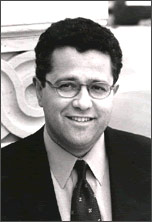
Jeffrey Toobin is the author, most recently, of "A Vast Conspiracy: The Real Story of the Sex Scandal That Nearly Brought Down a President." More Jeffrey Toobin.
Can you identify?
Science shows that the only way around some readers' prejudices is to trick them
(Credit: Shutterstock/Salon) The news of recent research documenting how readers identify with the main characters in stories has mostly been taken as confirmation of the value of literary role models. Lisa Libby, an assistant professor at Ohio State University and co-author of a study published in the Journal of Personality and Social Psychology, explained that subjects who read a short story in which the protagonist overcomes obstacles in order to vote were more likely to vote themselves several days later.
The suggestibility of readers isn’t news. Johann Wolfgang von Goethe’s novel of a sensitive young man destroyed by unrequited love, “The Sorrows of Young Werther,” inspired a rash of suicides by would-be Werthers in the late 1700s. Jack Kerouac has launched a thousand road trips. Still, this is part of science’s job: Running empirical tests on common knowledge — if for no other reason than because common knowledge (and common sense) is often wrong.
Continue Reading Close
Laura Miller is a senior writer for Salon. She is the author of "The Magician's Book: A Skeptic's Adventures in Narnia" and has a Web site, magiciansbook.com. More Laura Miller.
Reading, revolutionized
A poet/book artist and a programmer team up to create a book that unites the traditional and the electronic
(Credit: via Between Page and Screen)
“Between Page and Screen,” a groundbreaking collaboration between poet and book artist Amaranth Borsuk and programmer Brad Bouse, is truly a first: a book that only can be read when simultaneously using a codex book and a computer’s webcam. When placed in front of a webcam, the black shapes printed on the pages, sans words, trigger animated text on the screen, revealing a correspondence between characters P and S.
Stories don’t need morals or messages
A "stupid" test shows that the Puritan ethic lives on. Why do we insist on learning lessons from the books we read?
(Credit: iStockphoto/Yayayoyo via Shutterstock) What is the purpose of reading stories, especially made-up stories? That’s the question lurking behind a recent posting to the New York Times’ education blog, SchoolBook. Ann Stone and Jeff Nichols, the parents of twins, wrote about taking their kids’ third-grade English Language Arts test with some friends as a party game on New Year’s Eve. The group read an inane little story about tiger cubs learning to tear bark off logs, but, to their surprise, couldn’t agree on a single answer to the multiple choice question that followed: “What is this story mostly about?”
Continue Reading Close
Laura Miller is a senior writer for Salon. She is the author of "The Magician's Book: A Skeptic's Adventures in Narnia" and has a Web site, magiciansbook.com. More Laura Miller.
Reader responses: Books you want banned
On Wednesday, we asked which books you think kids should never have to read in school. Here's what you said
Earlier this week, Laura Miller and other Salon writers weighed in on books they’d like to see banned from school reading lists — from “Lord of the Flies” (“Is it pure sadism [that makes teachers assign that book]?” asked Andrew O’Hehir) to “Ivanhoe,” which went a fair way toward dulling Life editor Sarah Hepola’s enthusiasm for high school English.
Continue Reading CloseEmma Mustich is a Salon contributor. Follow her on Twitter: @emustich. More Emma Mustich.
What did you really read this summer?
As August ends, Arthur Phillips, Laura Hillenbrand, Lev Grossman and others reveal their reading records to Salon
For readers, summer often starts with grand ambition. This will be the year we really tackle Roberto Bolaño or David Foster Wallace; it will be the summer of nothing but lemonade and Alice Munro. Or perhaps we’ll educate ourselves by delving deep into accounts of the financial crisis or the war on terror. Then the days turn lazy and even the most sincere intentions wilt in the heat.
With September looming, we thought it would be a good time to check in with some of our favorite authors — and some of the writers you’re likely to be reading this fall — to see what they really read this summer. Click through the following slide show to see what they had to say.
Emma Mustich is a Salon contributor. Follow her on Twitter: @emustich. More Emma Mustich.
Page 1 of 25 in Readers and Reading


