
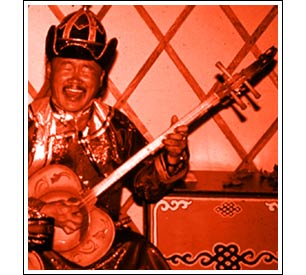

It’s safe to say that whatever Tom Cruise and Annette Bening were doing after learning of their recent Oscar nominations, they were not preparing for six days in the Gobi. That’s the Gobi Desert. Middle of Nowhere. Land of severe weather, yurts and nomadic people. But for Adrian and Roko Belic, the brothers behind the Oscar-nominated documentary film “Genghis Blues,” spending six days in sub-freezing temperatures, huddling in their sleeping bags at night and traveling via camel was just where they wanted to be.
“Our agent was like, ‘Guys, guys, do you have to do this again!'” laughs Adrian. The agent was referring to how they had flown off to New Zealand the day before their first film premiered in Los Angeles.
But in both cases, a free ticket to an unexplored place proved more compelling than anything Hollywood could dish up. So a week before the Oscar nominations, knowing that they were already on a list of 12 non-fiction films that had been whittled from an initial 55, they left as much pertinent information and VHS copies with friends and family as they could muster, then headed off to be the featured speakers at a filmmaking workshop in Mongolia.
This was not entirely new territory. Five years earlier, the brothers had spent considerable time just northwest of Mongolia filming “Genghis Blues” in the Russian region of Tuva. Situated in the center of Asia, Tuva was an independent state until it was annexed by the former USSR in 1944. Centuries before, it had been part of the great warrior Genghis Khan’s Mongolian empire, although Khan had recognized the Tuvans as being a unique tribe, separate from the Mongolians. That kind of brotherly love is no longer readily apparent between the neighbors. Just a week before Adrian and Roko arrived in Mongolia, one of the most bloody incidents in a fierce, ongoing border war occurred. A group of Tuvans machine-gunned a Mongolian family to death and stole their cattle. Given this conflict, it was unclear how a film celebrating Tuvan culture was going to play in Ulan Bator, Mongolia’s capital city.
At the sound of the first dialogue, however, the audience broke into enthusiastic applause. Unbeknownst to the filmmakers, their work had been dubbed into Mongolian by one of the country’s foremost actors. For the next 88 minutes, people laughed, cried and clapped for the ultimate road trip being played out on the screen. Afterwards, a group of Mongolian dignitaries spoke about how the American blues singer featured in the film, Paul Pena, was a hero, an ambassador of goodwill between different cultures. Then some students spoke directly to Adrian and Roko, saying that they were inspirations to young people everywhere to take on global projects.
By the time they made it to dinner, high from the evening’s emotion, Adrian looked at his watch: 9:30 p.m. in Mongolia meant 5:30 a.m. in Los Angeles. Almost on the nose, the call came. The woman who had organized the film’s showing had a cell phone with her for just this purpose. Immediately she erupted into a broad smile. “For the next few minutes, the whole table cheered and clinked glasses; we were so excited!” recalls Adrian of the news of their nomination. “It felt terrific! But pretty soon we had to get down to planning for the Gobi.”
The young filmmakers — Adrian is 30, Roko 28 — have been on a course for both the Gobi and documentary film since childhood. At home in Chicago, they spoke Serbo-Croatian with their parents, Czech and Yugoslav immigrants, and during summer vacations they visited family in Eastern Europe.
As early as they can remember, their mother was telling them that she hoped they would one day travel around the world — a goal both brothers have accomplished, Adrian two times over. To further instill their wonder for a world beyond Michael Jordan and the Sears Tower, she removed the family’s television’s channel dial, leaving it permanently tuned to the PBS affiliate. While their schoolmates were watching baseball and sitcoms, the boys were absorbing hours of African wildlife shows, a series of documentaries about Papua New Guinea made by a two-brother team and “The Last Journey of a Genius,” a film which they rank with “Star Wars” as a major influence on their lives.
This obscure documentary recounts the story of the late Nobel Prize-winning physicist Richard Feynman and his attempts to travel to Tuva. As with the handful of other Westerners who knew about Tuva, Feynman had discovered the area through the unique postage stamps it had issued in the early 20th century. Enchanted by the stamps and by the resonant name of its capital, Kyzyl, Feynman became intent on visiting the remote, mountainous land. The Soviets, however, could not believe that this great mind was interested only in the scenery, and for 13 years, they repeatedly foiled his plans. The Belics, however, determined that they would somehow make it to Tuva.
During college, Adrian circumnavigated the globe twice with the Semester at Sea program — heading west one year and east the next. He sailed up the Mekong River, meeting both northern and southern veterans of the Vietnam War, and had his first snorkeling experience in the Seychelles, off the coast of Africa. After years of PBS wildlife programming, Roko was also eager to get to Africa. In search of an inexpensive, unique way to see the continent, he and his friend Jeff became last-minute team members of a student group that traveled from Kenya to Malawi to deliver money and supplies to refugees of the civil war in Mozambique.
In order to afford their plane tickets, the two spent the first few weeks of the summer painting houses in a Chicago suburb, before flying out on Fourth of July morning. “We went from a tree-lined street with lawn chairs set up for the holiday parade, to baboons and giraffes crossing the road! It was just surreal!” exclaims Roko, still sounding 18. “I remember one of the first mornings of the trip, sitting in the street as the sun came up and hearing the Muslim call to prayer. It struck me as the most engaging, beautiful scene of my life. Now, looking back and having been in Africa again, I know that it was just some dusty street in a small town.”
The leader on that trip, Dan Eldon, was a year older than Roko and Jeff. He had grown up in Nairobi and traveled extensively, recording his experiences in his photo journals. Roko recalls the way in which Dan was fearless about new places and people, completely fueled by curiosity. They learned many tricks from him — how to talk to border guards, how to read a potentially risky situation. Dan and the summer’s experience accelerated Roko and Jeff’s travel instincts, serving as a springboard for bigger, riskier adventures.
Two years later, they took time off from school to travel around the world. This time Roko planned to film their experience. He and Adrian had long been fascinated with video and Super-8 film; as kids, they had often talked their teachers into accepting films instead of research papers. During the African safari, Roko had been charged with documenting the students’ journey, but too agog with his surroundings, he had left the job to other group members. This second time, he diligently filmed and edited the lengthy trip. With understated subtitles describing key moments in the journey, the resulting film is reminiscent of a Victorian travel monologue — complete with suspense, narrow escapes and a cast of unexpected friends and nemeses, a depiction far more interesting than anything you’ll find in glossy travel magazines.
The video begins in a cramped dorm room in Russia, as Jeff, Roko and some local students who have befriended them share vodka and try on an army uniform, dancing and mock-parading around the room. One of the students takes them home to his family, where they’re treated like special guests and, again, entertained with song and drink in the small, simply furnished apartment. Fleeting scenes of the Middle East follow, with Roko attempting to ride his first horse to the pyramids.
In Jordan’s desert, the two friends hike into the abyss, romanced by the sound of the name — Wadi Rum — and a paved road that abruptly ends, eaten by sand. After two nights spent sleeping on a rocky overhang in order to avoid packs of marauding wild dogs, they trudge back out, filming each other as they go, both looking weak with hunger and cold. By the time the pair make it to Dan’s house in Nairobi, they are so grimy you can practically smell them through the VCR. They record a silly afternoon with their friend, clowning through the urban streets. A year later, Dan died in Somalia while covering the war there.
Soon after this point in the trip, they were mugged and their camera was stolen. They took divergent paths through Asia, with Roko still hoping to make it to Tuva. His final leg was a nightmarish train ride through rural China, headed toward a back entrance to Tibet. The farther west he went, the more violent and Kafka-esque the journey became. This progression culminated in the middle of the night when he and other passengers were herded through the streets of a deserted town by soldiers in riot gear. As the only Westerner in the lot, he never understood the soldiers’ intent or what the crowd had done to upset them, though he was enraged by the random beatings of innocent people he witnessed.
When he finally made it to Lhasa, Tibet’s capital, he learned that Western travelers were not allowed in the countryside. Not having come this far to let a silly rule stop him, he donned a traditional sheep herder’s coat and a Chinese hat. With the help of an equine expert Israeli traveler, he bought a horse. “I’d heard so much about Tibetan hospitality,” he says, “that I figured I’d have no problem finding places to stay.”
It was November and growing increasingly cold, so he was happy when on his second night a family did befriend him. The tiny granny of the household, all of 4 feet tall, was more concerned about the horse than she was the disguised Westerner. With a teasing smile, she turned the saddle around to its correct position, hoisted herself on the horse and took off at a wild gallop.
But after that, his luck ran out. He sensed that the Tibetans had been reprimanded for talking to foreigners and were now shy of them. After two weeks of solo ramblings, his water bottle frozen solid as he awoke under a bush every dawn, he decided to go home. It was frustrating to know how close he’d come to Tuva, yet he was eager to go there with fresh eyes on a future journey.
The next year, 1993, Roko was at college when he learned that a group of Tuvan throat-singers were visiting the United States. “I’d traveled around the world thinking I’d end up in Tuva, and now Tuva was coming to me,” he laughs. He attended the packed performance in Santa Barbara and approached one of the singers afterwards. They smiled at each other intently, but Roko’s Russian proved too elementary for a real conversation.
Several nights earlier, the Tuvans had played a sold-out performance in San Francisco, and the same singer had ventured out into the lobby to perform for the overflow crowd. In between songs, he was startled when a large African-American man with a head of wild, curly hair and a long cane came near him and, unannounced, belted out a classic Tuvan song that had not been performed that evening.
Paul Pena, who had played with such blues greats as B.B. King, T-Bone Walker and Bonnie Raitt, and who had written the Steve Miller Band’s hit song “Jet Airliner,” was at that time living in relative poverty and obscurity in San Francisco. Blind from birth, Pena had never found America to be a friendly place for people outside the mainstream. When his wife died, he fell into a depression and spent many nights listening to his short-wave radio.
Once while turning the dial, he was barely able to make out an odd harmonic sound unlike any he’d ever heard. At first he thought it must be an instrument, something akin to a didgeridoo, but he eventually realized it was a single voice producing two notes. He set off to teach himself the art, despite a dearth of recordings or information. Now, nine years later, the Tuvan performer stared at him in amazement: “You must come to Tuva in two years for our national throat singing competition!”
The man who organized the Tuvan singers tour and who would soon try to help Paul get to the competition was Ralph Leighton, Richard Feynman’s friend and would-be Tuva travel partner. Roko contacted Leighton soon after college graduation to tell him of his and Adrian’s desire to go to Tuva and make a film. Not surprisingly, the older man was only mildly interested in the 22-year-old’s plans.
He told him about Paul, but cautioned that the BBC had already shown interest in filming the trip. When Roko said he might try to go to Tuva that December via the Trans-Siberian Railroad, Leighton said he knew of no other Westerners who had made the journey in winter. Three months later Roko e-mailed him from Siberia saying that the train ride had been great and he was taking a bus to Kyzyl the next day. Leighton’s interest was piqued.
Arriving at midnight in the freezing capital, Roko headed towards the first address Leighton had given him, the home of the throat singing legend Kongar-ol Ondar. He knocked on the door of the one-bedroom apartment in downtown Kyzyl, a Soviet-designed town complete with a 50-foot-high statue of Lenin. Immediately, Roko recognized the man as the performer he’d tried talking to in Santa Barbara. Despite the late hour, Kongar-ol offered him a big smile and a place to sleep. Roko stayed in Tuva for five weeks, incurring frostbite from the 50-below-zero weather, but falling further in love with the place of his childhood dreams.
Back in San Francisco, Adrian was already trying to drum up support for the project. As soon as he got confirmation that the BBC was not doing a Tuva film, the brothers approached Paul. He agreed without hesitation. “We had five months before Paul’s trip,” says Roko of the planning that ensued. “I wrote 35 grant applications and got 35 rejections.” Until a week before leaving, they continued to hope for some backing that would allow them to shoot in film. They ended up taking video equipment instead.
The trip that ensued — including a jumpy ride in an Aeroflot plane with its “escape rope,” madcap road trips with Kongar-ol through Tuva’s stunning countryside, Paul’s crowd-pleasing performances at the competition and the series of mishaps that befell the travel party partway through — is the heart of “Genghis Blues,” a film that is as much about the spirit of people to cross cultural and personal boundaries as it is about music.
While the film focuses on the five-week trip to Tuva, the actual story is arguably a 16-year odyssey: Paul’s 11 years of infatuation with Tuva leading up to it, followed by three years of editing and another two of marketing. “We always knew we did this film not only because it was a compelling story,” says Adrian, “but also because it sounded like a lot more fun than graduate school.” In the end, they’ve gotten a hell of an education.
When they finished the film in June 1998, one of the first things they did was enter it in film festival competitions, hoping to gain a distributor in the process. Repeatedly, they were told that they would never make it to a major festival like Sundance. “Who wants to see a film about a blind guy no one has ever heard of?” went the argument. So when the opportunity came to fill out the entry form for the granddaddy of independent film festivals, they checked “35 mm.”
“Sundance doesn’t accept video, which is what we had,” Adrian explains. “The choices were 35 or 16 millimeter. We were just psyched to see the title of our film next to ’35 mm’!”
It was a joke until the call came. Sundance wanted to see a print of the film. A 35-millimeter print. For years, they’d had time but no money. Suddenly, they had neither.
In a moment that is emblematic of the film’s history and the brothers’ overcome-all-odds attitude, they sped home and spent the next four days in a fund-raising fury, trying to raise the $50,000 it would cost to convert to film. It seemed impossible, since to that time they had raised only $2,000 for the project, relying heavily on credit cards and income from odd jobs. Adrian now got out a list he’d kept of everyone they’d met in conjunction with “Genghis Blues”: sound people, lawyers, friends of friends’ parents.
He began his calls by reintroducing himself and saying, “This is the situation …” One New York society woman — he can’t remember how he came by her phone number, the string of connections was so improbable — told him that it was much easier to raise $10,000 that $10. To his disbelief, he found her words to be true. Some very unexpected “friends,” people they hardly knew but who were enthusiastic about the film, appeared just in time.
Following that baptism by fire, Sundance smiled on them. When they were unable to find a place to stay in expensive Park City, another benefactor offered them a condo with fireplaces and Jacuzzis. Then, when festival officials slotted Paul and Kongar-ol for a mere 20-minute concert the day before the film’s screening, Adrian found a local priest who was willing to open his chapel. They packed in more than 100 people for each of three concerts.
Part of the successful buzz they experienced was due to the smart-looking glossy posters and postcards they put up around town. The materials, well beyond their budget, had been eked out through many late nights spent endearing themselves to copy store staffs in San Francisco.
Now, Hollywood types asked them in all sincerity who was doing their press. “I blurted out about how my mom and friends all over the country had pitched in,” Adrian recalls, amused at his own naivete. “Later, someone took me aside and counseled that in the future I should say, ‘Our people are doing great work.'” The entire week was the first sweet whiff of success.
Now, with the Oscars fast approaching and “Buena Vista Social Club” being hailed as a shoo-in, Adrian and Roko and “their people” are hard at it again. “We had to fight for days to get the Academy’s mailing list,” Adrian says, “even though every major studio has a copy of it.” They’ve stayed up late every night since returning from Mongolia, addressing postcards and making phone calls.
“In a joyous way,” he continues, speaking to anyone who still wonders why they’re putting so much into what seems like a David and Goliath battle, “we feel a responsibility to see how far this film can go.” Partly, it’s about being true to themselves and the same level of energy that drives their travels. It’s also for Paul, who was diagnosed with pancreatic cancer just after celebrating his 49th birthday at Sundance last year. The entire experience of “Genghis Blues,” from the close bond he’s made with Kongar-ol, to the acceptance he felt by the Tuvan people, has been a complete and unanticipated pleasure for him.
“Paul keeps telling me that this has been the best time in his life,” says Roko. “It’s really nice to be part of that.”
On Sunday, he’ll have another opportunity he could never have imagined: a trip to the Oscars along with Roko, Adrian and their mother. It will be a surreal moment for the brothers as well, sitting under the flashing lights, surrounded by a sea of tuxedos — half a world away from the sea of stars they slept under just weeks ago, as they nestled into down bags in the midst of the Gobi.
